For years, there has been an unspoken rule in newsrooms: avoid pandemic stories unless something is already on fire. COVID exhausted public attention, political patience, and institutional credibility.
When the emergency phase ended, many…

For years, there has been an unspoken rule in newsrooms: avoid pandemic stories unless something is already on fire. COVID exhausted public attention, political patience, and institutional credibility.
When the emergency phase ended, many…
Tovorafenib (Ojemda) has further solidified its place in the treatment landscape of relapsed/refractory pediatric low-grade glioma (pLGG) following updated data from the phase 2 FIREFLY-1 trial (NCT04775485), according to Cassie Kline, MD, MAS.
“We were able to identify a very long period of TTNT [with] additional follow-up, [with] no new safety signals,” Kline said in an interview in OncLive®. “We now have a cohort, although [it’s] still small numbers, that have also entered a retreatment arm after coming off of the drug and seeing tumor changes that warranted retreatment. We were excited to see the response of the 3-year follow up data that are adding on to what was previously presented and published.”
In the interview, Kline, an attending physician and director of clinical research in the Department of Neuro-Oncology at Children’s Hospital of Philadelphia in Pennsylvania, discussed the design of FIREFLY-1, the mechanism of action of tovorafenib, and the significance of the key findings from the study.
Kline: The trial was designed for [patients with] recurrent pLGG. There’s also a solid tumor cohort. As a pediatric-neuro oncologist, I [am] focused on the pLGG cohort, [which] was designed to identify the clinical benefit and efficacy of tovarafinib.
Tovarafinib [is a] pan-RAF inhibitor. Many of our agents target a single step in the active pathways of these tumors, whereas as a pan RAF inhibitor, [tovarafinib] is targeting the pathway in its entirety. Another unique [characteristic of] the agent is that it’s once-weekly oral dosing, which is nice for patients and families in terms of quality of life.
[Tovarafinib] seemed to provide clinical benefit and disease response in our patients with pLGG. That was promising in comparison with other agents that were currently being utilized in this setting.
The [median] TTNT being over 40 months is giving our patients and families a long period of not necessarily needing additional therapies. We also saw that most patients, once they stopped treatment after 26 cycles, were able to remain treatment-free for up to a year, and that the majority of patients too were able to finish the 26 cycles of therapy also. All of that is very promising in terms of the potential clinical benefit, the tolerability of this agent, and then, ideally, the ongoing disease control once the patients have come off of treatment.
It’s going to continue to be to [monitor] these long-term outcomes in terms of how long we’re able to maintain disease control. There are other long term toxicities that we’re all interested in exploring as well. Those will really be critical next steps.
Another question in the setting of pLGG is this question of rebound growth that can happen after targeted agents are stopped. We’re going to be very comprehensive in also exploring the incidence of rebound growth and what that means for our patients and families with tovorafenibspecifically
Right now, we’re in the setting of an FDA indication for recurrent disease.2 Many in our community are readily utilizing that [indication] and at the first step of disease recurrence or primary or upfront treatment failure. It’s certainly fitting nicely in that paradigm. There are ongoing studies that are exploring randomization between the agent with standard chemotherapy. [Determining] where this fits in the upfront treatment schema will be a next rational step as we’re thinking about how we’re utilizing this agent to treat our [patients].
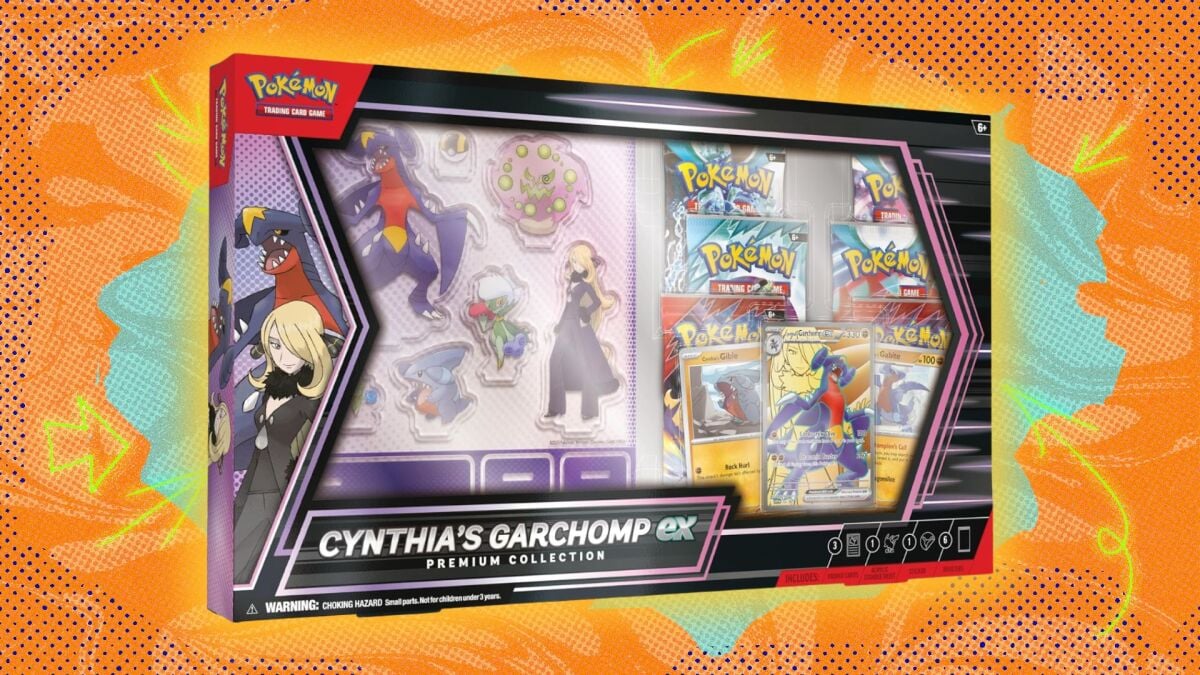
BELOW MARKET VALUE: The Pokémon TCG Cynthia’s Garchomp ex Premium Collection is currently $54.44 on Amazon, which is down to market value when compared to TCGplayer listings starting…
Bloch, M.E. and J.G. Schneider. M.E. Blochii, Systema ichthyologiae iconibus CX illustratum. Vol. [Atlas]. Berolini: Sumtibus auctoris impressum et Bibliopolio Sanderiano commissum. (Bavarian State Library, 1801).
Nielsen, J. et al. Eye lens…

In a conversation with CancerNetwork®, Jose G. Trevino, II, MD, FACS, spoke about the current state of the pancreatic ductal adenocarcinoma (PDAC) paradigm as well as next steps for improving the prognosis of patients…

The latest Quantum series expands JBL’s gaming headset series with new high-frequency driver technology and fresh design features built for every type of gamer
CES 2026, LAS VEGAS – January 5, 2026 – JBL unleashes the latest…

The panel reviews key insights related to transthyretin amyloidosis therapies discussed at the AHA 2025 Scientific Sessions. They emphasize that the new data presented are largely “on the margins,” reinforcing findings already established in…

Introducing JBL’s first open-ear sports headphone, the JBL Endurance Zone, continuing the brand’s legacy of innovation with secure fit, durability, and uncompromising performance.
CES 2026 LAS VEGAS – January 5, 2026 –…

UNIVERSITY PARK, Pa. — Penn State University Libraries will enter into new open-access publishing agreements with two major scientific publishers starting in 2026. These contracts ensure that Penn State peer-reviewed research published through…
Lesage, G. & Bussey, H. Cell wall assembly in Saccharomyces cerevisiae. Microbiol. Mol. Biol. Rev. 70, 317–343 (2006).
Gemmill, T. R. & Trimble, R. B. Overview of N– and O-linked…