A giant reservoir of “secret” fresh water off the East Coast that could potentially supply a city the size of New York City for 800 years may have formed during the last ice age, when the region was covered in glaciers, researchers…
A multidisciplinary team from Harvard Medical School, Duke University, and Massachusetts General Hospital has developed the dual-scale Capillary-Cell (CapCell) microscope, a revolutionary tool for visualizing tumor metabolism and…
A First Look at the Upcoming Season Was Revealed MidwayThrough Season 2 Finale Credits All Episodes of Season 2 Now Available To Binge on Disney+ and Hulu
UnitedXR Europe 2025 highlighted that health care extended reality (XR) is no longer constrained by technical capability but by alignment between industry, academic evidence, and clinical governance.
Persistent gaps remain between how success, risk, and readiness are defined by developers, researchers, and health care professionals.
Formats that enable direct cross-stakeholder dialogue may be as critical as technological advances for translating XR potential into routine clinical practice.
Extended reality (XR) is not new to health care, but over the past decade, its use has become more widespread in medical training, rehabilitation, pain management, and mental health care, supported by a growing body of evidence [-]. Despite clear gains in technical maturity, the adoption of XR in health care remains uneven. Immersive tools are increasingly capable, yet their integration into routine clinical practice appears to depend less on technical performance than on organizational readiness, governance, and professional acceptance—a pattern well described in implementation research [,].
UnitedXR Europe 2025 offered a concentrated view of this tension and an effort to resolve it. The event marked the first joint edition of two historically distinct strands of the European XR ecosystem. Stereopsia—anchored in Brussels since 2009—has long served as a meeting point for immersive research, cultural production, and policy dialogue. In parallel, the Augmented World Expo evolved into a global, industry-led platform focused on enterprise deployment and market scale.
Their integration under UnitedXR Europe has brought these traditions into direct contact, highlighting gaps and areas of convergence, as well as creating a shared space for dialogue between industry, academia, health care, and policy actors.
What the Program Revealed About Health Care XR Readiness
UnitedXR Europe 2025 brought together more than 125 exhibitors across 14 parallel tracks, including a dedicated Healthcare, Pharma, & Wellbeing track. Across the event’s agenda, health care XR appeared to be entering an infrastructure phase, positioned not as a peripheral demonstration but as a maturing vertical confronted with questions of scale, integration, and long-term sustainability.
Beyond formal sessions, interaction extended into curated environments, such as the European Market for Immersive Creativity and business-to-business matchmaking between developers, researchers, and institutional actors. Roundtables, workshops, start-up pitch competitions, and the European XR Awards Gala reinforced the event’s dual role as a space for exchange and an indicator of technical maturity.
This shift was visible on the expo floor, where novelty gave way to utility. Across the XR ecosystem, major headset vendors relied on real-world implementation partners to demonstrate use cases rather than on product-centric stands, with a dedicated demonstration pavilion hosted by the International Virtual Reality Healthcare Association. Within this context, hands-on demonstrations, such as those by VirtualiSurg [], illustrated how VR is being embedded into established training pathways, particularly when combined with modular haptic systems, such as those provided by SenseGlove [].
The scientific program reflected a similar maturation. As noted by Oliver Schreer, PhD, track chair, submissions increased from barely a dozen in previous editions to over 45 this year, accompanied by a clear shift toward more application-oriented research.
Moving between tracks revealed a persistent asymmetry. Enterprise discussions were supported by a settled language of scaling, procurement, and return on investment. Health care discussions, by contrast, were anchored in regulation, safety, and professional accountability. Side by side, these perspectives exposed a central tension: while the XR industry largely seems prepared to scale, health care systems are still negotiating why, and under what conditions, that scale should occur.
XR as a Coordination Challenge
What emerged from these observations was a coordination problem. The remaining barriers to health care XR adoption lie less in hardware or software performance than in the absence of shared decision-making structures.
This gap surfaced repeatedly in discussions about adoption criteria. In one interactive panel within the health care track, participants were asked to rank factors that guided XR implementation. Priorities clearly diverged, with safety treated as a nonnegotiable baseline by some and as one consideration among many by others. The exchange was brief but revealing, with high audience participation.
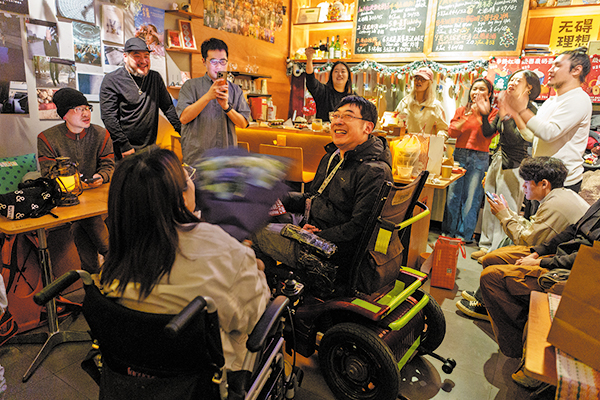
Audience engagement during an interactive panel session. Faces have been blurred to protect participant privacy. Photograph credit: Sonya Seddarasan, track chair for Healthcare, Pharma, & Wellbeing at UnitedXR Europe 2025.
What this exchange made visible was that XR initiatives often stall not because immersive systems fail to perform but because organizations lack an agreed framework for guiding early-stage decisions about readiness for clinical use. A recurring takeaway from the session was the growing consensus that health care XR must move beyond repeated proofs of concept. Without a shared way to assess safety, credibility, and contextual fit before implementation begins, pilots tend to accumulate without a clear pathway toward sustained, real-world integration.
Format Matters for Cross-Stakeholder Dialogue
Points of agreement and divergence became most visible during interactive panel sessions. For example, open discussion forced participants to make their criteria explicit and revealed how differently evidence, risk, and readiness were understood across institutional and professional contexts.
The organizers appeared attentive to this dynamic. Sonya Haskins—Augmented World Expo’s head of programming—noted that future editions may place greater emphasis on roundtable formats intended to support cross-disciplinary negotiation. Alexandra Gérard—codirector of UnitedXR Europe—similarly pointed out the need to broaden participation within the health care track, including participation by patients and frontline practitioners with direct insight into care delivery.
For health care XR, where adoption depends on trust and legitimacy as much as it does on performance metrics, creating conditions for this kind of dialogue may be as consequential as any technical advance.
Immersion as a Clinical Responsibility
Health care discussions at UnitedXR Europe reflected a growing recognition that immersive technologies carry a different kind of responsibility than that of most digital health tools. XR was framed not merely as a delivery medium but as a technology that directly shapes perception, attention, and embodied experience—a distinction that is well established in prior experimental and neuroscientific work [,,].
This concern surfaced most clearly in informal exchanges. Sonya Haskins described XR creation as “hacking the brain,” using the phrase as a metaphor to underscore why immersive systems cannot be treated as neutral software development. When technologies act directly on perception and experience, questions of intent, safety, and oversight move rapidly to the foreground.
Policy frameworks are beginning to respond, albeit unevenly. The event coincided with the launch of the European Partnership for Virtual Worlds, which explicitly identifies health care as a strategic domain []. This marks progress when compared with earlier global digital health strategies, including those of the World Health Organization, where immersive technologies remain largely unnamed despite their growing use in practice [,].
Terminology remains a point of friction. As several clinicians noted, framing clinical XR under the umbrella of “virtual worlds” sits uneasily with health care practice. Recent European policy work differentiates professional and health care uses of immersive technologies from consumer-oriented virtual worlds, emphasizing that clinical applications are bounded; task specific; and subject to heightened safety, ethical, and governance requirements []. In this sense, UnitedXR functioned as a translation layer, highlighting where policy language must be refined to align with the risk-aware logic of patient care.
Implications
UnitedXR Europe 2025 made clear that health care XR has moved beyond the phase of technical proof. What remains unresolved is not what the technology can do but how it is integrated into the social, ethical, and organizational fabric of health care. From my perspective as a clinician-researcher involved in real-world XR deployment, these tensions are familiar from practice and, importantly, addressable.
The challenge ahead is one of alignment; synchronizing industrial velocity with clinical deliberation; and narrowing the vocabulary gap between policymakers, developers, and practitioners.
As this event demonstrated, that work rarely happens through polished presentations alone. It happens in shared spaces where assumptions are tested, priorities collide, and the real conditions for responsible adoption begin to take shape.
With the band’s first tour to fully deploy Sennheiser Spectera, Dave Rupsch proves that wideband digital wireless is the future of high-stakes stadium audio
Wedemark, Germany, January 21, 2026 — For 25 years, monitor engineer Dave Rupsch has…
On Thursday 22 January, the Flame of the Milano Cortina 2026 Olympic Torch Relay will experience its forty-sixth stage, crossing the hinterland and the Venetian lagoon in a route that connects places of great historical and cultural…