Author: admin

  • FTC Issues Biennial Report to Congress on the National Do Not Call Registry

    FTC Issues Biennial Report to Congress on the National Do Not Call Registry

    The Federal Trade Commission issued its biennial report to Congress on the National Do Not Call (DNC) Registry that shows consumers placed more than 258 million telephone numbers on the Registry as of the end of fiscal year 2025, an increase of more than 4.8 million from the previous fiscal year.

    The report also notes the FTC received more than 2.6 million Do Not Call complaints in fiscal year (FY) 2025 — an increase from the previous fiscal year — with consumers mostly reporting these violations came via robocalls, as opposed to live telemarketing.

    Debt reduction schemes, imposters (calls pretending to be government, business, or family and friends), and medical and prescription inquiries led the list of commonly reported unwanted telemarketing calls in FY 2025, followed by calls related to energy, solar, and utilities, as well as home improvement and cleaning services.

    The FTC continues to track how technology affects the Registry and the consumers and telemarketers who access it. For many years, telemarketers have used automated dialing technology to make pre-recorded calls, commonly known as robocalls. Such calls can be made in large numbers with little expense, leading to a significant increase in telemarketing robocalls, including illegal robocalls. While the number of consumer complaints about illegal telemarketing robocalls steadily decreased from FY 2017 through FY 2024.

    While the number of complaints about robocalls ticked up in FY 2025, reports remain substantially lower than their peak in FY 2017. This is due to a range of FTC law enforcement strategies, including the pursuit of Voice Over Internet Protocol (VoIP) providers that facilitate illegal calls, according to the report. The FTC also sued dialing platforms and soundboard technology providers that helped provide the software used to blast consumers with illegal robocalls.

    Since the Registry was established in 2003, the FTC has filed 173 lawsuits against 570 companies and 449 individuals alleged to be responsible for making billions of unwanted telemarketing calls to consumers, collecting nearly $400 million from these violators.

    The report also discusses the FTC and FCC’s work to help end caller ID spoofing, the implementation of strategies to combat the technologies that telemarketers use to make illegal calls, and several initiatives designed to spur the development and availability of technology to protect consumers from illegal calls.

    Finally, the report discusses the FTC’s support of new technologies, particularly call-blocking and call-filtering products. All major voice service providers now offer call-blocking and call-filtering products to all or some of their consumers. The FTC has taken measures to support analytics companies and voice service providers with their call-blocking and call-filtering technologies by releasing a daily list of Do Not Call and robocall complaints, including caller ID numbers, the dates and times of the unwanted calls, and other relevant information. Several firms have reported that this daily data has improved their ability to identify abusive and fraudulent calls.

    The Commission also publishes an annual Do Not Call Registry Data Book that provides substantial detail on registration numbers and other statistical information about the Registry.

    The Commission vote approving the report and its submission to Congress was 2-0.

    The lead staffer on this matter is Ami Dziekan of the FTC’s Bureau of Consumer Protection.
    Continue Reading

  • Nationwide Fairer Share 2026 – how to max your chances

    Nationwide Fairer Share 2026 – how to max your chances

    Petar Lekarski

    Petar Lekarski

    Assistant Editor – News & Investigations

    6 January 2026

    For the past three years Nationwide has given some existing customers a £100 ‘Fairer Share’ bonus. It’s likely, though not guaranteed, to do the same again this year. In previous years, the scheme has been announced in May and paid in June, though whether you got it depended on if you met the qualifying criteria in the first three months of the year – so now’s the perfect time to maximise your chances.

    Last year, a total of £400 million was paid to four million Nationwide members; the year before that it was £385 million to 3.85 million people.

    We don’t yet know if Fairer Share payments will definitely happen again in 2026 – Nationwide told us that, as in previous years, the final decision “will be announced as part of [its] full year results in May”.

    See below for what you’ll need to do to get the payment if you’re an existing customer. If you’re not an existing customer, we’ve got full details on how to get it by switching.

    Nationwide customer? What to do depends on your account

    Assuming the building society keeps the same criteria as last year (there are no guarantees, but it’s a decent bet):

    1. Firstly, don’t close your Nationwide current account. Well, at least not until 31 March 2026.

      AND…

    2. Secondly, use your current account in the first three months of this year. For this step, what you’ll need to do to qualify depends on which current account you have…

      Account

      What to do

      FlexAccount, FlexBasic or FlexDirect

      EITHER… In two of the first three months of this year, pay IN at least £500 (this could be your salary, for example) AND make two payments OUT of your account;

      OR… In two of the first three months of the year, make 10+ payments OUT of your account;

      OR (if you can’t do the above)… Between 1 January and 31 March 2026, complete a full current account switch from another provider to Nationwide.

      FlexOne, FlexGraduate or FlexStudent

      EITHER… Make a payment IN or OUT of your account in March 2026;

      OR… Complete a full current account switch to Nationwide FlexOne or FlexStudent (not FlexGraduate) between 1 January and 31 March 2026.

      FlexPlus packaged account

      Just pay the monthly fee.

      AND…

    3. Finally, ensure you have at least £100 in savings OR owe at least £100 on a mortgage with Nationwide in March 2026. If you don’t have either of those, stick £100 (or maybe £200 to be safe in case it changes its terms) into one of its savings accounts.

      A good option could be Nationwide’s Flex Regular Saver – this is one of our top picks for regular savings and pays 6.5%, more than standard easy-access accounts. It’s designed for you to pay in up to £200 a month for a year, but you don’t have to – you could just make one deposit and withdraw it later (the account allows up to three penalty-free withdrawals a year).

    Not with Nationwide? Get £175 to switch to it

    If you’re not already a Nationwide customer, here’s what you can try:

    1. Firstly, switch your current account to Nationwide by 31 March 2026. Nationwide currently pays new switchers to its FlexDirect account a FREE £175, plus 5% interest on up to £1,500 held in the account and up to £5 a month cashback on debit card spending for a year. Other banks also pay from £175 up to £250 to switch, but Nationwide’s strong combo of perks makes it a good all-rounder.

      Plus, if Nationwide keeps the same eligibility criteria as previously, it’s easier to get the Fairer Share payment by switching than it is being an existing customer, as fewer rules apply.

      You must use the official Current Account Switch Service (CASS) by requesting the switch through Nationwide. You’ll see the option to do this when applying. For more info, see our bank switching need-to-knows.

      (Alternatively, if you have a young person’s or student bank account elsewhere, you could switch using the CASS to a Nationwide FlexOne account (for those aged 11 to 17), or to a Nationwide FlexStudent account – but neither of these currently pay any switch bonuses, and you should check the accounts are suitable for you before making the move.)

      AND…

    2. Secondly, stick £100 (or £200 to be even safer) into a Nationwide savings account OR owe at least £100 on a Nationwide mortgage in March 2026. As set out above, a good option could be its Flex Regular Saver – this is one of our top picks for regular savings and pays 6.5%, more than standard easy-access accounts. It’s designed for you to pay in up to £200 a month for a year, but you don’t have to – you could just make one deposit and withdraw it later (the account allows up to three penalty-free withdrawals a year).

    For alternative bank switches, including a free £250 plus fee-free spending overseas from Lloyds, see our Best bank accounts guide.

    Any payment will likely be treated as savings income for tax purposes

    In 2023, 2024 and 2025, the £100 Fairer Share payment was taxable savings income, so it was treated in the same way as any interest you earned on your savings account or current account.

    If this happens again, most people won’t have to pay tax on the reward, thanks to the personal savings allowance that allows basic-rate taxpayers to earn up to £1,000 a year from savings tax-free. But if you’re a higher-rate taxpayer and/or you have a substantial amount in non-ISA savings, you may have to pay tax on the £100 bonus.

    For those who don’t file self-assessment returns to pay their taxes each year (which is most people), then you won’t need to do anything as Nationwide will report the bonus to HMRC automatically for you. However, if you’re in the self-assessment system, you will need to include any payment in your tax return.

    Watch Martin’s savings interest video for full details on who pays savings tax, how you pay it if you owe it and, crucially, how to (legally) reduce the amount of tax you pay.

    Continue Reading

  • Google is bringing the big Snapseed redesign to Android

    Google is bringing the big Snapseed redesign to Android

    Back in June, Google surprisingly released Snapseed 3.0 for iOS, and has now confirmed that the new version is coming to Android.

    At the end of December, the Snapseed team shared on Reddit that they have “started working on…

    Continue Reading

  • Festive magic draws crowds to celebrate Christmas in Derby

    Derby was positively buzzing with Christmas spirit as crowds enjoyed the spectacular Festive Derby celebrations. Combining the highly anticipated panto run, the ever-popular Cathedral Quarter Ice Rink and Nordic Bar, and the first Christmas at…

    Continue Reading

  • Chinese Fusion Reactor Achieves Plasma Density Previously Thought to Be Impossible

    Chinese Fusion Reactor Achieves Plasma Density Previously Thought to Be Impossible

    Huang Bohan / Xinhua via Getty Images

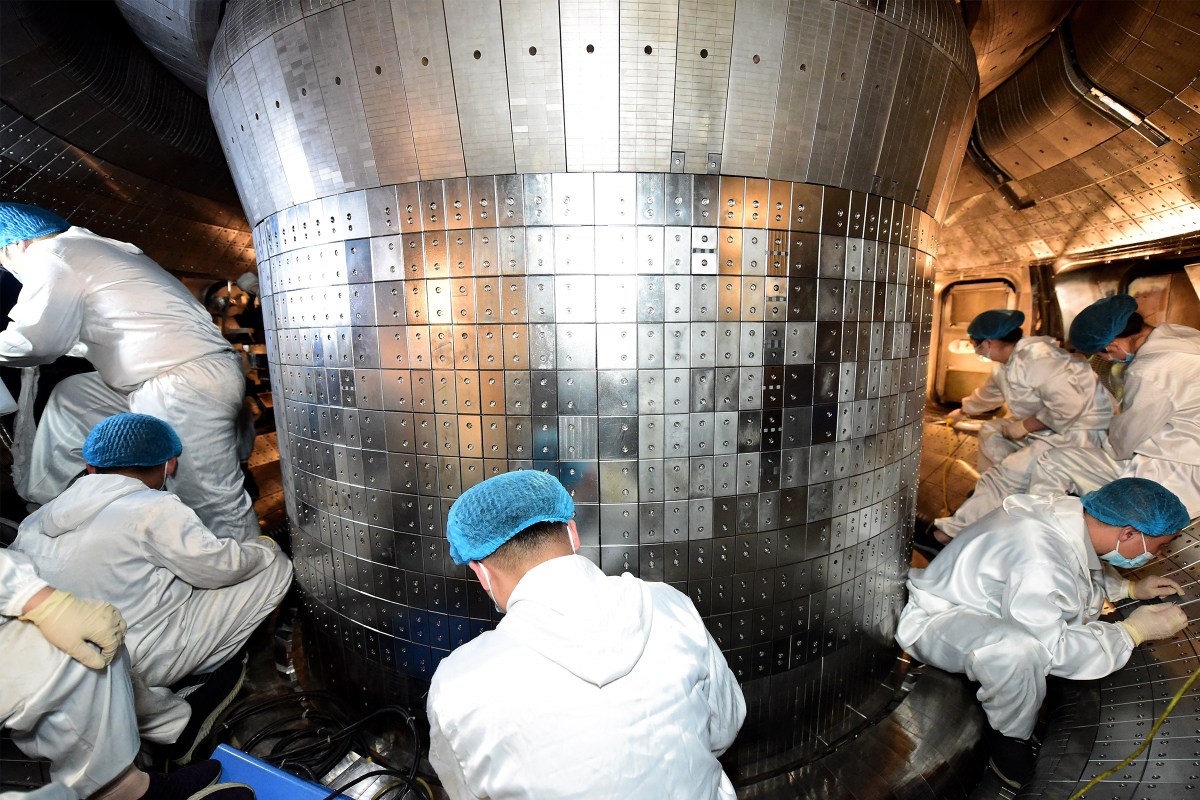
    Scientists at China’s Experimental Advanced Superconducting Tokamak (EAST) program rang in the new year with a stunning accomplishment: empirical evidence that they used…

    Continue Reading

  • Plosová, Mlýnková Set to Skate in Milan Olympic Games

    Plosová, Mlýnková Set to Skate in Milan Olympic Games

    MINNEAPOLIS – Freshman forward Tereza Plosová and alumna Natálie Mlýnková will represent Czechia at the 2026 Winter Olympic Games in Milan, Italy. Plosová is set to make her Olympic debut, while Mlýnková returns to the Olympic stage for…

    Continue Reading

  • Spotify’s New Gov Ball Experience Turns the 2026 Lineup Into a Personalized Data Story for Every Fan — Spotify

    Spotify’s New Gov Ball Experience Turns the 2026 Lineup Into a Personalized Data Story for Every Fan — Spotify

    Lorde. A$AP Rocky. JENNIE. Baby Keem. KATSEYE. That’s just a taste of who’s performing at the 2026 Governors Ball, and this year, Spotify is introducing a brand-new way to navigate…

    Continue Reading

  • Defossilize our chemical world

    Defossilize our chemical world

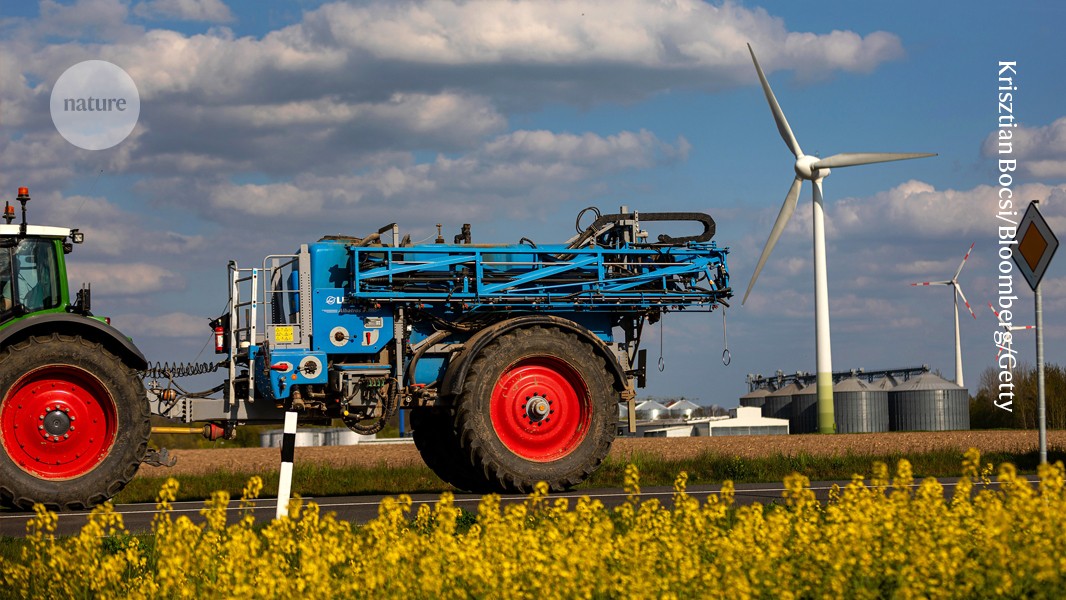
    Biofuels, such as rapeseed, are not an ideal alternative to non-fossil carbon.Credit: Krisztian Bocsi/Bloomberg/Getty

    There’s a relatively new word doing the rounds in sustainability research and policy: defossilization. Beyond expert circles, it isn’t necessarily obvious that phasing out fossil fuels does not mean phasing out carbon. Under net-zero scenarios, carbon-based fuels are still needed, to provide power, for example, and for aviation. Carbon, currently often derived from fossil hydrocarbons, is also integral to everyday consumer products such as soaps and detergents, as well as medicines, fertilizers and plastics.

    Worldwide, demand for ‘embedded’ carbon — that found in chemicals — is expected to double by 2050, according to the nova-Institute, a green-energy research institute in Hürth, Germany (see go.nature.com/4jpx6qi). But this carbon cannot come from the usual sources, such as coal, natural gas and oil. These must remain in the ground, and this is where defossilization comes in.

    Defossilization means finding sustainable ways to make carbon-based chemicals. Alternative sources of carbon include the atmosphere and plants, as well as carbon in existing biological or industrial waste, such as used plastics or agricultural residue. In some cases, these chemicals will eventually return carbon dioxide to the atmosphere through burning or biodegradation. In principle, this will occur as part of a circular process, rather than one that has added greenhouse gases.

    The subject of defossilization is of increasing research interest — as it needs to be — despite signs that some governments, including a number in Europe and that of the United States, are backsliding on their climate commitments. In this two-part Editorial, we describe some of the challenges faced by researchers, in both academia and industry, that scientists and policymakers need to solve to enable defossilization to happen on the scale required. In this first instalment, we focus on Europe. In the next, we explore advances under way in China.

    Biomass from crops is a key source of non-fossil carbon, and one that can be obtained at scale. One driver of large-scale production is the European Union’s biofuels strategy. This mandates that transport fuels include biomass-derived products. Examples include biodiesel, which can be made from oils such as sunflower and palm, and bioethanol, which is synthesized from crops such as maize (corn) and wheat. But clearing existing cropland or converting uncultivated land to grow biofuels can’t be the alternative of choice, not least because of the attendant risk to biodiversity and soil health, and the demand it puts on water resources. There’s also some evidence that, by encouraging farmers to convert land previously used to grow food crops, the directive has pushed up food prices.

    The extraction of carbon from lignocellulose — tough plant matter — in crop waste is an alternative with potential that remains mostly untapped. One major advantage is the fact that it can be produced without the use of extra land. But it is expensive to extract, and production timelines are long, both of which hinder scalability1.

    Other potential sources of waste carbon include municipal and industrial waste, with used plastic among this. More than 40% of plastic produced in the EU is already recycled. This recycling rate could be increased if technical challenges can be surmounted2. Current recycling methods break waste plastics into flakes through shredding or melting, then form pellets that can be used to make new products. For higher recycling rates to be achieved, chemical recycling methods will need to be further developed and scaled up. These methods break down plastics into smaller molecules that can be used to rebuild new, larger ones.

    Carbon dioxide captured from fossil-fuel burning or the air offers one of the largest potential avenues for defossilization. The global chemicals industry could obtain one-third of its carbon needs from this source by 2050, according to the nova-Institute. That compares with 22% from biomass. By one estimate, there are almost 900 gigatonnes of carbon in the atmosphere, nearly double the 450 gigatonnes of carbon contained in vegetation3. But the scenarios for 2050 vary widely. Some say CO2 will become the main feedstock for chemicals, whereas others say its contribution will be negligible.

    To make useful carbon-based molecules, CO2 must first be transformed into other molecules. Usually, it is reacted with hydrogen, either to form hydrocarbons or to remove an oxygen atom. Because CO2 is highly stable, a considerable amount of energy is needed to overcome the thermodynamic barrier to these reactions. This must be powered renewably for the process to be truly sustainable. Capturing atmospheric CO2 is difficult and expensive, in part because of the compound’s stability. As a result, the technology has not been a priority for European governments. This must change.

    In May, Elisa Morgera, the United Nations Special Rapporteur on human rights in the context of climate change, published a report urging governments to defossilize economies as part of the fossil-fuel phase-out. In the United Kingdom, the Royal Society and the Institution of Chemical Engineers have urged the government to support research on defossilization. They have a strong case, because such research, which is intended to boost the chemical industry, aligns with government policies to invest in science that supports economic growth. The EU and China also have a joint research programme called the EU–China Bridge, which is focused on decarbonization, but this is set to expire next year. This not only needs to be renewed, it needs a renewed focus — on defossilization.

    Continue Reading

  • Commitment to Privacy – Virginia Commonwealth University

    We collect limited information about web visitors and use cookies on our website to provide you with the most optimal experience. These cookies help us provide you with personalized content and improve our website. To learn more about our web…

    Continue Reading