Add your e-mail address to receive free newsletters from SCIRP.
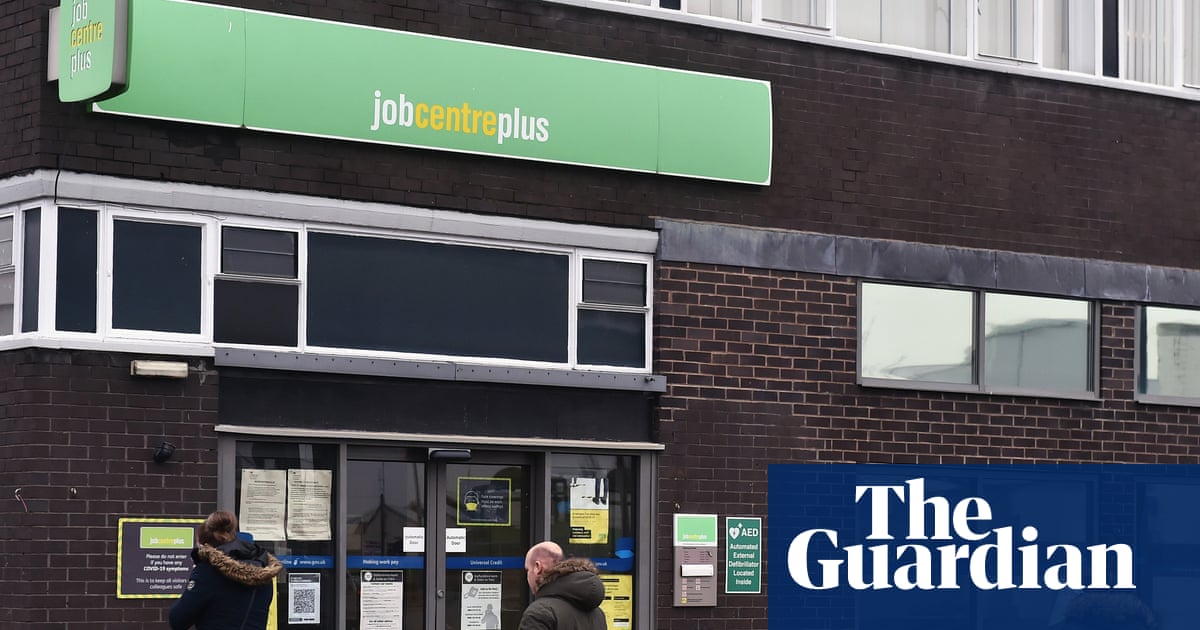
The UK is poised for a rise in unemployment in 2026 fuelled by the collapse of “zombie” companies that have struggled to adapt to a rise in business costs, according to a report.
At the start of what could be a pivotal year for the economy, the Resolution Foundation said businesses were grappling with a “triple whammy” of multiyear increases in interest rates, energy prices and the minimum wage that could “finish off” some underperforming companies.
Publishing its new year outlook report, the thinktank said 2026 had potential to be a “turning point” after decades of sluggish productivity growth – a key metric of output per hour of work which is vital for raising living standards.
However, it warned this could involve a sharp rise in unemployment as more unproductive companies go bust.
Ruth Curtice, chief executive of the Resolution Foundation, said there were indications 2026 could be remembered as a “turning point year” by future economists and demographers.
“There are early and encouraging signs of a mild zombie apocalypse, where higher interest rates and minimum wages have combined to kill off struggling firms and leave the door open for new, more productive ones to replace them,” she said.
“But while this is good news for our medium-term economic prospects, the short-term impact could be job displacement and higher unemployment. Policymakers will need to redouble efforts to address this problem.”
Unemployment in the UK has reached the highest level outside the Covid pandemic in a decade, with the headline rate hitting 5.1% in October as employers held back on hiring before Rachel Reeves’s autumn budget.
Business leaders have said tax increases and a rising living wage are among contributing factors deterring employers from taking on staff.
Experts have warned for several years that Britain has been held back by so-called “zombie firms” – companies which barely make enough money to cover their costs but just about stay in business – preventing the allocation of resources to more productive sectors of the economy.
Economists have suggested that low interest rates in the years since the 2008 financial crisis contributed to this, as cheap borrowing costs helped debt-laden companies to stay afloat.
Businesses have come under pressure from 14 consecutive Bank of England rate increases between December 2021 and August 2023, designed to tackle inflation. While the Bank has since cut the base rate six times – from a peak of 5.25% to 3.75% – firms’ operating costs remain higher than before the Covid pandemic.
In a sign of the pressure, the British Chambers of Commerce (BCC) warned in a separate report that business confidence slumped to the lowest level in three years in the final quarter of 2025.
In a survey of more than 4,600 firms carried out between 10 November and 8 December – straddling Reeves’s 26 November budget – the lobby group found that tax was the biggest business concern, followed by inflation.
Fewer than half (46%) of companies said they expected increased turnover over the next 12 months, while nearly a quarter (24%) expected a decrease. Only 19% had increased investment and 27% had scaled back plans.
David Bharier, head of research at the BCC, said: “Our data shows more clouds have gathered over business confidence, and the outlook for SMEs in 2026 is unsettled.”
The Resolution Foundation said there were early signs that Britain’s productivity growth was being boosted by “creative destruction”, whereby newer and better firms, products or processes replace older, less-efficient, ones. Adoption of artificial intelligence technologies could also be playing a role, it said.
However, it said the short-term impact from job losses would be “hugely difficult,” and urged the government to focus on supporting living standards.
“Amidst this change one thing that isn’t changing enough is disposable income growth, which is set to grow at mediocre rates for the rest of the parliament,” Curtice said.
“We must hope – but more importantly act – to ensure that 2026 is a turning point year for lifting living standards too.”

In the year since the Eaton Fire, CBS LA has followed along with Pasadena Fire Department Captain Dave Marquez’s search for answers about the high level of toxins in his body since the intensive firefight.
Now, almost exactly 12 months…

LAHORE – Pakistan’s social media platforms are buzzing with controversy over clip circulating under the title “Umairy Leaks”, featuring explicit content between a woman and a younger man. Versions of the clip online range from 7 minutes…

BAC NINH, Vietnam — The transformation of Vietnam’s Bac Ninh is evident in the signs above its shops and the spicy Chinese and Korean dishes on its tables.
Once known for its rice fields and the love duets of its centuries-old Quan Ho folk songs, the city just north of Hanoi has become one of Vietnam’s busiest factory zones, reflecting a surge of investment, hastened by President Donald Trump’s tariff hikes, that are reshaping the region.
The economy has profited from friction between Washington and Beijing as factories shifted out of China, joining earlier waves of foreign investment by the Japanese and South Koreans that have made Vietnam a global manufacturing hub. But rising labor costs, worker shortages and inadequate infrastructure are exposing the limits to its rapid rise.
With rivals like Indonesia and the Philippines competing hard for new projects, Vietnam is trying to climb into higher-value manufacturing and expand export markets to maintain that momentum. That effort is evident in Bac Ninh.
Traditionally a center for artisans, Bac Ninh’s first boom began around 2008 when Samsung built its first phone factory there, turning Vietnam into its largest offshore manufacturing base.
Now, Chinese companies are pouring in as they diversify their factory locations to skirt U.S. tariffs and other trade restrictions. After Hanoi and Beijing normalized ties in the 1990s, inflows of Chinese investment began to pick up as Chinese firms in places like Bac Ninh tapped Vietnam’s electronics supply chain, labor force and supportive local governments, often aided by Chinese-speaking intermediaries who smooth paperwork and logistics.
But Vietnam is too small to replace China, whose economy is 40 times larger, as the world’s factory floor. To try to keep up, its leaders are building new infrastructure, including a highway to the Chinese border that has cut travel time by more than an hour. A railway will connect Hanoi to Haiphong — Vietnam’s largest seaport — and then the border town of Lao Cai.
On Dec. 19, Bac Ninh broke ground on the expansion of an industrial zone for high-tech manufacturing, including electronics, pharmaceuticals and clean energy. It’s part of a synchronized nationwide push in which Vietnam launched 234 major projects worth more than $129 billion just weeks before a pivotal National Party Congress in January, when leaders will decide the country’s political leadership and economic direction.
In Bac Ninh’s downtown, a convenience store bears the name Tmall, after Alibaba’s flagship online marketplace. Signs in Chinese advertise services for investors. Chinese–Vietnamese language schools have opened to help locals and Chinese to learn each others’ languages.
But as Chinese companies compete for the best labor and other resources, costs are rising for the “China plus one” strategy of moving factories out of China to other locations, for example, Apple’s shift into India.
“It is becoming difficult to recruit workers,” said Peng, who works at a telecoms equipment company that moved from China’s southern technology hub of Shenzhen. He gave only one name because he was not authorized to speak to the media.
Labor costs have jumped 10%–15% since 2024, he said, “And we expect them to keep rising.”
Vietnam still need technology, equipment and expertise from China, which had created “the best manufacturing ecosystem,” said Jacob Rothman, co-founder and CEO of China-based Velong Enterprises, which makes grill tools and kitchen gadgets and has shifted some production to Southeast Asian countries including Cambodia and Vietnam.
Supply chains and manufacturers in China have benefited from decades of government support, large-scale investment and its huge population, Rothman said. “You can’t recreate that overnight.”
Brian Bourke, global chief commercial officer at U.S.-based SEKO Logistics, said while factories making footwear, furniture and technology are still relocating to Vietnam, it lags China in infrastructure and logistics capabilities.
Some of those limits are surfacing in boomtowns like Bac Ninh, where firms are trying to lure workers with higher wages and bonuses, a box of instant noodles on their first day and bus fares if they commute from another city, according to state media.
Few countries have benefitted more from Trump’s trade war than Vietnam, whose biggest export market is still the U.S. In 2024, Vietnam ran a $123.5 billion surplus with the U.S., the third largest behind China and Mexico. That irked Trump, who threatened a 46% import tax on Vietnamese goods before settling on 20%.
The two countries are still working toward a deal to keep most tariffs at 20%. Vietnam has offered broad preferential access for U.S. products, the White House said in October. So far, it has largely absorbed the tariffs, running a trade surplus of $121.6 billion in January-November 2025.
The agreement in October by Trump and Chinese leader Xi Jinping to a year-long trade truce and lower average tariffs on Chinese exports to the U.S. to about 47% helped ease some concerns. But persisting uncertainty over tariffs and other trade restrictions means companies aren’t just trying to shift factories out of China but to spread them across several countries, said Frederic Neumann, chief Asia economist at HSBC.
Even with lower U.S. tariffs on China, the calculus still favors moving to Southeast Asia where manufacturing inefficiencies add only about 10% in cost. But while large corporations can shift production easily, smaller firms may struggle to fit a new factory with expensive equipment.
“(The) race to move outside of China is still happening, and it’s accelerating,” Rothman said.
Vietnam is still attracting ample foreign investment. Cumulative foreign investment topped $28.5 billion as of September, up 15% from last year. But scrutiny of Vietnam’s role as a hub for tariff-dodging transshipments has some manufacturers hedging their bets.
One of SEKO Logistics’ customers has shifted some of its furniture making to India, not wanting to “put all their eggs in Vietnam,” Bourke said.
Countries like Indonesia and the Philippines, which missed the early gains Vietnam captured, are promoting themselves as alternative manufacturing bases. In the Philippines, a new law allows foreign investors to lease private land for up to 99 years to attract long-term commercial and industrial investment.
Vietnam has a goal of becoming rich by 2045. It aims to become Asia’s next “tiger economy,” following export powerhouses like South Korea and Taiwan by shifting from low-cost assembly work to manufacture higher-value products like electronics and clean energy equipment.
It’s offering incentives like tax breaks on imported machinery and discounted rents to help factory suppliers upgrade and modernize. About a third still use non-automated equipment and only about 10% use robots on their production lines.
The country also is trying to reduce its dependence on the U.S. market by expanding exports to the Middle East, Latin America, Africa and India. Overseas trade offices have been asked to share market intelligence and promote products made in Vietnam.
Vietnam knows that rising costs and tougher competition will test how far it — and places like Bac Ninh — can climb. Announcing hundreds of projects in December, Prime Minister Pham Minh Chinh framed the stakes: Vietnam must “reach far into the ocean, delve deep underground and soar high into space.”
___
Chan reported from Hong Kong. Associated Press researcher Yu Bing in Beijing contributed.
___
The Associated Press’ climate and environmental coverage receives financial support from multiple private foundations. The AP is solely responsible for all content. Find AP’s standards for working with philanthropies, a list of supporters and funded coverage areas at AP.org.
(Alliance News) – Stocks in London are set to open higher on Monday, with geopolitical developments in focus in the wake of US intervention in Venezuela over the weekend.
IG says futures indicate the FTSE 100 to open up 55.4 points, or 0.6%, at 10,006.54 on Monday. The index of London large-caps closed up 19.76 points, 0.2%, at 9,951.14 on Friday. It had earlier traded as high as 10,046.25, a record intra-day level.
Sterling was at USD1.3434 on Monday morning, down from USD1.3491 at the London equities close on Friday. The euro was lower at USD1.1690 from USD1.1745. Against the yen, the dollar was higher at JPY157.06 versus JPY156.64.
Geopolitical factors will be in focus on Monday after dramatic events in Venezuela over the weekend.
Venezuelan President Nicolas Maduro was in a New York jail on Saturday, hours after US special forces seized and flew him out of his country — which US President Donald Trump said would come under effective US control.
Trump said he was “designating people” from his cabinet to be in charge in Venezuela but gave no further details. In another surprise, Trump indicated US troops could be deployed, saying Washington is “not afraid of boots on the ground”.
Venezuela’s new leadership has signalled a willingness to cooperate with the US.
“Wene invite the US government to collaborate with us on an agenda of cooperation oriented towards shared development within the framework of international law to strengthen lasting community coexistce,” Delcy Rodriguez, declared the interim president of Venezuela, said on Sunday in a statement posted on Instagram.
Gold was up at USD4,421.60 an ounce early on Monday from USD4,320.16 late Friday. Brent oil was trading slightly higher at USD60.32 a barrel from USD60.09.
Meanwhile, Trump doubled down on his claim that Greenland should become part of the US, despite calls by Denmark’s prime minister to stop “threatening” the territory.
“We need Greenland from the standpoint of national security, and Denmark is not going to be able to do it,” Trump said while aboard Air Force One on Sunday.
In the US on Friday, Wall Street ended mostly higher, with the Dow Jones Industrial Average up 0.7%, while the S&P 500 climbed 0.2% and the Nasdaq Composite ended marginally lower.
The yield on the 10-year US Treasury was at 4.18% on Monday, slimmed from 4.19% on Friday. The yield on the 30-year was at 4.86%, slightly narrowed from 4.87%.
In Asia on Monday, the Nikkei 225 in Tokyo was up 3.0%. In China, the Shanghai Composite was 1.3% higher, while the Hang Seng Index in Hong Kong gained 0.1%. The S&P/ASX 200 in Sydney rose slightly.
There are no local corporate events scheduled for Monday.
Monday’s global economic calendar has UK mortgage approvals data and the US ISM manufacturing PMI.
By Michael Hennessey, Alliance News reporter
Comments and questions to newsroom@alliancenews.com
Copyright 2026 Alliance News Ltd. All Rights Reserved.
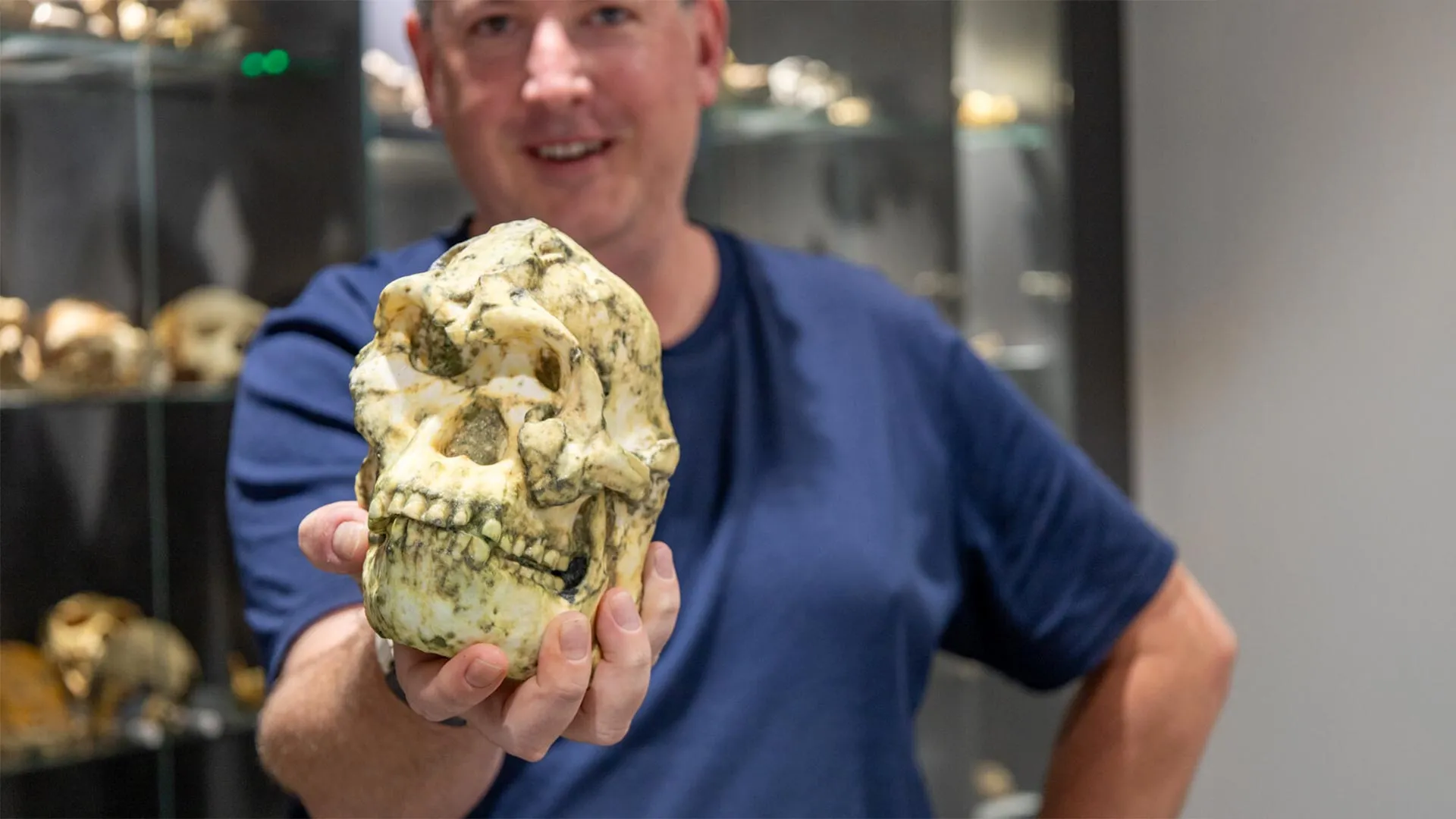
An international research team led by scientists from La Trobe University in Australia and the University of Cambridge is questioning how one of the most complete early human fossils has been classified. Their findings suggest the specimen may…