Category: 3. Business

  • Darwin residents are worried about toxic chemicals and gas leaks. We need laws to protect clean air

    Darwin residents are worried about toxic chemicals and gas leaks. We need laws to protect clean air

    The federal government is considering enforcement action against oil and gas company Inpex after it admitted serious reporting errors that significantly underestimated hazardous emissions released from its liquefied natural gas (LNG) plant on Darwin Harbour over many years.

    The LNG plant is 3 kilometres from residential suburbs and 10km from Darwin city. It is required to report emissions to the National Pollutant Inventory.

    Inpex has now released corrections for 2023–24 that more than double the previous estimates of emissions of volatile organic compounds (VOCs) released into the air in Darwin, from 1,619 to 3,562 tonnes. The reason for the errors has not been disclosed.

    The originally reported levels of very toxic compounds benzene and toluene were just 4–5 tonnes in 2023–24. However, corrected estimates were 136 and 112 times higher, respectively, with emissions exceeding 500 tonnes of both chemicals.

    Currently there is no legal limit on the amount of VOCs that Inpex is allowed to emit. These new figures raise questions about the potential harms, given serious toxicity of benzene and toluene, the large amounts released into the atmosphere over several years, the closeness to population centres and the lack of detail in current sampling. As a cancer-causing chemical, there is no known safe threshold for benzene exposures.

    When the news broke, NT Chief Minister Lia Finocchiaro responded with public statements of faith in Inpex and the NT Environment Protection Authority. She said the incident illustrated the reliability of industry self-reporting. Inpex said the revised levels raised no health concerns for Darwin.

    As a group of leading scientists aware of the complexities involved in measuring these chemicals and their health impacts, we strongly disagree. We view the potential health implications to be significant – they require an urgent, comprehensive and independent investigation.

    Given the size of this correction, it’s imperative that corrections across all years are made public immediately. Corrected levels of benzene and toluene for 2021–22 could be particularly high, as Inpex has already reported emitting 11,000 tonnes of volatile organic compounds to the National Pollutant Inventory. That is nearly seven times more than the amount now reported for 2023-24.

    NT Chief Minister Lia Finocchiaro made public statements of faith in Inpex.
    Amanda Parkinson/AAP

    Higher volatile organic compound emissions in 2024/25

    In the wake of this scrutiny, Inpex has also released corrected data for 2024–25. Compared with 2023–24, Inpex further increased its emissions of total volatile organic compounds by 21%, with a 31-fold increase in xylene emissions and continuing high emissions of benzene and toluene.

    This is despite revelations in 2024 that Inpex had emitted many times more volatile organic compounds than the 500 tonnes predicted in their draft Environmental Impact Statement to the NT government in 2008.

    This led to detailed questioning of the chairs of Inpex and the NT Environment Protection Authority by senators David Pocock and Sarah Hanson-Young at the Senate Inquiry into federal support to the Middle Arm Industrial Precinct in Darwin in 2024.

    In addition, documents provided by Inpex to the inquiry also revealed the facility’s two anti-pollution devices had been out of operation for extended periods of time since 2019. These devices, called acid-gas incinerators, destroy volatile chemicals such as benzene, toluene and hazardous sulphur-containing compounds before they are released. There were no legal consequences for these breakdowns and resulting elevated VOC emissions.

    Alarmingly, the Middle Arm Inquiry Report ignored these discussions. Labor and Liberal senators gave full support for a third LNG facility to be built in Darwin with little mention of the extensive health concerns raised in submissions and additional papers.

    Why are these emissions so concerning?

    Many studies have linked exposure to the toxic family of chemicals known as BTEX (benzene, toluene, ethylbenzene and xylenes) to multiple health issues. Short exposures can cause symptoms such as headaches, respiratory symptoms and asthma attacks. Longer exposures can cause neurological damage, pre-term births and impaired liver, kidney, lung, reproductive and immune function.

    The World Health Organization classifies benzene as a carcinogen, most strongly associated with leukaemia and other blood cancers.

    While most research to date has examined risks associated with BTEX chemicals in workplaces and indoor settings, many recent studies have demonstrated that at least some of these risks extend to outdoor exposures.

    Last month, an extensive multi-country study demonstrated a consistent link between benzene, toluene and xylene levels in outdoor air and the risk of death.

    Besides these direct risks, BTEX chemicals react readily once in the atmosphere to form ground-level ozone, especially in warm, tropical environments such as Darwin.

    A man stands against a barricade fishing, with the sunrise behind him.
    Darwin residents are concerned about reports of chemical emissions.
    Mark Kolbe/Getty Images

    We need clean air

    Darwin residents are understandably concerned about the levels of highly toxic chemicals emitted by Inpex LNG so close to homes and urban areas of Darwin.

    Days before these revelations, the NT EPA reported one of Inpex’s two LNG processing units had released 36,000 litres of hot oil across the plant and into stormwater drains.

    These pollution issues follow the ABC investigation of a significant gas leak at the nearby Santos LNG facility, which had not been made public for nearly 20 years.

    The federal Department of Climate Change, Energy and the Environment is now reviewing these incidents and considering enforcement action.

    Inpex senior vice president Bill Townsend told the ABC workers had been told there was “no cause for health concern”, citing air quality monitoring – both on-site and in the Darwin region – which he said had “consistently” shown emissions were within government limits.

    This week, hotly debated new national environment protection laws are expected to enter Parliament. Strong environmental laws aren’t just for wildlife – they are vital in protecting human health too. Improved evidence-based federal laws such as a Clean Air Act would go a long way to protecting Australia’s health and wellbeing.

    Continue Reading

  • Leonardo announces the completion of the accelerated bookbuilding process for the placement of ordinary shares in Avio

    Leonardo announces the completion of the accelerated bookbuilding process for the placement of ordinary shares in Avio

    Not for publication, distribution or release directly or indirectly, in whole or in part, in or into the United States of America, Australia, Canada or Japan, or in any other jurisdiction in which offers or sales would be prohibited by applicable law.

    This announcement is not an offer of securities for sale in any jurisdiction, including the United States, Canada, Australia or Japan. Neither this announcement nor anything contained herein shall form the basis of, or be relied upon in connection with, any offer or commitment whatsoever in any jurisdiction.


    Following what was previously announced yesterday, Leonardo S.p.A. (“Leonardo”) has successfully completed the sale of approximately c. 2.6 million shares in Avio S.p.A. (“Avio”) equivalent to c. 9.4% of its share capital (the “Placement” or the “Transaction”). 

    Following the Placement, Leonardo holds approximately 19.0% of the share capital of Avio. 

    The Placement, carried out through an accelerated bookbuilding procedure, was priced at Euro 37.50 per share and will be settled by delivery of shares and payment of the consideration on 31st October 2025. 

    In the context of the Transaction, Leonardo has agreed to a 90-day lock-up period on its remaining shares in Avio, in line with market practice. 

    In connection with the Transaction, Intesa Sanpaolo, Jefferies and Morgan Stanley acted as Joint Global Coordinators and Joint Bookrunners.

    ———————————————————

    IMPORTANT INFORMATION
    The distribution of this announcement and the offer and sale of the Placing Shares in certain jurisdictions may be restricted by law. The Placing Shares may not be offered to the public in any jurisdiction in circumstances which would require the preparation or registration of any prospectus or offering document relating to the Placing Shares in such jurisdiction. No action has been taken by Leonardo, the Joint Global Coordinators  and Joint Bookrunners or any of their respective affiliates that would permit an offering of the Placing Shares or possession or distribution of this announcement or any other offering or publicity material relating to such securities in any jurisdiction where action for that purpose is required.

    This announcement is not for publication, distribution or release, directly or indirectly, in or into the United States of America (including its territories and dependencies, any State of the United States and the District of Columbia), Australia, Canada or Japan or any other jurisdiction where such an announcement would be unlawful. The distribution of this announcement may be restricted by law in certain jurisdictions and persons into whose possession this document or other information referred to herein comes should inform themselves about and observe any such restriction. Any failure to comply with these restrictions may constitute a violation of the securities laws of any such jurisdiction.

    No prospectus or offering document has been or will be prepared in connection with the Placing. Any investment decision to buy securities in the Placing must be made solely on the basis of publicly available information. Such information is not the responsibility of and has not been independently verified by Leonardo, the Joint Global Coordinators and Joint Bookrunners or any of their respective affiliates.

    The securities referred to herein have not been and will not be registered under the U.S. Securities Act of 1933, as amended (the “Securities Act”), and may not be offered or sold in the United States except pursuant to an exemption from, or in a transaction not subject to, the registration requirements of the Securities Act. Neither this document nor the information contained herein constitutes or forms part of an offer to sell or the solicitation of an offer to buy securities in the United States. There will be no public offer of any securities in the United States. No action has been taken that would permit an offering of the securities or possession or distribution of this announcement in any jurisdiction where action for that purpose is required. Persons into whose possession this announcement comes are required to inform themselves about and to observe any such restrictions.

    In the EEA member states (each such EEA member state a “Relevant State”), this press release and the information contained herein is intended only for and directed only to “qualified investors” as defined in Regulation (EU) 2017/1129 of the European Parliament and of the Council of 14 June 2017 on the prospectus to be published when securities are offered to the public or admitted to trading on a regulated market, and repealing Directive 2003/71/EC (together with any related implementing and delegated regulations, the “Prospectus Regulation”). The securities mentioned in this press release are not intended to be offered to the public in any Relevant State and are only available to qualified investors. Persons in any Relevant State who are not qualified investors should not take any actions based on this press release, nor rely on it. 

    In the United Kingdom, this announcement and any other materials in relation to the securities described herein are only being distributed to, and are only directed at, and any investment or investment activity to which this document relates is available only to, and will be engaged in only with, “qualified investors” (within the meaning of assimilated Regulation (EU) 2017/1129 as it forms part of the law of the United Kingdom by virtue of the EU (Withdrawal) Act 2018) who (i) have professional experience in matters relating to investments which fall within Article 19(5) of the Financial Services and Markets Act 2000 (Financial Promotion) Order 2005 (as amended, the “Order”), (ii) are persons falling within Article 49(2)(a) to (d) of the Order, (iii) are outside the United Kingdom, or (iv) are persons to whom an invitation or inducement to engage in investment activity (within the meaning of section 21 of the Financial Services and Markets Act 2000) in connection with the issue or sale of any securities may otherwise lawfully be communicated or caused to be communicated (all such persons together being referred to as “relevant persons”). This announcement is directed only at relevant persons and must not be acted on or relied on by persons who are not relevant persons. Any investment or investment activity to which this announcement relates is available only to relevant persons and will be engaged in only with relevant persons.

    Intesa Sanpaolo S.p.A., Jefferies GmbH and Morgan Stanley & Co. International plc are acting for Leonardo only in connection with the Placing and will not be responsible to anyone other than Leonardo for providing the protections offered to the respective clients of the Joint Global Coordinators and Joint Bookrunners, nor for providing advice in relation to the Placing or any matters referred to in this announcement.

    Continue Reading

  • How Microsoft’s GenAI Accelerator is turning the UK’s boldest AI ideas into global businesses

    How Microsoft’s GenAI Accelerator is turning the UK’s boldest AI ideas into global businesses

    In London’s gleaming Docklands, developers stare at rolling lines of code as their models devour new data sets. Forty miles northwest in Milton Keynes, a procurement team watches a first-draft bid spring to life in seconds. And somewhere in the Midlands, a customer-experience manager gets an instant alert that prevents a six-figure product recall.

    All of these moments share a common thread: Microsoft’s GenAI Accelerator.

    A launch-pad built for AI

    When Microsoft announced the GenAI Accelerator in November 2024, it set out to fix a specific problem: Britain is teeming with artificial-intelligence talent, but founders struggle to access the compute power, sales channels, and technical expertise needed to grow. By teaming with NVIDIA and GitHub, Microsoft promised to remove road-blocks and help “create the tech powerhouses of tomorrow”.

    Across a six-week programme the cohort received free Azure credits, membership of NVIDIA’s Inception programme, and support from Microsoft’s AI ‘Black Belt’ engineers. The result, participants say, is a step-change in speed.

    Two of the companies already turning that support into visible impact are SentiSum, an AI-native customer feedback platform, and AutogenAI, the bid-writing engine that’s changing how billions of pounds of contracts are won.

    “The GenAI Accelerator provided invaluable access to technical advisors, partner managers, and experts at Microsoft,” says Sharad Khandelwal, cofounder and CEO of SentiSum.

    “We gained visibility in critical AI and SaaS [Software as a Service] communities, and it gave us the credibility to partner with enterprise customers who value Microsoft’s stamp of quality.”

    SentiSum: Feedback into insight

    Legacy ‘Voice of the Customer’ (VoC) feedback tools rely on old-fashioned surveys and dashboards all too often siloed from each other. SentiSum’s Kyo assistant analyses every chat, email, call and review in real time, telling brands not just what went wrong, but why.

    “We’ve built it specifically for the voice of the customer, fine-tuned on millions of real customer experience interactions,” explains Khandelwal. “This gives it a deep understanding of customer language, intent, and context off-the-shelf models can’t match.”

    SentiSum Co-founders Vivek Ganotra (left) and Sharad Khandelwal

    That precision recently saved a global food brand from disaster.

    “Our AI flagged a packaging error within hours of the first complaints, helping the team avoid a £250,000 recall,” he says.

    Other wins include a 30% drop in escalations – issues serious enough to be bumped up to managers – for a transport client, and six months of manual analysis replaced by automated insights at a national retailer. The common theme, Khandelwal argues, is trust.

    “Customers care less about flashy AI and more about answers they genuinely believe and rely on under pressure,” he says. “The most effective AI feels invisible to the user.”

    With fresh Azure cloud capacity to power these AI options, along with new Marketplace exposure, SentiSum is now scaling Kyo as a “Customer Second Brain” across EMEA and the US, while adding executive-ready reporting and deeper workflow integrations.

    “Our ambition is to become the intelligence layer that powers how businesses understand and act on the voice of the customer,” Khandelwal says.

    AutogenAI: Winning at warp speed

    Procurement specialists, who vet purchasing deals and pricing, live in a world of red lines and tight deadlines. AutogenAI exists to flip that stress on its head.

    “We help organisations win more work by transforming how they write bids, proposals and grant applications,” explains Sean Williams, founder and CEO of AutogenAI.

    Rather than rely on a single model, AutogenAI combines multiple Large Language Models (LLMs) to pick and choose from, so that “every output reflects a client’s tone, terminology, and best practice,” Williams says.

    AutogenAI co-founders Sean Williams (left) and Raj Khaira
    AutogenAI co-founders Sean Williams (left) and Raj Khaira

    The impact has been seismic.

    Public-services giant Serco reports an 85% uplift in efficiency and a 5% rise in global revenue after integrating AutogenAI.

    “The first of our Impact Pilots has already seen us use its functionality more than 6,000 times, generating significant knowledge content,” says Serco CEO Mark Irwin.

    And inside AutogenAI, the team is ‘dogfooding’ the product with great success. This means using and testing a brand’s services in its own workflows.

    “Our sales teams use AutogenAI to personalise outreach at scale, while our customer success team drafts tailored documentation and proposal templates faster than ever. Employees consistently say it reduces time spent on repetitive tasks, improves quality, and gives them space to focus on strategic, high-impact work,” Williams notes.

    AutogenAI Website Screenshot
    AutogenAI is automating the bid-writing process using AI

    The GenAI Accelerator, Williams stresses, was a key catalyst. It has “provided us with valuable tools and resources to accelerate the delivery of our Azure platform integration, as well as direct access to key Microsoft stakeholders.”

    Both founders highlight three features that set the GenAI programme apart: computing power at scale; embedded experts; and a ready-made sales channel. With a Marketplace listing, Microsoft field-seller briefings, and a venture-capitalist-packed Demo Day, the programme puts start-ups in front of the customers and capital they need.

    Looking ahead

    SentiSum’s ambition is to become the intelligence layer that powers how businesses understand and act on the voice of the customer. AutogenAI is adding multilingual engines and deeper compliance checks so clients can compete across regions and sectors.

    Their advice to other start-ups is refreshingly pragmatic.

    “Build a product that solves a real-world problem that you understand. Ship the product as soon as possible. Iterate quickly,” says Williams.

    Khandelwal offers a similar mantra: “Stay opinionated. Keep it simple. The companies that win are the ones that stay close to their customers and solve problems that matter.”

    Less than a year after launch, the GenAI Accelerator is proving that when founders are armed with world-class tools and mentorship, they are empowered to convert bold ideas into solutions that make life better for their customers.

    Continue Reading

  • The young local talent breathing new life into the Isle of Skye’s food scene | Isle of Skye holidays

    The young local talent breathing new life into the Isle of Skye’s food scene | Isle of Skye holidays

    With its dramatic, rugged mountain skyline, winding roads and ever-changing weather, the Isle of Skye has long appealed to lovers of the wild. Over the last decade, however, the largest island in the Inner Hebrides has been drawing visitors for other reasons – its dynamic food and drink scene. Leading the way are young Sgitheanach (people from Skye) with a global outlook but a commitment to local, sustainable ingredients. It’s also the result of an engaged community keen to create good, year-round jobs that keep young people on the island.

    Calum Montgomery is Skye born and bred, and he’s passionate about showcasing the island’s larder on his menus at Edinbane Lodge. “If someone is coming to Skye I want them to appreciate the landscape, but also the quality of our produce,” he says. “Our mussels, lobster, scallops and crab are second to none.” Montgomery is mindful of the past: “It means everything to me to use the same produce as my ancestors. My grandpa was a lobster fisherman and we’re enjoying shellfish from the same stretch of water, with the same respect for ingredients.”

    Loch Fada near Portree, Skye. Photograph: Denis Chapman/Alamy

    Montgomery’s A Taste of Skye menu lists the distances his produce has travelled. I eat fat scallops hand-dived in Loch Greshornish (zero miles), and creel-caught lobster from Portree (12 miles) with vegetables, foraged herbs and edible flowers from the kitchen garden and seashore (zero miles). That connection to produce and producers is key. “Last week I took a young chef out with a scallop diver so he could learn what they do. We shucked scallops straight from the water and ate them raw with a squeeze of lemon. ‘That’s the best scallop I’ve ever eaten,’ he said. That’s what we want to bring to the restaurant.”

    Driving south, in the shadow of the mighty Cuillin mountains, I meet another culinary ambassador for Skye, Clare Coghill, at Café Cùil. This year Coghill represented Scotland at Tartan Week in New York, serving lobster rolls with whisky butter, and haggis quesadillas from a Manhattan food truck. She initially launched Café Cùil in Hackney, London. Returning home to Skye during the pandemic, a series of pop-ups proved there was a market here too.

    Café Cùil’s blood orange and beetroot-cured trout on sourdough and creme fraiche. Photograph: Lynne Kennedy Photography

    Over a machair matcha (topped with dried machair flowers) and delicious blood orange-cured trout, Coghill tells me: “I’m really proud I opened in London, but I couldn’t do what I can do here. Getting fresh ingredients was a huge mission, but here the scallops come straight from the sea to my door. My creel fisherman only speaks to me in Gaelic.” Her love of Skye’s produce, people and landscape is clear across her colourful, creative dishes, all imbued with local flavours, with a twist of Gaelic. “My connection to Gaelic culture and language is so important,” she says. Visitors can use little lesson cards on the tables to learn a few words while they eat.

    Skye’s more longstanding food destinations are not resting on their laurels. Kinloch Lodge, a boutique hotel run by Isabella Macdonald in her family’s ancestral home, has long been a foodie destination. Isabella’s mother, Claire, Lady Macdonald OBE, writes well-loved books on Scottish cookery.

    The kitchen continues to innovate, with a dynamic young team led by head chef David Cameron. When they’re not in the kitchen the chefs grow herbs and spices in the hotel greenhouse, and forage for wild greens in the gardens and sea herbs like sea aster and scurvygrass from the shoreline of Loch na Dal. In autumn they follow deer trails to find mushrooms in the woods.

    Hogget with asparagus and spinach, at Edinbane Lodge Photograph: Lynne Kennedy

    I feast on Skye scallops, pak choi and peanuts in a delicious dashi; Shetland cod with Scottish asparagus, and house-smoked lobster. Kinloch’s ghillie, Mitchell Partridge, takes guests out for activities including foraging and fishing “There’s a huge appetite for experiences from our guests,” says Macdonald. “People want to come and really get to know the island and the landscape.”

    The whisky industry is also helping to keep young people on Skye, in jobs that last beyond the peak tourism months. Dougie Stewart, operations manager at Torabhaig distillery, tells me: “The fish farm was a big employer in the past, but now most of the jobs are automated. House prices have gone up so much it’s harder for young people to stay. The whisky industry has become a really important employer.”

    skip past newsletter promotion

    Iona Fraser at Torabhaig distillery. Photograph: Erik McRitchie

    “Distillers wanted, no experience necessary” was the notice that a then 21-year-old Iona Fraser spotted in her local paper, landing her a job at Torabhaig. “I just took a punt,” she says, “I never thought I’d get a production job, but it was a dream of mine.” Fraser had an interest in whisky, but no relevant qualifications. “To be able to train onsite and learn online was amazing.” Today she is a senior distiller, helping to train new distillers, and has recently created her own whisky using a chocolate malt, which is maturing in barrels when I visit. In other distilleries, that’s an honour usually reserved for retiring distillers. The visitor centre and cafe employ many people from around the Sleat peninsula. “We meld into the community because we brought the community here,” says tour guide manager Anne O’lone.

    To pick up supplies for my journey home I stop by Birch, a speciality coffee roaster and bakery serving gleaming pastries and colourful brunch dishes. It’s owned by Niall Munro, who also founded the hugely successful Skye Live music festival. His brother Calum Munro is chef-owner at fine-dining restaurant Scorrybreac in Portree, somewhere I’m desperate to try, but I’ve sadly run out of mealtimes. More local success stories, and incredible food.

    “We’re all deeply rooted in Skye,” says Calum Montgomery. “A lot of us left and worked elsewhere. We’d be seeing the produce we knew arrive miles from where it was landed, and it’s just not as good as what we grew up eating. I’m so proud of the whole place now.”

    Journeying across Skye, I’m constantly asked where I’ve been and where I’m eating next. It’s a real testament to this food community that everyone is keen to champion other island businesses. It’s collaborative, not competitive, and the quality? Skye-high.

    Accommodation was provided by Perle Hotels. Luxury pods at Bracken Hide in Portree from £145 B&B, double rooms at the Marmalade Hotel from £125 B&B

    Continue Reading

  • ING to appoint Ida Lerner as chief financial officer

    ING to appoint Ida Lerner as chief financial officer

    Amsterdam,

    ING announced today that Ida Lerner will be appointed as chief financial officer (CFO) of ING. Until recently, Ida served as CFO at Norwegian bank DNB. She will succeed Tanate Phutrakul, who will step down from his position at ING’s annual general meeting in April 2026 as announced in July 2025.


    Effective 1 April 2026, Ida will be appointed as member of the Management Board Banking. The Supervisory Board will propose to shareholders to appoint her as member of the Executive Board and as CFO of ING Group at the Annual General Meeting in April 2026.


    Ida (Swedish/Norwegian) has been DNB’s CFO since 2021. She joined the bank in 2007. Before taking the position as CFO, she served as head of DNB for the Central & Eastern Europe, Middle East & Africa region based in London, chief of Customer Analysis in Northern Europe, Middle East & Africa and group executive vice president for Risk Management. Prior to joining DNB, she worked in various roles at HSBC and Nordea. Ida holds a Bachelor in Social Sciences, with an emphasis on economics from the University of Stockholm.

    Steven van Rijswijk, CEO of ING, commented: “We are delighted to welcome Ida to ING’s executive team. Her experience as CFO at a large listed bank will be instrumental as we continue to execute our strategy and strengthen our position as a digital and sustainable bank. Ida’s deep knowledge of European banking will be a great addition to ING, and I look forward to working together to accelerate our strategic ambitions.”

    Ida Lerner said: “I’m honoured to be joining ING at a time of growth, and with a clear ambition to become the best European bank. ING’s commitment to innovation, sustainability and customer empowerment aligns strongly with my values. Together with the Management Board Banking and our global teams, I’m excited to help steer ING’s financial strategy and support its purpose of empowering people to stay a step ahead in life and in business.”

    The appointment of Ida has been approved by the European Central Bank.

    Note for editors

    More on investor information, go to the investor relations section on this site.

    For news updates, go to the newsroom on this site or via X (@ING_news feed).

    For ING photos such as board members, buildings, go to Flickr.

    ING PROFILE

    ING is a global financial institution with a strong European base, offering banking services through its operating company ING Bank. The purpose of ING Bank is: empowering people to stay a step ahead in life and in business. ING Bank’s more than 60,000 employees offer retail and wholesale banking services to customers in over 100 countries.

    ING Group shares are listed on the exchanges of Amsterdam (INGA NA, INGA.AS), Brussels and on the New York Stock Exchange (ADRs: ING US, ING.N).

    ING aims to put sustainability at the heart of what we do. Our policies and actions are assessed by independent research and ratings providers, which give updates on them annually. ING’s ESG rating by MSCI was reconfirmed by MSCI as ‘AA’ in August 2024 for the fifth year. As of December 2023, in Sustainalytics’ view, ING’s management of ESG material risk is ‘Strong’. Our current ESG Risk Rating, is 17.2 (Low Risk). ING Group shares are also included in major sustainability and ESG index products of leading providers. Here are some examples: Euronext, STOXX, Morningstar and FTSE Russell. Society is transitioning to a low-carbon economy. So are our clients, and so is ING. We finance a lot of sustainable activities, but we still finance more that’s not. Follow our progress on ing.com/climate.

    Important legal information

    Elements of this press release contain or may contain information about ING Groep N.V. and/ or ING Bank N.V. within the meaning of Article 7(1) to (4) of EU Regulation No 596/2014 (‘Market Abuse Regulation’).

    ING Group’s annual accounts are prepared in accordance with International Financial Reporting Standards as adopted by the European Union (‘IFRS- EU’). In preparing the financial information in this document, except as described otherwise, the same accounting principles are applied as in the 2024 ING Group consolidated annual accounts. All figures in this document are unaudited. Small differences are possible in the tables due to rounding.

    Certain of the statements contained herein are not historical facts, including, without limitation, certain statements made of future expectations and other forward-looking statements that are based on management’s current views and assumptions and involve known and unknown risks and uncertainties that could cause actual results, performance or events to differ materially from those expressed or implied in such statements. Actual results, performance or events may differ materially from those in such statements due to a number of factors, including, without limitation: (1) changes in general economic conditions and customer behaviour, in particular economic conditions in ING’s core markets, including changes affecting currency exchange rates and the regional and global economic impact of the invasion of Russia into Ukraine and related international response measures (2) changes affecting interest rate levels (3) any default of a major market participant and related market disruption (4) changes in performance of financial markets, including in Europe and developing markets (5) fiscal uncertainty in Europe and the United States (6) discontinuation of or changes in ‘benchmark’ indices (7) inflation and deflation in our principal markets (8) changes in conditions in the credit and capital markets generally, including changes in borrower and counterparty creditworthiness (9) failures of banks falling under the scope of state compensation schemes (10) non- compliance with or changes in laws and regulations, including those concerning financial services, financial economic crimes and tax laws, and the interpretation and application thereof (11) geopolitical risks, political instabilities and policies and actions of governmental and regulatory authorities, including in connection with the invasion of Russia into Ukraine and the related international response measures (12) legal and regulatory risks in certain countries with less developed legal and regulatory frameworks (13) prudential supervision and regulations, including in relation to stress tests and regulatory restrictions on dividends and distributions (also among members of the group) (14) ING’s ability to meet minimum capital and other prudential regulatory requirements (15) changes in regulation of US commodities and derivatives businesses of ING and its customers (16) application of bank recovery and resolution regimes, including write down and conversion powers in relation to our securities (17) outcome of current and future litigation, enforcement proceedings, investigations or other regulatory actions, including claims by customers or stakeholders who feel misled or treated unfairly, and other conduct issues (18) changes in tax laws and regulations and risks of non-compliance or investigation in connection with tax laws, including FATCA (19) operational and IT risks, such as system disruptions or failures, breaches of security, cyber-attacks, human error, changes in operational practices or inadequate controls including in respect of third parties with which we do business and including any risks as a result of incomplete, inaccurate, or otherwise flawed outputs from the algorithms and data sets utilized in artificial intelligence (20) risks and challenges related to cybercrime including the effects of cyberattacks and changes in legislation and regulation related to cybersecurity and data privacy, including such risks and challenges as a consequence of the use of emerging technologies, such as advanced forms of artificial intelligence and quantum computing (21) changes in general competitive factors, including ability to increase or maintain market share (22) inability to protect our intellectual property and infringement claims by third parties (23) inability of counterparties to meet financial obligations or ability to enforce rights against such counterparties (24) changes in credit ratings (25) business, operational, regulatory, reputation, transition and other risks and challenges in connection with climate change, diversity, equity and inclusion and other ESG-related matters, including data gathering and reporting and also including managing the conflicting laws and requirements of governments, regulators and authorities with respect to these topics (26) inability to attract and retain key personnel (27) future liabilities under defined benefit retirement plans (28) failure to manage business risks, including in connection with use of models, use of derivatives, or maintaining appropriate policies and guidelines (29) changes in capital and credit markets, including interbank funding, as well as customer deposits, which provide the liquidity and capital required to fund our operations, and (30) the other risks and uncertainties detailed in the most recent annual report of ING Groep N.V. (including the Risk Factors contained therein) and ING’s more recent disclosures, including press releases, which are available on www.ING.com.

    This document may contain ESG-related material that has been prepared by ING on the basis of publicly available information, internally developed data and other third-party sources believed to be reliable. ING has not sought to independently verify information obtained from public and third-party sources and makes no representations or warranties as to accuracy, completeness, reasonableness or reliability of such information.
    Materiality, as used in the context of ESG, is distinct from, and should not be confused with, such term as defined in the Market Abuse Regulation or as defined for Securities and Exchange Commission (‘SEC’) reporting purposes. Any issues identified as material for purposes of ESG in this document are therefore not necessarily material as defined in the Market Abuse Regulation or for SEC reporting purposes. In addition, there is currently no single, globally recognized set of accepted definitions in assessing whether activities are “green” or “sustainable.” Without limiting any of the statements contained herein, we make no representation or warranty as to whether any of our securities constitutes a green or sustainable security or conforms to present or future investor expectations or objectives for green or sustainable investing. For information on characteristics of a security, use of proceeds, a description of applicable project(s) and/or any other relevant information, please reference the offering documents for such security.

    This document may contain inactive textual addresses to internet websites operated by us and third parties. Reference to such websites is made for information purposes only, and information found at such websites is not incorporated by reference into this document. ING does not make any representation or warranty with respect to the accuracy or completeness of, or take any responsibility for, any information found at any websites operated by third parties. ING specifically disclaims any liability with respect to any information found at websites operated by third parties. ING cannot guarantee that websites operated by third parties remain available following the publication of this document, or that any information found at such websites will not change following the filing of this document. Many of those factors are beyond ING’s control.

    Any forward-looking statements made by or on behalf of ING speak only as of the date they are made, and ING assumes no obligation to publicly update or revise any forward-looking statements, whether as a result of new information or for any other reason.

    This document does not constitute an offer to sell, or a solicitation of an offer to purchase, any securities in the United States or any other jurisdiction.


    Continue Reading

  • Nokia deploys future-ready network architecture to enhance Zayo’s leading IP network infrastructure

    Nokia deploys future-ready network architecture to enhance Zayo’s leading IP network infrastructure

    At Nokia, we create technology that helps the world act together.

    As a B2B technology innovation leader, we are pioneering networks that sense, think and act by leveraging our work across mobile, fixed and cloud networks. In addition, we create value with intellectual property and long-term research, led by the award-winning Nokia Bell Labs, which is celebrating 100 years of innovation.

    With truly open architectures that seamlessly integrate into any ecosystem, our high-performance networks create new opportunities for monetization and scale. Service providers, enterprises and partners worldwide trust Nokia to deliver secure, reliable and sustainable networks today – and work with us to create the digital services and applications of the future

    ';

    Continue Reading

  • adidas brand momentum drives record revenues, strong third-quarter results, and upgrade of full-year 2025 outlook

    adidas brand momentum drives record revenues, strong third-quarter results, and upgrade of full-year 2025 outlook

    Major developments Q3 2025:

    • Brand adidas grows 12% currency-neutral, leading to record net sales of € 6.6 billion
    • Broad-based double-digit growth across markets, divisions, categories, and channels
    • Gross margin improves 0.5 percentage points to 51.8%, despite unfavorable effects from currencies and tariffs
    • Operating profit up 23% to € 736 million
    • Operating margin improves 1.8 percentage points to 11.1%
    • Net income of € 485 million, as hyperinflation-related effects weigh on financial result

    Major developments 9M 2025:

    • Brand adidas grows 14%, with double-digit increases in all markets and channels
    • Operating profit up 48% to € 1.9 billion, reflecting an operating margin of 10.1%
    • Net income increases 52% to € 1.3 billion

    Increased outlook for FY 2025:

    • Double-digit currency-neutral revenue growth for adidas brand
    • Company revenues to increase by around 9% (previously: high-single-digit increase)
    • Operating profit to increase to around € 2.0 billion (previously: € 1.7 – € 1.8 billion)

    adidas CEO Bjørn Gulden:
    “I am extremely proud of what our teams achieved in the third quarter with actually record revenues. 12% growth for the adidas brand leading to total revenue of € 6.63 billion is the highest we have ever achieved as a company in a quarter. I am especially happy to see that our performance business is growing strongly across categories and in all regions.

    The environment is volatile with the tariff increases in the US and a lot of uncertainty among both retailers and consumers around the world, but our teams work hard, and our brand and our products resonate well with consumers.

    Given the positive development in Q3, we have narrowed our top-line guidance and raised our full-year EBIT outlook from between € 1.7 billion and € 1.8 billion to around € 2.0 billion. 

    2025 is a success for us already. 14% growth for the adidas brand year-to-date and an EBIT margin above 10% is proof how strong our brand is. Being a global brand with a local mindset, empowering our markets to win their local consumers is the right strategy to be globally successful and is driving these strong results. 

    The focus is now on transitioning well into 2026, which will be another exciting sports year with the Winter Olympics right at the beginning, the biggest Football World Cup ever, and many more great events to look forward to.

    adidas is a sports company that connects sports and street culture. We sell performance, comfort, and lifestyle. We see global demand for all these segments continue to grow. That is why we look positive into the future!”

    Third-quarter results

    adidas brand with 12% currency-neutral growth in Q3
    In the third quarter of 2025, currency-neutral revenues for the adidas brand increased 12% versus the prior year, or more than € 700 million in absolute terms, reflecting its continued and broad-based momentum. Having completed the sale of the remaining Yeezy inventory at the end of last year, the company’s results for the third quarter of 2025 do not include any Yeezy revenues (2024: around € 200 million). Including Yeezy sales in the prior year, currency-neutral revenues increased 8%. In euro terms, revenues reached a record level of € 6,630 million (2024: € 6,438 million) in the quarter, despite the strengthening of the euro against several currencies, which led to an unfavorable translation impact of more than € 300 million.

    Double-digit increase in both footwear and apparel
    Footwear revenues for the adidas brand grew 11% during the quarter on a currency-neutral basis. The broader and deeper product offering drove double-digit footwear growth in major sports categories, including Running, Football, Training, and Specialist Sports. Strong growth in Originals and Sportswear also contributed to the increase in footwear. Apparel sales grew 16% during the quarter as brand and product momentum continued to expand. Differentiated and locally relevant apparel collections fueled double-digit increases in Originals, Football, Running, Specialist Sports, and US Sports. Accessories grew 1% during the quarter.

    Double-digit growth in both Performance and Lifestyle
    Performance revenues increased 17% on a currency-neutral basis during the third quarter, led by strong double-digit growth in Running and Football. Momentum in Running increased further with growth of more than 30%, driven by Adizero. The Adios Pro Evo 2 and Adios Pro 4 secured multiple marathon victories, including wins in Tokyo, Berlin, and Chicago, while the Prime X Evo concept shoe broke the six-hour barrier, setting a new world record for the 100 kilometers at the ‘Chasing 100’ project in Italy. Given these strong performance credentials, adidas continued to expand its successful Evo SL franchise, offering Adizero features at a compelling price point, and also recorded growth in everyday running franchises such as Supernova. In Football, growth was fueled by new season on-pitch kits and culturally inspired collections for the brand’s major clubs. The launch of a wide range of product for Liverpool FC, the brand’s latest addition to its unique portfolio of partners, was particularly successful across the globe. Updated packs for the F50 and Predator footwear franchises further drove excitement and growth. adidas players Ousmane Dembélé, Aitana Bonmatí, Gianluigi Donnarumma, Lamine Yamal, and Vicky López all having been awarded at the Ballon d’Or provided positive halo effects across the brand’s entire Football offering. Several other categories, including Training, Specialist Sports, US Sports, and Motorsport also contributed to the broad-based growth in Performance on the back of product innovation and newness that resonate strongly with consumers. Examples include the Dropset and Rapidmove footwear franchises for strength athletes, broader and deeper offerings for credibility sports such as American football, tennis, swimming, rugby, and field hockey, or the extensive merchandise collection in partnership with the Mercedes-AMG PETRONAS Formula 1 team. 

    Lifestyle revenues for the adidas brand increased 10% on a currency-neutral basis in the third quarter, driven by double-digit growth in Originals. The popular Terrace franchises continued to see healthy demand backed by seasonal updates in colorways, materials, and new collaborations that cater to local consumer tastes. At the same time, the brand’s Low Profile offering continued to expand, with growth driven by updated looks for the Tokyo, Japan, and Taekwondo franchises, including animal-print and metallic iterations, as well as football- and ballet-inspired styles. After relaunching one of its most iconic franchises earlier this year, the brand also began to sequentially scale the Superstar, backed by a global campaign and market-led activations. In addition to evolving its classics footwear business, adidas continued to evolve its lifestyle running and lifestyle football offerings. Following successful activations, including the sought-after Pharrell Williams Adistar Jellyfish, the brand started to make silhouettes such as the Adistar Control, Goukana, and Megaride, as well as street-ready versions of the Predator and F50 more widely available. Building on the broad-based footwear momentum, Originals’ apparel offering continued to gain traction. The Firebird and Teamgeist collections see particularly strong demand, driven by their heritage and the use of differentiated materials such as knit and denim, as well as bold colors. Collaborations with Oasis, Wales Bonner, Edison Chen, Sporty & Rich, and collections created with several retail partners further supported growth in Originals. In Sportswear, increases were driven by growing demand for the brand’s commercial range, while innovative products such as the 3D-printed Climacool shoe and the revamped Z.N.E. apparel collection complemented the brand’s portfolio of sport-inspired lifestyle products.

    Strong growth across all markets
    In terms of regional performance during the third quarter, currency-neutral net sales for the adidas brand grew 12% in Europe, driven by double-digit growth in both wholesale and the brand’s direct-to-consumer (DTC) business. Revenues in Greater China (+10%), Emerging Markets (+13%), Latin America (+21%), and Japan/South Korea (+11%) were also up double-digits, with particularly strong increases in the company’s DTC channels in all regions. Revenues for the adidas brand in North America were up 8%, reflecting double-digit growth in both footwear and apparel, while accessories sales declined during the quarter.

    Double-digit growth across all channels
    From a channel perspective, growth for the adidas brand was equally broad-based with double-digit increases in all channels. Strong sell-through rates in our retail partners’ stores and increased shelf space allocations continued to drive wholesale revenues, which increased 10% on a currency-neutral basis. Own retail revenues were up 13%, driven by strong like-for-like growth in the company’s global fleet of own stores and continued investments into retail doors. E‑commerce sales increased 15%, with a continued focus on full-price propositions and on top of more than 25% growth in the prior-year quarter. As a result, sales in the brand’s DTC business grew 14% in Q3.

    Gross margin improves 0.5 percentage points to 51.8%
    The company’s gross margin increased 0.5 percentage points to 51.8% during the third quarter (2024: 51.3%). The positive development was mainly driven by lower product and freight costs, a better business mix, as well as continued strong sell-throughs, which more than offset the negative impacts from unfavorable currency fluctuations and higher US tariffs.

    Continued brand investments and overhead discipline
    Other operating expenses decreased by 3% to € 2,740 million in the third quarter (2024: € 2,837 million). As a percentage of sales, other operating expenses decreased 2.7 percentage points to 41.3% (2024: 44.1%). Marketing and point-of-sales expenses were up 10% to € 798 million (2024: € 724 million) as brand investments remained a priority. Next to ‘You Got This,’ its overarching brand campaign, adidas executed several dedicated product campaigns. These featured growing franchises such as the Superstar and Evo SL and involved a multitude of market-led physical events to connect with local sport and streetwear culture. In addition, the increase in marketing expenses reflects new and extended partnerships. Recent brand partner signings include Liverpool FC, the future Audi Formula 1 team, Jeremiah Smith, Penn State, and Tennessee Athletics. As a percentage of sales, marketing and point-of-sale expenses were up 0.8 percentage points to 12.0% (2024: 11.2%). Operating overhead expenses decreased 8% to € 1,943 million (2024: € 2,114 million), as the company continued to invest into its sales and distribution capabilities while managing its overall cost base. As a percentage of sales, operating overhead expenses decreased 3.5 percentage points to 29.3% (2024: 32.8%), reflecting strong operating leverage.

    Operating profit growing to € 736 million reflects operating margin of 11.1% in Q3
    The company’s operating profit increased by 23% to € 736 million in the third quarter (2024: € 598 million), reaching an operating margin of 11.1%, up 1.8 percentage points compared to the previous year (2024: 9.3%). Having completed the sale of the remaining Yeezy inventory at the end of last year, there was no Yeezy contribution to the company’s operating profit in the quarter (2024: around € 50 million).

    Net income from continuing operations increases to € 482 million
    Net financial expenses amounted to € 86 million (2024: net financial income of € 4 million), with the development mainly driven by currency and hyperinflation-related effects. Financial expenses had fallen significantly in the prior-year quarter due to favorable currency and hyperinflation-related effects. In contrast, the company recorded a significant negative impact from currency and hyperinflation-related effects in Q3 this year and financial expenses increased accordingly. Against an income before taxes of € 650 million (2024: € 601 million), the company recorded income taxes of € 169 million (2024: € 133 million). The tax rate reached 25.9% (2024: 22.1%), reflecting timing effects related to the recognition of withholding taxes. As a result, net income from continuing operations increased by 3% to € 482 million (2024: € 469 million) and led to basic and diluted EPS from continuing operations of € 2.57 (2024: € 2.44).

    First nine months results

    adidas brand revenues up 14% currency-neutral in the first nine months of the year
    Currency-neutral revenues for the adidas brand increased 14% in the first nine months of 2025, or more than € 2.2 billion in absolute terms. Having completed the sale of the remaining Yeezy inventory at the end of last year, the company’s results for the first nine months of 2025 do not include any Yeezy revenues (2024: more than € 550 million). Including Yeezy sales in the prior year, currency-neutral revenues increased 10%. In euro terms, revenues were up 6% to € 18,735 million (2024: € 17,718 million), as currency developments had an unfavorable translation impact.

    Strong adidas brand momentum drives double-digit growth in footwear and apparel
    Footwear revenues for the adidas brand increased 14% on a currency-neutral basis during the first nine months of the year, reflecting strong double-digit growth in Originals, Sportswear, Running, Training, Performance Basketball, and Specialist Sports. Apparel sales grew 14%, led by double-digit growth in Originals and Running, while Football, Training, Golf, Specialist Sports, and Sportswear also posted strong increases. Accessories grew 6% during the first nine months of the year.

    adidas brand with double-digit growth in all markets
    In the first nine months of 2025, currency-neutral revenues for the adidas brand increased at double-digit rates in all markets. Europe grew 11%, North America was up 12%, and Greater China also increased 12%. In addition, Latin America (+24%), Emerging Markets (+17%), and Japan/South Korea (+14%) also recorded double-digit increases. 

    adidas brand up double digits across all channels
    From a channel perspective, the adidas brand also showed strong and broad-based growth in the first nine months of 2025. Wholesale revenues increased 14% on a currency-neutral basis and the DTC business grew 13%. Within DTC, own retail revenues were up 12% and e‑commerce sales increased 14%. 

    Gross margin improves 0.8 percentage points to 51.9%
    During the first nine months of the year, the company’s gross margin increased 0.8 percentage points to 51.9% (2024: 51.1%). The year-over-year increase of the adidas brand gross margin was even stronger. The positive development was mainly driven by lower product and freight costs, a better business mix, as well as continued strong sell-throughs, which more than offset unfavorable impacts from currencies and higher tariffs. 

    Operating margin of 10.1% in the first nine months of 2025
    Other operating expenses decreased by 1% to € 7,905 million (2024: € 7,953 million) in the first nine months of 2025. As a percentage of sales, other operating expenses decreased 2.7 percentage points to 42.2% (2024: 44.9%). Marketing and point-of-sale expenses were up 8% to € 2,255 million (2024: € 2,087 million). As a percentage of sales, marketing and point-of-sale expenses increased 0.3 percentage points to 12.0% (2024: 11.8%). Operating overhead expenses decreased 4% to € 5,650 million (2024: € 5,866 million). As a percentage of sales, operating overhead expenses decreased 2.9 percentage points to 30.2% (2024: 33.1%). As a result, the company’s operating profit increased 48% to € 1,892 million (2024: € 1,280 million), reflecting an operating margin of 10.1%, up 2.9 percentage points compared to the previous year (2024: 7.2%). Having completed the sale of the remaining Yeezy inventory at the end of last year, there was no Yeezy contribution to the company’s operating profit in the first nine months of 2025 (2024: around € 150 million). Net income from continuing operations increased by 52% to € 1,293 million (2024: € 851 million), while basic and diluted earnings per share from continuing operations increased to € 7.04 (2024: basic earnings per share from continuing operations of € 4.50; diluted earnings per share from continuing operations of € 4.49).

    Average operating working capital as a percentage of sales at 21.9%
    Inventories increased 21% to € 5,471 million as at September 30, 2025 (2024: € 4,524 million) and were up 26% in currency-neutral terms. In addition to the support for the planned top-line growth, this development reflects the low comparison base in the prior year, earlier product purchases for World Cup-related products, as well as faster inbound deliveries. Current or future season products continue to account for the vast majority of the inventory position. Operating working capital was up 26% to € 6,179 million (2024: € 4,886 million) and average operating working capital as a percentage of sales increased 1.3 percentage points to 21.9% (2024: 20.6%). 

    Healthy leverage ratio of 1.6x
    Cash and cash equivalents amounted to € 1,030 million at September 30, 2025 (2024: € 1,781 million), reflecting the increased dividend payout in May and operating working capital investments in the first nine months of 2025. Adjusted net borrowings increased 14% to € 4,787 million at September 30, 2025 (2024: € 4,211 million), mainly due to the decline in cash and cash equivalents. The company’s ratio of adjusted net borrowings over EBITDA decreased to 1.6x (2024: 2.1x).

    Full-year outlook

    Increased outlook with operating profit now expected to reach around € 2.0 billion
    On October 21, adidas upgraded its full-year financial guidance. For the full year, the company continues to expect double-digit currency-neutral revenue growth for the adidas brand. Including Yeezy sales in the prior year (2024: around € 650 million), currency-neutral revenues are now expected to increase by around 9% (previously: increase at a high-single-digit rate). The company’s operating profit is now expected to increase to a level of around € 2.0 billion (previously: to reach a level of between € 1.7 billion and € 1.8 billion). The improved profitability outlook reflects continued brand momentum, the better-than-expected business performance, as well as the company’s successful efforts to partly mitigate the additional costs resulting from increased US tariffs.

    Continue Reading

  • Stoxx 600, FTSE, CAC, DAX, Fed rate cut

    Stoxx 600, FTSE, CAC, DAX, Fed rate cut

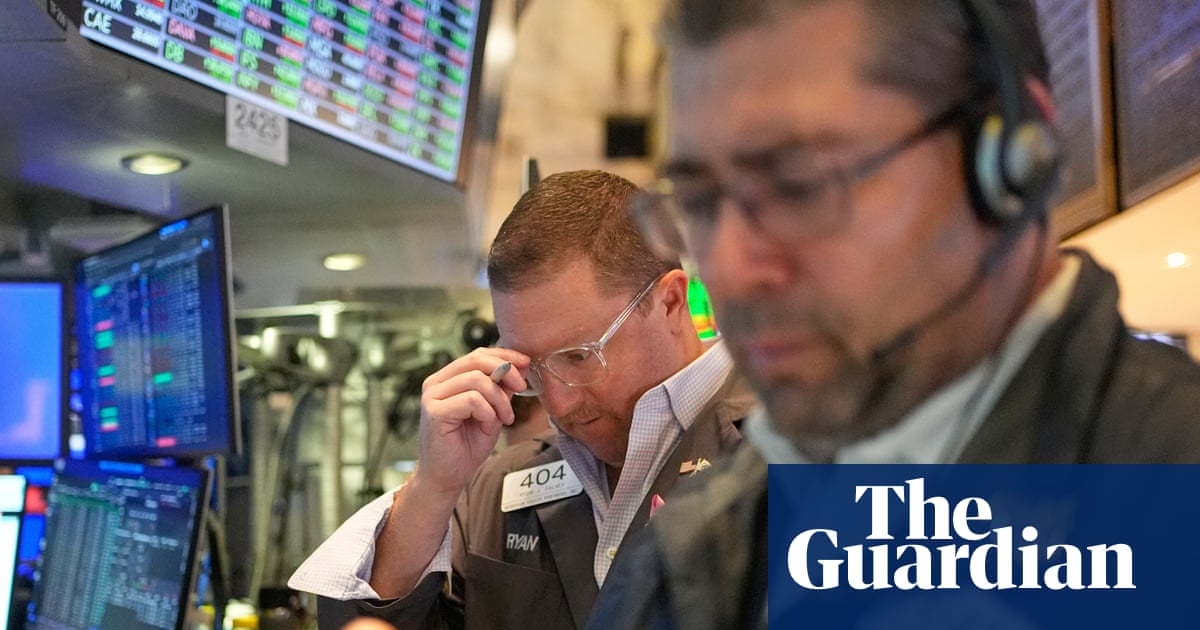
    Traders work, as a screen broadcasts a news conference by U.S. Federal Reserve Chair Jerome Powell following the Fed rate announcement, on the floor of the New York Stock Exchange (NYSE) in New York City, U.S., Sept. 17, 2025.

    Brendan McDermid | Reuters

    LONDON — European stocks are expected to open in negative territory on Wednesday as investors await the conclusion of the U.S. Federal Reserve’s meeting.

    The U.K.’s FTSE index is seen opening slightly below the flatline, Germany’s DAX 0.4% lower, France’s CAC 40 down 0.16% and Italy’s FTSE MIB 0.12% lower, according to data from IG.

    The big event for markets is the Fed’s interest rate cut today with a quarter-point trim widely seen as a done deal by traders. If the Federal Open Market Committee acts as expected, it will bring the federal funds rate to a range between 3.75%-4.00%.

    What’s less certain is whether Chair Jerome Powell will strike a dovish tone in his post-meeting comments.

    Following the cut this week, 84% of respondents see another reduction in December, and 54% see a third in January, according to the October CNBC Fed Survey. A total of 100 basis points of rate cuts are forecast this year and next, bringing the fed funds rate down to 3.2% by the end of 2026.

    Earnings are also dominating market attention this week with Alphabet, Meta Platforms and Microsoft set to report after the U.S. close on Wednesday. Apple and Amazon post results on Thursday.

    Trade tensions between the U.S. and China appear to be abating ahead of President Donald Trump’s meeting with Chinese President Xi Jinping on Thursday. Trump said Wednesday that he expects to lower fentanyl-linked tariffs on China ahead of the meeting.

    It’s a busy day for earnings in Europe on Thursday with Airbus, UBS, Banco Santander, Equinor, Deutsche Bank, BASF, Adidas, GSK and Endesa set to report. Data releases include Spanish GDP.

    — CNBC’s Steve Liesman and Sarah Min contributed to this market report.

    Continue Reading

  • Pakistan’s scheduled banks’ investments in gov’t securities up 19 pct-Xinhua

    ISLAMABAD, Oct. 29 (Xinhua) — Scheduled banks in Pakistan increased their investments in government securities by more than 5.8 trillion rupees (about 20.64 billion U.S. dollars) during the first nine months of 2025, reflecting both their continued preference for risk-free assets and the government’s rising financing needs, official data showed Wednesday.

    According to figures released by the State Bank of Pakistan (SBP), total investments of scheduled banks rose to 35.85 trillion rupees by September 2025 from 30 trillion rupees in January, marking a 19.3 percent increase.

    The banking sector’s total assets expanded to 52.4 percent of gross domestic product (GDP) in the 2024-25 fiscal year, up from 49.1 percent a year earlier, the SBP said.

    Data showed that banks continued to prefer government papers, from which they earn the bulk of their profits, while private lending remains subdued.

    Corporate investments in government securities also increased, reaching 7.86 trillion rupees by June 2025, or roughly 17 percent of total holdings, added the SBP.

    Meanwhile, deposits in the banking system rose by 4.19 trillion rupees over the same nine-month period, reaching 35.21 trillion rupees by September 2025 from 31 trillion rupees in January. (1 U.S. dollar equals 281 Pakistani rupees)

    Continue Reading

  • Solar farm plans for Gorefield countryside submitted

    Solar farm plans for Gorefield countryside submitted

    A solar farm built in the countryside could power more than 18,000 homes a year, a developer said.

    Renewable Connections Developments wants to install panels on about 96 hectares (237 acres) of farmland off Treading Bank, near Gorefield in Cambridgeshire.

    It said there was a “significant” need for more solar farms and after 40 years the land would be returned to agricultural use.

    Plans for the Treading Bank Solar Farm have been submitted to Fenland District Council.

    The planning documents stated the site would be linked directly to the electricity grid and said there were no proposals for a battery storage system on site.

    The developer highlighted government targets to reduce emissions and that decarbonising the power sector “is integral to achieving this goal”, the Local Democracy Reporting Service said.

    The plans said the farmland where the solar farm was proposed was mostly made up of a mix of “good quality” and “very good quality” agricultural land.

    The developer said it had looked at other sites but concluded there were no other “suitable and available” places to build it that would make a “comparable contribution to renewable energy”.

    A spokesperson wrote in the application: “At the end of the operational lifespan (circa 40 years), the solar panels and other infrastructure would be removed, and the site restored back to full agricultural use.”

    Continue Reading