Category: 3. Business

  • Kodiak Gas Services (KGS) One-Off $116M Loss Challenges Bullish Profitability Narrative

    Kodiak Gas Services (KGS) One-Off $116M Loss Challenges Bullish Profitability Narrative

    Kodiak Gas Services (KGS) capped off the year with a 65% jump in earnings, sharply reversing a prior five-year stretch that saw earnings fall by an average of 8.9% annually. Net profit margins improved to 6.5%, up from 5.1% last year. Analysts forecast earnings growth to continue at 18% per year. With shares trading at $33.91, well below the consensus price target of $66.60, the latest results have certainly caught investor attention. However, revenue growth is projected to lag the broader market and recent results were clouded by a one-off $116.0 million loss.

    See our full analysis for Kodiak Gas Services.

    Next, we set these headline earnings numbers against the community narratives that drive investor sentiment, to see what holds up and what gets challenged along the way.

    See what the community is saying about Kodiak Gas Services

    NYSE:KGS Earnings & Revenue History as at Nov 2025
    • Kodiak Gas Services trades at a Price-to-Earnings ratio of 35.3x, above both peer (34.3x) and industry (16.1x) averages, making its shares look expensive against comparable companies despite the recent earnings bump.

    • Analysts’ consensus view spotlights the tension that while the stock is trading at $33.91 (below both the analyst target of $44.09 and the DCF fair value of $66.60), its premium valuation relative to peers hinges on sustaining margin improvements and growing into lower multiples over time.

      • Kodiak would need to nearly triple profit margins, from 6.5% now to 19.3% by 2028, for its price to align with consensus forecasts.

      • The expectation that earnings will reach $293.4 million over the next few years underpins the analyst target, but that scenario assumes a much lower future PE (17.2x) than today, which may or may not materialize.

    • To see how the balanced perspective stacks up to the latest results and expectations, check the full consensus narrative and see what might shift next. ๐Ÿ“Š Read the full Kodiak Gas Services Consensus Narrative.

    • Although net profit margin has risen to 6.5% from 5.1% last year, Kodiak reported a one-off $116.0 million loss, highlighting volatility beneath the improving numbers.

    • Consensus narrative notes that analysts still expect profit margins to climb sharply, aided by efficiencies from technology investments and high fleet utilization. However, persistent labor tightness and concentration in the Permian Basin pose risks to margin durability.

      • Heavy reliance on growing natural gas demand and new large horsepower projects creates upside, but exposes results to boom-bust cycles and possible future margin compression if the environment sours.

      • The companyโ€™s drive to focus on high-margin compression units at premium rates supports further margin gains, though concentrated exposure may limit diversification and amplify swings.

    Continue Reading

  • The Bahamas Unveils New Tourism Strategy with Air Canada Boost at WTM London 2025

    The Bahamas Unveils New Tourism Strategy with Air Canada Boost at WTM London 2025

    Published on
    November 6, 2025

    The Bahamas unveils new tourism strategy with Air Canada boost at WTM London 2025, marking a significant step in the countryโ€™s efforts to enhance its appeal to global travelers. As one of the most sought-after Caribbean destinations, The Bahamas continues to strengthen its tourism infrastructure, with increased flight options, new luxury resorts, and a focus on sustainability. Air Canadaโ€™s expansion of direct flights from major Canadian cities to Nassau, the Bahamian capital, is set to make travel easier and more accessible for Canadian tourists, while supporting The Bahamasโ€™ goal of attracting year-round visitors. This strategic move is part of the nationโ€™s broader initiative to diversify its tourism offerings and solidify its position as a premier global destination.

    The Bahamas Launches New Tourism Strategy with Support from Air Canada at WTM London 2025

    The Bahamas is entering a new phase in globalization with the unveiling of an ambitious strategy at the World Travel Market (WTM) London 2025. The Caribbean destination will expect more clientele from different parts of the world with Air Canada increasing its flights to Nassau and the Bahamas renewed interest in sustainable, year-round tourism. The Bahamas, an unarguable tourism hotspot for sun-seekers, is tailored to invite multi-faceted clientele for diverse, year-round tourism. This article shares the new planned initiatives, what it means for the tourism and airline sectors, and what to expect for the next Bahamas holiday.

    Air Canadaโ€™s Boost to Bahamasโ€™ Tourism Sector

    Excitingly, Air Canada is expanding its air services to The Bahamas. From its Toronto and Montreal hubs, the airline is increasing the number of direct flights to Nassau, the Bahamasโ€™ capital. Canadian tourism to the islands is expected to increase 30% as a result of this lift. Canadians will soon be able to access a tropical holiday as direct flights on major Canadian cities will be offered and travel times will be significantly reduced.

    Air Canada is expanding its winter flights, which is a critical time as Canadians traditionally escape winter to The Bahamas. Canadians have historically been one of the largest visitor groups to The Bahamas. Air Canada is helping to grow this segment of the market. Increased flight capacity will give travelers more flexible options, as they will have direct flights throughout winter. These improvements to the islandsโ€™ capacity reflect a growing trend of international partnerships, helping to ensure tourism in The Bahamas is strong.

    The Bahamas Strengthens Its Global Tourism Partnerships at WTM London 2025

    At the World Travel Market London 2025, The Bahamas Ministry of Tourism, Investments & Aviation (BMOTIA) aims to strengthen relationships with global tourism stakeholders. WTM is the largest and most important travel trade show, with the participation of key players from more than 180 countries. For The Bahamas, this is an important opportunity to gain access to more new and emerging markets, as well as strengthen The Bahamasโ€™ connections with the international airlines and hotels.

    On a global stage, The Bahamas will promote its diverse tourism offerings, including its 16 tourism islands. Each offers something different to every type of traveler. From vibrant, energized Nassau and Paradise Island to the quiet, charming Out Islands, The Bahamas offers personalized vacation experiences. The new tourism strategy of The Bahamas will also focus on the promotion of sustainable tourism which will enhance the visitor experience and hold the okay the islands will reserve for generations.

    New Resorts and Luxury Hospitality Partnerships

    New flight routes have made travelling to The Bahamas even easier, and with the boom in the hospitality industry, the islands are becoming even more appealing. Luxury resorts and hotels have been expanding to The Bahamas. The new Four Seasons Resort being built on Paradise Island is set to open in late 2025 and will cater to premium clientele with its top tier amenities and services. Hilton, on the other hand, is also expanding her properties in The Bahamas and will diversify her accommodations to meet the varying value expectations of travelers.

    As seen in the expanding properties of Hilton and Four Seasons, The Bahamas is providing more hospitality and catering to more travelers with varying expectations and value. From the all-inclusive resorts on the more tourist heavy islands to the more boutique hotels on the Out Islands, there is something for everyone. Providing these new developments supporting the local economy and increasing the hospittality growth in the country.

    Experiential tourism is increasingly shaping the hospitality offerings in The Bahamas. The range of customized packages available to tourists now includes private island getaways and diving and snorkeling excursions in some of the clearest waters in the world. These bespoke, immersive offerings continue to increase in popularity as tourists look for more than just accommodation; they want to fully interact with the local culture and the surrounding natural environment.

    Sustainable Tourism in The Bahamas

    Sustainability will guide The Bahamas tourism strategy in the years to come. The government has recognized the need for responsible tourism that will economically benefit the country while protecting its vulnerable ecosystems. The Bahamasโ€™ Ministry of Tourism will work with stakeholders in the industry to implement tourism practices that will be environmentally sustainable across the hotels, airlines, and tour companies of the industry. This includes the use of renewable energy sources, mitigation of plastic waste, and active participation in the protection of marine and coral reef ecosystems.

    Visitors can take satisfaction in knowing that they are supporting eco-friendly places while practicing sustainable tourism. Tourists also appreciate the lush virgin terrain that the area has to offer. The Bahamas National Trust has shown great dedication to conservation, as in the case of Exuma Cays Land and Sea Park, where a variety of marine life is protected and one of the oldest no-take marine reserves in the world is located.

    The Bahamas is a perfect eco-friendly travel spot. From swimming with sea turtles to exploring the mangroves to the breathtaking blue holes and beyond, The Bahamas provides innumerable opportunities to appreciate and harmonize with the environment in a meaningful and thrilling way.

    Flight Details: Convenience for International Travelers

    In recent years, the Bahamas has shifted focus towards a more tourism-driven economy, prioritizing the needs of international travelers and improving the ease of travel to the islands. Major airlines such as Air Canada, Delta, and American Airlines have considerably expanded their routes to the Bahamas and have increased the number of flights to Bahamas. International travelers can escape to the islands rather easily, and American travelers can enjoy the Bahamas with little effort as there are several non-stop flights from major cities such as Miami, New York, and Atlanta.

    • Air Canada: Providing winter flights from Toronto, Montreal, and Ottawa to Nassau with daily direct flights throughout the winter.
    • American Airlines: Non-stop flights are offered from Miami, Dallas/Fort Worth, and Charlotte to Nassau.
    • Delta Airlines: New York, Atlanta, and Boston will see expanded winter flights to Nassau and Freeport.

    During the busy travel periods, these new flights from American Airlines and Air Canada will let travelers focus on enjoying their time on the islands and will avoid the hassle of waiting for a flight. The close distance makes the Bahamas an attractive destination and the direct flights from Europe, British Airways and other European airlines, make travel even more pleasant for international travelers.

    What Tourists Can Expect: A Blend of Culture, Adventure, and Relaxation

    Most travelers to The Bahamas would agree that the country is ideal for relaxation, adventure, or the immersion of oneโ€™s culture. The Bahamas is home to numerous culture centers and showcases an active festival called โ€œJunkanoo.โ€ This fiery celebration is not the only festival the capital city of Bahamas showcases, for there are other exhibitions of carnival parades and vibrant โ€œfreedomโ€ escorted local and international tourists. The capital city of The Bahamas is called Nassau. The customer to Nassau has the option to travel to the outer islands that have soft, white sandy beaches with a calm atmosphere, for a break in the action. They have the option to take their time for there is a slower pace of life to these beaches.

    The Bahamas offers world class diving and snorkeling. The outer islands to Nassau have reefs and snorkel areas where one can access the nurseries of coral and the reefs that are aged. They have shipwrecks for snorkeling and diving. The resorts of The Bahamas have marine life and host exclusive diving for their guests. A traveler in The Bahamas, a snorkel or diving resort, can access the marine kept caves and other reefs.

    Culture and especially the unique Bahamian cuisine and snacks which are served to tourists and travelers. The cuisine of The Bahamas is popularly influenced or made up of African, Mediterranean, and Caribbean styles. A tourist is guaranteed to have a marvelous time if they take or join the citizens of the Bahamas in having conch fritters, drunk rock lobster, and a Bahama Mama. The child and rock lobster can improve or โ€œliftโ€ the spirit of fat B### Travel Tips: Get the Most Out of Your Travels

    1. Early Booking for Flights: As the number of flights increase, the prices become more favorable, especially if you book for the peak holiday, winter, and spring break seasons.
    2. Think About Your Destination Island: The Bahamas has 16 different islands, each with its own experiences to shape your vacation. For more entertainment visit Nassau and Paradise Island and for a more restorative vacation choose the Out Islands.
    3. Pack Appropriately: The Bahamas being a tropical vacation location means you would need to bring lightweight and loose-fitting clothes. Donโ€™t forget your sunscreen, sunglasses, and bug spray. Lastly, bring a submerged camera to take photos of the colorful underwater life and beaches.
    4. Utilize Package Deals: For any given holiday, family or group, this package style which includes flights, meals and holiday activities will save you a great deal of money. Most resorts do this for the all-inclusive packages.
    5. Understand The Bahamas Culture: The time you set aside to learn about and see the full spectrum of the Bahamas via its rich culture, accommodations and local points of interests will give you a more rewarding experience. Recommended stops are the National Art Gallery of the Bahamas, the Pirates Museum in Nassau and the local settlements for a real Bahamian experience.

    The Bahamas unveils new tourism strategy with Air Canada boost at WTM London 2025, strengthening its global tourism partnerships. With increased flights and luxury resort developments, the islands are set to attract more visitors year-round.

    The Caribbeanโ€™s โ€˜All Yearโ€™ Destination

    The combination of easy access and enjoyable travel makes The Bahamas one of the best to get to and a delight to travel to The Bahamas any time of year. Seasonal and sustainable tourism, the coming of luxurious resorts, and the availability of year-round flights makes The Bahamas a favorite all year tourist destination. Travelers from the U.S., Canada, Europe, and other continents find myriad direct flights available to the Bahamas, including those in the Caribbean. The availability of direct flights, particularly those of Air Canada, makes the destination the โ€˜most accessibleโ€™ too. The Bahamas will continue to be a destination for many types of travelers. The hospitality, eco-tourism, and tourism experiences the Bahamas will most definitely flexible for all travelers.

    Continue Reading

  • Hyundai Motor Company President and CEO Josรฉ Muรฑoz Shares Strategic Vision for 2026 at 2025 Leaders Talk

    Hyundai Motor Company President and CEO Josรฉ Muรฑoz Shares Strategic Vision for 2026 at 2025 Leaders Talk

    Hyundai Motor Company President and CEO Josรฉ Muรฑoz met with employees around the world during the 2025 Leaders Talk, the companyโ€™s global town hall-style meeting, to share Hyundaiโ€™s strategic direction for 2026 and reinforce its commitment to agility, innovation, and sustainable growth.

    The event was held at Hyundai Motorโ€™s Gangnam office in Seoul, with 150 employees attending in person and many others joining via live stream.

    “As I reflect on my first year as CEO, I’m grateful for the dedication and resilience of our global team. The automotive industry is transforming faster than ever, but I’ve never been more confident in our ability to navigate whatโ€™s ahead. Our success in 2025 proved that adapting is truly part of our DNA. We achieved outstanding results while managing complexity. Looking toward 2026 and beyond, our strength lies in the quality and safety of our products, the flexibility of our strategy across powertrains and markets, and most importantly, the talent and commitment of our people. The partnerships we’re building, along with our manufacturing investments and product innovation, position us to lead the future of mobility.โ€

    As announced during its CEO Investor Day in September, Hyundai Motor aims to achieve 5.55 million global vehicle sales by 2030. Building on this momentum, electrified vehicles are expected to account for 60 percent of total sales, reaching 3.3 million units, with significant growth anticipated in North America, Europe, and Korea.

    To support this goal, the company will expand its hybrid lineup to more than 18 models by 2030, including the introduction of Genesis hybrid models starting in 2026.

    The companyโ€™s Genesis luxury brand, celebrating its 10th anniversary, has grown into a top 10 global premium brand, surpassing 1 million units in cumulative sales and expanding into over 20 markets. Genesis will launch the GV60 Magma, its first high-performance model, and introduce EREV and hybrid vehicles to accelerate electrification. The brand aims to reach 350,000 annual sales by 2030, strengthening its presence in the United States, Europe, the Middle East, Korea, China, and emerging markets.

    Hyundai Motorโ€™s strategic partnerships are also driving innovation. Since launching sales on Amazon, dealer traffic has increased by over 41 percent. Collaborations with Waymo and GM are progressing, with real-world testing and co-development of five vehicle models underway. Robotics initiatives are expanding the boundaries of mobility.


    Continue Reading

  • MSCI Adds 69 Companies, Removes 64 From Global Index in Review – Bloomberg.com

    1. MSCI Adds 69 Companies, Removes 64 From Global Index in Review  Bloomberg.com
    2. MSCI Rejig: Fortis Health, GE Vernova T&D, Paytm, Siemens Energy Added In November 2025 Review  NDTV Profit
    3. MSCI Reshuffles Global Standard Index: Indian Stocks in Focus  scanx.trade
    4. MSCI to Adjust ACWI Index with New Additions and Deletions  GuruFocus
    5. MSCI Rejig: Paytm, Fortis among Standard Index inclusions; Tata Elxsi dropped  CNBC TV18

    Continue Reading

  • Will quantum be bigger than AI?

    Will quantum be bigger than AI?

    Zoe KleinmanTechnology editor

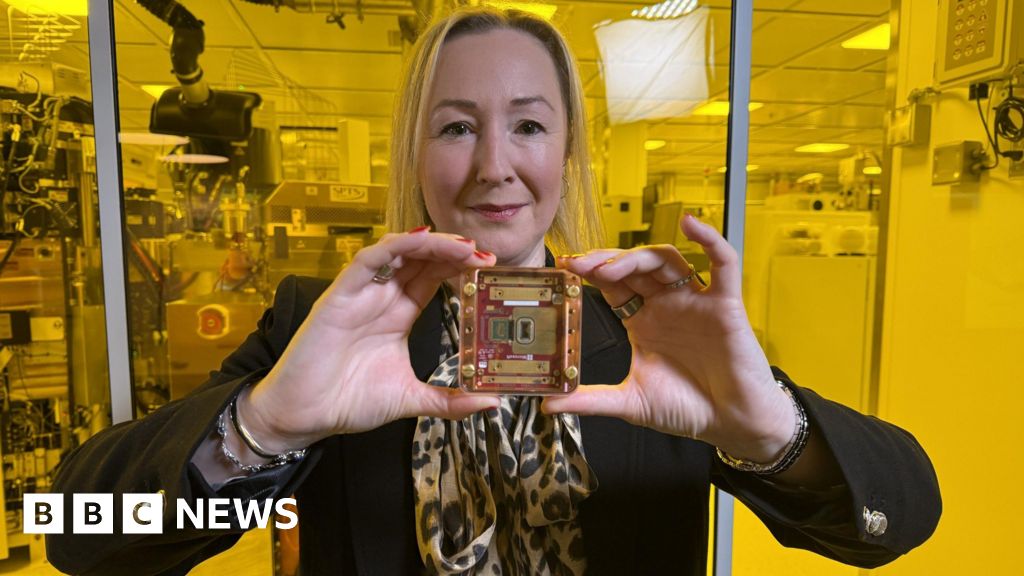
    BBC Technology editor Zoe Kleinman holding Microsoft's Mmajorana quantum chipBBC

    Tech firms such as Microsoft, whose Majorana chip is pictured here, are racing to embrace quantum

    There’s an old adage among tech journalists like me – you can either explain quantum accurately, or in a way that people understand, but you can’t do both.

    That’s because quantum mechanics – a strange and partly theoretical branch of physics – is a fiendishly difficult concept to get your head around.

    It involves tiny particles behaving in weird ways. And this odd activity has opened up the potential of a whole new world of scientific super power.

    Its mind-boggling complexity is probably a factor in why quantum has ended up with a lower profile than tech’s current rockstar – artificial intelligence (AI).

    This is despite a steady stream of recent big quantum announcements from tech giants like Microsoft and Google among others.

    Broadly speaking, we tend to think about quantum more commonly in the form of hardware like sensors and computers, while AI is more software-based โ€“ it requires hardware to operate.

    Put them together, and we might one day have a new form of technology that’s more powerful than anything we have ever createdโ€ฆ although the word “might” is doing some heavy-lifting in that particular prediction, warns Brian Hopkins, VP and principal analyst in emerging tech at research firm Forresters.

    “The potential is there, but the jury is still out,” he says.

    “Initial experiments suggest promise, but they all indicate that we require much more powerful quantum computers and further innovative research to effectively apply quantum effects to AI.”

    In terms of their value, both are lucrative. The quantum sector could be worth up to $97bn (ยฃ74bn) by 2025, according to market research group McKinsey.

    Meanwhile, AI’s value is forecast in the trillions. But they both live under the shadow of hype and the bursting of bubbles.

    “I used to believe that quantum computing was the most-hyped technology until the AI craze emerged,” jokes Mr Hopkins.

    In mid-October analysts warned some key quantum stocks could fall by up to 62%, while mutterings about an AI bubble grow ever louder.

    Quantum and AI have one more thing in common – errors. While we are largely familiar now with the “hallucinations” of generative AI tools, quantum is plagued by a different kind of error.

    These are caused because the state in which the particles have to operate is so fragile. The slightest change to the environment, including light and noise, can disrupt them.

    It’s tricky to sustain such an environment. This week Elon Musk suggested on X that quantum computing would run best on the “permanently shadowed craters of the moon”.

    Quantum computers don’t look anything like a traditional machines. There is no design blueprint, but they are currently very big.

    They exist in laboratories, and the most commonly adopted format seems to include a kind of jellyfish-inspired shape.

    They require extremely cold temperatures and lasers. It’s not the sort of thing you’re likely to have in your home, let alone in your pocket.

    They’re also a bit bling – researchers have found that using synthetic diamonds to create qubits, which are the building blocks of quantum computers, enables them to work much closer to room temperature.

    The luxury jeweller De Beers has a subsidiary company called Element 6, which claims to have launched the world’s first general-purpose quantum-grade diamond in 2020. And it has worked with Amazon Web Services on optimising artificial diamonds for future networks of quantum machines.

    AFP via Getty Images A man looking at a quantum computer last week at a technology conference in Washington DCAFP via Getty Images

    Quantum computers, such as this on display, are large structures

    These machines are all in their infancy right now, there are believed to be around 200 of them in the whole world (China however has not disclosed how many it has) โ€“ this doesn’t stop quantum experts making bold claims about their potential.

    “We as consumers will touch the impacts of quantum computing in almost every walk of our lives,” said Rajeeb Hazra, the boss of Quantinuum, a firm recently valued at $10bn. He was talking to the BBC’s Tech Life podcast.

    “The area of quantum computing is, in my mind, when you look at the applications, as big if not bigger than AI.”

    Prof Sir Peter Knight is one of the UK’s top quantum experts. “Things that could take the age of the universe to calculate, even on the most powerful supercomputer, could be performed probably in seconds,” he told Dr Jim Al-Khaleli on BBC Radio 4’s The Life Scientific.

    So what exactly are these gigantic, life-changing things that the machines might do once they’re ready?

    As with AI, there’s a lot of quantum research directed towards improving healthcare.

    Quantum computers could one day be able to effortlessly churn through endless combinations of molecules to come up with new drugs and medications โ€“ a process that currently takes years and years using classical computers.

    To give you an idea of that scale – in December 2024, Google unveiled a new quantum chip called Willow, which it claimed could take five minutes to solve a problem that would currently take the world’s fastest super computers 10 septillion years – or 10,000,000,000,000,000,000,000,000 years โ€“ to complete.

    Hazra says this could pave the way for personalised medication, where instead of getting a standard prescription, you get a specific drug tailormade for your individual body, that’s most likely to work for you.

    And that applies to wider chemical processes too, such as new ways to produce fertilizers more efficiently, potentially a huge boost for global farmers.

    Quantum sensors, which use the principles of quantum mechanics to measure things incredibly precisely, already exist and are found in atomic clocks.

    In 2019, scientists at Nottingham University put them in a prototype device the size of a bike helmet, and used them in a new system to conduct non-intrusive brain scans on children with conditions such as epilepsy.

    “The foundations for human cognition are laid down in the first decades of life, but there have always been limited ways to study them due to restrictions in brain scanning technology,” said researcher Ryan Hill at the time.

    “A particular problem has always been movement and the fact that the large traditional fixed scanners have always required patients to stay completely still.

    “Not only does this fail to give an accurate picture of the brain operating in a natural environment, but it also places severe restrictions on who can be scanned, with children representing the biggest challenge.”

    AFP via Getty Images A biologist pipetting cells in a laboratoryAFP via Getty Images

    Quantum is tipped to greatly speed up drug development

    Last year, scientists at Imperial College, London trialled an alternative to GPS satellite navigation, dubbed a “quantum compass”, on the city’s underground Tube network.

    GPS doesn’t work underground but this does โ€“ the idea is that it could more accurately track and pinpoint objects anywhere in the world, either above or below ground, unlike GPS signals which can be blocked, jammed and affected by the weather.

    “The UK economy relies on GPS to the tune of ยฃ1bn per day, position, navigation and timing โ€“ this is often labelled a defence requirement – but all our financial transactions require a timestamp for authentication,” says Dr Michael Cuthbert, director of the UK’s National Quantum Computing Centre.

    “Using quantum clocks, gyroscopes and magnetometers enables us to create a resilience against jamming and spoofing of our vital navigational systems.”

    The National Grid is investing in quantum research to see if it can help with what’s known as “load shedding” – how to maximise the output of thousands of generators from various energy sources as demand rises and falls in real time, preventing blackouts.

    And Airbus partnered with the UK quantum firm IonQ to trial quantum-based algorithms designed to load cargo more efficiently onto aircraft. An aircraft can use thousands of kilos of extra fuel if its centre of gravity shifts by just a small amount.

    AFP via Getty Images A quantum computer on display in ChinaAFP via Getty Images

    Western analysts are unsure how many quantum computers China has developed

    So far, so good โ€“ but we also need to talk about secrets.

    It is widely accepted that current forms of encryption โ€“ the way in which we store both personal data and official secrets โ€“ will one day be busted by quantum technology being able to churn through every single possible combination in record time, until the data becomes unscrambled.

    Nations are known to be already stealing encrypted data from each other with a view to being able to decode it one day.

    “It’s called harvest now, decrypt later,” says Prof Alan Woodward, a cybersecurity expert from Surrey University.

    “The theory of how to break current forms of public key encryption await a truly operational quantum computer,” he adds.

    “The threat is so high that it’s assumed everyone needs to introduce quantum-resistant encryption now.”

    The moment a such a computer exists is sometimes referred to as Q-day. Estimates of when it might arrive vary, but Brian Hopkins at Forrester says it could be soon – around the year 2030.

    Companies like Apple and the secure messaging platform Signal have already rolled out what they believe to be post-quantum encryption keys, but they cannot be applied retrospectively to current data encrypted in the traditional way.

    And that’s already a problem. In October, Daniel Shiu, the former head of cryptographic design at GCHQ, the UK’s intelligence, security and cyber agency, told the Sunday Times it was “credible that almost all UK citizens will have had data compromised” in state-sponsored cyber attacks carried out by China โ€“ with that data stockpiled for a time when it can be decrypted and studied.

    Read more global business and tech stories

    Continue Reading

  • MSCI Equity Indexes November 2025 Index Review

    MSCI Equity Indexes November 2025 Index Review

    ย 

    The data, data feeds, databases, reports, text, graphs, charts, images, videos, recordings, models, metrics, analytics, indexes, ratings, scores, cases, estimates, assessments, software, websites, products, services and other information and materials contained herein or delivered in connection with this notice (collectively, the โ€œInformationโ€) are copyrighted, trade secrets (when not publicly available), trademarks and proprietary property of MSCI Inc. or its subsidiaries (collectively, โ€œMSCIโ€), MSCIโ€™s licensors, direct or indirect suppliers and authorized sources, and/or any third party contributing to the Information (collectively, with MSCI, the โ€œInformation Providersโ€). All rights in the Information are reserved by MSCI and its Information Providers and user(s) shall not, nor assist others to, challenge or assert any rights in the Information.

    ย 

    Unless you contact MSCI and receive its prior written permission, you must NOT use the Information, directly or indirectly, in whole or in part (i) for commercial purposes, (ii) in a manner that competes with MSCI or impacts its ability to commercialize the Information or its services, (iii) to provide a service to a third party, (iv) to permit a third party to directly or indirectly access, use or resell the Information, (v) to redistribute or resell the Information in any form, (vi) to include the Information in any materials for public dissemination such as fund factsheets, market presentations, prospectuses, and investor information documents (e.g. KIIDs or KIDs), (vii) to create or as a component of any financial products, whether listed or traded over the counter or on a private placement basis or otherwise, (viii) to create any indexes, ratings or other data products, including in derivative works combined with other indexes or data or as a policy, product or performance benchmarks for active, passive or other financial products, (ix) to populate a database, or (x) to train, use as an input to, or otherwise in connection with any artificial intelligence, machine learning, large language models or similar technologies except as licensed and expressly authorized under MSCIโ€™s AI Contracting Supplement at https://www.msci.com/legal/supplemental-terms-for-client-use-of-artificial-intelligence.

    ย 

    The intellectual property rights of MSCI and its Information Providers may not be misappropriated or used in a competitive manner through the use of third-party data or financial products linked to the Information, including by using an MSCI index-linked future or option in a competing third-party index to provide an exposure to the underlying MSCI index or by using an MSCI index-linked ETF to create a financial product that provides an exposure to the underlying MSCI index without obtaining a license from MSCI.

    ย 

    The user or recipient of the Information assumes the entire risk of any use it may make, permit or cause to be made of the Information. NONE OF THE INFORMATION PROVIDERS MAKES ANY EXPRESS OR IMPLIED WARRANTIES OR REPRESENTATIONS WITH RESPECT TO THE INFORMATION (OR THE RESULTS TO BE OBTAINED BY THE USE THEREOF), AND TO THE MAXIMUM EXTENT PERMITTED BY APPLICABLE LAW, EACH INFORMATION PROVIDER EXPRESSLY DISCLAIMS ALL IMPLIED WARRANTIES (INCLUDING ANY IMPLIED WARRANTIES OF ORIGINALITY, ACCURACY, TIMELINESS, SUITABILITY, NON-INFRINGEMENT, COMPLETENESS, MERCHANTABILITY AND FITNESS FOR A PARTICULAR PURPOSE) WITH RESPECT TO ANY OF THE INFORMATION. Without limiting any of the foregoing and to the maximum extent permitted by applicable law, in no event shall MSCI or any other Information Provider have any liability arising out of or relating to any of the Information, including for any direct, indirect, special, punitive, consequential (including lost profits) or any other damages, even if notified of the possibility of such damages. The foregoing shall not exclude or limit any liability that may not by applicable law be excluded or limited.

    ย 

    The Information, including index construction, ratings, historical data, or analysis, is not a prediction or guarantee of future performance, and must not be relied upon as such. Past performance is not indicative of future results. The Information may contain back tested data. Back-tested performance based on back-tested data is not actual performance but is hypothetical. There are frequently material differences between back tested performance results and actual results subsequently achieved by any investment strategy. The Information may include โ€œSignals,โ€ defined as quantitative attributes or the product of methods or formulas that describe or are derived from calculations using historical data. Signals are inherently backward-looking because of their use of historical data, and they are inherently inaccurate, not intended to predict the future and must not be relied upon as such. The relevance, correlations and accuracy of Signals frequently change materially over time.

    ย 

    The Information may include data relating to indicative prices, evaluated pricing or other information based on estimates or evaluations (collectively, โ€œEvaluationsโ€) that are not current and do not reflect real-time traded prices. No evaluation method, including those used by the Information Providers, may consistently generate evaluations or estimates that correspond to actual โ€œtradedโ€ prices of any relevant securities or other assets. Evaluations are subject to change at any time without notice and without any duty to update or inform you, may not reflect prices at which actual transactions or collateral calls may occur or have occurred. The market price of securities, financial instruments, and other assets can be determined only if and when executed in the market. There may be no, or may not have been any, secondary trading market for the relevant securities, financial instruments or other assets. Private capital, equity, credit and other assets and their prices may be assessed infrequently, may not be priced on a secondary market, and shall not be relied upon as an explicit or implicit valuation of a particular instrument. Any reliance on fair value estimates and non-market inputs introduces potential biases and subjectivity. Internal Rate of Return metrics are not fully representative without full disclosure of fund cash flows, assumptions, and time horizons.

    ย 

    The Information does not constitute, and must not be relied upon as, investment advice, credit ratings, or proxy advisory or voting services. None of the Information Providers, their products or services, are fiduciaries or make any recommendation, endorsement, or approval of any investment decision or asset allocation. Likewise, the Information does not represent an offer to sell, a solicitation to buy, or an endorsement of any security, financial product, instrument, investment vehicle, or trading strategy, whether or not linked to or in any way based on any MSCI index, rating, subcomponent, or other Information (collectively, โ€œLinked Investmentsโ€).The Information should not be relied on and is not a substitute for the skill, judgment and experience of any user when making investment and other business decisions. MSCI is not responsible for any userโ€™s compliance with applicable laws and regulations. All Information is impersonal, not tailored to the needs of any person, entity or group of persons, not objectively verifiable in every respect, and may not be based on information that is important to any user.

    ย 

    It is not possible to invest in an index. Exposure to an asset class or trading strategy or other category represented by an index is only available through third party investable instruments (if any) based on that index. MSCI makes no assurance that any Linked Investments will accurately track index performance or provide positive investment returns. Index returns do not represent results of actual trading of investible assets/securities. MSCI maintains and calculates indexes but does not manage assets. The calculation of indexes and index returns may deviate from the stated methodology. Index returns do not reflect payment of any sales charges or fees an investor may pay to purchase securities underlying the index or Linked Investments. The imposition of these fees and charges would cause the performance of a Linked Investment to be different than the MSCI index performance.

    ย 

    Information provided by MSCI Solutions LLC and certain related entities (โ€œMSCI Solutionsโ€), including materials utilized in MSCI sustainability and climate products, have not been submitted to, nor received approval from any regulatory body. MSCI sustainability and climate offerings, research and data are produced by, and ratings are solely the opinion of MSCI Solutions. MSCI India Domestic ESG Ratings are produced by MSCI ESG Ratings and Research Private Limited and offered domestically in India. Other MSCI products and services may utilize information from MSCI Solutions, Barra LLC or other affiliates. More information can be found in the relevant methodologies on www.msci.com. MSCI Indexes are administered by MSCI Limited (UK) and MSCI Deutschland GmbH. No regulated use of any MSCI private real assets indexes in any jurisdiction is permitted without MSCIโ€™s express written authorization. The process for applying for MSCIโ€™s express written authorization can be found at: https://www.msci.com/index-regulation.

    ย 

    MSCI receives compensation in connection with licensing its indexes and other Information to third parties. MSCI Inc.โ€™s revenue includes fees based on assets in Linked Investments. Information can be found in MSCI Inc.โ€™s company filings on the Investor Relations section of msci.com. Issuers mentioned in MSCI Solutions materials or their affiliates may purchase research or other products or services from one or more MSCI affiliates, manage financial products such as mutual funds or ETFs rated by MSCI Solutions or its affiliates or are based on MSCI Indexes. Constituents of MSCI equity indexes are listed companies, which are included in or excluded from the indexes according to the application of the relevant index methodologies. Constituents in MSCI Inc. equity indexes may include MSCI Inc., clients of MSCI or suppliers to MSCI. MSCI Solutions has taken steps to mitigate potential conflicts of interest and safeguard the integrity and independence of its research and ratings.

    ย 

    MIFID2/MIFIR notice: MSCI Solutions does not distribute or act as an intermediary for financial instruments or structured deposits, nor does it deal on its own account, provide execution services for others or manage client accounts. No MSCI product or service supports, promotes or is intended to support or promote any such activity. MSCI Solutions is an independent provider of sustainability and climate data. All use of indicative prices for carbon credits must comply with any rules specified by MSCI. All transactions in carbon credits must be traded โ€œover-the-counterโ€ (i.e. not on a regulated market, trading venue or platform that performs a similar function to a trading venue) and result in physical delivery of the carbon credits.

    ย 

    You may not remove, alter, or obscure any attribution to MSCI or notices or disclaimers that apply to the Information. MSCI, Barra, RiskMetrics, and other MSCI brands and product names are the trademarks, service marks, or registered trademarks of MSCI or its subsidiaries in the United States and other jurisdictions. The Global Industry Classification Standard (GICS) was developed by and is the exclusive property of MSCI and S&P Dow Jones Indices. โ€œGlobal Industry Classification Standard (GICS)โ€ is a service mark of MSCI and S&P Dow Jones Indices. Terms such as including, includes, for example, such as and similar terms used herein are without limitation.

    ย 

    MSCI and its Information Providers may use automated technologies and artificial intelligence to help generate content and output incorporated in the Information.

    ย 

    Privacy notice: For information about how MSCI collects and uses personal data, please refer to our Privacy Notice at: https://www.msci.com/privacy-pledge. For copyright infringement claims contact us at dmca@msci.com. This notice is governed by the laws of the State of New York without regard to conflict of laws principles.

    Continue Reading

  • Robinhood Crypto Revenues Jump But Still Miss Analyst Estimates – Bloomberg.com

    1. Robinhood Crypto Revenues Jump But Still Miss Analyst Estimates  Bloomberg.com
    2. Robinhood doubles revenue as it beats third-quarter earnings expectations  CNBC
    3. Robinhood profit skyrockets as retail traders ride market momentum  MSN
    4. A certain exchange’s Q3 net revenue reached $1.27 billion, exceeding market expectations.  Bitget
    5. Key facts: Robinhood to report earnings; launches event contracts for sports  TradingView

    Continue Reading

  • Before greenlighting Lake Charles LNG, Energy Transfer seeks 80% equity selldown

    Before greenlighting Lake Charles LNG, Energy Transfer seeks 80% equity selldown

    HOUSTON, Nov 5 (Reuters) – U.S. pipeline operator Energy Transfer (ET.N), opens new tab will not give its Lake Charles liquefied natural gas export facility in Louisiana a financial go-ahead until 80% of the project has been sold to equity partners, company executives said on Wednesday on a post-earnings call.

    Energy Transfer has been developing the 16.5 million metric tons per annum LNG export facility and has sold most of the expected production to long-term customers, but has faced rising project costs and wants to share the risk with equity partners.

    Sign up here.

    “Our projects need to meet certain risk-return criteria, and we’re not there yet on LNG,” co-CEO Tom Long said.

    “We are hoping that these equity partners will step up by the end of the year and get us to where we want this kind of risk profile, in the space we want this project,” he added.

    The company earlier this year signed a non-binding agreement with MidOcean Energy to jointly develop the Lake Charles LNG export facility.

    MidOcean is expected to pay for 30% of the construction costs of the facility and receive 30% of the LNG production, or roughly 5 million tons a year.

    POSITIONING FOR BOOMING POWER DEMAND

    Energy Transfer is also looking to position itself to further benefit from booming power demand from data centers, mulling the conversion of one of its natural gas liquids pipelines to natural gas.

    Energy Transfer operates three pipelines moving natural gas liquids (NGL) out of the Permian Basin, which straddles Texas and New Mexico. Natural gas liquids such as ethane, butane and propane are used to make plastics and chemicals as well as for heating and cooking.

    But moving natural gas rather than NGLs may offer considerably better returns, executives said.

    “Some of the scenarios show twice the revenue with natural gas than what we might see with NGLs,” said co-CEO Mackie McCrea.

    Domestic natural gas consumption will rise from a record 90.5 billion cubic feet per day in 2024 to 91.6 bcfd in 2025 and 2026, the U.S. Energy Information Administration said in its latest Short-Term Energy Outlook.

    Reporting by Georgina McCartney and Curtis Williams in Houston; Editing by Chris Reese and Sonali Paul

    Our Standards: The Thomson Reuters Trust Principles., opens new tab

    Continue Reading

  • Spot the difference: parents warned that fake Labubu dolls could contain lead and pose choking risk | Toys

    Spot the difference: parents warned that fake Labubu dolls could contain lead and pose choking risk | Toys

    Does your Labubu have exactly nine teeth? Are its ears narrow? Or do its body parts โ€“ eyes, feet and hands โ€“ detach from its grimacing face?

    The Australian Competition and Consumer Commission has issued a warning to fans of the it-dolls, stating that a burgeoning market of counterfeit Labubus could pose safety risks to young children.

    The fake dolls, often called Lafufus, can pose a choking risk due to potentially detachable parts and poor-quality stitching. The ACCC said it was also concerned counterfeit products could contain unsafe levels of harmful chemicals, including lead.

    โ€œWatch out for potential safety risks associated with counterfeit or fake Labubu dolls โ€“ often called Lafufus โ€“ and keep these products away from young children,โ€ the ACCC said in a product safety release on Wednesday.

    Sign up: AU Breaking News email

    โ€œLafufu dolls may pose a safety risk to consumers, especially young children. Some Lafufus are small enough to fit entirely within the mouth of a young child, while other versions may have detachable body parts such as eyes, feet and hands, and poor stitching, which may be a choking hazard.โ€

    The ACCC provided a few brief tips to identify a real Labubu, made by the company Pop Mart, from a fake:

    • Counterfeit items could have small detachable parts like eyes, feet or hands.

    • Lafufuโ€™s could have poor stitching or use cheap fabrics.

    • Authentic Labubus have exactly nine teeth. Fake items could have ears that are too wide.

    • Counterfeits are often sold at much lower prices.

    skip past newsletter promotion

    Genuine Labubus vary in price but start at about $32 on the Pop Mart website for a keychain plush doll. More exclusive versions can cost up to $340 for a larger doll.

    New South Wales Fair Trading issued its own warning about counterfeit dolls earlier this year, saying in July that while Labubus are all the rage, an underground market was targeting desperate customers.

    The agency said at the time that customers should buy them from trusted online businesses and check reviews before buying the dolls.

    The NSW health department notes that even low levels of lead exposure can affect childrenโ€™s mental and physical development. In adults, it can cause high blood pressure and impact kidney and brain function.

    โ€œLead exposure in children, even at low levels, can be harmful and can result in decreased intelligence, impaired neurobehavioral development, decreased stature and growth and impaired hearing,โ€ the department says on its website.

    If you believe your child has been exposed to lead, the Sydney Childrenโ€™s hospital network urges parents to remove the toy or object and call their local poisons information centre.

    They can advise whether to see a doctor or present to an emergency department.

    Continue Reading

  • Arm (ARM) Q2 2026 Earnings Call Transcript

    Arm (ARM) Q2 2026 Earnings Call Transcript

    Image source: The Motley Fool.

    DATE

    Nov. 5, 2025 at 5 p.m. ET

    CALL PARTICIPANTS

    Chief Executive Officer โ€” Rene Haas

    Chief Financial Officer โ€” Jason Child

    Need a quote from a Motley Fool analyst? Email [emailย protected]

    TAKEAWAYS

    Total revenue — $1.14 billion for the fiscal second quarter ended Sept. 30, 2025, up 34% year over year, marking the third consecutive quarter above $1 billion and exceeding the midpoint of guidance by $75 million.

    Royalty revenue — $620 million for the fiscal second quarter, up 21% year over year, driven by increased smartphone royalty rates per chip and a doubling of data center royalties.

    Licensing revenue — $550 million for the fiscal second quarter, a 56% increase year over year, as customers pursued next-generation AI products; includes $515 million from license and other revenue.

    Non-GAAP operating expenses — $648 million for the fiscal second quarter, up 31% year over year, reflecting expanded R&D investment and finishing slightly below company guidance.

    Non-GAAP operating income — $467 million for the fiscal second quarter, up 43% year over year, resulting in a non-GAAP operating margin of 41.1%, compared to 38.6% a year ago.

    Non-GAAP EPS — $0.39 for the fiscal second quarter, $0.06 above the midpoint of guidance, benefiting from higher revenue and marginally lower operating expense.

    Annualized contract value (ACV) — Grew 28% year over year in the fiscal second quarter, above both historic averages and long-term targets, maintaining strong momentum after 28% growth in the prior quarter.

    Strategic partnership — Announced new AI partnership with Meta to drive efficiency across cloud and edge compute platforms.

    Neoverse platform — Surpassed 1 billion CPUs deployed, with business growth more than doubling year over year.

    Compute Subsystem (CSS) licensing — Signed three new CSS licenses, totaling 19 licenses across 11 companies; top four Android phone vendors now shipping CSS-powered devices.

    LUMIX CSS launch — Introduced the LUMIX CSS mobile platform with immediate royalty revenue from at least one early licensee.

    China revenue — Approximately 22% of total sales in the fiscal second quarter, with licensing providing a greater contribution to the quarter’s outperformance than royalties.

    SoftBank-related revenue — Increased to $178 million in the fiscal second quarter, up $52 million sequentially from last quarter, driven by licensing and design services.

    Guidance for next quarter — Revenue forecasted at $1.225 billion (plus or minus $50 million) for the fiscal third quarter, representing approximately 25% growth; expected royalties up just over 20% year over year, and licensing up 25%-30% year over year; non-GAAP operating expense expected at $720 million; non-GAAP EPS expected at $0.41 plus or minus 4ยข.

    Dream Big Semiconductor acquisition — Announced intent to acquire Dream Big Semiconductor to strengthen offerings in Ethernet and RDMA controller technology for data center networking.

    SUMMARY

    Arm (ARM 0.34%) reported record fiscal second quarter revenue and royalty figures, citing robust demand for AI compute across edge devices and hyperscale data centers. Management highlighted that power constraints are accelerating adoption of Arm’s efficient compute platform, with CEO Rene Haas stating, “power has become the bottleneck” and positioning Arm as “about 50% more efficient than competitive solutions.” The Neoverse business more than doubled year over year, and the company launched LUMIX CSS, enabling early royalty realization. The new partnership with Meta and the planned Dream Big Semiconductor acquisition expand Arm’s product scope and addressable market. Management also noted that annualized contract value has grown “well above our usual run rate” due to strategic engagement and demand for next-generation architectures. The SoftBank-related revenue stream, combining license and funded design services, was described as “a good run rate to assume going forward,” but recognized as lower margin and subject to future product mix evolution. Demand for AI compute and related data center build-outs has grown since the $500 billion Stargate project announcement in January 2025, with infrastructure investment identified as the main gating factor for scaling revenue impact.

    Management described immediate royalty revenue from LUMIX CSS as “a little ahead of what we’d expected,” enabled by pre-existing deep customer collaboration.

    Arm indicated that the mix of royalty revenue from cloud and networking is trending toward 15%-20% of total royalties, up from 10% last year, with further updates expected at year-end.

    Licensing revenue in China was a larger driver of outperformance than royalties, and the licensing pipeline for the remainder of the year remains strong.

    Arm is accelerating R&D investment to support customer demand for next-generation architectures, compute subsystems, and potential expansion into chiplets or complete SoCs.

    INDUSTRY GLOSSARY

    Neoverse: Arm’s CPU platform targeted at data center, cloud, and infrastructure applications, prioritizing high efficiency and scalability.

    CSS (Compute Subsystem): A pre-validated, integrated block of core IP and subsystems from Arm, enabling faster customer chip design and reduced time to market.

    LUMIX CSS: Arm’s latest mobile compute platform, integrating advanced AI and performance capabilities for flagship smartphones.

    Stargate: A multi-company AI data center initiative (announced by OpenAI, Oracle, and SoftBank) intended for massive-scale compute infrastructure projects, with Arm as a strategic technology provider.

    RDMA (Remote Direct Memory Access): Networking hardware capability acquired via Dream Big Semiconductor, enabling high-speed, low-latency data transfer between servers in data centers.

    Annualized contract value (ACV): A metric representing the yearly value of active licensing contracts signed within a given period.

    Full Conference Call Transcript

    Rene Haas, Arm’s Chief Executive Officer, and Jason Child, Arm’s Chief Financial Officer. During the call, Arm Holdings plc American Depositary Shares will discuss forecasts, targets, and other forward-looking information regarding the company and its financial results. While these statements represent our best current judgment about future results and performance, our actual results are subject to many risks and uncertainties that could cause results to differ materially. In addition to any risks that we highlight during this call, important risk factors that may affect our future results and performance are described in our registration statement on Form 20-F filed with the SEC. Arm Holdings plc American Depositary Shares assumes no obligation to update any forward-looking statements.

    We will refer to non-GAAP financial measures during this discussion. Reconciliations of certain of these non-GAAP financial measures to their most directly comparable GAAP financial measures can be found in our shareholder letter, as can a discussion of projected non-GAAP financial measures that we are not able to reconcile without unreasonable efforts and supplemental financial information. Our earnings-related materials are on our website at investors.arm.com. And with that, I’ll turn the call to Rene. Rene?

    Rene Haas: Thank you, Jeff, and welcome, everyone. We continue its fiscal year 2026 with strong momentum, fueled by accelerating demand for AI compute from milliwatts in the smallest of edge devices to megawatts in the world’s largest hyperscale data centers. Artificial intelligence is reshaping every layer of technology, and Arm Holdings plc American Depositary Shares is the only compute platform delivering AI everywhere. Q2 was our best second quarter ever.

    Rene Haas: With revenue of $1.14 billion, up 34% year on year, marking our third consecutive $1 billion quarter. Royalty revenue reached a record $620 million, up 21% year on year. Licensing revenue rose 56% to $550 million as companies continue choosing Arm Holdings plc American Depositary Shares to build our next-generation AI products. Our strong results lifted non-GAAP EPS above the high end of guidance. During the quarter, we announced a strategic partnership with Meta to scale AI efficiency across every layer of compute, from AI-enabled wearables to AI data centers on a consistent compute platform.

    This partnership combines Arm Holdings plc American Depositary Shares’ leadership in energy-efficient compute with Meta’s innovation in AI infrastructure and open technologies to deliver richer, more efficient AI experiences to billions of people worldwide. In the data center, access to power has now become the bottleneck, and this has accelerated adoption of Arm Holdings plc American Depositary Shares’ Neoverse compute platform, which has now surpassed 1 billion CPUs deployed. Our compute forms the foundation of custom silicon from leading partners, including NVIDIA Grace, AWS Graviton, Google Axion, and Microsoft Cobalt. For example, Google’s Arm-based Axion chip delivers up to 65% better price performance while using 60% less energy.

    As a result, Google is migrating the majority of their internal workloads to run on Arm Holdings plc American Depositary Shares. Customers are increasingly deploying Arm VMware CPUs alongside their AI accelerators to orchestrate massive clusters, highlighting the versatility and scalability of our platform. The addition of five new Stargate sites this quarter further expands visibility into future AI capacity and reinforces Arm Holdings plc American Depositary Shares’ central role in the hyperscale build-out. As AI chip design becomes more complex, compute subsystems or CSS are helping customers accelerate their development cycles and reduce execution risk. Demand for CSS continues to exceed expectations.

    During the quarter, we signed three new CSS licenses, one each in smartphones, tablets, and data centers, bringing our total to 19 CSS licenses across 11 companies. We also expanded our collaboration with Samsung, which is leveraging CSS for its Exynos family of chipsets, driving up to 40% AI performance over previous non-CSS generations. As a result, the top four Android phone vendors are now shipping CSS-powered devices. CSS has quickly become the starting point for customers building next-generation silicon, offering faster time to market and delivering higher T world trades for Arm Holdings plc American Depositary Shares. In the quarter, we also launched LUMIX CSS, our most advanced mobile compute platform to date.

    LUMIX enables rich on-device AI experiences such as real-time translation, image enhancement, and personal assistance. Flagship devices from partners like Oppo and Vivo are expected to ramp later this year, bringing console-quality performance and new AI capabilities directly to mobile devices. At the edge, AI is transforming how people interact with their devices in their hands, homes, and vehicles. Google launched the Pixel 10 smartphone featuring the new Arm-based Tensor G5 chip, which runs Gemini models up to 2.6 times faster and twice as efficiently as prior generations. NVIDIA began shipping its Arm-based DGX Spark system for AI developers, a compact desktop supercomputer for local model training, fine-tuning, and inference.

    In automotive, a flagship electric vehicle built on Arm Holdings plc American Depositary Shares platform introduced advanced park assist, voice control, and safety features featuring Arm Holdings plc American Depositary Shares’ automotive-enhanced technologies. Tesla’s next-generation Arm-based AI5 chip delivers up to 40 times faster AI performance, enabling the next wave of intelligent vehicles and autonomous machines. Our leadership in AI is amplified by our unmatched software developer ecosystem, now more than 22 million strong, representing over 80% of the world’s developer base. This ecosystem is a powerful growth engine for Arm Holdings plc American Depositary Shares.

    Every new Arm-based device brings more developers, which drives more software innovation, which in turn fuels greater demand for our compute platform across every market we serve. As mentioned in our last call, we are continuing to explore the possibility of moving beyond our current platform into additional compute subsystems, chiplets, or complex SoCs. As a result, we continue to accelerate the investment in our R&D as we are seeing increased demand from our customers far more from our. AI is shaping how the world computes, and Arm Holdings plc American Depositary Shares is the foundation making it. From milliwatts to megawatts, we deliver the performance, efficiency, and scalability to meet this moment and the years ahead.

    And with that, I’ll hand it over to Jason.

    Jason Child: Thank you, Rene. We have delivered another strong quarter.

    Jason Child: Total revenue grew 34% year on year to $1.14 billion, a record for Q2. It exceeded the midpoint of our guidance range by $75 million and marked our third consecutive quarter above $1 billion. Royalty revenue exceeded our expectations, growing 21% year on year to a record of $620 million versus our guidance of mid-teens. The biggest growth contributors were smartphones with higher royalty rates per chip and in data centers where we continue to see share gains from custom hyperscaler chips. Royalty revenue from smartphones grew an order of magnitude faster than the market as multiple OEMs ramped smartphone space on Arm Holdings plc American Depositary Shares’ V9 and CSS chips.

    Data center royalties doubled year on year, given the continued deployment of Arm Holdings plc American Depositary Shares-based chips by hyperscaler companies. Automotive and IoT both continued to grow year on year and contributed to our strong royalty performance. Overall, royalty growth rates continue to reflect Arm Holdings plc American Depositary Shares’ increasing royalty rates and rising market share. Turning now to license. License and other revenue was $515 million, up 56% year on year. Growth was driven by strong demand for next-generation architectures and deeper strategic engagements with key customers. We further expanded our license and services agreement with SoftBank. We also signed four ATA and three CSS deals.

    These agreements reflect the continued investment by our customers in next-generation Arm Holdings plc American Depositary Shares technology. As always, licensing revenue varies quarter to quarter due to the timing and size of high-value deals. So we continue to focus on annualized contract value or ACV as a key indicator of the underlying licensing trend. ACV grew 28% year on year, maintaining strong momentum following the 28% year on year growth we reported in Q1. This is well above our usual run rate of low teens growth rates and is also above our long-term expectation of mid to high single-digit growth for license revenue. Turning to operating expenses and profits.

    Non-GAAP operating expenses were $648 million, up 31% year on year, on strong R&D investment, and slightly below guidance. These investments in R&D reflect ongoing engineering headcount expansion to support customer demand for more Arm Holdings plc American Depositary Shares technology, including continued innovation in next-generation architectures, compute subsystems, and possibly chiplets or complete SoCs. For example, over the past four years, we’ve invested heavily in developing the technology that makes up the Lumex compute subsystems for smartphones, which we announced in September. This project took around a thousand man-years with a team size peaking over 450 engineers and required around hundreds of millions of dollars in investment.

    Lumex CSS has attracted strong market interest and we’re already seeing royalty revenue from an early licensee. Non-GAAP operating income was $467 million, up 43% year on year. This resulted in a non-GAAP operating margin of 41.1% and an improvement from 38.6% a year ago. Non-GAAP EPS was $0.39, $0.06 above the midpoint of our guidance range, driven by both higher revenue and slightly lower OpEx. Turning now to guidance. Our guidance reflects our current view of our end markets and our licensing pipeline. For Q3, expect revenue of $1.225 billion plus or minus $50 million. At the midpoint, this represents revenue growth of about 25% year on year.

    We expect royalties to be up just over 20% year on year, and licensing to be up 25 to 30% year on year. We expect our non-GAAP operating expense to be approximately $720 million and our non-GAAP EPS to be $0.41 plus or minus 4ยข. Our higher revenue allows us to both accelerate R&D investment and pass through upside to EPS. We are seeing strong demand from our customers for Arm Holdings plc American Depositary Shares technology, which gives us confidence in our long-term growth trajectory and our strategy to enable AI everywhere. In the cloud, at the edge, and in physical devices.

    And we will continue investing aggressively in R&D to capture these opportunities and ensure that AI runs on Arm Holdings plc American Depositary Shares. With that, I’ll turn the call back to the operator for the Q&A portion of the call.

    Operator: Thank you. To ask a question, you will need to press 11 on your telephone and wait for your name to be announced. In the interest of time, please limit yourself to one question only and rejoin the queue for any follow-up. To withdraw your question, please press 11 again. We will now go to the first question. And your first question today comes from the line of Sebastien Naji from William Blair. Please go ahead.

    Sebastien Naji: Yeah. Good afternoon. And congrats on the nice results. Rene, I wanted to ask about the AI. There’s been a seemingly nonstop stream of new data center deals announced over the last quarter calling for tens of gigawatts of additional computing capacity to be stood up. How do you feel about Arm Holdings plc American Depositary Shares’ strategic positioning with respect to these AI deals? And what do you view as the opportunity across the build-out?

    Rene Haas: Thank you for the question, Sebastien. As a board member of SoftBank and also given our heavy involvement there with Stargate and regular dialogue with OpenAI, I believe I have a unique perspective in terms of visibility in terms of this market. One thing that’s become quite evident is that power has become the bottleneck. For everyone, and power not only means access to energy, but everything underneath it in terms of infrastructure build-out, turbines, transformers, everything associated with generating power. So in that environment, everyone wants to move the most efficient compute platform as possible. Arm Holdings plc American Depositary Shares is about 50% more efficient than competitive solutions.

    We’ve seen that across the board in benchmarks, but also more importantly in real-life performance. And that’s why we see NVIDIA, Amazon, Google, Microsoft, Tesla, all using our best technology. We’ve seen unprecedented demand for compute and all the incremental compute that we’ve seen announced literally has all been based on Arm Holdings plc American Depositary Shares. So that’s driving a huge growth opportunity for us. It’s one of the indicators as to why we’ve seen such growth in our Neoverse business. More than doubling year over year.

    Sebastien Naji: Great. Thank you.

    Operator: Thank you. Your next question comes from the line of Joseph Michael Quatrochi from Wells Fargo. Please go ahead.

    Joseph Michael Quatrochi: Yeah. Thanks for taking the question. I noticed in the filing, you announced your intention to acquire Dream Big Semiconductor. Curious just kinda what’s behind that and how does that kinda fold into your plans, you know, to potentially expand beyond your current kinda offering platform?

    Rene Haas: Yeah. Thank you for the question. So Dream Big is a great company. They’ve got a lot of interesting intellectual property, particularly around the Ethernet area and RDMA controllers, which are very key for scale-up and scale-out networking. So when we look at the demand for what’s going on inside the data center and particularly in the area of high-speed communications, that type of technology will be very helpful for us to broaden our offering to end customers. So we’re very excited about the company, and Dream Big’s got some fantastic engineers.

    Jason Child: Thank you.

    Operator: Your next question comes from the line of Jim Schneider from Goldman Sachs. Please go ahead.

    Jim Schneider: Good afternoon. Thanks for taking my question. I noticed in your disclosures that you saw a material step up in related party revenue. I was wondering if you could maybe talk a little bit about, and there’s also been many announcements related to Stargate and SoftBank since the last earnings. So also can you maybe give us any kind of color you can on the nature of that relationship and how things are changing in terms of design activities. Thank you.

    Rene Haas: So one of the ways to think about Stargate and particularly given the relationship between Arm Holdings plc American Depositary Shares and SoftBank is a huge opportunity for Arm Holdings plc American Depositary Shares to partner with SoftBank and SoftBank’s partners to provide technology into all those solutions. Without giving you too many of the specifics, but at a high level, if you think about what’s associated with building out these data centers, you have the compute, obviously. You have the networking. You have everything associated with power distribution. You have potential technology that gets into the power mechanism of the data center and then everything associated with even potential assembly of the data center.

    So as a result of all the work that SoftBank and the SoftBank family of companies are doing, it provides a huge opportunity for Arm Holdings plc American Depositary Shares to provide solutions into that space. So that at a high level is the way to think about how the SoftBank family works together on these design activities.

    Jason Child: Thank you.

    Operator: Your next question comes from the line of Srini Pajjuri from Deutsche Bank. Please go ahead.

    Srini Pajjuri: Thanks for letting me ask a question. I wanted to go back to the OpEx side of things. I know it’s a little bit below your guide in the second quarter, but the fourth or third quarter looks like it’s gonna step up again. Kind of a bigger picture one. You mentioned about exploring different sorts of go-to-market methodologies, chiplets, etcetera. When do you expect to give us more color on when that’s going to go from exploration to return on investment or the actual strategy? How should we monitor that and expect to get more information from you?

    Rene Haas: Yeah. Thank you for asking. The best detail I can give you is that there’s nothing I can talk to you about today in terms of timeline about products or technologies. When the time comes for us to announce it, you’ll be the first to know in terms of what we’re doing. Right now, the best commentary I can give is that everything associated with those solutions does require a significant level of R&D. Now as you’ve seen on the guidance going forward, our revenue go forward is higher than our OpEx increase, which is something we’ve been very careful to manage. So we feel comfortable about that.

    But at the same time, what we’re looking at in terms of the opportunity for compute and more importantly, compute using Arm Holdings plc American Depositary Shares, has never been greater. So as a result, we want to make sure we’re in the best position possible to capture it. We’re looking at all possibilities in terms of how to do that. And when we’re ready to talk about what that is, we will certainly, you know, advise.

    Jason Child: Yeah. The only thing I would add is I think last quarter we said as soon as the way we think about when we announce something, if it were to be, you know, something related to full SoCs, it would be once there’s tape out, once there’s samples back, and once there’s actually non-cancel customer orders, and we achieve all three of those milestones, that’s when we would probably talk about something because this would be a new business and something we haven’t done before. So whenever those milestones are achieved, that’s when you should expect to hear from us.

    Jason Child: Thank you.

    Operator: Thank you. Your next question comes from the line of Vivek Arya from Bank of America. Please go ahead.

    Vivek Arya: Thanks for taking my question. I just wanted to clarify how much was the SoftBank contribution in Q2 versus what you thought? And then what is baked in for Q3? And hopefully, if you have the number for Q4. And the real question is how long can this quarterly rate persist? And if you do move into physical chips or chiplets or any other products, as far as Target, does it start to cannibalize this licensing stream?

    Jason Child: Yeah. So thanks for the question. In terms of the impact, it was about a $50 million increase from last quarter. So last quarter, I think we were about $126 million, actually went up $52 million, so now about $178 million. And that’s, you know, that’s a good run rate to assume going forward. You know, the only way it would change is if we have any additional deals. And again, these are licensed plus design services. So think of it as being licenses to our IP to work with SoftBank on exploring solutions. But then think of the design services being effectively a kind of a funded R&D model. And so that’s a lower margin revenue, of course.

    So in terms of how long these revenue streams will occur, we’re not at liberty to say yet, but I would say, you know, as Rene said, at some point, probably in the next year or so, you’ll hear us talk about what products those might be, but obviously that’s not just up to us. It’s when SoftBank’s ready to talk about what these products could look like and what the revenue profile, etcetera is. And so when that would occur, you know, it’s likely to assume, you know, that there would be, you know, some different revenue source, whether it’s royalties or, you know, gross revenue from selling a chip if in fact it’s a full SoC.

    Those are all things that are still to be worked out. And, yeah, I would think of that as being, you know, to some extent cannibalistic of whatever the current license and design services. But then, of course, you know, if there is a product, you could also assume there could be successive, you know, generations of products after that. In which case, you could stack royalty between license and design services, but then of course there could also be royalties or whatever the revenue relates to whatever the product that ships in market is.

    So I would think of it as very much durable revenue in that, you know, I think, you know, if SoftBank wasn’t a related party, we would just be booking license and design services. And it wouldn’t be related party, but then the numbers would be, you know, pretty similar. And so the fact that they’re related party, you know, I think is probably what makes it look somewhat unique. But the reality is we also, as Rene already mentioned, this is not really just between, you know, us and SoftBank. They also have contracts with many others, OpenAI, other Stargate partners as well. So I would think of this as all being part of a larger effort.

    Jason Child: Thanks.

    Operator: Thank you. Your next question comes from the line of Timm Schulze-Melander from Rothschild and Co. Redburn. Go ahead.

    Timm Schulze-Melander: Yes, great. Thank you for taking my questions. I had two, please. Just following on the Stargate theme and the sites, can you maybe just talk about the shape of what that revenue opportunity looks like on a sort of one, three, and five-year view? Just kind of when it’s gonna start having an influence on the revenue, the annual revenue or quarterly revenue of the business. And then my second question was, just to make sure I wasn’t sure I caught it right, you talked about the Lumex CSS. I think that’s, you know, a product that you launched in September, but I think you also said that you already have royalty revenues associated with that.

    If you could just maybe expand on that a little bit, that would be really helpful. Thank you.

    Rene Haas: Sure. I’ll take the first part of that question. I’ll let Jason take the second half. Without giving you a kind of a go-forward forecast of one, five years, maybe a way to think about it is back in January, OpenAI with Oracle and SoftBank announced Stargate, which was a $500 billion project to build out data centers over the next number of years. When we go back to where we are now eleven months later, I would say the demand picture for compute is greater than it was at that time. So this is a bit of why you’re seeing all kinds of different accelerated announcements around spend, etcetera, etcetera.

    So if nothing else, I think the opportunity for compute has only grown since we made that Stargate announcement. And to be clear, that announcement is around a joint partnership with OpenAI and SoftBank being equity partners in this investment for compute. So we are quite bullish in terms of this overall demand for compute. Right now, what’s in the way of realizing that potential is all of the infrastructure required around the power.

    But from everything that we can tell from people we talk to inside the ecosystem, the demand for compute to train these new models, reinforcement learning to make them great, and then inference to serve them, the demand opportunity is stronger than we announced eleven months ago. So this is why we’re accelerating all the investments that we talked about to take advantage of that opportunity. On the Lumex CSS royalty question, I’ll let Jason answer that one.

    Jason Child: Yeah. So I would say the licensee that we’re already receiving royalties from, that is, I’d say, earlier than expected. And the way it’s happened so quickly is this actually, you know, we’re not able to say which partner it is, but it is a partner where this is not their first CSS. This is their second CSS. So as a result, there was already kind of close partnership on the first generation. And so then when we launched the next generation, because the teams had already been working pretty close to each other, it allowed that second generation to be adopted very quickly.

    And for royalties to come really just, you know, within a couple of months after the technology was delivered. So kind of unusual, a little ahead of what we’d expected, but it very much speaks to exactly why CSS has been more successful even than we thought when we launched it two years ago. It’s really about speeding up time to market. And this is an excellent example of that occurring.

    Jason Child: Great. Thank you.

    Timm Schulze-Melander: Thank you.

    Operator: Your next question comes from the line of Harlan Sur from JPMorgan. Please go ahead.

    Harlan Sur: Hey. Good afternoon. Thanks for taking my question. Rene, you talked about Neoverse royalties growing 2x year over year. With all these cloud-based CPUs ramping. And then on top of that, with these high-performance AI clusters, right, they’re using more GPUs or SmartNICs that are also using Arm cores. On the networking side, data center switching and routing chips have multiple Arm cores embedded in them for things like telemetry, load balancing, overall system management. The bottom line is that there’s significant Arm cores compute going into all aspects of the data center. Right? We’re also even seeing Arm taking over x86 in the service provider network. Networking markets as well.

    So last fiscal year, cloud and networking accounted for about 10% of royalty revenues. We’re midway through this fiscal year. Maybe you guys could just true us up, I assume. This mix has increased. Is it approaching 15, 20% of total royalty revenues for the team? Any color here would be great.

    Rene Haas: Yeah. I’ll let Jason address numbers, but thank you for being a great salesman and describing our penetration across domains. You’re 100% right. There’s Arm technology in virtually every set of the networking stack. The BlueField technology at Mellanox, GPU-based, that’s Arm. Significant technology goes into the switches around Tomahawk and Arista. All using Arm technology. So we are definitely seeing an acceleration of all that. And at the same time, I think the power efficiency piece is probably the biggest accelerant I think we’re going to see just in terms of being able to offload as much as everything you can onto the more power-efficient domain of the compute platform. So I’ll let Jason comment on royalties.

    So scheme in terms of where that is going directionally.

    Jason Child: Hey, Harlan. So on the royalties, yeah, I mean, it ended the year at around 10% ish. And so, you know, we’re certainly with the growth rate in infrastructure being, you know, double, I’d say, all the other categories in overall average, you should expect it to continue to increase. We’ll provide a full update at the end of the year. But, you know, your trajectory is somewhere in the 15% to 20% range is not a bad assumption and probably a reasonable expectation for where we expect to trend throughout the year.

    Rene Haas: So I would say it’s probably going faster than we expected a year ago.

    Jason Child: That’s right.

    Harlan Sur: Great. Great. Thank you.

    Operator: Thank you. Your next question comes from the line of Krish Sankar from TD Cowen. Please go ahead.

    Krish Sankar: Yeah. Hi. Thanks for taking my question. I have a question for Rene. You know, clearly, you kinda highlighted how you have strengthened smartphones and also increasing market share. In data center, I’m kinda curious, when you look over the next few years, how do you see chip demand and token generation playing out and its implication for Arm Holdings plc American Depositary Shares, especially as we move into more of an inference world where edge devices may play a bigger role.

    Rene Haas: Oh, I think, you know, from some accounts of people who I talk to will say that today, on some of these data centers, these build-outs of multi 100 megawatts that still, and again, depending on how you define training inference and reinforcement learning, the majority of compute is being used for training still. That clearly will flip. Well, at some point, it has to. We think. And then that demand starts to move to inference. What we’re seeing is all kinds of demand for different architectures and compute. Type of solutions to run inference not in the cloud. Obviously, you’re going to not rely 100% on something on the edge. But today, it’s the reverse.

    It’s about 100% on the cloud. We think that is going to change. We are seeing already lots of demand for the CPUs and LUMI that have these scalable matrix extensions. And these are the extensions that allow you to run AI workloads at higher performance. That’s only gonna continue. And I think for Arm Holdings plc American Depositary Shares, that is an enormous trend for us on two levels. Number one, huge trend for us because the further you move away from the cloud onto battery-level devices, that’s a domain that Arm Holdings plc American Depositary Shares can play in the sense of the software workload running exclusively there.

    But at the same time, customers would love a scalable software solution between the cloud and the edge. And that’s a lot of what’s behind the announcement that we made with Meta in October. This is around working in such a way with Meta where whether they’re running something in the cloud or running in the edge for developers, they’re able to port models in such a way that it’s as efficient as possible no matter where you’re running. So this is all, I think, a good thing for us because more tokens mean more compute. More compute means more compute needed at the edge.

    And more compute at the edge is really good for us because that’s a think we’re in a very, very unique position to address that.

    Krish Sankar: Thank you, Aldrin. I appreciate it.

    Jason Child: Thank you.

    Operator: We will now take our final question for today. And the final question comes from the line of Lee Simpson, Morgan Stanley. Please go ahead.

    Lee Simpson: Great. Thanks for fitting me in, and well done, everyone, on a great quarter. I see China is maybe 22% of sales this queue. And I was just wondering what is driving that? Is it more licensing or royalties? For strength in the quarter? And maybe just as you look out to the licensing pipeline for the rest of the year, have you seen more reason to be confident in the growth this year for licensing? Especially as you look to Q4, which, as I believe, we said before, there’s potential for good renewal deals this year. Thanks.

    Jason Child: Thanks for the question, Lee. In terms of the performance, yeah, it definitely has done well. And I would just, you know, overall say, the demand in China looks to be as strong as we’ve ever seen. We did have one of our largest license deals actually come out of China. And so I would say license was slightly more of a, I’d say, more of the overperformance came from license. Royalties are also growing strong in China as well, but license was a little bit of a bigger driver this quarter. And, you know, our pipeline indicates that we have a pretty strong license pipeline for the remainder of the year.

    In terms of overall license revenue, hard to say as we get into Q4, there are some large deals as we always have in terms of timing. You know, right now, we’re just guiding on Q3. But next quarter we’ll, you know, definitely have much more clarity around, you know, what deals are gonna be able to land in Q4 and whether there’s any pull forward push outs or whatnot. But, you know, as a reminder, we, you know, the deal cycles on large license deals are usually six to nine months. And we don’t really lose deals. It’s really just about what exactly are the market needs for a and when do they need it.

    And given, you know, the current CapEx, you know, kind of forecast and all the AI cycles that continue to be as strong as they’ve been for the last couple of years. You know, have a lot of confidence, but we’ll give you a little more detail next quarter on what’s gonna land in Q4.

    Lee Simpson: That’s great. Thanks, Jason.

    Jason Child: Thank you, Lee.

    Operator: Thank you. That was our final question for today. I will now hand the call back to Rene for closing remarks.

    Rene Haas: Thank you, and thank everyone for the questions. You know, as we stated, we could not be more happy with the results last quarter. Royalties at a record. 34% growth year on year. Just terrific results. But more importantly, when we think about the opportunity for Arm Holdings plc American Depositary Shares going forward, the future has never been brighter. Brighter because if we look at what’s going on with artificial intelligence, artificial intelligence is driving unprecedented demand for compute. And given the unprecedented demand for compute, we are seeing all kinds of constraints on power and infrastructure to deliver that compute. Which means that the compute that’s being delivered for AI needs to be as efficient as possible.

    That’s also a great place for Arm Holdings plc American Depositary Shares. And then as more and more of this AI compute moves from the cloud to edge devices and requires the most efficient compute on the planet, that’s a great place for Arm Holdings plc American Depositary Shares to be. So we are extremely excited about the future going forward. We continue to invest to ensure that we can take advantage of that opportunity. And on behalf of everyone inside Arm Holdings plc American Depositary Shares who made this quarter happen, and to our partners and customers, thank you so much. And thank you for all the questions.

    Operator: Thank you. This concludes today’s conference call. Thank you for participating. You may now disconnect.


    Continue Reading