- Perplexity receives legal threat from Amazon over agentic AI shopping tool Reuters
- Perplexity AI accuses Amazon of bullying with legal threat over Comet browser CNBC
- Perplexity says Amazon wants to block comet users from using AI assistants to shop on their platform MarketScreener
- AI Daily: Amazon sends cease-and-desist letter to Perplexity AI TipRanks
- Amazon Demands Perplexity Stop AI Agent From Making Purchases Bloomberg.com
Category: 3. Business
-
Perplexity receives legal threat from Amazon over agentic AI shopping tool – Reuters
-

US Dollar Credit Supply: Large supply in October | reports
Solid corporate issuance in October
Corporate supply reached US$98bn in October, slightly below the US$119bn recorded in September but still robust compared to previous years. This marks the third-largest monthly issuance in 2025, behind March and September. YTD corporate issuance now stands at US$790bn, surpassing 2024’s YTD figure of US$753bn and trailing only the record year of 2020.
Issuance was concentrated in longer maturities, with the 9-12yr and 17yr+ buckets accounting for the bulk of October supply. Specifically, corporates issued US$19.2bn in the 9-12yr range and US$48.4bn in the 17yr+ range, highlighting a continued preference for locking in long-term funding amid stable rate expectations.
Tech drives the large Reverse Yankee supply coming to market
Among the new deals at the start of November was Alphabet, bringing a significant six-tranche deal that totalled €6.5bn. This does not come as a surprise to us given the large number of Tech issuers bringing Reverse Yankee bonds to the EUR market in 2025. There is a good cost-saving advantage for these US issuers given the relatively tight and outperforming EUR spreads vs USD spreads. As it stands, Reverse Yankee supply in 2025 YTD is sitting at €64bn (prior to today’s deals).
For 2026, we expect a similar picture as we forecast Reverse Yankee supply to hit €80bn. We expect a further underperformance of USD spreads while the cross-currency basis swap should remain anchored around these negative low single-digit levels. Tech issuers financing these AI and cloud infrastructure developments will remain a key driver of this supply.
Slight increase in financial supply over October
The financial supply increased for the second consecutive month in October with Bank senior issuances growing to US$36bn issued last month, up US$8bn compared to September’s level. As redemptions will remain high this month, we expect the primary market to remain active in November.
A further US$5.5bn was printed in the capital segment, however this marks a US$3bn drop compared to the month before but is aligned with the amount recorded in October 2024.
The most significant increase was in the finance segment where issuances more than doubled in October compared to the month prior with $34bn issued.
Continue Reading
-
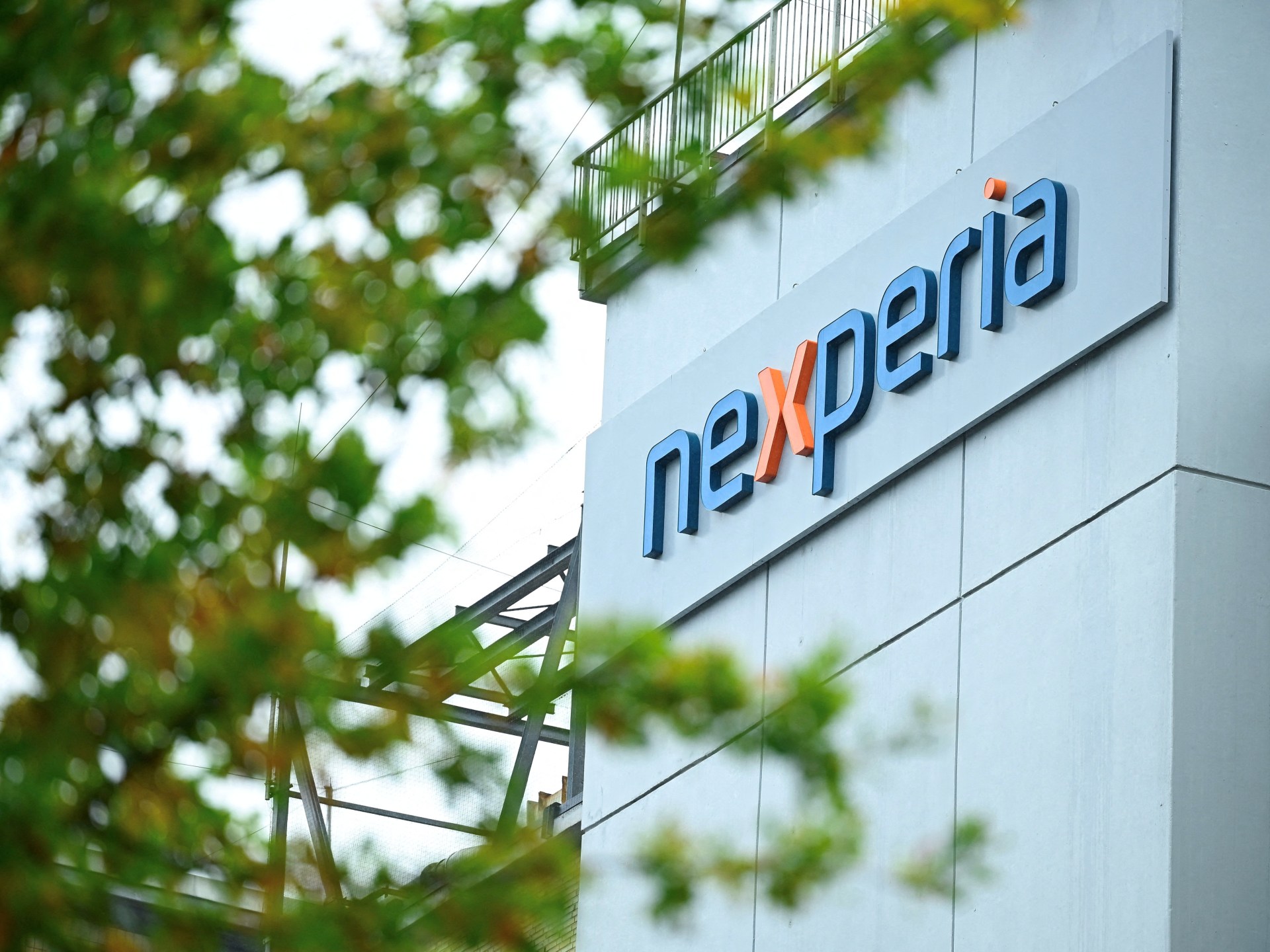
China slams Netherlands for chip supply snarls tied to Nexperia | Trade War News
A dispute between Amsterdam and Beijing over technology transfer has held up chip supplies to car manufacturers.
Published On 4 Nov 2025
The Chinese government has slammed the Netherlands over its seizure of chipmaker Nexperia, blaming it for jamming up a resolution to a dispute that has disrupted car sector supply chains, hit production and caused some firms to furlough staff.
Nexperia, Chinese-owned but based in the Netherlands, makes billions of simple but ubiquitous chips for cars and other electronics. Supply of those chips has been snarled since a dispute between Amsterdam and Beijing over technology transfers.
Recommended Stories
list of 4 itemsend of list
After positive signals in talks over the weekend, the Chinese commerce ministry issued a strongly worded statement on Tuesday telling the Netherlands to “stop interfering” in Nexperia’s internal affairs.
“The Dutch side persists in its unilateral course without taking concrete actions to resolve the issue, which will inevitably deepen the adverse impact on the global semiconductor supply chain,” the ministry said in a statement.
Auto sector has ‘zero autonomy’
Beijing’s statement contradicts messages from the Hague, Brussels and Nexperia that they have been making progress towards a solution, and will be worrying for carmakers that have been scrambling for supplies of Nexperia’s chips.
The Dutch government took control of Nexperia on September 30, saying its Chinese owner Wingtech was planning to move the company’s European production to China and that this would pose a threat to European economic security.
China responded by cutting off exports of the company’s finished chips, which are mostly packaged in China. It said this weekend it would begin accepting applications for exemptions, following a meeting between United States President Donald Trump and Chinese President Xi Jinping.
A spokesperson for the Dutch Ministry of Economic Affairs, which invoked a Cold War-era law to intervene at Nexperia, told Reuters that talks between both governments were still under way.
“We remain in contact with the Chinese authorities and our international partners to work toward a constructive solution that is good for Nexperia and our economies,” the spokesperson said on Tuesday.
European carmakers and suppliers have rushed to apply to China for Nexperia chip export exemptions, which need to be paid for in Chinese currency, or have sought alternative suppliers.
The CEO of Jeep and Fiat maker Stellantis told the Reuters news agency on Tuesday that Europe’s supply chain vulnerabilities were putting it at a competitive disadvantage versus its rivals in China.
“Today our system means we have zero autonomy as an industry,” Antonio Filosa said at a sector meeting in Paris. “Look at the Nexperia chip crisis. Look at the April rare earth crisis that we went through very painfully.”
‘De-escalate as soon as possible’
The European Commission said it welcomed industry indications that China had engaged with EU companies to restore a partial flow of chips, preventing a worst-case scenario and creating time and space to find a lasting solution.
A spokesperson for Nexperia, which has warned customers it cannot guarantee the quality of shipments from its Chinese site, said the company was focused on restoring supplies for customers and was seeking to “de-escalate as soon as possible.”
Ola Kaellenius, CEO of Mercedes-Benz, told Reuters in Paris that there were signs that an understanding was closer to being reached between China, Europe and the US, which had put Wingtech on an entity list late last year.
The German carmaker has sufficient chips for now, Kaellenius said, adding, “We will see what the American-Chinese agreement leads to. We are watching that carefully.”
A spokesperson for Wingtech was not available for comment. The company has said that “only by restoring full control” of Nexperia to its parent can the situation be resolved.
Continue Reading
-
Ferrovial announces a change in the dividend payment date
AMSTERDAM, Nov. 4, 2025 /PRNewswire/ — Reference is made to the announcements (i) dated 15 October 2025, announcing the declaration by Ferrovial SE (“Ferrovial“, Ticker: “FER”) of an interim scrip dividend of in aggregate EUR 342 million; and (ii) dated 23 October 2025, announcing the dividend per share in the share capital of Ferrovial, with a nominal value of EUR 0.01 each, amounting to EUR 0.4769.
Ferrovial announces that the dividend payment date will be accelerated and is now expected to be from 25 November 2025 instead of from 3 December 2025, as disclosed in the announcement dated 15 October 2025. Ferrovial intends to deliver treasury shares to shareholders who have elected or deemed to have elected shares, which generally allows for a quicker payment process compared to newly issued shares.
As further detailed in the announcement dated 15 October 2025, the distribution will be payable in shares or cash at the election of Ferrovial’s shareholders. If no election is made during the relevant election period, an election for a dividend in shares will be deemed to have been made and the dividend will consequently be paid in shares. The election period is currently ongoing and will lapse on 11 November 2025.1
Forward-looking statements
This announcement contains forward-looking statements, which include statements with respect to the Company’s interim scrip dividend, including the expected main milestones and timing of the scrip dividend process. Any express or implied statements contained in this announcement that are not statements of historical fact may be deemed to be forward-looking statements, including, without limitation, statements regarding payment and timing of the scrip dividend, as well as statements that include the words “expect,” “will,” “intend,” “plan,” “believe,” “project,” “forecast,” “estimate,” “may,” “should,” “anticipate” and similar statements of a future or forward-looking nature. Forward-looking statements are neither promises nor guarantees, but involve known and unknown risks and uncertainties that could cause actual results to differ materially from those projected, including, without limitation: risks related to our diverse geographical operations; risks related to our acquisitions, divestments and other strategic transactions that we may undertake; the impact of competitive pressures in our industry and pricing, including the lack of certainty and costs in winning competitive tender processes; general economic and political conditions and events and the impact they may have on us, including, but not limited to, volatility or increases in inflation rates and rates of interest, increased costs and availability of materials, and other ongoing impacts resulting from circumstances including changes in tariff regimes, the Russia/Ukraine conflict, and the Middle East conflict; the fact that our business is derived from a small number of major projects; cyber threats or other technology disruptions; our ability to obtain adequate financing in the future as needed; our approach to dividend or other distribution determinations and the ability to pay dividends at current levels; our ability to maintain compliance with the continued listing requirements of Euronext Amsterdam, the Nasdaq Global Select Market and the Spanish Stock Exchanges; lawsuits and other claims by third parties or investigations by various regulatory agencies that we may be subject to; our ability to comply with our ESG commitments or other sustainability demands; the impact of any changes governmental laws and regulations, including but not limited to tax regimes or regulations; and the other important factors discussed under the caption “Risk Factors” in our Annual Report on Form 20-F filed with the U.S. Securities and Exchange Commission (“SEC”) for the fiscal year ended December 31, 2024 which is available on the SEC website at www.sec.gov, as such factors may be updated from time to time in our other filings with the SEC. Any forward-looking statements contained in this announcement speak only as of the date hereof and accordingly undue reliance should not be placed on such statements. We disclaim any obligation or undertaking to update or revise any forward-looking statements contained in this announcement, whether as a result of new information, future events or otherwise, other than to the extent required by applicable law. Forward-looking statements in this announcement are made pursuant to the safe harbor provisions contained in the U.S. Private Securities Litigation Reform Act of 1995. We intend such forward-looking statements to be covered by relevant safe harbor provisions for forward-looking statements (or their equivalent) of any applicable jurisdiction.
About Ferrovial
Ferrovial is one of the world’s leading infrastructure companies. The Company operates in more than 15 countries and has a workforce of over 25,000 worldwide. Ferrovial is triple listed on Euronext Amsterdam, the Spanish Stock Exchanges and Nasdaq and is a member of Spain’s blue-chip IBEX 35 index. It is also included in globally recognized sustainability indices such as the Dow Jones Best in Class Index (former Dow Jones Sustainability Index), and strives to conduct its operations in compliance with the principles of the UN Global Compact, which the Company adopted in 2002.
1 Banks and brokers may process the dividend in the default option as agreed upon in their contractual arrangements with Ferrovial shareholders or may set an earlier deadline for the receipt of election instructions from their clients to those detailed in the expected timetable. Ferrovial shareholders should contact their bank or broker to check their default option and timings.
SOURCE Ferrovial
Continue Reading
-
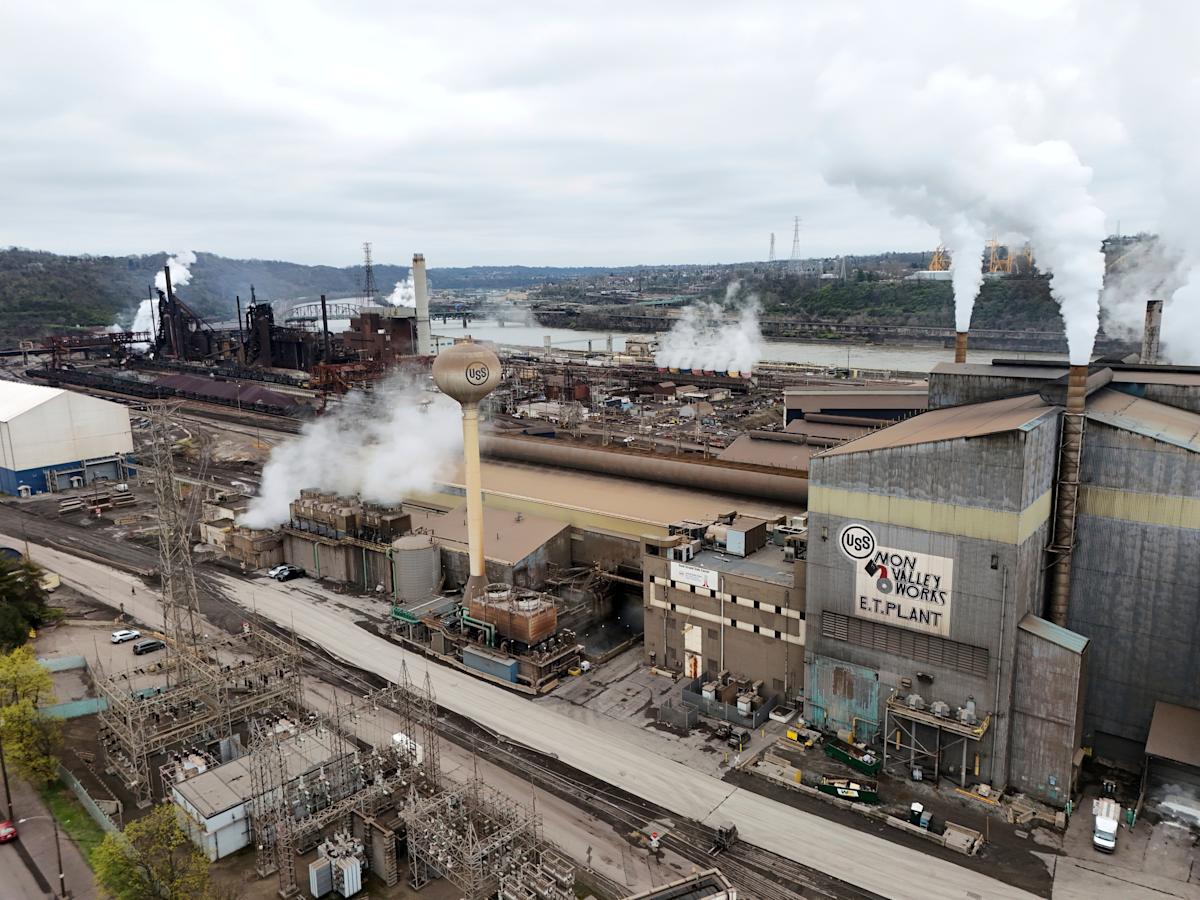
US Steel details plans to invest $11 billion by 2028 across all business segments
NEW YORK (AP) — United States Steel on Tuesday detailed its billion-dollar multiyear growth plan with new owner Nippon Steel that includes modernizing the century-old steelmaker.
The announcement comes just five months after Nippon Steel finalized a “ historic partnership ” with the Pittsburgh steelmaker in a deal worth nearly $15 billion. That deal included a “golden share” provision that gave the federal government the power to appoint a board member and a say in some company decisions.
The combined company became the world’s fourth-largest steelmaker, and Nippon agreed to invest $11 billion to upgrade U.S. Steel’s facilities.
Tuesday the company said it will make the investments by the end of 2028. The plan targets unlocking $2.5 billion in savings from capital investments and another $500 million from operational efficiencies.
U.S. Steel says it has identified more than 200 initiatives to save money across all business segments, assisted by nearly 50 professionals from Nippon Steel. The company is modernizing and expanding its manufacturing operations and expanding research and development to feature “higher value, lower emission steel.”
CEO Dave Burritt said, “We have a robust pipeline of growth projects, ranging from the modernization of our Gary (Indiana) Works Hot Strip Mill to the new slag recycler at Mon Valley Works (Pennsylvania) and the development of new product capabilities.”
The plan is designed to “protect and create more than 100,000 jobs nationwide in the United States,” although U.S. Steel did not provide more specifics.
David McCall, president of United Steelworkers International, said in a statement, “Since our first engagement with Nippon, we’ve been clear that investing in these workers and their facilities is the best use of the company’s resources. As Nippon and U.S. Steel begin to lay out their vision, we encourage them to prioritize this skilled, union workforce – now and well into the future.”
Continue Reading
-

Sam Bankman-Fried lawyer says FTX founder’s trial was ‘fundamentally unfair’ – Financial Times
- Sam Bankman-Fried lawyer says FTX founder’s trial was ‘fundamentally unfair’ Financial Times
- Sam Bankman-Fried gave the feds an ‘unprecedented’ sneak peek of his testimony. A court will decide if he gets a trial do-over. Business Insider
- SBF’s X Account Says FTX Was Never Insolvent—And FTT Would Be $22 Billion Today Decrypt
- Sam Bankman-Fried’s Appeal: Key Dates, Arguments, and What’s Next CCN.com
- Sam Bankman-Fried Wants Court to Toss Crypto Fraud Conviction PYMNTS.com
Continue Reading
-

Munich’s surfers left stunned after famed river wave vanishes | Germany
A standing wave in a Munich stream that has been a surfing magnet for more than four decades has vanished, leaving urban surfers high and dry.
Water levels in the Eisbach (“ice brook”) dropped last week for annual cleanup work along the streambed.
But when the gates reopened and water began to flow again on Friday, the Eisbach wave did not form as usual.
“We’re at a loss,” surfer Klaus Rudolf told Stern magazine. “I was standing at the edge with my board on Friday evening and couldn’t believe it.”
The Eisbach wave in the Englischer Garten park has become a landmark in the Bavarian city since rogue surfers in the 1980s turned it from an occasional natural phenomenon to a permanent surfable presence.
“The city administration is working with the Water Management Office and surfers to find a quick solution so that the famous surf wave will soon be available again as usual,” Mayor Dieter Reiter said in a statement Tuesday.
Exactly why the wave vanished remained unclear on Tuesday, according to city officials.
The recent work cleared debris from the streambed and inspected the waterway.
Surfers ride the Eisbach wave at the Englischer park in central Munich. Photograph: David Levene/The Guardian “No structural changes were made to the Eisbach wave or its banks during the cleanup,” the city said, and an inspection of the site Monday did not reveal any damage.
Officials plan to divert more water from the Isar River into the Eisbach in hopes the wave reappears.
The Eisbach wave is generally considered the largest and most consistent river wave in the heart of a major city, and has become a tourist attraction in Bavaria’s state capital, which is otherwise known for beer and sausage at the annual Oktoberfest.
Franz Fasel, head of the local surfers’ association IGSM, told AFP in July that 3,000 to 5,000 local surfers use the Eisbach wave.
“Surfing is simply part of the lifestyle in Munich,” he said. “Not just for the surfers themselves, but also for the city’s image.”
At the time, the Eisbach wave had just reopened after a months-long closure after the April death of a 33-year-old Munich woman who became trapped under the surface while surfing at night.
Since it reopened to surfers, new safety rules banned night-time surfing and set a minimum age of 14 to brave the water.
Continue Reading
-

For manufacturers, listening to workers pays off in productivity
What you’ll learn:
- Manufacturing companies that listen to their front-line workers pay their employees 3.6% more than those that don’t.
- Such manufacturers also see 16% higher productivity.
- 62% of workplaces report daily use of worker voice, but only one-fifth of manufacturing companies report having multiple channels for worker voice.
In the hustle and bustle of manufacturing, it’s not uncommon for managers to lose touch with front-line workers. But when companies seek out and heed input from these employees, everyone benefits: Employers see higher productivity, and employees see higher pay.
That’s the conclusion of new research from MIT Sloan professor and Dylan Nelson, professor of business administration at the University of Illinois at Urbana-Champaign.
The study, based on data from a federally mandated U.S. Census Bureau survey of 30,000 U.S. manufacturing establishments, revealed that the productivity boost that manufacturers experienced more than compensated for the labor costs they incurred.
“The average establishment that seeks out worker input records more productivity gains than they’re paying out in higher labor costs, which is good news,” Wilmers said.
Here’s more detail on the study and its findings:
Finding 1: Manufacturers that incorporate employee feedback have higher productivity.
Employers that used input from their employees (“worker voice”) saw productivity rise by 16% (as determined by revenue generated per worker).
Front-line workers are ideal candidates to offer first-person accounts of production or machinery issues. “Very often, the first thought for a manager is ‘OK, can I get more out of my engineers?’ or ‘Can I get some technology-based improvement?’ and they might overlook the value that they can get from front-line workers,” Wilmers said.
In an auto manufacturing plant, for example, engineers are the ones who create the plan for how to build a car. But as front-line workers actually execute on that plan, they’re the ones who are able to discern how to set up the system more efficiently and reorganize what’s happening on the shop floor.
As indicated by their self-reported answers on the survey, successful companies recorded and incorporated this employee input into their decision-making.
Finding 2: Manufacturers that incorporate employee feedback pay their workers more, with the increase offset by productivity gains.
The research found that companies that use input from their employees pay workers 3.6% more, on average. They do this because:
- They’re able to, given the productivity boost and a subsequent increase in revenue.
- They more highly value their workers and the input they provide. Even when the authors adjusted their model to remove extraneous factors, such as a windfall gain related to an improved business position, they still found a small wage premium among firms that sought out worker voice.
“When these front-line workers give valuable information, this raises their value to the company and allows them to get a bigger slice of the pie as their own suggested product improvements are being implemented,” Wilmers said.
This holds true whether the workers ask for a raise or whether the companies offer it of their own accord.
Wilmers noted that AI is unlikely to offset labor costs, at least initially, because “front-line manufacturing workers in a lot of ways are pretty protected from AI-type changes because they’re mostly working with their hands.”
- Workers with perceived value have more bargaining power.
Some 62% of workplaces surveyed reported daily use of worker voice, but only one-fifth of manufacturing companies reported having multiple channels for worker voice. Why?
“One reason suggested by our data is that while worker voice in production increases productivity, it also increases bargaining power,” the authors write. Although this can raise labor costs for employers, the authors argue that the overall productivity benefit trumps higher costs.
Finding 3: For workers, unions still matter.
Worker voice and increased pay have long been hallmarks of organized labor, and the authors note that their findings don’t negate the need for union membership, which hit a new low in 2024.
Their research showed that financial gains from union membership are approximately twice as large as the average pay boost that workers see at employers that use their input.
“Our view is that although direct voice does benefit workers on average in manufacturing, it’s not a big enough magnitude to substitute for the union benefit,” Wilmers said.
Finding 4: Employee input can help with retention.
Incorporating worker feedback can also help companies retain employees because it allows workers to feel seen, heard, and valued. It might also be possible, Wilmers said, that companies are able to pay their workers less because they are happy in their current positions.
“We don’t look at that directly, but that would paradoxically be one reason that you maybe wouldn’t expect an earnings benefit of worker voice,” Wilmers said. “If worker voice is making workers happier, and they feel valued, maybe you can pay them a little bit less because they’re working in an environment where they feel listened to. So it could be the case that’s also happening in the background and already offsetting a little bit of the earnings gain that we measured.”
Strategy, Survival, and Success in the Age of Industrial AI
In person at MIT Sloan
Register now
A systematic approach to capturing worker voice
Given those findings, Wilmers said, employers should develop a systematic approach to seeking feedback and consider it “a real source of value” for the organization.
“Management is hard, and it requires balancing between different priorities, but our paper shows that there are productivity gains to be had. This could be worth focusing on more than managers currently are,” he said.
Wilmers advised seeking input in multiple formats, including stand-up meetings, an annual feedback process, and worker surveys.
Beyond manufacturing: Other industries where front-line workers have value to add
Wilmers said the research findings are relevant beyond the manufacturing sector and could be applied in other hands-on, “learning-by-doing” settings, such as retail, restaurants, or construction. In such environments, “there might be a disconnect between the workers who are actually doing the job and the managers who have to make decisions about the business,” he said.
Consider, for instance, a retail store that is reorienting its business for e-commerce and therefore doing more delivery and in-store pickup and transforming its operations into a warehouse. In this case, there would be a lot of learning by doing and shifting away from the standard way of selling goods, and the retailer would need to figure out what is and isn’t working as new processes are put into place.
In this case, “the people actually doing that work are going to be really effective at giving feedback on it,” Wilmers said.
The full research paper, “Earnings Effects of Direct Worker Voice in Production,” covers wages, employee feedback, productivity, and effective management practices in manufacturing.
Nathan Wilmers is an associate professor of Work and Organization Studies at MIT Sloan and part of the core faculty the MIT Institute for Work and Employment Research. Wilmers researches wage and earnings inequality, economic sociology, and the sociology of labor. In his empirical research, he studies how wage stagnation and rising earnings inequality result from weakening labor market institutions, changing market power, and job restructuring. He received widespread attention for his research showing that casual chain restaurants like Applebee’s and Chili’s are the best places for people in the U.S. to meet and socialize with those from different income classes.
Dylan Nelson is an assistant professor of business administration at the at the University of Illinois at Urbana-Champaign’s Gies College of Business. His research seeks to link questions of performance and productivity to questions of purpose, worker experience, and workers’ job mobility.
Continue Reading
-

Job openings in October slumped to the lowest level since February 2021, Indeed measure shows
A jobseeker holds a brochure during a NYS Department Of Labor job fair at the Downtown Central Library in Buffalo, New York, US, on Wednesday, Aug. 27, 2025.
Lauren Petracca | Bloomberg | Getty Images
Employment opportunities hit their lowest level in more than 4½ years as October came to a close and the government shutdown dragged on, according to data from jobs site Indeed.
The firm’s Job Postings Index fell to 101.9 as of Oct. 24, the most recent point for which data is available. That’s the lowest since early February 2021 for a measure that uses February 2020 as a baseline value of 100.
The level represents a 0.5% decline from the beginning of the month and a roughly 3.5% tumble from mid-August, the latest point from which Bureau of Labor Statistics data is available.
Under normal conditions, the BLS on Tuesday would have reported its monthly Job Openings and Labor Turnover Survey, a measure that Federal Reserve officials watch closely for indications of slack in the jobs market. With the shutdown on the precipice of being the longest in history, economists and policymakers are left to look at alternative data for big-picture indicators.
The most recent JOLTS report, for August, also indicated an ongoing decline in openings. The BLS reported that job openings totaled 7.23 million, about level with July but down 7% from January.
Indeed’s dashboard of indicators also has shown a pullback in salary offerings as job advertisements have declined. Year-over-year wages as judged by salary offerings in Indeed postings rose 2.5% in August, down from 3.4% in January.
A softening labor market has generated concern from Fed officials. The central bank’s Federal Open Market Committee last week voted 10-2 to lower its benchmark interest rate by a quarter percentage point to a target range of 3.75%-4%.
Officials have cited rising risks to the labor market taking precedence over ongoing concerns about inflation holding nearly a full percentage point above the Fed’s 2% target.
“Hiring is slowing. We see this from Indeed, from job postings,” Fed Governor Lisa Cook said Monday. “We’re looking at a panoply of data, and those are real time. We’re not waiting on the unemployment report. There’s reason to be concerned, because there’s a slight uptick in the unemployment rate over the summer.”
The nonfarm payrolls report normally would be released Friday, but that also is not happening. Economists surveyed by Dow Jones expect the BLS count would have shown a decline of 60,000 jobs in October and an increase in the unemployment rate to 4.5%.
Continue Reading
-
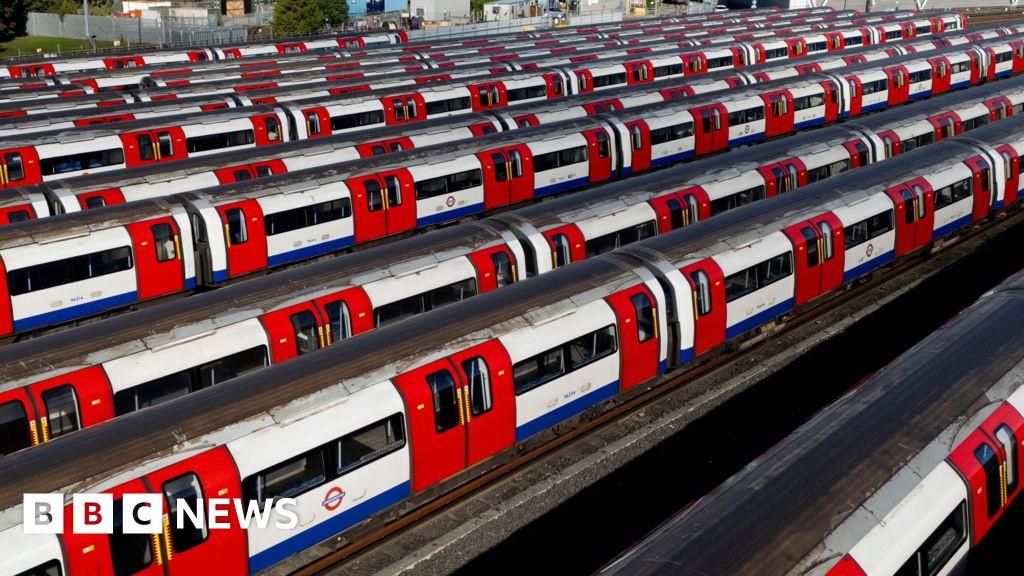
Tube strikes averted as RMT and TfL agree three-year pay deal
Trade union RMT says it has agreed a three-year pay deal for Tube workers as well as “fatigue-friendly” rosters, further discussions on staff travel and a “consistent” Boxing Day payment of £400.
The pay deal consists of a 3.4% increase, effective from 1 April 2025, with a guaranteed rise of 3% in year two and a 2.5% rise in year three.
Five days of Tube strikes badly disrupted London in September, and the deal lifts the union’s threat of more industrial action.
RMT general secretary Eddie Dempsey said: “This deal is a clear demonstration of the effectiveness of strike action and strong negotiation by our members.”
A TfL spokesperson said: “We welcome the decision from the RMT to accept our pay offer. This multi-year offer is fair, affordable and provides certainty for our colleagues over pay for several years.
“We are engaging with all of our unions on this offer and look forward to their responses.”
TfL said that no changes have been proposed to working hours as part of the pay offer.
Continue Reading
