Category: 3. Business

  • China offers tech giants cheap power to boost domestic AI chips

    China offers tech giants cheap power to boost domestic AI chips

    Stay informed with free updates

    China has increased subsidies that cut energy bills by up to half for some of the country’s largest data centres, as Beijing steps up efforts to boost its domestic chips industry and compete with the US.

    Local governments have beefed up incentives to help Chinese tech giants such as ByteDance, Alibaba and Tencent, which have been hit with higher electricity costs following Beijing’s ban on purchasing Nvidia’s artificial intelligence chips, according to people familiar with the matter.

    They added that the new subsidies come after several tech groups complained to regulators about the increased costs of using domestic semiconductors from companies such as Huawei and Cambricon, most of which are less energy-efficient than Nvidia’s.

    Local governments in data centre-heavy provinces such as Gansu, Guizhou and Inner Mongolia have responded by offering subsidies that slash big data centres’ electricity bills by as much as 50 per cent, provided that they are powered by domestic chips.

    Data centres using chips from foreign vendors such as Nvidia are not qualified for such entitlements, the people said.

    The move is a further sign of how China is incentivising its tech companies to break their reliance on Nvidia and boost the country’s homegrown semiconductor industry so it can compete in an AI race against the US.

    Electricity required to generate the same amount of tokens — units of compute power — from the current generation of Chinese chips is about 30 to 50 per cent higher than Nvidia’s H20, according to experts.

    Huawei, China’s leading chipmaker, has sought to overcome the weaker single-chip computing performance of its flagship Ascend 910C chip by combining them into larger clusters, which has added to the operating electricity costs.

    While tech companies typically lease compute power from third-party data centre operators, they still need to build a significant amount themselves to meet surging demand from AI-driven businesses.

    Despite the higher energy costs related to using domestic chips, China’s more centralised grid network still provides cheaper and greener electricity than the US with no near-term shortage.

    China’s energy-rich remote provinces such as Gansu, Guizhou and Inner Mongolia have become hotspots for data centre clusters.

    To attract the biggest projects, these local governments have already been competing to offer some energy subsidies as well as cash incentives.

    Some of these are enough to cover a data centre’s operating cost for about a year, said a person with knowledge of the matter.

    Unit costs of industrial electricity in these provinces are about 30 per cent cheaper than those from the more developed coastal areas of eastern China. With the new subsidies, they will be cut further to about 0.4 yuan, or 5.6 cents, per kWh.

    This compares with the average industrial electricity cost of about 9.1 cents per kWh in the US, according to August data published by the US Energy Information Administration.

    Electricity prices vary significantly in different US states due to fragmented grid networks, while US tech groups such as Meta and Elon Musk’s xAI are also building their own generators near their data centre clusters in order to lower energy costs.

    ByteDance, Alibaba and Tencent did not respond to requests for comment.

    The local governments of Guizhou, Gansu, Inner Mongolia and China’s National Development and Reform Commission did not respond to requests for comment.

    Additional contributions from Cheng Leng in Beijing

    Continue Reading

  • Companies Waste 70% Of Their GPU Computing Power

    Companies Waste 70% Of Their GPU Computing Power

    Spectro Cloud, a Goldman Sachs–backed (NASDAQ:GS) startup valued at about $750 million, announced on Tuesday that it entered a strategic partnership with Nvidia (NASDAQ:NVDA) to address one of the biggest challenges in artificial intelligence: approximately 70% of computing power that often sits unused.

    Spectro Cloud unveiled its PaletteAI platform with Nvidia integration, which promises to increase graphics processing unit efficiency from 30% to 60%, potentially saving enterprises millions on infrastructure costs, Business Insider reported.

    “AI infrastructure is super expensive,” Spectro Cloud co-founder and CEO Tenry Fu told BI, adding that most organizations achieve only 30% GPU utilization. “That’s not really the best way to put such an expensive hardware into use,” he said.

    Don’t Miss:

    Many organizations spend large sums on Nvidia hardware and software but still face management challenges that leave much of their computing power unused, according to BI.

    PaletteAI serves as what Spectro Cloud Chief Technology Officer Saad Malik calls the “glue layer,” BI reported. The platform connects different hardware and software components, helping them work together without friction.

    The system integrates with Nvidia AI Enterprise software and tools such as Nvidia NeMo and Nvidia NIM, according to Spectro Cloud. While designed for Nvidia technologies, PaletteAI remains open and flexible, allowing companies to connect products from other technology providers as well.

    “Growing adoption of AI across every industry calls for scalable, adaptable infrastructure that bridges the data center and the edge,” Nvidia Senior Director of Enterprise Anne Hecht said in Spectro Cloud’s statement. “Spectro Cloud’s integration of full-stack Nvidia AI is empowering enterprises to build and operate AI factories with performance, efficiency, and trust.”

    Trending: Accredited Investors Can Now Tap Into the $36 Trillion Home Equity Market — Without Buying a Single Property

    Spectro Cloud Chief Revenue and Marketing Officer Dave Cope told BI that the pace of technological change has reached an entirely new level. “We live in a really interesting time now where, for the first time and perhaps ever, we have — because of AI — everything changing rapidly and at the same time,” he said, adding that AI is transforming multiple areas of business at once, creating constant pressure to adapt.

    Cope said this fast evolution adds what he called a “tremendous amount of complexity” that can slow innovation and delay adoption, BI reported.

    PaletteAI addresses that challenge with what Spectro Cloud describes as “one-click deployment” of AI systems. The platform separates roles between administrative teams, who manage governance and security, and AI specialists, who need freedom to experiment and build new solutions.

    See Also: If there was a new fund backed by Jeff Bezos offering a 7-9% target yield with monthly dividends would you invest in it?

    PaletteAI offers advanced security functions using Nvidia BlueField data processing units, which enable zero-trust access and support federal information processing standards compliance. According to Spectro Cloud, the platform automates setup, provisioning, and management across cloud, data center, and edge environments.

    Enterprises can create full AI environments using Nvidia infrastructure in a matter of hours instead of weeks, Spectro Cloud said. The system supports the latest Nvidia technologies, including Blackwell GPUs, Grace central processing units, and the BlueField-3 and BlueField-4 data processing units.

    Administrative teams manage oversight through policy controls while AI practitioners work from approved templates, creating an environment that stays efficient, secure, and consistent across every deployment, Spectro Cloud said.

    Read Next: Wall Street’s $12B Real Estate Manager Is Opening Its Doors to Individual Investors — Without the Crowdfunding Middlemen

    Image: Shutterstock

    UNLOCKED: 5 NEW TRADES EVERY WEEK. Click now to get top trade ideas daily, plus unlimited access to cutting-edge tools and strategies to gain an edge in the markets.

    Get the latest stock analysis from Benzinga:

    This article Nvidia Partners With $750M Startup Spectro Cloud To Fix AI’s Biggest Problem: Companies Waste 70% Of Their GPU Computing Power originally appeared on Benzinga.com

    © 2025 Benzinga.com. Benzinga does not provide investment advice. All rights reserved.

    Continue Reading

  • New WashU center aims to transform disease diagnosis through AI imaging

    New WashU center aims to transform disease diagnosis through AI imaging

    Mallinckrodt Institute of Radiology (MIR) at Washington University School of Medicine in St. Louis is establishing a new center dedicated to developing AI-based imaging tools to improve the diagnosis and precision treatment of cancers, cardiovascular disease, neurological diseases and numerous other conditions. The new Center for Computational and AI-enabled Imaging Sciences brings together collaborators from across WashU Medicine and others from WashU’s McKelvey School of Engineering.

    AI already has shown promise for its ability to analyze vast collections of medical images to generate clinically relevant insights, identifying patterns and anomalies that physicians might otherwise not detect on their own.

    Mallinckrodt Institute of Radiology has long been a national leader in developing innovative imaging technologies, from the invention of positron emission tomography to today’s AI applications in diagnostics and image analysis, and this new center represents an ambitious expansion of our capability. Integrating AI into imaging will enhance how we diagnose disease, predict its progression and tailor treatments to the unique needs of each patient.”


    Pamela K. Woodard, MD, the Elizabeth E. Mallinckrodt Professor and head of MIR at WashU Medicine

    The new center will help advance AI-driven imaging technologies, such as two recently developed at WashU Medicine – in collaboration with MIR – that are being commercialized. One tool can analyze mammograms to predict an individual patient’s risk of breast cancer over the next five years.

    Another rapidly maps the brain to help neurosurgeons plan delicate surgeries and avoid sensitive areas that control speech, movement and cognitive function. The center will be a hub for expertise in image analysis that uses sophisticated computing tools to find patterns in datasets of millions of medical images and de-identified patient records, providing insight on both the progression and the potential treatment of disease. The center will also support training on these tools for clinicians and researchers.

    The new center will join a growing WashU ecosystem of collaborative AI initiatives that are helping to shape the future of medicine. These include the Center for Health AI (CHAI), which was established as part of the joint agreement to build deeper collaboration between BJC Health System and WashU Medicine and is focused on making health care more personalized and effective for patients and more efficient for providers; and the AI for Health Institute at WashU McKelvey Engineering, which is working on other AI-powered medical innovations.

    The Center for Computational and AI-enabled Imaging Sciences will primarily focus on developing AI-based medical imaging applications that integrate information from different imaging types – ranging from digital microscope images of cells to MRI scans to X-rays – to identify clinically informative connections between them. This may include identifying previously unknown early indicators of disease onset that could allow for more effective clinical interventions.

    The center will bring together AI imaging experts and researchers from across the Medical Campus, including Siteman Cancer Center, based at Barnes-Jewish Hospital and WashU Medicine, and from the school’s Departments of Medicine, of Neurology, of Psychiatry and of Radiation Oncology.

    A clear image of the future of medicine

    The new center will house information from the imaging databases of all the participating departments, collectively representing a range of imaging modalities across many different types of disease. The AI-powered tools developed from those large datasets will enable increasingly precise diagnosis for individual patients, Woodard said.

    AI algorithms applied to medical imaging have already been used to detect and classify new subtypes of some disorders in ways that can guide clinical treatment decisions. The breadth of information that will be available at the new center will accelerate this work in a broader range of conditions.

    The new center will be led by Mark Anastasio, PhD, a leading expert in computational imaging science and AI for imaging applications. He joins WashU as the Mallinckrodt Endowed Professor of Imaging Sciences for MIR, where he will also be the Vice Chair for Imaging Sciences and AI Research. He will also be Professor of Electrical & Systems Engineering in McKelvey Engineering. Anastasio comes to WashU from the University of Illinois Urbana-Champaign, where he has served as head of the Department of Bioengineering for the past six years.

    “Institutions with leading academic medical centers that unite medical data, clinical expertise and advanced AI research will lead the next revolution in healthcare,” said Anastasio. “WashU is exactly such an institution and an ideal home for this center that will enable us to build a community to drive innovation that advances patient care in ways few other institutions can achieve.”

    As part of that community building, Anastasio will join the leadership team of the Oncologic Imaging Program at Siteman Cancer Center. He will also be the associate Chief Research Information Officer for Biomedical Imaging at the Institute for Informatics, Data Science & Biostatistics (I2DB), where he will work with institute director Philip R.O. Payne, PhD, the Janet and Bernard Becker Professor of Medicine. Payne is also the chief health AI officer for CHAI and the Vice Chancellor for Biomedical Informatics and Data Science at WashU Medicine.

    “AI-enabled imaging has the potential to be as transformative for medicine as earlier waves of innovation – from the adoption of electronic health records to the rise of precision medicine and the advent of real-world evidence generation,” said Payne. “That transformation is being realized here at WashU Medicine because of the dynamic and collaborative environment that exists at our institution, exemplified by leading-edge, transdisciplinary initiatives like this one.”

    Aaron Bobick, PhD, dean of WashU McKelvey Engineering and the James M. McKelvey Professor, said dedicated centers such as this will be crucial to maximizing the medical and engineering expertise needed to build out the potential for AI in medical applications.

    “Medical imaging offers some of the most exciting challenges in imaging science and artificial intelligence, both of which are core domains for McKelvey Engineering,” said Bobick. “I am certain that the innovations that this center will facilitate by combining the skills of WashU Engineering faculty with the broad range of medical expertise at WashU Medicine will lead to advances that both drive the science forward and benefit patients.”

    Continue Reading

  • Japan’s factory activity falls at fastest pace in 19 months, PMI shows

    Japan’s factory activity falls at fastest pace in 19 months, PMI shows

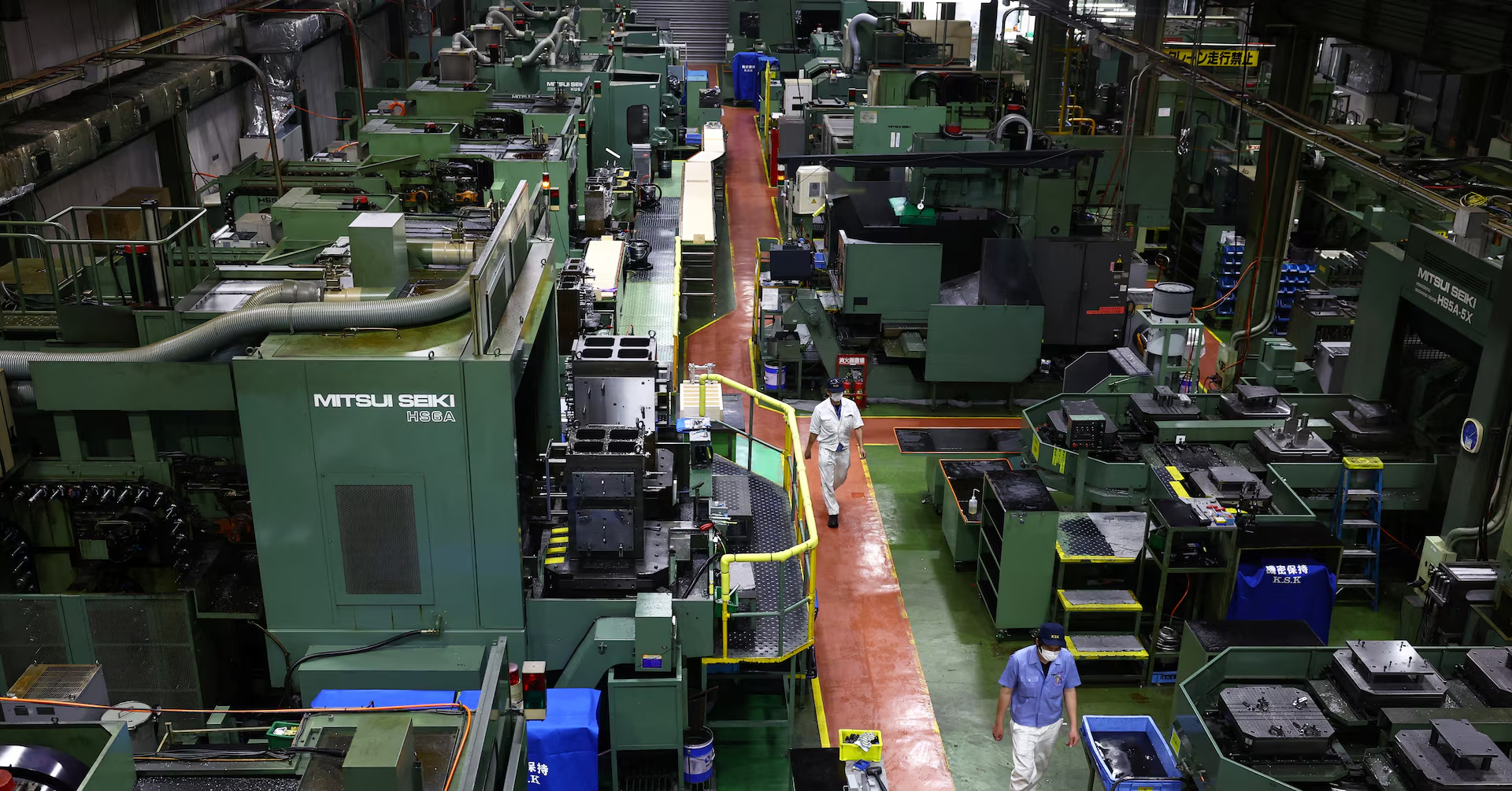
    TOKYO, Nov 4 (Reuters) – Japan’s manufacturing activity shrank in October at the fastest pace in 19 months, hit by slumping demand in the key automotive and semiconductor sectors, a private-sector survey showed on Tuesday.

    The S&P Global Japan Manufacturing Purchasing Managers’ Index (PMI) slipped to 48.2 in October from 48.5 in September, undershooting the flash reading of 49.3 and hitting the lowest since March 2024.

    Sign up here.

    The headline index has remained below the 50.0 mark that separates growth from contraction for four consecutive months.

    New orders dropped at the quickest pace in 20 months, driven by constrained client budgets and weak demand, the survey found. Export orders continued to fall for a 44th month, particularly from Asia, Europe and the United States, but the rate of contraction was the slowest since March.

    “Demand weakness, particularly in the automotive and semiconductor sectors, weighed on the Japanese manufacturing industry,” said Pollyanna De Lima, Economics Associate Director at S&P Global Market Intelligence.

    Despite reduced demand, the drop in production output was less severe than in September, as manufacturers adjusted to shortages in new work, according to the survey.

    Input cost inflation accelerated to a four-month high, driven by rising expenses in labour, materials and transportation. Firms’ output prices rose to a three-month high as they rushed to protect profit margins in response.

    Japanese consumer inflation has been accelerating, government data on prices in Tokyo showed on Friday, keeping the Bank of Japan under pressure after it kept interest rates steady at 0.5% at last week’s policy meeting.

    Manufacturers’ outlook for output turned more optimistic in October, supported by hopes for new products, growing AI adoption and auto and semiconductor sector recoveries as global trade conditions normalise, the PMI survey showed.

    “They generally hope that new product releases will be successful and that the detrimental impact of U.S. tariffs will fade,” De Lima noted.

    Reporting by Kantaro Komiya; Editing by Sam Holmes

    Our Standards: The Thomson Reuters Trust Principles., opens new tab

    Continue Reading

  • Urolithin A recharges aging immune cells and boosts mitochondrial fitness in midlife adults

    Urolithin A recharges aging immune cells and boosts mitochondrial fitness in midlife adults

    A month of Urolithin A supplementation restored youthful energy metabolism in immune cells, hinting at a safe nutritional strategy to counter immune aging and improve resilience to infections.

    Study: Effect of the mitophagy inducer urolithin A on age-related immune decline: a randomized, placebo-controlled trial. Image Credit: CI Photos / Shutterstock

    In a recent study published in Nature Aging, researchers evaluated whether oral Urolithin A (UA), a mitophagy-inducing postbiotic, can remodel immune cell phenotypes and metabolism in healthy middle-aged adults compared with placebo.

    How Aging Impacts Immunity and Mitochondrial Function

    By age 50, many people notice slower recovery, weaker vaccine responses, and lingering infections, signs of immune aging. This process involves a decline in naïve T cells and persistent low-grade inflammation (“inflammaging”).

    Mitochondria, the body’s primary energy generators, and mitophagy, their quality control process, play key roles in maintaining immune balance. When mitophagy falters, immune cells lean toward exhaustion and inflammation. Scientists have hypothesized that safe, food-derived molecules that improve mitochondrial quality could strengthen immunity and enhance vaccine effectiveness, but targeted interventions require further study.

    Randomized Trial Design and Participant Overview

    The trial was randomized, double-blind, and placebo-controlled, enrolling 50 healthy adults aged 45–70 years. Participants received either 1,000 mg of oral UA daily or placebo for 28 days. Assessments occurred at baseline, day 7, and day 28.

    Primary outcomes included changes in CD3⁺ T-cell subsets and immune metabolic remodeling. Secondary endpoints assessed included cytokine levels (IL-6, TNF, IL-1β, IL-10, and IL-2), immune population shifts, mitochondrial measures, and functional assays. PBMCs were analyzed using spectral flow cytometry.

    Measuring Cellular Energy and Mitochondrial Activity

    Single-cell energetic metabolism profiling (SCENITH) evaluated energy pathway use under translational blockade, assessing oxidative phosphorylation (OXPHOS), fatty acid oxidation (FAO), and amino acid oxidation (AAO).

    Mitochondrial content and activity were measured via MitoTracker dyes and PGC-1α, a key regulator of mitochondrial biogenesis. Safety labs and adverse events were tracked throughout, in accordance with CONSORT guidelines, with Institutional Review Board approval.

    Urolithin A Reprograms CD8⁺ T-Cell Function

    UA supplementation reshaped the CD8⁺ T-cell profile toward a “ready-to-respond” state. Compared with placebo, UA increased naïve-like CD8⁺ T cells and Ki-67 expression (linked to proliferation and reinvigoration) while reducing TOX, a transcription factor associated with exhaustion. PD-1 expression was unchanged, and CD4⁺ subsets remained stable, indicating selective CD8⁺ rejuvenation without global activation.

    Quantitatively, UA increased naïve-like CD8⁺ cells by 0.50 percentage points (95% CI 0.16–0.83; P = 0.0437) and boosted FAO/AAO capacity by 14.72 percentage points (95% CI 6.46–22.99; P = 0.0061).

    Enhanced Metabolic Efficiency and Energy Flexibility

    SCENITH analysis revealed that UA reduced glucose dependence and enhanced fatty acid and amino acid oxidation in CD8⁺ T cells, particularly in naïve cells, thereby favoring a durable, oxidative energy profile. NK cells displayed similar metabolic gains, while monocytes stayed glycolytic and CD4⁺ T cells were largely unchanged.

    These changes indicate improved mitochondrial efficiency, characteristic of youthful immune energy management and sustained cellular readiness.

    Broader Immune Remodeling Beyond T Cells

    UA’s effects extended to other immune compartments. Circulating CD56dim CD16bright NK cells and nonclassical monocytes (CD14lo CD16hi) increased, whereas classical monocytes showed fewer HLA-DRhi cells, suggesting reduced inflammatory priming. B-cell and dendritic-cell totals remained stable.

    In CD8⁺ T cells, PGC-1α expression rose, indicating mitochondrial biogenesis balanced by ongoing mitophagy. Despite these shifts, senescence markers (p16, p21, KLRG1, CD57) remained unchanged, suggesting rejuvenation without reversal of senescence.

    Systemic and Cytokine-Level Immune Effects

    At the systemic level, plasma IL-2 decreased without unwanted increases in pro-inflammatory cytokines. Upon ex vivo stimulation, UA-treated CD8⁺ T cells produced more TNF but not IL-4, signifying a stronger type-1 immune response without type-2 skewing.

    Monocytes from UA recipients demonstrated greater phagocytosis of E. coli, suggesting improved bacterial clearance potential. Cytokine analyses involved approximately 15–20 matched samples per cytokine and were exploratory in scope.

    Transcriptomic Insights from Single-Cell RNA Sequencing

    Single-cell RNA sequencing (scRNA-seq) revealed that UA upregulated TCF7, LEF1, and IL7R (genes linked to T-cell stemness and memory) while downregulating exhaustion-associated genes NR4A2 and CREM.

    Pathway analyses revealed the activation of TCR signaling and the suppression of GPCR–Gαs–PKA inhibitory checkpoints, consistent with enhanced T-cell motility and responsiveness. Across NK cells, monocytes, and B cells, UA reduced inflammatory transcriptional programs and upregulated cytoskeletal and adhesion pathways.

    Monocytes also increased NAMPT expression, part of the NAD salvage pathway associated with anti-inflammatory states. These exploratory transcriptomic findings (from five post-randomization participants) warrant cautious interpretation.

    Safety, Tolerability, and Study Limitations

    UA was bioavailable and well-tolerated, with adverse events comparable to those of the placebo over 28 days. While the study detected cellular and molecular rejuvenation signatures, it was limited by small sample size, short duration, and absence of infection or vaccine-response outcomes.

    Conclusions: Urolithin A as a Potential Immune Rejuvenator

    In healthy middle-aged adults, a 28-day UA regimen shifted CD8⁺ T cells toward a youthful, less exhausted phenotype, reprogrammed metabolism toward mitochondrial oxidation, expanded beneficial NK subsets, and enhanced monocyte bacterial clearance.

    These molecular and metabolic improvements suggest better mitochondrial quality control and reduced inhibitory signaling, potentially translating to stronger immune defenses with age. Larger, longer trials are necessary to assess clinical benefits, optimize dosing, and evaluate synergy with vaccines or immunotherapies.

    Journal reference:

    • Denk, D., Singh, A., Kasler, H. G., D’Amico, D., Rey, J., Alcober-Boquet, L., Gorol, J. M., Steup, C., Tiwari, R., Kwok, R., Argüello, R. J., Faitg, J., Sprinzl, K., Zeuzem, S., Nekljudova, V., Loibl, S., Verdin, E., Rinsch, C., & Greten, F. R. (2025). Effect of the mitophagy inducer urolithin A on age-related immune decline: a randomized, placebo-controlled trial. Nature Aging. DOI: 10.1038/s43587-025-00996-x https://www.nature.com/articles/s43587-025-00996-x

    Continue Reading

  • Losses Deepen 10.3% Annually, Revenue Forecast to Grow 33.8% Per Year

    Losses Deepen 10.3% Annually, Revenue Forecast to Grow 33.8% Per Year

    Cipher Mining (CIFR) continues to operate at a loss, with annual losses deepening by 10.3% per year for the past five years. Looking ahead, the company is expected to remain unprofitable for at least three more years; however, revenue is forecast to accelerate at 33.8% per year, outpacing the US market average of 10.5%. With no signs of improvement in net profit margins, the spotlight for investors remains firmly on Cipher Mining’s high revenue growth potential amid ongoing unprofitability and share price volatility.

    See our full analysis for Cipher Mining.

    Next up, we will see how these numbers compare with the prevailing narratives about Cipher Mining, including where the reality strengthens or disputes community and market expectations.

    See what the community is saying about Cipher Mining

    NasdaqGS:CIFR Earnings & Revenue History as at Nov 2025
    • Operating margins remain deeply negative, with Cipher Mining’s profit margin at -96.9%, highlighting that almost all revenue is currently absorbed by operating costs and depreciation rather than dropping to the bottom line.

    • Consensus narrative underscores that while long-term, low-cost power agreements like Odessa’s five-year fixed price Power Purchase Agreement are intended to stabilize costs, variability at other sites and rising depreciation from ongoing infrastructure upgrades threaten to compress margins further.

      • Unfavorable shifts in energy markets or potential regulatory changes, such as carbon taxes, could materially increase operating costs and cast doubt on the ability to sustain targeted margin improvements.

      • Heavy reliance on constant hardware investment means any lag in efficiency upgrades or unexpected hikes in energy prices may prevent Cipher from closing the gap with competitors on profitability.

    • To support growth, the number of shares outstanding is expected to rise by 7.0% annually for the next three years, pointing to ongoing dilution for existing shareholders as Cipher finances aggressive new projects and upgrades.

    • Analysts’ consensus view spotlights the friction here: while the company expands production capacity through new deployments like Black Pearl Phase 1 and 2 and invests in next-generation miners, recurring capital expenditures could dilute near-term earnings per share and asset returns.

      • Bears highlight that new ventures into high-performance computing and the need for modular, flexible data center infrastructure run the risk of tying up capital in underperforming assets if demand or lease agreements fall short of expectations.

      • There remains a delicate balance between funding further expansion to capture future upside and overextending now, which may erode long-term shareholder value.

    Continue Reading

  • What’s likely to move the market in the next trading session

    What’s likely to move the market in the next trading session

    Continue Reading

  • Experts find flaws in hundreds of tests that check AI safety and effectiveness | Artificial intelligence (AI)

    Experts find flaws in hundreds of tests that check AI safety and effectiveness | Artificial intelligence (AI)

    Experts have found weaknesses, some serious, in hundreds of tests used to check the safety and effectiveness of new artificial intelligence models being released into the world.

    Computer scientists from the British government’s AI Security Institute, and experts at universities including Stanford, Berkeley and Oxford, examined more than 440 benchmarks that provide an important safety net.

    They found flaws that “undermine the validity of the resulting claims”, that “almost all … have weaknesses in at least one area”, and resulting scores might be “irrelevant or even misleading”.

    Many of the benchmarks are used to evaluate the latest AI models released by the big technology companies, said the study’s lead author, Andrew Bean, a researcher at the Oxford Internet Institute.

    In the absence of nationwide AI regulation in the UK and US, benchmarks are used to check if new AIs are safe, align to human interests and achieve their claimed capabilities in reasoning, maths and coding.

    The investigation into the tests comes amid rising concern over the safety and effectiveness of AIs, which are being released at a high pace by competing technology companies. Some have recently been forced to withdraw or tighten restrictions on AIs after they contributed to harms ranging from character defamation to suicide.

    “Benchmarks underpin nearly all claims about advances in AI,” Bean said. “But without shared definitions and sound measurement, it becomes hard to know whether models are genuinely improving or just appearing to.”

    Google this weekend withdrew one of its latest AIs, Gemma, after it made up unfounded allegations about a US senator having a non-consensual sexual relationship with a state trooper including fake links to news stories.

    “There has never been such an accusation, there is no such individual, and there are no such new stories,” Marsha Blackburn, a Republican senator from Tennessee, told Sundar Pichai, Google’s chief executive, in a letter.

    “This is not a harmless hallucination. It is an act of defamation produced and distributed by a Google-owned AI model. A publicly accessible tool that invents false criminal allegations about a sitting US senator represents a catastrophic failure of oversight and ethical responsibility.”

    Google said its Gemma models were built for AI developers and researchers, not for factual assistance or for consumers. It withdrew them from its AI Studio platform after what it described as “reports of non-developers trying to use them”.

    “Hallucinations – where models simply make things up about all types of things – and sycophancy – where models tell users what they want to hear – are challenges across the AI industry, particularly smaller open models like Gemma,” it said. “We remain committed to minimising hallucinations and continually improving all our models.”

    skip past newsletter promotion

    Last week, Character.ai, the popular chatbot startup, banned teenagers from engaging in open-ended conversations with its AI chatbots. It followed a series of controversies, including a 14-year-old killing himself in Florida after becoming obsessed with an AI-powered chatbot that his mother claimed had manipulated him into taking his own life, and a US lawsuit from the family of a teenager who claimed a chatbot manipulated him to self-harm and encouraged him to murder his parents.

    The research examined widely available benchmarks but leading AI companies also have their own internal benchmarks that were not examined.

    It concluded there was a “pressing need for shared standards and best practices”.

    Bean said a “shocking” finding was that only a small minority (16%) of the benchmarks used uncertainty estimates or statistical tests to show how likely a benchmark was to be accurate. In other cases where benchmarks set out to evaluate an AI’s characteristics – for example its “harmlessness” – the definition of the concept being examined was contested or ill-defined, rendering the benchmark less useful.

    Continue Reading

  • Dutch households spend less of their income on fixed and necessary expenditures

    In recent years, much attention has been paid to household finances in the Netherlands. With the large bouts of inflation in 2022 and 2023, there are increasing concerns about whether households are still able to bear the increased costs of living. A recent study shows that one in eight households in the Netherlands do not have sufficient liquidity buffers to absorb financial shocks (Ciurila et al. 2024). Other studies using survey data give even higher estimates, with a quarter to half of Dutch households having low liquidity buffers (Deloitte 2024, Nationale Monitor Geldzaken 2024).

    The level of fixed and necessary expenditures may help explain why households find it difficult to absorb financial shocks. When these expenditures are high, households cannot fully adjust their consumption, and additional costs or a drop in income could lead to financial distress. There is, however, little empirical research using real, household-level data that studies the fixed and necessary expenditures of households. This is not unique to the Netherlands. In many countries, policymakers lack detailed information to effectively assess household expenditures, making it difficult to design targeted and effective policies.

    In a recent paper (Van der Plaat et al. 2025), we present new data on the fixed and necessary expenditures of middle-income Dutch households. We use detailed administrative data between 2019 and 2023 on all households with a standardised household income between €21,000 and €70,000, which is about 83% of all households in the Netherlands. Fixed expenditures are expenses that are fixed for a period of time and are therefore difficult to adjust. They include rent and mortgage payments, for example. Necessary expenditures, on the other hand, can be adjusted but only to a limited extent, because households need to incur these costs in order to live and participate in society. Examples are food expenditures and expenditures for personal care. We focus on the household expenditure ratio, which is equal to the sum of fixed and necessary expenditures divided by the disposable household income.

    Incomes increase faster than fixed and necessary expenditures

    On average, the level of fixed and necessary expenditures for middle-income households remained stable between 2019 and 2022. Between 2019 and 2022, the average household incurred around €21,000 in such expenditures (Figure 1, left). In 2023, however, there was an increase of about €2,000 in fixed and necessary expenditures. Most of this increase was the result of higher energy costs, directly via higher gas and electricity expenditures (+€300), but also indirectly via higher food expenditures (+€900).

    Figure 1 Fixed and necessary expenditures grew, but the household expenditure ratio decreased between 2019 and 2023

    Sources: Microdata from Statistics Netherlands, Nibud, and authors’ calculations.

    Yet, the average household expenditure ratio decreased slightly between 2019 and 2023, falling from 50% in 2019 to 46% in 2023 (Figure 1, right). This decline was largely due to an increase in disposable income. Average disposable incomes grew by around 23% between 2019 and 2023, while expenditures rose by 11%. Notably, despite the energy crisis, the average expenditure ratio in 2023 was only slightly higher than in 2022. Allowances such as the energy allowance and other benefits that Dutch households received during that period appear to have played a role. For example, in 2022, all households in the Netherlands received €380 in compensation for increased energy costs. Without these allowances, the expense ratio would have increased more sharply.

    Housing costs are the largest component of the household expenditure ratio, with rent or mortgage payments, but also property taxes, accounting for around 40%. Together with other expenditures such as energy and water expenses, housing expenditures are roughly half of all fixed and necessary expenditures. In terms of income, this amounts to about a quarter spent on housing. However, households are spending an increasingly smaller portion of their income on housing as housing costs remained fairly stable at around €9,000 annually between 2019 and 2023 while their income increased.

    The most marked differences are between homeowners and tenants

    There are large differences between homeowners and tenants. The average homeowner has a household expenditure ratio of around 42% (Figure 2). The expenditure ratio for tenants is almost 15 percentage points higher, at around 57%. Tenants in private rental accommodation spend roughly the same on fixed and necessary expenditures as homeowners, but spend a larger proportion of their income on housing. Given that their incomes are lower than those of homeowners, we observe higher household expenditure ratios for private tenants than for homeowners. Tenants in social housing spend less on average on fixed and necessary expenditures. However, their income is also lower, which means that their expenditure ratio is higher than that of homeowners.

    Figure 2 Homeowners have on average the lowest expenditure ratios

    Sources: Microdata from Statistics Netherlands, Nibud, and authors’ calculations.

    When we stratify homeowners and tenants into three age groups, diverging patterns appear. For young homeowners, we observe much higher expenditure ratios than for young tenants, even after controlling for other household characteristics. For example, young tenants in social housing have, on average, a 3.4 percentage point lower expenditure ratio than young homeowners. For retired households, it is the other way around: retired tenants in private housing have, on average, 4 percentage point higher expenditure ratios than retired homeowners. The reason behind these diverging patterns is most likely that young homeowners often face mortgage repayments, while retired households have usually paid off most of their mortgage or benefit from interest-only loans. Housing rents do not decrease over time but are tied to wage developments and inflation, leaving older tenants worse off.

    Large dispersion among household expenditure ratios

    The household expenditure ratio varies widely across households. Figure 3 shows its distribution for 2019 and 2023. The share of households with high ratios has fallen: about 25% of households had a ratio of 60% or higher in 2019 (around 1.4 million), compared with 18% in 2023 (1.1 million). Households with such high ratios are particularly vulnerable to income shocks, as a large share of their income goes to fixed and necessary expenditures. Meanwhile, the number of households with low expenditure ratios has risen sharply – from about 2.3 million with ratios below 40% in 2019 to 3.3 million in 2023.

    Figure 3 The spread of expenditure ratios is large, but ratios decrease for many households, 2019 vs 2023

    Sources: Microdata from Statistics Netherlands, Nibud, and authors’ calculations.

    Conclusion

    Fixed and necessary expenditures for middle-income households rose between 2019 and 2023, mainly due to higher energy and food costs. Disposable incomes, however, grew faster than these expenditures, leading to a modest decline in the average expenditure ratio.

    There are important differences between subgroups of households. Tenants – especially in the private sector – spend a much larger share of their income on essential costs than homeowners, making them more vulnerable to shocks. Overall, there are more households in 2023 with low expenditure ratios compared to 2019, which indicates that most households have become somewhat more resilient to financial shocks during this period.

    Our study shows that more detailed information on household expenditures can help policymakers in several ways. First, it helps identifying vulnerable households and why these households are vulnerable. These data can also help policymakers assess policy effectiveness. In the case of the Netherlands, they can be used to assess the energy allowance of 2022 and 2023. Or they could, for example, be used to assess housing market policies and social support programmes. Moreover, these data allow policymakers to better understand household heterogeneity, as households could be split into a number of more specific groups, as we did by grouping households along age groups and homeownership.

    References

    Ciurila, N, A Huizinga, P Kastelein, and K Tranakieva (2024), Verschillen tussen hand-to-mouth-huishoudens in Nederland, Centraal Planbureau.

    Deloitte (2024), Financiële gezondheid: Samen navigeren door onzekere tijden, Deloitte The Netherlands.

    Nationale Monitor Geldzaken (2024), Nationale Monitor Geldzorgen (December 2024).

    Van der Plaat, M, A Huizinga, and R Swierstra (2025), Vaste en noodzakelijke lasten van middeninkomens, CPB Netherlands Bureau for Economic Policy Analysis.

    Continue Reading

  • Bitcoin falls below a key level. The crypto may head toward $94,200 next.

    Bitcoin falls below a key level. The crypto may head toward $94,200 next.

    By Frances Yue

    Still, the long-term momentum points to the upside, one technical analyst says

    Bitcoin fell below its 200-day moving average on Monday.

    Bitcoin has broken below an important technical level, which could signal further downside for the cryptocurrency, according to Katie Stockton, founder and managing partner at Fairlead Strategies.

    Bitcoin (BTCUSD) has fallen below its 200-day moving average at $109,800, Stockton wrote in a Monday note. The 200-day moving average is one of the most widely followed indicators that may be used to define a long-term trend, and also acts as a support level for bitcoin in this case.

    “We assume the corrective phase will keep hold of bitcoin for another few weeks,” based on technical indicators, Stockton wrote. Bitcoin’s next support level stands at around $94,200, she said.

    Still, the long-term momentum of bitcoin remains positive, she noted, eyeing a potential price target at $134,500 in the long term if the technical trend is complete.

    Bitcoin fell 3.9% on Monday to trade at around $106,400, as some large bitcoin holders sold part of their holdings, based on blockchain data.

    It is unclear what triggered the move lower, analysts at crypto trading firm QCP said. “Recent selloffs, including today’s, came with no clear macro catalyst,” they wrote.

    -Frances Yue

    This content was created by MarketWatch, which is operated by Dow Jones & Co. MarketWatch is published independently from Dow Jones Newswires and The Wall Street Journal.

    (END) Dow Jones Newswires

    11-03-25 1839ET

    Copyright (c) 2025 Dow Jones & Company, Inc.

    Continue Reading