WARSAW, Poland — Poles met up with families and visited their beloved dead on All Saints’ Day, which was celebrated Saturday across the Catholic world.
All Saints’ Day, annually celebrated Nov. 1, is one of the most important days in the Polish calendar. Supermarket shelves are stacked with candles weeks in advance. As the day approaches, street vendors compete for spots near cemetery entrances, selling chrysanthemums and traditional snacks like pretzels, called “obwazanki” in Polish.
In cities across the country, special bus lines were introduced, with their final stops at the largest cemeteries. Inhabitants of big cities headed to the suburbs or villages where parents or grandparents live, so they can visit the graves of deceased family members together. Police officers set up special patrols, jokingly called “Operation Candle,” to keep the peace on the roads during the holiday.
Poland seemingly came to a standstill Saturday as people made their way to cemeteries to collectively honor those who have died. As the day turned to dusk, graves adorned with white and red candles and colorful flowers — set against the backdrop of orange autumn leaves — radiated warmth and comfort despite the somber occasion.
Piper Sandler Companies (PIPR) posted a standout year, with earnings climbing 44.1%, a figure that far outpaces its five-year annual growth average of 7.2%. Net profit margins expanded to 13.8% from 10.8% a year earlier, while forward-looking estimates call for revenue to grow at an annual rate of 12.17%, ahead of the projected average for the US market. With a lower price-to-earnings ratio than the industry average but trading above internal fair value estimates, investors will be keeping a close eye on how this balance of growth, profitability, and valuation shapes up moving forward.
See our full analysis for Piper Sandler Companies.
Next up, we will see how these results compare to the broader market narratives and whether the latest numbers support or challenge the popular views about Piper Sandler.
Curious how numbers become stories that shape markets? Explore Community Narratives
NYSE:PIPR Earnings & Revenue History as at Nov 2025
Piper Sandler’s net profit margins have reached 13.8%, up from 10.8% the prior year. This reflects improved operating leverage not previously highlighted in the intro.
The prevailing market view underscores that this margin resilience is a bright spot as steady advisory and M&A revenues help shield results from volatility in trading or lending activities.
Advisory and M&A segments are inherently less cyclical, and their strength directly ties to the company’s ability to expand margins during a year of industry fluctuations.
With a higher margin, Piper Sandler is positioned to benefit if market-wide deal or IPO activity accelerates. A decline in these activities could challenge ongoing profitability gains.
The company is forecasting annual revenue growth of 12.17%, outpacing the average growth expected for the broader US market based on EDGAR-provided estimates.
The prevailing market view emphasizes that this stronger-than-market guidance raises Piper Sandler’s growth profile among investors, even as consensus waits for sector-wide activity to fully recover.
The five-year earnings growth rate averages 7.2% per year, which is much lower than the current year’s trajectory. This suggests the company could be entering a period of above-trend performance if forecasts hold.
Investors focused on deal flow and IPO volumes will be watching closely, since further improvement or disappointment in these segments could materially shift growth expectations.
Piper Sandler trades at a price-to-earnings ratio of 22.6x, which is lower than the industry average of 25.1x but above the direct peer group’s 17x. Its share price of $319.26 remains well above the DCF fair value of $61.74.
The prevailing market view points out that while the company appears undervalued against industry, a premium to its immediate peers and a steep gap versus DCF fair value could temper near-term upside.
This mix of relative P/E value and absolute premium pricing suggests investors expect Piper Sandler’s recent margin and growth gains to continue. It also implies limited downside protection if performance falters.
Active traders may see a narrowing in this valuation gap as a signal to reassess positions, especially if broader market trends shift or forecasts are revised.
Don’t just look at this quarter; the real story is in the long-term trend. We’ve done an in-depth analysis on Piper Sandler Companies’s growth and its valuation to see if today’s price is a bargain. Add the company to your watchlist or portfolio now so you don’t miss the next big move.
Piper Sandler’s premium share price, which is far above its fair value, may limit upside if future growth or margin improvements do not materialize as expected.
If you want to target compelling value and stronger upside, look to these 840 undervalued stocks based on cash flows that may offer better risk-reward than pricey growth stories.
This article by Simply Wall St is general in nature. We provide commentary based on historical data and analyst forecasts only using an unbiased methodology and our articles are not intended to be financial advice. It does not constitute a recommendation to buy or sell any stock, and does not take account of your objectives, or your financial situation. We aim to bring you long-term focused analysis driven by fundamental data. Note that our analysis may not factor in the latest price-sensitive company announcements or qualitative material. Simply Wall St has no position in any stocks mentioned.
Companies discussed in this article include PIPR.
Have feedback on this article? Concerned about the content? Get in touch with us directly. Alternatively, email editorial-team@simplywallst.com
In recent days, JD Logistics announced that its board will review unaudited third-quarter results on November 13, 2025, while its supply chain arm JoyLogistics has rolled out integrated bulky item delivery and installation services in Malaysia and Singapore.
This move marks a push into Southeast Asian markets with enhanced logistics offerings, but recent losses at subsidiary Deppon underscore ongoing sector challenges.
We’ll explore how Southeast Asia network expansion and subsidiary performance updates may influence JD Logistics’ investment narrative going forward.
We’ve found 22 US stocks that are forecast to pay a dividend yield of over 6% next year. See the full list for free.
Shareholders in JD Logistics are betting on the company’s expansion into high-margin, integrated supply chain solutions, including growth in Southeast Asia and a push for greater revenue diversification beyond JD.com. The latest news of board review for unaudited results and new services in Malaysia and Singapore extend JD Logistics’ international footprint, but these developments do not materially change the most important short-term catalyst, sustained growth in external third-party business. Key risks, including persistent client concentration and rising cost pressures, continue to warrant attention.
The recent launch of integrated bulky item delivery and installation by JoyLogistics in Southeast Asia is directly tied to JD Logistics’ core catalyst: building out specialized value-added services to win new external clients and reduce dependence on JD.com. This expansion strengthens its service mix and network, supporting diversification efforts, but execution risks tied to overseas ventures and capital allocation still linger for investors tracking performance drivers.
However, while top-line growth from new markets is encouraging, investors should also be aware that ongoing labor cost inflation and rising employee benefits could constrain net margins if…
Read the full narrative on JD Logistics (it’s free!)
JD Logistics’ outlook anticipates CN¥262.7 billion in revenue and CN¥9.5 billion in earnings by 2028. This projection is based on an annual revenue growth rate of 10.4% and an earnings increase of CN¥3.0 billion from the current CN¥6.5 billion.
Uncover how JD Logistics’ forecasts yield a HK$17.65 fair value, a 39% upside to its current price.
SEHK:2618 Community Fair Values as at Nov 2025
Simply Wall St Community members set JD Logistics’ fair value between HK$13.31 and HK$40.51, across four distinct analyses. As you weigh these perspectives, remember that execution challenges in international expansion could significantly influence future returns and risk exposure.
Explore 4 other fair value estimates on JD Logistics – why the stock might be worth over 3x more than the current price!
Disagree with existing narratives? Create your own in under 3 minutes – extraordinary investment returns rarely come from following the herd.
A great starting point for your JD Logistics research is our analysis highlighting 5 key rewards that could impact your investment decision.
Our free JD Logistics research report provides a comprehensive fundamental analysis summarized in a single visual – the Snowflake – making it easy to evaluate JD Logistics’ overall financial health at a glance.
Early movers are already taking notice. See the stocks they’re targeting before they’ve flown the coop:
This article by Simply Wall St is general in nature. We provide commentary based on historical data and analyst forecasts only using an unbiased methodology and our articles are not intended to be financial advice. It does not constitute a recommendation to buy or sell any stock, and does not take account of your objectives, or your financial situation. We aim to bring you long-term focused analysis driven by fundamental data. Note that our analysis may not factor in the latest price-sensitive company announcements or qualitative material. Simply Wall St has no position in any stocks mentioned.
Companies discussed in this article include 2618.HK.
Have feedback on this article? Concerned about the content? Get in touch with us directly. Alternatively, email editorial-team@simplywallst.com
LyondellBasell Industries (LYB) reported widening losses, with annual losses increasing by 24.8% per year over the past five years. Available forecasts expect revenue to decline 7.1% each year for the next three years, even as analysts see annual earnings rebounding at a pace of 52.66%, with a return to profitability anticipated in the same period.
See our full analysis for LyondellBasell Industries.
Next, we’ll see how these headline results compare with the prevailing narratives and expectations around LYB. Some views may be confirmed, while others might get a reality check.
See what the community is saying about LyondellBasell Industries
NYSE:LYB Earnings & Revenue History as at Nov 2025
Analyst projections show profit margins improving from just 0.4% today to 7.7% within three years, a material shift even as revenue is expected to fall by 7.1% yearly.
According to the analysts’ consensus narrative, the turnaround in profitability rests on strategic investments in recycling technology and a portfolio rebalancing toward lower-cost regions.
Management is targeting at least $1.1 billion in incremental cash flow by 2026 from these moves, potentially offsetting the drag from declining revenues.
However, consensus notes that there is considerable disagreement among analysts, with future earnings forecasts ranging from $1.3 billion to $2.8 billion, reflecting uncertainty about execution and market conditions.
The resurgence in forecast margins raises the question of whether cost improvements and growth in sustainable products can outpace ongoing industry headwinds. Analysts say success here will be crucial for the stock’s re-rating.
Bulls see proprietary recycling technology as a key differentiator that may unlock better pricing and margin gains versus peers.
Still, lagged investments or further market slowdowns would likely challenge this optimistic scenario, putting targets at risk.
See what analysts expect if LYB executes on its margin turnaround. Dig into all sides of the story in the full consensus narrative. 📊 Read the full LyondellBasell Industries Consensus Narrative.
Despite ongoing losses, LyondellBasell has maintained its dividend, but filings reveal concerns about the sustainability of payouts given the company’s weak financial position.
Analysts’ consensus narrative flags that while incremental cash flow from cost-cutting and portfolio optimization is intended to support dividends even during downturns, heavy dependence on fossil-derived feedstocks and possible regulatory costs may put future payouts at risk.
Deferred capital projects and focus on conserving cash increase the threat that investments essential to future growth could be postponed as dividends are prioritized.
On the flip side, consensus suggests improved free cash flow generation from cost measures may buy the company more time to keep dividends steady, provided revenue pressures don’t accelerate.
LyondellBasell shares recently traded at $46.42, less than half of the DCF fair value estimate of $90.28 and below the required figure to justify consensus price targets, making valuation a potential draw for value-seeking investors.
The consensus narrative highlights that, for investors to agree with analyst targets, LYB would need to deliver $2.2 billion in earnings on $29.2 billion revenue by 2028, with a price/earnings ratio of 11.0x. These levels ask investors to weigh cheap valuation against uncertainty in achieving these targets.
Bulls point to price-to-sales metrics and relative valuation versus the U.S. Chemicals industry as evidence of bargain pricing.
However, with profit forecasts diverging widely and ongoing market risks, consensus urges investors to sense-check assumptions against their own outlook for the business and sector.
To see how these results tie into long-term growth, risks, and valuation, check out the full range of community narratives for LyondellBasell Industries on Simply Wall St. Add the company to your watchlist or portfolio so you’ll be alerted when the story evolves.
Got your own view of the data? Share your perspective and shape the conversation with your own narrative in under three minutes. Do it your way
A great starting point for your LyondellBasell Industries research is our analysis highlighting 3 key rewards and 3 important warning signs that could impact your investment decision.
LyondellBasell faces persistent losses, revenue declines, and uncertainty about maintaining its dividend, all while managing a vulnerable financial position.
If you want to focus on companies with stronger finances and greater resilience, check out solid balance sheet and fundamentals stocks screener (1974 results) built to perform through volatility.
This article by Simply Wall St is general in nature. We provide commentary based on historical data and analyst forecasts only using an unbiased methodology and our articles are not intended to be financial advice. It does not constitute a recommendation to buy or sell any stock, and does not take account of your objectives, or your financial situation. We aim to bring you long-term focused analysis driven by fundamental data. Note that our analysis may not factor in the latest price-sensitive company announcements or qualitative material. Simply Wall St has no position in any stocks mentioned.
Companies discussed in this article include LYB.
Have feedback on this article? Concerned about the content? Get in touch with us directly. Alternatively, email editorial-team@simplywallst.com
At one point, it was Europe’s most valuable company.
Now, as Danish pharmaceutical group Novo Nordisk prepares to publish its third-quarter earnings on Wednesday, the picture looks very different.
Jonathan Raa | Nurphoto | Getty Images
CNBC’s Charlotte Reed will travel to Copenhagen to speak with the company’s new CEO Mark Doustdar, a 30-year veteran of the company, who has been in the top job since August.
It’s not been an easy ride so far, with the group announcing a sharp decline in sales, pressure on profit, a round of jobs cuts and continued competition from U.S. rivals when it comes to the blockbuster obesity drug market.
Analysts’ views
Despite this, Berenberg is positive on the stock, saying Novo has hit “peak uncertainty.”
“Novo’s superior growth profile and best-in-class R&D returns warrants a higher valuation premium to its peers,” the bank added.
Other analysts are less forgiving.
Jefferies recently cut the stock’s rating to underperform, citing competitive pressure in the U.S. and pricing concerns. Meanwhile, UBS analysts are concerned Novo’s 8 billion Danish krone ($1.23 billion) one-off cost related to its restructuring has not been fully reflected on the bottom line, while adding that investors are continuing to question the group’s lack of consumer experience in the American market.
On Oct. 17, U.S. President Donald Trump told a press conference that the price of Novo’s blockbuster weight-loss drug Ozempic would be “much lower” as part of the administration’s negotiations over pricing with the company.
The share price has been under pressure since the start of the year.
Tough year for Novo Nordisk shares
Boardroom meltdown
Earnings releases this week:
Monday: Ryanair, Berkshire Hathaway
Tuesday: BP, Philips, Ferrari, Uber, Pfizer
Wednesday: Novo Nordisk, BMW, Orsted, ARM, McDonald’s
Quite a few insiders have dramatically grown their holdings in Oakley Capital Investments Limited (LON:OCI) over the past 12 months. An insider’s optimism about the company’s prospects is a positive sign.
While we would never suggest that investors should base their decisions solely on what the directors of a company have been doing, we would consider it foolish to ignore insider transactions altogether.
This technology could replace computers: discover the 20 stocks are working to make quantum computing a reality.
In the last twelve months, the biggest single purchase by an insider was when Co-Founder Peter Adam Dubens bought UK£579k worth of shares at a price of UK£5.06 per share. That means that an insider was happy to buy shares at around the current price of UK£5.60. That means they have been optimistic about the company in the past, though they may have changed their mind. While we always like to see insider buying, it’s less meaningful if the purchases were made at much lower prices, as the opportunity they saw may have passed. In this case we’re pleased to report that the insider purchases were made at close to current prices.
Oakley Capital Investments insiders may have bought shares in the last year, but they didn’t sell any. You can see a visual depiction of insider transactions (by companies and individuals) over the last 12 months, below. If you want to know exactly who sold, for how much, and when, simply click on the graph below!
See our latest analysis for Oakley Capital Investments
LSE:OCI Insider Trading Volume November 2nd 2025
Oakley Capital Investments is not the only stock that insiders are buying. For those who like to find small cap companies at attractive valuations, this free list of growing companies with recent insider purchasing, could be just the ticket.
Over the last quarter, Oakley Capital Investments insiders have spent a meaningful amount on shares. Not only was there no selling that we can see, but they collectively bought UK£77k worth of shares. This makes one think the business has some good points.
Another way to test the alignment between the leaders of a company and other shareholders is to look at how many shares they own. I reckon it’s a good sign if insiders own a significant number of shares in the company. It’s great to see that Oakley Capital Investments insiders own 13% of the company, worth about UK£124m. I like to see this level of insider ownership, because it increases the chances that management are thinking about the best interests of shareholders.
It is good to see recent purchasing. And an analysis of the transactions over the last year also gives us confidence. Along with the high insider ownership, this analysis suggests that insiders are quite bullish about Oakley Capital Investments. That’s what I like to see! In addition to knowing about insider transactions going on, it’s beneficial to identify the risks facing Oakley Capital Investments. To assist with this, we’ve discovered 1 warning sign that you should run your eye over to get a better picture of Oakley Capital Investments.
If you would prefer to check out another company — one with potentially superior financials — then do not miss this free list of interesting companies, that have HIGH return on equity and low debt.
For the purposes of this article, insiders are those individuals who report their transactions to the relevant regulatory body. We currently account for open market transactions and private dispositions of direct interests only, but not derivative transactions or indirect interests.
Have feedback on this article? Concerned about the content?Get in touch with us directly. Alternatively, email editorial-team (at) simplywallst.com.
This article by Simply Wall St is general in nature. We provide commentary based on historical data and analyst forecasts only using an unbiased methodology and our articles are not intended to be financial advice. It does not constitute a recommendation to buy or sell any stock, and does not take account of your objectives, or your financial situation. We aim to bring you long-term focused analysis driven by fundamental data. Note that our analysis may not factor in the latest price-sensitive company announcements or qualitative material. Simply Wall St has no position in any stocks mentioned.
Aisin (TSE:7259) reported a net profit margin of 3.4%, a significant jump from last year’s 0.6%. The company also posted earnings growth of 479.2% over the past year, well above its five-year average of 1.4%. Looking ahead, earnings are forecast to grow at 6.7% per year as the company continues its streak of profitability and margin improvement. Investors are now weighing positive earnings momentum, constructive valuation signals, and minor questions around dividend sustainability as they assess the results.
See our full analysis for Aisin.
Next, we will see how these headline numbers measure up against the market’s consensus narratives, highlighting where expectations meet results and where surprises emerge.
Curious how numbers become stories that shape markets? Explore Community Narratives
TSE:7259 Earnings & Revenue History as at Nov 2025
Net profit margin reached 3.4%, reversing course from last year’s low of 0.6% and signaling that the shift into profitability now looks more durable over a multi-year horizon.
The prevailing market view sees this margin restoration as heavily supporting the case that Aisin is adapting to sector challenges by building quality recurring profits, rather than just chasing short-term gains.
Ongoing annual earnings growth at 1.4% over the past five years now gets a boost with a sharp 479.2% jump this year, implying a reset of stable returns at higher levels.
Analysts will closely watch if the projected 6.7% annual earnings growth materializes, especially as the company’s profitability profile continues to improve year over year.
Aisin’s share price stands at 2,774.5, notably under the DCF fair value of 5,082.25 and also trades at a price-to-earnings ratio of 12.1x, which is below the peer average of 15.8x but slightly above the industry average of 11.6x.
The data-driven analysis points to a balanced view that recognizes the valuation discount as a meaningful positive for value-seeking investors, while keeping sight of possible reasons for the gap.
The P/E discount suggests that the company is comparatively undervalued versus peers, reinforcing structural strengths such as sustained profitability.
However, with a minor flag about dividend sustainability and the share price below DCF fair value, investors remain cautious not to overlook long-run capital returns in pursuit of immediate bargains.
The only material risk spotlighted is the minor question over whether Aisin’s current dividend can be maintained, especially as the company pivots to driving up profit margins and earnings growth.
What is surprising is that despite the margin and profitability improvements, there is still skepticism about payouts keeping pace going forward.
Steady revenue growth forecast at 2.3% per year and improving profits should support healthy cash flow, but a more cautious stance remains around capital allocation.
This risk does not undermine the growth story, but adds a layer of due diligence for investors prioritizing income reliability alongside capital appreciation.
While Aisin’s strong margin recovery and attractive relative valuation catch headlines, prevailing market analysis keeps a close eye on future growth delivery and dividend consistency as the multi-year turnaround takes hold.
Don’t just look at this quarter; the real story is in the long-term trend. We’ve done an in-depth analysis on Aisin’s growth and its valuation to see if today’s price is a bargain. Add the company to your watchlist or portfolio now so you don’t miss the next big move.
Despite profitable growth and valuation appeal, Aisin’s ongoing dividend sustainability concerns create some uncertainty for investors seeking steady income and long-term reliability.
If consistent and robust dividend payouts matter to you, uncover better income opportunities with these 1993 dividend stocks with yields > 3% to target companies with yields that historically outpace uncertainty.
This article by Simply Wall St is general in nature. We provide commentary based on historical data and analyst forecasts only using an unbiased methodology and our articles are not intended to be financial advice. It does not constitute a recommendation to buy or sell any stock, and does not take account of your objectives, or your financial situation. We aim to bring you long-term focused analysis driven by fundamental data. Note that our analysis may not factor in the latest price-sensitive company announcements or qualitative material. Simply Wall St has no position in any stocks mentioned.
Companies discussed in this article include 7259.T.
Have feedback on this article? Concerned about the content? Get in touch with us directly. Alternatively, email editorial-team@simplywallst.com
Institutions’ substantial holdings in Tristel implies that they have significant influence over the company’s share price
The top 9 shareholders own 52% of the company
Analyst forecasts along with ownership data serve to give a strong idea about prospects for a business
We’ve found 21 US stocks that are forecast to pay a dividend yield of over 6% next year. See the full list for free.
To get a sense of who is truly in control of Tristel plc (LON:TSTL), it is important to understand the ownership structure of the business. We can see that institutions own the lion’s share in the company with 88% ownership. In other words, the group stands to gain the most (or lose the most) from their investment into the company.
Given the vast amount of money and research capacities at their disposal, institutional ownership tends to carry a lot of weight, especially with individual investors. Hence, having a considerable amount of institutional money invested in a company is often regarded as a desirable trait.
In the chart below, we zoom in on the different ownership groups of Tristel.
View our latest analysis for Tristel
AIM:TSTL Ownership Breakdown November 2nd 2025
Many institutions measure their performance against an index that approximates the local market. So they usually pay more attention to companies that are included in major indices.
We can see that Tristel does have institutional investors; and they hold a good portion of the company’s stock. This can indicate that the company has a certain degree of credibility in the investment community. However, it is best to be wary of relying on the supposed validation that comes with institutional investors. They too, get it wrong sometimes. When multiple institutions own a stock, there’s always a risk that they are in a ‘crowded trade’. When such a trade goes wrong, multiple parties may compete to sell stock fast. This risk is higher in a company without a history of growth. You can see Tristel’s historic earnings and revenue below, but keep in mind there’s always more to the story.
AIM:TSTL Earnings and Revenue Growth November 2nd 2025
Since institutional investors own more than half the issued stock, the board will likely have to pay attention to their preferences. We note that hedge funds don’t have a meaningful investment in Tristel. Liontrust Asset Management PLC is currently the largest shareholder, with 9.9% of shares outstanding. Rathbones Investment Management Limited is the second largest shareholder owning 8.4% of common stock, and Raymond James Wealth Management Limited holds about 7.7% of the company stock.
We also observed that the top 9 shareholders account for more than half of the share register, with a few smaller shareholders to balance the interests of the larger ones to a certain extent.
While studying institutional ownership for a company can add value to your research, it is also a good practice to research analyst recommendations to get a deeper understand of a stock’s expected performance. There are plenty of analysts covering the stock, so it might be worth seeing what they are forecasting, too.
The definition of company insiders can be subjective and does vary between jurisdictions. Our data reflects individual insiders, capturing board members at the very least. The company management answer to the board and the latter should represent the interests of shareholders. Notably, sometimes top-level managers are on the board themselves.
Most consider insider ownership a positive because it can indicate the board is well aligned with other shareholders. However, on some occasions too much power is concentrated within this group.
Our information suggests that Tristel plc insiders own under 1% of the company. It appears that the board holds about UK£631k worth of stock. This compares to a market capitalization of UK£177m. Many investors in smaller companies prefer to see the board more heavily invested. You can click here to see if those insiders have been buying or selling.
The general public– including retail investors — own 11% stake in the company, and hence can’t easily be ignored. This size of ownership, while considerable, may not be enough to change company policy if the decision is not in sync with other large shareholders.
It’s always worth thinking about the different groups who own shares in a company. But to understand Tristel better, we need to consider many other factors. Take risks for example – Tristel has 1 warning sign we think you should be aware of.
Ultimately the future is most important. You can access this free report on analyst forecasts for the company.
NB: Figures in this article are calculated using data from the last twelve months, which refer to the 12-month period ending on the last date of the month the financial statement is dated. This may not be consistent with full year annual report figures.
Have feedback on this article? Concerned about the content?Get in touch with us directly. Alternatively, email editorial-team (at) simplywallst.com.
This article by Simply Wall St is general in nature. We provide commentary based on historical data and analyst forecasts only using an unbiased methodology and our articles are not intended to be financial advice. It does not constitute a recommendation to buy or sell any stock, and does not take account of your objectives, or your financial situation. We aim to bring you long-term focused analysis driven by fundamental data. Note that our analysis may not factor in the latest price-sensitive company announcements or qualitative material. Simply Wall St has no position in any stocks mentioned.
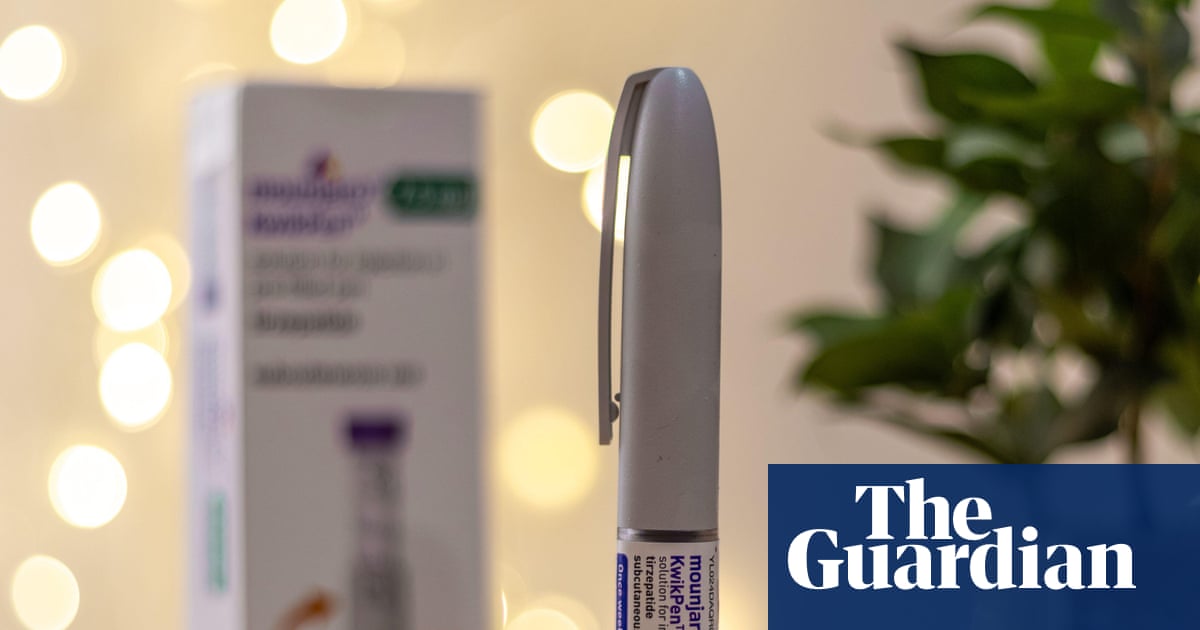
You have heard and read so much about people using weight loss injections to get slim, you feel it is time to give it a go in the run-up to the festive season. The problem is cost.
But it seems there are other options rather than getting a prescription from a doctor and going to the pharmacy. A text message arrives giving a link to a site with much cheaper medication – and with no need to go through official channels. And you saw a similar ad on social media the other day, so you decide to go for it.
The problem is these ads are almost certainly scams. In the best-case scenario, you will be sent nothing and lose whatever money you paid. In the worst, you receive a fake version, with unknown ingredients that could lead to severe health problems.
The popularity of legitimate weight loss medications has led to a rise in fake goods hitting the market and scams set up to simply take people’s money.
The UK’s Medicines and Healthcare products Regulatory Agency (MHRA) has warned against buying these illegal weight loss medicines without a prescription from beauty salons, fake pharmacy websites or via social media, saying they could contain “toxins and other ingredients that could cause real harm”.
New figures from the high street bank Santander show a sharp rise in the number of customers who have been affected by the fraud. The bank says the amount of money lost to scams involving weight loss injections, pens, tablets and fat-dissolving products between July and September this year, was more than double the total sum stolen in the previous three months. The average scam costs victims £120, it says.
“Fraudsters are actively exploiting people’s insecurities and health concerns, with these scams soaring in recent months,” says Michelle Pilsworth, the bank’s head of fraud.
What it looks like
Most take place on messaging apps and social media. On socials, an account may mimic the brand that you are looking for, but there will typically be subtle differences in spelling or logos.
The messages or posts will often use urgency-laden phrases such as “limited-time offer”, “exclusive deal” or “free giveaway”.
As the price of some legitimate weight loss jabs, such as Mounjaro, has increased recently, the fraudsters will price their “product” lower.
“Buying from unverified sellers online can come at a serious financial, health-related and emotional cost,” says Pilsworth.
What to do
As with all scams, the old adage applies: if it appears too good to be true, then it probably is.
The MHRA has warned people to be extremely cautious when buying medicines online. They should only be obtained from a registered pharmacy using a prescription issued by a healthcare professional, it says. If sourced elsewhere, they may pose serious risks to health.
Criminals can go to great lengths to make their site or social media page look as authentic as possible. If they claim to be an online pharmacy based in Great Britain, you can check the website of the General Pharmaceutical Council (GPhC) to ensure this is properly registered.
Victims of the car loans scandal could miss out on more than £4bn in compensation if the City regulator ploughs ahead with plans for an “insulting” interest rate in its redress scheme, consumer groups and claims firms say.
The Financial Conduct Authority (FCA) has been accused of offering a reduced rate of interest which will be added to compensation from banks for borrowers caught up in the car loan commissions scandal.
Claims law firms and consumer groups say borrowers should be offered the same terms as Marcus Johnson: the sole driver whose case was upheld by the supreme court in a landmark case in August.
While the terms of the final payout are sealed, Johnson is widely believed by industry experts to have received about 7% interest on his compensation package, after judges ordered the parties to negotiate a “commercial rate”. But the watchdog has proposed a rate of 2.09% on the compensation.
The FCA has estimated that victims payouts will average £700 resulting from 14m unfair loans, costing lenders – including Lloyds, Barclays, Close Brothers and the financial arms of manufacturers like Ford – a combined £11bn.
Critics say these terms are “unacceptable” and will ultimately rob drivers of another £4bn of compensation, based on calculations outlined in the FCA’s own consultation documents.
Darren Smith, the managing director of the claims law firm Courmacs Legal, said: “The FCA’s proposal to cap interest at 2.09% is frankly insulting to the millions of victims who were overcharged, many well over a decade ago.”
He said lenders would not stand for cut-price rates being offered to consumers. “It exposes a staggering hypocrisy,” Smith said. “If the boot was on the other foot, and a bank was a successful claimant in a commercial dispute, would they meekly accept 2.09% on their losses? [Lloyds Banking Group’s chief executive] Charlie Nunn would rightly be asking the general counsel at Lloyds to demand the full commercial rate of interest from the wrongdoer.”
The scheme is meant to draw a line under the scandal, which centres on unfair loan commission payments paid to car dealers by banks and specialist lenders. The FCA has estimated that 14m historic car loan contracts that may be deemed unfair because of these commission payments.
When discounting administrative costs, about £9.7bn of the £11bn sum will go straight to consumers. However, that sum is based on paying out a 2.09% annual interest rate on base levels of compensation.
Marcus Johnson, whose case was upheld by the supreme court in a landmark case in August. Photograph: Dimitris Legakis/The Guardian
Consumers would be due £14.3bn if the interest rate were closer to 8%, according to FCA documents. That rate of 8% is what has historically been paid out alongside successful county court cases, and by the Financial Ombudsman Service before its own rates were cut earlier this year.
The current proposals mean a consumer will on average receive about £700 in compensation, rather than £1,030 at the 8% rate.
“The interest rate is way too low, in my view,” said Martin Lewis, the founder of MoneySavingExpert, in his BBC podcast this month, adding that he was planning to raise the issue in his response to the FCA consultation.
skip past newsletter promotion
after newsletter promotion
Kevin Durkin, of HD Law, who represented Johnson during his supreme court case, agreed, told the Guardian that the FCA’s proposals were “unfair” and did “not adequately compensate consumers enough for the many years they’ve suffered under an unfair relationship with their lender. The FCA redress scheme should reflect what the supreme court awarded to Mr Johnson.”
Consumer advocates have also raised concerns. Alex Neill, a co-founder of the consumer rights organisation Consumer Voice, said: “The proposed rate of interest is unacceptable and would leave drivers losing out on £4bn they’re rightly owed.
“Suggesting that those hit hardest – who have already faced extra costs due to this mis-selling scandal – should negotiate for a fair rate themselves is clearly unworkable.”
However, the Financing and Leasing Association (FLA) said the interest rate should reflect changes to compensation payouts at the FOS, which earlier this year were cut from 8% to the average Bank of England base rate, plus 1%. “The FCA is applying the same rate” in its redress scheme, the FLA said.
An FCA spokesperson said:“Our proposals take account of court decisions on redress. We believe interest that links to the Bank [of England] base rate is fair, proportionate and aligns with the planned approach of the Financial Ombudsman.
“Consumers would have the right to challenge this if they have evidence this was unfair to them. We welcome feedback on our proposals.”