Category: 3. Business

  • Japan’s Kirin to seek buyer for Four Roses US whiskey line

    Japan’s Kirin to seek buyer for Four Roses US whiskey line

    Unlock the Editor’s Digest for free

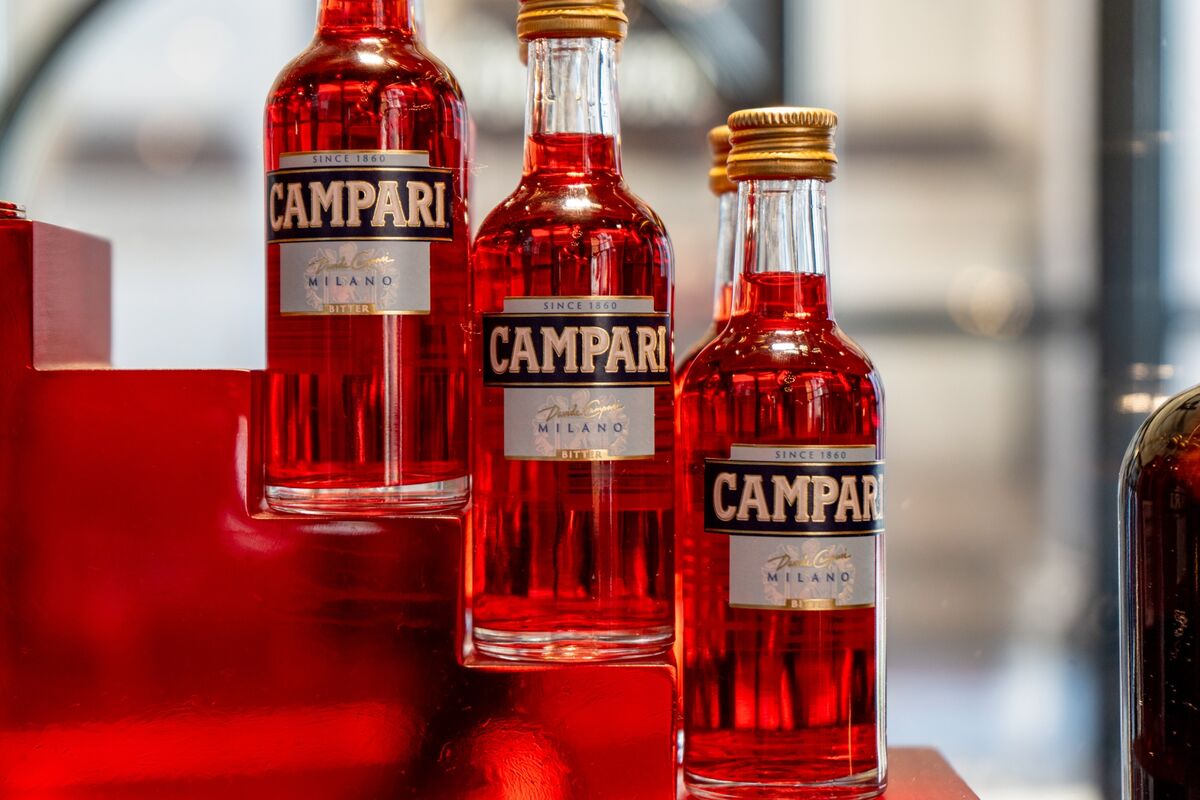
    Japan’s Kirin Holdings has put its Kentucky bourbon brand Four Roses up for sale at a price of $1bn, as the brewer pivots away from the struggling spirits sector towards healthcare.

    Kirin has been working with advisers from UBS to test interest from potential buyers in recent weeks, with first-round bids expected as early as next month, according to two people familiar with the matter.

    The sale process comes during a tough period for brewers and distillers as they contend with changing habits among younger consumers, who are reducing alcohol consumption. In Japan, beer consumption has dropped, hurting Kirin’s core product.

    Kirin and UBS declined to comment.

    Kirin, a Japanese conglomerate that generates more than $15bn a year in sales and produces everything from lager and spirits to rare diseases medicines under its Kyowa Kirin subsidiary, has owned Four Roses since 2002.

    Tracing its origins back to 1888, Four Roses is produced in a distillery in Lawrenceburg, Kentucky, in the heart of so-called Bourbon Country. Four Roses generated about $70mn in adjusted earnings annually and was expected to fetch as much as $1bn, the people said.

    After first entering the pharmaceutical sector in the 1980s, Kirin has accelerated its push into healthcare in recent years, as well as shedding non-core beverage assets, such as a soft drinks joint venture in China.

    Last year the company bought the skincare and supplements company Fancl as part of the effort. And in 2023 it launched a $1.3bn takeover for Australia’s largest vitamin company Blackmores.

    Across 2024, Kirin’s pharmaceutical division generated 23 per cent of the group’s $15.4bn in total revenue, up from 20 per cent in 2020. Shares in Kirin are up 14 per cent so far this year, giving it a market value of nearly $13.6bn as of Thursday’s close.

    Four Roses was likely to draw interest from strategic buyers, but some large drinks conglomerates might remain on the sidelines as they grappled with problems with their own product portfolios, the people said.

    The S&P food and beverage index is down 4.9 per cent over the past year, whereas the wider S&P 500 index is up 16 per cent over the same period.

    There were no guarantees that the sale process would result in a deal, the people cautioned. It is also possible that Kirin may opt to sell off a stake in the business through a joint venture, they added.

    Continue Reading

  • Pension funds scoop up ex-private equity executives

    Pension funds scoop up ex-private equity executives

    Stay informed with free updates

    Big pension funds are scooping up private equity professionals seeking refuge from a downturn in the sector that has restricted the carried interest payments that traditionally made up most of their pay.

    Professionals from mid-market buyout groups, in particular, have been flooding pension plan recruiters with their résumés in a bid to escape the private equity fundraising squeeze.

    “We are finding it easier to attract talent — not super easy, but much easier than three or four years ago,” said Ralph Berg, chief investment officer at the Ontario pension fund Omers. 

    “I suspect a lot of the private equity firms are struggling to hold on to people or maybe they want to manage . . . headcounts too.” 

    British Columbia Investment Management Corporation, which manages assets for public sector pensions, hired about 20 people in the past two years from buyout firms due to “fundraising issues” at those groups, a person familiar with the matter said. BCI’s private equity team has 70 people in total, according to its website.

    The experience of the Canadian pension plans is the latest sign of how a prolonged downturn, initially ushered in by 2022 interest rate increases, is rippling through the financial sector.

    The higher cost of borrowing hampered dealmaking and left firms with less cash to return to their institutional backers. This in turn reduced how much money those backers could recycle into new buyout funds.

    Private equity groups raised just $592bn in the 12 months to June, their lowest tally for seven years, data from Preqin shows.

    Tougher fundraising has led to lower revenue streams for buyout firms from management fees, leaving them with less cash to hire talent. Smaller firms have struggled the most with fundraising as buyout fund backers have flocked to larger groups which are seen as more reliable.

    Berg of Omers said that the red hot mergers and acquisitions market in 2021 had made that a tough year for pension funds to retain staff. 

    But the more subdued dealmaking environment that has endured since meant that “people — especially juniors — have seen that there [have] been fewer deals to work on”, Berg said, adding that “they fundamentally worry that they are not . . . building up their CVs”.

    “All of a sudden,” he added, “those employers that have their own capital and don’t depend on fundraising in order to make new investments and have more sustainable [compensation] structures with a higher level of predictability now look attractive.”

    BCI declined to comment.

    Continue Reading

  • Baker McKenzie Advises Pinnacle on Strategic Investment in Advantage Partners | Newsroom

    Baker McKenzie Advises Pinnacle on Strategic Investment in Advantage Partners | Newsroom

    Baker McKenzie has advised Pinnacle Investment Management Group Limited (ASX: PNI) (“Pinnacle”) on its strategic investment in Advantage Partners, Japan’s largest independent, locally-grown, diversified private markets platform.

    The transaction also involves distribution services arrangements covering global distribution of Advantage Partners’ strategies.

    This strategic investment will deepen Pinnacle’s presence and participation in Japan, and aligns with the company’s objective to diversify internationally and increase exposure to global private assets, particularly in the attractive mid-market area.

    Pinnacle is a global multi-affiliate investment management firm that provides specialist investment managers with superior global distribution, fund infrastructure, and support services. 

    For further details about the transaction, please refer to the Company’s announcement. 

    The Baker McKenzie team was led by partners Robert Wright, Lance Sacks and Shirin Tang*, alongside counsel, John Nielsen, with support from associates Thara Ing**, Allan Yang**, Mathew Leow** and Samiha Asim. 

    With more than 2,700 deal practitioners in over 40 jurisdictions, Baker McKenzie is a transactional powerhouse. The Firm has the broadest M&A footprint of any law firm globally, with more than 1,300 locally qualified and globally experienced M&A lawyers. The team excels at advising clients on their most complex, cross-border M&A matters and has advised on more than USD 600 billion in M&A transactions in the last five years (Refinitiv; 2020-2024).

    * Principal, Baker McKenzie Wong & Leow, Singapore
    ** Baker McKenzie Wong & Leow, Singapore


    Continue Reading

  • Overseas renminbi lending surges as China steps up campaign to de-dollarise

    Overseas renminbi lending surges as China steps up campaign to de-dollarise

    China’s overseas lending in renminbi is soaring, as Beijing steps up its efforts to expand the currency’s role in international finance and reduce the country’s exposure to the US dollar.

    External renminbi loans, deposits and bond investments by Chinese banks quadrupled to more than Rmb3.4tn ($480bn) over the past five years, as policymakers more aggressively pursue their long-term goal of reducing the centrality of the dollar in global financial flows.

    As part of this campaign, China is also opening more channels for foreign investors to buy renminbi-denominated bonds. But officials have focused their efforts on boosting the renminbi’s role in trade, partly as a defence against policies enacted in the US and elsewhere that weaponise the dollar — such as this week’s EU sanctions targeting Chinese banks accused of helping Russia to secure weapons parts overseas.

    “From China’s perspective, [settlement in renminbi] is important because it shows that no matter what happens, it can still trade,” said Adam Wolfe, emerging markets economist at Absolute Strategy Research in London.

    Recent data from China’s State Administration of Foreign Exchange shows the external fixed-income assets of Chinese banks more than doubling over the past decade to more than $1.5tn, with the share denominated in renminbi expanding rapidly to almost $484bn at the end of June. This includes $360bn of renminbi loans and deposits, up from $110bn in 2020.

    Some content could not load. Check your internet connection or browser settings.

    Similarly, the Bank for International Settlements estimates that overseas bank lending in renminbi to borrowers in developing countries rose by $373bn in the four years to the end of March. 

    “The year 2022 marked a turning point away from dollar- and euro-denominated credit and towards renminbi-denominated credit” to such borrowers, the BIS said. 

    With interest rates in China relatively low, sovereign borrowers including Kenya, Angola and Ethiopia have converted old dollar debts into renminbi this year. Indonesia and Slovenia recently announced plans to issue renminbi bonds, and last month Kazakhstan’s development bank sold a Rmb2bn offshore bond at a yield of just 3.3 per cent.

    A big part of the expansion in renminbi lending has been in trade finance. Data from cross-border payments system provider Swift shows that the renminbi’s share of global trade finance quadrupled over the past three years to 7.6 per cent in September, making it the second most-used currency in trade finance after the US dollar.

    Line chart of Rmb share of global trade finance (%) showing Renminbi's role in trade finance has surged in recent years

    China has further bolstered the use of the renminbi overseas through a network of offshore clearing banks, both Chinese and foreign, and through swap lines with trading partners around the world.

    It comes as Beijing has pushed the use of its own cross-border payments system, Cips, where the value of transactions has risen from a negligible amount a decade ago to more than Rmb40tn in every quarter since the start of last year.

    Cips transactions have expanded even as the renminbi’s share of global payments on the Swift system has fallen. Bert Hoffman, a professor at the National University of Singapore’s East Asian Institute, said this most likely indicated a migration of payments to the Chinese system — furthering Beijing’s desire to move away from a dollar-based global monetary system to a multi-polar one.

    Chinese officials believe that “a dollar-based system is inherently unstable and has disadvantages that a multicurrency system would not have,” Hoffman said.

    Some content could not load. Check your internet connection or browser settings.

    Chinese customs data suggests such plans are advancing. It shows the value of Chinese trade transacted in renminbi soaring to more than Rmb1tn a month over the past decade, with about 30 per cent of China’s trade and more than half of its cross-border transactions now settled in renminbi.

    China’s capital controls, however, have long hindered the renminbi’s international appeal — according to the IMF, it made up just 2.1 per cent of official reserves at the start of this year. One problem is a lack of readily available renminbi assets.

    Policymakers are moving to address this. Hong Kong authorities have embarked on a plan to make the city a hub for fixed income and currency trading. Simultaneously, Beijing has opened its domestic interbank repo market to foreign investors, allowing them to use renminbi fixed-income assets as collateral for renminbi loans.

    Some content could not load. Check your internet connection or browser settings.

    The repo initiative “deals with some of the pain points for foreign investors”, said Karen Lam, head of Hong Kong securitisation and derivatives at law firm Simmons & Simmons.

    “It only makes sense for investors to allocate more into these assets if they are able to use them for more than just holding and generating an income.”

    Last month, Hong Kong authorities announced a “road map” to bolster the city’s markets by supporting issuance and liquidity, particularly in renminbi.

    “It’s as significant as what Hong Kong did with the stock connect programmes,” said Paul Smith, head of markets for Japan, north Asia and Australia at Citi, referring to the channel connecting the Hong Kong stock exchange to mainland bourses. “Ultimately, it will accelerate the renminbi as a funding currency.”

    Over the summer, Beijing broadened the scope of its bond connect programme to allow more mainland Chinese investors to invest in Hong Kong’s fixed income market, which Smith said connects offshore issuers of renminbi debt with a “deep pool of renminbi liquidity”.

    Experts agree that China has little interest in the renminbi taking the place of the US dollar in the global financial system. But by boosting the renminbi’s involvement in international trade and investment, “China may get the best of both worlds,” said Smith at Citi.

    Beijing’s policies are bringing that target into view, analysts say.

    “The policy is moving very gradually, but all of the elements that would make a much more rapid internationalisation work — they’re falling into place,” said Hoffman.

    Additional reporting by Joseph Cotterill in London

    Continue Reading

  • Tech Stocks Power Gains as US-China Fears Ease: Markets Wrap

    Tech Stocks Power Gains as US-China Fears Ease: Markets Wrap

    (Bloomberg) — Technology shares drove a broad rise in Asia’s stock markets on Friday as a plan for Donald Trump and Xi Jinping to meet eased nerves around a trade war.

    An MSCI gauge of Asian shares was up around 0.5%, resuming a blistering rally this year that has pushed the index to all-time highs. Tech stocks were among the big drivers, with an industry gauge in Hong Kong jumping around 1.4% in early trading. Shares in Intel Corp helped lift the mood overnight, climbing in post-market trading after an upbeat revenue forecast.

    Sentiment got a boost after the White House said President Trump will meet his Chinese counterpart Xi Jinping, a chance for cooler heads to prevail after a recent flare-up in trade tensions. The two leaders will talk next Thursday on the sidelines of the Asia-Pacific Economic Cooperation summit, their first face-to-face meeting since Trump returned to power.

    “The confirmation of a Xi–Trump meeting gave markets a clear reason for a relief rally today,” said Hebe Chen, an analyst at Vantage Markets in Melbourne. “Not from hopes of warmer U.S.–China relations ahead, but from the perception that any progress is better than stalemate, and that a new deal before the truce deadline now appears more attainable.”

    Tech stocks in both countries have rallied, in part due to signs of state support. US quantum-computing shares got a lift from reports that the Trump administration was mulling financial support for some firms, a move to counter China, while Beijing’s pledge to boost technological self-sufficiency fueled demand for tech stocks in early trading.

    Investors are now turning their attention to the delayed inflation report from the US, which will be released on Friday. The cross-asset moves overnight suggest investors are optimistic the inflation reading won’t be a major drag to global markets that have zoomed higher over the past month. Oil prices fell ahead of US inflation data.

    “Valuations continue to be the best argument for bears, but the relentless buy-the-dip approach of investors has even the most pessimistic investors questioning their outlook,” said Mark Hackett at Nationwide.

    Policy Turn

    Treasuries were steady on Friday. They had snapped a three-day rally during overnight trading as yields rose across the curve, with the 10-year climbing five basis points to 4%. The dollar was little changed.

    West Texas Intermediate edged lower after jumping 5.6% to settle near $62 a barrel on Thursday, the biggest jump since the start of the Israel-Iran conflict on June 13. The latest US oil sanctions signaled a major policy turn from the Group-of-Seven price cap strategy that sought to limit Russia’s earnings without disrupting supply or driving up global prices.

    “As with the trade war, the fallout from the oil sanctions is murky at best, although we expect that from the perspective of the market at least, the kneejerk spike in crude will represent the bulk of the attention devoted to this matter, as it were,” said Ian Lyngen, Vail Hartman and Delaney Choi at BMO Capital Markets.

    Investors will likely look past any evidence of stubborn inflation in Friday’s consumer price index report, as money markets brace for a Federal Reserve rate cut next week.

    Prospects for Fed easing, durable earnings growth and AI investment spending support the view that the equity bull market has further room to run, according to Ulrike Hoffmann-Burchardi at UBS Global Wealth Management. But she also sounds a note of caution.

    “Any setbacks in US-China relations or potential concerns about the durability of the AI-driven rally could trigger bouts of volatility,” she said.

    How should regulators react to the blurring line between investing and gambling? Let us know in the latest Markets Pulse survey.

    Some of the main moves in markets:

    Stocks

    S&P 500 futures rose 0.2% as of 11:17 a.m. Tokyo time Nikkei 225 futures (OSE) rose 1.5% Japan’s Topix rose 0.6% to a record high Australia’s S&P/ASX 200 fell 0.2% to the lowest since Oct. 17, 2025 Hong Kong’s Hang Seng rose 0.7% to the highest since Oct. 10, 2025 The Shanghai Composite rose 0.2% to the highest since Oct. 9, 2025 Euro Stoxx 50 futures rose 0.2% Currencies

    The Bloomberg Dollar Spot Index was little changed The euro was little changed at $1.1611 The Japanese yen weakened 0.2%,falling for the sixth straight day, the longest losing streak since Oct. 9, 2025 The offshore yuan was little changed at 7.1276 per dollar Cryptocurrencies

    Bitcoin rose 0.9% to $110,597.69 Ether rose 1.4% to $3,884.39 Bonds

    The yield on 10-year Treasuries was little changed at 4.00% Australia’s 10-year yield advanced two basis points to 4.15% Commodities

    West Texas Intermediate crude fell 0.6% to $61.43 a barrel Spot gold fell 0.3% to $4,112.90 an ounce This story was produced with the assistance of Bloomberg Automation.

    –With assistance from Winnie Hsu.

    ©2025 Bloomberg L.P.

    Continue Reading

  • UNIQLO Ranked Among World’s Top 100 Best Brands in 2025 Interbrand Rankings

    UNIQLO Ranked Among World’s Top 100 Best Brands in 2025 Interbrand Rankings

    Last Updated: 2025.10.23

    UNIQLO Ranked Among World’s Top 100 Best Brands in 2025 Interbrand Rankings

    Brand recognition continues to rise internationally in 2025, following debut on
    Kantar’s prestigious BrandZ Global Top 100 list of world’s most valuable brands

    FAST RETAILING CO., LTD.
    to Japanese page

    Fast Retailing brand UNIQLO has been included for the first time in global brand consultancy Interbrand’s Top 100 Best Global Brands list, one of the world’s most influential brand rankings. UNIQLO entered in the top half of the list, at rank 47, with a brand valuation of $17.7 billion. The announcement follows UNIQLO’s debut earlier in the year in market research agency Kantar’s prestigious BrandZ Global Top 100 ranking, alongside being named Kantar’s ‘Breakthrough Brand’ at its annual Brand Blueprint Awards, confirming its rising recognition and popularity internationally.

    Commenting on the announcement, Fast Retailing Co. Ltd. Group Senior Executive Officer Koji Yanai said, “We are pleased to be included for the first time in Interbrand’s prestigious Best Global Brands ranking for 2025. This international recognition brings us great joy, as it indicates there are UNIQLO fans around the globe who appreciate LifeWear – simple, high-quality, timeless clothing designed to make everyday life better. We are deeply grateful to our customers everywhere for their continued support of UNIQLO.”

    Each year, Interbrand’s ranking analyses the world’s top global brands, evaluating them according to financial performance, international presence, and brand awareness and strength, which takes into account customer loyalty. In this year’s analysis, Interbrand noted that UNIQLO is a brand that is uncompromisingly focused on meeting the needs of its customers, working to continually reaffirm its place in their lives.

    The recognition follows UNIQLO’s receipt of the Breakthrough Brand award at the second annual Kantar Brand Blueprint Awards, in June. The award identifies the brand that has achieved rapid growth with the most meaningful differentiation from others, achieving the triple crown of combining “meaning”, “difference” and “salience” on a global scale. In 2025, UNIQLO also debuted on Kantar’s BrandZ Global Top 100 list of the world’s most valuable brands, entering at rank 97.

    Recognition in these prestigious global awards represents the increasing worldwide appeal of UNIQLO’s LifeWear concept of making everyone’s life better through clothing. From its first store opening in Hiroshima, Japan, in 1984, UNIQLO today operates more than 2,500 stores in 26 countries and regions around the globe.


    Top of page


    Continue Reading

  • Baker McKenzie Advises Crest Ultrasonics in Acquisition by Stellex Capital Management | Newsroom

    Baker McKenzie Advises Crest Ultrasonics in Acquisition by Stellex Capital Management | Newsroom

    Baker McKenzie has acted as counsel in several areas to Crest Ultrasonics Corporation, a supplier of ultrasonic cleaning and welding technologies, in its acquisition by Stellex Capital Management.  
     
    The cross-border Baker McKenzie team, which advised on a range of multijurisdictional issues, was led by Global Antitrust Chair, Creighton Macy (Washington DC) and Sylwia Lis, a trade compliance partner (Washington, DC).
     
    Read more on BusinessWire.
     
    Baker McKenzie brings deep experience in antitrust and trade matters that are critical to transactional success. Its globally recognized Antitrust & Competition team advises on merger clearance, regulatory investigations, and compliance strategies that help deals move forward smoothly. The Firm’s International Trade lawyers guide clients through complex cross-border issues, such as export controls, sanctions, foreign investment screening, and supply chain de-risking, ensuring regulatory alignment and operational continuity throughout the deal lifecycle.


    Continue Reading

  • India’s banking sector gets its largest foreign investment yet

    India’s banking sector gets its largest foreign investment yet

    This article is an on-site version of the India Business Briefing newsletter. To receive it in your inbox regularly, sign up if you’re a premium subscriber, or upgrade your subscription here.

    Good morning. The prime minister’s office has confirmed that Narendra Modi will not be travelling to Malaysia for the Asean summit, but will attend it virtually instead. This puts paid to expectations of a meeting with Donald Trump.

    No matter what the domestic media’s speculations about an impending trade deal are, significant differences remain in the relationship. The readout of the Deepavali call between the two leaders is telling — Modi posted about standing united against terrorism, but Trump said they talked about the “world of trade” and cutting imports of Russian oil. His pressure has started working: Reliance, one of the largest buyers, yesterday said it would “recalibrate” in line with government policy.

    Will Trump’s pressure bring Russia to the table, and what will happen to oil prices in the meantime? We have an explainer.


    Big deal

    Emirates NBD is all set to buy a 60 per cent stake in RBL Bank for $3bn, in the largest cross-border acquisition in India’s financial sector. According to the details of the agreement announced over the weekend, Emirates NBD will acquire at least a 51 per cent stake through a preferential issue. The Reserve Bank of India looks likely to give the deal its blessing, considering the regulator had approved Emirates NBD’s application to set up a wholly owned subsidiary earlier this year. 

    The Dubai-based bank will also make an open offer for 26 per cent of the stake from RBL’s public shareholders, as mandated by market regulations, with the price per share set at Rs280. The stock is now trading at Rs318 after news of the takeover sent the share price surging earlier in the week. RBL, which is currently 13th in size in India in terms of market capitalisation, is hoping to get into the top five slots — not an easy task. 

    The more significant part of this announcement, though, is what the RBI is signalling. If approved, this would be the second instance this year of the central bank allowing majority foreign investment in an Indian bank, after Japan’s Sumitomo Mitsui Banking Corporation bought 20 per cent of Yes Bank in May. Previously, the RBI also allowed some investments by Singapore’s DBS and Canada’s Fairfax in Indian banks. Though India allows up to 74 per cent foreign investment in private banks, the shareholding of any single foreign investor is usually capped at 15 per cent. 

    The central bank seems to be more comfortable opening up the sector on a case-by-case basis, rather than a regulatory overhaul. This is both good and bad. Deals go through greater scrutiny because they are assessed on individual merit, and the risk of opening the sector to foreign investments is controlled. But this approach also fosters an environment of policy uncertainty, which might deter credible, big investors from entering India. 

    The entry of foreign capital will make the banking space more competitive, especially for the established large private banks. It also helps deepen the financial sector, brings in stricter governance norms, gives customers more choice and buoys the growing fintech sector in the country, as it builds on the banking network. What’s not to like?

    Do you think the RBI should change its policy on foreign investment in banks? Hit reply or email me at indiabrief@ft.com

    Recommended stories

    1. Warnings about financial bubbles are coming from all sides, writes my colleague Katie Martin.

    2. The tweeting turmoil that led to the exit of Sumaiya Balbale, Sequoia’s COO.

    3. The US imposed sanctions on Russia’s Rosneft and Lukoil, after Moscow launched fresh strikes across Ukraine.   

    4. Intel shares jumped on improved revenue as turnaround shows progress, while Tesla’s profits dropped more than a quarter despite record car sales.

    5. HTSI has some great packing tips. A copy of the FT is advisable, but optional.

    6. My colleagues John Burn-Murdoch and Sarah O’Connor have started a newsletter exploring how AI is transforming the world of work. Sign up for The AI Shift.

    China’s grouse

    China accounts for nearly 70% of all electric-vehicle sales globally © 2025 Bloomberg Finance LP

    China has filed a complaint with the World Trade Organization over India’s production-linked incentive schemes for batteries and electric vehicles. Beijing’s contention is that New Delhi’s scheme to reward homegrown manufacturing violates several WTO obligations, including the principle of national treatment (which mandates that imported and local goods be treated equally), and works as a subsidy for import substitution. These are explicitly prohibited under the multilateral trade rules.

    The timing and the intent of China’s grievance is a bit puzzling. On the ground there is no real threat from Indian manufacturing, despite some of the PLI schemes dating back to 2021. According to official data released last December, 115 applications were received under this scheme and 82 were approved. The first payout was due after March but it does not look like any money has been paid so far. In fact, the government is reportedly reviewing the schemes because there had been such little traction.

    By most estimates, China accounts for nearly 70 per cent of all EV sales globally. India will take a very long time to catch up. Most Indian EV companies are dependent on China for technology, JSW Group chair Sajjan Jindal told my colleagues Krishn Kaushik and Chris Kay. “Even Europe is taking the technology from China,” he said, adding: “China has taken a huge leap versus the European auto companies, so we don’t have any option.” Batteries — a core component of EVs — are one of the biggest hurdles for domestic EV manufacturers. India mostly imports cells from China, Japan and South Korea, and domestic production is forecast to meet just 13 per cent of the country’s EV battery cell demand by 2030, according to S&P data.

    The timing of China’s complaint seems to be driven by tariffs and minimum prices imposed on its EV industry by other countries such as Canada and EU states. With the thaw in political relations with New Delhi, Beijing is also hoping to export more electric vehicles and batteries to India. The WTO complaint, then, provides China a point of argument at a time the country is facing a significant blowback in global trade. China’s objection is not because it is threatened by India’s manufacturing prowess, but mostly because it gives it something to complain about. 

    Go figure

    The growth in India’s core sector slowed down last month, according to government data. Fertilisers, and the four fuel-related sectors — crude oil, coal, natural gas and refinery products — were the worst affected.

    8

    industries in the core sector

    Read, hear, watch

    I am neck deep in Kiran Desai’s The Loneliness of Sonia and Sunny. Its setting is immediately recognisable for an FT reader in India — two young Delhiites navigating their way through college and work in the US. There are, of course, many forces that shape their lives and decisions — family, identity, race and culture. Desai is an astute observer, and her depiction of a cosmopolitan Indian at large in the world is both thrilling and sharp. This book is another tome, though. So mind your wrists, again.

    Thank you for the suggestions of shows last week.

    Buzzer round

    Which dish originates in Nepal and Tibet, is made of flour, water and (usually) a meat filling, and comes in two shapes — half moon and full moon? Hint — they can be steamed or fried.

    Send your answer to indiabrief@ft.com and check Tuesday’s newsletter to see if you were the first one to get it right.

    Last Friday we asked: The global popularity of which product has sent Japanese farmers into a tizzy as they struggle to keep up with demand?

    The answer is of course, matcha!

    Anuj Balaji was first with the correct answer, followed by Suvodeep Rakshit, Aniruddha Dutta, Ram Teja, Prasanna Venkatesh and Anjaneya Das. Congratulations!

    I am thrilled to see another week of great participation in Buzzer Round. I have talked about getting a leaderboard going, but apologies, have not been able to get around to it. Coming soon, I promise!


    Thank you for reading. India Business Briefing is edited by Tee Zhuo. Please send feedback, suggestions (and gossip) to indiabrief@ft.com.

    Continue Reading

  • Bank of England chief Afua Kyei tops 2026 Powerlist as UK’s most influential black person

    Bank of England chief Afua Kyei tops 2026 Powerlist as UK’s most influential black person

    Adina Campbell,UK correspondent and

    Anthea Lee

    BBC Afua Kyei wears a white suit jacket with a beaded trim. She has long dark hair and is smiling.BBC

    Mum-of-four Afua Kyei says the Bank of England supports parents in the workplace

    Afua Kyei, the Bank of England’s chief financial officer, has been named the UK’s most influential black person.

    The 43-year-old is one of the UK’s most senior finance leaders, in charge of the financial governance of the Bank’s £1 trillion balance sheet and funding reforms.

    The BoE executive director topped the 2026 Powerlist, which recognises the most powerful people of African, African Caribbean, and African American heritage in the UK.

    Other influential names include former footballer Ian Wright, who’s new to the list, make-up artist Dame Pat McGrath and actor Idris Elba.

    Kyei, who was recruited by the Canadian Prime Minister Mark Carney in his former role as the governor of the Bank of England, said topping the list was “incredibly humbling”.

    The mum-of-four said growing up she saw obvious differences in the workplace.

    She said: “I didn’t see so many women in big leadership roles who had families and I know that there are lots of women who think that they need to choose between work and having a family.

    “What I love about the Bank of England is that we really support working families and working parents.”

    Kyei studied chemistry at Oxford University and was also awarded a junior research fellowship by Princeton University in organic chemistry.

    ‘You don’t need to be a mathematician’

    During the global financial crisis, she was an investment banker before joining Barclays Bank where she was the Chief Financial Officer for Mortgages.

    She joined the Bank of England in 2019 and is at the core of the Bank’s leadership and decision making.

    She said her parents, who moved to the UK from Ghana to go to university at 18, have been her biggest role models.

    “My mother came to Liverpool, trained to become a midwife and enjoyed a 40-year plus career working for the NHS.

    “My father has enjoyed a long career in the oil industry. I saw them juggling work and home. They instilled really strong values in us,” she added.

    Kyei hopes to inspire more young people to consider banking as a career.

    “You don’t need to be a mathematician, you don’t need to be an accountant and you don’t need to be an economist. What we’re looking for is fresh perspectives and we want the best people”.

    Kyei takes the place of tech CEO Dean Forbes at the head of the list.

    The rest of the 2026 Powerlist

    Getty Images  Sport pundit Ian Wright during the FIFA World Cup 2026 qualifier match between England and Andorra at Villa Park on September 06, 2025 in Birmingham, England.Getty Images
    Getty Images for W Magazine Pat McGrath attends W Magazine and Louis Vuitton's Academy Awards Dinner at a Private Residence on March 07, 2024 in Los Angeles, California.Getty Images for W Magazine

    2. Ian Wright – Football Legend, Broadcaster & Advocate for Equity in Sport (New)

    3. Dame Pat McGrath – Make-up artist/Founder, Pat McGrath Labs

    The annual Powerlist was first published in 2007, with its aim to provide role models for young black people, according to Powerful Media.

    Powerlist founder Michael Eboda said he thought they would run out of people after three years, but the opposite has happened.

    “Over the last 20 years we’ve seen more influencers from the private sector as opposed to the public sector and that’s a great story of success in Britain”.

    Continue Reading

  • Access Denied


    Access Denied

    You don’t have permission to access “http://www.spglobal.com/commodity-insights/en/news-research/latest-news/agriculture/102325-platts-95cl-beef-cif-us-assessment-hit-highest-levels-since-launch” on this server.

    Reference #18.daa0d517.1761267546.a94a295

    https://errors.edgesuite.net/18.daa0d517.1761267546.a94a295

    Continue Reading