Global law firm K&L Gates LLP served as legal counsel to Federated Hermes, Inc. (NYSE: FHI) in its agreement to acquire a majority stake in FCP Fund Manager, LP, a privately held real estate investment manager headquartered in Chevy Chase, Maryland.
The transaction, which is expected to close in the first half of 2026 pending regulatory approval and customary closing conditions, marks Federated Hermes’ second private markets acquisition of 2025. It follows the firm’s April purchase of Rivington Energy Management and underscores its continued expansion into alternative asset classes.
FCP specializes in US multifamily real estate, deploying both equity and select debt strategies. Since its founding, the firm has invested in, operated, or financed more than US$14.6 billion in gross asset value, including more than 75,000 apartment units. FCP’s team of more than 75 professionals will continue to manage the business from its six US offices, maintaining deep coverage across 19 high-growth metro areas.
The deal was led by Chicago partner Brent Williams with relationship partners Clair Pagnano, leader of the firm’s global Asset Management and Investment Funds practice, and Michael Caccese, firm co-chair.
Pagnano stated: “This acquisition underscores Federated Hermes’ strategic commitment to expanding its private markets platform and strengthening its position in real estate investment management. We’re proud to be advising Federated Hermes on this transaction with FCP and look forward to a successful closing and supporting their continued success in this dynamic space.”
“On behalf of Federated Hermes, we would like to thank K&L Gates for their expert advice, counseling and active support in the lead up to, and execution of, the definitive transaction agreement between Federated Hermes and FCP Fund Manager, LP. We look forward to continuing to work with K&L Gates towards a successful closing of the transaction,” said George Magera, Federated Hermes’ general counsel.
K&L Gates is a fully integrated global law firm with lawyers located across five continents. The firm represents leading multinational corporations, growth and middle-market companies, capital markets participants and entrepreneurs in every major industry group as well as public sector entities, educational institutions, philanthropic organizations and individuals.
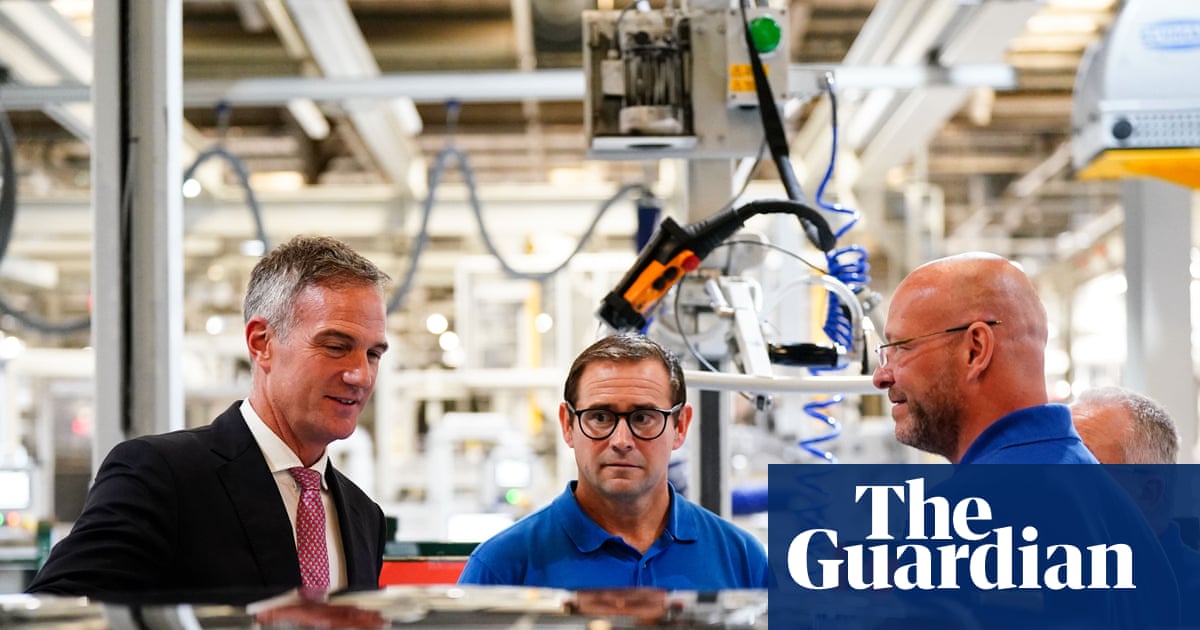
Jaguar Land Rover has not drawn down any of a £1.5bn loan facility guaranteed by the government, with suppliers expressing anger over ministers’ claims to have supported the carmaker’s supply chain after a crippling hack.
Britain’s biggest automotive employer was forced to shut down all of its wholly owned factories from 1 September for more than a month, after cyber-attackers compromised key computer systems.
Liam Byrne, the Labour MP who heads of parliament’s business select committee, on Friday wrote to the business secretary, Peter Kyle, asking for clarification as to whether any money had reached JLR, and whether the aid was requested by the carmaker.
Suppliers to JLR have privately expressed anger about the government’s messaging, which appeared to take credit for helping them. An executive at one parts maker said: “In some ways the government played a blinder with everyone thinking they bailed out JLR. They did nothing.”
JLR was able to restart limited production only in early October. It has since been focusing on ramping up output, with a full rate of production expected by early December.
The shutdown caused chaos in the UK automotive industry, which was already under pressure after an extended period of low demand. Suppliers laid off thousands of workers to save cash, and this month the Guardian revealed JLR’s plan to pay upfront for parts in order to get money into the supply chain quickly after a month without orders.
JLR is on track to avoid the worst-case scenario of a shutdown lasting into the new year. However, the Confederation of British Metalforming (CBM), a lobby group representing many of the company’s suppliers, said financial support to parts makers still needed to be accelerated.
Most suppliers work on 60-day payment terms, meaning some will start to feel the worst of the financial pressure next week, two months after the attack halted orders.
The crisis prompted calls by MPs for government intervention, before the Labour party conference at the end of September. The evening before the conference, Kyle announced that government-controlled UK Export Finance (UKEF) would guarantee a £1.5bn loan, in effect promising to cover 80% of the debt if JLR were to default.
The size of the guarantee was “outside of UKEF’s normal risk appetite”, its chief executive warned the business secretary.
Announcing the loan guarantee, Kyle said it had “the explicit intention that that is to support the supply chain into JLR as well”. In its announcement the government said it would “bolster JLR’s cash reserves so it can support its supply chain which has been greatly impacted by the shutdown”.
In his conference speech two days later, Kyle trumpeted the government’s intervention. He said: “I’ve announced £1.5bn support – a huge amount of money to help a hugely important company.”
The Financial Times reported that JLR only formally agreed the loan covered by UKEF this month, with HSBC, Mitsubishi UFJ Group and NatWest acting as potential lenders. Several sources told the Guardian that none of that loan facility had gone into JLR’s accounts, nor had any gone to any of its suppliers. Instead, the carmaker used its existing large cash reserves for its scheme to help suppliers.
The ability to access a loan readily, even if not used, may have helped JLR marginally by lowering the risk of it breaching other banking agreements. However, the loan guarantee is unlikely to have helped suppliers.
skip past newsletter promotion
after newsletter promotion
A government spokesperson said: “We acted quickly and decisively to put support in place for JLR through a loan guarantee at a critical moment to help the company and its supply chain stabilise the situation.
“We continue to work closely with JLR, the industry and major banks to keep a close eye on the supply chain through this challenging period.”
Even after JLR’s own support scheme – which received no help from the government – some suppliers have raised concerns that it is taking some time for payments to trickle down through the “tiers” of the supply chain. While tier 1 suppliers have generally received cash from JLR’s scheme, the carmaker is reliant on them to keep making payments to the lower tiers.
Byrne, a Labour MP in a Birmingham constituency that is home to many JLR workers, also asked for more information on how the government was monitoring whether adequate support was going beyond the first tier, and why the government thought a loan guarantee was the best option to help the supply chain.
Stephen Morley, the president of the CBM, said some parts makers had received much-needed cashflow but others further down the chain would start feeling the worst of the squeeze imminently, two months after their last invoices became due.
“From 1 September, no matter when you get paid, there’s no sales to invoice,” Morley said. “Depending on your payment terms, come 1 November the majority of invoices would have been due. This is a critical pinch point as there is nothing to invoice.”
However, he added that the recovery was going better than expected overall. He said: “JLR has done well so far, but there’s work to do.”
Subscribers to YouTube TV have lost access to ESPN, ABC and other Disney channels, as the two companies struggle to negotiate a licensing deal.
Disney said the online pay-TV platform, which is owned by the tech giant Google and available only in the US, had refused to pay fair rates for the content, which also include National Geographic and the Disney channel.
In its own statement, YouTube TV said that Disney’s proposed terms “disadvantage our members while benefiting Disney’s own live TV products”.
After tense negotiations, the channels vanished from YouTube TV just before midnight on Thursday – the deadline to reach a new deal. The blackout affects roughly 10 million subscribers.
If Disney channels remain suspended for an “extend period of time”, YouTube TV said it would offer subscribers a $20 credit.
YouTube and Disney-owned Hulu are among the biggest online TV platforms in the US.
Their stand-off follows similarly contentious talks this year between YouTube and other media companies, which had also threatened to limit the shows available to YouTube TV subscribers.
Google struck a deal at the last minute with Comcast-owned NBCUniversal earlier this month to keep shows like “Sunday Night Football” on YouTube TV. It has also reached agreements with Paramount and Fox in recent months.
In separate statements, both Google and Disney said they were working toward a resolution to restore Disney content to YouTube TV.
Still, the companies remain divided on fees.
“With a $3 trillion market cap, Google is using its market dominance to eliminate competition and undercut the industry-standard terms we’ve successfully negotiated with every other distributor,” a Disney spokesperson said in a statement.
But YouTube said in a statement that Disney was proposing “costly economic terms” that would lead to higher prices for YouTube TV customers and limit their options for content, benefiting Disney’s own live TV offerings like Hulu+ Live TV.
The government has reduced Liquefied Petroleum Gas price by Rs5.88 per kilogram. The new rates will take effect from November 1, 2025.
According to the Oil and Gas Regulatory Authority notification, the price of an 11.8-kg domestic LPG cylinder has been reduced by Rs69.44.
Following the revision, the new price for the household cylinder has been fixed at Rs2,378.89, down from Rs2,448.33 in October.
Read More: Govt lifts ban on new gas connections
The adjustment comes as part of OGRA’s monthly price review, reflecting changes in international market trends and domestic distribution costs.
Recently, Prime Minister Shehbaz Sharif announced the launch of the process allowing regasified liquefied natural gas (RLNG) connections to domestic consumers, responding to a longstanding public demand for the restoration of household gas supply.
The government had imposed a ban on new gas connections in 2021, citing rapidly depleting reserves across the country. The restriction forced consumers to shift from piped gas to alternatives and often more expensive sources of fuel for cooking and heating.
During 2022, when the Shehbaz-led Pakistan Democratic Movement (PDM) coalition took office, the government came under heavy public pressure to resume gas connections.
According to the prime minister, gas availability had been a major challenge at the time, but funds were later released and infrastructure laid down, enabling RLNG supply to a large number of pending applicants.
Also Read: PSX rises almost 5,000 points on ceasefire optimism
The announcement has been made in the wake of recent discoveries of new oil and gas reserves in the country. Last month, Pakistan Petroleum Limited (PPL) reported a ‘significant discovery’ of oil and gas in the eastern Attock district.
In February, Mari Energies, a domestic exploration firm, uncovered fresh hydrocarbon reserves in Khyber-Pakhtunkhwa, with initial testing indicating a flow of 12.96 million standard cubic feet per day (MMSCFD) of gas and around 20 barrels per day (bbl/d) of condensate.
The dollar is wrapping up its second best month of the year as lack of official data muddies the outlook for the US economy and the Federal Reserve’s interest-rate path.
The Bloomberg Dollar Spot Index advanced for a third day on Friday, bringing October’s gain to 1.6%. The greenback got a boost this week when Fed Chair Jerome Powell said that another rate cut this year is far from certain. Meanwhile, the dollar’s peers from developed countries — namely the euro, British pound and Japanese yen — are being bogged down by their domestic troubles.
NVIDIA CEO Jensen Huang’s Chimaek Gathering Wins Hearts, Boosts Sales 조선일보
Nvidia expands global AI rollout with bumper South Korea deals BBC
Three billionaires went out for chicken and beer, and paid for everyone’s meal CNN
Samsung Teams With NVIDIA To Lead the Transformation of Global Intelligent Manufacturing Through New AI Megafactory samsung.com
NVIDIA, South Korea Government and Industrial Giants Build AI Infrastructure and Ecosystem to Fuel Korea Innovation, Industries and Jobs NVIDIA Newsroom
(Bloomberg) — Wall Street’s blistering bull market got fresh fuel at end of a month that’s lived up to its volatile reputation, with stocks rising as the artificial-intelligence euphoria shows no signs of abating.
Following a brief pause in the S&P 500’s $17 trillion rally, the gauge bounced on solid earnings from Amazon.com Inc. and Apple Inc. The bond market steadied after a post-Federal Reserve rout. The dollar rose. A jump in oil waned as President Donald Trump denied he’d made a decision to strike military targets in Venezuela.
Subscribe to the Stock Movers Podcast on Apple, Spotify and other Podcast Platforms.
From geopolitical to trade risks, a US government shutdown and high valuations, equity traders had a lot to digest in October. Ultimately what’s prevailing is confidence in Corporate America and optimism that Fed rate cuts will keep momentum going for earnings.
To Mark Hackett at Nationwide, it’s been a test of investors’ bullish thesis, with news on trade, monetary policy and earnings.
“There is increased skepticism about the participation in the rally, though many see this as the next in the line of ‘glass half empty’ arguments from bears that have seen most of their previous arguments fade,” he said. “Most indicators continue to support a strong market through year end.”
Since the April meltdown, the S&P 500 has soared almost 40% and is now on pace for its longest streak of monthly gains since 2021. The superlative is even better for the Nasdaq 100: a seven-month surge that’s set to be the longest in eight years, buoyed by big tech’s pristine balance-sheets and AI bullishness.
The S&P 500 hovered near 6,835. A gauge of the Magnificent Seven megacaps climbed about 1.5% Friday, poised for its longest monthly run since 2023. Amazon jumped 11%. Apple was little changed after gaining as much as 2.2%.
The Treasury market was set for a month of gains even as momentum stalled after Fed Chair Jerome Powell downplayed a December rate cut – and some officials said they did not support a reduction this week. The dollar headed toward its best month since July.
While the backdrop for equities remains positive, there’s been concern about narrowing breadth that could jeopardize the advance in the near term.
“The stock market’s narrowing participation suggests that while some stocks are enjoying a Halloween treat, many others are left empty-handed,” said Craig Johnson at Piper Sandler. “Given current divergences in market breadth, we maintain our view that the better risk/reward opportunities lie in buying dips within this six-month bull cycle.”
If history is any guide, November kicks off the best six months of the year for US equities. But the question is whether those year-end gains have already been priced into the market following one of the S&P 500’s biggest stretches since the 1950s.
From a valuation perspective, the gauge trades at 23 times forward earnings, well above its average of 16 over the past two decades. For the cohort of tech megacaps, valuations are even higher, at 31 times forward earnings.
Michael Burry, the man who made his name shorting the US housing market, sent what appears to be a cryptic warning to retail investors about market exuberance.
We now enter the best two-month seasonal period on the calendar, with an average return of 3.3% since 1950, according to Hackett at Nationwide.
“We are in the seasonally strong fourth quarter, so we are buying dips,” said Thomas Lee at Fundstrat Global Advisors. “There are many sectors posting double digit growth, so this is not only an AI story but rather demonstrates US corporates and multinationals are able to generate strong earnings gains.”
Earnings season remains top of mind for equity investors, and so far it’s going very well. Results from more than 60% the companies in the S&P 500 are in, and the vast majority of those firms have topped estimates, according to data compiled by Bloomberg.
There’s no question that flows remain supportive for stocks. Global equities lured $17.2 billion in the week ending Oct. 29, said Bank of America Corp., citing EPFR data. And BofA strategist Michael Hartnett bets the AI equity leadership “ain’t budging for the time being.”
“We maintain our conviction that AI-related stocks should drive further equity performance and believe that underallocated investors should add exposure to the theme through a diversified approach,” said Mark Haefele at UBS Global Wealth Management.
Ryan Grabinski at Strategas noted that mentions of “AI” in corporate transcripts continue to accelerate.
“Any concerns I previously had about a slowdown in capital expenditure appear to have been put to rest, at least for another quarter, as investment activity remains strong,” he said.
As enthusiasm and spending around artificial intelligence expands, AI is becoming increasingly integrated into sectors beyond technology, Grabinski said.
“This trend not only creates broader opportunities, but should also help support a more diversified market advance,” he concluded.
So far this year, the S&P 500 is up around 16%. Historically, January through October gains in excess of 10% have presaged positive results over the next two months, according to Jay Kaeppel at SentimenTrader.
“An 86% historical win rate during a typically seasonally strong time of year suggests favorable odds,” he said. “Nevertheless, traders are encouraged to allocate capital intelligently and to contemplate what action they might take if things do not go as planned.”
With markets hovering around all-time highs, driven once again by a handful of stocks, a key question we’ve been receiving in meetings lately is whether performance will broaden out, according to Chris Senyek at Wolfe Research.
Even though valuations remain at their long-term median for mid caps, the lack of earnings growth over the past several years led him to conclude that the market weighted large cap leadership will continue through year-end.
“Our sense is, with the AI spending narrative continuing to play a key role in markets, combined with large cap fund flows/retail investor engagement, large caps will likely continue to be favored,” Senyek said. “We don’t see the market broadening out until there is a sustainable shift in fundamentals/earnings for small and mid caps.”
Growth stocks trade at a wide valuation premium to value stocks today, but there is a crucial difference from 2000: Fundamentals are helping to support current valuations, noted Jeremiah Buckley at Janus Henderson Investors.
The gap in profitability between growth and value indexes has widened over time, helping explain why the valuation gap has grown as well, he said.
“Since 2002, increases in price-to-book ratios have been matched by comparable increases in return on equity. During the 2000 tech bubble, by contrast, growth valuations surged without any fundamental support,” Buckley concluded.
Corporate Highlights:
Amazon.com Inc. posted robust cloud growth that reassured investors that the tens of billions of dollars the company and its peers are pouring into artificial intelligence will pay off. Apple Inc. delivered mixed results in the latest quarter, including a surprise sales decline in China, tempering investor excitement for what promises to be a busy holiday season. Nvidia Corp. Chief Executive Officer Jensen Huang still hopes to sell chips from the company’s Blackwell lineup to customers in China, though he has no current plans to do so, he told reporters Friday. Just this month, Meta Platforms Inc. has secured about $60 billion in capital to build data centers, part of its spending to get ahead in the artificial intelligence race. Half of that won’t show up on the social media giant’s balance sheet as debt. Exxon Mobil Corp. and Chevron Corp. outperformed Wall Street expectations after new oilfield projects and acquisitions boosted crude output. Cloudflare Inc. posted better-than-expected sales figures that topped quarterly and annual estimates, following a reorganization and the addition of more large enterprise customers. Coinbase Global Inc., the largest US crypto exchange, reported revenue that exceeded Wall Street’s third-quarter estimates on the back of an uptick in trading while token prices climbed to record highs. Tether Holdings SA recorded more than $10 billion in unaudited profit for the first nine months of 2025, according to a blog post on Friday. Carlyle Group Inc. posted a slide in earnings at its private equity arm during the third quarter, leaning on the credit and secondaries businesses to carry the firm as it navigates a choppy dealmaking recovery. Colgate-Palmolive Co. reported third-quarter earnings above Wall Street’s consensus, driven by resilient consumer demand in Latin America. AbbVie Inc.’s beauty business weakened again last quarter, underscoring ongoing struggles in its aesthetics division even as booming sales of new anti-inflammatory drugs fueled higher-than-expected revenue and a raised annual forecast. What Bloomberg Strategists say…
“A major leg higher for the S&P 500 will require a fresh catalyst, but a declining vol backdrop should keep stocks melting up even as the macro outlook grows murkier.”
—Michael Ball, Macro Strategist, Markets Live. For the full analysis, click here.
Some of the main moves in markets:
Stocks
The S&P 500 rose 0.2% as of 2:04 p.m. New York time The Nasdaq 100 rose 0.4% The Dow Jones Industrial Average was little changed The MSCI World Index rose 0.1% Bloomberg Magnificent 7 Total Return Index rose 1.3% The Russell 2000 Index was little changed Currencies
The Bloomberg Dollar Spot Index rose 0.2% The euro fell 0.4% to $1.1524 The British pound fell 0.1% to $1.3134 The Japanese yen was little changed at 154.08 per dollar Cryptocurrencies
Bitcoin rose 1.7% to $109,355.01 Ether rose 1.9% to $3,827.29 Bonds
The yield on 10-year Treasuries was little changed at 4.09% Germany’s 10-year yield declined one basis point to 2.63% Britain’s 10-year yield declined one basis point to 4.41% The yield on 2-year Treasuries was little changed at 3.60% The yield on 30-year Treasuries advanced one basis point to 4.67% Commodities
West Texas Intermediate crude rose 0.6% to $60.93 a barrel Spot gold fell 0.7% to $3,997.25 an ounce –With assistance from Phil Kuntz.