- Yen weakens as BOJ offers few rate clues; investors indecisive after Trump-Xi deal Reuters
- Bank of Japan keeps interest rates unchanged Bitget
- UPDATE1: Yen weakens to 153 vs. U.S. dollar after BOJ stands pat MarketScreener
- USD/JPY outlook: BOJ holds but hike risk remains, yen s FOREX.com
- Bank of Japan Holds Rate: What It Means for Crypto Startups and Salaries OneSafe
Category: 3. Business
-
Yen weakens as BOJ offers few rate clues; investors indecisive after Trump-Xi deal – Reuters
-

Stellantis Reports 13% Year-Over-Year Increase in Q3 2025 Shipments and Net Revenues
AMSTERDAM – Stellantis N.V. today announced its Q3 2025 results, reporting a 13% year-over-year increase in Net revenues to €37.2 billion, primarily driven by growth in North America, Enlarged Europe and Middle East & Africa, while South America saw a moderate decrease. Consolidated shipments(1) totaled 1.3 million units, up 13% (152,000 units), with most of the increase due to a 35% improvement in North America reflecting the benefits of normalized inventory dynamics, compared to the prior year in which the U.S. dealer stock reduction initiative temporarily decreased production.
Progressing Product Launches
By the end of Q3, six of the ten new vehicles planned for 2025 introduction were successfully launched. Additional launches in the fourth quarter will reintroduce several volume nameplates which exemplify important, decisive changes already made in the Company’s strategy to provide customers with greater freedom to choose the cars and the configurations they want. Ordering is now open for the SIXPACK-powered Dodge Charger Scat Pack (2-door), the four-door Dodge Charger Daytona, Jeep® Cherokee, Fiat 500 Hybrid and DS No.8.
Sales momentum in the U.S. improved, with a 6% increase in Q3 sales year-over-year. This trend was evidenced across the Jeep®, Ram, Chrysler, and Dodge brands – taking the Company to a monthly market share of 8.7% in September, the highest in 15 months. Another milestone in September was the return to market of the HEMI® V-8-powered Ram 1500.
In Enlarged Europe, several recently introduced models, including the Citroën C3, C3 Aircross, Opel/Vauxhall Frontera and Fiat Grande Panda, supported an improved market share in the B-segment, underpinned by increased production. Net revenues rose 4% compared to the prior year period. Market share in EU30 fell to 15.4%, affected by market declines in France and Italy, where Stellantis has greater exposure and a moderately lower market share in the LCV segment.
Outside North America and Enlarged Europe, Stellantis delivered solid commercial results. Aggregated sales grew 6% year-over-year, led by Middle East & Africa, partially offset by South America.
Stellantis Leadership Team
On 8th October Stellantis announced a number of new appointments to its Senior Leadership Team, promoting exceptional talent from both inside and outside the Company to sharpen regional focus and drive long-term sustainable success.
$13 Billion Investment to Grow in the United States
On October 14, Stellantis unveiled a strategic $13 billion investment program for the next four years to accelerate growth and expand its manufacturing footprint in the United States. This marks the largest U.S. investment in the Company’s 100-year history and will include the launch of five new vehicles and the creation of over 5,000 jobs.
- Belvidere, Illinois, plant to reopen for production of two new Jeep® models – Cherokee and Compass
- All-new Ram midsize truck to be assembled in Toledo, Ohio
- Warren, Michigan, plant to produce all-new large SUV with both range-extended EV and internal combustion engine powertrains
- Next-generation Dodge Durango to be built in Detroit
- Kokomo, Indiana, facilities to produce all-new GMET4 EVO engine
The new investment will further expand Stellantis’ already significant U.S. footprint, increasing annual finished vehicle production by 50% over current levels. The new product launches will be in addition to a regular cadence of 19 refreshed products across all U.S. assembly plants and updated powertrains planned through 2029.
Stellantis H2 2025 Financial Guidance
Stellantis reiterates its H2 2025 financial guidance, which anticipated continued improvement in Net revenues, AOI and Industrial free cash flows compared to H1 2025.
As we continue making important and necessary changes to our strategic and product plans, also in response to regulatory, geopolitical, macro-economic and other external and internal developments, we anticipate incurring charges in H2 2025, which, once finalized, we expect will largely be excluded from AOI.
We have also initiated a review of our warranty estimation process, which we expect to result in changes in those estimates and one-off charges in H2 2025.
Upcoming Events
On October 30, 2025, at 1:00 p.m. CET / 8:00 a.m. EDT, a live webcast and conference call will be held to present Stellantis’ Third Quarter 2025 Shipments and Revenues, with the presentation expected to be posted at approximately 8:00 a.m. CET / 3:00 a.m. EDT. The webcast and recorded replay will be accessible under the Investors section of the Stellantis corporate website (www.stellantis.com).
See Downloads for full version of press release
About Stellantis
Stellantis N.V. (NYSE: STLA / Euronext Milan: STLAM / Euronext Paris: STLAP) is a leading global automaker, dedicated to giving its customers the freedom to choose the way they move, embracing the latest technologies and creating value for all its stakeholders. Its unique portfolio of iconic and innovative brands includes Abarth, Alfa Romeo, Chrysler, Citroën, Dodge, DS Automobiles, FIAT, Jeep®, Lancia, Maserati, Opel, Peugeot, Ram, Vauxhall, Free2move and Leasys. For more information, visit www.stellantis.com.
-

Pakistan to Launch 47 New Co-Working Hubs for Startups and Freelancers
The Ministry of Information Technology and Telecommunication (MoITT) has set an ambitious target to establish 47 co-working spaces across Pakistan during the current financial year to aid startups and freelancers.
According to officials, the ministry had successfully completed the target of setting up 40 co-working spaces nationwide last year. The long-term plan aims to expand the total number of such centers to 250 by February 2027 under a phased implementation strategy.
PSEB, which is implementing the project, has invited applications from public and private entities to establish NCSP centers nationwide under the Prime Minister’s Initiatives, Support for IT Startups, Specialized IT Trainings, and Venture Capital. The program aims to create an enabling environment for IT startups and freelancers by offering professional networking opportunities and shared infrastructure.
Interested entities can obtain assistance in the form of interest-free loans of up to Rs. 10 million through partner banks, with all applications required to be submitted electronically through the EPADS portal by November 3, 2025.
e-Rozgar Rebranded
Officials revealed that the ministry has renamed the e-Rozgar Centers project to the National Co-working Spaces Project (NCSP) to avoid confusion, as the Punjab government operates a separate initiative with the same name.
The project, officials clarified, differs from the Punjab-based e-Rozgar Centers as it operates under a public-private partnership model. In this framework, the government will bear half the cost of trainers, while the private sector will share the remaining expenses. Trainers will mentor freelancers and entrepreneurs, promoting collaboration among individuals with diverse skill sets. The idea is to create shared innovation hubs where networking and knowledge exchange lead to the development of new ideas, startups, and small enterprises.
According to officials, the ministry plans to establish co-working centers with varying standards depending on the region’s economic and skill landscape. In major cities, larger centers spanning at least 3,500 square feet with a minimum of 100 seats will be developed to meet the growing demand from professionals already familiar with the co-working concept. In smaller cities, the focus will be on building awareness, developing skills, and providing business mentorship to help startups reach the sustainability threshold.
The National Co-working Spaces Project also aims to promote inclusion, innovation, and entrepreneurship by connecting local talent with digital opportunities. Each center will act as a hub for collaboration, skill-building, and industry facilitation, enabling freelancers and startups to overcome initial operational challenges and contribute to Pakistan’s growing digital economy.
Continue Reading
-

Stoxx 600, FTSE, DAX, EZ GDP, ECB decision
General view of Amsterdam’s city center.
Nurphoto | Nurphoto | Getty Images
LONDON — European stocks are expected to open in mixed territory on Thursday as regional investors await more corporate earnings, the latest growth data and a European Central Bank rate decision.
The U.K.’s FTSE index is seen opening 0.2% lower, Germany’s DAX 0.18% higher and France’s CAC 40 and Italy’s FTSE MIB are seen around the flatline this morning, according to data from IG.
It’s another busy day for earnings on Thursday with third-quarter results coming from TotalEnergies, ING Groep, Volkswagen, Crédit Agricole, Société Générale, Anheuser-Busch InBev, Shell, BBVA and Schneider Electric.
Data releases include flash euro zone third quarter GDP (due at 10am London time) and unemployment figures, as well as inflation data from Spain and Germany.
The European Central Bank is also due to announce its latest interest rate decision on Thursday, although economists have branded it a “non event” given the bank is highly likely to keep its key interest rate, the deposit facility rate, steady at 2%.
Trump, Xi and the Fed
Global markets were also assessing the in-person meeting between U.S. President Donald Trump and Chinese President Xi Jinping in Asia on Thursday.
Trump said he had reached a one-year agreement with Xi on rare earths and other critical minerals, and that Washington will cut fentanyl-related tariffs on Beijing to 10% after their meeting in South Korea.
BUSAN, SOUTH KOREA – OCTOBER 30: U.S. President Donald Trump greets Chinese President Xi Jinping ahead of a bilateral meeting at Gimhae Air Base on October 30, 2025 in Busan, South Korea.
Andrew Harnik | Getty Images News | Getty Images
Continue Reading
-

Solstad Maritime ASA: Presentation of Third-Quarter 2025 Results
30.10.2025
Solstad Maritime ASA: Presentation of Third-Quarter 2025 Results
Skudeneshavn, 30 October 2025
Solstad Maritime ASA (SOMA) is pleased to present its financial results for the third quarter of 2025.
CEO Lars Peder Solstad stated:
“The market has shown less activity in third quarter than earlier expected. At the same time, we maintain a positive outlook for 2026, supported by steady tendering activity and a solid order backlog.”
- Adjusted EBITDA of USD 69 million in the quarter compared to USD 91 million in the same quarter last year. USD 229 million year to date compared to USD 220 million last year.
- Several contract extensions and new contracts entered into, contributing to a total order intake of USD 180 million in the quarter equaling a book-to-bill ratio of 1.2x
- Continued shareholder friendly approach with a cash dividend for Q3 2025 of USD 0.032/share, totaling USD ~15 million
Contacts
Lars Peder Solstad CEO, at +47 91 31 85 85
Kjetil Ramstad CFO, at +47 907 59 489
Solstad Maritime ASA
www.solstad-maritime.com
This information is subject of the disclosure requirements pursuant to section 5 -12 of the Norwegian Securities Trading Act.
SOMA Q3 2025 Presentation
Continue Reading
-

Gold Demand Trends: Q3 2025
Important information and disclaimers
© 2025 World Gold Council. All rights reserved. World Gold Council and the Circle device are trademarks of the World Gold Council or its affiliates.
All references to LBMA Gold Price are used with the permission of ICE Benchmark Administration Limited and have been provided for informational purposes only. ICE Benchmark Administration Limited accepts no liability or responsibility for the accuracy of the prices or the underlying product to which the prices may be referenced. Other content is the intellectual property of the respective third party and all rights are reserved to them.
Reproduction or redistribution of any of this information is expressly prohibited without the prior written consent of World Gold Council or the appropriate copyright owners, except as specifically provided below. Information and statistics are copyright © and/or other intellectual property of the World Gold Council or its affiliates or third-party providers identified herein. All rights of the respective owners are reserved.
The use of the statistics in this information is permitted for the purposes of review and commentary (including media commentary) in line with fair industry practice, subject to the following two pre-conditions: (i) only limited extracts of data or analysis be used; and (ii) any and all use of these statistics is accompanied by a citation to World Gold Council and, where appropriate, to Metals Focus or other identified copyright owners as their source. World Gold Council is affiliated with Metals Focus.
The World Gold Council and its affiliates do not guarantee the accuracy or completeness of any information nor accept responsibility for any losses or damages arising directly or indirectly from the use of this information.
This information is for educational purposes only and by receiving this information, you agree with its intended purpose. Nothing contained herein is intended to constitute a recommendation, investment advice, or offer for the purchase or sale of gold, any gold-related products or services or any other products, services, securities or financial instruments (collectively, “Services”). This information does not take into account any investment objectives, financial situation or particular needs of any particular person.Diversification does not guarantee any investment returns and does not eliminate the risk of loss. Past performance is not necessarily indicative of future results. The resulting performance of any investment outcomes that can be generated through allocation to gold are hypothetical in nature, may not reflect actual investment results and are not guarantees of future results. The World Gold Council and its affiliates do not guarantee or warranty any calculations and models used in any hypothetical portfolios or any outcomes resulting from any such use. Investors should discuss their individual circumstances with their appropriate investment professionals before making any decision regarding any Services or investments.
This information may contain forward-looking statements, such as statements which use the words “believes”, “expects”, “may”, or “suggests”, or similar terminology, which are based on current expectations and are subject to change. Forward-looking statements involve a number of risks and uncertainties. There can be no assurance that any forward-looking statements will be achieved. World Gold Council and its affiliates assume no responsibility for updating any forward-looking statements.Information regarding QaurumSM and the Gold Valuation Framework
Note that the resulting performance of various investment outcomes that can be generated through use of Qaurum, the Gold Valuation Framework and other information are hypothetical in nature, may not reflect actual investment results and are not guarantees of future results. Neither World Gold Council (including its affiliates) nor Oxford Economics provides any warranty or guarantee regarding the functionality of the tool, including without limitation any projections, estimates or calculations.
Continue Reading
-
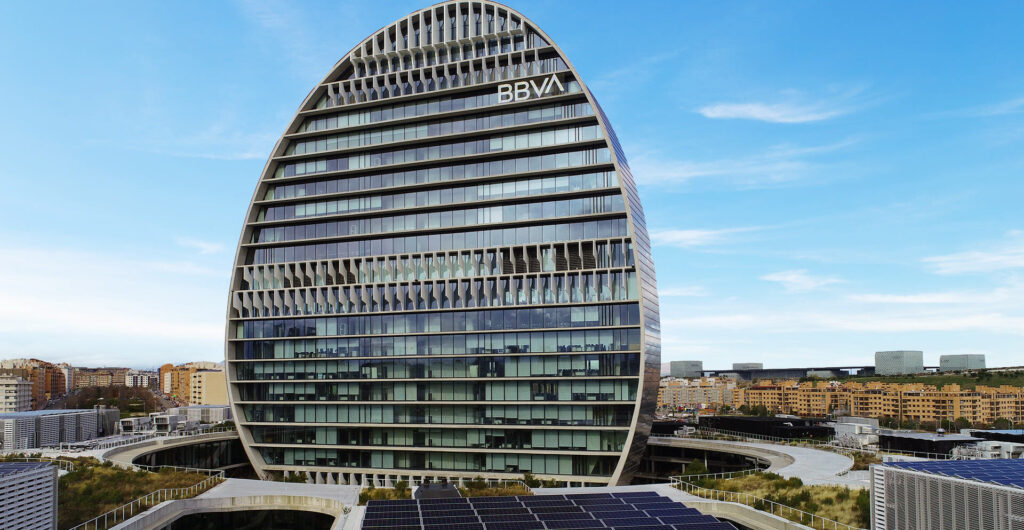
BBVA to start executing the nearly €1 billion share buyback announced earlier this year
BBVA shares acquired will be used to reduce share capital through their cancellation. The buyback program will end no later than February 18, 2025², or earlier if the maximum monetary amount or the maximum number of shares is reached.
Citigroup Global Markets Europe AG will be responsible for executing the buyback on the Spanish continuous market and on European trading platforms.
BBVA accelerates shareholder distributions
In addition to the share buyback starting today, on November 7, BBVA shareholders will receive the bank’s highest interim dividend in history (€0.32 gross per share), for a total amount of approximately €1.8 billion.
Furthermore, given the significant excess capital over the 12 percent CET1 ratio, BBVA’s Board of Directors recently agreed to launch another significant share buyback¹, as soon as it receives authorization from the European Central Bank (ECB).
BBVA’s share buyback track record
This is the third time BBVA has opted to repurchase shares as part of its ordinary shareholder remuneration. The bank repurchased shares worth €422 million against 2022 earnings, and €781 million against 2023 earnings.
In addition, BBVA has carried out two other share buybacks considered extraordinary shareholder remuneration. The first, between 2021 and 2022, amounted to €3.16 billion—one of the largest in Europe at the time—and the second, in 2023, totaled €1 billion.
Overall, BBVA will have executed share buybacks worth more than €6.3 billion since 2021 including the upcoming program set to begin today.
¹Pending approval from the governing bodies and subject to mandatory regulatory approvals.
² The share buy back programme will not be executed on December 24 and 31, 2025.
Continue Reading
-

ING completes share buyback and announces new distribution programme of up to €1.6 billion
Amsterdam,
ING announced today that it has completed the share buyback programme announced on 2 May 2025. The total number of ordinary shares repurchased under the programme is 101,193,469 at an average price of €19.77 for a total consideration of €2,000,093,404.60.
During the last week of the programme, up to and including 27 October 2025, in total 597,578 shares were purchased. These shares were repurchased at an average price of €20.73 for a total amount of €12,390,421.28.
The purchases exceeded 100% of the maximum total amount of up to €2.0 billion due to performance arrangements with our executing broker for the programme. The broker repurchased shares until the performance arrangements were fulfilled. The total consideration for ING was limited to €2.0 billion and the excess purchases above this amount were funded by the executing broker. Based on the total programme period, the effective average price for ING was €19.76.
ING also announced today a new shareholder distribution of up to €1.6 billion. The distribution consists of a share buyback programme for a maximum total amount of €1.1 billion and a cash payment of €0.5 billion. The purpose of the distribution is to converge our CET1 ratio towards our target of ~13%.
ING Group’s CET1 ratio was 13.4% at the end of the third quarter of 2025, which is well above the fully-loaded CET1 ratio requirement of 10.95%. The distribution will have an expected pro-forma impact of approximately 48 bps on our CET1 ratio. The share buyback programme will commence on 30 October 2025 and is expected to end no later than 27 April 2026. The €0.5 billion in cash will be paid on 15 January 2026.
The ECB has approved the distribution, and the share buyback programme will be executed in compliance with the Market Abuse Regulation and within the limitations of the existing authority to acquire a maximum of 20% of the issued shares as granted by the general meeting of shareholders on 22 April 2025. ING has entered a non-discretionary arrangement with a financial intermediary to conduct the buyback.
For detailed information on the daily repurchased shares, individual share purchase transactions and weekly reports, see share buy back programme.
Note for editors
More on investor information, go to the investor relations section on this site.
For news updates, go to the newsroom on this site or via X (@ING_news feed).
For ING photos such as board members, buildings, go to Flickr.
ING PROFILE
ING is a global financial institution with a strong European base, offering banking services through its operating company ING Bank. The purpose of ING Bank is: empowering people to stay a step ahead in life and in business. ING Bank’s more than 60,000 employees offer retail and wholesale banking services to customers in over 100 countries.
ING Group shares are listed on the exchanges of Amsterdam (INGA NA, INGA.AS), Brussels and on the New York Stock Exchange (ADRs: ING US, ING.N).
ING aims to put sustainability at the heart of what we do. Our policies and actions are assessed by independent research and ratings providers, which give updates on them annually. ING’s ESG rating by MSCI was reconfirmed by MSCI as ‘AA’ in August 2024 for the fifth year. As of December 2023, in Sustainalytics’ view, ING’s management of ESG material risk is ‘Strong’. Our current ESG Risk Rating, is 17.2 (Low Risk). ING Group shares are also included in major sustainability and ESG index products of leading providers. Here are some examples: Euronext, STOXX, Morningstar and FTSE Russell. Society is transitioning to a low-carbon economy. So are our clients, and so is ING. We finance a lot of sustainable activities, but we still finance more that’s not. Follow our progress on ing.com/climate.
Important legal information
Elements of this press release contain or may contain information about ING Groep N.V. and/ or ING Bank N.V. within the meaning of Article 7(1) to (4) of EU Regulation No 596/2014 (‘Market Abuse Regulation’).
ING Group’s annual accounts are prepared in accordance with International Financial Reporting Standards as adopted by the European Union (‘IFRS- EU’). In preparing the financial information in this document, except as described otherwise, the same accounting principles are applied as in the 2024 ING Group consolidated annual accounts. All figures in this document are unaudited. Small differences are possible in the tables due to rounding.
Certain of the statements contained herein are not historical facts, including, without limitation, certain statements made of future expectations and other forward-looking statements that are based on management’s current views and assumptions and involve known and unknown risks and uncertainties that could cause actual results, performance or events to differ materially from those expressed or implied in such statements. Actual results, performance or events may differ materially from those in such statements due to a number of factors, including, without limitation: (1) changes in general economic conditions and customer behaviour, in particular economic conditions in ING’s core markets, including changes affecting currency exchange rates and the regional and global economic impact of the invasion of Russia into Ukraine and related international response measures (2) changes affecting interest rate levels (3) any default of a major market participant and related market disruption (4) changes in performance of financial markets, including in Europe and developing markets (5) fiscal uncertainty in Europe and the United States (6) discontinuation of or changes in ‘benchmark’ indices (7) inflation and deflation in our principal markets (8) changes in conditions in the credit and capital markets generally, including changes in borrower and counterparty creditworthiness (9) failures of banks falling under the scope of state compensation schemes (10) non- compliance with or changes in laws and regulations, including those concerning financial services, financial economic crimes and tax laws, and the interpretation and application thereof (11) geopolitical risks, political instabilities and policies and actions of governmental and regulatory authorities, including in connection with the invasion of Russia into Ukraine and the related international response measures (12) legal and regulatory risks in certain countries with less developed legal and regulatory frameworks (13) prudential supervision and regulations, including in relation to stress tests and regulatory restrictions on dividends and distributions (also among members of the group) (14) ING’s ability to meet minimum capital and other prudential regulatory requirements (15) changes in regulation of US commodities and derivatives businesses of ING and its customers (16) application of bank recovery and resolution regimes, including write down and conversion powers in relation to our securities (17) outcome of current and future litigation, enforcement proceedings, investigations or other regulatory actions, including claims by customers or stakeholders who feel misled or treated unfairly, and other conduct issues (18) changes in tax laws and regulations and risks of non-compliance or investigation in connection with tax laws, including FATCA (19) operational and IT risks, such as system disruptions or failures, breaches of security, cyber-attacks, human error, changes in operational practices or inadequate controls including in respect of third parties with which we do business and including any risks as a result of incomplete, inaccurate, or otherwise flawed outputs from the algorithms and data sets utilized in artificial intelligence (20) risks and challenges related to cybercrime including the effects of cyberattacks and changes in legislation and regulation related to cybersecurity and data privacy, including such risks and challenges as a consequence of the use of emerging technologies, such as advanced forms of artificial intelligence and quantum computing (21) changes in general competitive factors, including ability to increase or maintain market share (22) inability to protect our intellectual property and infringement claims by third parties (23) inability of counterparties to meet financial obligations or ability to enforce rights against such counterparties (24) changes in credit ratings (25) business, operational, regulatory, reputation, transition and other risks and challenges in connection with climate change, diversity, equity and inclusion and other ESG-related matters, including data gathering and reporting and also including managing the conflicting laws and requirements of governments, regulators and authorities with respect to these topics (26) inability to attract and retain key personnel (27) future liabilities under defined benefit retirement plans (28) failure to manage business risks, including in connection with use of models, use of derivatives, or maintaining appropriate policies and guidelines (29) changes in capital and credit markets, including interbank funding, as well as customer deposits, which provide the liquidity and capital required to fund our operations, and (30) the other risks and uncertainties detailed in the most recent annual report of ING Groep N.V. (including the Risk Factors contained therein) and ING’s more recent disclosures, including press releases, which are available on www.ING.com.
This document may contain ESG-related material that has been prepared by ING on the basis of publicly available information, internally developed data and other third-party sources believed to be reliable. ING has not sought to independently verify information obtained from public and third-party sources and makes no representations or warranties as to accuracy, completeness, reasonableness or reliability of such information. This document may also discuss one or more specific transactions and/or contain general statements about ING’s ESG approach. The approach and criteria referred to in this document are intended to be applied in accordance with applicable law. Due to the fact that there may be different or even conflicting laws, the approach, criteria or the application thereof, could be different.
Materiality, as used in the context of ESG, is distinct from, and should not be confused with, such term as defined in the Market Abuse Regulation or as defined for Securities and Exchange Commission (‘SEC’) reporting purposes. Any issues identified as material for purposes of ESG in this document are therefore not necessarily material as defined in the Market Abuse Regulation or for SEC reporting purposes. In addition, there is currently no single, globally recognized set of accepted definitions in assessing whether activities are “green” or “sustainable.” Without limiting any of the statements contained herein, we make no representation or warranty as to whether any of our securities constitutes a green or sustainable security or conforms to present or future investor expectations or objectives for green or sustainable investing. For information on characteristics of a security, use of proceeds, a description of applicable project(s) and/or any other relevant information, please reference the offering documents for such security.
This document may contain inactive textual addresses to internet websites operated by us and third parties. Reference to such websites is made for information purposes only, and information found at such websites is not incorporated by reference into this document. ING does not make any representation or warranty with respect to the accuracy or completeness of, or take any responsibility for, any information found at any websites operated by third parties. ING specifically disclaims any liability with respect to any information found at websites operated by third parties. ING cannot guarantee that websites operated by third parties remain available following the publication of this document, or that any information found at such websites will not change following the filing of this document. Many of those factors are beyond ING’s control.
Any forward-looking statements made by or on behalf of ING speak only as of the date they are made, and ING assumes no obligation to publicly update or revise any forward-looking statements, whether as a result of new information or for any other reason.
This document does not constitute an offer to sell, or a solicitation of an offer to purchase, any securities in the United States or any other jurisdiction.
Continue Reading
-

Palmar Forensics uses CLEAR for vendor fraud protection
Why Thomson Reuters Risk & Fraud Solutions?
After a comprehensive process evaluating alternative solutions, Palmar Forensics selected Thomson Reuters CLEAR as the backbone of its investigative and vendor credentialing workflows for several reasons.
The first was comprehensiveness and navigability; full reports are thorough yet easier to navigate than alternatives. Their prior tool generated 200 to 300-page reports with lots of noise; CLEAR’s reports contain less irrelevant information, are structured, and searchable. As Joseph Palmar, CEO of Palmar Forensics puts it, “CLEAR is more effective and efficient. The CLEAR report is still 60 or 70 pages long, but it’s simple to navigate. It’s just so much easier to find out what you need to know. And it’s complete and accurate — it’s so comprehensive.”
CLEAR’s algorithms and logic were also praised. Particularly the strong relationship and ownership discovery that uncovers shell or sister companies and bid-rigging; targeted modules like CLEAR Risk Inform, CLEAR ID Confirm, and seamless alerts for continuous monitoring. These features gave CLEAR a competitive advantage.
Lastly, Palmar called out the credibility of Thomson Reuters and CLEAR within the industry, making it easy for him to trust.
“The Thomson Reuters CLEAR solution is the gold standard of fraud investigations. Law enforcement and the federal government both use it. I’ve lost count of how many meetings I’ve walked into where we’ve mentioned that we use CLEAR and they instantly realize we know what we’re talking about,” he says.
The value of CLEAR
Since 2012, Palmar Forensics has been using CLEAR — which provides comprehensive, up-to-date information from public records, sanctions databases, and media coverage. It also performs ID validation through CLEAR ID Confirm and subject-risk analytics through CLEAR Risk Inform.
When onboarding new vendors, Palmar Forensics uses CLEAR as the backbone of its proprietary vendor credentialing tool, VETTED®, to verify that the suppliers its clients want to work with are legitimate and independent businesses — and that their officers and or directors are “clean.” CLEAR does so by researching areas such as current and previous addresses, business relationships, criminal records, and creditworthiness. Then, they can be onboarded with greater certainty.
“We make sure clients are dealing with reputable organizations that aren’t shell companies, that aren’t linked to other similar businesses for bid-rigging purposes, and that the company’s officers aren’t criminals or have a nefarious history. In our world, that’s not an unusual situation — it’s an everyday occurrence,” says Palmar.
Uncovering hidden insights
If clients have suspicions about an existing vendor, Palmar Forensics uses CLEAR as part of an automated tool called VETTED to do a deeper dive to check for undisclosed relationships with other organizations, criminal links or backgrounds, or any lawsuits, liens or judgements. In one recent example, an investigation into a list of vendors provided by a client uncovered a conflict of interest in the awarding of contracts — several “separate” vendors were owned by the same people. In another example, one company owner was unaware that their business partner of 20 years had been charged with assault with a deadly weapon.
“Using Thomson Reuters Risk & Fraud Solutions as the backbone of VETTED gives us insights we wouldn’t otherwise have, so clients can understand who they’re doing business with,” explains Palmar. “CLEAR allows us to identify whether there’s anything in a company or individual’s background that’s fraudulent or in any way problematic. We have a suite of tools that we use, but the backbone of everything is CLEAR from Thomson Reuters.”
CLEAR alerts are incredibly useful, according to Palmar. By setting up alerts on certain entities and officers, it is notified about any potential reputational or financial hit to its clients, after the initial onboarding verification process. For Palmar Forensics, this continuous monitoring adds another important layer to the solution’s capabilities.
When considering the value of CLEAR, Palmar says decision-makers need to think beyond strict return on investment (ROI) metrics. That’s because vendor fraud does not usually happen at volume. But when it does occur, the damage can be incalculable. So, while only a small fraction of vendors commit fraud or have criminal associations, organizations must do everything they can to root them out. CLEAR enables them to do that — and that’s where its true value lies.
He cites the example of a charitable foundation where seven of its 500 vendors — accounting for 1% of its vendor base — stole $3 million over the course of five years. In addition to the direct financial loss, this raised the risk that donors would no longer donate money to that organization. Similarly, in the health care sector, if fraud is uncovered in the Medicaid or Medicare space, companies may find their government funding is suspended or withheld, which could have significant implications for business continuity beyond the loss itself.
“You need to spend money to prevent fraudulent expenditures and protect your reputation,” Palmar says. “If you have a massive fraud, your stock price may be affected but there may be even bigger problems to deal with. You can’t measure reputational harm, but one mistake can destroy the reputation you’ve worked so hard to develop.”
“To my mind, it’s better to do the preemptive work to protect the organization. At least if you’ve done your checks, that’s something you can say to the media, or to the board, as opposed to saying no, we didn’t do that because there was no ROI for doing so.”
Continue Reading
-

deals, dollars, deposits and Donald
Unlock the Editor’s Digest for free
Roula Khalaf, Editor of the FT, selects her favourite stories in this weekly newsletter.
Europe’s investment banks were already fighting an uphill battle to catch up with their Wall Street rivals, which dwarf them in both size and valuation terms. The return of Donald Trump to the White House has created a medley of additional challenges, laid bare in quarterly earnings this week.
The first problem: deals. In the US, Trump’s deregulatory agenda has encouraged a flurry of mergers and new listings at home. Yet his unpredictable foreign policy is eliciting caution abroad. So while takeovers of US companies jumped 25 per cent in the first nine months of this year to $1.4tn, according to LSEG data, European deals were up just 11 per cent to $554bn. Similarly, new listings in the US have raised more than twice as much as IPOs in Europe, according to Dealogic.
The result is that the high-margin fees that banks mint from corporate activity are harder to come by. Lars Machenil, chief financial officer at BNP Paribas, told analysts that European companies are in “wait and see” mode.
Despite this, BNP’s US business is growing at a similar rate to Wall Street rivals, Machenil claims. But then comes the second — less intentional — impact of Trump: the dollar. Even after a recent rebound, the currency’s value against major trade partners is down almost 9 per cent year to date. That means European banks’ US earnings are no longer worth as much once translated into their own currency.

At BNP, foreign exchange moves were a big reason it missed third-quarter revenue forecasts. For Deutsche Bank, currency movements were the difference between expanding its loan book and shrinking it. At UBS, the particularly sharp rally in the Swiss franc earlier in the year unfavourably pumped up the bank’s leverage ratios, making its balance sheet more tricky to manage.
The other D making some European bankers jealous: deposits. Between geopolitical uncertainty, White House efforts to encourage US investment, and higher interest rates, large companies are moving more of their cash to US accounts. Deposits in Bank of America’s global banking unit, for example, jumped 15 per cent year on year in the third quarter, while JPMorgan’s rose 12 per cent. At Deutsche Bank, in contrast, corporate deposits fell, despite enthusiastic talk of a wave of defence-related investment in the continent.
That’s inconvenient because, as Crisil Coalition Greenwich has highlighted, these sorts of corporate deposits boost the US banks several times over: they earn interest on the deposits themselves, make further money from cash management and payments businesses, and gain sticky funding for other parts of the group.
An optimistic take on this would be that maybe Europe’s banks aren’t as far behind Wall Street as they look: strip out some currency and other drags and both sides are growing at similar rates. Europeans will benefit proportionally more if the local deal pipeline unclogs. Even then, though Americans will rule the roost. Closing that gap is yet another D: doubtful.
nicholas.megaw@ft.com
Continue Reading