Category: 3. Business

  • A Fresh Look at eToro Group (NasdaqGS:ETOR) Valuation Following Recent Share Price Recovery

    A Fresh Look at eToro Group (NasdaqGS:ETOR) Valuation Following Recent Share Price Recovery

    eToro Group (NasdaqGS:ETOR) shares have moved up 3% over the past day, catching the attention of investors tracking recent momentum. Over the past month, however, the stock is still down 7%, underlining ongoing volatility in the sector.

    See our latest analysis for eToro Group.

    While eToro Group’s 1-day share price return of 3.2% has sparked renewed interest, it follows a much steeper loss of nearly 40% over the past quarter. This highlights that recent momentum remains fragile compared to the year’s persistent downward trend.

    If you’re tracking fresh movers or seeking overlooked opportunities, now’s a great time to broaden your investing horizons and discover fast growing stocks with high insider ownership

    With a steep drop from its recent highs and signs of potential value compared to analyst price targets, is eToro Group undervalued at these levels, or has the market already factored in any future rebound?

    eToro Group is trading at a price-to-earnings (P/E) ratio of 17.5x, which is well above the peer average of 6.5x. At the last close price of $39.27, the market is asking investors to pay a significant premium relative to direct competitors.

    The price-to-earnings ratio is one of the most commonly used measures to assess if a company’s stock is expensive or cheap versus its earnings. For a diversified financials firm like eToro, this ratio reflects how much growth, stability, and earnings quality investors expect from future performance.

    At 17.5x, the P/E is notably higher than the sector’s typical 6.5x. This large gap signals that investors are either confident in eToro’s sustained growth trajectory or potentially overestimating its near-term prospects. Without a supporting fair ratio, this valuation could moderate as market expectations adjust.

    See what the numbers say about this price — find out in our valuation breakdown.

    Result: Price-to-Earnings of 17.5x (OVERVALUED)

    However, persistent annual revenue declines and a significant premium to price targets remain near-term risks that could challenge any quick turnaround for eToro shares.

    Find out about the key risks to this eToro Group narrative.

    While the price-to-earnings ratio shows eToro Group trading at a premium, our DCF model gives a different perspective. According to this approach, eToro’s shares are currently trading about 13% below our estimated fair value. Does the market see risks others are overlooking? Or could there be unrealized potential here?

    Look into how the SWS DCF model arrives at its fair value.

    ETOR Discounted Cash Flow as at Oct 2025

    Simply Wall St performs a discounted cash flow (DCF) on every stock in the world every day (check out eToro Group for example). We show the entire calculation in full. You can track the result in your watchlist or portfolio and be alerted when this changes, or use our stock screener to discover undervalued stocks based on their cash flows. If you save a screener we even alert you when new companies match – so you never miss a potential opportunity.

    If you have a different perspective or would rather dig into the numbers yourself, you can shape your own narrative in just a few minutes. So why not Do it your way

    A good starting point is our analysis highlighting 3 key rewards investors are optimistic about regarding eToro Group.

    Set yourself up for better returns by finding companies with unique advantages. Don’t miss your chance to uncover fresh opportunities beyond just eToro Group.

    • Secure your spot in the AI transformation and tap into potential growth by checking out these 27 AI penny stocks, which are taking center stage in innovative industries.

    • Earn attractive yields with stability by reviewing these 17 dividend stocks with yields > 3% that offer payouts above 3% for your portfolio.

    • Position yourself early in technology’s next revolution by targeting these 27 quantum computing stocks and learn how these companies are shaping the future of quantum computing.

    This article by Simply Wall St is general in nature. We provide commentary based on historical data and analyst forecasts only using an unbiased methodology and our articles are not intended to be financial advice. It does not constitute a recommendation to buy or sell any stock, and does not take account of your objectives, or your financial situation. We aim to bring you long-term focused analysis driven by fundamental data. Note that our analysis may not factor in the latest price-sensitive company announcements or qualitative material. Simply Wall St has no position in any stocks mentioned.

    Companies discussed in this article include ETOR.

    Have feedback on this article? Concerned about the content? Get in touch with us directly. Alternatively, email editorial-team@simplywallst.com

    Continue Reading

  • Binance founder’s pardon shows power of Trump allies on K Street

    Binance founder’s pardon shows power of Trump allies on K Street

    President Donald Trump’s pardon of Changpeng Zhao is a remarkable turn of fortune for the entrepreneur who just over a year ago was serving prison time for allowing money launderers access to his cryptocurrency trading platform.

    It’s also the latest example of what’s possible in Trump’s Washington for those who can afford the right lobbyists.

    For Zhao and his company Binance, the pardon represents a fresh start in Washington, emblematic of Trump’s friendly attitude toward the crypto industry and soft approach to regulation. For the lobbyists who helped make the pardon happen, it’s a show of force that embodies the shifting power on K Street toward firms with direct ties to the Oval Office.

    “I don’t believe I ever met him,” Trump said of Zhao on Thursday. “But I’ve been told, a lot of support, he had a lot of support and they said that what he did is not even a crime, it wasn’t a crime, that he was persecuted by the Biden administration and so I gave him a pardon at the request of a lot of good people.”

    One of those “good people” was likely Ches McDowell, a hunting buddy of Donald Trump Jr. whose North Carolina based lobbying firm, Checkmate Government Relations, has become one of the highest earning shops in Washington during the second Trump administration. Photographers captured McDowell and Trump Jr. speaking to the president at the White House last week during an event honoring slain conservative activist Charlie Kirk.

    Checkmate hauled in $7.1 million in revenue during the last three months alone, a remarkable profit for a firm that didn’t have a Washington office until earlier this year. Binance hired McDowell in late September to lobby the White House and the Treasury Department on financial policy issues and “executive relief,” according to a disclosure report. For one month’s work, Binance paid Checkmate $450,000.

    But Zhao’s pardon effort has been ongoing for much longer than one month. In February, three weeks after Trump’s inauguration, Binance and Zhao in his individual capacity each hired Teresa Goody Guillén, a leading crypto lawyer who Trump had reportedly considered to lead the SEC in his second administration. Her firm reported earning $290,000 from Binance and Zhao so far this year.

    “With my client, Mr. Zhao, we express our profound gratitude to President Donald J. Trump, whose courage and moral clarity made this day possible,” she wrote on X following news of the pardon.

    McDowell and Goody Guillén did not respond to requests for comment.

    The pardon is the culmination of nearly a year of effort by Zhao and Binance to cultivate closer ties to the president. In addition to the lobbying efforts, Binance has established business ties with the Trump family’s highly profitable World Liberty Financialcrypto venture.

    Binance’s lobbying history in Washington has ebbed and flowed in conjunction with the legal affairs of the company and its founder. A U.S. subsidiary, Binance.US, reported hiring its first lobbyist in late 2021 and spent more than $1 million on lobbying on crypto issues in 2022. During the first nine months of 2023, as Zhao and Binance negotiated their futures with federal prosecutors, the company spent nearly $1.2 million on lobbying efforts.

    That spending plummeted to zero in the final months of 2023 after Zhao and Binance agreed to plead guilty to charges of intentionally ignoring anti-money laundering laws and allowing the trading platform to be used by criminals looking to turn illicit crypto assets into clean cash. As part of the plea agreement, Zhao agreed to step down from his position as CEO and pay a $50 million fine.

    He was later sentenced to four months in prison. The company was separately fined $4 billion and has since been subject to compliance monitoring by the Justice and Treasury departments.

    The Binance lobby remained dormant in Washington during 2024 but has roared back to life in the months since Trump took office. So far in 2025, the company has reported spending $860,000 on lobbying, putting it on track to match or beat its previous peak spend. And in July, the company’s current CEO, Richard Teng, joined the advisory board of The Digital Chamber, the leading cryptocurrency trade association.

    “With President Trump and his administration being such a huge advocate for the crypto industry, the future is bright,” Teng posted on Xearlier this year.

    Continue Reading

  • Elinzanetant Shows Consistent Efficacy, Safety, and Sleep Benefits Across Studies

    Elinzanetant Shows Consistent Efficacy, Safety, and Sleep Benefits Across Studies

    Elinzanetant (Lynkuet; Bayer) just became the most recent nonhormonal treatment approved for moderate to severe vasomotor symptoms (VMS) associated with menopause.1 At The Menopause Society 2025 Annual Meeting, findings from multiple Bayer-sponsored trials of elinzanetant, a dual neurokinin-1 and neurokinin-3 receptor antagonist, highlighted consistent efficacy across patient populations and strong safety for 1-year use.

    In an interview with The American Journal of Managed Care® (AJMC®), James Simon, MD, CCD, MSCP, clinical professor of obstetrics and gynecology at the George Washington University School of Medicine and medical director of IntimMedicine Specialists, said the pooled US safety data provide important reassurance for clinicians.2

    “It showed very clearly that elinzanetant was safe in this subset of women from the US for as long as a year,” he told AJMC. “That’s the important take-home message. Very few side effects.”

    Sustained Safety in US Women

    A pooled analysis of 690 US women aged 40 to 65 years included data from the phase 2b SWITCH-1 study and the phase 3 OASIS-1, OASIS-2, and OASIS-3 trials.3 Over 52 weeks, treatment-emergent adverse events (TEAEs) were observed in 50.2% of elinzanetant-treated participants compared with 47.0% of those receiving placebo, with most events mild or moderate.

    Exposure-adjusted incidence rates were 169.67 per 100 subject-years with elinzanetant and 187.61 per 100 subject-years with placebo. The most common TEAEs were headache (4.8%), which Simon said is a common symptom, and COVID-19 infection (4.3%), which he said had nothing to do with the drug. No unexpected or serious safety signals emerged.

    “If that’s the second most common side effect, it really speaks to how clean this therapy is in terms of side effect profile,” he said.4

    He added that elinzanetant’s hepatic safety profile distinguishes it from other nonhormonal options. “The safety profile…shows no signal for an adverse effect on hepatic function—on liver—which has been a subject of great controversy in this particular space because of the adverse effects seen in a very small group of patients given fezolinetant and the FDA’s warning labels and changes to the FDA-approved labeling for fezolinetant as a reaction to those liver effects,” Simon told AJMC.2 “None of those liver effects were seen in this safety population overall or this subset of safety in American or US women.”

    Now that the drug is approved, Simon noted that longer-term follow-up in separate phase 4 studies may further confirm these results.

    Improvements in Sleep Beyond Hot Flash Reduction

    Pauline Maki, PhD, professor of psychiatry, psychology, and obstetrics and gynecology, and director of women’s mental health research at the University of Illinois Chicago, presented separate data showing elinzanetant’s ability to improve sleep disturbances in postmenopausal women.5 These improvements were partially independent of what could be explained by reductions in nighttime hot flashes, according to researchers.

    Across 4 trials—OASIS-1, OASIS-2, OASIS-3, and NIRVANA—with 1345 total participants, the therapy reduced PROMIS Sleep Disturbance Short Form 8b T-scores by 4.92 points compared with placebo. Mediation analyses showed that 54.3% of the improvement in sleep was direct and independent of VMS relief, suggesting the drug acts on additional neuroendocrine pathways linked to sleep regulation.

    “These findings highlight the potential for [elinzanetant] to improve sleep through mechanisms beyond VMS alleviation and support the notion that sleep disturbances in menopause are not solely caused by VMS,” Maki said. “Further research is warranted to elucidate the pathways through which [elinzanetant] exerts its direct effects on sleep.”

    Consistent Efficacy Across Populations

    A third pooled analysis was presented by Nick Panay, BSc, MBBS, FRCOG, MFSRH, director of the Menopause & PMS Centre at Queen Charlotte’s & Chelsea Hospital West London Gynaecological Cancer Centre in London, UK.6 The analysis showed consistent efficacy across nearly 1900 women enrolled in the OASIS-1 through OASIS-4 studies. Participants included women with naturally or surgically induced menopause and those receiving endocrine therapy for hormone receptor–positive breast cancer.

    Elinzanetant 120 mg consistently reduced daily VMS frequency and severity and improved sleep quality from baseline to week 12, with greater mean changes compared with placebo across all studies. These effects were observed even among participants with lower baseline symptom burdens and in women with therapy-induced hot flashes.

    “These results suggest consistent efficacy across differing populations of women, including those with a lower baseline symptom burden (OASIS-3) and those with VMS caused by endocrine therapy for the treatment of breast cancer (OASIS-4),” Panay said.

    References

    1. McNulty R. FDA approves elinzanetant, a hormone-free option for hot flashes in menopause. AJMC. October 24, 2025. Accessed October 24, 2025. https://www.ajmc.com/view/fda-approves-elinzanetant-a-hormone-free-option-for-hot-flashes-in-menopause
    2. Klein HE, Simon J. Elinzanetant shows strong 52-week safety for vasomotor symptoms: James Simon, MD. AJMC. October 24, 2025. Accessed October 24, 2025. https://www.ajmc.com/view/elinzanetant-shows-strong-52-week-safety-for-vasomotor-symptoms-james-simon-md
    3. Simon JA, Kaunitz A, Francuski M, Trigg A, Lee A, Bachmann G. Pooled safety of elinzanetant for the treatment of vasomotor symptoms associated with menopause across the US population from 4 placebo-controlled studies. Presented at: The Menopause Society 2025 Annual Meeting; October 24, 2025; Orlando, FL.
    4. Simon JA. Elinzanetant demonstrates favorable safety profile in menopausal women, with James A. Simon, MD. Contemporary OB/GYN. October 24, 2025. Accessed October 24, 2025. https://www.contemporaryobgyn.net/view/elinzanetant-demonstrates-favorable-safety-profile-in-menopausal-women-with-james-a-simon-md
    5. Maki P, Trigg A, Joffe H, et al. Elinzanetant improves sleep disturbances in menopausal women partially independently of reductions in vasomotor symptoms. Presented at: The Menopause Society 2025 Annual Meeting; October 24, 2025; Orlando, FL.
    6. Panay N, Cardoso F, Simon JA, et al. Efficacy of elinzanetant 120 mg across different populations of women from four phase 3 OASIS studies. Presented at: The Menopause Society 2025 Annual Meeting; October 24, 2025; Orlando, FL.

    Continue Reading

  • Dear Annie: Daughter is still recovering from husband’s death; I have to tell her about my cancer

    Dear Annie: Daughter is still recovering from husband’s death; I have to tell her about my cancer

    Dear Annie: I’ve recently been diagnosed with a recurrence of cancer. The prognosis isn’t good, but right now I feel OK and haven’t changed my daily life. My husband is here for me, and we are considering possible treatment plans.

    I haven’t told my daughter yet. Truthfully, I don’t know how. She has newborn twins and a 6-year-old daughter. Since her first husband’s suicide four years ago, I’ve dedicated my life to her well-being. Her new husband is a great guy, and I am sure of his strength and support. But she’s already very overwhelmed with the demands of having three young children.

    How can I share my news without adding to her stress? Thank you for your advice. — Balancing Burdens

    Dear Balancing: There’s never a good time to deliver bad news, but keeping this from your daughter won’t protect her. If anything, the longer you wait, the more blindsided she’ll feel.

    Be honest and keep it simple. Tell her your diagnosis, your treatment plan and about the support you have from your husband. The most important thing right now is letting her know your cancer is back. Other details and bigger conversations can happen later down the line.

    You’ve spent so much of your life being there for your daughter. Now it’s time to let her be there for you.

    “How Can I Forgive My Cheating Partner?” is out now! Annie Lane’s second anthology — featuring favorite columns on marriage, infidelity, communication and reconciliation — is available as a paperback and e-book. Visit http://www.creatorspublishing.com for more information. Send your questions for Annie Lane to dearannie@creators.com.

    COPYRIGHT 2025 CREATORS.COM

    If you purchase a product or register for an account through a link on our site, we may receive compensation. By using this site, you consent to our User Agreement and agree that your clicks, interactions, and personal information may be collected, recorded, and/or stored by us and social media and other third-party partners in accordance with our Privacy Policy.

    Continue Reading

  • India’s $3.9 billion plan to help Modi’s mogul ally after U.S. charges – The Washington Post

    1. India’s $3.9 billion plan to help Modi’s mogul ally after U.S. charges  The Washington Post
    2. Made investments in Adani firms independently, after detailed due diligence: LIC  The Hindu
    3. Congress seeks PAC probe into ‘LIC’s Adani Bailout’  The Economic Times
    4. “Govt never interferes directly, indirectly in any investment decision of LIC”: Ex-LIC Chairperson rubbishes Washington Post report  ANI News
    5. India’s LIC Says It’s Not Influenced Into Adani Investments  Bloomberg

    Continue Reading

  • VIRAGE Trial at ESMO 2025: Oncolytic Adenovirus VCN-01 Plus Gemcitabine/Nab-Paclitaxel in Metastatic Pancreatic Cancer

    VIRAGE Trial at ESMO 2025: Oncolytic Adenovirus VCN-01 Plus Gemcitabine/Nab-Paclitaxel in Metastatic Pancreatic Cancer

    At the ESMO Congress 2025 in Berlin, Dr. Rocio Garcia-Carbonero (Madrid, Spain) presented the findings of the VIRAGE trial (2216MO) — a randomized phase IIb, open-label study evaluating the oncolytic adenovirus VCN-01 combined with standard-of-care gemcitabine and nab-paclitaxel (GA) in patients with metastatic pancreatic ductal adenocarcinoma (mPDAC). The study marks a pivotal advance in the application of oncolytic virotherapy for a disease long characterized by therapeutic resistance and dismal outcomes.

    Background

    VCN-01 (zabilugene almadenorepvec) is an engineered oncolytic adenovirus designed to selectively replicate within tumor cells and express hyaluronidase, an enzyme that degrades hyaluronic acid—a key component of the dense pancreatic tumor stroma. By dismantling this fibrotic barrier, VCN-01 aims to enhance chemotherapy delivery, immune cell infiltration, and antitumor immune responses, addressing the stromal desmoplasia that limits efficacy in pancreatic cancer.

    Following promising safety and early efficacy signals in prior studies, VIRAGE was designed to test whether incorporating two intravenous doses of VCN-01 into a GA backbone could prolong survival in chemotherapy-naïve patients with metastatic disease.

    Methods

    A total of 112 patients with previously untreated mPDAC were randomized 1:1 into two treatment arms:

    • Arm I (Control): Standard GA administered on days 1, 8, and 15 of each 28-day cycle.
    • Arm II (Experimental): Two IV doses of VCN-01 (1×10¹³ viral particles each), given one week before cycles 1 and 4 of GA.

    Primary endpoints were overall survival (OS) and safety. Secondary endpoints included progression-free survival (PFS), objective response rate (ORR), duration of response (DoR), and Ca19.9 biomarker kinetics.

    Two efficacy populations were analyzed

    • mITT (modified intent-to-treat): ≥1 dose of GA (Arm I) or ≥1 dose of VCN-01 (Arm II)
    • FAS (full analysis set): ≥1 dose of GA (Arm I) or ≥1 dose of both VCN-01 and GA (Arm II)

    The trial had 80% power to detect OS differences with a two-sided α of 0.1.

    Results

    In the mITT population, patients treated with VCN-01 + GA achieved a median OS of 10.6 months versus 8.6 monthswith GA alone (HR 0.69; 95% CI 0.42–1.12; P = 0.196). In the FAS cohort, the survival benefit became more evident: 10.8 vs 8.6 months (HR 0.57; 95% CI 0.34–0.96; P = 0.055).

    Median PFS improved from 4.6 to 7.0 months (HR 0.55; 95% CI 0.34–0.88; P = 0.011), while DoR more than doubled (5.4 vs 11.2 months; P = 0.004). The ORR increased from 31.3% to 39.6%, indicating not only more responses but also their longer durability.

    VIRAGE Trial results OS

    Among patients who reached cycle 4, outcomes were even more favorable:

    • OS: 14.8 vs 11.6 months (HR 0.44; 95% CI 0.21–0.92; P = 0.046)
    • PFS: 11.2 vs 7.4 months (HR 0.48; 95% CI 0.25–0.91; P = 0.017)

    These data suggest a dose-dependent therapeutic effect and confirm the biological activity of the second viral infusion.

    Safety

    Treatment with VCN-01 was well tolerated. The most common virus-related adverse events were flu-like symptoms (13.2%), elevated transaminases (5.7%), and drug-induced liver injury (3.8%). All VCN-01-related serious adverse events (n=13) were transient and resolved with standard care.

    Importantly, viral genome analysis verified successful replication and bioactivity of both VCN-01 doses, a crucial mechanistic validation of the therapeutic concept. Hematologic and non-hematologic toxicities were consistent with the known profile of gemcitabine/nab-paclitaxel, with no unexpected safety signals.

    Interpretation

    The VIRAGE trial achieved its primary endpoints, demonstrating that the addition of VCN-01 to standard chemotherapy improves overall survival, progression-free survival, and duration of response in metastatic pancreatic cancer. The benefit observed among patients completing both viral doses highlights the importance of sustained viral activity and microenvironmental remodeling in achieving clinical efficacy.

    VIRAGE Trial results

    By enzymatically disrupting the dense extracellular matrix, VCN-01 enhances drug perfusion and immune activation, addressing one of the most critical biological barriers in PDAC treatment. This supports the broader strategy of combining stroma-modifying virotherapy with cytotoxic or immune-based regimens.

    You can read the full abstract here.

    Conclusion

    The results of the VIRAGE trial underscore a promising new frontier for patients with metastatic pancreatic cancer. The combination of VCN-01 with gemcitabine and nab-paclitaxel delivered not only meaningful survival gains but also confirmed the mechanistic synergy between oncolytic virotherapy and chemotherapy.

    For a malignancy with limited progress over the past decade, these data represent a proof of concept that microenvironment modulation through viral engineering can translate into tangible clinical benefit.

    Future phase III studies and potential combinations with immune checkpoint inhibitors will further define the role of VCN-01-based strategies in reshaping the treatment landscape of pancreatic cancer.

    BREAKWATER study

    Read more about BREAKWATER Study Results at ESMO 2025: ctDNA Clearance and Resistance Evolution in BRAF V600E–Mutant Colorectal Cancer on OncoDaily.


    Continue Reading

  • Electricity prices are climbing, but not for the reason you think – The Washington Post

    1. Electricity prices are climbing, but not for the reason you think  The Washington Post
    2. Massachusetts Aims to Tackle Energy Prices the Right Way. The Nation Should Pay Attention.  Third Way
    3. The complicated reality behind rising power prices  Canary Media
    4. E&E News: Why Trump and Democrats are wrong about rising electricity prices  POLITICO Pro
    5. Electricity Prices are Rising and Politicians Are Concerned  The Institute for Energy Research

    Continue Reading

  • Stablecoin Use for Payments Jumps 70% Since US Regulation

    Stablecoin Use for Payments Jumps 70% Since US Regulation

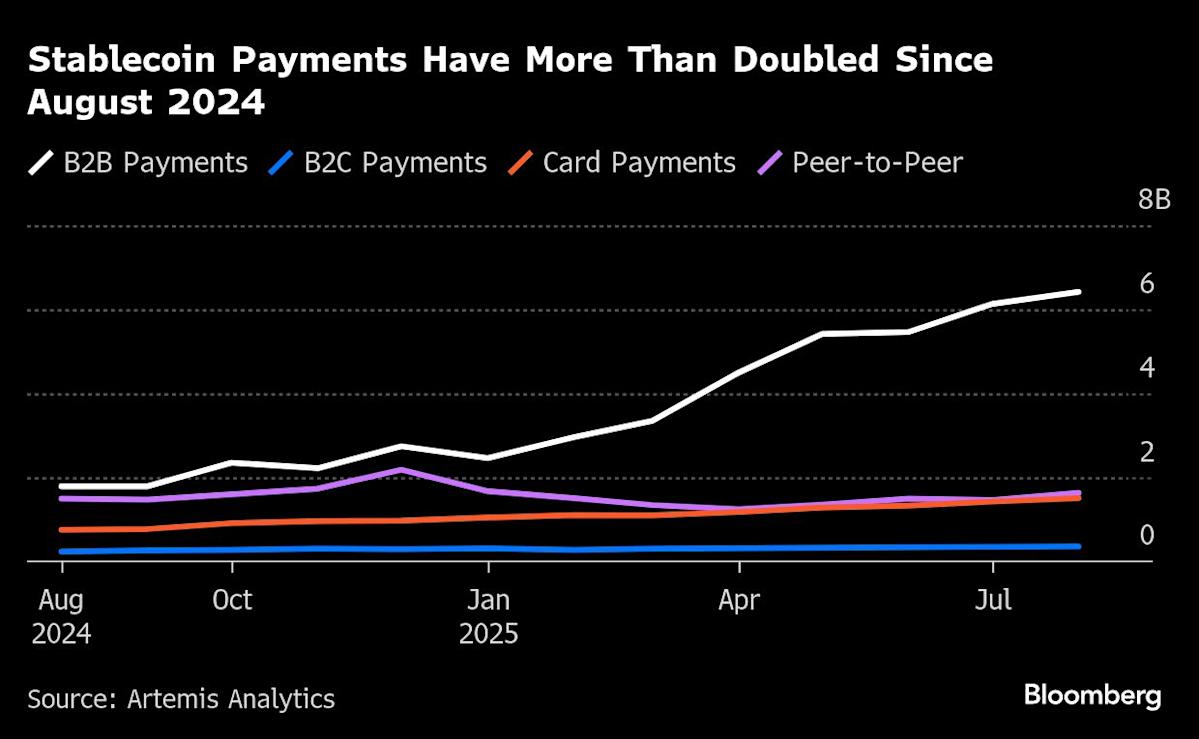
    Consumers and businesses are using stablecoins – digital tokens pegged to the dollar – to make real-world purchases and payments at an accelerating pace since the July passage of the first US legislation to regulate that niche of the cryptocurrency sector.

    Over $10 billion was moved through stablecoins in August for goods, services, and transfers, up from $6 billion in February and more than double the volume from August 2024, according to a report from Artemis, a blockchain data provider. At this pace, stablecoin payments could reach $122 billion over a full year, Artemis researchers said.

    Most Read from Bloomberg

    This growth follows President Donald Trump’s signing of the Genius Act into law on July 18, which established federal regulations for stablecoin issuers and requires them to back their tokens with highly liquid assets such as Treasury bills.

    While stablecoin payments are growing rapidly, they remain tiny compared to traditional systems. At a $122 billion annual pace, stablecoin payments represent a small fraction of conventional payment volumes. Still, this gives stablecoin advocates optimism about the instrument’s growth prospects.

    “If you look at stablecoin supply on a certain trend, and then right after Genius passed, the trend does inflect even more,” said Andrew Van Aken, data scientist at Artemis, noting the report’s illustration of an increase in the growth rate of stablecoin supply. “We certainly think it has had an incremental impact.”

     Artemis
    Artemis


    Business-to-business transfers make up the most of stablecoin payments at $6.4 billion monthly – nearly two-thirds of the total and up 113% since February, the report said. This marks the first time business payments have exceeded peer-to-peer consumer transactions, which held steady at $1.6 billion monthly, according to Artemis.

    Companies are using stablecoins to bypass traditional international banking delays. Businesses are “fed up with this very cumbersome send deposit here to this bank, which then sends another bank, which sends another bank,” Van Aken said.

    With an average business stablecoin payment of $250,000, Van Aken said larger purchases are where speed matters most. Companies can use stablecoin to avoid the delays of routing payments through multiple correspondent banks in the traditional system, he said.

    Banks have taken notice. Zelle, the bank-owned service that facilitates consumer money movement,  plans to expand its services internationally. Zelle will rely on stablecoins to enable cross-border money movement, according to a statement Friday from its parent company.

    Van Aken added that the ability of stablecoin users to earn yield and facilitate faster transfers of capital gives it an added advantage, which, in turn, could mean that stablecoins could continue to see added adoption.

    “As stable coins prove to be better money, that will only accelerate people’s trust in it and continue the growth,” Van Aken said.

    Most Read from Bloomberg Businessweek

    ©2025 Bloomberg L.P.

    Continue Reading

  • Elite bull market takes control again with the S&P 500 touching 6,800 for first time ever

    Elite bull market takes control again with the S&P 500 touching 6,800 for first time ever

    Continue Reading

  • From Chinese Workshops to Global Living Rooms: Chinese robot vacuum cleaners gain popularity-Xinhua

    From Chinese Workshops to Global Living Rooms: Chinese robot vacuum cleaners gain popularity-Xinhua

    Customers visit a Roborock store at a shopping mall in Seoul, South Korea, Oct. 12, 2025. (Xinhua/Yao Qilin)

    BEIJING, Oct. 25 (Xinhua) — At a large shopping mall in Seoul, South Korea, a Chinese brand’s robot vacuum cleaner attracted bustling crowds. A Roborock robot vacuum cleaner, equipped with a robotic arm, precisely picked up a sock, rotated, and threw it into a box, drawing cheers from the audience.

    According to data from a U.S. research firm, Roborock holds over 50 percent market share in South Korea’s robot vacuum cleaner market, firmly securing the top position, with a dominance market share exceeding 70 percent in the high-end market.

    People watch the demonstration of a robot vacuum cleaner at a shopping mall in Seoul, South Korea, Oct. 12, 2025.(Xinhua/Yao Qilin)
    A costumer uses a robot vacuum cleaner at his home in Seoul, South Korea, Oct. 13, 2025. (Xinhua/Yao Qilin)
    People walk by a billboard of Roborock at a subway station in Seoul, South Korea, Oct. 13, 2025. (Xinhua/Yao Qilin)
    Customers visit a Roborock store at a shopping mall in Seoul, South Korea, Oct. 12, 2025. (Xinhua/Yao Qilin)
    A costumer uses a robot vacuum cleaner at his home in Seoul, South Korea, Oct. 13, 2025. (Xinhua/Yao Qilin)

    Beyond South Korea, Roborock is rapidly expanding across other Asia-Pacific markets. In Japan, during a promotion on Amazon Japan, several Roborock products ranked among the most popular robot vacuum cleaners. In Australia, its products also made it into the top ten best-selling robot vacuum cleaner list.

    This photo taken on Oct. 16, 2025 shows an advertisement of Roborock at a home appliance store in Tokyo, Japan. (Xinhua/Jia Haocheng)
    This photo taken on Oct. 16, 2025 shows advertisements of Roborock at a home appliance store in Tokyo, Japan. (Xinhua/Jia Haocheng)
    This photo taken on Oct. 19, 2025 shows billboards of Roborock at Sydney Airport in Sydney, Australia.(Roborock/Handout via Xinhua)
    A shop assistant introduces Chinese brand robot vacuum cleaners to a customer at a home appliance store in downtown Sydney, Australia, Oct. 13, 2025. (Xinhua/Ma Ping)

    Over 2,000 kilometers away from South Korea, in Huizhou City of south China’s Guangdong Province, Roborock’s smart manufacturing facility operates at high efficiency, with robot vacuum cleaners continuously distributed worldwide.

    From workshops in China to living rooms across Asia-Pacific, Chinese brands for robot vacuum cleaners have gained popularity among foreign customers.

    A staff member searches for information at a warehouse of Roborock in Huizhou, south China’s Guangdong Province, Oct. 10, 2025. (Xinhua/Deng Hua)
    A staff member transports robot vacuum cleaner products in Huizhou, south China’s Guangdong Province, Oct. 10, 2025. (Xinhua/Deng Hua)
    A staff member works at a workshop of Roborock in Huizhou, south China’s Guangdong Province, Oct. 10, 2025.(Xinhua/Deng Hua)
    Staff members work on a robot vacuum cleaner assembly line at a workshop of Roborock in Huizhou, south China’s Guangdong Province, Oct. 10, 2025. (Xinhua/Deng Hua)
    An aerial drone photo taken on Oct. 10, 2025 shows logistics trucks waiting for loading and delivery at a Roborock facility in Huizhou, south China’s Guangdong Province.(Xinhua/Deng Hua)■

    Continue Reading