Category: 3. Business

  • Petrobras’ Q3 oil and gas output rises 17% from a year earlier

    Petrobras’ Q3 oil and gas output rises 17% from a year earlier

    RIO DE JANEIRO, Oct 24 (Reuters) – Brazilian state-run oil firm Petrobras reported on Friday a total oil, gas and gas liquids production of 3.14 million barrels of oil equivalent per day (boed) in the third quarter, up some 17% from a year earlier.

    Petrobras produced 2.52 million barrels of oil per day (bpd) in Brazil, an increase of more than 18%, as 11 wells began production in the third quarter, according to a securities filing.

    Sign up here.

    Total sales of oil, gas and derivatives rose nearly 10% in the period to 3.26 million bpd, while exports reached 1.04 million bpd, up 29%.

    Reporting by Fabio Teixeira and Marta Nogueira in Rio de Janeiro; additional reporting by Andre Romani in Sao Paulo; Editing by Natalia Siniawski

    Our Standards: The Thomson Reuters Trust Principles., opens new tab

    Continue Reading

  • Examining Boeing’s Valuation After a 42.8% Gain and Cash Flow Turnaround

    Examining Boeing’s Valuation After a 42.8% Gain and Cash Flow Turnaround

    Debating what to do with Boeing stock? You’re not alone. With its share price ending last session at $221.35 and a strong rally over the past year, investors are buzzing as they consider whether to add, hold, or even take profits. Over the last twelve months, Boeing has delivered a stellar 42.8% return, and so far in 2024, it’s up nearly 29%. That is no fluke; in just the past week, the stock climbed 3.9%. Even looking further back, Boeing has been on a long-term recovery arc, returning over 53% in both the last three and five years.

    Much of this momentum comes as the aviation industry navigates a tricky but promising landscape. Recent headlines point to rising airline demand and progress on resolving manufacturing delays, both of which have helped reshape risk perception around Boeing’s prospects. Investors have also reacted favorably to announcements about expanded partnerships and moves to improve production oversight, signifying more confidence in the company’s ability to deliver on its pipeline.

    So, how does Boeing stack up on valuation? When we score the stock across six key checks for undervaluation, it comes in at 3 out of 6. That is not a screaming bargain, but it is no red flag either. Different approaches to valuation inevitably tell different stories, so which is most reliable for today’s market? Next, we will break down what each method reveals, and later share an even smarter way to put those numbers in perspective.

    Boeing delivered 42.8% returns over the last year. See how this stacks up to the rest of the Aerospace & Defense industry.

    The Discounted Cash Flow (DCF) model estimates a company’s intrinsic value by projecting its future cash flows and discounting them back to today’s value using a required rate of return. This method gives investors a sense of what the business is worth based on its ability to generate cash over time.

    For Boeing, the most recent free cash flow over the last twelve months is negative at $8.1 Billion. However, analysts anticipate a significant turnaround and forecast free cash flow to rise to $12.8 Billion by 2029. While direct analyst estimates only extend a few years ahead, Simply Wall St extrapolates these further by projecting steady growth in Boeing’s cash generation through 2035.

    Based on these projections, the DCF analysis arrives at an intrinsic value of $319.00 per share. With Boeing’s current price at $221.35, this suggests the stock is trading at a substantial discount of around 30.6% relative to its estimated true value.

    Continue Reading

  • Columbia leans on endowment to offset Donald Trump’s funding cuts

    Columbia leans on endowment to offset Donald Trump’s funding cuts

    Unlock the White House Watch newsletter for free

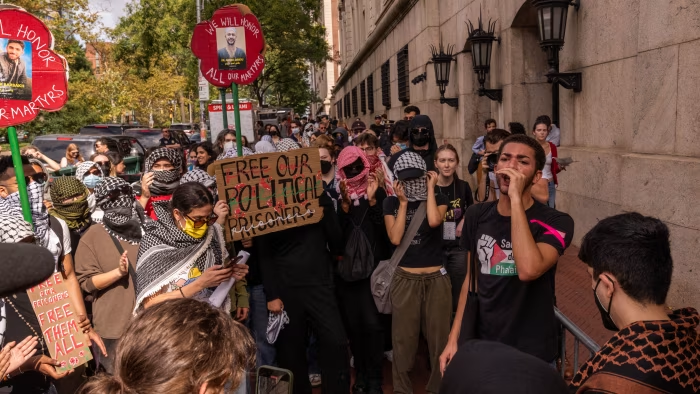
    Columbia University plans to rely more heavily on its endowment to finance operations next year, following sweeping research funding cuts imposed by President Donald Trump.

    In its annual financial statement released late on Thursday, the New York Ivy League school said it had taken the rare step of drawing directly from its endowment to create a “research stabilisation fund” to offset $400mn in funding cuts by the White House. The fund has issued more than 500 internal research grants.

    The university also said its trustees approved a limited-term increase in its use of endowment returns to fund operations for fiscal year 2026 as part of its “financial stabilisation efforts”.

    Columbia’s struggle to maintain its financial health highlights the growing pressure on US universities resulting from the Trump administration’s use of funding cuts as leverage for greater federal control of higher education.

    Columbia is among the US universities hit hardest by federal research-funding cuts since the president returned to office, after the administration made the school — home to one of the country’s largest student protests over Israel’s war in Gaza — a target of greater political scrutiny.

    Columbia’s operating surplus fell to $113mn this year from $305mn in 2024 — a result Anne Sullivan, the university’s executive vice-president for finance, described as “modest” and “below our historical average” after the government suspended hundreds of research grants earlier this year.

    Sullivan said the university experienced a “major destabilising event” after the government terminated more than 350 grants, worth over $1.3bn, in March. The situation has eased since July, when the Trump administration reinstated 260 research grants to Columbia after the university agreed to a $221mn settlement resolving federal investigations into its handling of antisemitism on campus.

    While Columbia’s financial statement reported a mere 1 per cent decline in government grants and contracts this year from 2024, Sullivan said the figure “does not adequately capture the level of strain experienced by the research enterprise” in the third and fourth quarters.

    She said: “Because tapping endowment for one-time purposes erodes our future capacity to provide support for programmes dependent on the annual distribution, utilising endowment assets in this way, beyond our annual distribution, is a rare and multi-faceted decision which we do not make lightly.”

    Columbia’s finances have also benefited from a 12.4 per cent gain on its endowment in the year to June — the highest annual return in seven years. Kim Lew, chief executive of Columbia Investment Management Company, said the result was driven by gains in stocks and an improvement in private investment returns.

    Continue Reading

  • GBank Financial Holdings Inc. Announces Updated Release

    GBank Financial Holdings Inc. Announces Updated Release

    LAS VEGAS, Oct. 24, 2025 (GLOBE NEWSWIRE) — GBank Financial Holdings Inc. (the “Company”) (Nasdaq: GBFH), the parent company for GBank (the “Bank”), today announced it has updated the date for the release its third quarter 2025 financial results from after the market closes on Monday, October 27, 2025 to after the market closes on Tuesday, October 28, 2025.  The timing of the quarterly earnings call remains unchanged on Wednesday, October 29, 2025, at 10:00 a.m., PST. Interested parties can participate remotely via Internet connectivity. There will be no physical location for attendance.

    Interested parties may join online, via the ZOOM app on their smartphones, or by telephone:

    • ZOOM Webinar ID 873 1389 3095
    • Passcode: 468468

    Joining by ZOOM Webinar:

    Log in on your computer at
    https://us02web.zoom.us/j/87313893095?pwd=YmbAmd09zQhXfDQHNSTFXM79DU8Vma.1
    or use the ZOOM app on your smartphone.

    Joining by Telephone

    Dial (408) 638-0968. The conference ID is 873 1389 3095. Passcode: 468468.

    About GBank Financial Holdings Inc.

    GBank Financial Holdings Inc. is a bank holding company headquartered in Las Vegas, Nevada and is listed on the Nasdaq Capital Market under the symbol “GBFH.” Our national payment and Gaming FinTech business lines serve gaming clients across the U.S. and feature the GBank Visa Signature® Card—a tailored product for the gaming and sports entertainment markets. The Bank is also a top national SBA lender, now operating across 40 states. Through our wholly owned bank subsidiary, GBank, we operate two full-service commercial branches in Las Vegas, Nevada to provide a broad range of business, commercial and retail banking products and services to small businesses, middle-market enterprises, public entities and affluent individuals in Nevada, California, Utah, and Arizona. Please visit www.gbankfinancialholdings.com for more information.

    Available Information

    The Company routinely posts important information for investors on its web site (under www.gbankfinancialholdings.com and, more specifically, under the News & Media tab at www.gbankfinancialholdings.com/press-releases). The Company intends to use its web site as a means of disclosing material non-public information and for complying with its disclosure obligations under Regulation FD (Fair Disclosure) promulgated by the U.S. Securities and Exchange Commission (the “SEC”). Accordingly, investors should monitor the Company’s web site, in addition to following the Company’s press releases, SEC filings, public conference calls, presentations and webcasts.

    The information contained on, or that may be accessed through, the Company’s web site is not incorporated by reference into, and is not a part of, this document.

    For Further Information, Contact:

    GBank Financial Holdings Inc.
    Edward M. Nigro
    Chairman and CEO
    702-851-4200
    enigro@g.bank

    Source: GBank Financial Holdings Inc.

    Continue Reading

  • Moody's maintains France's rating, revises outlook to 'negative' – Reuters

    1. Moody’s maintains France’s rating, revises outlook to ‘negative’  Reuters
    2. Moody’s says it will be ‘very challenging’ for France to rein in budget ahead of key verdict  politico.eu
    3. S&P’s downgrade of France’s credit rating sanctions political instability  Le Monde.fr
    4. When BlackRock and State Street change their rules to retain French debt  MarketScreener
    5. Macron plays Pontius Pilate on debt crisis  The Connexion

    Continue Reading

  • Gold eases losses after mild inflation report but ends nine-week winning streak (GLD:NYSEARCA) – Seeking Alpha

    1. Gold eases losses after mild inflation report but ends nine-week winning streak (GLD:NYSEARCA)  Seeking Alpha
    2. Gold trims losses after US inflation data; set to end nine-week win streak  Reuters
    3. Gold Price Forecast: XAU/USD retreats, eyes US CPI for breakout  FXStreet
    4. Special Report: Gold, silver pare earlier daily losses; expect high volatility again next week  KITCO
    5. Why Gold’s Rally Is Likely to Go On  Morgan Stanley

    Continue Reading

  • JPMorgan asks court to end legal fee payments for Charlie Javice

    JPMorgan asks court to end legal fee payments for Charlie Javice

    Unlock the Editor’s Digest for free

    JPMorgan Chase has asked a US court to end its obligation to pay legal fees for Charlie Javice and another executive convicted of defrauding the bank, an unusual legacy of its purchase of Frank, their failed fintech start-up.

    In a filing on Friday, JPMorgan alleged “clear abuse” by Javice and Olivier Amar for the “unreasonable” sums of money claimed for their legal defences, which total about $115mn, of which $60.1mn was advanced to Javice and $55.2mn to Amar. 

    JPMorgan noted Javice engaged five law firms for her defence, a legal team the bank said had remained in place after her conviction in March for defrauding the bank. One law firm representing Amar received advanced fees and expenses totalling $53.9mn, JPMorgan claimed.

    Javice was sentenced to seven years in prison last month, and ordered to pay restitution to JPMorgan of $288mn, including legal fees, and forfeit an additional $22mn. Amar was separately convicted of fraud but has yet to be sentenced. Javice has asked the court to reduce the restitution award, a move objected to by JPMorgan and the Department of Justice.

    But JPMorgan has also been obliged to cover Javice and Amar’s legal fees as part of the agreement to sell their student finance company, Frank, to the bank in 2021.

    JPMorgan wrote in its filing that “the fees and expenses to fund Javice’s criminal defence have far exceeded any reasonable amount for defence of the entire case” and she was unnecessarily continuing “to utilise all five law firms in connection with post-conviction proceedings”.

    Representatives for Javice and Amar did not immediately respond to requests for comment.

    While the amounts involved are minor for JPMorgan — the company generated more than $1bn a week in profits in 2024 — the spat is a reminder of the bank’s ill-fated purchase.

    JPMorgan bought Javice’s company for $175mn but soon discovered the business had only a small fraction of the 4mn users that she had claimed.

    The bank claimed Javice and her co-founder Olivier Amar had hired a data scientist to create millions of fabricated users at the time of the company’s sale process.

    Continue Reading

  • SBP injects Rs4.25tr via OMOs

    SBP injects Rs4.25tr via OMOs

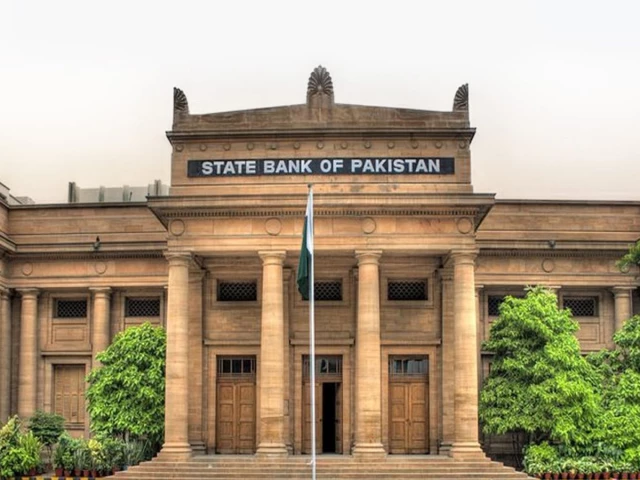
    State Bank of Pakistan. Photo: File


    KARACHI:

    The State Bank of Pakistan (SBP) on Friday injected a total of Rs4.245 trillion into the financial system through reverse repo and Shariah-compliant Mudarabah-based open market operations (OMOs).

    According to the central bank, the liquidity injection included Rs3.914 trillion through conventional reverse repo OMOs and Rs331 billion via Islamic Mudarabah-based operations. The OMO was conducted for seven-day and 14-day tenors.

    For the seven-day reverse repo, the SBP received 18 bids totalling Rs3,643 billion at rates ranging between 11% and 11.07%, out of which 17 bids worth Rs3,642.5 billion were accepted at a rate of 11.01%. In the 14-day tenor, the central bank received 11 bids amounting to Rs272.5 billion, with accepted bids of Rs272 billion at a rate of 11.02%.

    In its Shariah-compliant Mudarabah-based OMO, the SBP received four bids for the seven-day tenor, offering Rs331 billion at returns from 11.06% to 11.12%. The entire amount was accepted at 11.06%, while no bids were received for the 14-day Islamic tenor.

    According to data released by the SBP, the rupee closed at Rs281.02 per dollar, gaining Rs0.01 from the previous day’s rate.

    Meanwhile, gold prices in Pakistan continued their downward trajectory, mirroring trends in the international market, where the precious metal struggled to recover despite slightly softer-than-expected US inflation data that bolstered expectations of a Federal Reserve rate cut next week.

    According to the rates issued by the All-Pakistan Gems and Jewellers Sarafa Association, the price of gold per tola fell by Rs2,000, settling at Rs431,862, while the price of 10 grams declined by Rs1,714 to Rs370,252.

    The fall marks the first weekly loss in nearly 10 weeks as global investors adjusted their positions ahead of next week’s US monetary policy announcement.

    On Thursday, the yellow metal had already recorded a sharp drop of Rs3,500 per tola, bringing local prices down from recent highs. The consistent downward pressure reflects international market sentiment, where gold has been trading in a narrow band after heavy profit-taking earlier in the week.

    Continue Reading

  • Strong economies keep airlines airborne

    Strong economies keep airlines airborne

    Emirates marks 40 years since first flight to Karachi as PIA awaits privatisation


    KARACHI:

    Forty years after Emirates’ maiden flight from Dubai to Karachi – operated with a Pakistan International Airlines (PIA) aircraft on lease and Pakistani crew, including captains – the two airlines stand worlds apart.

    Emirates, which relied on PIA’s support in 1985, is now a $37 billion global aviation powerhouse with nearly 400 aircraft. PIA, once a regional trailblazer that helped launch airlines like Emirates and Singapore Airlines, is drowning in debt exceeding Rs800 billion and edging towards privatisation.

    At Jinnah International Airport, Emirates marked its 40th anniversary with a ceremony attended by UAE Consul General Bakheet Ateeq Al-Rumaithi and aviation officials. A retrofitted Boeing 777 featuring Premium Economy cabins was showcased – a symbolic reminder of the airline’s transformation from modest beginnings into one of the world’s leading carriers.

    Meanwhile, PIA is struggling to stay airborne. The government has created PIA Holding Company to absorb Rs660 billion in legacy debt, leaving about Rs300 billion in operational liabilities to the Civil Aviation Authority (CAA).

    The privatisation drive, part of IMF-mandated reforms, has attracted five consortia, including groups led by Lucky Cement, Arif Habib Group, Fauji Fertiliser, and two domestic airlines – Airblue and Serene Air. However, aviation analysts warn that any new buyer will face “turbulent skies” in an industry globally known for wafer-thin margins.

    Pakistan’s aviation sector remains vastly underdeveloped compared with regional peers. According to the benchmarking data, only 6 million domestic passengers flew in Pakistan last year – a mere 2.4% of the population.

    In contrast, Indonesia, with a slightly higher population and per-capita GDP of $4,860, recorded 57 million domestic passengers (19.9%). India moved 154 million passengers domestically (11%), while China’s figure exceeded 665 million (47.5%). The US leads with 876 million domestic travellers – almost 2.5 times its population – highlighting how aviation demand correlates strongly with income, tourism, and infrastructure.

    Pakistan’s per-capita GDP of $1,581 underscores this disparity. “An airline grows or shrinks with its economy,” says aviation consultant Afsar Malik, who has over three decades of industry experience. “When GDP rises, air travel doubles that growth rate; when GDP falls, losses multiply. Pakistan’s stagnating economy and weak tourism have clipped PIA’s wings.”

    Despite the grim numbers, investor interest in the skies is rising. New private carriers such as Air Karachi and Air Punjab are preparing to launch, while South Air and Saudi Arabia’s Riyadh Air are reportedly eyeing Pakistani routes.

    “Aviation carries a charisma that attracts businessmen – it’s about name and fame and less about fortune,” says Malik. “But most underestimate the risks.” Globally, only about 20% of airlines make profits, 30% break even, and half incur losses.

    Malik points out that airline ventures demand massive financial stamina. If an investor puts in Rs1 billion and borrows Rs3 billion, a single year of loss can wipe out his equity. “And once you are in, it’s hard to exit.” The story of Shaheen Air, which collapsed under Rs5 billion debt, is a cautionary tale.

    The government’s latest plan drops earlier conditions that reserved a 40% state stake and required $300 million in new investment, making the offer more flexible. Still, potential buyers must contend with inherited liabilities, outdated systems, and intense competition from foreign and domestic airlines.

    Economic experts argue that the state should exit commercial aviation altogether. “Airline business is capital-intensive and politically volatile,” says one former PIA finance director. “Government control has cost taxpayers billions; private ownership may be the only way forward.”

    Industry insiders say Emirates’ success lies in disciplined management, global recruitment, and strategic geography. Based in Dubai – a hub between Europe and Asia – Emirates capitalised on transit traffic and luxury branding. Its leadership, including long-time president Sir Tim Clark, maintained operational independence and long-term planning, backed by state ownership but run on commercial principles.

    As Emirates celebrates four decades of connecting Pakistan to the world, its story stands as both an inspiration and a reminder – that success in the skies demands not just wings, but vision, discipline, and an economy strong enough to sustain flight.

    Continue Reading

  • Immune Checkpoint Add-Ons to BCG: No Slam Dunk – Medscape

    1. Immune Checkpoint Add-Ons to BCG: No Slam Dunk  Medscape
    2. ESMO: Results for AZ’s Imfinzi in early bladder cancer type suggest it measures up to Pfizer candidate  Fierce Pharma
    3. ESMO 2025 | POTOMAC supports add-on durvalumab for high-risk NMIBC  springermedicine.com
    4. Adding atezolizumab to BCG does not improve EFS in BCG-naïve NMIBC  Urology Times
    5. Andrea Necchi: The Results of POTOMAC trial are out in The Lancet  Oncodaily

    Continue Reading