- P&G latest to flag diverging consumer spending as profit tops on beauty demand Reuters
- Stephanie Link: Procter & Gamble beats expectations with beauty sales surge to 6 percent Traders Union
- P&G Results Beat Estimates on Strength in Beauty, Razors The Business of Fashion
- (PG) Procter & Gamble Expects Fiscal 2026 Core EPS Range $6.83 to $7.09, vs. FactSet Est of $6.97 MarketScreener
- Procter & Gamble fiscal 1Q results top Street, sees less of an impact from tariffs for fiscal 2026 The Washington Post
Category: 3. Business
-
P&G latest to flag diverging consumer spending as profit tops on beauty demand – Reuters
-

Porsche AG reports robust net cash flow in a challenging market environment
- Automotive net cash flow rose to 1.34 billion euros, underlining Porsche’s robust performance even under challenging conditions.
- Record deliveries in the USA and in the Overseas and Emerging Markets. North America region up five per cent. High proportion of electrified vehicles – increased to 35 per cent globally, 56 per cent in Europe
- As expected, strategic realignment and macroeconomic challenges have had a significant impact on earnings for the first nine months of the year.
- Extraordinary expenses of around 2.7 billion euros, including for flexibilisation of the product portfolio and battery activities.
- Group sales revenue in the first nine months of the year totalled 26.86 billion euros, while group operating profit amounted to 40 million euros.
- The company is consciously accepting temporarily weaker key figures in order to strengthen profitability and resilience in the long term.
- CFO Dr Jochen Breckner: “We have further sharpened our strategic alignment. Now we are resolutely implementing clear decisions. We expect 2025 to be the trough that precedes a noticeable improvement for Porsche from 2026 onwards.”
Despite a globally challenging environment, group revenue and deliveries remained largely stable in the first nine months of the year: revenue amounted to 26.86 billion euros, and 212,059 vehicles were delivered to customers worldwide. This equates to a moderate decline of 6.0 per cent in each case.
Group operating profit fell to 40 million euros in the first nine months of 2025 (previous year: 4,035 million euros). The group operating return on sales fell to 0.2 per cent (previous year: 14.1 per cent). The reasons for this are the extraordinary expenses associated with the realignment of the product strategy; the challenging market conditions in China, especially in the luxury segment; the ‘one-off’ effects relating to battery activities; and organisational changes. In addition, increased expenses from the US import tariffs also had an impact. In contrast, automotive net cash flow increased to 1.34 billion euros at the end of the third quarter of 2025 (previous year: 1.24 billion euros). The automotive net cash flow margin rose to 5.6 per cent (previous year: 4.8 per cent). This demonstrates the resilience of the business operations and shows that Porsche is performing robustly even under challenging conditions.
“In a challenging market environment, we have generated robust cash flow. At the same time, we have further sharpened our strategic alignment. Now we are resolutely implementing clear decisions,” emphasises Dr Jochen Breckner, Member of the Executive Board for Finance and IT at Porsche AG. “This year’s results reflect the impact of our strategic realignment. However, these measures are essential. We are consciously accepting temporarily weaker financial figures in order to strengthen Porsche’s resilience and profitability in the long term.”
As part of the realignment of its product strategy, Porsche plans to supplement its product range with additional models featuring combustion and plug-in-hybrid powertrains. In return, due to the delayed ramp-up of electric mobility, the market launch of certain all-electric vehicle models is planned to take place at a later date. In particular, the development of the planned new platform for electric vehicles in the 2030s is to be rescheduled. The platform is to be technologically redesigned in coordination with other brands within the Volkswagen Group. Nevertheless, the existing all-electric model range is being continuously updated.
“We are gearing Porsche towards strong, long-term profitability,” explains Breckner. “We expect 2025 to be the trough that precedes a noticeable improvement for Porsche from 2026 onwards. Our goal is to sharpen our brand and make our products even more individual, exclusive and desirable. In doing so, we are building on a strong foundation: a loyal customer base, a renewed and attractive product portfolio, and one of the most iconic brands in the world.”
In the first nine months of the year, Porsche delivered 212,509 vehicles to customers worldwide. The proportion of electrified vehicles increased significantly to 35.2 per cent compared to the same period last year. Of all vehicles delivered, 23.1 per cent were fully electric and 12.1 per cent were plug-in hybrids. In Europe, the proportion of electrified vehicles even reached 56 per cent. The strongest growth among the six model lines was recorded by the Macan with 64,783 examples delivered (an increase of 18 per cent). New all-time highs were achieved in the USA and in the Overseas and Emerging Markets. An increase of five per cent was recorded in the North America region.
Talks on the Future Package with employee representatives
Porsche resolutely prioritises its investments and focuses on value-adding core areas. At the same time, the company is pushing ahead with its strategic performance programme ‘Push to Pass’. The sports car manufacturer intends to increase its efficiency and revenue in order to secure its long-term profitability in a persistently inflationary cost environment. In October, Porsche initiated talks between management and employee representatives on a Future Package, as announced. “We have to assume that the general market conditions will not improve in the foreseeable future. That is why we need to discuss large-scale solutions in all areas – including in the context of the Future Package,” emphasises Breckner. The company will provide information on the results of the confidential discussions as soon as they have been concluded.
Forecast for 2025 takes into account US tariffs amounting to 15% from 1 August
In the first nine months of 2025, extraordinary expenses for the company’s realignment amounted to around 2.7 billion euros. In addition, the impact of US import tariffs resulted in increased costs within the mid three-digit million range. In total, Porsche AG expects costs of around 3.1 billion euros for the 2025 financial year in connection with the strategic realignment. Following the EU Commission’s agreement with the US government on import tariffs, the forecast for the 2025 financial year takes into account the US import tariff of 15 per cent applicable from 1 August. The company continues to expect group sales revenue in the region of 37 to 38 billion euros. At the lower end of the range, Porsche would expect a slightly positive group return on sales and an automotive net cash flow margin of 3 per cent. At the upper end of the range, a group return on sales of 2 per cent and an automotive net cash flow margin of 5 per cent would be expected. For the forecast of net cash flow margin, Porsche expects outflows of around 1.2 billion euros for the full year relating to the strategic realignment and the US tariffs.
Porsche AG Group
Q1-Q3 2025
Q1-Q3 2024
Change
Sales revenue
€26.86 billion
€28.56 Mrd. €
-6.0% Operating profit
€40 million €4,035 million -99.0% Operating return on sales
0.2% 14.1% Deliveries to customers
212,509 226,026 -6.0% Disclaimer
This press release contains forward-looking statements and information that reflect Dr. Ing. h.c. F. Porsche AG’s current views about future events. These statements are subject to many risks, uncertainties, and assumptions. They are based on assumptions relating to the development of the economic, political, and legal environment in individual countries, economic regions, and markets, and in particular for the automotive industry, which we have made on the basis of the information available to us and which we consider to be realistic at the time of publication. If any of these risks and uncertainties materializes or if the assumptions underlying any of the forward-looking statements prove to be incorrect, the actual results may be materially different from those Porsche AG expresses or implies by such statements. Forward-looking statements in this presentation are based solely on the circumstances at the date of publication. We do not update forward-looking statements retrospectively. Such statements are valid on the date of publication and can be superseded. This information does not constitute an offer to exchange or sell or an offer to exchange or buy any securities.
Continue Reading
-

Northampton factory making counterfeit weight-loss jabs raided | Drugs trade
A factory in Northampton manufacturing counterfeit weight-loss jabs has been raided and dismantled by a government agency.
Tens of thousands of empty weight-loss pens ready to be filled, raw chemical ingredients, and more than 2,000 unlicensed retatrutide and tirzepatide pens were seized in the raid, conducted by officers from the Medicines and Healthcare products Regulatory Agency (MHRA), supported by Northamptonshire police.
Retatrutide, which is unlicensed in the UK, is an experimental injection developed by the US drugmaker Eli Lilly. Tirzepatide, more commonly known under its brand name Mounjaro, is available on the the NHS for weight loss for patients who fulfil a certain criteria of comorbidities.
The site, on an industrial estate on the outskirts of Northampton, is believed to have been used for the large-scale manufacture, packaging, and distribution of unlicensed – and potentially deadly – weightloss products to customers.
The street value of the finished weight-loss products found in the factory is estimated to be worth more than £250,000. The search operation lasted two days, with the MHRA saying it was the latest in its ongoing work to tackle the illegal trade in weight-loss medicines.
Wes Streeting, the secretary of state for health and social care, said the raid was a “victory in the fight against the shameless criminals who are putting lives at risk by peddling dangerous and illegal weight-loss jabs to make a quick buck”.
He added: “These unregulated products, made with no regard for safety or quality, posed a major risk to unwitting customers.
“My message is clear: don’t buy weight-loss medications from unregulated sources. Talk to your GP, seek NHS advice, and don’t line the pockets of criminals who don’t care about your health. Safe, appropriate, licensed obesity drugs can greatly benefit those in need if taken under medical supervision, and I urge people to only purchase and use them with the approval and oversight of medics and pharmacists.”
The raid comes after the MHRA has previously cautioned against buying illegal weight-loss medicines without a prescription through beauty salons, fake pharmacy websites or on social media, saying these products could contain “toxins and other ingredients that could cause real harm”.
Andy Morling, the head of the MHRA’s criminal enforcement unit, said: “This seizure shows the lengths these criminals will go to for profit. People should be extremely cautious when buying medicines online. Prescription medicines should only be obtained from a registered pharmacy against a prescription issued by a healthcare professional.
“Taking prescription medicines sourced in any other way carries serious risks to your health – there are no guarantees about what they contain, and some may even be contaminated with toxic substances.
“This is an illicit global market that endangers patients, puts big money in the pockets of organised criminals, and undermines legitimate healthcare. This operation demonstrates, once again, that my officers will stop at nothing to identify, disrupt, and dismantle the organised criminal networks who put profit before safety.”
Continue Reading
-
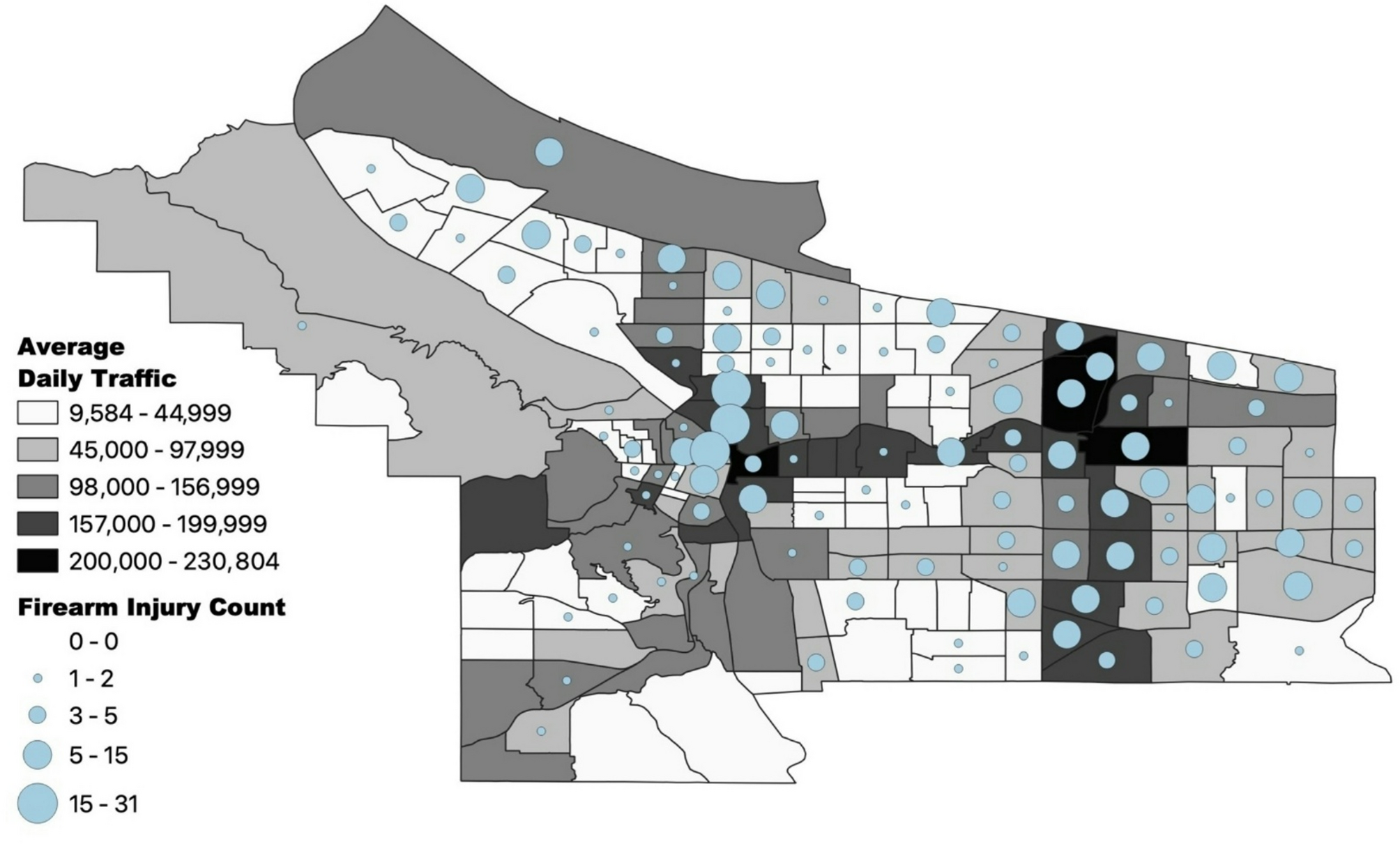
Vehicle traffic as a determinant of community firearm violence | Injury Epidemiology
In this investigation into vehicle traffic volumes and firearm injury risk, we found that there was a statistically significant relationship between higher vehicle traffic and higher injury counts across the City of Portland; tracts with 10,000 higher vehicle trips exhibited a 27%−29% higher risk of firearm injury occurrence. We also found 1 standard deviation higher traffic volumes to be associated with 59%−85% higher odds of a firearm injury in injury months compared to control periods at the same type and time of day in adjacent months. These spatial and temporal associations, which we identified at the tract-level, were not correspondingly demonstrated when we zoomed in on individual street segments in a single neighborhood of East Portland, finding imprecise associations in the hypothesized direction but of smaller magnitude or insignificant.
Our findings suggest that vehicle traffic volume could play an important role in community firearm violence. To our knowledge, ours is the first study to test this association. However, the finding is consistent with several theoretically plausible mechanisms by which a decrease in vehicular traffic leads to a decrease in community firearm violence. High vehicle traffic discourages foot traffic [23], and instead creates opportunities for people to cross paths (motivated offenders and suitable targets of the Routine Activities Theory), but not to build social bonds or allow nearby residents to monitor who comes and goes or exercise informal social control (lack of a credible guardian). Heavy vehicle traffic may itself be an sign of physical disinvestment, as high-density traffic areas have been shown to disproportionately affect disadvantaged areas in Southern California [44]. In fact, many highway construction projects in the midcentury intentionally bisected or segregated minority neighborhoods serving as a physical, social, and oftentimes economic barrier between adjacent communities [45]. Such neighborhoods that have experienced racialized disinvestment like “white flight,” often have, for example, a lack of sidewalks, and are “driven through” rather than “driven to.” These areas lack the pedestrian-friendly infrastructure to help foster the safety of safe and walkable “busy streets.” East Portland is an example of such an area [30].
Vehicle traffic is also inherently linked to other forms of social and economic disinvestment which help drive disparities in firearm injury risk by race and income. In East Portland, such disinvestment has led to an under-resourced and highly segregated urban environment dominated by vehicle traffic. Following recent gentrification of North and Northeast Portland, which saw a decrease in the percentage of Black residents over time, the population of East Portland grew substantially and saw an increase in Black residents over the same period. With this displacement, members of previously spatially separated gangs have now found themselves living interspersed thus increasing contact and exacerbating existing feuds. Racialized segregation and disinvestment are often compounded by a lack of inclusionary zoning laws, which benefit low-income and disadvantaged communities. Oregon overturned its ban on inclusionary zoning in 2016 [46], the last state besides Texas to do so, though Portland’s inclusionary zoning mandate has only recently been gaining traction [47]. Future investment in inclusionary zoning may help address some issues of concentrated disinvestment, but the historic legacy of exclusionary built environment practices have exacerbated existing challenges in interrupting community violence.
Place-based violence prevention initiatives have been found to be effective and affordable interventions to reduce gun violence in East Coast cities but may not be as effective in post-industrial cities with fewer vacant or neglected urban plots. For example, previous analyses have found larger associations between place-based interventions and crime reductions, including violent crime, in East Coast cities compared to results found from New Orleans, a city with a distinctly different built and natural environment [48]. In an urban environment such as Portland, OR where there are few vacant lots, and particularly East Portland where the average age of buildings is much newer than the originally developed city center, focusing on how people move through the physical space may be a more promising approach to reducing firearm injuries. Traffic control interventions that reduce trips on non-arterial roads through diversion or local road closure, as well as traffic calming mechanisms such as speed bumps, sidewalk bulbs (curb outs), and road diets that promote other forms of active transport are all worthwhile interventions to explore. All of these interventions are meant to direct non-resident drivers to arterials intended for drive-through traffic, or to slow or impede drivers in residential areas to reduce heedlessness and promote the safety of nearby pedestrians and residents.
There may be several reasons as to why this relationship between vehicle traffic and firearm injuries was shown at the tract-level but not significantly along individual street segments. The first may be that the street segment analysis was underpowered due to small numbers – in fact, many of the analyses showed attenuated results that were positive but imprecise and not statistically significant. However, it may also be an early indication that the potential pathway through which vehicular traffic may increase risk of a firearm shooting is most relevant at the neighborhood context as opposed to on each individual street. For example, in areas with high vehicle volume streets – areas where many people including likely non-residents are driving through as opposed to driving to – the elevated vehicle traffic may create environments that result in higher firearm injury risk not on the major roadways themselves but rather on adjacent streets within the network (i.e. proximity to a higher trafficked roadway as opposed to location on a higher trafficked roadway leads to higher risk for nearby residents). The feeling of anonymity this creates could translate to a lack of guardianship, and lack of social control. It is also possible that areas built for cars rather than people share other risk factors that contribute to firearm injury risk separate from traffic. Future research should consider the appropriate geographical context for intervening on traffic-related firearm injury risk and begin to tease apart the causal mechanisms through which traffic may be contributing to firearm injury risk.
Limitations
Our traffic exposure was a modeled estimate as opposed to real vehicle counts. However, actual traffic counts are difficult and labor-intensive to collect; often traditional traffic count data come from traffic counters set up on certain major roads only on specific days. Additionally, traffic counts are typically collected during morning commutes, when violence incidence is lowest, limiting our ability to investigate any association between traffic and firearm shootings. The type of fine temporal and spatial traffic estimates necessary to address our research question do not exist. Thus, our use of the street-level modeled traffic data made it possible to investigate associations between vehicle traffic and community firearm violence, which would not have been possible at this scale using traditional data. However, modeled data often smooths true outliers as models are most capable to modeling averages. As such, we were unable to measure fine scale changes over time.
Secondly, our study bisected the COVID-19 pandemic period – a time defined by dramatic and swift mobility changes as well as increases in firearm injuries both in Portland, OR and in many other communities across the United States [49]. While understanding how risky relationships were altered during this period is an enormous and complex challenge, it was within this same period that local residents in East Portland raised their concern about increases in vehicle traffic and firearm violence in their communities. This community-academic partnership arose as a result of that community input, and thus the theory behind our research question was grounded in community concerns. Additionally, results of a sensitivity analysis stratifying the tract-level cross-sectional analysis by the pre-Covid and Covid periods did not show heterogeneous estimates (results available upon request).
Lastly, this work was intended to address a novel research question with a broad and multi-faceted analysis approach. Our intent was to first gain insight into whether there was a relationship between vehicle traffic and firearm injury and provide some groundwork for hypothesis generating results. These are not causal estimates. It is important to highlight the possibility of reverse causation here, where a firearm injury could potentially lead to greater vehicle traffic if the incident caused nearby residents to feel uncomfortable walking, or less traffic if drivers chose to avoid an area they deemed risky. We attempted to assess the temporality of the association in the case-crossover models stratified into the pre and post comparison months, but we were not able to explore the specific mechanistic pathways through which vehicle traffic may be impacting firearm injury risk using these monthly data. Additionally, we did not have data specifically on road rage incidents and thus were unable to examine differences in roadway vs. nearby community firearm assaults. This intelligence will be crucial to understanding how to intervene going forward. Future research should explore potential effect modification in vehicle traffic risk by other potential risk or protective factors such as neighborhood SES, urban zoning, or pedestrian safety infrastructure in order to start teasing apart mechanistic pathways that can be leveraged for intervention.
Implications
Innovative strategies to curb firearm violence are necessary today more than ever with changes being seen in firearm assault etiology, such as spatial deconcentrating of injury occurrences [50], and the influence of social media altering how social networks interact in physical and digital space. Within the far-reaching landscape of firearm injury mortality and morbidity, this study suggests that traffic restriction or modification may be one avenue to reduce community firearm violence, and as such, warrants further study.
Fig. 2 Distribution of daily traffic volume within Portland census tracts by time of day and day type, 2019–2021. Streetlight, Inc traffic estimates stratified by day type classify weekends as Saturday and Sunday, and weekdays as Monday through Thursday
Fig. 3 
Count of firearm injuries within Portland by time of day and day type, 2019–2021
Fig. 4 
Steet segment average daily traffic and firearm shootings within the Hazelwood corridor, 2019–2021
Continue Reading
-
Kirkland Advises Vantris Energy on Malaysia’s Largest-Ever Corporate Restructuring | News
Kirkland & Ellis advises Vantris Energy Berhad (formerly known as Sapura Energy Berhad) (Vantris) on the successful restructuring of over RM12 billion (US$3 billion) in liabilities – the largest cross-border restructuring ever completed in Malaysia. These liabilities include Shariah-compliant Malaysia law governed Sukuk, English law governed multi-currency conventional facilities and various trade claims.
The restructuring closed on September 26, 2025, bringing to conclusion a three-year process that involved parallel schemes of arrangement in Malaysia, Malaysia Central Bank’s Corporate Debt Restructuring Committee mediation process and recognition of the stay (or restraining order) granted by the Malaysian courts in numerous jurisdictions including South Africa, Ghana, Congo, Brunei, Angola, Brazil and Singapore in order to safeguard assets worldwide.
The sanctioned Malaysian scheme of arrangement has also received recognition in other significant jurisdictions, including Brazil, Ghana and the UAE.
This landmark restructuring further cements Kirkland’s reputation as a leading advisor on complex, cross-border oil and gas sector restructurings and reinforces the firm’s position as the go-to advisor for high-stakes restructurings in Asia.
The Kirkland team included restructuring lawyers Neil McDonald, Wei-Yang Lim, Anthony Wijaya, Zhao Wang Teo and Kate Stephenson.
Continue Reading
-
European Confectionery Profits to Recover After Cocoa Price Shock – Fitch Ratings
- European Confectionery Profits to Recover After Cocoa Price Shock Fitch Ratings
- Spike in global cocoa bean prices hits profits at Lir Chocolates The Irish Times
- Pre-tax profits at Lir Chocolates plunge 85pc in one year The Irish Independent
- Soaring price of cocoa bean melts profits at Lir Chocolates by 85% Irish Examiner
Continue Reading
-
Adding Vaccine to Pembro Did Not Improve PFS in Melanoma – Medscape
- Adding Vaccine to Pembro Did Not Improve PFS in Melanoma Medscape
- After Narrow Miss in Phase 3 Study, IO Biotech Ponders Next Steps for Immune-Modulatory, Off-the-Shelf Cancer Vaccine AJMC
- Combining a Therapeutic Cancer Vaccine With Pembrolizumab for Advanced Melanoma Cancer Nursing Today
- Cancer Vaccine Plus Keytruda Slow Advanced Melanoma Progression Cure Today
- ESMO 25: IO Faces Difficult Pathway For Cylembio In Melanoma Citeline News & Insights
Continue Reading
-

Dentons improves rankings in Legal 500 Latin America 2026
Leaving DentonsBeijing Dacheng Law Offices, LLP (“大成”) is an independent law firm, and not a member or affiliate of Dentons. 大成 is a partnership law firm organized under the laws of the People’s Republic of China, and is Dentons’ Preferred Law Firm in China, with offices in more than 40 locations throughout China. Dentons Group (a Swiss Verein) (“Dentons”) is a separate international law firm with members and affiliates in more than 160 locations around the world, including Hong Kong SAR, China. For more information, please see dacheng.com/legal-notices or dentons.com/legal-notices.
Continue Reading
-
Largest global gathering of airport leaders to convene in Toronto
Over 2,500 delegates gather for the 2025 ACI-NA and ACI World Annual General Assembly, Conference and Exhibition
Montreal, Canada, 24 October 2025 – Airports Council International – North America (ACI-NA) and ACI World will host the 2025 ACI-NA & ACI World Annual General Assembly, Conference and Exhibition from 25–28 October in Toronto, Canada. The largest “for airports, by airports” event yet—the most important global gathering of airport leaders—will be hosted by Toronto Pearson International Airport.
ACI World Director General Justin Erbacci said: “We’re ready to welcome the world to the most important global gathering of airport leaders. Air travel is surging—on track for 9.8 billion journeys this year and projected to reach 18.9 billion by 2047. Meeting this growth requires global collaboration, making this event—a gathering that brings diverse perspectives together—more relevant than ever. The 2025 Annual General Assembly, Conference and Exhibition will generate ideas and solutions that can become measurable outcomes for travellers and communities.”
“The 2025 Annual General Assembly, Conference and Exhibition will once again bring together airport leaders, policymakers, and industry partners from across the globe to discuss the most pressing issues facing the aviation industry,” said ACI-NA President and CEO Kevin M. Burke. “From infrastructure investment and workforce development to cybersecurity and the ever-evolving passenger experience, this event provides an unmatched opportunity to collaborate on the issues and other opportunities shaping the future of air travel.”
“As a vital economic engine for both the region and the country, Toronto Pearson understands that airports are essential nodes in the global network of air travel – each one a star in the constellation of connectivity, demanding constant innovation,” said President and CEO of Toronto Pearson Deborah Flint. “This week, we are proud to host some of the industry’s most dynamic leaders and business partners here in Toronto, as we work together to shape the future of aviation.”
The conference will feature distinguished leaders from across the global airport community and showcase the latest innovations shaping the future of aviation. This year’s event will feature keynote addresses from Colonel Chris Hadfield, the first Canadian Commander of the International Space Station, a decorated astronaut, test pilot, bestselling author, and global advocate for innovation and leadership, and David Frum, political analyst, writer at The Atlantic, New York Times bestselling author, and former speechwriter to President George W. Bush, who will deliver the closing keynote address.
The 2025 ACI-NA & ACI World Annual General Assembly, Conference and Exhibition will feature a sold-out trade show floor with more than 180 exhibitors and is expected to draw more than 2,500 airport industry professionals.
Billy Bishop Toronto City Airport will serve as a supporting host airport. Airport Dimensions, Lyft, Ricondo, Boingo Wireless, HNTB, PSA Management, ADB Safegate, Plaza Premium Group, Boldyn Networks, and SSP America are executive level sponsors for 2025.
Credentialed members of the media are welcome to cover the event and should address the media contacts listed below.
About ACI
Airports Council International (ACI), the trade association of the world’s airports, is a federated organization comprising ACI World, ACI Africa, ACI Asia-Pacific & Middle East, ACI EUROPE, ACI Latin America and the Caribbean and ACI North America. In representing the best interests of airports during key phases of policy development, ACI makes a significant contribution toward ensuring a global air transport system that is safe, secure, efficient, and environmentally sustainable. As of January 2025, ACI serves 830 members, operating 2,181 airports in 170 countries.
About Toronto Pearson International Airport
The Greater Toronto Airports Authority is the operator of Toronto Pearson International Airport, Canada’s largest airport and a vital connector of people, businesses, and goods. Toronto Pearson has been named “Best Large Airport in North America serving more than 40 million passengers” seven times in the last eight years by Airports Council International, the global trade representative of the world’s airports. Toronto Pearson was also recognized in 2025 as one of “Canada’s Best Employers” by Forbes. For operational updates and passenger information, please visit @TorontoPearson
Editor’s notes
- Learn more about the 2025 ACI-NA & ACI World Annual General Assembly, Conference and Exhibition.
Continue Reading
-

Nigel Farage seeks influence over Bank of England in same vein as Trump and US Federal Reserve | Bank of England
Nigel Farage has suggested he would replace the governor of the Bank of England, Andrew Bailey, if he were to become prime minister.
“He’s had a good run, we might find someone new,” Farage said in an interview with Bloomberg’s The Mishal Husain show.
“He’s a nice enough bloke,” the Reform leader added.
However, Farage is unlikely to have a say in Bailey’s leadership, given the governor’s single eight-year term is due to end in March 2028 and the prime minister, Keir Starmer, is only required to hold a general election sometime before 15 August 2029.
Farage has been calling for politicians to have greater influence on the central bank, which was made independent in 1997 by the then chancellor, Gordon Brown.
His comments on Bailey’s position are the latest sign that Farage could seek to follow in the footsteps of his friend Donald Trump’s relationship with the US Federal Reserve.
Trump has sought to increase his administration’s influence over the US central bank, which like the Bank of England makes its interest rate decisions independently. The US president has demanded interest rate cuts and launched stinging attacks on the Fed’s chair, Jerome Powell – calling him a “moron” on social media – and threatening to remove him.
Farage’s latest comments come just weeks after he and Reform UK MP Richard Tice held a meeting with Bailey at the Bank’s Threadneedle Street headquarters.
Farage had been calling for the central bank to halt bond sales and cut the interest rate it pays to UK banks, after an exchange of letters, in which the governor agreed to a meeting.
Tice, Reform’s deputy leader, has previously said the Treasury should be allowed to appoint “one or two” government representatives to sit on the Bank’s rate-setting monetary policy committee (MPC).
The Reform UK leader, who previously worked as a commodities trader, has worked more recently as a brand ambassador for a gold company, and has discussed his goal of making London a global “powerhouse” for cryptocurrencies.
Farage, who has previously called Bailey a “dinosaur” for his views on digital currencies, said he was encouraged by the governor’s change of heart about stablecoins, a type of cryptocurrency that is supposed to have a stable value, such as US$1 (£0.75) per token.
“The Bank of England, the British government, the regulator – whatever shape that takes – they’ve all got to understand the world is changing, has changed, very, very rapidly,” Farage said.
After Bailey’s meeting with Farage and Tice, a Bank of England spokesperson said the governor had “a productive meeting” with them.
Continue Reading
