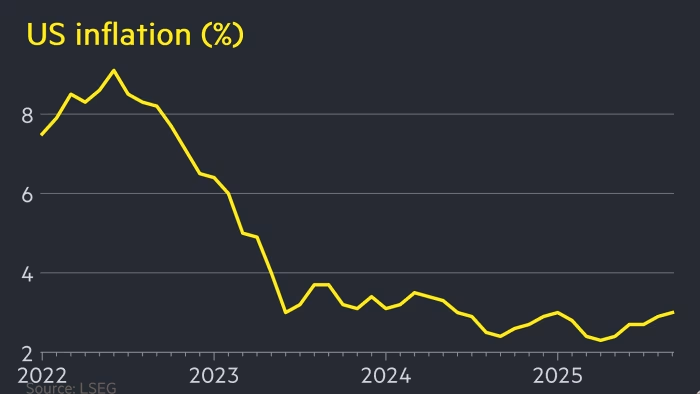
The delayed inflation data finally came Friday, giving Wall Street one final reason for optimism ahead of the Federal Reserve’s two-day policy meeting next week. The consumer price index increased 0.3% in September from August, bringing the 12-month inflation rate to 3%. Economists surveyed by Dow Jones had estimated gains of 0.4% and 3.1%, respectively. Excluding volatile food and energy prices, so-called core CPI showed a 0.2% advance on the month and an annual increase of 3%. That was lower than estimates of 0.3% and 3.1% from Wall Street economists. Investors applauded the release, sending stock futures higher in premarket trading. The data bolster hopes for two more interest rate cuts from the Federal Reserve this year. Interest rate futures trading shows a quarter point reduction in the fed funds rate next week is a near certainty, and odds of another quarter point cut in December were also higher, according to the CMEGroup FedWatch tool. “The good news is that while inflation is ticking higher, it is not running away,” said Jay Woods, chief market strategist at Freedom Capital Markets. “Today’s number is what the Fed and the market needed heading into next week’s meeting. This gives them ample room to cut and remain dovish.” Following the CPI report, odds for a December cut jumped to 98.5% from 91% before the data. “There was little in today’s benign CPI report to ‘spook’ the Fed and we continue to expect further easing at next week’s Fed meeting,” said Lindsay Rosner, head of multi sector fixed income investing at Goldman Sachs Asset Management. The CPI report has taken on even more significance in the absence of many other data releases amid the three-week-old federal government shutdown — now the second-longest on record. The index was originally slated for release nine days ago, and was only able to be released at all after the Labor Department called back staff. Rosner at Goldman Sachs also said that traders can bank on another cut in December, especially given the lack of economic data for central bank policymakers to weigh. ‘The dog that didn’t bark’ Brad Conger, chief investment officer at Hirtle, Callaghan & Co., had expected a hotter-than-normal reading given the impacts of President Donald Trump’s tariff increases on prices. But the Fed was prepared for such a situation, he said. Others were somewhat less sanguine. Friday’s release showed “slight stubbornness” in goods inflation, according to Ryan Weldon, investment director at IFM Investors. But he cited recent remarks by Fed officials pointing to tariff-driven inflationary spikes as short-lived, leaving room for the central bank to keep cutting rates. Ian Lyngen, head of U.S. rates strategy at BMO Capital Markets, said Friday’s CPI report “locked in” the likelihood of a 25 basis point cut next week. He also expects a “dovish tone” from the Fed in its accompanying statement. Looking ahead to December, Lyngen said another rate cut at that meeting is also “cemented” following the report. There is no Fed meeting in November. For Chris Zaccarelli, investing chief at Northlight Asset Management, the CPI report showed that inflation hasn’t flared up, as many anticipated in the wake of Trump’s higher tariff policy. “Much like a Sherlock Holmes’ story, inflation is the dog that didn’t bark,” Zaccarelli said. “So many people have been expecting a sharp increase in inflation and have positioned bearishly as a result, but the market is likely to keep squeezing the shorts until they realize that the economy – and corporate America – is more resilient than many expected.”
Last year, ESA invited innovators across Europe to join the second Space Resources Challenge, a competition designed to accelerate technologies that will help humankind live and work sustainably on the Moon.
Last week, that challenge culminated in a field test lasting several days at the ESA-DLR LUNA facility in Cologne, Germany, where eight teams demonstrated robotic systems capable of collecting and processing lunar soil, known as regolith. The participating teams came from six countries—Canada, Denmark, Germany, Luxembourg, Poland and the United Kingdom—highlighting the global collaboration driving forward lunar exploration.
A vision for sustainable exploration
Oxygen and metal from lunar regolith
The Space Resources Challenge is part of a long-term strategy to develop In-Situ Resource Utilisation (ISRU) technologies. ESA launched the challenge in 2024 in partnership with the Luxembourg Space Agency and the European Space Resources Innovation Centre (ESRIC).
ISRU refers to the use of local resources, such as lunar regolith and water ice, to produce oxygen, fuel and construction elements that would reduce reliance on costly resupply missions from Earth.
The of the challenge focused on prospecting lunar resources. This second edition shifted the focus to collecting and processing lunar soil to extract oxygen.
The mission scenario
Participants were asked to simulate a future Moon mission set in the 2040s, where eight astronauts would stay at the lunar South pole for up to 30 days. Their survival depends on autonomous ISRU systems that extract oxygen from lunar regolith using molten salt electrolysis. Teams had to design robotic systems capable of digging up lunar regolith simulant, sorting particles by size to optimise oxygen production and operating autonomously or via remote control in a lunar-like environment.
Field testing at LUNA
The final field test took place at LUNA, the newly inaugurated Moon analogue facility next to ESA’s European Astronaut Centre. Over several days, the eight selected teams deployed their systems in this realistic testbed, designed to simulate lunar terrain, lighting and dust conditions. The LUNA facility provided a controlled environment for testing robotic mobility and strategies for collecting and processing lunar soil. Teams faced challenges such as dust control, remote operation, and navigating uneven terrain, but responded with creative solutions including modular designs, gravity-fed sieves and adaptive control systems.
LUNA
“The Space Resources Challenge is more than a competition—it’s a glimpse into the future of lunar exploration. Hosting it at our LUNA facility gave teams a unique chance to test their technologies in a Moon-like environment, complete with dust, terrain, and operational time pressure. Seeing different teams develop real-world, functioning solutions under these conditions is incredibly informative for all involved. These kinds of hands-on experiences are exactly what we need to prepare for sustainable missions on the Moon”, explains Aidan Cowley, ExPeRT Technical Officer at ESA, who is supporting the challenge and will serve as the technical lead for the implementation of the activity proposed by the winning team.
What comes next
Following the field test, ESA will award a development contract to the most promising team, helping bring their concept closer to deployment on future lunar missions. The winning team is expected to be announced at the end of November. The Space Resources Challenge is set to return every three years, each time addressing a new segment of the ISRU value chain.
As Europe prepares for a sustained human presence on the Moon, initiatives like the Space Resources Challenge are laying the groundwork, turning bold ideas into mission-ready technologies.
Meet the teams
Team AGH Lunar Resources Initiatives, Poland
Team AGH from AGH University of Krakow developed a system featuring a screw-based digger that collected and stored lunar regolith in tubes, and a multi-level sifter using screens, vibrations and rotating brushes to separate particles into three size ranges. During the challenge, both systems performed well, though a tilt control issue required on-site adjustments. Despite this challenge, the team successfully demonstrated the ability to dig and sort over 20 kg of lunar regolith.
Team ASTROLITH, Canada
Led by Polytechnique Montréal and Uncharted AI, Team ASTROLITH developed Kirb-e, a robotic system built for Moon-like conditions designed to dig and sort lunar soil. The setup includes a strong mechanical shaker on three axes coupled with a gravity-powered sieve, meaning it uses gravity to help separate particles and a slow, steady feed to prevent clogging. Despite unexpected challenges, including remote operation issues and a flipped rover, the team’s smart design and dedicated student effort made the mission a success.
Team BREMEN, Germany
Team BREMEN is composed of members from the German Aerospace Center (DLR e.V.) and the German Research Institution for Artificial Intelligence (DFKI) GmbH, supported by the Robotics Group of the University of Bremen. Using a rover equipped with rotating shovels, the team successfully collected and processed large quantities of regolith simulant. The material was then funneled into a rotary sieve to separate it by particle size. Despite minor challenges with dust mitigation and sieve clogging, the system performed well, demonstrating promising potential for future lunar deployment.
Team CRADLE, UK
Team CRADLE—short for the Centre for Robotic Autonomy in Demanding and Long-Lasting Environments—is a collaboration between the University of Manchester and engineering firm Amentum. Their system, MoLES³, combines a rover designed to dig lunar soil with a static unit that uses vibrating sieves to sort the soil into different particle sizes, preparing it for further use. Built for semi-autonomous remote operation, the modular system aims to maximise the time spent refining lunar soil while keeping energy use low. It ran successfully for two and a half hours during the challenge.
Team FZI DUST, Germany
From the FZI Research Center for Information Technology in Karlsruhe, this team built a wheeled robot equipped with a digging arm and a soil-sorting unit. Their system combined digging and sorting in one mobile setup, designed to work partly on its own or with remote control. It was built to handle rough terrain and aimed to reduce dust near a lunar base by processing soil directly at the excavation site. Despite a stuck component and a last-minute system reset, the team achieved high-purity output and valued the LUNA facility’s realistic setup for enabling adaptive, mission-like troubleshooting.
Team IPRL-API, UK
IPRL API is a startup formed for the Space Resources Challenge, spun out of Imperial College London. The team developed a system that uses a rotating drill—called an auger—that lifts the soil while built-in filters separate it by size as it moves upward. . This design reduces the need for extra equipment and saves energy To improve performance, they added small tapping elements to prevent clogging and a second sorting stage to refine particle size. Despite some technical setbacks during the challenge, the team adapted quickly and were impressed by the realistic environment at the LUNA facility.
Team LuMA, Luxembourg/Denmark
Team LuMA, a consortium of the University of Luxembourg, Aalborg University and Maana Electric, designed a fully 3D-printed system that combined a rover, a robotic arm and a particle filtration setup, each developed by one of the partner institutions. Designed for teleoperation and rugged terrain, the system aimed to tackle challenges like particle segregation and dust mitigation. Despite setbacks including clogging and communication loss, the team adapted on-site, manually resolving issues and adjusting processing rates.
Team TUBular, Germany
PhD students from TU Berlin’s Chair of Space Technology developed a modular robotic system tailored to lunar conditions, with support from Polimak and Lunex Technologies for payload development and testing. Their rover collects lunar soil using a rotating tube, which also acts as the internal storage in which it remains before it is carried to the stationary sieving unit. To reduce the risk of dust interfering with moving parts, they sealed the chassis and minimised exposed mechanisms. Although they faced challenges with motor drivers and software integration, the team was proud to complete and test their system at the LUNA facility, highlighting teamwork and adaptability under pressure.
Thank you for liking
You have already liked this page, you can only like it once!
Campaigners including Tanni Grey-Thompson have warned that disabled drivers are at risk of being locked out of the electric car transition because of inaccessible chargers.
The former Paralympics champion and the Electric Vehicle Association England are pushing for the government to introduce standards to ensure chargers are easy to reach.
The number of public chargers across the UK is rising rapidly, with 17,400 – two an hour – installed in the year to July. However, the lack of standards means that disabled drivers have often been unable to trust that they can use them.
Obstacles such as raised kerbs or gravelled areas often make charger points inaccessible, while touchscreens can be too high on posts or angled away when using a wheelchair. Another issue for some disabled drivers is the weight of charging cables.
On Wednesday, the House of Lords passed an amendment to the government’s planning and infrastructure bill that would give the power to enforce accessibility standards on public chargers.
Lady Grey-Thompson, who won 11 gold medals across five Paralympics, now serves as a crossbench peer in the Lords. She regularly raises awareness over failures in accessible transport provision, including last year when she was forced to crawl off a train because there was no help.
She said she had felt unable to use electric cars, adding: “Disabled people have been completely forgotten about. I’ve tried to change to an electric car a couple of times. It has been really hard going.
“They [the government] just forget about us, because there’s not that many disabled people in positions of power.”
Vicky Edmonds, the chief executive of EVA England, said: “We’re currently risking millions of drivers being locked out of the transition to electric vehicles. Nearly half of EV drivers are struggling with accessibility of public charging and the number of public charge points continues to increase, by a quarter year on year last year.
“The government urgently needs to publish its revised accessibility standard and to take enabling powers to allow it to mandate that standard. Only then can we be certain that industry are genuinely incentivised to deliver accessible charging for all drivers.”
The UK has up to 1.35 million disabled drivers, 390,000 of whom are unlikely to have home-based EV charging, according to research commissioned by the Motability Foundation, the charity behind the scheme to subsidise vehicles for disabled people. Cuts to the scheme are under consideration by the chancellor, Rachel Reeves.
Only 2.3% of chargers match criteria set by the British Standards Institution. Efforts to make its standard, known as PAS 1899, more achievable have stalled.
Jamie Borwick, the Conservative peer who tabled the amendment, said installations of unsuitable chargers now would have effects for years and leave disabled drivers with few options when new petrol and diesel vehicles were withdrawn from sale after 2035.
skip past newsletter promotion
after newsletter promotion
“We’re going to have put together a whole mass of inaccessible chargers,” he said. Drawing on his experience as a former boss of London taxi-maker Manganese Bronze, Lord Borwick added: “You’ve got to design for disability from the very beginning.”
Nigel Fletcher, the chief executive of the Motability Foundation, said charging standards should be come mandatory. He added: “It is vital that all providers of public EV charging are taking responsibility for ensuring that their infrastructure is accessible.”
Vicky Read, the chief executive of the lobby group ChargeUK, said: “No drivers should be left behind in the transition to electric vehicles and this includes drivers with accessibility needs.
“Charge-point operators are already working with local authorities, private landlords and charging equipment manufacturers to ensure the charging needs of disabled drivers are met when developing sites but often face practical challenges in doing so.”
A Department for Transport spokesperson said: “We are fully committed to ensuring disabled drivers can easily charge their electric cars, which is why we commissioned a review into accessibility standards for charge points.
“The review has now concluded, and its findings will be published shortly. We continue to work with industry on how we can further strengthen access to chargers for disabled drivers.”
Simply sign up to the US inflation myFT Digest — delivered directly to your inbox.
US inflation rose less than expected to 3 per cent in September, paving the way for the Federal Reserve to continue cutting interest rates when it meets next week.
Friday’s annual consumer price index figure from the Bureau of Labor Statistics was up from 2.9 per cent in August but below the expectations of 3.1 per cent among economists polled by Bloomberg.
The US dollar and Treasury yields fell slightly as the data release cemented expectations of rate cuts at the Fed’s two remaining meetings this year.
Its publication was delayed by a week due to the shutdown of the US government and the Trump administration said on Friday that, because of the closure, inflation figures would probably not be released next month.
Eswar Prasad, an economist at Cornell University, said Friday’s data, together with “signs of a weakening labour market, pretty much seals the deal for a rate cut” at the Fed’s next meeting.
The dollar was down 0.2 per cent against a basket of currencies, while the two-year Treasury yield, which moves inversely to prices, fell 0.04 percentage points to 3.46 per cent.
US stocks climbed, with the S&P 500 up 0.8 per cent in early trading.
Some content could not load. Check your internet connection or browser settings.
The data release comes as the Fed is due to meet next on Tuesday and Wednesday, when it is expected to lower rates by a quarter point.
The central bank made its first reduction in borrowing costs this year at its last meeting in September, lowering rates by a quarter point to 4-4.25 per cent, and indicated more cuts would follow.
The Fed’s board has been split this year over how fast and far to cut rates as it weighs the effects of a slowing labour market against the potential for a surge in inflation in the wake of Donald Trump’s tariff drive.
Fed chair Jay Powell has come under intense pressure from Trump to lower borrowing costs since the US president returned to power in January.
White House spokesperson Karoline Leavitt said on Friday that inflation had come below expectations “thanks to President Trump’s economic agenda”.
Blaming the shutdown on Trump’s Democratic opponents, she added that it “will likely result in no October inflation report, which will leave businesses, markets, families and the Federal Reserve in disarray”.
Annual core inflation, which strips out volatile food and energy prices, rose to 3 per cent, less than the expected 3.1 per cent. Energy prices were up 2.8 per cent over the period, while food prices climbed 3.1 per cent.
Gasoline prices increased most compared with the previous month, rising 4.1 per cent.
Tom Simons, chief US economist at Jefferies, said Friday’s figure was “inconsistent with the expectation that tariffs would raise the price of goods”.
“There is little pass-through to consumers from tariffs,” he said. “I’m not sure if it can last indefinitely, but retailers are cautious about passing through price increases to consumers.”
But George Brown, senior economist at Schroders, said he would “caution against complacency” by the central bank because of the risk that tariffs could still push up prices in the months ahead.
“An inflation resurgence is at risk of being under-appreciated by the Fed and underpriced by the market,” he said.
Here are the biggest calls on Wall Street on Friday: Evercore ISI reiterates Apple as outperform Evercore says it’s bullish on the company’s partnership with Formula One. “While the initial price tag may seem high to some investors, we think acquiring the broadcasting rights is a part of AAPL long-term strategy of expanding in live sports.” JPMorgan upgrades Kodiak Sciences to overweight from neutral JPMorgan says shares of the biotech company are compelling. “We are upgrading Kodiak (KOD) to Overweight (from Neutral prior) and adjusting our December 2026 price target to $24 ($15 prior).” Stifel downgrades Snap to sell from hold Stifel says its checks show too many negative catalysts. ” SNAP: Our checks continue to skew negative, and with incremental confidence TikTok is not going away in the U.S., we believe this trend is unlikely to reverse any time soon.” Morgan Stanley upgrades Commercial Metals to overweight from equal weight Morgan Stanley says the M & A “overhang” has been removed from the stock. “We are upgrading CMC to Overweight on the completion of upcoming acquisitions that remove the prior perceived M & A overhang” JPMorgan initiates Alphatec as overweight JPMorgan says the med tech company has a differentiated offering. “We are initiating coverage of Alphatec with an Overweight rating and a December 2026 price target of $19.” Keybanc resumes Amazon as overweight Key says Amazon shares are compelling. “With shares trading well below historical levels at 22.9x 2027E P/E, we believe this screens as an attractive entry point.” JPMorgan upgrades Coinbase to overweight from neutral JPMorgan says shares of the crypto company are too attractive to ignore. “We are upgrading Coinbase to Overweight as we look ahead to emerging monetization opportunities and abating risks at what we see is an attractive valuation versus cryptocurrency peers.” Read more. Jefferies reiterates Microsoft as buy Jefferies says it’s sticking with the stock ahead of earnings next week. “After its best print in recent memory, MSFT is flat but positioned to rerate, driven by Azure and M365 momentum, robust bookings growth and rising AI contribution.” Morgan Stanley reiterates Intel as equal weight The firm says it’s sticking with its equal weight rating but that Intel’s earnings report on Thursday was “encouraging.” “Significant upside in 3q especially on margins, showing a pattern of underpromising and over-delivering, which is encouraging.” Cantor Fitzgerald initiates Novavax as overweight Cantor says it’s bullish on shares of the biotech company. “We are initiating coverage on NVAX with an OW rating and 12-month $18 PT, representing 115% upside from current levels.” Citizens JMP upgrades eBay to outperform from market perform Citizens says “AI is a tailwind” for eBay. “We upgrade shares of eBay to Market Outperform from Market Perform and establish a $115 price target as we believe eBay’s product work is creating a significantly better consumer experience…” UBS upgrades Alliant Energy to buy from neutral UBS says it sees “data center growth” for the energy company. “We are upgrading shares of LNT to Buy and raising our price target to $79 from $74 due to the company’s unique position to capitalize on additional load and generation investment required to meet surging data center demand.” Rothschild & Co Redburn initiates Albemarle as buy The firm says the lithium company is best positioned. “We launch coverage of Albemarle with a Buy recommendation.” Citi upgrades MNTN to buy from neutral Citi said in its upgrade of the connected TV company that MNTN shares have plenty more room to run. “Compelling Growth at a Reasonable Valuation as CTV Continues to Attract Incremental Budgets.” Mizuho reiterates Beyond Meat as underperform Mizuho lowered its price target to $1.50 from $2 on shares of the meme stock. “Volatility Elevated but Fundamentals Weak; Reducing PT on Dilution; Maintain Underperform. … .Recent financing actions fo r BYND have addressed concerns for short- and long-term capital structure but weak fundamentals maintain our Underperform for BYND shares.” Morgan Stanley upgrades Tractor Supply to equal weight from underweight Morgan Stanley says it sees improving margins. “Comp growth is normalizing and TSCO is moving past peak margin pressure from its investment cycle.” BTIG initiates Kyivstar as buy BTIG says it’s bullish on shares of the Ukraine mobile satellite company. “We are initiating coverage of Kyivstar Group Ltd. ( KYIV) with a Buy rating and $17 price target.” Truist reiterates Nvidia and Uber as buy Truist says it’s bullish on Uber’s autonomous vehicle partnership with Nvidia. “On Thursday, NVIDIA released a white paper in which it provided an update on the company’s AV-centered strategic partnership with Uber. Recall, the companies originally announced the partnership at CES 2025 and as part of the partnership NVDA’s Cosmos – a cloud-based AI supercomputing platform– is utilizing Uber’s driving data to enable developers of AVs with the ability to simulate driving scenarios to train AVs.”
That said, do not forget the impact on firms and the second-round effects on the economy. Yes, it’s the feedback loops again!
You guessed it – yet another negative supply shock for the EU economy, when less is produced for higher prices. For all these reasons, still burdened with a fair portion of uncertainty, we see the 2027 Czech economic expansion not reaching its full potential, but softening to 2.6% or more, depending on the winners and losers in the ETS2 game.
At the same time, the EC has recently published its legislative initiatives plan for 2026. And while it offers some positive potential, it might be said that it lacks the courage to take fundamental steps to reduce Europe’s regulatory burden and improve its competitiveness. There is simply not much on securing stable, affordable energy for both firms and households; it seems pretty heavy on legislative proposals without much added value, while tackling barriers in the internal market no longer seems to be at policymakers’ hearts. Has the Commission grown out of touch with reality – and is that a lesson already learned from the Draghi report?
SPRING HOUSE, Pa. (October 24, 2025) – Johnson & Johnson (NYSE: JNJ) today announced new long-term 52-week data from the Phase 3 ICONIC-TOTAL studya evaluating icotrokinra, a first-in-class investigational targeted oral peptide that precisely blocks the IL-23 receptor, in adults and pediatric patients 12 years of age and older (adolescents) with plaque psoriasis (PsO) affecting high-impact sites.
The ICONIC-TOTAL study, presented at the 2025 Fall Clinical Dermatology Conference, simultaneously evaluated adults and adolescents with at least moderate scalp, genital and/or hand/foot plaque psoriasis with ≥1% Body Surface Area (BSA) affected. Through Week 52, icotrokinra demonstrated high and durable rates of site-specific psoriasis clearance affecting all of these high-impact and difficult-to-treat areas of the body.1
72% of patients with scalp psoriasis achieved a scalp-specific Investigator’s Global Assessment (ss-IGA) 0/1 score and 57% achieved ss-IGA 0b
85% of patients with genital psoriasis achieved a Physician’s Global Assessment of Genitalia (sPGA-G) 0/1 and 73% achieved sPGA-G 0c
In the smaller subset of patients with hand/foot psoriasis, treatment with icotrokinra showed a numerically higher rate of skin clearance at Week 16, which increased through Week 52 with patients achieving a hand and/or foot Physician’s Global Assessment (hf-PGA)e score of 0/1 increasing from 42% to 62%.
“Many of the patients in my practice experience significant distress when psoriasis affects sensitive areas such as the scalp, genitals, hands, and feet,” said Edward (Ted) Lain, MD, MBA Executive Director of the Austin Institute for Clinical Research in Austin, Texas, and study investigator. “The durable response rates observed in the ICONIC-TOTAL study show that icotrokinra has the potential to be a meaningful new option for effectively managing moderate-to-severe plaque psoriasis long-term in both adults and adolescents.”
Overall response rates among patients treated with once daily icotrokinra were maintained through Week 52, with 67% of patients treated with icotrokinra achieving clear or almost clear skin (Investigator’s Global Assessment (IGA)f 0/1) and 44% achieving completely clear skin (IGA 0) at Week 52. The overall response rates were also comparable among patients who received icotrokinra for all 52 weeks and those who transitioned from placebo to icotrokinra at Week 16 (67% versus 68% achieved IGA0/1, respectively). Across treatment groups, adverse event and serious adverse event rates were similar through Week 52 compared to those through Week 16, with no new safety signals identified.
“The new long-term data from ICONIC-TOTAL adds to the robust findings seen across several studies this year, including the recently reported ICONIC-LEAD 52-week data,” said Liza O’Dowd, MD, Vice President, Immunodermatology and Respiratory Disease Areas Lead, Johnson & Johnson Innovative Medicine. “Psoriasis that affects high-impact skin sites often results in greater physical discomfort for patients due to the sensitivity of these areas. Icotrokinra is being developed with the goal of setting a new standard of treatment that offers patients the precision of a targeted therapy, high level skin clearance and favorable safety profile with the ease of a once daily pill.”
Editor’s notes: a. ICONIC-TOTAL evaluates the efficacy and safety of icotrokinra compared with placebo in participants with at least moderate scalp, genital, and/or hand/foot PsO with once daily icotrokinra or placebo, with placebo-to-icotrokinra transition at Week 16. b. The ss-IGA is a five-point scale where scalp lesions are assessed in terms of clinical signs of redness, thickness, and scaliness on a severity score ranging from 0 to 4, where 0 indicates absence of disease, 1 is very mild, 2 is mild, 3 is moderate and 4 indicates severe disease. c. The sPGA-G is a six-point scale used to evaluate the severity of genital psoriasis at a given time point ranging from 0 to 5, where 0 indicates clear, 1 is minimal, 2 is mild, 3 is moderate, 4 is severe and 5 indicates very severe disease.2 d. The Physician’s Global Assessment of Psoriasis on the Hands and/or Feet (hf-PGA) assesses the severity of hand and foot psoriasis using a 5-point scale to score the plaques on the hands and feet as: clear (0), almost clear (1), mild (2), moderate (3) and severe (4).3 e. Dr. Lain is a paid consultant for Johnson & Johnson. He has not been compensated for any media work. f. The IGA is a five-point scale with a severity score ranging from 0 to 4, where 0 indicates clear, 1 is minimal, 2 is mild, 3 is moderate, and 4 indicates severe disease.4
About the ICONIC Clinical Development Program The pivotal Phase 3 ICONIC clinical development program of icotrokinra (JNJ-2113) in adult and pediatric patients 12 years of age and older with moderate-to-severe plaque PsO was initiated with two studies in Q4 2023 – ICONIC-LEAD and ICONIC-TOTAL – pursuant to the license and collaboration agreement between Protagonist Therapeutics, Inc. and Janssen Biotech, Inc., a Johnson & Johnson company.5
ICONIC-LEAD ( NCT06095115) is a RCT to evaluate the efficacy and safety of icotrokinra compared with placebo in participants with moderate-to-severe plaque PsO, with PASI 90 and IGA score of 0 or 1 with at least a 2-grade improvement as co-primary endpoints.6
ICONIC-TOTAL ( NCT06095102) is a RCT to evaluate the efficacy and safety of icotrokinra compared with placebo for the treatment of PsO in participants with at least moderate severity affecting special areas (e.g., scalp, genital, and/or hands and feet) with overall IGA score of 0 or 1 with at least a 2-grade improvement as the primary endpoint.7
Other Phase 3 studies in the development program include ICONIC-ADVANCE 1 ( NCT06143878) and ICONIC-ADVANCE 2 ( NCT06220604), which are evaluating the efficacy and safety of icotrokinra compared with both placebo and deucravacitinib in adults with moderate-to-severe plaque PsO.8,9 ICONIC-ASCEND will evaluate the efficacy and safety of icotrokinra compared with placebo and ustekinumab in participants with moderate-to-severe plaque psoriasis. ICONIC-PsA 1 ( NCT06878404) and ICONIC-PsA 2 ( NCT06807424) will evaluate the efficacy and safety of icotrokinra compared to placebo in participants with active psoriatic arthritis.10,11 ICONIC-UC ( NCT07196748) will evaluate the efficacy and safety of icotrokinra in adults and adolescents with moderately to severely active ulcerative colitis (UC) and ICONIC-CD ( NCT07196722) will evaluation the efficacy and safety of icotrokinra in adults with moderately to severely active Crohn’s disease (CD).12,13
About Plaque Psoriasis Plaque psoriasis (PsO) is a chronic immune-mediated disease resulting in overproduction of skin cells, which causes inflamed, scaly plaques that may be itchy or painful.14 It is estimated that 8 million Americans and more than 125 million people worldwide live with the disease.15 Nearly one-quarter of all people with plaque PsO have cases that are considered moderate-to-severe.15 Plaques typically appear as raised patches with a silvery white buildup of dead skin cells or scales.Plaques may appear red in lighter skin or more of a purple, gray or dark brown color in patients with darker skin tones. Plaques can appear anywhere on the body, although they most often appear on the scalp, knees, elbows, and torso.16 Living with plaque PsO can be a challenge and impact life beyond a person’s physical health, including emotional health, relationships, and handling the stressors of life.17 Psoriasis on highly visible areas of the body or sensitive skin, such as the scalp, hands, feet, and genitals, can have an increased negative impact on quality of life.16,18
About Icotrokinra (JNJ-77242113, JNJ-2113) Investigational icotrokinra is the first targeted oral peptide designed to precisely block the IL-23 receptor,19 which underpins the inflammatory response in moderate-to-severe plaque PsO, ulcerative colitis and offers potential in other IL-23-mediated diseases.20,21 Icotrokinra binds to the IL-23 receptor with single-digit picomolar affinity and demonstrated potent, precise inhibition of IL-23 signaling in human T cells.22 The license and collaboration agreement established between Protagonist Therapeutics, Inc. and Janssen Biotech, Inc., a Johnson & Johnson company, in 2017 enabled the companies to work together to discover and develop next-generation compounds that ultimately led to icotrokinra.23
Icotrokinra was jointly discovered and is being developed pursuant to the license and collaboration agreement between Protagonist and Johnson & Johnson. Johnson & Johnson retains exclusive worldwide rights to develop icotrokinra in Phase 2 clinical trials and beyond, and to commercialize compounds derived from the research conducted pursuant to the agreement against a broad range of indications.24,25,26
Icotrokinra is being studied in the pivotal Phase 3 ICONIC clinical development program in moderate-to-severe plaque psoriasis, active psoriatic arthritis, moderately to severely active ulcerative colitis and moderately to severely active Crohn’s disease.
About Johnson & Johnson At Johnson & Johnson, we believe health is everything. Our strength in healthcare innovation empowers us to build a world where complex diseases are prevented, treated, and cured, where treatments are smarter and less invasive, and solutions are personal. Through our expertise in Innovative Medicine and MedTech, we are uniquely positioned to innovate across the full spectrum of healthcare solutions today to deliver the breakthroughs of tomorrow and profoundly impact health for humanity.
Learn more at https://www.jnj.com/ or at www.innovativemedicine.jnj.com. Follow us at @JNJInnovMed.
Janssen Biotech, Inc. is a Johnson & Johnson company.
Cautions Concerning Forward-Looking Statements This press release contains “forward-looking statements” as defined in the Private Securities Litigation Reform Act of 1995 regarding icotrokinra (JNJ-2113). The reader is cautioned not to rely on these forward-looking statements. These statements are based on current expectations of future events. If underlying assumptions prove inaccurate or known or unknown risks or uncertainties materialize, actual results could vary materially from the expectations and projections of Johnson & Johnson. Risks and uncertainties include, but are not limited to: challenges and uncertainties inherent in product research and development, including the uncertainty of clinical success and of obtaining regulatory approvals; uncertainty of commercial success; manufacturing difficulties and delays; competition, including technological advances, new products and patents attained by competitors; challenges to patents; product efficacy or safety concerns resulting in product recalls or regulatory action; changes in behavior and spending patterns of purchasers of health care products and services; changes to applicable laws and regulations, including global health care reforms; and trends toward health care cost containment. A further list and descriptions of these risks, uncertainties and other factors can be found in Johnson & Johnson’s most recent Annual Report on Form 10-K, including in the sections captioned “Cautionary Note Regarding Forward-Looking Statements” and “Item 1A. Risk Factors,” and in Johnson & Johnson’s subsequent Quarterly Reports on Form 10-Q and other filings with the Securities and Exchange Commission. Copies of these filings are available online at www.sec.gov, www.jnj.com or on request from Johnson & Johnson. Johnson & Johnson does not undertake to update any forward-looking statement as a result of new information or future events or developments.
Footnotes 1 Lain, E et al. Durability of Response to the Targeted Oral Peptide Icotrokinra for High-Impact Site Psoriasis: 1-Year ICONIC-TOTAL Findings. Oral presentation (Presentation FC01.1G) at the 2025 Fall Clinical Dermatology Conference. October 2025.
2 Merola JF, Bleakman AP, Gottlieb AB, et al. The Static Physician’s Global Assessment of Genitalia: a clinical outcome measure for the severity of genital psoriasis. J Drugs Dermatol. 2017;16(8):793-799
3 Goldblum O, et al. Validation of the physician’s global assessment of psoriasis of the hands and/or feet as a clinical endpoint. J Am Acad Dermatol. 2013:68(4)Supplement1:AB218.
4 Simpson E, Bissonnette R, Eichenfield LF, et al. The validated Investigator Global Assessment for Atopic Dermatitis (vIGA-AD™): The development and reliability testing of a novel clinical outcome measurement instrument for the severity of atopic dermatitis [published online April 25, 2020]. J Am Acad Dermatol. doi: 10.1016/j.jaad.2020.04.104. Accessed April 2025.
5 Protagonist Therapeutics. Press release. Protagonist announces advancement of JNJ-2113 across multiple indications. Available at: https://www.accesswire.com/791174/protagonist-announces-advancement-of-jnj-2113-across-multiple-indications. Accessed August 2025.
6 Clinicaltrials.gov. A study of JNJ-2113 in adolescent and adult participants with moderate-to-severe plaque psoriasis (ICONIC-LEAD). Identifier NCT06095115. https://classic.clinicaltrials.gov/ct2/show/NCT06095115. Accessed July 2025.
7 Clinicaltrials.gov. A study of JNJ-2113 for the treatment of participants with plaque psoriasis involving special areas (scalp, genital, and/or palms of the hands and the soles of the feet) (ICONIC-TOTAL). Identifier NCT06095102. https://classic.clinicaltrials.gov/ct2/show/NCT06095102. Accessed July 2025.
8 Clinicaltrials.gov. A Study of JNJ-77242113 for the Treatment of Participants With Moderate to Severe Plaque Psoriasis. Identifier NCT06143878. https://clinicaltrials.gov/study/NCT06143878. Accessed July 2025.
9 Clinicaltrials.gov. A Study of JNJ-77242113 for the Treatment of Participants With Moderate to Severe Plaque Psoriasis (ICONIC-ADVANCE 2). Identifier NCT06220604. https://clinicaltrials.gov/study/NCT06220604. Accessed July 2025.
10 Clinicaltrials.gov. A Study to Evaluate the Efficacy and Safety of JNJ-77242113 (Icotrokinra) in Biologic-naïve Participants With Active Psoriatic Arthritis (ICONIC-PsA 1). Identifier NCT06878404. https://clinicaltrials.gov/study/NCT06878404.
11 A Study to Evaluate the Efficacy and Safety of Icotrokinra (JNJ-77242113) in Biologic-experienced Participants With Active Psoriatic Arthritis (ICONIC-PsA 2). Identifier NCT06807424. https://clinicaltrials.gov/study/NCT06807424.
12 Clinicaltrials.gov. A Protocol of Icotrokinra Therapy in Adult and Adolescent Participants With Moderately to Severely Active Ulcerative Colitis (ICONIC-UC). Identifier NCT07196748. https://clinicaltrials.gov/study/NCT07196748. Accessed September 2025.
13 Clinicaltrials.gov. A Study of Icotrokinra in Participants With Moderately to Severely Active Crohn’s Disease. Identifier NCT07196722. https://clinicaltrials.gov/study/NCT07196722. Accessed October 2025.
14 National Psoriasis Foundation. About Psoriasis. Available at: https://www.psoriasis.org/about-psoriasis. Accessed July 2025.
15 National Psoriasis Foundation. Psoriasis Statistics. Available at: https://www.psoriasis.org/content/statistics. Accessed July 2025.
16 National Psoriasis Foundation. Plaque Psoriasis. Available at: https://www.psoriasis.org/plaque/. Accessed July 2025.
17 National Psoriasis Foundation. Life with Psoriasis. Available at: https://www.psoriasis.org/life-with-psoriasis/. Accessed July 2025.
18 National Psoriasis Foundation. High Impact Sites. Available at: https://www.psoriasis.org/high-impact-sites/. Accessed July 2025.
19 Bissonnette R, et al. Data presentation. A phase 2, randomized, placebo-controlled, dose-ranging study of oral JNJ-77242113 for the treatment of moderate-to-severe plaque psoriasis: FRONTIER 1. Presented at WCD 2023, July 3-8.
20 Razawy W, et al. The role of IL‐23 receptor signaling in inflammation‐mediated erosive autoimmune arthritis and bone remodeling. Eur J Immunol. 2018 Feb; 48(2): 220–229.
21 Tang C, et al. Interleukin-23: as a drug target for autoimmune inflammatory diseases. Immunology. 2012 Feb; 135(2): 112–124.
22 Pinter A, et al. Data Presentation. JNJ-77242113 Treatment Induces a Strong Systemic Pharmacodynamic Response Versus Placebo in Serum Samples of Patients with Plaque Psoriasis: Results from the Phase 2, FRONTIER 1 Study. Presented at EADV 2023, October 11-14.
23 Johnson & Johnson. Press release. Janssen enters into worldwide exclusive license and collaboration agreement with Protagonist Therapeutics, Inc. for the oral Interlukin-23 receptor antagonist drug candidate for the treatment of Inflammatory Bowel Disease. Available at: https://www.jnj.com/media-center/press-releases/janssen-enters-into-worldwide-exclusive-license-and-collaboration-agreement-with-protagonist-therapeutics-inc-for-the-oral-interlukin-23-receptor-antagonist-drug-candidate-for-the-treatment-of-inflammatory-bowel-disease. Accessed July 2025.
24 Protagonist Therapeutics. Press release. Protagonist Therapeutics announces amendment of agreement with Janssen Biotech for the continued development and commercialization of IL-23 antagonists. Available at: https://www.prnewswire.com/news-releases/protagonist-therapeutics-announces-amendment-of-agreement-with-janssen-biotech-for-the-continued-development-and-commercialization-of-il-23-antagonists-301343621.html. Accessed July 2025.
25 Protagonist Therapeutics. Press release. Protagonist Reports positive results from Phase 1 and pre-clinical studies of oral Interleukin-23 receptor antagonist JNJ-2113. Available at: https://www.prnewswire.com/news-releases/protagonist-reports-positive-results-from-phase-1-and-pre-clinical-studies-of-oral-interleukin-23-receptor-antagonist-jnj-2113-301823039.html. Accessed July 2025.
26 Protagonist Therapeutics. Press release. Protagonist Therapeutics announces positive topline results for Phase 2b FRONTIER 1 clinical trial of oral IL-23 receptor antagonist JNJ-2113 (PN-235) in psoriasis. Available at: https://www.prnewswire.com/news-releases/protagonist-therapeutics-announces-positive-topline-results-for-phase-2b-frontier-1-clinical-trial-of-oral-il-23-receptor-antagonist-jnj-2113-pn-235-in-psoriasis-301764181.html. Accessed July 2025.
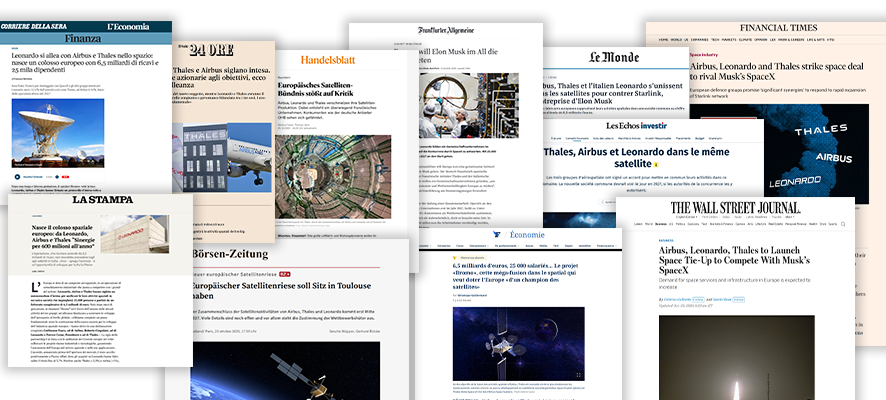
By signing the MoU, Airbus, Leonardo and Thales aim to join forces to strengthen Europe’s strategic autonomy in space, a major sector that underpins critical infrastructure and services related to telecommunications, global navigation, earth observation, science, exploration and national security.
The new company will pool, build and develop a comprehensive portfolio of complementary technologies and end-to-end solutions. The goal is to create a unified, integrated and resilient European space player, which will employ around 25,000 people across Europe, capable of competing globally and exploiting growth opportunities in international markets.