Every weekday, the CNBC Investing Club with Jim Cramer releases the Homestretch — an actionable afternoon update, just in time for the last hour of trading on Wall Street. Market update: Stocks are selling off on Wednesday with noticeable profit-taking in technology and AI infrastructure winners. Earnings from GE Vernova and Vertiv didn’t beat high expectations. There’s also a lot of selling in unprofitable, speculative stocks. But not everything is down. Defensive-oriented groups like consumer staples and healthcare are outperforming technology, discretionary, and industrial names. One reason for the market sell-off is renewed concerns about a frosty trade relationship with China after Reuters reported that the Trump administration is considering curbing exports on products made with U.S. software. Meta moves: Facebook and Instagram owner Meta Platforms is laying off roughly 600 employees from its superintelligence lab, CNBC confirmed on Wednesday . These cuts come after it spent most of 2025 luring top AI researchers away from other tech companies like OpenAI and Apple with signing bonuses as high as $100 million. We’ve likened Meta’s aggressive pursuit of top AI talent to the New York Yankees chasing every big free agent, but the Los Angeles Dodgers might actually be the more fitting comparison. The layoff news comes after Meta said it will pause hiring for its AI division and restructure the group into four teams. The company hopes these layoffs will help it make decisions more quickly. The AI arms race is moving incredibly fast, so it sounds like Meta needed to retool its organizational structure to keep pace with the competition. In other news, Meta said it formed a joint venture with Blue Owl Capital to develop and own the Hyperion data center campus in Louisiana. Hyperion is one of Meta’s planned megaclusters that is expected to come online at the beginning of 2028 with the ability to scale up to a capacity of 5 gigawatts. As part of the deal, Blue Owl will own 80% of the joint venture and contribute $7 billion to the project. Meta will own the other 20% and receive a one-time distribution worth $3 billion. This is a unique deal that shifts some of Meta’s AI infrastructure financial risk onto Blue Owl. After Oracle ‘s huge $18 billion bond sale last month, the market has become a little more wary of AI companies loading up on debt to spend on AI. This deal allows Meta to free up capital while continuing to advance its AI ambitions. GE Vernova: GE Vernova shares are having a rough Wednesday despite reporting better-than-expected quarterly results. The stock traded as low as $532, good for a decline of about 9%, but cut its losses in half since then. One new development that wasn’t in the earnings release or conference call that is worth highlighting is the reporting by CNBC’s Seema Mody: GE Vernova CEO Scott Strazik spoke to Mody in a phone interview, and he had some very interesting things to say about OpenAI’s CEO Sam Altman. “I met with Sam multiple times over the past few weeks. It is a relationship that continues to evolve,” Strazik said to CNBC. “I’ve been with his team over the last 72 hours. Clearly, OpenAI is a critical piece of this growth trajectory with a lot of ambition.” Ever since OpenAI struck deals with Nvidia , AMD , and later Broadcom to secure access to AI compute power, we’ve been wondering out loud if OpenAI would turn next to electricity power suppliers like GE Vernova for its power equipment and electrification products. This was the precise reason why we added to our GEV position earlier this month, although we would have gotten a better price with a little more patience. We have no way of knowing if OpenAI will make a deal like it did with the chipmakers, but the new reporting indicates that discussions are taking place behind the scenes, just as we anticipated. Up next: Tesla , IBM , SAP , Lam Research , and Las Vegas Sands report after the closing bell on Wednesday. Before the opening bell on Thursday, we’ll see earnings from club names Honeywell and Dover , as well as American Airlines , Freeport-McMoRan , Dow Inc , Hasbro , T-Mobile , Blackstone , and PG & E . (See here for a full list of the stocks in Jim Cramer’s Charitable Trust.) As a subscriber to the CNBC Investing Club with Jim Cramer, you will receive a trade alert before Jim makes a trade. Jim waits 45 minutes after sending a trade alert before buying or selling a stock in his charitable trust’s portfolio. If Jim has talked about a stock on CNBC TV, he waits 72 hours after issuing the trade alert before executing the trade. THE ABOVE INVESTING CLUB INFORMATION IS SUBJECT TO OUR TERMS AND CONDITIONS AND PRIVACY POLICY , TOGETHER WITH OUR DISCLAIMER . NO FIDUCIARY OBLIGATION OR DUTY EXISTS, OR IS CREATED, BY VIRTUE OF YOUR RECEIPT OF ANY INFORMATION PROVIDED IN CONNECTION WITH THE INVESTING CLUB. NO SPECIFIC OUTCOME OR PROFIT IS GUARANTEED.
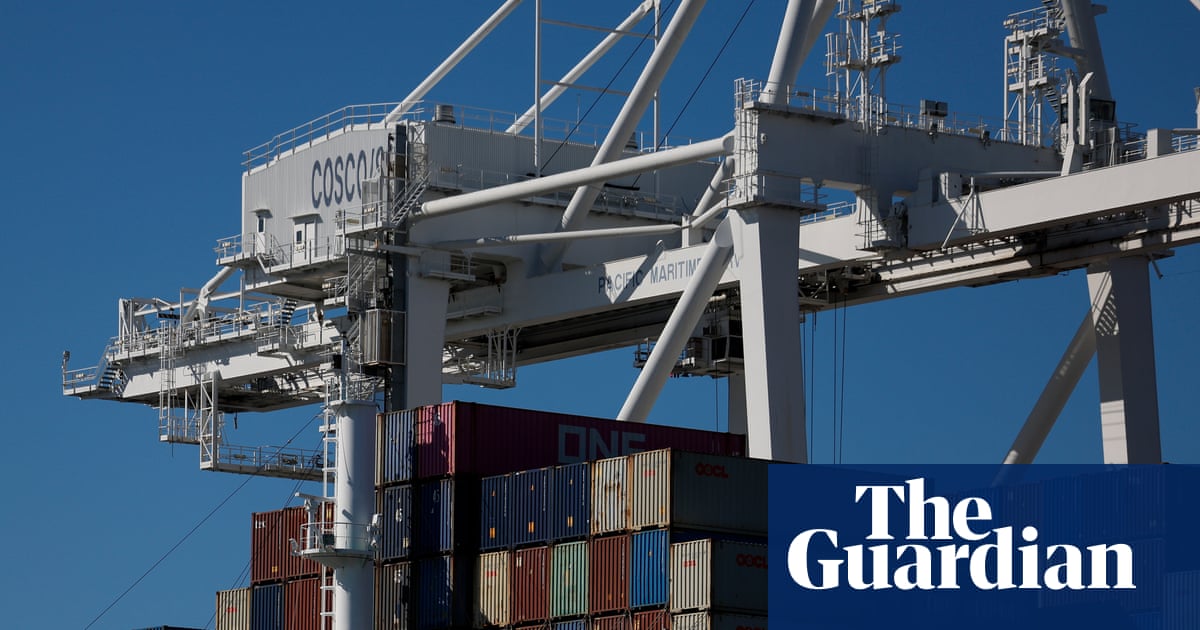
The Trump administration is considering a plan to curb a dizzying array of software-powered exports to China, from laptops to jet engines, to retaliate against Beijing’s latest round of rare earth export restrictions, according to a US official and three people briefed by US authorities.
While the plan is not the only option on the table, it would make good on Donald Trump’s threat earlier this month to bar “critical software” exports to China by restricting global shipments of items that contain US software or were produced using US software.
On 10 October, Trump said in a social media post that he would impose additional tariffs of 100% on China’s US-bound shipments, along with new export controls on “any and all critical software” by 1 November without further details. To be sure, the measure, details of which are being reported for the first time, may not move forward, the sources said.
But the fact that such controls are being considered shows the Trump administration is weighing a dramatic escalation of its showdown with China, even as some within the US government favor a gentler approach, according to two of the sources. US stock indexes briefly extended losses on the news, with the S&P 500 down 0.8% and the Nasdaq 1.3% lower before paring their losses.
The White House declined to comment. The commerce department, which oversees export controls, did not respond to requests for comment.
A spokesperson for the Chinese embassy did not comment on the specific US measures under consideration but said China opposed the US “imposing unilateral long-arm jurisdiction measures” and vowed to “take resolute measures to protect its legitimate rights and interests” if the US proceeds down what it views as a wrong path.
Administration officials could announce the measure to put pressure on China but stop short of implementing it, one of the sources said. Narrower policy proposals are also being discussed, two of the people said.
“Everything imaginable is made with US software,” one of the sources said, highlighting the broad scope of the proposed action. The sources declined to be named because the matter was not public.
The move could disrupt global trade with China, especially for technology products, and could come at a cost to the US economy if fully implemented.
The measure, if adopted, would echo restrictions that the Biden administration imposed on Moscow after its 2022 invasion of Ukraine. Those rules restricted exports to Russia of items made globally using US technology or software. Trump’s Truth Social post came just three weeks before a previously announced meeting with Xi Jinping, China’s president, in South Korea, and a day after China dramatically expanded its export controls on rare earth elements. China dominates the market for such elements, which are essential to tech manufacturing.
In his post, Trump said China’s action, also effective 1 November, represented “a moral disgrace” that would impose controls on “virtually every product they make”.
skip past newsletter promotion
after newsletter promotion
But questions have swirled about what Trump meant in his response by “critical software” controls.
While Trump has slapped a series of tariffs on China since taking office in January, he has wavered in his use of export restrictions against Beijing, first imposing strict new curbs on shipments of Nvidia’s AI chips as well as chip design software to China, and later removing them.
China expressed its opposition to a Trump administration rule last month that restricts US companies from shipping goods and technology to companies at least 50% owned by sanctioned Chinese firms. Chinese imports currently face US tariffs around 55%, which could shoot up to 155% if Trump follows through on his threatened tariff hike. But Trump appeared to soften his posture on Beijing following the threats, posting on 12 October: “The U.S.A. wants to help China, not hurt it!!!”
Social media platform Reddit sued the artificial intelligence company Perplexity AI and three other entities on Wednesday, alleging their involvement in an “industrial-scale, unlawful” economy to “scrape” the comments of millions of Reddit users for commercial gain.
Reddit’s lawsuit in a New York federal court takes aim at San Francisco-based Perplexity, maker of an AI chatbot and “answer engine” that competes with Google, ChatGPT and others in online search.
Also named in the lawsuit are Lithuanian data-scraping company Oxylabs UAB, a web domain called AWMProxy that Reddit describes as a “former Russian botnet,” and Texas-based startup SerpApi.
It’s the second such lawsuit from Reddit since it sued another major AI company, Anthropic, in June.
But the lawsuit filed Wednesday is different in the way that it confronts not just an AI company but the lesser-known services the AI industry relies on to acquire online writings needed to train AI chatbots.
“Scrapers bypass technological protections to steal data, then sell it to clients hungry for training material. Reddit is a prime target because it’s one of the largest and most dynamic collections of human conversation ever created,” said Ben Lee, Reddit’s chief legal officer, in a statement Wednesday.
Perplexity said it has not yet received the lawsuit but “will always fight vigorously for users’ rights to freely and fairly access public knowledge. Our approach remains principled and responsible as we provide factual answers with accurate AI, and we will not tolerate threats against openness and the public interest.”
Oxylabs and SerpAPI didn’t immediately respond to requests for comment Wednesday. AWMProxy could not immediately be reached for comment.
Reddit compares the companies it is suing to “would-be bank robbers” who can’t get into the bank vault, so they break into the armored truck instead. The lawsuit alleges they are evading Reddit’s own anti-scraping measures while also ”circumventing Google’s controls and scraping Reddit content directly from Google’s search engine results.”
Lee said that because they’re unable to scrape Reddit directly, “they mask their identities, hide their locations, and disguise their web scrapers to steal Reddit content from Google Search. Perplexity is a willing customer of at least one of these scrapers, choosing to buy stolen data rather than enter into a lawful agreement with Reddit itself.”
Much like its lawsuit against Anthropic, maker of the chatbot Claude, Reddit claims that Perplexity has accessed Reddit’s content despite being asked not to do so.
Reddit made a similar argument in its lawsuit against Anthropic. That case was initially filed in California Superior Court but was later moved to federal court and has a hearing scheduled for January.
Along with digitized books and news articles, websites such as Wikipedia and Reddit are deep troves of written materials that can help teach an AI assistant the patterns of human language.
Reddit has previously entered licensing agreements with Google, OpenAI and other companies that are paying to be able to train their AI systems on the public commentary of Reddit’s more than 100 million daily users.
The licensing deals helped the 20-year-old online platform raise money ahead of its Wall Street debut as a publicly traded company last year.
Foley Hoag partner Brooke Fritz to join a panel discussion titled “Advocating for Your Business, Yourself, and Your Team” during MTLC’s Professional Women’s Meeting: Negotiation Techniques.
Find your full leadership potential at this meeting designed for women in tech and leadership roles. Negotiation is a critical tool for advancing your business objectives, championing your team, and advocating for yourself in every professional setting.
You will hear from accomplished sales and tech leaders who are skilled in both business and personal negotiation. This event will equip you with actionable negotiation techniques and frameworks you can use immediately—no matter your role or title.
What to expect:
Practical negotiation tactics tailored for tech professionals
Real-world scenarios and relatable stories from top women in sales
Strategies for overcoming internal and external barriers to advocacy
Tools for elevating your team, driving business outcomes, and maximizing your impact
Networking with fellow women leaders committed to growth and empowerment
BRASILIA/SAO PAULO, Oct 22 (Reuters) – Brazil won a partial victory in an international dispute about the Tupi oilfield against a consortium formed by Petrobras (PETR3.SA), opens new tab, Shell (SHEL.L), opens new tab and Petrogal, allowing the country to keep 22.2 billion reais ($4.11 billion) in tax payments, the Solicitor General’s Office said on Wednesday.
The dispute with Brazil’s oil regulator ANP over tax regulations governing the field’s size is being mediated by the arbitration court at the International Chamber of Commerce.
Sign up here.
In a small defeat for Brazil, the court also decided that future compensation by the consortium can be made in other ways besides cash payments if the amount is 30% higher than the quarterly deposits made since 2019 when a federal court ruled in favor of the government.
Shell declined to comment, while Petrobras, which has a 65% stake in the consortium, did not immediately respond to a request for comment.
Tupi has for years been Brazil’s highest producing field, with over 1 million barrels of oil equivalent per day.
However, since 2014, the consortium has asserted that Tupi actually includes the Cernambi field as well, but the government considers them as one big field, whose oil production revenue is subject to a higher tax rate.
($1 = 5.4039 reais)
Reporting by Ricardo Brito in Brasilia and Roberto Samora in Sao Paulo; Writing by Fernando Cardoso; Editing by Richard Chang
Our Standards: The Thomson Reuters Trust Principles., opens new tab
Appetite for Beyond Meat’s plant-based burgers is shaky. But traders sure seem to developed a taste for its stock.
Shares in the company have soared about 1,000% over four days – a stunning rally for a company that had seen its share price all but wiped out since it debuted on the stock exchange six years ago.
The business has been struggling with sluggish sales – and has not posted a quarterly profit in more than five years – as shoppers turn away from its meat alternatives.
The surge has reignited debate whether the activity, propelled in part by online enthusiasm among everyday investors, is a sign of an overly frothy stock market.
Momentum started to build last week, when a Reddit user helped fuel a wave of purchases, drawing comparisons to other rallies of so-called meme stocks such as GameStop and AMC.
The gains continued after Roundhill Investments on Monday added the company to the bucket of companies owned by its meme stock ETF, or exchange-traded fund. The move appeared to spark a so-called short squeeze: as the stock price surged, the many investors betting against the company were forced to buy shares to cover their losses.
The company also announced a distribution deal with Walmart on Tuesday, further boosting its shares.
“This company was essentially being thought of as going out of business not that long ago,” said Mark Hackett, chief market strategist at Nationwide.
“Getting a positive catalyst like the Walmart deal, which could be transformational with the rebound of demand and getting products in the hands of consumers – that is absolutely the trigger,” he added, referring to the stock surge since last Friday.
But Mr Hackett cautioned that the Walmart deal to expand distribution “doesn’t necessarily fix all the issues”.
“You’re really trading on emotions and technicals, versus fundamentals,” Mr Hackett said.
The company remains on shaky ground. Its share price, at just over $4 on Wednesday afternoon trading in New York, remains well below its all-time high of more than $230 in 2019.
The Beyond Meat meme stock surge comes against a backdrop of jitters about an overvalued stock market.
At the forefront are concerns about a possible bubble emerging in the artificial intelligence (AI) industry. Those worries have intensified as analysts struggle to see how the vast sums of money the biggest players are throwing at one another all fit together.
JP Morgan Chase boss Jamie Dimon echoed the concerns this month. He told the BBC he was “far more worried than others” about a serious market correction, which he said could come in the next six months to two years.
The Securities and Exchange Commission has also noted possible market manipulation tied to meme stocks, warning of the risks to everyday investors.
Some have responded with calls for tighter rules around short selling and social media-fuelled trading. But there is little sign such proposals are gaining traction.
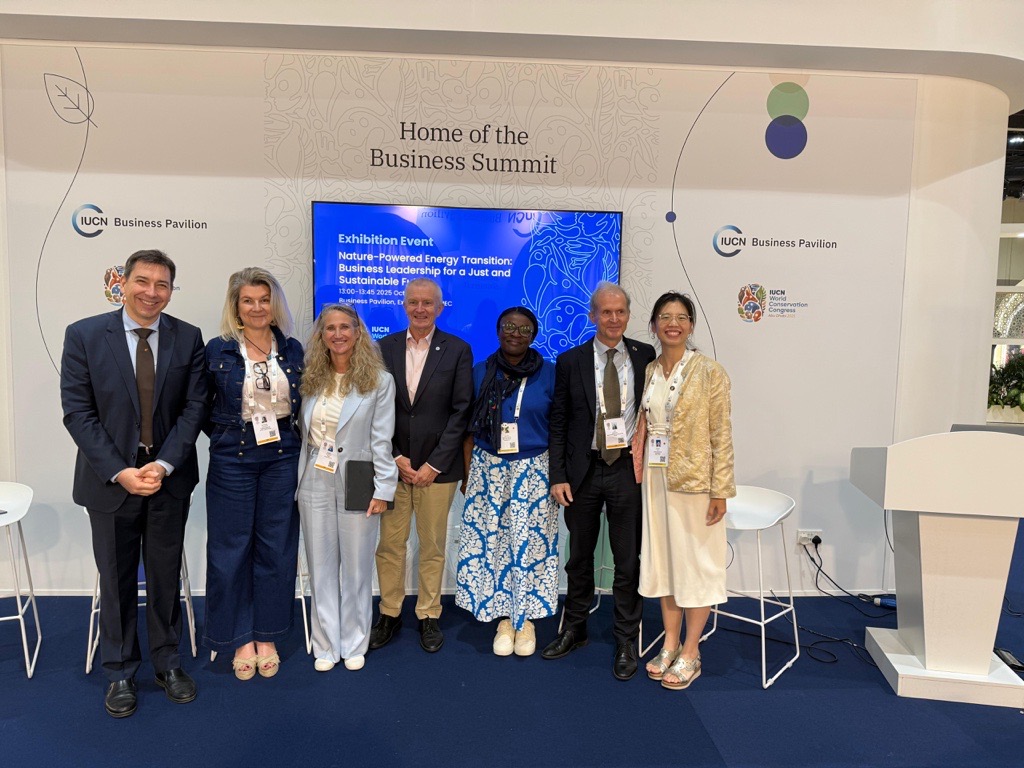
Keynote speaker Erik Berglöf, Chief Economist at the Asian Infrastructure Investment Bank (AIIB), outlined how the bank is integrating nature into development finance. From wetlands in Mongolia to mangrove protection in Brazil, the approach includes natural capital valuation, policy-based financing, and public-private partnerships.
“Nature is not a side concern—it is part of the operating system of our infrastructure,” Berglöf said.
AIIB’s policy-based financing model allows direct lending to governments to support climate and nature policies. A $1 billion loan to Brazil, for example, includes frameworks for mangrove management and climate-resilient health systems, illustrating how planetary health can be built into infrastructure finance. In China, AIIB’s Nature Finance Accelerator mobilises private investment through taxonomy-based project classification and carbon credit markets.
AIIB’s pilot project in Mongolia shows how ecosystem service valuation can expand the scope of infrastructure investments—from flood management to pollination, carbon sequestration, and recreation—prompting local authorities to scale up restoration efforts. This evidence-based approach positions nature as an asset rather than a cost.
Banks and Investors Demand Measurable Nature Impact
Representing European Bank for Reconstruction and Development (EBRD), Adonai Herrera Martínez highlighted the dual goals of financial returns and measurable environmental impact. He emphasised the critical role of IUCN in advocacy, guidance, and verification—helping financial institutions define metrics, develop methodologies, and link investments to actual improvements in the state of nature.
Energy Sector Scaling Up Renewables Responsibly
Patricia Claverie from TotalEnergies spoke about the urgency of scaling renewable energy at unprecedented speed while mitigating ecological impacts. Using IUCN’s guidance during the repowering of a wind farm on Réunion Island, the company was able to redesign the project with fewer turbines, lower impact, and a stronger biodiversity action plan.
Karen Westley of Ipieca underscored the power of industry collaboration: through Ipieca’s global network, lessons learned from IUCN partnerships can be shared across 60% of the oil and gas sector, amplifying systemic change.
Speakers stressed the need to move beyond compliance toward incentivised, long-term conservation gains. This includes biodiversity credits, embedding nature into licensing and tendering, and developing financial mechanisms that sustain ecological benefits beyond the operational life of projects.
Radical Partnerships for a Nature-Positive Future
Closing the session, Stewart Maginnis, Deputy Director General of IUCN, called for radical partnerships that place biodiversity conservation at the heart of the global energy transition.
“Mainstreaming biodiversity in energy systems isn’t optional. It’s how we ensure a just and sustainable future.”
Follow-up actions identified during the event include developing simple, robust nature finance methodologies with IUCN; ensuring long-term conservation gains beyond project lifecycles; and creating economic incentives to reward nature-positive infrastructure investments.
The session showcased how aligning finance, energy, and conservation can help build resilient economies and ecosystems—treating nature not as an afterthought, but as essential infrastructure.
Toulouse, France, 22 October 2025 – Airbus’ 2025 Cargo Global Market Forecast (GMF) shows the worldwide fleet of dedicated freighter aircraft rising to 3,420 in the next 20 years, equivalent to a 45% increase. This will be made up of 815 existing freighters and 2,605 additional ones. Of these additional 2,605 freighters, 1,530 will be replacements and 1,075 will be for growth. The additional 2,605 will be split between 1,120 small aircraft, 855 mid-size widebodies, and 630 large widebodies. Overall of the 2,605 additional freighters, 1,670 will be conversions from passenger aircraft and 935 will be new-build freighters.
World Gross Domestic Product (GDP) and trade remain the main drivers of air cargo. With long term trade forecasted at 2.7% CAGR, Airbus forecasts that air cargo will develop at a rate of 3.3% annually over the next 20 years, effectively almost doubling cargo volumes over the next two decades. Airbus forecasts significant air cargo growth as it has proved essential – not just to support economies, but also to connect remote communities, transport essential and health-critical goods, and enable local business development in emerging countries.
After rapid cargo fleet growth during the pandemic, fuelled by an increase of passenger aircraft conversions into freighters and minimum retirement of previous generation freighters, Airbus forecasts that going forward, a large proportion of these older freighters will leave the fleet and be replaced by newer, more fuel efficient freighters such as the A350F or A320/A321 and A330 Passenger-to-Freighter (P2F) conversions.
Airbus also forecasts trade lanes, and therefore air cargo flows diversification, as more countries in the Asia-Pacific region become industrial centres. Likewise, GDP and demographic forecasts indicate that new countries such as Brazil, Indonesia or Vietnam will emerge as major consumer economies in the coming decades. This will initiate a gradual shift in air cargo geography and the global air freight map.
Of the total need for 2,605 freighter deliveries over the next 20 years, Asia-Pacific and North America will account for nearly two-thirds of demand, requiring 850 and 920 aircraft, respectively.
Find more info on the latest Airbus Global Market Forecast and the Airbus family of freighters.
Vancouver, B.C. – Teck Resources Limited (TSX: TECK.A and TECK.B, NYSE: TECK) (“Teck”) announced today that its Board of Directors has declared an eligible dividend of $0.125 per share on its outstanding Class A common shares and Class B subordinate voting shares, to be paid on December 31, 2025 to shareholders of record at the close of business on December 15, 2025.
About Teck Teck is a leading Canadian resource company focused on responsibly providing metals essential to economic development and the energy transition. Teck has a portfolio of world-class copper and zinc operations across North and South America and an industry-leading copper growth pipeline. We are focused on creating value by advancing responsible growth and ensuring resilience built on a foundation of stakeholder trust. Headquartered in Vancouver, Canada, Teck’s shares are listed on the Toronto Stock Exchange under the symbols TECK.A and TECK.B and the New York Stock Exchange under the symbol TECK. Learn more about Teck at www.teck.com or follow @TeckResources.
Investor Contact: Emma Chapman Vice President, Investor Relations +44.207.509.6576 emma.chapman@teck.com
Media Contact: Dale Steeves Director, External Communications 236.987.7405 dale.steeves@teck.com