Category: 3. Business

  • Middle East war pushes up oil prices, disturbing global economy-Xinhua

    BEIJING, March 4 (Xinhua) — The global economy could be plunged into a dire situation as U.S.-Israel strikes on Iran, unfolding over the weekend, will deal a heavy blow to global energy supply, trade and equity market, analysts have warned.

    MARKET LOSSES

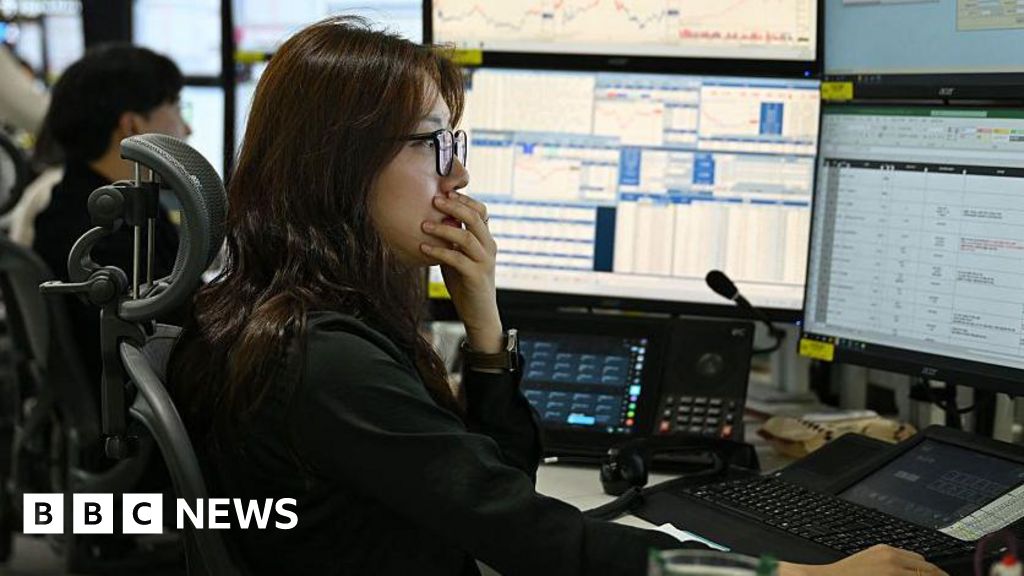
    Following the start of the strikes, major world stock markets were gripped by the escalating tensions in the Middle East, sending indices into negative territory.

    In Asia, Japan’s Nikkei stock index briefly lost 3 percent on Wednesday morning, extending its losses, amid concern that the conflict could drag on, with the Strait of Hormuz, a key waterway for oil and gas transportation, effectively shut down.

    South Korean stocks opened sharply lower on Wednesday, extending losses from the previous session’s 7 percent plunge. The country’s main bourse operator, the Korea Exchange, issued a sell-side sidecar for two consecutive days, suspending the selling of KOSPI futures.

    In Europe, the DAX Index closed at 23,790.65 points, down 847.35 points, or 3.44 percent, on Tuesday. The FTSE 100 Index closed at 10484.13 points, down 295.98 points, or 2.75 percent, while the Paris CAC 40 closed at 8103.84 points, down 290.48 points, or 3.46 percent.

    On the same day, U.S. key stock indices declined, with the S&P 500 Index closing at 6,816.63 points, down 64.99 points, or 0.94 percent, and the Nasdaq Composite Index closing at 22,516.69 points, down 232.17 points, or 1.02 percent. The Dow Jones Industrial Average closed at 48,501.27 points, down 403.51 points, or 0.83 percent.

    SOARING OIL PRICES

    What really matters for the market is oil — its implications for inflation and the broader world economy.

    A senior Iranian military advisor said on Monday that the country’s armed forces will not let any oil be exported through the Strait of Hormuz.

    Ebrahim Jabbari, an advisor to the chief commander of Iran’s Islamic Revolution Guards Corps (IRGC), made the remarks in an interview with state-run IRIB TV while warning that the country’s armed forces will take action against any movement by oil tankers through the Strait of Hormuz, a shipping route carrying one-fifth of oil consumed globally.

    Earlier, Iranian media reported that the IRGC had closed the strait to shipping, declaring the vital oil and gas waterway unsafe due to U.S. and Israeli attacks.

    “War in Iran could cause the biggest oil shock in years,” The Economist warned. The benchmark Brent crude oil contract gained 1.2 percent in early trading on Wednesday to 82.45 U.S. dollars per barrel, its highest since July 2024, and has gained 14 percent since Friday.

    Also, a widening Middle East conflict looks set to create the most significant disruption for gas markets. Iran’s neighbors, including Qatar, are some of the world’s most important producers, and the region is also a vital supply route, with 20 percent of liquefied natural gas exports traveling through the strait, analysts said.

    The U.S. think-tank Council on Foreign Relations said oil acts as a foundational feedstock, and disruptions will likely lead to high inflation and significant economic downturns.

    “Escalating conflict in the Middle East, particularly involving Iran, poses a severe threat to global energy supplies. Disruptions in the Strait of Hormuz could cause major oil price spikes, significant inflation, and knock-on effects on the global economy,” it said.

    Market traders said that oil prices will continue to hike if the war persists, with oil prices increasing 20 percent in case of a supply cut from Iran. If the strait is closed, oil prices will likely exceed 100 dollars per barrel, with India, Japan and European countries bearing the brunt.

    In the euro area, traders priced a small chance of a European Central Bank rate hike this year, and Chief Economist Philip Lane said that a prolonged war in the Middle East could cause a substantial spike in eurozone inflation and reduce economic growth.

    WORST SCENARIO

    Capital Economics, a London-based macroeconomic research consultancy, expects that a prolonged conflict affecting supply could cause oil prices to jump to around 100 dollars, potentially adding 0.6-0.7 percentage points to global inflation.

    According to Citigroup, a sustained 10-dollar-per-barrel oil shock could aggressively de-anchor inflation expectations across emerging markets, hitting countries with low foreign exchange reserves hardest. Argentina, Sri Lanka, Pakistan and Türkiye are most exposed to sudden capital outflows.

    Türkiye is highly dependent on imported oil and natural gas, with any disruption or even the perception of disruption in supply routes expected to push prices upward, directly widening the current account deficit, Mustafa Sonmez, an Istanbul-based economist, told Xinhua.

    An oil spike to 100 or 110 dollars per barrel would significantly increase Türkiye’s external financing need and exacerbate the country’s inflation rate, Sonmez said.

    Senol Babuscu, a banking expert at Ankara’s Baskent University, said inflationary pressures could emerge through both direct and indirect channels.

    “When households anticipate higher fuel and food prices, they adjust spending behavior, and businesses adjust pricing strategies,” Babuscu told Xinhua. “This can accelerate the inflationary cycle.”

    They said that the overall impact on the economy would depend on the scope and duration of any confrontation.

    The London-based ICIS (Independent Commodity Intelligence Services), a global provider of petrochemical, energy, and fertilizer market information, looked at three scenarios of the Iran crisis and their impact on the global economy.

    In the best case, where the shock is contained, there will be a mild drag on global growth and a temporarily higher inflation, but the world economy will keep expanding.

    In the medium case, which assumes persistent disruption and slower global growth, the global economy will weaken noticeably, with softer industrial output, higher inflation, and risk-averse financial markets, but still not a downturn on the scale of 2008 or 2020.

    In the worst case, where there is a sustained chokepoint and infrastructure damage, a global recession is the central outcome, driven by high energy prices, supply chain breakdowns, and collapsing consumer spending.

    For the U.S. economy, even though trade exposure to the Strait of Hormuz is limited, higher global oil prices would fuel the current cost-of-living crisis. U.S. consumers are already stretched, and gasoline prices are acutely politically sensitive going into midterm territory. Higher oil prices would also complicate the Federal Reserve’s future monetary policy path, ING Group said.

    “Every 10-dollar-per-barrel sustained rise in oil prices can knock off 10 to 20 basis points of growth over the next 12 months,” said Ajay Rajadhyaksha at Barclays, adding that if oil stayed at 120 dollars, the United States and the world economy would take a considerable hit.

    Continue Reading

  • Announcing the 2026 Gallup Exceptional Workplace Award Winners

    Announcing the 2026 Gallup Exceptional Workplace Award Winners

    The Gallup Exceptional Workplace Award criteria are more rigorous than other workplace awards. While many workplace awards require a small sample of survey participants, we ask for every employee’s opinion, and engagement winners must achieve a qualifying score that places them in the top tier of organizations. Each company measures its engagement using Gallup’s Q12 — a survey that asks employees about performance, commitment to their organization and business metrics. The organizations that meet the required criteria are among clients in Gallup’s historical database including more than 70.8 million respondents and more than 11.7 million workgroups from 230 countries.

    Applicants submit information about their strategy, leadership, performance, accountability, communication, knowledge management, development and ongoing learning. A panel of Gallup workplace scientists and experts evaluates applicants and assesses them against criteria established by the most comprehensive workplace study ever conducted. Applicants have to measure up to some of the most productive and profitable organizations in the world.

    Gallup Exceptional Workplace Award strengths applicants similarly submit information to the review panel about their strategy, training, learning and coaching efforts related to CliftonStrengths and the impact the strengths intervention has had.

    Additionally, our 2026 Winners With Distinction Award recognizes organizations for the effective work they’ve done this year implementing strategic initiatives to further engagement and help employees thrive. Naming these organizations as winners for their standout strengths and engagement stories honors their commitment and effort.

    Learn more about the Gallup Exceptional Workplace Award criteria.

    Continue Reading

  • Asia stocks fall for third day, oil edges up as markets track Iran war – BBC

    Asia stocks fall for third day, oil edges up as markets track Iran war – BBC

    1. Asia stocks fall for third day, oil edges up as markets track Iran war  BBC
    2. Seoul slump leads Asia stock rout as markets brace for energy shock  Reuters
    3. Why stocks are acting so weird about a spiraling war with Iran  CNN
    4. Dow closes down 400 points after falling as much as 1,200 points as Iran conflict volatility continues: Live updates  CNBC
    5. Markets News, March 3, 2026: Major Stock Indexes Fall But Close Well Off Early Lows as Volatility Persists Amid Iran Conflict  Investopedia

    Continue Reading

  • APAC Energy Exporters to Gain in Prolonged Iran Conflict; Processors Hit – Fitch Ratings

    1. APAC Energy Exporters to Gain in Prolonged Iran Conflict; Processors Hit  Fitch Ratings
    2. Middle East conflict could revive debt stress in emerging Asia, Moody’s warns  Profit by Pakistan Today
    3. S&P: Despite gravity of situation Israel’s economy is resilient  Globes – Israel Business News
    4. GCC states can weather short-lived war, but energy risks loom  Mettis Global
    5. S&P Flags Regional Credit Strain, Highlights UAE’s Strong Buffers  Menafn.com

    Continue Reading

  • How AI is already reshaping working conditions – UN News

    1. How AI is already reshaping working conditions  UN News
    2. AI and the distribution of income between capital and labour  CEPR
    3. The End of Work? Not Yet—Maybe Not Ever  American Enterprise Institute – AEI
    4. AI Could Lift UK Unemployment and Fail to Boost Growth, OBR Says  Bloomberg
    5. Why AI represents ‘a massive reshuffle’ for the corporate workforce  The Daily Gazette

    Continue Reading

  • PSX recovers 5,159 points after bloodbath – Newspaper

    PSX recovers 5,159 points after bloodbath – Newspaper

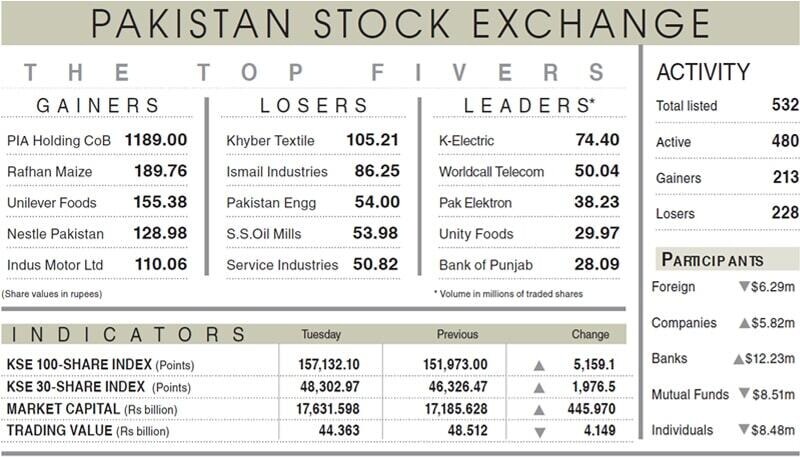
    KARACHI: Despite persistent volatility stemming from a destabilised Middle East and border tensions with Afghanistan, the Pakistan Stock Exch­ange (PSX) on Tuesday managed to stage a partial recovery as attractive valuations across the board following an unprecedented overnight bloodbath attracted fresh buying, helping the benchmark KSE-100 index regain the lost ground partially amid fluctuations.

    Topline Securities Ltd noted that after an overnight heavy sell-off, the bulls staged a confident comeback. Early weakness dragged the index to an intraday low of 714 points, but just when sentiment seemed fragile, buyers quietly returned to the arena. As investors reassessed the situation and grew confident that geopolitical tensions are unlikely to prolong, the mood shifted from fear to opportunity.

    Value hunters stepped in, accumulating fundamentally strong stocks at attractive levels. The renewed momentum lifted the index to an intraday high of 6,244 points before it closed at 157,132, up 5,159 points or 3.28pc.

    Index-heavy names, including Fauji Fertiliser, United Bank, Engro Holdings, Meezan Bank, and Mari Energies, led the charge, collectively contributing approximately 2,753 points to the index gain.

    Surging oil prices amid geopolitical tensions continue to pose economic challenges

    Amid a recovery drive, market participation weakened, with volume falling 4.79pc to 770 million shares and traded value dipping 8.55pc to Rs44.3bn. K-Electric dominated the volume leaders’ board, with over 74 million shares traded.

    Ali Najib, Deputy Head of Trading at Arif Habib Ltd (AHL), said the market staged a partial recovery following the previous session’s historic decline.

    On Monday, the index posted its largest-ever single-day decline, shedding 16,089 points or 9.57pc to close at 151,973 points.

    The market opened on a strong footing, gaining more than 4,000 points shortly after trading began. However, residual selling pressure and redemption-driven activity from the prior session weighed on momentum, causing the index to surrender early gains. At one point, the KSE-100 slipped into negative territory, touching an intraday low of 151,259 points, down 714 points.

    In the latter half of the session, renewed buying interest emerged, particularly in blue-chip stocks, as value hunters capitalised on attractive valuations. Broad-based accumulation helped the index rebound sharply, providing much-needed relief to investors.

    Geopolitical developments will determine whether the rebound proves to be merely a temporary “dead-cat” bounce or the beginning of a sustainable reversal from the recent bearish trend. Continued escalation could prolong volatility and exert further pressure on investor sentiment. Conversely, any meaningful signs of stability or de-escalation may help restore confidence, reduce risk premiums, and pave the way for a gradual recovery in the equity market.

    The closure of the Strait of Hormuz, which accounts for 20 per cent of the world’s oil supply, and shutdowns of oil and gas facilities across the Middle East amid ongoing attacks, fuelled oil prices to their highest peaks for the second straight session on Tuesday, as there seems to be no imminent end to the conflict.

    The government decided to continue passing on the impact of rising global oil prices to consumers under the existing fortnightly adjustment mechanism to avoid a fiscal burden. A meeting of the newly created 18-member cabinet committee on Monday, constituted by the prime minister to monitor petroleum prices in view of the emerging regional situation, was informed that petrol and diesel stocks in the country were sufficient for almost 30 days. However, Qatar Gas had shut its LNG facility after it came under attack.

    Analysts warned that prolonged shipping disruptions and higher energy import costs could strain Pakistan’s foreign exchange reserves, adding another layer of risk to an already fragile economic outlook.

    Published in Dawn, March 4th, 2026

    Continue Reading

  • Renesas Expands Auto MCU Portfolio with 28nm RH850/U2C for Vehicle Control and Automotive Safety Applications

    Renesas Expands Auto MCU Portfolio with 28nm RH850/U2C for Vehicle Control and Automotive Safety Applications

    • Latest RH850 family addition building on 4 billion+ units shipped since 2013
    • Rich connectivity and advanced security for next gen E/E architectures
    • Supports latest automotive standards with easy ECU migration and upgrades
    • Lower active and standby power, reducing ECU power demand

    TOKYO, Japan ― Renesas Electronics Corporation (TSE:6723), a premier supplier of advanced semiconductor solutions, today announced the RH850/U2C, a new 32-bit automotive microcontroller (MCU) built on a 28nm process. With rich communication interface support and advanced security, the MCU targets a diverse range of automotive applications, including chassis and safety systems for passenger cars and motorcycles, battery management systems (BMS) and body control functions such as lighting and motor control, and other general-purpose ASIL D applications.

    The new device extends Renesas’ popular RH850 lineup as a low-end option, complementing the high-end RH850/U2B and mid-range RH850/U2A products. The RH850/U2C combines up to four RH850 CPU cores operating at up to 320 MHz (including two lockstep cores), with up to 8 MB of on-chip flash memory. Developers currently using RH850/P1x or RH850/F1x devices can smoothly transition to the new MCU to meet the requirements of the latest E/E architectures.

    Communication Interfaces for Today’s and Next-Generation Systems

    The RH850/U2C operates with interfaces designed for modern E/E architectures, such as Ethernet 10base-T1S , Ethernet TSN (1Gbps/100Mbps), CAN-XL, and I3C. It also maintains full compatibility with commonly used interfaces today, such as CAN-FD, LIN, UART, CXPI, I²C, I²S, and PSI5. This comprehensive interface support enables mixed operation with existing ECUs and facilitates a smooth, phased migration across generations. As more vehicle networks transition to domain- and zone-based architectures, the RH850/U2C provides flexible system configuration and scalability, reducing network design complexity.

    Robust Functional Safety and Cybersecurity Features

    The MCU supports functional safety up to ASIL D, conforming to ISO 26262. To meet modern cybersecurity requirements, the device complies with the latest ISO/SAE 21434 standard and supports cryptographic algorithms ranging from post-quantum cryptography (PQC) to those mandated by current Chinese and other international regulations. Its dedicated hardware accelerators provide high throughput by offloading cryptographic processing and reducing CPU load.

    Power-Optimized MCU Architecture

    Built on a proven 28 nm manufacturing process, the RH850/U2C consumes significantly lower power in both active and standby modes. A dedicated standby mode further reduces power usage during deep stop and intermittent operation. These low-power modes increase power-design margins and reduce thermal demands so that systems remain compliant as environmental regulations tighten.

    “With modern ECUs constantly evolving through software updates and new features, it’s essential that system robustness and operational efficiency co-exist seamlessly,” said Satoshi Yoshida, Vice President of the High-Performance Computing MCU Division at Renesas.

    “The RH850/U2C combines performance, a rich feature set, and compliance with key industry standards to meet the requirements of next-generation ECUs. This is exactly the kind of platform our customers are looking for to build reliable and scalable automotive systems.”

    “Renesas’ RH850 MCU family has long supported our systems with proven reliability, and we’re pleased to see the addition of the RH850/U2C further strengthen its automotive lineup,” said Christoph Wenger, Chief Expert Semiconductor at Vehicle Motion at Bosch. “The 28nm MCUs from Renesas offer strong performance and quality, and we look forward to continuing our collaboration.”

    Full Development Support

    The RH850/U2C is supported by a comprehensive development environment designed to reduce time to market. Developers can use state-of-the-art compilers and IDEs, together with automotive-qualified software packages from Renesas and its ecosystem partners. These solutions meet the highest functional safety requirements and support ISO 26262 up to ASIL D. For fast evaluation and project startup, Renesas offers a dedicated RH850/U2C Starter Kit.

    Renesas plans to showcase a demonstration using the RH850/U2C at embedded world 2026, in Nuremberg, Germany, from March 10-12, at the Renesas booth 1-234 (Hall 1, Stand 234).

    Availability

    The RH850/U2C is available today. Details can be found at:
    https://www.renesas.com/products/rh850-u2c

    About Renesas Electronics Corporation

    Renesas Electronics Corporation (TSE: 6723) empowers a safer, smarter and more sustainable future where technology helps make our lives easier. A leading global provider of microcontrollers, Renesas combines our expertise in embedded processing, analog, power and connectivity to deliver complete semiconductor solutions. These Winning Combinations accelerate time to market for automotive, industrial, infrastructure and IoT applications, enabling billions of connected, intelligent devices that enhance the way people work and live. Learn more at renesas.com. Follow us on LinkedIn, Facebook, X, YouTube, and Instagram.

    (Remarks) All names of products or services mentioned in this press release are trademarks or registered trademarks of their respective owners.


    The content in the press release, including, but not limited to, product prices and specifications, is based on the information as of the date indicated on the document, but may be subject to change without prior notice.


    Continue Reading

  • Steinhauser, S. COVID–19 as a driver for digital transformation in healthcare. in (eds. Glauner, P., Plugmann, P. & Lerzynski, G.) Digitalization in Healthcare: Implementing Innovation and Artificial Intelligence, 93–102 (Springer International Publishing, 2021).

  • China Internet Network Information Center. The 55th Statistical Report on China’s Internet Development. https://www.cnnic.net.cn (2025).

  • Statista. Online Pharmacy – China. https://www.statista.com/outlook/hmo/digital–health/digital–treatment–care/digital–care–management/online–pharmacy/china (2024).

  • Ginsberg, J. et al. Detecting influenza epidemics using search engine query data. Nature 457, 1012–1014 (2009).

    Google Scholar 

  • Culotta, A. Towards detecting influenza epidemics by analyzing Twitter messages. In Proc. First Workshop on Social Media Analytics, 115–122 (Association for Computing Machinery, 2010).

  • Santillana, M. et al. Cloud–based electronic health records for real–time, region–specific influenza surveillance. Sci. Rep. 6, 25732 (2016).

    Google Scholar 

  • Lazer, D., Kennedy, R., King, G. & Vespignani, A. The parable of Google Flu: traps in big data analysis. Science 343, 1203–1205 (2014).

    Google Scholar 

  • Pivette, M., Mueller, J. E., Crépey, P. & Bar–Hen, A. Drug sales data analysis for outbreak detection of infectious diseases: a systematic literature review. BMC Infect. Dis. 14, 604 (2014).

    Google Scholar 

  • World Health Organization. Influenza (seasonal). https://www.who.int/news–room/fact–sheets/detail/influenza–(seasonal) (2025).

  • Chawla, D. et al. Predictors of seeking care for influenza–like illness in a novel digital study. Open Forum Infect. Dis. 10, ofac675 (2023).

    Google Scholar 

  • Ali, S. T. et al. Influenza seasonality and its environmental driving factors in mainland China and Hong Kong. Sci. Total Environ. 818, 151724 (2022).

    Google Scholar 

  • Orr, A. et al. A systematic review and meta–analysis on the association between PM2.5 exposure and increased influenza risk. Front. Epidemiol. 5, 1475141 (2025).

    Google Scholar 

  • State Administration for Market Regulation of China. Measures for the supervision and administration of online drug sales. https://www.gov.cn/gongbao/content/2022/content_5717002.htm (2022).

  • Hayward, A. C. et al. Comparative community burden and severity of seasonal and pandemic influenza: results of the Flu Watch cohort study. Lancet Respir. Med. 2, 445–454 (2014).

    Google Scholar 

  • Doherty–Torstrick, E. R., Walton, K. E. & Fallon, B. A. Cyberchondria: parsing health anxiety from online behavior. Psychosomatics 57, 390–400 (2016).

    Google Scholar 

  • Carneiro, H. A. & Mylonakis, E. Google Trends: a web–based tool for real–time surveillance of disease outbreaks. Clin. Infect. Dis. 49, 1557–1564 (2009).

    Google Scholar 

  • Sekalala, S. & Niezgoda, A. Algorithmic futures: the life and death of Google flu trends. Med. Anthropol. Theory 6, 54–79 (2019).

    Google Scholar 

  • Sugawara, T. et al. Real–time prescription surveillance and its application to monitoring seasonal influenza activity in Japan. J. Med. Internet Res. 14, e14 (2012).

    Google Scholar 

  • Patwardhan, A. & Bilkovski, R. Comparison: flu prescription sales data from a retail pharmacy in the US with Google Flu Trends and US ILINet (CDC) data as flu activity indicator. PLoS ONE 7, e43611 (2012).

    Google Scholar 

  • Centers for Disease Control and Prevention Value of pharmacy–based influenza surveillance – Ontario, Canada, 2009. MMWR Morb. Mortal. Wkly. Rep. 62, 401–404 (2013).

    Google Scholar 

  • Dalziel, B. D. et al. Urbanization and humidity shape the intensity of influenza epidemics in U.S. cities. Science 362, 75–79 (2018).

    Google Scholar 

  • Yang, J. et al. The impact of urbanization and human mobility on seasonal influenza in northern China. Viruses 14, 2563 (2022).

    Google Scholar 

  • Chen, Y. et al. Epidemiological features and time–series analysis of influenza incidence in urban and rural areas of Shenyang, China, 2010–2018. Epidemiol. Infect. 148, e29 (2020).

    Google Scholar 

  • Sugihara, G. et al. Detecting causality in complex ecosystems. Science 338, 496–500 (2012).

    Google Scholar 

  • Qin, C., Chen, L., Cai, Z., Liu, M. & Jin, L. Long short–term memory with activation on gradient. Neural Netw. 164, 135–145 (2023).

    Google Scholar 

  • Vaswani, A. et al. Attention is all you need. Adv. Neural Inf. Process. Syst. 30, 5998–6008 (2017).

    Google Scholar 

  • Wesolowski, A., Buckee, C. O., Engø–Monsen, K. & Metcalf, C. J. E. Connecting mobility to infectious diseases: the promise and limits of mobile phone data. J. Infect. Dis. 214, S414–S420 (2016).

    Google Scholar 

  • Meituan. Meituan Health surpasses 300 million cumulative transaction users. https://www.meituan.com/news/NN240812058007576 (2024).

  • Meituan. Meituan Health captures 70% of online pharmacy market share. https://www.toutiao.com/article/7515308862812766720/ (2024).

  • Oude Munnink, B. B. et al. The next phase of SARS–CoV–2 surveillance: real–time molecular epidemiology. Nat. Med. 27, 1518–1524 (2021).

    Google Scholar 

  • Karthikeyan, S. et al. Wastewater sequencing reveals early cryptic SARS–CoV–2 variant transmission. Nature 609, 101–108 (2022).

    Google Scholar 

  • The Insight Partners. Digital Pharmacy Market Outlook and Strategic Insights by 2030. https://www.theinsightpartners.com/reports/digital–pharmacy–market (2025).

  • Polaris Market Research. Digital Pharmacy Market Size, Share, Trends, Industry Analysis Report, 2024–2032. https://www.polarismarketresearch.com/industry–analysis/digital–pharmacy–market (2025).

  • Statcounter. Search Engine Market Share China. https://gs.statcounter.com/search–engine–market–share/tablet/china (2024).

  • Shen, R. et al. Enhancing spatiotemporal influenza prediction in China: a multi–output LASSO machine learning model integrating web–based search data. Intell. Med. 5, 310–317 (2025).

  • Wang, C. & Yan, J. An inversion of the constitution of the Baidu Migration Scale Index. J. Univ. Electron. Sci. Technol. China 50, 616–626 (2021).

    Google Scholar 

  • Guo, F. et al. Ozone as an environmental driver of influenza. Nat. Commun. 15, 3763 (2024).

    Google Scholar 

Continue Reading

  • Stock market news for March 3, 2026

    Stock market news for March 3, 2026

    Traders work on the floor at the New York Stock Exchange (NYSE) in New York City, U.S., March 3, 2026. REUTERS/Brendan McDermid

    Brendan Mcdermid | Reuters

    Stocks had another wild session on Tuesday as concerns around a prolonged U.S.-Iran conflict rattled markets, though comments from President Donald Trump appeared to somewhat assuage those worries.

    The Dow Jones Industrial Average lost 403.51 points, or 0.83%, and ended at 48,501.27. The S&P 500 slipped 0.94% to close at 6,816.63, while the Nasdaq Composite shed 1.02% to settle at 22,516.69. At their lows of the day, the S&P 500 lost 2.5%, and the Nasdaq was down about 2.7%. The 30-stock Dow was down more than 1,200 points, or around 2.6%, at its nadir.

    Stock Chart IconStock chart icon

    Dow Jones Industrial Average, 2-day

    Trump said Tuesday afternoon that the U.S. Navy will escort tankers through Strait of Hormuz, if necessary.

    “No matter what, the United States will ensure the FREE FLOW of ENERGY to the WORLD,” Trump said in a Truth Social post. “The United States’ ECONOMIC and MILITARY MIGHT is the GREATEST ON EARTH — More actions to come.”

    Brent crude oil, the global benchmark, settled up 4.71%. That was a far cry from its high of the day and follows a 6% spike Monday. WTI crude also came off its high and settled up 4.68%. It also posted a 6% gain in the previous session. Both had been up more than 9%.

    The day’s initial jump in energy prices had boosted Treasury yields on fears it may cause inflation to flare back up, just as U.S. investors are banking on more Federal Reserve rate cuts to boost the economy. However, yields later pared their advance along with oil prices.

    Trade concerns had worsened after the Iranian Revolutionary Guard commander said the Strait of Hormuz — the world’s most vital transit route for crude oil — is closed and that Iran would set ablaze ships attempting the route. Trump’s warning that the conflict could continue for more than four weeks also exacerbated jitters. There were other signs of the conflict deepening as it enters its fourth day:

    • The U.S. embassy in Riyadh, Saudi Arabia’s capital was hit by drones as Iran upped its attacks on the country. The State Department ordered evacuations of personnel from Bahrain, Iraq and Jordan.
    • Tehran-backed Hezbollah attacked Tel Aviv with missiles and drones.
    • Concerns are growing about how long Gulf states like the UAE can hold off the barrage of Iran missiles and drones with their air defenses.

    “I do think the possibility of a more prolonged mission can weigh on markets for the next several weeks,” Jeffrey O’Connor, U.S. head of equity market structure at Liquidnet, said to CNBC, citing the possibility of high oil prices becoming sticky and investors having to navigate future moves in inflation, yields and interest rate cut expectations.

    “Historically, the U.S. market is able to overlook a geopolitical shock like this, but that said, the Strait of Hormuz is closed,” he continued. Given that about 20% of the world’s oil consumption moves through the Strait, O’Connor added that its continued closure “can’t be overlooked.”

    Each of the S&P 500 sectors were in the red on Tuesday. Materials and industrials saw the biggest losses on fears that higher oil prices and borrowing costs could weigh on the U.S. economy.

    Several major tech stocks, such as Nvidia, that led the Monday intraday comeback were lower on Tuesday. U.S. memory stocks were also under pressure and followed the notable declines seen in memory chip stocks in South Korea. Additionally, shares of Blackstone fell 3.8% after the Financial Times reported that its private credit fund saw $1.7 billion in net outflows in the first quarter.

    There were little places to hide Tuesday with gold prices also sharply lower after Monday’s gains. The CBOE Volatility index, Wall Street’s fear gauge, jumped to its highest levels since November.

    Continue Reading

  • Norsk Hydro’s Qatar Aluminum Plant to Shut Down After Iran Attacks Cut off Gas Supply – WSJ

    1. Norsk Hydro’s Qatar Aluminum Plant to Shut Down After Iran Attacks Cut off Gas Supply  WSJ
    2. Why QatarEnergy’s LNG production halt could shake up global gas markets  Al Jazeera
    3. Gas Prices Surge as Qatar Shuts World’s Largest LNG Export Plant  Bloomberg
    4. Qatar LNG, Saudi refinery, Israeli oil, gas fields down due to Mideast strikes  Reuters
    5. Govt mulls options to tackle impending gas crisis  Geo News

    Continue Reading