Category: 3. Business

  • In Australian coal miners’ woes, an energy security warning for India

    In Australian coal miners’ woes, an energy security warning for India

    India’s push to build more blast furnaces to meet its growing demand for steel raises a critical concern: It will result in increased imports of metallurgical coal. Industry leaders highlighted the risks of such import reliance at the Indian Steel Association’s Coking Coal Summit in September. 

    India is currently dependent on imports for around 90% of its metallurgical coal needs, and in the first eight months of 2025, nearly half of it came from a single country—Australia.

    Statements from Australian coal miners have indicated that the energy security risks for India are on the rise.

    Australia is by far the world’s biggest exporter of metallurgical coal—which includes coking coal and pulverised coal injection, both used in blast furnaces—with most of its production based in Queensland. However, data analytics firm Wood Mackenzie, warns that Australia requires over 100 million tonnes per annum of new hard coking coal (HCC) mine capacity by 2050 to avoid a supply shortfall. 

    factor threatening to worsen this shortfall is Queensland’s contentious progressive royalty regime, introduced in 2022, under which royalty rates increase with the price of coal.

    In recent weeks, major Australian met coal miners reported their financial results, taking the opportunity to highlight how Queensland’s royalty rates are deterring investment in new mine capacity. 

    Long-term met coal investment in doubt

    Two of Australia’s key suppliers to India—BHP and Whitehaven Coal—have been vocal in their criticism of Queensland’s royalty regime. 

    BHP, the world’s largest mining company and Australia’s leading met coal exporter through its BHP-Mitsubishi Alliance (BMA) joint venture, is a critical supplier to Indian steelmakers. A previous company statement disclosed that 40% of the company’s met coal exports go to India.

    On the royalty regime, BHP has made its position clear. In its latest company statement, CEO Mike Henry said BHP will “not invest any growth capital in Queensland, both for cost and risk”, adding that the royalty hike means the state is “no longer investible” for long-term projects. 

    In its most recent Economic and Commodity Outlook, the company reinforced this position, noting that “new seaborne supply will increasingly be challenged as Queensland’s royalty and approvals environment remain unconducive to long-life capital investment”.

    Paul Flynn, Whitehaven’s CEO, has voiced similar concerns, emphasising that Queensland’s royalty regime is already diverting capital into New South Wales (NSW). However, with production in NSW dominated by thermal coal, this shift risks restricting future investment in met coal capacity—a concern for India.

    Another met coal producer in Australia, Peabody, also hit out at the royalty regime. In late August, its chief financial officer Mark Spurbeck said, “With some steelmaking coal producers in Queensland struggling and even failing at current prices, the royalty structure is out of touch with industry fundamentals.”

    Meanwhile, the Queensland government has ruled out changes to the coal royalty scheme.

    Solutions for India—beyond Australian coal

    According to S&P Global, India received 54.5 Mt of coking coal in the January-August 2025 period. Of this, Australia supplied 26.4 Mt (49%), while Russia supplied 13.3 Mt (24%), the US 6.7 Mt (12%), and Mozambique 4.2 Mt (8%).

    Aware of the mounting energy security risks, India is exploring new routes to diversify its coking coal supply. Since 2020, Russian coking imports to India have surged from 4 Mt (around 7%)  to 16 Mt (22%) in 2024—a four-fold increase in as many years. Over the same period, Australia’s share of imports fell by 40%, while other countries, such as the US, Mozambique, and South Africa, strengthened their presence in the Indian market. And though India is broadening its supply base, obstacles remain. For instance, new trade routes are not always viable. Take the case of JSW Steel, which had to recently pause its plans to source coking coal from Mongolia due to logistical hurdles.

    To manage supply risks, India’s steelmakers are investing in overseas mines while also scaling domestic production under the government’s Mission Coking Coal. The government initiative has led to an increase in production from 44.79 Mt in FY21 to 66.47 Mt in FY25, with an aim of 140 Mt by 2030. However, very little of the current domestic production meets industrial specifications, notes a new report by EY Parthenon and the Indian Steel Association. As a result, overall these steps will help reduce dependence on Australia but not eliminate it completely.

    In the long run, India must cut its reliance on coking coal and consider alternative technology routes. The government is already developing a scheme to incentivise secondary steel producers to recycle scrap steel in electric arc furnaces (EAF), which can reduce reliance on met coal. Further, India can invest in green hydrogen-based direct reduced iron (H₂-DRI) in the longer-term.

    The future use of domestically produced green hydrogen has the potential to be a major energy security windfall for India’s fast-growing steel sector.

    This article was first published in The Hindu Business Line.
    Continue Reading

  • Staffordshire teens create app to tackle mental health stigma

    Staffordshire teens create app to tackle mental health stigma

    Ethan Saundersin Blythe Bridge

    BBC Six teenage girls in black school uniforms which have a blue and white crest in all smiling and looking at the camera.BBC

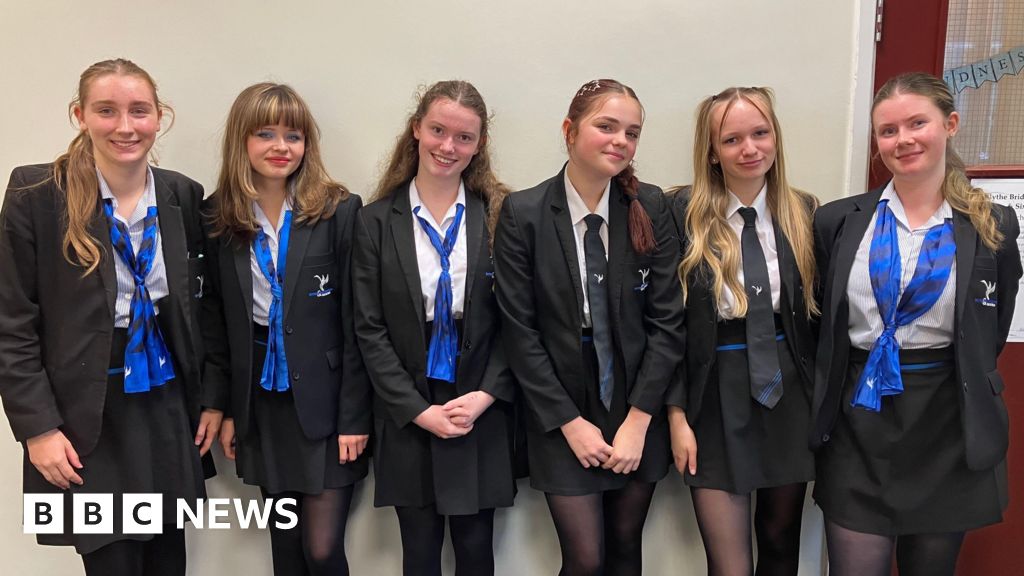
    The team of six who came up with the idea for Mindful Mondays are: Sophie Hodgkinson, Anneliese Costain, Tilly Hyatt, Lucie Woodworth, Paris Bell and Lydia Booth

    A group of students are having an app developed to help break down the barriers around mental health for young people.

    It comes after the teenagers, from Blythe Bridge High School in the Staffordshire Moorlands, won a competition put on by suicide prevention charity the Oli Leigh Trust.

    Their app, Mindful Mondays, hopes to break down the barriers that young people face around their mental health.

    Sophie Hodgkinson, who is 15 and one of the female students behind the idea, said: “A lot of people struggle with it silently and don’t feel like it’s ok to talk about it. There’s a lot of negative stigma around it.”

    Tilly Hyatt, also in the team of six, felt it was better the idea came from young people as adults might not fully understand the pressures facing teenagers.

    She said: “We know what causes the stress and how to help it.”

    The app hopes to offer a safe space for students to talk anonymously about their mental health, while also giving them challenges to help improve it.

    “It will build towards having the positive foundation, so people can be happier, focus better in school and help in small increments to have better mental health in the future,” said Anneliese Costain, another member of the team.

    A man with short brown hair, in a grey suit with a black tie and waistcoat.

    Kristopher Knight teaches at the school and helped bring the Oli Leigh Trust project to the school as part of the PSHE curriculum

    Kristopher Knight teaches science at the school and feels issues with mental health are one of the biggest problems facing schools.

    He said: “We are seeing students not attending lessons and a lot of this is about a lack of provisions in and out of schools, because of external factors such as funding.”

    “We are not professionals [when it comes to mental health], we are there to support students but our main priority is being in the classroom to teach them,” he added.

    Asked about what he thought of the idea the girls had come up, with Mr Knight said he was proud of what they had achieved.

    “Any support we can throw out to our students, and any small things they can do themselves or talk to parents about can only be a positive thing,” he added.

    “I couldn’t think of anything better to champion than young people’s mental health.”

    Continue Reading

  • WFW advises Ovolo on strategic APAC franchise partnership with Wyndham

    WFW advises Ovolo on strategic APAC franchise partnership with Wyndham

    Watson Farley & Williams (“WFW”) advised boutique hotelier Ovolo Group (“Ovolo”) on a strategic partnership with Wyndham Hotels & Resorts (“Wyndham”) that will see five Ovolo hotels join the Wyndham portfolio, and Wyndham rolling the brand out in Asia Pacific.

    Under the agreement, Ovolo retains brand and operational control of the hotels whilst exclusively partnering with Wyndham for distribution and to pursue franchised growth opportunities throughout the Asia Pacific region. The five hotels – one in Hong Kong and four across Australia – will be integrated into Wyndham’s global sales, marketing and distribution platforms, including its 120 million-member Wyndham Rewards loyalty programme.

    Hong Kong-based Ovolo is an independent hospitality company known for its innovation and disruption, owning and operating a collection of award-winning and individually designed lifestyle hotels and serviced apartments. Wyndham Hotels & Resorts is the world’s largest hotel franchising group by number of hotels, with over 9,200+ hotels in over 95 countries on 6 continents.

    The cross-border WFW team that advised Ovolo was led by Sydney Hotels & Hospitality Partner Robert Williams, supported by Sydney Corporate and M&A Consultant Chris Greiner and Singapore Corporate Associate Meryl Tan.

    Robert commented: “We are delighted to have supported Ovolo on this innovative and transformative transaction, which reflects the growing appetite for experiential travel and the increasing relevance of lifestyle brands in the global hospitality landscape. This transaction highlights the focus even the biggest global players have on genuine lifestyle brands and platforms, and WFW’s continued commitment to supporting hospitality entrepreneurs and ventures break the mould across the Asia Pacific region and beyond”.

    Continue Reading

  • Proposed Regulatory Framework Update for Virtual Asset Staking in the ADGM : Clyde & Co

    Proposed Regulatory Framework Update for Virtual Asset Staking in the ADGM : Clyde & Co

    The Financial Services Regulatory Authority (FSRA) of Abu Dhabi Global Market (ADGM) has released Consultation Paper No. 10 of 2025, introducing a dedicated regulatory framework for the staking of virtual assets. This proposal marks a significant evolution in ADGM’s approach, transitioning from initial recognition of staking to the establishment of a formal regulatory perimeter around such activities. By focusing on staking, the FSRA aims to enhance ADGM’s position as a forward-looking jurisdiction for digital asset innovation, while ensuring robust oversight of emerging virtual asset functions.

    In December 2024, the FSRA signalled its intent to regulate staking by raising key questions around the associated risks in its consultation papers. These initial papers concentrated on foundational issues, such as defining operational models for staking businesses. However, they did not address broader regulatory considerations; specifically, the principles that trigger oversight and the obligations placed on authorised persons conducting staking activities.

    Consultation Paper No. 10 of 2025 seeks to close these gaps by proposing a set of regulatory triggers and requirements for entities that stake virtual assets on behalf of their clients.

    What triggers regulatory oversight?

    Under the proposals, regulatory oversight is triggered when staking activities involve accepted virtual assets within the scope of regulated operations. Authorised Persons who hold or control virtual assets for the purpose of staking are required to obtain a Financial Services Permission for either custody or managing assets. Virtual Asset Custodians may only stake client assets upon receiving explicit instructions from the client. If such custodians intend to exercise discretion in staking decisions, they must secure a Financial Services Permission for managing assets. Conversely, Virtual Asset Managers are permitted to stake client virtual assets on a discretionary basis, provided they are responsible for selecting appropriate staking opportunities and ancillary service providers.

    Areas outside the scope of the proposal

    The proposed framework draws clear boundaries around what falls outside the scope of regulatory oversight. Solo staking remains unregulated, as participants act solely on their own account without any form of intermediation. Service providers that deliver technical infrastructure to support staking are also excluded, provided they do not hold or control virtual assets. Additionally, the regime does not extend to other yield-generating activities such as liquidity mining, yield farming, or the issuance of liquid staking tokens which are also typically referred to as staking. Its focus is strictly limited to arrangements involving participation in blockchain validation under a proof-of-stake consensus mechanism.

    Regulatory obligations

    The proposal also sets out a series of regulatory obligations for authorised persons engaging in staking activities involving client virtual assets. These entities must:

    1. comply with all existing applicable requirements under Chapter 17 of COBS and AML rules
    2. disclose material risks to clients in a clear, fair, and non-misleading manner
    3. conduct due diligence on staking service providers and smart contracts
    4. enter into written agreements with staking service providers
    5. provide client reporting
    6. obtain FSRA non-objection

    This paper signals a turning point in how staking is treated under regulatory frameworks. It’s a prime opportunity for firms to align early with supervisory expectations and shape compliant, scalable staking models before the market matures.

    Who should care?

    • VA Custodians
    • VA Managers
    • Exchanges
    • Staking Infrastructure Providers
    • DeFi platforms

    What to watch and next steps

    It is imperative that clients closely review the supporting guidance to be issued by the FSRA on implementation of this proposal, as it will clarify critical nuances in regulatory oversight. In particular, forthcoming guidance on staking-specific disclosures will be essential for ensuring compliance and shaping operational responses. Understanding these details will help entities navigate the framework in the future.

    At present, clients should begin by evaluating whether they meet any of the regulatory thresholds outlined in the framework. From a commercial standpoint, firms engaged in or planning to engage in these activities will find new opportunities emerging. However, a clear understanding of their eventual obligations to the FSRA will be essential to ensure full compliance and avoid regulatory pitfalls.

    ADGM’s updated regulatory framework signals a broader shift toward functional regulation; focusing on what digital assets do, rather than simply what they are. With the inclusion of specific staking activities under its oversight, the FSRA is reinforcing ADGM’s position as a forward-looking jurisdiction committed to shaping the future of the digital asset ecosystem.

    Our team is advising clients across sectors on regulatory compliance, infrastructure, and risks. If you would like to discuss how these proposed reforms could affect your business or how to turn regulatory change into competitive edge please get in touch with Tom Bicknell or Barkha Doshi.

    Continue Reading

  • ASML reports €7.5 billion total net sales and €2.1 billion net income in Q3 2025

    This document and related discussions contain statements that are forward-looking within the meaning of the U.S. Private Securities Litigation Reform Act of 1995, including statements with respect to plans, strategies, expected trends, including trends in the semiconductor industry and end markets, expected trends in product mix and geography, and business environment trends, expected growth in the semiconductor industry by 2030, statements with respect to AI including goals for use of AI in our portfolio and the expected impact of AI demand on our business, industry and results, statements with respect to EUV adoption, our expectation that lithography will remain at the heart of customer innovation, expected increase in critical lithography exposures, statements with respect to our product portfolio, our expectation that customer fundamentals remain strong, expected reduction in level of business uncertainty, expected demand, shipments, bookings, outlook of market segments, outlook and expected financial results including outlook and expected results for Q4 2025, including net sales, Installed Base Management sales, gross margin, R&D costs, SG&A costs, outlook and expected financial results for full year 2025, including expected full year 2025 total net sales and growth, gross margin, and estimated annualized effective tax rate and expected IBM sales, expectation of a very strong fourth quarter, and expectations with respect to EUV and DUV sales in 2026, expectations with respect to total 2026 net sales, statements made at our 2024 Investor Day, including modelled revenue and gross margin opportunity for 2030, our expectation to continue to return significant amounts of cash to shareholders through growing dividends and share buybacks, expectations with respect to our 2022-2025 share buyback program and plan to announce a new share buyback program in January 2026, and statements with respect to dividends, statements with respect to expected performance and capabilities of our systems and customer plans, statements with respect to our ESG strategy and commitments and other non-historical statements. You can generally identify these statements by the use of words like “may”, “expect”, “will”, “could”, “should”, “project”, “believe”, “anticipate”, “expect”, “plan”, “estimate”, “forecast”, “potential”, “intend”, “continue”, “target”, “future”, “progress”, “goal”, “model”, “opportunity”, “commitment” and variations of these words or comparable words. These statements are not historical facts, but rather are based on current expectations, estimates, assumptions, plans and projections about our business and our future financial results and readers should not place undue reliance on them. Forward-looking statements do not guarantee future performance and involve a number of substantial known and unknown risks and uncertainties. These risks and uncertainties include, without limitation, risks relating to customer demand, semiconductor equipment industry capacity, worldwide demand for semiconductors and semiconductor manufacturing capacity, lithography tool utilization and semiconductor inventory levels, general trends and consumer confidence in the semiconductor industry, the impact of general economic conditions, including the impact of the current macroeconomic and geopolitical environment on the semiconductor industry, semiconductor market conditions, the ultimate impact of AI on our industry and business and semiconductor demand, the impact of inflation, interest rates, wars and geopolitical developments, the impact of pandemics, the performance of our systems, the success of technology advances and the pace of new product development and customer acceptance of and demand for new technologies and products, our production capacity and ability to adjust capacity to meet demand, supply chain capacity, timely availability of parts and components, raw materials, critical manufacturing equipment and qualified employees, our ability to produce systems to meet demand, the number and timing of systems ordered, shipped and recognized in revenue, risks relating to fluctuations in net bookings and our ability to convert bookings into sales, the risk of order cancellation, delays or push outs and restrictions on shipments of systems, including ordered systems, under export controls, risks relating to the trade environment, import/export and national security regulations and orders and their impact on us, including the impact of recent and future changes in export regulations and the impact of such regulations on our ability to obtain necessary licenses and to sell our systems and provide services to certain customers, the impact of the tariff announcements, exchange rate fluctuations, changes in tax rates, available liquidity and free cash flow and liquidity requirements, our ability to refinance our indebtedness, available cash and distributable reserves for, and other factors impacting, dividend payments and share repurchases, the number of shares that we repurchase under our share repurchase program, our ability to enforce patents and protect intellectual property rights and the outcome of intellectual property disputes and litigation, our ability to meet ESG goals and commitments and execute our ESG strategy, other factors that may impact ASML’s business or financial results, and other risks indicated in the risk factors included in ASML’s Annual Report on Form 20-F for the year ended December 31, 2024 and other filings with and submissions to the US Securities and Exchange Commission. These forward-looking statements are made only as of the date of this document. We undertake no obligation to update any forward-looking statements after the date of this report or to conform such statements to actual results or revised expectations, except as required by law.

    Continue Reading

  • MHI Thermal Systems Wins 2025 GOOD DESIGN AWARD for Hyper Multi LXZ Series of Building-Use Multi-Split Air-Conditioners in Japan

    MHI Thermal Systems Wins 2025 GOOD DESIGN AWARD for Hyper Multi LXZ Series of Building-Use Multi-Split Air-Conditioners in Japan

    Tokyo, October 15, 2025 – Mitsubishi Heavy Industries (MHI) Thermal Systems, Ltd., a part of Mitsubishi Heavy Industries Group, won a 2025 GOOD DESIGN AWARD (organized by the Japan Institute of Design Promotion) for its proprietarily developed Hyper Multi LXZ Series of building-use multi-split air-conditioners for buildings in Japan.

    Established in 1957, GOOD DESIGN AWARD is Japan’s leading commendation system. Eligible for application are products, architecture, application and software, projects and initiatives that utilize design and more. Through this system, many people come in contact with “good design” and appreciate their value. The G-Mark, a symbol of award, is widely familiar as a representation of excellent design.

    The Hyper Multi LXZ Series features a new design with a distinctive blue ornamentation and flat stucco-white panels. The refined design has a neat, unified look when multiple units are installed in a row, coordinates easily with a variety of installation environments and blends in with urban spaces. Environmental impact is reduced through the use of R32, a refrigerant with approximately one third of the GWP(Note1) of the previous R410A refrigerant. Energy efficiency has been improved through the use of a new compressor and a redesign of the air flow path. Additionally, the structure comprising small units with a single fan and the high-density heat exchanger reduce the area required for installation by approximately 28%.

    New features include Variable Temperature Capacity Control+, which conserves energy without sacrificing comfort, and a hot gas bypass defrost mode that minimizes the decrease in room temperature typically associated with conventional defrost operation(Note2). There is also dedicated equipment to meet safety regulations, including a shutoff valve that can be connected to multiple indoor units, contributing to lower installation costs.

    MHI Thermal Systems aims to build on this success and carry out further technological development tailored to each customer to provide air conditioning solutions that meet a diverse range of needs.

    • 1GWP: global warming potential. CO2 is assigned a GWP of 1. The lower the GWP factor, the less impact on the environment.
    • 2A mode used to remove frost that builds up on the heat exchanger of an outdoor air conditioning unit during operation in heating mode. Depending on the conditions of the building, this can temporarily lower the room temperature as warm air stops being supplied through the indoor unit during operation in this mode.

    Continue Reading

  • Increased exit activity and continuing focus in AI sees Global VC investment climb to US$120 billion in Q3’25, marking a fourth consecutive $100 billion+ quarter

    Increased exit activity and continuing focus in AI sees Global VC investment climb to US$120 billion in Q3’25, marking a fourth consecutive $100 billion+ quarter

    October 15, 2025

    Global VC investment remains strong, driven by AI and supported by increasing exit activity

    Global venture capital (VC) investment rose from $112 billion in Q2’25 to $120 billion in Q3’25 — marking the fourth consecutive quarter of robust investment, according to the latest edition of Venture Pulse from KPMG Private Enterprise, a quarterly report tracking investment trends globally across major regions around the world.

    The Americas led with $85.1 billion, while Asia saw muted investment at $16.8 billion. AI continued to dominate VC activity, with significant funding rounds for AI model development and applications. The US accounted for most of the VC investment in the Americas, while Europe saw solid growth. Global exit value climbed to $149.9 billion, the highest since Q4’21, driven by renewed IPO activity. Looking ahead to Q4’25, global VC investment is expected to remain stable, with AI continuing to dominate. Robotics and defensetech will also continue to be focus areas.

    The last time the global VC market saw $100 billion+ in investment for four quarters in a row was between Q4’21 and Q3’22. While overall deal volume eased slightly — reflecting a typical seasonal slowdown across the Americas and Europe — the broader market trajectory remained positive. Investor sentiment strengthened steadily throughout the quarter, buoyed by renewed optimism around liquidity pathways and a gradual reopening of exit markets in the Americas and Asia.

    During Q3’25, the focus of VC investors globally concentrated on large deals — with 10 megadeals valued at $1 billion or more. Eight of these deals occurred in the US, led by raises by Anthropic AI’s of $13billion and xAI’s $10 billion.

    AI continued to dominate VC investment activity in other regions as well in Q3’25. In Europe, France-based Mistral raised $1.5 billion and UK-based Nscale raised $1.5 billion. In Asia, Australia-based Firmus raised A$330 million ($220 million), while China-based MiniMaxAI raised $300 million and South Korea-based Rebellions raised $244 million. In addition to startups engaged in foundational AI model development, venture capital investors worldwide demonstrated increasing interest in AI-powered applications and sector-specific innovations. Beyond AI, defense technology and space technology garnered significant attention during the quarter, largely due to persistent geopolitical tensions. Health technology, quantum computing, and alternative energy also maintained strong investor interest throughout Q3’25.

    Regionally, the Americas led global VC investment, attracting $85.1 billion across 3,474 deals in Q3’25—more than 70% of the total funding seen globally during the quarter. Within the Americas, the United States accounted for $80.9 billion across 3,175 deals. Europe attracted the second-largest share of VC funding during the quarter—$17.4 billion across 1,625 deals—overtaking Asia, where VC investment remained somewhat sluggish at $16.8 billion across 2,310 deals.

    Continue Reading

  • Samsung Electronics Ranks 5th in Global Brands for the Sixth Consecutive Year – Samsung Global Newsroom

    Samsung Electronics Ranks 5th in Global Brands for the Sixth Consecutive Year – Samsung Global Newsroom

    Samsung recognized for AI leadership and accelerating adoption


    Samsung Electronics today announced it has been recognized by Interbrand, a global brand consultancy, as the 5th-ranked global brand for the sixth year in a row. Interbrand releases its list of “Best Global Brands” each year. For this year’s list, Samsung recorded a brand value of $90.5 billion, upholding its position as the only Asian company to remain in the global top five since 2020.


    According to Interbrand, Samsung Electronics’ evaluation was positively influenced by:


    • Strengthened AI competitiveness across the company’s business divisions
    • Enhanced customer experiences through unified integration across products
    • Focused investment in AI-related semiconductors
    • Execution of a customer-centric brand strategy


    “Through AI innovation and open collaboration, Samsung has worked to ensure that more customers can experience AI in their daily lives,” said Won-Jin Lee, President and Head of Global Marketing Office at Samsung Electronics. “Moving forward, we will continue to focus on benefits for customers including in health and safety so that Samsung can grow into an even more beloved brand.”


    Under the vision of “Innovation for All,” Samsung consistently strives to make AI accessible to more customers worldwide.


    This year, Samsung reinforced its leadership in mobile AI with the continued advancement of Galaxy AI, aiming to make it available on 400 million devices within the year driving the democratization of AI. In Consumer Electronics (CE), Samsung has expanded AI competitiveness by introducing AI technologies tailored to each product category, such as Vision AI and Bespoke AI.


    Through open collaboration with diverse partners, Samsung has enhanced personalized AI experiences for customers, while also providing industry-leading security with Samsung Knox.


    In semiconductors, Samsung has been addressing the growing demand for AI with a comprehensive portfolio across cloud, on-device and physical AI. This includes actively responding with advanced products including HBM, high-capacity DDR5, LPDDR5X and GDDR7.


    Beyond AI, Samsung continues to enhance the accessibility of its products and services and drive sustainable innovation across all business divisions. This includes energy savings through energy-efficient appliances connected via SmartThings.


    Samsung’s Recognized Efforts in Each Business Division

    Mobile


    • Leading the mobile AI era and driving the popularization of AI with Galaxy AI
    • Strengthening foldable category leadership with the launch of Galaxy Z Fold7 and Z Flip7
    • Enhancing customer trust through strengthened privacy and security technologies
    • Expanding health services through advanced wearables, Samsung Health enhancements and open collaboration


    Networks


    • Reinforcing leadership in AI-powered virtualized Radio Access Networks (vRAN) and Open RAN
    • Consistently innovating technologies to support various 5G use cases, including high quality streaming and gaming
    • Leading the technical standardization of 6G
    • Enhancing partnerships with customer companies and communicating the sustainability aspects of Samsung’s network technology


    Visual Display


    • Solidifying global leadership in TVs, soundbars and gaming monitors
    • Innovating viewing with rich AI features based on Vision AI
    • Enhancing The Frame and Art Store services to deliver personalized art TV experiences
    • Expanding content offerings through partnerships in TV Plus, entertainment, gaming and music


    Digital Appliances


    • Maintaining global leadership in categories such as refrigerators and washing machines through consistent product innovation and advanced AI capabilities
    • Providing differentiated convenience and advanced AI experiences through SmartThings integration
    • Expanding Bespoke AI appliance leadership across energy efficiency, usability, performance and design


    Semiconductor


    • Operating a diverse portfolio across cloud, on-device and physical AI applications
    • Maintaining leadership in mobile and automotive semiconductors, including DDR, SSD, LPDDR, UFS and Auto SSD
    • Continuing development and investment in innovative solutions like CMM-D and HBM
    • Sharing vision and industry leadership through influential tech events


    Interbrand’s Best Global Brands are ranked based on brand value evaluation, which involves a comprehensive analysis of the company’s financial performance and outlook, the influence of the brand on customer purchases and brand competitiveness (including strategy, empathy, differentiation, customer engagement, consistency, trust and more). The ranking is one of the world’s longest-standing brand value evaluations, widely recognized for its credibility.

    Continue Reading

  • Pupils fear AI is eroding their ability to study, research finds | Artificial intelligence (AI)

    Pupils fear AI is eroding their ability to study, research finds | Artificial intelligence (AI)

    Pupils fear that using artificial intelligence is eroding their ability to study, with many complaining it makes schoolwork “too easy” and others saying it limits their creativity and stops them learning new skills, according to new research.

    The report on the use of AI in UK schools, commissioned by Oxford University Press (OUP), found that just 2% of students aged between 13 and 18 said they did not use AI for their schoolwork, while 80% said they regularly used it.

    Despite AI’s widespread use, 62% of the students said it has had a negative impact on their skills and development at school, while one in four of the students agreed that AI “makes it too easy for me to find the answers without doing the work myself”.

    A further 12% said AI “limits my creative thinking” while similar numbers said they were less likely to solve problems or write creatively.

    Alexandra Tomescu, OUP’s generative AI and machine learning product specialist, said the study was among the first to look at how young people in the UK were incorporating AI into their education.

    “The thing I find fascinating is how sophisticated the answers are,” Tomescu said. “For 60% of students to say they are concerned that AI tools encourage copying rather than doing original work, that’s a very deep understanding of what your schoolwork is meant to help you do, and what the pitfalls and benefits are associated with this technology.

    “Young people who are using this technology actually have a pretty sophisticated, quite mature understanding of what the technology does in relation to their schoolwork, which is fascinating because we don’t give young people enough credit when it comes to using technology in an educational space, unaided, in this way.”

    OUP’s findings follow empirical studies on the use of AI in education. One published this year by the Massachusetts Institute of Technology (MIT) measured brain electrical activity during essay writing among students using large language models (LLM) such as ChatGPT, and concluded: “These results raise concerns about the long-term educational implications of LLM reliance and underscore the need for deeper inquiry into AI’s role in learning.”

    Nearly half of the 2,000 students surveyed by OUP said they were worried their classmates were “secretly using AI” for schoolwork without their teachers being unable to spot it.

    Many reported that they wanted more help from teachers for the appropriate use of AI and in judging whether its output was reliable. OUP said it is launching a new AI education hub aimed at supporting teachers.

    “Some of these findings will be very interesting for teachers, especially around how much students are expecting guidance from teachers. We sometimes think there is a technological generational divide, and yet they are still looking at their teachers for guidance in how to use this technology productively, and I find that very positive,” Tomescu said.

    Daniel Williams, an assistant headteacher and AI lead at Bishop Vesey’s grammar school in Birmingham, said: “The findings closely reflect what I see in school. Many pupils recognise AI’s value for creativity, revision, and problem-solving but often use it as a shortcut rather than a learning tool.”

    Just 31% said they didn’t think AI use had a negative impact on any of their skills. But most students said using AI helped them gain new skills, including 18% who said it helped them understand problems, and 15% said it helped them come up with “new and better” ideas.

    Asked to elaborate, one 15-year-old female student said: “I have been able to understand maths better and it helps me to solve difficult questions.”

    Meanwhile, a boy aged 14 claimed: “I now think faster than I used to.”

    Continue Reading

  • Top US financiers sound alarm on lending standards

    Top US financiers sound alarm on lending standards

    Unlock the Editor’s Digest for free

    Top US financiers have warned of an erosion in lending standards after credit markets were shaken by the collapse of First Brands Group and Tricolor Holdings.

    Apollo Global Management chief executive Marc Rowan said the unravelling of the two businesses followed years in which lenders had sought out riskier borrowers.

    “It does not surprise me that we are seeing late-cycle accidents,” Rowan said on Tuesday. “I think it’s a desire to win in a competitive market that sometimes leads to shortcuts.”

    Last month’s failure of First Brands and subprime auto lender Tricolor has reverberated across credit markets and left investors such as Blackstone and PGIM, as well as major banks including Jefferies, nursing heavy losses.

    It has also prompted further scrutiny of the private capital industry and the lack of transparency around borrowers, which tend to be highly levered with debt.

    “In some of these more levered credits, there’s been a willingness to cut corners,” Rowan told the Financial Times Private Capital Summit in London.

    Both Rowan and Blackstone president Jonathan Gray pointed the finger at banks for having amassed exposure to First Brands and Tricolor, but said the collapses were not signs of a systemic issue. “What’s interesting is both of those were bank-led processes,” Gray told the same FT conference, rejecting “100 per cent” the “idea that this was a canary in the coal mine” or a systemic problem.

    Far from championing First Brands, Apollo went so far as to build a short position against debt linked to the group prior to its collapse, meaning it would profit if the company failed to repay loans. “Most of the announced holders of risk are, in fact, financial institutions,” said Rowan.

    Banks and private capital firms have been at odds in recent years as businesses have increasingly turned to private credit for their borrowing needs. Traditional lenders have labelled the shift regulatory arbitrage and complained that non-bank financial institutions are too lightly regulated. 

    But First Brands and Tricolor have exposed how both sides are intertwined through complex financial structures that can obfuscate who holds the underwriting risk, especially as bank lenders aim to maintain their market share. 

    JPMorgan Chase chief executive Jamie Dimon echoed some of the concerns on Tuesday as the bank reported strong earnings that were marred by a $170mn hit from Tricolor’s collapse. 

    “My antenna goes up when things like that happen. I probably shouldn’t say this but when you see one cockroach there are probably more,” he said. “There clearly was, in my opinion, fraud involved in a bunch of these things, but that doesn’t mean we can’t improve our procedures,” he added, acknowledging that the Tricolor exposure “was not our finest moment”.

    Meanwhile, the IMF on Tuesday called for regulators to focus on bank exposure to the sector, noting that “banks are increasingly lending to private credit funds because these loans often deliver higher returns on equity than traditional commercial and industrial lending”.

    Continue Reading