- CMS saved $2 billion by using AI to fight fraud, official says Nextgov/FCW
- Combatting Healthcare Fraud, Waster and Abuse with AI ICF
- Making AI Work in Healthcare Claims: Jimmy Joseph on Deep Learning, Payment Integrity, and Enterprise-Scale Impact programminginsider.com
- Agentic AI for Federal Health Program Delivery Maximus
Category: 3. Business
-
CMS saved $2 billion by using AI to fight fraud, official says – Nextgov/FCW
-

Teva to Present at the Upcoming Investor Conferences in March
PARSIPPANY, N.J. and TEL AVIV, Israel, Feb. 24, 2026 (GLOBE NEWSWIRE) — Teva Pharmaceutical Industries Ltd. (NYSE and TASE: TEVA) today announced that Richard Francis, Teva’s President and CEO, will participate in the upcoming investor conferences in March as follows:
- UBS European Healthcare Conference
Tuesday, March 3, 2026 (investor meetings only – no webcast) - Leerink Partners Global Healthcare Conference
Monday, March 9, 2026, at 10:00 am ET (webcast fireside chat) - Barclays 28th Annual Global Healthcare Conference
Tuesday, March 10, 2026, at 8:00 am ET (webcast fireside chat)
To access live webcasts of the presentations, please visit Teva’s Investor Relations website at https://ir.tevapharm.com/Events-and-Presentations.
Archived versions of the webcasts will be available within 24 hours after the end of the live discussion and will be accessible for up to 30 days.
About Teva
Teva Pharmaceutical Industries Ltd. (NYSE and TASE: TEVA) is transforming into a leading innovative biopharmaceutical company, enabled by a world-class generics business. For over 120 years, Teva’s commitment to bettering health has never wavered. From innovating in the fields of neuroscience and immunology to providing complex generic medicines, biosimilars and pharmacy brands worldwide, Teva is dedicated to addressing patients’ needs, now and in the future. At Teva, We Are All In For Better Health. To learn more about how, visit www.tevapharm.com.
Cautionary Note Regarding Forward-Looking Statements
This document and the presentation at the conference may contain forward-looking statements within the meaning of the Private Securities Litigation Reform Act of 1995, including, but not limited to, statements regarding our financial guidance, which are based on management’s current beliefs and expectations and are subject to substantial risks and uncertainties, both known and unknown, that could cause our future results, performance or achievements to differ significantly from that expressed or implied by such forward-looking statements. These forward-looking statements include statements concerning our plans, strategies, objectives, future performance and financial and operating targets, and any other information that is not historical information. You can identify these forward-looking statements by the use of words such as “should,” “expect,” “anticipate,” “estimate,” “target,” “may,” “project,” “guidance,” “intend,” “plan,” “believe” and other words and terms of similar meaning and expression in connection with any discussion of future operating or financial performance. Important factors that could cause or contribute to such differences include risks relating to: our ability to successfully compete in the marketplace, including: that we are substantially dependent on our generic products; our ability to develop and commercialize additional pharmaceutical products; competition for our innovative medicines; our ability to achieve expected results from investments in our product pipeline; our ability to successfully execute our Pivot to Growth strategy, including to expand our innovative and biosimilar medicines pipeline and profitably commercialize the innovative medicines and biosimilar portfolio, whether organically or through business development, to sustain and focus our portfolio of generic medicines, and to execute on our organizational transformation and to achieve expected cost savings; the effectiveness of our patents and other measures to protect our intellectual property rights; our significant indebtedness, which may limit our ability to incur additional indebtedness, engage in additional transactions or make new investments; our business and operations in general; compliance, regulatory and litigation matters; other financial and economic risks; and other factors discussed in this document, in our Annual Report on Form 10-K for the year ended December 31, 2025, including in the sections captioned “Risk Factors.” Forward-looking statements speak only as of the date on which they are made, and we assume no obligation to update or revise any forward-looking statements or other information contained herein, whether as a result of new information, future events or otherwise. You are cautioned not to put undue reliance on these forward-looking statements.
Teva Media Inquiries
TevaCommunicationsNorthAmerica@tevapharm.comTeva Investor Relations Inquires
TevaIR@Tevapharm.com
Continue Reading
- UBS European Healthcare Conference
-

Scatec reaches financial close and starts construction of 130 MW solar power plant in Colombia – Scatec Group
Oslo/Bogotá, 24 February 2026: Scatec ASA, a leading renewable energy solutions provider, has reached financial close for the 130 MW “Barzalosa” solar plant in Colombia, and is starting construction.
The project has previously signed a 15-year Power Purchase Agreement (PPA) with BTG Pactual Comercializadora de Energía (BTG), a Colombian energy trading subsidiary of Banco BTG Pactual S.A. Brazil. The PPA will cover approximately 85% of the estimated production, with the remaining production to be sold in the Colombian electricity market. The PPA will be denominated in Colombian Pesos and inflation adjusted based on Colombia’s Producer Price Index.
“Financial close marks a key step in advancing the Barzalosa project in Colombia. With a robust financing structure and a long-term PPA in place with a strong offtaker, the project is well positioned for construction and delivery. We are pleased to support Colombia’s transition towards clean energy,” says Terje Pilskog, CEO of Scatec.
Scatec holds 65% of the equity in the project, which has been developed in partnership with Norfund who will provide the remaining equity. The total capital expenditure (capex) for the project is estimated at USD 121 million and will be financed by a combination of non-recourse debt and equity, with leverage of approximately 70%. The senior Lenders for the project are Bancolombia and Financiera de Desarrollo Nacional (FDN).
Scatec is the lead developer of the project and will be the designated Engineering, Procurement and Construction (EPC) provider with an EPC scope of approximately 70% of capex. Scatec will also provide Operations & Maintenance (O&M) and Asset Management (AM) services for the plant. The project is expected to reach Commercial Operation Date (COD) in the first half of 2027.
Continue Reading
-

‘A feedback loop with no brake’: how an AI doomsday report shook US markets | AI (artificial intelligence)
1. AI agents remove all ‘friction’ in the economy
The scenario begins with AI agents undergoing a “jump in capability”. This has already happened. Citrini refers to Anthropic’s Claude Code and OpenAI’s Codex, both of which have wowed users with their performance in recent months.
The agents dent software-as-a-service companies such as Monday.com, Zapier and Asana, because they offer businesses a cheaper way to do in-house tasks , for example, managing databases and organising workflows. This forces businesses such as Oracle that rely on long-term contracts with customers into “a race to the bottom” on pricing.
Meanwhile the AI agents wreak havoc elsewhere. The scenario imagines every consumer deciding to use their own personal agent to transact and conduct business. This completely sidelines companies that monetise “friction” in the economy, such as travel and estate agencies that operate as middlemen in processes such as booking holidays or buying property.
Instead of using DoorDash, developers – and civilians – code up their own food delivery apps, all of which compete, fragment the market, and destroy the margins of legacy businesses. Business for Uber and other ride-sharing apps also evaporates. Instead of using Visa and Mastercard, AI agents decide to do all business in cryptocurrency, because transaction costs are cheaper. This guts traditional payment providers.
To Citrini, this is a logical endpoint for tireless AI agents that have the time and capability to optimise everything. “Habitual app loyalty, the entire basis of the business model, simply didn’t exist for a machine,” it writes.
In the real world, Uber, DoorDash, Mastercard and American Express shares have all fallen this week on the back of this scenario.
An Uber cab in Manhattan, New York City. Photograph: Andrew Kelly/Reuters
2. Mass white-collar unemployment
Traditional narratives about progress envision the latest technologies creating new jobs as they destroy others. Not so with AI.
“AI is now a general intelligence that improves at the very tasks humans would redeploy to. Displaced coders cannot simply move to “AI management” because AI is already capable of that,” Citrini writes.
Instead, white-collar workers redeploy en masse into unstable, gig-economy jobs – the writers describe a hypothetical friend of theirs laid off from Salesforce driving for Uber. This in turn suppresses wages in the sector. The layoffs meanwhile drive down consumer spending. Companies, suffering from weakening demand, decide to invest not in workers but in more AI.
This is “a feedback loop with no natural brake”, Citrini writes. The consequences are far-reaching when the wallets of the 10% of US workers who account for 50% of consumer spending suddenly snap shut.
3. Ripples out into the broader economy
The scenario imagines that job losses and the evisceration of software companies will ripple out into broader markets in two ways: through defaults in private credit and a mortgage crisis.
Private credit firms, or lenders that are not banks, have been involved in restructuring a number of software businesses in recent years, taking out loans based on those businesses’ predicted annual revenue far into the future. The example Citrini gives is how Hellman & Friedman and Permira, an asset manager, took Zendesk, a software company, private in 2022 for $10.2bn (£7.6bn). The acquisition included a loan structured around the assumption that Zendesk’s revenue would be stable.
After AI agents, that assumption is no longer holds.
This leads to “the largest private credit software default” in history. It should be contained to software, writes Citrini, but it isn’t, because the capital on the balance sheets of the asset managers includes life insurance policies and “the savings of American households”.
Regulators downgrade this software debt, which contributes to a 2027 crash.
Meanwhile, there is a mortgage crisis. White-collar workers no longer have white-collar jobs and are unable make repayments on their home loans. “People borrowed against a future they can no longer believe in,” writes Citrini.
4. Downward spirals
All this makes the negative feedback loop worse.
The first-order spiral is companies laying off workers, which weakens demand and consumer spending, which in turn leads companies to invest in more AI and lay off more workers.
The second-order spiral is that the private credit turmoil and mortgage concerns mean that markets tighten, consumer confidence is shaken, there are more layoffs and more mortgage impairment. “Each reinforces the other,” writes Citrini.
No financial policy tools exist to address this, because the crisis that is happening in the real economy – job losses and suppressed wages and spending – is not a result of tight financial conditions that central banks can address, but of investment in AI, which makes “human intelligence less scarce and less valuable”.
The upshot is a crash in late 2027, driven by the mortgage markets. It wipes out 57% of the S&P.
5. Occupy Silicon Valley and Ghost GDP
Protesters take part in an Occupy Wall Street rally near the New York Stock Exchange in November 2011. Photograph: Justin Lane/EPA Citrini imagines the crash will throw governments into a crisis they will be unable to manage.
“The system wasn’t designed for a crisis like this. The federal government’s revenue base is essentially a tax on human time. People work, firms pay them, the government takes a cut,” it writes.
“The government needs to transfer more money to households at precisely the moment it is collecting less money from them in taxes.”
AI companies, however, are doing well. The big-tech players who build and sell AI models are making fabulous sums. Because their companies make up a large share of the markets, the economy looks great on paper.
Citrini has a term for this: ghost GDP, that is “output that shows up in the national accounts but never circulates through the real economy”.
The social fabric frays and a movement styled after Occupy Wall Street blockades the offices of AI firms for weeks on end.
Citrini’s scenario ends with a caution: “This is the first time in history the most productive asset in the economy has produced fewer, not more, jobs. Nobody’s framework fits, because none were designed for a world where the scarce input became abundant. So we have to make new frameworks. Whether we build them in time is the only question that matters.”
The impact of the Citrini scenario has startled some commentators, including experts who say AI tools are not yet capable of enacting it. Stephen Innes, a managing partner at SPI Asset Management, says AI thought pieces have become market movers.
“We have watched this market absorb wars, sticky inflation, banking tremors and tariff theatrics with a shrug, yet a widely circulated Substack thought piece is enough to knock it sideways,” he said.
Continue Reading
-
Fresenius Medical Care published Report on Form 20-F for fiscal year 2025
Bad Homburg (February 24, 2026) – Fresenius Medical Care (FME), the world’s leading provider of products and services for individuals with renal diseases, has filed the Annual Report 2025 on Form 20-F with the U.S. Securities and Exchange Commission (SEC). The report is available at FME’s website in the “Investors” section as well as on the SEC’s website.
A hard copy of FME’s Annual Report on Form 20-F, including the complete audited consolidated financial statements, may be obtained from the Company free of charge upon request to FME’s Investor Relations department by email at ir@freseniusmedicalcare.com.
About Fresenius Medical Care:
Fresenius Medical Care is the world’s leading provider of products and services for individuals with renal diseases of which around 4.5 million patients worldwide regularly undergo dialysis treatment. Through its network of 3,601 dialysis clinics, Fresenius Medical Care provides dialysis treatments for approx. 292,000 patients around the globe. Fresenius Medical Care is also the leading provider of dialysis products such as dialysis machines or dialyzers. Fresenius Medical Care is listed on the Frankfurt Stock Exchange (FME) and on the New York Stock Exchange (FMS).Disclaimer:
This release contains forward-looking statements that are subject to various risks and uncertainties. Actual results could differ materially from those described in these forward-looking statements due to various risk factors and uncertainties, including, but not limited to, changes in business, economic or competitive conditions, changes in reimbursement, regulatory compliance issues, regulatory reforms, results of clinical studies, foreign exchange rate and interest rate fluctuations, uncertainties in litigation or investigative proceedings, cyber security issues and the availability of financing. These and other risks and uncertainties are detailed in Fresenius Medical Care’s reports filed with the U.S. Securities and Exchange Commission. Fresenius Medical Care does not undertake any responsibility to update the forward-looking statements in this release.Continue Reading
-
Data Center Power Demands Are Contributing to Higher Energy Bills | Article
Key Takeaways:
- As data centers expand nationwide, utilities are receiving hundreds of gigawatts in interconnection requests, necessitating significant infrastructure investments.
- Natural gas power plants are being built and existing coal power plants are being propped up to meet the surging demand from data centers.
- Electricity bills are spiking for many households, contributing to an affordability crisis, particularly for the most vulnerable communities.
As data centers expand nationwide, utilities are receiving hundreds of gigawatts in interconnection requests, with implications for the power grid and consumers. Dozens of utilities received data center requests for at least 700 gigawatts (GW) of power connection development in 2025, which is more than the 477 GW in electricity that the United States consumed in all of 2023. Even though many of these projects will never be built, the requests are still leading to a ramp-up in energy infrastructure investments, including generation facilities, transmission lines, and transformers.
Utilities make decisions about building or purchasing new power in a complicated ecosystem of independent system operators (ISOs), state energy regulators, and local regulations. Electric utilities are the first to receive load-interconnection applications (or applications to connect to the grid) for proposed data centers within their service territories. Regulated investor-owned utilities are obligated to serve interconnection requests within their service territory, as set out in the “obligation to serve” or “duty to serve” legal principle. All types of utilities—regulated and non-regulated—must balance these power requests against current generation capacity, future demand projections, and reliability concerns. State energy regulatory entities (i.e., public utility commissions) approve requests from regulated utilities to increase energy rates to cover upfront investments in building new power plants, transmission lines, and related infrastructure, such as transformers. Non-regulated utilities can adjust their rates without seeking approval.
An Affordability Crisis Is Brewing
To cover the investments needed to accommodate the surge in interconnection requests, many utilities are passing on the costs to their consumers through higher monthly utility bills. Utilities requested more than $29 billion in rate increases in the first half of 2025, double the amount requested in the first half of 2024. Electric rate increases were expected to affect 40 million customers nationwide last year. This is in addition to the rate increases granted by state energy commissions over the previous couple of years.
Before 2019, electricity prices had been flat at around 13 cents per kilowatt-hour (kWh) for more than a decade—in part thanks to energy efficiency policies that reduced energy consumption as the overall domestic economy grew. By the end of 2025, however, average electricity prices in the United States increased to 19 cents per kWh, about 27% more than in 2019. In states with a high concentration of data centers like Virginia, electricity prices have increased by up to 267% over the last five years. Such spikes are due to utilities needing to quickly deploy infrastructure, such as power lines and transformers, and pay extra for market-rate energy.
Electricity prices are not expected to decrease anytime soon. According to the U.S. Energy Information Administration, residential electricity prices rose by 11.5% in 2025, outpacing inflation. Looking further ahead, prices are expected to increase by up to 40% by 2030 compared to 2025.
Data Centers and Fossil Fuels
This article is part of a series, The Environmental Impacts of Data Centers. A previous article in this series discussed how utilities are responding to increased energy demand from data centers by building new natural gas power plants and reviving old coal plants, leading to higher carbon emissions and health impacts on nearby communities.
The Cost of Reviving Coal
Some coal plant retirements are being delayed to meet the increased demand from data centers, often at the behest of the Trump Administration. But these delays can be costly because most facilities were built in the 1970s and 1980s and have reached the end of their typical 40-year lifespan. Refurbishing a coal power plant to extend its lifespan past the typical 40 years can cost up to $1.3 billion. Moreover, the cost of operating these plants increased by 28% from 2021 to 2024 due to higher fuel, capital (including debt service), and maintenance costs. These higher costs are passed on to consumers. In addition to being expensive to run, coal plants also have negative health and environmental impacts, especially on local communities.
Gridlock on the Natural Gas Buildout
Utilities faced with higher electricity demand are also looking into building new natural gas plants. But because so many utilities are exploring new plants at once, the average time to construct a new plant has increased from four and a half years to at least six, and wait times for gas-fired turbines can reach up to seven years. As a consequence, currently-proposed natural gas power plants will not enter service until at least 2030.
These delays are creating ripple effects across the energy supply chain and the labor market. The scarcity of transformers and iron and steel pipes is slowing down the already lengthy permitting and construction process, thereby further increasing costs. Labor costs are also rising due to a tight labor market in construction.
All of these factors add up: the cost to build a new plant has tripled since 2022. Natural gas plants expected to enter service in 2030 or later are reporting costs of $2,000 per kW, which may soon rise to $3,000. These higher generation costs are passed on to consumers through higher monthly energy bills.
Disadvantaged Communities Are Footing the Bill
Higher energy bills disproportionately affect disadvantaged communities, which often face significant energy burdens. Low-income residents, renters, Black households, and Hispanic households spend up to 20% of their income on energy, compared to 3% for higher-income households. Even before the data center boom, one in four households reported having difficulty paying their energy bills or maintaining safe indoor temperatures because of energy costs.
Soaring energy bills exacerbate insecurity for low-income households and renters. Utility bills go unpaid as families struggle to afford other essentials, such as food or medicine, leading to disconnections. About 21 million households—one in six in the United States—are behind on their utility bills. Total outstanding utility bill debt for U.S. households reached $25 billion in June 2025, an increase from about $15 billion in early 2022. As a result, utility shut-offs skyrocketed to 3.5 million in 2024 and may have reached 4 million in 2025, putting further strain on disadvantaged households.
To protect residential and small-business consumers from higher energy charges, utilities and state regulatory agencies across the country are starting to create separate, specialized rate classes and retail tariffs for large-load uses, including data centers. In the meantime, energy efficiency measures can help families shield themselves from rising energy costs while utilities and regulators determine how to meet increased energy demand without penalizing residential customers. On-bill financing is one innovative solution that helps households access energy efficiency upgrades at lower cost, especially in rural areas served by member-owned electric cooperatives.
Author: Miguel Yañez-Barnuevo
Continue Reading
-

What’s happening at Aston Martin as their new 2026 chapter gets off to a challenging start?
When Lawrence Stroll rebranded his Racing Point team Aston Martin in 2021 – and launched their new era with a star-studded cast that included James Bond lead Daniel Craig and NFL legend Tom Brady – it gave a flavour of what was to come. Stroll wanted to become the best in Formula 1 and he was prepared to do whatever it took to achieve that goal.
The five campaigns that followed that launch have been challenging to say the least. While they have shown glimmers of potential, reaching the podium nine times – plus almost winning the Monaco Grand Prix in 2023 – becoming one of the consistent frontrunners has so far alluded them.
To be fair to Stroll, he has done a lot to make this project a success. The Canadian has built a state-of-the-art factory on the grounds where Eddie Jordan ran his Grand Prix team at Silverstone and spent millions on a class-leading wind tunnel and driver simulator.
Continue Reading
-

US Consumer Confidence Inched Up in February
Confidence edged higher but remained well below heights reached in late 2024
NEW YORK, Feb. 24, 2026 /PRNewswire/ — The Conference Board Consumer Confidence Index® increased by 2.2 points in February to 91.2 (1985=100), from an upwardly revised 89.0 in January. The Present Situation Index—based on consumers’ assessment of current business and labor market conditions—decreased by 1.8 points to 120.0 in February. The Expectations Index—based on consumers’ short-term outlook for income, business, and labor market conditions—rose by 4.8 points to 72.0. The cutoff for preliminary results was February 17, 2026.
“Confidence ticked up in February after falling in January, as consumers’ pessimistic expectations for the future eased somewhat,” said Dana M Peterson, Chief Economist, The Conference Board. “Four of five components of the Index firmed. Nonetheless, the measure remained well below the four-year peak achieved in November 2024 (112.8).”
The Present Situation Index continued to decline, as net views on current business conditions fell to +0.7%. Perceptions of employment conditions improved slightly, with the labor market differential—the share of consumers saying jobs are “plentiful” minus the share saying jobs are “hard to get”—rising 0.6 ppts to +7.4%. All three Expectations Index components advanced slightly in February: expectations for business and labor market conditions six months from now were less negative, while expectations for incomes were more positive.
Among demographic groups, confidence on a six-month moving average basis ticked upward in February for consumers under age 35, which continued to be the most optimistic group. Confidence edged down for respondents 35 and older. Relatedly, on a six-month moving average basis, confidence among Generation Z rose, consistent with soundings from the under-age 35 group, but fell among other generations. By income, confidence on a six-month moving average basis continued to dip for most brackets. Consumer confidence by political affiliation revived among Republican and Independent voters in February after a dip in January, while Democrats were less optimistic.
Peterson added: “Consumers’ write-in responses on factors affecting the economy continued to skew towards pessimism. Comments about prices, inflation, and the cost of goods remained at the top of consumer’s minds. Mentions of trade and politics also increased in February. Labor market mentions eased a bit in February, while observations about immigration increased somewhat.”
Consumers’ average and median 12-month inflation expectations were little changed but remained elevated. Consumers also believed that interest rates will persist at higher levels over the next 12 months. Most consumers in February continued to expect stock prices to be higher twelve months from now, although the share was slightly smaller than last month.
On net, consumers’ views of their Family’s Current Financial Situation retreated in February, after an unexpected surge in January, based on final data. Expectations for their Family’s Future Financial Situation continued to be less optimistic. Meanwhile, the share of consumers who said a US recession over the next 12 months is “very likely” fell, while those saying “not likely” rose. Respondents who said recession is “somewhat likely” over the next year increased somewhat, and the percent believing we are “already in one” dipped. (These measures are not included in calculating the Consumer Confidence Index®).
Consumers’ plans to buy big-ticket items over the next six months rose in February. Those who said “yes” and “maybe” to buying big-ticket items ahead increased, while the number of those saying “no” declined. Used cars, furniture, TVs, and smartphones remained the most popular items within their categories for future purchases.
Buying plans for autos rose on a six-month moving average basis, continuing its uptrend in recent months. Consumers continued to prefer buying used cars. The share of consumers planning to buy a new car was unchanged. Homebuying expectations were little changed in February but continued to retreat on a six-month basis. Still, the share was above levels one year ago.
Plans to purchase furniture, TVs, dishwashers, and ranges on a six-month moving average basis ticked up, while buying plans for refrigerators and washing machines edged down. Plans to buy electronics were little changed in February, except for smartphones, which continued to trend upward on a six-month moving average basis.
Consumers’ planned spending on services over the next six months softened somewhat in February but remained healthy. The share who said “yes” fell, while those who said “maybe” and “no” increased. Consumer spending trends in 2026 remain focused on cheap thrills and necessary services, and away from expensive and highly discretionary activities.
Among services categories, anticipated spending over the next six months on utilities, pet care, and gambling/lotto services increased, but most other categories dipped or were unchanged. Restaurants, bars, and take-out remained the top category for expected spending ahead and edged 0.1% higher in February. While streaming, internet, mobile services; beauty and personal care; and hotel/motel for personal travel remained among the top five categories, intentions for each of them eased. Overall vacation plans over the next six months dipped in February, with small declines in both domestic and international travel. Expected spending on airfare, trains for personal travel was unchanged.
Present Situation
Consumers’ views of current business conditions deteriorated on net in February.- 19.7% of consumers said business conditions were “good,” a small uptick from 19.6% in January.
- 19.0% said business conditions were “bad,” up from 17.3%.
On net, consumers’ views of the labor market improved slightly in February.
- 28.0% of consumers said jobs were “plentiful,” up from 25.8% in January.
- 20.6% of consumers said jobs were “hard to get,” up from 19.0%.
Expectations Six Months Hence
Consumers were less pessimistic about future business conditions in February.- 17.6% of consumers expected business conditions to improve, up from 16.5% in January.
- 21.0% expected business conditions to worsen, down from 23.7%.
Consumers were also less negative about the labor market outlook in February.
- 15.7% of consumers expected more jobs to be available, up from 14.8% in January.
- 26.1% anticipated fewer jobs, down from 28.7%.
Consumers’ outlook for their income prospects was slightly more optimistic in February.
- 17.3% of consumers expected their incomes to increase, up slightly from 17.2% in January.
- 12.3% expected their incomes to decline, down from 12.7%.
The monthly Consumer Confidence Survey®, based on an online sample, is conducted for The Conference Board by Toluna, a technology company that delivers real-time consumer insights and market research through its innovative technology, expertise, and panel of over 36 million consumers. The cutoff date for the preliminary results was February 17.
Source: February 2026 Consumer Confidence Survey®
The Conference BoardThe Conference Board publishes the Consumer Confidence Index® at 10 a.m. ET on the last Tuesday of every month. Subscription information and the technical notes to this series are available on The Conference Board website: https://www.conference-board.org/data/consumerdata.cfm.
About The Conference Board
The Conference Board is the member-driven think tank that delivers Trusted Insights for What’s Ahead®. Founded in 1916, we are a non-partisan, not-for-profit entity holding 501 (c) (3) tax-exempt status in the United States. TCB.orgSOURCE The Conference Board
Continue Reading
-

One Million Professionals Turn to CoCounsel as Thomson Reuters Scales AI for Regulated Industries
Built for Regulated Work
CoCounsel’s adoption reflects design decisions tailored to professional environments:
- Licensed, authoritative content. Outputs are grounded in editorially enhanced legal and tax sources, not scraped public data.
- Expert validation. Domain specialists shape workflow logic and quality standards in areas where errors carry consequences.
- Workflow integration. CoCounsel operates inside research, drafting, and compliance platforms enabling task execution within established professional systems.
- Data boundaries by design. Thomson Reuters does not repurpose customer inputs to train third-party models or generate outputs for other users.
- Multi-model architecture with governance. Thomson Reuters works with leading frontier models, including Anthropic’s Claude, OpenAI’s GPT and Google’s Gemini, alongside proprietary AI technology and structured datasets to maintain performance control and system-level oversight.
From Tool to Execution Layer
In legal, tax, audit, and compliance workflows, AI must retrieve relevant authority, analyze structured and unstructured information, apply jurisdictional rules, and generate outputs that stand under review. That requires vertically integrated systems.
CoCounsel functions as an execution layer embedded within professional platforms, combining foundation models, proprietary AI engineering, proprietary content, and domain expertise to complete multi-step workflows end to end.
The next generation of CoCounsel Legal, entering beta soon, is designed around conversational task execution. Soon, legal professionals within law firms and corporations, will be able to describe an objective as they would brief a colleague. CoCounsel will build a plan, retrieve authority from Westlaw and Practical Law, search relevant user documents and precedent, analyze the material, verify that citations remain in good law, and deliver structured work product within a single system. Additional next-generation capabilities within CoCounsel Tax and ONESOURCE+ are planned for later in 2026.
As AI becomes embedded in professional systems, the defining question is not how quickly it can produce text, but whether it can support work that carries legal or financial consequences.
With one million professionals relying on CoCounsel, Thomson Reuters is not participating in the AI race. It is defining how AI operates in the world’s highest-stakes work.
About Thomson Reuters
Thomson Reuters (TSX/Nasdaq: TRI) informs the way forward by bringing together the trusted content and technology that people and organizations need to make the right decisions. The company serves professionals across legal, tax, audit, accounting, compliance, government, and media. Its products combine highly specialized software and insights to empower professionals with the data, intelligence, and solutions needed to make informed decisions, and to help institutions in their pursuit of justice, truth, and transparency. Reuters, part of Thomson Reuters, is a world-leading provider of trusted journalism and news.
For more information, visit thomsonreuters.com/cocounsel.
Media contact
Ali Hughes, Director, Technology and Innovation Communications
Ali.Hughes@tr.comNotes to Editors
- Product scope: CoCounsel is the AI technology underpinning generative and agentic capabilities across Thomson Reuters legal, tax, accounting, audit, risk, compliance, and corporate solutions.
- Recent product update: Over the past year, Thomson Reuters has launched dozens of CoCounsel-powered capabilities across research, drafting, analysis, compliance, and workflow automation, including Deep Research and Ready to Review.
- Model Strategy: Thomson Reuters works with leading model providers and is developing a proprietary large language model designed specifically for professional and regulated use cases.
- Investment: Thomson Reuters continues to invest significant capital in AI development and acquisitions, reinforcing long-term commitment to professional-grade AI without raising external capital.
Continue Reading
-
Deepgram and IBM Introduce Advanced Voice Capabilities for Enterprise AI
Deepgram to be IBM’s first voice partner offering fast, reliable, and scalable transcription and speech technology
Feb 24, 2026
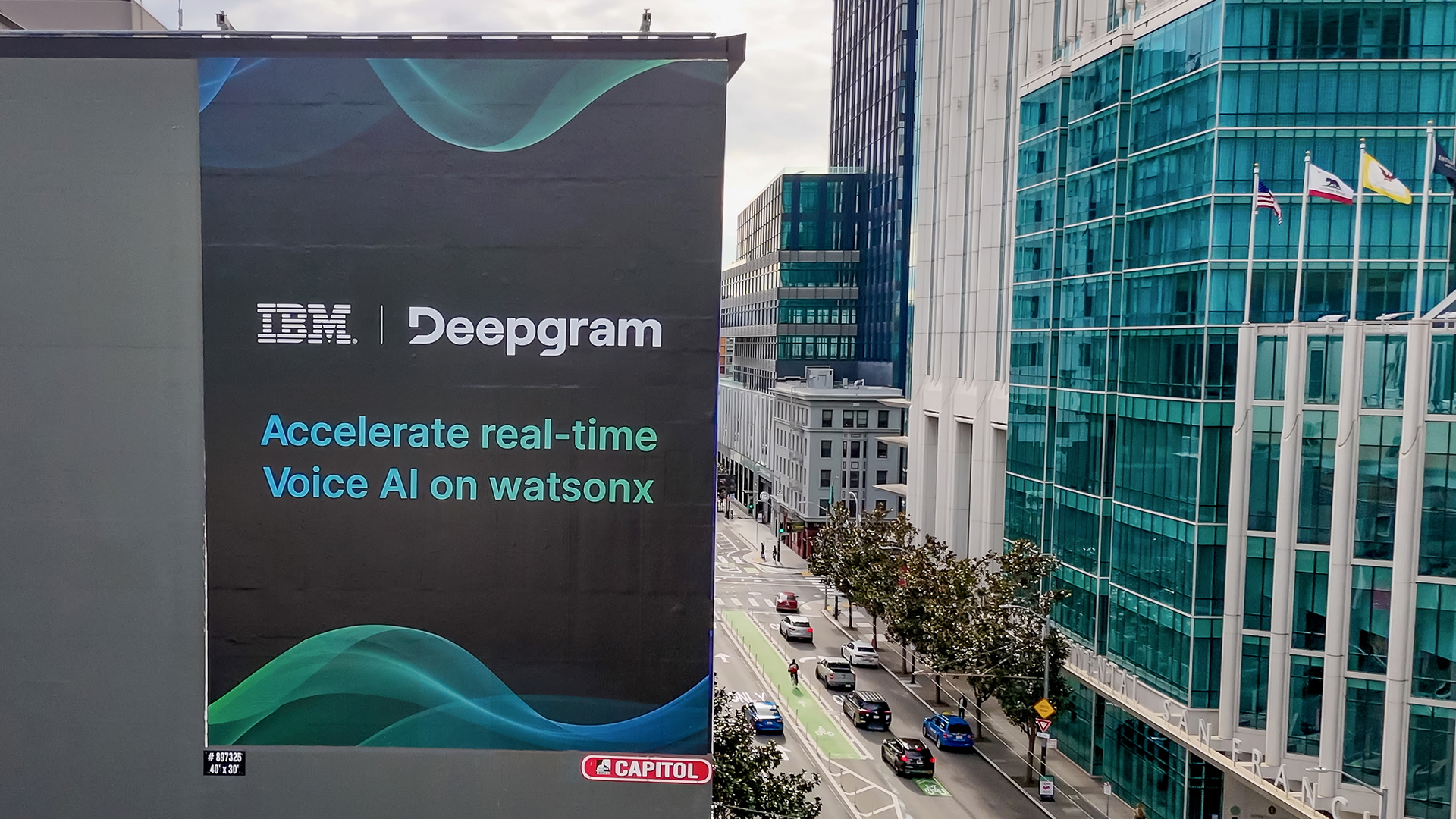
ARMONK, N.Y. and SAN FRANCISCO — February 24, 2026 — IBM (NYSE: IBM) and Deepgram today announced a collaboration to integrate Deepgram’s industry-leading speech-to-text and text-to-speech capabilities into IBM’s watsonx Orchestrate generative AI solution.
To address client needs for highly performant, enterprise-grade transcription and real-time captioning, IBM will embed Deepgram’s capabilities into watsonx Orchestrate. This collaboration makes Deepgram IBM’s first voice partner, bringing voice AI technology that helps enterprises automate their operations and meet the growing demand for conversational AI technology, including advanced speech-to-text voice recognition so users can interact with digital agents using natural speech.
Many organizations are adopting AI-powered speech-to-text systems to automate transcription while handling real-world audio conditions, including background noise, diverse accents, and real-life dialog. This integration addresses these challenges by offering a wider range of languages and dialects, including dozens of Arabic and Indian variants, along with voices that reflect regional accents. It also adds options for custom tuning, real-time captioning and natural-sounding speech.
These technologies open new possibilities for enhanced automated customer care and support, call analysis, and voice-driven data entry in fields like healthcare and finance.
“Voice is rapidly becoming the default interface between humans and technology, and enterprise deployments require a real-time platform that is accurate, low latency, and reliable at scale,” said Scott Stephenson, CEO and Co-Founder, Deepgram. “By embedding Deepgram inside watsonx Orchestrate Agent Builder, IBM clients can build voice agents and voice-enabled workflows on top of a real-time foundation that has been developed and refined over more than a decade.”
“Our watsonx Orchestrate integration powered by Deepgram APIs introduces new speech recognition and transcription capabilities to IBM clients, refining and modernizing their operations,” said Nick Holda, Vice President of AI Technology Partnerships at IBM. “This collaboration aims to help enterprise organizations accelerate their AI initiatives and reinforces IBM’s open ecosystem, bringing choice and cutting-edge voice technology to partners and customers.”
Voice interfaces are quickly becoming essential for enterprise AI, and this collaboration strengthens IBM’s role in delivering modern, flexible solutions to its clients. For Deepgram, it expands access to new customers through a trusted enterprise partner and reinforces its position as a reliable, real-time voice platform built for large-scale use.
About Deepgram
Deepgram is the real-time API platform underpinning the Voice AI economy. Its Voice AI platform offers speech-to-text (STT), text-to-speech (TTS), and full speech-to-speech (STS) capabilities–all powered by its enterprise-grade runtime. 200,000+ developers build with Deepgram’s voice-native foundational models – accessed through cloud APIs or as self-hosted / on-premises APIs – due to its unmatched accuracy, low latency, and pricing. Customers include technology ISVs building voice products or platforms, co-sell partners working with large enterprises, and enterprises solving internal use cases. Having processed over 50,000 years of audio and transcribed over 1 trillion words, there is no organization in the world that understands voice better than Deepgram. To learn more, please visit www.deepgram.com, read its developer docs, or follow @DeepgramAI on X and LinkedIn.
About IBM
IBM is a leading provider of global hybrid cloud and AI, and consulting expertise. We help clients in more than 175 countries capitalize on insights from their data, streamline business processes, reduce costs and gain the competitive edge in their industries. Thousands of governments and corporate entities in critical infrastructure areas such as financial services, telecommunications and healthcare rely on IBM’s hybrid cloud platform and Red Hat OpenShift to affect their digital transformations quickly, efficiently and securely. IBM’s breakthrough innovations in AI, quantum computing, industry-specific cloud solutions and consulting deliver open and flexible options to our clients. All of this is backed by IBM’s long-standing commitment to trust, transparency, responsibility, inclusivity and service.
Visit www.ibm.com for more information.
Statements regarding IBM’s future direction and intent are subject to change or withdrawal without notice, and represent goals and objectives only.
Media contact:Erica White
IBM
Erica.White@ibm.comContinue Reading