Category: 3. Business

  • Macrobond Trends | Macro Trends: Policy Rate Decisions across the Atlantic: Blindfolded Easing and Reluctant Doves

    Macrobond Trends | Macro Trends: Policy Rate Decisions across the Atlantic: Blindfolded Easing and Reluctant Doves

    Explore this week’s Macro Trends insights from Macrobond with the first installment below.

    The US government remains in shutdown, leaving markets with very limited access to official economic data. Still, there is broad expectation that the Fed will move ahead with a rate cut this week:

    • Data Blackout: With official releases paused, investors rely on alternative data sources to gauge the state of the US economy.​
    • New Fed Voice: Recently appointed Fed member Stephen Miran has argued for significant rate cuts, potentially pushing the Committee toward a more dovish stance.​
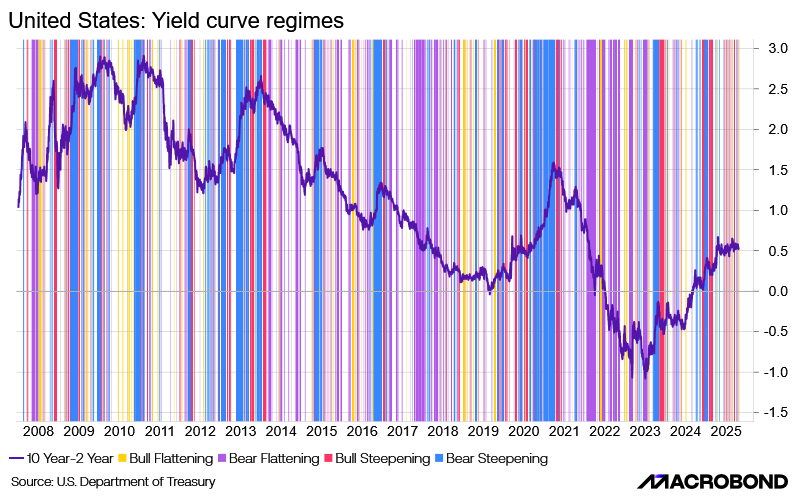
    • Bull Steepening: As the Fed shifts toward easing, short-term yields have dropped faster than long-term rates. ​How should investors position for this new dynamic?

    Markets brace for a Fed rate cut as the US data blackout leaves investors searching for signals.

    Diverging Views on the Path of Rates

    Insights:

    Markets are fully pricing a 25 bp rate cut, with attention shifting to forward guidance rather than the decision itself. ​

    ​The Fed’s dot plot still signals a gradual easing path, while Fed funds futures expect a faster decline toward ~3% by 2026. That divergence will drive the market reaction.

    The Miran Effect

    Insights:

    Stephen Miran was sworn in as a member of the Federal Reserve Board of Governors on September 16, 2025. ​

    With Miran joining the FOMC, the dot plot took on a new shape — as he stood out as the only member projecting a Fed funds rate below 3%, signaling significant cuts. ​

    ​The new Fed governor will likely attract extra attention, especially as discussions around Powell’s eventual successor gain momentum.

    Bull or Bear Steepener?

    Insights:

    The Federal Reserve is in a rate-cutting cycle, while Trump’s fiscal policies are pushing longer-term yields higher through expectations of larger deficits and increased Treasury issuance. This mix of monetary easing and fiscal expansion is steepening the yield curve.​

    ​A key debate now is whether the steepening will be bearish or bullish:​

    • A bear steepener if long-term yields rise faster due to inflation and fiscal concerns​
    • A bull steepener if short-term rates fall more sharply as markets price in deeper Fed cuts

    Average Asset Performance Across Yield Curve Regimes

    Insights:

    The direction this steepening takes will be crucial for market positioning, as equity valuations and fixed-income returns tend to react very differently under bear versus bull steepening regimes. ​

    ​In this chart, you can see the historical performance of various equity sectors, fixed income, and gold across these different yield-curve environments.

    Alternative Data Takes the Lead on U.S. Labor Trends

    Insights

    With the U.S. government shutdown halting operations at the Bureau of Labor Statistics (BLS), official labor market data — including the monthly Nonfarm Payrolls report — will not be released. ​​This data blackout leaves policymakers and markets without one of their most important economic indicators. In the absence of BLS data, attention will turn to ADP’s private-sector employment report as a key alternative gauge of labor market momentum ahead of the Fed’s upcoming policy decisions.

    Inflation Holds Firm Amid Policy Uncertainty

    Insights

    Last Friday, despite the ongoing government shutdown, markets received fresh economic data — the Consumer Price Index (CPI) for September. ​

    The report showed that inflation remains stubbornly high at 3 percent, reinforcing concerns that price pressures are proving more persistent than the Federal Reserve had hoped. ​

    ​This resilience in inflation is likely to weigh on the Fed’s upcoming policy discussions, as it complicates the path toward potential rate cuts and raises questions about how long restrictive monetary conditions will need to stay in place.


    Continue Reading

  • Hit by AI, edtech firm Chegg slashes jobs and names new CEO in major overhaul – Reuters

    1. Hit by AI, edtech firm Chegg slashes jobs and names new CEO in major overhaul  Reuters
    2. Chegg Earnings: Big Quarter Sends Shares Higher  24/7 Wall St.
    3. Chegg to Remain a Standalone Public Company to Maximize Shareholder Value  Business Wire
    4. Chegg Announces Major Workforce Reduction and Restructuring  TipRanks
    5. Chegg (CHGG) Announces Restructuring Plan and Leadership Change  GuruFocus

    Continue Reading

  • Barbie, Monopoly makers see bright holiday season despite tariffs

    Barbie, Monopoly makers see bright holiday season despite tariffs

    President Donald Trump’s tariffs are hitting toy giants Mattel and Hasbro as the critical holiday season nears. Still, both companies see a successful year end ahead.

    “This quarter, our U.S. business was again challenged by industry-wide shifts in retailer ordering patterns,” CEO Ynon Kreiz said on Mattel’s recent earnings call. “That said, consumer demand for our products grew in every region, including in the U.S.”

    During the most recent quarter, which ended Sept. 30, Mattel said sales slipped 6% globally, led by a 12% decline in North America. International sales rose 3%.

    Some of the company’s top performing categories included Hot Wheels and action figures, primarily from the “Jurassic World,” Minecraft and WWE franchises.

    Other Mattel brands saw a drop in sales, however, including Barbie and Fisher-Price.

    With retail stores waiting until the last minute to assess the level of tariffs that would apply to their holiday orders, Kreiz said “since the beginning of the fourth quarter, orders from retailers in the U.S. have accelerated significantly.”

    Retailers “expect strong demand for the holiday and they are restocking,” he added.

    Meanwhile, rival toy giant Hasbro’s revenue jumped 8% in the quarter and it raised its financial guidance for the rest of the year.

    Key drivers of that included “Peppa Pig” and Marvel franchise toys, as well as the Wizards of the Coast games.

    Hasbro “managed tariff volatility with agility” and used price hikes to protect its margins, said Gina Goetter, the company’s chief financial officer and chief operating officer.

    The company remains “firmly on track” to achieve its financial targets.

    “As we calculate the various scenarios of where that absolute rates will play out, we’re really putting all of our levers to work,” she said on the company’s recent earnings call.

    “From how we think about pricing, how we’re thinking about our product mix, how we’re thinking about our supply chain, and how we’re managing all of our operating expenses to mitigate and offset the impact” of tariffs, she said.

    For its part, Hasbro also saw “softness” in the U.S. during the quarter due to retail chains waiting longer to place holiday orders, but said momentum is accelerating as the season gets underway.

    In July, Mattel’s chief financial officer, Paul Ruh, said that the company was raising prices because of tariffs.

    “We have implemented a variety of actions that will help us withstand some of those headwinds and those include … supply chain efficiencies and some pricing adjustments, particularly in the U.S.,” Ruh said on the company’s earnings conference call.

    “So with that array of actions, we’re able to withstand some of the uncertainty that is mostly coming in the top line,” Ruh said. “Our goal is to keep prices as low as possible for our consumers.”

    Still, Kreiz said that “consumers are buying our products and the toy industry is growing.”

    He also said that consumers are taking price hikes in stride and those increases haven’t hurt demand: “We are not seeing any slowdown in consumer demand so far.”

    Hasbro CEO Chris Cocks said the company has also raised some prices, but it was “pretty surgical” in what it chose to adjust.

    “In terms of ongoing pricing, I think we just kind of have to see how the holiday goes and the consumer holds up,” he told analysts on the company’s earnings call.

    Cocks also cautioned that there may be a two-tier economy forming, something other executives and economists have observed in recent months.

    “Right now, I think it’s really kind of a tale of two consumers. The top 20%, particularly in the U.S., continue to spend pretty robustly,” he said. “The balance of households are watching their wallets a bit more.”

    On Friday, the Labor Department released the latest consumer price index data, which showed that inflation is rising at a 3% annual pace, up from August’s 2.9%.

    In May, Kreiz told CNBC that approximately half of the company’s toys were sourced from China.

    Beijing has faced some of the steepest tariffs from Washington of any U.S. trade partner, as Trump has rolled out his disruptive trade agenda this year.

    Mattel’s Ruh said the company continued to adjust its supply chains in response to shifting global tariff policies.

    “We will be continuing to work with our retailers to make sure that the product is on the shelf,” he said.

    At the same time, Hasbro’s Goetter said the company is diversifying its supply chains away from high-tariff countries.

    “By 2026, we expect approximately 30% of our total Hasbro toy and game revenue will be sourced from China and 30% of our revenue will be based in the U.S., as we opportunistically lean into our U.S. manufacturing capacity,” she said.

    Continue Reading

  • Two Major Trials Support Drug-Coated Balloons in PCI – Medscape

    1. Two Major Trials Support Drug-Coated Balloons in PCI  Medscape
    2. Sirolimus-eluting balloon strategy matches drug-eluting stents in large international PCI trial  News-Medical
    3. REC-CAGEFREE I: DCB vs. DES For Treating de Novo CAD at 3 Years  American College of Cardiology
    4. Selution’s 1-Year Data Push Drug-Coated Balloons Further Into the Mainstream  MedPage Today
    5. New Drug-Eluting Balloon May Be as Safe and Effective as Conventional Metal Stents for Repeat Percutaneous Coronary Interventions  Mount Sinai

    Continue Reading

  • Wealthsimple Announces $750 Million Equity Round at $10 Billion Post-Money Valuation to Accelerate Growth

    Wealthsimple Announces $750 Million Equity Round at $10 Billion Post-Money Valuation to Accelerate Growth

    • Dragoneer and GIC co-lead investment alongside CPP Investments, Power Corporation of Canada, IGM Financial Inc., ICONIQ, Greylock and Meritech reinforcing growing global conviction in Wealthsimple’s mission to build the financial platform of the future.
    • With a profitable and growing business, new capital will accelerate Wealthsimple’s product roadmap and deepen the value it delivers to Canadians.

    TORONTO, ON [Oct 27, 2025] – Wealthsimple, Canada’s leading financial innovator, today announced it has signed an equity round of up to CAD $750 million at a post-money valuation of CAD $10 billion. The round, which includes both a $550-million primary offering and a secondary offering up to $200 million, is co-led by Dragoneer Investment Group and GIC, and signals deep conviction from world-renowned investors in Wealthsimple’s role as the future of financial services in Canada. Other investors include new investor Canada Pension Plan Investment Board (CPP Investments), and existing investors Power Corporation of Canada, IGM Financial Inc., ICONIQ, Greylock and Meritech.

    Since 2014, Wealthsimple has consistently set the pace for innovation in Canadian finance and reimagined how Canadians build wealth. The company broke down barriers to the markets for a new generation of investors with its managed and self-directed investing platforms and led the charge on many investing firsts for the country, including commission-free trading, regulated crypto trading and 24/5 trading. It has also redesigned everyday banking, with features such as bank draft delivery and automatic paycheque allocation, and a competitive chequing account with no monthly, foreign exchange or ATM withdrawal fees. What began as a simple investing app has become a trusted financial platform that millions of Canadians use to grow and manage their money, whether they’re just starting out, or managing complex portfolios.

    The equity round comes after an explosive few years for Wealthsimple and the company continues to scale from a position of strength. Wealthsimple shared that it was profitable in 2024 and the company continues to be profitable in 2025. The company reached $50 billion in assets under administration in 2024, and in one year has doubled it to $100 billion in assets. The company’s latest capital raise will accelerate its roadmap across investing, banking and credit, support strategic opportunities to expand its platform, and deepen the value it delivers to Canadians.

    “This raise reflects deep confidence from new and returning investors in our mission and our role as a defining Canadian company,” said Michael Katchen, CEO and co-founder, Wealthsimple. “We were intentional in choosing partners committed to the long-term future of Wealthsimple. These are well-respected, global leaders with a proven track record scaling category leaders, and who believe in our vision for the future of financial services.”

    Guided by its mission to help everyone achieve financial freedom, Wealthsimple offers an expansive suite of smart, low-cost financial tools that empower Canadians to build wealth in whatever way works for them. The platform brings together self-directed investing, managed portfolios, cryptocurrency, banking services, tax filing, and advisor services into one simple, integrated experience. The company is also responsible for building Canada’s most-read financial newsletter, TLDR, educating four million weekly subscribers on money and market news.

    This year, the company launched a waitlist for its first credit card, surpassing 300,000 Canadians in the first six months. The company also launched Wealthsimple Presents, a bi-annual, live product showcase featuring its latest financial innovations. Nearly 350,000 Canadians registered to attend the 2025 livestream events.

    “Few companies have achieved what Wealthsimple has in the last few years,” said Christian Jensen, Partner at Dragoneer Investment Group. “The Wealthsimple team has built an expansive financial platform that millions of Canadians trust. They’re not just participating in Canada’s financial services industry; they’re redefining it. Wealthsimple’s product velocity, customer obsession, and category leadership remind us of some of the most enduring global companies and we’re thrilled to be partnering with them in this next phase of growth.”

    Dragoneer is focused on investing in leading growth businesses and recently led OpenAI’s $8.3 billion raise in August 2025 as its largest contributor. The firm previously participated in Wealthsimple’s 2021 funding raise.

    “We look for companies that will transform industries for decades to come, and Wealthsimple is one of them,” said Choo Yong Cheen, Chief Investment Officer, Private Equity, GIC. “Their track record of innovation, from investing to trading to banking, combined with deep trust from Canadians, positions them to build a defining, generational company in Canadian financial services.”

    GIC is a leading global investment firm delivering long-term, sustainable returns across diverse market landscapes. GIC is one of two new investors this raise, alongside CPP Investments.

    “Wealthsimple has built a strong foundation as a trusted financial platform in Canada, combining innovation with disciplined growth,” said Afsaneh Lebel, Managing Director, Head of Funds, CPP Investments. “Alongside our partner Dragoneer, we’ve seen the company’s innovative approach to making financial products more accessible to Canadians, consistent with our strategy to back technology-driven businesses that deliver lasting value for CPP contributors and beneficiaries.”

    Meritech and Greylock co-led Wealthsimple’s raise in May 2021 alongside best-in-class investors DST Global, Sagard, ICONIQ, Dragoneer, TCV and iNovia, among others. This raise builds on Wealthsimple’s 2021 financing round — one of the largest in Canadian history at that time — and marks the next chapter in its mission to transform financial services.


    Continue Reading

  • US envoy discusses ZTBL’s digital transformation

    US envoy discusses ZTBL’s digital transformation

    .


    ISLAMABAD:

    United States Charge d’Affaires Natalie A Baker visited the head office of Zarai Taraqiati Bank Limited (ZTBL), where discussions focused on the bank’s ongoing digital transformation, including the introduction of internet, WhatsApp and mobile banking services to facilitate farmers in loan repayments, settlements and information access.

    The envoy commended ZTBL’s contributions to supporting small farmers and strengthening Pakistan’s agriculture-based economy. She noted that several American companies were actively investing and operating in Pakistan’s agriculture and food sectors. Both sides exchanged views on the pressing challenges of food security and other difficulties facing the agriculture sector. Baker reaffirmed the US commitment to supporting Pakistan’s efforts to build a more resilient and sustainable agriculture sector.

    Continue Reading

  • Clinical Data Support Use of Low-Carbon Version of Albuterol Metered Dose Inhaler for Asthma

    Clinical Data Support Use of Low-Carbon Version of Albuterol Metered Dose Inhaler for Asthma

    Clinical data confirm that the formulation of the metered dose inhaler (MDI), albuterol (Ventolin; GSK), containing a low-carbon propellant HFA-152a, has therapeutic equivalence and is comparable in safety to salbutamol MDI containing HFA-134a, the current propellant, according to a news release from the manufacturer. These findings support regulatory submissions for a next-generation version of albuterol, referred to as salbutamol outside of the US, which will bring a more sustainable option to patients who have respiratory diseases.

    Albuterol is approved by the FDA for the treatment and prevention of acute or severe bronchospasm in patients with reversible obstructive airway disease, such as asthma and chronic obstructive pulmonary disease (COPD). Albuterol acts on β2-adrenergic receptors, inducing bronchial smooth muscle relaxation and inhibiting immediate hypersensitivity mediator release, particularly from mast cells. Albuterol also affects β1-adrenergic receptors, but the impact is minimal, thereby exerting little effect on a patient’s heart rate.2

    Albuterol is available in various dosage forms and strengths, including an aerosol metered-dose inhaler delivering 90 mcg (base)/actuation, equivalent to 108 mcg of albuterol sulfate; a powder metered-dose inhaler form providing the same values as the aerosol metered-dose inhaler; 2-mg and 4-mg tablets; 4-mg and 6-mg extended-release tablets; nebulized solutions, including 0.083%, 0.5%, 0.63 mg/3 mL, and 1.25 mg/3 mL; and an oral syrup in a concentration of 2 mg/5 mL.2

    In the absence of albuterol’s bronchodilatory effects, patients experiencing bronchospasms may face the risk of catastrophic asphyxiation, emphasizing the crucial need for patients to have a readily available treatment. According to the manufacturers, nearly half a billion people are affected by asthma and COPD worldwide.1,2

    “Healthy air is essential for healthy lungs, and our next-generation [albuterol] has the potential to reduce greenhouse gas emissions by 92% per inhaler. Almost 6 decades after its first development, this medicine remains highly valued by patients and health care professionals and is a key component of our respiratory portfolio. Today, we are one step closer to a reliever MDI that we believe will continue to help patients for many decades to come,” Kaivan Khavandi, senior vice president, global head of respiratory, immunology & inflammation research and development at GSK, said in a manufacturer news release.1

    WHO considers climate change to be the biggest global health issue, and patients with chronic respiratory diseases such as asthma and COPD are particularly susceptible to variable weather conditions and extreme weather events. Short-acting β2-agonists (SABAs) are typically used as reliever medications for the short-term relief of asthma and COPD symptoms; however, they are also responsible for approximately 70% of total inhaler-related greenhouse gas (GHG) emissions. The development of MDI devices that contain low global warming potential (GWP) propellants can reduce the carbon footprint of MDIs while balancing reduced GHG emission goals with patient health and well-being.3

    The aim of the trial was to assess the carbon footprints of albuterol HFA-152a MDI, albuterol HFA-134a MDI, and an albuterol dry-powder inhaler (DPI). For this study, 3 cradle-to-grave lifecycle analyses (LCA) were undertaken to compare the carbon footprints of albuterol HFA-152a MDI, albuterol HFA-134a MDI, and albuterol DPI. Over 600 individual emission factors were calculated from over 2000 data points and categorized into active pharmaceutical ingredient manufacture, micronization, device, formulation and packaging, use phase, distribution, and end-of-life stages.3

    The data show that the average carbon footprint values were about 27.09, 2.24, and 0.76 kg CO2e per device for albuterol HFA-134a MDI, albuterol HFA-152a MDI, and albuterol DPI, respectively, representing an approximate 92% reduction in carbon footprint for albuterol HFA-152a MDI compared with albuterol HFA-134a MDI. The investigators observed that the difference was primarily driven by the patient use phase. These findings suggest that substituting the currently available HFA-134a propellant with a new HFA-152a candidate propellant could substantially reduce the carbon footprint of a SABA reliever.3

    “While low carbon alternatives already exist, such as dry powder and soft mist inhalers, we know that many patients worldwide with both asthma and COPD prefer a[n albuterol] MDI to relieve their symptoms. These data should enable patients to use their preferred inhaler choice. This is a crucial advance to help global health care systems meet their climate targets at the same time as optimizing the care of patients,” Ashley Woodcock, professor of respiratory medicine at the University of Manchester, said in the news release.1

    REFERENCES
    1. GSK. GSK announces positive pivotal phase III data for next-generation low carbon version of Ventolin (salbutamol) metered dose inhaler. News release. October 22, 2025. Accessed October 27, 2025. https://www.gsk.com/en-gb/media/press-releases/gsk-announces-positive-pivotal-phase-iii-data-for-next-generation-low-carbon-version-of-ventolin-salbutamol-metered-dose-inhaler/
    2. National Library of Medicine – National Center for Biotechnology Information. Albuterol. Updated January 10, 2024. Accessed October 27, 2025. https://www.ncbi.nlm.nih.gov/books/NBK482272/
    3. Plank M, Anzueto A, Janson C, Henderson R, Fulmali S, and King J. Decarbonizing Respiratory Care: The Impact of a Low-carbon Salbutamol Metered-dose Inhaler [abstract]. Am J Respir Crit Care Med. 2025;211:A5548. doi:10.1164/ajrccm.2025.211.Abstracts.A5548

    Continue Reading

  • Fogarty Innovation and CRF unite to accelerate breakthroughs in cardiovascular medicine

    Fogarty Innovation and CRF unite to accelerate breakthroughs in cardiovascular medicine

    After several years of close collaboration and a relationship rooted in mutual respect and shared vision, Fogarty Innovation is coming together with the Cardiovascular Research Foundation® (CRF®) to create a unified platform for advancing transformative healthcare technologies. This strategic combination strengthens CRF’s leadership in medtech by integrating Fogarty’s renowned expertise in early-stage innovation, creating a powerful, cross-specialty platform to accelerate transformative breakthroughs into patient care. The merger was announced during a special keynote session at the Transcatheter Cardiovascular Therapeutics® (TCT®) meeting.

    This platform unites two mission-driven organizations with a shared vision: to catalyze the next generation of disruptive medical technologies by advancing innovations that have the power to transform patient care and reshape the future of healthcare. It builds on a strong track record of successful collaboration: CRF and Fogarty Innovation have partnered on the TCT MedTech Innovation Forum over the past four years, fostering early-stage innovation and supporting emerging medtech entrepreneurs. Together, they form a powerful alliance poised to accelerate progress in cardiovascular medicine and transform patient care on a global scale. 

    The unified platform will unlock immediate access to world-class incubation, long-term strategic growth, and enhanced philanthropic impact. By combining the deep expertise of both organizations, it will provide unparalleled access to seasoned medtech executives, expand innovation education initiatives, and increase business opportunities in Silicon Valley and beyond – all while accelerating the development of cutting-edge technologies and driving measurable improvements in patient care.

    Fogarty Innovation will continue to carry its name and mission, now serving as CRF’s West Coast innovation hub. Together, CRF and Fogarty Innovation will amplify their collective impact by combining resources, expertise, and leadership – aligning on strategic initiatives to drive innovation and expand their reach across the cardiovascular landscape.

    “We’re thrilled to enter into this partnership with our close friends and colleagues at Fogarty Innovation,” said Juan F. Granada, MD, President and Chief Executive Officer of CRF. “We are entering a groundbreaking era in cardiovascular medicine; one defined by unprecedented technological potential. This move is not just a step forward; it is a bold move to lead the future. By uniting our strengths into a single, purpose-driven platform, we are shaping the development of transformative technologies that will redefine care and bring us closer to a more equitable health care system.”

    Over the past 17 years, Fogarty Innovation has demonstrated that our model of immersive support – through incubation, acceleration, education, and alliances – meaningfully increases the success of innovators in bringing new tools and therapies to clinicians and patients. We are excited to join forces with CRF, as we can now scale that impact globally, giving entrepreneurs a larger stage, stronger resources, and a faster path to delivering transformative care.”

    Andrew Cleeland, CEO of Fogarty Innovation

    “Our partnerships have always been rooted in trust, shared purpose, the highest ethical standards, performance excellence, and a commitment to transform the lives of patients everywhere,” said Martin B. Leon, MD, Founder and Chairman Emeritus of CRF. “CRF’s mission to advance cardiovascular care through research and education will be amplified by Fogarty Innovation, opening new opportunities for collaborations, advanced innovation, and strategic growth – ultimately, impacting the science and practice of medicine worldwide.”

    Source:

    Cardiovascular Research Foundation

    Continue Reading

  • PCI With A Sirolimus-Eluting Balloon And Provisional Stenting Shows Comparable Outcomes To Routine DES Implantation For Treatment Of De Novo Coronary

    PCI With A Sirolimus-Eluting Balloon And Provisional Stenting Shows Comparable Outcomes To Routine DES Implantation For Treatment Of De Novo Coronary

    New study results from a large international all-comer population of percutaneous coronary intervention (PCI) candidates found that utilizing a strategy of sirolimus-eluting balloons with bailout stenting only if necessary was noninferior to routine drug-eluting stent (DES) implantation as part of the treatment for de novo coronary artery disease.

    Findings were reported today at TCT® 2025, the annual scientific symposium of the Cardiovascular Research Foundation® (CRF®). TCT is the world’s premier educational meeting specializing in interventional cardiovascular medicine.

    DES are implanted in the vast majority of PCIs with well-established immediate and mid-term outcomes. However, long term follow-up studies have reported annual adverse event rates of 2-4%. This has led to a growing interest in strategies that minimize metallic stent implantation to potentially reduce late events. The study used the SELUTION SLR Drug-Eluting Balloon (DEB) which delivers a sustained drug release maintaining therapeutic tissue concentration for up to 90 days designed to have a similar elution profile to current DES.

    Between August 2021 and July 2024, a total of 3,341 participants were randomized one to one to either the DEB (n=1,671) or DES strategy (n=1,670) at 62 sites in 12 countries across Europe and Asia. Patients with lesion reference vessel diameter (RVD) ≥2.0 and ≤5.0 mm were eligible for inclusion. Baseline characteristics were similar in both groups, with a relatively high proportion of patients presenting with acute coronary syndromes or having high bleeding risk. Randomization occurred after angiography when all target lesions were considered suitable for either strategy and prior to lesion wiring and lesion preparation. Eighty percent of participants treated with the SEB did not require a stent.

    The primary endpoint of target vessel failure, comprised of cardiac death, target vessel-related myocardial infarction and clinically driven target vessel revascularization, occurred in 5.3% of the DEB strategy group and 4.4% of the DES strategy group at one year (Risk Difference 0.91, 95% CI: -0.55, 2.38%, Pnoninferiority=0.02). No acute or late safety concerns were noted with the DEB strategy, with low rates of cardiac death (0.70% vs 1.0%), lesion thrombosis (0.1 %vs 0.3%), and target vessel myocardial infarction (2.7% vs 2.6%) comparable with DES.

    The SELUTION DeNovo trial provides the first comparison of a PCI strategy based on the use of sirolimus-eluting balloons versus systematic implantation of DES in a large international all-comer population of PCI candidates. With no acute or late safety concerns, these results apply to a significant segment of PCI procedures including high-risk patients and complex lesions. We look forward to obtaining five-year data to determine long-term noninferiority or possible superiority of this strategy.”


    Christian M. Spaulding, MD, PhD, Chief, Integrated Interventional Laboratory at European Hospital Georges Pompidou in Paris, France

    The study was funded by M.A. Med Alliance SA (a Cordis Company), Switzerland.

    Dr. Spaulding reported receiving grant /research support from the French Ministry of Health, CERC; consultant fees / honoraria from Medtronic, Techwald, Sanofi, Novartis Sonivie, Valcare and Boston Scientific as well as individual stock(s)/stock options/salary support from Cordis (MedAlliance) and Sonivie.

    The results of the study were presented on Sunday, October 26, 2025, at 11:00 a.m. PT in the Main Arena (Hall A, Exhibition Level, Moscone South) at the Moscone Center during TCT 2025.

    Source:

    Cardiovascular Research Foundation

    Continue Reading

  • COMPETE Trial: ITM-11 Tops Everolimus for GEP-NET PFS and OS | Targeted Oncology

    COMPETE Trial: ITM-11 Tops Everolimus for GEP-NET PFS and OS | Targeted Oncology

    Final analysis from the phase 3 COMPETE trial (NCT03049189) demonstrated that ITM-11 (177Lu-edotretide) met its primary and secondary end points in patients with gastroenteropancreatic neuroendocrine tumors (GEP-NETs) compared with everolimus. Data were presented at the 2025 European Society for Medical Oncology (ESMO) Congress on October 18, 2025, by Jaume Capdevila, MD, PhD, Vall d’Hebron University Hospital, and at the NANETS Symposium on October 25.1

    The primary end point was progression-free survival (PFS), which was reached with statistically significant and clinically meaningful improvement. The median PFS was significantly longer in patients administered ITM-11 compared to those administered everolimus. The secondary end point of the trial was overall survival (OS), which was also identified to be higher in patients who were administered ITM-11 vs everolimus.2

    There was a total of 207 patients in the ITM-11 group and 102 patients in the everolimus group. The median ages of both groups were 65 (ITM-11), and 61 (everolimus). Majority of patients in both groups were male. The majority of patients had grade 2, nonfunctional GEP-NETs and had received prior therapy.

    COMPETE Trial Findings

    COMPETE met its primary end point of PFS, which proved to be significantly longer in patients treated with ITM-11 vs everolimus. The central assessment was 23.9 vs 14.1 months (HR, 0.67; 95% CI, 0.48–0.95; P =.022).The local assessment was 24.1 vs 17.6 months (HR, 0.66; 95% CI, 0.48–0.91] P =.010;).

    In the subgroup analysis of PFS by tumor origin, mPFS was found to be numerically longer in GE-NETs and P-NETs in the ITM-11 arm. In GE-NETs the mPFS was 23.9 vs 12 months (HR 0.64, 95% CI, 0.38–1.08; P =.090;). In P-NETs the mPFS was 24.5 vs 14.7 months (HR, 0.70, 95% CI, 0.45–1.09; P =.114;).

    It was also identified that mPFS was numerically longer in grade 1 and significantly longer in grade 2 tumors in the ITM-11 arm. Grade 1 was 30 vs 23.7 months (HR, 0.89, 95% CI, 0.42–1.8; P =.753;), and grade 2 was 21.7 vs 9.2 months (HR 0.55l 95% CI, 0.37–0.82] P =.0003).

    In exploring PFS by prior therapy, it was identified that mPFS was numerically longer in the first line and significantly longer in the second line in the ITM-11 arm. First line data showed the mPFS was not reached in the ITM-11 vs 18.1 months (HR, 0.60, 95% CI, 0.25–1.45; P =.249), and second line data showed 23.9 vs 14.1 months (HR, 0.68; 95% CI, 0.47–0,98] P=.039).

    Overall response rates (ORR), one of the secondary end points of the trial, was found to be significantly higher in the ITM-11 arm. Central assessment was 21.9% vs 4.2% (P <.0001), and local assessment was 30.5% vs 8.4% (P <.0001).

    Safety Profile

    Adverse events (AEs) related to the drug study were experienced by 82% of patients ITM-11 group and 97% of patients in the everolimus group. The most common AEs reported were nausea (30% vs 10.1%), diarrhea (14.3% vs 35.4%), asthenia (25.3% vs 31.3%), and fatigue (15.7% vs 15.2%). These AEs were expected based on the known safety profile of ITM-11.2

    AEs leading to premature study discontinuation were 1.8% vs 15.2% among both groups, respectively, dose modification or discontinuation were 3.7% vs 52.5%, and patients with delayed study drug administration due to toxicity was 0.9% in the ITM-11 group and 0% in the everolimus group.2

    Dosimetry data showed targeted tumor uptake with low exposure to healthy organs, with normal organ absorbed doses well below safety thresholds.

    Patient Characteristics

    Patient inclusion criteria included being 18 or older, having well-differentiated, nonfunctional GE-NET or functional/nonfunctional P-NET; grade 1/2 unresectable or metastatic, progressive, SSRT-positive disease; and being treatment-naive to first-line therapies or progressing under prior second-line therapies.1,2

    Morphologic imagining was conducted in 3-month intervals. The PFS follow-up was done every 3 months after the first 30 days. Long-term follow-up was done every 6 months.

    “With these data combining extensive dosimetry information from more than 200 patients included in a prospective trial, ITM is laying the groundwork for improved therapeutic decision-making by providing important insights into tumor uptake and treatment variability,” Emmanuel Deshayes, MD, PhD, professor in biophysics and nuclear medicine at the Montpellier Cancer Institute in France, said in a news release.2 “It may offer clinically meaningful implications for optimizing individualized patient management.”

    Dosimetry data from COMPETE shaped the design of ITM’s phase 3 COMPOSE (NCT04919226)4 trial with ITM-11 in well-differentiated, aggressive grade 2 or grade 3 SSTR-positive GEP-NET tumors, as well as the upcoming phase 1 pediatric KinLET (NCT06441331) study in SSTR-positive tumors.

    DISCLOSURES: Capdevila noted grants and/or research support from Advanced Accelerator Applications, AstraZeneca, Amgen, Bayer, Eisai, Gilead, ITM, Novartis, Pfizer, and Roche; participation as a speaker, consultant, or advisor for Advanced Acclerator Applications, Advanz Pharma, Amgen, Bayer, Eisai, Esteve, Exelixis, Hutchmed, Ipsen, ITM, Lilly, Merck Serono, Novartis, Pfizer, Roche, and Sanofi; position as advisory board member for Amgen, Bayer, Eisai, Esteve, Exelixis, Ipsen, ITM, Lilly, Novartis, and Roche; and a leadership role and chair position for the Spanish Task Force for Neuroendocrine and Endocrine Tumours Group (GETNE).

    REFERENCES:
    1. Capdevilla J, Amthauer H, Ansquer C, et al. Efficacy, safety and subgroup analysis of 177Lu-edotreotide vs everolimus in patients with grade 1 or grade 2 GEP-NETs: Phase 3 COMPETE trial. Presented at: 2025 ESMO Congress; October 17-20, 2025; Berlin, Germany. Abstract 1706O
    2. ITM presents dosimetry data from phase 3 COMPETE trial supporting favorable efficacy and safety profile with n.c.a. 177Lu-edotreotide (ITM-11) in patients with gastroenteropancreatic neuroendocrine tumors at EANM 2025 Annual Congress. News release. ITM. October 8, 2025. Accessed October 18, 2025. https://tinyurl.com/3nuscs4m
    3. Lutetium 177Lu-Edotreotide versus best standard of care in well-differentiated aggressive grade-2 and grade-3 gastroenteropancreatic neuroendocrine tumors (GEP-NETs) – COMPOSE (COMPOSE). ClinicalTrials.gov. Updated September 10, 2025. Accessed October 18, 2025. https://www.clinicaltrials.gov/study/NCT04919226
    4. Phase I trial to determine the dose and evaluate the PK and safety of lutetium Lu 177 edotreotide therapy in pediatric participants with SSTR-positive tumors (KinLET). ClinicalTrials.gov. Updated September 19, 2025. Accessed October 18, 2025. https://www.clinicaltrials.gov/study/NCT06441331

    Continue Reading