Category: 3. Business

  • 10 stocks primed for growth in the S&P 500’s cheapest sectors

    10 stocks primed for growth in the S&P 500’s cheapest sectors

    By Philip van Doorn

    Even a slow-growing sector can include rapidly growing companies that are putting up big numbers

    Robinhood is expected to increase revenue at a compound annual growth rate of 15.5% from 2025 through 2027, based on consensus estimates among analysts polled by LSEG. But investors seem to have higher expectations based on the stock’s valuation and the company’s annualized revenue-growth rate of 47.4% from 2022 through 2024.

    No doubt you have gotten used to the flow of warnings about how expensive the S&P 500 has become. But there are always sectors that trade at low valuations to the full U.S. large-cap benchmark index.

    The cheaper sectors reflect investors’ and analysts’ expectations for slower growth than what they expect to continue to see in the information-technology sector. But even in lower-valued sectors there are companies expected to put up big numbers over the next two years.

    We are going to screen the three sectors of the S&P 500 that are least expensive based on a commonly used valuation measure. First let’s look at the 11 sectors of the S&P 500 SPX. Here they are, sorted by ascending forward price/earnings ratios, with the full index at the bottom.

       Sector or index           Forward P/E  Forward P/E to 10-year average  Two-year estimated revenue CAGR through 2027  Two-year estimated EPS CAGR through 2027 
       Energy                           14.8                             64%                                          2.4%                                     17.5% 
       Financial                        16.2                            119%                                          5.8%                                     11.2% 
       Healthcare                       17.1                            105%                                          5.7%                                     11.0% 
       Materials                        19.3                            110%                                          5.0%                                     16.5% 
       Utilities                        19.8                            111%                                          5.2%                                      8.9% 
       Communication Services           21.2                            126%                                          7.5%                                     10.4% 
       Consumer Staples                 21.4                            108%                                          4.4%                                      7.5% 
       Industrials                      23.9                            126%                                          6.3%                                     16.0% 
       Consumer Discretionary           28.5                            118%                                          6.7%                                     14.4% 
       Information Technology           29.6                            134%                                         12.7%                                     19.5% 
       Real Estate                      36.4                             90%                                          6.9%                                     11.2% 
       S&P 500 Index                    22.7                            121%                                          6.5%                                     13.9% 
                                                                                                                                                        Source: LSEG 

    You might need to scroll the table or flip your screen to landscape to see all of the columns in the table.

    The forward price/earnings ratios are based on Wednesday’s closing prices for stocks and consensus 12-month earnings-per-share estimates for companies among analysts polled by LSEG, weighted by market capitalization. The second data column shows the current P/E valuations relative to 10-year average valuations, based on rolling stock prices and 12-month EPS estimates. So the full S&P 500 is trading at a 21% premium to its 10-year average valuation.

    In fact, all sectors of the S&P 500 are trading at premium valuations to their 10-year average P/E, except for the energy and real-estate sectors, according to LSEG’s data.

    Among the three least expensive sectors based on current forward P/E, the financial sector may appear pricey, since it is trading at a 19% premium to its 10-year average P/E, but it is still the second-cheapest sector based on current P/E. On this basis, the financial sector trades at 71% of the valuation of the full S&P 500. Over the long term, this level of discount for the financial sector to the full index has been typical.

    The right-most columns of the table show projected compound annual growth rates (CAGR) for revenue and EPS. The three cheapest sectors by forward P/E (energy, financials and healthcare) all have projected revenue CAGR from 2025 through 2027 lower than the full S&P 500’s projected 6.5%. The energy sector’s projected EPS CAGR of 17.5% exceeds the full index’s projected EPS CAGR of 13.9%. These are both attractive figures and reflect expectations for continuing improvements in efficiency and profit margins. Oil and natural-gas producers in the energy sector have shown discipline during the years following the decline in oil prices form mid-2014 through early 2016 – a period during which U.S. producers suffered in the wake of high production that softened prices. In more recent years, the U.S. oil and gas producers have been careful not to expand production quickly and have focused on increasing dividends to shareholders and on stock buybacks. Reduced share counts resulting from the buybacks boost EPS, and the projected EPS CAGR shows analysts expect this action to continue.

    The rapid growth of sales and earnings for the largest technology companies in the S&P 500 has increased the index’s weighting toward a small number of stocks. Success is rewarded in an index weighted by market capitalization, but this has also led to a high level of concentration.

    The S&P 500 is now 39.9% concentrated in its largest 10 companies, according to analysts at Ned Davis Research. That is close to the peak concentration of 40.3% in September, which was the highest concentration for the S&P 500 since at least 1972.

    Some investors might not realize how much of their portfolios are focused on Big Tech. The $677 billion SPDR S&P 500 ETF Trust SPY tracks the S&P 500 by holding all of its stocks. The ETF is 29.5% concentrated in five companies: Nvidia Corp. (NVDA), Microsoft Corp. (MSFT), Apple Inc. (AAPL), Alphabet Inc. (GOOGL) (GOOG) and Amazon.com Inc. (AMZN).

    Screening the cheapest sectors of the S&P 500 for growth stocks

    There are index funds tracking each of the sectors of the S&P 500. Among exchange-traded funds, the three sectors we are screening are tracked by the Energy Select SPDR ETF XLE, the Financial Select SPDR ETF XLF and the Health Care Select SPDR ETF XLV. But you might also want to drill down into individual stocks.

    To screen these sectors, we combined the S&P 500 energy, financial and healthcare sectors for a list of 157 stocks. Then we cut the list to 151 companies covered by at least five analysts polled by LSEG, and for which consensus revenue and positive EPS estimates were available from the calendar year 2025 through calendar 2027. We used calendar-year estimates as adjusted by LSEG if necessary for companies whose fiscal years don’t match the calendar.

    Among the 151 remaining companies in the energy, financial and healthcare sectors, these 10 have the highest projected revenue CAGR from 2025 through 2027 based on consensus estimates among analysts polled by LSEG:

       Company                         Ticker   Two-year estimated revenue CAGR through 2027  Two-year estimated EPS CAGR through 2027  Forward P/E 
       Blackstone Inc.                BX                                               26.1%                                     27.2%         25.8 
       KKR & Co.                      KKR                                              24.4%                                     26.1%         19.0 
       Insulet Corp.                  PODD                                             17.7%                                     24.7%         57.7 
       Apollo Global Management Inc.  APO                                              17.2%                                     19.1%         14.2 
       Eli Lilly & Co.                LLY                                              17.1%                                     27.6%         27.6 
       Fifth Third Bancorp            FITB                                             16.9%                                     16.2%         11.4 
       Brown & Brown Inc.             BRO                                              15.8%                                     11.5%         18.9 
       Robinhood Markets Inc.         HOOD                                             15.5%                                     17.6%         61.5 
       Arthur J. Gallagher & Co.      AJG                                              15.4%                                     17.4%         20.9 
       Dexcom Inc.                    DXCM                                             14.7%                                     22.9%         28.0 
                                                                                                                                       Source: LSEG 

    No companies in the energy sector made the list.

    All of these companies have projected revenue CAGR more than twice the 6.5% projection for the S&P 500. For EPS, all but Brown & Brown have higher CAGR projections than the S&P 500’s 13.9%.

    (MORE TO FOLLOW) Dow Jones Newswires

    10-23-25 1129ET

    Copyright (c) 2025 Dow Jones & Company, Inc.

    Continue Reading

  • DIFC amendment to the Data Protection Law

    DIFC amendment to the Data Protection Law

    The DIFC recently announced that it had enacted an amendment to the Data Protection Law, following an earlier consultation in March.

    Summary

    The right for data subjects to claim compensation for damage they have suffered by reason of a contravention of their rights under data protection law is established in GDPR based countries, upon which the DIFC Data Protection Law is modelled. Claims of this nature have become increasingly common over the past five or six years in those jurisdictions.

    • The introduction of a private right of action through the DIFC courts for data subjects whose rights under the law have been contravened; and
    • A widening and clarification of the scope of the application and extraterritorial scope of the law, which applies to:
      • A Controller or Processor who processes personal data and is incorporated in the DIFC, regardless of whether or not the processing takes place in the DIFC; and
      • A Controller, Processor or Sub-processor, processing personal data in the DIFC regardless of their place of incorporation as part of stable arrangements.

    Important points to note

    Data subjects can claim for mere distress

    They do not need to prove that they have suffered a recognised psychiatric injury as a result of the infringement. This reduces the barrier to entry as expert medical evidence is not required in order to issue a claim.

    The data subject can claim compensation from both the Controller or the Processor

    This is important for Processors to bear in mind as whilst the bulk of the responsibility generally sits with the Controller e.g. notifying the Commissioner and affected data subjects of a personal data breach, this amendment makes clear that Processors will be held liable in circumstances where their unlawful actions, or inappropriate security measures result in harm to data subjects.

    A Controller or Processor is not liable if they can prove that they are in no way responsible for the event giving rise to the damage

    The burden lies with the Controller or Processor to demonstrate this when seeking an exemption from liability.

    For example, if an organisation utilises the services of a third party payment provider, and as a result of a compromise of that payment provider’s systems, the organisation’s customer data is exposed, they may have a defence under Article 64A(4) if they had performed appropriate due diligence before selecting the payment provider (the Processor) and had a valid data processing agreement in place.

    In these circumstances the Controller may be able to evidence that the event giving rise to the damage sits squarely with the Processor (albeit the Processor may have their own defence under this Article, for example if this incident was caused by the exploitation of a zero-day vulnerability for which there was no patch yet) and thereby escape liability.

    We expect to see a gradual increase in data subject claims as individuals become more informed about their rights and how to exercise them.

    Continue Reading

  • Toward stable replication of genomic information in pools of RNA molecules

    Toward stable replication of genomic information in pools of RNA molecules

    We simulate the dynamics of VCG pools using a kinetic simulation that is based on the Gillespie algorithm. In the simulation, oligomers can hybridize to each other to form complexes or dehybridize from an existing complex. Moreover, two oligomers can undergo templated ligation if they are hybridized adjacent to each other on a third oligomer. At each time t, the state of the system is determined by a list of all single-stranded oligomers and complexes as well as their respective copy number. We refer to the state of the system at the time t as the ensemble of compounds Et. Given the copy numbers, the rates ri of all possible chemical reactions iI can be computed. To evolve the system in time, we need to perform two steps: (i) We sample the waiting time until the next reaction, τ, from an exponential distribution with mean (iIri)1, and update the simulation time, tt+τ. (ii) We pick which reaction to perform by sampling from a categorical distribution. Here, the probability to pick reaction i equals ri/(iIri). The copy numbers are updated according to the sampled reaction, yielding Et+τ. Steps (i) and (ii) are repeated until the simulation time t reaches the desired final time, tfinal. A more detailed explanation of the kinetic simulation is presented in Göppel et al., 2022; Rosenberger et al., 2021.

    Our goal is to compute observables characterizing replication in the VCG scenario based on the full kinetic simulation. In the following derivation, we focus on one particular observable (yield) for clarity. The results for other observables are stated directly, as their derivations follow analogously. Recall the definition of the yield introduced in the Results section,

    y=#nucleotidesincorporatedinVCGoligomersuntilτlig#incorporatednucleotidesuntilτlig.

    As we are interested in the initial replication performance of the VCG, we compute the yield based on the ligation events that take place until the characteristic timescale of ligations τlig=klig11012 t0. In principle, we would like to compute the yield based on the templated ligation events that we observe in the simulation. Unfortunately, for reasonable system parameters, it is impossible to simulate the system long enough to observe sufficiently many ligation events to compute y to reasonable accuracy. For example, for a VCG pool containing monomers at a total concentration of cFtot =0.1mM and VCG oligomers of length L=8nt at a total concentration of cVtot=1μM, it would take about 1700 hr of simulation time to reach t=51012t0 (Figure 8). Multiple such runs would be needed to estimate the mean and the variance of the observables of interest, rendering this approach unfeasible.

    Simulation runtime of the full kinetic simulation for a VCG pool that includes monomers and VCG oligomers of length L=8.

    The total concentration of feedstock monomers equals cFtot=0.1mM, while the total concentration of VCG oligomers is cVtot=1μM. The energy contribution per matching nearest-neighbor block is set to γ=2.5 kBT. The volume of the system is varied, and the time evolution is simulated until t=5.0107t0. The runtime of the simulation scales linearly with the volume of the system.

    Instead, we compute the replication observables based on the copy number of complexes that could potentially perform a templated ligation, that is complexes in which two strands are hybridized adjacent to each other, such that they could form a covalent bond. We can show analytically that the number of productive complexes is a good approximation for the number of incorporated nucleotides: The number of incorporated nucleotides can be computed as the integral over the ligation flux, weighted by the number of nucleotides that are added in each templated ligation reaction,

    (#incorporatednucleotidesuntil τlig)=0τligdt CEtN(C)min(Le,1,Le,2)1(C allows templated ligation).

    Here, N(C) denotes the copy number of the complex C in the pool Et. Le,1 and Le,2 denote the lengths of the oligomers that undergo ligation, and 1 is an indicator function which enforces that only complexes in a ligation-competent configuration contribute to the reaction flux. As only a few ligation events are expected to happen until τlig, it is reasonable to assume that the ensembles Et do not change significantly during t[0,τlig]. Therefore, the integration over time may be interpreted as a multiplication by τlig,

    (6)

    (#incorporatednucleotidesuntil τlig)τligCEN(C)min(Le,1,Le,2)1(C allows templated ligation),

    where denotes the average over realizations of the ensembles Et within the time interval t[τeq,τlig]. This average corresponds to the average number of complexes in a ligation-competent configuration. Note that, at this point, we made the additional assumption that no templated ligations are taking place between [0,τeq]. This assumption is reasonable, as (i) the equilibration process is very short compared to the characteristic timescale of ligation, and (ii) the number of complexes that might allow for templated ligation during equilibration is lower than in equilibrium (we start the simulation with an ensemble of single-stranded oligomers). Both aspects imply that the rate of templated ligation is negligible during the interval [0,τeq].

    In order to compute the average over different realizations of ensembles E (as required in Equation 6), we need to sample a set of uncorrelated ensembles that have reached the hybridization equilibrium, which can be done using the full kinetic simulation. The simulation starts with a pool containing only single-stranded oligomers and reaches the (de)hybridization equilibrium after a time τeq. We identify this timescale of equilibration by fitting an exponential function to the total hybridization energy of all complexes in the system, ΔGtot (Figure 9A). In the set of ensembles used to evaluate the average in Equation 6, we only include ensembles for time t>τeq to ensure that the ensembles have reached (de)hybridization equilibrium. To ensure that the ensembles are uncorrelated, we require that the time between two ensembles that contribute to the average is at least τcorr. The correlation time, τcorr, is determined via an exponential fit to the autocorrelation function of ΔGtot (Figure 9B). Besides computing the expectation value (Equation 6), we are also interested in the ‘uncertainty’ of this expectation value, that is in the standard deviation of the sample mean σX. (We use X as a short-hand notation for CEN(C)min(Le,1,Le,2)1(Callowstemplatedligation)). The standard deviation of the sample mean, σX, is related to the standard deviation of X, σX, by the number of samples, σX=(Ns)1/2σX. Moreover, based on the van-Kampen system size expansion, we expect the standard deviation of X to be proportional to V1/2, such that σX(NsV)1/2.


    Characteristic timescales in the kinetic simulation.

    (A) The equilibration timescale is determined based on the total hybridization energy of all strands in the pool, ΔGtot. By fitting an exponential function to ΔGtot, we obtain a characteristic timescale τ (vertical dotted line), which is then used to calculate the equilibration time as τeq=5τ (vertical dashed line). The horizontal dashed line shows the total hybridization energy expected in (de)hybridization equilibrium according to the coarse-grained adiabatic approach (Methods). (B) The correlation timescale is determined based on the autocorrelation of ΔGtot. We obtain τcorr (vertical dashed line) by fitting an exponential function to the autocorrelation. In both panels, we show simulation data obtained for a VCG pool containing monomers and VCG oligomers with a concentration of cFtot=0.1mM as well as oligomers of length L=8 nt with a concentration of cVtot=1μM.

    Using Equation 6 (as well as an analogous expression for the number of nucleotides that are incorporated in VCG oligomers), the yield can be expressed as

    y=CEN(C)min(Le,1,Le,2)1(Callowstemplatedligation)1(Le,1+Le,2LU)CEN(C)min(Le,1,Le,2)1(Callowstemplatedligation).

    The additional condition 1(Le,1+Le,2LU) in the numerator ensures that the product oligomer is long enough to be counted as a VCG oligomer, that is at least LU nucleotides long. Analogously, the expression for the fidelity of replication reads

    f=CEN(C)min(Le,1,Le,2)1(C allows templated ligation)1(Le,1+Le,2LU)1(product correct)CEN(C)min(Le,1,Le,2)1(C allows templated ligation)1(Le,1+Le,2LU).

    Multiplying fidelity and yield results in the efficiency of replication,

    η=CEN(C)min(Le,1,Le,2)1(Callowstemplatedligation)1(Le,1+Le,2LU)1(product correct)CEN(C)min(Le,1,Le,2)1(Callowstemplatedligation).

    The ligation share of a particular type of templated ligation s(type), that is, the relative contribution of this templated-ligation type to the nucleotide extension flux, can be represented in a similar form as the other observables,

    s(type)=CEN(C)min(Le,1,Le,2)1(C allows templated ligation of given type)CEN(C)min(Le,1,Le,2)1(C allows templated ligation).

    As all observables are expressed as the ratio of two expectation values, Z=X/Y, we can compute the uncertainty of the observables via Gaussian error propagation,

    σZ=σX2Y2+X2 σY2Y42X σX,Y2Y3 .

    Since the variances, σX2 and σY2, as well as the covariance, σX,Y2, are proportional to (NsV)1, the standard deviation of the observable mean, σZ, scales with the inverse square root of the number of samples and the system volume, that is σZ(NsV)1/2. Therefore, the variance of the computed observable can be reduced by either increasing the system volume or increasing the number of samples used for averaging. Both approaches incur the same computational cost: (i) Increasing the number of samples, Ns, requires running the simulation for a longer duration, with the additional runtime scaling linearly with the number of samples. (ii) Similarly, the additional runtime needed due to increased system volume, V, also scales linearly with V (Figure 8). One update step in the simulation always takes roughly the same amount of runtime, but the change in simulation time per update step depends on the total rate of all reactions in the system. The total rate is dominated by the association reactions, and their rate is proportional to the volume. Therefore, the change in simulation time per update step is proportional to V1. The runtime, which is necessary to reach the same simulation time in a system with volume V as in a system with volume 1, is a factor of V longer in the larger system. With this in mind, it makes no difference whether the variance is reduced by increasing the volume or the number of samples. For practical reasons (post-processing of the simulations is less memory- and time-consuming), we opt to choose a moderate number of samples, but slightly higher system volumes to compute the observables of interest. The simulation parameters (length of oligomers, concentrations, hybridization energy, volume, number of samples, characteristic timescales) used to obtain the results presented in Figure 2 are summarized in Table 1.

    Input parameters and resulting observables (yield and efficiency) from the full kinetic simulation of replication in pools containing monomers and VCG oligomers of a single length LV . The observables (yield and efficiency) listed in this table are shown in Figure 2.
    VCG oligo. length conc. ratio cVtot/cFtot volume equilibration time correlation time number of samples yield y efficiency η
    6 1.0 ⋅ 10−4 5.0 ⋅ 104 3.4 ⋅ 106 1.9 ⋅ 106 3805 0.04 ± 0.01 0.04 ± 0.01
    6 1.0 ⋅ 10−3 5.0 ⋅ 103 1.2 ⋅ 107 2.6 ⋅ 106 3264 0.38 ± 0.02 0.36 ± 0.02
    6 3.3 ⋅ 10−3 8.0 ⋅ 102 1.3 ⋅ 107 2.7 ⋅ 106 5400 0.68 ± 0.02 0.64 ± 0.02
    6 1.0 ⋅ 10−2 9.1 ⋅ 101 1.4 ⋅ 107 2.7 ⋅ 106 5440 0.87 ± 0.01 0.77 ± 0.03
    6 3.3 ⋅ 10−2 9.1 ⋅ 100 1.3 ⋅ 107 2.4 ⋅ 106 6170 0.96 ± 0.01 0.63 ± 0.03
    7 1.0 ⋅ 10−4 3.9 ⋅ 104 1.7 ⋅ 108 2.6 ⋅ 107 784 0.33 ± 0.05 0.33 ± 0.05
    7 1.0 ⋅ 10−3 7.6 ⋅ 102 1.9 ⋅ 108 4.0 ⋅ 107 2041 0.87 ± 0.02 0.81 ± 0.05
    7 3.3 ⋅ 10−3 7.7 ⋅ 101 1.9 ⋅ 108 3.3 ⋅ 107 2980 0.95 ± 0.01 0.87 ± 0.04
    7 1.0 ⋅ 10−2 1.1 ⋅ 101 1.9 ⋅ 108 2.6 ⋅ 107 3465 0.99 ± 0.01 0.81 ± 0.05
    7 3.3 ⋅ 10−2 1.7 ⋅ 100 1.9 ⋅ 108 3.1 ⋅ 107 3235 0.99 ± 0.04 0.73 ± 0.05
    8 1.0 ⋅ 10−4 6.3 ⋅ 103 2.5 ⋅ 109 1.1 ⋅ 108 466 0.81 ± 0.05 0.81 ± 0.05
    8 1.0 ⋅ 10−3 9.9 ⋅ 101 1.9 ⋅ 109 3.6 ⋅ 108 615 0.99 ± 0.01 0.99 ± 0.01
    8 3.3 . 10-3 1.6 ⋅ 101 1.0 ⋅ 109 2.2 ⋅ 108 1100 0.95 ± 0.03 0.95 ± 0.03
    8 1.0 . 10-2 3.8 ⋅ 100 5.6 ⋅ 108 1.4 ⋅ 108 1700 1.00 ± 0.01 0.93 ± 0.05
    8 3.3 . 10-2 0.9 ⋅ 100 4.9 ⋅ 108 7.4 ⋅ 107 3195 1.00 ± 0.03 0.82 ± 0.05

    Continue Reading

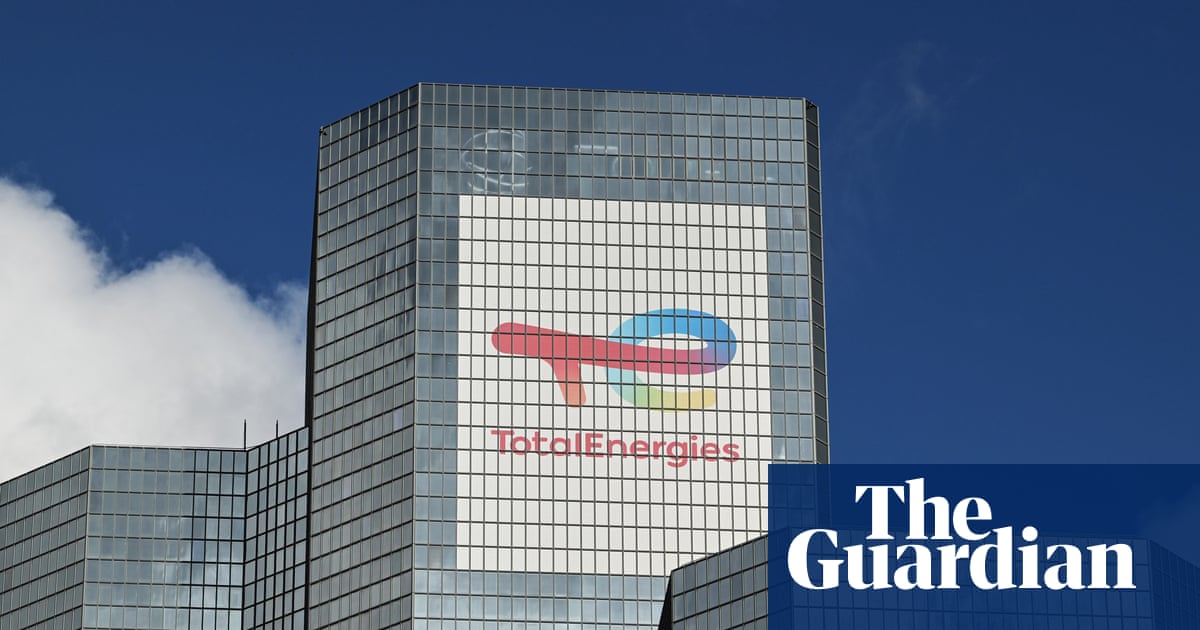
  • Oil firm TotalEnergies made misleading green statements, court rules | Environment

    Oil firm TotalEnergies made misleading green statements, court rules | Environment

    A French oil company engaged in “misleading commercial practices” about the scope of its environmental commitments, a court has ruled.

    TotalEnergies, which this month said it aimed to “ramp up production of gas”, was found on Thursday to have probably misled consumers with claims about its climate policies. The civil court in Paris ordered the company to remove messages from its website that said it wanted to reach carbon neutrality by 2050 and be a big player in the energy transition.

    The case, brought by NGOs including Greenpeace France and Friends of the Earth France, is the first time the country’s “greenwashing” laws have been applied to a fossil fuel company. Courts in the Netherlands and Germany have already found that airlines misled consumers with vague environmental claims.

    The French court gave TotalEnergies a month to take down the misleading statements or face a fine of €10,000 (£8,700) a day. It was also ordered to post the court’s ruling on its website, with the same penalty for noncompliance, as well as to pay €8,000 to each of the three NGOs and €15,000 for their legal costs.

    “The French justice system is finally tackling the impunity of fossil fuel greenwashing that Total has enjoyed until now,” said Justine Ripoll, campaigns manager at Notre Affaire à Tous, one of the NGOs that brought the case. “It sends a clear message: climate disinformation is not an acceptable business strategy.”

    TotalEnergies has been approached for comment.

    The company, which aims to achieve 100 gigawatts of renewable power generation by 2030 but has made fossil gas a “cornerstone” of its strategy, has said it was a multi-energy company aiming to “responsibly, cost-effectively and sustainably produce the energy that we all need in our daily lives”.

    The ruling is the result of a legal action brought by NGOs in 2022 in response to a campaign when the company changed its name from Total.

    The court ordered TotalEnergies to remove statements that said it placed sustainable development at the heart of its strategy and that it “contributed to the wellbeing of populations” in line with the UN’s sustainable development goals.

    Judges dismissed a further accusation of greenwashing over the company’s claims about fossil gas and biofuels. The court found that although the statements contained some disputed claims, they were for informational rather than commercial purposes.

    Climate activists and green groups have increasingly taken fossil fuel companies to court for environmental claims that do not align with published climate science.

    skip past newsletter promotion

    In a landmark report in 2022, the Intergovernmental Panel on Climate Change found that the world had enough existing and planned fossil fuel infrastructure to blow past the goal of limiting global heating to 1.5C above preindustrial levels. Meanwhile, the International Energy Agency found that “no new oil and gas” exploration was compatible with its key scenario for keeping planetary heating to that level.

    Jonathan White, a lawyer for ClientEarth, which supported the NGOs, said TotalEnergies appeared to be continuing with oil and gas projects despite warnings from climate experts.

    “This landmark judgment sends a clear warning shot to other oil and gas majors in Europe and beyond,” he said. “Claiming to be part of the transition while backing new fossil fuel projects comes at a tried-and-tested legal price.”

    Continue Reading

  • Meme stock trading is dominating the options market. Mike Khouw says beware the adrenaline rush

    Meme stock trading is dominating the options market. Mike Khouw says beware the adrenaline rush

    Continue Reading

  • Uniting oncology leaders to advance genomic access

    Uniting oncology leaders to advance genomic access


    The GOAL Summit gathered a select and powerful group of attendees. | Photo: Kristy Walker

    October 23, 2025

    “Genomics is reshaping how we understand cancer, how we diagnose it, how we treat it, and how we monitor it,” Illumina Global Patient Advocacy Lead Shirlene Badger said during her opening remarks at the first Genomics in Oncology Leaders’ (GOAL) Summit. The event was hosted by Illumina earlier this month at its San Diego headquarters. Badger continued, “But while the benefits of genomics in cancer are clear, uptake remains uneven. As patient advocates, we know better than anyone the consequences: that this means our friends, our family—they are dying.” 

    The three-day event, based on a similar initiative Illumina led in Europe (the Genomics in Oncology Patient Expert Network, or GOPEN), convened a select group of patient leaders from across the United States to explore the transformative role of genomics in cancer care. Participants represented a variety of tumor types and stakeholder groups—including the Rare Cancer Research Foundation, Go2 for Lung Cancer, Blood Cancer United, and SHARE Cancer Support—and brought varying levels of familiarity with genomics.  

    During the summit, attendees learned about the latest advancements in genomic technologies, discussed challenges and opportunities for patient access, and shared best practices and lessons learned from their own work. A major theme of the summit was exploring how participants—and Illumina—could work together more closely to advance awareness and increase access to genomics. 

    Organized by Illumina’s patient advocacy team, the GOAL Summit agenda featured over a dozen sessions focused on the use of genomics throughout the cancer journey, such as genetic testing for inherited cancer risk, biomarker testing, minimal residual disease (MRD) testing (which can monitor disease progression and risk of recurrence), and more. In addition, participants collaborated on topics spanning foundational science, clinical applications, the policy landscape, and patient-advocacy-driven interventions. 

    Illumina Patient Advocacy Specialist Cody Barnett explains: “We intended for the GOAL Summit to provide a forum where we could not only break down what is meant by genomics in oncology, but also one where we could spotlight the many ways that patient advocates have been instrumental in expanding access to things like biomarker testing. Patient advocacy groups have designed programs and campaigns aimed at raising awareness of precision medicine with patients, families, and medical providers, and in other cases, have launched studies that have helped to prove the clinical utility in their cancer type.” 

    Nefa-Tari Moore of SHARE Cancer Support tells her story in the session, “Patient Advocacy Efforts to Expand Access to Genomics.” | Photo: Kristy Walker

    Breaking barriers to genomic testing 

    In addition to highlighting the clinical role of genomics, the summit also explored the state of patient access, and the obstacles that too often get in the way. Emily Dalton, associate director of medical affairs for oncology, shared the striking statistic that 64% of patients with advanced non-small-cell lung cancer (NSCLC) were not benefiting from precision oncology, despite proven clinical benefits, including more prolonged overall survival. “This is due to a variety of operational and clinical factors,” Dalton said, “including limited tissue specimens, appropriate biomarker testing not being ordered, and challenges with interpreting biomarker test reports resulting in patients not being put on the appropriate targeted therapy.”

    Patient stories were at the heart of the discussions. Leaders from patient advocacy groups shared firsthand accounts of navigating cancer care and the impact of genomic testing in transforming their cancer journey.

    Nefa-Tari Moore, director of Black women’s outreach at SHARE Cancer Support, shared her journey with uterine and ovarian cancer and her experience of not being offered genetic testing until after she had relapsed. “My doctor was shocked I wasn’t offered it the first time, but I was just dismissed, even after asking to have genetic testing,” she said. “Maybe it’s because I’m a Black woman, a Muslim woman, or maybe because I was young. My advice to other patients is to know your rights and advocate for yourself.”

    What is the future of expanded use of genomics in oncology?

    Eric Duncavage, director of the Division of Genomic and Molecular Pathology at Washington University School of Medicine in St. Louis, discussed his research examining the use of whole-genome sequencing (WGS) for acute myeloid leukemia. In his landmark publication in the New England Journal of Medicine, he determined that WGS identified new findings in 25% of cases compared to standard-of-care testing. Further, he determined that WGS had a lower failure rate, was simpler to run in the lab, generated data that is more easily compared across labs, and is more adaptable as we continue to learn more about what drives cancer.

    “Precision medicine requires precision diagnostics,” Duncavage said. “Of the 75 novel oncology drugs approved over the past five years, 46 were ‘precision oncology therapies’ that required knowledge of gene mutation status.”

    Illumina CEO Jacob Thaysen made a special announcement on the third day. | Photo: Kristy Walker

    Empowering patient advocates with the Genomics in Oncology Catalyst Fund

    The momentum doesn’t stop with the conclusion of the summit. The Illumina Corporate Foundation has committed up to $100,000 in grants to US-based patient advocacy organizations. These grants will support initiatives that address barriers to genomic testing, raise awareness for its role in cancer care, and empower patients and families to use genomic information in shared decision-making with their health care providers.

    “Patient advocates are a disruptive force for good—challenging norms, reshaping policy, and ensuring the patient’s voice drives progress,” said Illumina CEO Jacob Thaysen. “I’m proud to support you in these efforts.”

    Participation in the summit is not required to apply for these grants. Learn more about the Genomics in Oncology Catalyst Fund, how to apply, and eligibility at this link. 

    Continue Reading

  • Arbuthnot lending declines on uncertainty but wealth management strong

    (Alliance News) – Arbuthnot Banking Group PLC on Thursday reported a decline in customer loans and leased assets at the end of the third quarter, with budget uncertainty weighing on sentiment.

    The London-based merchant bank reported GBP2.3 billion in customer loans and lease assets at September 30, down 9% from GBP2.5 billion a year earlier.

    Lending fell by 12% on-year to GBP1.4 billion, and was down 3% from the second quarter.

    Arbuthnot emphasised the importance of residential investment and private equity for its business, with both markets hit by lower confidence among businesses and households. The bank attributed the uncertain mood to “speculation around the autumn budget where various tax increases are being suggested”.

    “The uncertain economic outlook has meant that lending markets have continued to observe thin volumes of business with lenders aggressively competing for transactions by offering low rates,” Arbuthnot added, but maintained it “has not been drawn into this competition.”

    Still, the bank reported 24% annual growth in funds under management and administration, which amounted to GBP2.5 billion at the end of September, compared to GBP2.0 billion a year prior. This was “driven by strong inflows year to date and investment portfolio performance following the market turbulence at the beginning of the year,” Arbuthnot said. FUMA grew 5% on-quarter.

    In addition, customer deposit balances rose 17% on-year to GBP4.4 billion from GBP3.8 billion, but remained flat on a quarterly basis.

    Looking ahead, Arbuthnot expects “continuing macro-economic uncertainty,” and plans to “focus on continuing to support existing clients, whilst maintaining its principle of high quality credit lending for new business.”

    Arbuthnot Banking shares traded 0.4% higher at 901.00 pence on Thursday afternoon in London.

    By Holly Munks, Alliance News reporter

    Comments and questions to newsroom@alliancenews.com

    Copyright 2025 Alliance News Ltd. All Rights Reserved.

    Continue Reading

  • Ipsen Acquires ImCheck Therapeutics: A&O Shearman Advises Deal

    Ipsen Acquires ImCheck Therapeutics: A&O Shearman Advises Deal

    This acquisition is focused on the clinical-stage program ICT01 in acute myeloid leukemia (AML) targeting patients who are ineligible for intensive chemotherapy or targeted treatments. ICT01 is a first-in-class monoclonal antibody whose data from an ongoing trial showed a high treatment response, which could make it a new standard of care for acute myeloid leukemia, an aggressive blood cancer affecting older adults.

    The transaction is expected to close by the end of Q1 2026, subject to fulfilment of customary closing conditions, including the required regulatory and governmental approvals under French and U.S. regulations.

    Marc Castagnède, partner at A&O Shearman, said: “This transaction clearly demonstrates our ability to support clients in executing complex, strategic deals in highly specialized sectors such as life sciences. We are proud to have advised Ipsen on this landmark acquisition, which sits at the heart of biotech innovation and therapeutic advancement.”

    The A&O Shearman team is being led by M&A partner Marc Castagnède with support from M&A senior associate Antoine Messent, and associate Fatima Ahamada.

    Other members of the Paris team involved in the transaction include partner Olivier Picquerey and senior associate Antoine Tantaro on employment matters; partners Laëtitia Bénard and Charles Tuffreau, associate Manon Perret and consultant Marianne Delassaussé on IP matters; senior associate Clémence d’Almeida on antitrust matters; counsel Luc Lamblin and associate Charles-Hugo Lerebour on regulatory and FDI matters; partner Laurie-Anne Ancenys and associate Thomas Feigean on IT and data aspects; and partner Charles del Valle on tax matters.

    Support was also provided by the A&O Shearman US corporate and antitrust teams.

    Continue Reading

  • ‘Attacks will get through’: head of GCHQ urges companies to do more to fight cybercrime | Cybercrime

    ‘Attacks will get through’: head of GCHQ urges companies to do more to fight cybercrime | Cybercrime

    Companies need to do more to mitigate the potential effects of cyber-attacks, the head of GCHQ has said, including making physical, paper copies of crisis plans to use if an attack brings down entire computer systems.

    “What are your contingency plans? Because attacks will get through,” said Anne Keast-Butler, who has headed GCHQ, the British government’s cyber and signals intelligence agency, since 2023.

    “What happens when that happens to you in a company, have you really tested that?” said Keast-Butler, speaking on Wednesday at a London conference organised by the cybersecurity company Recorded Future. “Your plans … have you got them on paper somewhere in case all your systems really go down? How will you communicate with each other if you’re completely reliant on a system that actually you shut down?”

    Last week, the National Cyber Security Centre, which is part of GCHQ, announced figures showing that “highly significant” cyber-attacks have risen by 50% in the past year. Security and intelligence agencies are now dealing with a new attack several times per week, the figures showed.

    Keast-Butler said the government and business needed to work together to tackle future attacks and improve defensive systems, as modern technology and artificial intelligence make the threats more diffuse and reduce “the entry level capability” that malicious actors need to do damage. She said work with internet service providers to block malicious websites at source was “blocking millions of potential hits” but said major companies needed to do much more to protect themselves.

    On Tuesday, a report by the Cyber Monitoring Centre (CMC) said the hack of Jaguar Land Rover had cost the UK economy an estimated £1.9bn, which could make it the most costly cyber-attack in British history.

    JLR had to shut down systems across all its factories and offices after the attack in August, and may not be able to return to normal production capacity until January.

    Keast-Butler said “[there are] far, far, far more attacks that get stopped than the ones that we’re focusing in on”, but added that the increased publicity around the JLR and several other major cyber-attacks provided a good moment to ram home the importance of cybersecurity protocols.

    She said she spoke regularly to CEOs of major companies and one of her messages to them was that they need to put people who understand cybersecurity on their boards. “Quite often, the way boards are configured, they don’t have people who will know the right questions to be asking. So the interest is there, but the right questions don’t get asked,” she said.

    Earlier this year, the Co-op Group suffered a cyber-attack that cost it up to £120m in lost profits and compromised the personal data of some of its members. Shirine Khoury-Haq, the group’s CEO, released an open letter in the aftermath detailing the importance of cybersecurity drills to build strategy on how to deal with an attack.

    “The intensity, urgency and unpredictability of a live attack is unlike anything you can rehearse. That said, those drills are invaluable; they build muscle memory, sharpen instincts, and expose vulnerabilities in your systems,” wrote Khoury-Haq.

    Keast-Butler encouraged companies to share information on attacks with government agencies, saying that “safe spaces” had been set up to enable them to do so without the risk of giving away commercially sensitive information to competitors.

    “I think sometimes people are a bit too reticent to come forward because there’s a sort of personal thing on them or their company as a whole. And that doesn’t help any of us, because then they’re not making the kind of long-term strategic systems changes that we can help out with,” she said.

    Continue Reading

  • WPP unveils WPP Open Pro – WPP

    1. WPP unveils WPP Open Pro  WPP
    2. WPP boosts AI marketing with $400mn Google deal  Financial Times
    3. WPP’s AI Tool Lets Brands Skip Agencies for Ad Creation  WebProNews
    4. WPP cuts out the agency to help brands create their own ads with AI  Yahoo Finance
    5. Ad agency WPP Commits to Spend $400 million on Google AI  The Information

    Continue Reading