The revival of the U.S.-China trade war has ended a streak of summer calm that had brought about the lowest volatility since January 2020
The stock market’s “fear gauge” is back above its long-term average.
After one of the quietest summers for the stock market in years, Wall Street’s fear gauge has once again shot higher as investors fret that a trade standoff between the U.S. and China could escalate further.
The Cboe Volatility Index VIX, better known as the VIX, or Wall Street’s “fear gauge,” traded as high as 22.76 on Tuesday, its highest intraday level since May 23, when it traded as high as 25.53, according to Dow Jones Market Data. By the time the market closed, the VIX had moved well off its earlier highs. The index ended the day above 20, a level with some significance.
Since the VIX’s inception in the early 1990s, its long-term average sits just below 20. As a result, investors tend to see this level as the line in the sand between a relatively calm market, and one that is starting to look a bit more panicked.
The level of the VIX is based on trading activity in options contracts tied to the S&P 500 SPX that are due to expire in roughly one month. It is seen as a proxy for how worried traders are about the possibility that stocks could be due for a nosedive. After all, volatility tends to rise more quickly when the market is falling.
A summer lull
Looking back, there were signs that investors were beginning to feel a bit too complacent.
Stocks trundled higher all summer with few interruptions. This placid trading ultimately sent the three-month realized volatility for the S&P 500 to its lowest level since January 2020 last week, according to FactSet data and MarketWatch calculations.
Realized volatility is a calculation that measures how volatile a given index or asset has been in the recent past. The VIX, which measures implied volatility, attempts to gauge how volatile investors expect markets will be in the immediate future.
For a while, the VIX trended lower alongside realized volatility for the S&P 500. But around Labor Day, the two started to diverge.
This could mean a couple of different things, according to portfolio managers who spoke with MarketWatch. The first is that investors increasingly preferred to bet on further upside in the stock market using call options instead of actual shares. Call options on the S&P 500 will deliver a payoff if the index rises above a predetermined level before a given time, which is known as the expiration date.
It might also mean that some traders were scooping up put options, which act like a form of portfolio insurance. Wary of myriad risks that could upset the apple cart following a record-setting rebound earlier in the year, some investors may have preferred to hedge their downside risk, while holding on to their stocks, so as not to miss out on any further gains.
Signs that the market might be bracing for some upcoming turbulence first started to emerge in late September. Between Sept. 29 and Oct. 3, the S&P 500 and the VIX rose simultaneously for five straight sessions. That hadn’t happened since at least 1996, according to an analysis from Carson Group’s Ryan Detrick.
Seeing both the VIX and S&P 500 trend higher hinted that the market’s streak of calm might soon be coming to an end, said Michael Kramer, portfolio manager at Mott Capital Management.
“The tinder was there for something like Friday to occur,” said Mike Thompson, co-portfolio manager at Little Harbor Advisors.
“You just needed that spark to trigger it,” Mott Capital’s Kramer said.
While the U.S.-China trade tensions remain far from settled, Thompson and his brother, Matt Thompson, also a co-portfolio manager at Little Harbor Advisors, are keeping an eye out for any indication that a bigger burst of volatility might lie ahead.
Investors have largely blamed the selloff for the revival of trade tensions between the U.S. and China. On Friday, President Donald Trump threatened 100% tariffs on all Chinese goods imported into the U.S. in retaliation for Beijing stepping up export controls on rare earth metals.
Then on Tuesday, Beijing sanctioned U.S. subsidiaries of a South Korean shipping firm, sparking a global stock-market selloff that had largely reversed by the time the closing bell rang out on Wall Street.
But according to the Thompson brothers, the U.S.-China tariff dance has started to feel a little too familiar for it to be a real cause for concern. Investors appear to be catching on to the pattern of escalation, followed immediately by de-escalation, as each side vies for maximum leverage.
A more plausible threat to market calm, in their view, would be the ructions in the credit market. On Tuesday, JPMorgan Chase & Co. (JPM) Chief Executive Jamie Dimon warned about the potential for more credit problems after the bank lost money on a loan to bankrupt subprime auto lender Tricolor. Trouble in the space could get worse after a long period where conditions in the credit market were relatively favorable.
On Friday, BlackRock (BLK) and other institutional investors asked for their money back from Point Bonita Capital, a fund managed by the investment bank Jefferies (JEF), after the bankruptcy of auto parts supplier First Brands Group saddled the fund with big losses.
“We’re keeping an eye out for whether there is another shoe to drop,” Matt Thompson said.
U.S. stocks were on track to finish mostly higher on Tuesday, until Trump dropped a Truth Social post accusing China of a “Economically Hostile Act” for refusing to purchase soybeans from American farmers. That caused the S&P 500 to finish 0.2% lower, while the Nasdaq Composite COMP ended down 0.8%. Of the three major U.S. indexes, only the Dow Jones Industrial Average DJIA managed to finish higher. Meanwhile, the Russell 2000 RUT, an index of small-cap stocks, quietly notched another record closing high.
-Joseph Adinolfi
This content was created by MarketWatch, which is operated by Dow Jones & Co. MarketWatch is published independently from Dow Jones Newswires and The Wall Street Journal.
We’re presenting Design for Sustainability, a set of technical design principles for new designs of IT hardware to reduce emissions and cost through reuse, extending useful life, and optimizing design.
At Meta, we’ve been able to significantly reduce the carbon footprint of our data centers by integrating several design strategies such as modularity, reuse, retrofitting, dematerialization, using greener materials, and extended hardware lifecycles, Meta can significantly reduce the carbon footprint of its data center infrastructure.
We’re inviting the wider industry to also adopt the strategies outlined here to help reach sustainability goals.
The data centers, server hardware, and global network infrastructure that underpin Meta’s operations are a critical focus to address the environmental impact of our operations. As we develop and deploy the compute capacity and storage racks used in data centers, we are focused on our goal to reach net zero emissions across our value chain in 2030. To do this, we prioritize interventions to reduce emissions associated with this hardware, including collaborating with hardware suppliers to reduce upstream emissions.
What Is Design for Sustainability?
Design for Sustainability is a set of guidelines, developed and proposed by Meta, to aid hardware designers in reducing the environmental impact of IT racks. This considers various factors such as energy efficiency and the selection, reduction, circularity, and end-of-life disposal of materials used in hardware. Sustainable hardware design requires collaboration between hardware designers, engineers, and sustainability experts to create hardware that meets performance requirements while limiting environmental impact.
In this guide, we specifically focus on the design of racks that power our data centers and offer alternatives for various components (e.g., mechanicals, cooling, compute, storage and cabling) that can help rack designers make sustainable choices early in the product’s lifecycle.
Our Focus on Scope 3 Emissions
To reach our net zero goal, we are primarily focused on reducing our Scope 3 (or value chain) emissions from physical sources like data center construction and our IT hardware (compute, storage and cooling equipment) and network fiber infrastructure.
While the energy efficiency of the hardware itself deployed in our data centers helps reduce energy consumption, we have to also consider IT hardware emissions associated with the manufacturing and delivery of equipment to Meta, as well as the end-of-life disposal, recycling, or resale of this hardware.
Our methods for controlling and reducing Scope 3 emissions generally involve optimizing material selection, choosing and developing lower carbon alternatives in design, and helping to reduce the upstream emissions of our suppliers.
For internal teams focused on hardware, this involves:
Optimizing hardware design for the lowest possible emissions, extending the useful life of materials as much as possible with each system design, or using lower carbon materials.
Being more efficient by extending the useful life of IT racks to potentially skip new generations of equipment.
Harvesting server components that are no longer available to be used as spares. When racks reach their end-of-life, some of the components still have service life left in them and can be harvested and reused in a variety of ways. Circularity programs harvest components such as dual In-line memory modules (DIMMs) from end-of-life racks and redeploy them in new builds.
Knowing the emissions profiles of suppliers, components, and system designs. This in turn informs future roadmaps that will further reduce emissions.
Collaborating with suppliers to electrify their manufacturing processes, to transition to renewable energy, and to leverage lower carbon materials and designs.
These actions to reduce Scope 3 emissions from our IT hardware also have the additional benefit of reducing the amount of electronic waste (e-waste) generated from our data centers.
An Overview of the Types of Racks We Deploy
There are many different rack designs deployed within Meta’s data centers to support different workloads and infrastructure needs, mainly:
AI – AI training and inference workloads
Compute – General compute needed for running Meta’s products and services
Storage – Storing and maintaining data used by our products
Network – Providing Low-latency interconnections between servers
While there are differences in architecture across these different rack types, most of these racks apply general hardware design principles and contain active and passive components from a similar group of suppliers. As such, the same design principles for sustainability apply across these varied rack types.
Within each rack, there are five main categories of components that are targeted for emissions reductions:
Compute (i.e., memory, HDD/SSD)
Storage
Network
Power
Rack infrastructure (i.e., mechanical and thermals)
The emissions breakdown for a generic compute rack is shown below.
Our Techniques for Reducing Emissions
We focus on four main categories to address emissions associated with these hardware components:
We will cover a few of the levers listed above in detail below.
Modular Rack Designs
Modular Design which allows older rack components to be re-used in newer racks. Open Rack designs (ORv2 & ORv3) form the bulk of high volume racks that exist in our data centers.
Here are some key aspects of the ORv3 modular rack design:
ORv3 separates Power Supply Units (PSUs) and Battery Backup Units (BBUs) into their own shelves. This allows for more reliable and flexible configurations, making repairs and replacements easier as each field replaceable unit (FRU) is toolless to replace.
Power and flexibility The ORv3 design includes a 48 V power output, which allows the power shelf to be placed anywhere in the rack. This is an improvement over the previous ORV2 design, which limited the power shelf to a specific power zone
Configurations The rack can accommodate different configurations of PSU and BBU shelves to meet various platform and regional requirements. For example, North America uses a dual AC input per PSU shelf, while Europe and Asia use a single AC input.
Commonization effort There is an ongoing effort to design a “commonized” ORv3 rack frame that incorporates features from various rack variations into one standard frame. This aims to streamline the assembly process, reduce quality risks, and lower overall product costs
ORv3N A derivative of ORv3, known as ORv3N, is designed for network-specific applications. It includes in-rack PSU and BBU, offering efficiency and cost improvements over traditional in-row UPS systems
These design principles should continue to be followed in successive generations of racks. With the expansion of AI workloads, new specialized racks for compute, storage, power and cooling are being developed that are challenging designers to adopt the most modular design principles.
Re-Using/Retrofitting Existing Rack Designs
Retrofitting existing rack designs for new uses/high density is a cost-effective and sustainable approach to meet evolving data center needs. This strategy can help reduce e-waste, lower costs, and accelerate deployment times. Benefits of re-use/retrofitting include:
Cost savings Retrofitting existing racks can be significantly cheaper compared to purchasing new racks.
Reduced e-waste Reusing existing racks reduces the amount of e-waste generated by data centers.
Faster deployment Retrofitting existing racks can be completed faster than deploying new racks, as it eliminates the need for procurement and manufacturing lead times.
Environmental benefits Reducing e-waste and reusing existing materials helps minimize the environmental impact of data centers.
There are several challenges when considering re-using or retrofitting racks:
Compatibility issues Ensuring compatibility between old and new components can be challenging.
Power and cooling requirements Retrofitting existing racks may require upgrades to power and cooling systems to support new equipment.
Scalability and flexibility Retrofitting existing racks may limit scalability and flexibility in terms of future upgrades or changes.
Testing and validation Thorough testing and validation are required to ensure that retrofitted racks meet performance and reliability standards.
Overall, the benefits of retrofitting existing racks are substantial and should be examined in every new rack design.
Green Steel
Steel is a significant portion of a rack and chassis and substituting traditional steel with green steel can reduce emissions. Green steel is typically produced using electric arc furnaces (EAF) instead of traditional basic oxygen furnaces (BOF), allowing for the use of clean and renewable electricity and a higher quantity of recycled content. This approach significantly reduces carbon emissions associated with steel production. Meta collaborates with suppliers who offer green steel produced with 100% clean and renewable energy.
Recycled Steel, Aluminum, and Copper
While steel is a significant component of rack and chassis, aluminum and copper are extensively used in heat sinks and wiring. Recycling steel, aluminum, and copper saves significant energy needed to produce hardware from raw materials.
As part of our commitment to sustainability, we now require all racks/chassis to contain a minimum of 20% recycled steel. Additionally, all heat sinks must be manufactured entirely from recycled aluminum or copper. These mandates are an important step in our ongoing sustainability journey.
Several of our steel suppliers, such as Tata Steel, provide recycled steel. Product design teams may ask their original design manufacturer (ODM) partners to make sure that recycled steel is included in the steel vendor(s) selected by Meta’s ODM partners. Similarly, there are many vendors that are providing recycled aluminum and copper products.
Improving Reliability to Extend Useful Life
Extending the useful life of racks, servers, memory, and SSDs helps Meta reduce the number of hardware equipment that needs to be ordered. This has helped achieve significant reductions in both emissions and costs.
A key requirement for extending useful life of hardware is the reliability of the hardware component or rack. Benchmarking reliability is an important element to determine whether hardware life extensions are feasible and for how long. Additional consideration needs to be given to the fact that spares and vendor support may have diminishing availability. Also, extending hardware life also comes with the risk of increased equipment failure, so a clear strategy to deal with the higher incidence of potential failure should be put in place.
Dematerialization
Dematerialization and removal of unnecessary hardware components can lead to a significant reduction in the use of raw materials, water, and/or energy. This entails reducing the use of raw materials such as steel on racks or removing unnecessary components on server motherboards while maintaining the design constraints established for the rack and its components.
Dematerialization also involves consolidating multiple racks into fewer, more efficient ones, reducing their overall physical footprint.
Extra components on hardware boards are included for several reasons:
Future-proofing Components might be added to a circuit board in anticipation of future upgrades or changes in the design. This allows manufacturers to easily modify the board without having to redesign it from scratch.
Flexibility Extra components can provide flexibility in terms of configuration options. For example, a board might have multiple connectors or interfaces that can be used depending on the specific application.
Debugging and testing Additional components can be used for debugging and testing purposes. These components might include test points, debug headers, or other features that help engineers diagnose issues during development.
Redundancy In some cases, extra components are included to provide redundancy in case one component fails. This is particularly important in high-reliability applications where system failure could have significant consequences.
Modularity Extra components can make a board more modular, allowing users to customize or upgrade their system by adding or removing modules.
Regulatory compliance Some components might be required for regulatory compliance, such as safety features or electromagnetic interference (EMI) filtering.
In addition, changes in requirements over time can also lead to extra components. While it is very difficult to modify systems in production, it is important to make sure that each hardware design optimizes for components that will be populated.
Examples of extra components on hardware boards include:
Unpopulated integrated circuit (IC) sockets or footprints
Unused connectors or headers
Test points or debug headers
Redundant power supplies or capacitors
Optional memory or storage components
Unconnected or reserved pins on ICs
In addition to hardware boards, excess components may also be present in other parts of the rack. Removing excess components can lead to lowering the emissions footprint of a circuit board or rack.
Productionizing New Technologies With Lower Emissions
Productionizing new technologies can help Meta significantly reduce emissions. Memory and SSD/HDD are typically the single largest source of embodied carbon emissions in a server rack. New technologies can help Meta reduce emissions and costs while providing a substantially higher power-normalized performance.
Examples of such technologies include:
Transitioning to SSD from HDD can reduce emissions by requiring fewer drives, servers, racks, BBUs, and PSUs, as well as help reduce overall energy usage.
Depending on local environmental conditions, and the data center’s workload, using liquid cooling in server racks can be up to 17% more carbon-efficient than traditional air cooling.
Source: OCP Global Summit, Oct 15-17, 2024, San Jose, CA.
Teams can explore additional approaches to reduce emissions associated with memory/SSD/HDD which include:
Alternate technologies such as phase-change memory (PCM) or Magnetoresistive Random-Access Memory (MRAM) that have the same performance with low carbon.
Use Low-Power Double Data Rates (LPDDRs ) for low power consumption and high bandwidth instead of DDR.
Removing/reusing unused memory modules to reduce energy usage or down-clocking them during idle periods.
Using fewer high capacity memory modules to reduce power and cooling needs. Use High Bandwidth Memory (HBM) which uses much less energy than the DDR memory.
Choosing the Right Suppliers
Meta engages with suppliers to reduce emissions through its net zero supplier engagement program. This program is designed to set GHG reduction targets with selected suppliers to help achieve our net zero target. Key aspects of the program include:
Providing capacity building: Training suppliers on how to measure emissions, set science-aligned targets, build reduction roadmaps, procure renewable energy, and understand energy markets.
Scaling up: In 2021 the program started with 39 key suppliers; by 2024 it expanded to include 183 suppliers, who together account for over half of Meta’s supplier-related emissions.
Setting target goals: Meta aims to have two-thirds of its suppliers set science-aligned greenhouse gas reduction targets by 2026 . As of end-2024, 48% (by emissions contribution) have done so.
The Clean Energy Procurement Academy (CEPA), launched in 2023 (with Meta and other corporations), helps suppliers — especially in the Asia-Pacific region — learn how to procure renewable energy via region-specific curricula.
The Road to Net Zero Emissions
The Design for Sustainability principles outlined in this guide represent an important step forward in Meta’s goal to achieve net zero emissions in 2030. By integrating innovative design strategies such as modularity, reuse, retrofitting, and dematerialization, alongside the adoption of greener materials and extended hardware lifecycles, Meta can significantly reduce the carbon footprint of its data center infrastructure. These approaches not only lower emissions but also drive cost savings, e-waste reductions, and operational efficiency, reinforcing sustainability as a core business value.
Collaboration across hardware designers, engineers, suppliers, and sustainability experts is essential to realize these goals. The ongoing engagement with suppliers further amplifies the impact by addressing emissions across our entire value chain. As Meta continues to evolve its rack designs and operational frameworks, the focus on sustainability will remain paramount, ensuring that future infrastructure innovations support both environmental responsibility and business performance.
Ultimately, the success of these efforts will be measured by tangible emissions reductions, extended useful life of server hardware, and the widespread adoption of low carbon technologies and materials.
ENGLEWOOD, Colo.–(BUSINESS WIRE)–
Liberty Media Corporation (“Liberty Media”) (Nasdaq: FWONA, FWONK, LLYVA, LLYVK) will hold a virtual special meeting of its Series A Liberty Live common stock (“LLYVA”) and Series B Liberty Live common stock (“LLYVB”) holders on Friday, December 5, 2025 at 8:30 a.m. Mountain time. At the special meeting, such stockholders will be asked to consider and vote on a proposal related to Liberty Media’s proposed transaction to separate the Liberty Live Group by means of a redemptive split-off (the “Split-Off”) into a separate public company, Liberty Live Holdings, Inc. (“SplitCo”).
Prior to the completion of the Split-Off, certain assets and liabilities will be reattributed between the Formula One Group and the Liberty Live Group (the “Reattribution”). Additional information regarding the values of the assets and liabilities included in the Reattribution will be provided via press release in connection with the closing of the Split-Off.
Information regarding the Split-Off and matters on which holders of LLYVA and LLYVB are being asked to vote will be available in the definitive proxy materials to be filed by Liberty Media with respect to the special meeting, which are expected to be filed November 4, 2025. Assuming satisfaction of all conditions to closing, the Split-Off is expected to be completed as soon as practicable following the stockholder vote, and we currently expect closing to occur on December 15, 2025.
Additional Special Meeting Details
The special meeting will be held via the Internet and will be a completely virtual meeting of stockholders. LLYVA and LLYVB stockholders of record as of the record date for the special meeting will be able to listen, vote and submit questions pertaining to the special meeting of stockholders by visiting www.virtualshareholdermeeting.com/LMC2025SM. The record date for the special meeting is 5:00 p.m., New York City time, on Thursday, October 9, 2025. Stockholders will need the 16-digit control number that is printed in the box marked by the arrow on the stockholder’s proxy card for the special meeting to enter the virtual special meeting website. A technical support number will become available at the virtual meeting link 10 minutes prior to the scheduled meeting time.
In addition, access to the special meeting will be available on the Liberty Media website. All interested persons should visit https://www.libertymedia.com/investors/news-events/ir-calendar to access the webcast. An archive of the webcast will also be available on this website after appropriate filings have been made with the SEC.
About Liberty Media Corporation
Liberty Media Corporation operates and owns interests in media, sports and entertainment businesses. Those businesses are attributed to two tracking stock groups: the Formula One Group and the Liberty Live Group. The businesses and assets attributed to the Formula One Group (NASDAQ: FWONA, FWONK) include Liberty Media’s subsidiaries Formula 1, MotoGP, Quint and other minority investments. The businesses and assets attributed to the Liberty Live Group (NASDAQ: LLYVA, LLYVK) include Liberty Media’s interest in Live Nation and other minority investments.
Forward-Looking Statements
This communication includes certain forward-looking statements within the meaning of the Private Securities Litigation Reform Act of 1995, including certain statements relating to the Split-Off and Liberty Media’s definitive proxy statement for the special meeting and other matters that are not historical facts. All statements other than statements of historical fact are “forward-looking statements” for purposes of federal and state securities laws. These forward-looking statements generally can be identified by phrases such as “possible,” “potential,” “intends” or “expects” or other words or phrases of similar import or future or conditional verbs such as “will,” “may,” “might,” “should,” “would,” “could,” or similar variations. These forward-looking statements involve many risks and uncertainties that could cause actual results to differ materially from those expressed or implied by such statements, including, without limitation, the satisfaction of conditions to the Split-Off. These forward-looking statements speak only as of the date of this communication, and Liberty Media expressly disclaims any obligation or undertaking to disseminate any updates or revisions to any forward-looking statement contained herein to reflect any change in Liberty Media’s expectations with regard thereto or any change in events, conditions or circumstances on which any such statement is based. Please refer to the publicly filed documents of Liberty Media, including its most recent Forms 10-K and 10-Q, as such risk factors may be amended, supplemented or superseded from time to time by other reports Liberty Media subsequently files with the SEC, for additional information about Liberty Media and about the risks and uncertainties related to Liberty Media’s business which may affect the statements made in this communication.
Additional Information
Nothing in this press release shall constitute a solicitation to buy or an offer to sell shares of common stock of Liberty Media or SplitCo. The proposed offer and issuance of shares of SplitCo common stock in the Split-Off will be made only pursuant to an effective registration statement on Form S-4, including a proxy statement and a notice of meeting and action of Liberty Media and prospectus of SplitCo. LIBERTY MEDIA STOCKHOLDERS AND OTHER INVESTORS ARE URGED TO READ THE REGISTRATION STATEMENT, TOGETHER WITH ALL RELEVANT SEC FILINGS REGARDING THE PROPOSED TRANSACTION, AND ANY OTHER RELEVANT DOCUMENTS FILED AS EXHIBITS THEREWITH, AS WELL AS ANY AMENDMENTS OR SUPPLEMENTS TO THOSE DOCUMENTS, BECAUSE THEY WILL CONTAIN IMPORTANT INFORMATION ABOUT THE PROPOSED TRANSACTION. After the registration is declared effective, the proxy statement/notice/prospectus and other relevant materials for the proposed transaction will be mailed to all holders of Liberty Media’s LLYVA and LLYVB common stock. Copies of these SEC filings will be available, free of charge, at the SEC’s website (http://www.sec.gov). Copies of the filings together with the materials incorporated by reference therein will also be available, without charge, by directing a request to Liberty Media Corporation, 12300 Liberty Boulevard, Englewood, Colorado 80112, Attention: Investor Relations, Telephone: (877) 772-1518.
Participants in a Solicitation
Liberty Media anticipates that the following individuals will be participants (the “Liberty Media Participants”) in the solicitation of proxies from holders of Liberty Media’s LLYVA and LLYVB common stock in connection with the proposed transaction: John C. Malone, Chairman of the Liberty Media Board of Directors, Robert R. Bennett, Chase Carey, Brian M. Deevy, M. Ian G. Gilchrist, Evan D. Malone, Larry E. Romrell, and Andrea L. Wong, all of whom are members of the Liberty Media Board of Directors, and Derek Chang, Liberty Media’s President and Chief Executive Officer and a member of the Liberty Media Board of Directors, Brian J. Wendling, Liberty Media’s Chief Accounting Officer and Principal Financial Officer, and Renee L. Wilm, Liberty Media’s Chief Legal Officer and Chief Administrative Officer. Information regarding the Liberty Media Participants, including a description of their direct or indirect interests, by security holdings or otherwise, can be found under the caption “Security Ownership of Certain Beneficial Owners and Management—Security Ownership of Management” contained in Liberty Media’s proxy statement on Schedule 14A (the “Proxy Statement”), which was filed with the SEC on March 28, 2025 and is available at: https://www.sec.gov/ix?doc=/Archives/edgar/data/0001560385/000110465925029081/tm252442-2_def14a.htm. To the extent that certain Liberty Media Participants or their affiliates have acquired or disposed of security holdings since the “as of” date disclosed in the Proxy Statement, such transactions have been or will be reflected on Statements of Change in Ownership on Form 4 or amendments to beneficial ownership reports on Schedules 13D filed with the SEC, which are available at: https://www.sec.gov/edgar/browse/?CIK=1560385&owner=exclude. Additional information regarding the Liberty Media Participants in the proxy solicitation and a description of their interests is contained in the proxy statement for Liberty Media’s special meeting of stockholders and other relevant materials filed with the SEC in respect of the Split-Off. These documents can be obtained free of charge from the sources indicated above.
View source version on businesswire.com: https://www.businesswire.com/news/home/20251014514078/en/
If you shop at Walmart with any frequency, the OnePay CashRewards Card is a great card to use because it earns 5% cash back at Walmart (if you have a Walmart+ membership). Even without a membership, you’ll earn 3% cash back at Walmart, plus the card doesn’t have an annual fee.
While it doesn’t come with many additional benefits, its rewards system is very cut-and-dried and offers an easy way for Walmart customers to earn elevated cash back. Here’s who this card might work for and where it can earn you value.
Spotlight
When paired with a Walmart+ membership, you can earn up to 5% cash back at the popular big box store
20.99% or 31.49% depending on creditworthiness and other factors
Terms apply. Information about the OnePay CashRewards Card has been collected independently by CNBC and has not been reviewed or provided by the issuer of the card prior to publication.
The OnePay CashRewards Card is a great option to pair with a Walmart+ membership, earning elevated rewards and having no annual fee.
Up to 5% back at Walmart with a membership
No annual fee
No foreign transaction fees
Only earns 1.5% cash back on purchases outside of Walmart
5% back at Walmart with a linked Walmart+ membership
3% back at Walmart without a linked Walmart+ membership
1.5% back everywhere else Mastercard is accepted
You can earn an unlimited amount of cash back in any of these categories without having to worry about point caps. You can access a virtual card for instant use once approved. One note, the virtual card can be added to a few mobile wallets like Google Pay and Samsung Pay, but not Apple Pay; for that, you’ll have to wait for the physical card.
Redeeming
The OnePay CashRewards Card offers limited redemption options and requires a minimum of 25 points to activate. Your OnePay Points can be redeemed in the OnePay app for a statement credit or cash back into your OnePay Cash account.
OnePay CashRewards Card vs. Citi Double Cash® Card
Spotlight
Receive a 0% intro APR for 18 months on balance transfers.
The Citi Double Cash® Card is one of the best no-annual-fee cash-back cards thanks to its straightforward rewards structure.
Long intro-APR for balance transfers
High flat-rate cash-back rewards structure
No annual fee
Has a foreign transaction fee
Intro APR doesn’t apply to purchases
Highlights
Highlights shown here are provided by the issuer and have not been reviewed by CNBC Select’s editorial staff.
Earn $200 cash back after you spend $1,500 on purchases in the first 6 months of account opening. This bonus offer will be fulfilled as 20,000 ThankYou® Points, which can be redeemed for $200 cash back.
Earn 2% on every purchase with unlimited 1% cash back when you buy, plus an additional 1% as you pay for those purchases. To earn cash back, pay at least the minimum due on time. Plus, earn 5% total cash back on hotel, car rentals and attractions booked with Citi Travel.
Balance Transfer Only Offer: 0% intro APR on Balance Transfers for 18 months. After that, the variable APR will be 17.99% – 27.99%, based on your creditworthiness.
Balance Transfers do not earn cash back. Intro APR does not apply to purchases.
If you transfer a balance, interest will be charged on your purchases unless you pay your entire balance (including balance transfers) by the due date each month.
There is an intro balance transfer fee of 3% of each transfer (minimum $5) completed within the first 4 months of account opening. After that, your fee will be 5% of each transfer (minimum $5).
Balance transfer fee
There is an intro balance transfer fee of 3% of each transfer (minimum $5) completed within the first 4 months of account opening. A balance transfer fee of 5% of each transfer ($5 minimum) applies if completed after 4 months of account opening.
The Double Cash Card is a good option for those who are looking for a simple-to-use cash back card and want to earn rewards regardless of where they shop.
OnePay CashRewards Card vs. Prime Visa
$0 (but Prime membership is required)
Get a $150 Amazon Gift Card
The Prime Visa is only available to Amazon Prime members ($139 for an annual membership and $14.99 for a monthly membership) but is very rewarding for Amazon purchases.
High rate of return at Amazon and Whole Foods
Easy-to-earn welcome bonus
Requires an Amazon Prime membership
If you choose the promo APR you won’t earn rewards on those purchases
Highlights
Highlights shown here are provided by the issuer and have not been reviewed by CNBC Select’s editorial staff.
Get a $150 Amazon Gift Card instantly upon approval exclusively for Prime members
Earn unlimited 5% back at Amazon.com, Amazon Fresh, Whole Foods Market and on Chase Travel purchases with an eligible Prime membership
Prime Card Bonus: Earn 10% back or more on a rotating selection of items and categories on Amazon.com with an eligible Prime membership
Earn unlimited 2% back at gas stations, restaurants, and on local transit and commuting (including rideshare)
Earn unlimited 1% back on all other purchases
No annual credit card fee
No more waiting. Redeem daily rewards at Amazon.com as soon as the next day
Member FDIC
Balance transfer fee
Either $5 or 4% of the amount of each transfer, whichever is greater
If you do more of your shopping online at Amazon, the Prime card will likely be a better fit, but for happy Walmart+ members, the OnePay CashRewards Card will likely earn you more value.
For those who don’t shop at Walmart or want more flexible rewards, there are other no-annual-fee credit cards that can better fit your needs.
Subscribe to the CNBC Select Newsletter!
Money matters — so make the most of it. Get expert tips, strategies, news and everything else you need to maximize your money, right to your inbox. Sign up here.
Why trust CNBC Select?
At CNBC Select, our mission is to provide our readers with high-quality service journalism and comprehensive consumer advice so they can make informed decisions with their money. Every credit cardreview is based on rigorous reporting by our team of expert writers and editors with extensive knowledge of credit cardproducts. While CNBC Select earns a commission from affiliate partners on many offers and links, we create all our content without input from our commercial team or any outside third parties, and we pride ourselves on our journalistic standards and ethics. See our methodology for more information on how we choose the best credit cards.
Catch up on CNBC Select’s in-depth coverage of credit cards, banking and money, and follow us on TikTok, Facebook, Instagram and Twitter to stay up to date.
Editorial Note: Opinions, analyses, reviews or recommendations expressed in this article are those of the Select editorial staff’s alone, and have not been reviewed, approved or otherwise endorsed by any third party.
OpenAI is partnering with Walmart to allow shoppers to make purchases directly within ChatGPT, furthering the artificial intelligence company’s push to turn its chatbot into a virtual merchant as it seeks to boost revenue
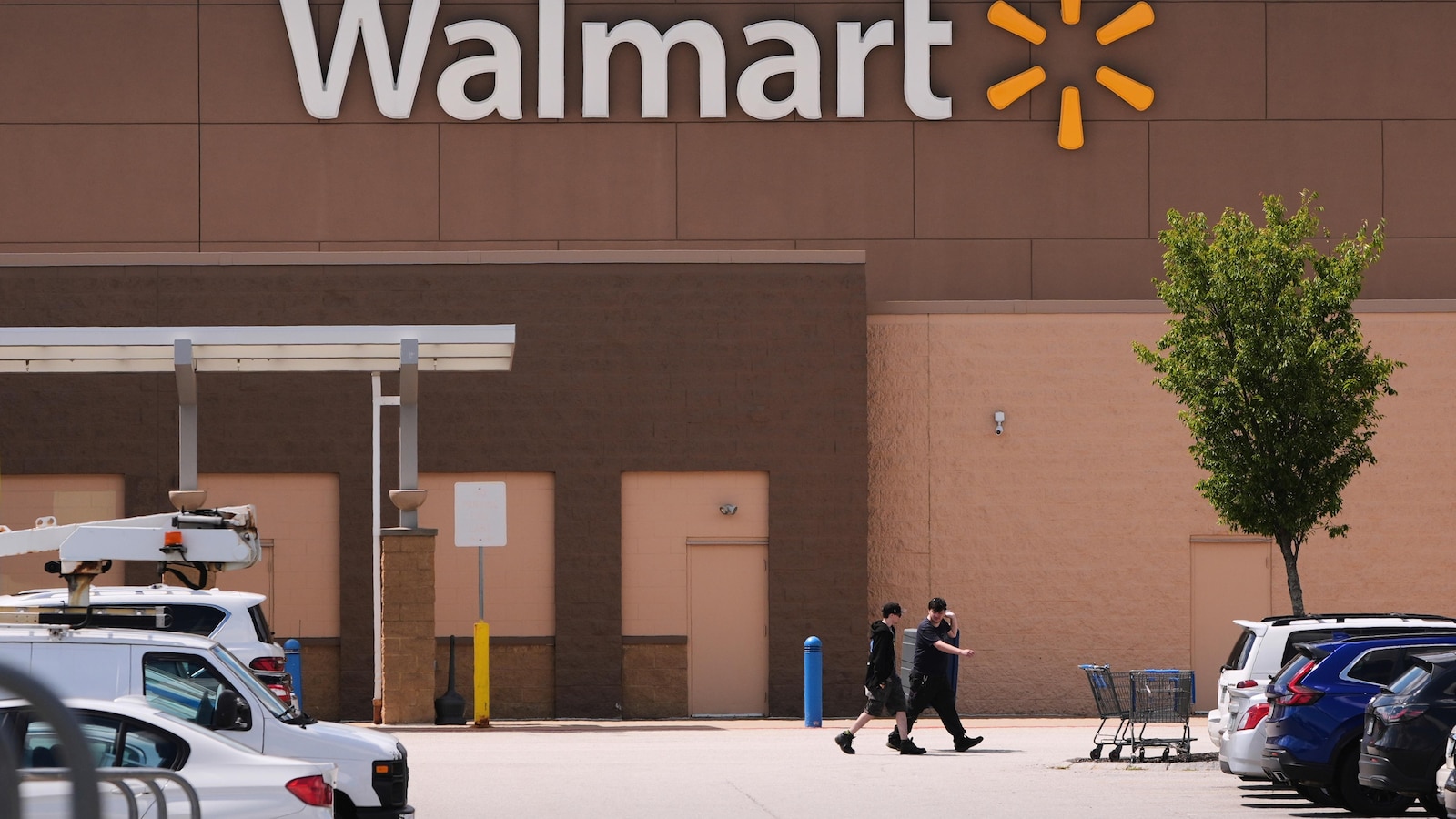
NEW YORK — NEW YORK (AP) — OpenAI is partnering with Walmart to let shoppers make purchases directly within ChatGPT, furthering the artificial intelligence company’s push to turn its chatbot into a virtual merchant as it seeks to boost revenue.
In an Tuesday announcement, Walmart said the new offering will give customers the option to “simply chat and buy.” That means the retailer’s products would be available through instant checkout in ChatGPT — allowing users to buy anything from meal ingredients or household items, to other goods they might be discussing with the chatbot.
“For many years now, eCommerce shopping experiences have consisted of a search bar and a long list of item responses,” Walmart CEO Doug McMillon said in a prepared statement. “That is about to change.”
Sam Altman, cofounder and CEO of OpenAI, added that the partnership would “make everyday purchases a little simpler.”
The companies didn’t immediately specify when ChatGPT users would be able to start purchasing Walmart products within the platform. Tuesday’s announcement from Walmart just noted that the offering would be available “soon.”
But the partnership marks OpenAI’s latest expansion into online commerce. The company has recently launched similar offerings for Shopify and Etsy sellers.
Teaming up with Walmart — the nation’s largest retailer — marks an even more sizeable leap for OpenAI in this space. And competing with the likes of Amazon and Google for purchase fees from digital shopping could be a new source of money for the company. OpenAI hasn’t made a profit and has relied on investors to back the costs of building and running its powerful AI systems.
When announcing its Etsy and Shopify partnerships last month, OpenAI said it worked with payments company Stripe on the technical standards to enable purchases through its “Instant Checkout” system.
Separately, Walmart has worked to boost its own integration of AI across operations and its consumer-facing offerings in recent years. On Tuesday, the Bentonville, Arkansas-based company pointed to its AI shopping assistant named Sparky — as well as other uses of AI technology in product catalogues and customer care for both Walmart and Sam’s Club. Members of Sam’s Club, which is owned by Walmart, will also be able to shop through the coming ChatGPT offering.
Shares of Walmart were up more than 5% by Tuesday afternoon trading.
The latest market gyrations may have some investors seeking ways to generate safe returns without all the drama. The Dow Jones Industrial Average staged a big turnaround on Tuesday, after first dropping more than 600 points over U.S.-China trade fears. The blue-chip index was last up more than 400 points. The S & P 500 and Nasdaq also retreated from their lows of the day, with the former up about 0.3% in afternoon trading. Meanwhile, the Cboe Volatility index — Wall Street’s so-called fear gauge — moved above 22 intraday, a four-month high. It was last trading around 19.48, which is considered a moderate range. The market moves on Tuesday followed Monday’s rally and Friday’s sell off . Wells Fargo Investment Institute anticipates the rockiness to continue. “The sensitivity to trade and other issues may continue in the coming weeks of third-quarter earnings season: Expectations are high for earnings growth, and investors also likely will focus on forward guidance around further tech spending and tariff adjustments,” Doug Beath, global equity strategist at the firm, wrote in a note Monday. “Also, while the government shutdown continues, any plans for hiring or layoffs could move currency, interest rate and equity markets,” he added. The best strategy is to have a plan already in place for down days and find ways to generate income as you ride out the market volatility, said certified financial planner Chuck Failla, founder and CEO of Sovereign Financial Group. “We are still at all-time highs, more or less, for the market,” he said. “If anything, today could be a wake up call to, once and for all, do what you should do.” He suggests dividing your income and total return needs into buckets and investing accordingly. Solid yields on cash For money needed in 12 months or less, as well as a separate emergency fund, cash assets like money market funds, certificates of deposit and Treasury bills are best, Failla said. “What you want to do for the money that you need in the short term is protect your principal,” he said. “You have to accept a lower rate of return in exchange for security.” While yields are not what they once were now that the Federal Reserve is cutting rates, there are still solid payouts to be found. The central bank lowered the federal funds rate by 25 basis points — or 0.25 percentage point — at its September meeting and indicated the possibility of two more cuts by the end of the year. The Fed meets again at the end of the month and markets are pricing in a nearly 97% probability of another 25 basis point cut, according to the CME FedWatch tool . Still, annual percentage rates are hovering just under 4%, with the annualized seven-day current yield on the Crane 100 list of the 100 largest taxable money funds now sitting at 3.94%, as of Monday. Laddering CDs of different maturities is one way to spread out income so you don’t have to do an early withdrawal if you need cash — which will leave you facing a penalty. High-quality fixed income UBS prefers high-quality fixed income assets right now, as it expects slowing growth, a pivot in monetary policy and heightened volatility due to persistent fiscal pressures in the fourth quarter. The firm favors the 3- to 5-year area of the curve. “We expect yield (carry), not spread compression, to be the primary driver of returns in the months ahead,” Leslie Falconio, head of taxable fixed income strategy in UBS Americas’ chief investment office, said in a note Friday. She’s neutral on investment-grade corporate bonds since spreads are tight, but believes they are still a sound way to earn income. Instead, she prefers agency mortgage-backed securities, as well as commercial MBS. Agency MBS are debt obligations issued by agencies such as Fannie Mae, Freddie Mac and Ginnie Mae whose cash flows are tied to the interest and payment on a pool of mortgage loans. Agency MBS have low credit risk because they are backed by the U.S. government. “The current coupon MBS is yielding 5.15%, while the IG Corporate BBB index is only yielding 5.05%. The greater liquidity and higher quality far outweigh the lower credit of IG corporates,” Falconio wrote. Within commercial MBS, those that are rated A and above are attractive, she noted. “A dovish Fed is a tailwind to CMBS performance, and while the CMBS index, which is A and above, has tightened over the past year alongside most risk assets, it continues to offer a pickup in spread and yield to its credit counterparts,” she said. Wells Fargo Investment Institute prefers investment-grade corporates that have maturities of 3 to 5 years. “The resilience of corporate balance sheets has supported historically tight credit spreads, post-COVID corporate management teams have managed balance sheets more dynamically with a strong focus [on] fiscal responsibility,” investment strategy analyst Tony Miano wrote in a separate note Tuesday. Plus, S & P 500 companies are holding about $2 trillion in cash on their balance sheets and earnings remain strong, he added. “In our current outlook we do not anticipate substantial negative economic shocks,” he said. “However, balancing the need for income with relatively tight credit spreads we favor a moving up in credit quality strategy to limit the risks to unexpected economic shocks.” Failla includes high-quality fixed income in his bucket strategy. For money needed in one to two years, 10% is in blue chip stocks and high-quality dividend payers and 90% is in fixed income, where he folds in investment-grade corporate bonds. As the time horizon moves further out, he ups the equity portion, gets more aggressive with holdings and decreases the fixed-income allocations. Outside the U.S. Meanwhile, BlackRock’s Rick Rieder is finding compelling income opportunities outside of the United States. He likes Europe, including investment-grade credit, high yield and securitized products, he recently told CNBC. “The opportunity set is growing, like in securitized, but also the [cross-currency] swap is awesome,” said Rieder, BlackRock’s chief investment officer for global fixed income. He also sees some opportunity in local rate emerging-market bonds due to the weaker dollar. Municipal bonds Investment-grade municipal bonds rallied in September, but there are still plenty of opportunities, according to UBS. The assets appeal to wealthy investors since the income is free of federal taxes and, if the holder lives in the state in which the bond is issued, free of state taxes as well. In fact, munis offer a substantially higher tax-equivalent yield than similarly rated corporates, particularly for longer maturities, Sudip Mukherjee, senior fixed income strategist, said in a note Monday. “The appeal of munis remains wide as the breakeven tax rate — above which the TEY on munis is greater than IG corporates — is currently 24%,” he wrote. “Municipal bonds also offer diversification benefits, as they exhibit a lower correlation with equity markets than corporate bonds.” While yields are still at generationally attractive levels, Hilltop Securities’ Tom Kozlik warns investors not to wait too long to invest. “Economic cracks are widening, and the Fed is signaling more cuts. Investors who wait for perfect clarity risk ‘missing the boat’ on today’s rare combination of still generationally attractive tax-exempt yields and strong credit fundamentals,” he said in a note last week. “Investors need to stay proactive. Look to lock in these attractive tax-exempt yields now and prepare for a market where competition for quality bonds will only grow in the last two months of the year,” added Kozlik, the firm’s head of public policy and municipal strategy. Don’t give up on stocks While protecting your portfolio against volatility is important, so is maintaining exposure to stocks during downturns, said Failla. Trying to time the market never works, plus stocks have historically been a good hedge against inflation, he said. “In your long-term bucket, you want to project purchasing power, which means you have to take some risk,” he said. For money needed in 10 years or more, Failla allocates 90% to 95% to equities. Wells Fargo also remains constructive on stocks and has a 2026 year-end price target of 7,400 to 7,600 for the S & P 500. It expects earnings growth to be the main driver of stock returns next year. The firm continues to favor higher quality areas of the U.S. equity market, like large-cap and mid-caps. Financials remain its most favorable S & P sector. (Learn the best 2026 strategies from inside the NYSE with Josh Brown and others at CNBC PRO Live. Tickets and info here .)
NEW YORK, October 14, 2025 – The Goldman Sachs Group, Inc. (NYSE: GS) today reported net revenues of $15.18 billion and net earnings of $4.10 billion for the third quarter ended September 30, 2025. Diluted earnings per common share (EPS) was $12.25 and annualized return on average common shareholders’ equity (ROE) was 14.2% for the third quarter of 2025.
Please view printable versions of the Third Quarter 2025 Earnings Results [PDF] and the Third Quarter 2025 Earnings Results Presentation [PDF].
David Solomon, Chairman and CEO of Goldman Sachs, said, “This quarter’s results reflect the strength of our client franchise and focus on executing our strategic priorities in an improved market environment. Across our business, clients continue to turn to us for their most complex and consequential matters. We know that conditions can change quickly and so we remain focused on strong risk management. Longer term, we are prioritizing the need to operate more efficiently to seamlessly deliver the firm to our clients helped by new AI technologies.”
A conference call to discuss the firm’s financial results, outlook and related matters will be held at 9:30 am (ET) on the date noted above. The call will be open to the public.
Members of the public who would like to listen to the conference call should dial +1-800-289-0459 (in the U.S.) and +1-323-794-2095 (outside the U.S.) passcode number 7042022. The number should be dialed at least 10 minutes prior to the start of the conference call. The conference call will also be accessible as an audio webcast through the Investor Relations section of the firm’s website, www.goldmansachs.com/investor-relations. There is no charge to access the call. For those unable to listen to the live broadcast, a replay will be available on the firm’s website beginning approximately three hours after the event.
Please direct any questions regarding obtaining access to the conference call to Goldman Sachs Investor Relations, via e-mail, at gs-investor-relations@gs.com.
CHICAGO, Oct. 14, 2025 /PRNewswire/ — CME Group, the world’s leading derivatives marketplace, announced its new options on Solana (SOL) and XRP futures suite are now available for trading. Clients will now have the ability to trade options on SOL, Micro SOL, XRP, and Micro XRP futures, with daily, monthly and quarterly expiries available.
The first trade for options on XRP futures took place on Sunday, October 12 and was executed between Wintermute and Superstate. The first trade for options on SOL futures took place on Monday, October 13 and was executed between Cumberland DRW and Galaxy.
“As the crypto market continues to mature, market participants increasingly are looking to manage their exposure and pursue new opportunities across a wider range of crypto instruments,” said Giovanni Vicioso, Global Head of Cryptocurrency Products at CME Group. “With the deep liquidity we’ve built in our Solana and XRP futures markets, these new options provide traders with additional tools to further enhance their growing cryptocurrency investment and hedging strategies. We are pleased with the early support we’ve seen from a wide range of clients for these new contracts.”
“Wintermute is proud to execute the first block trade in CME Group’s XRP options with Superstate,” said Ethan Ren, Head of Options at Wintermute Group. “The launch marks an important extension of listed crypto derivatives beyond BTC and ETH, reflecting growing sophistication in how market participants manage exposure. We see this as a positive signal for the continued evolution and depth of crypto options markets.”
“We’re pleased to have participated in the first CME Group XRP options block trade alongside Wintermute,” said Saahith Pochiraju, Portfolio Manager at Superstate. “The launch of options on XRP futures expands the instruments available to manage and hedge digital asset exposure within strategies like our Superstate Crypto Carry fund. This development reflects growing institutional depth in crypto derivatives, and we’re glad to support CME Group’s ongoing efforts to broaden liquidity and market access.”
“Cumberland is thrilled to facilitate the first block trade for options on SOL futures, which highlights the strong and growing demand for more ways to trade digital assets,” said Roman Makarov, Head of Cumberland Options Trading at DRW. “Institutional participants are clearly seeking greater choice and depth in crypto markets — a trend that will continue to drive innovation across the ecosystem.”
“We’re proud to facilitate the first block trade on CME Group’s SOL options, expanding institutional access to one of the fastest growing blockchain ecosystems,” said Jason Urban, Global Head of Trading at Galaxy. “The addition of SOL and XRP options marks another important step in the evolution of regulated crypto derivatives, deepening liquidity and broadening the tools available to market participants.”
For more information on these products, please visit www.cmegroup.com/cryptooptions.
As the world’s leading derivatives marketplace, CME Group (www.cmegroup.com) enables clients to trade futures, options, cash and OTC markets, optimize portfolios, and analyze data – empowering market participants worldwide to efficiently manage risk and capture opportunities. CME Group exchanges offer the widest range of global benchmark products across all major asset classes based on interest rates, equity indexes, foreign exchange, cryptocurrencies, energy, agricultural products and metals. The company offers futures and options on futures trading through the CME Globex platform, fixed income trading via BrokerTec and foreign exchange trading on the EBS platform. In addition, it operates one of the world’s leading central counterparty clearing providers, CME Clearing.
CME Group, the Globe logo, CME, Chicago Mercantile Exchange, Globex, and E-mini are trademarks of Chicago Mercantile Exchange Inc. CBOT and Chicago Board of Trade are trademarks of Board of Trade of the City of Chicago, Inc. NYMEX, New York Mercantile Exchange and ClearPort are trademarks of New York Mercantile Exchange, Inc. COMEX is a trademark of Commodity Exchange, Inc. BrokerTec is a trademark of BrokerTec Americas LLC and EBS is a trademark of EBS Group LTD. The S&P 500 Index is a product of S&P Dow Jones Indices LLC (“S&P DJI”). “S&P®”, “S&P 500®”, “SPY®”, “SPX®”, US 500 and The 500 are trademarks of Standard & Poor’s Financial Services LLC; Dow Jones®, DJIA® and Dow Jones Industrial Average are service and/or trademarks of Dow Jones Trademark Holdings LLC. These trademarks have been licensed for use by Chicago Mercantile Exchange Inc. Futures contracts based on the S&P 500 Index are not sponsored, endorsed, marketed, or promoted by S&P DJI, and S&P DJI makes no representation regarding the advisability of investing in such products. All other trademarks are the property of their respective owners.
The study results show the transformative potential of deep learning in medicine, according to Eduardo Moreno Júdice de Mattos Farina, MD, a neuroradiologist and pediatric radiology fellow at Universidade Federal de São Paulo, and Paulo Eduardo de Aguiar Kuriki, MD, neuroradiologist and assistant professor at UT Southwestern Medical Center in Dallas.
In a commentary accompanying the study, Drs. Farina and Kuriki praised the research for validating a publicly available AI tool in an external population and correlating it with clinical data and relevant outcomes, especially respiratory disease mortality and all-cause mortality.
AI models for prognosis like the one examined in the study can support more personalized health care planning, Dr. Farina noted. For instance, two patients with chronic obstructive pulmonary disease (COPD) of the same age and gender with similar lab results might traditionally receive similar care.
“However, an AI model may reveal differences in mortality risk not apparent through conventional means, prompting clinicians to adjust the frequency or intensity of follow-up accordingly,” he said. “This could help allocate resources more efficiently and improve outcomes through tailored management.”
The key challenge going forward, Dr. Farina said, lies in validating whether model-guided interventions genuinely improve patient outcomes without introducing new biases.
“We need randomized controlled trials where care decisions are based on AI predictions to assess their real-world impact,” Dr. Farina said. “Without this level of evidence, the model’s output risks becoming just another number without clinical consequence.”
Dr. Kim echoed Dr. Farina’s call for more research.
“This study focused on mortality, which is an important but relatively abstract outcome,” he said. “For clinical implementation, further research is needed to link the CXR-Lung-Risk score to more actionable endpoints, such as the incidence of specific respiratory diseases or the impact of targeted interventions.”
For More Information
Access the Radiology: Artificial Intelligence article, “Predicting Respiratory Disease Mortality Risk Using Open-Source AI on Chest Radiographs in an Asian Health Screening Population,” and the related commentary, “Predicting Mortality with Deep Learning: Are Metrics Alone Enough?”