Category: 3. Business

  • Capita named Major Contender in Everest’s CXM Services PEAK Matrix® EMEA

    Capita named Major Contender in Everest’s CXM Services PEAK Matrix® EMEA

    The Everest Group PEAK Matrix® assesses the market impact, vision and capability of service providers. This year, the report highlights Capita’s AI solutions and its, technology ecosystem, as well as the company’s ability to deliver high-quality service and respond with agility to client demands, as its key strength areas.

    David Rickard, Partner, Everest Group, said: “Capita’s strong expertise in regulated sectors such as government, BFSI, telecom, and energy and utilities is being reshaped by its bold investments in AI-powered CX capabilities. Through its AI Catalyst Lab and AgentSuite, its gen AI- powered proprietary solutions suite driving agent productivity, quality assurance, and customer insights, Capita is evolving its service portfolio to meet the rising demand for AI-powered customer engagement. These advancements, combined with its strong presence in the UK&I and Germany, underpin Capita’s recognition as a Major Contender in Everest Group’s Customer Experience Management (CXM) Services PEAK Matrix® Assessment 2025 – EMEA.”

    Corinne Ripoche, CEO of Capita Experience, said: “We’re proud to be recognised by Everest Group. It’s a brilliant reflection of the energy, creativity and commitment our teams bring every day.

    “We’re not just imagining the future of customer experience, we’re building it, together with our clients, for their customers.”

    Continue Reading

  • Capita strengthens partnerships with leading brands in Ireland News

    Capita strengthens partnerships with leading brands in Ireland News

    Sparking success in the utilities sector

    A leading energy retailer has extended its partnership with Capita until the end of 2027 in a multimillion-euro deal. Since 2018, Capita has helped reduce debt by 10% annually through specialist collection services, with teams in Ireland and Poland combining local expertise with operational scale to deliver advanced technology, greater efficiencies and outstanding service.

    Driving engagement behind the news

    One of the UK and Ireland’s largest commercial news groups, has confirmed a two-year extension with Capita from 2026. This marks the next phase of a partnership spanning two decades, with Capita managing customer service, order processing, supply chain operations and outbound sales for thousands of newspaper agents across the Republic of Ireland. This renewal reflects confidence in Capita’s ability to run seamless operations and effectively engage audiences.

    Fast-tracking fair outcomes

    A key public sector organisation responsible for resolving claims has signed a one-year extension from the second quarter of 2026. For more than 20 years, Capita has delivered fair and efficient outcomes, introducing digital enhancements such as automated Voice of Customer surveys, SMS reminders powered by Amazon Web Services, and improved role-based access controls. These innovations help claimants and insurers achieve faster resolutions.

    Connecting confidence in telecoms

    A major telecoms brand has renewed its partnership with Capita until 2027, with teams in Ireland and Poland providing diligent debt collection and accounts receivables management to ensure accurate reconciliation and strong financial performance. This renewal reinforces Capita’s role as a trusted partner in safeguarding operational integrity.

    Capita Ireland delivers customer experience solutions supporting utilities, telecoms, retail, and public sector clients with AI-enabled, people-powered solutions. It employs a substantial workforce of over 840 colleagues in its sites in Clonakilty and Little Island, both in Co Cork, and continues to grow through strategic partnerships and technology innovation.

    Corinne Ripoche, CEO of Capita’s Experience Division, said: “These renewals are more than contracts; they represent trust, progress and shared ambition. We are further reinforcing our capability in Ireland and underlining our strategy to be a better business. Each renewal reflects our values: putting customers first, embracing fearless innovation and achieving together.

    “Crucially, these wins span complex customer support across claims, collections, account receivables, and supply chain management. In a world where AI handles the simple tasks, we are able to focus on our people delivering expertise where it matters most.”

    Continue Reading

  • Capita to provide support for Samsung UK consumer customers

    Capita to provide support for Samsung UK consumer customers

    Capita has worked with Samsung UK, a world-renowned technology leader, since 2011, providing customer experience services including technical voice support for mobile customers, customer solutions and online social media community management.

    In 2016, Capita established a Business Service Centre (BSC) to serve the needs of Samsung’s business partners, offering services including technical support, customer service, and managed services.

    Under the new contract, Capita will continue to provide voice, email, and social media community management support to Samsung customers who purchase electronic products, ranging from TVs to mobile phones.

    The new contract will deliver impactful transformation driven by technology, including the migration of the telephony system to AWS Connect-powered Capita Contact and running a proof-of-concept in the BSC with Agent Suite, Capita’s flagship GenAI-powered platform.

    These solutions will provide a more personalised and proactive service, improving the customer and colleague experience. This approach aligns with and supports Samsung’s mission to inspire consumers to adopt the company’s innovative technology, and to get more out of their technology and relationship with Samsung.

    Corinne Ripoche, CEO of Capita Experience, said: “These new contracts further strengthen our 14-year partnership with Samsung, and we will be prioritising innovation and quality to ensure seamless, efficient, and valuable experiences for Samsung and their customers. I am especially excited that we will be driving these experiences via the increased application of technology and AI.”

    “Our focus on transformation for clients by bringing technology, people and processes together is at the heart of Capita’s strategy, and I am looking forward to seeing this in action with Samsung.” 

    Continue Reading

  • STARLUX takes delivery of first Airbus A350-1000

    STARLUX takes delivery of first Airbus A350-1000

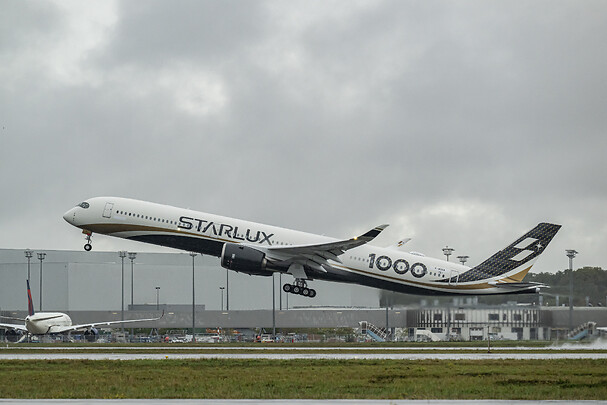
    Toulouse, France, 6 January 2026 – STARLUX Airlines of Taiwan has taken delivery of its first of 18 A350-1000s, becoming the 11th global operator of the largest version of the A350. The new A350-1000 will join a fleet of 10 A350-900s already in service with the airline, deployed on premier long-haul services from Taipei to Europe and North America, as well as selected destinations within the Asia-Pacific region. 

    To mark the arrival of its newest fleet member, STARLUX has unveiled a striking livery that reflects both innovation and identity. The design integrates the airline’s signature visual elements with a carbon-fibre motif, representing the advanced composite materials integral to the aircraft’s construction. The prominent ‘1000’ emblazoned on the fuselage highlights the aircraft’s designation as the largest in-production Airbus model, now serving as the airline’s new flagship.

    STARLUX currently operates an all-Airbus fleet comprising the A321neo, the A330-900, and the A350-900 aircraft. The new A350-1000 will seamlessly complement the airline’s existing fleet. Furthermore, the airline has ordered 10 A350F freighters to develop its future cargo network.

    The A350 is the world’s most modern widebody aircraft and has set new standards for intercontinental travel. The A350’s all-new design includes state-of-the-art technologies and aerodynamics delivering unmatched standards of operational efficiency and passenger comfort. Its new generation engines and use of lightweight materials bring a 25 per cent advantage in fuel burn, operating costs and carbon dioxide (CO₂) emissions, compared to previous generation competitor aircraft. The A350 is equipped with a comfortable and spacious Airspace cabin, wide seats, high ceilings and alluring ambient lighting. 

    As with all Airbus aircraft, the A350 aircraft is already able to operate with up to 50% Sustainable Aviation Fuel (SAF). Airbus is targeting to have its aircraft up to 100% SAF capable by 2030.

    At the end of November 2025, the A350 had won nearly 1,500 orders from 66 customers worldwide.

    @Starluxairlines @Airbus #A350 #LongRangeLeader 

    Continue Reading

  • Rail services resume on West Coast Main Line after upgrade work

    Rail services resume on West Coast Main Line after upgrade work

    Network Rail said the junction was used by up to 500 trains a day, and the project – which cost £26m – took nearly a year of planning.

    Workers replaced 130 track panels and renewed the foundation stone beneath the tracks.

    There were also improvements made to points, switches and crossings.

    Follow-up work is scheduled for Hanslope Junction on 11 and 25 January, with trains between Milton Keynes and Northampton suspended while it takes place.

    While the line was closed, other projects took place nearby.

    Uneven surfaces on platform 4 at Milton Keynes Central Station were replaced. Elsewhere in Buckinghamshire, there was resurfacing work on platforms 3 and 4 at Wolverton Station to improve stepping distances between trains and the platforms.

    At Roade, Northamptonshire, about 1,500m of new rail was installed.

    Continue Reading

  • Share buyback program – 6 January 2026

    Share buyback program – 6 January 2026

    Amsterdam, 6 January 2026 – Arcadis N.V. (Arcadis), the world’s leading company delivering data-driven sustainable design, engineering, and consultancy solutions for natural and built assets, repurchased 246,237 of its own shares in the period 29 December 2025 – 2 January 2026 at an average price of €35.73. The total consideration of this repurchase was €8,798,027.

    The total number of shares repurchased under this program to date is 3,680,327 shares for a total consideration of €141,923,695 at an average price of €38.56.

    The repurchase is in accordance with the share buyback program to reduce the capital of Arcadis, as announced on 1 October 2025.

    Overviews of all transactions under this program are published in weekly press releases and on the website of Arcadis.

    Continue Reading

  • Holcim acquires Alkern to expand in high-value Building Solutions

    About Holcim

    Holcim (SIX: HOLN) is the leading partner for sustainable construction with net sales of CHF 16.2 billion1 in 2024, creating value across the built environment from infrastructure and industry to buildings. Headquartered in Zug, Switzerland, Holcim has more than 45 000 employees in 44 attractive markets – across Europe, Latin America and Asia, Middle East & Africa. Holcim offers high-value end-to-end Building Materials and Building Solutions, from foundations and flooring to roofing and walling – powered by premium brands including ECOPlanet, ECOPact, and ECOCycle®. 

    1 Net sales 2024 restated following spin-off; excludes net sales to Amrize.

    Learn more about Holcim on www.holcim.com, and by following us on LinkedIn.

    Sign up for Holcim’s Building Progress newsletter here.


    Important disclaimer – forward-looking statements:

    This document contains forward-looking statements. Such forward-looking statements do not constitute forecasts regarding results or any other performance indicator, but rather trends or targets, as the case may be, including with respect to plans, initiatives, events, products, solutions and services, their development and potential. Although Holcim believes that the expectations reflected in such forward-looking statements are based on reasonable assumptions as at the time of publishing this document, investors are cautioned that these statements are not guarantees of future performance. Actual results may differ materially from the forward-looking statements as a result of a number of risks and uncertainties, many of which are difficult to predict and generally beyond the control of Holcim, including but not limited to the risks described in the Holcim’s annual report available on its website (www.holcim.com) and uncertainties related to the market conditions and the implementation of our plans. Accordingly, we caution you against relying on forward-looking statements. Holcim does not undertake to provide updates of these forward-looking statements.

    Continue Reading

  • Deloitte’s CFO Survey | UK finance leaders upbeat on tech investment & potential for AI for year ahead

    Deloitte’s CFO Survey | UK finance leaders upbeat on tech investment & potential for AI for year ahead

    UK CFOs upbeat on tech investment and potential for AI to boost productivity for year ahead

    • More than half of finance chiefs (59%) have become more optimistic over the past 12 months on the potential for AI to boost the performance of their organisation, up from 39% in Q3 of 2024; 

    • Almost all of them (96%) expect to see a rise in investment in digital technology and assets by UK companies in the next five years; 

    • Corporate risk appetite (15%) has edged up from the lows seen in September (12%) but remain well below average levels (25%); 

    • CFOs who rated the level of external uncertainty as high or very high fell this quarter to 38%, compared to the last quarter at 41%. 

    Deloitte’s latest survey of UK Chief Financial Officers (CFOs) shows that 59% of the UK’s largest businesses have become more optimistic over the past 12 months on the potential for AI to boost the performance of their own organisation – up from 39% when last measured in the third quarter of 2024. 

    CFOs overwhelmingly (96%) expect to see a rise in investment in digital technology and assets by UK companies over the next five years. The survey – which took place between 2nd and 14th December – also found the vast majority (77%) expect an increase in productivity growth and business performance over the same period. 

    Richard Houston, senior partner and chief executive of Deloitte UK, said: “CFOs are significantly more positive about improving performance through deploying AI and remain upbeat about technology investment over the medium term. We know technology was a big driver of US GDP in 2025 and we see real potential in the year ahead for AI to boost UK business performance and fuel growth. However, to realise the full value from AI, we must combine human skills with technology and upskill people, so nobody is left behind.” 

    Risk appetite increases with reduction in pessimism

    Risk appetite edged up at the end of 2025, with 15% of CFOs saying that it was a good time to take greater risk onto their balance sheet. This is up 12% from the last quarter, though well below the long-run average of 25%. 

    Business optimism in Q4 also picked up from the Q3 low, more positive than Q4 2024 and in line with levels that were seen in March 2025. Nonetheless, the reading on business confidence remains negative at net -13%1, below its long-run average.  

    More expansionary strategies remained a lesser priority although the proportion of CFOs reporting that capital expenditure is a strong priority, rose to a two-and-a-half-year high of 17% and is now running marginally above the long-term average of 15%. 

    Uncertainty declines but geopolitical concerns remain  

    The number of CFOs who rated the level of external uncertainty as high or very high fell this quarter to 38%, compared to the last quarter at 41%. This is the lowest level since Q3 of 2024 (31%). 

    Geopolitics remains the top external risk2 for finance chiefs of large UK businesses heading into 2026 – as it has in the previous three years, with a rating of 65 compared to 62 in the previous quarter. 

    The second highest rated risk relates to UK competitiveness and productivity with a rating of 62, which remains at the highest level since the question was first asked in late 2014. The risk of higher energy prices or disruption to energy supplies rounds out CFOs’ top three risks for 2026, however the rating has marginally fallen this quarter to 47, from 48 in September.  

    Ian Stewart, chief economist at Deloitte UK, said: “Business sentiment is subdued but more positive than a year ago. While CFOs remain cautious about geopolitics and productivity, business confidence and risk appetite have ticked up from their autumn lows and perceptions of external uncertainty have edged lower.”  

    – Ends –   

    Note to editors     

    A number of the Deloitte CFO survey findings are presented in terms of net balances – standard practice with surveys conducted by many central banks. In the case of optimism, CFOs were asked whether they were more or less optimistic about the financial prospects of their business compared to three months ago. The net balance (net -13%) was then computed by subtracting the percentage of CFOs who reported feeling less optimistic from those who reported feeling more optimistic. Net balances can be negative or positive. In the case of optimism, a negative reading implies a greater proportion of CFOs reported feeling less optimistic than reported feeling more optimistic. Throughout this press release and the survey report, net percentages indicate where net balances are used to present findings. 

    The 12 risk areas tracked in the survey are:     

    – Rising geopolitical risks worldwide including greater protectionism  

    – Poor productivity/weak competitiveness in the UK economy    

    – Higher energy prices or disruption to energy supplies    

    – Persistent labour shortages    

    – The risk of higher inflation and/or a bubble in housing and other real and financial assets     

    – The prospect of further rate rises and a general tightening of monetary conditions in the UK and US    

    – Long-term effects of climate change     

    – Economic weakness and/or volatility in US growth    

    – Medium-term supply chain disruption     

    – Deflation and economic weakness in the euro area, and the possibility of a renewed euro crisis     

    – Effects of Brexit/deterioration in UK-EU relations    

    – Weakness and/or volatility in emerging markets    

    About the survey      

    Conducted between 2nd and 14th December 2025, the Q4 2025 Survey is the 74th quarterly survey of Chief Financial Officers and Group Finance Directors of major companies in the UK. 

    Overall, 55 CFOs participated, including the CFOs of nine FTSE 100 companies and 18 FTSE 250 companies. The rest were CFOs of other UK listed companies, large private companies and UK subsidiaries of major companies listed overseas. The combined market value of the 31 UK-listed companies surveyed is £389 billion, or approximately 14% of the quoted UK equity market. 

    The Deloitte CFO Survey is the only survey of major corporate users of capital that gauges attitudes to valuations, risk and financing. 

    For copies of previous CFO surveys, please see here.  


    Continue Reading

  • Deloitte’s CFO Survey | UK finance leaders upbeat on tech investment & potential for AI for year ahead

    Deloitte’s CFO Survey | UK finance leaders upbeat on tech investment & potential for AI for year ahead

    UK CFOs upbeat on tech investment and potential for AI to boost productivity for year ahead

    • More than half of finance chiefs (59%) have become more optimistic over the past 12 months on the potential for AI to boost the performance of their organisation, up from 39% in Q3 of 2024; 

    • Almost all of them (96%) expect to see a rise in investment in digital technology and assets by UK companies in the next five years; 

    • Corporate risk appetite (15%) has edged up from the lows seen in September (12%) but remain well below average levels (25%); 

    • CFOs who rated the level of external uncertainty as high or very high fell this quarter to 38%, compared to the last quarter at 41%. 

    Deloitte’s latest survey of UK Chief Financial Officers (CFOs) shows that 59% of the UK’s largest businesses have become more optimistic over the past 12 months on the potential for AI to boost the performance of their own organisation – up from 39% when last measured in the third quarter of 2024. 

    CFOs overwhelmingly (96%) expect to see a rise in investment in digital technology and assets by UK companies over the next five years. The survey – which took place between 2nd and 14th December – also found the vast majority (77%) expect an increase in productivity growth and business performance over the same period. 

    Richard Houston, senior partner and chief executive of Deloitte UK, said: “CFOs are significantly more positive about improving performance through deploying AI and remain upbeat about technology investment over the medium term. We know technology was a big driver of US GDP in 2025 and we see real potential in the year ahead for AI to boost UK business performance and fuel growth. However, to realise the full value from AI, we must combine human skills with technology and upskill people, so nobody is left behind.” 

    Risk appetite increases with reduction in pessimism

    Risk appetite edged up at the end of 2025, with 15% of CFOs saying that it was a good time to take greater risk onto their balance sheet. This is up 12% from the last quarter, though well below the long-run average of 25%. 

    Business optimism in Q4 also picked up from the Q3 low, more positive than Q4 2024 and in line with levels that were seen in March 2025. Nonetheless, the reading on business confidence remains negative at net -13%1, below its long-run average.  

    More expansionary strategies remained a lesser priority although the proportion of CFOs reporting that capital expenditure is a strong priority, rose to a two-and-a-half-year high of 17% and is now running marginally above the long-term average of 15%. 

    Uncertainty declines but geopolitical concerns remain  

    The number of CFOs who rated the level of external uncertainty as high or very high fell this quarter to 38%, compared to the last quarter at 41%. This is the lowest level since Q3 of 2024 (31%). 

    Geopolitics remains the top external risk2 for finance chiefs of large UK businesses heading into 2026 – as it has in the previous three years, with a rating of 65 compared to 62 in the previous quarter. 

    The second highest rated risk relates to UK competitiveness and productivity with a rating of 62, which remains at the highest level since the question was first asked in late 2014. The risk of higher energy prices or disruption to energy supplies rounds out CFOs’ top three risks for 2026, however the rating has marginally fallen this quarter to 47, from 48 in September.  

    Ian Stewart, chief economist at Deloitte UK, said: “Business sentiment is subdued but more positive than a year ago. While CFOs remain cautious about geopolitics and productivity, business confidence and risk appetite have ticked up from their autumn lows and perceptions of external uncertainty have edged lower.”  

    – Ends –   

    Note to editors     

    A number of the Deloitte CFO survey findings are presented in terms of net balances – standard practice with surveys conducted by many central banks. In the case of optimism, CFOs were asked whether they were more or less optimistic about the financial prospects of their business compared to three months ago. The net balance (net -13%) was then computed by subtracting the percentage of CFOs who reported feeling less optimistic from those who reported feeling more optimistic. Net balances can be negative or positive. In the case of optimism, a negative reading implies a greater proportion of CFOs reported feeling less optimistic than reported feeling more optimistic. Throughout this press release and the survey report, net percentages indicate where net balances are used to present findings. 

    The 12 risk areas tracked in the survey are:     

    – Rising geopolitical risks worldwide including greater protectionism  

    – Poor productivity/weak competitiveness in the UK economy    

    – Higher energy prices or disruption to energy supplies    

    – Persistent labour shortages    

    – The risk of higher inflation and/or a bubble in housing and other real and financial assets     

    – The prospect of further rate rises and a general tightening of monetary conditions in the UK and US    

    – Long-term effects of climate change     

    – Economic weakness and/or volatility in US growth    

    – Medium-term supply chain disruption     

    – Deflation and economic weakness in the euro area, and the possibility of a renewed euro crisis     

    – Effects of Brexit/deterioration in UK-EU relations    

    – Weakness and/or volatility in emerging markets    

    About the survey      

    Conducted between 2nd and 14th December 2025, the Q4 2025 Survey is the 74th quarterly survey of Chief Financial Officers and Group Finance Directors of major companies in the UK. 

    Overall, 55 CFOs participated, including the CFOs of nine FTSE 100 companies and 18 FTSE 250 companies. The rest were CFOs of other UK listed companies, large private companies and UK subsidiaries of major companies listed overseas. The combined market value of the 31 UK-listed companies surveyed is £389 billion, or approximately 14% of the quoted UK equity market. 

    The Deloitte CFO Survey is the only survey of major corporate users of capital that gauges attitudes to valuations, risk and financing. 

    For copies of previous CFO surveys, please see here.  


    Continue Reading

  • Australian shares lower as miners lift

    Australian shares lower as miners lift

    Australia’s sharemarket has swung to a loss after an early lift, as valuation concerns and portfolio rebalancing dragged on the index.

    The S&P/ASX200 fell 37.9 points on Tuesday, down 0.43 per cent, to 8,690.7, as the broader All Ordinaries lost 31.2 points, or 0.35 per cent, to 9,003.5.

    Only two sectors ended the session clearly higher, with raw materials stocks surging two per cent on strong commodity prices, while financials, utilities, consumer staples and health care stocks all lost more than one per cent.

    The Australian dollar is buying 67.25 US cents, hovering at 14-month highs and up from 66.75 US cents on Monday at 5pm.

    Continue Reading