Category: 3. Business

  • Ascletis Announces U.S. FDA IND Clearance for 13-Week Phase II Study of Its Oral Small Molecule GLP-1, ASC30, in Participants with Diabetes

    The Phase II study for diabetes is a 13-week, randomized, double-blind, placebo-controlled and multi-center study to evaluate the efficacy, safety, and tolerability of ASC30 in participants with diabetes. Enrollment is expected to begin in the first quarter of 2026.

    -ASC30 demonstrated placebo-adjusted weight loss of 7.7% in a recently completed 13-week U.S. Phase II study in participants with obesity or overweight, with better gastrointestinal tolerability. No hepatic safety signal was observed.

    HONG KONG, Jan. 4, 2026 /PRNewswire/ — Ascletis Pharma Inc. (HKEX: 1672, “Ascletis”) announces today that it recently received the Investigational New Drug (IND) clearance from the U.S. Food and Drug Administration (FDA) for the Phase II study of its oral small molecule GLP-1, ASC30, in participants with diabetes. The Phase II study is a 13-week, randomized, double-blind, placebo-controlled and multi-center study to evaluate the efficacy, safety, and tolerability of ASC30 in participants with type 2 diabetes mellitus. The primary endpoint of the Phase II study is the mean change from baseline in HbA1c up to 13 weeks in the treatment group compared with the placebo group. Secondary endpoints include the mean change from baseline in fasting blood glucose up to 13 weeks in the treatment group compared with the placebo group, the mean change from baseline in body weight up to 13 weeks in the treatment group compared with placebo group, and safety and tolerability. The Phase II study will enroll approximately 100 participants with type 2 diabetes mellitus at multiple sites across the U.S. Participants will be randomly assigned in a ratio of approximately 2:3:3:2 to 40 mg, 60 mg and 80 mg ASC30 tablets and matching placebo tablets, respectively. ASC30 will be titrated weekly from 1 mg to target doses of 40 mg, 60 mg and 80 mg. Enrollment is expected to begin in the first quarter of 2026.

    Ascletis recently completed its 13-week Phase II study evaluating ASC30, an oral small molecule GLP-1 receptor (GLP-1R) agonist for the treatment of obesity (NCT07002905) in 125 participants with obesity or overweight with at least one weight-related comorbidity at multiple sites across the U.S. At the 13-week primary endpoint, ASC30 once-daily tablets showed statistically significant, clinically meaningful and dose-dependent placebo-adjusted mean body weight reductions of 5.4%, 7.0% and 7.7% for 20 mg, 40 mg and 60 mg, respectively. No plateau was observed for weight loss. The vomiting rate of ASC30 titrated weekly to target dose was approximately half of the published vomiting rate observed with orforglipron titrated weekly. The gastrointestinal tolerability of ASC30 titrated weekly was comparable to published results of orforglipron titrated every four weeks in the Phase III ATTAIN-1 study. The total treatment discontinuation rate due to adverse events for the ASC30 Phase II study for obesity or overweight was 4.8%.

    ASC30 was discovered and developed in-house at Ascletis as a first and only investigational small molecule GLP-1R fully biased agonist designed to be dosed once daily orally and once monthly to once quarterly subcutaneously for the treatment of obesity, diabetes and other metabolic diseases.

    “IND clearance for this Phase II study for diabetes is a significant milestone for Ascletis as we continue to build upon the data for ASC30,” said Jinzi Jason Wu, Ph.D., Founder, Chairman and CEO of Ascletis, “Furthermore, the FDA’s clearance of our IND expands entry for ASC30 into clinical development for the large diabetes treatment market.”

    About Ascletis Pharma Inc.

    Ascletis Pharma Inc. is a fully integrated biotechnology company focused on the development and commercialization of potential best-in-class and first-in-class therapeutics to treat metabolic diseases. Utilizing its proprietary Artificial Intelligence-Assisted Structure-Based Drug Discovery (AISBDD) and Ultra-Long-Acting Platform (ULAP) technologies as well as Peptide Oral Transport ENhancement Technology (POTENT), Ascletis has developed multiple drug candidates in-house, including both small molecules and peptides, such as its lead program, ASC30, a small molecule GLP-1R agonist designed to be administered once daily orally and once monthly to once quarterly subcutaneously as a treatment therapy and a maintenance therapy for chronic weight management; ASC36, a once-monthly subcutaneously administered amylin receptor peptide agonist, ASC35, a once-monthly subcutaneously administered GLP-1R/GIPR dual peptide agonist and ASC37, an oral GLP-1R/GIPR/GCGR triple peptide agonist for chronic weight management. Ascletis is listed on the Hong Kong Stock Exchange (1672.HK).

    For more information, please visit www.ascletis.com.

    Contact:
    Peter Vozzo
    ICR Healthcare
    443-231-0505 (U.S.)
    [email protected] 

    Ascletis Pharma Inc. PR and IR teams
    +86-181-0650-9129 (China)
    [email protected]
    [email protected] 

    SOURCE Ascletis Pharma Inc.

    Continue Reading

  • Australian stocks will crush housing over the next decade, 2025 edition

    Australian stocks will crush housing over the next decade, 2025 edition

    In December 2023, I made a bold prediction: returns from Australian shares would handily beat those from residential property over the next 10 years.

    In that article, I explained how Australian housing was ludicrously priced, up to 40% overvalued. And that property was far more expensive than the ‘Magnificent Seven’ US tech stocks, which were richly valued yet had infinitely better growth prospects.

    I went into detail on why I thought future housing performance would disappoint, with forecast 2-5% annual returns over the coming decade (ending November 2033). I said the bottom end of those return estimates was the most likely scenario and, if right, it meant property gains would struggle to keep pace with inflation.

    Meanwhile, Australian stocks were much more reasonably priced then, trading at price-to-earnings multiples in line with history. I surmised that ASX share returns were likely to be far superior to those of housing, in the range of 6.5-10% over the subsequent 10 year period. I suggested the middle of that range was most probable, though that depended on whether company earnings picked up.

    Where we stand today

    How is it played out to date? If I took a poll of readers, the majority might suggest that property has outperformed shares over the past 24 months. After all, there’s been breathless commentary on the latest “property boom” and equally breathless press on Australian stocks being ho-hum.

    If you guessed that property has had superior returns, you’d be wrong.

    Over the past 12 months, property has done better. Housing in the capital cities has risen 10.6% (including gross rent) compared to ASX 200 returns of 5.5% (including dividends).

    Over the past two years, it’s a different story. The ASX 200 is up a cumulative 30.2%, at a compound annual growth rate (CAGR) of 14.1%. That compares to housing where prices have increased by a total of 20.2%, or 9.6% CAGR.

    Shares versus property returns

    Note: ASX 200 returns include dividends. Housing = capital city returns. Sources: Morningstar, Cotality, Firstlinks.

    Thus far, my forecast of shares handily beating property is working out. However, it’s worth noting that the annual returns for both shares and property are well above my initial estimates made in December 2023.

    What’s driven share gains?

    The past year hasn’t been great for ASX shares, though it hasn’t been a disaster. Total 12 month returns of 5.47%, including dividends, are well below historical average returns of close to 10% per annum (p.a.). And they’ve badly trailed other developed markets, including the US, where the S&P 500 has returned 15% including dividends over the past year.

    Why has the ASX lagged? A few reasons.

    First, bank share prices have pulled back after a huge, and largely unwarranted, run up. For instance, CBA shares peaked at $192 in late June and have since tanked 21%.

    Second, other index heavyweights haven’t picked up the slack. Despite a market rotation away from banks, BHP was only up 3% over the past year. CSL has also continued to disappoint, down 34% over the 12 months as turnaround efforts failed to gain traction with investors.

    Third, the bigger picture is that company earnings haven’t met market forecasts. In fact, earnings growth has been negative for three consecutive years.

    With earnings having gone nowhere, valuation expansion has driven the 30% increase in the ASX 200 since my initial article in 2023. In simple terms, that means investors have been willing to pay a higher price for company earnings.

    The ASX 200 is now trading at a price-to-earnings (P/E) ratio of 17.9x, well above its 20-year average of 14.7x.

    asx pe ntm

    Despite the recent drop in CBA shares, bank valuations remain 40% above their long run average. Meanwhile, resource and health stocks appear reasonably priced.

    asx 200 valuations vs 20 year metrics

    A property bounce

    Two factors are behind property price increases over the past few years.

    First, there’s been muted supply of new housing. Construction firms have struggled with high costs, making building homes largely unviable. Federal Government commitments to boost supply haven’t worked either. The government pledged to build 1.2 million homes over five years, yet one year on, they’ve only completed 174,000 homes, well below their 240,000 annual target. Red tape and struggles to get qualified tradies have restricted supply.

    Second, housing demand has picked up. RBA interest rate cuts starting in February this year have played their part. Lower rates boost the relative appeal of housing as an investment and they allow home buyers to borrow more.

    Over the past 45 years, five of the last seven rate cutting cycles have led to property price rises. The only exceptions were those that began during the recessions of the 1980s and 1990s. And the average gain in housing prices after the first RBA rate cut is 4% over 12 months and 8% over 18 months.

    australian average home prices after the first rba cut

    The property price rises this year following the first RBA cut are in line with these historical averages.

    Government policies to help first home buyers have also stoked demand. The government’s low deposit guarantee scheme allowing first home buyers to access loans with a 5% deposit was brought forward to October 1 this year. Recently, the government’s Help to Buy Scheme started, provided 10,000 places a year where the government will take a 30-40% equity stake in the purchase price of a property for an owner occupier.

    Strong population growth has also fuelled demand for housing. Yes, that growth has slowed since last year, but it remains well above historical levels.

    australia population growth

    AMP chief economist Shane Oliver estimates that the supply-demand imbalance has led to a cumulative shortage of at least 220,000 homes:

    “Up until 2005 the housing market was in rough balance. It then went into a massive shortfall of about 250,000 dwellings by 2014 as underlying demand surged with booming immigration. This shortfall was then cut into by the 2015-20 unit building boom and the pandemic induced hit to immigration.

    But it’s since rebounded again to around 220,000 dwellings, or possibly as high as 300,000 if the pandemic induced fall in household size is allowed for. The shortfall is confirmed by low rental vacancy rates.”

    housing shortfall australia
    home construction vs population growth australia

    On those rental vacancies, the latest figures confirm a still tight rental market, despite a minor tick up in vacancy rates in November. Over the past year, Sydney has been the largest driver for falling vacancy rates.

    vacancy rates november 2025

    Falling vacancies have led to continued growth in rents.

    annual changes in rental rates to november 2025

    Source: Cotality.

    Where to from here?

    I remain comfortable with my initial forecasts for decade-long stock and property returns.

    It wouldn’t be a surprise to see a pullback in stocks in the short term given excessive market valuations compared to history.

    The medium term outlook for shares will depend on earnings growth coming through. The good news is that we are starting to see better company profits. The market now expects ASX 200 earnings growth of 7.9% in the 2026 financial year.

    return to positive asx 200 earnings growth expected in fy2026

    For property, the sugar rush for demand from RBA cuts is over, with the next move in rates likely to be up.

    That said, housing supply will still struggle to keep up with demand in the near term. Migration levels remain too high and government policies to help first home buyers only fuels purchases and higher prices (and sadly, the government knows this).

    Affordability is the biggest handbrake on higher property prices. Nationwide, the house price to income ratio is 9.7x, up from just 2.8x almost 40 years ago.

    international house price to income ratios

    A 20% deposit now takes a record 11.0 years to save, up from 10.6 a year prior, and a 20-year average of 9.1 years.

    years to save 20% deposit

    Note: Assumes a 15% per annum household savings rates. Source: Cotality.

    And the portion of income required to service a mortgage is 45%. That’s down from 47.1% a year ago, though it is well above the 20-year average of 34%.

    portion of income required to service a new mortgage over time

    Source: Cotality.

    Meanwhile, Australians are swimming in debt, with household debt to income ratios of 182%, among the highest in the developed world.

    household debt to income

    Affordability is likely to put a cap on house prices. Put simply, property price growth can’t continue to exceed income growth as it will result in ever more unaffordable home prices, and given our debt levels, there’s a limit to how long that can go on.

    Politics is the biggest long-term wildcard for property. It’s becoming clear that younger generations are getting fed up with rising house prices, and government policies that stoke demand and further increase prices. Their anger is finding its way to the ballot box as record numbers move away voting for the major political parties.

    As the young increase in numbers in future elections, this may increase pressure on the government to use blunter tools to cap house prices.

    This article first appeared in Firstlinks, a Morningstar Australia publication. If you’d like to join the conversation and contribute your thoughts, you can leave a comment on the original article here.

    Subscribe to get Morningstar insights in your inbox

    Continue Reading

  • Record national home prices reached in 2025

    Record national home prices reached in 2025

    The latest PropTrack report, released on Monday, showed prices rose 0.1 per cent over the month and climbed 8.8 per cent across 2025.

    Sydney and Melbourne ease at year end

    Home prices in Sydney and Melbourne both declined by 0.3 per cent in December, marking a softer finish to the year for Australia’s two largest housing markets.

    Despite the monthly falls, prices in both cities remained well above year-earlier levels. Sydney’s median home value reached $1.24 million after annual growth of 6.4 per cent, while Melbourne recorded a median of $854,000 following a 4.5 per cent rise over the year.

    Strong momentum in Brisbane, Adelaide and Perth

    Brisbane’s housing market continued to surge, with the median home price tipping above $1 million to $1.01 million after annual growth of 14.6 per cent.

    Adelaide was the strongest-performing capital city in December, recording a 0.8 per cent monthly increase to a median of $908,000. Prices in the South Australian capital rose 12.8 per cent over the year.

    Perth also delivered robust gains, rising 0.5 per cent over the month to a median value of $950,000, supported by annual growth of 17.2 per cent.

    Regional markets outperform over the year

    Regional housing markets continued to outperform capital cities throughout 2025, recording stronger price growth both over the month and across the full year.

    PropTrack found regional prices rose 0.4 per cent in December and delivered higher annual growth than capital city markets, reflecting ongoing demand pressures and tighter supply conditions.

    Growth expected to slow across 2026

    REA Group senior economist and report author Anne Flaherty said national home prices were likely to reach further highs in 2026, though the pace of growth was expected to moderate.

    “Home prices are predicted to head to new highs in 2026, however, the pace of growth is expected to slow,” she said.

    “Price growth in 2025 was supported by three rate cuts.”

    With no further interest rate cuts currently anticipated this year, Ms Flaherty said there remained a risk rates could rise if domestic inflation proved persistent.

    Supply shortages and policy settings remain key

    Ms Flaherty said limited housing supply and sustained demand were likely to continue supporting prices, potentially offsetting the impact of any interest rate increases by the Reserve Bank of Australia.

    She also pointed to the federal government’s five per cent deposit scheme as a factor likely to underpin demand, particularly at the more affordable end of the market.

    “The Australian government’s five per cent deposit scheme is also likely to support price growth by driving up demand, particularly at the more affordable end of the market,” she said.

    Rising construction costs and ongoing labour shortages across the building sector are also expected to keep new housing supply well below what is required, placing continued upward pressure on prices.

    Other data confirms strong year for housing

    Separate figures released by PropTrack rival Cotality on Friday showed Australian home values rose 8.6 per cent in 2025, adding around $71,400 to the national median dwelling value.

    It marked the strongest calendar-year increase in home values since 2021, when prices surged 24.5 per cent amid emergency low interest rates and heightened demand during the pandemic.

    Continue Reading

  • Sydney Metro announces partners for Hunter Street Station precinct

    Sydney Metro announces partners for Hunter Street Station precinct

    Sydney, 5 January 2026: Sydney Metro has today announced the appointment of Lendlease, Mirvac and Coombes Property Group as development and delivery partners for the new Hunter Street metro precinct, marking another significant step forward in the delivery of Sydney Metro West.

    The project will deliver a landmark metro station and two over station developments in the commercial heart of Sydney’s CBD.

    Lendlease, Mirvac and Coombes Property Group bring together leading expertise in station delivery, commercial development and placemaking to deliver what will be one of Sydney’s most transformative urban projects.

    Lendlease in partnership with Sydney Metro will deliver the new Hunter Street Station which will become a central nexus of the Metro West network, connecting Barangaroo, Wynyard, Hunter Street and Martin Place. Set to be one of the busiest stations on the Metro West line, Hunter Street Station is expected to see more than 15,000 people move through the station every hour in the morning peak, with that number to increase to more than 30,000 by 2061.  

    The precinct will also feature two commercial towers above the station entrances – one to the west on the corner of George and Hunter Streets delivered by Lendlease and the second to the east on O’Connell and Hunter Streets delivered jointly by Mirvac and Coombes Property Group. Each tower will be activated by retail and hospitality offerings, alongside high-quality public spaces and laneways that create a destination for work, culture and connection.  

    Lendlease is expected to commence construction of the station’s main works in late 2026, with the station scheduled to open in 2032 in line with the opening of Metro West services. The over station developments are targeted to complete following the station opening. 

    Quotes attributable to Tom Mackellar, CEO Development, Lendlease 

    “Lendlease brings extensive experience in delivering city shaping, integrated station developments, including Metro Martin Place and Victoria Cross, and will apply that expertise to set new benchmarks for transport-led precincts with the delivery of the Hunter Street project.

    “We’re looking forward to working with Sydney Metro to deliver a seamlessly connected destination that integrates workplaces, retail and public spaces, creating long-term economic and social value for Sydney.”

    Quotes attributable to Stuart Penklis, CEO Development, Residential & Commercial Mixed Use, Mirvac

    “We are thrilled to partner with Coombes Property Group to deliver one of the two landmark office towers, which will redefine the Sydney CBD office market and set a new standard for premium workplaces.

    “Directly connected to the new Hunter Street Metro Station, the building offers unrivalled accessibility and is designed to achieve the highest sustainability ratings, including Platinum WELL. Leveraging our ability to deliver premium office developments, this will be a future focused workplace that brings together cutting edge design, technology and environmental performance in the heart of the CBD.”

    Quotes attributable to Michael Coombes, CEO, Coombes Property Group

    “Coombes Property Group is proud to be co-owner and co-developer of the East Over Station Development at Hunter Street alongside Mirvac, to deliver one of the most significant city-shaping projects in Sydney’s CBD. 

    “The precinct will contribute meaningfully to the city – creating enduring commercial space, high-quality public amenity and a connected destination that serves the workforce and wider community. Working alongside Grimshaw Architects, we are delivering a premium, sustainable workplace directly connected to the new Metro at the heart of Sydney’s commercial core.” 

    For more information:

    Lendlease
    Ashley Chrysler
    Senior Manager External Affairs – NSW/ACT/QLD
    ashley.chrysler@lendlease.com
    +61 472 653 297

    Coombes Property Group
    Jayitri Smiles at Keep Left, on behalf of Coombes
    jsmiles@keepleft.com.au
    +61 468 914 627

    Continue Reading

  • Joint media release: Powering the renewable energy transition: a year in review – DCCEEW

    1. Joint media release: Powering the renewable energy transition: a year in review  DCCEEW
    2. Australia set to miss green energy goal by up to a decade  The Australian
    3. Writer and broadcaster Kel Richards analyses the Liberal Party abandoning net zero as power prices are up 40 per cent since Labor implemented the renewables agenda.  facebook.com
    4. Belatedly noting ‘Topical Report #2 Australia’s Progress to Net Zero by 2050’  WattClarity
    5. Mixed report card for green energy push  The Australian

    Continue Reading

  • CBA supports record client activity in Australia’s debt capital markets

    CBA supports record client activity in Australia’s debt capital markets

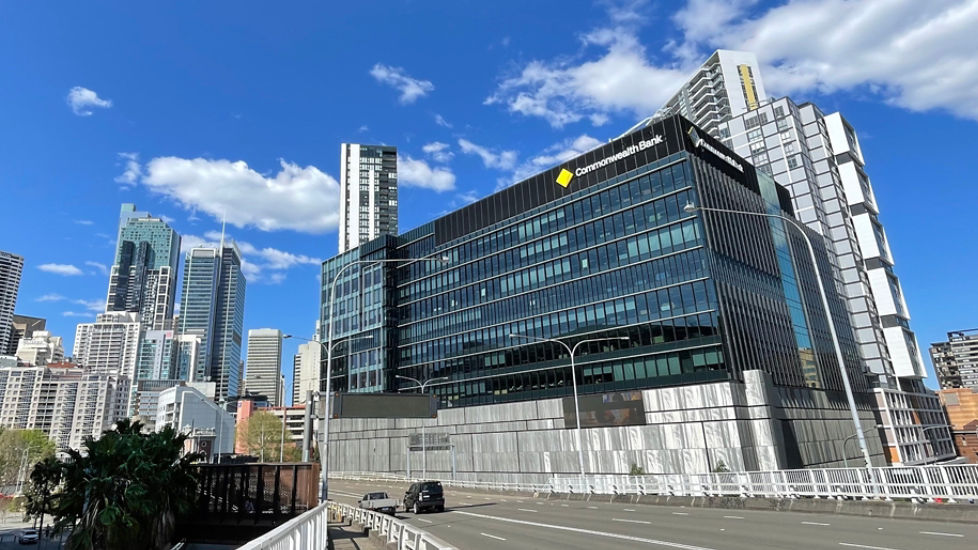
    Commonwealth Bank of Australia (CBA) has been ranked the number one manager for both bonds and syndicated loans in Bloomberg’s 2025 Australia League Tables, underscoring its leadership in a year when Australia’s bond market came close to setting a new issuance record. 

    Throughout 2025, CBA supported clients to raise over A$120bn across 139 bond issuances and in excess of A$62 billion from a broad range of syndicated loan activity. This contributed to a near-record year for Australia’s bond market, with total issuance (at A$320.07 billion) approaching the all-time high of A$324.66 billion set in 2024. 

    In a sign of the market’s growing depth and maturity, Australia’s bond market drew increased interest from both off-shore investors and issuers, with Kangaroo bonds – debt denominated in Australian dollars but issued by foreign entities – contributing A$66.71 billion, or 21% of this year’s new issuance. 

    “We’ve been trusted to assist more issuers and investors in accessing Australia’s debt capital markets in 2025 than ever before. The momentum we’ve seen in 2025 – with many clients identifying Australia as a preferred market for frequent issuance alongside the US and Europe, and the continued growth in foreign participation – signals a new level of maturity in Australia’s capital markets,” said Chris McLachlan, Executive General Manager Global Markets at Commonwealth Bank. “As we look ahead to 2026, we expect to see further product development and innovation, enabling our financial system to support even greater demand and opportunity for our clients.” 

    “Every dollar of capital we help bring into Australia’s markets is an investment in the country’s future, funding new infrastructure, supporting businesses, and strengthening the foundations of our financial system. Strong and sustained capital inflows are essential for a dynamic and competitive economy. By deepening Australia’s capital markets and broadening the investor base, we’re enabling more efficient funding for innovation, job creation, and long-term investment—benefiting not just our clients, but the economy as a whole,” McLachlan said. 

    CBA’s leadership in the league tables reflects the bank’s ability to deliver for clients across the full spectrum of debt products including residential mortgage-backed securities, government, semi-government, corporate, securitisation, and private placements.  

    “Our franchise strength is underpinned by the breadth of our product suite and our consistent presence in every segment of the market, with our team’s capability to facilitate the flow of global capital into Australia,” McLachlan added. “Our focus remains on delivering insights, liquidity and execution excellence for our clients, no matter how the market landscape shifts in the year ahead.” 

    Continue Reading

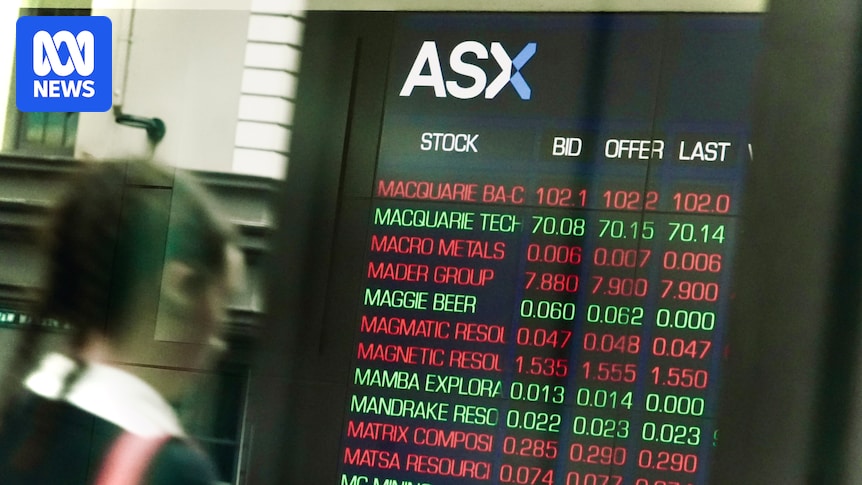
  • Markets live updates: Oil prices on watch after US strikes on Venezuela, ASX poised to edge higher

    Markets live updates: Oil prices on watch after US strikes on Venezuela, ASX poised to edge higher

    Market snapshot

    • ASX 200 futures: +0.1% to 8,718 points
    • Australian dollar: -0.1% to 66.85 US cents
    • S&P 500 (Friday): +0.2% to 6,858 points
    • Nasdaq (Friday): Flat at 23,235 points
    • FTSE (Friday): +0.2% to 9,951 points
    • EuroStoxx (Friday): +0.9% to 617 points
    • Spot gold: +0.4% to $US4,329/ounce
    • Brent crude: -0.2% to $US60.75/barrel
    • Bitcoin: -0.1% to $US91,135

    Price current around 9:00am AEDT

    Live updates on the major ASX indices:

    ASX to open up

    Good morning and welcome to our first markets live blog of 2026, where we’ll bring you the latest price action and news on the ASX and beyond.

    Australian shares are set to edge higher at open on Monday, with energy stocks expected to be in focus after the US strike on Venezuela sparked concerns about oil supplies.

    ASX futures were up 11 points or 0.1 per cent to 8,718 at 8:30am AEDT.

    At the same time, the Australian dollar was down 0.2 per cent to 60.70 US cents.

    Spot gold gained 0.4 per cent to $US4,329, while Brent crude oil was sitting at $US60.75 a barrel.

    Loading

    Continue Reading

  • Here are some of the new rules in Ontario coming into effect on Jan. 1

    Here are some of the new rules in Ontario coming into effect on Jan. 1

    New laws, regs for the new year include rules on pay transparency for job postings and harsher penalties for impaired driving offences

    New laws and regulations are coming to Ontario in the new year, including rules on pay transparency for job postings and harsher penalties for impaired driving offences.

    Here are some of the rules and changes coming into effect as of Jan. 1:

    WORKFORCE

    The province is taking measures to compel employers to disclose salary information on job postings.

    Some of the changes include requirements that employers with more than 25 employees note compensation ranges in publicly advertised job postings and disclose the use of artificial intelligence in screening, assessing or selecting applicants.

    The new rules stipulate that the annual salary range on a posting must not exceed a gap of $50,000, unless the job pays more than $200,000, or where the top end of the range is more than $200,000.

    The province says certain employers will be required to disclose in job postings whether a vacancy currently exists, and to respond to interviewees within 45 days after their interview.

    Also new as of Jan. 1 are changes to Ontario’s “as of right” framework that will allow certified professionals from other Canadian jurisdictions to start working in the province within 10 business days, for up to six months while completing their full registration, once a regulator confirms their credentials and requirements. The province says these rules apply across professions regulated by more than 50 non-health regulatory authorities and 300 certifications and include engineers, architects and electricians.

    HEALTH CARE

    Ontario’s “as of right” rules will also expand to 16 additional out-of-province health professions, including optometrists, pharmacists, physician assistants and dentists.

    The province says an amendment to its immigration act also updates the list of eligible licence classes for self-employed physicians applying to Ontario’s immigrant nominee program, as part of efforts to attract and retain foreign doctors.

    The province is also expanding the scope of practice of midwives and Indigenous midwives and making changes to the provincial newborn and prenatal screening programs. The new rules add 29 tests to the list of tests midwives can order, and also adds multiple tests to the province’s prenatal screening program.

    ON THE ROADS

    The province says it’s cracking down on impaired driving with new measures that include a lifetime driver’s licence ban upon conviction for impaired driving causing death and mandatory remedial education for first-time alcohol or drug-related occurrences on the road.

    Ontario is also introducing an escalation of licence suspensions for vehicle theft, such as a lifetime suspension for a third conviction.

    CHILDREN AND FAMILIES

    The Ontario government will no longer consider Canadian Disability Benefit payments as income when determining eligibility for child care fee subsidies.

    HOME SAFETY

    Starting Jan. 1, new rules will take effect on the installation of carbon monoxide alarms in houses, apartments and condo units. A CO alarm must be installed on every storey of the home, including levels that don’t have sleeping areas. The new requirements also include installing CO alarms if the home is heated by air from a fuel-burning appliance that is not contained within the unit.

    RECYCLING

    Starting Jan. 1, Ontario will implement a provincewide recycling material list that it says will help eliminate confusion over what can be recycled, as control of blue box programs shifts to manufacturers and producers instead of municipalities.

    The new list also expands the items that can be recycled to include hot and cold beverage cups, black plastic containers, ice cream tubs, toothpaste tubes, deodorant and more.

    Ontario will also change some blue box recycling targets for businesses, including removing the requirement to collect beverage containers in commercial locations.

    ALCOHOL SALES

    Ontario is amending a regulation to set a minimum retail price for five-litre containers of wine sold in grocery and convenience stores. New measures will also remove restrictions on displaying energy drinks next to alcohol products, and remove requirements for grocery and convenience stores to maintain a dedicated alcohol sales section on their websites.

    This report by The Canadian Press was first published Dec. 31, 2025.

    Rianna Lim, The Canadian Press

    Continue Reading

  • NZX, New Zealand’s Exchange – Announcements, Ongoing Disclosure Notice

    05/01/2026, 09:09 NZDT, SHINTR

    Ongoing Disclosure Notice
    Disclosure of Directors and Senior Managers Relevant Interests
    Sections 297(2) and 298(2), Financial Markets Conduct Act 2013
    To NZX Limited; and
    Name of listed issuer:
    NZME Limited (NZX: NZM)
    Date this disclosure made:
    5-Jan-26
    Date of last disclosure:
    30-May-25

    Director or senior manager giving disclosure
    Full name(s):
    David Wylie Mackrell
    Name of listed issuer:
    NZME Limited
    Name of related body corporate (if applicable):
    Not applicable
    Position held in listed issuer:
    Former Chief Financial Officer

    Summary of acquisition or disposal of relevant interest (excluding specified derivatives)
    Class of affected quoted financial products:
    Ordinary shares in NZME Limited (NZX: NZM)
    Nature of the affected relevant interest(s):
    1. Registered holder and beneficial owner.
    2. Cancellation of performance share rights to receive ordinary shares in NZME Limited subject to a performance period in accordance with the terms of the NZME 2024 Total Incentive Plan – LTI.
    3. Cancellation of performance share rights to receive ordinary shares in NZME Limited subject to a performance period in accordance with the terms of the NZME 2025 Total Incentive Plan – LTI.

    For that relevant interest-
    Number held in class before acquisition or disposal:
    1. 653,904.
    2. Not applicable as the performance share rights do not constitute a class of financial products.
    3. Not applicable as the performance share rights do not constitute a class of financial products.

    Number held in class after acquisition or disposal:
    1. 713,285.
    2. Not applicable as the performance share rights do not constitute a class of financial products.
    3. Not applicable as the performance share rights do not constitute a class of financial products.

    Current registered holder(s):
    1. David Wylie Mackrell.
    2. Not applicable.
    3. Not applicable.

    Registered holder(s) once transfers are registered:
    1. Not applicable.
    2. Not applicable as a cancellation.
    3. Not applicable as a cancellation.

    Summary of acquisition or disposal of specified derivatives relevant interest (if applicable)
    Type of affected derivative:
    Not applicable
    Class of underlying financial products:
    Not applicable

    Details of affected derivative-
    The notional value of the derivative (if any) or the notional amount of underlying financial products (if any):
    Not applicable
    A statement as to whether the derivative is cash settled or physically settled:
    Not applicable
    Maturity date of the derivative (if any):
    Not applicable
    Expiry date of the derivative(if any):
    Not applicable
    The price specified in the terms of the derivative (if any):
    Not applicable
    Any other details needed to understand how the amount of the consideration payable under the derivative or the value of the derivative is affected by the value of the underlying financial products:
    Not applicable
    For that derivative,-
    Parties to the derivative:
    Not applicable
    If the director or senior manager is not a party to the derivative, the nature of the relevant interest in the derivative:
    Not applicable

    Details of transactions giving rise to acquisition or disposal
    Total number of transactions to which notice relates:
    Three

    Details of transactions requiring disclosure:
    Date of transaction:
    5-Jan-26
    Nature of transaction:
    1. Issue of shares as a result of automatic exercise of share rights issued under the 2024 Total Incentive Plan – STI for no cash consideration. Further details of that tranche are included in NZME’s Annual Report.
    2. Cancellation of 182,985 performance share rights to receive ordinary shares in NZME Limited under the NZME 2024 Total Incentive Plan – LTI.
    3. Cancellation of 154,066 performance share rights to receive ordinary shares in NZME Limited under the NZME 2025 Total Incentive Plan – LTI.

    Name of any other party or parties to the transaction (if known):
    NZME Limited
    The consideration, expressed in New Zealand dollars, paid or received for the acquisition or disposal. If the consideration was not in cash and cannot be readily by converted into a cash value, describe the consideration:
    Nil
    Number of financial products to which the transaction related:
    1. 59,381 ordinary shares.
    2. 182,985 performance share rights, which would have converted on a one-for one basis to ordinary shares in NZME Limited if they had vested at the expiry of the performance period.
    3. 154,066 performance share rights, which would have converted on a one-for one basis to ordinary shares in NZME Limited if they had vested at the expiry of the performance period.

    If the issuer has a financial products trading policy that prohibits directors or senior managers from trading during any period without written clearance (a closed period) include the following details—
    Whether relevant interests were acquired or disposed of during a closed period:
    Yes
    Whether prior written clearance was provided to allow the acquisition or disposal to proceed during the closed period:
    1. Not required – issue of new shares.
    2. Not applicable as the cancellation of the performance share rights is not subject to closed period restrictions.
    3. Not applicable as the cancellation of the performance share rights is not subject to closed period restrictions.
    Date of the prior written clearance (if any):
    Not applicable

    Summary of other relevant interests after acquisition or disposal:
    Class of quoted financial products:
    Ordinary shares in NZME Limited (NZX: NZM)

    Nature of relevant interest:
    1. Legal and beneficial interest in ordinary shares in NZME Limited.
    2. Beneficial interest in performance share rights to receive ordinary shares in NZME Limited pursuant to the NZME 2023 Total Incentive Plan – LTI.
    3. Beneficial interest in performance share rights to receive ordinary shares in NZME Limited pursuant to the NZME 2024 Total Incentive Plan – LTI.
    4. Beneficial interest in performance share rights to receive ordinary shares in NZME Limited pursuant to the NZME 2025 Total Incentive Plan – LTI.

    For that relevant interest,-
    Number held in class:
    1. 713,285
    2. 148,747
    3. 0
    4. 0

    Current registered holder(s):
    1. David Wylie Mackrell
    2. Not applicable
    3. Not applicable
    4. Not applicable
    For a derivative relevant interest,-
    Type of derivative:
    Not applicable

    Details of derivative:
    The notional value of the derivative (if any) or the notional amount of underlying financial products (if any):
    Not applicable
    A statement as to whether the derivative is cash settled or physically settled:
    Not applicable
    Maturity date of the derivative (if any):
    Not applicable
    Expiry date of the derivative (if any):
    Not applicable
    The price’s specified terms (if any):
    Not applicable
    Any other details needed to understand how the amount of the consideration payable under the derivative or the value of the derivative is affected by the value of the underlying financial products:
    Not applicable
    For that derivative relevant interest,-
    Parties to the derivative:
    Not applicable
    If the director or senior manager is not a party to the derivative, the nature of the relevant interest in the derivative:
    Not applicable

    Certification
    I certify that, to the best of my knowledge and belief, the information contained in this disclosure is correct and that I am duly authorised to make this disclosure by all persons for whom it is made.
    Signature of director or officer:
    Date of signature:
    or
    Signature of person authorised to sign on behalf of director or officer:
    Date of signature:
    5-Jan-26
    Name and title of authorised person:
    Paul Gillick, Senior Legal Counsel

    Continue Reading

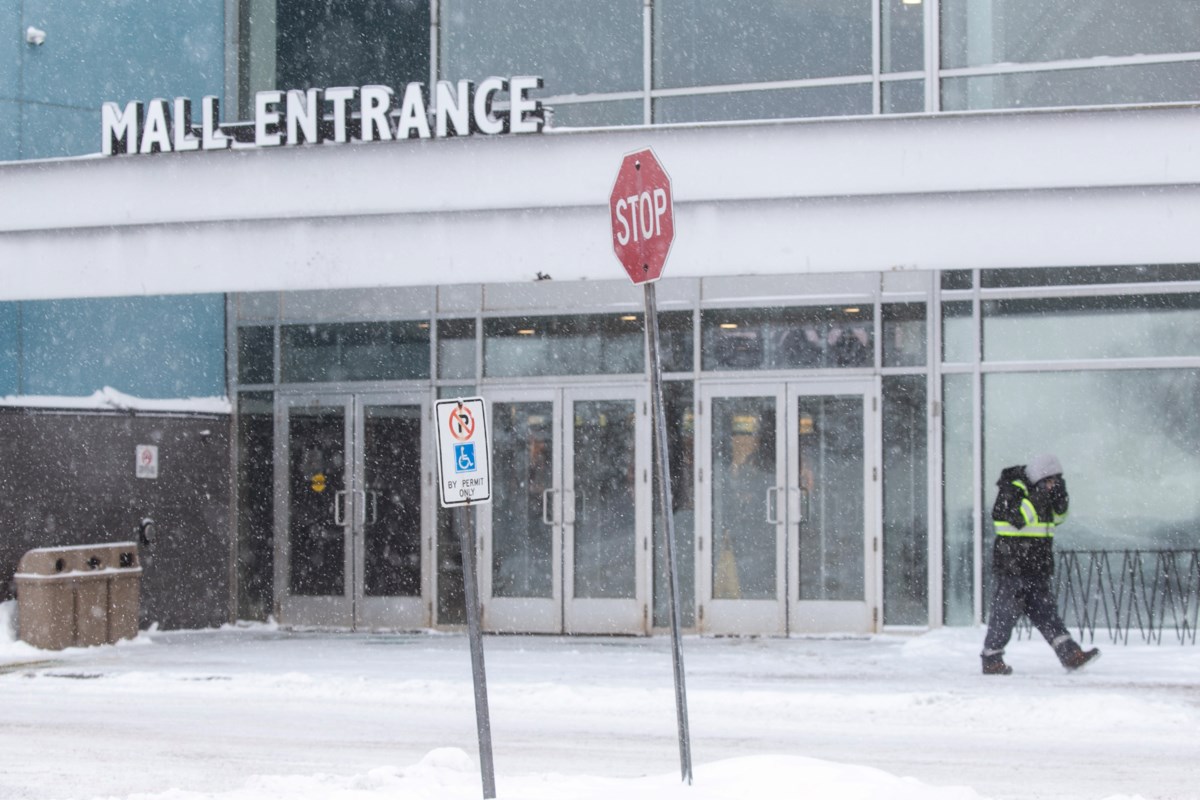
  • City out millions after Station Mall settles years-long property tax appeal

    City out millions after Station Mall settles years-long property tax appeal

    ‘It’s a big budgetary impact’: The Sault’s largest shopping centre — in receivership and still up for sale — will be paying a much smaller tax bill this year

    The Sault’s largest shopping centre has won a lengthy behind-the-scenes battle over its property tax bill — not just for this year and beyond, but for the previous six years.

    SooToday has learned that the company behind Station Mall recently reached a settlement in a property assessment appeal that dates all the way back to 2020.

    The outcome cost the city more than $2-million in immediate lost revenue, as portions of previous tax payments had to be credited. Going forward, the mall’s annual tax bill will also drop by nearly $450,000 — to approximately $2.72 million from $3.17 million.

    Bottom line: Station Mall’s waterfront property is now assessed at $62.7-million, more than $10-million less than the previous assessment of $73-million.

    News of the property tax reduction comes as the Sault’s signature mall remains in court-ordered receivership — and still up for sale.

    In fact, it was the mall’s recent financial troubles that revealed the assessment appeal, a process that typically unfolds behind closed doors unless a formal hearing is held.

    As SooToday first reported, the southern Ontario company that purchased Station Mall in 2022 for $30-million later defaulted on its mortgage, triggering legal proceedings by the lender, Algoma Central Properties Inc. (Algoma Central built the mall in the early-1970s, then provided a vendor take-back mortgage of $18-million when it sold the plaza to Markham-based SM International Holdings Ltd.)

    Algoma asked a judge in 2024 to place the mall under the control of a third-party receiver who could change the locks, manage the books and market it for sale. But SM International fought back, insisting it was on the brink of repaying the debt.

    In one sworn affidavit, company president Yeung Mou said he’d “made arrangements to have family money” from China wired to Canada after a previous attempt at new financing fell through.

    Mou’s affidavit also disclosed a “yet unresolved property tax appeal, which, if successful, would result in a material tax credit and a substantial reduction in the property taxes payable in respect of the mall.”

    That family money from China never arrived, and the mall was officially placed in receivership last January. But the property assessment appeal — which actually began years earlier — continued to play out in private.

    It was a drawn-out process, to say the least.

    All property values in Ontario are set by the Municipal Property Assessment Corporation (MPAC), an independent body. Cities then use those assessments to calculate individual property taxes.

    A homeowner who disagrees with their assessment has the right to file a “request for reconsideration” with MPAC. But for commercial and industrial properties, the appeal process is different. Those cases are handled by a tribunal known as the Assessment Review Board (ARB), with MPAC on one side of the table and the owner on the other.

    Although the city is not a party to such appeals, staff closely follow the process and provide input.

    “In that case, it was more monitoring the exchange between MPAC and the mall owners,” said Tom Vair, the city’s Chief Administrative Officer. “The city has the ability to comment if they think anything was out of whack. In that case, we were supportive of the conclusions that MPAC was reaching along the way in the process.”

    The city confirmed to SooToday that Algoma Central launched the appeal on March 15, 2021 (when it still owned the property) for tax years dating back to 2020. SM International took carriage of the appeal after it bought the mall in 2022, and then Algoma stepped back in after the property went into receivership.

    Unlike houses, which are assessed largely on the basis of fair market value, commercial property assessments are much more complex. Beyond sale price, the calculation can include such factors as property features, rental rates and overall income-generating potential.

    As for the specific arguments put forward in the Station Mall appeal, those are not public. Negotiations occurred behind closed doors, and the appeal was ultimately settled in May 2025 “without submissions being filed or a hearing proceeding,” according to an emailed statement from the ARB.

    Although the details leading up to the settlement are not public, the final assessed value of all Sault properties is available online. Specific levies can then be calculated against the latest tax rates set by the city.

    As mentioned, Station Mall’s annual property taxes are now nearly $450,000 lower than they were pre-settlement. But because the deal also covers the previous six years — 2020 to 2025 — the city endured an additional hit to its coffers of approximately $2.6-million (minus the education levy collected on behalf of the province).

    Here’s the other twist: As SooToday previously reported, SM International had racked up millions of dollars in unpaid property taxes at the same time as it fell behind on its mortgage. That means a credit was applied to the outstanding balance instead of a refund cheque.

    Either way, it all adds up to lost revenue for the city. Those unpaid taxes would have eventually been paid to the municipality whenever the mall sold.

    In an interview, Mayor Matthew Shoemaker said the impact of the Station Mall appeal did make it “that much tougher” during last month’s budget deliberations. Sault city council ultimately approved a 2026 budget with a levy increase of 3.87 per cent — but with a zero per cent increase to the municipal portion of the levy.

    “It’s a big budgetary impact,” the mayor said, when asked about the Station Mall appeal. “I think the flip side of that coin is that it certainly makes the mall more appealing for potential buyers. We want to see the mall succeed, and so this gives it a better balance sheet. Having a healthy commercial centre is a benefit to the community. The budgetary impacts, we tackle as we face them.”

    Shoemaker said the mall appeal is a prime example why the city is so determined to grow the tax base in the Sault.

    “Instead of focusing on how to mitigate tax losses from appeals, we have focused on how to grow the tax assessment by incentivizing things like the new Legion building, the prospective apartments at 22 MacDonald Avenue,” he said. “All those are projects that put money into the city’s coffers, that we’ve given municipal grants to see them built. I think that’s where more of the focus is: on making sure we have new assessments to offset assessments that otherwise come off the books.”

    Lawyers for Algoma Central did not reply to a request for comment from SooToday.

    Continue Reading