WASHINGTON – The Federal Deposit Insurance Corporation (FDIC) today issued its list of state nonmember banks recently evaluated for compliance with the Community Reinvestment Act (CRA). The list covers evaluation ratings that the FDIC assigned to institutions in October 2025.
The CRA is a 1977 law that requires the FDIC to assess a bank’s record of meeting the credit needs of its entire community, including those of low- and moderate-income neighborhoods, consistent with safe and sound operations. As part of the Financial Institutions Reform, Recovery, and Enforcement Act of 1989 (FIRREA), Congress mandated the public disclosure of an evaluation and rating for each bank or thrift that undergoes a CRA examination on or after July 1, 1990.
You may obtain a consolidated list of all state nonmember banks whose evaluations have been made publicly available since July 1, 1990, including the rating for each bank, or obtain a hard copy from FDIC’s Public Information Center, 3501 Fairfax Drive, Room E-1002, Arlington, VA 22226 (877-275-3342 or 703-562-2200).
A copy of an individual bank’s CRA evaluation is available directly from the bank, which is required by law to make the material available upon request, or from the FDIC’s Public Information Center.
FDIC Public Information Center 3501 Fairfax Drive Room E-1002 Arlington, VA 22226
Simply sign up to the Hedge funds myFT Digest — delivered directly to your inbox.
Hedge fund giants Millennium and Citadel delivered a double-digit return to investors in 2025, recovering after a lacklustre first half but lagging behind many smaller firms in the “multi-manager” sector.
Izzy Englander’s Millennium and Ken Griffin’s Citadel were both briefly in the red in the first few months of last year, as markets were rocked by US President Donald Trump’s trade war.
But the firms recovered to gain 10.5 per cent and 10.2 per cent, respectively, by the end of 2025, following months of steady returns in the second half of the year, said people who had seen the numbers.
The recoveries partly reflect a return to more normal market conditions after Trump backed away from many of his most aggressive tariffs, allowing equity indices to chalk up strong gains by the end of the year. The S&P 500 finished 16.5 per cent higher while the UK’s FTSE 100 gained 21.5 per cent.
Millennium and Citadel were outshone by many of their smaller rivals in the multi-manager sector, including ExodusPoint, which gained 18 per cent, and Schonfeld’s flagship fund, which gained 12.5, said people who had seen the numbers.
Multi-manager firms have risen to the top of the hedge fund industry over the past several years by operating hundreds of trading teams known as “pods” across multiple asset classes such as equities, bonds and commodities. These hedge funds are known for heavy use of borrowing to juice their returns but also strict central risk management that often forces traders to quickly exit losing positions.
In addition, they charge investors higher fees than traditional hedge funds by passing through a host of costs, such as bonuses and client entertainment, directly to investors.
Their model has generally delivered consistent returns over the past decade, satisfying a desire from large investors such as pensions for steady profits.
These firms do not benchmark themselves against equity indices such as the S&P 500, instead trying to make their investors money whether stocks rise or fall. For instance, many multi-manager firms were up in 2022 when equity markets sustained big losses.
Elsewhere, macro hedge funds had their best year since 2008, with Bridgewater’s Pure Alpha hedge fund up 33 per cent to December 29, the most profitable year for the firm since it was founded 50 years ago.
Millennium, ExodusPoint, Schonfeld, Bridgewater and Citadel declined to comment.
Winnipeg, MB January 2, 2026 — Great-West Lifeco Inc. (“Lifeco”) announced today that it has received approval from the Toronto Stock Exchange (“TSX”) to renew its Normal Course Issuer Bid (“NCIB”).
Under the renewed NCIB, Lifeco may purchase for cancellation up to 20,000,000 common shares (“Shares”), representing approximately 2.2% of its 907,158,831 issued and outstanding Shares on December 23, 2025. The NCIB will commence on January 6, 2026 and continue until the earlier of January 5, 2027 and the date Lifeco completes its purchases pursuant to the notice of intention filed with the TSX. Based on the average daily trading volume on the TSX of 1,989,988 for the six months preceding November 30, 2025 (net of repurchases by Lifeco during that period), daily purchases will be limited to 497,497 Shares, other than block purchase exceptions. Purchases under the NCIB will be made at prevailing market prices through the facilities of the TSX, other designated exchanges and/or other alternative Canadian trading systems or by other means permitted by applicable law. Any Shares purchased by Lifeco pursuant to the NCIB will be cancelled. The actual number of Shares which may be purchased and the timing of any purchases will be determined by Lifeco management, subject to TSX rules and applicable law.
Lifeco’s Board of Directors (the “Board”) has authorized the renewed NCIB because, in the Board’s opinion, such purchases constitute an appropriate use of funds which will benefit both Lifeco and its shareholders. Lifeco will use the renewed NCIB to mitigate the dilutive effect of issuing securities under Lifeco’s Stock Option Plan and for other capital management purposes.
Under its prior NCIB (as amended on September 5, 2025), Lifeco received approval from the TSX to purchase up to 40,000,000 Shares from January 6, 2025 to January 5, 2026. As of December 23, 2025, Lifeco purchased 28,091,279 Shares at the weighted average price of $57.01 under its prior NCIB, including 12,443,866 Shares purchased from PFC (as defined below). As of December 23, 2025, a non-independent trustee purchased 75,457 Shares which were required to be counted against the NCIB limits in accordance with the TSX Company Manual, with no impact on the number of Shares outstanding. Those Shares were bought at the weighted average price of $53.45.
Automatic Purchase Plan
Lifeco also announced that it intends to enter into an automatic purchase plan (“APP”) with a designated broker to facilitate repurchases under the NCIB, including at times when Lifeco would ordinarily not be permitted to make purchases due to regulatory restrictions or self-imposed blackout periods. Purchases will be made by Lifeco’s broker at its sole discretion based on pre-set parameters in accordance with TSX rules, applicable law and the parties’ agreement. Purchases under the APP will be included in determining the total number of Shares purchased under the NCIB.
Purchases from Power
In addition, the TSX has granted an exemption that will permit Lifeco to purchase its Shares from Power Financial Corporation and its wholly-owned subsidiaries (collectively, “PFC”) in connection with the NCIB, in order for PFC to approximately maintain its proportionate percentage ownership (unadjusted for Share issuances pursuant to Lifeco’s stock option plan and other long-term incentive plans). PFC is a wholly-owned subsidiary of Power Corporation of Canada and is the majority shareholder of Lifeco, holding approximately 68.677% of the issued and outstanding Shares (which does not include the approximately 2.44% of Shares held by IGM Financial Inc.). Purchases from PFC will be made during the TSX’s Special Trading Session pursuant to an automatic disposition plan agreement expected to be entered into between Lifeco, Lifeco’s broker and Power Financial Corporation and certain of its wholly-owned subsidiaries. Purchases from PFC will be made on any trading day that Lifeco makes a purchase from other shareholders pursuant to the NCIB. In the event that PFC does not sell Shares on any trading day as required (other than as a result of a market disruption event), the TSX exemption will cease to apply and Lifeco will not be permitted to make any further purchases from PFC pursuant to the NCIB. The maximum number of Shares that may be purchased pursuant to the NCIB will be reduced by the number of Shares purchased from PFC.
About Great-West Lifeco Inc.
Great-West Lifeco is a financial services holding company focused on building stronger, more inclusive and financially secure futures. We operate in Canada, the United States and Europe under the brands Canada Life, Empower and Irish Life. Together we provide wealth, retirement, group benefits and insurance and risk solutions to our over 40 million customer relationships. As of September 30, 2025, Great-West Lifeco’s total client assets exceeded $3.3 trillion.
Great-West Lifeco trades on the Toronto Stock Exchange (TSX) under the ticker symbol GWO and is a member of the Power Corporation group of companies. To learn more, visit greatwestlifeco.comOpens in a new windowOpens in a new window.
For more information:
Media Relations Tim Oracheski 204-946-8961 media.relations@canadalife.com
Great-West Lifeco reports results of conversion election for Non-Cumulative 5-Year Rate Reset First Preferred Shares, Series N
Great-West Lifeco announces dividend rates on Non-Cumulative 5-Year Rate Reset First Preferred Shares, Series N and Non-Cumulative Floating Rate First Preferred Shares, Series O
Great-West Lifeco announces conversion right of Non-Cumulative 5-Year Rate Reset First Preferred Shares, Series N
MANITOWOC, Wis., Jan. 2, 2026 /PRNewswire/ — Bank First Corporation (Nasdaq: BFC) (“Bank First”) today announced it has completed its acquisition of Centre 1 Bancorp, Inc. (“Centre”), parent company of The First National Bank and Trust Company (“First National Bank and Trust”).
The closing marks an important milestone in bringing together two relationship-driven organizations. Effective immediately, Bank First is expanding its services to include trust and wealth management, integrating a skilled team from First National Bank and Trust. Customers now have access to a comprehensive suite of wealth planning, trust administration, and investment management services, provided by a team of professionals with deep expertise and a strong commitment to delivering personalized solutions.
First National Bank and Trust will continue to operate as a division of Bank First until the planned system conversion in May 2026. At that time, all locations will transition to the unified Bank First brand and digital banking platform. Throughout this process, customers will continue to work with familiar local teams, ensuring personalized service and a smooth transition as we move forward together.
The combined organization will operate 38 branch locations across Wisconsin and the Stateline area of Illinois, with approximately $6 billion in assets, strengthening its ability to serve individuals, businesses, and communities throughout the region.
Mike Molepske, Chairman and Chief Executive Officer of Bank First, stated, “This partnership brings together two long-standing, community-focused institutions committed to responsive, relationship-based banking. Together, we strengthen our ability to serve customers across Wisconsin and the Stateline area of Illinois with greater capabilities and expanded services.”
Following the closing, Steve Eldred, Chairman and Chief Executive Officer of Centre, will join the Board of Directors of Bank First and its banking subsidiary, Bank First, N.A.
Piper Sandler & Co. served as financial advisor to Bank First, and Alston & Bird LLP served as legal counsel. Hovde Group, LLC served as financial advisor to Centre, and Barack Ferrazzano Kirschbaum & Nagelberg LLP served as legal counsel.
Contact: Bank First: Mike Molepske, Chairman & CEO, [email protected], (920) 652-3202
Washington, D.C. — Heading into 2026, more than one in three Americans (38%) say they plan to make a mental health-related New Year’s resolution, according to new findings from the American Psychiatric Association’s Healthy Minds Poll. This is up 5% from last year. Younger adults are leading this trend, with those ages 18–34 (58%) significantly more likely to report planning a mental health resolution compared with older adults (32% of 45-64-year-olds; 11% of those 65 and over).
A strong majority (82%) of Americans say they plan to make at least one New Year’s resolution for 2026. Physical fitness (44%) and financial goals (42%) remain the top areas of focus, followed closely by mental health (38%), which continues to rise in priority. Other common goals include diet (29%), social or relationship resolutions (29%), and spiritual goals (28%).
“It is encouraging to see more individuals planning to prioritize their mental health in 2026, particularly younger adults,” said APA President Theresa Miskimen Rivera, M.D. “The strategies people are embracing — such as regular physical activity, mindfulness practices, adequate sleep, time in nature and engaging in therapy — reflect a growing recognition that mental health is deeply connected to daily habits. Even small, intentional changes can have a meaningful and lasting impact on overall well-being.”
Looking back on 2025, 63% of Americans rated their mental health as excellent or good, while 28% said it was fair and 8% said it was poor.
Anxiety Heading into the New Year
Heading into 2026, anxiety remains common. Americans report feeling anxious about personal finances (59%), uncertainty about the next year (53%), and current events (49%), with concerns about physical and mental health close behind.
Issues Americans are Anxious About
Issue
Percent anxious
(somewhat or very)
Personal finances
59%
Uncertainty of the next year
53%
Current events
49%
Physical health
46%
Mental health
42%
Job security
33%
Relationships with friends and family
32%
Keeping New Year’s resolutions
30%
Romantic relationships
29%
“A new year can bring change, possibility, and uncertainty,” said APA CEO and Medical Director Marketa M. Wills, M.D., M.B.A. “Feelings of anxiousness underscore the importance of paying attention to how we’re doing and taking practical steps, large or small, to support our mental health.”
These results are from the APA’s Healthy Minds Poll, conducted by Morning Consult, Dec. 2–3, 2025, among 2,208 adults. For a copy of the survey results, contact [email protected]. See past Healthy Minds Polls.
American Psychiatric Association
The American Psychiatric Association, founded in 1844, is the oldest medical association in the country. The APA is also the largest psychiatric association in the world with more than 39,200 physician members specializing in the diagnosis, treatment, prevention, and research of mental illnesses. APA’s vision is to ensure access to quality psychiatric diagnosis and treatment. For more information, please visit www.psychiatry.org.
Some key parts of Kennesaw State University’s mission are to advance knowledge, foster innovation, and serve the community. Through the HatchBridge Incubator, those facets are coming to life.
In just two years, the incubator has become a launchpad for companies that are attracting
millions of dollars in investment, translating faculty research into real-world solutions,
and giving KSU alumni and the surrounding community a place to turn bold ideas into
thriving businesses.
HatchBridge is building an ecosystem that connects the University with the region
around it. Located on Chastain Road just across from the Kennesaw Campus, the incubator
welcomes alumni, faculty researchers, and community entrepreneurs who are ready to
take their ideas to the marketplace.
HatchBridge is just one of several ways KSU supports entrepreneurship. Undergraduates often begin their entrepreneurial journey through the Robin and Doug Shore Entrepreneurship and Innovation Center in the Michael J. Coles College of Business. HatchBridge serves a different purpose: supporting ventures further along the path, whether they’re backed by faculty research, alumni experience, or community expertise.
“At HatchBridge, we’re building a culture where founders can learn from each other, avoid repeating the same mistakes, and grow faster together,” said Colin Ake, director of incubation and commercialization. “We’re serving KSU researchers – but we are also serving the wider community of entrepreneurs in the region who want to build something meaningful.”
“The reality of startups is that most of the journey is hard, unglamorous work,” said Graham Gintz, associate director of the incubator. “What we do at HatchBridge is give founders the structure, mentorship, and accountability they need to keep moving forward – whether they’re raising capital, refining a product, or making their first sale.”
A clear example of HatchBridge’s impact is Chowder Financial, led by KSU alumnus Daniel Collier ’06, ’13. Chowder provides lease-purchase financing for homeowners and contractors needing to replace essential systems such as heating and air conditioning. Collier’s company has already raised more than $8 million in venture capital and is growing rapidly.
“As a Kennesaw State University graduate, joining the HatchBridge Incubator was an invaluable step in Chowder’s early journey,” Collier said. “The guidance, resources, and continued support we receive, especially in building a strong business foundation, has helped shape Chowder into the company we are today.”
Another HatchBridge standout is MycoLogic, a faculty-led venture commercializing a sustainable mushroom growing system. Created by Kyle Gabriel, KSU senior research associate and Chris Cornelison associate vice president of innovation and strategic partnerships in KSU’s Office of Research, MycoLogic has climate-controlled grow units. Through years of iteration and frontline work with farmers in the region, the units are now available commercially nationwide, with growers able to recoup their investment within just a few years.
“The impact of research can in many cases be realized through commercialization, which typically involves taking new information created through academic scholarship, and making that into a product or service,” said Cornelison, who is also an associate professor of microbiology. Entrepreneurship isn’t limited to faculty research. Alumni like Emerson Smith ’18 are using HatchBridge as a launchpad, too. Smith founded HappyDoc, an AI assistant for veterinary clinics, entrusted by veterinarians to auto-generate SOAP medical notes, integrate with practice systems, and streamline workflows. What started as an early idea with grant funding from the Mookerji Innovation Fund in KSU’s Shore Entrepreneurship Center has evolved into a growing venture that blossomed after HatchBridge’s Chasing Venture Program. In just a few years, HappyDoc has raised over $5 million in venture dollars and is helping hundreds of veterinarians run more efficient practices.
“During the most stressful stage of building HappyDoc, the personal coaching I received through the Chasing Venture Program made all the difference. I’m grateful to have graduated from KSU, a school that pairs resources with the kind of personal mentorship every founder needs,” Smith said.
The Next Wave of Research Commercialization
Several faculty members are preparing to follow in these footsteps.
Maria Valero, associate professor in the College of Computing and Software Engineering,
is developing GlucoCheck, a device to measure blood sugar levels using light instead
of a blood sample. Laying the groundwork for future commercialization, she has incorporated
under the name Predicor.
Tiffany Roman, from the Clarice C. and Leland H. Bagwell College of Education, is developing an app to support music education for K-12 students.
Both Valero and Roman have completed the Innovation Launchpad, the incubator’s multiple-session program where faculty and entrepreneurs refine their business models, conduct customer discovery interviews, and receive hands-on coaching – with up to $3,000 to support customer discovery.
Student Fellows: Learning by Building
HatchBridge’s impact extends beyond founders and faculty. Through HatchBridge Fellows, 14 students from interactive design and engineering backgrounds have worked side-by-side with startups in the incubator. Fellows contribute to landing pages, prototypes, and user experience design – gaining real-world experience while adding immediate value to early-stage companies.
Two Fellows have even gone on to work full time with HatchBridge portfolio companies:
one at Chowder Financial, another at MycoLogic, evidence that the incubator is not
only helping companies grow but also creating a talent pipeline for the region.
Looking Ahead
In only two years, HatchBridge has grown into a cornerstone of KSU’s innovation ecosystem. With alumni raising capital, faculty spinning out companies, and researchers preparing to launch their own ventures, the incubator is already proving its value to both the university and the region it serves.
“This is just the beginning,” Ake said. “Our goal is to make HatchBridge the first call for anyone in the region with an idea worth building. Through ventures like Chowder, MycoLogic, and HappyDoc – and the promising research of faculty innovators – HatchBridge is demonstrating that entrepreneurial success at KSU is not a dream for the future, but a reality happening right now.”
By the Numbers: HatchBridge since July 2023
• 187 startups served across 20 cohorts of programs • $18M+ raised by HatchBridge founders
This article also appears in the current issue of Summit Magazine.
– Story by Gary Tanner Photos by Matt Yung
Related Stories
A leader in innovative teaching and learning, Kennesaw State University offers undergraduate, graduate, and doctoral degrees to its more than 51,000 students. Kennesaw State is a member of the University System of Georgia with 11 academic colleges. The university’s vibrant campus culture, diverse population, strong global ties, and entrepreneurial spirit draw students from throughout the country and the world. Kennesaw State is a Carnegie-designated doctoral research institution (R2), placing it among an elite group of only 8 percent of U.S. colleges and universities with an R1 or R2 status. For more information, visit kennesaw.edu.
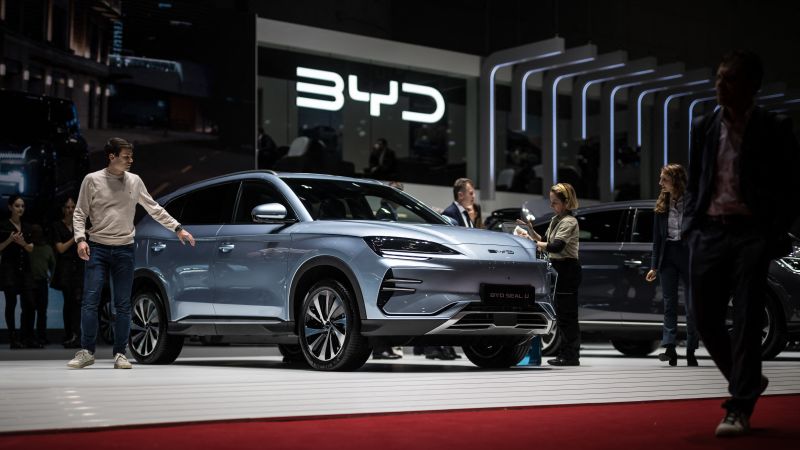
In 2011, Tesla CEO Elon Musk dismissed Chinese electric vehicle maker BYD as a competitor. But some 14 years later, BYD beat the American EV pioneer at its own game.
The Chinese car giant has overtaken Tesla as the world’s largest seller of EVs, according to 2025 data released by the two rivals this week.
BYD announced Thursday that it had sold 2.26 million EVs, up nearly 28% from 2024. Meanwhile, Tesla reported Friday a second straight year of declining sales: Deliveries fell 8.6% to only 1.6 million, recording the biggest annual drop in the company’s history.
BYD was able to overtake Tesla even though its EVs are not available for purchase in America, while China is Tesla’s second-largest market.
In the fourth quarter, Tesla’s sales came in at about 418,000, down 15.6% from a year earlier and an even sharper decline from record global sales in the third quarter, when American motorists were rushing to buy EVs before a $7,500 tax credit expired on October 1.
Unlike other automakers, Tesla does not report its sales by market, providing only global figures, but the US market is responsible for nearly half its revenue, according to company reports. Reports by other automakers Monday are also likely to show weak US EV sales in the final three months of 2025.
Tesla’s deliveries had grown nearly 50% a year at one point. But it reported its first drop in annual sales in 2024, posting a modest 1% decline. Its sales fell sharply in the first six months of 2025 as it faced more competition from the EV offerings of other automakers, such a BYD and legacy global automakers, as well as backlash against Musk’s political activities, which angered many potential American and European buyers.
Early in the year, when Musk was leading the Trump administration’s Department of Government Efficiency, there were regular protests outside Tesla showrooms in Europe and the United States, and some reports of vandalism against Tesla cars and sites.
The rush to take advantage of the soon-to-expire tax credit helped sales in the third quarter. But it likely brought forward purchases by some buyers who might have bought Teslas later in the year.
To try to counter the loss of the tax credit, Tesla rolled out cheaper versions of its Model 3 and Model Y cars, but those versions, while costing about $5,000 less than their “premium” equivalents, also won’t travel as far on a full charge as the premium versions and lack some features.
BYD achieved the latest milestone while grappling with fierce competition and relentless price wars in its home market. The intense squeeze in China has prompted the Shenzhen-based company to expand further overseas, though its low-price strategy has drawn scrutiny and led to new tariffs in some markets.
Growth in BYD’s overall sales, including EVs and hybrids, slowed to its weakest pace in five years, with more than 4.6 million vehicles sold last year – underscoring the company’s struggles in China, the world’s largest automobile market and where BYD sells the bulk of its cars.
BYD also reported profit declines for both the second and third quarters of 2025.
While China’s auto market has become less crowded in the past few years, competition remains stiff with around 150 car brands and more than 50 EV makers, according to HSBC’s research. Rivals like Geely, China’s second-largest EV maker, fast-rising competitor Leapmotor and latecomer Xiaomi, which debuted its first EV only in 2024, have gradually eroded BYD’s domestic market share.
From a peak of 35% in 2023, BYD’s market share fell to 29% in the first 11 months of 2025, according to China Passenger Car Association. In the same period last year, its sales declined more than 5%, while Geely’s surged nearly 90%.
Wang Chuanfu, BYD’s founder and CEO, attributed the slowdown in domestic sales to erosion of BYD’s technological lead and insufficient product differentiation at a December investor meeting, according to state-run media. But he added that the company would soon unveil new technologies.
Shares of Tesla (TSLA) rose 1.2% in early trading Friday. Shares closed 2025 up 18.6% for the year, as investors looked past weak sales and focused on Musk’s plans for a fleet of robotaxis and an “army” of humanoid robots that he has promised to start building soon. But so far the rollout of Tesla’s robotaxi service has fallen well short of his promises, limited to two metropolitan areas, Austin, Texas, and San Francisco, rather than serving half of the US population as he had predicted it would by the year’s end.
Freedom to read faces federal scrutiny Following the Trump administration’s executive orders targeting diversity, equity, and inclusion (DEI), the US Naval Academy removed nearly 400 books deemed DEI-related from its Nimitz Library (later returning most of them to circulation). Meanwhile, in April, the Supreme Court heard arguments in Mahmoud v. Taylor, a case brought by … Continue reading 2025 Year in Review→
Arguments over the safety of the leading osteoarthritis treatment were followed with keen interest during the year.
When eminent clinicians clash with each other on the floor of a veterinary congress, it tends to stick in the mind as a rarity, at least in this humble correspondent’s experience.
So when Mike Farrell and John Innes argued about the impact of the canine osteoarthritis drug Librela at the VOACON congress in Loughborough in May, it mattered.
Part of its significance, beyond the unusually heated nature of the exchange which delegates witnessed that day, was in its timing.
Although concerns about the drug and its potential effects had been growing for some time by that stage, the event represented the first major exploration of the competing arguments at a UK veterinary conference.
But it also posed critical questions of confidence, not simply in the process of how medicines are developed but in the clinicians who recommend them to their clients every day.
Petition
Indeed, a petition which had called for a halt to the drug’s sale even prior to the Loughborough exchanges, argued that trust in the profession was at risk of being “undermined” by the issue.
The need for manufacturers to be able to demonstrate the effectiveness of their products has perhaps never been greater, as was acknowledged in a broader context by senior European vets in the spring.
As the year wore on, the Librela argument did not leave the conference hall entirely, but did spread into different arenas, perhaps most notably US courtrooms, as the question of its usage became as much a legal one as a clinical one.
Closer to home, the issue also raised difficult questions for regulators as they admitted failings with a reporting portal which critics believed was preventing issues with Librela from being raised.
Rebuttal
Although the VMD argued other reporting mechanisms remained available, and its new portal is expected to come online early in the new year, the portal problem had itself been raised during the VOACON debate.
Throughout the year, the drug’s manufacturer, Zoetis, repeatedly insisted it remained fully confident in both Librela and its feline equivalent, Solensia, citing both the tens of millions of doses distributed and the rarely reported nature of the impacts observed.
It would later mount a further rebuttal of the conclusions presented at VOACON, amid broader calls for more information about the drug’s effects to help frontline clinicians assess the risks to their own patients.
Yet if that wasn’t enough to show the issue is likely to remain firmly to the fore in 2026, the emergence of a new and longer lasting treatment, Levinia, in the autumn opened up a whole new front in the debate.