Train stations, airports and expressways around Japan are expected to be crowded with year-end travelers on Saturday as vacations start and people head for their hometowns.
Japan Railway group companies say almost all seats on Shinkansen bullet trains out of Tokyo on the Tokaido, Sanyo, Joetsu, Hokuriku, Tohoku, Akita and Yamagata lines are booked for Saturday. Outbound routes are expected to remain congested through Tuesday.
All Nippon Airways and Japan Airlines say domestic flights departing from Tokyo or Osaka are near full capacity through Tuesday.
A tailback of more than 20 kilometers is expected on the outbound lanes of the Tomei Expressway near the Ayase Smart Interchange in Kanagawa Prefecture through Wednesday.
A 20-kilometer traffic jam is also projected in the morning on Sunday and Monday on the Higashi-Meihan Expressway near the Kameyama parking area in Mie Prefecture.
Hassle-free returns may be a thing of the past, and if you’re staring at a stack of unwanted Christmas gifts, you may have to think twice before mailing them back.
Several major retailers are now charging customers to return items even if they are unopened and in perfect condition.
Macy’s now charges $9.99 for mail-in returns, while TJ Maxx and Marshalls each charge $11.99.
J. Crew charges $7.50 for mail-in returns, Abercrombie & Fitch charges $7, H&M charges $3.99 and Zara charges $4.95.
It can now cost as much as $45 to return certain electronics at Best Buy.
Amazon has also tightened its policy, charging some customers unless they use its box-free, in-person drop-off option.
According to a report from the National Retail Federation, Americans will return an estimated $850 billion worth of items to stores this year. And nearly 20% of all the things U.S. consumers purchase online are returned, according to the NRF.
David Sobie, who co-founded Happy Returns, a company that uses artificial intelligence robots to help make returns easier, says that the White House’s tariff policies could be to blame.
“Merchants now are under a tremendous amount of cost pressure,” Sobie told CBS News. “…They’re really trying to offset some of the costs that they face in returns by asking shoppers to share some of the burden.”
Sobie advises that the best way to avoid the fees is “to read the retailer’s return policy before you check out in the first place.”
Kaaviya Sambasivam, left, is a popular influencer. Gigi, right, is an AI influencer
In some ways, Gigi is like any other young social media influencer.
With perfect hair and makeup, she logs on and talks to her fans. She shares clips: eating, doing skin care, putting on lipstick. She even has a cute baby who appears in some videos.
But after a few seconds, something may seem a little off.
She can munch on pizza made out of molten lava, or apply snowflakes and cotton candy as lip gloss. Her hands sometimes pass through what she’s holding.
That’s because Gigi isn’t real. She’s the AI creation of University of Illinois student Simone Mckenzie – who needed to make some money over the summer.
Ms Mckenzie, 21, is part of a fast-growing cohort of digital creators who churn out a stream of videos by entering simple prompts into AI chatbots, like Google Veo 3. Experts say this genre, dubbed “AI slop” by some critics and begrudging viewers, is taking over social media feeds.
And its creators are finding considerable success.
“One video made me $1,600 in just four days,” Ms Mckenzie said. “I was like, okay, let me keep doing this.”
After two months, Gigi had millions of views, making Ms Mckenzie thousands through TikTok’s creator fund, a programme that pays creators based on how many views they get. But she’s far from the only person using AI to reach easy virality, experts said.
“It’s surging right now and it’s probably going to continue,” said Jessa Lingel, associate professor and digital culture expert at the University of Pennsylvania.
Its progenitors – who now can generate videos of literally anything in just a few minutes – have the potential to disrupt the lucrative influencer economy.
But while some say AI is ruining social media, others see its potential to democratise who gains fame online, Lingel said. Those who don’t have the money or time for a fancy background, camera setup or video editing tools can now go viral, too.
Simone Mckenzie / Google Veo 3
Part of the prompt McKenzie used to create her most viral video of Gigi
Traditional influencers being pushed out?
Social media influencing only recently became a legitimate career path. But in just a few years, the industry has grown to be worth over $250bn, according to investment firm Goldman Sachs. Online creators often use their own lives – their vacations, their pets, their makeup routines – to make content and attract a following.
AI creators who can make the same thing – only faster, cheaper and without the constraints of reality.
“It certainly has the potential to upset the creator space,” said Brooke Duffy, a digital and social media scholar at Cornell University.
Ms Mckenzie, creator of Gigi, said videos take her only a few minutes to generate and she sometimes posts three per day.
That’s not feasible for human influencers like Kaaviya Sambasivam, 26, who has around 1.3 million followers across multiple platforms.
Depending on the kind of video she’s making – whether it’s a recipe, a day-in-my life vlog, or a makeup tutorial – it may take anywhere from a few hours to a few days to fully produce. She has to shop, plan, set up her background and lighting, shoot and then edit.
AI creators can skip nearly all of those steps.
“It bears the question: Is this going to be something that we can out compete? Because I am a human. My output is limited,” Ms Sambasivam, based in North Carolina, said. “There are months where I will be down in the dumps, and I’ll post just the bare minimum. I can’t compete with robots.”
She started building her channel while living with her parents during the Covid pandemic. Without a set-up, she said she duct-taped her phone to the wall to film. Eventually, she spent money she made as an influencer buying tripods, lighting, makeup and food for her videos. It took years to build her following.
Ms Mckenzie said she considered being a more traditional influencer, but didn’t have the money, time or setup. That’s why she created Gigi.
“My desk at home has a lot of books and stuff,” she said. “It’s not the most visually appealing. It definitely makes it easier that you can just pick whatever background you want with AI.”
Kaaviya Sambasivam
Kaaviya Sambasivam
“Real” life on AI videos
When Ms Mckenzie started, she turned to Google’s Veo 3 chatbot, asking it to generate a woman – someone to stand in as her.
Gigi is her age, 21, with tanned skin, green eyes, freckles, winged eyeliner and long black hair. She then asked the chatbot to make Gigi talk. Gigi now starts each video chiding commentators who accuse her of being AI. Then, mockingly proving them right, she eats a bedazzled avocado or a cookie made of slime.
Ms Duffy said digital alterations aren’t new. First, there were programs like Photoshop, used for image editing. Next, apps like FaceTune made it easier for users to change their faces for social media. But she said the main precursor to today’s hyper-realistic AI videos were celebrity deepfakes, emerging in the late 2010s.
But they now look much, much more real, Ms Duffy said, and they can spread faster.
AI videos run the gamut from the absurd – a cartoon of a cat working at McDonald’s – to the hyper-realistic, like fake doorbell camera footage. They represent every genre – horror, comedy, culinary. But none of it is real.
“It’s become, in some ways, a form of meme culture,” Ms Duffy said.
One 31-year-old American woman living in South Korea has a TikTok page dedicated to an AI-generated puppy, Gamja, who wears headphones, cooks and curls his hair. She’s received millions of views as well as partnerships from companies who want to be featured in her videos.
“I wanted to blend things that people love, which include food and puppies, in a way that hadn’t been done before,” she said.
One of the biggest AI content creators on TikTok is 27-year-old Daniel Riley. He has an audience of millions, but they have never seen his face. Rather, his “time travel” videos have earned him nearly 600,000 subscribers and tens of millions of views.
“POV: You wake up in Pompeii on eruption day” and “POV: You wake up as Queen Cleopatra” are some of his most popular titles, taking viewers through a 30-second-long fictionalised day in ancient history.
“I realised I could tell stories that would normally cost millions to produce and give people a look into different eras through their phone,” he said.
And he’s developed another stream of income – a bootcamp to teach others how to make similar AI videos for a monthly fee.
Will anyone know the difference?
“Stop calling me AI,” Gigi says at the beginning of each TikTok. She’s arguing with sceptics’ – but some audience members unquestioningly believe she’s real.
On one hand, AI videos that are almost indistinguishable from reality pose a real problem, Ms Lingel said, especially for young kids who don’t yet have media literacy.
“I think it’ll be almost impossible for an ordinary human to tell the difference soon,” she said. “You’re going to see a rise in misinformation, you’re going to see a rise in scams, you’re going to see a rise in content that’s just…crappy.”
On the other, AI videos can be mesmerising, experts said, offering cartoonish, exaggerated material.
“It’s those images and posts that seem to toe the line between reality and duplicity that capture our attention and encourage us to share,” Ms Duffy said.
A Harvard University study indicated that among AI users between the ages of 14-22, many say they use it to generate things like images and music.
Still, she said, the question is if human discernment can keep up with rapidly improving technology.
Almost every day, the creator of Gamja said she hears from people online, worried about her AI-generated puppy: They think he’s eating foods that are unhealthy, they say – because they think they’re watching a real dog.
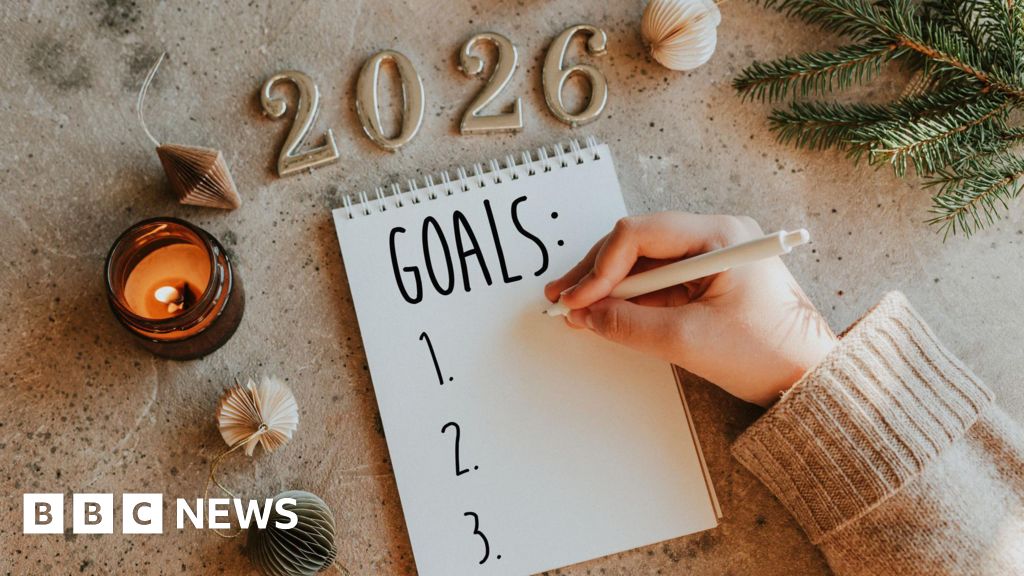
“New Year, New You” messages are everywhere right now.
Adverts for gym and diet plans pop up in your socials and back-to-work chat turns to what everyone is cutting out, taking up or finally getting right in January.
Yet most New Year’s resolutions don’t last. Many of us will have abandoned our goals bymid-January.
But this year can be different. We’ve asked some experts for their tips on how to make – and keep – your New Year’s resolutions.
1. Be realistic
Will 2026 be the year you’ll “lose weight”, “change career” or “move house”?
Beware – these are not actionable plans, they’re pressure statements, warns Dr Claire Kaye, a former GP and confidence coach.
Resolutions often fail because they are unclear, unrealistic and too broad, she says.
She advises writing down what’s working in your life, what’s draining you or no longer fits, and where are you running on autopilot.
“When you understand what you want more of, not just what you want to escape, change becomes far more sustainable,” she says.
Write down your goals focusing on “direction and experience rather than a fixed point”.
She suggests “Lose weight” can be reframed as: “I want to feel more energised and comfortable in my body, and understand what helps me feel that way.”
Instead of “change career”, it could be: “I want to explore what work gives me energy and meaning, and identify one small step towards more of that.”
2. Don’t use these two words
Getty Images
Fixed language like always or never can create an all-or-nothing approach
Another thing to avoid when writing down your goals is fixed language like “always” or “never”, says psychologist Kimberley Wilson.
It creates an all-or-nothing approach that is extremely hard to stick to.
Promising yourself “I’ll always go for a run on a Wednesday” or “I’m never drinking again” just sets you up for a fall.
“A classic example is around diet or exercise and people think that if they mess up one day then the whole thing is pointless,” she tells BBC’s What’s Up Doc podcast.
She says people can develop tunnel vision, judging a single choice in isolation, when what’s needed is a wider perspective that puts one moment into the context of many.
Dr Kaye says goals should be written with flexible phrasing such as “I want to experiment with”, “I want to create more space for” or “I’m learning what works for me when”.
3. Plan for relapse
You’ve been so good for weeks then one missed run, one takeaway, one late night and suddenly your winning streak is over and you feel defeated.
The reason why some resolutions fail is because “people make plans for their best selves”, says Wilson.
“They are not prepared for being up late or having a hard day at work and at that point they don’t have a plan to put into practice,” she says.
Wilson says it’s important to accept relapse as part of the process – it doesn’t mean you’ve failed as persistence matters more than perfection.
Dr Kaye says it’s important to remember “the goal isn’t to be perfect, it’s to avoid turning one moment into a full abandonment of the plan”.
If you slip up, “the most helpful response is curiosity rather than criticism” and instead of waiting for the following week or next month to start again, you should treat every day as a reset.
4. Stack your habits
Getty Images
If your goal is to read before bed leave your book on the pillow, says career coach Emma Jefferys
One way to help your New Year’s resolutions succeed is a technique known as “habit stacking” where you link a new behaviour to something that is already part of your daily routine, says career coach Emma Jefferys.
“So for example, after I brush my teeth, I’ll do ten push-ups. After I pour my wine, I’ll write for ten minutes. After I put my kids to bed, I’ll stretch,” she says.
“You’re not adding more to your plate, you’re weaving the new behaviour into the architecture of what you already do.”
Rather than relying on motivation alone, Jefferys says curating your environment for success can also make a big difference.
“So, if you want to read more, then keep the book on your pillow so you have to move it before bed,” she says.
5. Make it positive
Getty Images
If your New Year’s resolution is to save more or budget better, experts say it’s more likely to stick if it’s tied to something positive.
Tom Francis, head of personal finance at Octopus Money, says “having a clear and exciting goal whether that’s a holiday or an emergency fund makes saving feel purposeful rather than restrictive”.
He also says it’s important to not try and change too much as that’s rarely sustainable.
“Pick just two or three clear priorities – for example, saving £1,200 towards a dream holiday might feel overwhelming, but £100 a month feels achievable,” he says.
If you have an unexpected expense it’s ok to slow down, he says.
“Reducing a monthly saving from £100 to £20 for example would still mean you are moving forward and what matters most is keeping the habit alive.”
The Federal Motor Carrier Safety Administration (FMCSA) issued a regional emergency declaration on Tuesday that waives some regulations for truckers carrying residential heating fuel. The declaration covers 10 states, including Nebraska. It supersedes executive orders from several Midwestern governors, including one from Gov. Jim Pillen issued on Monday.
The executive order cited a pipeline disruption as the reason for the waiver. The regional emergency declaration specified a pipeline break and operations issues associated with the “Mid-American Pipeline System.” It also cited an unexpected shutdown of a refinery in Illinois for the disruption in the distribution of propane.
MidAmerican Energy Company is based in Iowa, but a spokesperson said its infrastructure was not involved in the disruption. The FMCSA declaration included a typo when referring to the Mid-America Pipeline System owned by Enterprise Products Partners L.P.
Rick Rainey, vice president of public relations at Enterprise Products, told Nebraska Public Media via text that, “there was never a problem with the Mid America Pipeline involving a break,” and that, “there was an issue with some product in the line that did not meet proper specifications.”
Lynne McNally, executive director of the Nebraska Propane Gas Association, said that the disruption affected terminals in Iowa and Kansas, forcing trucks from those states to go to Nebraska terminals to collect propane. The increased traffic depleted the fuel at some terminals, McNally said, and created long wait times at others.
“That counts toward your hours of service,” McNally said. “So by the time you got going and got your supply, you’re probably out of hours so then you can’t even get your fuel to the people who heat their homes with it.”
To meet heating fuel needs in the affected states, truck drivers carrying propane, natural gas and heating oil are allowed exceed the normal limits on driving hours until Jan. 15, unless the emergency is ended earlier. In addition to Nebraska, the declaration covers Illinois, Iowa, Kansas, Kentucky, Ohio, Minnesota, Missouri, Tennessee and Wisconsin.
The suspended federal regulation (49 CFR part 395.3) is in place to avoid driver fatigue, but it is often waived in emergency situations, especially in the winter. Pillen has issued five executive orders doing so since taking office in 2023, according to the governor’s office.
“It seems strange because the weather’s been very good,” McNally said. “But because of the pipeline issues, an hours-of-service waiver was necessary to be issued.”
McNally said most of the trucks are refueling in Greenwood, Nebraska, which is one of the only remaining terminals with propane.
Nebraska Trucking Association president Kent Grisham said that much of the additional time that drivers spend in their trucks is in line to refill their tankers. He said he’s confident the state’s carriers will continue to operate safely.
“It really just adds flexibility,” Grisham said. “What it does not do is allow for a driver who is fatigued or who has been driving for many hours, it does not allow for them to continue to drive.”
Whether drivers stay in Nebraska or deliver to other states, most don’t travel farther than 500 miles from the fuel terminal, Grisham said.
“We’re not talking about someone who is going to be driving across multiple states from coast to coast,” he said.
McNally said rural residents who use propane are feeling the greatest strain as a result of the heating fuel disruptions.
“Propane is considered typically a rural fuel because it’s very portable,” she said. “So you don’t need seven or eight miles of gas line to get to a single home. You can just bring it there via truck.”
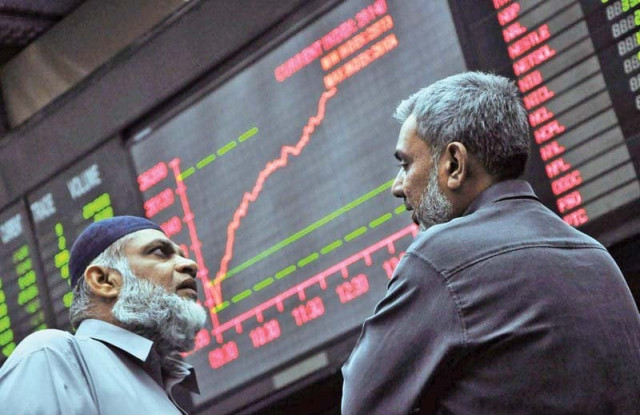
Foreign funds would divert their liquidity into buying Pakistan’s stocks. This would merely increases prices of shares and be profitable for those who already hold stocks. PHOTO: FILE
KARACHI:
The Pakistan Stock Exchange (PSX) ended the final trading session of the week on a firm footing, with bullish sentiment driving the benchmark KSE-100 index to a fresh all-time high.
The index surged by over 1,550 points, supported by strong buying interest in key heavyweight stocks amid improving macroeconomic and diplomatic developments.
Market activity reflected broad-based optimism as 221 shares closed higher while 229 declined and 32 remained unchanged, out of a total of 482 traded during the session. Investors largely focused on index-heavy names, where Engro Holdings, Pakistan Petroleum and Systems Limited emerged as top contributors to the day’s gains, offsetting pressure from select cement, fertiliser and energy stocks.
Sentiment was further reinforced by positive developments on the macroeconomic front. The Asian Development Bank’s approval of a $730 million financing package for a key power transmission project and state-owned enterprise reforms added to confidence about infrastructure upgrades and fiscal consolidation.
Meanwhile, the arrival of the UAE president on an official visit underscored the strengthening of bilateral ties and raised expectations of enhanced trade, investment and financial cooperation.
At the close of trading, the benchmark KSE-100 index posted a strong gain of 1,570.51 points, or 0.92%, and settled at 172,400.73.
Arif Habib Limited (AHL) noted that in the final trading session of the week, sentiment remained upbeat. The index received its strongest support from heavyweight performers including Engro Holdings (+4.64%), PPL (+2.87%) and Systems Ltd (+2.24%), which contributed the most to the day’s gains. On the downside, Lucky Cement (-0.83%), Millat Tractors (-1.52%) and Rafhan Maize Products (-5.99%) emerged as the biggest drags on the index.
Among economic news, it mentioned, the ADB approved a $730 million financing package to support a critical power transmission project and reforms in state-owned enterprises, further bolstering optimism around infrastructure and fiscal improvements.
Adding to the positive sentiment, Pakistan International Airlines (PIA) announced plans to reclaim some of its valuable slots at London’s Heathrow Airport and resume flights to the UK as early as March-April 2026, marking a significant step in the airline’s revival following its recent privatisation.
Looking ahead to the coming week, market participants expect the KSE-100 index to continue its upward trajectory, with solid support established around the 170,000 level, provided broader positive catalysts remain intact.
“A positive session was observed at the exchange as the index gained to close at an all-time high of 172,400 (up 0.92%),” stated Topline in its market review. Top positive contributions to the index came from Engro Holdings, PPL, Systems Ltd, NBP and Maple Leaf Cement as they cumulatively contributed 774 points.
Traded value-wise, The Bank of Punjab (Rs3.1 billion), NBP (Rs2.94 billion), The Searle Company (Rs2.05 billion), PPL (Rs2.03 billion), PTCL (Rs1.51 billion) and Maple Leaf Cement (Rs1.35 billion) dominated the activity, Topline said.
Overall trading volumes were recorded at 798 million shares compared with the previous session’s tally of 812 million. The value of shares traded during the day stood at Rs38 billion.
WorldCall Telecom led the volumes chart with trading in 79.3 million shares, losing Rs0.07 to close at Rs1.66. It was followed by The Bank of Punjab, with 78.05 million shares, gaining Rs1.16 to close at Rs40.06 and K-Electric, which saw trading in 33.06 million shares, edging up Rs0.08 to close at Rs5.74.
Foreign investors sold shares worth Rs456 million, the National Clearing Company reported.
As you were browsing something about your browser made us think you were a bot. There are a few reasons this might happen:
You’re a power user moving through this website with super-human speed.
You’ve disabled cookies in your web browser.
A third-party browser plugin, such as Ghostery or NoScript, is preventing JavaScript from running. Additional information is available in this support article.
To regain access, please make sure that cookies and JavaScript are enabled before reloading the page.
Please stand by
We’re getting everything ready for you. The page is loading, and you’ll be on your way in just a few moments.
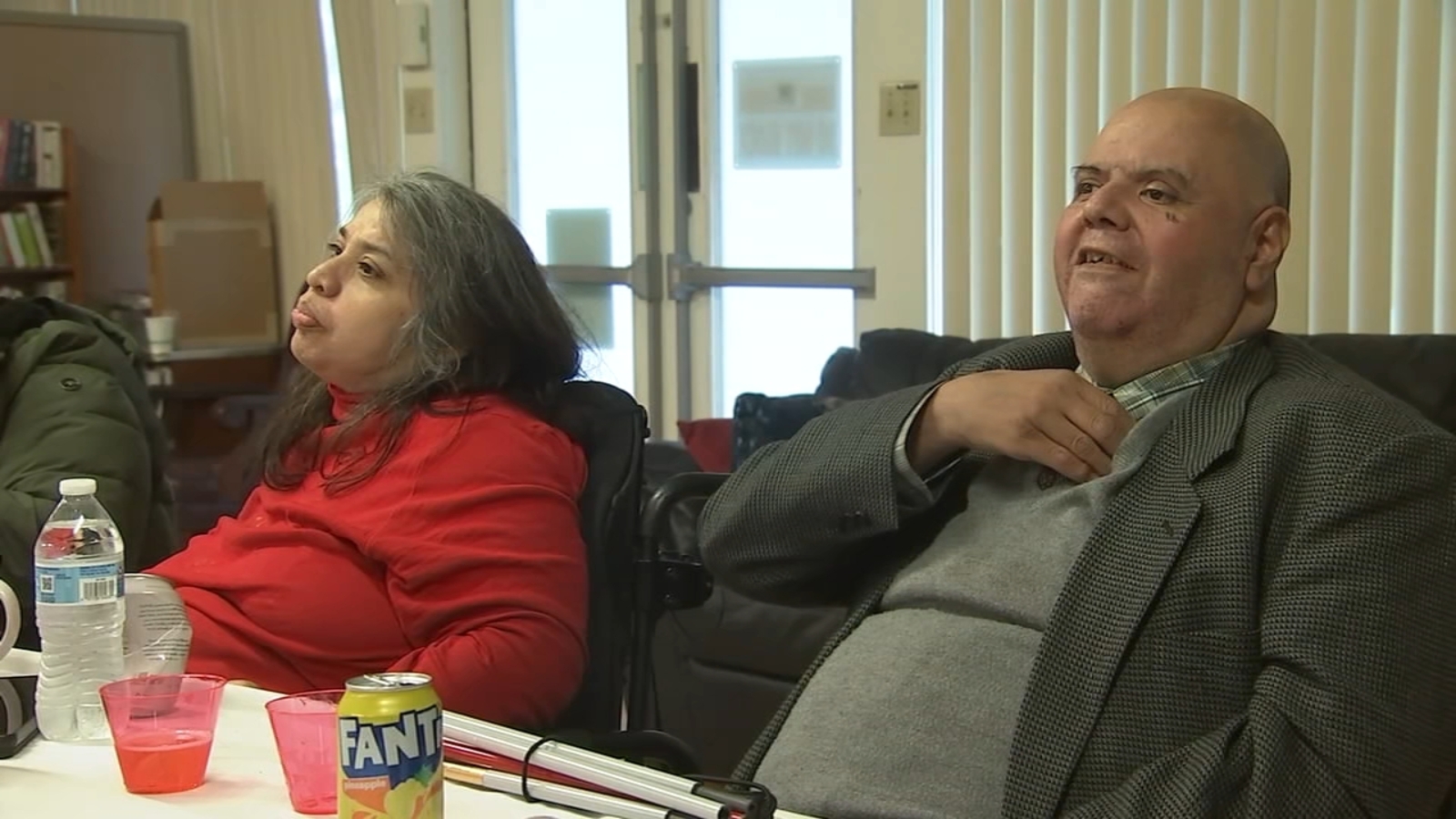
SAN LEANDRO, Calif. (KGO) — We first met Pedro and Maryanne during the government shutdown; at the time, the San Leandro couple was hoping to celebrate their engagement, but instead they were among the millions left worrying while cut off from their SNAP benefits.
We recently caught up with the couple at a holiday party at the East Bay Center for the Blind.
“It sounds like you got your SNAP benefits back – you were able to have a Thanksgiving dinner?” ABC7 News reporter Tara Campbell asked.
“Yes, we have a lot to be grateful for this year. We have food, and we have other stuff people don’t have, and it makes me feel concerned about other people,” said Maryanne Escobar.
PREVIOUS STORY: Disabled Bay Area couple feel ’emotional roller coaster’ of SNAP benefits dispute
“It was really good. The people stepped up and if it wasn’t for that I don’t know what would have happened,” said Pedro Alvarez.
While SNAP benefits were reinstated following the reopening of the federal government, many now face a new threat under new guidance as part of President Trump’s so-called “Big Beautiful Bill” that went into effect this month, expanding work requirements and limiting access for refugees.
“I just want this interview to help other people to see if they can give other people what we have,” said Maryanne.
As for their wedding, a date is set and planning is underway.
“That’s what we’re trying to hope and clinch for the holidays, and marriage and New Year’s and everything,” said Pedro.