This Report on the Observance of Standards and Codes—Data Module (Data ROSC) updates assessments conducted in 2002 and 2008 and a multi sector mission conducted in 2013. The updated assessment is based on the 2025 pilot version of the IMF’s Data Quality Assessment Framework (DQAF) and covers the national accounts, consumer and producer price indexes, government finance, public sector debt, monetary and financial, balance of payments, and international investment position statistics. Statistics Mauritius is responsible for national accounts, prices and government finance statistics—the latter based on data provided by the Ministry of Finance (MOF). The Bank of Mauritius (BOM) is responsible for monetary and financial, balance of payments, and international investment position statistics. MOF is responsible for public sector debt statistics.
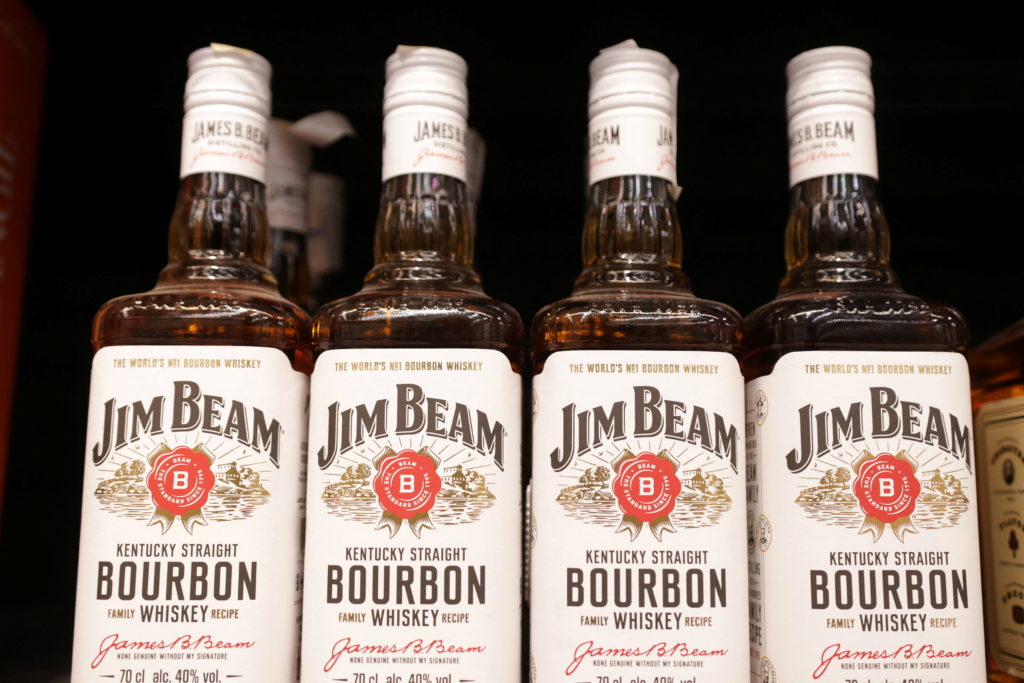
Bourbon maker Jim Beam is halting production at one of its distilleries in Kentucky for at least a year as the whiskey industry navigates tariffs from the Trump administration and slumping demand for a product that needs years of aging before it is ready.
Jim Beam said the decision to pause bourbon making at its Clermont location in 2026 will give the company time to invest in improvements at the distillery. The bottling and warehouse at the site will remain open, along with the James B. Beam Distilling Co. visitors center and restaurant.
The company’s larger distillery in Boston, Kentucky, will continue to operate, the company said.
“We are always assessing production levels to best meet consumer demand,” the company said in a statement that added they were talking with the distillery’s union to determine whether there will be layoffs or other reductions.
Bourbon makers have to gamble well into the future. Jim Beam’s flagship bourbon requires at least four years of aging in barrels before being bottled.
Whiskey makers are dealing with back-and-forth arguments over tariffs in Europe and in Canada, where a boycott started after the Trump administration suggested annexing the country into the U.S.
WATCH: How tariffs on China are making the holiday season less merry for shoppers
Overall exports of American spirits fell 9% in the second quarter of 2025 compared to a year ago, according to the Distilled Spirits Council of the United States. The most dramatic decrease came in U.S. spirits exports to Canada, which fell 85% in the April-through-June quarter
Bourbon production has grown significantly in recent years. As of January, there were about 16 million barrels of bourbon aging in Kentucky warehouses — more than triple the amount held 15 years ago, according to the Kentucky Distillers’ Association.
But sales figures and polling show Americans are drinking less than they have in decades.
About 95% of all bourbon made in the U.S. comes from Kentucky. The trade group estimated the industry brings more than 23,000 jobs and $2.2 billion to the state.
A free press is a cornerstone of a healthy democracy.
Defendants misappropriated $14 million from retail investors using fake trading and fake offerings
The Securities and Exchange Commission today filed charges against purported crypto asset trading platforms Morocoin Tech Corp., Berge Blockchain Technology Co. Ltd., and Cirkor Inc. and investment clubs AI Wealth Inc., Lane Wealth Inc., AI Investment Education Foundation Ltd., and Zenith Asset Tech Foundation alleging that they defrauded retail investors out of more than $14 million in an elaborate investment confidence scam.
“This matter highlights an all-too-common form of investment scam that is being used to target U.S. retail investors with devastating consequences. Our complaint alleges a multi-step fraud that attracted victims with ads on social media, built victims’ trust in group chats where fraudsters posed as financial professionals and promised profits from AI-generated investment tips, then convinced victims to put their money into fake crypto asset trading platforms where it was misappropriated,” said Laura D’Allaird, Chief of the Cyber and Emerging Technologies Unit. “Fraud is fraud, and we will vigorously pursue securities fraud that harms retail investors.”
According to the complaint, from at least January 2024 to January 2025, AI Wealth, Lane Wealth, AIIEF, and Zenith operated so-called investment clubs using WhatsApp and solicited investors to join the clubs with ads on social media. The clubs gained investors’ confidence with supposedly AI-generated investment tips before luring investors to open and fund accounts on purported crypto asset trading platforms Morocoin, Berge, and Cirkor, which falsely claimed to have government licenses, as alleged. The investment clubs and platforms then allegedly offered “Security Token Offerings” that were purportedly issued by legitimate businesses. In reality, no trading took place on the trading platforms, which were fake, and the Security Token Offerings and their purported issuing companies did not exist, according to the complaint. When investors tried to withdraw their funds, the complaint alleges that the defendants further defrauded victims by demanding that they pay advance fees. In all, the defendants misappropriated at least $14 million from U.S.-based retail investors and funneled those funds overseas through a web of bank accounts and crypto asset wallets, as alleged.
The complaint, filed in the United States District Court for the District of Colorado, charges the defendants with violating the anti-fraud provisions of the Securities Act of 1933 and the Securities Exchange Act of 1934. The SEC seeks permanent injunctions and civil penalties against all of the defendants, and disgorgement with prejudgment interest against Morocoin, Berge, and Cirkor.
The SEC’s Office of Investor Education and Assistance has issued an investor alert warning investors that fraudsters may use popular social media platforms and messaging apps to lure investors into scams, and never to rely solely on information from group chats in making investment decisions. The SEC encourages investors to use Investor.gov to check the background of anyone offering or selling them an investment.
Debevoise & Plimpton LLP is advising an investor group led by Trian Fund Management, L.P. and General Catalyst Group Management, LLC, in the $7.4 billion acquisition of Janus Henderson Group (NYSE: JHG). For more information, please see the official press release.
The Debevoise team is led by M&A partners Emily Huang, William Regner and Kevin Schmidt and includes counsel Sarah Jacobson and Molly Stockley, associates Elizabeth Aiken, Andrew Hong, Joseph Millard, Tanaya Sanyal, Saya Sharma and Jason Zhang and law clerks Jason Bach, Alexandra Edidin and Anya Mansoor, finance partner Ryan Rafferty and associates Max Lovrin, Gabriel Rudy and Hanson Yu, employee benefits and executive compensation partner Frank Mitchell, counsel Sarah Burke and associates Rebeka Cohan and Simmie Jenkelowitz, capital markets partners Ben Pedersen and Morgan Hayes, associates Chris Gallucci and Maayan Stein and law clerk Hannah Wolfe, investment management partners Christopher Dortschy, Sally Bergmann Hardesty and Marc Ponchione, counsel Paul Laszlo and associates Ali Bazzi, Sibylle Vielle-Cessay and Daniel Hyun Gu Yeo, tax partners Peter Furci, Rafael Kariyev and Jennifer Wheater, associate Jay Evans and law clerk Elaine Xie, and antitrust partner Timothy McIver and associate Megan MacDonald.
Troemner Farm of Atlantic Mine, MI is recalling Troemner Family Farm branded 6 oz and 12 oz Pfeffernusse Cookies, because it may contain undeclared milk, wheat, and soy. People who have an allergy or severe sensitivity to milk, wheat, or soy run the risk of serious or life-threatening allergic reaction if they consume these products.
Troemner Family Farm branded 6 oz and 12 oz Pfeffernusse Cookies were distributed in retail stores in Hancock and Calumet Michigan.
The product can be identified by brand (“Troemner Family Farm”), name (“Pfeffernusse Cookies”), and weight (“6 oz” or “12 oz”). See enclosed product labels.
No illnesses have been reported to date.
This missing labeling was revealed during routine inspections. Subsequent investigation indicates missing labels were a cause of human error.
Consumers who have purchased Troemner Family Farm brand 6oz or 12oz Pfeffernusse Cookies are encouraged to return it to Troemner Farm at the below address for a full refund or replacement with correct labeling. Consumers with questions may contact the company at 312-497-1361.
Troemner Farm 48649 Larson Rd. Atlantic Mine, MI 49905
The audio version of this article is generated by AI-based technology. Mispronunciations can occur. We are working with our partners to continually review and improve the results.
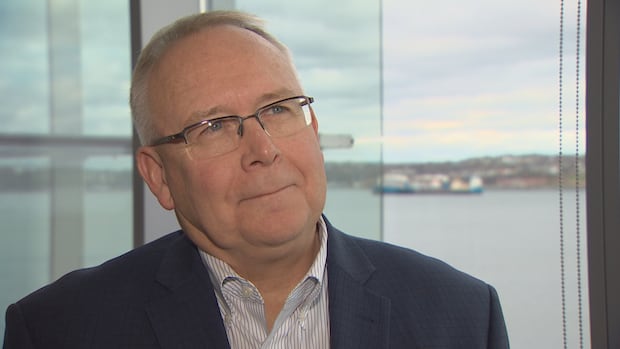
The chairman of the committee leading Newfoundland and Labrador’s independent review of the Churchill Falls memorandum of understanding with Quebec is backing the impartiality of his three-man team.
“As we understand the information, we will form an opinion. We do not have an opinion as we sit today,” Chris Huskilson told Radio-Canada on Monday.
Huskilson is the president and CEO of 5-H Holdings and the former CEO of Emera Inc. Emera helped develop the Maritime Link for power distribution alongside Newfoundland and Labrador Hydro.
Premier Tony Wakeham appointed him as the committee chair on Dec. 15.
The other two members, Guy Holburn and Michael Wilson, are members of the former oversight committee created by the previous Liberal government.
Holburn is a professor of business, economics and public policy at the University of Western Ontario.
Wilson, who resigned from the original committee, has been public about what he calls a lack of independence among the former oversight committee, specifically among a limited scope of work and overstepping by the Liberal government.
“We’re all focused on getting the information, forming an opinion and writing a report for the government,” Huskilson said.
Some opinions formed, Liberals say
Meanwhile, Opposition leader John Hogan believes some of those opinions are already formed.
“Mr. Wilson clearly has an opinion. He’s expressed his opinion publicly. He expresses opinion during the general election campaign. He thinks this is a bad deal for Newfoundland and Labrador,” said Hogan.
Wilson stated in an open letter on Oct. 2 that the conditions of the MOU are “disastrous” and that the MOU “results in an outrageous transfer of wealth to HQ and is an outright betrayal of the people of this province and all future generations.”
Hogan also criticized Huskilson’s role. Hogan believes the PCs appointed the former Emera CEO to justify killing the Churchill Falls MOU since he was also involved in Muskrat Falls.
Opposition leader John Hogan say Premier Tony Wakeham tasked Chris Huskilson to chair his independent panel to justify killing the Churchill Falls MOU. (Patrick Butler/CBC-Radio Canada)
Hogan said Huskilson’s past association with Muskrat Falls raises questions about whether he is the best person to lead the panel.
If the MOU, which was signed by the previous Liberal government, goes ahead, the province could take in more than $225 billion over the next 50 years and increase power output on the Churchill River by nearly 4,000 megawatts — largely powered by the development of the Gull Island hydroelectric project.
Huskilson said he is well qualified to serve as chairman of the independent review committee despite the Liberals’ opinion.
“This is not about Muskrat Falls. It’s about the remainder of the river,” he said.
Committee members paid ‘reasonable rate’
Huskilson’s committee will have until April 30, when they are expected to submit a report, to decide whether the agreement in principle is in the province’s best interests.
The expert panel will cost the provincial government about $1 million, according to Wakeham.
David Sorensen, an executive council spokesperson, indicated on Monday each member of the committee will be paid $475 per hour of work.
“This is a reasonable rate considering the level of expertise required to examine the scope of a project the size of the Churchill River and Gull Island, and the billions being discussed,” Sorensen told Radio-Canada in a statement.
Newfoundland and Labrador Premier Tony Wakeham announced the three-person team to lead an independent review of the Churchill Falls MOU last week. The team will have four months to file a report. (Patrick Butler/Radio-Canada)
The previous government, along with Newfoundland and Labrador Hydro and Hydro–Québec, had committed to signing a deal by April 2026.
Wakeham has frequently called that an “artificial deadline” and has said he won’t be rushed. He also re-stated his commitment to putting the deal to a public referendum in 2026.
“You will have your say on any deal before I sign it,” he said. “We will only develop our resources on our terms.”
Hogan questions whether Wakeham wants to proceed with the MOU.
“He has never expressed his own opinion about whether he thinks it’s a good deal, and if he doesn’t think it’s a good deal, how he would change it. I think he owes that to the public.”
Download ourfree CBC News appto sign up for push alerts for CBC Newfoundland and Labrador. Sign up for ourdaily headlines newsletter here. Clickhere to visit our landing page.
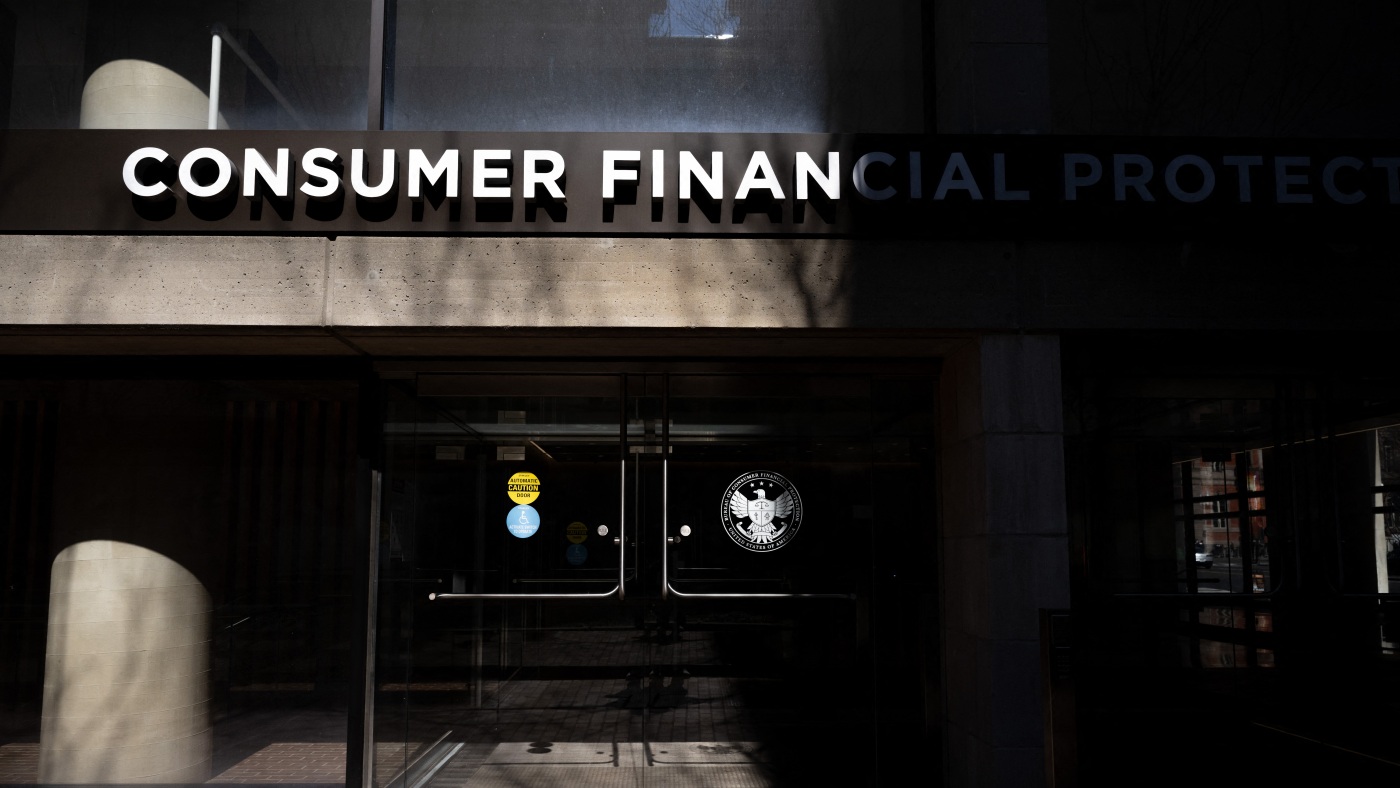
A view of the Consumer Financial Protection Bureau headquarters building in Washington, D.C., on Feb. 10, 2025.
Saul Loeb/AFP via Getty Images
hide caption
toggle caption
Saul Loeb/AFP via Getty Images
A coalition of 21 states along with the District of Columbia sued the Trump administration on Monday to prevent it from defunding the Consumer Financial Protection Bureau, which says it will run out of money in a few weeks.
The consumer watchdog agency is funded by the Federal Reserve — unlike many other federal agencies — to insulate it from political whims. But under Acting Director Russell Vought, the CFPB is refusing to accept money from the Fed.
The CFPB argues that the law that established the agency says it must get funding from the Fed’s “combined earnings,” or profits made by the Fed. But the Fed doesn’t have those earnings, the Trump administration says, because it’s paying out more money than it’s taking in, or operating at a loss.
The attorneys general suing the administration — and some Democratic lawmakers — reject that argument. They say the CFPB is narrowly defining “combined earnings” as profits, whereas lawmakers had intended the term to mean the wider funds — or proceeds — coming into the Fed.
In their suit, filed in the U.S. District Court in Oregon, the states argue Vought and CFPB are using “an unreasonable and unlawful interpretation of ‘combined earnings.’” The agency’s stance puts the “CFPB at risk of losing all of its funding as early as January 2026,” the states argue.
Such a loss of funding would hurt their residents, the attorney generals argue.
In a statement, New York Attorney General Letitia James — who is leading the coalition of states — argues that the CFPB is legally required to “collect and process consumer complaints and share that complaint data with states,” which the agency can’t do if it isn’t funded.
“Defunding the Consumer Financial Protection Bureau will make it harder to stop predatory lenders, scammers, and other bad actors from taking advantage of New Yorkers,” James said in the statement.
“My office and attorneys general across the country rely on the CFPB for consumer complaints and other data to get justice for consumers,” she added.
Under the Trump administration, much of the CFPB has been gutted, with the agency preventing many of its staff from doing their work. The administration also has tried to fire most of the CFPB’s staff, though those attempts have been blocked by the courts.
Since its creation in the aftermath of the 2008 financial crisis, the CFPB has been the target of many conservatives. They argue the agency is too aggressive when it comes to enforcement and that it’s not accountable enough to Congress.
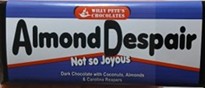
HARTFORD – The Connecticut Department of Consumer Protection (DCP) Food and Standards Division is warning the public that Willy Pete’s Chocolate Company LLC of Harwinton is recalling their Almond Despair chocolate bar due to undeclared almonds. The ingredient statement incorrectly listed macadamia nuts instead of almonds.
Customers who have allergies or severe sensitivities to almonds run the risk of serious or life-threatening allergic reactions if they consume these products.
The Almond Despair chocolate bars are packaged in purple wrappers with a weight of 2 oz and UPC 0 987261 5.
The recalled chocolate bars were distributed to the following stores:
Curioporium: 168 Center St Suite 101, Southington, CT 06489
Army Barracks: 30 Broadway, Saugus, MA 01906
Puckerbutt Pepper Co.: 1376 Broadcloth St Suite 102, Fort Mill, SC 29715
No illnesses have been reported to date.
Consumers who purchased the affected chocolate bars from Willy Pete’s Chocolate Company LLC are urged to return them to the place of purchase for a full refund.
Anyone with questions about the recall may contact the company at 860-878-0302 Consumers who would like to file a complaint with DCP’s Food and Standards Division can email DCP.FoodandStandards@ct.gov.
Attorney General Rayfield Announces Nearly $150 Million Settlement with Mercedes-Benz Usa Over Emissions Fraud Oregon Department of Justice
Mercedes Benz Settlment galvnews.com
Iowa to Receive Over $3 Million in Multi-State Settlement newsradio 1040 who
Attorney General Sunday Announces $6.6 Million Share for Pennsylvania from National Settlement with Mercedes-Benz Over Emissions Fraud attorneygeneral.gov
AG Jennings announces $120 million emissions fraud settlement with Mercedes-Benz, Daimler Bay to Bay News
“We’ve listened carefully to feedback from our customers,” Instacart said in its statement. “And we understand that the tests we ran with a small number of retail partners that resulted in different prices for the same item at the same store missed the mark for some customers. At a time when families are working exceptionally hard to stretch every grocery dollar, those tests raised concerns, leaving some people questioning the prices they see on Instacart. That’s not okay—especially for a company built on trust, transparency, and affordability.”
Instacart has not yet responded to CR’s questions about whether it would allow grocery retailers or food manufacturers to run price experiments with promotions and discounts on its platform.
Instacart’s reversal follows nearly two weeks of blowback from U.S. consumers, regulators, and politicians, many of whom objected to the use of algorithms, AI, and customer data to help set prices.
On Dec. 9, the day our findings were published, Sen. Ruben Gallego, D-Ariz., announced he was sponsoring the One Fair Price Act, which would prevent companies from using consumers’ personal data to set individualized prices. The legislation has since gained two additional co-sponsors, Sens. Kirsten Gillibrand, D-N.Y., and Cory Booker, D-N.J., and has been referred to the Senate Committee on Commerce, Science, and Transportation. Separately, in Pennsylvania, a state senator cited our reports in announcing a plan to introduce similar legislation that would ban “surveillance pricing,” the use of personal data or demographic information, shopping history, and buyer behavior to set prices.
In the two weeks after we published our findings, at least 12 members of Congress followed suit with formal letters to Instacart and/or the FTC, which regulates U.S. grocery stores. The ranking member of the House Committee on Agriculture, Rep. Angie Craig, D-Minn., sent a letter to Instacart, reiterating our findings and requesting answers from the company regarding its pricing practices by mid-January. Senate Minority Leader Chuck Schumer, D-N.Y., sent a separate letter to the FTC, requesting that the agency investigate the company. A group of four Democratic House members who call themselves the Monopoly Busters Caucus, including Craig, released a statement calling for the FTC and state regulators to “immediately investigate Instacart and hold it accountable for ripping off its customers.”
And a group of seven Democratic senators—including Sens. Amy Klobuchar, D-Minn., and Booker, ranking members of two separate subcommittees on privacy, technology, antitrust, and consumer rights issues—wrote to FTC Chairman Andrew Ferguson, a Republican appointed by former President Joe Biden and elevated to chair by President Donald Trump. Their letter raised concerns about Instacart’s pricing practices and asked the FTC to investigate.
“We are deeply concerned that Instacart’s pricing tactics may result in higher food prices, less competition, fewer opportunities to comparison shop, more incentive for companies to collect sensitive personal data, and increased customer confusion—potentially in violation of the FTC Act,” the letter from the seven senators says.
The FTC Act includes several provisions that prohibit “unfair or deceptive” commercial practices and allows the agency to enforce those laws and seek financial relief and penalties.
On Dec. 17, Reuters reported that the FTC had launched an investigation into Instacart’s pricing technology in response to our article and research. In a statement to CR the next day, the FTC wrote that it doesn’t comment on potential or ongoing investigations but “like so many Americans, we are disturbed by what we have read in the press about Instacart’s alleged pricing practices.”
Last week, in an unrelated case, the FTC and Instacart agreed to settle a case in which the regulator alleged that Instacart had advertised free delivery services and then charged consumers to have groceries delivered, and also failed to disclose to consumers who signed up for a free trial that they would be automatically enrolled in its subscription program. As part of a proposed settlement, Instacart will refund $60 million to customers who were charged for Instacart+ without their express informed consent, and the company is prohibited from “making misrepresentations concerning the costs of delivery services and satisfaction guarantees.”