Category: 3. Business

  • Cost reduction is the main driver of outsourcing – News articles

    Cost reduction is the main driver of outsourcing – News articles

    This article presents key results from the Global Value Chains survey on international sourcing. International sourcing, often referred to as outsourcing, involves the partial or full relocation of business activities by enterprises to affiliated or non-affiliated partners located abroad. The results provide insight into how European enterprises organise their activities and how this affects jobs and production within the EU. The data cover the three-year reference period 2021–2023, were collected in 2024, and are cumulative over the full reference period and comparable across countries.

    Between 2021 and 2023, 72.8% of EU enterprises that engaged in international sourcing moved their business functions to other EU countries. Outside the EU, the largest sourcing destinations were India (18.6%) and the United Kingdom (17.1%). 

    The main motivational factors for international sourcing included reduction of labour costs (for 34.1% of sourcing enterprises), reduction of other costs (27.8%), or focusing on their core business (20.3%). 

    Enterprises that source abroad most frequently move administrative and management functions (47.4%) and information and communication technology and services (28.7%), reflecting the increasing tradability of service functions.

    Source dataset: gvc_sobfbp

    These figures present the first official results of the Global Value Chains (GVC) survey carried out across 22 EU countries and Norway. This article presents a handful of findings from a more detailed Statistics Explained article on international sourcing, business functions and global value chains.

    Job impact of international sourcing 

    During 2021-2023, enterprises in 22 EU countries reported that due to international sourcing 52 853 jobs were created (0.08% of all jobs in enterprises with 50+ employees) and 152 023 jobs were lost (0.22%). While individual job impacts remain small (99 170 net jobs lost, or 0.14% of total jobs), their cumulative effect over time should not be overlooked.

    Overall, the majority of lost jobs were in the production of goods and materials (-53 577 jobs; -0.30% of all production jobs) and administrative and management work (-33 818 jobs; -0.33%). However, these business functions also created new jobs in the EU due to international sourcing, with gains of 12 762 jobs (+0.07%) in administrative and management, and 12 493 jobs in production (+0.13%).

    In relative terms, information and communication technology services lost the highest share of jobs to international sourcing (-0.46%; -15 308 jobs), followed by research and development jobs (-0.37%; -4 858 jobs). However, these sectors also experienced the largest relative gains, as 0.24% of research and development jobs were created by international sourcing (+3 135 jobs) and 0.21% of information and communication technology jobs (+6 869 jobs).

    Jobs lost and created due to international sourcing, by business function, 2021-23  (% of persons employed in all enterprises by business function). Chart. See link tot he full dataset below.

    Source dataset: gvc_sojobbf

    Continue Reading

  • Drop in petroleum imports in 2025 – News articles

    Drop in petroleum imports in 2025 – News articles

    In the first 9 months of 2025, the average monthly imports of petroleum oil in the EU decreased by 18.3% in value and 6.6% in volume compared with the monthly average for 2024.

    In contrast, the value of imported liquefied natural gas increased by 36.1%, and the volume rose by 25.9%.

    The value of imported natural gas in gaseous state increased by 3.1%, while the volume fell by 4.9%.

    Source dataset: Comext and Eurostat estimates

    The United States and Norway – key energy suppliers in Q3 2025

    In the third quarter of 2025, the main suppliers of petroleum oil to the EU were Norway (14.6%), the United States (14.5%) and Kazakhstan (12.2%).

    The majority of liquefied natural gas (59.9%) was imported from the United States, with another 12.7% coming from Russia and 7.7% from Algeria.

    Norway was the main supplier of natural gas in its gaseous state (51.8%). Algeria was the second-largest supplier (14.6%), followed by the United Kingdom (13.4%).

    Extra-EU imports of energy products by partner, Q3 2025  (% of trade in value). Chart. See link to the full dataset below.

    Source dataset: Comext and Eurostat estimates

    Continue Reading

  • WhatsApp messaging scam steals your personal data

    WhatsApp messaging scam steals your personal data

    WhatsApp users are being targeted by scammers in a new “GhostPairing” attack. Recently uncovered by cybersecurity brand Avast, this new scam convinces users to grant attackers access themselves, and it can be months before the individual is aware that anything has happened.

    Rather than stealing passwords, as has been typical with these types of scams in the past, experts are warning that it can even lead to deeper fraud, as the scammer’s access to private conversations, voice notes, and photos creates opportunities for impersonation, targeted scams, and extortion.

    How “GhostPairing” works

    The scam begins with the victim receiving a message from a trusted contact, typically something along the lines of “hey, I found your photo” accompanied by a link.

    When users tap the link, they’re then shown a fake Facebook-style page that asks them to “verify” before viewing the image. What appears to be a harmless security step is actually WhatsApp’s own device-linking flow.

    By entering a legitimate pairing code, victims unknowingly add the attacker’s browser as a linked device, granting criminals ongoing access to messages, photos, and contacts without requiring a password change or account lockout.

    Compromised accounts then send messages to friends, family, and group chats, allowing the scam to spread organically.

    How WhatsApp users can avoid this scam

    There are a few things that can be done to prevent scammers from pairing with your WhatsApp account:

    • One step is to check WhatsApp → Settings → Linked Devices and remove anything unfamiliar.
    • Treat any request from a website to scan a WhatsApp QR code or enter a pairing code as suspicious.
    • Enable two-step verification and share awareness with family and group chats.

    Continue Reading

  • A message to the private security industry for Christmas 2025

    A message to the private security industry for Christmas 2025

    Once again, this year has been marked by countless examples of security operatives going the extra mile to help others: saving lives, helping those in vulnerable situations, and using their skills and good judgement to protect the public. We both meet security professionals across the country during our visits to venues, businesses, and industry events, and hear from you first-hand how deeply you care about your work. We recognise that the demands upon your expertise have grown, whether you work in retail settings, offices, banks, in hospitals, schools, on university campuses, or at events, in hospitality and in the night-time economy.

    As the year draws to a close, we thank you for your continued commitment and everything you do to keep the public safe. Your vigilance and concern for others allow all of us to come together and celebrate during this special time of year. The job of protecting people and places can be lonely and difficult at times. Many of you work long and antisocial hours and are often outside working in all weathers throughout the year.

    2025 has been a time of transition and evolution for the SIA as we prepare for our new role as the regulator for Martyn’s Law. Earlier this year the SIA moved under the portfolio of the Minister of State for Security, Dan Jarvis MBE MP. Our focus on the very best safeguarding and public protection, quite rightly, now has a wider protective security scope. This, together with the work to design a new business approval scheme and the major review of licence-linked qualifications that we launched recently, reflects the importance of both the skills and expertise required of security operatives and the quality of security provided at premises and events.

    We are confident that as the UK regulator, we can meet the challenges and opportunities that the new responsibilities bring. We are incredibly proud to serve and drive forward improved public protection, in collaboration with partners, the private security industry and every licensed operative.

    From myself as Chair in my fifth and final year in my role, I wanted to end with a personal message of thanks to everyone across private security, whether you are a licence holder working on the front line, a business, an industry association or one of our other stakeholders working to keep people safe across the UK. It has been a huge privilege to be the Chair of the SIA and to work with so many of you on our shared priority of keeping the public safe from harm. Thank you again for your commitment and your professionalism.

    We both hope that you all find time to enjoy your own measure of peace and good will with your family and friends. However you celebrate, we wish you all the joy of the season, and a happy and successful 2026.

    Continue Reading

  • PS25/24: Ancillary Activities Test | FCA

    Read PS25/24 (PDF)

    Why we are changing

    We are making it simpler for firms to determine if they can benefit from the ancillary activities exemption (AAE).

    The AAE allows a firm to be exempt from authorisation as an investment firm where its trading in commodity derivatives, emission allowances, or derivatives of emission allowances qualifies under the AAT.

    Under the AAE, firms must carry out the AAT to assess whether they are eligible for an exemption. The current test is costly and burdensome.  

    Under our final rules, we are therefore introducing 3 separate and independent tests.

    • Annual threshold test (new).
    • Trading test (modified).
    • Capital employed test (modified).

    Each test is an alternative route to qualifying for the exemption. Firms need only meet the conditions of 1 test to rely on the AAE.

    Who this is for

    The new rules will apply to non-financial firms that trade commodity derivatives, emission allowances, or derivatives of emission allowances seeking to rely on the AAE.

    Next steps

    The new AAE framework comes into force on 1 January 2027.

    Firms currently using the AAE should familiarise themselves with our rules and guidance to make sure they understand the new conditions and can perform any 1 of the 3 independent tests.

    We’ll speak to relevant market participants before and after the new rules take effect, to support the new regime.

    Background

    The AAE exempts commercial users or producers of commodities from the need to seek authorisation as an investment firm, if they trade in commodity derivatives, emission allowances or derivatives of emission allowances as an ancillary activity.

    The Treasury has made legislative changes giving us power to set the rules defining the conditions under which firms can rely on the AAE.  

    To benefit from AAE, a firm must carry out the AAT, which enables it to determine if:

    • Its activity in these financial instruments is ancillary to the group’s main activities; or
    • It meets a new annual threshold, below which the AAE can also be used. 

    We set out our proposed rules in CP25/19, ‘Ancillary Activities Test’. 

    Continue Reading

  • Meet The Walton Family: The $513 Billion Walmart Dynasty That Surpasses The Ambanis In Wealth By $400 Billion! – Times Now

    1. Meet The Walton Family: The $513 Billion Walmart Dynasty That Surpasses The Ambanis In Wealth By $400 Billion!  Times Now
    2. World’s richest families tighten grip, while inequality widens globally  Business Recorder
    3. Walton family fortune: How America’s richest family manages their wealth  CNBC
    4. $513bn vs $105bn: Why the Waltons are nearly 5x richer than India’s Ambani family  financialexpress.com
    5. How Waltons Reportedly Became The Richest Family In The World Through Walmart  NDTV

    Continue Reading

  • Oil set for second straight weekly decline on supply outlook – Reuters

    1. Oil set for second straight weekly decline on supply outlook  Reuters
    2. Oil set to close lower for second straight week  Business Recorder
    3. Crude Oil Price Outlook – Crude Continues to Look Soft  FXEmpire
    4. Energy and Dollar Charts Point to Deepening Risk-Off Sentiment  TradingPedia
    5. Goldman Sachs Commodities Outlook: Oversupply drives oil and gas prices, with oil prices expected to bottom out by mid-2026.  富途牛牛

    Continue Reading

  • Hounslow and Chesterfield cut response processing time by 45% – Case study

    Hounslow and Chesterfield cut response processing time by 45% – Case study

    Estimated reading time: 7 minutes

    London Borough of Hounslow and Chesterfield Borough Council worked together on a joint pilot to test new digital tools for managing consultation responses.

    • Outcome: Hounslow reduced the time and cost of processing responses and improved consistency across consultations which freed up officer time for engagement and plan making.
    • Scale and approach: Pilot project delivered by planning teams from both councils working jointly with an external supplier and supported by service designers.
    • Technology used: The councils worked with Urban Intelligence to develop and test new response management features within the existing PlaceMaker platform.

    This was a PropTech Innovation Fund pilot and describes what was tested at the time.

    The planning challenge

    Local plan consultations can generate large volumes of responses in multiple formats, including emails, PDFs, documents and portal submissions. Officers often spend weeks copying comments into spreadsheets, splitting long submissions into topics, assigning work to colleagues and drafting consistent replies. This slows down the consultation process and limits the time available for community engagement and plan making.

    Hounslow and Chesterfield wanted to:

    • reduce the time spent processing responses
    • improve consistency and transparency when managing comments across consultations
    • give officers clearer tools for tagging, assigning and analysing responses
    • link representations directly to sites and evidence files
    • build a system that could be reused for future consultations and integrated with their existing sites database

    What they did

    The councils worked together to design and test new consultation response management software within the PlaceMaker platform.

    To develop the tool, they:

    • worked with Urban Intelligence to map the end-to-end process for handling consultation comments
    • identified pain points such as copying comments manually, splitting long representations into topics and maintaining consistency across consultations
    • refined the scope with support from service designers, focusing on representation processing and the preparation of consultation statements
    • ran weekly design and development sessions with the supplier to iterate quickly
    • tested functionality during Hounslow’s live consultation on a supplementary planning document (SPD), with Chesterfield carrying out early testing ahead of its local plan consultation

    The new features developed through the pilot included:

    • processing responses received in multiple formats
    • automatically splitting long responses into sub-representations
    • tagging comments by theme, policy or site
    • assigning topics to individual officers
    • applying shared response templates
    • attaching GIS (geographic information system) layers and site information to comments
    • creating a single database of representations across consultations

    This gave officers more information in one place and reduced the amount of manual processing required.

    Results and impact

    The pilot led to measurable improvements in efficiency and consistency. Hounslow found that:

    • processing time fell from 55 minutes per comment to 30 minutes
    • the new features cut officer time spent tagging and categorising comments by 45%
    • shared templates improved consistency across teams
    • linking GIS layers and sites to comments gave officers better context
    • the shared contact database could be reused for later consultations
    • officers could assign topics and track work in one place, improving coordination

    What they learned

    The councils found that:

    • using digital tools can significantly reduce the time spent processing representations
    • summarising and tagging comments still requires officer judgement and could benefit from AI in future
    • frequent collaboration with suppliers supports faster iteration
    • a single database of responses improves consistency and makes it easier to compare feedback across consultations
    • defining scope early is important, as initial plans were too broad
    • having user experience and interface design support helped translate needs into workable features

    Future plans

    Both councils intend to use the new system for future consultations and explore additional automation, including AI assisted tagging and summarising. They also plan to refine how responses are fed directly into the tool through integrated consultation modules, reducing manual copying and splitting. Chesterfield will complete live testing during its next consultation. The councils are exploring how this functionality could be expanded to other planning tasks and potentially across wider council services.

    If you have feedback on this case study, you can share it using our short feedback form.

    External links on this page are included to help users find relevant information. Their inclusion does not imply government endorsement of any organisation, product or service.

    Continue Reading

  • EBRD and donors support inclusive and sustainable growth in Bosnia and Herzegovina

    EBRD and donors support inclusive and sustainable growth in Bosnia and Herzegovina

    • EBRD providing three loans totalling €4 million to Intesa Sanpaolo Banka Bosnia and Herzegovina
    • Loans will improve access to green finance and support youth- and women-led businesses
    • Package of loans will promote inclusive and sustainable growth

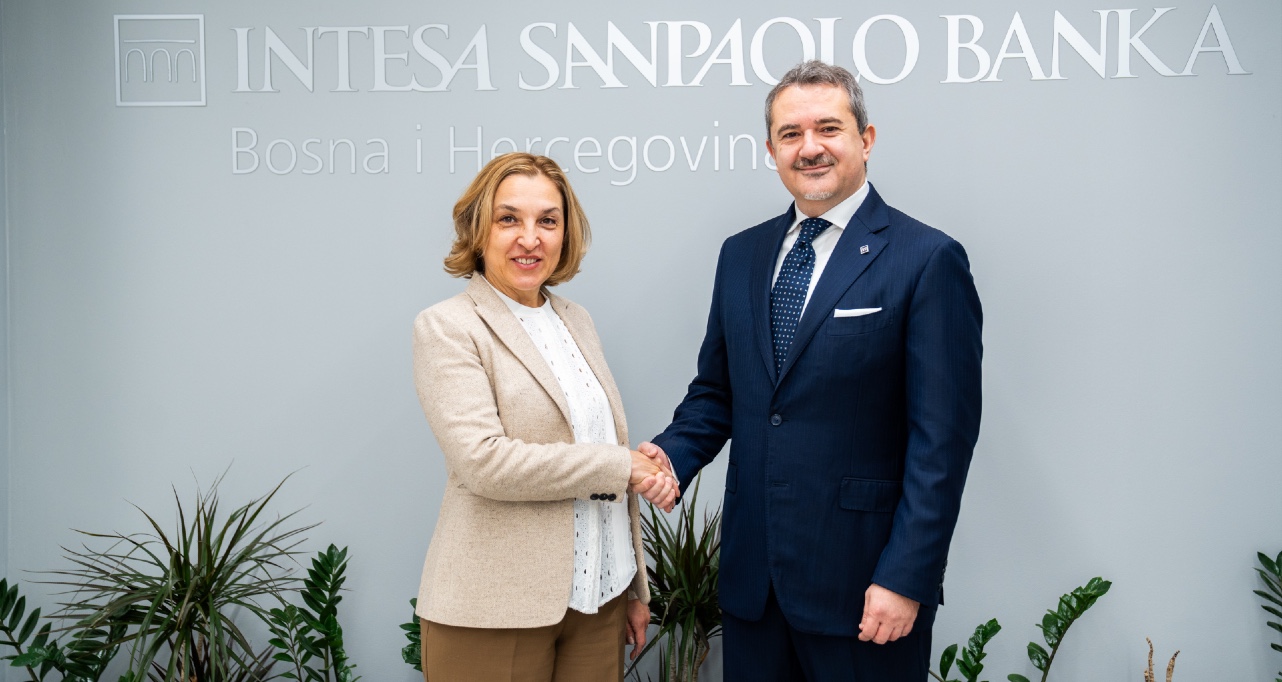
    The European Bank for Reconstruction and Development (EBRD) is providing three loans totalling €4 million to Intesa Sanpaolo Banka Bosnia and Herzegovina to encourage green investments in the residential sector, boost youth entrepreneurship and support women-led businesses in Bosnia and Herzegovina. This package of loans comprises the following:

    • A €2 million loan under the Western Balkans Green Economy Financing Facility (GEFF)*: This loan will be lent on to the residential sector, supporting access to finance for energy-saving investments. Beneficiaries will include individual residents, housing collectives, housing management companies, service providers, producers and vendors of green technologies and materials, construction companies and the public sector. Eligible sub-borrowers will be able to receive incentive grants totalling up to 20 per cent of their sub-loans from the European Union (EU) on successful completion of their projects, with technical assistance funded by Japan and the EU supporting effective implementation.
    • A €1 million loan under the Western Balkans Youth in Business programme: This loan will be lent on to eligible youth-led or -owned micro, small and medium-sized enterprises (MSMEs). This transaction aims to facilitate financial inclusion for young people in Bosnia and Herzegovina, improving access to finance for MSMEs owned or led by young people, which often face barriers on account of factors such as insufficient collateral, limited credit history or lack of business experience.
    • A €1 million loan under Phase II of the Western Balkans Women in Business programme: This loan will be lent on to eligible women-led MSMEs, seeking to foster women’s entrepreneurship and encourage broader participation in business by enhancing women-led MSMEs’ access to finance and know-how.

    In addition to providing finance, the Women in Business and Youth in Business programmes also engage with young business owners and managers, giving them access to tailored advisory services that help them develop new skills, improve the performance of their businesses and unlock new growth opportunities. This advisory support is backed by the EU and the governments of Sweden (through the Swedish International Development Cooperation Agency), Luxembourg and Italy (through the Central European Initiative).

    The loan agreements were signed by Stela Melnic, the EBRD’s Director of Bosnia and Herzegovina, Michele Castoro, President of the Management Board of Intesa Sanpaolo Banka, and Minja Filipović, a member of the Management Board.

    Stela Melnic said: “We are proud to be expanding our support for inclusive and green finance in Bosnia and Herzegovina. These loans to Intesa Sanpaolo Banka underline our commitment to empowering women and young entrepreneurs, while accelerating the green transition and fostering sustainable growth across the country.”

    Michele Castoro added: “This partnership with the EBRD represents another important step in strengthening our role as a driver of positive change in Bosnia and Herzegovina. Through these new loan facilities, we can further support investments in energy efficiency, as well as young and women-led businesses that are shaping the future of our economy. We value the continued trust placed in our bank and remain committed to delivering sustainable impact and meaningful opportunities for our clients and communities.”

    Intesa Sanpaolo Banka Bosnia and Herzegovina is the fifth largest bank in Bosnia and Herzegovina. With headquarters in Sarajevo, it services the entirety of the country through electronic channels and a network of 43 branches.

    The EBRD’s Women in Business and Youth in Business programmes are supported by the EU, the Austrian Federal Ministry of Finance and bilateral donors to the Western Balkans Investment Framework (WBIF) and are implemented in partnership with the Energy Community Secretariat.

    The EBRD has invested €3.4 billion across 254 projects in Bosnia and Herzegovina since it began operating there in 1996. The Bank’s strategic priorities in the country are to promote the green economy, support the competitive development of the private sector and foster regional integration.

    * The EBRD’s Western Balkans GEFF is co-funded by the EU (through the WBIF), Austria, Japan and Denmark, as well as Austria and Switzerland through the EBRD’s High-Impact Partnership on Climate Action (HIPCA)**.
    ** HIPCA is supported by Austria, Canada, Finland, Germany, the Netherlands, South Korea, Spain, Switzerland, the TaiwanICDF, the United Kingdom and the United States of America.

    Continue Reading

  • Japan raises interest rates to highest level in 30 years

    Japan raises interest rates to highest level in 30 years

    Unlock the Editor’s Digest for free

    Japan’s benchmark government bond yields hit their highest level since 1999 after the central bank pushed up short-term interest rates to address rising prices and wages.

    The Bank of Japan raised its policy rate by 0.25 percentage points to “around 0.75 per cent”, a three-decade high, and signalled its readiness to continue monetary tightening if conditions are right.

    The rate increase, a unanimous decision by the bank’s Policy Board, was the fourth under governor Kazuo Ueda, continuing a “normalisation” process he launched last year.

    The rate is the highest since 1995 as Japan emerges from decades when it maintained an ultra-loose monetary policy to try to fight deflation.

    Despite the prospect of further rate increases, the yen weakened against the dollar following the BoJ’s move.

    Traders said the move reflected market concerns around Japan’s fiscal situation under Prime Minister Sanae Takaichi, who took office in October and has proposed expansive spending plans.

    Some content could not load. Check your internet connection or browser settings.

    In a press conference Ueda said the new 0.75 per cent interest rate level was still “far from the bottom” of the central bank’s estimated range for the “neutral rate” — the level where monetary policy is neither expansionary nor contractionary.

    “Our estimate on Japan’s neutral rate sits on a pretty wide range. It’s hard to set a pinpoint estimate . . . We’d ​like to look at how the economy and prices react to each change in short-term rate,” said Ueda.

    Friday’s rate rise was widely anticipated after what traders said was unusually clear messaging ahead of the decision. A less telegraphed rate increase in July 2024 caused severe market ructions.

    Hiroshi Shiraishi, senior economist at BNP Paribas in Tokyo, said Ueda had raised market expectations earlier in the month that he might be more explicit about BoJ estimates of the neutral rate. “In the event, he didn’t really say anything very new: he didn’t want to sound too hawkish and upset the government, or sound too dovish and cause the yen to fall . . . the market reaction is exactly as expected,” said Shiraishi.

    The yield on the benchmark 10-year Japanese government bond climbed 0.05 percentage points, breaking through 2 per cent and reaching the highest level since 1999. Bond yields move inversely to prices.

    Line chart of 10-year JGB yield showing Japanese 10-year bond yields hit highest level since 1999

    Yields on JGBs had already risen to multiyear highs in recent weeks, driven by anticipation of the BoJ’s move and investor concerns that Japan’s fiscal position will be stretched by Takaichi’s spending plans.

    The yen weakened to ¥156.77 against the dollar.

    Andrew Pease, Asia-Pacific head of investments for Russell Investments, said the yen’s move was “a puzzle” but could suggest the market was potentially “worried about the fiscal dynamics in Japan”.

    The market “is underestimating the potential for the Bank of Japan to tighten more aggressively next year”, Pease added.

    Shoki Omori, chief desk strategist at Mizuho, said: “There was some disappointment in the market that the BoJ’s statement was not more hawkish, but the central bank does seem to have handled this very smoothly this time.”

    He added that by remaining vague on the neutral rate, the BoJ appeared to have struck a balance to prevent markets from unduly front-running further rate increases. “It is therefore appropriate to characterise the current posture as hawkish in action and moderate in communication,” said Omori.

    The BoJ statement noted that labour conditions in Japan, where the population is shrinking, continued to be tight, while corporate profits were expected to remain strong despite the impact of tariff policies.

    The central bank said companies were “highly likely” to keep raising wages next year and that prices would continue to rise moderately.

    Those conditions justified the adjustment of monetary policy, it said, a move that some economists judged to be at odds with Takaichi’s sweeping economic stimulus plans.

    The BoJ observed that “real interest rates are expected to remain significantly negative after the change in the policy interest rate, and accommodative financial conditions will continue to firmly support economic activity”.

    Headline consumer price inflation has been above the BoJ’s target level of 2 per cent for more than three years, driven by the yen’s weakness and Japan’s dependence on imports of food and energy. Official data on Friday showed consumer prices excluding fresh food rose 3 per cent in November from a year earlier.

    Additional reporting by William Sandlund and data visualisation by Haohsiang Ko in Hong Kong

    Continue Reading