Category: 3. Business

  • High Court judgment reinforces clarity and certainty for airport rules 

    The Commerce Commission welcomes the High Court’s judgment on appeals brought by New Zealand Airports Association Incorporated and Auckland, Wellington and Christchurch International Airports. These appeals challenged the 2023 changes to the Input Methodology rules for airports.

    The Court declined the appeals and found in the Commission’s favour on all three grounds of appeal  The Commission has committed to consider whether amendments are required to address technical errors that the airports had identified during the appeals.

    General Manager for Infrastructure Regulation, Andy Burgess, said the ruling supports the Commission’s role in providing clarity and certainty around the rules governing airport pricing, service quality, and transparency.  

    “The framework ensures regulated airports can achieve a reasonable return on their investments, while safeguarding consumers from excessive charges for these services.”  

    Input Methodologies set how key financial and operational elements are calculated to assess reasonable prices and returns for regulated businesses. For airports these rules apply to key airport services like aircraft take-off and landing, which don’t face direct competition. 

    The Commission updated the Input Methodology rules in 2023 to reflect changes in market conditions, including the impact of Covid-19. These updates were made after extensive consultation with the industry. 

    One of the airports’ grounds of appeal was that some calculations underlying the Input Methodologies contained technical errors. The Commission accepted that these calculation errors occurred. The Commission will consider amending the Input Methodologies to address the errors.  

    Other proceedings before the Courts related to this matter are still to be heard and may have material impact. The Commission will consider these in due course. 

    Continue Reading

  • Islamabad High Court Ruling Allows Fecto Cement to Reopen Sangjani Facility

    Islamabad High Court Ruling Allows Fecto Cement to Reopen Sangjani Facility

    Fecto Cement Ltd has resumed full operations at its Sangjani cement plant near Islamabad after the Islamabad High Court (IHC) declared an earlier suspension of the facility “illegal and without lawful authority,” the company told the Pakistan Stock Exchange (PSX).

    In a notice, Fecto Cement said normal production activities at the Sangjani plant have recommenced following the court’s decision, reversing a temporary shutdown that had been communicated to the exchange earlier via letter FCL/SHD/47-518.

    “The Honourable Islamabad High Court has allowed the complete resumption of plant operations, declaring the suspension to be illegal and without lawful authority. In light of this development, the Company has restored normal operations at the facility and production activities have recommenced in the ordinary course of business,” the statement said.

    The company added that the temporary suspension had no material adverse impact on its long-term financial position, asset base or business continuity, and said it now expects uninterrupted operations going forward.


    Continue Reading

  • Arcadis wins construction phase services for BPCP

    Arcadis wins construction phase services for BPCP

    Arcadis continues partnership with Battery Park City Authority as construction begins on landmark $1.7 billion resiliency effort in Lower Manhattan.

    Arcadis (EURONEXT: ARCAD) – Arcadis, the world’s leading company in delivering data-driven sustainable design, engineering, and consultancy solutions for natural and built assets, is proud to announce that it has been awarded the construction phase services contract for the Battery Park City Resiliency Project (BPCR), New York City’s first large-scale Progressive Design-Build project. The award marks the transition from planning and design into full-scale construction of one of the nation’s most ambitious climate resiliency efforts.

    Commissioned by the Battery Park City Authority (BPCA), the BPCR will safeguard Lower Manhattan’s waterfront and surrounding communities from sea level rise, storm surge, and heavy rainfall while enhancing public spaces and access along the Hudson River. The project, valued at approximately $1.7 billion, represents a critical investment in New York City’s long-term climate resilience and infrastructure renewal.

    Led by the Turner Construction Company–SPC Construction Co. LLC joint venture, in collaboration with Arcadis, Bjarke Ingels Group (BIG), and SCAPE Landscape Architecture, the team will deliver an integrated coastal flood risk management system extending from First Place north to North Moore Street and then east to Greenwich Street. The project includes approximately 1.5 miles of flood walls and deployable barriers, as well as drainage improvements including a new pump station and rain gardens, and new green and public open spaces.

    Alan Brookes, CEO, Arcadis said:Arcadis is honored to continue our partnership with the Battery Park City Authority, Turner SPC, and all project partners as we move from design to delivery. This next phase brings our shared vision for a more resilient, equitable, and sustainable Battery Park City to life. Together, we are setting a new model for climate-resilient infrastructure in dense, urban environments.

    Arcadis has served as the lead design and engineering consultant since the project’s inception. As construction begins, Arcadis will continue its leadership role by providing engineering oversight, design compliance, and technical support to ensure an integrated system approach.

    Additionally, the BPCR will deliver multiple layers of protection by integrating flood barriers, drainage systems, and raised landscapes within a continuous system designed to withstand sea level rise. It will also improve waterfront access, increase green space, and promote biodiversity through extensive native plantings and habitat restoration. The design team worked closely with stakeholders, agencies, and the community to develop a design that is resilient, adaptable, and fits with Battery Park City’s goals for sustainability, public spaces, and accessibility.

    Charlie Whitney, Vice President, Turner Construction Company said:The Turner Construction/SPC Joint Venture received exceptional resiliency design expertise from Arcadis to reach this critical milestone. We look forward to continuing our partnership as we embark on construction of the North/West Battery Park City Resiliency Project for the Battery Park City Authority.

    As the third major resiliency initiative undertaken by BPCA since Superstorm Sandy, the BPCR builds upon the success of the South Battery Park City Resiliency Project and the Ball Fields & Community Center Project—both key components of Lower Manhattan’s comprehensive coastal protection network

    Raju Mann, President and CEO, Battery Park City Authority said:Battery Park City’s progressive approach to resiliency infrastructure demonstrates what’s possible when collaboration, transparency, and innovation converge. We’re proud to partner with Arcadis, Turner SPC, and our design partners, to make Lower Manhattan a global model of urban resilience.

    Continue Reading

  • AI likely to displace jobs, says Bank of England governor

    AI likely to displace jobs, says Bank of England governor

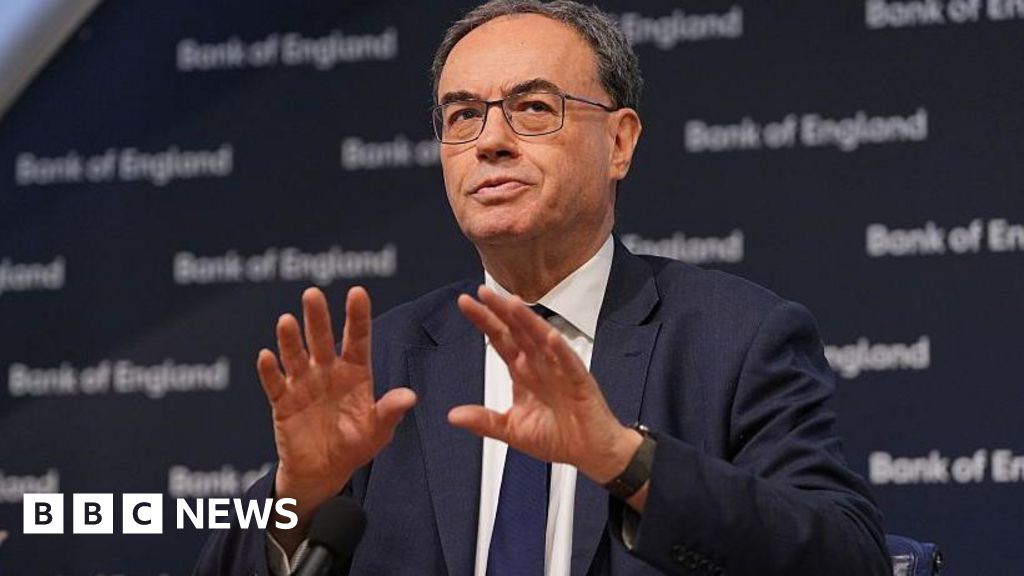
    The widespread adoption of artificial intelligence (AI) is likely to displace people from jobs in a similar way seen during the Industrial Revolution, the governor of the Bank of England has said.

    Andrew Bailey said the UK needed to have the “training, education, [and] skills in place” so workers could shift into jobs that use AI.

    He told BBC Radio 4’s Today programme that people looking for a job would find securing employment “a lot easier” if they had such skills.

    However, he warned that there was an issue with younger, inexperienced professionals finding it difficult to secure entry-level roles due to AI.

    “We do have to think about: what is it doing to the pipeline of people? Is it changing it or not?” he said.

    “I think if it’s people working with AI, I’m not sure it will change the pipeline, but I think we’re right to have an eye on that point.”

    AI has become part of everyday life in recent years and is increasingly being adopted by businesses and the public sector.

    The technology allows computers to process large amounts of data, identify patterns and follow detailed instructions about what to do with that information.

    However, there are concerns over the impact it may already be having on the jobs market.

    Official figures released this week revealed the UK unemployment rate rose to 5.1% in the three months to October, with younger workers particularly affected.

    The number of unemployed 18 to 24-year-olds increased by 85,000 in the three months to October, the largest rise since November 2022, according to the Office for National Statistics (ONS).

    Some have argued rises to the minimum wage and increased taxes has made it less appealing for businesses to hire entry-level staff.

    However, some firms have said the growth of AI may eventually lead to fewer junior staff, particularly graduates being hired.

    Entry-level professional jobs are thought to be most impacted by AI, particularly in sectors such as law, accountancy and administration.

    The boss of accountancy giant PwC recently told the BBC that the firm was scaling back plans to increase its headcount.

    “Now we have artificial intelligence. We want to hire, but I don’t know if it’s going to be the same level of people that we hire – it will be a different set of people,” said global chairman Mohamed Kande.

    Firms who would have previously contracted PwC consultants to sift through data and documents may now use AI models instead, turning weeks of costly work into minutes.

    Mr Bailey said worries over the impact of technology on populations cropped up at various times in history, stretching back centuries to when Queen Elizabeth I was worried about the impact of the invention of the knitting machine on her then subjects.

    “As you saw in the Industrial Revolution, now over time, I think we can now sort of look back and say it didn’t cause mass unemployment, but it did displace people from jobs and this is important.

    “My guess would be that it’s most likely that AI may well have a similar effect. So we need to be prepared for that, in a sense.”

    Mr Bailey said AI was the “most likely source of the next leg up” for UK economic growth.

    “In terms of its potential to improve productivity growth, I think it’s pretty substantial. It will get used across the economy. How quickly it comes through is another question, history would suggest that it does take some time.”

    Mr Bailey said the Bank of England, which sets UK interest rates, was using AI but added the institution, along with others, were “probably all still experimenting”.

    “To get it into sort of mainstream, everyday use will take some time, but it’s critically important that we obviously focus on getting the pre-conditions and all the conditions in place for that to happen,” he added.

    Aside from the jobs market being affected by AI, there are concerns there could be an AI bubble – whether the big tech firms are being overvalued.

    The Bank of England has recently sounded the alarm over a potential crash in the value of AI firms, reminiscent of previous incidents such as the dotcom bubble.

    Jamie Dimon, the chief executive of US bank JP Morgan, told the BBC in October he was “far more worried than others” about the risk of a serious market correction in the coming years.

    Mr Bailey told the Today programme that policymakers would “have to watch the valuation question”.

    However, he did acknowledge that the majority of the big companies were generating cashflow.

    “Of course, it’s still the case that it doesn’t mean they’ll all be winners. We’re watching it very closely, because we do need to watch, obviously, what the consequences of any sharp unwinding could be.”

    Continue Reading

  • NBP Exchange Rates

    NBP Exchange Rates

    – Advertisement –

    KARACHI, Dec 19 (APP):Treasury Management Division of National Bank of Pakistan (NBP) on Friday. the following exchange rates.

    CURRENCY                       SYMBOL                      TT Selling                       TT Buying

    US DOLLAR                         USD                           280.65                            280.15

    EURO                                  EUR                           328.91                            328.32

    JAPANESE YEN                     JPY                            1.7980                           1.7948

    BRITISH POUND                  GBP                            375.41                           374.74

    SWISS FRANC                     CHF                            352.99                           352.36

    CANADIAN DOLLAR             CAD                             203.62                          203.25

    AUSTRALIAN DOLLAR          AUD                             185.54                           184.21

    SWEDISH KRONA                SEK                              30.23                            30.18

    NORWEGIAN KRONE            NOK                             27.63                              27.58

    DANISH KRONE                   DKK                              44.03                             43.95

    NEWZEALAND DOLLAR      * NZD                             161.86                           161.57

    SINGAPORE DOLLAR           SGD                             217.33                            216.94

    HONGKONG DOLLAR            HKD                             36.07                            36.00

    KOREAN WON                   *KRW                            0.1898                            0.1895

    CHINESE YUAN                    CNY                             39.88                              39.81

    ALAYSIAN RINGGIT             *MYR                            68.79                              68.66

    THAI BAHT                         *THB                              8.93                              8.92

    U.A.EDIRHAM                       AED                            76.43                             76.29

    SAUDI RIYAL                         SAR                            74.83                            74.69

    QATAR RIYAL                      *QAR                            77.02                            76.88

    KUWAITI DINAR                 *KWD                          914.38                           912.75

    CONVERSION RATE FOR FROZEN FCY DEPOSITS

    USD             280.2275

    GBP             374.6641

    EUR              328.8189

    JPY                1.7979

    Continue Reading

  • Importer dollar bids, tepid Asian peers stall rupee's uptick near 90 – Reuters

    1. Importer dollar bids, tepid Asian peers stall rupee’s uptick near 90  Reuters
    2. OPINION: When Mr Market forces a c.bank’s hand  Business Recorder
    3. To worry or not? Rupee at 90 debate deepens as PM’s Economic Advisory Council member plays it down  The Economic Times
    4. Rupee’s Record Plunge: The data behind the currency’s historic 2025 slide  Forbes India
    5. Soft US inflation adds to RBI support in tentative rupee recovery  TradingView — Track All Markets

    Continue Reading

  • Pakistan stresses AI for governance, economic growth

    Pakistan stresses AI for governance, economic growth

    December 19, 2025 (MLN):   Pakistan urgently
    needs to adopt Artificial Intelligence in a strategic manner to drive national
    development, improve governance, and modernize the country’s information
    ecosystem, said a press release issued.

    The views were expressed by Parliamentary Secretary for
    Information & Broadcasting Barrister Danyal Chaudhry while delivering the
    keynote address as Chief Guest at the AI X Future Summit 2025 held at Bahria
    University, attended by educators, policymakers, media professionals, and
    students.

    Addressing the gathering, he said Artificial Intelligence is
    no longer a distant or theoretical concept but a defining force of the present
    with transformative potential for Pakistan’s economy, governance, and
    information landscape.

    He pointed out that under the National Economic
    Transformation Plan (Uraan Pakistan 2024–2029), the government is prioritizing
    digital innovation and technology-driven governance as core pillars of national
    progress.

    He noted that AI offers significant opportunities to enhance
    transparency, efficiency, and inclusivity in public institutions, particularly
    in areas of information dissemination, media regulation, and citizen
    engagement, adding that its responsible use can strengthen public service
    delivery.

    The Parliamentary Secretary also highlighted the evolving
    role of media in the AI era, stating that while AI can help combat
    misinformation and build public trust, it also demands strong ethical
    frameworks, regulatory oversight, and close collaboration across sectors.


    Copyright Mettis Link News

    Continue Reading

  • Strong outlook for resources and energy exports – Department of Industry Science and Resources

    1. Strong outlook for resources and energy exports  Department of Industry Science and Resources
    2. Gold bonanza as Australia revises resource export earnings up 4% By Reuters  Investing.com
    3. Australia Lifts Commodity Export Outlook on Iron Ore, Gold Price  Bloomberg.com
    4. Surging Gold Prices Drive Upward Revision in Australia’s Export Outlook  TradingPedia

    Continue Reading

  • Top 10 richest families in the world: Walmart’s Walton family leads, and only one Indian family makes the list | World News

    Top 10 richest families in the world: Walmart’s Walton family leads, and only one Indian family makes the list | World News

    The list of the world’s richest families includes dynasties that have constructed empires that have lasted for decades and even centuries. The Ambani family is the only Indian family in Bloomberg’s top 10. Overall, the top 25 families are now worth an amazing $2.9 trillion, which is $358.7 billion more than last year. The leading families are involved in a wide range of businesses, from retail and oil to luxury products and media. They represent both old money and new business. Some, like the Waltons and Al Saud, run huge businesses around the world. Others, like Hermès and Chanel, keep traditional craftsmanship alive through many generations. Let’s take a deeper look at the ten richest families in the world right now. Bloomberg says that these are the 10 richest families in the world. One Indian family stands out among the richest families in the world.

    List of the 10 richest families in the world

    Rank Family Net Worth Key Industries
    1 Waltons $513.4 B Walmart retail
    2 Al Nahyan $335.9 B UAE ruling family, investments
    3 Al Saud $213.6 B Saudi oil, infrastructure
    4 Al Thani $199.5 B Qatar ruling family, gas, real estate, luxury goods
    5 Hermès $184.5 B Luxury fashion, handbags
    6 Koch $150.5 B Oil, chemicals, conglomerate
    7 Mars $143.4 B Chocolate, pet-care, snacks
    8 Ambani $105.6 B Oil, telecom, retail, consumer products
    9 Wertheimer $85.6 B Chanel fashion, perfumes
    10 Thomson $82.1 B Media, Thomson Reuters, investments

    Wealthiest families in the world

    The world’s wealthiest families have built vast fortunes that span generations, industries, and continents. From retail and energy to technology and finance, their influence extends far beyond personal wealth, shaping global markets, employment, and economic trends. These families often combine long-standing business empires with strategic investments, allowing their wealth to grow and adapt over time.

    Waltons: Retail Giants of the World

    The Walton family, which owns Walmart, is the richest in the world, with a net worth of $513.4 billion. It actually controls about 44% of Walmart, which is an unprecedented amount: there are more than 10,750 stores open throughout the world. The family’s wealth comes from Walmart’s huge sales. In the last fiscal year, the company made $681 billion. For many centuries, the family has had a lot of sway over how companies are run and how they grow.

    Al Nahyan: Abu Dhabi’s Old Money Dynasty

    The Al Nahyan family in Abu Dhabi is worth $335.9 billion, which is a lot of “old money” that they’ve made over the years. The family has had control over all important political and economic choices in Abu Dhabi for a very long time, even before oil money started to flow into the Middle East. The family’s wealth comes from smart investments, running the UAE’s economy, and being in charge of the country’s resources. They have power over more than just oil; they also have power over real estate, banking, and multinational enterprises. The Al Nahyans have turned their royal title into one of the world’s most stable dynastic fortunes. They are deeply involved in politics.

    Al Saud: Saudi Arabia’s Royal Oil Power

    The Al Saud family in Saudi Arabia is worth an estimated $213.6 billion. Most of their money comes from the kingdom’s huge oil reserves, which they manage through the state-owned company Saudi Aramco. The older royals, like King Salman and Crown Prince Mohammed bin Salman, hold most of the wealth. Through the Public Investment Fund, they have invested in a variety of economic projects, including infrastructure, tourism, and more. Their wealth shows that oil is still important, and it also shows a modern way to disseminate power across industries in a world that is changing quickly.

    Al Thani: Qatar’s Gas and Global Investments

    The Qatar ruling AI Thani family has a fortune of approximately $199.5 billion because of it large offshore gas resources in the 20th century. They are entitled to make more money by owning important enterprises in hotels, insurance, and contracts. Their wealth, linked to political power, lets them decide the economic and social orientation of Qatar. Their many overseas assets include Harrods in London and the high-end fashion brand Valentino.

    Hermès: French Luxury Craftsmanship

    The Hermès family has kept its $184.5 billion fortune through diligent management of the luxury company across six generations. The family is famous around the world for their Birkin and Kelly bags. Their wealth comes from owning a controlling part in Hermès, which is still known for its luxury and craftsmanship. They have avoided mass-market strategies and kept their high value by using artisanal methods and making only a few items.

    Koch: Diversified Industrial Empire

    The Koch family turned their father’s oil refinery into a $150.5 billion business that is now the second-largest privately held enterprise in the US. Their companies are very different, from chemicals, fertilizers, and paper products to electronics. The family’s long-term investments in businesses and their strategic influence help them stay important over time. These Kochs are a well-known example of how a family-run private business can have a big impact on everything from energy to manufacturing, while yet having a lot of power over how the company is run.

    Mars: Chocolate and Pet-Care Pioneers

    The Mars family is worth $143.4 billion. They are most known for their famous chocolate brands, like M&M’s, Milky Way, and Snickers. They also run a massive pet care business that brings in almost half of their income. The family has grown steadily through smart purchases, like the 2025 purchase of Kellanova, a company that makes snacks. The Mars family has kept most things quiet for generations while focusing on expanding and diversifying their business around the world.

    Ambani: India’s Global Industrial Flagbearers

    The Ambani family is India’s only representative among the top 10 dynasties in the world, with a net worth of $105.6 billion. Mukesh Ambani’s Reliance Industries has grown from textiles to oil refining, telecommunications, retail, and consumer products. Today, the clan is starting to use the next generation of children, Isha, Akash, and Anant, to run important parts of the business. Their wealth is a fantastic example of how to diversify your business and plan for the future.

    Wertheimer: French Fashion Legacy

    The Wertheimer brothers’ grandpa and Coco Chanel started Chanel. The family runs one of the best fashion businesses in the world and has retained a tight grip on the $85.6 billion firm. Chanel still makes money from its classic products, such the “little black dress” and No. 5 perfume.

    Thomson: Canadian Media and Investment Dynasty

    The Thomson family from Canada is worth $82.1 billion. They own Thomson Reuters and a variety of other businesses through their holding company, Woodbridge. They have a lot of money in real estate, art collections, media, and financial data. David Thomson, the third generation of the family, is in charge right now. They have effectively combined their journalistic tradition with current investment tactics.
    Continue Reading

  • Greater Shepparton to attend Asia Fruit Logistica in 2026

    Greater Shepparton to attend Asia Fruit Logistica in 2026


    Continue Reading