Category: 3. Business

  • NCUA Releases Q3 2025 State-level Credit Union Data Report

    NCUA Releases Q3 2025 State-level Credit Union Data Report

    Alexandria, VA (December 17, 2025) ― The National Credit Union Administration today released its third quarter state-level credit union data report for 2025. Report findings indicate that for federally insured credit unions, assets increased by 2.6 percent at the median over the year ending in the third quarter of 2025. At the same time, loans outstanding grew by 0.3 percent at the median, according to the latest Quarterly U.S. Map Review.

    Nationally, the median ratio of total loans outstanding to total shares and deposits — the loan-to-share ratio — was 70 percent at the end of the third quarter of 2025.

    Credit union membership continued to grow in the aggregate over the year ending in the third quarter of 2025. At the median, membership declined by 0.5 percent. Credit unions with falling membership tend to be small; over half had less than $50 million in assets in the third quarter of 2025. 

    Countrywide, 88 percent of federally insured credit unions had positive year-to-date net income in the third quarter of 2025, compared with 85 percent in the third quarter of 2024.

    The NCUA’s Quarterly U.S. Map Review tracks performance indicators for federally insured credit unions in all 50 states and the District of Columbia and includes information on two important state-level economic indicators: the unemployment rate and home prices.

    Continue Reading

  • Federal government invests in a community infrastructure in Farnham

    Farnham, Quebec, December 17, 2025 —Farnham residents will benefit from a new, modern, and accessible community centre where they can receive essential services and fully participate in the social life of their region, thanks to an investment of more than $2.3 million from the federal government.

    This was announced by Louis Villeneuve, Member of Parliament for Brome—Missisquoi, and Ugo Tanguay, Chairman of the Board for the Centre d’action bénévole de Farnham.

    Today’s funding will enable the renovation of the Centre d’Arts de Farnham, transforming it into a modern and accessible community centre where the Centre d’action bénévole de Farnham will hold its activities. More specifically, the project involves renovating this underutilized and energy-inefficient building, while respecting an ecological vision that prioritizes the revitalization of existing infrastructure over urban sprawl, in order to turn it into a meeting place and service centre for all citizens. These renovations will optimize the building’s energy efficiency and modernize it to better serve the needs of the local residents.

    This building has long been an important cultural space for Farnham, but its current condition limited its use. Its transformation will now give it a second life as a versatile, sustainable, and accessible environment, promoting social, community, and intergenerational activities in a central and unifying location.

    Continue Reading

  • Government of Canada to support businesses in York Region

    Government of Canada to support businesses in York Region

    December 17, 2025

    The Honourable Evan Solomon, Minister of Artificial Intelligence and Digital Innovation and Minister responsible for the Federal Economic Development Agency for Southern Ontario, will make an important announcement in support of the growth of York Region businesses. 

    A media availability will follow the in-person announcement.

    Please note that details are subject to change. All times are local.

    Date: Thursday, December 18, 2025

    Time: 10:15 a.m.

    R.S.V.P: Media representatives wishing to attend this event must confirm their participation by sending their full name and the name of their organization to fdo.rsvp-rsvp.fdo@feddevontario.gc.ca. Details on how to attend will be provided afterward.

    Continue Reading

  • Minister Joly to discuss Canada’s industrial strategy at Montreal Council on Foreign Relations event

    December 17, 2025 – Montréal, Quebec

    The Honourable Mélanie Joly, Minister of Industry and Minister responsible for Canada Economic Development for Quebec Regions, will participate in a fireside chat hosted by the Montreal Council on Foreign Relations. While there, she will discuss the opportunities presented by an integrated industrial strategy in light of current global uncertainties.

    Date: Thursday, December 18, 2025

    Time: 8:15 am (ET)

    Location: Montréal, Quebec

    Members of the media are asked to contact Julie Desautels jdesautels@corim.qc.ca to receive event location details and confirm their attendance.

    Continue Reading

  • The perils of perfectionism — Harvard Gazette

    The perils of perfectionism — Harvard Gazette

    Jennifer Breheny Wallace: I shudder when I hear people bragging about perfectionism or saying perfectionism can be good; healthy striving, striving for excellence is good. Perfectionism? I just don’t see any good that comes of it.

    Samantha Laine Perfas: Many people hold themselves to extremely high standards, but when the scales tip to the pursuit of perfection, it can result in anxiety, depression, and other serious mental health issues.

    So how do we know when we’ve gone too far in trying to do our best?

    Welcome to “Harvard Thinking,” a podcast where the life of the mind meets everyday life.

    Today I’m joined by:

    Michaela Kerrissey: I’m Michaela Kerrissey. I’m an associate professor of management at the Harvard T.H. Chan School of Public Health.

    Laine Perfas: She studies how organizations and teams innovate and improve, and is also an alum of the Harvard Business School. Then:

    Ellen Hendriksen: Ellen Hendriksen. I’m a clinical assistant professor at Boston University’s Center for Anxiety and Related Disorders.

    Laine Perfas: She did post-doctoral work at Harvard Medical School and is the author of “How to Be Enough: Self-Acceptance for Self-Critics and Perfectionists.” And finally:

    Wallace: Jennifer Wallace. I’m a journalist and author of two books: The first one was “Never Enough,” and the forthcoming, “Mattering: The Secret to Building a Life of Deep Connection and Purpose.”

    Laine Perfas: She graduated from Harvard College in 1994.

    And I’m Samantha Laine Perfas, your host and a writer for The Harvard Gazette. Today we’ll talk about perfectionism and the benefits of accepting when we’re less than perfect.

    Ellen, in your book you argue perfectionism itself is an imperfect word or kind of a misnomer. Could you explain?

    Hendriksen: Perfectionism is often thought of as a desire to be perfect, a striving to have no mistakes, no flaws. But in my clinical work, I’ve really found the opposite to be true. No one ever comes in and identifies as a perfectionist. Instead, people come in and say, “I feel like a failure. I feel like I’m falling behind. I feel like I am letting everybody down.” So the way it manifests in my experience is that it does come across as never feeling good enough.

    “No one ever comes in and identifies as a perfectionist. Instead, people come in and say, ‘I feel like a failure.’”

    Wallace: So the way I think about perfectionism is the belief that my self-worth is tied to being perfect, so that I only feel good about myself when I’m perfect. And when I fail or experience setbacks, then I feel like those failures are an indictment of my worth.

    Kerrissey: What I really appreciate about both of these definitions is that they get this idea that in many ways, perfectionism is this mindset that we bring to the work that we’re doing and to how we feel about the work that we’re doing. I like that — as part of how we think about it — because it means that we also have a choice and that there’s some discretion that we can have. And that, I think, is freeing.

    Laine Perfas: Perfectionism manifests in different ways for different people. What does it look like in reality, and why is it so prevalent?

    Wallace: When we’re thinking about perfectionism, researchers who study it have looked at three kinds of perfectionism. So there’s the self-oriented perfectionism, which is requiring perfection of oneself. Then there’s other-oriented perfectionism, which is needing others to be perfect. And then there’s something called socially prescribed perfectionism. And that is believing that others require us to be perfect. And what Tom Curran, a researcher in the UK, has found is that over the last few decades, there has been a 33 percent rise in socially prescribed perfectionism. That is the idea that society is demanding of me to be perfect. And one of the things that I often say to young people when I talk to them, and I think it’s a useful exercise for all of us, is that the next time you feel like you’re not enough, whether it’s on your phone or watching something on Netflix or whatever it is, think for a second — who out there is profiting off of making me feel like I’m not enough? Whenever I say that to young people, they love the idea of the peek behind the capitalist curtain. There are people who are making a lot of money off of trying to convince us that we need to be perfect in order to be worthy.

    “There are people who are making a lot of money off of trying to convince us that we need to be perfect in order to be worthy.”

    Hendriksen: Yeah, perfectionism is one of those strange occurrences where it comes from within. There is definitely genetic research showing that perfectionism can be passed down. It can come from the way we were raised. We can come out of any family perfectionistic, but it’s been found that there are four sort of types of families: those are the snowplow helicopter parents; families where love is contingent upon performance; parents who are perfectionistic themselves; and then also sort of a chaotic, dramatic, erratic type of family where kids might double down on perfectionism as a sense of control. However, to Jennifer’s point, perfectionism not only comes from within; it can also come from all around us, from this capitalist environment that makes us feel like we have to perform and achieve and consume to ever higher levels, just to be sufficient as a person.

    Kerrissey: Also these sets of experiences that we all have early in life, even outside of our family — in the classroom, in our first jobs that we get, our first internships — where we learn really quickly about a set of expectations that a group has about what performance looks like, what value looks like, and what it looks like to be enough and to be good. And in the research that I do, which is mostly focused in workplaces, one of the things that always strikes me every time is just how quickly people pick up on what those expectations and norms are. Within a few minutes, people get a sense of what it’s like around here to make a mistake, ask a question that somebody thinks you ought to have known the answer to. Those environments, even outside of the broad capitalist society, just these environments that we set in, groups that we form, are really strong and have a really large impact on how people feel about the consequences or the benefits of saying what’s on their mind, admitting a mistake. And I think that’s really powerful and palpable every day in every meeting we have, and we carry that with us.

    Laine Perfas: Perfectionism can also be really dangerous. Could you talk about the negative ways we see it showing up?

    Kerrissey: One of the things that we see in work teams is that teams where people are striving for perfectionism and it becomes the culture of the team, that it leads to burnout a lot sooner, and that we see people will have to quit their jobs and walk away from positions that would otherwise be really beneficial to them and probably important for their income. The costs in that respect are also quite high for people.

    Hendriksen: In terms of diagnosable disorders, perfectionism is really at the heart of diverse diagnoses like social anxiety, like eating disorders, like OCD; we see it a lot in depression. We see it in a lot of treatment-resistant anxiety. And what connects all of those is if we drill down there and find a foundation of perfectionism, it is often based on a flawed perception. There’s a felt sense of inadequacy that keeps us separated from others. There’s this idea that we have to work very hard to avoid finding ourselves in a situation that would reveal that inadequacy to others. That can be a challenging belief to carry around.

    Wallace: In my interviews with families, one of the unfortunate threads that I heard was that the high-achieving child was presenting as perfect until it was too late, until they died by suicide. And that is because they could not reach out for help. Perfectionism can get in the way of our relationships; it can get in the way of our mental health; it can get in the way of our lives. It is very serious. And I shudder when I hear people bragging about perfectionism or saying perfectionism can be good; healthy striving, striving for excellence is good perfectionism, I just don’t see any good that comes of it.

    Laine Perfas: Jennifer, in your book “Never Enough” — which I love by the way — you talk about achievement pressure, and I think it can maybe come from well-meaning parents and teachers, but it can create turmoil within young people. Could you talk about that a little bit?

    Wallace: I’m not anti-pressure, just to put it out there first. I believe in high achievement. I get a lot of joy from achieving. I want my kids to experience that joy. Where achievement becomes toxic is when our sense of self is so wrapped up in our achievements that we only feel good about ourselves when we achieve; and when we don’t, we can spiral. What I found in the research when I was looking at these high-achieving kids and looking at the achievement pressure that they were under, I went in search of the kids who were doing well, despite the pressure, to see what they had in common, and what I found to be the antidote to perfectionism is this idea of mattering. Mattering is not my idea. It’s been studied since the 1980s, but it is this feeling that I am valued for who I am deep at my core, away from my achievements, and importantly, that I am depended on to add meaningful value back at home, at school, in the wider world. And so the kids I met who were in these high-achieving environments, a high level of mattering acted as a kind of protective shield. It didn’t mean these kids didn’t experience setbacks and disappointments, but they weren’t an indictment of their worth.

    “The antidote to perfectionism is this idea of mattering … this feeling that I am valued for who I am deep at my core, away from my achievements.”

    Kerrissey: This distinction, Jennifer, that you bring up in that it’s not about setting goals aside or letting performance go, and the idea that we want to strive to achieve great things in our lives, that we can actually still do that even without perfectionism. In our research, we look at this concept of psychological safety, which is this idea that we set climates in groups and in organizations and in our lives around whether or not you can step forward, try something out that you don’t know how to do, admit a mistake, and that you won’t be punished or penalized or have it held against you. And that’s this kind of climate that we can create that’s psychologically safe, where people can take risks and still matter. One of the ways that it most often gets misinterpreted is that it means that we should prioritize comfort, being nice, having climates where you might not say what’s on your mind because you’re trying to protect how everybody feels. But there’s a real distinction to be made about comfort and the safety to try something out and to not have to be perfect all the time. What we’re really trying to do is not expand comfort zones, but to help all of us to spend more time and be more comfortable in that discomfort zone.

    Hendriksen: The notion of not being anti-pressure or anti-achievement is really important because, at least clinically, sometimes the advice for people with perfectionism, it comes across as you have to lower your standards, and that can be really hard to hear for somebody with perfectionism because good enough doesn’t resonate if it’s something from which we derive our value. We are not going to settle for subpar or mediocre performance if that means that we are subpar or mediocre.

    I appreciate that we can try to tackle that by keeping high standards but also giving people some room and permission to make mistakes and ask questions, and to just deal with the inevitable blips and bloops of life that are going to come along.

    pieces of paper with eraser and pencil and pen

    Kerrissey: If a big part of this is not to lower our standards, when does it start to tip into that negative space? What are some things that you can look out for? I have found that perfectionism is often thought of as a personal problem, but it’s also an interpersonal problem, that it comes across as a sense that we have to earn love, community, and belonging by being good at things, by having a good performance. In the therapy room, I keep an eye out for this sense that we have to earn our way into friendships or other relationships. Think about why your friends are your friends: Are you friends with your friends because of their performance? Probably not. More likely you are friends with your friends because of how you feel when you’re with them. There’s a sense of being understood or belonging. And most importantly, I think, not having to perform at all. One of the telltale signs is avoidance, avoidance of something that you want to try, something that you want to put your hands up for, and you don’t do it because you’re afraid if you’re going to try it out and not be perfect, that will be a failure for you. I see that happen all the time in my classrooms. The point of being here, the point of going through our educational system is to learn what you need to learn to have the impact that you want to have in your life. If perfectionism is driving you to avoid that things that are a little hard that you might not be very good at, it’s holding you back from achieving the broader purpose in your life.

    “One of the telltale signs is avoidance of something that you want to try … and you don’t do it because you’re afraid if you’re going to try it out and not be perfect, that will be a failure for you.”

    Wallace: Other signs are negative self-talk. Procrastination is another big telltale sign of perfectionism. To pick up on what Michaela said, I got this great quote from a child psychologist, Lisa Damour, who said that a colleague of hers told her this once: The difference between a 91 and a 98 is a life. And so when you’re thinking about the focus of where you are putting your energy, often with perfectionism, it is about self-protection, and that is actually what is holding us back. What I see in the research was that, actually, it was the perfectionist who would hold themselves back because their sense of worth was so tangled up that they couldn’t risk a failure. They could not risk that.

    Laine Perfas: I have a confession. I am someone who is struggling with perfectionism and I feel like it is just an ongoing practice to try to be aware of when I’m falling into those cycles. But given that and reflecting on it, I was trying to figure out: What job is perfectionism doing in my life? Why is it that I keep turning to it even though I can feel the anxiety, I can feel the stress? Why is it hard to let it go?

    Wallace: To give yourself a break here, I think that we are all responding to the messages of our wider culture. There was this great theologian, Henri Nouwen, who talks about the three great lies of our culture. And those lies are: I am what I have; I am what I do; I am what people say or think about me. If you are constantly contending with the great lies in our culture, of course you’re going to want to protect with perfectionism. For me, the first step is contextualizing these tendencies and not personalizing them so much. Look at them. Look at the messages that you are receiving from the wider culture and give yourself some grace.

    Kerrissey: I love that idea of grace because even for myself, as I do self-describe as a recovering perfectionist, I can get into these odd spirals that are very ironic, where in trying to address my perfectionism, I get weirdly perfectionist about it and that I observe my own behavior and I’m like, “Ugh. Oh, there I go. I’m being a perfectionist again.” And then I further do the negative self-talk, and that is not what the answer is here, clearly. One of the reframes that I’ve found helpful in my own life and also in being a mom around this — I have a little daughter, and working with her has been quite helpful to me on it, in that I’ve been focusing on this reframe from perfectionism to mastery. Where we don’t have to be ashamed of the drive to learn something really deeply, to try our hardest to contribute value. That drive, when I see it in her, I see there’s a real beauty in it and something that I appreciate and applaud and celebrate, and I don’t want to tell her to not have that or to feel bad about having that. I want to tell her to keep that focus on mastering something that is hard and will give you satisfaction and gives you the sense – Jennifer used, you used the word “mattering.” I think that’s a beautiful word for it. To channel all of that energy into the wonderful, productive thing that it can be in our lives, to make a life of meaning. Sam, for you, when I see you tell that story, I think part of the reason you’re not letting it go also is that you know there is something good in that drive, and can we capture that?

    Hendriksen: What I’ve noticed is that I, and many people who struggle with perfectionism, do this thing called perfectionistic self-presentation, where we show what’s going well and we tend to hide what’s not going well. We put our best foot forward, but we hide the mess. But one place where that can backfire is that then we come across as superhuman or unrelatable or intimidating, and that keeps us isolated and disconnected. And so one thing that we can do to try to reconnect or to try to show some of the mess if we want to think about it in a productive way, then we can — I know vulnerability has become sort of a buzzword, but if we think about it as a willingness to reveal thoughts, actions, and emotions that might result in criticism or rejection, but take a leap of faith that they won’t, we can think of vulnerability, literally vulnerable, as being at risk. Then by letting people deliberately see some of the mess, it does two things. It signals, I trust you. And it also signals, we are the same. And trust and equality are the foundations of any healthy relationship.

    Wallace: I love that. There is research called the Beautiful Mess Effect, and it is the idea that we think we need our lives to be perfect before we reach out to people, and what the research finds is that it is in the messiness of our lives that we are able to make that connection. You also brought up, Michaela, about having a daughter, and wanting to model good behavior. I have a daughter. My daughter’s now 18 years old, but when she was young, I was noticing perfectionistic tendencies and so I wrote an article for the Wall Street Journal, and of course I found out that it was my modeling that was leading her to these perfectionistic tendencies. And so I worked really hard on myself, but also living my life out loud so that she could hear my self-talk. If I’m working hard on an article, on a deadline, I will close my laptop in front of her and I will say, “OK, Jenny, that’s enough for the day, you’ve done your work. That’s enough for the day.” So, really modeling this compassionate self-talk when I make a mistake, when I need to give myself grace and a break. I love that you are modeling change out loud for her. That is a powerful way to get into our self-criticism or negative self-talk and try to push back on it a little bit.

    Hendriksen: Something that I also like to do is to try to pull the lever of acceptance. In addition to changing my self-critical talk is to try to change my relationship to my self-critical thought, because it is often impossible to get rid of it, per se. Self-criticism is the heart of human self-regulation. We criticize ourselves in order to check ourselves, to make sure our behavior stays in line, make sure we stay part of the group. I just realized that my brain, and the brains of a lot of the people I work with, are just wired to be a little bit more self-critical. And so when inevitably that starts going, then just chalk that up to, oh, this is what happens. This is how I’m wired. That gives me permission to treat it sort of like the music at a coffee shop. It’s there, it’s in the background, but I don’t have to dance along.

    Kerrissey: I met someone once who had this great trick that they used where they basically had created a character. It was a little gnome, and they had a little beard and a funny little hat. And every time they would hear that self-critical thought in their own brain, they would just picture that little gnome sitting on their shoulder saying it. And in so doing, while they didn’t get rid of that voice, they sort of were able to put it in its place by seeing it, visualizing it, giving it a hat, and then letting it go.

    gnome

    Hendriksen: Not to get too academic about it, this has a name and it’s called cognitive diffusion. And it can do a couple of things for us. One is that it just lessens the power of the self-criticism, but it also gives us some power back. If we are just passively responding to all the thoughts our brain makes, that puts us in a very low power position. If we can have some influence over our thought, to sort of play with it, to have some fun with it, to maybe make it a little irreverent or humorous, that puts us in a much higher power position over our thoughts and gives us some more agency.

    Wallace: One of the things that makes perfectionism so brittle, is the idea that reaching out for help is an admission that you are not perfect. And what we know from decades’ worth of resilience research is that our resilience rests fundamentally on the depth and support of our relationships. If you are holding back from asking for help because you don’t want a peek behind your perfect facade, that is where we can get into a lot of trouble. And one of the things that has helped is the idea that when I don’t reach out for help, not only do I deny myself the support I need and deserve, I also deny my friend the chance of being a helper, of sending her or him the signal that I trust them, that I trust their kindness and their wisdom, they matter to me. So if we could think of asking for help less as a weakness or an inconvenience, and more as an act of generosity, of telling someone in our life that they matter so much to us that we are asking them for help.

    Laine Perfas: I want to bring up an idea that has been floated, which is the part of perfectionism that can also make it difficult to be at peace when you fail to do something or you don’t do it to the level that you would like. How do we accept not just that obviously we are going to fail sometimes, but that failure could also benefit us in some ways?

    Kerrissey: I think that is great framing, Sam, for this because not only is it that we can have more acceptance of failure, there is probably ample room for us to celebrate failure much more than we do. And that often if we don’t know how to do something, you’ve never done it before or it’s really complex, it’s really hard, and we try it and we fail, it’s something to be celebrated because we’ve learned. When we study groups and teams and we see them at work, teams that set aside time to celebrate their failures in the long term perform better, and the research on that is clear. And the reason is that they learn so much faster than the groups that don’t try it out, don’t fail, and don’t celebrate those failures.

    Kerrissey: I think you hit on the point, that with our failures it is the social support that gets us through. So when you fail in a team, it is the people reminding you that you matter no matter what.

    Hendriksen: Just to echo the social component, I think failure can give us the chance to discover that our belonging is not contingent upon performance. So for example, I was working with a professional musician who lost an audition, and his knee-jerk reaction was to assume that his colleagues just wouldn’t respect him anymore, that his performance was what tied him to them and he was able to discover that not only did his colleagues indeed still like and respect him, but that the sense of community and the liking came not from what happened on one worst day, but what he did every day in that community. Perfectionism tends to be really all or nothing. And so something that I’ve found useful is to try to take my thinking from either/or to both/and. We can be a good mom who occasionally loses our temper. We can be a smart person who doesn’t always know the answer. We can be a capable person who sometimes screws things up. We can retain that overall sense of our own competency and adequacy and create some room for the inevitable exceptions that life is going to throw at us.

    Wallace: To go even further on the social buffering of perfectionism, if you will. Since learning about this idea of mattering — and mattering matters throughout the lifespan — I just co-authored a working paper with the Harvard Center on the Developing Child about early childhood and the development of mattering. And it matters up until we take our last breath. But what I will say is, as a culture, we are not feeding this need to matter. This is a fundamental human need to feel valued and to have an opportunity to add value. And when we don’t meet this need, one of the side effects is this perfectionism, that maybe if I’m perfect, I will matter. So what I would love to offer to anybody listening, which is an exercise I try to do in my own life, very imperfectly, to be honest, is I try to imagine everyone I meet, including strangers on the street, wearing a sign around their neck saying, “Tell me, do I matter?” We can all answer that question with kindness, with compassion, and to me, if we could, instead of feeling like we are pit against each other in this hyper-individualistic culture that we find ourselves in, if we could go back and recenter our relationships around mattering, I think that is a way of buffering against the socially prescribed perfectionism that has been on the rise.

    There is a solution, there is an antidote, and it is mattering.

    Laine Perfas: Thank you all for joining me for this really great conversation today.

    Wallace: Thank you for having us.

    Kerrissey: Thank you.

    Hendriksen: Thank you so much. This was fun.

    Laine Perfas: Thanks for listening. To see a transcript of this episode and to find our other episodes, visit harvard.edu/thinking. This episode was hosted and produced by me, Samantha Laine Perfas, with editing and production support from Sarah Lamodi and additional editing by Ryan Mulcahy, Paul Makishima, and Max Larkin. Original music and sound design by Noel Flatt. Produced by Harvard University. Copyright 2025.

    Continue Reading

  • County Solid Waste encourages sustainable celebrations during holiday season

    This holiday season, Deschutes County Solid Waste reminds the community to celebrate sustainably and manage waste responsibly. Holiday activities often lead to a significant increase trash going into landfills, including shipping materials, gift wrapping, disposable decorations, and leftover holiday food. In fact, the average family generates about 25% more garbage between Thanksgiving and New Year’s Day than during the rest of the year.

    “Deschutes County Solid Waste encourages residents to give sustainable gifts, limit packaging, and minimize their food waste,” said County Solid Waste Director Tim Brownell. “We recently expanded recycling options for some of those hard-to-recycle items, and residents can drop them off for free at the Knot Landfill or a county transfer station.”

    Key strategies to reduce, reuse and recycle during the holidays include:

    • Sustainable décor: Choose durable decorations that can be used year after year. Handmade or upcycled ornaments are eco-friendly, and LED lights save energy and last longer.
    • Creative gift wrapping: Avoid single-use wrapping paper. Use reusable gift bags, fabric wraps, or create wrapping paper from old maps, sheet music, or children’s artwork.
    • Gift experiences: Select non-material gifts like outdoor adventures, concert tickets, dance classes, and cooking classes to create lasting memories and minimize clutter.
    • Donate unwanted items: As you declutter to make room for new gifts, donate unwanted items. Gently used clothes, toys, and household items can be perfect gifts for others.
    • Plan meals to avoid food waste: Holiday leftovers can be frozen, shared, or composted. All food scraps, including vegetables, meats and holiday treats can go into yard debris/food waste carts.
    • Recycle correctly:  While cardboard boxes, plain wrapping paper, and clean paper gift bags can be recycled, foil wrapping paper, ribbons, and plastic clamshell packaging should go in the trash.  Cardboard that doesn’t fit in a curbside recycle bin should be taken to Deschutes Recycling or a county transfer station.  Old string lights can also be recycled at Deschutes Recycling or county transfer stations.
    • Dispose of electronics responsibly: Safely discard old technology, appliances, and other electronics at Deschutes Recycling or at a county transfer station.
    • Hard-to-recycle items: Items like plastic bags, aluminum foil, shredded paper, and six pack carriers can be taken to one of the County’s recycling centers.

    For more strategies to reduce, reuse, and recycle waste year-round, visit Solid Waste’s recycling webpage, or listen to the Inside Deschutes County podcast. Find drop-off locations near you on the Solid Waste hours and locations webpage.

    ###


    Media contact:

    Jackie Wilson, Community Outreach Coordinator

    (541) 617-4761

    Continue Reading

  • Nikkei 225 Struggles As Momentum Fades Ahead Of BOJ Decision (null:NKY:IND) – Seeking Alpha

    1. Nikkei 225 Struggles As Momentum Fades Ahead Of BOJ Decision (null:NKY:IND)  Seeking Alpha
    2. Nikkei slumps as AI stocks tumble  Business Recorder
    3. Japanese Shares Fall Amid Strong Economic Data  TradingView — Track All Markets
    4. Stock market today: Japan’s Nikkei faces volatility as U.S. S&P 500, Euro Stoxx cool as central bank decisions loom  Economy Middle East
    5. Japan stocks higher at close of trade; Nikkei 225 up 0.43%  Investing.com

    Continue Reading

  • 47 First Nations Guardians initiatives 2025–2026

    Backgrounder

    On December 17, 2025, the Honourable Julie Dabrusin, Minister of the Environment, Climate Change and Nature, announced an investment of over $4.5 million for 47 First Nations-led Guardians initiatives through the Indigenous Guardians program for 2025–2026. These initiatives will help protect important ecosystems, build and maintain local economies, and sustain Indigenous ways of life.

    Alberta

    Project title: Whitefish (Goodfish) Lake Guardians Program First Nation
    Recipient: Whitefish Lake First Nation #128
    Funding amount: $50,000
    Project description: This initiative addresses burdock infestation, an invasive species threatening the Nation’s well-being. Partnering with the Nature Conservancy of Canada, and engaging Elders and youth, the initiative will develop an invasive species management plan, build local capacity, and lay the foundation for future environmental stewardship and self-determined planning.

    Project title: Chipewyan Prairie First Nation Woodland Caribou Habitat Monitoring Program
    Recipient: Chipewyan Prairie First Nation
    Funding amount: $50,000
    Project description: This initiative develops a Guardian program to monitor and protect woodland caribou habitat in Treaty 8 territory. Rooted in Western and Indigenous Knowledge, it pairs youth with Elders to implement culturally grounded monitoring. Through storytelling and land-based engagement, the program tracks environmental changes affecting caribou, an animal deeply tied to the Nation’s identity.

    Project title: Duncan’s First Nation Guardians Initiative
    Recipient: Duncan’s First Nation
    Funding amount: $50,000
    Project description: This initiative develops a formal Guardians program to strengthen the Lands Department’s capacity against industrial activity, climate change, and wildlife decline. It will establish a Nation-led stewardship approach to protect culturally significant areas, monitor key species/habitats, and support informed decision-making. Rooted in Dene language and traditions, it engages Elders and youth in land-based learning.

    Project title: Fortifying the Fort McKay Environmental Guardians Program
    Recipient: Fort McKay First Nation
    Funding amount: $175,000
    Project description: This initiative expands Fort McKay First Nation’s community-led Environmental Guardian program. It enhances wildlife, air, and water quality monitoring in Fort McKay/Moose Lake, addressing challenges like algal blooms and dust. The program will increase its team to three Guardians, focusing on enhanced surface/groundwater monitoring, new camera/dust stations, and a food security project with a greenhouse, bolstering Fort McKay First Nation’s land and water protection capacity.

    British Columbia

    Project title: Kwikwasut’inuxw Haxwa’mis First Nation Guardians Program
    Recipient: Kwikwasut’inuxw Haxwa’mis First Nation
    Funding amount: $50,000
    Project description: This initiative establishes a Guardian program to protect and manage Kwikwasut’inuxw Haxwa’mis First Nation territory from recreational overuse, industry, and environmental change. Guardians will monitor fishing, hunting, and tourism; promote responsible recreation; and support salmon stream recovery and species monitoring. The program aligns with preserving culture, food security, ecological health, and community well-being, including youth involvement and cultural education.

    Project title: Skwah First Nation Guardians Viability
    Recipient: Skwah First Nation
    Funding amount: $50,000
    Project description: This initiative explores developing a community-led Skwah Guardians program, grounded in ancestral teachings and the Nation’s vision of stewardship. It aims to assess program viability to empower members to care for and monitor traditional territory, protecting culturally/ecologically significant land and water. Rooted in Indigenous Knowledge, the program supports inherent responsibilities, strengthens community connections, and lays groundwork for long-term environmental governance.

    Project title: Stz’uminus Lands Department Guardians Program
    Recipient: Stz’uminus First Nation
    Funding amount: $50,000
    Project description: This initiative strengthens stewardship of Stz’uminus traditional territory against environmental pressures. It focuses on environmental monitoring, data collection, and land and water presence, blending Traditional Knowledge with Western science. Emphasizing technical research, community engagement, and youth involvement, the program supports long-term environmental health and Nation-led decision-making for co-management.

    Project title: Songhees Nation Guardian Program
    Recipient: Songhees Nation
    Funding amount: $50,000
    Project description: This initiative, rooted in Songhees laws and Traditional Knowledge, protects lands, waters, and cultural sites while strengthening community, especially for youth. It will have one full-time Land Guardian and one full-time Marine Guardian involved in food harvesting, cultural monitoring, and restoration, supporting Treaty Rights, environmental stewardship, and community pride.

    Project title: Xatsüll First Nation Guardians Program
    Recipient: Xatsüll First Nation
    Funding amount: $50,000
    Project description: This initiative revitalizes the Xatsüll First Nation Guardian program, hiring one full-time Guardian and a summer student. Guardians will monitor culturally and environmentally significant areas impacted by industrial activity, focusing on land/water stewardship, cultural resource protection, and community engagement. Emphasis will be on Secwepemc language, culture, and Elder-youth knowledge-sharing to maintain land presence and advance Indigenous rights.

    Project title: Homalco (Xwémalhkwu) First Nation – Guardian Implementation Plan – Protocols, Development of Guiding Laws, and Knowledge
    Recipient: Homalco (Xwémalhkwu) First Nation
    Funding amount: $50,000
    Project description: This initiative deepens land knowledge by bringing Elders and youth on to the territory, focusing on food sovereignty through increased fishing efforts. Guardians will patrol, monitor, conduct shellfish testing, water sampling, and wildlife counts, teaching youth traditional harvesting. Guided by senior Guardians and Elders, it preserves Homalco cultural knowledge and prioritizes collaboration with sister Nations in overlapping territories.

    Project title: Malahat Sovereignty, Self-Governance and Cultural Resilience through Qe’ (Water) and Tumuhw (Land) Stewardship
    Recipient: Malahat Nation
    Funding amount: $175,000
    Project description: This one-year initiative strengthens Malahat Nation’s stewardship by bringing Elders, Guardians, and youth onto the territory to share cultural teachings and support food sovereignty through renewed fishing activities. Guardians will conduct patrols, wildlife counts, and water and shellfish sampling, involving youth directly in land- and water-based monitoring. Collaboration with sister Nations across overlapping territories will further support shared stewardship and cultural continuity.

    Project title: S’ólh Téméxw Stewardship Alliance’s S’ólh Téméxw Guardians
    Recipient: S’ólh Téméxw Stewardship Alliance
    Funding amount: $175,000
    Project description: This initiative expands hotspot monitoring, digital reporting, and youth engagement to strengthen stewardship in S’ólh Téméxw. Guardians will support education programs, contribute to Collaborative Stewardship Forum projects, and assist with biodiversity and habitat assessments. Ongoing cultural protocol training will ensure Guardians have the skills and cultural grounding needed to carry out their work effectively.

    Project title: Tseshaht Guardian Initiative
    Recipient: Tseshaht First Nation
    Funding amount: $175,000
    Project description: This initiative expands Tseshaht First Nation’s Guardian program to strengthen territory stewardship and uphold traditional values. It will add two Guardians, retaining all staff year-round to significantly increase capacity for salmon run monitoring, water quality testing, wildlife patrols, environmental cleanups, and community education on sustainable resource use. This creates employment and deepens cultural/environmental connections.

    Project title: Tsartlip Stewardship Department and Guardians
    Recipient: Tsartlip First Nation
    Funding amount: $175,000
    Project description: This initiative supports the Tsartlip Guardians in implementing the Tsartlip Stewardship Department’s vision. Rooted in WSÁNEĆ laws, Guardians will work on land and water to protect, restore, and assert jurisdiction over terrestrial and marine territories. Their work includes environmental monitoring, resource protection, and cultural revitalization, utilizing SENĆOŦEN language and traditional practices to advance community-based resource management and strengthen leadership.

    Project title: T’Sou-ke SṈE₭E Guardians
    Recipient: T’Sou-ke First Nation
    Funding amount: $175,000
    Project description: This initiative supports the SṈE₭E Guardians in stewardship across T’Sou-ke marine and terrestrial territories. Managed by Fisheries and Oceans Canada, two Guardians will assist with marine mammal/traffic monitoring, parks management, tourism, and land/marine use planning. Rooted in T’Sou-ke values, the initiative strengthens local capacity, elevates expertise, and provides youth training, advancing self-determined stewardship and governance.

    Project title: Xaxli’p Community Forest Corporation
    Recipient: Xaxli’p Community Forest Corporation
    Funding amount: $175,000
    Project description: This initiative, the Xaxli’p Range Riders, protects and revitalizes the cultural/ecological integrity of the 31,000-hectare Xaxli’p Survival Territory. The initiative reinforces sustained Indigenous presence, supports Ntsuwa7lhkálha Tlákmen (our way of life), and reclaims Úcwalmicwts language. Range Riders maintain on-the-ground presence, often on horseback, collaborating with the Xaxli’p Community Forest to reassert Xaxli’pmex authority.

    Project title: Dena Kayeh Institute
    Recipient: Dena Kayeh Institute
    Funding amount: $175,000
    Project description: This initiative supports long-term ecological and cultural monitoring for Daylu Dena Council. Activities include water/wildlife monitoring, climate data, mine oversight, invasive species management, and cultural education for youth/Elders. Integrating Traditional Knowledge with science, it strengthens Kaska presence, fosters partnerships, informs land management, and will expand with the Kaska Indigenous Protected and Conserved Area.

    Manitoba

    Project title: Chemawawin Cree Nation Guardians Program
    Recipient: Chemawawin Cree Nation
    Funding amount: $50,000
    Project description: This initiative restores land/water connections and care responsibilities. It will develop a Guardians Wildlife Monitoring Plan, guided by Elders for cultural values. Monitoring includes moose, caribou, muskrat, and birds using trail cameras/automated recording units. It also integrates Cree language/teachings and place names, empowering youth as land caretakers.

    Project title: Black River First Nation Guardians Initiative
    Recipient: Black River First Nation
    Funding amount: $50,000
    Project description: This initiative aims to hire and support a permanent Land Guardian to increase on-the-land presence and participation in projects. The Guardian will monitor, observe, and record land conditions, balancing Traditional Knowledge and Western science. They will collaborate with Elders to integrate community values and build stronger relationships with neighboring Guardian programs for a future regional network.

    Project title: Marcel Colomb First Nation Guardians
    Recipient: Marcel Colomb First Nation
    Funding amount: $50,000
    Project description: This initiative builds Marcel Colomb First Nation Guardians’ stewardship capacity through community-led monitoring of black sturgeon and impacted shoreline areas. Elders and Knowledge-Holders will guide youth and Guardians in land-based training, species monitoring, and habitat assessment, using both Indigenous Knowledge and Western science. Community workshops and knowledge-sharing will support transparent decision-making and strengthen cultural revitalization.

    Project title: Nisichawayasihk Cree Nation Guardians Initiative
    Recipient: Nisichawayasihk Cree Nation
    Funding amount: $50,000
    Project description: This initiative is a community-led environmental stewardship program grounded in Cree values, focusing on Baldock Lake. Nisichawayasihk Cree Nation Guardians will conduct a fisheries assessment to collect baseline data on species, habitat, and environmental indicators using scientific methods. Guided by Elders and involving youth mentorship, this work supports establishing an Indigenous/National Park and strengthens Nisichawayasihk Cree Nation’s capacity to steward lands/waters according to Cree Knowledge.

    Project title: Keeseekoowenin – Anishinaabe of Riding Mountain Indigenous Guardian
    Recipient: Keeseekoowenin Ojibway First Nation
    Funding amount: $50,000
    Project description: This initiative launches the Anishinaabe of Riding Mountain Indigenous Guardians program in partnership with Parks Canada. It focuses on monitoring and protecting culturally and ecologically significant areas within Riding Mountain National Park and Clear Lake Indian Reserve 61A, engaging and training Indigenous youth in stewardship, cultural protection, and environmental monitoring rooted in Anishinaabe values.

    Project title: Mosakahiken Cree Nation Guardians Program
    Recipient: Mosakahiken Cree Nation
    Funding amount: $50,000
    Project description: This initiative lays the foundation for a community-led Guardians program focused on protecting Moose Lake and revitalizing Cree cultural Knowledge. It will support intergenerational knowledge sharing via a Culture Camp, build local leadership and stewardship skills, and develop terms of reference for future governance.

    New Brunswick

    Project title: Mi’gmaw Guardian Initiative
    Recipient: Keki’namuanen Msit Wen Wlo’tmnen Nmaqami’kminu Inc.
    Funding amount: $50,000
    Project description: This initiative develops stewardship plans for newly secured lands and National Parks/Historic Sites via an agreement with Parks Canada. A new Guardian program is essential for implementing these plans and ensuring Mi’gmaq-led conservation for future generations.

    Newfoundland and Labrador

    Project title: Miawpukek First Nation Guardians Fund – MAMKA
    Recipient: Miawpukek First Nation
    Funding amount: $175,000
    Project description: This initiative builds capacity for conservation and ocean governance through staff salaries, training, and equipment. Guardians will lead species monitoring, habitat mapping, invasive species removal, shoreline erosion, and climate tracking, collecting Indigenous Knowledge. The initiative aims to expand conservation, strengthen the Guardian program, and foster community stewardship of traditional waters.

    Northwest Territories

    Project title: Tthebatthie Dënésułıné Nation Guardians Program
    Recipient: Tthebatthie Dënésułıné Nation
    Funding amount: $50,000
    Project description: This initiative represents Phase 1 of a Guardian program restoring the Nation’s traditional land and water stewardship through Dene Ch’anie revitalization. It focuses on assessing and developing participants’ skills, knowledge, and confidence for future Guardian activities, including leadership competencies and land-based skills through intergenerational knowledge transfer.

    Project title: Norman Wells Renewable Resource Council Guardians Initiative
    Recipient: Ɂehdzo Got’ı̨nę Gots’ę́ Nákedı
    Funding amount: $175,000
    Project description: This initiative strengthens the Norman Wells Renewable Resource Council Guardian Monitoring Program in the Níto Nę P’ęné region. It enhances on-the-ground capacity to address climate change, encroachment, and resource extraction in shared mountain homelands. By integrating biocultural Indigenous Knowledge with science, the program supports informed community decision-making and advances Níto Nę P’ęné goals of conservation, governance, and Dene well-being.

    Ontario

    Project title: Whitefish River First Nation Guardians Program
    Recipient: Whitefish River First Nation
    Funding amount: $50,000
    Project description: This initiative launches a Guardians program to strengthen land relationships and stewardship. It focuses on turtle conservation, walleye and fisheries monitoring, and shoreline and water quality monitoring. The program aims to reconnect community, especially youth, with land, culture, and language, with a vision for a regional network.

    Project title: Batchewana First Nation
    Recipient: Batchewana First Nation
    Funding amount: $50,000
    Project description: This initiative begins the development of a stewardship plan for the original reserve to establish principles for resource activities and a framework for community law application. This is key to informing strategic planning, supporting sustainable resource management, and asserting the Nation’s role in protecting cultural/ecological integrity. The initiative focuses on planning and community engagement.

    Project title: Couchiching First Nation Guardians Program
    Recipient: Couchiching First Nation
    Funding amount: $50,000
    Project description: This initiative develops a new Guardians program integrating Anishinaabemowin revitalization, cultural education, and conservation. It will reconnect youth and Elders by documenting fluent speakers, sharing intergenerational teachings on traditional medicine, fishing, and harvesting, and protecting culturally significant sites like wild rice beds. This lays the foundation for long-term, community-led stewardship.

    Project title: Chippewas of Kettle and Stony Point First Nation Land and Water Guardians Initiative
    Recipient: Three Fires Group – Anishinabek Nation
    Funding amount: $50,000
    Project description: This initiative develops a community-led program grounded in Anishinaabe Knowledge to protect, monitor, and steward Chippewas of Kettle and Stony Point First Nation lands, waters, and cultural resources. It will train Guardians as caretakers and monitors, focusing on restoring ecosystems, sustainable land management, leading cumulative effects studies, and upholding inherent rights. Elders will guide the work, youth will be mentored, and language integrated.

    Project title: Wunnumin Lake First Nation Guardians Program
    Recipient: Wunnumin Lake First Nation
    Funding amount: $50,000
    Project description: This initiative aims to protect the Nation’s lands, waters, wildlife, and cultural knowledge through community-led stewardship. Key activities include forming a working group, delivering a land-based youth workshop, and gathering Elder Knowledge to inform a strategic plan for a future Tier 2 Guardians program focused on youth training, environmental governance, and long-term stewardship.

    Project title: Eagle Lake First Nation Guardians Program
    Recipient: Eagle Lake First Nation
    Funding amount: $50,000
    Project description: This initiative employs a Community Elder to lead foundational planning for a full Guardians program. The Elder will assess risks, identify priority areas, articulate traditional values, and facilitate knowledge sharing with youth. They will also support staff in drafting the program framework, ensuring it reflects Eagle Lake First Nation traditions and Maanachi Totaa-aki, laying groundwork for a lasting program.

    Project title: Mushkegowuk First Nations Guardians Initiative
    Recipient: Mushkegowuk Council
    Funding amount: $50,000
    Project description: This initiative supports the launch of Guardians programs across Omushkego First Nations, building youth capacity and revitalizing Traditional Knowledge. It will establish governance structures, training pathways, and a long-term sustainability plan to protect culturally and ecologically significant lands, like the Hudson Bay–James Bay Lowlands, through Indigenous-led conservation and climate action.

    Project title: Matachewan First Nation Guardians Initiative
    Recipient: Matachewan First Nation
    Funding amount: $50,000
    Project description: This initiative strengthens capacity to address mining, forestry, climate change, and biodiversity loss impacts. It focuses on land-based monitoring, data collection, and community engagement. Improved knowledge of local ecosystems, wildfire, and water systems will better inform leadership and decision-making for sustainable management.

    Project title: Asubpeschoseewagong Anishinabek Land Access and Use Project
    Recipient: Grassy Narrows First Nation
    Funding amount: $137,500
    Project description: This initiative supports Grassy Narrows First Nation in restoring access to key bush roads, portages, and trails that have deteriorated since provincial maintenance stopped, limiting the community’s ability to hunt, fish, gather, and carry out cultural practices. The Guardians program will expand staff capacity, build skills in access route maintenance, and provide the tools needed to keep important travel routes open. Guided by Elders, the initiative will also create opportunities for youth to learn Traditional Land-Use Knowledge and practices. Together, these efforts strengthen land connection, cultural continuity, and the community’s long-term vision for stewardship and self-determination.

    Project title: Deshkan Ziibiing Indigenous Guardians
    Recipient: Chippewas of the Thames First Nation
    Funding amount: $175,000
    Project description: This initiative continues to build the Deshkan Ziibiing Indigenous Guardians program, launched in 2022, focused on reconnecting Chippewas of the Thames First Nation to the land through Anishinaabe’adziwin. Building on initial youth training and Traditional Land-Use interviews, Guardians now strengthen ties with Anishinaabe Knowledge Keepers, offer seasonal land-based programming, and collaborate with other Guardian programs to build a strategy grounded in community priorities and Indigenous Knowledge.

    Project title: Bkejwanong Guardians
    Recipient: Walpole Island First Nation
    Funding amount: $175,000
    Project description: This initiative builds Indigenous-led conservation capacity by recruiting and training Guardians for habitat protection, research, and stewardship. It focuses on healing and empowering through Traditional Knowledge sharing, fostering sovereignty, and addressing environmental threats. Key activities include recruiting Lead Guardians, training staff and at-risk community members, mentoring youth and adults, and developing a Guardians Network for future funding and inter-Nation collaboration.

    Project title: Moose Cree Land Guardians
    Recipient: Moose Cree First Nation
    Funding amount: $175,000
    Project description: This initiative establishes a Land Guardians program to monitor and protect Moose Cree territory from mining, forestry, and resource exploitation. Guardians will collect data on land use, environmental health, and wildlife, including caribou and river systems. They will support water/marine conservation along James Bay, providing community-led insights to inform leadership and strengthen Indigenous stewardship.

    Project title: Wahnapitae First Nation’s Guardian Fund
    Recipient: Wahnapitae First Nation
    Funding amount: $175,000
    Project description: This initiative supports ongoing education and community-based monitoring to protect and manage traditional lands. It funds staff training, workshops, and Traditional Knowledge sharing, enhancing land/water stewardship capacity. The program also engages community and students in wildlife and water quality monitoring, fostering local knowledge and leadership. The initiative will strengthen Wahnapitae First Nation’s ability to address concerns and assert territory stewardship.

    Quebec

    Project title: Initiative des gardiens pour la transmission la relève de Gespeg (Guardians’ Initiative for Transmission and Next Generation of Gespeg)
    Recipient: Nation Micmac de Gespeg
    Funding amount: $50,000
    Project description: This initiative supports two resources across three priority areas. It focuses on transmitting hunting and fishing traditions from Elders to Gespeg youth, training future Guardians, and ensuring species and territory health for sustainability. Finally, it promotes reconciliation through communicating Migmaq traditions and territory sharing with non-Indigenous people.

    Project title: Naskapi Nation of Kawawachikamach Guardians Program
    Recipient: Naskapi Nation of Kawawachikamach
    Funding amount: $50,000
    Project description: This initiative develops a community-led Naskapi Nation of Kawawachikamach Land Guardian program, fostering intergenerational knowledge transfer. It focuses on regularly monitoring and sampling biodiversity-rich areas, sacred places, traditional hunting routes, and vital lands and waters. The program aims to increase Naskapi technical capacity through scientific and traditional training, empowering Naskapis as active Land Guardians.

    Project title: Food Sovereignty and Land and Language Preservation for the Algonquins of Barriere Lake
    Recipient: Algonquins of Barriere Lake
    Funding amount: $50,000
    Project description: This initiative establishes a Guardians program for land and wildlife stewardship. Guardians will collect Indigenous Knowledge on wildlife, habitats, hunting, and environmental health. It also preserves language and cultural heritage through land-based activities, youth engagement, and collaboration with educational institutions to strengthen environmental and cultural resilience and promote sustainable practices.

    Project title: Gardiens du Ndakina de la communauté d’Odanak (Ndakina Guardians of the Odanak Community)
    Recipient: Conseil des Abénakis d’Odanak – Bureau Environnement et Terre
    Funding amount: $175,000
    Project description: This initiative supports the Ndakina Guardians of Odanak, protecting traditional practices and strengthening Abenaki capacity in natural resource management. Guardian work includes food sovereignty, wildlife and plant inventories, land stewardship, and exercising ancestral rights. Activities will conserve culturally important, at-risk species through research and education, involving Elders and youth for cultural continuity and land reconnection.

    Project title: Bureau Environnement de Wôlinak (The Odanak Land and Environment Office)
    Recipient: Première Nation des Abénakis de Wôlinak
    Funding amount: $175,000
    Project description: This initiative, led by the Environment Office, focuses on territory conservation, restoration, and enhancement, supporting traditional practices. Structured around six components, the program gathers knowledge on wildlife and plants, conducts environmental monitoring, and engages in land planning, food security, cultural protection, and capacity building. The program also supports leadership decision-making, fosters interorganizational knowledge sharing, and enhances community growth.

    Project title: Gardien de la Nation Wendat (Guardian of the Wendat Nation)
    Recipient: Nation Huronne-Wendat
    Funding amount: $175,000
    Project description: This initiative strengthens the Wendat Nation’s Territorial Guardian program, building on past capacity. Guardians will focus on collecting data on culturally and ecologically important species, conduct territory surveillance, and promote sustainable practices. They will also support members in responsible traditional activities, safeguarding land, resources, and culturally significant sites while assisting community connection to the Nionwentsïo.

    Saskatchewan

    Project title: Athabasca Denesuliné Né Né Land Corporation
    Recipient: Fond du Lac, Black Lake, and Hatchet Lake First Nations
    Funding amount: $50,000
    Project description: This initiative launches a community-driven land monitoring program to protect barren-ground caribou (etthen) and their habitat in Nuhenënë. Rooted in the Etthën Relationship Plan, it will train and employ six Guardians to monitor and observe caribou harvest practices and environmental changes, guided by Elders and Dene traditions, laying groundwork for a larger program.


    Continue Reading

  • Governor Abbott Delivers Remarks At Texas Instruments’ New Semiconductor Facility Ribbon Cutting | Office of the Texas Governor

    Governor Abbott Delivers Remarks At Texas Instruments’ New Semiconductor Facility Ribbon Cutting | Office of the Texas Governor

    December 17, 2025 | Sherman, Texas
    |

    Press Release

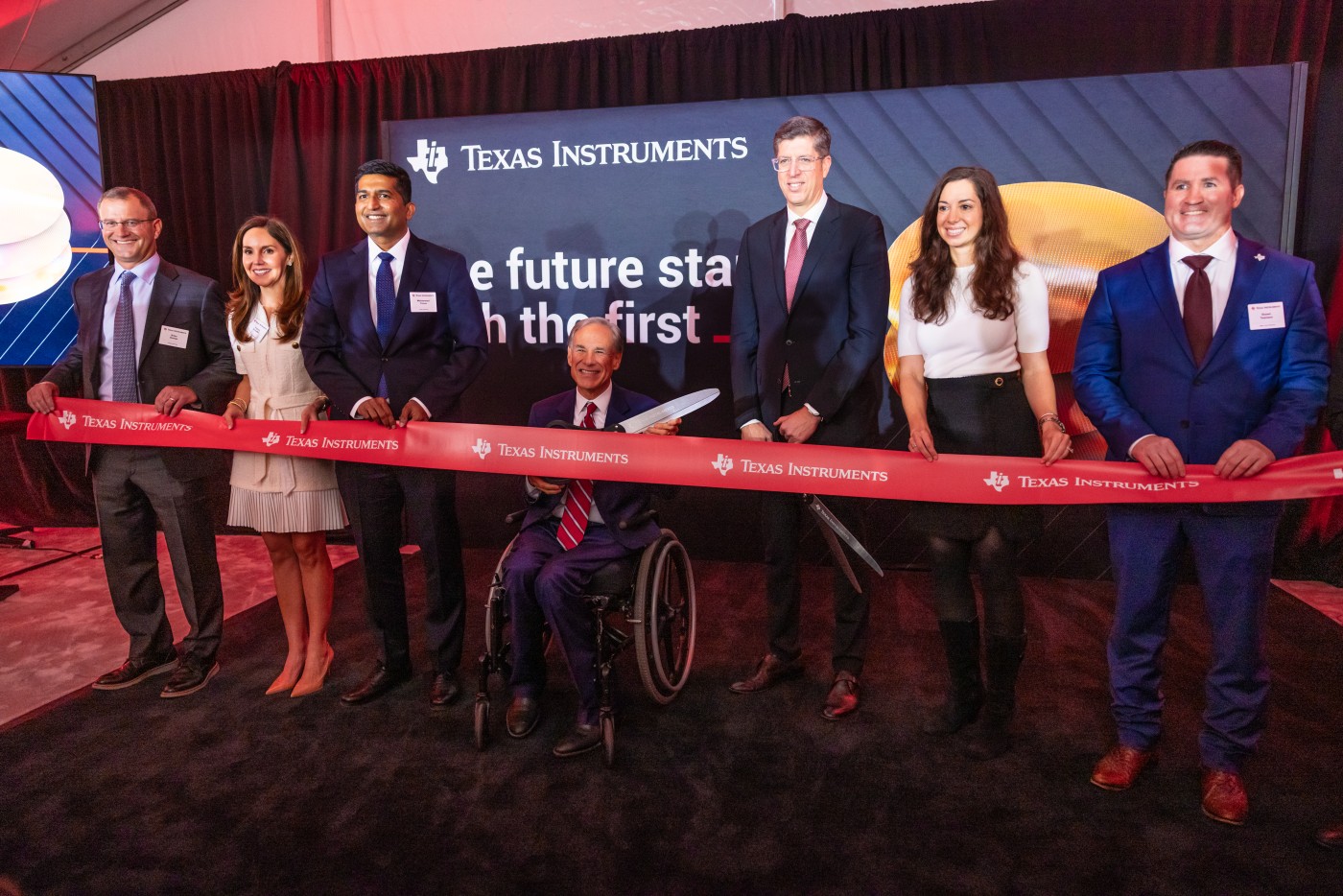
    Governor Greg Abbott today delivered remarks and participated in a ribbon cutting ceremony for the grand opening of Texas Instruments’ (TI) new 300 mm semiconductor wafer fabrication facility in Sherman. TI’s new semiconductor facility will be home to cutting edge technology, employing thousands of Texans with an expected capital investment of $40 billion over the coming decades.

    “Semiconductors are essential to building the space and artificial intelligence infrastructure that will define our future,” said Governor Abbott. “Today’s announcement by Texas Instruments helps Texas to expand our No. 1 ranking and helps lead the semiconductor manufacturing boom we have here in Texas. With help from Texas Instruments, Texas will remain the home for cutting edge semiconductor manufacturing and the home of more job opportunities than any other state in the United States of America.”

    The Governor was joined by TI president and CEO Haviv Ilan, Senator Brent Hagenbuch, Reprehensive Shelley Luther, Sherman Mayor Shawn Teamann, and other state and local officials. 

    Texas Instruments, headquartered in Dallas, is the birthplace of the world’s first commercial silicon transistor in 1954, followed by Jack Kilby’s invention of the integrated circuit in 1958. Together, TI and Texas have formed the foundation of modern technology.

    At the ribbon cutting ceremony, Governor Abbott thanked TI for selecting Texas as the location for this advanced 300mm fab, highlighting the fact that Texas is leading the nation in semiconductor manufacturing capacity and is the No. 1 state for semiconductors. The Governor noted that the future is forged by microchips and Texas will lead the way in bringing the world into the next century. The new semiconductor wafer fabrication plant will fuel the Texas economy and advance the state’s semiconductor leadership. 

    Additional photos of the event will be provided here when available.

    Headquartered in Dallas, TI is a global semiconductor company that designs, manufactures, and sells analog and embedded processing chips for markets such as industrial, automotive, personal electronics, enterprise systems, and communications equipment. A Fortune 500 company and one of the top 10 semiconductor companies worldwide, at its core, TI has a passion to create a better world by making electronics more affordable through semiconductors. 

    Learn more at TI.com.

    Continue Reading

  • Backgrounder: Government of Canada supports manufacturing businesses to help them face tariff pressures

    Centre-du-Québec

    Airex Industries

    Equipment acquisition and expansion: The aim of the project is to improve productivity and production capacity at a business specializing in the manufacture of industrial dust collectors.

    $1,000,000


    Centre-du-Québec

    VicStore Fixtures

    Equipment acquisition: The aim of the project is to improve productivity and production capacity at a business specializing in the manufacture of commercial shelving.

    $900,000


    Centre-du-Québec

    Rembourrage J.A. Martineau

    Equipment acquisition and marketing strategy: The aim of the project is to improve productivity and production capacity and diversify the markets of a business specializing in furniture upholstery.

    $495,000


    Centre-du-Québec

    Khrome Product – Transport (KPT)

    Equipment acquisition: The aim of the project is to improve productivity and production capacity at a business specializing in the development and manufacture of components and systems for the railway sector.

    $255,298


    Centre-du-Québec

    Natart Juvenile

    Equipment acquisition and marketing strategy: The aim of the project is to improve productivity and production capacity and diversify the markets of a business specializing in furniture manufacturing.

    $183,000


    Lanaudière

    Robert Hydraulique

    Equipment acquisition and marketing strategy: The aim of the project is to improve productivity and production capacity and diversify the markets of a business specializing in the manufacture of telescopic boom lifts.

    $1,000,000


    Lanaudière

    Liard Industries

    Equipment acquisition: The aim of the project is to improve productivity and production capacity at a business specializing in the machining, welding and assembly of industrial equipment.

    $675,000


    Lanaudière

    Composites VCI

    Equipment acquisition: The aim of the project is to improve productivity and production capacity at a business specializing in the manufacture of composite products for the aeronautics, renewable energy and public transit industries.

    $630,915


    Lanaudière

    Aluquip

    (9044-3433 Québec inc.)

    Equipment acquisition and marketing strategy: The aim of the project is to improve productivity and production capacity and diversify the markets of a business specializing in the manufacture of utility equipment mainly for the transportation sector.

    $490,000


    Lanaudière

    Girolift (Canada Hydraulique Équipement)

    Equipment acquisition and marketing strategy: The aim of the project is to improve productivity and production capacity and diversify the markets of a business specializing in the manufacture of hydraulic lifting devices.

    $457,500


    Lanaudière

    Udaco Industries

    Equipment acquisition: The aim of the project is to improve productivity and production capacity at a business specializing in the custom manufacture and machining of metallic components.

    $275,000


    Mauricie

    Captel

    Equipment acquisition: The aim of the project is to improve productivity and production capacity at a business specializing in the manufacture of steel structures.

    $1,000,000


    Mauricie

    Fusium

    Equipment acquisition: The aim of the project is to improve productivity and production capacity at a business specializing in the casting and moulding of aluminum and magnesium components.

    $1,000,000


    Mauricie

    Shawinigan Aluminium

    Equipment acquisition: The aim of the project is to improve production capacity at a business specializing in the manufacture of aluminum billets.

    $1,000,000


    Mauricie

    Les Menthes Rito

    Equipment acquisition: The aim of the project is to improve productivity and production capacity at a business specializing in the manufacture of mint candy.

    $975,000


    Mauricie

    Métal Dupont

    Equipment acquisition: The aim of the project is to improve productivity and production capacity at a business specializing in the design and manufacture of steel and fabricated metal structures.

    $875,000


    Mauricie

    MF2 AÉRO

    (9086-3440 Québec inc.)

    Equipment acquisition: The aim of the project is to improve productivity and production capacity at a business specializing in the manufacture of precision machined components.

    $450,000


    Mauricie

    Acier Rayco (2016)

    Equipment acquisition: The aim of the project is to improve productivity and production capacity at a business specializing in the machining of components and the custom design of metal structure equipment (steel, aluminum, etc.).

    $202,500


    Mauricie

    Tekad Industries

    Equipment acquisition: The aim of the project is to improve productivity and production capacity at a business specializing in the application of surface coatings and treatment of metal components.

    $179,000


    Continue Reading