Category: 3. Business

  • Summerside electricity customers could see ‘roving’ power outages this winter, city says

    Summerside electricity customers could see ‘roving’ power outages this winter, city says

    Listen to this article

    Estimated 4 minutes

    The audio version of this article is generated by AI-based technology. Mispronunciations can occur. We are working with our partners to continually review and improve the results.

    As temperatures plunge and Islanders crank up the heat, the City of Summerside is preparing its power plans amid mounting pressure on P.E.I.’s electricity grid.

    Those preparations come as Maritime Electric warns it may need to resort to rotating outages this winter to prevent provincewide blackouts — something Summerside’s chief administrative officer said is also a possibility for the city’s customers.

    “We’re concerned, for certain,” JP Desrosiers, told CBC News: Compass host Louise Martin.

    “We’ve been tracking the loads for our municipality’s utility pretty closely over the last number of years and seeing a steady increase, and… loads we haven’t seen before.”

    P.E.I.’s power grid has long relied on two subsea cables that connect the Island to the mainland and electricity purchased from New Brunswick Power.

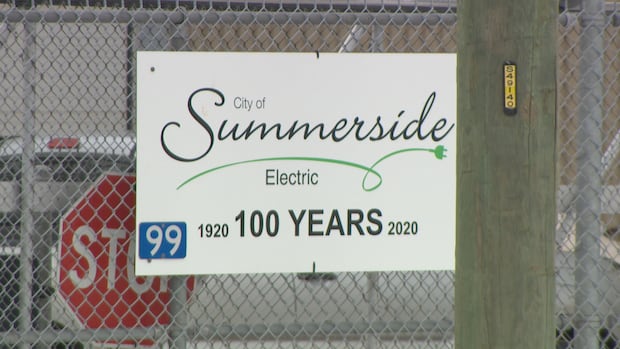
    Summerside Electric, which is owned by the city, generates about 60 per cent of its electricity through renewable sources like solar and wind, but it still relies on Maritime Electric’s transmission system for power that the smaller utility buys from New Brunswick.

    WATCH | How Summerside is preparing for the possibility of rolling power outages this winter:

    How Summerside is preparing for the possibility of rolling power outages this winter

    As temperatures go down, demand for heat goes up — and that means pressure on P.E.I.’s power grid. Maritime Electric has warned it may have to resort to rolling outages, and that has Summerside’s electrical utility preparing too. CBC News: Compass host Louise Martin spoke with the city’s chief administrative officer, JP Desrosiers, to find out how.

    With P.E.I.’s grid under increased pressure — which Maritime Electric attributes, in part, to the province’s growing population — Desrosiers said Summerside is preparing for situations where its power is curtailed. 

    In those cases, he said, the city is “forced to utilize and pull different levers that we have for generation capacity.” 

    One of those levers is diesel generation — but Desrosiers said that’s a “last resort.”

    “It’s not something that’s both fiscally responsible and certainly goes against our goal of being green as a community.”

    ‘We want to be part of the solution’

    Desrosiers said the early blast of cold weather the Island saw in December has pushed the city closer to using its diesel generation than staff had anticipated at this point in the season. This winter, city officials anticipate Summerside’s power will be strained to a point where the generators are used more often than they have in the past. 

    “In addition to that, we are preparing for the potential for needing to curtail our own customers in sort of a roving practice,” Desrosiers said. 

    That means planned, temporary power outages for customers on certain circuits within the city in an effort to prevent a total collapse of Summerside Electric’s grid.

    “We’re hopeful that we don’t get into that scenario, but it’s important for our team to prepare,” Desrosiers said, noting that roving outages are also an option of last resort.

    He said the city would do its best to notify residents in advance of any such outages.

    WATCH | How does P.E.I.’s electrical grid even work? CBC Explains:

    How does P.E.I.’s electrical grid even work? CBC Explains

    With recent outages shining a light on the fact that the P.E.I. electrical grid is nearing capacity, you may be wondering how the Island gets power in the first place — or what the difference is between Summerside Electric and Maritime Electric. Here’s a breakdown from CBC’s Cody MacKay.

    Desrosiers said the city continues to push for direct access to the underwater cables from New Brunswick, so it doesn’t have to rely on Maritime Electric to deliver that power. 

    “We made it clear as a utility and as a municipality that we believe we should have access to the publicly-owned cables to which we’ve paid for a percentage… for a number of years, and that hasn’t changed.”

    Desrosiers said there has been some progress on that front in terms of looking at costs and feasibility, as well as determining the legislative pathways to make it happen.

    He said the city also continues to have conversations with the provincial government.

    “We want to be part of the solution, not only for Summerside but for the Island,” Desrosiers said. “We’ve got a utility that’s ready and willing to do what’s needed to gain access, and we feel as though we should have access.”


    Continue Reading

  • Horizon Health employee group wants to create sense of belonging for international staff

    Horizon Health employee group wants to create sense of belonging for international staff

    Listen to this article

    Estimated 3 minutes

    The audio version of this article is generated by AI-based technology. Mispronunciations can occur. We are working with our partners to continually review and improve the results.

    A new employee group at Horizon Health Network is working to support the growing cohort of internationally-trained staff with the company.

    Abidemi Balogun, a registered nurse in Saint John who is originally from Nigeria, said the International Educated Employee Resource Group, which was started earlier this year, gives internationally-trained staff a sense of belonging and a safe space to share ideas.

    “Mainly what this group is all about is just to give them … support,” said Balogun.

    “Support by mentorship, leadership, giving them that empowerment.”

    Marwa Elnady, a Saint John registered nurse originally from Egypt, said she wished a program like this one was available when she first moved to New Brunswick.

    LISTEN | Marwa Elnady and Abidemi Balogun hope efforts help newcomers settle and stay:

    Information Morning – Saint John15:30New peer support program for international health care workers

    Host Emily Brass speaks with some internationally born health-care workers who are trying to give other newcomers in their field a leg up, with social support and cultural guidance. Marwa Elnady and Abidemi Balogun hope their efforts will help newcomers settle in and stay.

    She said when she moved to Saint John, she had to find settlement agencies on her own, which she said can be demoralizing while living and working in a new environment.

    “One of the phases is the frustration phase when sometimes we lose hope with everything, see [the] struggles more than the opportunities,” said Elnady.

    According to Horizon, there are 740 internationally-trained employees with the health authority, including 430 nursing staff and 30 salaried physicians.

    Balogun said it’s not just moving to Canada that can lead to culture shock, moving within Canada can be shocking, too.

    Before moving to Saint John, Balogun lived in Ontario after moving from Nigeria, but he said moving from one province to another still had its adjustment period.

    “I came [to] Saint John in 2019 when we [had few] Africans,” said Balogun.

    “I could imagine if I was coming directly from Africa.”

    Elnady said it’s important to make newcomers feel at home, not only for their mental and physical health, but also for the health of hospital patients.

    She said not feeling a sense of belonging can eventually lead employees to not putting their all into their work.

    It can also lead to staffing retention issues.

    “If I’m not happy in Saint John, I won’t be staying,” said Elnady. 

    Balogun said there are still some employees who “are not really aware of this program,” so the group needs to find ways to spread the word.

    Continue Reading

  • Poole’s Twin Sails bridge repair hit by manufacturing delay

    Poole’s Twin Sails bridge repair hit by manufacturing delay

    Glynn Barton, chief operations officer at BCP, said: “Work will begin on Twin Sails, as scheduled, on 15 December, with the team installing key components before Christmas.

    “There has been a delay, outside of the council’s control, relating to a key process in the manufacturing of the components from our supplier.

    “This process must happen to ensure the components meet the required safety standards needed to be installed.

    “Our team will work continue to work throughout December to ensure the bridge can return to use as soon as possible.

    “We will keep residents updated on these repairs as we go.”

    In May last year, the bridge remained out of action for almost three months after another fault was identified during scheduled checks.

    Earlier this year, BCP councillors approved £6m of funding from the Community Infrastructure Levy to deliver a long-term solution.

    The investment will focus on improving the lifting mechanism and addressing recurring reliability problems that have disrupted journeys for residents and businesses.

    Continue Reading

  • EU: Renewables in electricity generation up 4% in Q3 2025

    EU: Renewables in electricity generation up 4% in Q3 2025

    Brussels [Belgium], December 13 (ANI/WAM): In the third quarter of 2025, 49.3% of net electricity generated in the EU came from renewable energy sources, an increase of 3.8% compared with the 47.5% registered in the same quarter of 2024, according to figures by Eurostat, the statistical office of the European Union.

    Among EU countries, in the third quarter of 2025, Denmark, with 95.9%, had the highest share of renewables in net electricity generated, followed by Austria (93.3%) and Estonia (85.6%). The lowest shares of renewables were recorded in Malta (16.6%), Czechia (19.7%) and Slovakia (21.1%).

    In 21 EU countries, the share of renewable energy sources in net electricity generation increased in the third quarter of 2025. The largest year-on-year increases were recorded in Estonia (+20.6 percentage points (pp)), Latvia (+18.9 pp) and Austria (+16.3 pp).

    Most of the electricity generated from renewable sources came from solar (38.3%), wind (30.7%) and hydro (23.3%), followed by combustible renewable fuels (7.2%) and geothermal energy (0.5%). (ANI/WAM)

    (This content is sourced from a syndicated feed and is published as received. The Tribune assumes no responsibility or liability for its accuracy, completeness, or content.)


    Continue Reading

  • Bajwa, J., Munir, U., Nori, A. & Williams, B. Artificial intelligence in healthcare: transforming the practice of medicine. Future Healthc. J. 8, e188–e194 (2021).

    Google Scholar 

  • Bohr, A. & Memarzadeh, K. The rise of artificial intelligence in healthcare applications. In Artificial Intelligence in Healthcare (eds Bohr, A. & Memarzadeh, K.) 25–60 (Academic Press, 2020).

  • Moynihan, A. et al. New technologies for future of surgery in Ireland: An RCSI working Group report 2024. Surgeon 23, 120–132 (2025).

    Google Scholar 

  • Sauerbrei, A., Kerasidou, A., Lucivero, F. & Hallowell, N. The impact of artificial intelligence on the person-centred, doctor-patient relationship: some problems and solutions. BMC Med. Inform. Decis. Mak. 23, 73 (2023).

    Google Scholar 

  • Duffourc, M., Møllebæk, M., Druedahl, L. C., Minssen, T. & Gerke, S. Surgeons’ perspectives on liability for the use of artificial intelligence technologies in the United States and European Union: results from a focus group study. Ann. Surg. Open 6, e542 (2025).

    Google Scholar 

  • Park, H. J. Patient perspectives on informed consent for medical AI: a web-based experiment. Digit. Health 10, 20552076241247938 (2024).

    Google Scholar 

  • Iserson, K. V. Informed consent for artificial intelligence in emergency medicine: a practical guide. Am. J. Emerg. Med. 76, 225–230 (2024).

    Google Scholar 

  • Pallocci, M. et al. Informed consent: legal obligation or cornerstone of the care relationship? Int. J. Environ. Res. Public Health 20, 2118 (2023).

    Google Scholar 

  • Ng, I. K. Informed consent in clinical practice: old problems, new challenges. J. R. Coll. Physicians Edinb. 54, 153–158 (2024).

    Google Scholar 

  • Director, S. Does black box AI in medicine compromise informed consent? Philos. Technol. 38, 62 (2025).

    Google Scholar 

  • De Menech, C. Artificial intelligence and self-determination in medical field. Eur. J. Priv. Law Technol. 1, 164–180 (2022).

    Google Scholar 

  • World Health Organization. Ethics and governance of artificial intelligence for health: WHO guidance. https://iris.who.int/handle/10665/341996 (World Health Organization, 2021).

  • Pruski, M. AI-enhanced healthcare: Not a new paradigm for informed consent. J. Bioethical Inq. 21, 475–489 (2024).

    Google Scholar 

  • Mello, M. M., Char, D. & Xu, S. H. Ethical obligations to inform patients about use of AI tools. JAMA 334, 767–770 (2025).

    Google Scholar 

  • Cahill, R. A., Duffourc, M. & Gerke, S. The AI-enhanced surgeon—integrating black-box artificial intelligence in the operating room. Int. J. Surg. 111, 2823–2826 https://doi.org/10.1097/JS9.0000000000002309 (2025).

    Google Scholar 

  • Oliphant, K. Medical malpractice and compensation: comparative observations. In Medical Malpractice and Compensation in Global Perspective (eds Oliphant, K. & Wright, R.) 513–562 (Walter de Gruyter, 2013).

  • Borysiak, W. Concept of due care in medical law in a comparative perspective. Eur. J. Health Law 31, 1–26 (2023).

    Google Scholar 

  • Duffourc, M. & Gerke, S. Decoding US Tort Liability in Healthcare’s Black-Box AI Era: lessons from the European Union. Stanf. Tech. L. Rev. 27, 1–70 (2023).

    Google Scholar 

  • Raab, E. L. The parameters of informed consent. Trans. Am. Ophthalmol. Soc. 102, 225–232 (2004).

    Google Scholar 

  • Almekkawy, M. et al. Therapeutic systems and technologies: state-of-the-art applications, opportunities, and challenges. IEEE Rev. Biomed. Eng. 2, 325–339 (2019).

    Google Scholar 

  • Davis V. Nassau Ophthalmic Servs., P.C., 232 A.D.2d 358, 648 N.Y.S.2d 454 (1996).

  • BGH, judgment of 13-6-2006 – VI ZR 323/04 (OLG Frankfurt a.M.).

  • Johnson v. Jacobowitz, 65 A.D.3d 610, 884 N.Y.S.2d 158 (2009).

  • Mills v. Oxford University Hospitals NHS Trust, [2019] EWHC 936 (QB).

  • Snow v. Royal United Hospitals Bath NHS Foundation Trust, [2023] EWHC 42 (KB).

  • BGH, judgment of 22-09-1987 – VI ZR 238/86 (Karlsruhe).

  • Stover v. Association of Thoracic and Cardiovascular Surgeons, 635 A.2d 1047, 431 Pa.Super. 11 (1993).

  • OLG Cologne, judgment of 21.09.2011 – 5 U 188/10.

  • Bayley v George Eliot Hospital NHS Trust, [2017] EWHC 3398 (QB).

Continue Reading

  • ETtech Explainer: Inside OpenAI’s GPT-5.2 launch, features, pricing, plans

    ETtech Explainer: Inside OpenAI’s GPT-5.2 launch, features, pricing, plans

    OpenAI on Thursday unveiled the latest artificial intelligence (AI) model in its GPT series, in collaboration with long-standing partners Nvidia and Microsoft. The company claimed major improvements in reasoning, speed, and real-world task performance in GPT-5.2.

    Here’s all you need to know:

    Features of GPT-5.2

    A few months after the rollout of GPT-5, OpenAI has introduced upgrades to the model. The company claims that the latest version is capable of creating spreadsheets and presentations, writing code, perceiving images, and understanding long contexts.

    Long-context reasoning was tested on OpenAI’s MRCRv2 benchmark — an evaluation that measures a model’s ability to integrate information spread across long documents. This makes the model well-suited for deep analysis, synthesis, and complex multi-source workflows.

    On image perception, the Sam Altman-led company said the model has a stronger grasp of visual elements, showing improved comprehension of images.