Toyota Motor Europe NV/SA (TME) oversees the wholesale sales and marketing of Toyota, GR (Gazoo Racing) and Lexus vehicles and parts and accessories, as well as Toyota’s European manufacturing and engineering operations. Toyota directly employs over 26,000 people and has invested over EUR 12 billion in Europe since 1990. Its eight European manufacturing plants are located in Portugal, the UK, France, Poland, Czech Republic and Turkey. Today, there are approximately 14.7 million Toyota and Lexus vehicles on European roads, whose drivers are supported by a network of 28 National Marketing and Sales Companies and around 2,800 retail sales outlets in 53 countries (EU, UK, EFTA countries , Israel, Turkey and other Eastern European countries). In 2024, TME sold 1,217,132 vehicles in Europe for a 7.1% market share. For more information, visit www.toyota-europe.com.
Toyota believes that when people are free to move, anything is possible. In the pursuit of “Mobility for All”, Toyota aims to create safer, more connected, inclusive and sustainable mobility to achieve its mission of producing “Happiness for All”. In Europe, TME launched the KINTO mobility brand which offers a range of mobility services in 20 countries, and is growing its business-to-business sales of zero-emission fuel cell products and engineering support. Contributing to the UN Sustainable Development Goals, Toyota is working to achieve carbon neutrality in its entire business across Europe. A historic leader in CO2 reduction in Europe, TME aims to achieve 100% CO2 reduction in all new vehicles in Western Europe by 2035 and will continue to offer a full range of electrified powertrains to customers across the region with its hybrid, plug-in hybrid, battery and fuel cell electric vehicles.
PLEASANTON, Calif., Dec. 4, 2025 /PRNewswire/ — Workday, Inc. (NASDAQ: WDAY), the enterprise AI platform for managing people, money, and agents, today announced that Gerrit Kazmaier, president, product and technology, Workday, will present at the Barclays 23rd Annual Global Technology Conference on December 11, 2025 at 1:55 p.m. Pacific Time / 4:55 p.m. Eastern Time.
A live webcast of the event will be available on the Workday Investor Relations site. The replay of the webcast will be available for a minimum of 90 days after the conference call.
About Workday Workday is the enterprise AI platform for managing people, money, and agents. Workday unifies HR and Finance on one intelligent platform with AI at the core to empower people at every level with the clarity, confidence, and insights they need to adapt quickly, make better decisions, and deliver outcomes that matter. Workday is used by more than 11,000 organizations around the world and across industries – from medium-sized businesses to more than 65% of the Fortune 500. For more information about Workday, visit workday.com.
Fundamental to a variety of biological processes, ion channels are an important class of therapeutical targets. Small-conductance calcium-activated potassium (KCa2.x, or SK1, 2, and 3) channels are activated by increased intracellular Ca2+ to induce potassium efflux and regulate membrane potential (Köhler et al., 1996; Bond et al., 2004; Blatz and Magleby, 1986). In this role, SK1, 2, and 3 mediate cellular excitability and have different but overlapping functions in many cell types including neurons, endothelial cells, and cardiomyocytes (Adelman et al., 2012). In particular, the SK2 channel regulates synaptic transmission and plasticity, learning and memory, and cardiac action potentials and thus has attracted attention as a potential target for the treatment of neurological and cardiovascular diseases (Bond et al., 2004; Hammond et al., 2006; Zhang et al., 2008). SK2 activators reduce cellular excitability and are potential therapeutics for alcohol dependence (Hopf et al., 2011), ataxia (Alviña and Khodakhah, 2010), epilepsy (Anderson et al., 2006), and stroke (Allen et al., 2011). Conversely, SK2 inhibitors increase cellular excitability and have been proposed for the treatment of Alzheimer’s disease (Proulx et al., 2015) and atrial fibrillation (Diness et al., 2011).
The cryo-EM structure of the related SK4 (KCa3.1, IK) channel provided the first insights into the architecture and mechanism of Ca2+-dependent gating for the SK channel family (Lee and MacKinnon, 2018). SK4 channels form non-domain swapped tetramers, with each subunit containing six transmembrane helices S1 to S6 (Köhler et al., 1996; Lee and MacKinnon, 2018). S1–S4 form a voltage-sensor like domain where the S4 helices lack the positively charged residues necessary for voltage sensitivity. The S5 and S6 helices form the potassium pore. Within the potassium pore lies the selectivity filter, a structure unique to potassium channels that is required for rapid and selective conductance of K+ ions (Doyle et al., 1998). Following the S6 helices, there are two intracellular helices (HA and HB) that form the binding site for the Ca2+-binding protein calmodulin (CaM), which acts as the Ca2+ sensor to gate SK channels (Xia et al., 1998). The CaM C-lobe is constitutively bound to the HA and HB helices, and upon an increase in intracellular Ca2+, the CaM N-lobe binds to a unique S4–S5 linker, inducing a conformational change in the S6 helices to open the potassium pore and activate the channel (Lee and MacKinnon, 2018).
SK2 activators described to date bind at the interface of the CaM N-lobe and S4–S5 linker and function by stabilizing this interaction (Lee and MacKinnon, 2018; Brown et al., 2020; Shim et al., 2019). On the other hand, known SK2 inhibitors target the extracellular and/or transmembrane regions and were proposed to function by either direct pore block or negative gating modulation (Brown et al., 2020). The binding site for the bee venom toxin apamin, a cyclic 18-residue peptide inhibitor, has been mapped to the extracellular loop regions of SK2 (Nolting et al., 2007; Weatherall et al., 2011; Lamy et al., 2010). Apamin is of historical importance as it was used to elucidate the physiological role of SK2 and apamin inhibition of SK2 increases neuronal excitability and improves learning and memory (Blatz and Magleby, 1986; Messier et al., 1991). Apamin inhibits SK1, 2, and 3 but not 4 and is most potent against SK2 with an IC50 of ~70 pM (Köhler et al., 1996; Kuzmenkov et al., 2022). Functional mutagenesis of apamin identified two arginine residues that are essential for inhibition (Vincent et al., 1975). Mutagenesis experiments on the SK2 channel indicated that residues in the extracellular loops between S3 and S4 (S3–S4 linker) and between S5 and S6 are important for apamin binding and inhibition (Nolting et al., 2007; Weatherall et al., 2011; Lamy et al., 2010). Since the S3–S4 linker is predicted to be distant to the pore, an allosteric mechanism of apamin inhibition rather than a direct pore block has been suggested (Lamy et al., 2010). Attempts to recapitulate the potency and selectivity of apamin with small molecules resulted in the development of a class of inhibitors, such as UCL1684, that are predicted to have an overlapping binding site with apamin (Ishii et al., 1997; Castle et al., 1993; Chen et al., 2000). These small molecules generally carry two positive charges, which may mimic the two arginine residues in apamin that are essential for inhibition (Vincent et al., 1975). Further characterization of the molecular mechanisms of inhibition by apamin and the small molecule pore blockers is required to understand how the interaction between the S3–S4 linker and the essential arginine residues/positive charges block ion conduction in SK2.
Another class of small molecule SK2 inhibitors acts as negative gating modulators by shifting the Ca2+ dependence of activation to higher Ca2+ concentrations (Jenkins et al., 2011; Simó-Vicens et al., 2017). One such inhibitor, AP31969, is currently in clinical trials for the treatment of arrhythmia (Saljic et al., 2024). Mutagenesis experiments with the structurally related inhibitor AP14145 suggest that these compounds bind within the pore directly below the selectivity filter (Simó-Vicens et al., 2017). Similar potencies on SK1, 2, and 3 channels have been reported most likely due to the homology of pore lining residues in the SK family. However, selective SK1 inhibitors were developed that take advantage of a unique residue, Ser293, on S5 (Hougaard et al., 2012). Interestingly, only small modifications to this family of inhibitors are sufficient to switch the activity profile from inhibition to activation of SK1. However, it remains unclear how compounds that bind the transmembrane regions of SK channels affect Ca2+-dependent gating, which is driven by the interaction between CaM and the intracellular domains.
Despite SK2 being a prominent therapeutic target for both neurological and cardiovascular diseases, no structure of human SK2 has been reported to date. Although the structure of rat SK2 was reported while this manuscript was in preparation (Nam et al., 2025). To enable high-resolution cryo-EM studies of human SK2, we designed a chimera (SK2–4) that contains the transmembrane and extracellular domains of human SK2 and intracellular domains of human SK4. The structures of the SK2–4/CaM complexes in the Ca2+-bound and Ca2+-free conformations demonstrate that SK2 and SK4 adopt similar overall architectures and share a similar mechanism for Ca2+-dependent gating. However, unlike SK4, we observed a structured S3–S4 linker that induces a conformational change in the selectivity filter and forms a hydrophobic constriction at the extracellular opening of the SK2 pore. Apamin binds to the extracellular constriction formed by the S3–S4 linker to block potassium efflux. In addition, high-throughput screening and medicinal chemistry optimization efforts yielded a new class of potent SK2 inhibitors that bind to a novel pocket formed by the S5, S6, and pore helices and induce closure of the S6 helices. Structure-guided design efforts enabled switching the activity profile toward activation while retaining the same binding mode. The detailed understanding of two distinct mechanisms of SK2 channel inhibition, extracellular pore block and negative gating modulation, and a new mechanism for channel activation presented here should facilitate the rational design of potent and selective SK2 modulators.
We present a novel model comparison to examine the challenges that changes in carbon-intensive energy prices pose for monetary policy. Our study focuses on the macroeconomic effects and monetary policy implications of both temporary and permanent carbon-intensive energy shocks. We use a set of institutional macroeconomic models, each of which is a comprehensive, multi-sector monetary framework.
Contribution
The model comparison includes several large-scale macroeconomic models developed by several central banks and international organisations. These models are the SEEM model by the Central Bank of Chile, the EMuSe model by the Deutsche Bundesbank, the NAWM-E model by the European Central Bank, the C-EAGLE model by the Eurosystem, the E-QUEST model by the European Commission and the BIS-MS model by the Bank for International Settlements. Widely employed for policy analysis, these models incorporate a range of sectoral, nominal and real rigidities to assess the interactions between prices, sectoral dynamics and economic outcomes. A key commonality among them is their detailed representation of sectoral linkages, with particular emphasis on the energy sector.
Findings
Our examination of both temporary and permanent energy price increases uncovers significant insights into their economic impacts. We find that both types of shocks reduce output. The temporary price increase is inflationary, whereas the sign of the inflation response of a permanent price change depends on the underlying model assumptions and on the monetary policy response. Our study also reveals substantial commonalities across the models in terms of both quantitative and qualitative outcomes, while highlighting notable cross-country differences.
Abstract
This paper presents a novel model comparison to examine the challenges posed by changes in carbon-intensive energy prices for monetary policy. The employed environmental monetary models have a detailed multi-sector structure. The comparison assesses the effects of both a temporary and a permanent energy price increase with a particular focus on the euro area and the United States. Temporary and permanent price shocks are both inflationary. However, the inflationary impact of the permanent shock depends on the underlying model assumptions and monetary policy response. The analysis also establishes that these models share large commonalities in their quantitative and qualitative results, while also pointing out cross-country differences.
LOUISVILLE, KY — Brown‑Forman Corporation (NYSE: BFA, BFB) reported financial results for its second quarter and first half of fiscal 2026, ended October 31, 2025. Second quarter reported net sales decreased 5%1 to $1.0 billion (-2% on an organic basis2) compared to the same prior-year period. In the quarter, reported operating income decreased 10% to $305 million (-9% on an organic basis) and diluted earnings per share decreased 14% to $0.47.
For the first six months of the fiscal year, the company’s reported net sales decreased 4% to $2.0 billion (flat on an organic basis) compared to the same prior-year period. First half reported operating income decreased 9% to $565 million (-4% on an organic basis) and diluted earnings per share decreased 13% to $0.83.
Lawson Whiting, Brown‑Forman’s President and Chief Executive Officer shared, “Our second quarter results reflect a continuation of the themes we saw in the first quarter, and the first half of the year unfolded largely as we expected. While the operating environment continues to be challenging, our team remains resilient and focused on executing our plans. Based on this performance and our visibility into the remainder of the year, we are pleased to reaffirm our fiscal year guidance.”
First Half of Fiscal 2026 Highlights
Net sales decline largely driven by the end of the Korbel Champagne Cellars relationship (Korbel relationship) and the absence of the Sonoma‑Cutrer prior-year transition services agreement (TSA).
From a geographic perspective, net sales growth in Emerging3 markets and the Travel Retail3 channel was more than offset by declines in the United States and Developed International3 markets.
Gross margin expanded 30 basis points driven by the positive effect of acquisitions and divestitures, partially offset by higher costs and unfavorable price/mix.
The Brown‑Forman Board of Directors authorized a $400 million share repurchase program and increased the quarterly cash dividend for the 42nd consecutive year.
Cash flows from operations grew by $163 million to $292 million and free cash flow2 increased by $179 million to $236 million.
First Half of Fiscal 2026 Brand Results
Net sales for Whiskey3 products were flat (flat organic). The launch of Jack Daniel’s Tennessee Blackberry and higher net sales of Woodford Reserve, driven by distributor inventories and transitions in the United States, were offset by lower volumes of Jack Daniel’s Tennessee Whiskey and Jack Daniel’s Tennessee Honey.
Net sales for the Tequila3 portfolio declined 3% (-3% organic). Herradura’s net sales declined 11% (-11% organic) led by lower volumes in the United States as the tequila category remains competitive. el Jimador’s net sales increased 1% (+2% organic) driven by higher volumes in Colombia and an estimated net increase in distributor inventories in the United States.
Net sales for the Ready-to-Drink3 (RTD) portfolio increased 5% (+5% organic). Net sales of New Mix increased 28% (+30% organic) fueled by growth in Mexico with market share gains in an accelerating category. Jack Daniel’s RTD/RTP portfolio declined 4% (-4% organic) largely due to the absence of American-made beverage alcohol from retail shelves across most provinces in Canada.
Rest of Portfolio’s3 net sales declined 35% (+22% organic) driven by the conclusion of the Korbel relationship and the absence of the Sonoma‑Cutrer and Finlandia prior-year TSAs. The decline was partially offset by the distribution of new agency brands in Japan and Mexico, along with broad-based growth of Gin Mare.
Net sales for non-branded and bulk decreased 61% driven by lower used barrel sales.
First Half of Fiscal 2026 Market Results
Net sales in the United States decreased 9% (flat organic) driven by the end of the Korbel relationship and the absence of the Sonoma‑Cutrer prior-year TSA, as well as lower volumes of Jack Daniel’s Tennessee Whiskey, Herradura, and Jack Daniel’s Tennessee Honey. These declines were partially offset by the launch of Jack Daniel’s Tennessee Blackberry and higher net sales across the portfolio as a result of changes to our distributor relationship terms.
In a challenging economic environment, net sales in the Developed International markets declined 4% (-6% organic), though improved sequentially. The decline was driven by the absence of American-made beverage alcohol from retail shelves in most of the Canadian provinces and lower volumes of Jack Daniel’s Tennessee Whiskey in Germany and the United Kingdom. The decline was partially offset by the positive effect of foreign exchange, new agency brands in Japan, and the benefit from transition to owned distribution in Italy.
Net sales in Emerging markets increased 10% (+12% organic) led by strong double digit growth of New Mix, higher volumes across the Jack Daniel’s family of brands in Brazil and Türkiye, and an estimated net increase in distributor inventories.
The Travel Retail channel’s net sales increased 7% (+6% organic) due to higher volumes of Jack Daniel’s Tennessee Whiskey, the phasing of ordering patterns, and the positive effect of foreign exchange.
First Half of Fiscal 2026 Other P&L Items
Gross profit decreased 4% (-3% organic). Gross margin expanded 30 basis points to 59.5% driven by the positive effect of acquisitions and divestitures, partially offset by higher costs and unfavorable price/mix.
Advertising expense decreased 2% (-1% organic) as a more focused investment for the new “That’s What Makes Jack, JACK” global campaign, the launch of Jack Daniel’s Tennessee Blackberry, and the negative effect of foreign exchange was more than offset by lower spend across the rest of our portfolio and the absence of the Korbel brands.
Selling, general, and administrative (SG&A) expenses decreased 3% (-4% organic) largely driven by lower compensation-and-benefit-related expenses.
The company incurred $16 million in charges related to the strategic restructuring initiative announced in January 2025.
Operating income declined 9% (-4% organic) with an operating margin decrease of 150 basis points to 28.9%. The operating margin decrease was primarily driven by the decline in gross profit, the impact of the restructuring initiative, and the absence of the prior-year franchise tax refund. These declines were partially offset by the benefit of the substitution drawback claims2.
The company recognized a non-operating pension settlement charge of $22 million, largely related to the early retirement benefit offered in fiscal 2025.
Diluted earnings per share decreased $0.13 driven by the decrease in operating income and an increase in non-operating postretirement expense.
First Half of Fiscal 2026 Financial Stewardship
On November 19, 2025, the Brown‑Forman Board of Directors approved an increase of 2% to the quarterly cash dividend from $0.2265 per share to $0.2310 per share on its Class A and Class B Common Stock. The dividend is payable on January 2, 2026, to stockholders of record on December 5, 2025. Brown‑Forman, a member of the S&P 500 Dividend Aristocrats Index, has paid regular quarterly cash dividends for 82 consecutive years and has increased the regular dividend for 42 consecutive years.
As announced on October 2, 2025, the Brown‑Forman Board of Directors authorized the repurchase of$400 million (exclusive of brokerage fees and excise taxes) of outstanding shares of Class A and Class B common stock from October 1, 2025, through October 1, 2026, subject to market and other conditions. As of October 31, 2025, $301 million remained available under the program.
In addition, cash flows from operations grew $163 million to $292 million, primarily reflecting disciplined working capital management. Free cash flow increased $179 million to $236 million, reflecting strong operating cash flow generation and lower capital expenditure needs.
Fiscal 2026 Outlook
We continue to anticipate the operating environment for fiscal 2026 to be challenging, with low visibility due to macroeconomic and geopolitical volatility as we face headwinds from consumer uncertainty and lower non-branded sales of used barrels. We remain focused on building our business for the long term and navigating the current environment at pace with strategic initiatives in fiscal 2026 that we believe will unlock future growth led by the significant evolution of our U.S. distribution, the restructuring initiative, and meaningful new product innovation.
Accordingly, we reiterate the following expectation for fiscal 2026:
Organic net sales decline in the low-single digit range.
Organic operating income decline in the low-single digit range.
Our effective tax rate to be in the range of approximately 21% to 23%.
The estimated capital expenditures range has been updated to $110 to $120 million from $125 to $135 million.
Click here for the full financial results.
Conference Call Details
Brown‑Forman will host a conference call to discuss these results at 10:00 a.m. (ET) today. A live audio broadcast of the conference call, and the accompanying presentation slides, will be available via Brown‑Forman’s website, brown-forman.com, through a link to “Investors/Events & Presentations.” A digital audio recording of the conference call and the presentation slides will also be posted on the website and will be available for at least 30 days following the conference call.
Brown‑Forman Corporation is a global leader in the spirits industry, responsibly building exceptional beverage alcohol brands for more than 155 years. Headquartered in Louisville, Kentucky, we are guided by our founding promise, “Nothing Better in the Market.” Our premium portfolio includes the Jack Daniel’s Family of Brands, Woodford Reserve, Old Forester, New Mix, el Jimador, Herradura, The Glendronach, Glenglassaugh, Benriach, Diplomático Rum, Gin Mare, Fords Gin, Chambord, and Slane. With approximately 5,000 employees worldwide, we proudly share our passion for fine-quality spirits in more than 170 countries. Learn more at brown-forman.com and stay connected with us on LinkedIn, Instagram, and X.
Contacts:
Elizabeth Conway, Director, External Communications Sue Perram, Vice President, Director, Investor Relations
Important Information on Forward-Looking Statements:
This press release contains statements, estimates, and projections that are “forward-looking statements” as defined under U.S. federal securities laws. Words such as “aim,” “ambition,” “anticipate,” “aspire,” “believe,” “can,” “continue,” “could,” “envision,” “estimate,” “expect,” “expectation,” “intend,” “may,” “might,” “plan,” “potential,” “project,” “pursue,” “see,” “seek,” “should,” “will,” “would,” and similar words indicate forward-looking statements, which speak only as of the date we make them. Except as required by law, we do not intend to update or revise any forward-looking statement, whether as a result of new information, future events, or otherwise. By their nature, forward-looking statements involve risks, uncertainties, and other factors (many beyond our control) that could cause our actual results to differ materially from those expressed in or implied by the forward-looking statements. These risks and uncertainties include, but are not limited to:
Our substantial dependence upon the continued growth of the Jack Daniel’s family of brands
Substantial competition from new entrants, consolidations by competitors and retailers, and other competitive activities, such as pricing actions (including price reductions, promotions, discounting, couponing, or free goods), marketing, category expansion, product introductions, or entry or expansion in our geographic markets or distribution networks
Disruption of our distribution network or inventory fluctuations in our products by distributors, wholesalers, or retailers
Risks from changes to the trade policies, tariffs and import and export regulations of the U.S. or foreign governments and the effectiveness of our actions to mitigate the negative impact on our margins, sales, and/or distributors
Changes in consumer preferences, consumption, or purchase patterns – particularly away from larger producers in favor of small distilleries or local producers, or away from brown spirits, our premium products, or spirits generally, and our ability to anticipate or react to them; further legalization of cannabis, hemp-derived products or other similar products; bar, restaurant, travel, or other on-premise declines; shifts in demographic or health and wellness trends; or unfavorable consumer reaction to new products, line extensions, package changes, product reformulations, or other product innovation
Route-to-consumer changes that affect the timing of our sales, temporarily disrupt the marketing or sale of our products, or result in higher fixed costs
Production facility, aging warehouse, or supply chain disruption
Imprecision in supply/demand forecasting
Higher costs, lower quality, or unavailability of energy, water, raw materials, product ingredients, or labor
Risks associated with acquisitions, dispositions, business partnerships, or investments – such as acquisition integration, termination difficulties or costs, or impairment in recorded value
Unfavorable global or regional economic conditions and related economic slowdowns or recessions, low consumer confidence, high unemployment, weak credit or capital markets, budget deficits, burdensome government debt, austerity measures, higher interest rates, higher taxes, political instability, higher inflation, deflation, lower returns on pension assets, or lower discount rates for pension obligations
Impact of health epidemics and pandemics, and the risk of the resulting negative economic impacts and related governmental actions
Product recalls or other product liability claims, product tampering, contamination, or quality issues
Negative publicity related to our company, products, brands, marketing, executive leadership, employees, Board of Directors, family stockholders, operations, business performance, or prospects
Failure to attract or retain key executive or employee talent
Risks associated with being a U.S.-based company with a global business, including commercial, political, and financial risks; local labor policies and conditions; compliance with local trade practices and other regulations; terrorism, kidnapping, extortion, or other types of violence; and health pandemics
Failure to comply with anti-corruption laws, trade sanctions and restrictions, or similar laws or regulations
Fluctuations in foreign currency exchange rates, particularly due to a stronger U.S. dollar
Changes in laws, regulatory measures, or governmental policies, especially those affecting production, importation, marketing, labeling, pricing, distribution, sale, or consumption of our beverage alcohol products
Tax rate changes (including excise, corporate, sales or value-added taxes, property taxes, payroll taxes, import and export duties, and tariffs) or changes in related reserves, changes in tax rules or accounting standards, and the unpredictability and suddenness with which they can occur
Decline in the social acceptability of beverage alcohol in significant markets
Significant additional labeling or warning requirements or limitations on availability of our beverage alcohol products
Counterfeiting and inadequate protection of our intellectual property rights
Significant legal disputes and proceedings, or government investigations
Cyber breach or failure or corruption of our key information technology systems or those of our suppliers, customers, or direct and indirect business partners, or failure to comply with personal data protection laws
Our status as a family “controlled company” under New York Stock Exchange rules, and our dual-class share structure
For further information on these and other risks, please see the risks and uncertainties described in Part I, Item 1A. Risk Factors of our 2025 Form 10-K, and those described from time to time in our reports on Form 10-Q filed with the SEC.
I make the same mistake every single year. And that mistake it this: I underprepare. “How is that possible, Hannah?” you may well be asking. “You’re a wine writer with presumably dozens of half-drunk bottles in your flat at any given time?” It’s because I spend Christmas with my parents, who live about two hours away by train, and there’s no way I’m risking the spill of any bottles on EMR.
So, I usually bring up three or so bottles that are always in the recycling bin by Christmas Eve. What I really need to do is not leave things to the last minute, and instead order ahead. And not just for Christmas dinner, either, but for every moment of the day. From the opening of presents to the falling asleep in front of the umpteenth viewing of The Good Life Christmas special, each instance calls for something entirely different to meet the moment.
First things first
Castellore Organico Organic Prosecco Rosé DOC £7.99 Aldi, 11%. Drier than Aldi’s own-label prosecco, and a style I much prefer. Summer fruits for Christmas?
Ca’ di Rajo Lemoss Frizzante £17 Forest Wines, 10.5%. A funky wee col fondo for the natural wine lovers. Refreshing 100% glera.
Westwell Wicken Foy NV £29 Westwell, 12%. English sparkling made from champagne grapes. The addition of reserve wines from 2013 and 2014 give it nutty depth.
Telmont Champagne Réserve Brut NV £52 Waitrose, 12%. From a 100-year-old estate, a blend of seven years gives fruity tarte au citron and pastry notes.
Not drinking? Try these!
Copenhagen Sparkling Tea Blå £10.99 (375ml) Selfridges, 0%. I love sparkling tea as an alternative to wine. Nine organic teas and a dash of lemon juice.
Oddbird Spumante Sparkling Wine £11 Ocado, 0.5%. “Liberated from alcohol”, this nolo sparkling is made from glera, the prosecco grape.
Bunta Beer Co Non-Alcoholic Citrus Lager £9.99 (4 x 330ml) Delli, 0%. A beer designed to be drunk with Indian food. One for the Boxing Day curry?
Pentire Coastal Spritz £27 (700ml) Waitrose, 0%. Blood orange, rosemary and oakwood make this refreshing non-alcoholic bitter liqueur. Serve with soda or your preferred tonic.
Stocking fillers (for grownups)
Pure Fire Cocktail £3 (200ml) Sly Dog Rum, 8%. A collab between a rum brand and a chicken wing concept that has serious ginger bite.
Moth Paloma £4 (200ml) Sainsbury’s, 10%. A refreshing spritz to start the day. Made with Tequila Enemigo and real, zesty grapefruit.
La Vieille Ferme Rosé£3.10 (200ml) Sainsbury’s, 12.5%. It comes in a can! A sweet gift for the “chicken wine” fanatic in your life.
M&S Limoncello Spritz £2.50 (250ml) Ocado, 6%. How about an Italian buck’s fizz? Sparkling white wine topped with limoncello.
The main event
On Point Australian Chenin Blanc 2024 £8.50 The Wine Society, 12.5%. Cheap, but with a fleshiness you can get your teeth into. Stone and orchard fruit.
Les Terrasses St Nicolas de Bourgueil Cabernet Franc £12 Tesco, 12%. Reliable, fruity red that I keep coming back to. Graphite and cranberries.
Lyrarakis Assyrtiko-Vidiano Orange Wine 2023/24 £14 Majestic, 13%. Orange wine is a secret weapon when pairing with complex nut roasts or spices.
Ridge Three Valleys Zinfandel 2022 £48.50 Lea & Sandeman, 14%. A glorious and luxurious sup alongside red meat, and all dried herbs and dark fruit. Unusually for Ridge, this is a blend from 10 Sonoma Valley vineyards.
After dinner/charades
The Society’s Exhibition Sauternes 2022 £11.95 (37.5cl) The Wine Society, 13%. A brilliant price for a half-bottle of great sauternes. Gooey, tarte tatin notes are underpinned by good acidity and freshness.
Kopke Tawny Port £16.25 Ocado, 19.5%. The perfect way to underline a great meal. Have it with Ferrero Rocher.
Black Lines Oatnog £20 Black Lines, 6.3%. Back for another year, this wildly successful winter warmer is creamy with cinnamon, rum and nutmeg.
H by Hine VSOP Cognac £43 Berry Bros & Rudd, 40%. Approachable, fruity cognac with a dozen eaux de vie in the blend, all of them aged for at least four years. Serve neat or in a highball with ginger beer.
A ‘Now Hiring’ sign is taped to the window of a business on Oct. 3, 2025 in Miami, Florida.
Joe Raedle | Getty Images
Announced job cuts from U.S. employers moved further ahead of 1 million for the year in November as corporate restructuring, artificial intelligence and tariffs have helped pare job rolls, consulting firm Challenger, Gray & Christmas reported Thursday.
The firm said layoff plans totaled 71,321 in November, a step down from the massive cuts announced in October but still enough to bring the 2025 total up to 1.17 million. That total is 54% higher than the same 11-month period a year ago and the highest level since 2020, when the Covid pandemic rocked the global economy.
In November, Verizon’s announcement that it would slash more than 13,000 jobs helped drive the total. Tech companies, driven by innovations in AI, listed 12,377 reductions, pushing the sector’s 2025 total up 17% from a year ago. AI itself has been cited for 54,694 layoffs this year.
Tariffs were cited as the driver of more than 2,000 cuts in November and nearly 8,000 year to date. The most-cited reason for the month was restructuring, followed by closings and market or economic conditions.
“Layoff plans fell last month, certainly a positive sign. That said, job cuts in November have risen above 70,000 only twice since 2008: in 2022 and in 2008,” said Andy Challenger, workplace expert and chief revenue officer at Challenger, Gray & Christmas.
Challenger also pointed out that since the financial crisis in 2008, companies have shifted away from end-year layoff announcements.
“It was the trend to announce layoff plans toward the end of the year, to align with most companies’ fiscal year-ends. It became unpopular after the Great Recession especially, and best practice dictated layoff plans would occur at times other than the holidays,” said Challenger.
November offered some relief from the more than 153,000 cuts announced in October, which was the highest total for the month in 22 years.
The numbers come with concerns rising over the state of the U.S. labor market.
ADP reported Wednesday that private employers cut 32,000 jobs in November, the biggest decline in more than 2½ years.
Hiring prospects have been dim this year as well, according to the Challenger report. Employers have announced 497,151 planned hires, off 35% from the same point in 2024.
A scheme to prevent medical equipment ending up in landfill has saved the NHS £90,000, a local authority says.
Durham County Council was the first in north-east England to launch a scheme of its kind, and said it prevented nearly eight tonnes of equipment from being thrown out in a year.
Special containers are at 12 council-run tips, which have collected 4,300 items so far.
Items people can leave include walking frames, crutches and mobility aids.
James Gilchrist, the authority’s head of environment, said the scheme had brought essential medical items to more residents.
“Strong public support has demonstrated a demand for this service,” he said.
The items are collected by Medequip, the council’s partner in the scheme, and loaned to people who need them.
The equipment was safety tested and sterilised before it reached users, the council said.
The Reform-led council won an award at the National Recycling Awards 2025 for the initiative, in partnership with Medequip and HW Martin Waste.
KINGSTON, R.I. – Dec. 4, 2025 – Coastal wetlands, like salt marshes, keep pace with sea-level rise by accumulating sediment and burying organic carbon in their soils, an important natural process that also helps sequester carbon. Accurately measuring this stored carbon is essential for understanding marsh resilience and informing blue carbon strategies.
But a new study led by Erin Peck, an assistant professor at the University of Rhode Island’s Graduate School of Oceanography, and Serina Wittyngham, an assistant professor at the University of North Florida, identifies a fundamental limitation in a widely-used method for measuring organic carbon in flooded coastal sediments. This gap has implications for global estimates of carbon storage and marsh resilience.
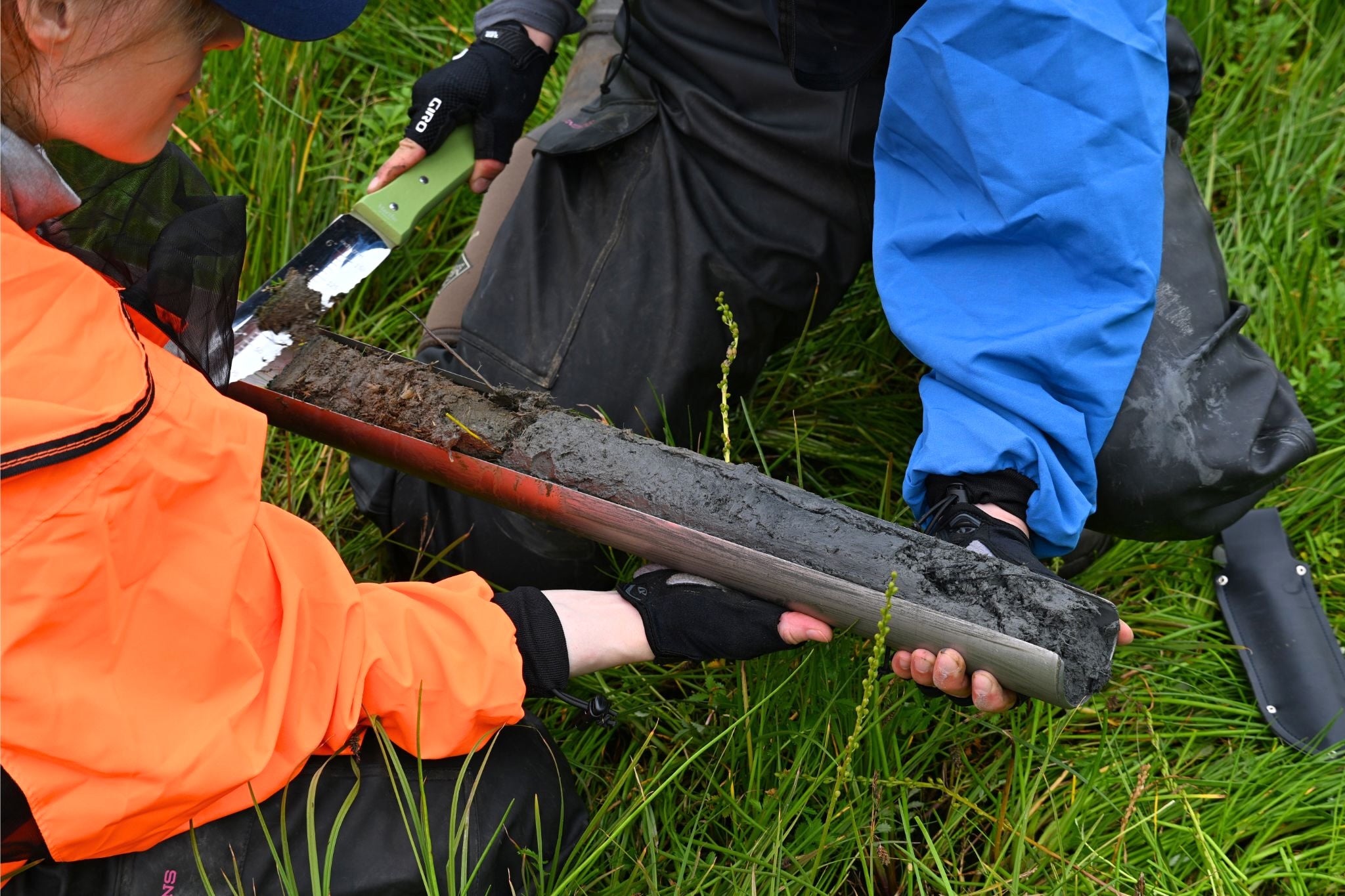
A new study finds a critical limitation in a widely used method for measuring organic carbon in flooded coastal sediments, a gap that could influence global carbon storage estimates and assessments of marsh resilience. (URI Photo/Courtesy Erin Peck)
Traditional blue carbon methods assume that all measured organic matter contributes to long-term carbon storage and sediment volume. The new study shows this isn’t always the case. Some organic matter is dissolved in sediment porewater, while other portions adhere loosely to sediment particles or are bound within the internal structure of clay minerals. These forms of organic matter may not contribute to sediment volume, accretion, or marsh resilience.
By examining more than 23,000 tidal marsh sediment samples across multiple marsh systems, Peck, Wittyngham, and their collaborators demonstrated that this overlooked fraction of “volumeless” organic matter can lead to overestimates of both carbon storage and marsh elevation gains. Recognizing this nuance allows scientists to refine their estimates of carbon sequestration and resilience, ensuring that restoration planning, carbon accounting, and predictive modeling are based on the most accurate information possible.
The researchers’ findings were published recently in a peer-reviewed article in the journal Limnology and Oceanography Letters.
“This discovery came out of a simple question,” said Peck. “Serina and I were working on a project, trying to convert different components of a sediment core from mass to volume, and became frustrated that we couldn’t get the math to work out. Eventually, we realized that maybe we were missing something obvious—that not all our masses contribute to volume.”
“We started this ‘thought experiment’ by reflecting on sugar dissolved in water: you can dissolve a large mass of sugar without changing the volume of the water,” Wittyngham said. “This same concept applies to dissolved organic matter in sediments.”
Interdisciplinary collaboration
Peck, a geologist, and Wittyngham, an ecologist, emphasized the value of cross-disciplinary collaboration while conducting their research, noting that working together helped them move beyond the standard methods typically used in their individual fields.
“While writing about our research, we reviewed our calculations with modelers, biogeochemists, and a range of other researchers,” said Wittyngham. “This issue could affect anyone working with blue carbon across ecosystems, and we wanted to make sure we fully understood its implications.”
Refining blue carbon science
The researchers hope their findings will serve as a starting point for broader collaboration within the blue carbon community. They aim to develop correction factors to adjust previous measurements for volumeless organic matter, addressing this methodological limitation while preserving the value of data already collected.
Peck and Wittyngham emphasized the importance of working with the global scientific community to refine these methods while keeping data accessible. “We’re excited to collaborate with colleagues worldwide to improve blue carbon measurements and ensure the method remains open and usable for everyone,” Peck said.
By identifying and addressing this methodological gap, the study offers a constructive pathway to strengthen blue carbon science, improve coastal management decisions, and enhance predictions of marsh resilience in the face of sea level rise.
This story was written by Mackensie duPont Crowley, digital communications coordinator in URI’s Graduate School of Oceanography.
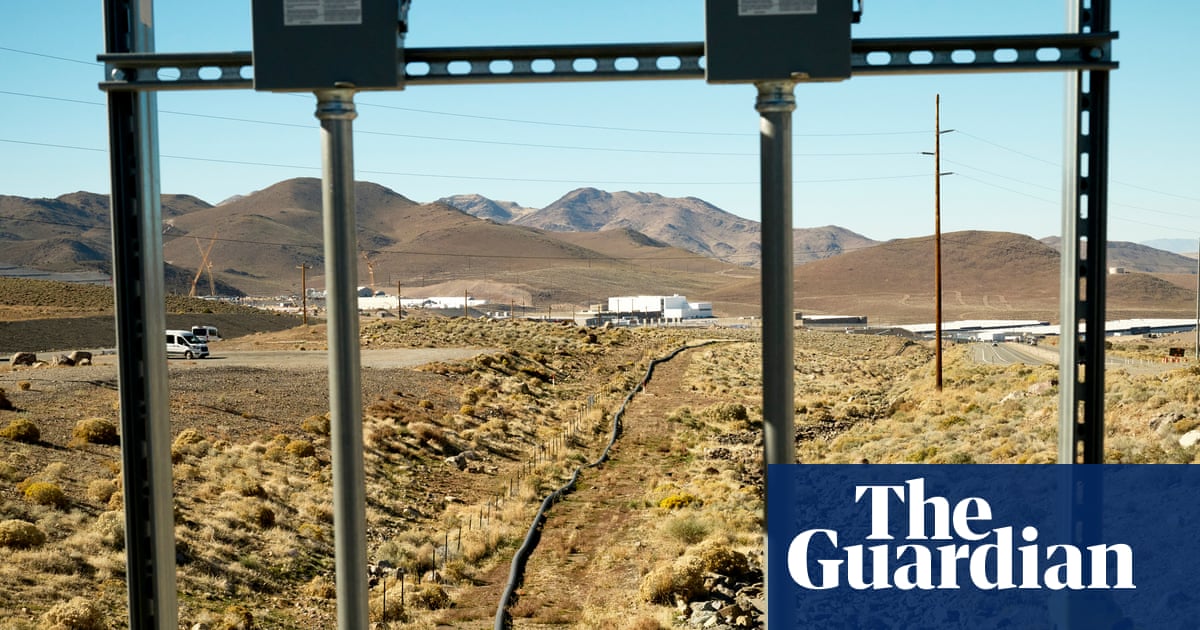
Driving down the interstate through the dry Nevada desert, there are few signs that a vast expanse of new construction is hiding behind the sagebrush-covered hills. But, just beyond a massive power plant and transmission towers that march up into the dusty brown mountains, lies one of the world’s biggest buildouts of data centers – miles of new concrete buildings that house millions of computer servers.
This business park, called the Tahoe-Reno Industrial Center, has a sprawling landmass greater than the city of Denver. It is home to the largest data center in the US, built by the company Switch, and tech giants like Google and Microsoft have also bought land here and are constructing enormous facilities. A separate Apple data center complex is just down the road. Tesla’s gigafactory, which builds electric vehicle batteries, is a resident too.
In the mid-1800s, this area was an Old West boomtown. It’s situated in Storey county where one of the largest deposits of gold and silver in the American west was discovered, lending it the name: “The Richest Place on Earth”. It’s where Mark Twain came to be a miner, then got his start as a writer for the local newspaper. He later wrote about it in his book Roughing It, saying: “The ‘flush times’ were in magnificent flower … money was as plenty as dust.”
The gold rush is long history, but Storey county is once again one of the fastest growing economies in Nevada. A new boom is happening here in the high desert – fueled by artificial intelligence.
The burgeoning tech, which Silicon Valley vows will be the next frontier for humanity, is minting unfathomable trillion-dollar valuations. It’s a product that’s still being tested, and there’s uncertainty as to how exactly it will transform the economy. But that hasn’t stopped its real-world infrastructure from being built at mass capacity and record speed – a frenzy buoyed by hundreds of billions in venture capital funding.
Desert vegetation with water from the Tahoe‑Reno Industrial Center’s reservoir in the background.
Microsoft, working with OpenAI, announced last month that it plans to double its data-center footprint over the next two years. Amazon, partnering with Anthropic, just opened a major cluster with plans for more. Google, Meta and Oracle are preparing vast buildouts, as is a consortium of companies working with the Trump administration on a $500bn project called Stargate. In all, estimates by consulting firm McKinsey and Company peg global spending on AI data centers to total nearly $7tn by 2030 – nearly twice as much as the GDP of the UK.
The buildup comes at a cost. As the planet’s most powerful companies race to fulfill their dreams of artificial general intelligence – a futuristic version of AI that can perform tasks as well as humans – it means an ever-increasing need for computing power. AI requires far more energy and water than other internet tasks. A ChatGPT query needs nearly 10 times as much electricity as an internet search without AI. And because supercomputers run hot, they typically need intensive water-cooling systems. As data centers continue to multiply in communities around the world – from Frankfurt to Johannesburg – AI’s thirst for power and water shows no signs of letting up.
In a place such as Storey county, which is on the frontline of the climate crisis and has an average rainfall of roughly 11in a year, some locals fear the data centers’ demands could decimate already scarce resources.
That includes the Pyramid Lake Paiute, a Native American tribe, which has lived downriver from where the industrial center now sits, since long before Europeans arrived in the Americas.
Switch data center at the Tahoe‑Reno Industrial Center.
“Everyone cannot keep moving to a space that has no resources. Nevada is completely over-allocated on its ground water resources. It’s the driest state in the union,” said Steven Wadsworth, the tribe’s chairman. “Our tribe’s number one goal is protecting our resources. And it makes it difficult when we have partners upstream who are blissfully unaware.”
‘Miracle in the desert’
On a chilly fall day in October, Kris Thompson hopped into his SUV to take a drive. He has a gravelly voice and fading grey hair and works for Gilman Commercial Real Estate Service, which has been the industrial center’s exclusive brokerage firm since its founding in 1998. As he turned onto USA Parkway, the 18-mile highway that cuts through the park, he pointed out the tall yellow cranes dotting the landscape and the constant stream of semi-trucks rumbling by. “You’re gonna see a lot of hard hats and heavy equipment,” he said.
“When I first came up here, there was nothing but desert dirt trails, coyotes, and rabbitbrush,” Thompson said. “Nothing else was here. No roads, no water wells, no businesses, no drainage, no sewer system, nothing.”
Now, the entire area looks like a city being built from the ground up.
“How do you take 160-sq-miles of desert, of high desert in the mountains, and turn that, 25 years later, into the hottest tech and data center development in the United States?” Thompson asked rhetorically. “They had some cowboys up there, and they were willing to think outside the box.”
Satellite map showing the scale of the Tahoe Reno Industrial Center
One of the cowboy masterminds is Lance Gilman, who also owns the Mustang Ranch brothel. He and his partners bought most of the property from the Gulf Oil company in the late 1990s, which had planned to use the expanse of land for a corporate hunting retreat.
Gilman and his western crew were property developers who struck it big on what Thompson said “has to be the greatest real estate deal ever made on the planet”. They paid $20m to buy a vast private ranch – covering more than 100,000 acres – and created the Tahoe-Reno Industrial Center. It has no residential properties and pre-approves most industrial and commercial uses. Essentially, it can fast track the local government permit process.
The center’s swift permitting hooked Tesla into setting up its first gigafactory there in 2014. The company bought 3,300 acres (13.4 sq km), which span an entire mountain, and immediately set to work building a 6m-sq-ft foundation (nearly 560,000 sq meters) for its battery facility. Tesla convinced the county to rename the road leading to its property, “Electric Avenue”.
Pyramid Lake, at the Pyramid Lake Paiute Reservation, is fed by the Truckee River and is located about 40 miles north-east of Reno.
“That put us up on the global stage,” Thompson said of the mega-manufacturing facility. “That speed is everything. In this economy, if it takes you two or three years to get a permit to start building, your product could be obsolete by that point.”
Switch, which builds and operates some of the world’s largest data centers and rents them to a variety of clients, came next, then Google, Microsoft and more. These companies purchased thousands of acres of land to build their data centers. Tract, which has a similar business model to Switch, purchased 11,000 total acres (44.5 sq km) and pledged to invest $100bn into its data center project.
A Gold Rush-esque boom and bust has already come for the industrial park once before. One of the biggest buyers in 2018, four years before the release of ChatGPT, was multimillionaire Jeffrey Berns, who threw down $170m in cash to acquire 67,000 acres (271 sq km) – roughly two-thirds of the park – through his company Blockchains. His goal was to transform the place into a cryptocurrency utopia, which he described to the Guardian as having a “blockchain based self-sovereign identity that eliminated the need for many politicians and governmental agencies”.
That plan didn’t pan out. So, Blockchains sold 2,200 acres (8.9 sq km) to Tract for $250m and plans to offer long-term leases on the remaining acreage. Berns said he’s now focusing on building a billion-dollar bunker in Switzerland.
Every square foot of Gilman’s land at the industrial center has been sold, according to Thompson. What’s available now are parcels that are being resold. Thompson said the fact that those cowboys were able to transform the dusty landscape into a “tech city” is nothing short of a “miracle in the desert”.
A water truck sprays near a construction site at the Tahoe‑Reno Industrial Center.
Driving through the tech city, it’s impossible to see the full extent of each company’s construction projects. Google’s complex is triple-fenced and only accessible by private roads. The same goes for other companies, some of which are buried behind desert mountains and towering walls. These businesses are notoriously secretive, citing the need to protect trade secrets, and their security patrols don’t take kindly to curious strangers.
On three separate occasions, private guards told the Guardian to move along when parked on what seemed to be public roads. In one instance, a guard drove up and walked over to the driver-side window. “What are you doing?” he asked curtly. As he peered through the window, he smiled broadly and tilted his head, showing that he was wearing Meta’s smart glasses with the red video recording light turned on.
‘We know what happens when we don’t fight for the water’
Pyramid Lake is the largest lake in Nevada. Situated at the base of several mountain ranges, the lake is owned by the Pyramid Lake Paiute Tribe and entirely surrounded by the tribe’s reservation. They have lived in the region for thousands of years. The Pyramid Lake Paiute’s petroglyphs date back 10,000 to 14,000 years BCE, the oldest in North America.
Steven Wadsworth, chairman of the Pyramid Lake Paiute Tribe.
Wadsworth, the tribal chairman, recognizes the need for data centers, but worries if the ones upriver aren’t kept in check, they could intensify threats to the lake – which is the lifeblood for the tribe. The Truckee River supplies the industrial center with water and also serves as the primary source of water for Pyramid Lake.
“It’s not like we’re out here to be a pain,” Wadsworth said. “We know the destruction.”
In the tribe’s governmental office, Wadsworth, sporting waist-length hair and a white button-up tucked into slacks, walked over to a giant satellite map showing the region’s watershed – from California’s mountains to Nevada’s Great Basin. Next to the deep green of Pyramid Lake is a large, flat, white mass, the remnants of a second lake.
“We know what happens when we don’t fight for the water,” Wadsworth said, pointing to the white mass. “This lake used to be full.”
Lake Winnemucca was once fed by Pyramid Lake, but when the Truckee River was dammed in the early 1900s, Wadsworth said it took less than 30 years for Pyramid Lake to drop 80ft and Lake Winnemucca to dry.
The tribe has been fighting for decades now to protect Pyramid Lake and the native fish that inhabit it, including the endangered cui-ui and the threatened Lahontan cutthroat trout. Some of its efforts include purchasing thousands of acre-feet (one acre-foot is equivalent to 1,233 cubic meters) of water rights and bringing several lawsuits over the years. The tribe also lodged complaints with the local Truckee Meadows Water Authority to ensure any water the industrial park siphons from the river is replenished, according to the MIT Technology Review.
skip past newsletter promotion
after newsletter promotion
AI data centers need copious amounts of water. Over the last 10 years, data center water use has tripled to more than 17bn gallons (64bn liters) of water per year in the US, according to a Department of Energy report. Much of that is attributed to the “rapid proliferation of AI servers” and is expected to multiply to nearly 80bn gallons (303bn liters) by 2028. While the figure pales against total US water use, 117tn gallons per year in 2015, it still can mean a struggle to meet the demands of both human beings and hot computer chips.
An area near the dry lake bed of what was once Lake Winnemucca.An area near the dry lake bed of what was once Lake Winnemucca, near Nixon, Nevada.
And as data centers continue to proliferate in water-stressed areas around the globe, which can offer cheap land and energy as well as low humidity for easier chip cooling, one of the central concerns in local communities is what happens if the water runs dry.
A large data center using evaporative water cooling consumes around 1m gallons a day, said Shaolei Ren, an associate professor at the University of California at Riverside. He studies AI water consumption and said non-evaporative water-cooling technology can diminish water use, but it’s a balancing act because those systems need more electricity, which, in turn, requires more water.
“Water and energy are not separable,” Ren said.
The industrial park built a reclaimed water reservoir for its data center clients that went into operation in 2023. The project, which cost upwards of $100m, involved constructing a 21-mile pipeline to pump effluent from a wastewater treatment plant to the industrial park. While seen as an alternative to taking water directly from the Truckee River, Wadsworth said the effluent previously would’ve been treated and deposited back into the river. So, the tribe still got involved to ensure the river maintained its flow.
Some environmentalists question putting data centers in any drought-prone region, especially as the climate crisis accelerates.
Kyle Roerink, executive director of the Great Basin Water Network.
“This place is being touted as the epicenter of the energy revolution, the data revolution, the tech revolution,” said Kyle Roerink, the executive director of the Great Basin Water Network, which works to protect water resources in the region. “But they’re never going to be making water.”
‘We just don’t have the power capacity’
The largest data center in the US is tucked into the industrial park. The sleek grey building with red accents is more than half a mile long, 1.3m-sq-ft, and has the capacity for 130 megawatts of electricity – enough to power 100,000 homes a year. It’s owned by Switch, the company’s first data center in what is now a sprawling campus called “The Citadel.”
The entrance to the “Citadel” does give the impression of a fortress. Its entrance sits high on a giant pile of crushed rocks surrounded by 20-ft cement walls topped with dagger-like iron stakes. Guests drive in through a metal gate and security guards in bullet-proof vests hold visitors’ IDs for the duration of their visit.
The campus, which comes with its own power substation and water reservoir, has multiple gargantuan data centers terraced up into a valley, and Switch is building several more. The company says that when the Citadel is done, it will have approximately 10m-sq-ft (930,000 sq meters) of data centers combined.
Inside Switch’s biggest data center, Reno 1, noisy wall-sized fans blow air over the computers to keep them cool. Rows of identical servers behind black mesh gates line long aisles, an infinite, blinking hall of mirrors. The room is dimly lit except for the servers’ blue and green LEDs as they perform incredibly complex computations.
Power lines run along Interstate 80 outside Reno, Nevada.
Data centers like this are cropping up worldwide, which means not only an intensified strain on water, but also power. Google wrote in its latest sustainability report that it has seen a 51% increase in carbon emissions in its operations since 2019, while Microsoft had a 23% increase since 2020. Amazon and Meta also saw increases over the last few years, with rises of 33% and 64%, respectively. Some researchers say those are undercounts.
The International Energy Agency estimates total electricity consumption from data centers worldwide could double by 2026 from 2022 levels – roughly equaling the amount used per year as the entire country of Japan. In the US, about 60% of electricity comes from burning fossil fuels, a predominant driver of the climate crisis.
“These are large cities in terms of their electricity consumption,” Ari Peskoe, the director of Harvard’s Electricity Law Initiative, said of data centers. “And then, utilities and other power generators are having a massive buildout of natural gas-fired power plants to support this growth.”
Some companies, like Elon Musk’s xAI, have added huge temporary methane gas generators to supply additional energy to their facilities. And, in data center-heavy regions across the US, plans to decommission coal plants have been delayed to keep electricity flowing. Research analysts for Goldman Sachs say they “expect the proliferation of AI technology, and the data centers necessary to feed it, to drive an increase in power demand the likes of which hasn’t been seen in a generation”.
The power plant that serves the industrial center runs on natural gas and is owned by NV Energy, a utility acquired by Warren Buffett’s Berkshire Hathaway in 2013. The utility has received regulatory approval for at least four new natural gas units over the last couple of years. Meghin Delaney, a company spokesperson, said NV Energy also has several renewable energy projects and requires large energy users, like data centers, to “cover transmission and distribution costs upfront before new projects are built”.
Google data center at the Tahoe‑Reno Industrial Center in Storey county, Nevada.
One of Switch’s focus is green design and energy efficiency. The company says its data centers are completely powered by renewable energy and what it uses from natural gas facilities, it feeds back to the grid from solar and wind projects. Jason Hoffman, the chief strategy officer for Switch, said the company has spent more than “$20bn in 100% green financing since 2024”. Switch was also a major sponsor of the reclaimed water reservoir at the industrial center.
Google, Amazon, Microsoft, Meta and Apple are also tapping into solar and wind to fuel their data center ambitions. Some tech giants are investing in nuclear and geothermal energy. Apple says its data centers in the Reno area run entirely on solar power.
Tesla, Meta and Tract did not respond to requests for comment. Spokespeople for Microsoft, Apple and Amazon declined to comment but pointed the Guardian to their company’s sustainability reports. Chrissy Moy, a Google spokesperson, said the company uses air cooling in its Storey county data centers; and despite a rise in carbon emissions, she said Google saw a 12% reduction in data center energy emissions in 2024, which the company attributes to “bringing new clean energy online”.
Kris Thompson points to a map of the Tahoe‑Reno Industrial Center in Storey county.
On the reservation at Pyramid Lake, Wadsworth said rolling brownouts are common during the hot summer months. “Right around 5 o’clock, everybody gets home, and the power will dip multiple times,” he said. He’s concerned it will only get worse with the deluge of data centers, adding, “We just don’t have the power capacity to keep running all of these things.”
Wild horses
Back on the USA Parkway, Thompson steered his SUV through the industrial center’s mountains. He said about 75% of the calls he now gets are from businesses wanting to secure land for data centers. Thompson has spent years on this land, and its development is a point of pride. So is its preservation. He looked out at the arid terrain gesturing to a cluster of scruffy pinyon pines and rabbitbrush that painted the hillside yellow with blooms. A pair of wild horses grazed nearby.
Horses graze at the Tahoe‑Reno Industrial Center in Storey county, Nevada.
Thompson said the park and its high-tech residents do what they can to protect the horses, which were originally brought to the Americas by Spanish conquistadors and now run wild throughout Nevada’s deserts. The horses are seen by some as controversial, as herds can overrun the hills, trampling the distinct natural landscape. But, in the industrial park, the tech companies love them, Thompson said.
“You know, these tech rogues see themselves in the wild horses,” Thompson said. “They’re independent, they’re running free, they’re self-reliant, they’re doing their own thing.” Which sometimes means a trampling stampede.