Category: 3. Business

  • ‘Carspreading’ is on the rise

    ‘Carspreading’ is on the rise

    Theo Leggett profile image

    Theo LeggettInternational Business Correspondent

    BBC A treated image showing a large car next to a small oneBBC

    Critics call it “carspreading”. In the UK and across Europe, cars are steadily becoming longer, wider and heavier. Consumers clearly like them – a lot. They’re seen as practical, safe and stylish, and sales are growing steadily. So, why are some cities determined to clamp down on them – and are they right to do so?

    Paris is renowned for many things. Its monuments, such as the Eiffel Tower and Arc de Triomphe. Its broad, leafy avenues and boulevards, its museums and art galleries, its fine cuisine. And its truly appalling traffic.

    Over the past 20 years, the city authorities have been trying to tackle the problem, by introducing low-traffic and low-emission zones, by promoting public transport and cycling – and most recently by clamping down on big cars.

    In October 2024 on-street parking charges for visiting “heavy” vehicles were trebled following a public vote, taking them from €6 to €18 for a one-hour stay in the centre, and from €75 to €225 for six hours.

    “The larger it is, the more it pollutes,” said the mayor of Paris, Anne Hidalgo, before the vote. The new restrictions, she claimed, would “accelerate the environmental transition, in which we are tackling air pollution”.

    A few months later, the town hall claimed the number of very heavy cars parking on the city streets had fallen by two-thirds.

    Bloomberg via Getty Images Traffic on the Champs Elysee near the Arc de Triomphe in Paris, France

Bloomberg via Getty Images

    Paris is renowned for many things – including bad traffic in certain areas

    Cities elsewhere are taking note, including in the UK. Cardiff council has already decided to increase the cost of parking permits for cars weighing more than 2,400kg – the equivalent of roughly two Ford Fiestas.

    The Labour-controlled authority said, “These heavier vehicles typically produce more emissions, cause greater wear and tear on roads, and critically pose a significantly higher risk in the event of a road traffic collision.”

    To begin with, the higher charges will only apply to a small minority of vehicle models, but Cardiff plans to lower the weight threshold over time. Other local authorities are mulling similar steps.

    AFP via Getty Images Anne Hidalgo, Mayor of Paris, in Paris, FranceAFP via Getty Images

    ‘The larger it is, the more it pollutes,’ argued Paris mayor, Anne Hidalgo

    But many owners say they are reliant on big cars.

    Matt Mansell, a father of three based in Guildford, runs a technology company, as well as a property development business, and says he needs his Land Rover Defender 110 for ferrying around clients and children.

    “I need to have enough space to put children in, with all of their kit – also, you can fit a door or a three-foot length of pipe in it,” he says.

    “It’s very much a utility vehicle, but it’s presentable.”

    ‘Chelsea tractors’: Rise of the SUV

    There is no question cars in the UK and Europe have been getting bigger over the years. Since 2018, the average width of new models on sale here has risen from 182cm to 187.5cm, according to data from Thatcham Research – an organisation that evaluates new cars on behalf of the insurance industry.

    The average weight, meanwhile, has increased from 1,365kg to 1,592kg over the same period.

    This is not just a recent phenomenon. Data compiled by the International Council for Clean Transportation shows the average width of cars on European markets grew by nearly 10cm between 2001 and 2020. Length increased by more than 19cm.

    Some critics argue this is a worrying trend, because there simply isn’t enough room on Britain’s crowded, often narrow roads or in town centres.

    Getty Images Vehicles try to squeeze past each other in the narrow road and lanes at Porthcurno in Cornwall, England
Getty Images

    Are cars getting bigger, or are roads getting narrower?

    The standard minimum width of an on-street parking space is 1.8m in many places. But figures published by T&E, a green transport campaign group, suggest that by the first half of 2023, more than half of the 100 top-selling cars in the UK were fractionally wider than this.

    Then there is the rocketing popularity of Sports Utility Vehicles, or SUVs, cars that are at least loosely based on off-road vehicles, although in many cases the resemblance is cosmetic, and they lack genuine off-road features such as four-wheel drive.

    The vast majority will never stray far from the tarmac, hence their rather derisory nickname: Chelsea tractors.

    There are plenty of different designs out there, including utility models that you can actually use off road, swanky status symbols and legions of suburban family wagons.

    What they all they have in common, however, is size. Even the smaller “crossover” versions, more closely related to conventional cars, tend to be taller and wider than traditional saloons, hatchbacks or estates.

    Back in 2011, SUVs made up 13.2% of the market across 27 European countries, according to the automotive research company Dataforce GmbH. By 2025, their market share had grown to 59%.

    Rachel Burgess, editor of Autocar magazine, believes it is their size that makes them so popular. “Everyone I’ve spoken to over the years who has bought an SUV says they like being higher up, they like better visibility, and they feel safer on motorways and bigger roads.

    “It’s often better for people with kids to get them in and out of the car with that extra height; and also, for people who are less mobile, it’s much easier to get in and out of an SUV than a lower hatchback or saloon.”

    Lucia Barbato with her car

    Lucia Barbato: ‘On a Monday morning with three boys, three school bags, three sports kits, and a trumpet thrown in the boot, there isn’t even room in the car for the dog!’

    Lucia Barbato, from West Sussex, says her second-hand Lexus RX450 SUV – a hybrid model – is vital for transporting her large family in an area with limited public transport. She runs a marketing agency from home and drives her three sons to the bus stop each day, so they can go to school.

    “On a Monday morning with three boys, three school bags, three sports kits, and a trumpet thrown in the boot there isn’t even room in the car for the dog!”

    Bigger cars, bigger profit margins?

    The popularity of SUVs doesn’t just apply to mass-market carmakers. Porsche is famous for its sleek sports cars but the Cayenne SUV and the Macan crossover are its bestselling models.

    Bentley’s Bentayga SUV accounted for 44% of its sales last year, while Lamborghini is increasingly reliant on its four-wheel drive Urus.

    Put bluntly, consumers clearly love SUVs. Carmakers, meanwhile, are only too happy to meet that demand, because building bigger cars can be more profitable, argues David Leggett, editor of industry intelligence website Just Auto.

    Getty Images and Bloomberg via Getty Images On the left a Porsche Macan compact performance crossover SUV and on the right is a 2008 Porsche Cayenne Turbo 

Getty Images and Bloomberg via Getty Images

    Porsche is famous for its sports cars but the Cayenne and the Macan crossover are its bestselling models

    “Profit margins are generally much higher on larger cars with higher price points. This is largely due to the laws of economics in manufacturing.”

    There are, he points out, fundamental costs involved in building any car – for example operating a factory, design work, and the price of the main components.

    But he explains that with small cars, these costs can make up a higher proportion of the selling price.

    Daniele Ministeri, senior consultant at JATO dynamics, points out that many SUVs are closely related to conventional cars, and use the same basic structures.

    “For some models, the main differences are limited to factors such as body style, suspension and seating position, allowing them to command an SUV premium price, without comparable cost increases”, he says.

    The safety debate

    Even conventional cars have been getting bigger in some cases. Take the current VW Golf hatchback, which is 9cm wider and 22cm longer than the version on sale in the mid-1980s. It is also several hundred kilograms heavier.

    A Volkswagen Golf 1.1 (1980) next to a Volkswagen Golf 1.5 TSI (2025)

    “If we look back to the early 2000s… safety programmes like Euro NCAP were just starting to deliver the safety message to consumers, smaller vehicles weren’t really able to absorb the energy of a crash very well at all,” says Alex Thompson, principal safety engineer at Thatcham Research.

    “As safety measures have improved, a certain amount of weight had to be added on to vehicles to strengthen up safety compartments because they weren’t that strong back then.”

    “Manufacturers have had to do things like improve structural crash protection, and fit more airbags,” agrees David Leggett.

    “At the same time, they want to improve interior cabin space and put more features into vehicles, so the net result is rising pressure for bigger vehicle dimensions.”

    Yet while bigger cars may be safer for their occupants, critics insist they are considerably less safe for other road users.

    “Whether you’re in another car [or] a pedestrian, you’re more likely to be seriously injured if there’s a collision with one of these vehicles,” argues Tim Dexter, vehicles policy manager at T&E. He is also concerned about the implications for cyclists.

    Research carried out in 2023 by Belgium’s Vias Institute, which aims to improve road safety, suggested that a 10cm increase in the height of a car bonnet could increase the risk of vulnerable road users being killed in a collision by 27%. T&E also highlights concerns that high bonnets can create blind spots.

    Alex Thompson believes that taller, higher cars are more likely to harm pedestrians and cyclists, although he emphasises that vehicle design in recent years has “really prioritised” protecting vulnerable road users.

    Some manufacturers have, for example, fitted external airbags to their vehicles.

    In Pictures via Getty Images Images A beige Fiat 500 classic car in a parking bay In Pictures via Getty Images Images

    David Leggett believes people could potentially be encouraged to buy smaller vehicles

    As for the environmental impact, the International Energy Agency has said: “Despite advances in fuel efficiency and electrification, the trend toward heavier and less efficient vehicles such as SUVs, which emit roughly 20% more emissions than an average medium-sized car, has largely nullified the improvements in energy consumption and emissions achieved elsewhere in the world’s passenger car fleet in recent decades.”

    The move towards electric vehicles should at least mitigate emissions from daily use significantly over time, although if the electricity they use is generated from fossil sources such as gas, bigger cars may well still pollute more per vehicle than smaller ones.

    And other concerns about size and weight will still apply – in fact, with electric cars generally weighing considerably more than their petrol or diesel equivalents, certain problems could be magnified.

    The Society of Motor Manufacturers and Traders says that 40% of SUVs are now zero-emission.

    Its chief executive, Mike Hawes, has previously said that overall the carbon dioxide emissions of new SUVs have more than halved since 2000, “helping the segment lead the decarbonisation of UK road mobility”.

    Penalties, taxes and the France model

    But one option remains what has already been done across the Channel. France already imposes extra registration taxes on cars that weigh in at more than 1,600kg. Currently, this means a €10 (£9) penalty for every extra kilogramme. The penalty increases in bands, reaching €30 per kg above 2,100kg.

    While it only applies to a relatively small proportion of current models – and electric vehicles are excluded – it can add up to €70,000 to the cost of buying a new car.

    T&E argues that a similar levy should be introduced in the UK. According to Tim Dexter, “At the moment the UK is a tax haven for these large vehicles… We know the impact they are having on the road, on communities, potentially on individuals. It’s only fair they should be paying a bit more.”

    David Leggett believes people could potentially be encouraged to buy smaller vehicles, particularly for use in cities. “There are opportunities to tweak tax regimes to make smaller cars relatively attractive,” he says.

    But ensuring there are enough runabouts to go around may be tricky. “There will always be a market for highly manoeuvrable and low-cost city cars in urban areas, but making them profitably is a huge challenge,” Mr Leggett says.

    Bloomberg via Getty Images The BYD's Dolphin Surf electric vehicle 
Bloomberg via Getty Images

    Several relatively low-priced small EVs have recently come on to the market, including BYD’s Dolphin Surf

    However, several relatively low-priced small EVs have recently come on to the market, including BYD’s Dolphin Surf, Leapmotor International’s T03, Hyundai’s Inster and the new Renault 5. They will be joined before long by Kia’s EV2, and VW’s ID Polo.

    For the moment though, SUVs remain firmly in charge.

    “Clearly, people want SUVs, and I’m not sure what the answer to that is,” says Rachel Burgess. “But small cars are coming back, as the industry has understood how to make money from small cars in an electric world…

    “I do believe everything is cyclical and trends come and go in every part of life, including cars. SUVs won’t be around forever.”

    Top picture credit: Getty Images

    InDepth notifications banner

    BBC InDepth is the home on the website and app for the best analysis, with fresh perspectives that challenge assumptions and deep reporting on the biggest issues of the day. You can now sign up for notifications that will alert you whenever an InDepth story is published – click here to find out how.


    Continue Reading

  • Asian Stocks Steady, Bitcoin’s Rebound Loses Steam: Markets Wrap

    Asian Stocks Steady, Bitcoin’s Rebound Loses Steam: Markets Wrap

    (Bloomberg) — Asian stocks traded within tight ranges early Wednesday, mirroring similar moves on Wall Street amid a lack of fresh catalysts, while a rebound in cryptocurrencies lost steam.

    MSCI Inc.’s gauge of regional shares was up 0.1% as tech-heavy benchmarks in South Korea and Taiwan advanced. Japanese indexes were mixed. Futures on the S&P 500 and Nasdaq 100 indexes edged higher after the US benchmark capped its sixth advance in seven trading sessions on Tuesday. Bitcoin fluctuated after surging back above $91,000 in the previous session, suggesting that the crypto market remains on shaky ground.

    The mixed backdrop highlighted the fragile sentiment heading into the year-end, with investors juggling tight equity moves and renewed volatility in cryptocurrencies as they wait for this month’s rate decisions by the Federal Reserve and the Bank of Japan. With only a handful of data releases left before Fed officials meet next week, equity traders are treading carefully.

    “Asian markets are trading with a cautiously positive tone today, drawing some momentum from Wall Street, but the sky certainly isn’t clear enough for a broad-based rally,” said Hebe Chen, an analyst at Vantage Markets in Melbourne. “The upcoming, decision-shaping US PCE print and a heavy slate of central bank meetings are keeping traders on edge.”

    The volatile moves in the crypto market have also kept broader appetite for risk assets in check. Bitcoin jumped nearly 6% on Tuesday, recovering from a bruising selloff in the previous session that caught Wall Street off guard and erased nearly $1 billion in fresh leveraged bets.

    The US is due to release ADP’s report on private sector employment as well as the import price index and industrial production for September on Wednesday. The University of Michigan’s preliminary reading of consumer sentiment in December will be released on Friday.

    As traders awaited the last few economic reports before next week’s Fed decision, President Donald Trump said he plans to announce his selection to lead the central bank in early 2026. Trump has pressured the Fed for months to lower interest rates, and naming a successor to Jerome Powell — whose term as Chair expires in May — would give the president his biggest chance yet to reshape the institution.

    After cutting interest rates by more than a percentage point, Fed officials are now wondering where to stop – and finding there’s more disagreement than ever.

    In the past year or so, prescriptions for where rates should end up have diverged by the most since at least 2012, when US central bankers started publishing their estimates. That’s feeding into an unusually public split over whether to deliver another cut next week, and what comes after that.

    “Nothing is going to change our view that the Fed eases next week, but it is looking more like a hawkish cut,” said Andrew Brenner at NatAlliance Securities. “We can see at least three dissents next week.”

    Corporate News

    Medical supply company Medline Inc. is set to begin formal marketing for its initial public offering as soon as Monday, according to people familiar with the matter, in what’s expected to be the biggest US listing this year. Taiwanese prosecutors charged Tokyo Electron Ltd. for failing to prevent staff from allegedly stealing Taiwan Semiconductor Manufacturing Co. trade secrets, escalating a dispute involving two Asian linchpins of a chip industry increasingly vital to national and economic security. Amazon.com Inc.’s cloud unit raced to get the latest version of its artificial intelligence chip to market, renewing efforts to sell hardware capable of rivaling products from Nvidia Corp. and Google. Comcast Corp. is looking to merge its NBCUniversal division with Warner Bros. Discovery Inc., according to people familiar with the company’s plans. Marvell Technology Inc. announced plans to acquire startup Celestial AI for at least $3.25 billion, part of a push to capture more of the runaway spending on artificial intelligence computing. Tesla Inc.’s China factory shipments rose for only the third time this year amid a broader global downturn in sales for the Elon Musk-run company. UltraGreen.ai is set to begin trading Wednesday morning in Singapore’s biggest initial public offering since 2017 excluding real estate investment trusts. CrowdStrike Holdings Inc. raised its fiscal year 2026 guidance, signaling resilient demand for the company’s expanding portfolio of artificial intelligence-enabled cybersecurity products. Some of the main moves in markets:

    Stocks

    S&P 500 futures rose 0.2% as of 10:51 a.m. Tokyo time Nikkei 225 futures (OSE) rose 0.8% Japan’s Topix fell 0.4% Australia’s S&P/ASX 200 rose 0.2% Hong Kong’s Hang Seng fell 0.6% The Shanghai Composite fell 0.1% Euro Stoxx 50 futures rose 0.2% Currencies

    The Bloomberg Dollar Spot Index was little changed The euro rose 0.1% to $1.1637 The Japanese yen rose 0.1% to 155.65 per dollar The offshore yuan was little changed at 7.0628 per dollar The Australian dollar rose 0.2% to $0.6573 Cryptocurrencies

    Bitcoin rose 0.7% to $92,280.57 Ether rose 0.8% to $3,022.51 Bonds

    The yield on 10-year Treasuries declined one basis point to 4.07% Japan’s 10-year yield advanced 1.5 basis points to 1.870% Australia’s 10-year yield declined two basis points to 4.60% Commodities

    West Texas Intermediate crude fell 0.1% to $58.56 a barrel Spot gold rose 0.3% to $4,219 an ounce This story was produced with the assistance of Bloomberg Automation.

    –With assistance from Winnie Hsu.

    ©2025 Bloomberg L.P.

    Continue Reading

  • Anthropic taps IPO lawyers as it races OpenAI to go public

    Anthropic taps IPO lawyers as it races OpenAI to go public

    Unlock the Editor’s Digest for free

    Anthropic has tapped law firm Wilson Sonsini to begin work on one of the largest initial public offerings ever, which could come as soon as 2026, as the artificial intelligence start-up races OpenAI to the public market.

    The maker of the Claude chatbot, which is in talks for a private funding round that would value it at more than $300bn, chose the US west coast law firm in recent days, according to two people with knowledge of the decision.

    The start-up, led by chief executive Dario Amodei, had also discussed a potential IPO with big investment banks, according to multiple people with knowledge of those talks. The people characterised the discussions as preliminary and informal, suggesting that the company was not close to picking its IPO underwriters.

    Nonetheless, these moves represent a significant step up in Anthropic’s preparations for an IPO that would test the appetite of public markets to back the massive, lossmaking research labs at the heart of the AI boom.

    Wilson Sonsini has advised Anthropic since 2022, including on multibillion-dollar investments from Amazon, and has worked on high-profile tech IPOs such as Google, LinkedIn and Lyft.

    Its investors are enthusiastic about an IPO, arguing that Anthropic can seize the initiative from its larger rival OpenAI by listing first.

    Anthropic could be prepared to list in 2026, according to one person with knowledge of its plans. Another person close to the company cautioned that an IPO so soon was unlikely.

    “It’s fairly standard practice for companies operating at our scale and revenue level to effectively operate as if they are publicly traded companies,” said an Anthropic spokesperson. “We haven’t made any decisions about when or even whether to go public, and don’t have any news to share at this time.”

    OpenAI was also undertaking preliminary work to ready itself for a public offering, according to people with knowledge of its plans, though they cautioned it was too soon to set even an approximate date for a listing.

    But both companies may also be hampered by the fact that their rapid growth and the astronomical costs of training AI models make their financial performance difficult to forecast.

    The pair will also be attempting IPOs at valuations that are unprecedented for US tech start-ups. OpenAI was valued at $500bn in October. Anthropic received a $15bn commitment from Microsoft and Nvidia last month, which will form part of a funding round expected to value the group between $300bn and $350bn.

    Anthropic had been working through an internal checklist of changes required to go public, according to one person familiar with the process.

    The San Francisco-headquartered start-up hired Krishna Rao, who worked at Airbnb for six years and was instrumental in that company’s IPO, as chief financial officer last year.

    Wilson Sonsini did not respond to a request for comment.

    Continue Reading

  • What’s likely to move the market in the next trading session

    What’s likely to move the market in the next trading session

    Continue Reading

  • Datacentres demand huge amounts of electricity. Could they derail Australia’s net zero ambitions? | Energy

    Datacentres demand huge amounts of electricity. Could they derail Australia’s net zero ambitions? | Energy

    Datacentre power demand in Australia could triple in five years and is forecast to exceed by 2030 the energy used by electric vehicles.

    Datacentres now draw about 2% of electricity from the National Grid, about 4 terawatt hours of power. The Australian Energy Market Operator (Aemo) expects that share to rise rapidly – growing 25% year-on-year – to reach 12TWh, or 6% of grid demand, by 2030, and 12% by 2050.

    Rapid growth of the industry will drive “substantial increases in electricity consumption, for Sydney and Melbourne, in particular”, Aemo forecasts.

    In New South Wales and Victoria, where most are located, datacentres could comprise 11% and 8% of each state’s electricity demand, respectively, by 2030.

    Technology companies including OpenAI and SunCable are pushing for Australia to become a hub for data processing and storage. Last month the Victorian state government announced a “$5.5m investment to become Australia’s datacentre capital”.

    But with 260 centres operating nationally, and dozens more in the offing, experts are flagging concerns about what the industry’s unfettered growth could mean for the energy transition and climate targets.

    Sign up to get climate and environment editor Adam Morton’s Clear Air column as a free newsletter

    Energy use equivalent to 100,000 households

    Banks of servers running 24/7 in a confined space generate massive amounts of heat and require electricity to run and cool them.

    Datacentre demand globally is growing four times faster than all other sectors, according to the International Energy Agency. Centres are multiplying and are increasing in size, with hyperscale facilities becoming more common.

    According to the IEA: “A hyperscale, AI-focused datacentre can have a capacity of 100MW or more, consuming as much electricity annually as 100,000 households.”

    The consumption of electricity and water is largely related to cooling, as servers, like other computing devices, convert electrical energy into heat, according to Prof Michael Brear, a professor of mechanical engineering and director of the Net Zero Australia project at the University of Melbourne.

    “When you have a very large number of computers in a confined space, you need to air condition the space to maintain these devices at a safe and efficient working temperature,” he says.

    Most digital infrastructure is cooled using air conditioning or water.

    Ketan Joshi, an Oslo-based climate analyst associated with the Australia Institute, says many technology companies are now reporting accelerating power consumption year-on-year. The intensity of energy use is also rising against multiple metrics – energy per active user, per unit of revenue – compared with five years ago, he says.

    “They’re not using more energy to serve more people or to make more money,” he says. “The question that everybody should be asking is why are you consuming more energy?”

    In the absence of concrete data, Joshi says the most reasonable assumption is that the uptick in demand is being fuelled by the widespread adoption of energy-hungry generative AI systems.

    ‘Running harder to stay in the same spot’

    Joshi, who has been tracking the issue globally, says datacentres are large, inflexible loads on the power grid which have two clear impacts: they increase reliance on coal and gas generation, and they siphon resources away from the energy transition.

    Datacentre companies often claim they run on clean energy by investing in solar or windfarms, but Joshi says there is often a mismatch between their near-constant draw on the grid and the generation profile of renewable energy.

    “What is the net effect on the power grid?” he asks. “Well, sometimes you’re going to have a surplus of energy, and sometimes you’re going to have not enough.

    skip past newsletter promotion

    “So, even though on paper it all kind of works out, there are some times when that datacentre is actually helping fossil fuels to be dispatched.”

    And, instead of the new renewables eating into the share of coal and gas, these generators are serving the growing needs of datacentres, Joshi says: “It’s like running harder just to stay in the same spot because the treadmill is getting quicker.”

    The electricity demands are so great that some companies have paid to restart mothballed US nuclear power stations, and demand for gas turbines has increased. Some developers in Australia have proposed installing new gas generators to service their needs.

    According to Aemo’s forecasts, by 2035 datacentres could consume 21.4TWh, an amount just shy of the annual consumption of Australia’s four aluminium smelters.

    It is still early days in the uptake of AI, Brear says, and at this stage the outlook is uncertain, reflected in Aemo’s scenarios for energy consumption in 2035 ranging from 12TWh to 24TWh. “It may not be that these grow as large as some people are predicting,” he says.

    In its national AI plan, released on Tuesday, the federal government acknowledged the need to expand new energy and cooling technologies for AI systems. The minister for industry, Tim Ayres, said the government would set out data centre principles in early 2026, pledging that “key co-requisites for data centre investment will include additional investment in renewable energy generation and water sustainability”.

    ‘An undeniable impact’ on power prices

    Dr Dylan McConnell, an energy systems researcher at the University of New South Wales, says renewable energy is growing in Australia but not yet at the rate required to meet renewable energy and emissions targets. Datacentre growth would add to the challenge.

    “If we are in a situation where demand is growing much faster than anticipated and renewables don’t keep up, then actually what we end up doing is just powering that new demand and not displacing coal,” he says.

    Unlike electric vehicles, which create additional demands on the grid while reducing petrol and diesel consumption, datacentres will not reduce fossil fuel use in other parts of the economy, according to McConnell.

    “If this demand eventuates, it will make our emissions objective – and our ability to close coal on schedules that align with the emissions targets – very difficult, if not impossible,” he says.

    The Climate Change Authority, in its advice on climate targets, says: “Datacentres will also be built at increasingly large scales and capacity, compounding pressure on regional power sources and placing additional pressure on the renewables buildout.”

    There will be an undeniable impact on the overall cost of energy, which will flow through to power prices, McConnell says.

    “You need to build a bigger system to serve this load, and that will mean more expensive resources are used.”

    Continue Reading

  • Nike, Superdry and Lacoste ads banned in UK over ‘misleading’ green claims | Advertising Standards Authority

    Nike, Superdry and Lacoste ads banned in UK over ‘misleading’ green claims | Advertising Standards Authority

    Ads for Nike, Superdry and Lacoste have been banned in the UK for misleading consumers about the environmental sustainability credentials of their products.

    The Advertising Standards Authority (ASA) said paid-for Google ads run by all three retailers used terms such as “sustainable”, “sustainable materials” or “sustainable style” without providing evidence proving the green claims.

    An ad from Nike that has been banned in the UK for exaggerating the environmental benefits of their products and misleading customers. Photograph: ASA/PA

    Nike’s ad, for tennis polo shirts, referred to “sustainable materials”. The company said the promotion was “framed in general terms” and argued consumers would interpret it as referring to some, but not all, products offered.

    An ad from Superdry that has been banned in the UK for exaggerating the environmental benefits of their products and misleading customers. Photograph: ASA/PA

    Similarly, Superdry, which urged consumers to “unlock a wardrobe that combines style and sustainability”, said the purpose of the ad was to highlight that it manufactured, sourced and sold a wide range of products that have “sustainability attributes and credentials”.

    An ad from Lacoste promoting sustainable kids clothing that has been banned in the UK for exaggerating the environmental benefits of their products and misleading customers. Photograph: ASA/PA

    Lacoste, promoting sustainable kids clothing, said it had been working for several years to reduce the carbon footprint of all its products, but admitted that claims such as “green”, “sustainable” and “eco-friendly” were “very difficult to substantiate”.

    The ASA said the UK code of advertising states that environmental claims must be clear and “supported by a high level of substantiation”.

    It said that in each case the retailers’ use of the phrase “sustainable” was without any additional information, making the claim “ambiguous and unclear”.

    “The claim was absolute and therefore a high level of substantiation in support needed to be produced,” the watchdog said. “We had not seen evidence to support it. We therefore concluded the ad was likely to mislead.”

    The ASA also pointed to a lack of evidence to show the products were not detrimental to the environment when their whole life cycle was taken into account.

    It banned each of the ads and told the retailers to “ensure that the basis of future environmental claims, and their meaning, was made clear, and that a high level of substantiation must be held to support absolute claims”.

    skip past newsletter promotion

    Separately, the ASA also banned an ad for gambling firm Betway featuring Formula One star Sir Lewis Hamilton because it was likely to appeal to under-18s.

    The paid-for Facebook ad, which ran before the British Grand Prix at Silverstone in July, featured a video of three Formula One drivers standing in a grandstand watching a race with their backs to the viewer, with Hamilton’s name written on the back of his red driver’s uniform.

    A complainant challenged whether the use of Hamilton broke UK ad rules, which do not allow celebrities who are likely to be of strong appeal to under-18s to appear in gambling ads.

    Betway did not dispute that Hamilton has a strong appeal to under-18s, but claimed the way he was presented in the ad limited that appeal because it did not show his face or frontal view.

    The ASA said consumers, including those aged under 18, would have clearly recognised the figure as being Hamilton, concluding that the ad was “irresponsible and breached the code”.

    Continue Reading

  • Exclusive: Unilever-backed audit finds deficiencies in financial controls, governance at Ben & Jerry’s Foundation

    Exclusive: Unilever-backed audit finds deficiencies in financial controls, governance at Ben & Jerry’s Foundation

    • Ben & Jerry’s audit conducted ahead of Magnum’s spin out from Unilever
    • Magnum trying to work with foundation to strengthen governance
    • Ben & Jerry’s a greater risk to Magnum than prior corporate owner Unilever

    NEW YORK, Dec 2 (Reuters) – An audit of the Ben & Jerry’s Foundation, a U.S.-based non-profit solely funded by the brand, found that it had deficiencies in financial controls and governance, according to Magnum, the Unilever unit set to be spun off next week that will own the ice-cream maker.

    The audit also found deficiencies in other compliance policies such as conflicts of interest, according to the statement from the Magnum Ice Cream Co, an independent unit of Unilever.

    Sign up here.

    Magnum is set to inherit a long-standing feud between Unilever (ULVR.L), opens new tab and Ben & Jerry’s stemming from the politically progressive brand’s stance on the Israeli-occupied Palestinian territories.

    Magnum conducted the audit as a matter of good governance in preparation for the upcoming spin-off, it said.

    A Unilever spokesperson echoed those reasons in a comment to Reuters, adding that Magnum is “taking appropriate steps” in response to the findings.

    Ben & Jerry’s and the foundation did not respond to requests for comment, but its co-founder Ben Cohen said in October that he expects the conflict between the brand and its new owner to grow after the spin-off.

    Magnum did not make public the details of its findings but said it has shared them with the Ben & Jerry’s Foundation and is trying to work with them on strengthening corporate governance by adopting a code of ethics, conflict-of-interest policy, term limits for trustees and due diligence and financial controls on grants.

    Magnum said the trustees have not fully addressed the deficiencies. The Unilever subsidiary shared the statement in response to Reuters’ questions about the audit.

    The trustees signed a code of ethics in recent weeks, according to two sources familiar with the matter, who asked not to be identified because they were not authorized to speak to the media. The sources added the audit did not find wrongdoing, ethical malpractice or violations.

    Unilever and Magnum have been upping the pressure on Ben & Jerry’s ahead of the spinout, as the renowned ice cream brand will make up a larger portion of the new company’s sales. The brand has been one of the few voices in corporate America speaking out against policies backed by U.S. President Donald Trump and Israel’s war in Gaza.

    Ben & Jerry’s annual revenue of 1.1 billion euros ($1.28 billion) accounts for almost 14% of Magnum’s global turnover, compared to just 1.8% of Unilever.

    Earlier this year, Unilever threatened to pull funding from the charity unless it agreed to the audit, Reuters reported. The foundation receives about $5 million annually from Ben & Jerry’s, and Magnum said it plans to continue fully funding the organization, provided the issues raised are addressed.

    Ben & Jerry’s co-founder Jerry Greenfield, who resigned as a “brand ambassador” earlier this year, is stepping down as trustee from the foundation, the sources said. Greenfield did not respond to a Reuters request for comment.

    LONG-LASTING FEUD

    Ben & Jerry’s secured substantial leeway in its 2000 merger with Unilever that others who have sold to big corporations have not enjoyed, including an independent board.

    The agreement also preserved the foundation, set up in 1985. It uses contributions from Ben & Jerry’s to make donations to other non-profit organizations focused on issues ranging from racial equity to environmental protection.

    But the relationship soured in 2021, when Ben & Jerry’s said it would stop selling in the Israeli-occupied West Bank, which had financial consequences for Unilever as investors supporting Israel pulled out of the global consumer goods conglomerate.

    The Ben & Jerry’s independent board has sued Unilever twice, most recently accusing its corporate parent of wrongfully muzzling it over statements it wanted to make on Gaza; Unilever has said the brand has evolved into one-sided advocacy on controversial topics.

    Cohen has launched an effort to buy back the brand; Magnum has said the unit is not for sale.

    He has said Magnum is censoring Ben & Jerry’s ability to speak out on progressive causes like Palestinian rights and U.S. immigration, a claim Magnum denies.

    In a draft prospectus for its public listing, Magnum warned that actions by Ben & Jerry’s could result in reputational damage, boycotts or investor claims.

    (This story has been refiled to fix a typo in paragraph 10)

    Reporting by Jessica DiNapoli in New York and Alexander Marrow in London; Editing by Aurora Ellis

    Our Standards: The Thomson Reuters Trust Principles., opens new tab

    Continue Reading

  • A rapid deployment of a space traffic management platform

    A rapid deployment of a space traffic management platform

    Each year, SpaceNews selects the people, programs and technologies that have most influenced the direction of the space industry in the past year. Started in 2017, our annual celebration recognizes outsized achievements in a business in which no ambition feels unattainable. This year’s winners of the 8th annual SpaceNews Icon Awards were announced and celebrated at a Dec. 2 ceremony hosted at the Johns Hopkins University Bloomberg Center in Washington, D.C. Congratulations to all of the winners and finalists.

    In 2018, the first Trump administration directed the development of a civil space traffic management system led by the Department of Commerce, taking over work that had for years been handled by the Defense Department. In 2025, that effort reached the finish line following years of procedural and financial challenges. It came even as the second Trump administration proposed canceling the program instead.

    The development of the Traffic Coordination System for Space, or TraCSS, got off to a slow start because of a lack of funding from Congress and skepticism that the Commerce Department was the best place to handle space traffic coordination. A 2020 report by the National Academy of Public Administration, concluded Commerce was the best agency for the job rather than NASA or the FAA. But it wasn’t until fiscal year 2023 that the Office of Space Commerce received the budget increase it needed to accelerate work on TraCSS.

    Once funding started, the office moved quickly to scale up and start putting TraCSS together. Leaders took on an agile development approach commonly used in software development to TraCSS, focusing first on making a basic “minimum viable product” and then incorporating new features and changes based on feedback.

    Besides the technical work needed to set up TraCSS, the Office of Space Commerce also had to build up relationships with the Space Force, which would be supplying the data for the system, as well as with companies that could also offer data and services. That included making sure that the basic and free space safety services that TraCSS would offer, such as notices of potential collisions, did not compete with more advanced offerings from those companies.

    In September 2024, the office started phase 1.0 of TraCSS, a beta test involving several satellite operators. Over time, more companies joined the test, including SpaceX, by far the largest satellite operator in the world with its Starlink constellation. The office started adding features to TraCSS in preparation for entering full service in early 2026.

    All that has taken place despite political headwinds in the last year. A move by the Commerce Department to lay off probationary, or new, employees in February temporarily included the TraCSS program manager, Dmitry Poisik, until he was brought back several days later. The fiscal year 2026 budget proposal for NOAA, which includes the Office of Space Commerce, proposed terminating TraCSS entirely, arguing private companies could handle the work.

    The commercial space industry has rallied behind TraCSS, saying it is essential to safe space operations. House and Senate appropriations bills would restore some of TraCSS budget. That’s enough, Poisik said in August, to do the “basic mission” of TraCSS, which has become more essential as the number of satellites in orbit grows.

    This article first appeared in the December 2025 issue of SpaceNews Magazine.

    Continue Reading

  • Tim Ayres on the AI rollout’s looming ‘bumps and glitches’

    Tim Ayres on the AI rollout’s looming ‘bumps and glitches’

    The federal government released its National AI Strategy this week, confirming it has dropped its earlier proposal for mandatory guardrails for high-risk artificial intelligence (AI).

    In responding to AI, the government has found itself caught between the unions, which have pushed for stricter regulation to protect workers and their jobs, and business wanting a “light-touch” approach to AI.

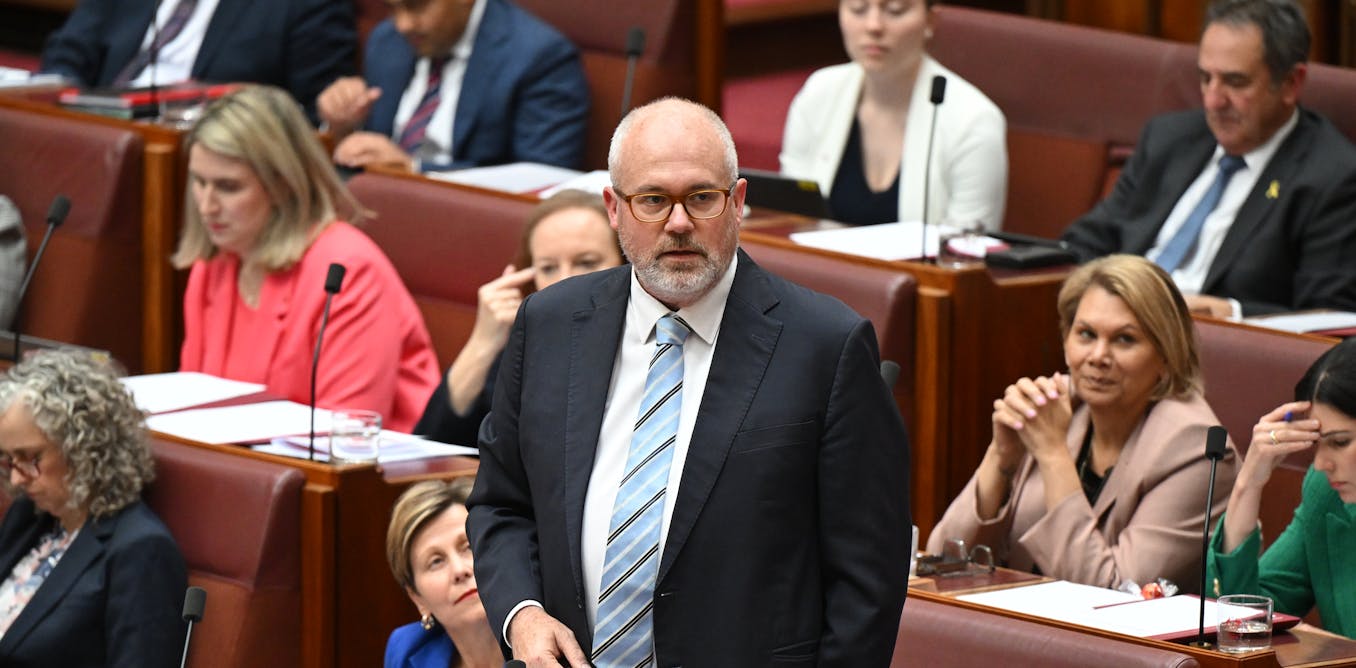
    To talk about how the government will keep up with effectively managing AI, as well as a long-overdue response to a “jobs for mates” review, we’re joined by the minister for industry, innovation and science, Tim Ayres.

    On the government’s decision not to introduce AI-specific laws, Ayres denies the Albanese government ended up going with a “light-touch” approach.

    It’s a pragmatic Australian approach that’s about the circumstances that Australia is in, in strategic terms and economic terms. We’ve got an existing regulatory framework now. Australian law applies now.

    The [new] AI Safety Institute is about making sure that we support our regulators. Advised, of course, by the best advice, whether it’s in the intelligence communities or security agencies, engaging with the trade union movement and civil society, getting the best advice to make sure that we’re uplifting government capability to analyse threats, to get into the new AI models and make sure that we’ve tested them properly, and supporting government capability across the board.

    On whether the rollout of AI will lead to some mistakes as Australian workers and industry get used to the technology, Ayers acknowledges there will be some “bumps”:

    I don’t want to be glib about that, but I do think that’s true […] that of course big social and technological changes are rarely free of bumps and glitches. We’re really keenly aware in the government of the human challenges here.

    And that’s why I just keep emphasising getting people together and having Australians and Australian institutions working together for a better deal is much better than standing back and letting these developments flow without us rolling our sleeves up and getting involved.

    Drawing on examples he’s seen in his role as minister for science, Ayres says AI had could deliver real benefits for Australians over the next five to ten years.

    [For example], the capacity of artificial intelligence to dramatically speed up pharmaceutical design so that we get more drugs, more targeted design developed in Australia into pharmacies to support Australians’ health, cancer treatment designs, composite material design. And in the energy sector, being able to […] smartly manage the energy grid so that we can expand renewables and expand electricity capability. There there is almost no area of technological improvement that won’t be touched by artificial intelligence.

    But with that rapid expansion comes real costs, including the vast amounts of electricity and water data centres consume.

    Ayres said he’ll resume working with state and territory governments on developing “data centre principles” very early next year. The Sydney Morning Herald and others have reported that the government is weighing up making new data centres invest in big wind and solar projects or else build their own batteries on-site.

    Ayres says if data centres and new digital infrastructure end up paying for new generation and transmission capability, “that’s a net addition to the electricity system, not a drain on resources”.

    Microsoft’s […] recent investment in Australia has been has underpinned and underwritten the development of a massive 300 megawatt solar farm north of Albury at Walla Walla. There are opportunities here if we have a planned approach to make sure that this supports development in the electricity system.

    Following week’s release of the review into “jobs for mates” – which the government held onto for two years and now declines to accept all recommendations – Ayres argues Labor “done has a lot to restore integrity” since being elected in 2022.

    I think what we saw was the previous government so debauched the process that Australians lost confidence in the appointments process. Now we’ve done a lot to restore integrity and a sense of purpose to these appointments.

    […] The rules that [finance minister] Katy Gallagher’s announced and that the government’s adopted today go a long way towards restoring public confidence. But of course, as every as every day goes on, we will continue to demonstrate that we actually take our responsibility in this area seriously and that our appointments reflect the public interest.


    Read more:
    Albanese government shies away from tougher recommendations from ‘jobs for mates’ inquiry


    Continue Reading

  • Asia-Pacific markets rise after Wall Street’s tech-fueled recovery

    Asia-Pacific markets rise after Wall Street’s tech-fueled recovery

    Panoramic view of Busan city, South Korea taken on sunrise.

    Alex Veprik | Moment | Getty Images

    Asia-Pacific markets were mostly higher Wednesday, after Wall Street saw a tech-fueled recovery and a cryptocurrency rally.

    Bitcoin climbed over 7% to cross the $90,000 mark in overnight trading after a sharp sell-off a day earlier, and was last trading at 91,462.

    Japan’s Nikkei 225 climbed 0.76%, while the broad-based Topix was down 0.31%.

    South Korea’s Kospi was up 1.06%, while the small-cap Kosdaq rose 0.29%.

    The country’s revised third-quarter GDP numbers indicated that country’s economy grew at 1.8% year on year, compared to 1.7% in the initial estimate, data from the central bank showed Wednesday.

    South Korean President Lee Jae Myung also addressed the country on the first anniversary of former President Yoon Suk Yeol’s failed attempt to declare martial law.

    Australia’s S&P/ASX 200 gained 0.32% as the country’s third-quarter GDP data missed estimates.

    The country’s GDP expanded 2.1% year on year, marking its strongest expansion since the third quarter of 2023, but fell short of the 2.2% expected by economists polled by Reuters.

    Hong Kong markets opened 0.41% lower, while the mainland CSI 300 added 0.22%.

    U.S. stock futures were little changed during early Asia hours after major U.S. indexes recovered some losses from the previous session.

    Overnight in the U.S., the Dow Jones Industrial Average gained 0.39%, while the S&P 500 climbed 0.25% and the Nasdaq Composite advanced 0.59%.

    —CNBC’s Sean Conlon and Pia Singh contributed to this report.

    Continue Reading