Good morning. Enterprise and global AI spending is widely expected to climb in 2026, driven by expanding AI infrastructure and the broader adoption of AI software and devices. Rather than being concentrated only among top tech giants, investment is increasingly coming from a wider base of enterprises.
Gartner forecasts global AI spending to exceed $2 trillion in 2026, led by the integration of AI into products such as smartphones, PCs, and other underlying infrastructure. Regional economic conditions, regulatory environments, and access to skilled talent will influence how quickly individual companies scale their initiatives. Not every company will commit to large hardware upgrades or wide deployment at the same pace.
To understand how the market is shaping up, I asked Dan Ives, a managing director and senior equity research analyst at Wedbush Securities, for his view. “We believe 2026 will be the year of AI monetization as the infrastructure leads to the use cases for enterprises and consumers,” Ives told me. “This is just the beginning, and we expect a bullish 2026 for tech and the AI Revolution.”
Wedbush analysts wrote in a Monday morning note that they are seeing AI-related business ramp up faster recently, and that this momentum should carry into 2026 as end-user enterprises fast-track deployments. The analysts also reject the idea that the market is showing signs of an AI bubble, emphasizing instead that adoption remains in the very early stages as CIOs and business leaders determine where AI can deliver meaningful value in their organizations.
Deloitte’s recent report similarly anticipates continued and rising AI spending in sectors such as tech, media, and telecom, but emphasizes that the focus will shift from experimentation to execution. “New foundational models, or even shiny new enterprise agentic applications, continue to impress—but translating those beyond pilots and trials requires work that’s typically considered less exciting, like data hygiene, integration into existing workflows, governance, new pricing models, and regulatory compliance,” according to the report.
These forecasts point to a common inflection point: 2026 will be less about dazzling new AI models and more about turning existing capabilities into measurable business results.
SherylEstrada sheryl.estrada@fortune.com
Leaderboard
Fortune 500 Power Moves
Amanda Brimmer was appointed CFO of leasing advisory and head of corporate development at JLL (No. 188), a global commercial real estate and investment management company. Reporting to JLL CFO Kelly Howe, Brimmer will partner with business leaders globally to drive financial growth and performance. Brimmer brings more than two decades of experience from Boston Consulting Group, where she most recently served as managing director and senior partner.
Galagher Jeff was appointed EVP and CFO of ARKO Corp. (No. 488), one of the largest convenience store operators and fuel wholesalers in the U.S., effective Dec. 1. Jeff most recently served as EVP and CFO for Murphy USA, Inc. Before that, he spent nearly 15 years in senior and executive finance roles with retailers, including Dollar Tree Stores, Inc., Advance Auto Parts, Inc. and Walmart Stores, Inc., in addition to a decade-long career in finance and strategy consulting at organizations including KPMG and Ernst & Young.
Every Friday morning, the weekly Fortune 500 Power Moves column tracks Fortune 500 company C-suite shifts—see the most recent edition.
More notable moves
Nick Tressler was appointed CFO of Vistagen (Nasdaq: VTGN), a late clinical-stage biopharmaceutical company, effective Dec. 1. Tressler brings over 20 years of financial leadership experience. Most recently, he served as CFO of DYNEX Technologies, and before that, he was the CFO at American Gene Technologies, International, and Senseonics Holdings, Inc. Tressler has also held senior finance roles at several biopharmaceutical companies.
Charlie Dowling was appointed CFO of Revive Infrastructure Group, a utility infrastructure services provider. Dowling brings to the company more than 30 years of experience. He began his career in public accounting with Arthur Andersen, and later advanced through senior financial leadership roles across the construction, manufacturing, and industrial sectors.
Big Deal
E*TRADE from Morgan Stanley’s monthly analysis found that in November the firm’s clients were net buyers in 10 of 11 S&P 500 sectors—and all signs pointed to them buying the tech dip, especially in some of the market’s megacap AI leaders, according to Chris Larkin, managing director of trading and investing. The top-three sectors for net buying activity were consumer discretionary (+13.41%), utilities (+7.35%), and communication services (+4.9%). Tech was close behind at +4.65%.
“A good deal of the activity in the utilities sector again appeared to be driven by ‘risk-on’ buying in the alt-energy space rather than defensive purchases of traditional utility stocks,” Larkin noted. “And for the second month in a row, clients rotated away from strength in the health care sector.”
Courtesy of E*TRADE
Going deeper
“How AI’s persuasion style mirrors humans” is the latest episode of Wharton’s Ripple Effect podcast. Wharton Professor Ethan Mollick discusses how AI systems respond to Robert Cialdini’s principles of persuasion, such as authority, reciprocity, and commitment. The episode explores why certain nudges make guardrails more flexible, how larger models show stronger resistance to influence, and how insights from social psychology reveal the emerging “para-human” nature of AI.
Overheard
“My belief in the power of connection has shaped much of my personal life and professional career.”
—DavidRisher, chief executive officer of Lyft, writes in a Fortune opinion piece titled, “Lyft CEO: This Giving Tuesday, I’m matching every rider’s donation.”
Vend Marketplaces (OB:VENDA) has repurchased NOK 441 million in outstanding bonds across two major bond issues. This move can reshape its financial position. This large-scale buyback signals management’s focus on streamlining balance sheet commitments.
See our latest analysis for Vend Marketplaces.
The recent bond repurchase comes as Vend Marketplaces’ shares have whipsawed throughout the year, ultimately delivering a 1-year total shareholder return of -1.9%. While the share price has rebounded over the last month, momentum looks mixed following a notable drop in the previous quarter. The long-term three-year total return still stands out at over 186%.
If you’re curious what else could be on the move as companies optimize their finances, broaden your search and discover fast growing stocks with high insider ownership
With shares treading water this year and the stock still trading below analyst price targets, investors now face a key question: is Vend Marketplaces undervalued after its debt reduction, or is the market already pricing in future growth?
Vend Marketplaces’ shares are trading at a price-to-earnings ratio of 10.5x, noticeably below both the peer group and industry averages. At the last close price of NOK 358, this suggests that the market is pricing in more modest prospects for the business compared to peers.
The price-to-earnings (PE) ratio reflects how much investors are willing to pay for each unit of the company’s earnings. For a digital marketplace group like Vend, which has shown substantial earnings growth, a lower PE could either signal market skepticism about sustainability or represent potential value if profits hold up.
Comparatively, the broader global Interactive Media and Services industry trades at 22.7x earnings, while Vend’s peers average even higher at 27.5x. This wide discount stands out and implies the market has not fully credited recent earnings strength. If fundamentals persist, the PE could rise to those levels.
See what the numbers say about this price — find out in our valuation breakdown.
Result: Price-to-Earnings of 10.5x (UNDERVALUED)
However, weak annual net income growth and modest revenue trends could challenge the case for Vend Marketplaces being materially undervalued.
Find out about the key risks to this Vend Marketplaces narrative.
While the current earnings-based valuation points to a possible bargain, our DCF model challenges that view. The SWS DCF model estimates Vend Marketplaces’ fair value at NOK 303.47. With shares trading at NOK 358, the stock could be overvalued.
Look into how the SWS DCF model arrives at its fair value.
VENDA Discounted Cash Flow as at Dec 2025
Simply Wall St performs a discounted cash flow (DCF) on every stock in the world every day (check out Vend Marketplaces for example). We show the entire calculation in full. You can track the result in your watchlist or portfolio and be alerted when this changes, or use our stock screener to discover 927 undervalued stocks based on their cash flows. If you save a screener we even alert you when new companies match – so you never miss a potential opportunity.
If you want to dig into the details yourself, take a few minutes to explore the numbers and build your own perspective. Do it your way
A great starting point for your Vend Marketplaces research is our analysis highlighting 2 key rewards and 2 important warning signs that could impact your investment decision.
Don’t let opportunity pass you by. Active investors are always looking for the next big thing. Use the Simply Wall Street Screener to target standout opportunities and move ahead of the curve today.
This article by Simply Wall St is general in nature. We provide commentary based on historical data and analyst forecasts only using an unbiased methodology and our articles are not intended to be financial advice. It does not constitute a recommendation to buy or sell any stock, and does not take account of your objectives, or your financial situation. We aim to bring you long-term focused analysis driven by fundamental data. Note that our analysis may not factor in the latest price-sensitive company announcements or qualitative material. Simply Wall St has no position in any stocks mentioned.
Companies discussed in this article include VENDA.OL.
Have feedback on this article? Concerned about the content? Get in touch with us directly. Alternatively, email editorial-team@simplywallst.com
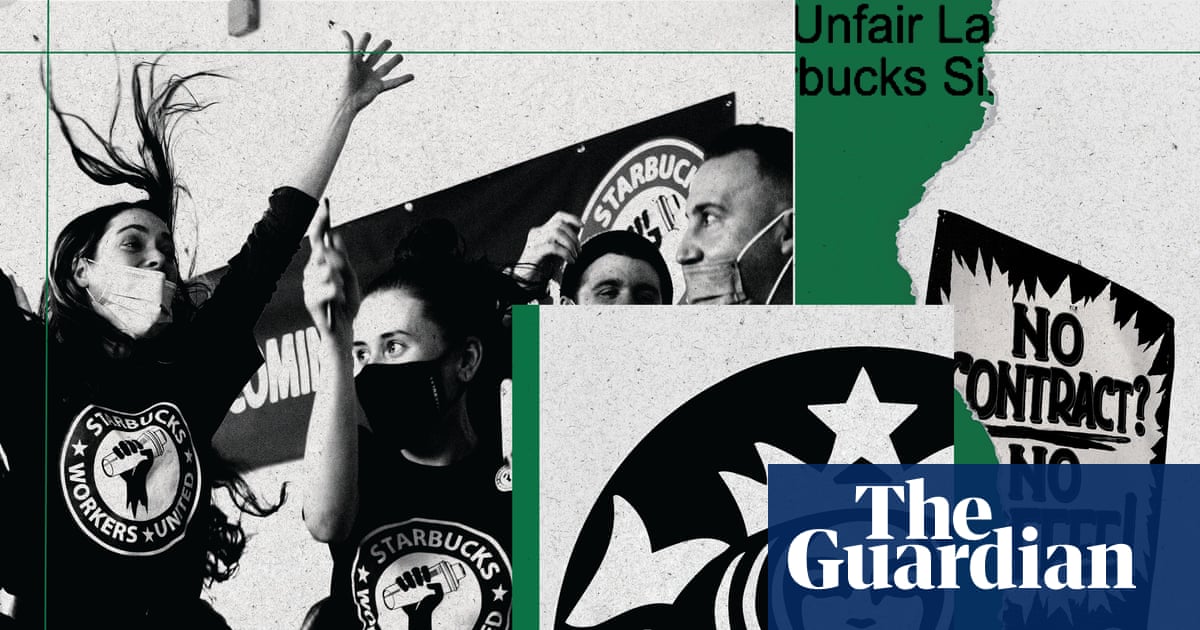
2000Thousands of Starbucks baristas are on strike across the US, warning the world’s largest coffee chain to brace for the “longest and biggest” bout of industrial action in its history.
Barely a year after Brian Niccol, the Starbucks CEO, tried to draw a line under bitter divisions between its management and unionized workers, pledging to “engage constructively” with them, the American coffee giant is now grappling with an escalating strike during its lucrative holiday trading season.
About 2,500 workers are striking across 85 cities and 120 stores – and urging customers to steer clear. Starbucks claims less than 1% of its coffee houses have experienced disruption due to the industrial action.
But the union, Starbucks Workers United, which represents 11,000 baristas at more than 550 stores, is threatening to escalate the strike far beyond its current footprint unless executives make concessions during contract negotiations.
Four years after the first Starbucks-owned US store voted to form a union, defying intense resistance from the company, relations between both sides have deteriorated.
“It’s still shocking to me to wake up and have them every day still fighting us the way that they’re fighting us,” Michelle Eisen, spokesperson for Starbucks Workers United, told the Guardian. “Because we have proven time and time again that we’re not going anywhere.”
For decades, Starbucks, founded in the 1970s, and taken over in the 1980s by Howard Schultz, who built it into the global coffee colossus it is today, successfully fought off unionization.
The chain dubbed its workers “partners”, and promoted a package of “industry-leading” benefits, including healthcare coverage and education costs.
“I’m not an anti-union person. I am pro-Starbucks, pro-partner, pro-Starbucks culture,” Schultz told employees in 2022. “We didn’t get here by having a union.”
Baristas and supporters picket outside a Starbucks in New York last month. Photograph: Brendan McDermid/Reuters
By then, however, cracks had already started to appear in the dam. The previous year baristas at a store in Buffalo, New York, voted 19-8 in favor of unionizing – setting the stage for hundreds of outlets across the US to follow suit.
Michelle Eisen started working at the Buffalo store in August 2010, to supplement her job as a production stage manager, in between theater shows.
She was a longtime Starbucks customer, and trusted its reputation for treating workers well. And for years, Eisen felt valued as an employee, receiving regular wage increases and working around her production schedule.
But things started to change in about 2016, according to Eisen. “We saw our benefits costs go up significantly. Those twice a year raises went away completely,” she said in an interview. “All of a sudden, we were getting one cost of living raise at the beginning of the calendar year, which, most of the time, was significantly less than the raises previous to that. And that’s really when we started to see the staffing levels slowly start to decline in these stores.”
Four years later, things “really, really, really came to a head”, Eisen said.
Starbucks stores stayed open when Covid hit in 2020. Baristas startled to encounter increasingly aggressive and confrontational customers, and some workers felt their pay was too low for what they believed had become more intense work in deteriorating conditions.
Eisen, whose theater job was shut down due to the pandemic, took on as many hours as she could at Starbucks, but still struggled to make ends meet. After 11 years at the company, she was only making a few cents more an hour than a new hire. In 2021, she considered quitting.
But then she started speaking with co-workers about organizing a union. A group of about 50 Starbucks baristas in the Buffalo area went public with their plan in August 2021.
“To me, it was a no-brainer,” said Eisen. “Because it gave an opportunity to try to address some of these problems, and fix them from the inside. And I was hoping, beyond hope, that it would work, we would be successful, and I wouldn’t have to leave. Because I didn’t want to.”
Starbucks executives did not see the move as a no-brainer. Managers and corporate executives, including the chain’s then North American president, Rossann Williams, and Schultz, descended on Buffalo in a bid to try to stop the effort to unionize.
“No partner [employee] has ever needed to have a representative seek to obtain things we all have as partners at Starbucks,” Schultz wrote in a letter to workers. “And I am saddened and concerned to hear anyone thinks that is needed now.”
“They waged an absolutely vicious union-busting campaign,” claimed Eisen. “They still are, but it started there in Buffalo, from the very beginning. And against all odds, in spite of that, my store was able to win their union election on December 9, 2021 and became the first [unionized] store. And then it was kind of a whirlwind.”
Since that first victory, mobilizing workers have won over 650 union elections, and lost about 120.
The chain has since moved to closed 59 unionized stores, according to Starbucks Workers United. Others are still awaiting for results to be certified.
As as a wave of mobilization started to sweep the firm’s ranks in early 2022, its top tier was overhauled. Three months after the Buffalo vote, Starbucks abruptly announced its CEO Kevin Johnson was standing down, and Schultz, its veteran boss, would return for a third stint in charge.
Shares in Starbucks were under pressure, costs were rising as Covid continued to disrupt supply chains, and – while the firm continued to generate billions of dollars in sales every quarter – customers were spending less time inside its stores.
Starbucks stock price has fluctuated across three different CEOs
Schultz was tasked with turning around a business many on Wall Street felt was losing its way. Many of his freshly unionized baristas agreed. But Schultz declined to work with Starbucks Workers United, declaring he would never embrace the union, and offering new benefits and pay increases to non-union workers.
“It was just infuriating that we were being bullied in this way, and made to feel like we were doing something wrong, because we were trying to hold the company accountable and trying to make them better,” said Eisen.
A new CEO, Laxman Narasimhan, was tapped later that year. Unionized baristas started to take action, including by demonstrating on the chain’s “red cup day” holiday in November 2022 and 2023.
Relations slowly improved. In early 2024, Starbucks and Starbucks Workers United agreed a new framework for collective bargaining agreements, sparking hope of a first union contract by the end of that year. Workers at unionized stores were granted the benefits that had been given to non-union workers in 2022.
But the chain’s business woes appeared to worsen, with competition mounting and footfall declining. Narasimhan was ousted after 16 months as CEO last year, and replaced by Brian Niccol, the Chipotle boss.
Bargaining stuttered to a halt following Niccol’s arrival, according to the union. “The company picked right back up where they left off at the end of 2023, when it came to violating workers rights,” said Eisen. “And we still don’t have a contract.”
A Starbucks outlet in New York. Photograph: Adam Gray/Getty Images
Niccol moved fast in a bid to turn around the chain, launching a “Back to Starbucks” campaign, aimed at reversing declining sales. He faced criticism after it emerged he would commute from his home in Newport Beach, California, to the firm’s Seattle headquarters, rather than relocate.
Progress at the bargaining table, meanwhile, stalled. Niccol remained mum on the union, and its pursuit of a first union contract.
“The changing of CEOs within the last five years alone has kind of shown that this company has a lot it’s still figuring out,” Zarian Antonio Pouncy, who has worked for 11 years as a barista in Las Vegas, told the Guardian. His store unionized in late 2023.
Pouncy said: “Instead of listening to the partners – listening to those on the forefront, dealing with the business every day – they’re relying too much on leadership in their opinion, and AI, algorithms and numbers, to kind of show them how business works.”
Julie Su has been watching closely. As US deputy secretary of labor, and acting labor secretary, between 2021 and 2025, she helped oversee the Biden administration’s efforts to reinvigorate the US labor movement — as thousands of Starbucks baristas voted to unionize.
“When workers choose a union, they deserve a contract,” Su told the Guardian. “Too often, it takes a long time to get one because the employer uses delay as a weapon.
“The time to a first contract is used to punish workers for unionizing, to undermine the effort, or to send a message that there is no benefit to joining a union because nothing changes at work for years. Usually all of the above. This is unacceptable.”
On average, it takes about 15 months for a union to secure a first contract with an employer, often due to delays and obstruction by management. At Starbucks, nearly 48 months have passed since the Buffalo store voted to unionize.
“The other way this operates as a specific tool for union-busting in the case of a company like Starbucks is the company tries to wait out its employees, hoping that they leave before a contract is reached,” added Su.
In this 2021 picture, Starbucks employees in Buffalo celebrate after winning their union election to become the first unionized store in the US. Photograph: Joshua Bessex/AP
Starbucks Workers United has filed hundreds of unfair labor practice (ULP) charges with the National Labor Relations Board. Dozens of union leaders have been fired, and alleged retaliation for their union support. Starbucks denied this in all cases, although several workers won reinstatements.
Tensions simmered. Starbucks Workers United claimed baristas at several hundred stores walked off the job last December. And in April, union delegates voted to reject a contract proposal from the company which would have guaranteed annual raises of at least 2%, dismissing the increase as “not good enough”.
On 13 November – “Red Cup Day’, inside the Starbucks empire – more than a thousand US workers walked off the job, demanding the chain present a “fair” contract. The chain played down the strike’s impact.
The union escalated. A week later, the action was expanded to 65 cities and 95 stores, with 2,000 workers on strike. Starbucks Workers United also staged a blockade of Starbucks’ largest distribution center on the US east coast, in York, Pennsylvania.
On 24 November, Starbucks workers rallied outside of the company’s corporate office in Newport Beach, Niccol’s part-time base, to demand the company finish the contract.
On 28 November, the strike was expanded further. About 2,500 baristas across 120 stores are now involved, according to the union.
“The company has been stonewalling us,” said Diego Franco, a Starbucks barista for six years in Chicago. “My store chose to go out on Red Cup Day, the busiest sales day for the company, because we were frankly fed up.
“You can’t expect us to continue to come into work, to continue to push policies and procedures that don’t actually fix any of the problems that we face at work – not just for my co-workers, but for the customers and our regulars. I would much rather stand outside in the cold and be on strike than know that I’m showing up to work where I’m constantly being disrespected by our CEO, and by upper management.”
Contacted for comment, Starbucks played down the impact of the strike so far, and claimed to have seen record holiday sales so far this year.
“As we’ve said, 99% of our 17,000 US locations remain open and welcoming customers – including many the union publicly stated would strike but never closed or have since reopened,” said Jaci Anderson, a spokesperson for Starbucks. “Regardless of the union’s plans, we do not anticipate any meaningful disruption.
“When the union is ready to return to the bargaining table, we’re ready to talk. The facts are clear: Starbucks offers the best job in retail, with pay and benefits averaging $30 per hour for hourly partners. People choose to work here and stay here – our turnover is less than half the industry average, and we receive more than a million job applications every year.”
A person holds a placard as Starbucks workers go on strike. Photograph: Bloomberg/Getty Images
A growing number of progressive political leaders are unpersuaded by such reassurances. Over 100 members of Congress signed letters demanding Starbucks return to negotiations with the union and finish the contract.
“While workers are on strike, I won’t be buying any Starbucks, and I’m asking you to join us,” New York mayor-elect Zohran Mamdani wrote on social media. His transition co-chair, Lina Khan, and incoming first deputy mayor Dean Fuleihan have stood on picket lines. Mamdani appeared on a picket line with Senator Bernie Sanders on Monday.
Seattle mayor-elect Katie Wilson appeared on a Starbucks picket line hours after her acceptance speech, where she told workers and supporters: “Baristas are the heart and soul of this company, and they deserve better than empty promises and corporate union-busting.”
Eisen left Starbucks in May, after 15 years. She currently serves as the principal spokesperson for Starbucks Workers United.
She said: “This company is being run into the ground, and these unionized workers are the only ones standing up and saying, ‘Hey, what are you doing? Our cafes are not places that people want to come spend time any more. They don’t want to come in and spend their money here because of the way you are running this business. You have to start investing in us if you want to see this company turned around.’
“Workers are done, and they’re going to continue to escalate.
“They’re going to continue to be on the unfair labor practice strike, and they are prepared to make this the longest and biggest strike in company history if the company doesn’t return to resolve these remaining issues.”
The ‘Oracle of Omaha,’ Warren Buffett, is famed for his investment prowess. So it’s perhaps no surprise that when he learned his family members were blowing the thousands of dollars he gifted them each year, he changed tack and began buying them shares instead.
Come the most wonderful time of the year, members of the Buffett family previously looked forward to receiving $10,000 in hundred-dollar bills. Buffett’s former daughter-in-law, Mary Buffett—who was married to the Berkshire Hathaway CEO’s son, Peter—said as soon as the guests returned home after Christmas Day, they would splash the cash.
Mary told ThinkAdvisor in 2019: “As soon as we got home, we’d spend it, whoo!”
This likely displeased the man worth $154 billion, whose financial ethos revolves around playing the long game and sensible spending. Mary added: “Then, one Christmas there was an envelope with a letter from him. Instead of cash, he’d given us $10,000 worth of shares in a company he’d recently bought, a trust Coca-Cola had. He said to either cash them in or keep them.”
Perhaps taking inspiration from her father-in-law at last, Mary decided to hold onto the shares: “I thought ‘Well, [this stock] is worth more than $10,000.’ So I kept it, and it kept going up.”
Every year after that, Buffett would continue to gift his family members stocks, which included Wells Fargo one year. It’s a good pick: Even in 2025, Wells Fargo is up 21.9%, and is up more than 200% over the past five years.
Mary began to follow Buffett’s lead, saying that if he bought the shares, she would then go and “buy more of it, because I knew it was going to go up.”
Buffett’s family also faced quite a conundrum come December each year: How do you reciprocate a gift worth $10,000 or more? This is made all the more complicated by the question of what to buy a billionaire.
Mary decided the best gift she could give the now 95-year-old was to demonstrate that his children and their families were successful in their own right. “The first year we were married, I realized, ‘Warren is very rich. Therefore, he doesn’t want anything,’” Mary recalled, and instead shared with him the balance sheet for the music company she ran. “I just wanted to show him ‘Look, we’re doing good,’” she added.
It’s giving season
With December upon us, families around the world will be gearing up to spend a significant amount on their loved ones. And like Buffett in the early years, now is the time of year when many will be gifting lump sums of cash to their families.
According to UK insurance giant SunLife, more than one in five people over the age of 50 have given a significant amount of money as a present in the past five years. Of those people, 33% of them coincided it with Christmas or a special birthday.
The biggest form of cash gifts was for house deposits, and they were significant sums as a result. SunLife, which surveyed more than 2,000 people, found people aged over 50 gifted, on average, £30,634 ($40,568). The next largest gifts were for help with home renovations, with an average of £8,932 ($11,828).
Younger generations are likely to get more used to receiving cash gifts from their older relatives in the decades to come, courtesy of the Great Wealth Transfer. The inheritance wave is worth some $83 trillion according to UBS, and will take place over the next 20 to 25 years.
Reports have previously suggested that a $9 trillion ‘sideways’ wealth transfer from husbands to their wives has resulted in an uptick in investment—straight out of the Buffett playbook. It remains to be seen whether younger generations will follow suit.
Innovation clusters, embedded in grassroots solutions and inclusive businesses, can pave the way to true climate resilience.
The Banyan tree and the clusters
The twisting, sprawling Banyan trees have watched over Bengaluru, India, or ‘the Garden City’, for hundreds of years. Their aerial roots that grow from the branches descend to the ground, cover vast areas, and resemble multiple trees growing in unison in all directions. As sustainability leaders, we should take cues from the longevity of these trees which can typically live for 200–300 years. These botanical marvels serve as a powerful metaphor for the climate innovation landscape and are living proof of how strong, interconnected systems can create resilience and long-term impact.
In this article, we explain the methodology that we have applied along with our partners to establish innovation clusters in Bengaluru, India, Nairobi, Kenya and in Tanzania.
What are innovation clusters?
At a high level, the major climate challenges that we face require multiple sources of innovation to bridge the gap between where we are and where we need to be. Just as the Banyan supports a thriving ecosystem under and around its canopy, an innovation cluster reinforces the core of geographically based innovation. For Climate KIC and our partners, an innovation cluster is a flexible approach that adapts to and strengthens the needs of all involved. This enables all people, institutions, and organisations to collectively nurture more inclusive and sustainable economies.
Roadmap for collaboration*:
A cleantech example
Copenhagen has earned a global reputation as a leader in clean energy, driven by the Copenhagen Cleantech Innovation Cluster (CCIC) and Denmark’s broader decarbonisation strategy. In 2009, CCIC brought together energy companies, government and non-governmental organisations (NGOs), and research institutions to foster cleantech growth, support start-ups, and attract international businesses. The initiative helped Copenhagen cut CO2 emissions by 80% between 2009 and 2022 while securing 24 million euros in funding, creating over 1,000 jobs, and establishing 120+ new businesses. Though this cluster was government-backed, not all innovation clusters need to be led by public investment to thrive.
The Climate KIC approach
Innovation clusters by Climate KIC and partners strengthen climate innovation ecosystems by connecting a range of collaborators who usually work in isolation. The first step is to engage and build momentum with a broad range of partners and collaborators within the ecosystem. Together, we go through the exercise of mapping, engaging, and collective vision-building.
These clusters foster collaboration, innovation and learning to build circular and climate-resilient economies. We believe that supporting new business models, creating a shared vision, developing skills, and mobilising capital is the way to foster transformative climate action. Centred on social inclusion, they amplify diverse voices to ensure solutions address real needs and create fair, lasting impact.
Our tested approach:
Alongside partners, we focus initially on three key outcomes:
Building meaningful collaboration and driving mindset shifts: going beyond transactional interactions to build deeper collaborations among diverse groups of people.
Unlocking impact-driven innovation: supporting innovators at every stage with tailored opportunities and connections to societal demand.
Strengthening capacities and learning: improving the capacities of different groups (start-ups, Entrepreneurship Support Organisations (ESOs), investors, governments, partners) to enable more effective collaborations within the ecosystem
An opportunity to rethink the system
Certainly, Climate KIC hasn’t pioneered the concept of innovation clusters, but what sets us apart is how we organise and operate them. Rather than structuring our work around traditional sectors like manufacturing or agriculture, we focus on complex, systemic challenges such as circularity or rural resilience. In theory, this systems-thinking approach enables us to address interconnected issues holistically, rather than treating them in isolation.
Our 15-year journey developing innovation ecosystems across Europe has evolved into creating a methodology that prioritises social inclusion, honours local contexts, and leverages global insights through deep local partnerships.
Together with local partners, we address interconnected challenges that reflect shared priorities across diverse contexts – from reimagining urban waste through circular economies that uplift vulnerable communities and informal workers, to nurturing resilient rural communities through adaptation innovation, sustainable livelihoods, and regenerative landscapes. Looking ahead, we aim to apply similar approaches to additional contexts such as fostering resilient coastal regions and healthy oceans that support thriving small island communities.
A call for deep collaboration
What the climate crisis needs is a level of collaboration and systems thinking we haven’t seen before. The best innovation clusters take their cues from the Banyan tree, operating not as isolated entities, but as interconnected systems that expand through strong, distributed support. Each node in the cluster (whether a start-up, researcher, policymaker, or investor) reinforces the structure, driving resilience and compounding growth. And the strength of the ecosystem comes not from any single part, but from how tightly those parts are linked: capital supporting talent, research driving product, regulation enabling scale. Over time, this dense network becomes hard to replicate and even harder to compete with. Real innovation doesn’t happen in isolation and is not limited to technology: it takes root in ecosystems and solutions built for scale, speed, and shared momentum.
We nurture innovation clusters with implementing partners, including GrowthAfrica in Nairobi, SecondMuse in Bengaluru, and SmartLab in Tanzania. This article is part of our series spotlighting these innovation clusters, supported by the IKEA Foundation and Irish Aid. Climate KIC also contributes to adaptation innovation clusters in Sierra Leone and Madagascar with the United Nations Industrial Development Organisation (UNIDO).
Contact our Partnerships Team if you’d like to learn more about investment opportunities.
Contact us
* image based on: Ehrlichman et al (2018) SSIR, Cutting Through the Complexity: A Roadmap for Effective Collaboration
Lloyd’s Register (LR) has joined the Digital Container Shipping Association’s DCSA+ partnership programme.
By joining DCSA+, LR becomes part of a global community of carriers, shippers, terminals, forwarders and technology providers working together to align the industry behind open digital standards.
The DCSA+ programme provides a structured platform for collaboration, enabling partners to connect with peers and contribute directly to the development of practical, scalable digital solutions for the container shipping ecosystem.
As an official partner, LR will initially engage in the development of the Operational Vessel Schedules (OVS) standard, an initiative focused on improving visibility and coordination across the vessel schedule value chain.
Nick Gross, Global Container Ship Segment Director, LR, said: “Joining the DCSA positions us at the forefront of digital transformation within the containership segment. Our focus is on developing digital solutions to provide greater operational efficiency, which are dependable and scalable. Partnering with DCSA members enables us to combine our technical expertise with real-world insight, helping to shape common standards and practical solutions to make data more accessible, reliable and useful for all stakeholders in the containership value chain.”
Mariana Bock-Losada, Chief Growth Officer at DCSA, said: “Lloyd’s Register adds valuable technical and operational depth to the DCSA+ community. Their involvement reinforces our joint ambition to accelerate the adoption of digital standards across container shipping and to build a more connected, efficient, and sustainable industry.”
Jeremy Daoust, Head of Market Management & Insights, OneOcean added: “OneOcean has a long history of connecting ships, fleets and people to deliver clarity and foresight through a digital ecosystem. Our solutions cover navigation, compliance, ESG and decision support for more than 30,000 vessels, serving over 1 million seafarers. As such, we look forward to working closely with the DCSA, to share our expertise, and help maritime leaders run safer, smarter, more sustainable operations across the value chain.”
DCSA+ extends DCSA’s work beyond carriers to the wider ecosystem, enabling technology providers and other partners to play an active role in building the standards that power global trade.
Drop-in alternative liquid fuels—Renewable Diesel (RD) and Sustainable Aviation Fuel (SAF)—offer material near-term abatement for hard-to-electrify transport segments, such as Aviation and heavy-duty transport; their deployment depends on pathway-specific costs, hydrogen requirements, and policy design. This paper evaluates four production routes—Hydroprocessed Esters and Fatty Acids (HEFA), Fischer–Tropsch (FT), Alcohol-to-Jet (ATJ), and electro-SAF (eSAF/PtL)—including co-processing options across the European Union, the United States, and Brazil, using a harmonized techno-economic model with Monte-Carlo uncertainty to estimate factory-gate costs, decompose cost drivers, quantify hydrogen needs (internal versus external), and compute 50% blend prices relative to fossil comparators.
Per kg of fuel at factory gate, results show a stable cost ranking:
HEFA sits at $1.6–$1.1/kg
FT clusters around $1.6–$1.4/kg
ATJ lies at $2.1–$1.6/kg
eSAF is near $5.3–$5.0/kg
With feedstock emerging as the dominant lever for HEFA/ATJ, capital and site services for FT, and energy inputs (clean H₂ and power) plus CO₂ supply for eSAF; hydrogen-price sensitivity is decisive only for eSAF. Across the different locations considered within this study at 50% blends, parity expressed as carbon-price equivalents indicates ≈$130–$45/tCO₂ for HEFA, ≈$130–$90/tCO₂ for FT, ≈$210–$125/tCO₂ for ATJ, and ≈$710–$670/tCO₂ for eSAF. On this basis, the paper proposes a sequenced strategy: scale HEFA and FT now with blending-credit architectures and feedstock/utility enablers, expand ATJ where alcohol logistics confer advantage, and unlock eSAF as clean-hydrogen and CO₂ costs fall, aligning instruments with pathway-specific cost drivers.
Boeing: Africa’s Rising Passenger Air Traffic will spur Region’s Fleet to more than Double by 2044
Growing African demand for airplanes and services fueled by urbanization and growing middle class
Fleet growth will favor single-aisle airplanes for regional, international travel
LUANDA, Angola, Dec. 2, 2025 — Africa’s passenger air traffic will average 6% annual growth through 2044, driven by a young population, growing middle class, rapid urbanization and airport and connectivity investments, Boeing [NYSE: BA] said today. The region’s commercial airplane fleet will more than double to 1,680 airplanes over the next two decades to accommodate this rise in air travel, as projected in the company’s 2025 Commercial Market Outlook (CMO) for Africa.
Single-aisle airplanes will account for 70% of the more than 1,200 new airplanes to be delivered over the next 20 years, underpinning opportunities for domestic and short-haul international network expansion. African low-cost carriers are poised to capitalize on the growing demand for more routes throughout the continent and into Europe and the Middle East, offering affordable travel options that enhance connectivity and stimulate economic growth.
“Aviation is a catalyst for Africa’s economic expansion and intra-continental connection, building on industry growth we’ve seen across the region over the last 20 years,” said Shahab Matin, Boeing managing director of Commercial Marketing, Middle East and Africa. “More efficient, versatile airplanes – paired with investments and strategies to make air travel more accessible to more Africans – will unlock further growth opportunities for the region’s airlines and hubs.”
Aviation’s economic impact in Africa extends beyond direct airline jobs, and also stimulates tourism, trade, investment, logistics corridors, and thousands of indirect roles in hotels, manufacturing and services. As carriers grow their fleets and expand route networks, there will be more demand for broader ecosystem investment and the need for new aviation personnel with 74,000 pilots, technicians and cabin crew projected over the next 20 years.
The Africa CMO also forecasts through 2044:
Services demand valued at approximately $130 billion to support fleet growth and operational resilience.
Demand for widebody airplanes fueled by airline plans to modernize fleets and expand long-haul international routes.
Continued Freighter demand tailored to Africa’s developing logistics and export markets.
New deliveries (2025-2044)
Regional Jet
90
Single-Aisle
865
Widebody
240
Freighter
10
Total
1,205
Published annually since 1961, the CMO serves as a key resource for airlines, suppliers, and policymakers shaping the future of aviation. Learn more at cmo.boeing.com.
A leading global aerospace company and top U.S. exporter, Boeing develops, manufactures and services commercial airplanes, defense products and space systems for customers in more than 150 countries. Our global supplier base and workforce drive innovation, economic opportunity, sustainability and community impact. Boeing has been a committed partner to African airlines and aviation institutions for over seven decades, supporting safe, reliable, and sustainable growth across the continent.