
Stocks @ Night is a daily newsletter delivered after hours, giving you a first look at tomorrow and last look at today. Sign up for free to receive it directly in your inbox. Here’s what CNBC TV’s producers were watching on Monday and what’s on the radar for Tuesday’s session. ‘Tis the season for Signet earnings Signet Jewelers reports before the bell Tuesday morning. “Squawk Box” with Becky Quick, Joe Kernen and Andrew Ross Sorkin will have the numbers and stock reaction. Shares are up 8.5% since the company’s last report three months ago. The stock is 13% from its Oct. 22 high. SIG 3M mountain Signet Jewelers stock over the past three months. CrowdStrike The cybersecurity company reports after the bell Tuesday on “Closing Bell: Overtime” with Morgan Brennan and Jon Fortt. CrowdStrike stock is up 19% since last reporting three months ago. Shares are 11% from the Nov. 12 high. Okta The identify security company reports after the bell. The stock is down 13% since the last report three months ago. Okta shares are down 37% from the May high. OKTA YTD mountain Okta shares year to date Oracle CNBC’s Seema Mody will report on the software giant’s recent drop. Oracle shares have fallen 42% since hitting a high on Sept. In a month, shares are down 23%. ORCL YTD mountain Oracle shares year to date Renting in the USA CNBC Real Estate reporter Diana Olick will have new data on the state of rents in the USA. She’ll also run through the stocks tied to real estate. Olick will have the full rundown but it’ll include real estate companies like Realty Income, Essex Property, American Homes 4 Rent, AvalonBay and UDR. Realty Income is 6% from its September high. Its dividend yield is 5.63%. Essex Property is 18% from the March high. Its dividend yield is 3.95%. American Homes 4 Rent is 19% from the May high. Its dividend yield is 3.76%. Mid-America Apartment Communities is 22% from its March high. The dividend yield is 4.48% as of Monday. AvalonBay is 23% from its last 52-week high, hit back on Dec. 2, 2024. The dividend yield is 3.9%. UDR is 22% from its March high. The dividend yield is 4.77%.
Category: 3. Business
-

U.S. stocks see shaky start to December in post-Thanksgiving ‘hangover’
By Christine Idzelis
‘Crash insurance’ for the S&P 500 is ‘somewhat expensive’ even after its sharp rebound last week, says Garrett DeSimone of OptionMetrics
The U.S. stock market fell Monday.
The U.S. stock market kicked off December in the red, with the S&P 500 off to a shaky start to the month after its big bounce last week erased its November losses.
The S&P 500 was set up for a post-Thanksgiving “hangover,” after ripping back to its 6,850 “resistance” level last week, said Jonathan Krinsky, chief market technician at BTIG, in a note Monday. “While December may very well close green, just as November did, the path to get there is likely to be quite volatile yet again.”
The S&P 500 SPX fell 0.5% on Monday to end at 6,812.63, according to FactSet data. That’s after finishing a bumpy November with a 0.1% gain.
Options-trading activity suggested traders remain jittery, as insurance against a sharp fall for the S&P 500 in the near term is “somewhat expensive,” with the cost of protection rising steadily since mid-November, said Garrett DeSimone, head of quantitative research at OptionMetrics, in a phone interview Monday.
That’s despite his research showing “crash insurance on megacap tech names has gotten cheaper” since then, he said, explaining it’s likely because investors remain concerned about the outsized exposure of so-called Magnificent Seven stocks in the S&P 500 index. A drop in those S&P 500 heavyweights risks dragging down the U.S. equities index.
Meanwhile, the Roundhill Magnificent Seven ETF MAGS – an exchange-traded fund that holds seven Big Tech stocks including Apple Inc. (AAPL), Microsoft Corp. (MSFT), Google parent Alphabet Inc. (GOOGL) (GOOG), Nvidia Corp. (NVDA), Amazon.com Inc. (AMZN), Tesla Inc. (TSLA) and Meta Platforms Inc. (META) – fell in November to snap seven straight months of gains, according to FactSet data.
While the S&P 500 eked out a tiny gain last month, its information-technology sector XX:SP500.45 and the tech-heavy Nasdaq Composite COMP each saw their first monthly drops since March, according to FactSet data.
See related: Tech on pace to snap seven straight months of gains as AI fuels bubble fears
The cost of protecting against a big near-term drop in Magnificent Seven stocks reflects “a fairly moderate level of risk” and the potential for choppiness in shares of those Big Tech companies, according to DeSimone.
To help gauge fears of the stock market potentially tanking in the near term, DeSimone explained that he looks at the price of “deep out-of-the-money” put options over a five-day period. Weekly options indicate “how expensive it is to hedge very short-term crashes,” he said.
A put option contract gives a trader the right to sell shares at a specified price by a set date. Investors may use puts to potentially profit on their bet that those shares may decline or to hedge against a drop in their portfolio.
AI theme
On Monday, the Roundhill Magnificent Seven ETF, which seeks to equally weight its Big Tech holdings, slipped 0.1%, failing to extend its bounce in the final week of November. The ETF jumped 5.2% last week, but still finished November with a 1.8% loss, according to FactSet data.
In DeSimone’s view, the stock market recently rallied as traders in the fed-funds futures market began pricing in a “strong increase” in the probability of an interest-rate cut by the Federal Reserve at its upcoming policy meeting next week. Some of “the downside risk has tapered off in the large-cap tech names,” he said, but “bubble fears” remain in the wake of the market’s boom on artificial-intelligence enthusiasm.
Check out: Are Oracle bears too pessimistic? This analyst thinks the stock can rise 90%.
Wall Street’s so-called fear gauge, the Cboe Volatility Index VIX, rose more than 5% on Monday to around 17.2, according to FactSet. Still, that’s below the measure’s long-run average of around 20, suggesting the bull market in U.S. stocks remains intact.
Meanwhile, the CNN Fear & Greed Index still was registering “extreme fear” in the stock market on Monday, although the reading has improved from a week ago, data from the gauge on CNN’s website shows.
“In our view, recent market actions reflect more market churn than broad weakness or a major rotation into defensive sectors,” said Douglas Beath, global investment strategist at Wells Fargo Investment Institute, in a note Monday. “Whether or not the Fed cuts rates in December, we expect rate cuts in 2026,” potentially benefiting stocks along with expected tax cuts and deregulation, he wrote.
Wells Fargo Investment Institute is “constructive on the AI theme and would suggest using market pullbacks to rebalance into ancillary technology trends with more attractive valuations,” such as financials, utilities and industrials, according to Beath.
The U.S. stock market closed lower Monday, with the Dow Jones Industrial Average DJIA and Nasdaq Composite COMP posting losses alongside the S&P 500. The Dow dropped 0.9% while the Nasdaq shed 0.4%.
-Christine Idzelis
This content was created by MarketWatch, which is operated by Dow Jones & Co. MarketWatch is published independently from Dow Jones Newswires and The Wall Street Journal.
(END) Dow Jones Newswires
12-01-25 1737ET
Copyright (c) 2025 Dow Jones & Company, Inc.
Continue Reading
-

Long-Term Adalimumab Improves Work, Life Quality in Psoriasis
Following patients with
psoriasis for up to 5 years after initiating adalimumab, researchers found meaningful improvements across work ability, everyday activity levels, and health-related quality of life, according to one study.1 These findings highlight the broad, long-term benefits of adalimumab beyond clinical symptom control.This single-arm, multicenter, noninterventional, German-based cohort study is published in the
Journal der Deutschen Dermatologischen Gesellschaft .“Our study demonstrated in a large real-world population that long-term treatment of up to 5 years with adalimumab in adult patients with psoriasis led to a sustained improvement in the practice of professional and, in particular, nonprofessional activities,” wrote the researchers of the study.
Psoriasis profoundly affects quality of life, extending beyond physical symptoms to cause psychological distress, social stigma, and daily functional limitations.2 Patients often experience depression, anxiety, and social withdrawal, which can occur regardless of disease severity and negatively impact work, relationships, and adherence to treatment. Studies show that up to 1 in 5 individuals with psoriasis experience mental health challenges, highlighting the need for holistic, patient-centered care that addresses both the physical and psychosocial burden of the disease.
This study collected routine care data from adult patients in Germany with psoriasis who initiated adalimumab treatment.1 Participants were followed for up to 5 years, allowing researchers to capture long-term, real-world outcomes beyond controlled trial settings. Data were documented at baseline and during regular follow-up visits, including measures of work ability, restrictions in non-professional activities, disease severity, and health-related quality of life. This design enabled an assessment of how adalimumab influenced both clinical and everyday functional outcomes over time.
The study analyzed baseline and follow-up data from 4793 patients, most of whom were male with an average age of 47.5 years. At baseline, patients reported far more days with limitations in nonprofessional activities than in work-related tasks. Over the course of adalimumab treatment, both psoriasis-related days unfit for work and days with restrictions in nonprofessional activities declined significantly. Correlation analyses showed that psoriatic arthritis, higher disease severity (Psoriasis Area Severity Index [PASI] > 10), and greater quality of life impairment (Dermatology Life Quality Index [DLQI] > 10) were strongly linked to increased activity restrictions.
Although health-related quality of life improved throughout the observation period, it remained lower among patients who continued to experience limitations in nonprofessional activities.
However, the researchers acknowledged several limitations. First, it was an observational, single-arm design without a control group, which limited the ability to rule out confounding factors. Second, real-world data can vary due to routine practice conditions, and not all parameters were consistently available, especially as patient numbers declined over time. Lastly, some outcomes, including sick leave days and daily activity impairments, relied on patient recall, which may have introduced bias.
Despite these limitations, the researchers believe the study suggests adalimumab leads to meaningful improvements in patients with psoriasis.
“In conclusion, restraint from nonprofessional activities affects well-being and appears to be an underestimated problem in patients with psoriasis, enhancing the burden of disease,” wrote the researchers. “Adalimumab treatment leads to a sustained and tangible improvement in daily nonprofessional activities of patients with psoriasis and their HRQOL [health-related quality of life]. It was shown for the first time that DLQI is highly associated with restraint from nonprofessional activities in a negative manner. This finding emphasizes the need for early intervention with efficacious therapies and holistic consideration of the social aspects in order to improve patients’ QOL [quality of life].”
References
1. Kokolakis G, Philipp S, Mosch T, Fritz B, Sabat R. Impact of adalimumab treatment on impairment of non-professional activities in psoriasis patients. J Dtsch Dermatol Ges. Published online November 28, 2025. doi:10.1111/ddg.15949
2. Steinzor P. Clinical severity may not correlate with psychological burden of psoriasis, study finds. AJMC®. May 7, 2025. Accessed December 1, 2025.
https://www.ajmc.com/view/clinical-severity-may-not-correlate-with-psychological-burden-of-psoriasis-study-finds Continue Reading
-

Proposed 2026 Stress Test Scenarios Improve Transparency, But Leave Key Questions on Fed Discretion
Washington, D.C. – The Federal Reserve’s proposed 2026 stress test scenarios reflect a welcome effort to enhance transparency and public accountability, the Bank Policy Institute, American Bankers Association, Financial Services Forum, Securities Industry and Financial Markets Association, International Swaps and Derivatives Association and Institute of International Bankers said in a comment letter submitted today.
The associations commend the Fed for, for the first time, publishing its proposed 2026 stress test scenarios for public comment and for articulating a more detailed scenario design policy, including guides and a macro model that describe how key variables are calibrated. These actions respond constructively to longstanding calls for the Fed to bring its stress testing models and scenarios into the Administrative Procedure Act’s notice-and-comment framework and reflect a serious effort to increase public insight into the process. Still, the scenarios, which in many cases replicate scenarios from past stress tests and were established before the new Fed guidelines, would benefit from some revisions. For example, the scenarios and associated models that the Federal Reserve uses to design the scenarios often compress the timelines of observed stress periods to achieve peak-level stress calibrations over a shorter number of quarters than is reflected in historical precedents.
Open questions remain on how the Fed will exercise its discretion on scenario design in practice. Greater clarity and firmer guardrails on how that discretion is applied year to year would further bolster the framework’s credibility and ensure that bank capital requirements are based on a coherent and plausible foundation.
“The Enhanced Transparency NPR and the publication of the Proposed 2026 Scenarios for public comment represent an improvement in the overall transparency and accountability of the Federal Reserve’s stress testing processes. However, the proposed framework would grant inordinate discretion to the Federal Reserve, without requiring sufficient explanation for its design choices year-to-year,” the associations stated in the letter.
Background. The Fed on Oct. 24, 2025, issued proposals to increase transparency and accountability in the stress testing process, in line with BPI and co-plaintiffs’ 2024 legal challenge, which called for the Fed to subject its stress testing scenarios and models to public comment under the Administrative Procedure Act.[1]
- Today’s comment letter responds to the proposed 2026 stress test scenarios.
- A separate comment letter will address the Fed’s broader proposal on the revised framework, including the stress test models and scenario design. The Fed extended the comment deadline on this proposal to Feb. 21, 2026.
Why It Matters. The proposed framework will drive how the central bank establishes binding capital requirements that determine the cost of credit in the economy. The design choices underpinning models and scenarios ultimately drive the cost of loans and financing. With insufficient explanation of design choices, the stress tests could continue to produce volatile results year-to-year, distorting the cost of financial intermediation.
- The stress testing framework is not the sole driver of banks’ capital requirements. Given the interplay between stress tests and other parts of the capital framework, the importance of coherent stress test scenarios is critical.
- Transparency is not simply about disclosing more information, but also about explaining how that information is used in decision-making so that stakeholders can understand and, where appropriate, comment on the choices the Fed makes in scenario design. A clearer articulation of the link between the disclosed guides and models for the final scenario paths would further strengthen the credibility of the framework.
Specific Concerns. The associations highlight several instances where more explanation would be beneficial in the proposed scenarios. For example:
- The Fed has chosen to calibrate variables for which it retains flexibility near or in the upper one-third of their ranges of severity. It does not explain how it arrived at this severe calibration.
- The 2026 severely adverse scenario also results in severe shocks across asset classes simultaneously without appearing to take into account the recent dynamics in these markets. The trajectories of several of the modeled variables reflect deviations from the macroeconomic model that are not described.
- The Global Market Shock, a market risk element applied to banks with large trading operations, provides a significant level of discretion in its methodology. The effect of the Federal Reserve’s chosen percentile level for a specific shock may translate to vastly different severities of the shocks, with direct effects on binding capital requirements for the covered banks. Further explanation is warranted on how the Fed will select the severities of these shocks each year.
- The associations urge the Fed to build on its progress by providing more detail on how it will choose points within the permitted ranges for key variables, including how current economic and financial conditions, historical experience and model outputs inform those choices.
[1] This legal challenge was filed in December 2024 by the Bank Policy Institute, the American Bankers Association, the U.S. Chamber of Commerce, the Ohio Bankers League and the Ohio Chamber of Commerce.
###
About Bank Policy Institute
The Bank Policy Institute is a nonpartisan public policy, research and advocacy group that represents universal banks, regional banks and the major foreign banks doing business in the United States. The Institute produces academic research and analysis on regulatory and monetary policy topics, analyzes and comments on proposed regulations, and represents the financial services industry with respect to cybersecurity, fraud and other information security issues.
About American Bankers Association
The American Bankers Association is the voice of the nation’s $25.1 trillion banking industry, which is composed of small, regional and large banks that together employ more than 2 million people, safeguard $19.7 trillion in deposits and extend $13.2 trillion in loans.
About Financial Services Forum
The Financial Services Forum is an economic policy and advocacy organization whose members are the eight largest and most diversified financial institutions headquartered in the United States. Forum member institutions are a leading source of lending and investment in the United States and serve millions of consumers, businesses, investors, and communities throughout the country. The Forum promotes policies that support savings and investment, financial inclusion, deep and liquid capital markets, a competitive global marketplace, and a sound financial system.
About Securities Industry and Financial Markets Association
SIFMA is the leading trade association for broker-dealers, investment banks and asset managers operating in the U.S. and global capital markets. On behalf of our industry’s nearly 1 million employees, we advocate for legislation, regulation and business policy, affecting retail and institutional investors, equity and fixed income markets and related products and services. We serve as an industry coordinating body to promote fair and orderly markets, informed regulatory compliance, and efficient market operations and resiliency. We also provide a forum for industry policy and professional development. SIFMA, with offices in New York and Washington, D.C., is the U.S. regional member of the Global Financial Markets Association (GFMA). For more information, visit http://www.sifma.org.
About International Swaps and Derivatives Association
Since 1985, ISDA has worked to make the global derivatives markets safer and more efficient. Today, ISDA has over 1,000 member institutions from 78 countries. These members comprise a broad range of derivatives market participants, including corporations, investment managers, government and supranational entities, insurance companies, energy and commodities firms, and international and regional banks. In addition to market participants, members also include key components of the derivatives market infrastructure, such as exchanges, intermediaries, clearing houses and repositories, as well as law firms, accounting firms and other service providers. Information about ISDA and its activities is available on the Association’s website: www.isda.org. Follow us on LinkedIn and YouTube.
About Institute of International Bankers
The Institute of International Bankers (IIB) represents the U.S. operations of internationally headquartered financial institutions from more than 35 countries around the world. The membership consists of international banks that operate branches, agencies, bank subsidiaries, and broker-dealer subsidiaries in the United States. The IIB works to ensure a level playing field for these institutions, which supported $5.4 trillion in foreign direct investment by underwriting more than 70% of debt issuance in the United States by internationally headquartered companies over the last four years. These institutions also underwrote more than 40% of U.S. financing raised since 2020 and comprise the majority of U.S. primary dealers.
Media Contacts
Tara Payne
Bank Policy Institute
media@bpi.comJosh Britton
American Bankers Association
jbritton@aba.comLaura Peavey
Financial Services Forum
lpeavey@fsforum.comLindsay Gilbride
Securities Industry and Financial Markets Association
lgilbride@sifma.orgChristopher Faimali
International Swaps and Derivatives Association
cfaimali@isda.orgJana Conner
Institute of International Bankers
jconner@iib.orgContinue Reading
-
Warner Bros Discovery gets mostly cash offer from Netflix, Bloomberg News reports – Reuters
- Warner Bros Discovery gets mostly cash offer from Netflix, Bloomberg News reports Reuters
- Exclusive | White House officials have raised antitrust concerns over Netflix’s bid for Warner Bros. Discovery: sources New York Post
- Warner Bros. to Ask Bidders to Submit Sweetened Offers Bloomberg.com
- Desiring Dominant TV, Streaming: Who Really Gains With WBD? 12/01/2025 MediaPost
- Warner Bros Discovery sets December 1 deadline for second round bids IBC.org
Continue Reading
-
Aptar Acquires Sommaplast, a Specialized Provider of Oral Dosing Pharma Packaging Solutions
Crystal Lake, Illinois, December 1, 2025 – AptarGroup, Inc. (NYSE: ATR), a global leader in drug and consumer product dosing, dispensing and protection technologies, today announced that it has acquired Sommaplast, a specialized provider of oral dosing pharma packaging solutions, such as closures, droppers, dispensers and dosing cups, based in Brazil.
“Aptar has manufactured in Brazil for 25 years and this acquisition is expected to further reinforce our footprint in the region. It also helps position us to capitalize on Brazil’s fast-growing oral dosing, over-the-counter and nutraceutical markets. This growth is driven by an expanding population, rising middle class and aging demographic,” explained Gael Touya, President, Aptar Pharma.
Sommaplast was founded over 20 years ago and operates from a facility in Sao Paulo, Brazil with a team of over 400 employees. Today, Sommaplast is recognized for its strong team, deep customer relationships and high level of dosing know-how. With this acquisition, Aptar is building on its over 80-year history innovation and excellence. Aptar currently has manufacturing facilities in Cajamar, Jundiaí, Maringá and Camaçari, Brazil and this transaction expands the company’s presence in Latin America and brings together shared manufacturing strengths.
Further building on the acquisition rationale, Touya said, “We plan to further extend Sommaplast’s offerings in the oral dosing pharma markets through its strong commercial capabilities and expanded product offering. Together, our operational synergies and precision injection molding expertise will greatly benefit customers. We intend to maintain the DNA of Sommaplast’s family-owned company, while leveraging our global network of solutions, services and product experts.”
Read the full press release here.
About Aptar
Aptar is a global leader in drug and consumer product dosing, dispensing and protection technologies. Aptar serves a number of attractive end markets including pharmaceutical, beauty, food, beverage, personal care and home care. Using market expertise, proprietary design, engineering and science to create innovative solutions for many of the world’s leading brands, Aptar in turn makes a meaningful difference in the lives, looks, health and homes of millions of patients and consumers around the world. Aptar is headquartered in Crystal Lake, Illinois and has over 13,000 dedicated employees in 20 countries. For more information, visit www.aptar.com.
Continue Reading
-

Vestis (NYSE:VSTS) Exceeds Q3 CY2025 Expectations But Stock Drops
Uniform rental provider Vestis Corporation (NYSE:VSTS) announced better-than-expected revenue in Q3 CY2025, with sales up 4.1% year on year to $712 million. Its GAAP loss of $0.10 per share was significantly below analysts’ consensus estimates.
Is now the time to buy Vestis? Find out in our full research report.
-
Revenue: $712 million vs analyst estimates of $685.5 million (4.1% year-on-year growth, 3.9% beat)
-
EPS (GAAP): -$0.10 vs analyst estimates of -$0.02 (significant miss)
-
Adjusted EBITDA: $64.66 million vs analyst estimates of $67.4 million (9.1% margin, 4.1% miss)
-
Operating Margin: 2.5%, down from 4.4% in the same quarter last year
-
Free Cash Flow Margin: 2.2%, down from 5.8% in the same quarter last year
-
Market Capitalization: $854.3 million
“We ended fiscal 2025 in a good position to advance our strategic priorities as we enter fiscal 2026,” said Jim Barber, President and CEO.
Operating a network of more than 350 facilities with 3,300 delivery routes serving customers weekly, Vestis (NYSE:VSTS) provides uniform rentals, workplace supplies, and facility services to over 300,000 business locations across the United States and Canada.
A company’s long-term sales performance can indicate its overall quality. Even a bad business can shine for one or two quarters, but a top-tier one grows for years.
With $2.73 billion in revenue over the past 12 months, Vestis is a mid-sized business services company, which sometimes brings disadvantages compared to larger competitors benefiting from better economies of scale.
As you can see below, Vestis’s 2.7% annualized revenue growth over the last four years was sluggish. This shows it failed to generate demand in any major way and is a rough starting point for our analysis.
Vestis Quarterly Revenue Long-term growth is the most important, but within business services, a stretched historical view may miss new innovations or demand cycles. Vestis’s performance shows it grew in the past but relinquished its gains over the last two years, as its revenue fell by 1.6% annually.

Vestis Year-On-Year Revenue Growth This quarter, Vestis reported modest year-on-year revenue growth of 4.1% but beat Wall Street’s estimates by 3.9%.
Looking ahead, sell-side analysts expect revenue to decline by 1.4% over the next 12 months, similar to its two-year rate. This projection is underwhelming and implies its newer products and services will not lead to better top-line performance yet.
While Wall Street chases Nvidia at all-time highs, an under-the-radar semiconductor supplier is dominating a critical AI component these giants can’t build without. Click here to access our free report one of our favorites growth stories.
Continue Reading
-
-
Electric Plane Maker Dubbed ‘Young Tesla’ Wins Over Analysts
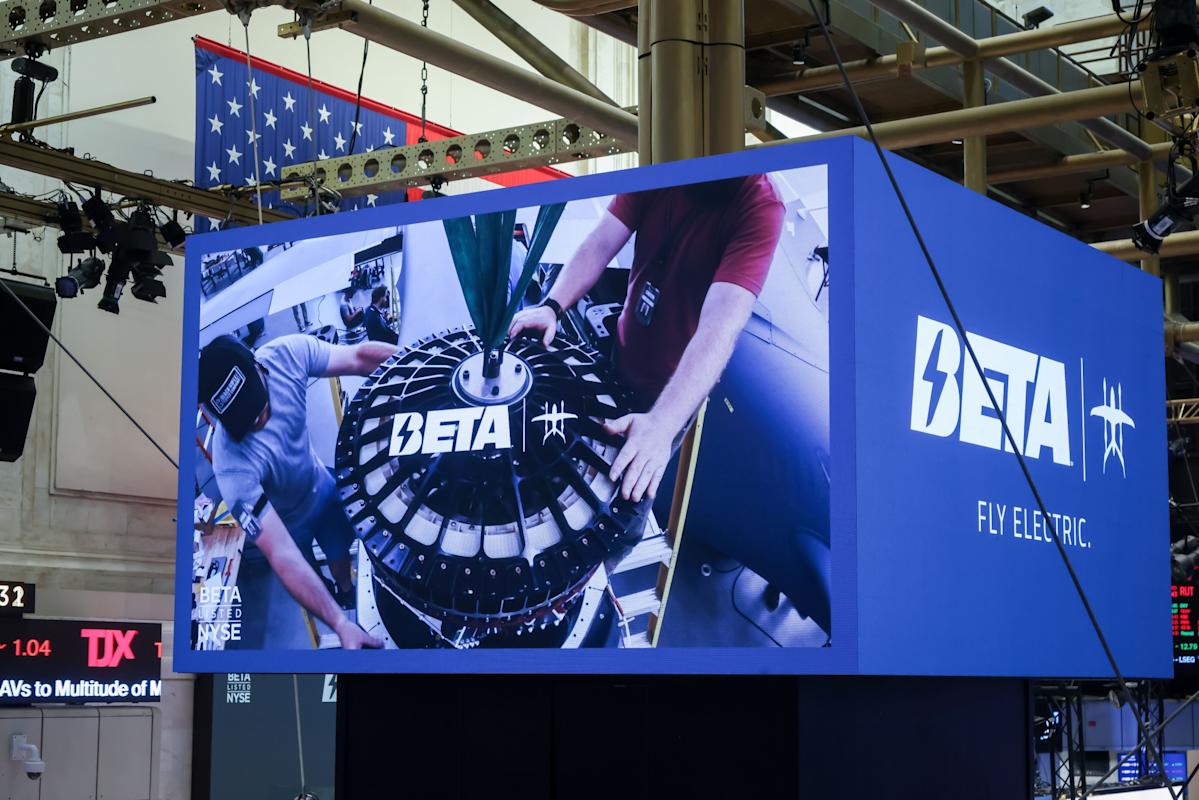
Beta Technologies Inc. signage during the company’s initial public offering on the floor at the New York Stock Exchange in New York on Nov. 4. (Bloomberg) — Wall Street is bullish on Beta Technologies Inc. (BETA), calling the electric-powered plane maker an early leader in the regional aircraft industry.
Most Read from Bloomberg
Most of the eight analysts who have initiated coverage on the South Burlington, Vermont-based company as of Dec. 1 have a buy-equivalent rating on shares, according to data compiled by Bloomberg. The wave of approval comes a month after Beta’s public-market debut in which it raised $1.02 billion.
Beta is “akin to a young Tesla, but with a more attractive end market of aerospace, which has higher barriers to entry than autos,” said Morgan Stanley analysts in a note.
The company, which develops both electric conventional takeoff and landing (eCTOL) aircraft and electric vertical takeoff and landing (eVTOL) models, is ahead of its peers as it gains traction across cargo, medical transport, passenger mobility and defense markets, according to analysts.
Investors, however, remain skeptical. Despite having an average 12-month price target of $37.88, which implies a 43% upside from Friday’s close, shares are down 22% from their initial public offering price, data compiled by Bloomberg show.
To Jefferies’ Sheila Kahyaoglu, who has the only hold rating on Beta, the weakness in its stock price can be attributed to broader declines in small caps and aerospace shares.
“We continue to see an upside and think that Beta will be a winner in the space,” Kahyaoglu said.
Beta’s positive reception on Wall Street underscores growing investor conviction that electric aviation could be one of the most significant developments in short-haul transportation.
Needham, which estimates a $1 trillion total addressable market for electric regional mobility, argues Beta is positioned to capture early market share as the industry shifts toward low-emission short-haul aviation.
Beta’s approach to first certify an eCTOL, “and to commercialize via cargo and medical as its primary use cases (before expanding to passenger flights) provides a faster and better-defined route to” Federal Aviation Administration certification, according to Cantor Fitzgerald’s Andres Sheppard, who predicts the firm will get certification between the end of 2026 and 2027, “creating a significant first-mover advantage.”
“Furthermore, Beta is already generating revenue (unlike most peers in the space),” Sheppard wrote in a note.
Beta is streamlining its manufacturing practice by consolidating motors, batteries, software, charging hardware and high-voltage distribution into a single design process, according to Citigroup Inc. analysts led by John Godyn. While more capital-intensive in early years, Citi expects this approach to “improve Beta’s return on R&D dollars” and “reduce reliance on suppliers.”
Continue Reading
-

Wabtec Finalizes Frauscher Sensor Technology Group Acquisition
PITTSBURGH, December 1, 2025 — Wabtec Corporation (NYSE: WAB) announced today that it has finalized the acquisition of Frauscher Sensor Technology Group GmbH (“Frauscher”), a global market leader in train detection, wayside object control solutions, and axle counting systems. The addition further strengthens Wabtec’s Digital Intelligence business by adding highly attractive and complementary railway signaling technologies, which will facilitate accelerated and profitable growth.
“This strategic acquisition is another step in executing Wabtec’s long-term growth strategy, which will provide enhanced value for our customers, shareholders, and employees,” said Wabtec President and CEO Rafael Santana. “The rare combination of our Digital Intelligence portfolio and Frauscher’s industry leading suite of products opens opportunities in a high-potential market for sustained growth, and strong and resilient profitability.”
The Austrian-based company was founded in 1987 and has grown to more than 700 employees located in 15 countries. Frauscher specializes in train detection and wayside object control solutions that provide the information rail operators need to maximize the safety, efficiency, and capacity of their networks. The company has installations in more than 100 countries under a wide range of technical, mechanical, and environmental conditions. Frauscher also has a significant presence in Europe and India, which enables Wabtec to advance its international growth strategy in these key markets.
“As the world’s rail network looks to meet the ever-growing transportation demands, the combination of our digital portfolio with Frauscher’s technology will provide operators innovative solutions to optimize their operations,” said Nalin Jain, President of Wabtec’s Digital Intelligence Group. “By combining our businesses, we will further strengthen Wabtec as an innovator in the rail industry’s digital transformation driving improved efficiency, reliability, and safety.”
This strategic acquisition strengthens Wabtec’s Digital Intelligence portfolio and further advances its penetration into the high growth railway signaling market. It also aligns with the Company’s long-term vision of driving innovation, productivity, safety and reliability for its customers, while ensuring the integrity of mission critical assets, infrastructure, and supply chains on a global scale.
TRANSACTION DETAILS
Wabtec acquired Frauscher for an enterprise value of €675 million in cash. The acquisition is anticipated to provide immediate shareholder value with an accretive growth profile, accretive Adjusted EBIT margins, slightly accretive Adjusted EPS in the first year of ownership, and accretive return on invested capital (ROIC) over time. The purchase price reflects an estimated multiple of 12.4x projected 2025 EBITDA adjusted for projected run-rate cost synergies which Wabtec expects to be realized over a three-year period. Frauscher is expected to generate approximately €145 million of revenue in 2025.
About Wabtec
Wabtec Corporation is revolutionizing the way the world moves for future generations. The Company is a leading global provider of equipment, systems, digital solutions and value-added services for the freight and transit rail industries, as well as the mining, marine and industrial markets. Wabtec has been a leader in the rail industry for 155 years and has a vision to achieve a sustainable rail system in the U.S. and worldwide. Visit Wabtec’s website at www.wabteccorp.com.About Frauscher
Frauscher Sensor Technology Group offers innovative solutions for the individual requirements of customers worldwide in the field of axle counting and wheel detection. In doing so, Frauscher strives to provide the best possible support to system integrators and railway operators throughout the life cycle of products and beyond, giving them access to the information they need. With a worldwide network of locations and partners, Frauscher also guarantees a strong supply chain and optimum customer support around the globe.Forward Looking Statement
This press release contains forward-looking statements within the meaning of the U.S. securities laws, including statements regarding the expected benefits of the Frauscher Sensor Technology Group, the anticipated synergies of the transaction, the expected impact on Wabtec’s operational and financial performance (including business growth opportunities and expectations and Frauscher Sensor Technology Group’s anticipated contribution to shareholder value), and certain projected financial results of Frauscher Sensor Technology Group and their contribution to Wabtec’s anticipated performance. These statements and all statements other than historical facts constitute forward-looking statements concerning future circumstances and results and are sometimes identified by the words “anticipate,” “estimate,” “expect,” “outlook,” “position,” “project,” “recur,” “strategy,” and “will” or other similar words or expressions. Forward-looking statements are based upon current plans, assumptions, estimates and expectations and are subject to risks and uncertainties that could cause actual results to differ materially from those expressed or implied. For more information on these risks, please refer to Wabtec’s filings with the SEC. Important factors that could cause actual results to differ materially from such plans, estimates or expectations include, among others, (1) unexpected costs, charges or expenses resulting from the transaction; (2) uncertainty of the expected financial performance of Frauscher Sensor Technology Group and Wabtec following completion of the transaction; (3) risks associated with the integration of Frauscher Sensor Technology Group and the potential for failure to realize the anticipated benefits and synergies of the transaction; (4) challenges that may inhibit Wabtec’s ability following completion of the transaction to implement its business strategy and capitalize on growth opportunities; (5) inability to retain key personnel; (6) changes in general economic and/or industry specific conditions; and (7) other risk factors as detailed from time to time in Wabtec’s reports filed with the Securities and Exchange Commission. The foregoing list of important factors is not exclusive.This press release also contains certain non-GAAP measures. Non-GAAP measures should not be considered as a substitute for items calculated in accordance with GAAP, as they are subject to inherent material limitations.
Continue Reading
-
Adecoagro Announces Submission of Binding Offer to Acquire the Remaining 50% of Profertil S.A.
LUXEMBOURG, December 1, 2025 /PRNewswire/ — Adecoagro S.A. (NYSE: AGRO) (“Adecoagro” or the “Company”), a leading sustainable production company in South America, announced the submission of a binding offer to acquire YPF’s 50% stake in Profertil S.A., the largest producer of granular urea in South America.
This binding offer was submitted under substantially the same terms and conditions to those previously agreed between Adecoagro and Nutrien, including a purchase price of approximately US$600 million. In relation to the acquisition of Nutrien’s 50 % interest in Profertil S.A., the main precedent conditions are fulfilled.
Adecoagro’s offer acceptance by YPF is subject of approval by YPF’s Board of Directors to be held in December 2025.
Upon consummation of this acquisition Adecoagro will become the controlling shareholder of Profertil owning 90% of the total share capital. The remaining 10% will be held by Asociación de Cooperativas Argentinas.
The Company will finance the transaction through a combination of existing cash balances, a new long term credit facility which has already been committed, and proceeds from the sale of equity.
Profertil is a low-cost producer of urea and ammonia globally. With an annual capacity of approximately 1.3 million metric tons of urea and 790 thousand metric tons of ammonia, the company supplies approximately 60% of Argentina’s urea consumption. Its state-of-the-art industrial complex located in the city of Bahía Blanca—Argentina’s most important petrochemical hub—enjoys access to competitively priced natural gas and electricity. Profertil has a fully dollarized revenue business given the export nature of the product. The company generated an average annual EBITDA of approximately US$390 million over the 2020-2024 period.
Mariano Bosch, Co-Founder and Chief Executive Officer of Adecoagro, stated: “This transaction marks a significant milestone for Adecoagro, enhancing our scale, diversifying our portfolio, and strengthening the Company’s long-term performance. Supported by our principal shareholder, we are leveraging Argentina’s competitive advantages to drive sustainable growth and value creation for our stakeholders. The acquisition of Profertil positions Adecoagro as a key supplier to the regional agricultural sector, integrating a business with robust fundamentals and consistent cash generation. Profertil’s strategic location, with direct access to Argentina’s competitive natural gas resources, further reinforces our commitment to operational excellence and long-term resilience.”
Juan Sartori, Head of Special Projects of Tether and Chairman of Adecoagro’s Board of Directors, added: “As we have consistently stated, Adecoagro combines high-quality, low-cost production assets with a strong and experienced management team. This acquisition accelerates the Company’s growth trajectory and reinforces its ability to deploy capital in a disciplined and high-return manner. At Tether, we are excited to support Adecoagro in this strategy. Profertil is a best-in-class company, essential to Argentina and South America’s agricultural production chain, and we believe its integration will significantly enhance Adecoagro’s platform by increasing exposure to sustainable, real assets that create long-term value.”
The transaction is subject to customary closing conditions and is expected to be completed by December 31, 2025. Upon completion, Profertil will be fully consolidated into Adecoagro’s operations, strengthening the Company’s integrated model and enhancing its ability to secure key inputs that are essential to the region’s agricultural and food-production sectors.
This press release does not constitute an offer to sell or the solicitation of an offer to buy any securities. Any offers, solicitations of offers to buy, or any sales of securities will be made in accordance with the registration requirements of the Securities Act of 1933, as amended.
Adecoagro’s management will host a conference call on December 3, 2025 at 11am EST, to discuss the transaction.
About Profertil:
Profertil is a company devoted to the production of the fertilizers needed to optimize crop yields in a sustainable manner. Equally owned by YPF and Nutrien Ltd., Profertil has its production plant located in the port of Ingeniero White, Province of Buenos Aires. There, it produces 1,320,000 tons of granulated urea annually, the main nitrogen fertilizer for the soil in the production of different oilseeds and grains. In addition, it sells other fertilizers and prepares tailor-made mixtures to provide each territory and crop with the nutrition required. It has administrative offices in Buenos Aires and logistic terminals in Bahía Blanca, Necochea, San Nicolás (Buenos Aires) and Puerto General San Martín (Santa Fe).
About Adecoagro:
Adecoagro is a leading sustainable production company in South America. Adecoagro owns 210.4 thousand hectares of farmland and several industrial facilities spread across the most productive regions of Argentina, Brazil, and Uruguay, where it produces over 3.1 million tons of agricultural products and over 1 million MWh of renewable electricity.
Forward-Looking Statements
This press release contains forward-looking statements. Forward-looking statements can be identified by the fact that they do not relate strictly to historic or current facts and often use words such as “anticipate,” “estimate,” “expect,” “believe,” “will likely result,” “outlook,” “project” and other words and expressions of similar meaning. Investors are cautioned not to place undue reliance on forward-looking statements. Actual results may differ materially from those indicated by such forward-looking statements as a result of various important factors, including, but not limited to, those set forth in the “Risk Factors” section of the Company’s Form 20-F for the fiscal year ended December 31, 2024 and subsequent filings with the SEC. The Company may not succeed in addressing these and other risks. Consequently, all forward-looking statements in this release are qualified by the factors, risks and uncertainties contained therein. No assurance can be given that the transactions described in this press release will be consummated or as to the ultimate terms of any such transactions.
For questions, please contact:
Adecoagro
Victoria Cabello – IR Officer
Email: [email protected]SOURCE Adecoagro S.A.

Continue Reading