WASHINGTON (AP) — The number of Americans applying for unemployment benefits declined last week in a sign that layoffs remain low, even as several high-profile companies have announced job cuts.
U.S. applications for unemployment benefits in the week ending Nov. 22 dropped 6,000 from the previous week to 216,000, the Labor Department reported Wednesday.
The number of people seeking unemployment benefits is seen as a proxy for layoffs and is close to a real-time indicator of the health of the job market. The job cuts announced recently by large companies such as Target and Amazon typically take weeks or months to fully implement and may not yet be reflected in the claims data.
The four-week average of claims, which softens some of the week-to-week volatility, dropped 1,000 to 223,750.
The total number of Americans filing for jobless benefits for the week ending Nov. 15 rose 7,000 to 1.96 million.
A free press is a cornerstone of a healthy democracy.
So-called “ghost store” operators are taking advantage of Christmas and Black Friday to lure shoppers to their websites, as the consumer regulator warns Australians that artificial intelligence is making it even harder to identify deceptive retailers.
The Australian Competition and Consumer Commission (ACCC) considers ghost stores – which falsely market themselves as local brands – to be “scam adjacent”, as some send imitation products from overseas and others fail to deliver anything at all.
Guardian Australia has identified several new examples of ghost stores claiming to offer Black Friday discounts on a variety of products, including jewellery, makeup and children’s toys.
Even though the Facebook owner Meta and the e-commerce platform Shopify have been aware of the broader problem for months, ghost stores not only continue to be set up and run fictitious advertising but are escalating their methods.
In one example, the online makeup retailer Legacare, which is running ads on Meta platforms for a Black Friday sale, claims to have developed a “line of products” from its headquarters in Queensland. It sells a “Biomimic” foundation for mature skin, which it says is the favourite of “42,000+ Happy Women”.
One of the Legacare ads includes an image which appears to be a screenshot of an Australian Women’s Weekly article headlined: “This Australian brand is outselling Sephora bestsellers.”
But the article doesn’t exist.
A spokesperson for Women’s Weekly owner Are Media said the image was not an authentic article and appeared to be an “unauthorised and fabricated” use of its brand to mislead consumers.
A Legacare ad on Facebook shows a screenshot of a fake article with Australian Women’s Weekly branding
“We take the misuse of our brands very seriously,” they said. “We encourage global tech platforms to take stronger steps to prevent fraudulent or deceptive advertising such as this.”
Legacare is not registered in Australia, nor does it have an Australian business number (ABN), according to searches of official records. Its domain name was registered less than one year ago.
Sign up: AU Breaking News email
The ACCC wrote to Meta and Shopify in July, urging the tech companies to scrutinise this type of activity more closely and take action against the operators.
In September, Meta announced plans to expand its anti-scam efforts in the Asia-Pacific region.
The company continues to use AI to assess user reports of scams, which are not always reviewed by a human.
When Guardian Australia visited the Legacare website last week, it introduced its “founder” with the text “Hi, I’m Ruby!” next to an image of a smiling blond woman holding a bottle of foundation.
The image appeared to be AI-generated and its URL showed it was created by the Replo content delivery network, which allows users to build Shopify pages with artificial intelligence.
Legacare’s website contained a disclaimer that said it would help customers “stay safe when shopping online” by warning them of “counterfeit ‘Legacare’ products and imitation listings appearing on third-party marketplaces”.
The ACCC has urged people to check if online retailers were genuine by doing reverse image searches of product photos to see if they had been taken from another site.
Using this method, Guardian Australia reviewed Amazon last week and found five almost identical products to Legacare’s which are also called “biomimic” foundations.
skip past newsletter promotion
after newsletter promotion
These products had been available for sale since September 2024, well before the legacareofficial.com domain name was registered on 2 January.
Guardian Australia sent detailed questions to Legacare, including whether it was trying to ward off any customer concerns it was drop-shipping cheap products to Australian customers at an inflated price.
In an email, Legacare responded: “We are an Australian business, but we work with a trusted overseas supplier who also supplies some of the world’s best skincare brands.
“Our skincare is made with high-quality ingredients and formulated to deliver premium results. If you have any other questions, feel free to ask. We’re happy to help.”
Legacare did not respond to requests for its ABN.
Speaking generally, the ACCC deputy chair, Catriona Lowe, urged consumers to be sceptical about supposed discounts and said even some legitimate retailers were making false or misleading claims to lure in customers.
Lowe said the regulator would like to see all social media platforms taking further action in relation to scams.
“It’s enormously important that platforms are proactively seeking to track what’s occurring on their platforms as well as providing tools to consumers to report to them and get responses in a timely manner,” she said.
She said there was no question artificial intelligence could “help criminals make more realistic scams and make them more difficult to detect”.
Meta declined to comment on specific websites shown to it by Guardian Australia, but said ghost stores and fake ads were an “adversarial space where sophisticated groups often change tactics to stay ahead of detection”.
“We remove violating content when we become aware of it, and Meta encourages users to report pages or ads that appear to be misleading,” it said.
It said the company was committed to helping prevent scams and user reports about scam ads had declined by more than 50% in last 15 months.
A new tax for electric and hybrid vehicles has been confirmed in a leaked report outlining the UK’s economic and fiscal outlook ahead of the Budget.
The Office for Budget Responsibility’s (OBR) document has stated the charge would mean electric car drivers will pay a road charge of 3p per mile, while plug-in hybrid drivers will pay 1.5p per mile from April 2028, with the rates going up each year with inflation.
The government said the new tax is about “half the fuel duty rate paid by drivers of petrol cars”, the report says.
In a statement, the OBR apologised for the leak and said it was investigating the error.
Under the measures, an electric car driver clocking up 8,500 miles in the 2028-29 financial year is expected to pay about £255 – about half the cost per mile that petrol and diesel drivers pay in fuel tax.
According to the OBR, the new per-mile charge is expected to bring in £1.1bn in the 2028-29 financial year, rising to £1.9bn by 2030-31.
However, how much money it actually raises will depend on how many people buy electric cars over the next five years, with the report adding the yield “is uncertain”.
All new cars will have to be electric or hybrid from 2030, when a ban on the sale of new petrol and diesel cars comes into force. But this new tax could make electric cars less appealing.
“This new charge is likely to reduce demand for electric cars as it increases their lifetime cost,” the report says.
“To meet the mandate, manufacturers would therefore need to respond through lowering prices or reducing sales of non-EV vehicles.”
Overall, the charge is expected to result in about 440,000 fewer electric car sales, though other government policies could help offset around 130,000 of those.
Because of this drop in sales and slightly lower driving distances, the total money raised by the charge could be £200m less by 2030-31.
Delvin Lane, chief executive of InstaVolt which develops and installs chargers, said the tax could discourage people from switching to electric cars.
He said drivers without home chargers were already paying more in tax for public charging, and rural and low-income drivers would be disproportionately affected.
“We urge the government to work closely with the charging and automotive sectors to co-design a fair, future-proof system that maintains incentives to switch to zero-emission vehicles while ensuring sustainable road taxation.”
Edmund King, president of the AA, said: “The Budget has put drivers at a fork in the road with the chancellor announcing major tax proposals for EV owners.
“Drivers fully understand that the government needs to get the balance right between raising cash for roads investment, whilst ensuring it doesn’t slow down the transition to electric cars in order to meet environmental targets.”
Tonn Nua has been designated by the Irish government as the only site for bidders under the Offshore Renewable Electricity Support Scheme (ORESS) Tonn Nua, Ireland’s second offshore wind auction. The auction offers a partially indexed 20-year contract for difference (CfD), and the right to apply for a seabed lease and grid connection for the winning bidder. The contract for difference is to support the development of a 900 MW fixed-bottom offshore wind farm for the Tonn Nua site.
The Tonn Nua site is in an early phase of development. The project now needs to be assessed, matured and successfully pass all gates in the JV’s stage-gate process, including meeting the value creation criteria. Final investment decision is expected around 2031 and first power in the mid-2030s.
Alana Kühne, Head of Region Europe Development at Ørsted, said: “We commend the Irish government for running a successful auction continuing the support for the development of offshore wind in Ireland. Offshore wind will play an important part in the future Irish energy system ensuring green, affordable and secure energy. We will continue to work with our joint venture partner ESB to carefully assess and progress this early-stage development opportunity, including ensuring that the project lives up to our value creation criteria.”
Jim Dollard, Executive Director for Generation & Trading at ESB, commented: “ESB is delighted with the outcome of the ORESS Tonn Nua auction. It secures a clear pathway for the development of a significant project off the coast of County Waterford marking another important step toward Ireland’s renewable energy and Net Zero ambitions. We look forward to working with our partners to deliver a project that provides significant energy security and price certainty for Irish consumers.”
The Tonn Nua project The awarded project is for a fixed-bottom offshore wind development at the Tonn Nua maritime site, located off the coast of County Waterford.
ORESS Tonn Nua is Ireland’s second support regime for offshore renewable energy development, and the first offshore wind auction under the new state-led planning regime.
The next step for the project is to seek a Maritime Area Consent and Marine Usage Licence from the Irish Maritime Area Regulatory Authority in order to commence surveying and assessment ahead of submitting a planning application for the development.
About the CfD The two-way CfD has been awarded at a strike price of EUR98.719 per MWh. The partially indexed CfD will run for 20 years from wind farm commissioning expected in the mid-2030s.
Ireland’s transmission system operator (TSO) EirGrid will build the transmission assets (offshore and onshore substations and export cables). The Tonn Nua Offshore Wind Farm must be operational by the longstop date of 1 January 2037 under the CfD terms and conditions.
About the joint venture The joint venture is jointly owned by ESB and Ørsted. In 2023, ESB and Ørsted entered a 50/50 partnership to jointly develop a pipeline of offshore wind projects off the Irish coast. Tonn Nua is the first offshore wind development site progressed to auction under the partnership.
For further information, please contact:
Ørsted Global Media Relations Kathrine Westermann +45 99 55 57 21 kawes@orsted.com
Sarah Thatt-Foley +353 (0)83 156 5690 sarfo@orsted.com
ESB media contact Aoiffe Llewellyn aoiffe.llewellyn@esb.ie
About Ørsted Ørsted is a global leader in developing, constructing, and operating offshore wind farms, with a core focus on Europe. Backed by more than 30 years of experience in offshore wind, Ørsted has 10.2 GW of installed offshore capacity and 8.1 GW under construction. Ørsted’s total installed renewable energy capacity spanning Europe, Asia Pacific, and North America exceeds 18 GW across a portfolio that also includes onshore wind, solar power, energy storage, bioenergy plants, and energy trading. Widely recognised as a global sustainability leader, Ørsted is guided by its vision of a world that runs entirely on green energy. Headquartered in Denmark, Ørsted employs approximately 8,000 people. Ørsted’s shares are listed on Nasdaq Copenhagen (Orsted). In 2024, the group’s operating profit excluding new partnerships and cancellation fees was DKK 24.8 billion (EUR 3.3 billion). Visit orsted.com or follow us on LinkedIn and Instagram.
About ESB ESB was established in 1927 as a statutory body under the Electricity (Supply) Act, 1927. With a holding of 97.1%, ESB is majority owned by the Irish Government. The remaining 2.9% is held by the trustees of an Employee Share Ownership Plan. As a strong, diversified utility, ESB operates across the electricity market, from generation through transmission and distribution, to supply of customers, in addition to using our networks to carry fibre for telecommunications. ESB is the leading Irish utility with a regulated asset base of approximately €14 billion (comprising ESB Networks €11 billion and NIE Networks €3 billion), a 25% share of generation in the all-island market, and retail businesses supplying electricity and gas to almost 1.9 million customer accounts throughout the island of Ireland and Great Britain. During the year ended 31 December 2024, ESB Group employed an average of almost 9,600 people.
At many organizations, senior leaders have a positive view of their employees’ ability and willingness to use AI. In our recent survey of 1,400 U.S.-based employees, 76% of executives reported that their employees feel enthusiastic about AI adoption in their organization. But the view from the bottom up is less sunny: Just 31% of individual contributors expressed enthusiasm about adopting AI. That means leaders are more than two times off the mark.
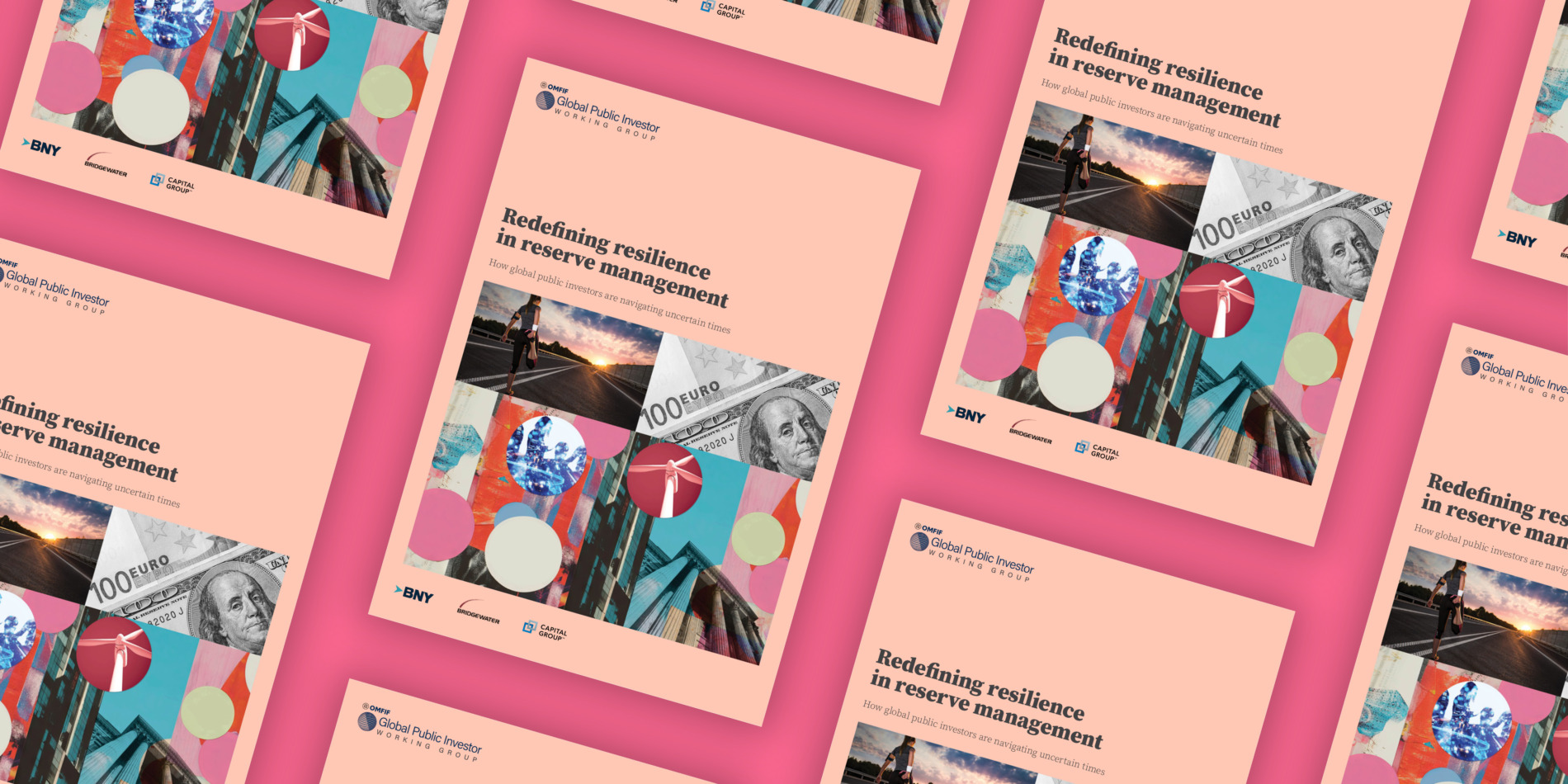
Artificial intelligence is slowly entering the world of reserve management, but not in the way outsiders might assume. A new report by OMFIF’s Global Public Investor Working Group shows central banks approaching AI with caution shaped by years of market shocks, cybersecurity incidents and the hard lessons of operational risk. Behind the interest lies a simple tension. AI can make reserve management faster and more efficient, but it also expands the attack surface, accelerates market dynamics and exposes institutions to mistakes they cannot afford.
The working group, made up of BNY, Bridgewater and Capital Group, brought together 10 central banks through bilateral exchanges across Europe, Africa, Asia and Latin America. Their discussions revealed a pattern that cuts across mandates and regional tensions. The technology is coming, but central banks want control before capability. They are not willing to let algorithms set the pace.
Adoption is happening, but mostly at the edges
Most institutions are experimenting with AI only in low-risk processes: scanning market news, flagging anomalies and summarising reports. According to OMFIF’s Global Public Investor 2025 survey, 61% of central banks say AI is not yet supporting their operations in any meaningful way (Figure 1.1). Those dipping their toes in describe it as a practical convenience rather than a strategic tool.
A European participant of the working group discussions noted that AI can help unclog routine bottlenecks, easing the burden on small teams. Others see potential in automated data processing or environmental, social and governance data screening. AI may accelerate workflows, but it is not allowed near decisions that carry financial, reputational or political consequences.
Figure 1.1. Adoption of AI is limited
How is artificial intelligence supporting your operations? Share of respondents, %
Source: OMFIF Global Public Investor 2025 survey
Those furthest ahead are also the most uneasy
A striking insight from the working group conversations is that the institutions with the most advanced use of AI are also the most concerned about its risks. They understand the potential, but they also see the limitations. Model reliability remains a top worry, especially given how often AI tools misinterpret unusual scenarios. Central banks, whose work revolves around rare but disruptive shocks, have little tolerance for such risks.
Cybersecurity is the bigger fear. One policy-maker warned that a breach involving reserves data would not just be an operational problem but a political one. In their words, prudence is credibility. Central banks are keenly aware that adopting AI without airtight governance could endanger both.
AI may make accelerate crises
One of the most interesting working group exchanges came from a central bank already testing AI-driven analytics in market monitoring. Its concern was not about errors in calm times, but about what happens when markets are stressed. Broader use of AI in trading could accelerate how quickly liquidity disappears, turning crises that once unfolded over days into minutes.
This concern is grounded in how these systems are built. Models trained on comparable datasets often respond in similar ways, which can help steady markets during quiet periods, though it also raises questions about how they might behave when conditions turn volatile. For reserve managers who rely on liquidity to defend currencies or stabilise markets, this poses a profound challenge.
Figure 1.2. Central banks prioritising digital capacity
Are you looking to introduce or expand your use of the following digital technologies? Share of respondents, %
Source: OMFIF GPI 2025 survey
The working group’s conversations showed that the divide between central banks on AI is not about enthusiasm but about capability (Figure 1.2). Some institutions have in-house data scientists and secure enterprise environments. Others have small teams, limited budgets and governance structures that make experimentation slow.
A participant said: ‘We lag, but we cannot lag forever’. For these institutions, AI is less a choice and more an inevitability. But they need training, digital infrastructure and peer support before it becomes safe to bring AI closer to core functions.
The next phase will be about control
Central banks have no interest in outsourcing judgement to machines. The working group report makes clear that human oversight is the anchor. AI can summarise, filter and accelerate, but decisions remain with people.
The question is not whether AI will enter reserve management. The question is how central banks manage the risks it brings. The institutions that move carefully but deliberately by strengthening cybersecurity, investing in skills and building internal capacity will be best placed to employ the technology without being overwhelmed by it.
AI can sharpen decision-making. It can also destabilise markets. Navigating that tension is becoming one of the defining tasks of modern reserve management.
Yara Aziz is Senior Economist at OMFIF.
Download ‘Redefining resilience in reserve management’.
Interested in this topic? Subscribe to OMFIF’s newsletter for more.
BRUSSELS, November 26, 2025 – More than 200 CEOs and senior executives from the world’s leading businesses in hydrogen are gathering next week in Seoul, South Korea for the Hydrogen Council’s Global CEO Summit, to align on action needed to accelerate hydrogen deployment and unlock commercial-scale demand by 2030.
Co-hosted by Hyundai Motor Group Vice Chair Jaehoon Chang, Co-Chair of the Hydrogen Council, the Summit will be joined by Korean political leadership – such as Vice Minister of Climate, Energy and Environment and the Governor of Jeju, government officials from France, Germany, Switzerland, The Netherlands, Saudi Arabia, Australia and Indonesia, and top representatives from international organizations such as the International Organization for Standardization (ISO). In addition, a delegation of Hydrogen Council CEOs will participate in the World Hydrogen Expo and a high-level pre-meeting with Korea’s Minister of Climate, Energy and Environment, Sung-hwan Kim.
With USD 110 billion in committed investment across more than 500 projects past financial investment decision (FID), in construction or operation globally – a ten-fold increase since 2020 – the technology is proven, projects are being built, and the industry is ready to scale. Against this backdrop, discussion at the CEO Summit will focus on shaping the next chapter of hydrogen build-out through action on demand, regulations, infrastructure and standards.
The CEO Summit will make history as the world’s first major international business event to use 100% -powered transportation. Attendees will ride exclusively in Hyundai NEXO vehicles and fuel cell buses, providing a real-world demonstration of hydrogen mobility.
“As Co-Chair of the Hydrogen Council, we are honored to host the Global CEO Summit 2025 and proud to welcome global leaders to South Korea where we are delighted to showcase the strength and progress of Korea’s hydrogen industry,” said Jaehoon Chang, Vice-Chair of Hyundai Motor Group. “This Summit not only highlights the industry’s dedication to hydrogen technology but also reinforces our collective commitment to turn vision into action. As demand becomes our next big test, public-private collaboration will be essential to realize hydrogen’s full potential in the next phase of scale-up.”
Ivana Jemelkova, CEO of the Hydrogen Council, said: “In just five years, the global clean hydrogen sector has scaled at remarkable pace, with investment growing over 50% year-over-year. As the world’s largest and only CEO-led business initiative on hydrogen, the Hydrogen Council brings together top global leaders to work together, and with governments, to unlock the next stage of growth.”
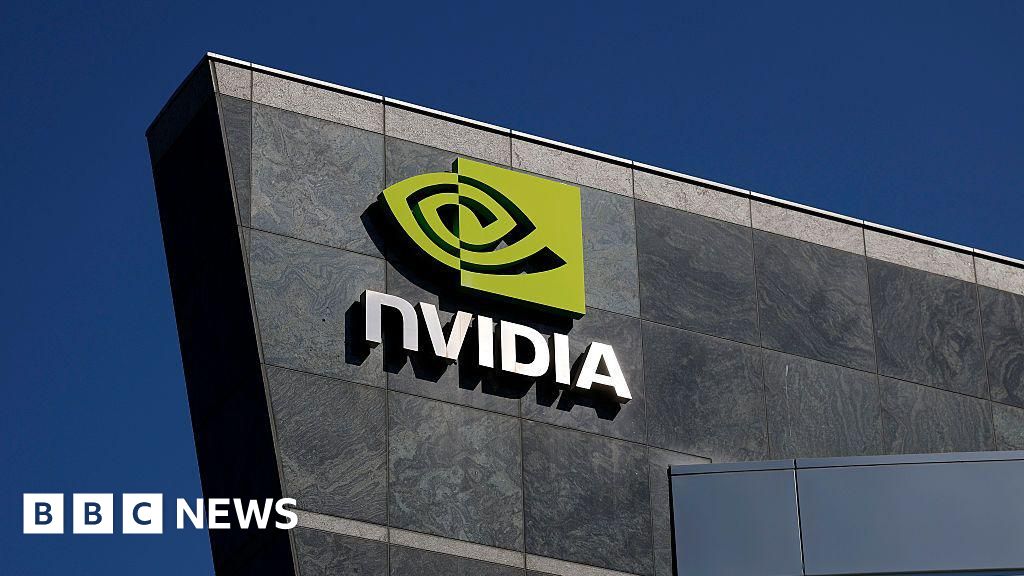
Nvidia has claimed it is “a generation ahead” of rivals in the artificial intelligence (AI) industry amid growing suggestions a rival may emerge to threaten to its market dominance – and multi-trillion dollar valuation.
Shares in the chip giant fell on Tuesday, following a report Meta planned to spend billions on AI chips developed by Google to power its data centres.
In a statement on X, Nvidia, the world’s most valuable company, said it was the only platform which “runs every AI model and does it everywhere computing is done”.
In response, Google said it was committed to “supporting both” its own and Nvidia’s chips.
Nvidia’s chips have become a critical part of powering the data centres behind many of the most popular AI tools, such as ChatGPT.
In October it became the first company ever to be valued at $5tn (£3.8tn).
The American firm has been looking to expand its reach further in recent months, announcing an agreement in October to supply some of its most advanced artificial intelligence (AI) chips to South Korea’s government, as well as Samsung, LG, and Hyundai.
Google rents access to its chips, called tensor processing units (TPUs), through Google Cloud to AI developers.
In other words, they are not sold externally – but kept for the tech giant’s own data centres.
But if recent reports are correct – that the tech company could be in talks to sell its chips to power other data centres – it would represent a significant change.
The news saw Nvidia shares fall nearly 6% on Tuesday, whilst those in Alphabet, Google’s parent company, rose by nearly the same percentage.
In the hours following the drop, the chip giant posted on X to state it still offered “greater performance” and “versatility” than the types of chips Google is producing.
In the past year, both Amazon and Microsoft have announced they also have AI chips in development.
Dame Wendy Hall, Regius Professor of Computer Science at the University of Southampton, told the BBC’s Today programme the news of the potential deal between Google and Meta was “healthy” for the market.
“Investment is pouring into this area,” she said.
“At the moment there is no real return on that investment except for Nvidia”.
This website of Merck & Co., Inc., Rahway, N.J., USA (the “company”) includes “forward-looking statements” within the meaning of the safe harbor provisions of the U.S. Private Securities Litigation Reform Act of 1995. These statements are based upon the current beliefs and expectations of the company’s management and are subject to significant risks and uncertainties. There can be no guarantees with respect to pipeline candidates that the candidates will receive the necessary regulatory approvals or that they will prove to be commercially successful. If underlying assumptions prove inaccurate or risks or uncertainties materialize, actual results may differ materially from those set forth in the forward-looking statements.
Risks and uncertainties include but are not limited to, general industry conditions and competition; general economic factors, including interest rate and currency exchange rate fluctuations; the impact of pharmaceutical industry regulation and health care legislation in the United States and internationally; global trends toward health care cost containment; technological advances, new products and patents attained by competitors; challenges inherent in new product development, including obtaining regulatory approval; the company’s ability to accurately predict future market conditions; manufacturing difficulties or delays; financial instability of international economies and sovereign risk; dependence on the effectiveness of the company’s patents and other protections for innovative products; and the exposure to litigation, including patent litigation, and/or regulatory actions.
The company undertakes no obligation to publicly update any forward-looking statement, whether as a result of new information, future events or otherwise. Additional factors that could cause results to differ materially from those described in the forward-looking statements can be found in the company’s Annual Report on Form 10-K for the year ended December 31, 2024 and the company’s other filings with the Securities and Exchange Commission (SEC) available at the SEC’s Internet site (www.sec.gov).
No Duty to Update
The information contained in this website was current as of the date presented. The company assumes no duty to update the information to reflect subsequent developments. Consequently, the company will not update the information contained in the website and investors should not rely upon the information as current or accurate after the presentation date.