Category: 3. Business

  • Can a ship-shaped Shanghai shop put wind in China’s luxury sales?

    Can a ship-shaped Shanghai shop put wind in China’s luxury sales?

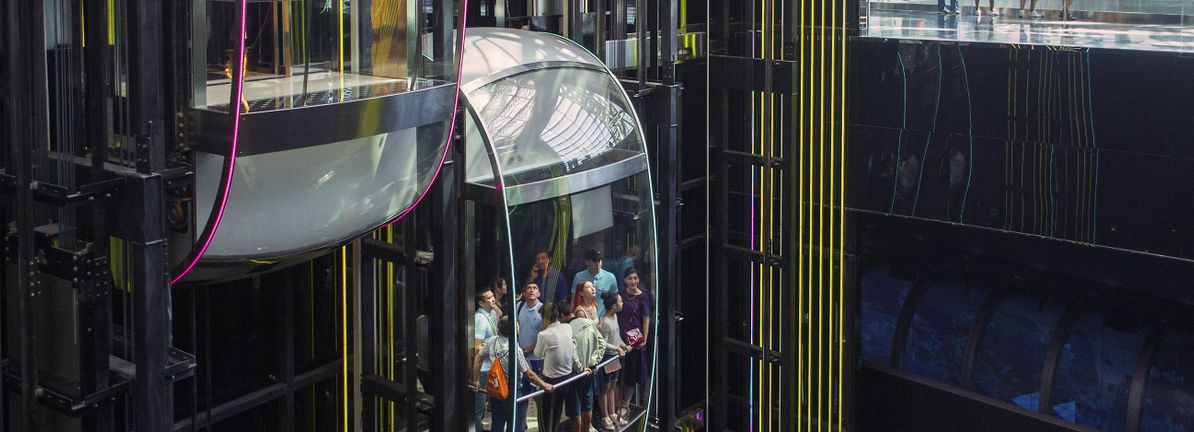
    As you round the corner on Shanghai’s Shimen Second Road, a giant ship appears like an apparition. Suspended from its hull, the anchor that descends to the street is in the shape of two six-foot-tall letters: LV.

    “The Louis”, a ship-shaped exhibition space and store, is the brainchild of Louis Vuitton and an attempt to navigate the choppy waters of China’s luxury market. Once the driver of global growth, it is now a source of uncertainty for the world’s biggest brands.

    “It’s not often you see a brand making this big an investment . . . and I know it’s not long-term,” said Grace Sze, a tourist from Hong Kong queueing to enter. “To spend that much money, I think it’s amazing.”

    Louis Vuitton has not disclosed the cost of its new ship, which has an exhibition, including a robotic arm testing the hinges on vintage Louis Vuitton suitcases, a café and a gift shop where small handbags are available for Rmb15,500 ($2,104).

    But the group’s owner LVMH said it had helped drive a 7 per cent year-on-year increase in China sales in the third quarter, albeit from a low base. In Shanghai, the brand says it has drawn in hundreds of thousands of visitors since it opened in June.

    “It’s a lot of fun, a lot of excitement,” said LVMH chief financial officer Cécile Cabanis. “All our neighbours are very happy that it’s driving so much traffic.”

    LVMH says the Louis Vuitton exhibition space and store helped drive a 7% year-on-year increase in China sales in the third quarter © VCG/Getty Images

    But glamorous installations like this aside, there is a persistent sense of caution in China’s luxury market. Brands are retreating to the most exclusive locations, adjusting to slower growth and changing consumer sentiment.

    As a four-year property slowdown grinds on and consumer prices remain stuck in deflation, there are signs of people are reining in their spending and looking for discounts.

    In their most recent results, brands insisted the market had stabilised but continued to warn about the outlook.

    “Overall the macro has not changed fundamentally,” Cabanis said, citing continued pressures in the property market and around employment. “We consider it’s still going to take time until we have a rebound.”

    Other luxury groups including Prada, Hermès and Kering — owner of Gucci — said they saw early signs that the Chinese market had stopped declining. But improvements came against a low base.

    A Gucci pop-up store with floral-themed decor and a large display perfume bottle, with people walking past at night.
    A Gucci pop-up store in Shanghai © CFOTO/Future Publishing/ Getty Images

    “Chinese consumption remains under pressure,” said Nick Anderson, an analyst at Berenberg.

    From the early 2000s, China was the luxury industry’s engine of growth as rapid economic expansion fuelled a rising middle class keen to display its new wealth. By the time the Covid-19 pandemic arrived, Boston Consulting Group estimated the country made up a quarter of global demand.

    But after China’s strict Covid lockdowns came to an abrupt end in 2022, the rebound in consumer spending was much smaller than expected, weighing heavily on the global luxury market, which according to Bain entered its first slowdown in 15 years in 2024.

    “During the boom times [brands] overextended and covered too many cities,” said Nick Bradstreet, head of Asia Pacific retail at estate agent Savills.

    Before Covid, they would target 40 to 50 cities across China and “the only discussion would be how long it’s going to take to get there”, he said. But today, they target fewer places, and the 10 biggest cities account for 70 per cent of all the country’s luxury sales.

    A woman photographs vintage Louis Vuitton trunks displayed in front of a curved wall covered with historical photos and documents.
    The Louis Vuitton ship is expected to be showcased for a four-year period © VCG /Getty Images

    The Louis Vuitton ship exterior is not permanent but is expected to remain in place for four years, according to a person familiar with the details. Other brands have also sought to draw in crowds with exhibitions, including a Gucci event in Shanghai this year celebrating its signature Bamboo bag, where craftspeople were flown in from Italy.

    Outside, crowds of tourists stop to take photos to the extent that signs with “filming guidelines” have been put up nearby.

    “It makes sense that LVMH did this while the market is down,” said one industry veteran. “The Chinese market was not improving, so they needed to do something to move the market for themselves.” 

    But they also questioned its appeal to the industry’s core consumers. “The ship is fun and exciting to people who have seen it on TikTok, but would you ever see Hermès or Chanel park a cruise ship in the middle of a city?”

    Mannequins dressed in designer clothing are displayed in transparent cylinders, with visitors and a large fashion image reflected throughout the multisensory Louis Vuitton flagship.
    Mannequins dressed in designer clothing at the Louis Vuitton exhibition space © VCG/Reuters

    Anderson suggested the pre-Covid global luxury boom was driven by one-off factors, including US stimulus and the rise of the Chinese consumer. The global market for luxury goods is expected to grow between 0 and 4 per cent in 2025, according to Bain’s estimates. Between 1996 and 2024, the rate was 5 to 6 per cent a year.

    Much of the outlook hinges on a handful of China’s biggest cities, and whether the huge crowds drawn to spectacles like the Louis Vuitton ship are willing to spend.

    Ms Lei, visiting from Shanghai’s Pudong district, did not get anything but already has two Louis Vuitton bags, bought about a decade ago. “Now it’s a time of decline for the economy,” she said, but added: “If I like it . . . I can definitely buy it.”

    Continue Reading

  • Nationwide recall of alfalfa sprouts linked to ‘unusual strain’ of salmonella after dozens infected across Australia | Health

    Nationwide recall of alfalfa sprouts linked to ‘unusual strain’ of salmonella after dozens infected across Australia | Health

    Health authorities have issued a nationwide recall of alfalfa sprouts, urging people not to eat affected products, after at least 44 people across Australia contracted an unusual strain of salmonella.

    The recall applied to 125g packets of sprouts produced by Parilla Fresh, which included: Aussie Sprouts Alfalfa Sprouts, Hugo’s Alfalfa Onion & Garlic Sprouts, Hugo’s Alfalfa & Radish Sprouts, Hugo’s Alfalfa & Onion Sprouts, Hugo’s Salad Sprouts, Hugo’s Alfalfa & Broccoli Sprouts and Hugo’s Trio Sprouts Selection.

    The notice applied to products sold in supermarkets and grocers nationally, with use-by dates up to and including 20 November 2025.

    Sign up: AU Breaking News email

    It followed a joint investigation by interstate health and food regulatory authorities after an increase in a particular salmonella infection.

    At least 44 people nationwide had been identified with the “unusual strain of salmonella”, including 18 people in New South Wales, nine in Victoria and 15 in Queensland, health authorities from each state said.

    Health authorities said the affected alfalfa sprouts were sold in multiple supermarkets including Coles, Woolworths, IGA and other independent grocers and stores in NSW, Queensland, Victoria, the Northern Territory, Australia Capital Territory and South Australia.

    Keira Glasgow, the director of the One Health Branch at NSW Health, said consumers should check their fridge and avoid eating any of the affected products, which could make them ill.

    “Anyone who has consumed alfalfa sprouts should be on the lookout for symptoms, which include: headache, fever, stomach cramps, diarrhoea, nausea and vomiting,” she said.

    Symptoms usually started 6-72 hours after exposure, and could last for up to a week.

    “Most people recover within a week by having lots of rest and drinking plenty of fluids such as water or oral hydration drinks from a pharmacy,” Glasgow said.

    “While anyone can get salmonella infection, infants, the elderly and people with poor immune systems are more likely to have severe illness.

    skip past newsletter promotion

    “These people may need antibiotics from their doctor or, in more severe cases, hospitalisation.”

    An investigation is under way involving authorities across jurisdictions.

    The recall notice from Food Standards Australia New Zealand advised: “Consumers should not eat this product. Consumers should return the product(s) to the place of purchase for a full refund. Any consumers concerned about their health should seek medical advice.”

    Continue Reading

  • Banks lend $18 billion for Oracle-tied data center project: Report

    Banks lend $18 billion for Oracle-tied data center project: Report

    FILE PHOTO: A consortium of around 20 banks is providing a project finance loan of about $18 billion to support the construction of a data center campus linked to Oracle in New Mexico.
    | Photo Credit: Reuters

    A consortium of around 20 banks is providing a project finance loan of about $18 billion to support the construction of a data center campus linked to Oracle in New Mexico, Bloomberg News reported on Friday.

    Sumitomo Mitsui Banking Corp, BNP Paribas SA, Goldman Sachs Group, and Mitsubishi UFJ Financial Group are administrative agents on the deal, the report said, citing people with knowledge of the matter.

    The four lead banks have enlisted other banks and will now sell the debt to additional banks and institutional investors through a retail syndication process, with commitments expected by late November, according to the report.

    U.S. tech firms are ramping up investments in data centers to meet soaring demand for computing power, driven by increasingly complex artificial intelligence models such as OpenAI’s ChatGPT.

    The New Mexico data center campus is part of the Stargate initiative, a $500 billion push to build AI infrastructure across the U.S., led by OpenAI, SoftBank Group and Oracle, the report said, adding that Oracle is expected to be a tenant at the new site.

    Pricing is being discussed at 2.5 percentage points over the secured overnight financing rate and the loan is expected to carry a four-year maturity, with two one-year extension options, according to the report.

    Goldman Sachs and Oracle declined to comment on the report, while the other lead banks did not immediately respond to Reuters’ requests for comment.

    Continue Reading

  • China pushes for integrated development of coal, new energy sectors

    China pushes for integrated development of coal, new energy sectors

    A farmer works amid photovoltaic panels at a solar power station in the Yi-Hui-Miao autonomous county of Weining, Southwest China’s Guizhou province, July 3, 2025. (PHOTO / XINHUA)

    BEIJING – China has moved to promote the integrated development of its coal and new energy sectors to support the green, low-carbon transition of its energy mix.

    In a new guideline, the National Energy Administration (NEA) has called on coal-mining regions to accelerate their development of wind and solar energy projects, promote clean energy substitution through the adoption of electric and hydrogen-powered mining trucks, use renewable energy for heating and cooling, and build smart microgrids for the supply and trade of green electricity.

    By the end of the 15th Five-Year Plan period (2026-2030), the new energy development model in mining areas will have matured in basic terms, according to the NEA.

    ALSO READ: Green projects power up China-ASEAN ties

    The move is the latest step in China’s new energy development. By the end of September, China’s total installed renewable energy capacity stood at nearly 2.2 billion kilowatts, accounting for 59.1 percent of the nation’s total power capacity. In the first three quarters of the year, renewables generated about 40 percent of China’s total electricity. 

    Continue Reading

  • Valuation Insights Following Full-Year Forecast Revision and Interim Outperformance

    Valuation Insights Following Full-Year Forecast Revision and Interim Outperformance

    TOTO (TSE:5332) has just issued an updated full-year earnings forecast, lowering its outlook for the fiscal year ending March 2026. The revision follows interim results that outperformed expectations, supported by solid business in Asia and semiconductor-related demand.

    See our latest analysis for TOTO.

    TOTO’s announcement comes on the heels of modest year-to-date share price gains, up 3.38%. Even as the one-year total shareholder return remains in negative territory at -8.27%, upbeat interim performance and steady dividends caught some market attention. However, the muted longer-term returns suggest that sentiment is still cautious and momentum has not yet truly turned around.

    If this shift in outlook has you thinking about new opportunities, now’s the perfect moment to broaden your radar and discover fast growing stocks with high insider ownership

    With the guidance now reset and shares still trading at a modest discount to analyst targets, is TOTO an undervalued opportunity for patient investors, or are markets already accounting for any brighter prospects ahead?

    TOTO is trading at a price-to-sales (P/S) ratio of 0.9x, which positions its valuation above the broader Japanese building industry. With the last close at ¥3,859, the market appears to be assigning a richer multiple to TOTO relative to peers.

    The price-to-sales ratio assesses how much investors are paying for each unit of revenue. For industrial companies like TOTO, it’s a helpful indicator, especially when net earnings are volatile or impacted by one-off events. Unlike earnings, revenue generally remains less distorted by non-recurring items. This makes the P/S ratio useful for comparing similar firms within this sector.

    Despite this higher multiple, TOTO’s valuation is considered good when measured against the average of its listed peers, which share the same 0.9x P/S ratio. However, it stands expensive compared to the broader industry P/S average of 0.5x. Factoring in the estimated fair price-to-sales ratio of 1.6x, there is an argument the market could eventually price the stock higher if revenue and market sentiment improve.

    Explore the SWS fair ratio for TOTO

    Result: Price-to-Sales of 0.9x (ABOUT RIGHT)

    However, sluggish long-term returns and decelerating near-term momentum could challenge the valuation case if revenue growth does not accelerate as anticipated.

    Find out about the key risks to this TOTO narrative.

    While the price-to-sales ratio points to fair value, our DCF model takes a different stance. According to this approach, TOTO’s current share price of ¥3,859 stands above our calculated fair value of ¥3,338.87. This suggests the market may be overestimating the company’s future cash flows. Does this mean investors are paying too much for TOTO’s growth potential?

    Look into how the SWS DCF model arrives at its fair value.

    5332 Discounted Cash Flow as at Nov 2025

    Simply Wall St performs a discounted cash flow (DCF) on every stock in the world every day (check out TOTO for example). We show the entire calculation in full. You can track the result in your watchlist or portfolio and be alerted when this changes, or use our stock screener to discover 870 undervalued stocks based on their cash flows. If you save a screener we even alert you when new companies match – so you never miss a potential opportunity.

    If you see the story differently or want to explore the numbers on your own terms, you can quickly build your own view and Do it your way.

    A great starting point for your TOTO research is our analysis highlighting 1 key reward and 3 important warning signs that could impact your investment decision.

    Don’t limit your strategy to just one stock. Give yourself an edge by targeting investments with attributes that fit what you want for the future.

    This article by Simply Wall St is general in nature. We provide commentary based on historical data and analyst forecasts only using an unbiased methodology and our articles are not intended to be financial advice. It does not constitute a recommendation to buy or sell any stock, and does not take account of your objectives, or your financial situation. We aim to bring you long-term focused analysis driven by fundamental data. Note that our analysis may not factor in the latest price-sensitive company announcements or qualitative material. Simply Wall St has no position in any stocks mentioned.

    Companies discussed in this article include 5332.T.

    Have feedback on this article? Concerned about the content? Get in touch with us directly. Alternatively, email editorial-team@simplywallst.com

    Continue Reading

  • Nvidia CEO Huang sees strong demand for Blackwell chips

    Nvidia CEO Huang sees strong demand for Blackwell chips

    HSINCHU, Taiwan, Nov 8 (Reuters) – Nvidia CEO Jensen Huang on Saturday said the semiconductor giant is experiencing “very strong demand” for its state-of-the-art Blackwell chips, as its appetite for wafers from TSMC (2330.TW), opens new tab grows.

    “Nvidia builds the GPU (graphics processing units), but we also build the CPU (central processing units), the networking, the switches, and so there are a lot of chips associated with Blackwell,” Huang told reporters at an event held by Nvidia’s longtime partner Taiwan Semiconductor Manufacturing Co in Hsinchu.

    Sign up here.

    TSMC CEO C.C. Wei said that Huang had “asked for wafers,” but that the number was confidential.

    “TSMC is doing a very good job supporting us on wafers,” Huang said during his fourth public trip to Taiwan this year, adding that Nvidia’s success would not be possible without TSMC.

    Nvidia made history in October when it became the first company to reach a $5 trillion market value and TSMC’s Wei called Huang a “five-trillion-dollar man.”

    When asked how concerned he was about memory shortages, Huang said that business was growing strongly and there would be shortages of “different things.”

    “We have three very, very good memory makers – SK Hynix, Samsung, Micron – are all incredibly good memory makers, and they have scaled up tremendous capacity to support us,” Huang said.

    Huang also said Nvidia has received the most advanced chip samples from all three memory makers.

    When asked about possible memory price increases, he said: “it’s for them to decide how to run their business.”

    South Korea’s SK Hynix (000660.KS), opens new tab said last week it had sold out all its chip production for next year and planned to sharply boost investments, expecting an extended chip “super cycle” spurred by the AI boom.
    Samsung Electronics (005930.KS), opens new tab also said last week it was in “close discussion” to supply its next-generation high-bandwidth memory chips, or HBM4, to Nvidia.
    On Friday, Huang said there were “no active discussions” about selling Blackwell chips – Nvidia’s flagship artificial-intelligence chip – to China. The Trump administration has prevented such sales, saying they could aid the Chinese military and the country’s AI industry.

    Reporting by Wen-Yee Lee in Hsinchu; Editing by William Mallard and Thomas Derpinghaus

    Our Standards: The Thomson Reuters Trust Principles., opens new tab

    Continue Reading

  • Ethereum: Near-Term Headwinds, And A Long-Term Bullish Case (Cryptocurrency:ETH-USD) – Seeking Alpha

    1. Ethereum: Near-Term Headwinds, And A Long-Term Bullish Case (Cryptocurrency:ETH-USD)  Seeking Alpha
    2. ETH Rebounds After $3K Visit, ETFs See 5th Day of Outflow: What’s Next?  Coinspeaker
    3. U.S. spot Ethereum ETF turns to net outflows again after one day… US$48.1 million  bloomingbit
    4. Ethereum ETFs Face $219M Outflow in 24 Hours — BlackRock’s ETHA Sees Record $111M Withdrawn  Bitget
    5. Ethereum Traders Buy the Dip Despite Third-Largest Spot Outflow Since October  Yahoo Finance

    Continue Reading

  • Does Nissan’s China Export Strategy Mark a Turning Point for Profit Recovery at TSE:7201?

    Does Nissan’s China Export Strategy Mark a Turning Point for Profit Recovery at TSE:7201?

    • Nissan Motor recently updated its earnings guidance for the first half of fiscal year 2025, reporting a substantially smaller operating loss than previously forecast and newly confirming plans to export China-made vehicles through a joint venture with Dongfeng Motor.

    • The shift to an export-focused model in China aims to address weak local sales and excess capacity by targeting overseas markets, reflecting Nissan’s efforts to stabilize profitability during a period of operating challenges and global tariff pressures.

    • We’ll examine how Nissan’s move to export China-made cars could influence its investment narrative and recovery efforts in key regions.

    Uncover the next big thing with financially sound penny stocks that balance risk and reward.

    To own Nissan shares today, an investor would need to believe in Nissan’s ability to restore its earnings profile through aggressive cost controls, successful execution of its China export plan with Dongfeng Motor, and recovery in core markets amid competitive and tariff pressures. The recent earnings guidance revision signals a smaller short-term operating loss, driven by one-off cost items, yet it does little to ease concerns over ongoing tariff impacts and negative free cash flow, which remain the main catalyst and risk for the stock.

    Among recent announcements, Nissan’s full-year earnings guidance now includes a projected operating loss of JPY 275 billion, explicitly reflecting the effects of US tariffs. This directly ties to the most pressing catalyst: whether initiatives like exporting China-made vehicles and ongoing restructuring can counteract cost headwinds, and help prevent further strain on Nissan’s liquidity and margin recovery prospects.

    However, investors should pay close attention to the risk that, despite recent positives, persistent cash outflows and tariff impacts could…

    Read the full narrative on Nissan Motor (it’s free!)

    Nissan Motor’s outlook anticipates ¥12,909.5 billion in revenue and ¥203.3 billion in earnings by 2028. This scenario assumes a 1.5% annual revenue growth rate and an increase of ¥1,018.5 billion in earnings from the current level of ¥-815.2 billion.

    Uncover how Nissan Motor’s forecasts yield a ¥336 fair value, a 4% downside to its current price.

    TSE:7201 Community Fair Values as at Nov 2025

    Simply Wall St Community members posted 3 fair value estimates for Nissan Motor, ranging from ¥110.65 to ¥430. The wide span of valuation views comes as the company faces ongoing operating losses and execution risks in its turnaround, inviting you to compare many perspectives on Nissan’s future direction.

    Explore 3 other fair value estimates on Nissan Motor – why the stock might be worth as much as 22% more than the current price!

    Disagree with existing narratives? Create your own in under 3 minutes – extraordinary investment returns rarely come from following the herd.

    Early movers are already taking notice. See the stocks they’re targeting before they’ve flown the coop:

    This article by Simply Wall St is general in nature. We provide commentary based on historical data and analyst forecasts only using an unbiased methodology and our articles are not intended to be financial advice. It does not constitute a recommendation to buy or sell any stock, and does not take account of your objectives, or your financial situation. We aim to bring you long-term focused analysis driven by fundamental data. Note that our analysis may not factor in the latest price-sensitive company announcements or qualitative material. Simply Wall St has no position in any stocks mentioned.

    Companies discussed in this article include 7201.T.

    Have feedback on this article? Concerned about the content? Get in touch with us directly. Alternatively, email editorial-team@simplywallst.com

    Continue Reading

  • How State Street’s New MENA HQ and Alternatives Push at STT Has Changed Its Investment Story

    How State Street’s New MENA HQ and Alternatives Push at STT Has Changed Its Investment Story

    • State Street Corporation announced the official launch of its Middle East and North Africa Regional Headquarters in Riyadh, Saudi Arabia, after receiving approval from the Ministry of Investment Saudi Arabia, further solidifying its over 25-year presence in the region.

    • This expansion, combined with a new minority investment in Coller Capital, a specialist in alternative investments, signals the company’s intent to boost its regional influence and strengthen its position in the fast-growing alternatives sector.

    • We’ll consider how State Street’s move to establish its MENA headquarters sharpens its investment narrative around regional and alternatives growth.

    Find companies with promising cash flow potential yet trading below their fair value.

    Owning State Street stock rests on believing in the company’s ability to grow fee-based revenue through global asset servicing while withstanding ongoing fee compression and new technology in financial services. The newly launched MENA headquarters signals a push into growth regions and alternatives but does not meaningfully change the biggest catalyst, rising global wealth and ETF inflows, or the main risk of accelerated fintech disruption and platform innovation shortfalls in the near term.

    Of the recent developments, State Street’s launch of the SPDR Portfolio Ultra Short T-Bill ETF (SPTU) is closely related, as it underscores the company’s focus on broadening its product set to capture more inflows and reinforce recurring fee revenue, key to offsetting margin pressures and supporting its investment case around scale and efficiency.

    Yet with pressure from new tech entrants still building, investors should also be aware that…

    Read the full narrative on State Street (it’s free!)

    State Street’s narrative projects $14.7 billion revenue and $3.5 billion earnings by 2028. This requires 3.3% yearly revenue growth and a $0.9 billion earnings increase from $2.6 billion currently.

    Uncover how State Street’s forecasts yield a $130.36 fair value, a 10% upside to its current price.

    STT Community Fair Values as at Nov 2025

    Fair value estimates from six individual members of the Simply Wall St Community span a broad range, from US$48.13 to US$248,121.66. While growth in assets under custody remains a core catalyst, these varied views show just how differently some investors assess potential future performance.

    Explore 6 other fair value estimates on State Street – why the stock might be a potential multi-bagger!

    Disagree with existing narratives? Create your own in under 3 minutes – extraordinary investment returns rarely come from following the herd.

    Right now could be the best entry point. These picks are fresh from our daily scans. Don’t delay:

    This article by Simply Wall St is general in nature. We provide commentary based on historical data and analyst forecasts only using an unbiased methodology and our articles are not intended to be financial advice. It does not constitute a recommendation to buy or sell any stock, and does not take account of your objectives, or your financial situation. We aim to bring you long-term focused analysis driven by fundamental data. Note that our analysis may not factor in the latest price-sensitive company announcements or qualitative material. Simply Wall St has no position in any stocks mentioned.

    Companies discussed in this article include STT.

    Have feedback on this article? Concerned about the content? Get in touch with us directly. Alternatively, email editorial-team@simplywallst.com

    Continue Reading

  • Record Revenues and Strategic Growth Amid …

    Record Revenues and Strategic Growth Amid …

    This article first appeared on GuruFocus.

    Release Date: November 06, 2025

    For the complete transcript of the earnings call, please refer to the full earnings call transcript.

    • BGC Group Inc (NASDAQ:BGC) reported record third-quarter revenues of $737 million, a 31% increase from the previous year.

    • The company achieved significant growth across all asset classes and geographies, demonstrating the strength of its global platform.

    • FMX outperformed with record-setting volumes in futures and US Treasuries, with US Treasury market share reaching an all-time high of 37%.

    • The $25 million cost reduction program is on track to be completed by year-end, expected to enhance profitability and margins.

    • BGC Group Inc (NASDAQ:BGC) saw a 114% increase in ECS revenues, driven by OTC and strong organic growth in the energy complex.

    • Compensation and employee benefits expenses increased significantly by 47.5% under GAAP, impacting overall profitability.

    • Non-compensation expenses also rose by 20.9% under GAAP, primarily due to the acquisition of OTC.

    • Electronic credit revenues showed minimal growth, up only 1.6%, indicating potential challenges in this segment.

    • The company faces ongoing risks and uncertainties that could affect forward-looking statements and actual results.

    • Despite strong growth, the company remains exposed to macroeconomic, social, and political factors that could impact future performance.

    Q: In the 3rd quarter, we saw on-exchange volumes in some asset classes slow down significantly. Your results, though, were quite strong. What allowed BGC to outperform some of those industry proxies? A: Unidentified_4: The growth was driven by targeted expansion within the ECS sector, with a 21% growth excluding OTC. This was supported by hiring 150 new brokers over the last 18 months, which helped us take market share in specific geographies and asset classes.

    Q: Could you elaborate on the strong growth in FMX and your expectations for FCM onboardings in the coming quarters? A: Unidentified_7: We are in the second year of FMX, having achieved record open interest and onboarded 11 FCMs. We are on track with our goals, and the focus is now on integrating FMX into aggregators and smart order routers. We expect to shift attention to US Treasury futures in 2026.

    Q: Can you walk us through the strong share growth in your FMX cash markets? What would you attribute that to? A: Unidentified_4: The growth in market share, particularly in treasuries, is due to the adoption by FMX partners and the platform becoming a viable alternative to CME. The growth is broad-based across different protocols.

    Q: How much leverage does your energy segment have to higher adoption of cloud and artificial intelligence going forward? A: Unidentified_3: While revenue impact is not significant, our energy procurement business benefits from Newmark’s data center connections, allowing us to procure energy for these centers, thus increasing our involvement in the sector.

    Q: Electronic credit revenues are flattish year-to-date. Can you talk about what you’re seeing in that business and its growth potential compared to Trade Web or Market Access? A: Unidentified_3: We believe we can grow at similar rates to Trade Web or Market Access. We are launching new electronic protocols and gaining market share, which will accelerate growth as electronic offerings become a larger part of our credit business.

    For the complete transcript of the earnings call, please refer to the full earnings call transcript.

    Continue Reading