It has appeared in Tesla showrooms, on its factory floors and has even posed with Kim Kardashian.
But Elon Musk’s vision for his human-like robot Optimus is much grander than that.
Since first unveiling it at a Tesla showcase in 2022, the tech billionaire has suggested his company’s droid could play a huge role in the homes and lives of people all over the world.
Along with self-driving robotaxis and Cybertrucks, Musk believes Tesla robots are key to establishing a foothold in the artificial intelligence (AI) landscape.
And investors who signed off on his $1tn pay package on Thursday would appear to agree.
One of the many tasks Musk must complete to get his whopping pay deal is to deliver a million AI bots over the next decade.
But is Tesla’s big bet on humanoid robots rooted in science fiction or reality?
Silicon Valley is gunning hard for humanoids.
A report released by Morgan Stanley on Friday predicted Apple, which is reportedly looking into the robots, could potentially earn $133bn a year from them by 2040.
Foxconn is reported to be deploying them at its Nvidia factory in Texas.
The idea of advanced AI within a human-shaped shell is an astonishingly powerful combination in theory. It would let the tech interact with the physical world around it – and yes that includes us.
While many companies have sought to develop human-like robots for factory and industrial use – such as UK robotics firm Humanoid – some are already looking to insert the tech in homes.
The highly-publicised Neo from tech firm 1X, slated to launch in 2026, can do menial chores like emptying the dishwasher, folding clothes and fetching you items.
It will cost $20,000 but it does come with a caveat – the WSJ reported it was actually controlled by a person wearing a virtual reality headset.
Forrester analyst Brian Hopkins said the falling costs of components, combined with improvements to robot dexterity and AI, was helping to make humanoid robots feasible for a variety of different settings.
“From warehouses and restaurants to elder care and security, new use cases are gaining traction fast,” he wrote in a blog post.
“If current trajectories hold, humanoid robots could disrupt many physical-service industries significantly by 2030.”
Musk previously told investors his robots had “the potential to be more significant than the vehicle business, over time”.
He went one step further after his pay package deal was approved on Thursday, saying he believed it could be “the biggest product of all time by far, bigger than cell phones, bigger than anything”.
He has also suggested it might boost Tesla’s AI ambitions – particularly in advancing artificial general intelligence (AGI) systems capable of matching human abilities.
“Tesla AI might play a role in AGI, given that it trains against the outside world, especially with the advent of Optimus,” he wrote on X in 2022.
Elsewhere in the space, Boston Dynamics’ hydraulic humanoid Atlas has captivated millions on YouTube with its gymnastics and dance routines.
Viral videos of its leaps, bounds, somersaults and backflips have shown the advances in robotics over the years – with scientists now seizing upon the AI boom to boost their capabilities with systems enabling them to undertake more complex tasks.
When it was retired last year, it was replaced with a newer, fully electric model developers said could contort its metal frame in even more ways.
But many of the roboticists the BBC has spoken to over the years have rolled their eyes about tech firms shaping robots like humans.
Practically, there is little reason for robots to have legs.
The mechanics and hardware involved in creating machine legs are far more intensive.
As one scientist put it – “wheels are so much more efficient”.
And don’t get them started on why a robot doesn’t need to have a head.
Psychologically though, humanoids have long been a human fascination – and something reflected decades of sci-fi.
You need only look to the legacy of characters such as Star Wars’ C-3PO, Futurama’s Bender or the Terminator to see humans might sometimes feel more comfortable around something closely resembling us.
Back in reality, humanoid machines have been often far less polished and more gimmicky, clumsy and buggy than their fictional counterparts.
But that appears to be changing with the likes of Optimus and sleeker droids which edge us closer to living in an uncanny valley.
Tesla’s droid has been appearing in more public settings as of late – serving burgers and popcorn to customers at the company’s Hollywood diner.
Sam Altman, boss of ChatGPT-maker OpenAI, said in May he doesn’t think the world is ready for humanoids, while simultaneously describing it as an incoming moment.
There’s no love lost between him and Elon Musk but on this occasion they seem to be on the same page that the robots are on their way – and Musk certainly has the power, the influence and the cash to make it happen.
Air traffic controllers are going without pay – but the bills don’t stoppublished at 11:29 GMT
11:29 GMT
“Like many families, we didn’t plan for a shutdown. Yet the bills don’t stop.”
These are the words of one air traffic controller who has had to take up a second job working for a food delivery service to supplement his income – or lack of – during the government shutdown.
Writing recently for MSNBC, the single father says he’s working this job after his daily air traffic shift ends and is “sleeping only two hours most nights”.
He’s one of thousands of air traffic controllers who have now been working without pay for two weeks. Yesterday, many received paychecks in the amount of $0.
The shutdown has exacerbated an already-strained body of federal workers. While some air traffic controllers are working without pay, others are furloughed altogether.
Some are looking for second jobs, like the man above, while others are increasingly calling in sick.
“The controllers are wearing thin,” Transportation Secretary Sean Duffy told Fox News on Sunday.
Nick Daniels, the president of the labour union representing more than 20,000 aviation workers, put the situation into stark terms on Wednesday.
“Air traffic controllers are texting: ‘I don’t even have enough money to put gas in my car to come to work,’” he told CNN.
“We base what we do day in and day out on predictability,” he said. “Right now there is no predictability.”
Empowering young people to use the Internet safely and protecting them from potential harm is not just a priority for the European Commission, but for many countries around the world. It is by working together towards this shared goal with like-minded partners that we can best achieve it.
With this in mind, the European Commission, Australia’s eSafety Commissioner and the UK’s Ofcom today issued a joint communication pledging to work together to advance child safety on digital platforms.
Between them, the EU, UK and Australia have set some of the highest standards world-wide when it comes to empowering and protecting young people online. The communication reflects this, with new joint actions to complement ongoing efforts in implementing online safety legislation to ensure a safe and secure online for minors, while also taking into account children’s rights and wellbeing.
In particular, the three regulators will ensure that children have safe, inclusive, and empowering access to digital technologies to help them develop digital skills, media literacy and critical thinking, shaping a more equal digital future.
Furthermore, it is important that service providers make real improvements in the safety of children’s online experiences.
Concretely, the three regulators agreed to set up a group on age assurance to discuss solutions for age verification that ensure privacy, safety and security.
This group will explore how to further build the technical evidence base with respect to age assurance, and where relevant, how regulators can support independent research in this field. This is something the Commission is already working on through its blueprint for an EU-wide age verification solution.
The joint communication follows a roundtable attended by Director-General Roberto Viola of the European Commission’s Directorate-General for Communications Networks, Content and Technology (DG CNECT), Australia’s eSafety Commissioner Julie Inman Grant and Chief Executive of the UK’s Ofcom Melanie Dawes.
The Commission, as well as highlighting its work on age verification, also pointed to its recent actions taken under the Digital Services Act (DSA) to tackle online sales of drugs, vapes and other illegal products to minors, as well as to prevent the creation of so-called rabbit holes of harmful material such as content promoting eating disorders.
The following is an extract from the press release “CNH Industrial N.V. Reports Third Quarter 2025 Results”.
The complete press release can be consulted in the accompanying PDF on the CNH Newsroom.
Third quarter consolidated revenues were $4.4 billion on decreased industry demand and continued channel destocking
Third quarter diluted EPS at $0.06
Amid persistent market challenges, results reflect rigorous cost management and a long-term commitment to operational excellence
Net sales guidance increased; profit guidance lowered to reflect incremental tariff headwinds and unfavorable geographic sales mix
CNH Industrial N.V. (NYSE: CNH) today reported results for the three months ended September 30, 2025, with net income of $67 million and diluted earnings per share of $0.06 compared with net income of $310 million and diluted earnings per share of $0.24 for the three months ended September 30, 2024. Consolidated revenues were $4.40 billion (down 5% compared to Q3 2024), and net sales of Industrial Activities were $3.70 billion (down 7% compared to Q3 2024). Net cash provided by operating activities was $659 million, and Industrial free cash flow absorption was $188 million in Q3 2025.
“While the current trade environment remains challenging for our farmers and builders, CNH continues to take decisive actions to navigate near-term headwinds. We are maintaining disciplined production levels, reducing channel inventories, investing in technology, and driving operational excellence. Our commitment to quality and innovation is unwavering, as demonstrated by recent product launches and industry recognition. Looking ahead, we remain focused on achieving our long-term strategic targets. I am confident that the steps we are taking will position CNH for renewed growth and success as market conditions improve.”
Some US tech giants are abandoning their decade-long practice of publishing statistics about the gender and racial makeup of their workforce. Google, which helped pioneer the release of annual diversity, equity, and inclusion reports, has no plans to disclose the information this year, according to four employees familiar with the discussions internally. Microsoft and Meta also will not be publishing diversity reports and data this year, spokespeople for the companies confirmed to WIRED.
The broad loss in transparency, which has not been previously reported, could obscure the impact of President Donald Trump’s anti-DEI policies on the tech workforce. It could also raise barriers for workers and civil rights groups seeking to reshape tech companies to better reflect the makeup of the countries in which they operate.
The decision of these three companies, which collectively employ hundreds of thousands of people globally, also stands in contrast to industry peers. Apple, Amazon, and Nvidia all released new diversity data this year.
Google did not respond to a request for comment for this story.
Disclosures over the past decade showed Google and dozens of other tech companies steadily hiring more women and racial minorities, though these groups were still underrepresented in technical and management roles relative to their overall populations in the US. Some companies also published additional data showing higher attrition rates for racial minorities and a lack of diversity in terms of disabled or LGBTQ employees.
Microsoft chief spokesperson Frank Shaw said in a statement to WIRED that the company is not doing “a traditional report this year as we’ve evolved beyond that to formats that are more dynamic and accessible,” including “stories, videos, and insights that show inclusion in action.” He added that the company’s “mission and commitment to our culture and values remain unchanged.”
Meta spokesperson Tracy Clayton confirmed the company will not be publishing a diversity report this year. He declined to elaborate on the decision.
“The Facts”
Following pressure from civil rights activists including Rev. Jesse Jackson and his Rainbow PUSH Coalition advocacy group, Google released employee diversity data for the first time in 2014. Several other tech giants followed suit later that year.
Tech executives said that they had realized the need to be more candid about the underrepresentation of some demographic groups. “It’s hard to address these kinds of challenges if you’re not prepared to discuss them openly, and with the facts,” Google’s people operations leader Laszlo Bock wrote at the time.
Google went on to release 11 annual reports in the years that followed. This included data from 2013 through 2023, with the last report published in June 2024. Meta released data spanning 2014 through 2022. And Microsoft’s final update of this kind came in October 2024.
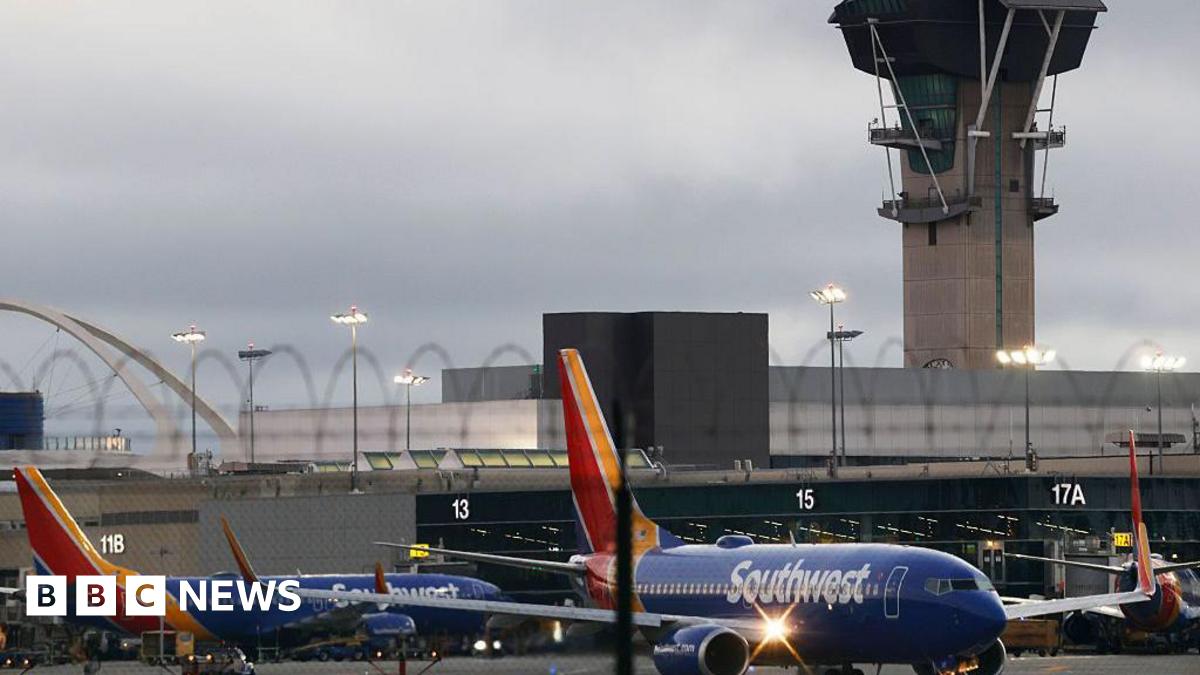
A US government order to make drastic cuts in commercial air traffic amid the government shutdown has taken effect, with major airports across the country experiencing a significant reduction in schedules and leaving travellers scrambling to adjust their plans.
The Federal Aviation Administration (FAA) has said the move is necessary to maintain air traffic control safety during a federal government shutdown, now the longest recorded and with no sign of a resolution, where air traffic controllers have gone without pay.
While airlines have started to reduce domestic flights, major global hubs such as JFK in New York and LAX in Los Angeles will be affected, meaning delays and sudden changes that could have a cascading effect on international air traffic.
“We are seeing signs of stress in the system, so we are proactively reducing the number of flights to make sure the American people continue to fly safely,” said Bryan Bedford, the FAA administrator.
Since the beginning of the shutdown, which began last month after a breakdown between Republicans and Democrats over spending plans, air traffic controllers have been working without pay, which has already caused delays.
The US transportation secretary, Sean Duffy, has announced 40 “high traffic” airports across the country that would need to reduce flights. A 4% reduction in operations at those airports has taken effect, but this will increase to 10% over the next week.
Duffy has accused Democrats of being responsible for any “mass chaos” that ensues, even though the shutdown is the result of both Republicans and Democrats refusing to agree to a deal.
A passenger stands by a screen showing delayed flights due to the government shutdown at San Francisco international airport. Photograph: Carlos Barría/Reuters
The cuts could represent as many as 1,800 flights and upwards of 268,000 seats combined, according to an estimate by the aviation analytics firm Cirium.
With deep antagonism between the two political parties, Donald Trump’s government has beaten the previous record for the longest shutdown, which was set during his first time in 2018-19.
United, Southwest and Delta Air Lines began cancelling flights on Thursday evening.
Affected airports cover more than two dozen states including the busiest across the US – including Atlanta, Charlotte, Denver, Dallas/Fort Worth, Orlando, Los Angeles, Miami and San Francisco. Flight schedules will be reduced in some of the US’s biggest cities – such as New York, Houston and Chicago.
Scott Kirby, the United Airlines CEO, said in a statement that the airline “will continue to make rolling updates to our schedule as the government shutdown continues so we can give our customers several days’ advance notice and to minimize disruption”.
Delta Air Lines said it would comply with the directive and “expects to operate the vast majority of our flights as scheduled”.
The airspace distruption comes two weeks before the Thanksgiving holiday – typically the busiest travel period of the year – and raises the pressure on lawmakers to reach a deal to end the shutdown.
In a statement, American Airlines said most customers would be unaffected and long-haul international travel would remain as scheduled, and that customers could change their flight or request a refund. “In the meantime, we continue to urge leaders in Washington to reach an immediate resolution to end the shutdown,” the airline said.
The government shutdown has left shortages of up to 3,000 air traffic controllers, according to the administration, in addition to at least 11,000 more receiving zero wages despite being categorised as essential workers.
“I’m not aware in my 35-year history in the aviation market where we’ve had a situation where we’re taking these kinds of measures,” Bedford has said. “We’re in new territory in terms of government shutdowns.”
Global law firm White & Case LLP has advised Air Liquide, on a €2.15 billion multi-tranche bond to finance its acquisition of DIG Airgas.
The first in four tranches has a principal amount of €400 million with a floating-rate, three-month Euribor plus 0.23% and will mature in 2027. The second tranche for a principal amount of €500 million has an annual coupon of 2.625% and will mature in 2029. The third tranche has a principal amount of €500 million with an annual coupon of 3.00% and will mature in 2033. The fourth tranche for a principal amount of €750 million has an annual coupon of 3.50% and will mature in 2037.
This bond offering was significantly oversubscribed by investors and the proceeds will be used to finance the acquisition of DIG Airgas or the Air Liquide’s general corporate purposes. Each of the fixed rate bonds provides for an acquisition event call option related to the DIG Airgas acquisition.
Air Liquide is a world leader in gases, technologies and services for industry and healthcare. DIG Airgas is a major and recognised player in the industrial gas industry in the South Korean market.
The White & Case team in Paris which advised on the transaction was led by partner Grégoire Karila and included associate Romain Bruno.
Press contact For more information please speak to your local media contact.
As part of our commitment to provide you with the most up-to-date and relevant information on the logistics industry, we share our Market Update on the Latin American market.
You will find information and interesting data on the update of the state of the ports, the most important transport routes and relevant news.
We hope you’ll find the following information helpful, as well as inspiring to boost your business and keep your cargo moving.
Topic of the Month: Lessons from Past Peak Seasons: How Latin American Logistics Are Adapting in 2025
Over the past few years, logistics teams across Latin America have faced a series of disruptions that have reshaped how they approach peak season. From the COVID-19 pandemic and geopolitical tensions to inflation and climate-related events, these challenges have exposed vulnerabilities in traditional supply chain models and accelerated the need for transformation.
In a region marked by diverse geographies, regulatory complexities, and growing e-commerce demand, the stakes during peak season are especially high. Companies have had to adapt quickly rethinking sourcing strategies, investing in technology, and building more resilient networks to meet shifting consumer expectations and operational pressures.
Now, in 2025, logistics leaders across Latin America are applying lessons learned from past peak seasons to navigate the current one with greater agility, foresight, and innovation. This topic of the month explores how those lessons are shaping smarter, more resilient logistics operations across the region, and how teams are turning disruption into opportunity.
The Legacy of Disruption
Over the past five years, Latin America’s logistics sector has been shaped by a series of global and regional disruptions that exposed vulnerabilities and accelerated transformation. From pandemic-induced bottlenecks to geopolitical tensions and economic instability, these events have left a lasting impact on how logistics teams prepare for peak seasons.
COVID-19 and Its Aftermath
The COVID-19 pandemic triggered widespread disruptions across Latin American supply chains. Lockdowns, labor shortages, and port congestion led to delays and inventory imbalances. According to a study by the U.S. Cybersecurity and Infrastructure Security Agency, 62% of firms globally, including many in Latin America, reported supply chain disruptions affecting between 20% and 80% of their total volume.
In Latin America, the pandemic highlighted the fragility of just-in-time models and overreliance on distant suppliers. Different pressures pushed companies in the region to invest in digital tools, diversify sourcing, and strengthen local supplier relationships to build more resilient operations.
Geopolitical and Economic Volatility
Beyond the pandemic, Latin American logistics teams have had to navigate a shifting geopolitical landscape. Trade tensions, have led to rerouted freight flows and increased insurance costs. The rise of protectionism and resource securitization has made access to critical inputs more politically sensitive.
In addition, Latin America’s economic outlook remains fragile. According to ECLAC, the region is expected to grow only 2.2% in 2025, with Central America and Mexico facing even slower growth due to weakened external demand from the U.S. This economic volatility has prompted logistics teams to proactively build contingency plans, diversify supplier networks, and strengthen regional partnerships to ensure continuity.
Climate-Related Disruptions
Climate change is also emerging as a long-term disruptor. Extreme weather events, such as floods, droughts, and hurricanes, are increasingly impacting ports, highways, and distribution centers across Latin America. While the pandemic was a temporary shock, climate-related disruption will continue and require fundamental changes in infrastructure and planning.
What’s Different in 2025?
After years of disruption, logistics teams across Latin America are entering peak season 2025 with a new mindset, one shaped by experience, technology, and a growing emphasis on resilience. The reactive strategies of the past are giving way to proactive, data-driven approaches that prioritize agility, visibility, and long-term sustainability. This transformation is visible across four key dimensions:
1. Earlier and Smarter Planning
This year, Latin American logistics teams are planning earlier—and smarter. The use of large language models (LLMs) and advanced analytics is enabling companies to simulate demand scenarios, anticipate bottlenecks, and optimize inventory flows well ahead of peak season.
This shift is particularly relevant in a region where infrastructure limitations and regulatory complexity can amplify delays. By leveraging predictive tools, companies in Argentina, Brazil, and Colombia are improving demand forecasting accuracy and reducing last-minute adjustments that previously led to inefficiencies and increased costs.
According to the Latin American Artificial Intelligence Index (ILIA 2025), AI adoption in logistics is accelerating, with Chile and Brazil leading the way in integrating machine learning into supply chain planning. These technologies are helping teams move from reactive firefighting to strategic scenario planning, turning uncertainty into a manageable variable.
2. Technology-Driven Operations
Technology is no longer a support function, it’s at the core of logistics operations. In 2025, Latin American companies are integrating AI, robotics, and digital twins to automate processes, monitor cargo in real time, and simulate disruptions before they occur.
Digital twins, in particular, are gaining traction in the region. These virtual replicas of physical supply chains allow teams to test contingency plans, optimize routes, and assess the impact of external shocks, such as port closures or extreme weather, without interrupting actual operations.
A report by MIT Sloan highlights how AI is being used to solve fragmented supply chain challenges, improve routing, and enhance fraud detection. In Latin America, this translates into smarter warehouse automation, dynamic fleet management, and improved visibility across multimodal networks.
Companies are also investing in IoT-enabled tracking systems to monitor cargo conditions and location in real time, which is especially critical for temperature-sensitive goods and high-value shipments during peak season.
3. Partnering with Logistics Integrators
A growing number of companies in Latin America are turning to logistics integrators to streamline operations and gain end-to-end visibility. These integrators, offer bundled services that combine transportation, warehousing, customs management, and digital platforms under a single umbrella.
This model is particularly valuable during peak season, when coordination across multiple vendors can lead to delays and miscommunication. By partnering with integrators, companies benefit from centralized control, real-time data sharing, and scalable infrastructure that adapts to seasonal demand spikes.
These partnerships are helping companies reduce complexity, improve service levels, and respond faster to disruptions. In regions like Central America and the Southern Cone, integrators are also playing a key role in enabling nearshoring strategies, offering multimodal solutions that connect manufacturing hubs with consumer markets more efficiently.
4. Resilience Through Diversification
Perhaps the most significant shift in 2025 is the strategic focus on resilience, not just efficiency. Latin American logistics teams are actively diversifying supplier bases, nearshoring operations, and building regional partnerships to reduce dependency on volatile global trade routes.
The e-book Beyond Basics: Elevating Supply Chain Resilience in Latin America, launched in collaboration with Financial Times Longitude, emphasizes the need for Latin American supply chains to become anti-fragile, able to absorb shocks and continue performing under pressure. The study identifies key threats such as geopolitical tensions, climate change, digital disruption, and shifting consumer behaviors, and encourages companies to build supply chains that can thrive despite them.
Nearshoring is gaining momentum, particularly in Mexico and Central America, as companies seek to shorten lead times and reduce exposure to Asia-Pacific volatility. This trend is supported by regional trade agreements and infrastructure investments aimed at strengthening intra-Latin American logistics corridors.
Predictive modeling and digital twins are also being used to simulate risk scenarios, such as supplier failure or port congestion, and guide strategic decisions around sourcing, inventory allocation, and transportation modes.
In summary, 2025 marks a turning point for logistics in Latin America. The region’s supply chains are becoming smarter, more adaptive, and more resilient, driven by technology, strategic foresight, and a commitment to long-term sustainability. These changes are not just helping companies survive peak season, they’re helping them lead it.
As Latin America enters peak season 2025, logistics teams are no longer operating in survival mode, they’re leading with strategy, technology, and resilience. The disruptions of the past five years have served as a catalyst for transformation, pushing companies to rethink how they plan, operate, and collaborate across the supply chain.
From earlier planning powered by AI and predictive analytics, to deeper partnerships with logistics integrators and diversified sourcing strategies, the region’s logistics landscape is evolving rapidly. These changes are not just responses to past challenges, they’re proactive steps toward a more agile and future-ready supply chain ecosystem.
Latin American logistics teams are proving that resilience is not just about bouncing back, it’s about building smarter, more adaptive systems that thrive under pressure. As peak season unfolds, the companies that have embraced these lessons are positioned not only to meet demand, but to turn complexity into competitive advantage.
The road ahead will continue to bring uncertainty, but with the right tools, partnerships, and mindset, Latin America’s logistics sector is more prepared than ever to navigate it.
Ocean Updates
Trade lane
Comments
Trade lane
East Coast of South America to Intra-Americas
Comments
Brazex Service Update: We will conclude our participation in the Brazex service. The last northbound voyage will be on M/V CMA BERLIOZ 544N (or substitute), departing Paranagua on November 1, 2025. We will continue to serve the Caribbean, US Gulf, and Mexico through our UCLA and Gulfex services, ensuring reliable coverage for your cargo needs.
Tango Service Adjustments: Norfolk suspension extended, cargo will be handled via transshipment in Cartagena. Rio de Janeiro biweekly call remains in place until further notice.
ECSA Shuttle – New Rotation: Starting November, the ECSA Shuttle will operate on a biweekly basis with the following rotation: Paranagua → Santos (DP World) → Manzanillo (Panama) This setup enhances connectivity to the Caribbean, US, and South America West Coast, giving you more flexibility for regional and intercontinental shipments.
Main port status
ECSA: Terminals across ECSA continue to face operational pressure, with persistent congestion in different terminals. Santos, mainly driven by adverse weather conditions, high yard occupancy at Santos Brasil, and accumulates vessel delays from prior weeks. Parangua and Itapoa terminals are mantaining elevated yard utilizations levels (around 80%) and are furter impacted by ongoing bad weather and intermittent closures. In Buneos Aires the yard remains high, and T4 continues to experience performance challenges due to crane breakdowns. Overlapping vessels arrivals and channel transit delay, the operations in Montevideo have resumed folowwing several days of strike action; however, berth productivity remaisn at approximately 50%, impacted by ongoing new system imprementation, Montevideo is currently operating under a First-In, First-Out rule until the line-up stabilizes (2-3 days of Wtime for vessels on window) and Rio Grande remains highly constraines, operating solely under BW conditions, with no significant recovery expected before the end of the year.
WCSA: Port operations are navigating a mixed environment of security concerns and fluctuating terminal performance. Terminal productivity varies significantly; while Guayaquil/TPG recently reported the highest performance , others like Puerto Bolivar and Guayaquil/Contecon are under strain, with key terminals like Callao/APMT and Posorja under Hypercare status.
CAC: Actions are being taken to mitigate yard levels and their impacts on cargo flow. Panama Terminals and Cartagena, COL for Maersk flows in good conditions, vessels out of window may face 1 o 2 days of wt.
1-3 Days
Latin America
1-3 Days
San Lorenzo, Caucedo, Puerto Barrios, Sto Tomas de Castilla, Puerto Cortes, Santos Brasil, Paranagua, Montevideo, Rio de Janeiro, Zarate
Rest of World
1-3 Days
Houston
Landside updates
Central America, Andina and the Caribbean Sea Area
El Salvador/Guatemala: During the high season at the end of the year, import and export volumes in the region increase significantly. In this context, it is common for importers to face challenges in their supply chain, affecting the continuity of their shipments. Having transportation, operational personnel, and advance planning to respond quickly to fluctuations in cargo volumes or last-minute needs will be essential during this season. If your operation is experiencing volume increases or requires immediate pickup coordination, our team can assist with transportation scheduling and customs management. An agile supply chain doesn’t end at the port, that’s why we strengthen our inland solutions, ensuring capacity, delivery speed, and coverage for both import routes and cross-border movements between Guatemala and El Salvador.
East Coast South America Area
Manaus Region:The dry season in the Manaus region is already impacting river levels, which is affecting both capacity and volumes. As a result, we anticipate delays and vessel capacity restrictions in the coming weeks. On the landside, we do not expect capacity restrictions; however, we foresee a reduction in volumes due to ocean-side limitations caused by low river levels.
Paraguay – Barge Service:In Paraguay, where we operate our barge service, the dry season is also beginning. We expect delivery delays and potential restrictions in the coming weeks due to low water levels.
Brazil – Key Certifications:
We are pleased to share two important achievements in Brazil in recent months: AEO Certification – A significant milestone that enhances our compliance and operational efficiency. SASSMAQ Certification for our own fleet operating at Santos Port – This is a key step in strengthening our support for chemical industry customers in that location.
Highlights
Deliver quality avocados no matter the distance
Avocados face a demanding journey from Colombia’s farms to international markets. With every touchpoint comes the challenge of preserving freshness and quality. Overcoming these hurdles requires more than effort; it requires the right cold chain solutions, the right expertise, and a dedication to delivering on time and in perfect condition.
Read more
Panama’s newest warehouse keeps you moving
From reducing lead times to supporting specific vertical needs, our latest facility in Panama Pacifico is designed to fast-track your cargo movement and enable your business growth. How does the warehousing facility manage to do this?
Read more
Learn more from the global Maersk team
Learn what’s happening in our regions by reading our Market Updates by region.
Europe North America Asia Pacific
Be sure to visit our “Insights” pages where we explore the latest trends in supply chain digitalisation, sustainability, growth, resilience, and integrated logistics.
ITV has said it is in “preliminary” discussions to sell its broadcasting business to Sky for £1.6bn, a move that could reshape the UK’s television landscape.
The talks focus on ITV’s Media and Entertainment division, which includes its free-to-air TV channels as well as the ITV X streaming service.
The discussions with Sky, which is owned by US-based Comcast, come as the television industry faces fierce competition from streaming services such as Netflix and Disney+.
The deal would not include ITV’s production arm – ITV Studios – which makes popular programmes such as Love Island and I’m a Celebrity… Get Me Out of Here.
Comcast, which owns Universal Studios, bought Rupert Murdoch’s Sky in 2018 and is a major player in the US media landscape.
It owns NBCUniversal, which contains the NBC and CNBC channels, DreamWorks Animation and streaming service Peacock.
Media analyst Ian Whittaker told the BBC’s Today programme that a combination of Sky and ITV would mean they had “70% plus” of the UK TV advertising market, which he said “in normal circumstances” would be rejected by regulators because of the dominance it would give them.
But he added that with rising competition from the streaming services raising questions over the future of TV, a takeover could be seen as almost a rescue deal.
Sir Peter Bazalgette, television executive and producer, who was chair of ITV until September 2022 and is a shareholder in the company, told the Today programme that the deal made sense given the pressure from streamers.
On the question of whether a Sky-ITV link up would run up against competition issues, Sir Peter said the regulator needed to “redefine” what the advertising market is.
He said Google and Facebook owner Meta should be treated as the rivals, not the traditional TV advertising market.
Talking about ITV’s TV channels, he said: “Free to air channels across world are not seen to have a great amount of value,” adding that “there’s going to be an inevitable consolidation of domestic broadcasters all across Europe”.
Mr Whittaker said streaming was where the growth was for broadcasters – even though with established streamers “the penetration rates have started to level off in the past couple of years” in the UK.
He added that competition was also now coming from YouTube TV, which showed live events such as sports and news.
A recent report from media regulator Ofcom found that YouTube has become the UK’s second most-watched media service, behind only the BBC.
Big live sporting events, traditionally shown on television, may also increasingly move to streamers as sporting giants such as UEFA seek to cash in on the huge streaming market.
ITV Studios, which makes programmes for several platforms including the BBC, Netflix and Amazon, has reportedly been the subject of takeover talks in the past.
It made the hit TV series Alan Bates vs The Post Office, and popular anime series One Piece on Netflix.
ITV’s share price was up 15% at about 78p following news of the takeover talks, although that remains well below the high of 258p reached in 2015.
Liberty, one of ITV’s biggest shareholders, recently sold half of its 10% stake in the broadcaster.
But Liberty might be “kicking itself” at this move, said Dan Coatsworth, an analyst at AJ Bell.
He said it was “a surprise” there was an interest in ITV’s TV channels, describing it as a “ball and chain” compared with ITV Studios, which he called “the jewel in ITV’s crown”.
Sky’s interest was “Christmas come early for management and shareholders”, he added, saying ITV Studios could be “an instant takeover target itself” as content-hungry streamers seek a hub to generate more programmes to feed their platforms.
On Thursday, ITV forecast that its advertising revenue would be 9% lower in the last three months of 2025, saying that advertisers were being cautious ahead of expected tax rises in the Budget.
The broadcaster also said it would carry out a further £35m in cost savings, which would lead to some programmes being delayed until next year.