Category: 3. Business

  • Fresenius Medical Care further accelerates organic revenue development and achieves an inflection in earnings growth, delivering 28% operating income growth in the third quarter of 2025

    Fresenius Medical Care further accelerates organic revenue development and achieves an inflection in earnings growth, delivering 28% operating income growth in the third quarter of 2025

    FME Reignite strategy advances 

    Fresenius Medical Care, the world’s leading provider of products and services for individuals with renal disease, continued to advance the FME Reignite strategy. During the third quarter of 2025, the FME25+ transformation program continued its positive momentum, delivering EUR 47 million additional sustainable savings while related one-time costs, treated as special items, amounted to EUR 41 million. In the first nine months, the Company already delivered EUR 174 million of its full year FME25+ target of around EUR 180 million additional annual savings. FME25+ savings are expected to total EUR 1,050 million by year end 2027, while program cost of EUR 1,000 million to 1,050 million are anticipated in the same time frame.

    During the third quarter, as part of the portfolio optimization plan, closed divestments included clinic operations in Brazil and Malaysia. Special items associated with portfolio optimization amounted to negative EUR 50 million in the third quarter.

    All transactions realized as part of Fresenius Medical Care’s portfolio optimization plan in 2024 and 2025 are estimated to negatively impact full year 2025 Group revenue growth by around one percent. Related costs will be treated as special items in operating income.

    As part of the new capital allocation framework, Fresenius Medical Care announced an initial share buyback of EUR 1.0 billion as a commitment to return excess capital to shareholders. The program commenced in August with a first tranche of up to EUR 600 million. As of September 30, 2025, 3.6 million shares have been repurchased for a total investment amount of EUR 151 million.

    Strong organic revenue growth1 across all segments 

    In the third quarter 2025, Group revenue increased by 3% (+8% at constant currency, +10% organic1) to EUR 4,885 million. Divestitures realized as part of the portfolio optimization plan affected the revenue development by -60 basis points.

    Care Delivery revenue decreased by 2% (+4% at constant currency, +6% organic1) to EUR 3,402 million. Divestitures realized as part of the portfolio optimization plan affected the revenue development by -120 basis points.

    In Care Delivery U.S., revenue decreased by 1% (+5% at constant currency, +6% organic1) to EUR 2,842 million. Reimbursement rate increases, a favorable payor mix development, the positive impact from phosphate binders and reduced implicit price concessions had a positive impact while exchange rates developed unfavorably. U.S. same market treatment growth slightly advanced to 0.1% year-on-year.

    In Care Delivery International, revenue decreased by 5% (-4% at constant currency, +4% organic1) to EUR 560 million. The effects of closed or sold operations, mainly related to portfolio optimization and unfavorable exchange rates, were partially offset by organic growth1. Same market treatment growth amounted to 1.2%.

    Value-Based Care revenue grew by 34% (+42% at constant currency, +42% organic1) to EUR 576 million, driven by a significantly higher number of member months mainly due to contract expansion, while exchange rates developed unfavorably. 

    Care Enablement revenue remained stable compared to prior year (+5% at constant currency, +5% organic1) at EUR 1,361 million. Volume growth and continued positive pricing momentum were offset by unfavorable exchange rate effects.

    Within Inter-segment eliminations4, revenue for services provided and products transferred between the operating segments at fair market value came in at negative EUR 454 million. 

    In the first nine months, Group revenue increased by 2% (+5% at constant currency, +7% organic1) to EUR 14,558 million. Divestitures realized as part of the portfolio optimization plan impacted the revenue development by  150 basis points. Care Delivery revenue decreased by 2% (0% at constant currency, +4% organic1) to EUR 10,229 million, with Care Delivery U.S. flat year-on-year (+3% at constant currency, +4% organic1) at EUR 8,550 million and Care Delivery International decreasing by 11% (-11% at constant currency, +5% organic1) to EUR 1,679 million. Divestitures realized as part of the portfolio optimization plan affected the revenue development of Care Delivery by -240 basis points and the revenue development of Care Delivery International by -1,350 basis points. U.S. same market treatment growth came in at 0.1% while international same market treatment growth amounted to 2.0%. Value-Based Care revenue increased by 27% (+31% at constant currency, +31% organic1) to EUR 1,611 million. Care Enablement revenue increased by 1% (+4% at constant currency, +4% organic1) to EUR 4,075 million. Inter-segment eliminations decreased to a deduction of EUR 1,357 million.

    Accelerated earnings growth and double-digit operating income margin 

    In the third quarter 2025, Group operating income increased by 3% (+8% at constant currency) to EUR 477 million, resulting in a margin of 9.8% (Q3 2024: 9.7%). Operating income excluding special items significantly increased by 22% (+28% at constant currency) to EUR 574 million, resulting in a margin2 of 11.7% (Q3 2024: 9.9%). Divestitures realized during the third quarter were neutral on operating income margin development.

    Operating income in Care Delivery decreased by 8% (-1% at constant currency) to EUR 419 million, resulting in a margin of 12.3% (Q3 2024: 13.1%). Operating income excluding special items grew by 7% (+14% at constant currency) at EUR 493 million, resulting in a margin2 of 14.5% (Q3 2024: 13.2%). Compared to previous year, operating income development was driven by the positive impact from phosphate binders, positive rate and payor mix effects and savings from the FME25+ program. The development was negatively impacted by the absence of income attributable to a consent agreement on certain pharmaceuticals compared to the prior year, higher personnel expenses due to planned merit increases as well as other inflationary cost increases. 

    Operating income in Value-Based Care amounted to a loss of EUR 22 million, compared to a loss of EUR 37 million in the prior year, resulting in a margin of -3.8% (Q3 2024: -8.5%) and reflecting the quarterly earnings volatility, which is inherent to the business model. Operating income excluding special items amounted to a loss of EUR 21 million, compared to a loss of EUR 37 million in the prior year, resulting in a margin2 of -3.7% (Q3 2024: -8.5%). The improvement compared to the previous year’s quarter was driven by a favorable savings rate, partially offset by delayed CKCC reporting from CMS.

    Operating income in Care Enablement increased by 43% (+44% at constant currency) to EUR 87 million, resulting in a margin of 6.4% (Q3 2024: 4.5%). Operating income excluding special items increased by 36% (+38% at constant currency) to EUR 103 million, resulting in a margin2 of 7.6% (Q3 2024: 5.6%). The improvement compared to the previous year’s quarter was mainly driven by higher volumes as well as positive pricing developments and savings from the FME25+ program. These positive effects were partially offset by higher-than-expected currency transaction effects as well as inflationary cost increases, which developed in line with expectations.

    Operating income for Corporate amounted to a loss of EUR 4 million (Q3 2024: loss of EUR 13 million). Humacyte remeasurements, treated as special items in the Corporate line, amounted to EUR -5 million and virtual power purchase agreements amounted EUR -2 million. Operating income excluding special items amounted to EUR 3 million (Q3 2024: loss of EUR 23 million). 

    In the first nine months, Group operating income increased by 9% (+11% at constant currency) to EUR 1,233 million, resulting in a margin of 8.5% (9M 2024: 8.0%). Operating income excluding special items increased by 15% (+18% at constant currency) to EUR 1,507 million, resulting in a margin2 of 10.3% (9M 2024: 9.2%). Divestitures realized during the first nine months of the year were neutral on operating income margin development. In Care Delivery, operating income increased by 13% (+17% at constant currency) to EUR 1,086 million, resulting in a margin of 10.6% (9M 2024: 9.2%). Operating income excluding special items increased by 5% (+9% at constant currency) to EUR 1,226 million, resulting in a margin2 of 12.0% (9M 2024: 11.2%). In Value-Based Care operating income amounted to a loss of EUR 28 million compared to a loss of EUR 21 million in the prior year, resulting in a margin of -1.7% (9M 2024: -1.7%). Operating income excluding special items amounted to a loss of EUR 26 million compared to a loss of EUR 21 million in the prior year, resulting in a margin2 of -1.6% (9M 2024: -1.7%). In Care Enablement, operating income increased by 38% (+38% at constant currency) to EUR 270 million, resulting in a margin of 6.6% (9M 2024: 4.9%). Operating income excluding special items increased by 53% (+54% at constant currency) to EUR 334 million, resulting in a margin2 of 8.2% (9M 2024: 5.4%). Operating income for Corporate amounted to a loss of EUR 78 million (9M 2024: EUR 9 million). Operating income excluding special items amounted to a loss of EUR 9 million (9M 2024: loss of EUR 37 million).

    Net income3 significantly increased by 29% (+34% at constant currency) to EUR 275 million in the third quarter 2025. Net income excluding special items increased by 36% (+41% at constant currency) to EUR 322 million. 

    In the first nine months, net income3 increased by 38% (+41% at constant currency) to EUR 651 million. Net income excluding special items increased by 31% (+34% at constant currency) to EUR 836 million.

    Basic earnings per share (EPS) increased by 30% (+35% at constant currency) to EUR 0.94 in the third quarter 2025, based on 292,101,583 shares. Basic EPS excluding special items increased by 37% (+42% at constant currency) to EUR 1.10. 

    In the first nine months, basic EPS increased by 38% (+41% at constant currency) to EUR 2.22, based on 292,971,355 shares. Basic EPS excluding special items increased by 31% (+34% at constant currency) to EUR 2.85.

    Cash flow development and net leverage ratio 

    In the third quarter 2025, operating cash flow decreased by 25% to EUR 742 million (Q3 2024: EUR 985 million), resulting in a margin of 15.2% (Q3 2024: 20.7%). Operating cash flow declined compared to prior year, which was inflated by around EUR 400 million catch-up following the cyber incident at Change Healthcare, while favorable working capital development contributed positively. In the first nine months, operating cashflow improved by 8% to EUR 1,679 million (9M 2024: EUR 1,554 million), resulting in a margin of 11.5% (9M 2024: 10.9%). 

    Free cash flow5 significantly decreased by 33% to EUR 550 million in the third quarter 2025 (Q3 2024: EUR 815 million), resulting in a margin of 11.3% (Q3 2024: 17.1%). In the first nine months, Fresenius Medical Care increased free cash flow by 9% to EUR 1,199 million (9M 2024: EUR 1,102 million), resulting in a margin of 8.2% (9M 2024: 7.7%). 

    The ownership increase in our Value-Based Care entity Interwell Health by an investment of EUR 312 million was reflected in cash flow from financing activities. 

    Total net debt and lease liabilities were further reduced to EUR 9,218 million (Q3 2024: EUR 9,831 million). The net leverage ratio (net debt/EBITDA) further improved to 2.6x in Q3 2025 (Q2 2025: 2.7x). 

    Patients, clinics and employees

    As of September 30, 2025, Fresenius Medical Care treated 293,620 patients in 3,628 dialysis clinics worldwide and had 109,916 employees (headcount) globally, compared to 112,445 employees as of June 30, 2025.

    Outlook 2025 confirmed

    Fresenius Medical Care confirms its outlook for fiscal 2025 and expects revenue growth to be positive to a low-single digit percent rate compared to prior year. The Company expects operating income excluding special items to grow by a high-teens to high-twenties percent rate compared to prior year.

    The expected growth rates for 2025 are at constant currency, excluding special items in operating income. The 2024 basis for the revenue outlook is EUR 19,336 million and for the operating income outlook is EUR 1,797 million.

    Investor conference call

    Fresenius Medical Care will host a conference call for analysts and investors to discuss the results of the third quarter 2025 today, November 4, 2025, at 2:00 p.m. CET / 8:00 a.m. ET. Details are available here. A replay and a transcript will be available shortly after the call.

    Please refer to our statement of earnings included at the end of this press release and to the attachments as separate PDF files for a complete overview of the results of the third quarter 2025. Our form 6-K disclosure provides more details.


    1At constant currency, adjusted for certain reconciling items including revenue from acquisitions, closed or sold operations and differences in dialysis days

    2Adjusted for special items; growth rate at constant currency (if not stated otherwise); for further details please see the reconciliation attached to the press release 

    3Net income attributable to shareholders of Fresenius Medical Care AG 

    4The Company transfers products from the Care Enablement segment to the Care Delivery segment at fair market value. Services provided by the Care Delivery segment for patients managed under the Value-Based Care segment are also provided at fair market value. The associated internal revenues and expenses and all other consolidation of transactions are included within “Inter-segment eliminations”.

    5Net cash provided by / used in operating activities, after capital expenditures, before acquisitions, investments, and dividends


    About Fresenius Medical Care:
    Fresenius Medical Care is the world’s leading provider of products and services for individuals with renal diseases of which around 4.2 million patients worldwide regularly undergo dialysis treatment. Through its network of 3,628 dialysis clinics, Fresenius Medical Care provides dialysis treatments for approx. 294,000 patients around the globe. Fresenius Medical Care is also the leading provider of dialysis products such as dialysis machines or dialyzers. Fresenius Medical Care is listed on the Frankfurt Stock Exchange (FME) and on the New York Stock Exchange (FMS).

    Disclaimer:
    This release contains forward-looking statements that are subject to various risks and uncertainties. Actual results could differ materially from those described in these forward-looking statements due to various factors, including, but not limited to, changes in business, economic and competitive conditions, legal changes, regulatory approvals, results of clinical studies, foreign exchange rate fluctuations, uncertainties in litigation or investigative proceedings, and the availability of financing. These and other risks and uncertainties are detailed in Fresenius Medical Care’s reports filed with the U.S. Securities and Exchange Commission. Fresenius Medical Care does not undertake any responsibility to update the forward-looking statements in this release.

    Continue Reading

  • Unlock value with Intelligent ERP apps and SAP AI agents

    Unlock value with Intelligent ERP apps and SAP AI agents

    Discover scalable impact from Capgemini’s proven AI investments.

    Generative AI delivers measurable returns. With 62% of organizations increasing investment and those scaling across functions realizing 1.7x ROI, profitability is no longer a future promise, it’s reality. Among those tracking performance, 40% expect positive returns within one to three years.

    Meanwhile, agentic AI, autonomous systems that plan and act, are quickly gaining traction. According to the Capgemini Research Institute, 93% of leaders believe scaling AI agents will provide a competitive edge, and 38% of organizations expect agents to be part of human teams by 2028.

    AI is no longer an “add-on,” it is part of the operating model. Generative AI and Business AI are accelerating SAP programs from months to weeks, delivering outcomes at scale.

    What is generative AI and Business AI? 

    From automation to intelligence: redefining enterprise execution.

    Generative AI accelerates SAP transformations and delivers.

    Agentic AI in SAP introduces autonomous agents capable of reasoning and operating within business processes, facilitating automation, adaptability, and decision-making beyond what is provided by traditional AI and generative AI.

    Core benefits:

    • Speed: Faster time-to-value across SAP programs.
    • Precision: Improved accuracy and quality in delivery.
    • Resilience: Adaptive operations that scale with business needs.

    How Capgemini and SAP make it real

    Industrialized frameworks, embedded intelligence, and strategic partnerships.

    Capgemini combines deep SAP expertise with AI innovation to deliver transformation at scale:

    • Integrated delivery framework: Combines advanced accelerators and AI-powered tools to streamline project execution across new implementations, system upgrades, phased rollouts, and targeted business initiatives.
    • AI will accelerate delivery within Capgemini’s Large Transformation Project, driving operational  excellence and business resilience through Intelligent ERP applications and SAP AI Agents.
    • Strategic co-innovation: Partnerships with SAP and Mistral AI ensure secure, scalable AI solutions for regulated industries – balancing compliance, resilience, and performance.

    Continue Reading

  • Vehicle owners in payout battle over London car park fault

    Vehicle owners in payout battle over London car park fault

    Matt Graveling,London and

    James W Kelly,London

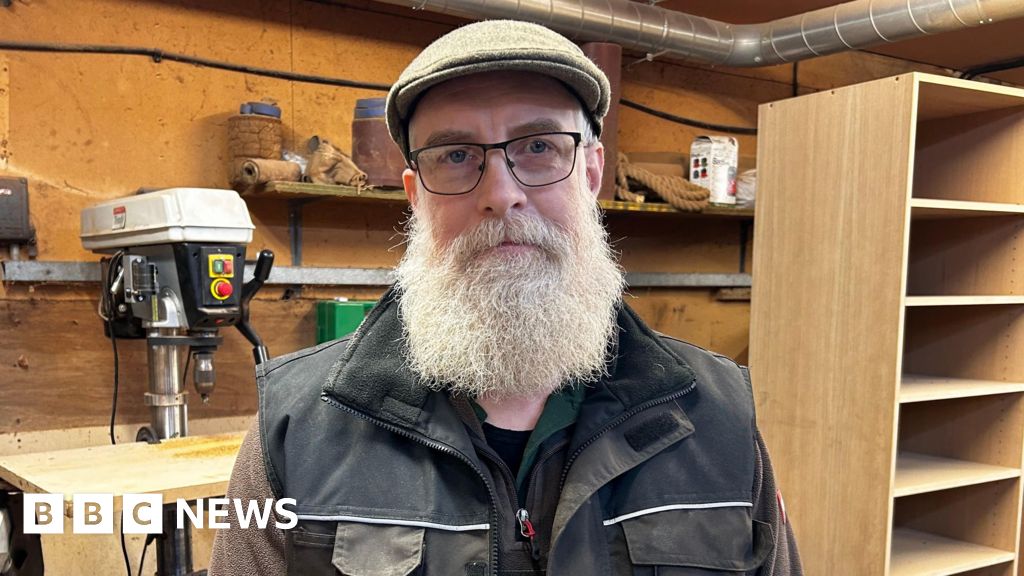
    BBC Mark Lucas is seen in a flat cap and glasses stands in a woodworking shop, surrounded by tools and wooden shelving units.BBC

    Mark Lucas says his firm is owed about £50,000

    Owners of vehicles that were trapped in a London car park say they are still tens of thousands of pounds out of pocket due to the ordeal that has lasted almost three years.

    The vehicles were stuck at Rathbone Square, near Oxford Street, for 28 months after an automated stacker system broke down. Despite retrieving them in April, those affected say “not a penny” of compensation has been paid.

    Mark Lucas said debts of £50,000 have left him living with a “daily fear” of losing his furniture business.

    Multiple parties have denied responsibility for the mechanical failure, citing ongoing investigations and delays in sourcing specialist parts, and say they cannot comment on compensation claims.

    Chris, who was visiting a relative when the stacker system broke down, is another who has been left out of pocket.

    He said about 25 vehicles were trapped inside and said his own claim exceeded £100,000.

    The former insurance professional estimated the total claims across all affected owners could exceed £1m.

    “I understand there were very, very high end vehicles [trapped in the car park],” he said.

    Chris racked up bills by striking a deal with a hire company to rent a vehicle that was “commensurate with” the value of his BMW 5 Series which was trapped in the stacker.

    He paid for this replacement vehicle monthly, as he was never told when the stacker was likely to be fixed.

    The insurers and other parties involved have been “massively lacking” in their “duty of care”, Chris added.

    Chris stands beside his grey BMW 5 Series parked on a driveway outside a red-brick house, with one hand resting on the open driver’s door.

    Chris’s BMW 5 Series was among vehicles trapped for more than two years

    Mr Lucas said his Buckinghamshire-based company’s £50,000 debt built up through months of van hire costs, the subsequent purchase of a replacement vehicle and ongoing loan repayments for the original van that became trapped inside the car park.

    “Daily it’s a fear that if we took another hit, that we might not be able to survive that,” Mr Lucas said.

    Chris called on the parties involved to “come and deal with us individually, go through our costs and settle it.”

    Despite repeated attempts by the BBC to contact AXA XL, the building’s public liability insurer, the company has not responded to questions about the delays.

    Documents seen by the BBC show that in January 2024, barrister Keith Wise contacted those affected, saying he was acting on behalf of AXA XL.

    He told vehicle owners that forensic scientists had inspected the car stacker and advised them to collate any costs and expenses incurred as a result of the incident.

    A grey van is loaded onto a recovery truck on a street in London, with red brick buildings and a print shop called "first colour" visible in the background.

    HCS Furniture’s van was released from two years in the car park in April

    However, both Mr Lucas and Chris said that despite regular attempts to reach Mr Wise, months often pass without any response.

    Mr Lucas said he had been “kept in the dark”, adding: “He doesn’t always return our calls, and when he does it’s the same story – we’re still awaiting investigations.”

    “So six months on we still haven’t received a penny in compensation for the costs that we endured over the last two and a half years,” he said.

    The BBC attempted to contact Mr Wise but he declined to comment.

    When asked about the lack of updates, his employer Crawford & Company said: “We are not authorised to speak on behalf of our clients or discuss any aspects of their business, as all information regarding claims is confidential.”

    ‘Swift resolution’

    Deka, the German investment fund that owns the Rathbone Square development, and CBRE, the managing agents for the building, both said they were not responsible for the failure of the parking system.

    They said specialist parts had made repairs “very time-consuming” but added they regretted the delays and the impact on those affected.

    Klaus Multiparking, the manufacturer of the mechanical stacker, said investigations were ongoing but its understanding was that a broken chain caused the breakdown.

    Double Parking Systems, the UK company responsible for maintaining the equipment, said it had never been the owner, operator or insurer of the car park.

    It said the time taken to resolve the situation was not down to them, and they had advised vehicles could have been retrieved seven months before they were finally released.

    Mr Lucas said his small business was going up against “huge multinational companies” to get the compensation.

    “These companies are worth billions,” Chris added. “They’re treating people disgracefully.”

    Continue Reading

  • HSBC flags AI capex mismatch, others warn of ‘irrational exuberance’

    HSBC flags AI capex mismatch, others warn of ‘irrational exuberance’

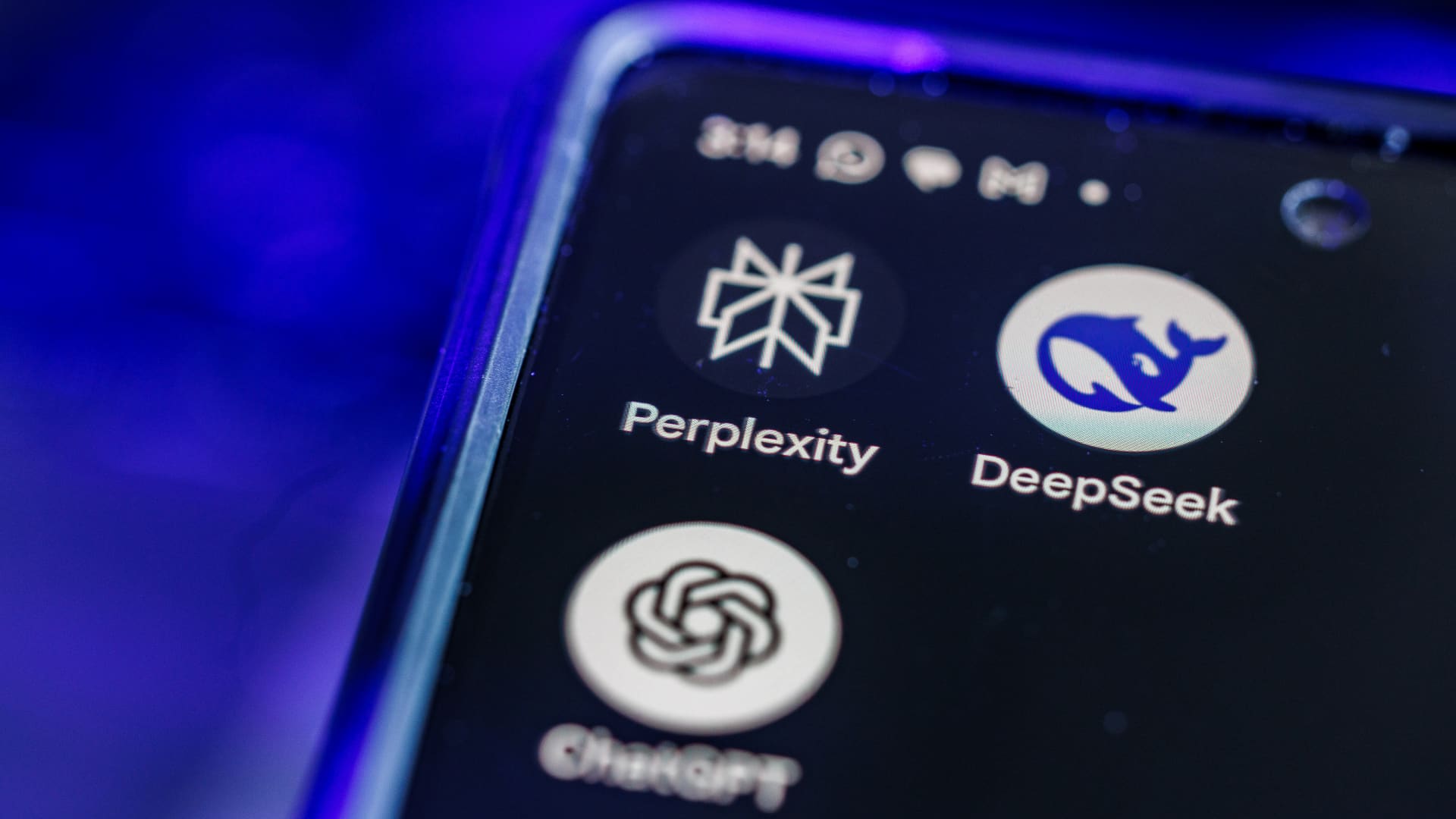
    HONG KONG, CHINA – 2025/03/01: In this photo illustration, Artificial intelligence (AI) apps of perplexity, DeepSeek and ChatGPT are seen on a smartphone screen.

    Sopa Images | Lightrocket | Getty Images

    As companies pour billions into artificial intelligence, HSBC CEO Georges Elhedery on Tuesday warned of a mismatch between investments and revenues.

    Speaking at the Global Financial Leaders’ Investment Summit in Hong Kong, Elhedery said the scale of investment poses a conundrum for companies: while the computing power for AI is essential, current revenue profiles may not justify such massive spending.

    Morgan Stanley in July estimated that over the next five years, global data center capacity would grow six times, with data centers and their hardware alone costing $3 trillion by the end of 2028.

    McKinsey said in a report in April that by 2030, data centers equipped to handle AI processing loads would require $5.2 trillion in capital expenditure to keep up with compute demand, while the capex for those powering traditional IT applications is forecast at $1.5 trillion.

    Elhedery said that consumers were not ready to pay for it, and businesses will be cautious as productivity benefits will not materialize in a year or two.

    “These are like five year trends, and therefore the ramp up means that we will start seeing real revenue benefits and real readiness to pay for it, probably later than than the expectations of investors,” he said.

    William Ford, chairman and CEO of General Atlantic, speaking at the same panel, agreed: “In the long term, you’re going to create a whole new set of industries and applications, and there will be a productivity payoff, but that’s a 10-, 20-year play.”

    Big Tech firms Alphabet, Meta, Microsoft and Amazon have all lifted their guidance for capital expenditures and now collectively expect that number to reach more than $380 billion this year.

    OpenAI, which set off the AI frenzy with the launch of ChatGPT in November 2022, has announced roughly $1 trillion worth of infrastructure deals with partners including Nvidia, Oracle and Broadcom.

    Ford said that the huge expenditure that is going into the sector shows that people recognize the long-term impact of AI. This sector, however, will be capital-intensive initially, he said adding that “you need to, sort of, pay up front for the opportunity that’s going to come down the road.”

    Ford warned there could be “misallocation of capital, destruction, overvaluation… [and] irrational exuberance” in the initial stages, and also added that it can be difficult to pick winners and losers at the moment.

    “You’re really betting on this being a broad based technology, more like railroads or electricity, that had profound impacts over over time, and reshaped the economy, but were very hard to predict exactly how in the first few years.”

    Continue Reading

  • First Brands sues founder Patrick James over alleged fraud

    First Brands sues founder Patrick James over alleged fraud

    Unlock the Editor’s Digest for free

    First Brands has sued its founder and longtime chief executive Patrick James, alleging he engaged in “fraudulent conduct” at the now bankrupt automotive parts supplier.

    James enriched himself and his family by “misappropriating hundreds of millions (if not billions) of dollars from First Brands,” said the lawsuit filed in a Houston federal bankruptcy court on Monday.

    “James . . . secretly pilfered some of the company’s assets to fund his and his family’s lavish lifestyle”, according to court documents.

    First Brands crashed into bankruptcy in late September after the company was unable to refinance its debt. The company, which had a $12mn cash balance when it entered bankruptcy, revealed in court that it had racked up $12bn in both conventional loans and off-balance-sheet financing.

    Lawyers for two different creditor groups have accused First Brands of “massive fraud” in court filings. 

    $12bn

    First Brands’ total loans and off-balance-sheet financing

    The lawsuit against James, who resigned on October 13, stems from an investigation launched by the company’s newly appointed chief executive and directors.

    “Mr. James categorically denies the baseless and speculative allegations contained in the First Brands complaint,” said a spokesman for the founder.

    “Mr. James was given no opportunity to respond before the complaint was filed and he intends to immediately challenge it. Mr. James has always conducted himself ethically and is committed to doing everything he can to support First Brands’ stakeholders during the restructuring process.”

    On Monday, Quinn Emanuel lawyers representing James said in a court filing that he was in support of a third-party examiner to investigate the company’s financial practices leading up to the bankruptcy filing.

    The lawsuit against James alleged he “commandeered the enterprise to engage in a fraudulent conduct to enrich himself and his family at the expense of debtors and their creditors”.

    In one example, First Brands said that James transferred $8mn to his son-in-law’s “wellness” company to help “cover payroll”. “It is unclear if fair value was received by First Brands for the funds transferred,” said the court documents.

    The lawsuit detailed cash transfers from the company to James that appeared to fund a New York City townhouse, as well as a “celebrity personal trainer” and a “private celebrity chef”.

    First Brands also alleged in the court documents that in “certain instances the Debtors sold erroneous or fabricated invoices to the third-party factors”.

    In one example listed in the lawsuit, a package of invoices was sold to Japan’s Katsumi Global for $11mn when the associated sales were just $2mn.

    The First Brands implosion has put the spotlight on the arcane practice of working capital finance where companies sell or borrow against accounts receivable or inventory in order to quickly raise cash to recycle into the business.

    The company’s debt load includes billions of dollars that flowed through off-balance-sheet special purpose vehicles.

    First Brands has told the court that it plans to sell the company and it has secured a $1.1bn bankruptcy loan as it goes through the Chapter 11 process.

    However, several of its creditors have said in court filings that they are concerned senior lenders at First Brands will quickly bid for the company’s assets, making recovery of the missing cash a lesser priority.

    Later this week, a hearing is scheduled to take place in Houston in which First Brands is expected to outline how the case will move forward and hear creditors’ concerns.

    Continue Reading

  • Saudi Aramco reports higher third-quarter net profit on production boost

    Saudi Aramco reports higher third-quarter net profit on production boost

    Logo of Aramco, officially the Saudi Arabian Oil Group, Saudi petroleum and natural gas company, seen on the second day of the 24th World Petroleum Congress at the Big 4 Building at Stampede Park, on September 18, 2023, in Calgary, Canada. 

    Artur Widak | Nurphoto | Getty Images

    Saudi Aramco on Tuesday posted a 0.9% jump in third-quarter profit on the back of higher production even as prices remained under pressure.

    Here are Aramco’s third-quarter 2025 results compared with LSEG consensus estimates:

    • Adjusted net income: 104.92 billion Saudi riyals ($27.98 billion) vs. 98.47 billion Saudi riyals
    • Revenue: 418.16 billion vs. 411.26 billion Saudi riyals

    The results come as Aramco faces a profit squeeze amid weaker oil prices, except for a short-lived surge in the second quarter triggered by tensions between Israel and Iran.

    “We increased production with minimal incremental cost, and reliably supplied the oil, gas and associated products our customers depend on, driving strong financial performance and quarterly earnings growth,” Aramco CEO Amin Nasser said.

    Year-to-date, spot prices of the U.S. West Texas Intermediate are down over 16%, data from FactSet showed. Similarly, the global benchmark Brent is down over 12%.

    Over the weekend, OPEC+ announced a modest increase in oil production for December and decided to halt further hikes during the first quarter of next year. The cartel members agreed to raise their December production target by 137,000 barrels per day, matching the hike for October and November.

    Since April, OPEC+ has raised its output targets by approximately 2.9 million barrels per day but began easing the pace of these increases in October over expectations of a market glut.

    Adding to the complexity, new Western sanctions on Russia, a key OPEC+ member, are posing difficulties for the group’s production strategy, as Moscow faces limits in boosting output after the U.S. imposed additional restrictions on the country’s major oil producers Rosneft and Lukoil.

    Aramco recently completed its acquisition of a 22.5% stake in Petro Rabigh, Reuters reported, from Japan’s Sumitomo Chemical for $701.8 million, bringing the Saudi company’s total ownership to roughly 60%. The oil giant also recently acquired a minority stake in artificial intelligence company HUMAIN, which is majority owned by Saudi Arabia’s Public Investment Fund.

    Continue Reading

  • Novo Nordisk’s weight-loss drug Wegovy could soon have a new sales outlet in the U.S.

    Novo Nordisk’s weight-loss drug Wegovy could soon have a new sales outlet in the U.S.

    By Claudia Assis

    ‘Active discussions’ being held, telehealth company Hims & Hers says

    Wegovy pens at a Chicago pharmacy. Telehealth company Hims & Hers says that it could be selling the GLP-1 medication on its platform soon.

    Telehealth company Hims & Hers Health Inc. said late Monday it is in “active discussions” with Denmark’s Novo Nordisk A/S to make Wegovy available on its platform.

    The discussions are about both Wegovy injections and an oral Wegovy, which is under evaluation in the U.S. and would be the first pill formulation of a GLP-1 medication if approved. The Food and Drug Administration is expected to rule on the oral Wegovy by the end of the year.

    Hims & Hers said that the discussions with Novo Nordisk (DK:NOVO.B) are ongoing, that “no definitive agreement” has been reached, and that the two companies may not reach one. Nonetheless, Hims & Hers shares (HIMS) shot up 5.7% in the after-hours session Monday, after ending the regular trading day down more than 2%.

    The disclosure of talks around the GLP-1 drug came as Hims, known for its streaming-TV commercials about erectile dysfunction, hair loss and other ailments, reported its third-quarter earnings.

    The company reported third-quarter per-share earnings of 6 cents on revenue of $599 million, up 49% year over year. The EPS came in line with FactSet consensus, while revenue topped views.

    Hims also reported a 21% growth in the number of subscribers in the quarter, to 2.5 million people.

    The company said it expects revenue between $605 million and $625 million in the fourth quarter, and of $2.335 billion to $2.355 billion for the full year. Both outlooks are above expectations.

    -Claudia Assis

    This content was created by MarketWatch, which is operated by Dow Jones & Co. MarketWatch is published independently from Dow Jones Newswires and The Wall Street Journal.

    (END) Dow Jones Newswires

    11-03-25 2358ET

    Copyright (c) 2025 Dow Jones & Company, Inc.

    Continue Reading

  • Asian shares trade mixed after AI darlings prop up Wall Street

    Asian shares trade mixed after AI darlings prop up Wall Street

    TOKYO (AP) — Asian shares were trading mixed on Tuesday after overseas markets got a big lift from optimism over AI technology.

    Japan’s benchmark Nikkei 225 dipped 0.5% to 52,163.84, coming off a national holiday on Monday.

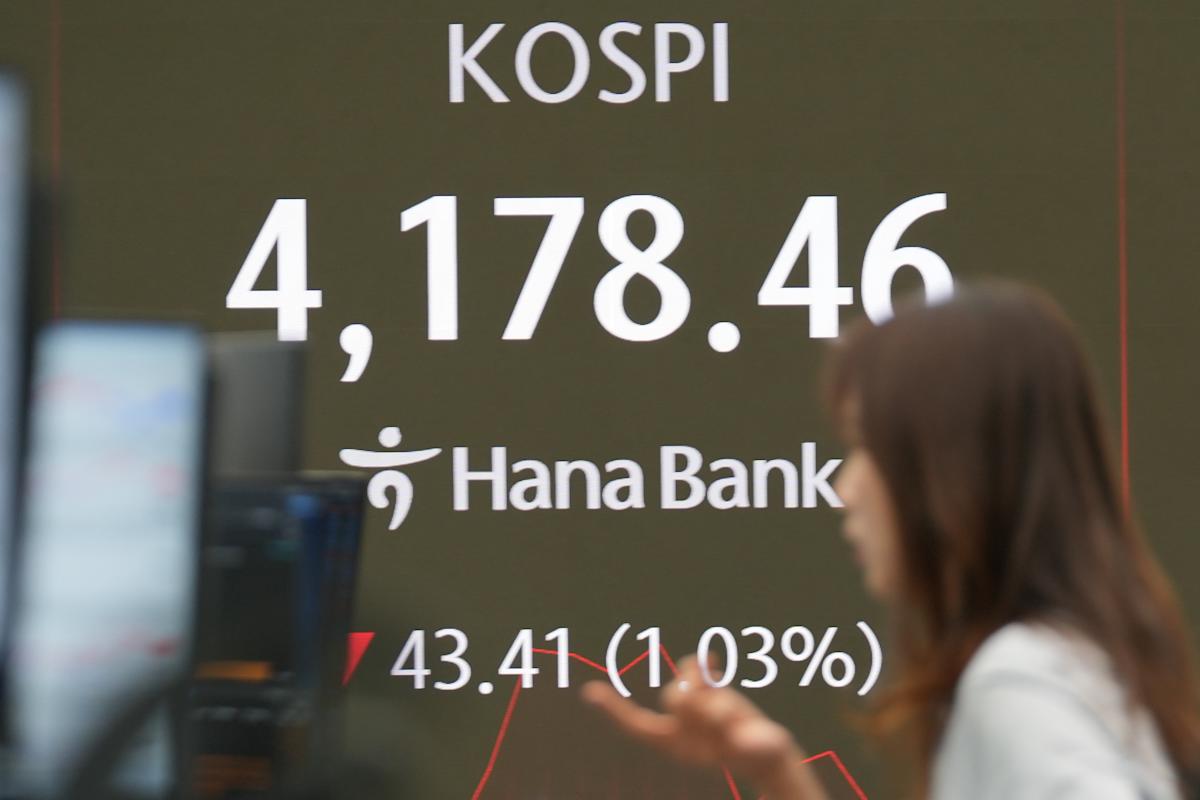
    Australia’s S&P/ASX 200 shed 0.9% to 8,818.00. South Korea’s Kospi dipped 2.0% to 4,138.88. Hong Kong’s Hang Seng jumped 0.2% to 26,209.39, while the Shanghai Composite lost 0.2% to 3,969.05.

    On Wall Street, more gains for Nvidia, Amazon and other AI superstars propped up share prices. The S&P 500 rose 0.2% and pulled closer to its all-time high set last week, even though the majority of stocks in the index sank. The Dow Jones Industrial Average dropped 226 points, or 0.5%, and the Nasdaq composite climbed 0.5%.

    Nvidia was the strongest force lifting the S&P 500, just like it has been for the year so far. The chip company rose 2.2% to bring its gain for the year to date to 54.1%.

    Amazon was the No. 2 force pushing the market higher. It rallied 4% after announcing a $38 billion agreement with OpenAI, which will use Amazon’s cloud computing services to run its AI workloads.

    IREN, an AI cloud service provider, jumped 11.5% after Microsoft announced a $9.7 billion contract with it that will give the tech giant access to some of Nvidia’s chips.

    Palantir Technologies, which came into the day with a stunning 165% gain for the year so far, rose another 3.3%. Traders pushed the AI darling higher in the final hours before the data platform company reported its latest quarterly results after trading closed for the day.

    Companies across the U.S. stock market will need to hit expectations for growth in profit to justify the big gains for their stock prices since April. Criticism has been rising that the broad U.S. market, and AI stocks in particular, have become too expensive and could be inflating into a dangerous bubble similar to the 2000 dot-com bust.

    For the most part, companies have been meeting the high expectations for profits. Four out of every five companies in the S&P 500 have topped analysts’ forecasts so far this reporting season, according to FactSet. With roughly two-thirds of all S&P 500 reports in, companies in the index are on track to deliver healthy growth of nearly 11% versus a year earlier.

    On the losing end of Wall Street on Monday was Kimberly-Clark, which dropped 14.6% after it said it would buy Kenvue in a deal valuing it at $48.7 billion. Kenvue, which sells Tylenol, Band-Aids and Listerine, jumped 12.3%.

    All told, the S&P 500 rose 11.77 points to 6,851.97. The Dow Jones Industrial Average dropped 226.19 to 47,336.68, and the Nasdaq composite rose 109.77 to 23,834.72.

    In the bond market, the yield on the 10-year Treasury edged down to 4.10% from 4.11% late Friday.

    A discouraging report on U.S. manufacturing said that activity shrank by more last month than economists expected. Several manufacturers told surveyors for the Institute for Supply Management that President Donald Trump’s tariffs are creating financial pain.

    In energy trading, benchmark U.S. crude fell 13 cents to $60.92 a barrel. Brent crude, the international standard, declined 15 cents to $64.74 a barrel.

    In currency trading, the U.S. dollar slipped to 153.95 Japanese yen from 154.19 yen. The euro cost $1.1517, down from $1.1525.

    ___

    AP Business Writer Stan Choe contributed.

    Continue Reading

  • Startup provides a nontechnical gateway to coding on quantum computers | MIT News

    Startup provides a nontechnical gateway to coding on quantum computers | MIT News

    Quantum computers have the potential to model new molecules and weather patterns better than any computer today. They may also one day accelerate artificial intelligence algorithms at a much lower energy footprint. But anyone interested in using quantum computers faces a steep learning curve that starts with getting access to quantum devices and then figuring out one of the many quantum software programs on the market.

    Now qBraid, founded by Kanav Setia and Jason Necaise ’20, is providing a gateway to quantum computing with a platform that gives users access to the leading quantum devices and software. Users can log on to qBraid’s cloud-based interface and connect with quantum devices and other computing resources from leading companies like Nvidia, Microsoft, and IBM. In a few clicks, they can start coding or deploy cutting-edge software that works across devices.

    “The mission is to take you from not knowing anything about quantum computing to running your first program on these amazing machines in less than 10 minutes,” Setia says. “We’re a one-stop platform that gives access to everything the quantum ecosystem has to offer. Our goal is to enable anyone — whether they’re enterprise customers, academics, or individual users — to build and ultimately deploy applications.”

    Since its founding in June of 2020, qBraid has helped more than 20,000 people in more than 120 countries deploy code on quantum devices. That traction is ultimately helping to drive innovation in a nascent industry that’s expected to play a key role in our future.

    “This lowers the barrier to entry for a lot of newcomers,” Setia says. “They can be up and running in a few minutes instead of a few weeks. That’s why we’ve gotten so much adoption around the world. We’re one of the most popular platforms for accessing quantum software and hardware.”

    A quantum “software sandbox”

    Setia met Necaise while the two interned at IBM. At the time, Necaise was an undergraduate at MIT majoring in physics, while Setia was at Dartmouth College. The two enjoyed working together, and Necaise said if Setia ever started a company, he’d be interested in joining.

    A few months later, Setia decided to take him up on the offer. At Dartmouth, Setia had taken one of the first applied quantum computing classes, but students spent weeks struggling to install all the necessary software programs before they could even start coding.

    “We hadn’t even gotten close to developing any useful algorithms,” Seita said. “The idea for qBraid was, ‘Why don’t we build a software sandbox in the cloud and give people an easy programming setup out of the box?’ Connection with the hardware would already be done.”

    The founders received early support from the MIT Sandbox Innovation Fund and took part in the delta v summer startup accelerator run by the Martin Trust Center for MIT Entrepreneurship.

    “Both programs provided us with very strong mentorship,” Setia says. “They give you frameworks on what a startup should look like, and they bring in some of the smartest people in the world to mentor you — people you’d never have access to otherwise.”

    Necaise left the company in 2021. Setia, meanwhile, continued to find problems with quantum software outside of the classroom.

    “This is a massive bottleneck,” Setia says. “I’d worked on several quantum software programs that pushed out updates or changes, and suddenly all hell broke loose on my codebase. I’d spend two to four weeks jostling with these updates that had almost nothing to do with the quantum algorithms I was working on.”

    QBraid started as a platform with pre-installed software that let developers start writing code immediately. The company also added support for version-controlled quantum software so developers could build applications on top without worrying about changes. Over time, qBraid added connections to quantum computers and tools that lets quantum programs run across different devices.

    “The pitch was you don’t need to manage a bunch of software or a whole bunch of cloud accounts,” Setia says. “We’re a single platform: the quantum cloud.”

    QBraid also launched qBook, a learning platform that offers interactive courses in quantum computing.

    “If you see a piece of code you like, you just click play and the code runs,” Setia says. “You can run a whole bunch of code, modify it on the fly, and you can understand how it works. It runs on laptops, iPads, and phones. A significant portion of our users are from developing countries, and they’re developing applications from their phones.”

    Democratizing quantum computing

    Today qBraid’s 20,000 users come from over 400 universities and 100 companies around the world. As qBraid’s user base has grown, the company went from integrating quantum computers onto their platform from the outside to creating a quantum operating system, qBraid-OS, that is currently being used by four leading quantum companies.

    “We are productizing these quantum computers,” Setia explains. “Many quantum companies are realizing they want to focus their energy completely on the hardware, with us productizing their infrastructure. We’re like the operating system for quantum computers.”

    People are using qBraid to build quantum applications in AI and machine learning, to discover new molecules or develop new drugs, and to develop applications in finance and cybersecurity. With every new use case, Setia says qBraid is democratizing quantum computing to create the quantum workforce that will continue to advance the field.

    “[In 2018], an article in The New York Times said there were possibly less than 1,000 people in the world that could be called experts in quantum programming,” Setia says. “A lot of people want to access these cutting-edge machines, but they don’t have the right software backgrounds. They are just getting started and want to play with algorithms. QBraid gives those people an easy programming setup out of the box.”

    Continue Reading

  • Governments eye citizens’ pension savings to ease debt strain

    Governments eye citizens’ pension savings to ease debt strain

    Continue Reading