Category: 3. Business

  • Indian renewable energy firm SAEL Industries files for $521 million IPO

    Indian renewable energy firm SAEL Industries files for $521 million IPO

    Nov 4 (Reuters) – Renewable energy firm SAEL Industries has filed draft documents late Monday for a stock market listing valued at 45.75 billion rupees ($520.51 million).

    The solar and biomass operator said its initial public offering (IPO) will comprise a fresh issue of shares worth up to 37.5 billion rupees and an offer for sale of shares totalling 8.25 billion rupees by Norwegian state-owned fund Norfund, one of its major shareholders.

    Sign up here.

    Proceeds from the IPO will be utilised to invest in the company’s units, SAEL Solar P5 and SAEL Solar P4, and to repay or prepay certain outstanding borrowings, including accrued interest and applicable prepayment penalties.

    SAEL Industries, India’s largest agri waste-to-energy producer by operational capacity, competes with Adani Green Energy (ADNA.NS), opens new tab, ACME Solar Holdings (ACMO.NS), opens new tab, and NTPC Green Energy (NTPG.NS), opens new tab. The company, however, remains the smallest among its listed peers by revenue for the financial year ended March 2025.

    The company’s total contracted and awarded capacity of its renewable energy projects, as of September 30, stood at 5,765.70 megawatts, comprising 5,600.80 MW solar and 164.90 MW of agri waste-to-energy capacities across 10 Indian states and 1 union territory.

    Kotak Mahindra Capital, JM Financial, Ambit and ICICI Securities are among the lead book-running managers for the IPO.

    Last month, Norfund invested $20 million in the company, taking its total investment to $130 million.

    The Norwegian fund made the investment through compulsorily convertible preference shares, which will convert into equity once Sael lists on Indian exchanges. The funds will be deployed in clean energy projects the company has secured through competitive bidding.

    ($1 = 87.8950 Indian rupees)

    Reporting by Yagnoseni Das in Bengaluru; Editing by Sherry Jacob-Phillips

    Our Standards: The Thomson Reuters Trust Principles., opens new tab

    Continue Reading

  • Halliburton launches LOGIX™ unit vitality to advance cementing operations

    Halliburton launches LOGIX™ unit vitality to advance cementing operations

    HOUSTON November 04, 2025 — Halliburton (NYSE: HAL) released LOGIX™ unit vitality, in addition to the LOGIX™ automation and remote operations family of solutions. The system monitors cementing equipment in real-time, prepares for upcoming jobs, and provides direct insight into equipment operation and performance.

    LOGIX™ unit vitality delivers unprecedented visibility into equipment health and operator performance. Artificial intelligence (AI) and real-time data transform equipment maintenance from reactive to predictive to help customers gain greater insight into their operations and reduce non-productive time.

    Daniel Casale, vice president, Cementing, Halliburton

    The system connects critical cement unit components to intelligent controllers and monitors more than 400 real-time parameters to ensure optimal performance. Data flows into a secure cloud, where machine learning models immediately process and analyze it to deliver constant insight into equipment health, operational readiness, operator performance, and preventive maintenance recommendations.

    LOGIX™ unit vitality combines the power of AI with human expertise to operate smarter, respond faster, and execute with confidence. This system supports Halliburton’s land-based Elite™ and the new Elite Prime™ cement units. Offshore equipment deployment will begin in 2026.

    At Halliburton, digital is foundational to how we operate, how we solve problems, and how we maximize value for our customers. The LOGIX™ automation and remote operations family of solutions includes analytics and visualization services that deliver reliability, consistency, and efficiency. This enables smarter decisions, improved performance, safer operations, and lower total cost of ownership.

    About Halliburton

    Halliburton is one of the world’s leading providers of products and services to the energy industry. Founded in 1919, we create innovative technologies, products, and services that help our customers maximize their value throughout the life cycle of an asset and advance a sustainable energy future. Connect with us on LinkedIn, YouTube, Instagram, and Facebook.

    Press Contact:
    Alexandra Franceschi
    PR@halliburton.com
    281-608-8839

    Investor Relations Contact:
    David Coleman
    investors@halliburton.com
    281-871-2688


    Continue Reading

  • Asian Stocks Fall After Weak US Data, Dollar Gains: Markets Wrap

    Asian Stocks Fall After Weak US Data, Dollar Gains: Markets Wrap

    (Bloomberg) — Asian equities edged lower along with equity-index futures after weaker US economic data and uncertainty over the Federal Reserve’s policy outlook weighed on sentiment.

    A gauge of the region’s shares fell 0.2%, diverging from gains in tech stocks in the US. Contracts for the S&P 500 fell 0.3% after the underlying index posted a modest gain Monday, although more than 300 members in the index actually retreated. Nasdaq 100 futures fell 0.4% with Palantir Technologies Inc. falling more than 4% in extended trading on concerns about the company’s lofty valuation after a record run-up.

    A gauge of the dollar extended its gains to a fifth day, strengthening against all other Group-of-10 currencies and trading at levels last seen in August. The greenback’s advance has come amid mixed signals from Fed officials, following Chair Jerome Powell’s warning last week that a rate cut in December isn’t a foregone conclusion.

    US factory activity shrank in October for an eighth straight month, reflecting softer production and demand, and Fed officials gave mixed signals on the path ahead for interest-rate cuts. Even so, global stocks have rallied for seven straight months since the tariff-fueled selloff in April, driven increasingly by technology heavyweights and prompting calls for broader-market consolidation.

    “Asia’s taking a breather after a strong run,” said Billy Leung, an investment strategist at Global X Management. “With US data softening and Fed officials keeping policy optionality alive, investors are reassessing positioning rather than chasing risk.”

    Economists and policymakers are relying more on private reports such as the ISM survey for clues on the economy and job market in the absence of official data because of the US government shutdown. Friday’s scheduled employment report is also poised to be delayed as a result.

    The Institute for Supply Management’s manufacturing index eased 0.4 point to 48.7, according to data released Monday. Readings below 50 indicate contraction, and the measure has been stuck in a narrow range for most of this year.

    Gold edged lower for a third consecutive session. Treasuries steadied, while oil fell as the market weighed OPEC+’s decision to pause output hikes.

    Meanwhile, Federal Reserve Governor Lisa Cook said she sees the risk of further labor-market weakness as greater than the risk that inflation will pick up. She stopped short of endorsing another interest-rate cut next month.

    “Looking ahead, policy is not on a predetermined path,” Cook said. “We are at a moment when risks to both sides of the dual mandate are elevated. Every meeting, including December’s, is a live meeting.”

    Her comments echoed remarks from her colleagues who were equally noncommittal about whether the central bank should deliver a third straight rate reduction when policymakers convene in December.

    Chicago Fed President Austan Goolsbee warned he’s more concerned about inflation than jobs. His San Francisco counterpart Mary Daly said officials should “keep an open mind” about the possibility of a December cut. Governor Stephen Miran noted policy remains restrictive.

    Elsewhere, shares in Australia fell ahead of a central bank rate decision later Tuesday, when policymakers are expected to stand pat.

    “Concerns over high valuations persist, and the Federal Reserve’s policy outlook appears murkier,” said Ulrike Hoffmann-Burchardi at UBS Global Wealth Management. “Despite the strong gains in equity markets this year, we continue to believe that this bull market has room to run.”

    Corporate Highlights:

    Palantir Technologies Inc. raised its annual revenue outlook to $4.4 billion and outpaced analyst estimates for third-quarter sales, citing “accelerating and otherworldly” growth for its artificial intelligence and data analytics products. Starbucks Corp. is selling a majority stake in its China unit to private equity firm Boyu Capital for $4 billion to help accelerate its coffeehouse business in the country. Grab Holdings Ltd. raised its earnings forecast for the year after quarterly profit topped estimates, signaling robust demand for the Southeast Asian ride-hailing and food delivery firm’s new products. Netflix Inc. is in talks to license video podcasts distributed by iHeartMedia Inc. as it looks to compete head on with YouTube, according to people familiar with the conversations.

    Some of the main moves in markets:

    Stocks

    S&P 500 futures fell 0.3% as of 10:41 a.m. Tokyo time Japan’s Topix rose 0.5% Australia’s S&P/ASX 200 fell 0.7% Hong Kong’s Hang Seng rose 0.4% The Shanghai Composite rose 0.1% Euro Stoxx 50 futures were little changed Currencies

    The Bloomberg Dollar Spot Index rose 0.1% The euro fell 0.1% to $1.1505 The Japanese yen was little changed at 154.35 per dollar The offshore yuan was little changed at 7.1275 per dollar Cryptocurrencies

    Bitcoin rose 0.2% to $107,129.93 Ether rose 1.2% to $3,644.23 Bonds

    The yield on 10-year Treasuries was unchanged at 4.11% Japan’s 10-year yield advanced two basis points to 1.675% Australia’s 10-year yield advanced two basis points to 4.35% Commodities

    West Texas Intermediate crude fell 0.2% to $60.94 a barrel Spot gold fell 0.4% to $3,986.57 an ounce This story was produced with the assistance of Bloomberg Automation.

    –With assistance from Winnie Hsu.

    ©2025 Bloomberg L.P.

    Continue Reading

  • Hijacking cellular machinery within cancer cells to promote antitumor immunity

    Hijacking cellular machinery within cancer cells to promote antitumor immunity

    Investigators from Mass General Brigham have developed a way to promote antitumor immunity by hijacking cellular machinery within cancer cells. The study demonstrated that inducing cancer cells to produce an immune-activating molecule led to reduced tumor growth in preclinical models. Results are published in PNAS.

    “Tumor cells comprise a significant proportion of the tumor microenvironment but are often under-utilized for immunotherapy,” said corresponding author Natalie Artzi, PhD, a researcher in the Mass General Brigham Department of Medicine. “These findings highlight how tumor cells can be used to actively contribute to their own elimination.”

    The presence of double-stranded DNA (dsDNA) in a cell’s cytoplasm activates innate immune sensors that set off defense mechanisms against potential infections or cellular damage. One such sensor known as cyclic GMP-AMP synthase (cGAS) detects cytosolic dsDNA and produces cyclic GMP-AMP (cGAMP), which triggers the stimulator of interferon genes (STING) pathway and leads to inflammatory immune responses. Furthermore, cGAMP can be transported out of the cell to activate neighbouring cells. While cancer cells can have high levels of cytosolic dsDNA, they often silence the cGAS-STING pathway – preventing their own activation and of bystander immune cells within the tumor microenvironment.

    The research team exploited this innate mechanism within cancer cells to increase cGAMP production and thereby boost antitumor immunity. They found that cultured mouse melanoma cells upregulated cGAMP production when treated with dsDNA and lipid nanoparticles (LNPs) carrying mRNA coding for cGAS. Immune cells showed signs of activation in response to elevated extracellular cGAMP levels produced by cancer cells. Similarly, treatment with cGAS LNPs activated surrounding immune cells, slowed tumor growth and improved overall survival in mouse models of aggressive melanoma. Combining this treatment with immune checkpoint blockade therapy further improved outcomes.

    The authors suggest that this strategy could find future applications beyond cancer therapies, including in vaccines.

    Continue Reading

  • Starbucks to Sell 60% of Its China Business to a Private Equity Firm – The New York Times

    1. Starbucks to Sell 60% of Its China Business to a Private Equity Firm  The New York Times
    2. Starbucks and Boyu Announce Joint Venture for the Next Chapter of Growth in China  Starbucks Coffee
    3. Factbox-Who’s selling? Starbucks and other US companies trimming China exposure By Reuters  Investing.com
    4. Starbucks Joins Long List Of US Firms Selling China Stakes  Finimize
    5. Starbucks cedes China control to Boyu Capital  Yahoo Finance

    Continue Reading

  • Shutdown Nears Its End — But Economic Damage Is Mounting, Goldman Says

    Shutdown Nears Its End — But Economic Damage Is Mounting, Goldman Says

    Benzinga and Yahoo Finance LLC may earn commission or revenue on some items through the links below.

    The U.S. government shutdown has dragged into its 33rd day, and while a resolution may soon be approaching, economists warn the economic fallout is already underway.

    In a note to clients on Monday, Goldman Sachs economist Alec Phillips said the standoff in Washington is likely to cost the U.S. economy more than a full percentage point of growth in the final quarter of 2025, shaving GDP growth to just 1.0%.

    That’s a significant downgrade. Goldman had previously expected a stronger finish to the year, but now believes the shutdown will result in postponed federal spending, delayed hiring, and reduced investment.

    Don’t Miss: If there was a new fund backed by Jeff Bezos offering a 7-9% target yield with monthly dividends would you invest in it?

    If current odds are any guide, the shutdown could stretch further still.

    Prediction markets tracked by CFTC-regulated betting platform Kalshi peg the median expected duration at 45.9 days, or until Nov. 15.

    As of now, there’s an implied 75% chance it lasts over 40 days, and a 35% chance it extends beyond 50.

    The standoff is shaping up to become the longest government shutdown in U.S. history, surpassing the 35-day shutdown in 2018-2019.

    Yet pressure is mounting. Missed pay for air traffic controllers and TSA screeners on Oct. 28, with another due Nov. 10, threatens a replay of the 2019 shutdown, when airport delays forced a last-minute compromise.

    Meanwhile, SNAP food benefits, normally issued the first week of each month, are at risk—though a recent court ruling may allow for partial disbursement using contingency funds.

    Unlike previous shutdowns that targeted specific agencies, this one involves a full lapse in congressional appropriations, making it broader in scope and impact.

    “This shutdown will have the greatest economic effect on record,” Goldman said in the note. “A longer duration could spill over into private-sector activity, delaying investments and stalling consumption.”

    See Also: The ‘ChatGPT of Marketing’ Just Opened a $0.81/Share Round — 10,000+ Investors Are Already In

    The immediate damage is expected to come from federal employee furloughs and delayed government purchases.

    If the shutdown runs six weeks, federal spending pushed into first-quarter 2026 could slightly boost growth by 1.3 percentage points in that quarter, according to Goldman’s models.

    Goldman Sachs sees growing signs the shutdown may soon end. The start of ACA enrollment on November 1 has intensified focus on health care subsidies, while the November 4 elections and the upcoming congressional recess could shift political incentives. Public-sector unions, including the AFGE, are now calling for a resolution, adding pressure on Democrats and Republicans to reach a deal.

    Continue Reading

  • This media and internet company says Google’s AI has been a revenue killer

    This media and internet company says Google’s AI has been a revenue killer

    By Claudia Assis

    Advertising side gets hurt in part because of Google AI Overviews

    Barry Diller, IAC’s chairman. The bulk of IAC’s revenue comes from the media division, People Inc., that saw revenue shrink 2% year over year.

    Media and internet holding company IAC Inc., led by digital-media mogul Barry Diller, late Monday reported revenue below Wall Street’s expectations and pointed to a growing concern among others in the same business.

    That’s the heightened presence of Google AI Overviews, a relatively new feature of Alphabet Inc.’s (GOOGL) (GOOG) Google Search that appears at the very top of query results.

    Shares of IAC (IAC) dropped more than 8% in the extended session Monday, after ending the regular trading day up 1.1%.

    AI Overviews uses generative AI to provide users with an overview of a topic, but may bury sites where people would ordinarily seek information about an issue.

    IAC’s media brands include instantly recognizable print and digital names such as People, Food & Wine and Better Homes & Gardens, to name a few. The company reported third-quarter revenue of $590 million, or $10 million less than the FactSet consensus for the quarter.

    The bulk of its sales come from the media division, People Inc. That saw revenue shrink 2% year over year to $430 million.

    That reflects a 3% drop in advertising revenue, part of a downward pressure mostly due to “the impact of the increasing prominence of Google AI Overviews on Google search sessions,” IAC said. Higher advertising rates and higher premium advertising softened that, the company said.

    Alphabet said last week its Google Search business has remained strong. On a post-earnings call, Chief Executive Sundar Pichai said that overall queries and commercial queries have continued to increase thanks to AI Overviews and Google’s AI Mode. Google Search revenue rose more than 14% year on year to $56.57 billion in the third quarter.

    IAC, for its turn, also reported a wider-than-expected quarterly loss: It lost 27 cents a share in the third quarter, whereas analysts polled by FactSet had expected a loss of 24 cents a share.

    People Inc. is the “heart of our future” alongside IAC’s investment in casino operator MGM Resorts (MGM), CEO Diller said. Diller doesn’t seem afraid of AI: He also praised People Inc.’s licensing deal with Microsoft AI.

    People Inc. has signed a deal with Microsoft Corp. (MSFT) to be one of the publishers building Microsoft’s Publisher Content Marketplace, a two-sided content marketplace that would compensate publishers for use of their content by AI. Microsoft’s AI Copilot assistant would be the first buyer, the company has said.

    -Claudia Assis

    This content was created by MarketWatch, which is operated by Dow Jones & Co. MarketWatch is published independently from Dow Jones Newswires and The Wall Street Journal.

    (END) Dow Jones Newswires

    11-03-25 2019ET

    Copyright (c) 2025 Dow Jones & Company, Inc.

    Continue Reading

  • NEC and Siemens collaborate to accelerate smart factory innovation: Press Releases

    NEC and Siemens collaborate to accelerate smart factory innovation: Press Releases

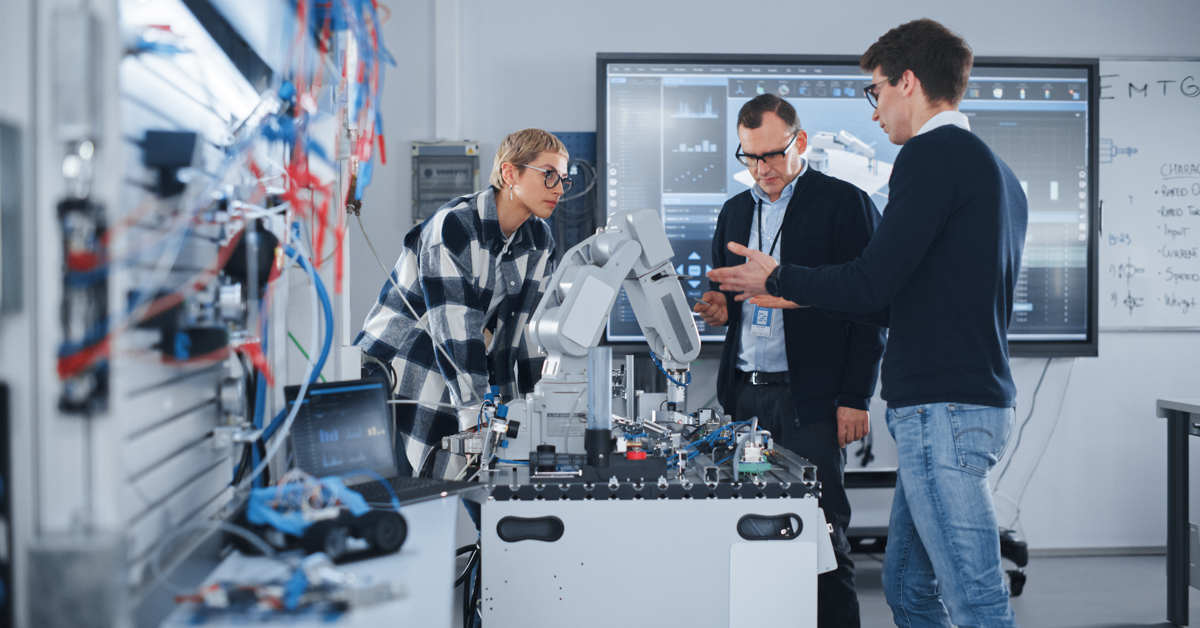
    Tokyo, Japan, November 4, 2025 – NEC Corporation (NEC; TSE: 6701) has concluded a Technology Partner Program Agreement with Siemens Industry Software Inc. (Siemens) to expand global solutions in the field of 3D robot simulations. Through this agreement, the two companies will further consolidate their strengths, accelerate the deployment of solutions internationally, and mutually strengthen their resources to support the continued growth of customers.

    NEC has developed a digital twin solution, which leverages advanced technologies to help manufacturing customers optimize worksite operations, improve productivity, and transition to fact-driven management. This solution is offered under NEC’s value creation model “BluStellar” (*1).

    As a leading technology company, Siemens promotes the realization of digital enterprises and provides a suite of software that enables manufacturers worldwide to rapidly create value.

    Through this agreement, the two companies will jointly develop a robot teaching automation solution that combines the “NEC Robot Task Planning” digital twin service with Siemens’s “Process Simulate” software for 3D robot simulations (*2). Together, the companies will use their multifaceted marketing initiatives, such as joint seminars and exhibitions, as well as their own sales channels to accelerate deployment of the solution throughout global markets.

    Traditionally, the creation of plans for coordinating the motion of multiple robots was done manually by skilled engineers through a process known as teaching. This process is extremely complex, and in manufacturing sites, designing the motion plan for robots to produce a single product requires substantial cost. As a result, there are many delays in launching production lines that use multiple robots.

    The NEC Robot Task Planning software is equipped with a proprietary algorithm that optimizes the coordinated operation of multiple robots and automatically generates robot motion plans using AI. The Process Simulate software from the Tecnomatix® portfolio is a globally adopted 3D robot simulator that enables virtual teaching without interrupting production lines.

    As part of this collaboration, NEC Robot Task Planning has been seamlessly integrated into the Process Simulate user interface, allowing users to execute robot motion plan creation with a single click, significantly reducing the workload required for teaching. This capability complements the currently available automatic path planning and robot programming tools available in Process Simulate. In addition, it shortens the production line setup period, optimizes cycle time, enables fact-driven management, and facilitates the sharing and transfer of operational know-how that is often dependent on individual expertise.


    Continue Reading

  • Palantir’s stock falls despite AI fueling another flurry of records

    Palantir’s stock falls despite AI fueling another flurry of records

    By Christine Ji and Britney Nguyen

    The software company is boosting its outlook, and its CEO is cheering gains for retail investors

    Palantir posted third-quarter results on Monday.

    Palantir Technologies Inc. broke records once again with its third-quarter earnings as the company’s artificial-intelligence offerings drove aggressive business growth, but the stock fell in after-hours trading.

    Palantir (PLTR) on Monday posted its best-ever results, reporting $1.18 billion in revenue and adjusted earnings of 21 cents per share for the quarter that ended Sept. 30. The results surpassed Wall Street expectations – analysts polled by FactSet had been anticipating $1.1 billion and 17 cents, respectively.

    The company raised its full-year guidance as a result of its momentum. Palantir now anticipates around $4.40 billion in revenues for the 2025 fiscal year, up from the $4.14 billion to $4.15 billion the company had guided for in the second quarter.

    Overall revenue grew 63% year over year, with much of the growth being driven by Palantir’s biggest segment, U.S. commercial, which saw sales rise by 121% year over year. Ryan Taylor, Palantir’s chief revenue and legal officer, told MarketWatch that Palantir is prioritizing the domestic market, which now comprises 75% of the business’s total revenue.

    The stock initially climbed 7% in Monday’s extended session, but soon gave up those gains, and ended down 4.3%.

    “As we have seen thus far this earnings season, earnings beats aren’t necessarily being rewarded owing to extended positioning and lofty expectations already baked into price,” Jake Behan, head of capital markets at Direxion, said in a note. “At this valuation, even great numbers don’t move the needle. The bar is sky high and not an easy one to clear, even for Palantir.”

    The latest quarter was the fourth in a row in which Palantir’s U.S. commercial business was larger than its U.S. government segment, David Glazer, Palantir’s chief financial officer and treasurer, told MarketWatch.

    Meanwhile, Palantir’s Artificial Intelligence Platform, or AIP, continues to see strong demand. Taylor said that’s because it’s “the only platform delivering transformational impact in this market.”

    Palantir has been a controversial name on Wall Street due to its rich valuation – the stock trades at a forward price-to-earnings ratio of 253 times, according to FactSet – and its reliance on government contracts. Only 24% of the analysts covering Palantir polled by FactSet assign the stock a buy or buy-equivalent rating. But what Palantir lacks in institutional support, it makes up for with its fervent retail following, which CEO Alex Karp emphasized as a key part of what distinguishes Palantir from other software businesses.

    “People who are most excited about our results in America now are average Americans,” Karp told MarketWatch.

    In a shareholder letter, he said Palantir “has made it possible for retail investors to achieve rates of return previously limited to the most successful venture capitalists in Palo Alto.” Shares closed Monday above $207, after opening at $10 when the company conducted its 2020 direct listing.

    The company’s earnings beat sends a strong message of continuing demand for Palantir’s products. Prior to the earnings report, Citi analyst Tyler Radke questioned whether Palantir could surpass the high expectations set by last quarter’s results, which saw the company crossing $1 billion in quarterly revenue for the first time.

    Read: Here’s Palantir’s ‘secret sauce,’ which these analysts say can boost the stock even more

    -Christine Ji -Britney Nguyen

    This content was created by MarketWatch, which is operated by Dow Jones & Co. MarketWatch is published independently from Dow Jones Newswires and The Wall Street Journal.

    (END) Dow Jones Newswires

    11-03-25 2016ET

    Copyright (c) 2025 Dow Jones & Company, Inc.

    Continue Reading

  • China offers tech giants cheap power to boost domestic AI chips

    China offers tech giants cheap power to boost domestic AI chips

    Stay informed with free updates

    China has increased subsidies that cut energy bills by up to half for some of the country’s largest data centres, as Beijing steps up efforts to boost its domestic chips industry and compete with the US.

    Local governments have beefed up incentives to help Chinese tech giants such as ByteDance, Alibaba and Tencent, which have been hit with higher electricity costs following Beijing’s ban on purchasing Nvidia’s artificial intelligence chips, according to people familiar with the matter.

    They added that the new subsidies come after several tech groups complained to regulators about the increased costs of using domestic semiconductors from companies such as Huawei and Cambricon, most of which are less energy-efficient than Nvidia’s.

    Local governments in data centre-heavy provinces such as Gansu, Guizhou and Inner Mongolia have responded by offering subsidies that slash big data centres’ electricity bills by as much as 50 per cent, provided that they are powered by domestic chips.

    Data centres using chips from foreign vendors such as Nvidia are not qualified for such entitlements, the people said.

    The move is a further sign of how China is incentivising its tech companies to break their reliance on Nvidia and boost the country’s homegrown semiconductor industry so it can compete in an AI race against the US.

    Electricity required to generate the same amount of tokens — units of compute power — from the current generation of Chinese chips is about 30 to 50 per cent higher than Nvidia’s H20, according to experts.

    Huawei, China’s leading chipmaker, has sought to overcome the weaker single-chip computing performance of its flagship Ascend 910C chip by combining them into larger clusters, which has added to the operating electricity costs.

    While tech companies typically lease compute power from third-party data centre operators, they still need to build a significant amount themselves to meet surging demand from AI-driven businesses.

    Despite the higher energy costs related to using domestic chips, China’s more centralised grid network still provides cheaper and greener electricity than the US with no near-term shortage.

    China’s energy-rich remote provinces such as Gansu, Guizhou and Inner Mongolia have become hotspots for data centre clusters.

    To attract the biggest projects, these local governments have already been competing to offer some energy subsidies as well as cash incentives.

    Some of these are enough to cover a data centre’s operating cost for about a year, said a person with knowledge of the matter.

    Unit costs of industrial electricity in these provinces are about 30 per cent cheaper than those from the more developed coastal areas of eastern China. With the new subsidies, they will be cut further to about 0.4 yuan, or 5.6 cents, per kWh.

    This compares with the average industrial electricity cost of about 9.1 cents per kWh in the US, according to August data published by the US Energy Information Administration.

    Electricity prices vary significantly in different US states due to fragmented grid networks, while US tech groups such as Meta and Elon Musk’s xAI are also building their own generators near their data centre clusters in order to lower energy costs.

    ByteDance, Alibaba and Tencent did not respond to requests for comment.

    The local governments of Guizhou, Gansu, Inner Mongolia and China’s National Development and Reform Commission did not respond to requests for comment.

    Additional contributions from Cheng Leng in Beijing

    Continue Reading