Category: 3. Business

  • Meiji Electric (TSE:3388) Profit Margin Jump Reinforces Bullish Narratives on Efficiency and Quality Earnings

    Meiji Electric (TSE:3388) Profit Margin Jump Reinforces Bullish Narratives on Efficiency and Quality Earnings

    Meiji Electric Industries (TSE:3388) posted an uptick in profitability, with net profit margins reaching 3.8%, up from 2.8% last year. The company has delivered high quality earnings, with annual EPS growth averaging 10% over the past five years and a recent annual spike of 47.9% that handily beats its typical pace. These results put the spotlight on consistent profit momentum and a favorable valuation compared to industry peers, even as investors weigh some caution on dividend sustainability and the current premium to estimated fair value.

    See our full analysis for Meiji Electric IndustriesLtd.

    Now, let’s see how these headline numbers hold up when set against the prevailing narratives in the market, where expectations get boosted and where they meet some pushback.

    Curious how numbers become stories that shape markets? Explore Community Narratives

    TSE:3388 Earnings & Revenue History as at Nov 2025
    • Net profit margin climbed to 3.8%, exceeding last year’s 2.8% and demonstrating a stronger margin profile than many sector competitors.

    • Market analysis points out that investors are closely watching Meiji Electric’s sustained margin expansion, which stands out as sector-wide cost pressures persist.

      • While many industry players struggle to defend profitability, Meiji’s stable margin gains signal underlying efficiency that could serve as a buffer against future volatility.

      • Some observers, however, are waiting to see if these improvements are durable, as temporary cost savings do not always translate to steady long-term margin performance.

    • Five-year earnings have grown at an average annual rate of 10%, and the most recent year surged by 47.9%, which is well above the historical trend.

    • The prevailing view is that this earnings trajectory could signal a stronger competitive position than peers. However, there are calls for careful monitoring to determine whether such outperformance is a new norm or a one-off.

      • Analysts are highlighting the stark jump in this year’s profit growth, especially when compared with both the company’s multiyear average and the steadier pace across the sector.

      • However, there is cautious optimism as investors weigh whether the exceptional result can become a pattern, particularly since similar companies have experienced more muted gains.

    • Meiji Electric is trading at ¥2,325, which is notably above its DCF fair value estimate of ¥1,604.04. This is despite its attractive price-to-earnings ratio of 9.5x compared to the industry average of 10.1x and peer average of 11.6x.

    • Prevailing analysis flags a tension: while the valuation multiple suggests relative affordability, the share price premium over DCF fair value means investors are factoring in substantial further growth.

      • For value-focused investors, this premium could act as a yellow light, especially if future profit momentum stalls or if sector multiples contract.

      • Efficiency gains and earnings growth have justified a higher price. Still, remaining above DCF fair value increases downside risk if expectations shift suddenly.

    Continue Reading

  • Shein accused of selling childlike sex dolls in France

    Shein accused of selling childlike sex dolls in France

    France’s consumer watchdog has reported the Asian fast fashion giant Shein to authorities for selling “sex dolls with a childlike appearance” on its website.

    The Directorate General for Competition, Consumer Affairs and Fraud Control (DGCCRF) said the online description and categorisation of the dolls “makes it difficult to doubt the child pornography nature of the content”.

    Shein later told the BBC: “The products in question were immediately delisted as soon as we became aware of these serious issues.”

    It said its team was “investigating how these listings circumvented our screening measures”. Shein is also “conducting a comprehensive review to identify and remove any similar items that may be listed on our marketplace by other third-party vendors”.

    The DGCCRF has reported Shein to French prosecutors as well as Arcom, the country’s online and broadcasting regulator, according to French media.

    The news has emerged just days before Shein is set to open its first permanent physical shop anywhere in the world – in a Parisian department store.

    Continue Reading

  • Imperial Hotel (TSE:9708) One-Off Gain Drives Profit, Challenging Momentum Sustainability Narrative

    Imperial Hotel (TSE:9708) One-Off Gain Drives Profit, Challenging Momentum Sustainability Narrative

    Imperial Hotel (TSE:9708) posted modest revenue growth of 1.6% per year, trailing the Japanese market’s 4.5% average. Net profit margins edged up to 5.4% from 5% last year, while the company reported a significant one-off gain of ¥561.0 million that contributed to its latest profits. Although historical earnings grew at 65.3% per year over the past five years, growth has slowed to 5.4% most recently. Future earnings are expected to decline by 30% annually over the next three years.

    See our full analysis for Imperial Hotel.

    Next, we will see how these financial figures compare to the prevailing narratives around Imperial Hotel and whether they support market sentiment or reveal new risks and opportunities.

    Curious how numbers become stories that shape markets? Explore Community Narratives

    TSE:9708 Earnings & Revenue History as at Nov 2025
    • Net profit margin reached 5.4%, up from 5% the previous year. The improvement was boosted by a non-recurring one-off gain of ¥561.0 million, rather than ongoing business growth.

    • While optimism centers on Imperial Hotel’s transition to profitability, helped by a historical annual earnings growth rate of 65.3% over five years, scrutiny is growing over how much of these results were driven by short-term, one-time benefits instead of repeatable performance.

      • The most recent year’s earnings growth slowed to 5.4%, a sharp drop from the five-year average, challenging the idea of rapidly compounding profits underpinning bullish expectations.

      • This raises the stakes for future quarters. Any lack of similar one-off gains could expose underlying earnings weakness, potentially unsettling those banking on continued strong profit momentum.

    • Imperial Hotel trades at ¥1,102 per share, which is significantly below its DCF fair value of ¥3,282.18. This suggests the stock could be undervalued by this metric even as its growth slows.

    • Investors highlighting this gap argue the current share price is not reflecting the company’s core asset value or future cash flow potential, especially if profit stabilization resumes after the near-term expected earnings declines.

      • At the same time, persistent forecasted annual earnings declines of 30% over the next three years might explain investor hesitation to bid shares up toward their modeled fair value.

      • The stark difference between discounted cash flow valuation and market price sets apart those betting on a turnaround from those anticipating a prolonged slowdown.

    • The company trades on a price-to-earnings ratio of 45.8x, compared to an industry average of 23.1x and a peer average of 15.5x. This indicates a substantial premium relative to comparable firms.

    • Despite being considered undervalued on a DCF basis, the current high P/E ratio may signal the market is already pricing in a lot of future growth or unique business advantages that could be tough to deliver as forecasted earnings decline.

      • This disconnect highlights how valuation signals are mixed. While the DCF suggests value, traditional multiples point to a market bracing for either risk or future improvement far beyond industry trends.

      • With profits recently boosted by one-time items and growth set to retreat, investors may be wary of paying a premium absent clear signs of sustainable advantage.

    Continue Reading

  • Assessing Valuation After Recent Surge and Strong Shareholder Returns

    Assessing Valuation After Recent Surge and Strong Shareholder Returns

    JTEKT (TSE:6473) has caught the eye of investors following its very strong performance over the past month, with the stock up 7%. This run comes as the company’s fundamentals remain solid.

    See our latest analysis for JTEKT.

    This recent surge follows a broader upswing for JTEKT, as the company’s share price has gained 33% so far this year. The one-year total shareholder return stands at an impressive 53%. Momentum appears to be building, suggesting rising optimism around JTEKT’s growth prospects and underlying value.

    If JTEKT’s pace has you curious about what else is making moves in the auto space, broaden your watchlist and discover See the full list for free.

    But with JTEKT’s strong rally and impressive returns, the key question now is whether there is still room for upside or if recent gains mean the market has already priced in its future growth.

    JTEKT is currently trading at a price-to-earnings (P/E) ratio of 25.1x, notably higher than both its industry peers and the broader market. The last close price was ¥1,549.5, which points towards a richer valuation than what is typical for similar companies in the auto components sector.

    The price-to-earnings ratio reflects how much investors are willing to pay for each yen of earnings generated by the company. For auto sector firms, this multiple can highlight expectations around future growth, profitability, and risk profile. In JTEKT’s case, the elevated multiple suggests the market is pricing in strong anticipated earnings growth or rewarding the company for drivers possibly not yet reflected in its reported numbers.

    Yet, when stacked directly against the peer group average of 13.6x and the Japanese auto components industry average of 11.6x, JTEKT appears significantly more expensive. However, the fair price-to-earnings ratio for JTEKT is estimated to be 26x. This hints that the current valuation is not significantly out of line with what the market may ultimately settle at over time.

    Explore the SWS fair ratio for JTEKT

    Result: Price-to-Earnings of 25.1x (OVERVALUED)

    However, weaker revenue growth or a slowdown in net income gains could challenge the current investor optimism and affect JTEKT’s premium valuation outlook.

    Find out about the key risks to this JTEKT narrative.

    While JTEKT’s price-to-earnings ratio seems high, our DCF model tells a different story. According to this method, shares are trading nearly 70% below their estimated fair value. This suggests the market may be missing something significant or pricing in risk. Which side should investors trust?

    Look into how the SWS DCF model arrives at its fair value.

    6473 Discounted Cash Flow as at Nov 2025

    Simply Wall St performs a discounted cash flow (DCF) on every stock in the world every day (check out JTEKT for example). We show the entire calculation in full. You can track the result in your watchlist or portfolio and be alerted when this changes, or use our stock screener to discover 831 undervalued stocks based on their cash flows. If you save a screener we even alert you when new companies match – so you never miss a potential opportunity.

    If you want to dig into the numbers yourself or see the story differently, you can craft your own narrative and view things from a fresh angle. Do it your way

    A great starting point for your JTEKT research is our analysis highlighting 2 key rewards and 2 important warning signs that could impact your investment decision.

    You don’t want to miss your next standout opportunity. Take control by checking out stocks that match your interests and investing goals with these smart tools:

    This article by Simply Wall St is general in nature. We provide commentary based on historical data and analyst forecasts only using an unbiased methodology and our articles are not intended to be financial advice. It does not constitute a recommendation to buy or sell any stock, and does not take account of your objectives, or your financial situation. We aim to bring you long-term focused analysis driven by fundamental data. Note that our analysis may not factor in the latest price-sensitive company announcements or qualitative material. Simply Wall St has no position in any stocks mentioned.

    Companies discussed in this article include 6473.T.

    Have feedback on this article? Concerned about the content? Get in touch with us directly. Alternatively, email editorial-team@simplywallst.com

    Continue Reading

  • It’s not just soybeans. China also stopped importing U.S. coal amid Trump’s trade war

    It’s not just soybeans. China also stopped importing U.S. coal amid Trump’s trade war

    President Donald Trump’s efforts to help the U.S. coal industry at home are being undermined by falling sales abroad amid his trade war with China, new government reports show.

    China has stopped importing U.S. coal, accounting for most of a 14% decline in U.S. coal exports so far this year, according to analysts and the U.S. Energy Information Administration.

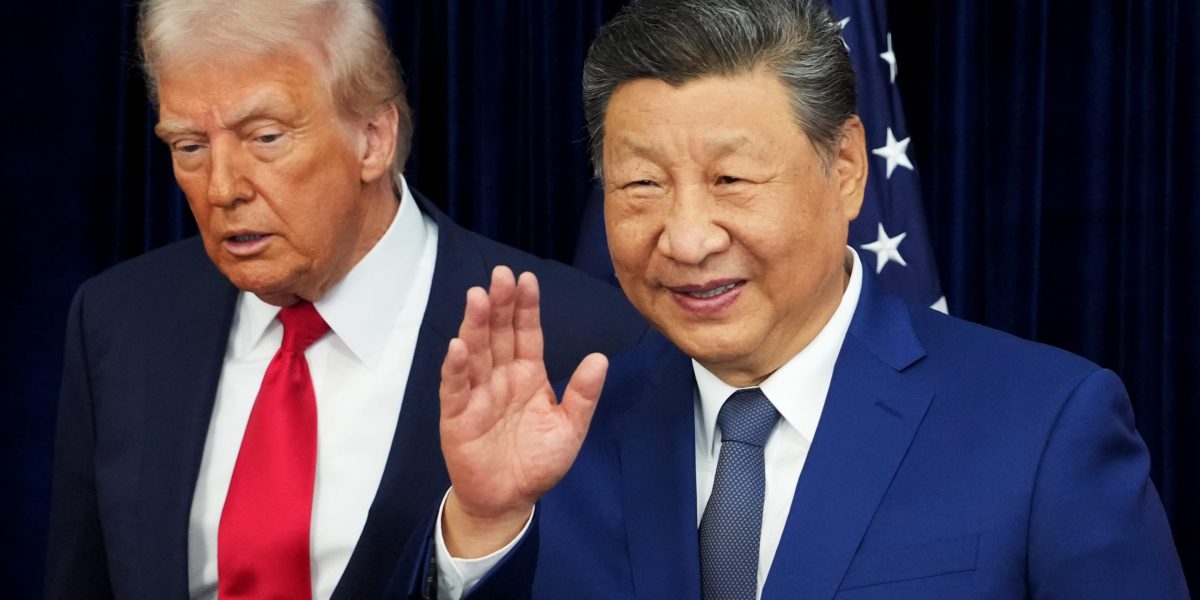
    Trump’s meeting with Chinese leader Xi Jinping this week suggests trade progress. But whether it will include the U.S. coal industry is still uncertain.

    “It’s hard to tell whether that’s just going to maintain the status quo or if that’s going to be an increase in exports of coal and soybeans to China,” coal analyst Seth Feaster with the Institute for Energy Economics and Financial Analysis said Friday.

    Trump has been easing up on regulations and opening up mining on federal lands. The result has been to “keep our lights on, our economy strong, and America Energy Dominant,” Interior Department spokesperson Charlotte Taylor said in an e-mailed statement Friday.

    The administration has also reduced royalty rates for coal extracted from federal lands and in September pledged $625 million to bolster coal power generation, including by recommissioning or modernizing old coal plants amid growing electricity demand from artificial intelligence and data centers.

    Recent government coal lease sales in Montana, Wyoming and Utah, however, have failed to draw bids deemed acceptable by the Interior Department.

    So far this year, U.S. coal production is up about 6%, due not to Trump policies but higher natural gas prices, Feaster said.

    Meanwhile, coal exports fell 14% from January through September compared to the same time last year, according to an EIA report released Oct. 7.

    The drop followed an additional Chinese tariff of 15% on U.S. coal in February and a 34% reciprocal Chinese tariff on imports from the U.S. in April, the EIA said in a report issued Friday.

    The U.S. exports about one-fifth of the coal it produces. Most goes to India, the Netherlands, Japan, Brazil and South Korea.

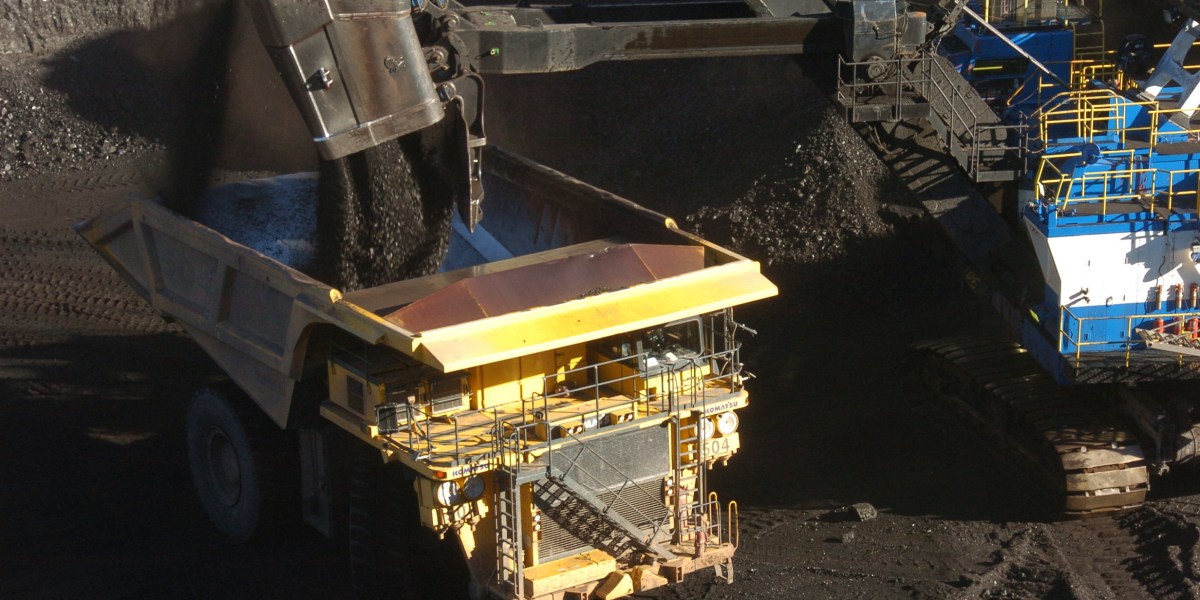
    China is not a top destination, taking in only about one-tenth of U.S. coal exports. But it has had an outsized effect on overall U.S. coal exports by halting all coal from the U.S. since April, said Andy Blumenfeld, a coal analyst at McCloskey by OPIS.

    Almost three-quarters of U.S. coal exported to China last year was metallurgical coal used in steelmaking. The rest was thermal coal burned in power plants to produce electricity, according to Blumenfeld.

    Nearly all U.S. metallurgical coal is mined in Appalachia, while the bulk of U.S. thermal coal comes from massive, open-pit mines in the Powder River Basin of Wyoming and Montana.

    Appalachia would therefore benefit most from a resumption of U.S. coal exports to China, noted Blumenfeld by email.

    “There is optimism,” Blumenfeld wrote. “But there is little documentation to back that up right now.”

    Most coal headed for China last year went through Baltimore, with lesser amounts via the Norfolk, Virginia, area and Gulf of Mexico, according to Blumenfeld.

    Relatively little thermal coal from the Western U.S. is exported due to the cost of hauling it by rail to the West Coast, where there has also been political resistance to building port facilities to export more coal.

    Continue Reading

  • With 50% ownership of the shares, PEXA Group Limited (ASX:PXA) is heavily dominated by institutional owners

    With 50% ownership of the shares, PEXA Group Limited (ASX:PXA) is heavily dominated by institutional owners

    • Significantly high institutional ownership implies PEXA Group’s stock price is sensitive to their trading actions

    • 51% of the business is held by the top 6 shareholders

    • Using data from analyst forecasts alongside ownership research, one can better assess the future performance of a company

    We’ve found 21 US stocks that are forecast to pay a dividend yield of over 6% next year. See the full list for free.

    To get a sense of who is truly in control of PEXA Group Limited (ASX:PXA), it is important to understand the ownership structure of the business. We can see that institutions own the lion’s share in the company with 50% ownership. In other words, the group stands to gain the most (or lose the most) from their investment into the company.

    Because institutional owners have a huge pool of resources and liquidity, their investing decisions tend to carry a great deal of weight, especially with individual investors. Hence, having a considerable amount of institutional money invested in a company is often regarded as a desirable trait.

    Let’s take a closer look to see what the different types of shareholders can tell us about PEXA Group.

    View our latest analysis for PEXA Group

    ASX:PXA Ownership Breakdown November 1st 2025

    Institutional investors commonly compare their own returns to the returns of a commonly followed index. So they generally do consider buying larger companies that are included in the relevant benchmark index.

    PEXA Group already has institutions on the share registry. Indeed, they own a respectable stake in the company. This can indicate that the company has a certain degree of credibility in the investment community. However, it is best to be wary of relying on the supposed validation that comes with institutional investors. They too, get it wrong sometimes. It is not uncommon to see a big share price drop if two large institutional investors try to sell out of a stock at the same time. So it is worth checking the past earnings trajectory of PEXA Group, (below). Of course, keep in mind that there are other factors to consider, too.

    earnings-and-revenue-growth
    ASX:PXA Earnings and Revenue Growth November 1st 2025

    Since institutional investors own more than half the issued stock, the board will likely have to pay attention to their preferences. Hedge funds don’t have many shares in PEXA Group. Commonwealth Bank of Australia is currently the largest shareholder, with 24% of shares outstanding. With 6.5% and 5.5% of the shares outstanding respectively, Aware Super Pty Ltd and Apollo Global Management, Inc. are the second and third largest shareholders.

    Continue Reading

  • Finnair (HLSE:FIA1S) Margin Weakness Challenges Bullish Growth Narrative Despite Forecasted 73.5% EPS Surge

    Finnair (HLSE:FIA1S) Margin Weakness Challenges Bullish Growth Narrative Despite Forecasted 73.5% EPS Surge

    Finnair Oyj (HLSE:FIA1S) posted a mixed set of numbers this period, with earnings forecast to surge 73.5% per year, far ahead of the Finnish market’s expected 17.1% growth rate. Net profit margin narrowed to 0.3% from 2.1% last year, and though the company delivered annual earnings growth of 53.6% over the past five years, this year’s figures include a large one-off gain of €42.6 million up to September 2025.

    See our full analysis for Finnair Oyj.

    Up next, we will see how these headline results compare to the narratives and expectations shaping Finnair’s outlook. Some assumptions will hold up, but others may face tough questions as we dig deeper.

    See what the community is saying about Finnair Oyj

    HLSE:FIA1S Earnings & Revenue History as at Nov 2025
    • Analysts predict that Finnair’s profit margins will rise from 0.5% today to 2.7% within three years, signaling significant anticipated improvement beyond this year’s subdued 0.3% net margin.

    • According to the analysts’ consensus view, several key strategies are underpinning this optimism:

      • The capacity increase of roughly 10% (ASK growth) in 2025, combined with investments in fuel-efficient aircraft, is expected to drive both top-line growth and strengthen underlying margins.

      • Growth in high-margin ancillary sales and expected route efficiencies if Russian overflights resume are seen as strong levers for margin uplift, helping to counteract higher environmental and operating costs.

    • While industrial disputes and cost inflation continue to be risks, healthy summer demand and the ongoing fleet renewal provide tangible support for the positive margin outlook.

    • Analysts expect the number of shares outstanding to decline by 0.61% per year over the coming three years, which could further enhance earnings per share if profit growth materializes as forecast.

    • What stands out is that despite these bullish drivers, the large one-off gain of €42.6 million included up to September 2025 has inflated the latest reported earnings. This makes the underlying margin story one to watch as these extraordinary items fade from results.

    • Fuel efficiency and strategic route changes will be critical in determining if this margin trajectory is sustainable or just a temporary lift.

    • See how the consensus narrative could shape the next phase of Finnair’s story: 📊 Read the full Finnair Oyj Consensus Narrative.

    • Finnair’s shares are trading at a 55x Price-to-Earnings ratio, far above both the global airline industry average of 8.7x and its peer group at 14.3x, even as reported earnings benefit from one-off items.

    • Analysts’ consensus view flags this premium valuation as a point of tension:

      • The current share price of €2.85 sits well below the DCF fair value estimate of €15.69. This suggests theoretical upside if optimistic forecasts are realized.

      • However, a PE multiple this elevated could be hard to justify long term if future profit margins remain volatile and earnings rely on non-recurring gains.

    Continue Reading

  • China to suspend some rare earth curbs, probes on U.S. chip firms

    China to suspend some rare earth curbs, probes on U.S. chip firms

    China will effectively suspend implementation of additional export controls on rare earth metals and terminate investigations targeting US companies in the semiconductor supply chain, the White House announced.

    The White House issued a fact sheet on Saturday outlining some details of the trade pact agreed to earlier this week by President Donald Trump and Chinese leader Xi Jinping that aimed to ease tensions between the world’s largest economies.

    Under the deal, China will issue general licenses valid for exports of rare earths, gallium, germanium, antimony and graphite “for the benefit of U.S. end users and their suppliers around the world,” the White House said, meaning the effective removal of controls China imposed in April 2025 and October 2022. The US and China previously said Beijing would suspend more restrictive controls announced in October 2025 for one year.

    Washington will also pause some of Trump’s so-called reciprocal tariffs on China for an additional year and is halting plans to implement a 100% tariff on Chinese exports to the US that was threatened for November. The White House also said that the US will further extend the expiration of certain Section 301 tariff exclusions, currently due to expire on Nov. 29, 2025, until Nov. 10, 2026.

    The Chinese Embassy in Washington did not immediately respond to a request for comment on Saturday. 

    The landmark summit between Trump and Xi, their first face-to-face meeting of the US president’s second term, saw the leaders stabilize relations in the short term after an escalating trade fight that had roiled markets and sparked fears of a global downturn.

    Under their agreement, according to the White House, China agreed to pause sweeping controls on rare-earth magnets in exchange for a US agreement to roll back an expansion of curbs on Chinese companies. China had used its dominance in the processing of rare-earth minerals as leverage, threatening to restrict their flow to the US and allies countries.

    The US also agreed to halve a fentanyl-related tariff to 10% from 20%, while Beijing will resume purchases of American soybeans and other agricultural products. The US has said China will buy 12 million metric tons of soybeans during the current season, and a minimum of 25 million metric tons a year for the next three years. Trump on Friday indicated he would like to remove all of the fentanyl-related tariffs if China continued to crack down on exports of the drug and precursor chemicals used to make it. 

    Read more: Trump-Xi Truce Buys Time as Both Seek Leverage in Broader Fight

    “As soon as we see that, we’ll get rid of the other 10%,” Trump told reporters aboard Air Force One on Friday. 

    The US also said on Saturday that Beijing will take steps to allow the Chinese facilities of Dutch chipmaker Nexperia BV to resume shipments, confirming a Bloomberg report from a day earlier. This move will likely ease worries about chip shipments that had threatened auto production as a trade fight between China and the US escalated.

    But while the agreement has calmed tensions, the pact may be a short-term truce in an extended trade fight with the measures just meant to last one year. And despite addressing some key issues — and with both sides winning key concessions — the agreement fails to comprehensively address all of the issues at the heart of the US-China trade fight and other geopolitical flashpoints such as Taiwan and Russia’s war in Ukraine.

    Trump has signed off on a plan that would see an American consortium buy the US operations of ByteDance Ltd.’s TikTok app, but Beijing has yet to formally approve that sale. The US president has also said there would be cooperation on energy, saying that China had agreed to purchases oil and gas from Alaska.

    Continue Reading

  • Sam Altman says OpenAI’s revenue is ‘well more’ than $13 billion and could hit $100 billion by 2027

    Sam Altman says OpenAI’s revenue is ‘well more’ than $13 billion and could hit $100 billion by 2027

    OpenAI CEO Sam Altman was extremely bullish about the startup’s revenue projections and indicated he would relish the opportunity to take on his haters.

    In an episode of the Bg2 Pod that was posted on Friday, host Brad Gerstner, who is also the founder of Altimeter Capital, asked how the company could make financial commitments totaling $1.4 trillion when annual revenue is reportedly $13 billion.

    “We’re doing well more revenue than that,” Altman replied.

    OpenAI has announced massive AI infrastructure deals in recent weeks with companies like Nvidia, Broadcom and Oracle. That’s as other so-called AI hyperscalers like Amazon, Alphabet, Meta, and top OpenAI investor Microsoft are collectively totaling hundreds of billions of dollars a year in capital expenditures.

    While OpenAI continues to raise tens of billions of dollars from investors and generate billions more in revenue, Altman has also warned losses will persist.

    And Microsoft’s latest quarterly results included a $4 billion charge that imply OpenAI lost $12 billion last quarter. OpenAI didn’t immediately respond to a request for comment.

    But on the Bg2 Pod, Altman quickly followed up his comment on OpenAI’s revenue with forceful pushback against those who doubt his company.

    “We do plan for revenue to grow steeply. Revenue is growing steeply,” he said. “We are taking a forward bet that it’s going to continue to grow and that not only will ChatGPT keep growing, but we will be able to become one of the important AI clouds, that our consumer device business will be a significant and important thing, that AI that can automate science [and] will create huge value.”

    Altman added that one of the rare instances when being a publicly traded company would be appealing is when there’s an opportunity for short-sellers to lose big.

    “I would love to tell them they could just short the stock, and I would love to see them get burned on that,” he said.

    Still, Altman acknowledged OpenAI is taking a risk and could stumble, noting that if it doesn’t obtain enough computing capacity then revenue may fall short of forecasts.

    But Microsoft CEO Satya Nadella, who also appeared on the podcast, said OpenAI has exceeded all the business plans that he has seen.

    “Everyone talks about all the success and the usage and what have you,” he said. “But even I’d say all up, the business execution has been just pretty unbelievable.”

    Later in the conversation, Altman hinted at even more explosive revenue growth in the next few years.

    Last year, sources told The New York Times that OpenAI predicted revenue would hit $100 billion by 2029.

    While talking about the potential for OpenAI to go public in the coming years, Bg2 host Gerstner floated revenue estimates topping $100 billion a year in 2028 or 2029.

    “How about ’27?” Altman interjected.

    Continue Reading

  • Brazil’s Azul Says It Reaches Deal With Unsecured Creditors – Bloomberg.com

    1. Brazil’s Azul Says It Reaches Deal With Unsecured Creditors  Bloomberg.com
    2. US Trustee Objects To Azul Ch. 11 Plan Releases  Law360
    3. Azul Airlines Reaches Deal With Creditors to Restructure Finances  Travel And Tour World
    4. Azul S A : Enters into Agreement with Unsecured Creditors Committee and Updates the Market on the Progress of its Chapter 11 Proceedings  MarketScreener
    5. Brazil’s Azul reaches deal with unsecured creditors in Chapter 11 proceeding  The Mighty 790 KFGO

    Continue Reading