- Air India Seeks $1.1 Billion Lifeline From Tata, SIA After Crash Bloomberg.com
- Air India Seeks About Rs 10,000 Crore Financial Support From Owners: Report Zee News
- Air India seeks Rs 10,000 crore lifeline from Tata, Singapore Airlines after crash: Report India Today
- Air India in Turbulence: The ‘Maharaja’ Needs Rs 10,000 Crore to Stay in the Sky — Report Times Now
- Ahmedabad crash: Air India seeks Rs 10,000 crore lifeline from shareholders The New Indian Express
Category: 3. Business
-

Air India Seeks $1.1 Billion Lifeline From Tata, SIA After Crash – Bloomberg.com
-

PIA secures EU cargo license renewal
.
KARACHI:The Pakistan International Airlines (PIA) has successfully passed the European Union’s cargo audit, marking a highly positive development for Pakistan’s aviation industry.
The audit was carried out by OGADA, the organization responsible for inspecting and validating cargo operations in the European Union.
The OGADA validation team carried out audits at Karachi, Lahore and Islamabad airports.
Following the successful completion of the audit, it renewed PIA’s cargo license.
The EU officially issued the updated license and formally informed PIA CEO Amir Hayat and the director general of the Civil Aviation Authority (CAA) of the development.
With the renewal of this cargo license, PIA can now transport cargo on its passenger flights to the UK and Europe. The CAA’s director of aviation security led coordination efforts and ensured full cooperation with the EU audit team throughout the process.
PIA had already been granted a cargo license for the UK prior to this, and the EU cargo auditors have now extended PIA’s license until 2028.
Continue Reading
-
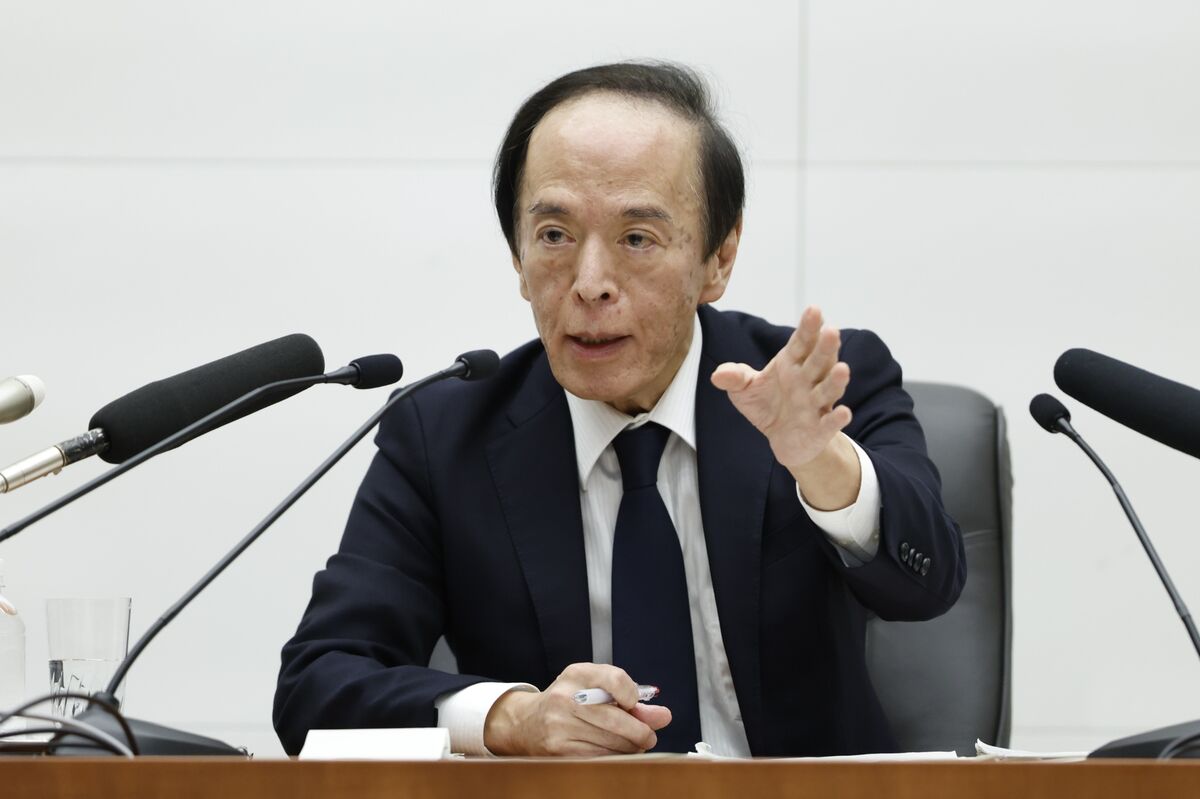
Japan Awaits Two-Year Bond Auction After BOJ’s Cautious Tone
Japan’s bond market heads into a sale of policy-sensitive two-year notes Friday on a somewhat stronger footing on speculation the Bank of Japan isn’t rushing into the next rate increase.
The auction comes 24 hours after the BOJ’s first policy decision Thursday under a new government led by Sanae Takaichi, who’s seen as an advocate of relatively low rates. Governor Kazuo Ueda gave few hints about the next rate hike after the BOJ stood pat on policy, saying that the central bank isn’t falling behind the curve in the fight against inflation.
Continue Reading
-

Apple claims ‘tremendous’ global uptake of latest iPhones
Danielle KayeBusiness reporter
 Reuters
Apple boss Tim Cook holds an iPhone 17 pro and an iPhone Air, as Apple holds an event at the Steve Jobs Theater on its campus in Cupertino, California, US September 9, 2025. The latest iPhones have seen “a tremendous response” across the globe, said Apple boss Tim Cook as the tech giant released its latest financial results.
The firm unveiled its thinnest iPhone, the Air, in September, along with upgraded iPhone 17 models, proving a bumper crop for the firm.
It said it expects the upcoming Christmas and New Year’s period to be a blockbuster, forecasting overall revenue to be up to 12% higher than the same period last year.
But Apple narrowly missed estimates for iPhone sales in its fourth quarter that ended in September, which boss Tim Cook blamed on supply constraints for several iPhone models along with a lag in shipments to China.
Despite that, during a call with analysts Mr Cook said Apple is heading into the holiday season “with our most powerful lineup ever”.
The iPhone Air helped entice customers and boost sales.
If the company meets its sales forecast for the holiday season, it would be Apple’s “best quarter ever”, chief financial officer Kevan Parekh told analysts on Thursday.
Apple reported overall fourth quarter revenue of $102.5bn (£77bn), topping analysts’ estimates and representing an 8% increase from the previous year. But iPhone revenue, specifically, came in slightly below expectations at $49bn (£37bn).
Mr Cook stressed that global demand for iPhone 16 and 17 models has been robust, despite constraints that led to the sales miss in the recent quarter.
“We’re not predicting when the supply and demand will balance,” Mr Cook said. “We’re obviously working very hard to achieve that, because we want to get as many of these products out to customers as possible.”
In the Chinese market, he said he “couldn’t be more pleased with how things are going”, citing strong reception to the new iPhone 17.
Data from Counterpoint, a technology market research firm, showed that the first 10 days of iPhone 17 sales in the US and China were up 14% compared with sales of the iPhone 16.
The effects of US President Donald Trump’s tariffs also remain top of mind for Apple’s investors. It manufactures many iPhones in China and its global supply chain leaves it vulnerable to trade wars – though a recent meeting between Trump and President Xi raised hopes for a de-escalation of tensions.
Mr Cook on Thursday told analysts that the company took at $1.1bn (£836m) hit from tariffs in the recently ended quarter. He said the hit will likely amount to another $1.4bn in the holiday quarter as Trump imposes taxes on those whom he sees as “unfavourable” to the US economy.
Amazon, which also reported quarterly results on Thursday, projected sales to land between $206bn (£156bn) and $213bn (£161bn) for the current quarter through December, largely in line with analysts’ expectations.
“We’re encouraged by the start of the peak season,” Brian Olsavsky, Amazon’s chief financial officer, told analysts.
Amazon also said that revenue from Amazon Web Services (AWS), its cloud computing business, rose 20% in the third quarter from the previous year – its fastest pace since 2022.
For investors, that AI-driven growth could come as a reassurance, as Apple faces fierce competition in the race to dominate the AI boom.
Apple’s stock has lagged behind that of rivals Microsoft and Alphabet, both of whom on Wednesday reaffirmed their commitment to spending big on the technology. Those firms have reported even faster growth than Amazon in their cloud computing businesses.
“We continue to see strong demand in AI and core infrastructure, and we’ve been focused on accelerating capacity,” Andy Jassy, Amazon’s chief executive, said in a statement.
Continue Reading
-

Stock Market Today: Dow, S&P Live Updates for Oct. 31
Asian equities climbed close to their record and US equity-index futures advanced as strong earnings from Amazon.com Inc. and Apple Inc. lifted sentiment after a brief pause in the global stock rally.
MSCI’s regional stocks index climbed 0.6% at the open, with Japanese shares leading the charge. Apple shares rose in late trading after the company beat revenue estimates and offered a bullish holiday forecast. Amazon surged 13% in extended trading after reporting its fastest cloud unit growth in nearly three years.
Continue Reading
-

Saudi Arabia scales AI ambitions amid infrastructure realities
RIYADH: As global powers accelerate artificial intelligence investments, Saudi Arabia is confronting a defining moment in realizing its digital transformation ambitions.
Through Vision 2030, the Kingdom has made foundational investments in sovereign cloud infrastructure, high-performance computing, and international partnerships, positioning itself as a regional AI frontrunner.
However, industry experts caution that translating these ambitions into nationwide impact requires addressing three core challenges: modernizing legacy hardware systems, creating unified data architectures, and cultivating specialized compute talent.
The central question remains: Does Saudi Arabia possess the infrastructure needed to deliver AI at visionary scale?
Fadi Kanafani, general manager for SoftServe in the Middle East, said the Kingdom’s progress is already tangible. “Saudi is beyond the announcement stage; now we have action on the ground,” he told Arab News.
Fadi Kanafani, general manager for SoftServe in the Middle East. (Supplied) Kanafani cited Humain’s AI-driven public service automation and AdopTech’s industrial sandboxes for manufacturing innovation as examples of execution beyond strategy. He also noted Aramco Digital’s alliances with hardware pioneers such as Groq — known for ultra-low latency inference engines — and Cerebras, a leader in wafer-scale computing, as evidence of cutting-edge capacity being embedded directly into the national ecosystem.
Global cloud providers are amplifying this momentum through substantial infrastructure commitments. Oracle’s second Riyadh region enhances sovereign data capabilities for government entities, while Amazon Web Services’ upcoming 2026 regional hub marks one of the Middle East’s largest cloud investments, Kanafani said.
At the academic front, Google Cloud and Microsoft Azure have launched AI innovation labs at King Abdullah University of Science and Technology, while Salesforce’s decision to base its regional headquarters in Riyadh signals growing international confidence in the Kingdom’s digital roadmap.
Suhail Hasanain, NetApp’s senior director for the Middle East and Africa, echoed that alignment.

Suhail Hasanain, senior director for NetAppfor the Middle East and Africa. (Supplied) “Saudi Arabia has made remarkable progress in establishing foundations for AI-driven transformation,” he said. “Vision 2030’s prioritization of data sovereignty and advanced compute resources embeds artificial intelligence at the heart of national development — from Neom’s cognitive city ambitions to the National Data Bank’s unified information architecture.”
Legacy systems and talent gaps
Despite robust infrastructure growth, large-scale enterprise adoption still faces operational barriers. Outdated financial systems, fragmented electronic health records, and siloed industrial datasets continue to constrain AI’s full potential.
Kanafani pointed to these friction points: “Most organizations remain anchored to legacy systems fundamentally incompatible with AI’s data requirements. Critical information exists in disconnected silos — patient records isolated from diagnostic AI tools, equipment maintenance logs separated from supply chain optimization algorithms.”
Regulatory complexity compounds the challenge. “Governance frameworks vary significantly across healthcare, financial services, and critical infrastructure sectors, creating compliance uncertainty during scaling,” Kanafani added.
Hasanain stressed the human capital dimension. “Beyond physical infrastructure, we confront a severe shortage of specialized talent — data engineers capable of curating trusted datasets, machine learning operations specialists to productionize models, and AI governance experts to ensure ethical deployment.”
He outlined three pillars for closing these gaps: establishing benchmark datasets, building hybrid systems that balance performance with sovereignty, and developing comprehensive workforce pipelines to operationalize AI across sectors.
From pilots to real-world impact
Across energy, healthcare, and logistics, real-world applications are already demonstrating AI’s potential when aligned with national priorities.
In energy, Aramco uses predictive maintenance algorithms to anticipate equipment failures before they disrupt operations. In healthcare, institutions like King Faisal Specialist Hospital leverage computer vision tools for faster, more accurate medical imaging analysis. Meanwhile, Neom’s Oxagon industrial zone applies digital twin technology to simulate logistics before implementation.

Aramco’s AI hub, where predictive maintenance algorithms are used to anticipate equipment failures before they disrupt operations. (Aramco photo) NetApp underpins such innovations through adaptable infrastructure solutions. “We empower organizations to orchestrate AI workloads seamlessly across sovereign cloud environments like STC’s and global hyperscalers like Microsoft Azure,” Hasanain explained.
He added: “For a major Riyadh-based financial institution, we integrated transaction data across 200 branches into a unified real-time fraud detection platform — significantly enhancing security while reducing operational costs.”
SoftServe, meanwhile, applies a co-creation model. “We partner deeply with Saudi organizations to build purpose-driven solutions,” Kanafani said.
“For a Tabuk agricultural enterprise, we developed a custom AI model that optimizes irrigation by synthesizing satellite imagery, soil moisture sensors, and weather pattern analysis – delivering measurable water conservation outcomes.”
Kanafani emphasized that organizational culture must evolve alongside technology. Their approach embeds change management from the outset, ensuring readiness for transformation.

Accelerated by NVIDIA AI Blueprints, SoftServe Gen AI Industrial Assistant streamlines the navigation of equipment manuals, speeds up troubleshooting, and simplifies maintenance tasks. (Softserve photo) Balancing sovereignty and collaboration
The interplay between national priorities and international innovation continues to define Saudi Arabia’s AI journey.
“Data sovereignty remains non-negotiable for sensitive applications in national security, central banking, and citizen services,” Hasanain said. “Yet strategic collaborations with global technology leaders accelerate capability development – such as deploying NVIDIA’s advanced DGX systems while simultaneously training Saudi engineers to manage them locally.”Kanafani pointed to hybrid models gaining traction: “Leading Saudi manufacturers increasingly adopt blended architectures — maintaining proprietary process data on localized secure servers while leveraging global cloud scalability for supply chain optimization and market intelligence applications. This harmonizes control with flexibility.”
As Saudi Arabia develops national AI ethics guidelines, Kanafani underscored proactive design: “Responsible innovation requires embedding bias detection and algorithmic transparency mechanisms directly into AI systems during development — not attempting remediation after deployment reveals ethical shortcomings.”

Saudi Arabia launched the Principles of AI Ethics developed by #SDAIA during the #GlobalAISummit in September 2022. (X: @globalaisummit) Building the AI workforce
The Kingdom’s Future Skills initiative aims to train 20,000 AI specialists by 2030 through academic partnerships and hands-on industry experience.
Hasanain noted the importance of integrating learning with real-world exposure. “Oracle’s developer academies provide vital theoretical foundations, but sustainable capability requires integrating graduates into real-world industry projects where they confront practical scaling challenges.”
Still, both experts warn that success will hinge on disciplined execution. “Underestimating cybersecurity requirements or data governance complexity undermines even the most sophisticated AI initiatives,” Kanafani cautioned.

Launch of the Future Skills Initiative as part of the Saudi-British Strategic Partnership Council and coinciding with the Human Capability Initiative Conference last April. (SPA) As the global race for AI infrastructure intensifies, Saudi Arabia’s investments have positioned it to translate ambition into regional leadership. Yet, as Hasanain noted, sustaining momentum will require operational focus.
“Our trajectory is clear, but achieving scalable impact demands relentless focus on data accessibility and talent density — transforming pilot potential into nationwide transformation.”Kanafani concluded with a vision of distinction: “The Kingdom’s unique opportunity lies in synthesizing global technological excellence, local problem-solving ingenuity, and deeply rooted ethical traditions. This fusion could position Saudi Arabia as the world’s first values-led AI superpower — where technological leadership serves societal advancement.”

Continue Reading
-

Grade 16 officer’s flat in DHA robbed
KARACHI:Armed robbers looted over Rs20 million in cash, gold, and valuables from the flat of Keamari Muktiarkar Gada Hussain Abro, a Grade-16 government officer, in DHA Phase 6 on October 27.
According to Darakhshan police SHO Shahid Taj, the robbery was allegedly orchestrated by Abro’s domestic servant, Adnan Malik, who has been arrested, while his two accomplices remain at large.
“Around 2:30pm, my wife called to inform me that armed men had entered our home and looted valuables,” Abro stated in his FIR.
He said two unidentified men knocked on the door, which was opened by the servant Adnan, allowing the robbers inside. They confined the family in one room and looted Rs15 million in cash, an iPhone 13 Pro Max, another touchscreen mobile phone, gold jewelry including two rings, three chains, a gold necklace set, a laptop, and a tablet – items collectively worth around Rs8 million.
Continue Reading
-

Nektar Therapeutics to Participate in the Jefferies Global Healthcare Conference in London
SAN FRANCISCO, Oct. 30, 2025 /PRNewswire/ — Nektar Therapeutics (Nasdaq: NKTR) today announced that company management will be webcasting its participation in the Jefferies Global Healthcare Conference being held November 17-20, 2025 in London.
- Jefferies Global Healthcare Conference in London on Thursday, November 20, 2025 – webcast to be available at 11:00 a.m. Greenwich Mean Time / 3:00 a.m. Pacific Time – link here
The fireside chat will be accessible via the webcast link above as well as on the Investor Events section of the Nektar website: https://ir.nektar.com/events-and-presentations/events. A replay of the presentation will be available for 30 days.
If you would like to request a one-on-one meeting with company management during the conference, please reach out to your Jefferies representative.
About Nektar Therapeutics
Nektar Therapeutics is a clinical-stage biotechnology company focused on developing treatments that address the underlying immunological dysfunction in autoimmune and chronic inflammatory diseases. Nektar’s lead product candidate, rezpegaldesleukin (REZPEG, or NKTR-358), is a novel, first-in-class regulatory T cell stimulator being evaluated in two Phase 2b clinical trials, one in atopic dermatitis, one in alopecia areata, and in one Phase 2 clinical trial in Type 1 diabetes mellitus. Nektar’s pipeline also includes a preclinical bivalent tumor necrosis factor receptor type II (TNFR2) antibody and bispecific programs, NKTR-0165 and NKTR-0166, and a modified hematopoietic colony stimulating factor (CSF) protein, NKTR-422. Nektar, together with various partners, is also evaluating NKTR-255, an investigational IL-15 receptor agonist designed to boost the immune system’s natural ability to fight cancer, in several ongoing clinical trials.
Nektar is headquartered in San Francisco, California. For further information, visit http://www.nektar.com and follow us on LinkedIn.
Contact:
For Investors:
Vivian Wu of Nektar Therapeutics
628-895-0661For Media:
Jonathan Pappas
LifeSci Communications
857-205-4403
[email protected]SOURCE Nektar Therapeutics
Continue Reading
-
Omnicom and Interpublic Announce Extension of Exchange Offers in Connection with Expected Merger Closing
NEW YORK, Oct. 30, 2025 — Omnicom Group Inc. (“Omnicom”) (NYSE: OMC) and The Interpublic Group of Companies, Inc. (“IPG”) (NYSE: IPG) today announced that, in connection with the closing of the merger between Omnicom and IPG expected by the end of November, Omnicom has extended the expiration date of its previously announced exchange offers and consent solicitations for IPG’s outstanding notes (as set forth in Appendix A to this press release) from 5:00 p.m., New York City time, on October 31, 2025, to 5:00 p.m., New York City time, on November 28, 2025, unless further extended. Omnicom will issue new Omnicom notes in exchange for the IPG notes as detailed in the attached Appendix A, subject to the closing of the offers and solicitations, which are conditioned upon the closing of the merger.
About Omnicom
Omnicom (NYSE: OMC) is a leading provider of data-inspired, creative marketing and sales solutions. Omnicom’s iconic agency brands are home to the industry’s most innovative communications specialists who are focused on driving intelligent business outcomes for their clients. The company offers a wide range of services in advertising, strategic media planning and buying, precision marketing, retail and digital commerce, branding, experiential, public relations, healthcare marketing and other specialty marketing services to over 5,000 clients in more than 70 countries. For more information, visit www.omnicomgroup.com.About IPG
IPG (NYSE: IPG) (www.interpublic.com) is a values-based, data-fueled, and creatively driven provider of marketing solutions. Home to some of the world’s best-known and most innovative communications specialists, IPG global brands include Acxiom, Craft, FCB, FutureBrand, Golin, Initiative, IPG Health, IPG Mediabrands, Jack Morton, KINESSO, MAGNA, McCann, Mediahub, Momentum, MRM, MullenLowe Global, Octagon, UM, Weber Shandwick and more.FORWARD-LOOKING STATEMENTS
Certain statements in this press release contain forward-looking statements, including statements within the meaning of the Private Securities Litigation Reform Act of 1995. In addition, from time to time, Omnicom or IPG or their representatives have made, or may make, forward-looking statements, orally or in writing. These statements may discuss goals, intentions and expectations as to future plans, trends, events, results of operations or financial condition, or otherwise, based on current beliefs of Omnicom’s and IPG’s management as well as assumptions made by, and information currently available to, Omnicom’s and IPG’s management. Forward-looking statements may be accompanied by words such as “aim,” “anticipate,” “believe,” “plan,” “could,” “should,” “would,” “estimate,” “expect,” “forecast,” “future,” “guidance,” “intend,” “may,” “will,” “possible,” “potential,” “predict,” “project” or similar words, phrases or expressions. These forward-looking statements are subject to various risks and uncertainties, many of which are outside Omnicom’s and IPG’s control. Therefore, you should not place undue reliance on such statements. Factors that could cause actual results to differ materially from those in the forward-looking statements include:
- risks relating to the pending merger between Omnicom and IPG, including: that the merger may not be completed in a timely manner or at all, which could result in the termination of the exchange offers and consent solicitations; delays, unanticipated costs or restrictions resulting from regulatory review of the merger, including the risk that Omnicom or IPG may be unable to obtain governmental and regulatory approvals required for the merger, or that such approvals may result in the imposition of conditions that could adversely affect the combined company or the expected benefits of the merger; uncertainties associated with the merger may cause a loss of both companies’ management personnel and other key employees, and cause disruptions to both companies’ business relationships and a loss of clients; the merger agreement subjects Omnicom and IPG to restrictions on business activities prior to the effective time of the merger; Omnicom and IPG are expected to incur significant costs in connection with the merger and integration; litigation risks relating to the merger; the business and operations of both companies may not be integrated successfully in the expected time frame; the merger may result in a loss of both companies’ clients, service providers, vendors, joint venture participants and other business counterparties; and the combined company may fail to realize all or some of the anticipated benefits of the merger or fail to effectively manage its expanded operations;
- adverse economic conditions and disruptions, including geopolitical events, international hostilities, acts of terrorism, public health crises, inflation or stagflation, tariffs and other trade barriers, central bank interest rate policies in countries that comprise Omnicom’s and IPG’s major markets, labor and supply chain issues affecting the distribution of clients’ products, or a disruption in the credit markets;
- international, national or local economic conditions that could adversely affect Omnicom, IPG or their respective clients;
- losses on media purchases and production costs incurred on behalf of clients;
- reductions in client spending, a slowdown in client payments or a deterioration or disruption in the credit markets;
- the ability to attract new clients and retain existing clients in the manner anticipated;
- changes in client marketing and communications services requirements;
- failure to manage potential conflicts of interest between or among clients;
- unanticipated changes related to competitive factors in the marketing and communications services industries;
- unanticipated changes to, or the ability to hire and retain key personnel;
- currency exchange rate fluctuations;
- reliance on information technology systems and risks related to cybersecurity incidents;
- effective management of the risks, challenges and efficiencies presented by utilizing artificial intelligence (AI) technologies and related partnerships;
- changes in legislation or governmental regulations affecting Omnicom, IPG or their respective clients;
- risks associated with assumptions made in connection with acquisitions, critical accounting estimates and legal proceedings;
- risks related to international operations, which are subject to the risks of currency repatriation restrictions, social or political conditions and an evolving regulatory environment in high-growth markets and developing countries;
- risks related to environmental, social and governance goals and initiatives, including impacts from regulators and other stakeholders, and the impact of factors outside of Omnicom’s and IPG’s respective control on such goals and initiatives;
- the outcome of the exchange offers and consent solicitations; and
- other business, financial, operational and legal risks and uncertainties detailed from time to time in Omnicom’s and IPG’s Securities and Exchange Commission (“SEC”) filings.
The foregoing list of factors is not exhaustive. You should carefully consider the foregoing factors and the other risks and uncertainties that may affect Omnicom’s and IPG’s businesses, including those described in Omnicom’s and IPG’s respective Annual Reports on Form 10-K and in other documents filed from time to time with the SEC. Forward-looking statements are based on the estimates and opinions of management at the time the statements are made. Except to the extent required by applicable law, neither Omnicom nor IPG undertakes any obligation to publicly update or revise any forward-looking statement, whether as a result of new information, future events or otherwise. You are cautioned not to place undue reliance on these forward-looking statements that speak only as of the date hereof.
NO OFFER OR SOLICITATION
This communication is not intended to and does not constitute an offer to purchase, or the solicitation of an offer to sell, or the solicitation of tenders or consents with respect to any security. No offer, solicitation, purchase or sale will be made in any jurisdiction in which such an offer, solicitation, or sale would be unlawful prior to registration or qualification under the securities laws of any such jurisdiction. In the case of the exchange offers and consent solicitations, the exchange offers and consent solicitations are being made solely pursuant to the Statement (as defined in Appendix A) and only to such persons and in such jurisdictions as is permitted under applicable law.
Appendix A
Omnicom hereby extends the expiration date of its previously announced Exchange Offers and Consent Solicitations for the Existing IPG Notes (each as defined below) from 5:00 p.m., New York City time, on October 31, 2025, to 5:00 p.m., New York City time, on November 28, 2025, unless further extended (the “Expiration Date”).
The (A) offers to exchange (each an “Exchange Offer” and, collectively the “Exchange Offers”) any and all outstanding 4.650% Notes due 2028 (the “Existing IPG 2028 Notes”), 4.750% Notes due 2030 (the “Existing IPG 2030 Notes”), 2.400% Notes due 2031 (the “Existing IPG 2031 Notes”), 5.375% Notes due 2033 (the “Existing IPG 2033 Notes”), 3.375% Notes due 2041 (the “Existing IPG 2041 Notes”) and 5.400% Notes due 2048 (the “Existing IPG 2048 Notes” and, together with the Existing IPG 2028 Notes, the Existing IPG 2030 Notes, the Existing IPG 2031 Notes, the Existing IPG 2033 Notes and the Existing IPG 2041 Notes, the “Existing IPG Notes”), each series as issued by IPG, for (1) up to $2,950,000,000 aggregate principal amount of new senior notes to be issued by Omnicom (the “New Omnicom Notes”) and (2) cash; and (B) related solicitations of consents on behalf of IPG (each a “Consent Solicitation” and, collectively, the “Consent Solicitations”) from Eligible Holders (as defined below) of a majority in aggregate principal amount outstanding of each series of Existing IPG Notes, to amend each indenture governing each series of Existing IPG Notes (each an “Existing IPG Indenture” and, collectively, the “Existing IPG Indentures”) are made pursuant to the terms and subject to the conditions set forth in the offering memorandum and consent solicitation statement, dated August 11, 2025 (the “Statement”).
As of 5:00 p.m., New York City time, on October 29, 2025, the principal amounts of Existing IPG Notes set forth in the table below had been validly tendered and not validly withdrawn (and consents thereby validly delivered and not validly revoked).
Title of Series of
Existing IPG
NotesCUSIP Number of
Existing IPG NotesTitle Series of
New Omnicom
NotesAggregate
Principal
Amount
OutstandingExisting IPG Notes Tendered Principal Amount Percentage 4.650% Notes due
2028460690BP4 4.650% Senior
Notes due 2028$500,000,000 $449,857,000 89.97 % 4.750% Notes due
2030460690BR0 4.750% Senior
Notes due 2030$650,000,000 $591,955,000 91.07 % 2.400% Notes due
2031460690BT6 2.400% Senior
Notes due 2031$500,000,000 $457,083,000 91.42 % 5.375% Notes due
2033460690BU3 5.375% Senior
Notes due 2033$300,000,000 $276,504,000 92.17 % 3.375% Notes due
2041460690BS8 3.375% Senior
Notes due 2041$500,000,000 $494,141,000 98.83 % 5.400% Notes due
2048460690BQ2 5.400% Senior
Notes due 2048$500,000,000 $491,619,000 98.32 % $2,950,000,000 $2,761,159,000 93.60 % On the early tender date and consent revocation deadline of August 22, 2025, Omnicom received consents sufficient to amend the respective Existing IPG Indentures to eliminate certain of the covenants, restrictive provisions and events of default from such Existing IPG Indentures (collectively, the “Proposed Amendments”). On August 22, 2025, IPG executed a supplemental indenture (the “New IPG Supplemental Indenture”) to the Existing IPG Indentures in order to effect the Proposed Amendments. The Proposed Amendments included in the New IPG Supplemental Indenture will become operative (i) only upon the settlement date for the Exchange Offers and the Consent Solicitations, which is expected to be within two business days after the Expiration Date and (ii) subject to satisfaction or waiver of certain conditions, including the completion of Omnicom’s pending transaction to acquire IPG contemplated by the Agreement and Plan of Merger, dated as of December 8, 2024 (such transaction, the “Merger”). Omnicom may waive any such condition at any time with respect to an Exchange Offer (other than the condition that the Merger shall have been completed).
The settlement date is expected to be within two business days after the Expiration Date. To the extent the completion of the Merger is not anticipated to occur on or before the Expiration Date, for any reason, Omnicom anticipates further extending the Expiration Date until such time that the Merger has been completed. Any such extension of the Expiration Date will correspondingly extend the settlement date. Omnicom will provide notice of any such extension in advance of the Expiration Date. During any extension of the Expiration Date, all Existing IPG Notes not previously tendered (or validly withdrawn) in an extended Exchange Offer will remain subject to such Exchange Offer and may be accepted for exchange by Omnicom. Following receipt of the requisite consents and the execution of the New IPG Supplemental Indenture on August 22, 2025, consents delivered in the Consent Solicitations with respect to each series of Existing IPG Notes can no longer be revoked.
The Statement and other documents relating to the Exchange Offers and Consent Solicitations will only be distributed to holders of Existing IPG Notes who complete and return a letter of eligibility certifying that they are (i) “qualified institutional buyers” within the meaning of Rule 144A under the Securities Act of 1933, as amended (“Securities Act”), or (ii) not “U.S. persons” and are outside of the United States within the meaning of Regulation S under the Securities Act and who are “non-U.S. qualified offerees” (as defined in the Statement) (such persons, “Eligible Holders”). Only Eligible Holders are authorized to receive and review the Statement and only Eligible Holders are permitted to tender Existing IPG Notes in the Exchange Offers and deliver consents in the Consent Solicitations. Eligible Holders of Existing IPG Notes who desire to obtain and complete the letter of eligibility and obtain copies of the Statement should call D.F. King & Co., Inc., the Exchange and Information Agent, at (800) 290-6432 (toll-free) or (212) 401-9970 (collect for banks and brokers). Information related to the Exchange Offers and Consent Solicitations, together with any updates, will be available at www.dfking.com/omnicom.
Except as described in this press release and the joint press releases issued by Omnicom and IPG on September 9, 2025 and September 30, 2025, all other terms of the Exchange Offers and Consent Solicitations remain unchanged.
Among other risks described in the Statement, the Exchange Offers and Consent Solicitations are expected to result in reduced liquidity for the Existing IPG Notes that are not exchanged, and the Proposed Amendments to the Existing IPG Indenture will reduce protection to remaining holders of Existing IPG Notes. Eligible Holders should refer to the Statement for more details on the risks related to the Exchange Offers and Consent Solicitations.
Omnicom has engaged BofA Securities, Inc., J.P. Morgan Securities LLC and Wells Fargo Securities, LLC as lead dealer managers and solicitation agents (the “Lead Dealer Managers”) and each of Barclays Capital Inc., BNP Paribas Securities Corp., Citigroup Global Markets Inc., Deutsche Bank Securities Inc. and HSBC Securities (USA) Inc., as co-dealer managers (together, the “Co-Dealer Managers” and together with the Lead Dealer Managers, the “Dealer Managers”) for the Exchange Offers and Consent Solicitations. Please direct questions regarding the Exchange Offers and Consent Solicitations to BofA Securities, Inc. at (888) 292-0070 (toll-free) or (980) 387-3907 (collect for banks and brokers), J.P. Morgan Securities LLC at (866) 834-4666 (toll-free) or (212) 834-3554 (collect for banks and brokers) or Wells Fargo Securities, LLC at (866) 309-6316 (toll free) or (332) 214-6330.
The New Omnicom Notes have not been registered under the Securities Act or any state or foreign securities laws, and they may not be offered or sold absent registration except pursuant to an exemption from, or in a transaction not subject to, the registration requirements of the Securities Act and any applicable state and foreign securities laws. The Statement has not been filed with or reviewed by the federal or any state securities commission or regulatory authority of any country, nor has any such commission or authority passed upon the accuracy or adequacy of the Statement. Any representation to the contrary is unlawful and may be a criminal offense.
None of Omnicom, IPG, any of their respective directors or officers, the Dealer Managers or the Exchange and Information Agent, or in each case, any of their respective affiliates, makes any recommendation as to whether or not Eligible Holders should tender or refrain from tendering all or any portion of the Existing IPG Notes in response to the Exchange Offers, or deliver consents in response to the Consent Solicitations. Eligible Holders will need to make their own decision as to whether to tender Existing IPG Notes in the Exchange Offer and participate in the Consent Solicitations and, if so, the principal amount of Existing IPG Notes to tender.
Continue Reading
-

A&O Shearman advises Celanese on USD 500 million divestiture of Micromax to Element Solutions Inc
The sale supports Celanese’s strategic priorities, including deleveraging its balance sheet and focusing on core growth areas.
The Micromax portfolio comprises advanced electronic inks and pastes used in high performance electronics across applications such as navigation and defense, medical monitoring, and advanced circuit board components. The portfolio includes conductive, resistive, and dielectric thick film inks, as well as Low Temperature Co fired Ceramic (LTCC) materials for multilayer circuits.
The transaction is expected to close in the first quarter of 2026, subject to customary closing conditions and required regulatory approvals.
“This transaction underscores our strength in executing complex, cross border divestitures,” said M&A partner, Romain Dambre. “We are pleased to support Celanese on a strategic portfolio action that advances its priorities and positions Micromax for continued success under new ownership.”
The A&O Shearman team that advised Celanese was led by M&A partner, Romain Dambre and associates Iqra Anees, Lucy Chen, and Becca Scher in New York.
Tax advice was provided by partner Ryan Bray in Dallas, and associate Brandon Fawbush in Washington D.C. Antitrust advice was provided by partner Noah Brumfield and associate Nick Putz in Washington D.C. Employment advice was provided by compensation, employment, pensions and governance (CEPG) partners Doreen Lilienfeld and Melisa Brower and associates Alexandra Sentner and Thomas Blecher in New York. Intellectual property advice was provided by partner JB Betker and associate Will Jackson in New York.
The multidisciplinary deal team was also supported by A&O Shearman teams across nine jurisdictions, including U.S., UK, China, France, Germany, Hong Kong, Japan, Netherlands, and Singapore.
Continue Reading