Category: 3. Business

  • China buys three U.S. soybean cargoes ahead of Trump-Xi meeting, Reuters reports

    China buys three U.S. soybean cargoes ahead of Trump-Xi meeting, Reuters reports

    China’s state-owned COFCO bought three U.S. soybean cargoes this week, two trade sources said.

    Bloomberg | Bloomberg | Getty Images

    China’s state-owned COFCO bought three U.S. soybean cargoes this week, two trade sources said, the country’s first purchases from this year’s U.S. harvest ahead of this week’s summit of leaders Donald Trump and Xi Jinping.

    COFCO purchased about 180,000 metric tons of soybeans for December and January shipment through Pacific Northwest port terminals, the sources said.

    COFCO did not immediately respond to a Reuters request for comment.

    Benchmark Chicago soybean futures prices jumped this week to their highest in 15 months, rebounding from recent five-year lows on hopes for a U.S.-China trade deal.

    China, the world’s biggest soy importer, shunned soybeans from the autumn U.S. harvest, switching its demand to South American suppliers amid trade conflict with Washington.

    The unusual delay has already cost U.S. farmers billions of dollars in lost sales, after they largely supported Trump in his campaigns for president.

    Continue Reading

  • Bessent calls on Japan to let central bank fight inflation – Financial Times

    Bessent calls on Japan to let central bank fight inflation – Financial Times

    1. Bessent calls on Japan to let central bank fight inflation  Financial Times
    2. Bessent says Japan government gives Bank of Japan policy space, avoid excess FX volatility  investingLive
    3. AUD/JPY gathers strength above 100.00 on hot Australian CPI inflation data  FXStreet
    4. Japanese yen strengthens after officials ease policy concerns  CNBC
    5. Bessent from the US Treasury believes Japan’s government supports BoJ, stabilising inflation and currency fluctuations  VT Markets

    Continue Reading

  • The BMW Group at the Japan Mobility Show 2025.

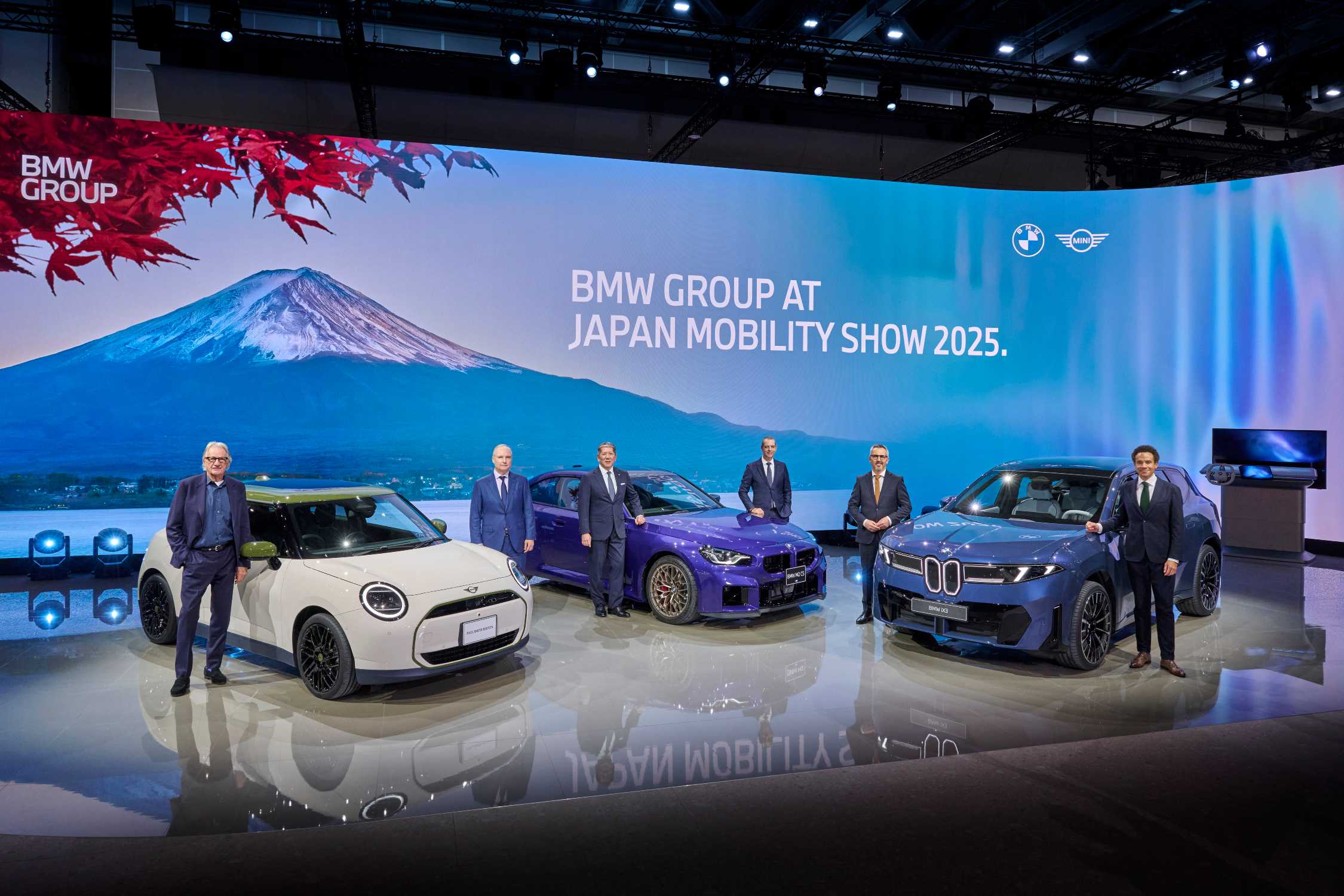
    The BMW Group at the Japan Mobility Show 2025.

    Munich. BMW and MINI will be hosting
    attention-grabbing stands at the Japan Mobility Show 2025. Taking to
    the stage in Tokyo on 31 October – 9 November will be a host of
    future-focused BMW and MINI models and technologies, including the
    first new Neue Klasse model BMW iX3, hydrogen fuel cell technology,
    the MINI family including new MINI Paul Smith Edition, the
    special-edition BMW M2 CS* and the BMW Concept Speedtop concept car.
    BMW Motorrad will also be represented at the event – in the form of
    the fully electric BMW CE 02 and the BMW M 1000 RR ridden by Toprak
    Razgatlıoğlu to his second successive FIM Superbike World Championship
    crown in 2025. On 29 and 30 October, representatives of the
    international media will have an early opportunity to take in the
    compelling exhibits from the three brands at the 1,100-square-metre
    stand in Tokyo’s Big Sight exhibition centre. Visitors to the show can
    also experience in-car gaming with AirConsole, which is making its
    debut with BMW Operating System 8.5. The new BMW iX3 will be among the
    vehicles offering customers this function, which brings with it
    world-renowned titles such as UNO® Car Party!, Hot Wheels: Xtreme
    OverdriveTM and PAC-MANTM Championship Edition.


    Asian premiere for the new BMW iX3, the first new Neue Klasse model.

    The Japan Mobility Show will host the Asian premiere of the first new
    Neue Klasse model: the BMW iX3. Lining up alongside the iX3 will be
    revolutionary technologies that point the way to the future of the BMW
    Group as a whole. Visitors to the Japan Mobility Show will see the new
    BMW iX3 reveal technological leaps forward in a host of different
    areas: electric mobility, display and control/operation concept,
    digitalisation, connectivity, design and sustainability. All future
    BMW models will benefit from the innovations brought by the Neue
    Klasse – regardless of the type of drive system they use.

    Production of the BMW iX3 for Japan is scheduled to begin in March
    2026, with sales through the Japanese BMW dealer network currently due
    to begin in the second half of 2026. The BMW iX3 launches an all-new
    design language for the BMW brand that faithfully conveys the
    technological advances achieved. The revolutionary display and
    control/operation concept BMW Panoramic iDrive with the new BMW
    Panoramic Vision and new BMW Operating System X redefines the user
    experience and creates flawless driver orientation in the BMW mould.
    The zonal electronics architecture featuring four high-performance
    computers – the “superbrains” – provides the basis for the
    software-defined vehicle. One of these high-performance computers is
    the Heart of Joy: with the BMW Dynamic Performance Control software
    developed fully in-house, it can manage the driving characteristics of
    the overall vehicle from a standstill to the dynamic limit. As the
    first new Neue Klasse model – with sixth-generation (Gen6) BMW eDrive,
    cylindrical-cell battery and new electric motors – the new BMW iX3
    embodies major technological progress. A maximum charging rate of 400
    kW enables 372 km (231 miles) of range to be added in ten minutes, and
    bidirectional charging functions turn the car into a powerbank on wheels.


    The new BMW iX5 Hydrogen* from 2028.

    Product diversity continues to be a key success factor for the BMW
    Group. A wide-ranging portfolio of drive systems – encompassing
    internal combustion engines, plug-in hybrids, battery-electric drive
    systems and, starting with the new BMW iX5 Hydrogen in 2028, hydrogen
    fuel cell technology – lays the foundations for successfully meeting
    the varying demands and needs of customers worldwide both now and in
    the future.

    The hydrogen drive technology is based on the third-generation fuel
    cell system that the BMW Group is developing in collaboration with the
    Toyota Motor Corporation. This technological advance paves the way for
    a system with a more compact design that is also more powerful and
    efficient, thereby increasing range and output at the same time as
    reducing energy consumption. Competence centres in Munich and at BMW
    Group Plant Steyr are building initial prototypes for this technology.
    And BMW Group Plant Landshut is supplying additional components for
    the drive system.


    World premiere for the MINI Paul Smith Edition.

    Back in 1998, Paul Smith lent his signature to a limited-run edition
    of the classic Mini. And MINI and the British designer have since
    linked up to bring a number of other projects to fruition. Fast
    forward to the present day and the Japan Mobility Show 2025 will
    provide the setting for the latest milestone in this tradition-steeped
    collaboration: the world premiere of the new MINI Paul Smith Edition.
    For this special-edition car, Paul Smith brings his world-renowned
    “classic with a twist” design language to the MINI Cooper family. The
    styling and details of the cars bring together the unmistakable style
    of Paul Smith with the playful, upbeat and independent spirit of the
    MINI brand.

    Exclusive exterior colours such as Nottingham Green and sophisticated
    design elements like the Paul Smith “signature stripe” accentuate the
    distinctive looks of the MINI Paul Smith Edition. Standard
    specification for the MINI Paul Smith Edition includes 18-inch Night
    Flash Spoke black alloy wheels with accents in Dark Steel. And a Paul
    Smith signature on the wheel trims and black horizontal boot lid
    handle marks out the special-edition cars. The MINI Paul Smith Edition
    will be offered for the MINI Cooper 3-Door, 5-Door and MINI Cooper
    Convertible models. Worldwide sales of the fully electric variants of
    the MINI Paul Smith Edition will get underway with the world premiere
    at the Japan Mobility Show, while orders for variants with an internal
    combustion engine will open in the first quarter of 2026.


    Japan premiere for the special-edition BMW M2 CS.

    The special-edition BMW M2 CS is celebrating its Japanese premiere at
    the BMW Group stand at the Japan Mobility Show 2025. Its high-revving
    six-cylinder in-line engine with M TwinTurbo technology – an upgraded
    version of the unit found in the standard M2 – develops an impressive
    390 kW/530 hp at 6,250 rpm. In so doing, the compact high-performance
    sports car from BMW M GmbH raises the bar for undiluted driving
    pleasure a notch higher still.

    The standard-fitted eight-speed M Steptronic transmission with
    Drivelogic sends the engine’s power to the rear wheels of the BMW M2
    CS. Judicious application of lightweight design techniques including
    the use of carbon-fibre-reinforced plastic (CFRP) reduces the weight
    of the special edition by around 30 kilograms compared to the standard
    M2. Thanks to the car’s lighter weight and lightning-fast power
    delivery, the BMW M2 CS is able to break the four-second barrier for
    the sprint from 0 to 100 km/h (62 mph) with a time of 3.8 seconds. The
    figure calculated using the “1-foot rollout” method** is 3.5 seconds.
    The mid-range sprint from 80 to 120 km/h (50 – 75 mph) takes 3.4
    seconds and top speed is electronically limited to 302 km/h (188 mph).
    The chassis technology and braking system of the BMW M2 CS are
    precisely tailored to the uprated performance characteristics of the
    engine and the specific weight balance of the special edition, which
    has an eight-millimetre-lower ride height.

    The striking exterior of the BMW M2 CS is headlined by a host of
    components made from CFRP and exclusive details such as the M exterior
    mirror caps familiar from the BMW M2*, the M Carbon roof – which comes
    as standard on the special-edition model – and the CS-specific rear
    diffusor. The interior of the new BMW M2 CS combines an exclusive look
    with the sporty feel of exquisite Alcantara and innovative lightweight
    design, examples of which include the CFRP centre console and the
    weight-optimised, heated M Carbon front bucket seats finished in
    Merino leather.


    With in-car gaming via AirConsole, users can enjoy
    world-renowned classic titles.

    Visitors to the BMW Group stand in Tokyo can also experience in-car
    gaming via AirConsole, as introduced for the first time with BMW
    Operating System 8.5. The new BMW iX3 will offer this feature, which
    comes with world-renowned titles like the classic card game UNO® from
    Mattel – here tailored for in-car gaming and renamed “UNO® Car
    Party!”. Mattel, Inc. (NASDAQ: MAT) is a leading global toy and family
    entertainment company and owner of one of the most iconic brand
    portfolios in the world.

    BMW customers also gain exclusive access to the Hot Wheels: Xtreme
    OverdriveTM game that AirConsole – in collaboration with
    Mattel – has added to its game library. In this game, players can earn
    points with the virtual BMW Vision Neue Klasse X in races on the
    Panoramic Drive Track, unlock legendary Hot Wheels cars and customize
    them. This makes every race a showcase for the performance and style
    of the BMW Vision Neue Klasse X.

    At the same time, AirConsole will also release PAC-MAN™ Championship
    Edition from Bandai Namco Entertainment Inc. to BMW for the first
    time. This brand-specific version of the arcade classic has been
    customized with exclusive BMW items, bringing a unique twist to one of
    the world’s best known games. AirConsole allows customers to use their
    smartphones as controllers so that all the passengers on board can
    play against each other.


    BMW Concept Speedtop: the sports Touring, redefined.

    Adding a particularly exclusive head-turner to the vehicles on
    display at the BMW Group’s Japan Mobility Show 2025 stand is the
    unique BMW Concept Speedtop. This three-door concept car was unveiled
    for the first time in May this year at the Concorso d´Eleganza Villa
    d´Este 2025, the renowned celebration of historic vehicles on the
    shores of Lake Como in Italy. The BMW Concept Speedtop reimagines the
    sporty Touring model type, blending the elegance of a shooting brake
    with a fresh design language. The exclusivity of the BMW Concept
    Speedtop (which will be offered in a strictly limited-run small series
    of 70 cars) is underscored by its exquisite engine – the most powerful
    V8 engine currently offered by BMW.

    The exterior of the BMW Concept Speedtop is marked out by the
    pronounced V-shape of the “shark-nose” front end, the slim front
    lights and the illuminated kidneys. The continuation of the central
    spline from the bonnet over the roof to the rear spoiler imbues the
    car with a dynamic Touring profile, its broad haunches further
    enriching the athletic design. And its elegance is underscored by
    two-tone, 14-spoke fan-style wheels, which have been designed
    specifically for the BMW Concept Speedtop. A two-tone colour and
    materials concept creates a connection between the exterior and
    interior. The sparkling brown tones of the Floating Sunstone Maroon
    exterior paint finish are carried over into the cabin in the form of
    the brown Sundown Maroon colour world with the light Moonstone White
    of the seats. In addition, skilfully crafted, traditional brogue-style
    details accentuate the leather-trimmed surfaces and visualise the
    manufactory-level craftsmanship on display. The boot of the BMW
    Concept Speedtop is also leather-covered and adorned with brogue-style
    perforations. The elaborate craftsmanship of the exterior and interior
    was realised with the expertise of the Manufactory workshop at BMW
    Group Plant Dingolfing.


    BMW X7 meets Japanese craftsmanship.

    The BMW X7 Nishiki Lounge concept car presented at the Japan Mobility
    Show embodies the elegant symbiosis of luxurious driving comfort and
    traditional Japanese craftsmanship. With space for up to seven people,
    this attractive concept model based on the BMW X7 also offers high
    practicality. A tranquil space filled with beauty, where stars
    twinkle, the BMW X7 Nishiki Lounge creates a gentle, expansive
    sanctuary. Here in the cabin, the refined brilliance of BMW’s
    exclusive appointments is artistically combined with the vast expanse
    of a starry sky, crafted using traditional Kyoto techniques.

    A dedicated two-tone paint scheme instantly conveys the exclusive
    aura of the BMW X7 Nishiki Lounge. Complementing the main colour BMW
    Individual Velvet Blue, the roof section is painted in Space Silver to
    evoke the shimmer of nebulae shining in the cosmos. The Crystal Light
    Headlights emit an infinite, jewel-like brilliance, enhanced by gentle
    Iconic Glow light. The interior features a Panoramic Skyroof with
    15,000 LEDs projecting a pale blue starlight at night, while the
    Bowers & Wilkins Diamond Surround Sound System expresses the light
    shining on the earth through sound.

    BMW iX3 50 xDrive: Energy consumption combined (WLTP): 17,9 – 15,1
    kWh/100 km; CO2 emissions combined: (WLTP): 0 g/km;
    CO2 class: A

    BMW iX5 Hydrogen: As this is a development-phase prototype,
    energy consumption information according to WLTP is not available yet.

    MINI Cooper SE: Energy consumption combined (WLTP): 14.7 kWh/100
    km; CO2 emissions combined: (WLTP): 0 g/km; CO2
    class: A

    BMW M2 CS: Fuel consumption combined (WLTP): 10.0 l/100 km [28.3 mpg
    imp]; CO2 emissions combined: (WLTP): 226 g/km,
    CO2 class: G

    BMW M2: Fuel consumption combined (WLTP): 9.8 l/100 km [28.8 mpg
    imp]; CO2 emissions combined: (WLTP): 223 g/km,
    CO2 class: G

    ** Value with “rollout” subtracted. With this alternative measuring
    method, time measurement only begins after leaving a light barrier.
    The distance not taken into account in the measurement (the “rollout”)
    is 1 foot = 30.48 cm.

    Continue Reading

  • Inside the World Bank’s vision to help create a billion new jobs

    Inside the World Bank’s vision to help create a billion new jobs

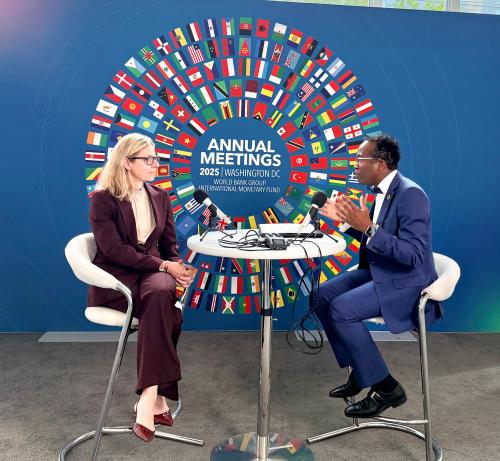
    In an exclusive interview hosted by Landry Signé, Anna Bjerde, the World Bank’s managing director of operations, Washington, D.C. This is the final episode of season four of Foresight Africa podcast.

    [music]

    SIGNÉ: Hello, I am Landry Signé, a senior fellow at the Global Economy and Development Program and at the Africa Growth Initiative at the Brookings Institution. Welcome to the Foresight Africa podcast, where I engage with distinguished leaders in policy, academia, business and civil society who share their unique insights and innovative solutions to Africa’s challenges while highlighting opportunities to advance engagements between Africa and the rest of the world.

    Today we are fortunate to be meeting on the sideline of the World Bank Group and International Monetary Fund Annual Meetings, a yearly gathering of the world’s most prominent figures in the development finance space such as central bankers, ministers of finance, but also heads of global and regional financial institutions, corporate CEOs, entrepreneurs, and civil society leaders.

    Before we begin could you please state your full name and title for the recording. Welcome to the Foresight Africa podcast.

    BJERDE: I am Anna Bjerde, the managing director of operations at the World Bank.

    SIGNÉ: Welcome to the Foresight Africa podcast. I am delighted to have you join me during this busy week, and I truly appreciate you taking the time to share your insight with our audience.

    BJERDE: Wonderful to be here. Thank you so much for having me.

    SIGNÉ: Amazing! As you take part of this year’s Annual Meetings, which priorities do you see as most essential for driving sustainable and inclusive growth and why?

    [2:06]

    BJERDE: So thank you so much for that question. The most pressing, challenge, but also the biggest opportunity lies in creating jobs. And that is what we here at the World Bank Group has made really the focus, or laser focus, I should say, of all of our efforts.

    And that is very much because what we’re seeing is that over the next decade we will have over a billion people come into the job market looking for work. And there’s simply not enough jobs the way we’re projecting it to be able to meet this demand for jobs.

    So we have been working hard to come up with a plan for this, essentially, and I’ll just briefly summarize it. It comprises three pillars in the form of an approach. The first one is to invest in what we call foundational infrastructure, and that is both the physical infrastructure like energy, roads, ports, digital, but also the soft infrastructure: human capital enabling, health, education.

    The second is to make sure that we have an enabling environment that really is conducive. And that means having stable policy and regulatory environments. That means focusing on the business environment, rule of law. A big issue in many countries is how is land allocated? And of course also the overall investment climate.

    And the third pillar is all about attracting and mobilizing the private sector for both capital, but also for skills and innovation. And we believe those three together is what’s going to make a huge impact in the aspiration to create jobs.

    If I may, just very quickly, we want to take those three approaches or three pillars through essentially five sectors that we believe are particularly prone to job creation. One is, again, infrastructure. The second is health care. Why? Because people have to be healthy. But we also believe that the health care sector and industry lends itself to jobs. The third one is the very important sector of agriculture, which I hope to get a chance to speak again about. And then we have tourism, which is a very, very significant industry to attract young people and women. And the final one is what we call value-added manufacturing.

    All of this, the three approaches, the five sectors. And then of course, initiatives like one of my favorite Mission 300, which is all about electricity in Africa, is what we think is going to set us apart.

    SIGNÉ: Fantastic! I really like the comprehensive, multi-stakeholder, agile approach. What insights or lessons from these discussions or from your broader work should global leaders act to strengthen resiliency, and address today’s most pressing economic and social challenges?

    [5:03]

    BJERDE: Yes. So here if I may, let me maybe think about Africa because for us, our work in Africa is so important. And if I go back to this question of what are some of the most pressing issues in Africa, again, I come to jobs. And in Africa what we really need is to focus on job creation by focusing on the new growth model, because Africa is going through its most significant and largest demographic shift in its history. We anticipate that the working age population looking for jobs in Africa will increase by 600 million by 2050, and the current growth model just won’t be able to meet this or step up to it.

    So what we would very much like to do is focus on changing this. Why? Because too many people in Africa enter the job market in such a way that it’s low productivity, it’s informal, and it gives very little upside for income generation, poverty reduction, or even upward mobility.

    So we want to focus on two things. The number of jobs, but not only the number of jobs, the quality of jobs, because without the quality, we won’t address the issue around productivity, informality, and upward mobility. This requires, first and foremost, that the private sector can play a larger role. And not just any private sector — medium and larger firms, because we know jobs get created when firms grow.

    And that’s why we are really focusing, again, on the infrastructure needed, the foundation infrastructure, the business environment, and the enabling conditions, and of course, private capital mobilization.

    SIGNÉ: Fantastic! Quality job creation as a development escalator and the private sector as a development agent.

    BJERDE: Perfect.

    SIGNÉ: So how are international institutions adapting their mandates and instruments to an evolving geopolitical trade economic landscape? And where can they most effectively lead transformative change?

    [7:17]

    BJERDE: Yeah,  great question. So we have been focusing on speed, impact, and scale. Speed by cutting the time it takes us to get any kind of project approved. So we have reduced by 26% last year compared to the previous year, and we’re not done yet. We want to go even faster.

    Second, we want to focus more, and we have reduced our indicators that we track from about 150 to 22, just to allow us to be more focused on what really matters.

    And scale. We have been able to, through a number of different innovations, make more funding available to developing countries. So we have another hundred billion dollars in exposure over the next 10 years.

    But I want to also emphasize another thing which is so important. We’re changing our business model in that we’re capitalizing more on our parts. We have the public sector, the private sector. We have a guarantee mechanism and global, what we call the Unified Guarantee platform. And we have a settlement and disputes agency. So between all of these parts, we are internally becoming much more cohesive to offer our clients something much stronger. And outside, it’s all about partnerships.

    SIGNÉ: Fabulous! That is powerful and thank you so much for sharing so beautifully the instruments to address some of those challenges. What bold actionable ideas from this week do you see shaping global policy and practice, and how do you plan to translate them into tangible results?

    [8:55]

    BJERDE: So we are very excited because this week we will be launching a new bold idea, and it’s all about agriculture, because we cannot reduce poverty without supporting farmers. And we want to support farmers through what we call a comprehensive ecosystem. We want farmers to have access to technology, data, and finance. And by doing so, they will be able to transform their agricultural practices into businesses and be able to reduce poverty in and of itself, but also do things like secure food for the future, and to be able to trade among themselves, and be able to come up with innovations thanks to both the technology, the data, and the access to finance.

    So, we’re excited about this. Recently we announced that we will go to $9 billion a year by 2030. That’s doubling our support to the sector, in addition to mobilizing another $5 billion. So watch this space for some very interesting work around agriculture, which we believe is going to be an incredible contribution to the work we’re trying to do on poverty reduction.

    SIGNÉ: What a beautiful way to conclude. Thank you so much for joining me today.

    [music]

    BJERDE: Thank you so much for having me. Really appreciate it.

    SIGNÉ: I am Landry Signé, and this has been Foresight Africa. This is the final episode of season four of the podcast. Thank you, listeners, for joining me today and throughout the season. Stay tuned for season five to start early next year.

    The Foresight Africa podcast is brought to you by the Brookings Podcast Network. Send your feedback and questions to podcasts at Brookings dot edu. My special thanks to the production team including Fred Dews, producer; Dafe Oputu and Nicole Ntungire, associate producers; Gastón Reboredo, audio engineer; and Izzy Taylor, senior communications coordinator in Brookings Global. The show’s art was designed by Shavanthi Mendis.

    Additional promotional support for this podcast comes from my colleagues in Brookings Global and the Office of Communications at Brookings.

    Continue Reading

  • Ben & Jerry’s co-founder says Unilever blocked Palestine-themed ice cream

    Ben & Jerry’s co-founder says Unilever blocked Palestine-themed ice cream

    The co-founder of ice cream maker Ben & Jerry’s says that its parent company Unilever blocked it from launching an ice cream flavour that expressed “solidarity with Palestine”.

    Ben Cohen announced that he will independently create the new flavour as part of a personal series highlighting causes the company has been barred from addressing publicly.

    Ben & Jerry’s is known for its activism on social issues and has consistently spoken out on political, environmental and humanitarian matters – including the Israel-Gaza conflict.

    The BBC has contacted Unilever for comment.

    Mr Cohen’s statement deepens the long-drawn dispute between the world-famous ice cream maker and Unilever, the British packaged goods giant which has owned Ben & Jerry’s since 2000.

    The co-founders said Unilever and its ice cream arm Magnum, which is being spun off from its parent company, had unlawfully blocked their company from “honouring its social mission”.

    Mr Cohen said in an Instagram video on Tuesday that he is creating a new watermelon-flavoured sorbet, calling for ideas for the product’s name and what ingredients should be added.

    The watermelon has become a symbol for solidarity with Palestinians due to its colours, which are similar to those of the Palestinian flag – red, green, black and white.

    The American entrepreneur said Ben & Jerry’s were prevented by Unilever from creating the dessert.

    “I’m doing what they couldn’t,” Mr Cohen says from his set in a kitchen. “I’m making a watermelon-flavoured ice cream that calls for permanent peace in Palestine and calls for repairing the damage that was done there.”

    In 2021, Ben & Jerry’s refused to sell its products in areas occupied by Israel. Its Israeli operation was sold by Unilever to a local licensee, allowing its ice cream to continue being sold in the occupied West Bank.

    The dessert series will be developed under Ben’s Best, Mr Cohen’s activist ice cream brand, he said in a statement to the press. The flavour is being produced independently of Ben & Jerry’s, the statement said.

    Ben’s Best was first setup in 2016 to support former US presidential candidate Bernie Sanders, with the flavour “Bernie’s Back”.

    Mr Cohen said he will develop other ice cream flavours that speak to the issues Ben & Jerry’s was silenced from addressing publicly by Unilever.

    In September, co-founder Jerry Greenfield stepped down from Ben & Jerry’s after decades at the company, citing concerns that its independence had been compromised following Unilever’s decision to curb its social activism.

    At the time, Ben Cohen said that “Jerry has a really big heart and this conflict with Unilever was breaking it.”

    “My heart leads me to continue to work inside the company to advocate for its independence so that it can actualise the social mission, the values that it was founded on and has maintained for over 40 years,” he told the BBC’s PM programme.


    Continue Reading

  • Non-EU Tourists Power Greece’s Record €16.7 Billion Travel Boom

    Non-EU Tourists Power Greece’s Record €16.7 Billion Travel Boom

    29
    Oct 2025

    Nearly 25 million people visited Greece between January and August 2025, the country’s central bank said, marking a 4% jump from last year as non-European Union (EU) tourists drove record travel spending.

    Tourism revenue surges as non-EU visitors lead way

    Greece earned €16.7 billion in travel revenue from January to August 2025, up 12% from the same period last year, according to the Bank of Greece. 

    Inbound travelers reached 24.9 million, up from 24.8 million in 2024, showing continued recovery in the country’s travel sector.

    EU travelers still made up the majority of arrivals, but their numbers barely changed from 2024. Within the bloc, trips from Eurozone countries rose 3.8%, while those from non-Eurozone states increased 6.9%.

    Air, land arrivals both rise

    According to the same data, air arrivals rose 4.2%, while land border crossings were up 4.8%, highlighting solid demand from both long-haul tourists and regional travellers.

    Tourism remains a “vital pillar of the national economy,” the Bank of Greece noted in its summary, adding that the country’s travel sector is on track for another strong year in 2025.

    Pedestrians stroll along a sunny street lined with outdoor cafés and trees in Athens.

    (Image courtesy of user32212 via Pixabay)

    Greece dominates travel awards

    Separately, Greece secured top rankings in seven categories of the 2025 Condé Nast Traveller Readers’ Choice Awards.

    Greek hotels and resorts dominated the European lists — including Porto Zante Villas & Spa (Zakynthos) and Sani Resort (Halkidiki) — while Naxos was named Europe’s Best Island with a score of 95.71.

    The awards also placed Athens 12th among Europe’s best cities, praising its mix of ancient sites and new cultural energy.

    Outlook for the rest of 2025

    Tourism receipts and visitor volumes suggest Greece is heading for another record-breaking year.

    Economists have highlighted tourism as a central driver of national income and employment, with revenue growth supported by high-spending markets beyond the EU.

    The Bank of Greece said the sector’s strength “suggests another strong year for the industry as the country looks ahead to the final months of 2025.”

    Blue security barrier at Athens International Airport with blurred check-in counters in the background.

    (Image courtesy of k5hu via iStock)

    Travel rules tighten as Europe adapts to tourism growth

    For short-term visitors heading to Greece or elsewhere in the Schengen Area, new border systems are set to change how people enter and leave the EU. 

    The European Travel Information and Authorization System (ETIAS), due to begin in late 2026, will require travelers from visa-exempt countries to apply online before their trip. 

    Meanwhile, the Entry-Exit System (EES), which was launched this October, will log when non-EU visitors cross the border, replacing manual passport stamps.

    Together, these systems aim to improve border security and track overstays, but they will also make travel planning more digital and time-sensitive. 

    Tourists can still move freely once inside the Schengen Zone, but they will need to factor in extra steps before arrival. 

    Long-term visitors and migrants will also face closer checks, as the EU updates how it monitors movement between member states.

    Tourism boom set to shape Greece’s economic future

    Greece’s strong tourism performance in 2025 highlights the sector’s vital role in driving the country’s economy. 

    Record visitor numbers and rising travel receipts show that international demand — especially from non-EU countries — is keeping momentum high.

    With the industry now a cornerstone of national growth, Greece’s focus on sustainability and year-round travel will determine how long this success can last. 

    For a nation that depends on tourism more than most, maintaining that balance could shape its economic story for years to come.

    Continue Reading

  • State Minister for Foreign Affairs HORII 's Attendance at the 47th Annual Joint Meeting of the Japan-U.S. Southeast Association and the Southeast U.S./Japan Association – mofa.go.jp

    1. State Minister for Foreign Affairs HORII ‘s Attendance at the 47th Annual Joint Meeting of the Japan-U.S. Southeast Association and the Southeast U.S./Japan Association  mofa.go.jp
    2. Alabama expands global reach with new business development office in Tokyo  Alabama Department of Commerce
    3. North Carolina Delegation Led by Governor Stein Aims to Strengthen Ties at Tokyo SEUS/Japan Meeting  Hoodline
    4. North Carolina strengthens Japanese ties in Tokyo visit  Axios
    5. Georgia Gov. Brian Kemp in Japan this week to strengthen business ties  CBS News

    Continue Reading

  • Stocks Rise on AI Sentiment, Fed Rate-Cut Bets: Markets Wrap

    Stocks Rise on AI Sentiment, Fed Rate-Cut Bets: Markets Wrap

    (Bloomberg) — Asian stocks advanced on optimism that artificial intelligence will continue to drive profits at megacap technology companies reporting earnings this week, and growing bets on a Federal Reserve interest-rate cut.

    MSCI’s regional stock gauge rose 0.5%, with the tech sector outperforming. Japan and South Korea led the gains – yet, in both the Nikkei 225 and the Kospi, losers outnumbered winners. Similarly, almost 400 components declined in the S&P 500 index, even though the gauge gained a modest 0.2% to close at an all-time high. Asian chip-related stocks such as SK Hynix Inc. and Advantest Corp. jumped Wednesday after strong earnings.

    Nvidia Corp.’s shares surged more than 8% in Asian trading on the alternative platform Blue Ocean, signaling further gains when trading starts in New York, after US President Donald Trump said he plans to speak with Chinese leader Xi Jinping about the company’s Blackwell chip. Futures for the S&P 500 and the Nasdaq 100 indexes extended their gains on Trump’s comments.

    With five big tech companies — representing roughly a quarter of the US equity benchmark — set to report earnings between Wednesday and Thursday, investors will soon gauge whether the billions poured into computing infrastructure will keep flowing and ultimately deliver returns. Adding to the week’s momentum, Fed officials are poised to announce their rate decision on Wednesday, with Wall Street largely betting on a quarter-point cut.

    “There is positive news everywhere,” said Vey-Sern Ling, a managing director at Union Bancaire Privee.

    The technology sector remains the key focus of market participants. Over Wednesday and Thursday, Microsoft Corp., Alphabet Inc., Meta Platforms Inc., Amazon.com Inc. and Apple Inc. will all report results. The so-called ‘Magnificent Seven’ group is projected to deliver profit growth of 14% in the third quarter, according to data compiled by Bloomberg Intelligence.

    That’s nearly twice the 8% expected profit growth for the broader S&P 500, but it also would be the slowest pace since the first quarter of 2023.

    “We expect another strong round of megacap tech earnings reports, given the relentless demand for AI technology and infrastructure,” said Clark Bellin at Bellwether Wealth. “While profitability in AI remains an unknown, investors for now are willing to overlook this as the AI arms race heats up.”

    What Bloomberg strategists say…

    A spending boom for AI has sent the Magnificent Seven’s share prices to record highs, but is also raising concerns about whether companies are laying out too much on the new technology.

    — Sebastian Boyd, MLIV strategist. Click here for the full analysis.

    In other corners of the market, the yen gained after US Treasury Secretary Scott Bessent weighed in on the Bank of Japan’s policy space, which fueled rate-hike bets. A gauge of the dollar edged lower for a third day. Oil held a three-day drop amid mounting signs of oversupply, while gold inched up after three days of losses.

    Trading in Hong Kong was closed for a holiday.

    Meanwhile, Trump said he expects to lower tariffs the US imposed on Chinese goods over the fentanyl crisis and speak with Xi about Nvidia, as leaders of the world’s biggest economies seek to ease tensions in a meeting on Thursday.

    The Wall Street Journal reported Tuesday Trump was considering cutting the 20% tariff to 10% on Chinese goods over fentanyl.

    Also buoying sentiment were bets the Fed will cut rates Wednesday, with traders hoping for clarity as to when officials will stop shrinking the central bank’s portfolio of securities. Bets have grown they may end quantitative tightening as soon as this month.

    Expectations are set for two things from this week’s Fed meeting — officials will lower rates by a quarter percentage point and Chair Jerome Powell will offer little guidance as a growing divide among policymakers blurs the path ahead.

    “The markets have a massive wall of event risk to scale this week,” wrote Kyle Rodda, a senior analyst at Capital.com in Melbourne.

    Corporate News:

    OpenAI is giving its long-time backer Microsoft Corp. a 27% ownership stake as part of a restructuring plan that took nearly a year to negotiate. Private equity firm Boyu Capital has emerged as the frontrunner in Starbucks Corp.’s search for a partner in its China business. Apple Inc. is preparing major changes to its MacBook Air, iPad mini and iPad Air lines, with a plan to give the popular devices higher-end displays. Visa Inc. reported fiscal fourth-quarter earnings that topped estimates as consumers continued to swipe, tap and insert their credit cards to transact globally. Ping An Insurance (Group) Co. said profit rose 11.5% in the first nine months of this year, as a stock market rally lifted investment returns and policy sales expanded. Bank of China Ltd. reported a 5% increase in third-quarter profit, as the lender managed to stabilize its net interest margin despite mounting challenges from weakening credit demand. Some of the main moves in markets:

    Stocks

    S&P 500 futures rose 0.2% as of 11:49 a.m. Tokyo time Nikkei 225 futures (OSE) rose 1.8% Japan’s Topix was little changed Australia’s S&P/ASX 200 fell 0.9% The Shanghai Composite rose 0.3% Euro Stoxx 50 futures fell 0.2% Currencies

    The Bloomberg Dollar Spot Index was little changed The euro was little changed at $1.1645 The Japanese yen was little changed at 152.06 per dollar The offshore yuan was little changed at 7.0990 per dollar Cryptocurrencies

    Bitcoin fell 0.1% to $112,680.48 Ether rose 0.5% to $4,001.03 Bonds

    The yield on 10-year Treasuries was little changed at 3.98% Japan’s 10-year yield advanced one basis point to 1.650% Australia’s 10-year yield advanced five basis points to 4.22% Commodities

    West Texas Intermediate crude fell 0.2% to $60.02 a barrel Spot gold rose 0.2% to $3,958.79 an ounce This story was produced with the assistance of Bloomberg Automation.

    –With assistance from Abhishek Vishnoi.

    ©2025 Bloomberg L.P.

    Continue Reading

  • How Amazon’s cloud and AI investments in APEC contribute to US GDP growth

    How Amazon’s cloud and AI investments in APEC contribute to US GDP growth

    Amazon’s international operations are accelerated by U.S.-based engineering, R&D, legal, finance, and other support teams, creating thousands of high-paying jobs across the country. The global operations also fund new American jobs and infrastructure, and can be reinvested in American innovation. This virtuous cycle helps drive increased demand for American products and services, further supporting investments in U.S. manufacturing and technology.

    Continue Reading

  • Overview of Honda CEO Speech at the Japan Mobility Show 2025

    Overview of Honda CEO Speech at the Japan Mobility Show 2025

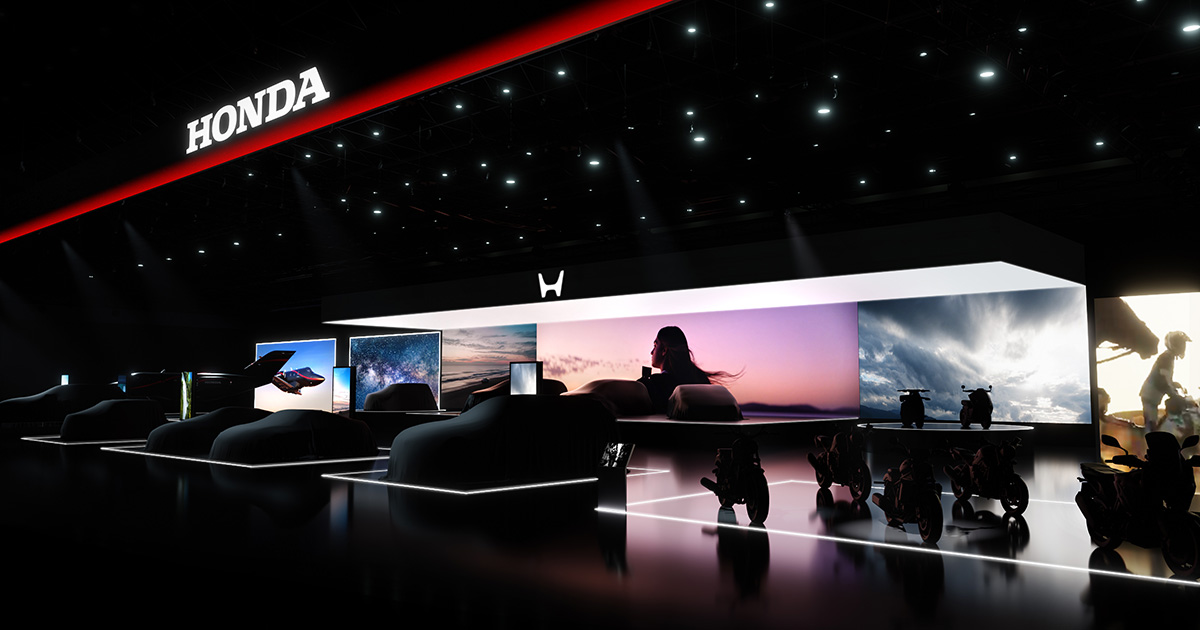
    Honda is presenting the world premiere of the prototype of the Honda 0 α (alpha), a new SUV model for the Honda 0 Series. Featuring a sleek and sophisticated design unique to Honda 0 Series and original proportions that express the dynamic nature of SUVs, the Honda 0 α will blend beautifully with both urban and natural environments, supporting people’s lives in every situation.

    By applying packaging design based on the “Thin” approach, styling with a low vehicle height was achieved without compromising ground clearance, creating a thin cabin that still offers a spacious and comfortable space for occupants.

    Honda is planning to begin global sales of the production model of Honda 0 α, mainly in Japan and India, in 2027. With this “gateway model” to the Honda 0 Series, Honda will strive to offer new value to a greater number of customers around the world. 

    In Japan, three Honda 0 Series models Honda 0 Saloon, Honda 0 SUV, and Honda 0 α — will go on sale before the end of the fiscal year ending March 31, 2028.

    Continue Reading