Category: 3. Business

  • Evaluating Valuation After Strong Share Price Momentum

    Evaluating Valuation After Strong Share Price Momentum

    China Qidian Guofeng Holdings (SEHK:1280) has seen its stock make quiet moves lately, catching the attention of investors looking for signals beneath the surface. The stock’s recent price action invites a closer look at its fundamentals.

    See our latest analysis for China Qidian Guofeng Holdings.

    The recent uptick in China Qidian Guofeng Holdings’ share price, closing at HK$4.48 with a 1-day return of 2.75% and a strong 7-day gain of 6.67%, points to renewed investor interest and hints at improving sentiment. While short-term price swings have been notable, the bigger story is the robust momentum reflected in an impressive year-to-date share price return of 65.31% and a remarkable 1-year total shareholder return of 84.36%. This suggests that the stock’s climb is not just a short-lived rally but part of a longer positive trend.

    If you’re looking for what else might be gaining momentum under the radar, now is the perfect time to see what other investors are discovering in fast growing stocks with high insider ownership

    But with such impressive gains logged, the key question for investors is whether China Qidian Guofeng Holdings still offers value at current levels or if future growth prospects are already fully reflected in the price.

    At its last close of HK$4.48, China Qidian Guofeng Holdings is trading at a price-to-sales ratio of 16.5x, which is much higher than both its peer group and the broader Hong Kong Specialty Retail industry.

    The price-to-sales (P/S) ratio compares a company’s market capitalization to its revenue. This figure reflects how much investors are willing to pay for each dollar of sales. For specialty retailers like China Qidian Guofeng Holdings, this measure helps gauge the market’s expectations for future revenue growth and business quality, especially when profits are negative or erratic.

    Currently, the company’s P/S is not only above the peer average of 2x, but also far higher than the industry average of 0.7x. This large premium signals that the market is pricing in strong future performance or unique potential that peers lack. However, it may also mean expectations have run ahead of fundamentals. With no reliable analyst forecasts and the company still unprofitable, this valuation looks difficult to justify on current performance alone.

    See what the numbers say about this price — find out in our valuation breakdown.

    Result: Price-to-Sales of 16.5x (OVERVALUED)

    However, a persistent lack of profits and a high valuation could quickly reverse sentiment if growth fails to materialize as expected.

    Find out about the key risks to this China Qidian Guofeng Holdings narrative.

    If you see things differently or would rather dive into your own analysis, you can easily craft your own story in just a few minutes with Do it your way.

    A great starting point for your China Qidian Guofeng Holdings research is our analysis highlighting 2 important warning signs that could impact your investment decision.

    Don’t watch opportunities pass you by. Take charge of your investing journey and uncover potential winners that match your strategy, before they hit the mainstream.

    This article by Simply Wall St is general in nature. We provide commentary based on historical data and analyst forecasts only using an unbiased methodology and our articles are not intended to be financial advice. It does not constitute a recommendation to buy or sell any stock, and does not take account of your objectives, or your financial situation. We aim to bring you long-term focused analysis driven by fundamental data. Note that our analysis may not factor in the latest price-sensitive company announcements or qualitative material. Simply Wall St has no position in any stocks mentioned.

    Companies discussed in this article include 1280.HK.

    Have feedback on this article? Concerned about the content? Get in touch with us directly. Alternatively, email editorial-team@simplywallst.com

    Continue Reading

  • Exploring Floor & Decor Holdings’s Valuation After Surprise Q2 Revenue and Margin Beat Signals Improving Fundamentals

    Exploring Floor & Decor Holdings’s Valuation After Surprise Q2 Revenue and Margin Beat Signals Improving Fundamentals

    Floor & Decor Holdings (FND) delivered second quarter results that beat revenue and margin expectations, while also hitting full-year revenue guidance. CEO Tom Taylor pointed to higher earnings per share and improved store sales, highlighting a meaningful shift in fundamentals.

    See our latest analysis for Floor & Decor Holdings.

    Even with signs of operational recovery, Floor & Decor Holdings’ 1-year total shareholder return is down 28.96%, and its share price is still well off its highs after a tough year for specialty retailers. Short-term momentum has not yet reversed, but management’s progress on margins is starting to shift expectations for the long term.

    If you’re following how sentiment is changing around retail stocks, it is the perfect chance to look beyond the usual names and discover fast growing stocks with high insider ownership

    With the stock trading below its highs despite signs of improvement, investors are left to ask whether Floor & Decor is undervalued after a challenging year or if the market has already priced in a return to growth.

    With the most followed narrative estimating a fair value of $82.23, Floor & Decor’s last close of $72.48 suggests sizable upside for the stock if the narrative holds true. This difference between narrative valuation and current price is drawing renewed attention.

    Floor & Decor’s ongoing aggressive store expansion strategy, opening 20 new warehouse-format stores this year and at least 20 planned for next year, with the infrastructure to accelerate openings further as housing market conditions improve, positions the company to capture outsized revenue growth and future operating leverage as end-market demand returns.

    Read the complete narrative.

    Is an ambitious store rollout the secret behind the bold valuation? Behind the scenes, forecasts are fueled by projections of bigger profits and expanding margins, plus expectations the company will outgrow rivals and the wider market. Unpack the key levers and see what the consensus thinks drives this premium price target.

    Result: Fair Value of $82.23 (UNDERVALUED)

    Have a read of the narrative in full and understand what’s behind the forecasts.

    However, persistent weak home sales and slower new store ramp-ups could dampen sentiment and challenge the optimistic outlook reflected in current valuations.

    Find out about the key risks to this Floor & Decor Holdings narrative.

    Looking at market valuation ratios, Floor & Decor trades at 37 times earnings, more than double the US Specialty Retail average of 16.9 times and well above the fair ratio of 18.4 times. This premium suggests investors expect outsized growth, but it also raises the stakes if those expectations fall short. Is this confidence justified, or does it signal valuation risk?

    See what the numbers say about this price — find out in our valuation breakdown.

    NYSE:FND PE Ratio as at Oct 2025

    If you have a different perspective or want to test your own thesis, you can easily build your own view using the same data in just a few minutes. Do it your way

    A good starting point is our analysis highlighting 2 key rewards investors are optimistic about regarding Floor & Decor Holdings.

    Smart investors don’t limit their opportunities. Tap into new trends and uncover stocks you might have missed using these tailored investment searches on Simply Wall St:

    This article by Simply Wall St is general in nature. We provide commentary based on historical data and analyst forecasts only using an unbiased methodology and our articles are not intended to be financial advice. It does not constitute a recommendation to buy or sell any stock, and does not take account of your objectives, or your financial situation. We aim to bring you long-term focused analysis driven by fundamental data. Note that our analysis may not factor in the latest price-sensitive company announcements or qualitative material. Simply Wall St has no position in any stocks mentioned.

    Companies discussed in this article include FND.

    Have feedback on this article? Concerned about the content? Get in touch with us directly. Alternatively, email editorial-team@simplywallst.com

    Continue Reading

  • Why Mersen (ENXTPA:MRN) Is Down 9.6% After Solar Weakness Prompts Lower 2025 Guidance

    Why Mersen (ENXTPA:MRN) Is Down 9.6% After Solar Weakness Prompts Lower 2025 Guidance

    • Mersen recently reported its Q3 2025 results, which fell short of market expectations due to continued weakness in its solar power segment, prompting the company to lower its full-year sales growth, profit margin, and capital expenditure targets.

    • This revision reflects ongoing uncertainty and a lack of visibility in the solar business, compelling analysts to reconsider their projections even though some still see potential for solid performance in 2025.

    • With management cutting guidance after particularly weak solar activity, we’ll examine how these developments affect Mersen’s investment narrative and future prospects.

    Rare earth metals are the new gold rush. Find out which 37 stocks are leading the charge.

    To be a shareholder in Mersen right now means believing in the company’s ability to ride the global shift toward renewable energy and electrification, despite near-term challenges. The recent Q3 miss and lowered guidance directly impact the short-term catalyst of a solar segment rebound, while highlighting customer concentration risk, currently the most immediate threat to both revenue and profit visibility.

    Among Mersen’s recent announcements, the July orders worth over €35 million for HVDC technology in offshore wind projects stand out, especially as weak solar results refocus attention on other renewable opportunities. This deal underscores that while solar faces uncertainty, growth in wind and grid infrastructure projects could help offset shortfalls and underpin the medium-term outlook.

    By contrast, investors should be aware that despite early promise in non-solar renewables, customer concentration in volatile segments still leaves Mersen exposed if…

    Read the full narrative on Mersen (it’s free!)

    Mersen’s outlook anticipates €1.4 billion in revenue and €98.9 million in earnings by 2028. This relies on a 3.8% annual revenue growth rate and a €49.5 million increase in earnings from the current €49.4 million.

    Uncover how Mersen’s forecasts yield a €28.37 fair value, a 23% upside to its current price.

    ENXTPA:MRN Community Fair Values as at Oct 2025

    Fair value estimates from 5 Simply Wall St Community members range from €15.52 to €38.89, reflecting sharply different views. With solar-linked risks still in play, your outlook may depend on how much weight you assign to recovery outside this segment.

    Explore 5 other fair value estimates on Mersen – why the stock might be worth 33% less than the current price!

    Disagree with existing narratives? Create your own in under 3 minutes – extraordinary investment returns rarely come from following the herd.

    Right now could be the best entry point. These picks are fresh from our daily scans. Don’t delay:

    This article by Simply Wall St is general in nature. We provide commentary based on historical data and analyst forecasts only using an unbiased methodology and our articles are not intended to be financial advice. It does not constitute a recommendation to buy or sell any stock, and does not take account of your objectives, or your financial situation. We aim to bring you long-term focused analysis driven by fundamental data. Note that our analysis may not factor in the latest price-sensitive company announcements or qualitative material. Simply Wall St has no position in any stocks mentioned.

    Companies discussed in this article include MRN.PA.

    Have feedback on this article? Concerned about the content? Get in touch with us directly. Alternatively, email editorial-team@simplywallst.com

    Continue Reading

  • HD Hyundai Heavy Industries and HII Execute Memorandum of Agreement to Collaborate on Distributed Shipbuilding and Pursue Teaming on Auxiliary and Commercial Vessels – HII

    1. HD Hyundai Heavy Industries and HII Execute Memorandum of Agreement to Collaborate on Distributed Shipbuilding and Pursue Teaming on Auxiliary and Commercial Vessels  HII
    2. HD Hyundai Heavy, Huntington Ingalls to jointly build U.S. navy auxiliary ships  Reuters
    3. HII Hosts HD HHI Leaders at Ingalls Shipbuilding, Reinforcing Strategic Partnership  navalnews.com
    4. HII and HD Hyundai Heavy Industries Sign Memorandum of Agreement to Enhance U.S.-Korea Shipbuilding Collaboration at APEC 2025  Quiver Quantitative
    5. HII (NYSE: HII), HD Hyundai to pursue Navy NGLS concept design under new collaboration MOA  Stock Titan

    Continue Reading

  • A First Ride With the Maeving RM2 Electric Motorcycle

    A First Ride With the Maeving RM2 Electric Motorcycle

    I test-ride electric kick scooters as a part of my job. They’re fantastic to ride and zip around town, but they are not cool nor particularly comfortable. You’re standing on this L-shaped object, like a meerkat on wheels. Motorcycles, on the other hand? There is no other category of vehicle that oozes this much style, especially one that looks like Maeving’s new RM2.

    If you love the roar of a motorbike and the smell of petrol, this electric motorcycle is probably not for you. Seb Inglis-Jones, Maeving’s cofounder, tells me the company is after a demographic of people who perhaps want something more robust than an electric bicycle but not as intense as a gas-powered bike. Someone who may actually prefer the practically silent ride experience (read: me). However, you still need a motorcycle license in the US to ride.

    The Maeving RM2 opens up for preorder today in the US for $10,995, a small jump from the prior RM1S and a bigger price bump from the original RM1. They’ll ship in January 2026. It shares the same powertrain as the RM1S, hitting a top speed of 70 miles per hour with an 80-mile range.

    However, the RM2’s calling card is the bench seat, so you can finally ride with a passenger. The tank is shorter and wider to accommodate the pillion seat, but you can enjoy a more upright sitting experience. An added boon: You can also add a rear rack and top box for helmet storage.

    Electric Start

    Maeving’s RM2 comes in red.

    Photograph: Julian Chokkattu

    Maeving was founded in the UK right before the pandemic by Inglis-Jones and Will Stirrup, neither of whom had a background in motorbikes (or vehicles, for that matter). The duo decided to build a company together after meeting at university, with two stipulations. They didn’t want to start a business right out of college with no experience, and whatever they built should in some way help combat climate change. Stirrup went to work in the finance world after college, and Inglis-Jones dove into a sales and marketing career.

    Continue Reading

  • Nigeria’s Central Bank Engages Fintech Leaders to Shape Future Policy

    Nigeria’s Central Bank Engages Fintech Leaders to Shape Future Policy

    The Central Bank of Nigeria hosted a fintech roundtable at the IMF–World Bank Meetings to refine policy and strengthen digital finance stability.


    Discover top fintech news and events!

    Subscribe to FinTech Weekly’s newsletter

    Read by executives at JP Morgan, Coinbase, Blackrock, Klarna and more


    Nigeria’s Central Bank Advances Fintech Collaboration at Global Meetings

    The Central Bank of Nigeria (CBN) has renewed its push to align financial innovation with regulatory oversight, hosting a strategic fintech roundtable on the sidelines of the IMF–World Bank Annual Meetings in Washington. The dialogue brought together policymakers, investors, and executives from Nigeria’s expanding digital finance sector to discuss how the country can balance innovation with financial stability.

    Governor Olayemi Cardoso outlined the central bank’s goal of creating a financial environment where technology can thrive under prudent supervision. The initiative underscored the CBN’s intent to develop a policy framework that fosters inclusion and innovation while safeguarding consumer confidence and institutional trust.

    The meeting, which drew participants from both local and international organizations, reflected the central bank’s broader effort to integrate Nigeria’s fintech ecosystem into its long-term economic strategy. Officials said the session served as an opportunity to review global best practices and gather input for the next stage of regulatory reform.


    Fintech as a Pillar of Economic Modernization

    Nigeria has emerged as one of Africa’s leading fintech markets, with startups transforming payments, credit access, and remittances. Yet this rapid growth has presented regulators with complex challenges around data protection, interoperability, and systemic risk.

    At the Washington meeting, CBN officials reiterated that the institution’s approach remains “pro-innovation” but guided by prudence. The bank emphasized its dual mandate: promoting innovation-driven growth while preserving the soundness of the financial system. This principle has shaped the CBN’s recent reforms, from payment interoperability frameworks to new guidelines for digital banks.

    Governor Cardoso’s remarks reflected this balance, emphasizing that technology should serve inclusion and efficiency without eroding trust. According to central bank statements, the insights gathered from the roundtable will feed directly into ongoing consultations with market participants as part of Nigeria’s evolving fintech policy blueprint.


    Collaboration and Confidence in the Fintech Sector

    Participants in the Washington roundtable discussed how global standards could inform Nigeria’s domestic regulation and how the private sector can contribute to policy design. The conversation highlighted that sustaining investor confidence requires predictability, transparency, and strong governance.

    By engaging directly with fintech firms, the central bank aims to ensure that regulatory design evolves with market needs. The CBN views structured industry engagement as critical to building trust between regulators and innovators, a theme that has guided several of its recent initiatives, including the FinTech Regulatory Sandbox and the National Payments Strategy.

    Observers noted that the roundtable signaled a shift from reactive supervision to a more collaborative model, in which regulators and private firms share information and co-develop frameworks for financial innovation. The CBN sees this as a prerequisite for maintaining Nigeria’s competitive advantage as an emerging digital economy.


    Balancing Innovation with Oversight

    The discussion in Washington placed particular emphasis on infrastructure resilience, compliance, and market confidence. While Nigeria’s fintech market has attracted substantial domestic and foreign investment, the CBN remains cautious about risks tied to cybersecurity, liquidity management, and financial crime.

    Officials underscored that technological advancement must not come at the expense of prudential discipline. The bank’s position reflects a growing global consensus that digital finance innovation should be accompanied by strong safeguards against fraud, money laundering, and operational failures.

    Through its policy agenda, the CBN continues to reinforce the integrity of Nigeria’s financial system while supporting innovations that expand access to credit and payments. The institution’s recent work on interoperability aims to ensure that consumers can transact across platforms without friction, an essential step toward a unified national payments ecosystem.


    Toward a Sustainable Fintech Framework

    The Washington roundtable is part of a broader series of structured engagements between the CBN and the private sector. These sessions are designed to refine regulations for digital assets, mobile money, and payment service providers while preserving monetary stability.

    The CBN’s next phase of reform will focus on establishing clear operational standards for fintech companies seeking licensing under the bank’s regulatory sandbox. This framework allows startups to test products under controlled conditions, balancing innovation with consumer protection.

    By integrating these mechanisms, the central bank seeks to strengthen its oversight capacity and build confidence among both domestic and international investors. The emphasis on inclusion and resilience aligns with the CBN’s long-term vision of a digital financial system that supports Nigeria’s economic diversification goals.


    Outlook

    The Central Bank of Nigeria’s engagement with fintech leaders at the IMF–World Bank Meetings marks an important step in shaping the country’s digital finance future. The dialogue reflects a shift toward regulatory partnership and strategic openness at a time when global financial institutions are redefining their role in technological transformation.

    For Nigeria, the outcome of these discussions will likely determine how effectively its financial sector can attract capital, expand access, and safeguard stability in a rapidly digitalizing economy. The CBN’s commitment to inclusive innovation and prudent regulation suggests that fintech will remain a central component of Nigeria’s strategy for sustainable growth in the years ahead.
     

    Continue Reading

  • Stellerus uses satellites to visualise 3D wind data for weather forecasts, insurance risks

    Stellerus uses satellites to visualise 3D wind data for weather forecasts, insurance risks

    Hong Kong University of Science and Technology (HKUST) start-up Stellerus Technology aims to be the world’s first provider of satellite-enabled three-dimensional wind data to help wind power, transport and insurance firms boost revenues, cut costs and manage risks, according to its founders.

    Stellerus, founded in 2023 by the university’s academics, would leverage China’s cost competitiveness in satellite manufacturing to make global 3D wind data collection economically viable, said Su Hui, the chairwoman and co-founder.

    3D wind data – wind direction and speed and their changes with altitude – is crucial for improving weather forecasting, especially severe climate events.

    Do you have questions about the biggest topics and trends from around the world? Get the answers with SCMP Knowledge, our new platform of curated content with explainers, FAQs, analyses and infographics brought to you by our award-winning team.

    “After I came to Hong Kong, I realised the technology for implementing such a project in mainland China was quite developed and the cost would be much lower than overseas,” Su said. “In the US, such a satellite could cost US$100 million to build, compared with 20 million yuan [US$2.8 million] in China.”

    Su Hui, the chairwoman and co-founder of Stellerus Technology. Photo: Edmond So alt=Su Hui, the chairwoman and co-founder of Stellerus Technology. Photo: Edmond So>

    Su, a hydraulic expert, joined the HKUST’s department of civil and environmental engineering in 2022 as chair professor. She was formerly a principal scientist and weather programme manager at the Jet Propulsion Laboratory at Nasa.

    By deploying advanced optical sensors, Stellerus could collect data and use artificial intelligence to analyse carbon dioxide, methane and water vapour in the atmosphere to calculate changes in wind direction and speed, she said.

    “Such detailed data is lacking for meteorological observation and analysis globally,” she said. “Various organisations, including Nasa, plan to embark on such a project, but none has been implemented so far due to the high cost of launching a satellite constellation.”

    Nasa was testing laser technology for developing space-based 3D wind measurements, according to its website. It was also collaborating with the US National Oceanic and Atmospheric Administration to develop advanced remote weather sensing instruments that can be flown aboard satellites to collect highly precise data to improve weather forecasting globally.

    In August 2023, HKUST partnered with Chang Guang Satellite Technology – a Jilin government-backed firm and China’s first commercial remote sensing satellite company – to become Hong Kong’s first higher education institution to launch an Earth environmental satellite.

    Stellerus paid the university a licensing fee to obtain wind prediction data, which was derived from high-resolution digital images, with each pixel depicting half a square metre of area on the ground.

    Stellerus, the winner of the HKUST-Sino Group entrepreneurship competition last month, had been designing new satellites for climate observation, said CEO David Liu.

    The Hong Kong Science and Technology Park-based company, which has raised “tens of millions” of dollars from investors since inception, aimed to launch a pair of satellites via the Tianzhou-10 spacecraft within the next 18 months, followed by another five, Liu added.

    The six satellites would form a constellation, which should be sufficient for global coverage of wind data, Liu said, adding Stellerus aimed to supply the data to developers of applications for the aviation, shipping and insurance industries.

    “The applications include aircraft route optimisation for fuel saving and air turbulence avoidance, shipping route planning for fuel efficiency, as well as climate risk management and product pricing by property and casualty insurers,” he said.

    Stellerus was in advanced talks with wind-farm developers and state-owned power grid operators, which were interested in using its 3D wind data for a fee, Liu added.

    China has the world’s largest fleet of wind farms.

    The data would help wind farm operators enhance power sales and save tens of millions of yuan spent on building wind monitoring towers, said Jeffrey Xu Mingyuan, the chief technology officer at Stellerus.

    “Currently, it is very costly to obtain accurate wind data, especially for offshore operators,” he said. “We aim to tackle the technology bottleneck by providing more affordable and better quality data useful for siting wind farms, energy storage, trading and grid access planning.”

    This article originally appeared in the South China Morning Post (SCMP), the most authoritative voice reporting on China and Asia for more than a century. For more SCMP stories, please explore the SCMP app or visit the SCMP’s Facebook and Twitter pages. Copyright © 2025 South China Morning Post Publishers Ltd. All rights reserved.

    Copyright (c) 2025. South China Morning Post Publishers Ltd. All rights reserved.


    Continue Reading

  • OpenAI’s Less-Flashy Rival Might Have a Better Business Model – The Wall Street Journal

    1. OpenAI’s Less-Flashy Rival Might Have a Better Business Model  The Wall Street Journal
    2. OpenAI and Anthropic v app developers: tech’s Cronos syndrome  The Economist
    3. OpenAI Bests Google in Race for Consumer AI Token Consumption  PYMNTS.com
    4. Is OpenAI Becoming Google’s Biggest Threat?  SSBCrack
    5. OpenAI ‘dominating’ consumer AI token consumption, Anthropic wins enterprise: Barclays (GOOG:NASDAQ)  Seeking Alpha

    Continue Reading

  • Saudi Arabia’s minister of investment on Vision 2030 and the world’s search for reliable partners

    Saudi Arabia’s minister of investment on Vision 2030 and the world’s search for reliable partners

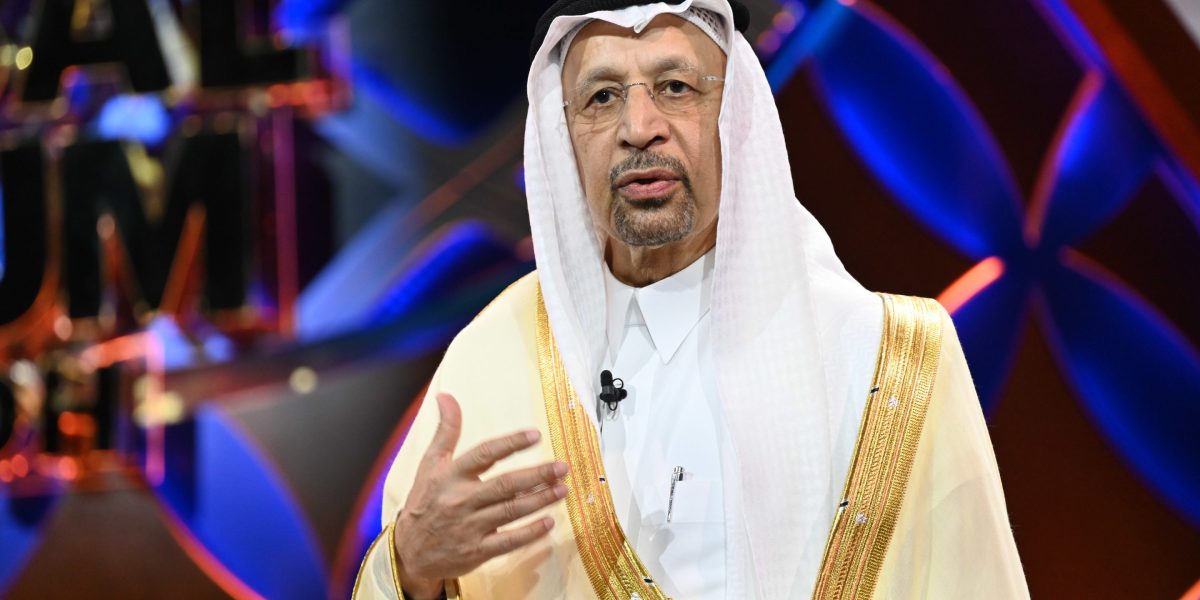
    At the Fortune Global Forum in Riyadh, Saudi Arabia’s Minister of Investment, Khalid A. Al-Falih, described the breakthroughs occurring under Vision 2030, the kingdom’s economic transformation plan that is roughly nine years old. Describing 2025 as a “pivotal moment,” the minister argued that “the very foundations of global business are being shaken, in a way, and being rewritten before our own eyes.” He described “tectonic shifts” in geopolitics, global trade, technology, supply chains, energy, even demographics, “all converging to reshape how companies and countries think and operate, how they compete and create value for their stakeholders.”

    In conversation with Fortune Editor-in-Chief Alyson Shontell, as well as Alphabet President and Chief Investment Officer Ruth Porat and Barclays Group CEO C.S. Venkatakrishnan, Al-Falih described what he sees as a world where “everyone is concerned” about supply chains still “pushed to the limit,” more than five years after the onset of the pandemic. “Supply chain resilience for both companies and nations and policy makers and governments is dominant,” he said, also citing digital disruption as a key inflection point.

    “Underneath this,” Minister Al-Falih told Shontell, there’s a human concern he sees driving leaders’ actions today: “I believe people are looking for partners with whom they can trust who are not short-term, transactional.” The minister framed Saudi Arabia’s Vision 2030 not simply as a national reform agenda, but as a blueprint for global collaboration rooted in mutual resilience — the belief that long-term prosperity depends on shared growth across nations and industries.​

    “Interdependence remains the defining truth of our time,” Minister Al-Falih said in his opening remarks, urging businesses to embrace cross-border partnerships rather than retreat behind protectionist walls. He described the Kingdom as a “platform for global growth,” emphasizing that resilience in the modern economy requires openness, innovation, and integration with like-minded partners. His message was clear: Saudi Arabia aims to be the world’s most reliable investment destination for companies navigating geopolitical fractures, shifting supply chains, and the green transition.​

    A decade of transformation

    Since its launch in 2016 under Crown Prince Mohammed bin Salman, Vision 2030 has redrawn Saudi Arabia’s economic map. The minister highlighted that non-oil sectors now account for 56% of the national GDP, up from 40% at the program’s inception. Unemployment has dropped below 7% while women’s participation in the labor force has more than doubled to 37% (the latest World Bank data shows 34%), far surpassing early reform targets.​

    Saudi Arabia’s capital markets, now ranked among the world’s top 10, have become a magnet for international investors, highlighted by the blockbuster IPO of national champion oil firm Saudi Aramco in 2019, now ranked among the top 10 most valuable companies in the world—and the most profitable company ever as of 2023. Multinational companies are establishing regional headquarters in Riyadh at an accelerated pace, Minister Al-Falih noted: 675 as of this year, already exceeding Vision 2030’s target of 500 by 2030. The minister praised these developments as proof that structural change, once theoretical, is now an engine of global competitiveness.​

    From oil superpower to clean energy leader

    Minister Al-Falih also repositioned Saudi Arabia’s traditional role in global energy markets. Long a linchpin of oil and gas supply, the Kingdom now seeks to be just as dominant in renewables — from solar and wind to green hydrogen. “Our ambition is to enable the industries of the future to flourish,” he said, pointing to plans that leverage both the Kingdom’s vast natural resources and rapidly growing renewable portfolio.​

    He underscored that Saudi Arabia’s competitive edge — low energy costs, geographic centrality, and expanding data infrastructure — makes it ideal for energy-intensive industries, from AI and cloud computing to advanced manufacturing. Riyadh, he announced, is already emerging as a leading global hub for data centers, gaming, and e-sports.​

    In his closing remarks, Minister Al-Falih invited global companies to “discover for themselves” the ambition and capacity driving Saudi Arabia’s transformation. The nation’s investment strategy, he argued, rests on three pillars — competitiveness, connectivity, and capability — each supported by world-class infrastructure and regulatory modernization.​

    Saudi Arabia’s evolving identity as both a reformer and a reliable partner resonates far beyond the Gulf. In an era when multinationals are diversifying away from single-market dependencies, Minister Al-Falih’s remarks made clear that Riyadh wants to anchor that shift — offering predictability, efficiency, and partnership in a volatile world.

    Continue Reading

  • Google President Ruth Porat: ‘We should be able to cure cancer in our lifetime’ with AI

    Google President Ruth Porat: ‘We should be able to cure cancer in our lifetime’ with AI

    Ruth Porat, Google’s president and chief investment officer, struck an optimistic note about the future of artificial intelligence at the Fortune Global Forum, telling an audience in Riyadh, Saudi Arabia, that “we are all privileged to live at this time in history” because of the opportunity AI presents—a revolution she described as “so much more than a chatbot.”

    Speaking alongside Saudi Arabia’s Minister of Investment, Khalid Al-Falih, and Barclays Group CEO C.S. Venkatakrishnan, Porat painted a sweeping vision of AI’s economic, social, and scientific potential, highlighting how many Nobel prize-winners she is fortunate to work alongside at Alphabet. She framed artificial intelligence not merely as a technological advance, but as a transformative force capable of reshaping entire industries, powering economic growth, and driving human progress at an unprecedented pace.

    Porat said “people are playing” with AI through chatbots, and that is “great, because that gets you on the journey. But then the question is: what does it mean for my country? What does it mean for my business?” She argued that it’s underappreciated how “we’re already living” through significant breakthroughs in health and science.

    Could AI cure cancer?

    Porat pointed to breakthroughs in health care as proof of AI’s broader promise. She highlighted DeepMind’s AlphaFold, which maps protein structures in 3D, noting it has been described as “the greatest contribution to drug discovery in our lifetime.” The open-source project has been used by millions of scientists in more than 190 countries, accelerating research into diseases previously considered intractable.

    She also said significant work is being done on early diagnosis of diseases. “We all know early diagnosis can be the difference between survival or not or how difficult the course of treatment is.” In cancer, for instance, that comes in seeing metastatic cells early enough to treat the disease before it spreads. This is very much the proverbial “finding the needle in the haystack,” she said, likening its application to cybersecurity and finding malicious code.

    “We should be able to cure cancer in our lifetime,” Porat asserted, calling AI a key driver of scientific discovery. She spoke of early cancer detection, AI-powered cybersecurity defenses that identify threats before they occur, and productivity gains that free workers “from the administrative tasks that take us away from what matters most.”

    Balancing speed and responsibility

    Porat and Venkatakrishnan both discussed how the moment demands urgency from governments and businesses alike. “Every head of state I meet,” Porat explained, “wants to be part of this digital transformation.” She pointed to staggering potential economic benefits, noting that estimates show AI could unlock a $200 billion GDP boost for Saudi Arabia and “trillions globally.” But unlocking that value, she argued, will require serious investment in both energy and infrastructure.

    In the United States, for example, she said simply modernizing the electrical grid could create 100 gigawatts of unused capacity, a figure backed up by independent research. She said the power is effectively sitting there, “waiting to be connected.” Another bottleneck is a lack of talent in the form of the blue-collar trades, specifically electricians, Porat noted, echoing other Fortune 500 leaders such as Ford CEO Jim Farley. Google, she added, is investing in training programs for electricians as part of its workforce initiatives, acknowledging that technological progress only matters if societies prepare workers to participate in it. “There are jobs that come in trades as well as the outside across business.”

    Venkatakrishnan discussed the “huge amount of investment, hundreds of billions if not trillions happening all over the world.” He impliclitly acknowledged discussions about a potential bubble in AI infrastructure, saying that “in all large capital-investment cycles, there will be some misallocation, some misinvestment. It’s always true. And I think that’s important for people to guard against.” He argued that, whether the demand turns out to be 1x or 5x of a certain projection, investing in infrastructure—and by extension the tradesmen who build and run it—is a wise choice. Venkatakrishnan added that major capital cycles also require partners you can trust and “who are there for the long term and who will help you through the teething troubles.”

    Her message echoed themes of inclusion and global partnership that ran throughout the panel, particularly as Saudi Arabia positions itself as a regional hub for digital infrastructure and AI investment. Al-Falih emphasized his country’s long-term strategy of building supply chain resilience and energy capacity to power the digital economy of the future.

    Porat closed by urging leaders to really dig in and reimagine what’s possible in their own organizations. The transformative potential of this technology, she said, lies not only in boosting productivity but in elevating human creativity and purpose.

    Continue Reading