Category: 3. Business

  • Poltrona Frau is the quiet $120m powerhouse behind luxury car interiors

    Poltrona Frau is the quiet $120m powerhouse behind luxury car interiors

    Halfway down Italy’s Adriatic flank, inside a bustling factory in the municipality of Montegranaro, car parts are zipping off the production line. Stacked on moveable shelving while awaiting the next step, every piece will be shifted around an open-plan space to different workstations. In one area, people wearing masks are spraying a blue adhesive that will be used to bind the leather upholstery to the panel through a combination of heat and pressure. This plant, which was founded four years ago, might seem like a car manufacturer’s home base. But it actually belongs to Poltrona Frau, a storied design brand that dates back to 1912 and is better known for furnishing living rooms than the insides of sports cars.

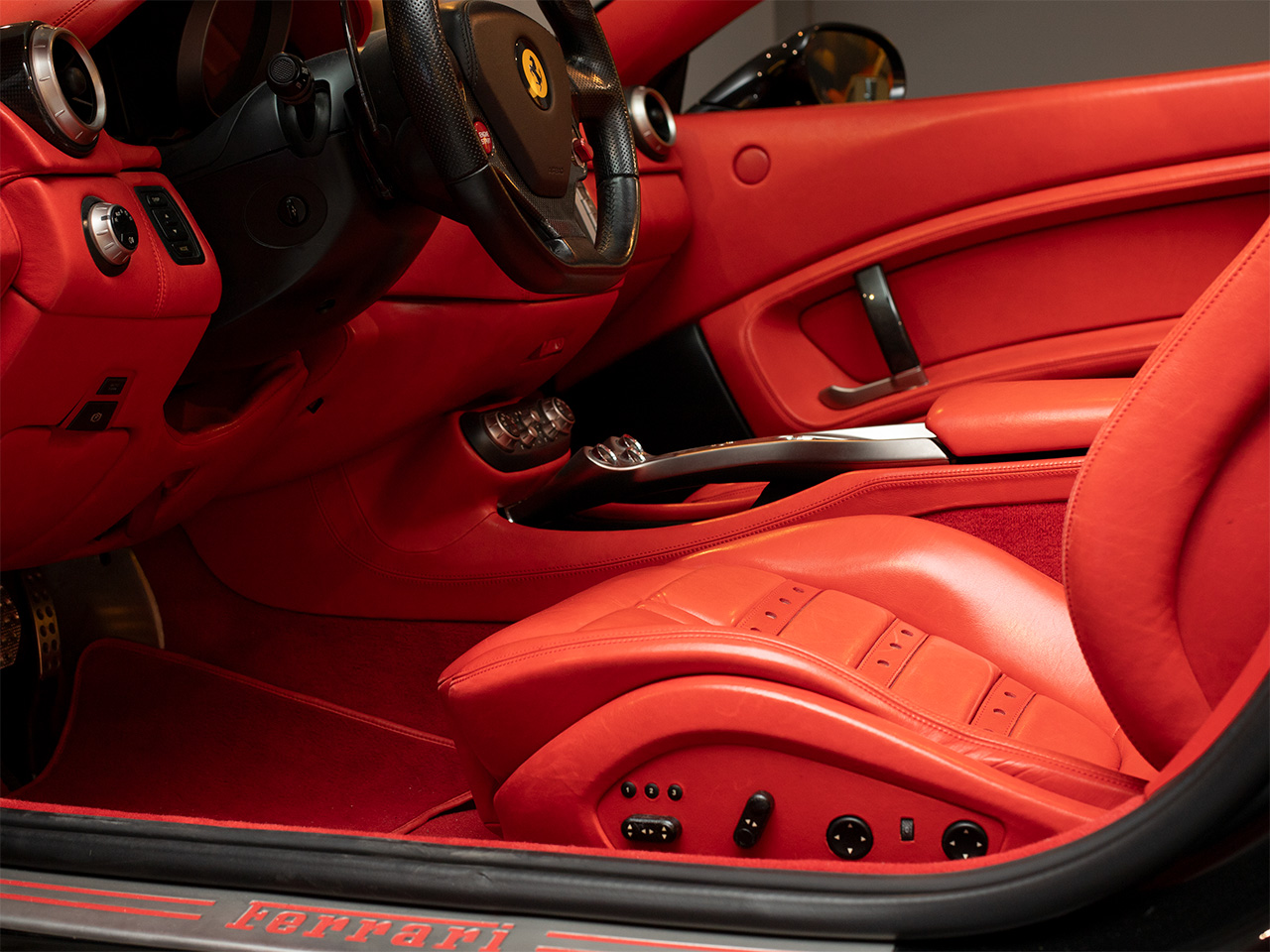
    Ferrari interior

    “The company has transformed in the past few years,” says senior designer Luca Bellomarì as he takes Monocle on a tour of the buildings. Bellomarì is talking about Poltrona Frau’s In Motion business, which provides pristine leather-wrapped products, including seat covers, for high-end vehicles. While Poltrona Frau is a household name as a maker of sofas and armchairs, collaborating with such design luminaries as Gio Ponti and Pierluigi Cerri, In Motion has been quietly – and rather successfully – working away from the limelight.

    Founded as a standalone business division in 1985, In Motion’s first automotive project was on the Lancia Thema, which had a Ferrari engine. Today the business’s client list includes Range Rover, McLaren, Pagani, Lamborghini and Ferrari. But glance inside the leather interior of a Ferrari and you won’t see a Poltrona Frau logo anywhere, even though it has decked out all of its vehicles since 1998. And though automotive is its biggest segment, In Motion also has a footprint in the yachting and aviation sectors.

    As Monocle passes workers dressed in Poltrona Frau T-shirts, some of them wearing sweatbands and gloves, Bellomarì explains that In Motion’s biggest shift has been its decision to start supplying what he calls “systems”. Rather than just upholstering pieces sent to Poltrona Frau, the business now makes everything from headliners – a car’s inside roof – to door panels. “We co-design with the original equipment manufacturers,” he says.

    Though there’s plenty of powerful machinery at the plant, it’s clear that In Motion fits out vehicles in the same way as the rest of the Poltrona Frau business approaches furniture. That means it wouldn’t be anywhere without skilled artisans stretching, smoothing, cutting and checking the quality of the hides by eye. Red lasers projected onto the leather might help stitchers to maintain a straight line but technology is only intended as an aid to those carrying out the work. “We still work with our hands,” says Bellomarì. “This is something that often doesn’t get contemplated in the automotive industry.”

    Later in the day of our visit, Monocle leaves Montegranaro for the brand’s headquarters, a short drive away in Tolentino – home to a brand museum designed by Michele de Lucchi. On hand to meet us in its café is Giovanni Maiolo, the general manager of Poltrona Frau In Motion. Maiolo joined the company in 2019 and has been responsible for much of its recent success. “Before our change of business model, we were just the last step in the value chain,” he says. “We have completely transformed our approach and started to work with the customer at the beginning of a project.”

    In Motion has the advantage of servicing a luxury car industry in which the vehicles are often limited editions and maintain or increase their value over time. This makes the business largely recession-proof. Demand in the segment outstrips supply and Maiolo says that while there was a global slowdown in the furniture market last year, In Motion has been moving in the opposite direction, with an expected turnover of €120m this year. “We have increased turnover by 100 per cent in five years,” he says. “We are now considered a pillar of the group.”

    In Motion is clearly a well-oiled machine – and it has to be in a business where a competitor doing something better or more quickly could lead to the loss of a vital contract. Its leather needs to behave in a different way to furniture upholstery too. Designer Bellomarì talks about it being more rigid and “having a completely different characteristic”. In the boating, car and aviation worlds, Poltrona Frau must strike the right balance between craft and performance. Exactly how hardy it needs to be becomes apparent at a testing lab, where leather is exposed to temperatures ranging from -30C to 115C and put through a stress test of being repeatedly tugged for as many as 100,000 cycles – an attempt to cover all bases for the sorts of extremes that the leather might be exposed to in its lifespan.

    Entrance hall at Poltrona Frau’s museum in Tolentino
    Entrance hall at Poltrona Frau’s museum in Tolentino

    Daniele Gardini, the R&D leather manager, says that In Motion has about 10 leather collections and can provide the client with everything from digital printing to microembroidery to complete a custom look. The search for innovation is constant. Gardini says that metallic leather is a recent addition, something that has clearly been borrowed from the fashion-accessory world. One major breakthrough has been Poltrona Frau iBreathe, a product that came out of development in 2024. “We have been working on the lightness of leather,” he says. “Removing 10kg from the weight of a vehicle is a good saving for speed and fuel consumption.” It weighs less because there are wider spaces between the fibres in the fabric. Aesthetically, however, you wouldn’t know the difference.

    Innovation is crucial to In Motion’s survival. If a declaration of intent were needed, it came in June 2024 when it bought a majority stake in KJ Ryan, a UK company based in the city of Coventry that makes high-end automotive components. It was Poltrona Frau’s first overseas acquisition. With Italy and the UK producing more than 80 per cent of the world’s luxury cars, it was a shrewd move from In Motion, which has worked in the country since 2007 and has clients including Rolls Royce, Bentley, Aston Martin and Range Rover. “The UK was already a market that we knew in some way,” says Maiolo. “But what we were missing was all the rest – everything connected with the culture.” The plan is to eventually shift more production to Coventry for local clients.

    With more than 600 employees now spread between Italy and the UK, In Motion continues to move through the gears, even if its touch, in many ways, remains light. Poltrona Frau doesn’t make a song and dance about the work that it does at In Motion but Maiolo jokes that he needs to start talking about it to keep winning more clients and ensure a resilient future – which he has started to do more now that the “hardware” of the business model is airtight. With it, he hopes that the work of In Motion will soon be as recognised and requested in cars as a Bose stereo or a Brembo braking system. “Our goal is that in five years’ time, when you shop for a luxury car, the first thing you ask when looking inside it is, ‘Is this made by Poltrona Frau?’”

    Continue Reading

  • The next chapter for UK sovereign AI – OpenAI

    1. The next chapter for UK sovereign AI  OpenAI
    2. OpenAI offers paying ChatGPT users UK data storage, signs deal with justice dept  MLex
    3. OpenAI expands UK data hosting service  Solicitors Journal
    4. OpenAI to Boost UK’s AI Capabilities with Local Data Hosting  Devdiscourse
    5. OpenAI to offer UK data residency driven by government partnership  Reuters

    Continue Reading

  • Italy charts a new course for the boat industry with this years’ edition of the Genoa International Boat Show

    Italy charts a new course for the boat industry with this years’ edition of the Genoa International Boat Show

    Can the international nautical-market event help to put the wind back into Italy’s sails?

    At Genoa’s waterfront on the Ligurian Sea, the sun is shining following a brief but powerful autumn shower. Moving among the luxury boats bobbing on the water in front of a Jean Nouvel-designed pavilion, barefoot deckhands are towelling down wood finishing and removing waterproof covers from tables and seats, readying them to accommodate potential buyers. After the lethargy of summer, it’s back to business in Italy. Liguria’s Genoa International Boat Show, which takes place annually in September, is the country’s most important boating event. It is sandwiched between a bustling nautical schedule that features a Cannes event before it and a Monaco one immediately afterwards.

    Historically, Genoa was the world’s most important global boating event. In recent years, however, it has lost out to its Francophone Mediterranean rivals – but there are signs of buoyancy. “At Cannes, everyone comes to us; lots of Italians and even Australians,” says Rosario Alcaro, the general manager of Cantieri Aschenez, showing off the company’s 17-metre Invictus TT550. “But there are a lot of people at Genoa.” The visitor numbers make for positive reading too, up 2.8 per cent on 2024.

    The chatter around the sun-dappled docks and inside the pavilion is focused on recyclable materials and lightening the load (though the latter is often more about gaining speed and less about sustainability). The TT550, for example, has recyclable thermoplastic resin instead of wood. But bigger still seems to be better, with Aschenez planning to produce a large boat in its TT series. “People want a bigger boat; it’s like houses,” says Alcaro.

    Indeed, a standout at this year’s show is San Lorenzo’s 33-metre SL110A, with its huge flybridge. Like many boats on display here, it had its premiere at Cannes – that’s just the way the dates fall, perhaps, but it is something that Genoa might like to redress given Italy’s gargantuan contribution to the sector. Last year, the Italian boating industry had a turnover of €8.6bn, the highest figure on record, while the Global Order Book – an annual report by Boat International that ranks the world’s top superyacht builders – has Italy as a clear frontrunner. Surely, then, Italy deserves to have the leading event?

    Gigi Servidati, the president of Pardo, Grand Soleil and VanDutch, says that both Cannes and Genoa have been good for sales. While there are more than 1,000 boats and exhibitors from 45 countries here, Servidati is convinced that the show could be more international. “The potential is there but the infrastructure needs to be improved,” he says. Indeed, while Cannes has the corniche and a plethora of luxury hotels, plus the know-how gained from hosting everything from its film festival to property fair Mipim, Genoa is paddling hard to catch up. Still, the future looks bright given the number of cranes around the waterfront – all part of an urban mega-project from the studio of Renzo Piano and OBR Architects that includes new residential, office and retail space. In September, meanwhile, Accor announced that it would open a waterfront Sofitel in 2027. All of which is helping put the wind back in Genoa’s sails.

    Genoa International Boat Show in numbers

    124,000: Number of visitors this year (up 2.8 per cent on the previous year)
    €8.6bn: Italian boating industry turnover in 2024
    1st: Italy’s global position among top superyacht builders according to Boat International
    1,000: Number of boats from
    45 countries on display this year

    Continue Reading

  • Stable inflation gives chancellor space to break the doom loop

    Stable inflation gives chancellor space to break the doom loop

    It might be the peak, or perhaps the mini-summit for the current bump in inflation.

    Economists across the city suggest its downhill from here, after the inflation rate for September remained static at 3.8%, failing to breach the expected 4% mark.

    In absolute terms inflation remains too high, higher than other similar countries, and too visible in the everyday items seen in the shops. Just under double the official target of 2% set for the Bank of England.

    But the direction of travel matters significantly.

    Even if it should stay around this level for the rest of the year, some significant falls are on the way in the spring, as various regulated price rises last year drop out of the calculation.

    It would be a much happier place if it were 2.5% in April.

    However, it is worth remembering that even as the International Monetary Fund (IMF) pointed to the highest inflation in the G7 this year and next, it also said inflation would fall back to the 2% target by the end of next year.

    Crucially retail industry experts now assert food price inflation has also peaked, though prices remain at painful levels for many.

    This lowers – though does not eliminate – the chances of self-fulfilling expectations of inflation in the way wages and prices are set. This is the critical factor for the setting of interest rates.

    My immediate thought was the “Santa” rate cut from Andrew Bailey may be back on the table for December. But then I looked again at the information underlying some of last week’s numbers from the IMF.

    Buried in the forecast is the suggestion of four rate cuts over the next year to take interest rates down to 3%. The only reason a cut is not expected next month, according to the IMF, is because it is too close to the Budget.

    A more benign inflation outlook suddenly makes that look less fanciful. The US Federal Reserve rate cuts are also in the background.

    The markets seem to be reassessing their view here and around the world.

    The effective interest rates on UK government debt fell sharply, regardless of whether those loans were for two or for 30 years. Ten-year rates fell to the lowest level this year, while two-year rates dropped to the lowest since last August.

    This could save a few billion from the gap in the Budget calculations, at just the right time for the chancellor.

    Even more important, it shows the UK is not being treated as an outlier by the markets.

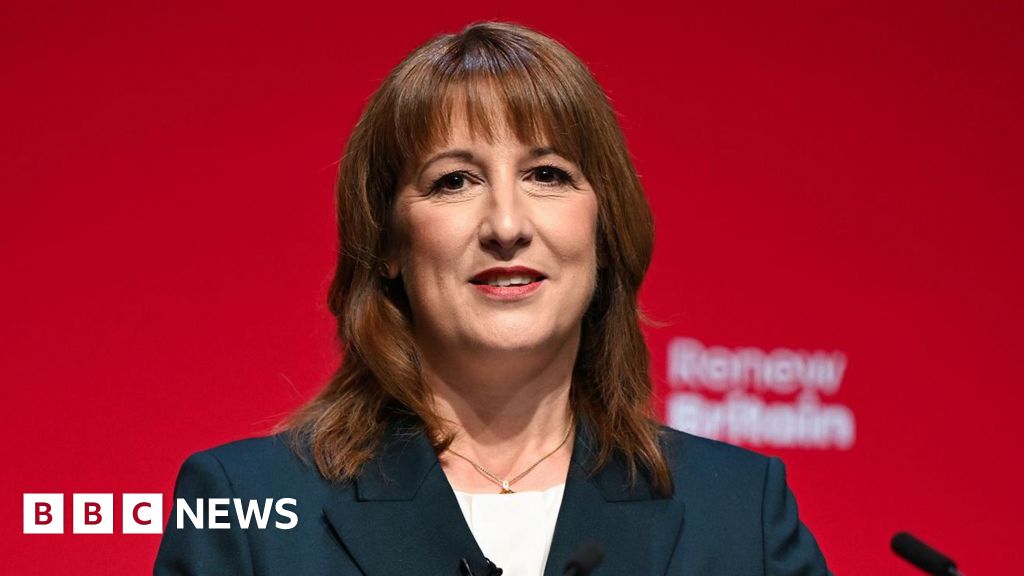
    The chancellor went to some effort in her off-the-cuff UK sales pitch to worldwide investors in the US last week.

    Britain was, she said, the best place to invest and trade globally, that she was going to sort out Brexit-related economic problems and the UK had the fastest declining deficit in the G20.

    The Budget is going to be a challenge, but catastrophic suggestions about British bankruptcy and bailouts seem quite spectacularly off the mark, assuming that is, that the government does have nearly 400 MPs for its agenda.

    No one wants to be caught on the wrong side of the very real chance of a tech market crash, or unpredictable spike in the US-China trade war, or perhaps any unexpected innovations in the appointment of the new chair of the Federal Reserve in the US.

    The inflation number and gilt rate falls offer the chance of some respite, for a break in the circle of doom.

    The question is whether the tax measures Reeves needs to close even a smaller Budget gap, risk bringing it back through another door.

    Continue Reading

  • Automakers urge Trump not to impose tariffs on factory robots, machinery

    Automakers urge Trump not to impose tariffs on factory robots, machinery

    • Tesla opposes tariffs saying they could stall new factories
    • Automakers say any tariffs should exclude tariffs for robots used in U.S. production
    • About 40% of new robots last year were for auto production

    WASHINGTON, Oct 22 (Reuters) – A group representing nearly all major automakers on Wednesday urged the administration of President Donald Trump not to impose tariffs on factory robots and machinery.

    The Alliance for Automotive Innovation, which represents General Motors (GM.N), opens new tab, Toyota (7203.T), opens new tab, Volkswagen (VOWG.DE), opens new tab, Hyundai (005380.KS), opens new tab and nearly all other major automakers, urged the administration not to impose new tariffs after the Commerce Department opened a national security probe last month, opens new tab. The government can use such investigations to impose tariffs.

    Sign up here.

    “Increasing the cost of equipment at existing facilities will raise overall production costs for automotive manufacturers, could cause production delays, and may result in vehicle shortages and higher vehicle prices on American consumers at a time when new vehicle prices are already at historic highs,” the group wrote in comments made public Wednesday.

    The auto group cited a study showing that about 40% of all robotics and industrial machinery installations in the U.S. in 2024 were in automotive production facilities. Automakers said if the administration imposes tariffs, it should exempt robots used in U.S. production.

    Tesla (TSLA.O), opens new tab, which is not part of the alliance, separately called on the Trump administration not to impose tariffs, saying they could “undermine investments, stall new factories or upgrades to existing ones.”

    The White House did not immediately respond to a request for comment.

    Several foreign governments including China, Canada, Japan, Switzerland and the European Union filed comments opposing the tariffs.

    In addition, tariffs and shortages will drive up costs and consumer prices, warned the National Retail Federation, which added that its members are increasingly using robotics in stores, warehouses and distribution centers.

    The U.S. Chamber of Commerce said some critical machinery is only produced abroad, including equipment for extreme ultraviolet lithography used for semiconductor manufacturing. Tariffs could “undermine the very domestic semiconductor manufacturing capacity the administration seeks to build,” the business group said.

    Reporting by David Shepardson; Editing by Chris Reese and Lisa Shumaker

    Our Standards: The Thomson Reuters Trust Principles., opens new tab

    Continue Reading

  • Jittery investors are pushing down Treasury yields ahead of crucial CPI inflation report

    Jittery investors are pushing down Treasury yields ahead of crucial CPI inflation report

    By Christine Idzelis

    DWS’s George Catrambone cautions that long-term rates risk rising should CPI inflation data come in hot – and that other government reports are missing from the picture due to the shutdown

    The 10-year Treasury yield declined Wednesday to its lowest level since last October, according to Dow Jones Market Data.

    Investors are bracing for an upcoming reading on inflation from the Bureau of Labor Statistics – a crucial piece of the U.S. economic picture in an otherwise vacuum of government data during the shutdown.

    Treasury bond yields have fallen this month as investors navigate a U.S. government shutdown that has dragged on since Oct. 1 and are left to make decisions without the usual batch of closely watched economic reports. But on Friday, the BLS will release a delayed report on September inflation data via the consumer-price index (CPI), even as the shutdown means investors are missing other readings on the economy from the government.

    “The market is jittery in the absence of hard data” that it’s used to seeing to provide “some picture of the direction of the U.S. economy,” said George Catrambone, head of fixed income at DWS Group, in a phone interview Wednesday. “If you have a hot CPI print, you could see a little bit of a backup in long-end yields” in the bond market, he said – adding that this month’s missing jobs report complicates the situation for investors and “could create a bit more risk.”

    The BLS had been scheduled to release a U.S. jobs report covering September in early October, but it did not due to the government shutdown. The continuing shutdown also means government workers aren’t collecting new information for next month’s jobs report that would cover October, according to Catrambone.

    “We are not getting regular data dumps as we would,” he said. “CPI on Friday is going to be helpful, but it’s really only one piece of the puzzle,” Catrambone added.

    The yield on the 10-year Treasury note BX:TMUBMUSD10Y fell 1 basis point Wednesday to 3.952%, the lowest level since Oct. 3, 2024, based on levels at 3 pm. Eastern time, according to Dow Jones Market Data. Bond prices climb when yields fall.

    ‘Near-term risk event’

    “We see further scope for 10- and 30-year BX:TMUBMUSD30Y rates to decline” during the fourth quarter, “but maintain that a consolidative sideways shuffle is the path of least resistance as investors await the near-term event risk in Friday’s release of the September CPI report,” said Ian Lyngen, head of U.S. rates strategy at BMO, in a note Wednesday.

    “The U.S. rates market continues to hold the recent bond bullish price action, demonstrating an impressive underlying bid,” he said. “The growing list of economic uncertainties has reinforced the case for adding duration exposure at current levels – or at least covering any lingering shorts.”

    The 10-year Treasury yield has fallen this year to date, with its recent drop reflecting a “flight to safety” that’s partly tied to credit concerns that emerged at regional banks, said Catrambone. To his thinking, a drop below 3.75% on the 10-year Treasury yield would indicate that investors are questioning whether the U.S. economy will see a “soft landing.”

    While the U.S. economy has continued to expand, the slowdown in jobs growth has worried investors. Downside risks to the labor market prompted the Federal Reserve to cut interest rates in September, even as inflation remained above its 2% annual target.

    Investors anticipate the Fed will cut its benchmark rate again next week. That expected move should probably keep short-term Treasury yields “fairly well anchored” around the current level, even if long-term rates were to climb on a potentially hotter-than-expected inflation report, according to Catrambone.

    The 2-year Treasury yield BX:TMUBMUSD02Y, which is sensitive to the Fed’s policy rate, slipped 1 basis point Wednesday to 3.444%, according to Dow Jones Market Data.

    After recently taking profits on the long end of the Treasury market’s yield curve, DWS turned more “neutral” on it, according to Catrambone. “We’re equal weight across the curve,” he said.

    Economists at Goldman Sachs expect Friday’s CPI report will show that inflation rose 0.33% in September for a year-over-year rate of 3.02%, according to their research report dated Oct.18. They forecast that core inflation, which excludes food and energy prices, increased 0.25% last month to climb 3.05% year over year.

    The CPI report was originally scheduled to be released on Oct. 15.

    “While most government data releases – including the CPI – are suspended until the end of the shutdown, the September CPI will be published to allow the Social Security Administration to calculate cost-of-living adjustments on time,” the Goldman economists noted.

    -Christine Idzelis

    This content was created by MarketWatch, which is operated by Dow Jones & Co. MarketWatch is published independently from Dow Jones Newswires and The Wall Street Journal.

    (END) Dow Jones Newswires

    10-22-25 1828ET

    Copyright (c) 2025 Dow Jones & Company, Inc.

    Continue Reading

  • New Jersey claims Amazon discriminated against pregnant, disabled warehouse workers – Reuters

    1. New Jersey claims Amazon discriminated against pregnant, disabled warehouse workers  Reuters
    2. New Jersey sues Amazon for allegedly discriminating against thousands of pregnant warehouse workers  CNBC
    3. NJ says Amazon illegally misclassified delivery drivers to avoid paying benefits, taxes  Bergen Record
    4. NJ lawsuit: Amazon discriminated against pregnant workers, employees with disabilities  Tioga Publishing
    5. Attorney General Platkin and Division on Civil Rights File Complaint Against Amazon Alleging Widespread Pattern of Pregnancy and Disability Discrimination  Insider NJ

    Continue Reading

  • Tesla reports steep drop in profits despite US rush to buy electric vehicles | Tesla

    Tesla reports steep drop in profits despite US rush to buy electric vehicles | Tesla

    Despite record vehicle sales, Tesla saw a precipitous drop in profit in its most recent quarter.

    A rush to buy electric vehicles before a US tax credit for them disappears had boosted Tesla’s flagging sales, leading to the automaker exceeding some of Wall Street’s projections in its most recent financial quarter. Yet the company failed to meet earnings expectations and its stock fell in after hours trading.

    Tesla reported third-quarter earnings of 50 cents a share on Wednesday after market close, less than the 54 cents that market analysts predicted. The automaker exceeded Wall Street’s expectations of $26.457bn in revenue. Its operating income was $1.62bn against expectations of $1.65bn. It also reported a net income of $1.4bn, down from $2.2bn, a drop of 37% in its profits.

    Tesla’s deliveries in the third quarter surged from earlier in the year, an increase that analysts attributed to consumers attempting to lock-in electric vehicle tax credits that expired at the end of last month. The loss of EV credits as a result of Donald Trump’s One Big Beautiful Bill Act was a factor in the public breakup between Musk and the president and has continued to influence the company’s sales forecasts.

    The company made numerous mentions of its AI software and commitment to expand its autonomous driving technology in a press release on the results, while also citing “shifting trade, tariff and fiscal policy” as challenges it faces.

    The earnings report comes at a sensitive time for Tesla and Musk, as the CEO is seeking investor approval for an unprecedented $1tn pay package in a vote next month. The package is dependent on Tesla reaching several lofty milestones, including achieving an $8.5tn market cap over the next 10 years.

    Despite the world’s richest person still commanding a legion of Tesla fanboys and investors eager to appease him, two proxy advisory firms have so far recommended against approving the exorbitant pay package. Glass Lewis and Institutional Shareholder Services (ISS), who provide guidance on how shareholders should vote, stated in recent days that they advised voting no on the proposed trillion-dollar compensation plan.

    Musk has also insulted Sean Duffy, the US transportation secretary, this week in a series of posts that included calling him “Sean Dummy” and reposting calls for him to be removed from his post. Duffy, who is also acting head of Nasa, stated on Monday that he would reopen the bidding for contracts related to the space agency’s Artemis moon mission because Musk’s SpaceX rocket company had fallen behind on its timelines for the project.

    Shareholders are set to vote on Musk’s$1tn pay package during an annual company meeting on 6 November. Both Tesla and Musk have lashed out at criticism of the package, with the company calling the ISS recommendation against the proposal an “unfounded and nonsensical recommendation” in a lengthy post on X. Musk additionally implied in a post on X that he could leave the company if not granted the pay package.

    Tesla had a tumultuous year that saw heightened competition, a loss of key tax credits and chaotic leadership from Musk himself. The company reported falling profits and revenue last quarter. Musk’s political activities, including taking a lead role in the Trump administration and promoting far-right causes, also led to widespread backlash and anti-Tesla sentiment as stock prices fell at the start of the year.

    skip past newsletter promotion

    Tesla’s shares have rallied vigorously over the past six months, however, while Musk has heavily promoted autonomous taxis and robotics as a source of future revenue. The CEO claimed last month that Tesla’s Optimus Robots, a humanoid machine that has yet to go into mass production and is not available for purchase, will one day account for 80% of the company’s revenue. He has made similarly grandiose statements about millions of robotaxis filling cities around the world, something he has promised for years while continually pushing back the timeline of when it would become a reality. Tesla has deployed its autonomous taxi service in Austin, Texas, a move the US’ transportation safety regulator is investigating.

    Tesla also debuted a long-promised, cheaper sedan called the Model Y earlier this month in a bid to increase slumping sales. The new line of sedans received criticism from some analysts over its starting prices of $39,990 and $36,990 – significantly higher than Chinese low-cost competitors. Tesla’s stock price immediately fell following the rollout. The company’s other new model, the Cybertruck, released in 2024, has failed to make a meaningful contribution to overall sales.

    Continue Reading

  • OpenAI relaxed ChatGPT guardrails just before teen killed himself, family alleges | ChatGPT

    OpenAI relaxed ChatGPT guardrails just before teen killed himself, family alleges | ChatGPT

    The family of a teenager who took his own life after months of conversations with ChatGPT now says OpenAI weakened safety guidelines in the months before his death.

    In July 2022, OpenAI’s guidelines on how ChatGPT should answer inappropriate content, including “content that promotes, encourages, or depicts acts of self-harm, such as suicide, cutting, and eating disorders”, were simple: the AI chatbot should respond, “I can’t answer that”, the guidelines read.

    But in May 2024, just days before OpenAI released a new version of the AI, ChatGPT-4o, the company published an update to its Model Spec, a document that details the desired behavior for its assistant. In cases where a user expressed suicidal ideation or self-harm, ChatGPT would no longer respond with an outright refusal. Instead, the model was instructed not to end the conversation and “provide a space for users to feel heard and understood, encourage them to seek support, and provide suicide and crisis resources when applicable”. Another change in February 2025 emphasized being “supportive, empathetic, and understanding” on queries about mental health.

    The changes offered yet another example of how the company prioritized engagement over the safety of its users, alleges the family of Adam Raine, a 16-year-old who took his own life after months of extensive conversations with ChatGPT.

    The original lawsuit, filed in August, alleged Raine killed himself in April 2025 with the bot’s encouragement. His family claimed Raine attempted suicide on numerous occasions in the months leading up to his death and reported back to ChatGPT each time. Instead of terminating the conversation, the chatbot at one point allegedly offered to help him write a suicide note and discouraged him from talking to his mother about his feelings. The family said Raine’s death was not an edge case but “the predictable result of deliberate design choices”.

    “This created an unresolvable contradiction – ChatGPT was required to keep engaging on self-harm without changing the subject, yet somehow avoid reinforcing it,” the family’s amended complaint reads. “OpenAI replaced a clear refusal rule with vague and contradictory instructions, all to prioritize engagement over safety.”

    In February 2025, just two months before Raine’s death, OpenAI rolled out another change that the family says weakened safety standards even more. The company said the assistant “should try to create a supportive, empathetic, and understanding environment” when discussing topics related to mental health.

    “Rather than focusing on ‘fixing’ the problem, the assistant should help the user feel heard, explore what they are experiencing, and provide factual, accessible resources or referrals that may guide them toward finding further help,” the updated guidelines read.

    Raine’s engagement with the chatbot “skyrocketed” after this change was rolled out, the family alleges. It went “from a few dozen chats per day in January to more than 300 per day by April, with a tenfold increase in messages containing self-harm language”, the lawsuit reads.

    OpenAI did not immediately respond to a request for comment.

    skip past newsletter promotion

    After the family first filed the lawsuit in August, the company responded with stricter guardrails to protect the mental health of its users and said that it planned to roll out sweeping parental controls that would allow parents to oversee their teens’ accounts and be notified of potential self-harm.

    Just last week, though, the company announced it was rolling out an updated version of its assistant that would allow users to customize the chatbot so they could have more human-like experiences, including permitting erotic content for verified adults. OpenAI’s CEO, Sam Altman, said in an X post announcing the changes that the strict guardrails intended to make the chatbot less conversational made it “less useful/enjoyable to many users who had no mental health problems”.

    In the lawsuit, the Raine family says: “Altman’s choice to further draw users into an emotional relationship with ChatGPT – this time, with erotic content – demonstrates that the company’s focus remains, as ever, on engaging users over safety.”

    In the US, you can call or text the National Suicide Prevention Lifeline on 988, chat on 988lifeline.org, or text HOME to 741741 to connect with a crisis counselor. In the UK and Ireland, Samaritans can be contacted on freephone 116 123, or email jo@samaritans.org or jo@samaritans.ie. In Australia, the crisis support service Lifeline is 13 11 14. Other international helplines can be found at befrienders.org

    Continue Reading

  • Kirkland Advises Avride on Strategic Investment and Other Commitments of up to $375 Million from Uber and Nebius | News

    Kirkland & Ellis advised Avride, a leading developer of autonomous driving technologies, in connection with up to $375 million in strategic investments and commercial commitments from Uber Technologies, Inc. and Nebius Group. The transaction builds on Avride’s commercial partnership with Uber, following the signing of a multi-year strategic agreement in 2024. The new funding will enable Avride to accelerate the growth of its fleet, support AI-driven product development and expand its offering into new geographies.


    Read the transaction press release


    The Kirkland team included corporate lawyers John Kaercher, Martha Todd, Jess Lepper, Brett Mele and Pi Praveen; technology & IP transactions lawyers Shellie Freedman and Abby O’Neill; international trade & national security lawyers Billy Phalen and Ellie Bacon; and capital markets lawyer Jennifer Wu.


    The Kirkland team worked closely with Alex Tarnow, Avride’s general counsel, on the transaction.

    Continue Reading