- Vestas shelves Polish plant plans as demand wanes 4C Offshore
- Vestas shelves Polish turbine plant amid weak European demand Financial Times
- Vestas Puts Polish Offshore Wind Turbine Factory on Hold offshoreWIND.biz
- Danish wind turbine giant Vestas suspends plans for major plant in Poland notesfrompoland.com
- Vestas puts planned factory in Poland on hold MarketScreener
Category: 3. Business
-
Vestas shelves Polish plant plans as demand wanes – 4C Offshore
-
Freightos Reports KPIs for Third Quarter of 2025 Exceeding Management Expectations
The Company Plans To Report Earnings on November 17, 2025
BARCELONA, Spain, Oct. 20, 2025 /PRNewswire/ – Freightos Limited (NASDAQ: CRGO), the leading digital freight booking and payment platform for the international freight industry, today reported preliminary key performance indicators for the third quarter of 2025, highlighting the continued industry adoption of digital solutions to enhance efficiency and resilience in global supply chains.
Actuals*
Management’s Expectations
Q3 2025
Q3 2025
# Transactions (‘000)
429
419 – 425
Year over Year Growth
27 %
24% – 25%
GBV ($m)
336
329 – 333
Year over Year Growth
54 %
51% – 53%
*Numbers are preliminary and subject to change with the full earnings release
Platform Expansion and Network Growth
Freightos continued its robust expansion in Q3 2025, achieving the 23rd consecutive quarter of record transactions and reinforcing the platform’s value as the industry’s digital transformation platform connecting global trade participants.
- Transactions: 429k Transactions in Q3 2025 representing a 27% year-over-year growth, exceeding management’s expectations. The WebCargo platform, connecting carriers and freight forwarders, continued to lead transactions growth, with the carrier portal component delivering high growth rate.
- Carrier and Buyer Growth: In Q3 2025, 77 carriers were active on Freightos’ platforms with more than five bookings. Newly active carriers this quarter included both flag-carrier belly-cargo operators and niche cargo specialists, with some added through regional GSAs, reflecting the platform’s expanding reach across global and local networks. With most major airlines already connected to the platform, new airline additions are increasingly regional or niche airlines, with further expansion expected as smaller carriers advance their digital readiness. Meanwhile, unique buyer users reached 20,600. This reflected growth in WebCargo users partially offset by some reduction in SMB North American custom clearance users due to market uncertainty.
- Gross Booking Value (GBV): Carriers and freight forwarders selling on Freightos’ platform derived $336 million of revenue from the platform in Q3 2025, representing a 54% year-over-year increase. The major contributors to GBV growth were WebCargo and the portal, mirroring growth in transactions highlighted by the relatively high GBV per transaction in the portal component.
“The powerful network effects of our platform are clearly visible in this quarter’s KPIs,” said Zvi Schreiber, CEO of Freightos. “As the leading digital freight booking platform, Freightos creates a virtuous cycle where each new participant – whether carrier, forwarder, or shipper – enhances the value for all others. Our expanding ecosystem enables unprecedented connectivity and efficiency across the global freight landscape, transforming what was once a fragmented, manual process into a streamlined digital experience. This growing adoption confirms our vision that digitization is becoming the new standard in international freight, supporting more efficient world trade.”
Q3 2025 Earnings Call
Financial results for the second quarter 2025 will be reported before markets open on November 17, 2025. Freightos’ management will host a webcast and conference call to discuss the results that morning at 8:30 a.m. EDT.
Information about Freightos’ financial results, including a link to the live webcast, will be available on Freightos’ investor relations website at https://www.freightos.com/investor-news/.
To participate in the call, please register at the following link: https://freightos.zoom.us/webinar/register/WN_A2xWbYIrRz6lnetBZP8_7Q#/registration
Following registration, you will be sent the link to the conference call which is accessible either via the Zoom app, or alternatively from a dial-in telephone number.
Questions may be submitted in advance to [email protected] or via Zoom during the call.
A replay of the webcast, as well as the call’s transcript, will be available on Freightos’ Investor Relations website following the call.
Glossary
We have provided below a glossary of certain terms used in this press release:
- Carriers: Number of unique air and ocean carriers, mostly airlines, that have been sellers of transactions. For airlines, we count booking carriers, which include separate airlines within the same carrier group. We do not count dozens of other airlines that operate individual segments of air cargo transactions, as we do not have a direct booking relationship with them. Carriers include ocean less-than-container load (LCL) consolidators. In addition, we only count carriers when more than five bookings were placed with them over the course of a calendar quarter.
- Unique buyer users: Number of individual users placing bookings, typically counted based on unique email logins. The number of buyers, which counts unique customer businesses, does not reflect the fact that some buyers are large multinational organizations while others are small or midsize businesses. Therefore, we find it more useful to monitor the number of unique buyer users than the number of buyer businesses.
- GBV: Total value of transactions on the Freightos platform, which is the monetary value of freight and related services contracted between buyers and sellers on the Freightos platform, plus related fees charged to buyers and sellers, and pass-through payments such as duties. GBV is converted to U.S. dollars at the time of each transaction on the Freightos platform. This metric may be similar to what others call gross merchandise value (GMV) or gross services volume (GSV). We believe that this metric reflects the scale of the Freightos platform and our opportunities to generate platform revenue.
- Transactions: Number of bookings for freight services, and related services, placed by Buyers across the Freightos platform with third-party sellers and with Clearit. Sellers of Transactions include Carriers (that is, airlines, ocean liners and LCL consolidators) and also other providers of freight services such as trucking companies, freight forwarders, general sales agents, and air master loaders. The number of transactions booked on the Freightos platform in any given time period is net of transactions that were canceled prior to the end of the period. Transactions booked on white label portals hosted by Freightos are included if there is a transactional fee associated with them.
About Freightos
Freightos® (Nasdaq: CRGO) is the leading vendor-neutral global freight booking platform. Airlines, ocean carriers, thousands of freight forwarders, and well over ten thousand importers and exporters connect on Freightos, making world trade efficient, agile, and resilient.
The Freightos platform digitizes the trillion dollar international freight industry, supported by a suite of software solutions that span pricing, quoting, booking, shipment management, and payments for businesses of all shapes and sizes around the globe. Products include Freightos Enterprise for multinational importers and exporters, Freightos Marketplace for small importers and exporters, WebCargo and 7LFreight by WebCargo for freight forwarders, WebCargo for Airlines, and Clearit, a digital customs broker.
Freightos is a leading provider of real-time industry data via Freightos Terminal, which includes the world’s leading spot pricing indexes, Freightos Air Index (FAX) for air cargo and Freightos Baltic Index (FBX) for container shipping. Futures of FBX are traded on CME and SGX.
More information is available at freightos.com/investors.
Contacts
Media:
Tali Aronsky
[email protected]Investors:
Anat Earon-Heilborn
[email protected]Logo – https://mma.prnewswire.com/media/2319256/4496202/Freightos_Logo.jpg
SOURCE Freightos
Continue Reading
-

Viet Nam’s labour statistics: From modernization to global alignment
Over the past decade and a half, Viet Nam has transformed the way it measures and understands work. From simple employment counts to a comprehensive, internationally comparable system, labour statistics in Viet Nam have become a cornerstone for evidence-based and gender responsive policymaking and sustainable development.
A decade of transformation and international alignment
The early 2010s marked a turning point for Viet Nam’s statistical system. Recognizing the growing complexity of the labour market in a rapidly developing economy, the National Statistics Office (NSO) embarked on a far-reaching modernization process.
The introduction of the Labour Force Survey on a quarterly basis in 2011 was a major milestone. For the first time, Viet Nam could monitor employment trends, unemployment, and labour underutilization in near real time. This shift from annual to quarterly data collection not only improved accuracy but also enhanced the government’s ability to respond to economic shifts and social challenges.
Viet Nam’s commitment to aligning its data with global standards quickly positioned it as a country with advanced labour statistics. The NSO worked closely with ASEAN partners, the ILO, and international experts to harmonize definitions, methodologies, and indicators. 2025 also marks the fifth year applying 19th International Conference of Labour Statisticians standards advancing Viet Nam’s labour statistics – a move that redefined how employment, work, and labour underutilization were measured worldwide. The adoption of internationally comparable labour market indicators allowed Viet Nam to contribute actively to global databases and to monitor progress toward the Sustainable Development Goals, particularly Goal 8 on decent work and economic growth.
This progress has made Viet Nam one of the few developing countries in Asia capable of producing timely, high-quality and gender responsive labour statistics that meet global comparability standards – an achievement widely recognized by international partners.
Data responding to quick changes in the labour market
The true value of a robust statistical system often becomes clear in times of uncertainty. When the pandemic struck in 2020, Viet Nam’s quarterly LFS and well-trained statistical network proved essential. Within months, the NSO was able to produce special reports capturing the pandemic’s impact on jobs, income, and informal employment – data that guided targeted government interventions and social support measures.
Among the most important advances – and clear examples of how labour statistics in Viet Nam have kept pace with a rapidly changing labour market – are the explicit measurement and reporting of informal employment and the pilot measurement of digital platform work. Recognizing that more people are doing work mediated by digital platforms – whether ride-hailing, delivery, freelancing, or online provision of services – Viet Nam has begun exploring how to capture this in its labour statistics. This pilot work positions Viet Nam as one of the first countries in Asia to take early steps in capturing the platform economy in official labour data.
This proactive approach shows that Viet Nam’s statistical system is not only robust, but also responsive and forward-looking, ensuring that data remain relevant and timely in reflecting the evolving world of work.
Digital transformation and innovation
In recent years, Viet Nam has continued to push forward with digital transformation in data collection and analysis. The NSO has introduced computer-assisted personal interviewing (CAPI), expanded the use of administrative data, connecting with other databases. The NSO also starts to introduce artificial intelligence to some stages of data management. Noticeably, artificial intelligence has been applied to data cleaning and automatic classification of data. These innovations improve not only the quality of data but also the efficiency of the whole statistical system responding timely to the rise of the digital age.
Felix Weidenkaff, Officer-In-Charge of the ILO Viet Nam participates in the Commemorative Ceremony and High-Level Forum in Viet Nam for World Statistics Day Looking ahead
As Viet Nam moves toward a digital and knowledge-driven economy, the demand for high-quality, timely, and disaggregated labour data will continue to grow. The NSO’s ongoing efforts to modernize surveys, apply artificial intelligence in data processing, and enhance data integration are laying the groundwork for the next generation of labour statistics.
The success of Viet Nam’s labour statistics rests on strong partnerships with national and international organizations. Together, these partners have worked to strengthen the technical capacity of national statisticians, improve data dissemination, and promote the use of statistics for informed decision-making. Viet Nam has also become an active contributor to regional and global discussions on labour measurement, sharing experiences that inspire neighbouring countries.
On this World Statistics Day, Viet Nam’s achievements remind us that statistics are not just numbers – they are a foundation for understanding people’s lives, shaping fairer policies, and building a more inclusive future. As the world marks this day under the global theme of Driving Change with Quality Statistics and Data for Everyone, Viet Nam’s progress in labour statistics stands as a vivid example of that vision in action – ensuring that every number tells a story, and every story helps build a stronger nation.
Continue Reading
-

BD Launches New AI-enabled Solutions to Drive Connectivity Across Healthcare Settings
BD Launches New AI-enabled Solutions to Drive Connectivity Across Healthcare Settings
FRANKLIN LAKES, N.J., Oct. 20, 2025 /PRNewswire/ — BD (Becton, Dickinson and Company) (NYSE: BDX), a global leader in medical technology, introduces the BD Incada™ Connected Care Platform, a new scalable, AI-enabled, cloud-based platform that unifies BD device data into one intelligent ecosystem for the first time. The BD Incada™ Platform is available now with the launch of the next-generation BD Pyxis™ Pro Automated Medication Dispensing Solution, creating enterprise-wide visibility and connectivity that transforms data into actionable insight.
“Our vision for the BD Incada™ Platform is to go beyond legacy connectivity to create meaningful connections across devices from infusion pumps to patient monitors to pharmacy robotics, and unify data from those solutions into one ecosystem, transforming data into clear, actionable insights for care teams,” said Bilal Muhsin, EVP and President of BD Connected Care. “These launches represent key milestones in BD’s Connected Care strategy, where we are uniquely positioned with our broad portfolio from pharmacy to bedside, to leverage game-changing technology to drive meaningful benefits for our customers.”
AI-powered analytics to drive smarter, faster decisions
Built on Amazon Web Services’ (AWS) on-demand cloud computing infrastructure, the BD Incada™ Platform leverages the latest in AI technologies, such as natural language search in analytics, and is scalable to meet the data volumes created by nearly 3 million smart connected BD devices. With Analytics in the BD Incada™ Platform, data from BD’s leading medication management solutions now flows through a secure, cloud platform and enables:
- Enterprise-wide visibility into medication inventory, which helps clinicians identify patterns and ensure medication availability, reduce medication waste and improve labor efficiency
- The ability to ask natural language questions and receive AI-powered insights and analytics on demand
- User-customizable dashboards that empower frontline clinical teams to act on insights quickly
Flexible, secure storage to get the right medication to the right patient, faster
The new BD Pyxis™ Pro Dispensing Solution delivers smarter, more secure medication storage, which enables faster access at the point of care. The first-of-its-kind flexible, stackable device configuration offers more medication storage capacity to improve medication availability from refrigerated to ambient storage. The BD Pyxis™ Pro Dispensing Solution allows hospitals and health systems to easily adapt to the evolving needs of their patient populations, with features including:
- Expanded capacity in a similar footprint, enabling clinicians to add up to 538 multi-access or 98 secure pockets without taking more space in their medication rooms
- Enhanced security features to improve controlled substance management and medication safety efforts
- More efficient access, with RFID badge scanning, wireless barcode scanners and illuminated bins to streamline medication retrieval
“For over 35 years, the BD Pyxis™ System has been the backbone of medication management across hospitals and health systems, with more than 9.8 million transactions on BD Pyxis™ devices every day,” said Connor Bates, Worldwide President for Medication Management Solutions at BD. “With the enhanced secure capacity, durability and AI-powered analytics of the next-generation BD Pyxis™ Pro Dispensing Solution, we’re ushering in a transformative new era for medication management.”
Together, the BD Incada™ Platform and BD Pyxis™ Pro Dispensing Solution sets a new standard for unified, data-driven healthcare operations.
About BD
BD is one of the largest global medical technology companies in the world and is advancing the world of health by improving medical discovery, diagnostics, and the delivery of care. The company supports the heroes on the frontlines of health care by developing innovative technology, services and solutions that help advance both clinical therapy for patients and clinical process for health care providers. BD and its more than 70,000 employees have a passion and commitment to help enhance the safety and efficiency of clinicians’ care delivery process, enable laboratory scientists to accurately detect disease and advance researchers’ capabilities to develop the next generation of diagnostics and therapeutics. BD has a presence in virtually every country and partners with organizations around the world to address some of the most challenging global health issues. By working in close collaboration with customers, BD can help enhance outcomes, lower costs, increase efficiency, improve safety, and expand access to health care. For more information on BD, please visit bd.com or connect with us on LinkedIn at www.linkedin.com/company/bd1/, X (formerly Twitter) @BDandCo or Instagram @becton_dickinson.Contacts:
Media:
Investors:
Fallon McLoughlin
Adam Reiffe
Director, Public Relations
VP, Investor Relations
201.258.0361
201.847.6927
fallon.mcloughlin@bd.com
adam.reiffe@bd.com

SOURCE BD (Becton, Dickinson and Company)
Continue Reading
-
Effects of ultrasound-guided adductor canal block at different volumes on postoperative analgesia management in patients undergoing total knee arthroplasty: a prospective clinical study | BMC Anesthesiology
Study design
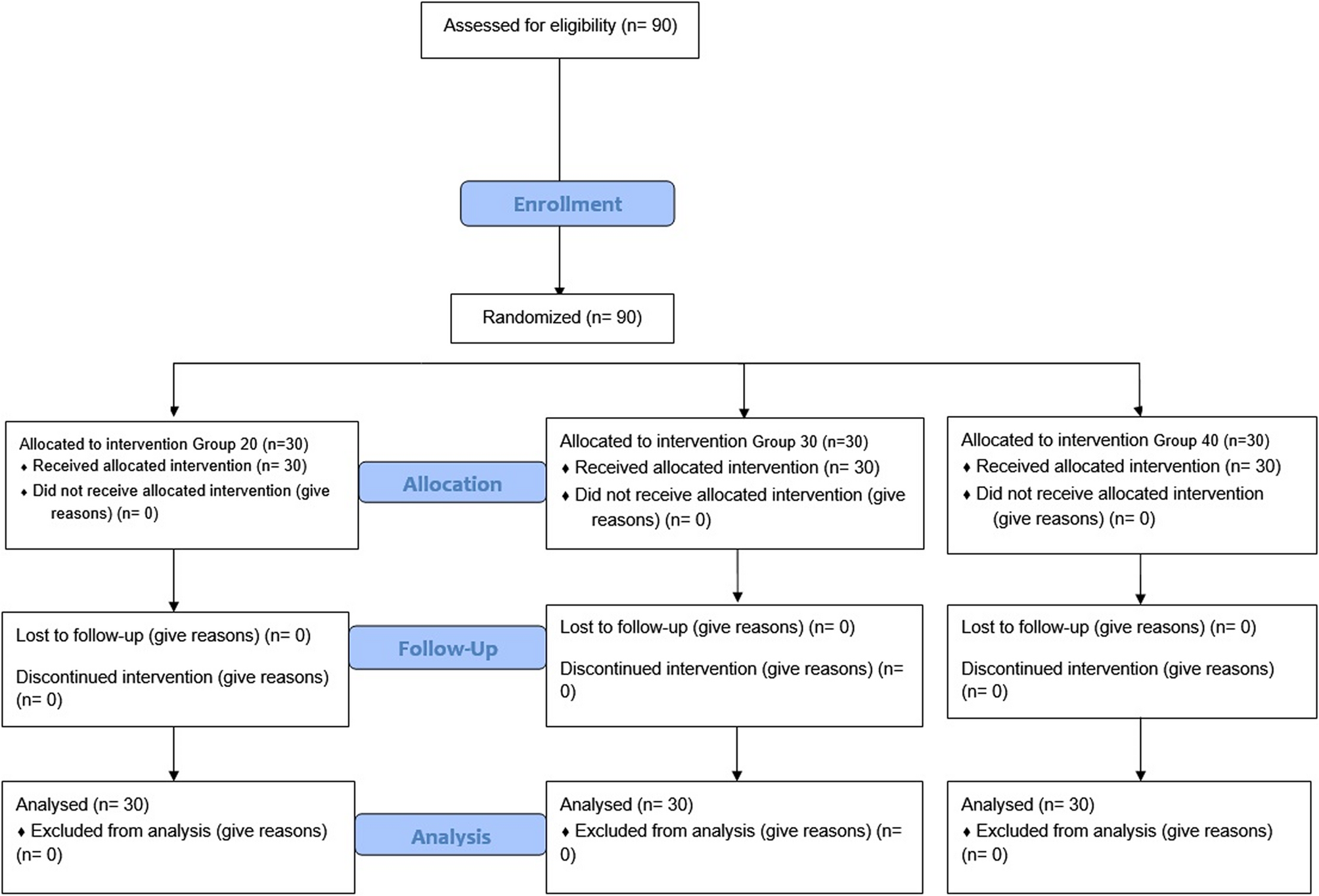
This randomized, prospective study included 90 patients, aged between 18 and 65, with ASA classification I-II-III, who were scheduled for total knee arthroplasty surgery under spinal anesthesia. Patients with a history of bleeding diathesis, receiving anticoagulant treatment, allergies or sensitivity to local anesthetics and opioid drugs, patients with infection in the area where the block will be applied, pregnancy suspicion, pregnant or breastfeeding mothers, and patients who did not accept the procedure were excluded from the study. Ethical approval was obtained from the Bursa City Hospital Ethics Committee on 07.12.2022, protocol number 2022-17/3. Our study was registered on https://clinicaltrials.gov/ with the number NCT06084403. The patient recording and disribution were illustrated by the Consolidated Standards of Reporting Trials (CONSORT) flowchart (Fig. 1).
Fig. 1 CONSORT flow diagram of the study
Patients were randomized into three groups, each containing 30 patients, using a computer program (Group 20 = group receiving ACB with 20 ml, Group 30 = group receiving ACB with 30 ml, Group 40 = group receiving ACB with 40 ml). The practitioners were blind to the data collection, and patients did not know which volume was applied. Postoperative pain scores and opioid consumption were recorded by a pain technician who was blind to the study.
Anesthesia application
After the patients were taken to the operating room, standard monitoring (electrocardiography, noninvasive arterial blood pressure, and peripheral oxygen saturation) was performed, and premedication was administered with 2 mg intravenous midazolam. For spinal anesthesia, the patients were positioned sitting, and following the necessary asepsis and antisepsis rules, a 25-gauge pencil-point spinal needle (B.Braun, Melsungen, Germany) was inserted into the subarachnoid space through a median approach from L3-4 or L4-5. After observing free clear cerebrospinal flow, 15 mg of hyperbaric bupivacaine was administered. To prevent postoperative nausea and vomiting, 4 mg of ondansetron was given intravenously. Total knee arthroplasty surgery was performed by the same surgical team using the same surgical procedure.
Block interventions
The block procedure was performed after the surgery was completed. All adductor canal blocks were performed by two experienced anesthesiologists with advanced clinical expertise in regional anesthesia. After ensuring aseptic conditions, a high-frequency linear ultrasound probe (GE ML6-15-D Matrix Linear, Boston, USA) was covered with a sterile sheath, and a 100 mm block needle (Stimuplex Ultra®, Braun, Melsungen, Germany) was used. The linear ultrasound probe was placed medial to the patella, and the probe was advanced cephalad to visualize the femoral artery, the adductor hiatus, and the apex of the femoral triangle. Then, 5 ml of saline was injected under ultrasound guidance into the midpoint of the adductor canal to confirm the block site (Fig. 2). Then, local anesthetic solution containing bupivacaine at 0.25% concentration was administered as 20 ml in Group 20, 30 ml in Group 30, and 40 ml in Group 40.
Fig. 2 
A Adductor canal sonographic anatomy. Sartorius Muscle, A; artery, V; vein. B Sonographic anatomy of block. Needle direction, and spread of local anesthetic during block performing. A; artery
After the operation, patients were taken to the postoperative recovery room. Patients reaching a score of 9 on the Aldrete scoring system were transferred to the ward.
Postoperative analgesia management
All patients received 0.5 mg/kg of intravenous tramadol and 20 mg of tenoxicam 30 min before the end of the surgical procedure. In the postoperative period, patients received 20 mg of tenoxicam intravenously twice a day. A patient-controlled analgesia (PCA) device was connected to all patients as soon as they were taken to the recovery room. The PCA was prepared with tramadol at a concentration of 5 mg/ml, with a lockout interval of 20 min and a bolus dose of 10 mg without a basal infusion. During the ward follow-ups, hourly NRS scores were monitored. If the NRS score was 4 or above, 0.5 mg/kg of intravenous meperidine was administered as a rescue analgesic. NRS scores at designated times as well as rescue analgesic needs and hours were noted in detail.
Postoperative pain assessment was performed using the NRS scoring system (0 = no pain, 10 = worst pain imaginable). Resting and moving NRS scores were evaluated and recorded at 2, 4, 8, 16, 24, and 48 h. If the NRS score was ≥ 4, 0.5 mg/kg of intravenous meperidine was administered as a rescue analgesic.
Motor block was evaluated using the modified Bromage scale (0: can move leg, foot, and knee freely; 1: normal knee and foot movements, but cannot raise leg straight; 2: cannot flex knee; 3: cannot move foot and knee) [8]. The need for rescue analgesics, postoperative opioid consumption, and side effects such as nausea, vomiting, and itching, as well as complications that may arise due to the block, were recorded.
Sample size calculation
The sample size calculation was performed using G*Power software version 3.1.9.2 (Kiel University, Kiel, Germany). Power analysis based on preliminary data on total opioid consumption [Group 20: 107.86 ± 42.17 (n = 7), Group 30: 88.57 ± 50.14 (n = 7), Group 40: 50.14 ± 51.2 (n = 7)] showed an effect size of 0.49, with a 95% confidence interval, an alpha error of 0.05, and a power of 0.95. Based on this effect size and confidence interval, a sample size of 22 patients per group was calculated to be sufficient. To account for potential dropouts, 30 patients were planned to be enrolled in each group.
Statistical analysis
Statistical analysis was performed with IBM SPSS v20.0 (SPSS Inc., Chicago, Illinois, USA) software package. The normality distribution of variables was checked with the Kolmogorov-Smirnov and histogram tests. Descriptive data were expressed as median [%25–75] and a number. Categorical variables were expressed as a number and analysed using the Chi-square and Fisher exact tests. Non-normally distributed continuous variables were analyzed using the Kruskal-Wallis test, followed by Dunn’s test for post-hoc analysis to assess differences among groups. For the statistical analysis, p < 0.05 was considered statistically significant.
Continue Reading
-

Navigating Europe’s New Trade Corridors with Intermodal – Multi Carrier
Inside the paradoxical infrastructure boom reshaping global connectivity
Europe is pouring investment into tomorrow’s inland network. The Connecting Europe Facility (CEF) has selected 94 projects for nearly 2.8bn in 2025, with 77% of funds going to rail. And this isn’t a new trend; EU member states spent 47.38bn on road infrastructure in 2022, while 636m was designated to inland waterway projects in 2023.
The direction of travel is clear. Yet, an extra track or a new lane under construction doesn’t necessarily equal supply chain resilience while works are ongoing. And they don’t solve the wider issue that booking systems, regulations and border handovers still differ by country.
This article shows how Maersk Intermodal – Multi Carrier service helps you unlock inland agility today while positioning for the long-term benefits of the new infrastructure.
The promise and pain of corridors under construction
Two promising developments demonstrate how logistics optionality will grow for businesses once complete.
Middle Corridor (Caspian Rail-Ferry-Rail)
The Middle Corridor is a developing solution that’s growing in capacity quickly – volumes roughly doubled to 2m tonnes in 2023 and rose a further 63-70% in 2024. Transit times have fallen from 38-53 days to 18-23 days already, making it a viable Eurasia alternative. But one that is still maturing in capacity, processes and synchronisation.
There is still work to be done to ensure that this solution is fully optimised for mainstream use at maximum capacity. In the meantime, sea crossings are still suffering with wait times of up to two weeks in typical weather, and much longer waits during storms. Low speeds, shortage of vessels and long dwell times are also still big challenges on both sides of the sea corridor.
North Sea–Mediterranean and Med–Europe rail corridor (Spain – Germany leg)
The Mediterranean and North Sea–Rhine–Med corridors as the two multimodal spines linking Iberian ports to Central and Northern Europe.
The route includes upgraded Spanish highspeed freight track, Perpignan–Figueres cross-border section and Lyon Turin base tunnel, which is at the time of writing still under construction.
With temporary closures along the Mediterranean Corridor, rolling works between France and Germany, and limits at the Lyon-Turin axis until the tunnel opens, disruption is set to continue along this route for some time.
The pain
These corridor pathways are a clear signal of progress, but their infrastructure is just the beginning. The short-term reality is that construction, fragmented ownership, inconsistent booking systems, varying regional regulations still create friction.
Turn the construction years into your competitive advantage
Maersk Intermodal – Multi Carrier service helps bridge these gaps. Reacting to realtime vessel movements, aligning pick-ups, and removing the need to manage a web of local providers yourself.
Maersk Intermodal – Multi Carrier unlocks options at scale
- 440 weekly trains across Europe
- 130 barges on core waterways
- 700+ vetted trucking partners for first and last mile
- Ocean-carrier agnostic – we collect from any carrier
Our network helps you reduce complexity with a standardised approach – reducing the need for multiple inland contracts. If vessels are late, inland alternatives keep cargo flowing so your supply chain maintains reliability. Meanwhile, access to rail, barge, and truck lets you pivot as works progress or constraints arise.
Maersk orchestrates inland modes together to unlock complexity in a simple, predictable flow.
We cover the inland journey end-to-end, regardless of which ocean carrier shipped your cargo in. That means fewer contracts, fewer touchpoints and faster decisions.
Our ocean-agnostic partnership means you’re not tied to one carrier for all your inland and ocean booking. So, rerouting inland flows is easier, with seamless coordination through one Maersk point of contact.
We harmonise timestamps from terminals, rail operators and trucking partners into a single ETA that you can trust. One that notifies when gate-in, gate-out movements happen without you needing to chase providers.
Our control-tower model monitors milestones and triggers quick actions when risk appears. Re-slotting pick-ups if delays are detected and moving you to the next available departure if paths are cancelled.
Unlock agility without the wait
Don’t wait for a perfect network to materialise. Build reliable, compliant supply chains now with an intermodal multi carrier model that flexes with both your demand and ongoing works.
Resilience isn’t just the future, it’s the now
Europe’s infrastructure investment is accelerating – but construction introduces fresh friction. And while new corridors will bring long-term optionality, agility is essential today.
Maersk Intermodal – Multi Carrier turns the construction years into competitive advantage, with all the flexibility you need across inland solutions managed with a single partner.
Our ocean-agnostic model, deep operational know-how and wide inland network means you can bring about predictable flow now, while strategically repositioning for what’s next.
Unlock agility with Intermodal – Multi Carrier today
Continue Reading
-
BNP Paribas Statement on Sudan Litigation – group.bnpparibas
- BNP Paribas Statement on Sudan Litigation group.bnpparibas
- BNP Paribas To Pay $20 Million Damages For Complicity In Sudan Atrocities Forbes
- U.S. jury issues $20 million verdict against France’s largest bank over Sudanese atrocities Fortune
- Bnp Paribas – states intention to appeal on Sudan litigation MarketScreener
- BNP Paribas Ordered To Pay Millions Over Sudan Genocide Evrim Ağacı
Continue Reading
-
US regional banks' earnings to test investor nerves after jitters over credit risks – Reuters
- US regional banks’ earnings to test investor nerves after jitters over credit risks Reuters
- FTSE 100 slides to two-week low as banks weigh Business Recorder
- US Dollar Forecast: Friday Bounce Fails to Offset Weekly Loss from Trade and Fed Concerns FXEmpire
- Traders ‘Spooked’ as Bank Lending Risk Puts Stock Market on Edge Bloomberg.com
- U.S. Equity ETF Tracker | Relief in trade and credit concerns drives a rebound in U.S. stocks, with the triple-leveraged Nasdaq ETF rising nearly 2%; safe-haven assets pressured as gold closes lower, while the double inverse gold miners index ETF surges 1 富途牛牛
Continue Reading
-

IBM and Groq Partner to Accelerate Enterprise AI Deployment with Speed and Scale
Partnership aims to deliver faster agentic AI capabilities through IBM watsonx Orchestrate and Groq technology, enabling enterprise clients to take immediate action on complex workflows
Oct 20, 2025
ARMONK, N.Y. and MOUNTAIN VIEW, Calif., Oct. 20, 2025 /PRNewswire/ — IBM (NYSE: IBM) and Groq today announced a strategic go-to-market and technology partnership designed to give clients immediate access to Groq’s inference technology, GroqCloud, on watsonx Orchestrate – providing clients high-speed AI inference capabilities at a cost that helps accelerate agentic AI deployment. As part of the partnership, Groq and IBM plan to integrate and enhance RedHat open source vLLM technology with Groq’s LPU architecture. IBM Granite models are also planned to be supported on GroqCloud for IBM clients.

Enterprises moving AI agents from pilot to production still face challenges with speed, cost, and reliability, especially in mission-critical sectors like healthcare, finance, government, retail, and manufacturing. This partnership combines Groq’s inference speed, cost efficiency, and access to the latest open-source models with IBM’s agentic AI orchestration to deliver the infrastructure needed to help enterprises scale.
Powered by its custom LPU, GroqCloud delivers over 5X faster and more cost-efficient inference than traditional GPU systems. The result is consistently low latency and dependable performance, even as workloads scale globally. This is especially powerful for agentic AI in regulated industries.
For example, IBM’s healthcare clients receive thousands of complex patient questions simultaneously. With Groq, IBM’s AI agents can analyze information in real-time and deliver accurate answers immediately to enhance customer experiences and allow organizations to make faster, smarter decisions.
This technology is also being applied in non-regulated industries. IBM clients across retail and consumer packaged goods are using Groq for HR agents to help enhance automation of HR processes and increase employee productivity.
“Many large enterprise organizations have a range of options with AI inferencing when they’re experimenting, but when they want to go into production, they must ensure complex workflows can be deployed successfully to ensure high-quality experiences,” said Rob Thomas, SVP, Software and Chief Commercial Officer at IBM. “Our partnership with Groq underscores IBM’s commitment to providing clients with the most advanced technologies to achieve AI deployment and drive business value.”
“With Groq’s speed and IBM’s enterprise expertise, we’re making agentic AI real for business. Together, we’re enabling organizations to unlock the full potential of AI-driven responses with the performance needed to scale,” said Jonathan Ross, CEO & Founder at Groq. “Beyond speed and resilience, this partnership is about transforming how enterprises work with AI, moving from experimentation to enterprise-wide adoption with confidence, and opening the door to new patterns where AI can act instantly and learn continuously.”
IBM will offer access to GroqCloud’s capabilities starting immediately and the joint teams will focus on delivering the following capabilities to IBM clients, including:
- High speed and high-performance inference that unlocks the full potential of AI models and agentic AI, powering use cases such as customer care, employee support and productivity enhancement.
- Security and privacy-focused AI deployment designed to support the most stringent regulatory and security requirements, enabling effective execution of complex workflows.
- Seamless integration with IBM’s agentic product, watsonx Orchestrate, providing clients flexibility to adopt purpose-built agentic patterns tailored to diverse use cases.
The partnership also plans to integrate and enhance RedHat open source vLLM technology with Groq’s LPU architecture to offer different approaches to common AI challenges developers face during inference. The solution is expected to enable watsonx to leverage capabilities in a familiar way and let customers stay in their preferred tools while accelerating inference with GroqCloud. This integration will address key AI developer needs, including inference orchestration, load balancing, and hardware acceleration, ultimately streamlining the inference process.
Together, IBM and Groq provide enhanced access to the full potential of enterprise AI, one that is fast, intelligent, and built for real-world impact.
Statements regarding IBM’s and Groq’s future direction and intent are subject to change or withdrawal without notice, and represent goals and objectives only.
About IBM
IBM is a leading provider of global hybrid cloud and AI, and consulting expertise. We help clients in more than 175 countries capitalize on insights from their data, streamline business processes, reduce costs, and gain a competitive edge in their industries. Thousands of governments and corporate entities in critical infrastructure areas such as financial services, telecommunications and healthcare rely on IBM’s hybrid cloud platform and Red Hat OpenShift to affect their digital transformations quickly, efficiently, and securely. IBM’s breakthrough innovations in AI, quantum computing, industry-specific cloud solutions and consulting deliver open and flexible options to our clients. All of this is backed by IBM’s long-standing commitment to trust, transparency, responsibility, inclusivity, and service. Visit www.ibm.com for more information.About Groq
Groq is the inference infrastructure powering AI with the speed and cost it requires. Founded in 2016, Groq developed the LPU and GroqCloud to make compute faster and more affordable. Today, Groq is trusted by over two million developers and teams worldwide and is a core part of the American AI Stack.Media Contact:
Elizabeth Brophy
elizabeth.brophy@ibm.comSOURCE IBM
Continue Reading
-

How AI is Reshaping Commercial Insurance and Risk Assessment – with Sidharth Ojha of AXA XL
Commercial insurance has long struggled to adopt new technology at the pace of other financial services. Manual workflows, outdated mainframes, and fragmented systems from years of mergers have slowed modernization efforts. Many insurers still view underwriting as an “art” rather than a process, which has historically delayed even basic digital upgrades.
Industry data underscores the substantial adoption gap across the insurance sector and beyond. In MIT Center for Information Systems Research’s global study of enterprise AI maturity, only 7% of organizations have fully embedded AI across operations, while most remain in pilot or mid-stage phases. At the same time, regulatory agendas are finally catching up.
The EU AI Act came into effect in 2025, requiring insurers to categorize AI systems by risk level and comply with strict transparency rules. Meanwhile, the vast majority of enterprise data — more than 90% — is unstructured, stored in documents, contracts, and PDFs that are difficult to analyze without advanced tools.
This mix of legacy systems, compliance demands, and data challenges creates a critical inflection point for insurers. How can they adopt AI responsibly while ensuring ROI and minimizing risk? Drawing on insights from Sidharth Ojha, Head of Process Optimization, Data & AI at AXA XL, in a recent episode of the AI in Business podcast, this article explores how commercial insurers can modernize operations, empower teams to experiment, and lay the foundations for scaling.
This article examines three key insights from Ojha’s perspective on AI adoption in insurance:
- Empowering business users with low-code AI: Provide underwriters a compliant sandbox to experiment safely and uncover constraints early.
- Turning data into a strategic asset: Map data end to end and convert unstructured contracts into structured insights that drive growth.
- Building foundations for scalable AI: Standardize roles, processes, and data definitions to prevent pilots from stalling and unlock enterprise adoption.
Listen to the full episode below:
Guest: Sidharth Ojha, Head of Process Optimization, Data & AI, Global Chief Underwriting Office, AXA XL.
Expertise: Commercial Insurance Transformation, Process Optimization, and Applied AI
Brief Recognition: At AXA XL, Ojha leads initiatives to apply AI in underwriting and operations, balancing compliance with efficiency and cultural change. His experience spans legacy process modernization, regulatory alignment, and enabling practical AI adoption in one of the world’s largest commercial insurers.
Empowering Business Users with Low-Code AI
Ojha sees that, among the clearest challenges for driving AI adoption in insurance, is cultural inertia. Executives often recognize AI’s potential but hesitate to let non-technical staff engage with it directly, which Ojha sees as a missed opportunity.
He describes the importance of creating “safe lanes” where underwriters and business users can test AI tools in controlled environments. By embedding low-code platforms into existing systems, insurers can enable experimentation without risking data leaks or regulatory breaches.
“Think of it like bowling with bumpers,” Ojha explains. “You want to let people take the shot, but keep them from rolling into the gutter.” His approach builds confidence and helps uncover limitations early, before a project absorbs significant budget or time.
In the past, insurance tech projects relied on extended handoffs: business analysts translated requirements, developers built systems, and architects ensured alignment. By the time solutions reached production, critical context was often lost. Low-code AI tools enable underwriters to interact with technology directly, bypassing translation layers and accelerating actionable feedback.
Ojha stresses that leaders should not rush to pilots or MVPs. Instead, they should allocate more time to exploration and failure in the sandbox phase.
“The more time you spend failing your hypotheses, the less time you waste scaling something that doesn’t work,” he notes. For an industry where “failure” carries negative connotations, reframing the need for failure tolerance as controlled testing can help insurers adopt AI more comfortably.
This cultural shift is essential for adoption. By giving underwriters direct but safeguarded access, organizations create buy-in and align tools with real business needs — rather than building in isolation and hoping for adoption later.
Turning Data into a Strategic Asset
Ojha insists – as many previous podcast guests have – that technology alone cannot deliver ROI without clean, usable data. He notes that Insurance companies face a particularly steep challenge because most of their critical information is locked in unstructured formats, such as policy documents, endorsements, quotes, and schedules of values.
Ojha points out that five years ago, insurers struggled to do something as basic as reading a table in a PDF. Generative AI has solved many of these hurdles, but unstructured data remains diverse and inconsistent, making transformation into structured formats difficult:
“Most of the data insurers rely on isn’t even in their systems — it’s trapped in PDFs, Word documents, and scanned contracts. The real challenge isn’t reading it, it’s standardizing it. Each policy is unique, often written like a legal manuscript. Until we can consistently turn that unstructured data into structured information, every downstream AI use case — from risk analysis to pricing — will be operating in the dark.”
— Sidharth Ojha, Head of Process Optimization, Data & AI, AXA XL
The payoff is significant. With structured data, insurers can answer portfolio questions in seconds, such as: “Which policies exclude communicable disease?” or “How much exposure do we have across a region?”
During the COVID-19 pandemic, many organizations could not respond quickly to such queries. Today, AI tools offer the chance to avoid that blind spot.
Ojha also describes new possibilities in summarization capabilities among these systems. Beyond condensing documents, he notes that AI can compare client submissions against internal appetite and compliance rules.
For high-volume underwriting teams, these capabilities mean touching more submissions per day, declining unsuitable risks faster, and focusing on profitable opportunities. “That’s not just efficiency,” Ojha stresses. “That’s real growth potential.”
For leaders, the mandate is clear: treat data as a first-class asset. Inventory policy wordings, target high-volume pain points, and build systems that push structured outputs back into core platforms. Done well, these steps transform AI from a cost-saving tool into a revenue driver.
Building Foundations for Scalable AI
While pilots are familiar with insurance, scaling remains rare. Ojha estimates that “80-90%” of AI projects stall between proof of concept and deployment. The reasons are less about technology and more about organizational readiness.
He outlines the data infrastructure bottlenecks that often derail scaling AI operations in insurance:
- Unclear accountability for data fields, leading to inconsistent inputs.
- Fragmented processes, where teams record different levels of detail for the same product.
- Legacy stacks that are expensive to integrate with new AI models.
- Inconsistent definitions of key metrics across business units.
Without fixing these foundations, even promising pilots fail to expand. Ojha advises leaders to ask: If this solution went live across three countries tomorrow, what would break first? Addressing gaps in that framework upfront prevents costly surprises later.
Regulation also plays a role, and Ojha sees the EU AI Act as a turning point, providing categories that boards and regulators alike can trust.
“If you are compliant with EU rules, you are largely compliant globally,” he notes, insisting that having such assurance can ease executive concerns and accelerate project approvals.
Ultimately, success comes from patience. Insurers are often eager to jump from idea to MVP, but Ojha emphasizes the value of deeper exploration and testing. Companies that invest in clarity of roles, process alignment, and data quality will find it easier to move AI from experimentation to enterprise-wide adoption.
Continue Reading