The price of weight-loss drugs like Ozempic and Wegovy are in the crosshairs of the Trump administration.
Makers of weight-loss drugs such as Novo Nordisk were under pressure on Friday after President Donald Trump warned he would be pushing down the cost of Ozempic.
During a press conference in the Oval Office Thursday, President Trump made unplanned remarks about what he refers to as “fat-loss drugs.” A reporter asked him if those drugs could end up costing Americans $150 out of pocket – from a current price of over $1,000 at times – and he agreed and later added they could be “much lower.
The American depositary receipts of Ozempic’s producer, Novo Nordisk (NVO), promptly shed 5% in short order while the shares of their main competitor in the weight-loss drug market, Eli Lilly (LLY) also tumbled almost 5% in sympathy. Eli Lilly manufacturers similar products, Wegovy and Zepbound.
Despite soaring sales of these flagship drugs, pharmaceutical stocks have been under pressure this year as the Trump administration has sought to lower the costs of medical treatment in the U.S., while European names have also suffered from the threat of enhanced tariffs on exports to the U.S. This year the Stoxx Europe Pharmaceuticals and Biotechnology index XX:T4570P has fallen 2% compared with the 13% return delivered by the euro Stoxx 50 XX:SX5E benchmark index.
Despite a 9% rally in the past month, for example, Eli Lilly is still only up 6% for the year, underperforming the S&P 500 SPX by 6 percentage points. Novo Nordisk (DK:NOVO.B), which as recently as this summer was the largest company in Europe by market capitalization, has seen its shares plummet 45% so far in 2025.
Trump’s off-the-cuff comments were immediately followed up by the head of Medicare and Medicaid, Mehmet Oz, who was quick to jump in and stress, “we haven’t negotiated those yet”. The price of a month’s supply of Ozempic is approximately $1,000, therefore if Trump follows through on his threat then that represents a 15% hit to Novo Nordisk margins.
Trump made another comment on Ozempic a few weeks ago: “Sometimes it works on people, the ones I’ve seen it hasn’t worked so well. They say to me ‘I’ve lost some weight’, I say ‘you don’t look it to me’,” he said in the Oval Office with Robert F. Kennedy Jr., the secretary of the U.S. Department of Health and Human Services.
Before it veered off into unscheduled comments, the intention of the press conference was to announce a White House deal with Germany’s pharmaceutical company Merck KGaA (XE:MRK) to reduce the price of fertility treatment in return for a reprieve on tariffs. Other companies such as AstraZeneca (U.K.:AZN) (AZN) and Pfizer (PFE) have negotiated similar deals with the U.S. government.
Read: Trump rolls out his latest deal with a drugmaker. This one stems from his campaign promise to cover all IVF costs.
-Jules Rimmer
This content was created by MarketWatch, which is operated by Dow Jones & Co. MarketWatch is published independently from Dow Jones Newswires and The Wall Street Journal.
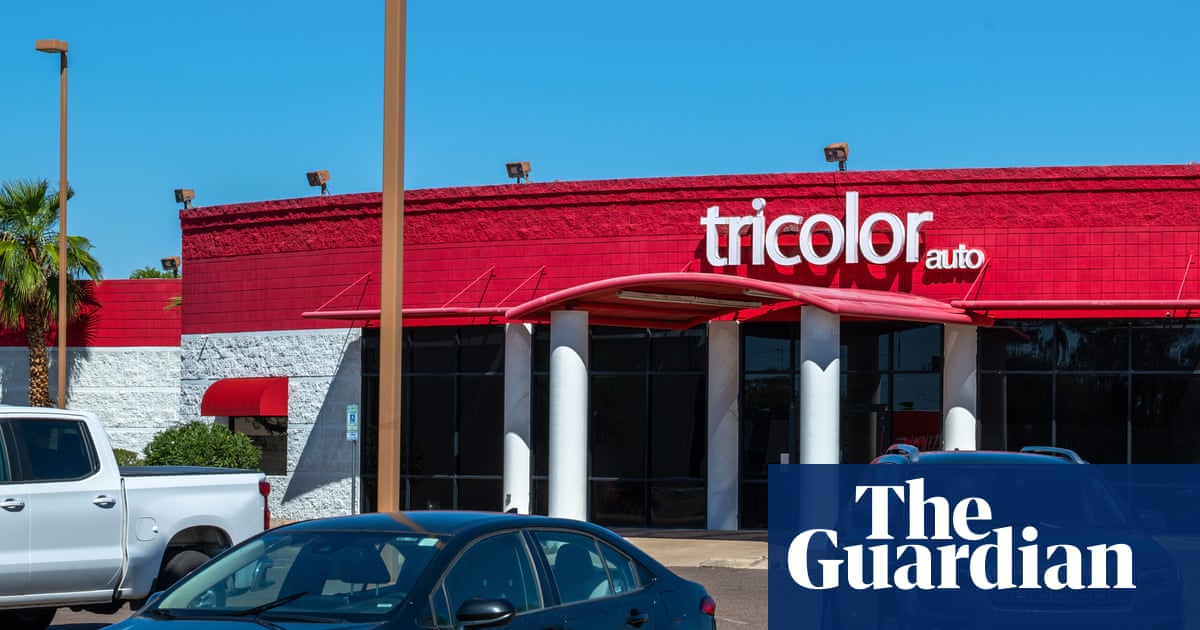
Alarm bells are ringing on Wall Street. The recent collapses of Tricolor, a used car seller and sub-prime auto lender, and First Brands, an auto parts supplier, have put the finance industry on edge, almost two decades after problems in the sub-prime mortgage lending market set the stage for the global financial crisis.
“When you see one cockroach, there are probably more,” Jamie Dimon, the JPMorgan Chase CEO, ominously cautioned analysts this week, after the US’s largest bank disclosed a $170m charge tied to Tricolor’s bankruptcy. “Everyone should be forewarned on this one.”
As the car lending market shows signs of strain, business around repossessions is booming. “Right now, we’re overwhelmed with work,” George Badeen, who runs Midwest Recovery and Adjustment in Detroit, Michigan, said.
The so-called repo man, tasked with recovering vehicles from drivers who default on loan agreements, was eulogized in music by Bruce Springsteen and in the 1984 Alex Cox film Repo Man.
Repossessions – especially in the sub-prime auto market – are on the rise, according to Badeen, who is also president of the Allied Finance Adjusters trade body. “We’ve seen some sub-primes making changes, which probably indicates they’re having issues,” he said. “They’re not financing cars like they were. Two years ago they were financing anybody.”
While few are bracing for a crisis on the scale of the crash that pushed the world economy to the brink in 2008 – sub-prime auto lending is a fraction of the $1.7tn overall car lending business – the collapses of Tricolor and First Brands have drawn the car sector into the spotlight, amid fears they highlight credit stress in lower-income households, as well as problems in credit markets tied to auto debt.
First Brands received approval for $500m rescue financing from a bankruptcy court, although Scott Greenberg, an attorney for First Brand’s lenders, told the court of concerns that they could be “lending good money after bad”.
The wider fear – and the one causing consternation among investors – is what the troubles inside this one market might indicate about broader pressures rippling throughout the wider economy. “Distress in auto lending broadly is often seen as a bellwether to changing circumstances in the US economy, because Americans particularly in the lower-income brackets tend to put their highest priority in auto payments,” said Brett House, an economics professor at Columbia Business School.
“Having a car is essential to being able to work,” he added. “So when we see stress in the auto financing market, we typically receive that as an indication that household finances are getting tighter.”
An estimated 100 million Americans hold auto loans, with 85% of new car purchases and 55% of used car purchases financed. It is the third-largest consumer credit market in the US, behind mortgages and student loans.
Problems in the auto loan industry have been manifesting for several years, as car prices rose sharply during the Covid-19 pandemic while inflation soared and interest rate increases followed. Paying off a new car required 42 weeks of income in 2023, according to Cox Automotive, up from about 33 before the pandemic.
High prices meant bigger loans. The average monthly repayment now stands at more than $750.
Car repossessions surged to their highest level since 2009 last year, according to Cox, with 1.73m vehicles seized, up 16% from the year prior and 43% from 2022.
Car owners were found to be missing payments at the highest rate in more than 30 years in January, when a Fitch Ratings index monitoring the share of sub-prime auto borrowers at least 60 days past due on their loans hit 6.5%.
“The consumer has been distressed for a little while,” Bill Nash, CEO of CarMax, the biggest seller of used cars in the US, told analysts last month after its lower sales and profits unnerved shareholders. “I think there’s some angst.”
Auto loans are short-term investments, and Kevin Armstrong, author of Repo Blood: A Century of Auto Repossession History, believes they are often extended to consumers who may not be credit-worthy. For this reason, he said, auto loan delinquencies are often seen as clues – “one of the canaries in the coalmine” – to the health of the broader economy.
Loan operators are now “giving out massive amounts of loan modification to try to move back delinquencies” to stave off repossession orders, Armstrong said. But they may only be buying time. “There’s a massive amount of recidivism when it comes to loan delinquencies,” he added.
Armstrong traces the rise in repossessions to the pandemic, when stimulus checks and extra unemployment aid allowed consumers to pay up for pricier cars. “When Covid hit, prices went through the roof,” he said. “I watched people paying outrageous amounts for cars that just weren’t going to hold their value, and the dealers laughing all the way to the bank. They got hosed.”
Now, coupled with higher mortgage or rental payments, high grocery bills and higher auto loan payments, he added: “Consumers got stuck with loan payments they can’t afford.”
Under most loan agreements, the lender or leaseholder can repossess the car even if borrowers are only a few weeks behind in payments, in part because a borrower could try to hide the car if they know the lender is looking to repossess it – and potentially sell it at auction.
The job of repossessing a car is becoming harder, according to Badeen, with greater consumer rights awareness and a higher likelihood of confrontation. “We’ve had so much violence in recent years that we’ve had to train our people in what people like to call situational awareness and de-escalation,” he said. His company typically now sends tow trucks out with two people, one to pick up the car and another to keep watch.
The clouds gathering over the auto lending market could grow darker. Should Congress fail to agree on a continuation of Covid-era healthcare subsidies, the political issue at the center of the current federal government shutdown, that could put more pressure on the finances of auto borrowers.
“That whole mess comes out of Covid. It has an impact on individual people that many people don’t understand,” said Badeen. “Everything intertwines in some way, shape or form.”
If a large sub-prime lender stumbles as a result of this pressure – Santander Consumer is the nation’s biggest, and was last year fined $550m to resolve claims it violated consumer protection laws by placing borrowers with sub-prime credit into auto loans it knew carried an unacceptably high probability of default – there could be wider turbulence.
Unlike First Brands, Tricolor sought bankruptcy protection last month under the shadow of fraud allegations that have prompted two federal investigations. Charles Gibbs, the attorney representing Tricolor’s court-appointed trustee, told a Texas court this month that initial reports “indicate potentially systemic levels of fraud”.
“Tricolor’s failure is not necessarily indicative of what is immediately ahead for the sector as a whole, because of the special circumstances, but I would still see it as an economic warning indicator,” said House.
Armstrong, too, was reluctant to call the failure of the companies, and the rise in repossessions, a trend. “But it’s on the verge,” he added.
CHENGDU, China, Oct. 17, 2025 /PRNewswire/ — Sichuan Kelun-Biotech Biopharmaceutical Co., Ltd. (the “Company”) announced that the Company’s human epidermal growth factor receptor 2 (HER2)-directed antibody-drug conjugate (ADC) trastuzumab botidotin (also known as A166) was approved for marketing by the National Medical Products Administration (NMPA) for the treatment of adult patients with unresectable or metastatic HER2-positive breast cancer (BC) who have received one or more prior anti-HER2 therapy.
The approval is based on a multi-center, randomized, open-label, controlled, Phase 3 KL166-III-06 study that evaluates the efficacy and safety profile of trastuzumab botidotin versus T-DM1 in patients with HER2-positive unresectable or metastatic BC who have received prior trastuzumab and taxane-containing regimens. At a pre-specified interim analysis, trastuzumab botidotin monotherapy demonstrated a statistically significant and clinically meaningful improvement in the primary endpoint of progression-free survival (PFS) as assessed by the blinded independent central review (BICR) compared with T-DM1; the beneficial trend for overall survival (OS) of trastuzumab botidotin was also observed. Results from this study will be presented as an oral report at the 2025 European Society for Medical Oncology (ESMO) Congress held in Berlin, Germany (Presentation # LBA24, Proffered paper session 1: Breast cancer, metastatic).
The Company has initiated an open, multi-center Phase 2 clinical study of trastuzumab botidotin in the treatment of HER2+ unresectable or metastatic BC that previously received a topoisomerase inhibitor ADC.
Dr. Michael Ge, CEO of Kelun-Biotech said, “We are thrilled to see our first HER2 ADC drug, trastuzumab botidotin, successfully approved for market. This marks a significant advancement in the treatment of HER2-positive breast cancer. As China’s first domestically developed HER2 ADC capable of broadly covering 2L+ HER2 BC patients, trastuzumab botidotin leverages its differentiated structural design to deliver superior efficacy while addressing unmet clinical needs in this population.”
About HER2+ BC
Breast cancer, as the most common malignant tumor, poses a serious threat to women’s health. Among its subtypes, HER2-positive breast cancer accounts for approximately 15%–20% of all breast cancer cases[1], and is characterized by its aggressiveness and high malignancy. According to the 2025 CSCO guidelines, first-line treatment for HER2-positive breast cancer primarily consists of trastuzumab and pertuzumab in combination with taxane-based chemotherapeutic agents. Second-line treatment regimens comprise tyrosine kinase inhibitors (TKIs, such as pyrotinib) and antibody-drug conjugates (ADCs, such as T-DM1 and T-DXd). Following disease progression on second-line therapy, subsequent treatment strategies are determined based on prior second-line regimens, the patient’s tolerance to therapy, tumor burden, and other relevant factors. Despite recent advances in anti-HER2 therapeutics, a significant number of patients still experience drug resistance or severe adverse effects, highlighting an urgent need for agents with improved safety profiles to address the treatment requirements of patients with recurrent or drug-resistant HER2-positive breast cancer.
About trastuzumab botidotin
Trastuzumab botidotin is a differentiated HER2 ADC to treat advanced HER2+ solid tumors. As an innovative HER2 ADC developed by the Company, it conjugates a novel, monomethyl auristatin F (MMAF) derivative (a highly cytotoxic tubulin inhibitor, Duo-5) via a stable, enzyme-cleavable linker to a HER2 monoclonal antibody with a drug-to-antibody-ratio (DAR) of 2. Trastuzumab botidotin specifically binds to HER2 on the surface of tumor cells and is internalized by tumor cells, releasing the toxin molecule Duo-5 inside the cell. Duo-5 induces tumor cell cycle arrest in the G2/M phase, leading to tumor cell apoptosis. After targeting HER2, trastuzumab botidotin can also inhibit the HER2 signaling pathway; it has antibody-dependent cell-mediated cytotoxicity (ADCC) activity.
About Kelun-Biotech
Kelun-Biotech (6990.HK) is a holding subsidiary of Kelun Pharmaceutical (002422.SZ), which focuses on the R&D, manufacturing, commercialization and global collaboration of innovative biological drugs and small molecule drugs. The company focuses on major disease areas such as solid tumors, autoimmune, inflammatory, and metabolic diseases, and in establishing a globalized drug development and industrialization platform to address the unmet medical needs in China and the rest of world. The Company is committed to becoming a leading global enterprise in the field of innovative drugs. At present, the Company has more than 30 ongoing key innovative drug projects, of which 4 projects have been approved for marketing, and more than 10 projects are in the clinical stage. The company has established one of the world’s leading proprietary ADC and novel DC platforms, OptiDC™, and has 2 ADC projects approved for marketing, and multiple ADC and novel DC assets in clinical or preclinical research stage. For more information, please visit https://kelun-biotech.com/
Reference:
[1]. CRONIN K A, HARLAN L C, DODD K W, et al. Population-based estimate of the prevalence of HER2-positive breast cancer tumors for early stage patients in the US [J]. Cancer Invest,2010, 28(9): 963-968. DOI: 10.3109/07357907.2010.496759.
Singapore, 17 October 2025 – ST Engineering’s Marine business and Siemens Energy have been awarded a second contract by Transcontinental Capital Corporation (Bermuda) Ltd., a subsidiary of Seaboard Corporation, to deliver Estrella del Mar IV, a state-of-the-art barge-mounted power plant to Santo Domingo, Dominican Republic.
The new power plant will be based on its predecessor, the Estrella del Mar III. When completed, it will enhance the Dominican Republic’s energy infrastructure with greater efficiency, flexibility and sustainability. The Estrella del Mar IV is expected to be delivered in 2028 where it will be installed alongside the Estrella del Mar III off the shores of Santo Domingo.
“Transcontinental Capital’s decision to award a follow-on project demonstrates confidence in our proven engineering, construction, and project management capabilities, and is also a testament to our successful collaboration with Siemens Energy in delivering a highly efficient power generation facility,” said Tan Leong Peng, President of Marine, ST Engineering.
ST Engineering’s Marine business will be responsible for supplying the engineering design, procurement, construction of the floating power plant, as well as its transportation and installation. By constructing the plant in Singapore and delivering it as a complete plug-and-play solution, the project reduces both cost and construction time compared to a land-based power facility.
Under the agreement, Siemens Energy will supply a 145-megawatt (MW) combined cycle power plant featuring two SGT-800 gas turbines, one SST-600 steam turbine, and an innovative storage system. Based on its visionary SeaFloat concept, this hybrid approach combines high-efficiency power generation with advanced lithium-ion battery storage to maximise performance, improve fuel efficiency and reduce emissions.
“Floating power plants like Estrella del Mar IV demonstrate how innovative engineering can overcome land and infrastructure constraints, while delivering reliable and resilient energy,” said Andreas Pistauer, Global Head of Sales for Gas Services at Siemens Energy.
The Estrella del Mar III was commissioned in 2022. Its innovative integration of marine engineering and energy generation received the Plant of the Year accolade from Power Magazine for its pioneering floating combined-cycle gas turbine power barge.
*****
For media enquiries, please write to us at news@stengg.com.
Join us for our half-day event on ‘BESS Route-to-Market: New Models and Impact of Regulatory Challenges on Bankability’, taking place on 18 November 2025 in Frankfurt.
Germany is experiencing a surge in interest around Battery Energy Storage Systems (BESS), positioning them as a key pillar of the energy transition. Yet, while the market gains momentum, standardised route-to-market contracts are still in their infancy. Initial agreements based on UK-style templates are entering the scene, but without careful alignment to the German regulatory framework, they risk legal pitfalls and challenges to bankability. What does this mean for investors, developers and lenders? How can risks be managed effectively while ensuring compliance and financial viability?
Join us for an insightful discussion with leading experts on approaches to shaping robust, future-oriented contract models for BESS in Germany, bringing in latest insights from the UK market. This event is designed to help utilities, funds, financial institutions and asset owners.
KEY TOPICS
regulatory challenges and their impact on credit structures;
grid connection: A critical factor in project development and transactions;
transition in Tolling Agreements; and
perspectives from lenders and legal experts.
Details and speaker line-up will be announced in early November. Please note: the event will be held in English.
Be part of the conversation – and help shape the future of energy storage.
We kindly ask you to register your interest in attending this in-person event via the ‘Register your interest’ button or by emailing events_germany@wfw.com at your earliest convenience and no later than Monday 10 November. Attendees will be confirmed on a first-come, first-served basis.
Please be advised that due to adverse weather conditions encountered enroute from Adelaide to Fremantle, WESTPORT V.538N was required to take shelter. This has resulted in a delay to vessels departure from Oceania.
To mitigate any further delays, WESTPORT V.542S/545N will now omit Sydney from its rotation.
The below contingency routing has been secured for affected cargo:
Coastal cargo scheduled to load ex Brisbane via Sydney will be updated to the Eastern Australia Connect vessel CMA CGM BAIKAL 543S at Brisbane to connect to the ONE COSMOS 546N.
Cargo planned to load WESTPORT 542S for Sydney discharge will now load Southern Star vessel MAERSK RIO NEGRO 544S.
Cargo planned to load ex Sydney on the WESTPORT 545N will now load ONE COSMOS 546N.
Thank you for you continued support and trust in Maersk as your supply chain partner. Should you have any questions please contact our Customer Experience Team via our Live Chat channel.
Diversification does not guarantee any investment returns and does not eliminate the risk of loss. Past performance is not necessarily indicative of future results. The resulting performance of any investment outcomes that can be generated through allocation to gold are hypothetical in nature, may not reflect actual investment results and are not guarantees of future results. The World Gold Council and its affiliates do not guarantee or warranty any calculations and models used in any hypothetical portfolios or any outcomes resulting from any such use. Investors should discuss their individual circumstances with their appropriate investment professionals before making any decision regarding any Services or investments. This information may contain forward-looking statements, such as statements which use the words “believes”, “expects”, “may”, or “suggests”, or similar terminology, which are based on current expectations and are subject to change. Forward-looking statements involve a number of risks and uncertainties. There can be no assurance that any forward-looking statements will be achieved. World Gold Council and its affiliates assume no responsibility for updating any forward-looking statements.
Information regarding QaurumSM and the Gold Valuation Framework
Note that the resulting performance of various investment outcomes that can be generated through use of Qaurum, the Gold Valuation Framework and other information are hypothetical in nature, may not reflect actual investment results and are not guarantees of future results. Neither World Gold Council (including its affiliates) nor Oxford Economics provides any warranty or guarantee regarding the functionality of the tool, including without limitation any projections, estimates or calculations.
Diversification does not guarantee any investment returns and does not eliminate the risk of loss. Past performance is not necessarily indicative of future results. The resulting performance of any investment outcomes that can be generated through allocation to gold are hypothetical in nature, may not reflect actual investment results and are not guarantees of future results. The World Gold Council and its affiliates do not guarantee or warranty any calculations and models used in any hypothetical portfolios or any outcomes resulting from any such use. Investors should discuss their individual circumstances with their appropriate investment professionals before making any decision regarding any Services or investments. This information may contain forward-looking statements, such as statements which use the words “believes”, “expects”, “may”, or “suggests”, or similar terminology, which are based on current expectations and are subject to change. Forward-looking statements involve a number of risks and uncertainties. There can be no assurance that any forward-looking statements will be achieved. World Gold Council and its affiliates assume no responsibility for updating any forward-looking statements.
Information regarding QaurumSM and the Gold Valuation Framework
Note that the resulting performance of various investment outcomes that can be generated through use of Qaurum, the Gold Valuation Framework and other information are hypothetical in nature, may not reflect actual investment results and are not guarantees of future results. Neither World Gold Council (including its affiliates) nor Oxford Economics provides any warranty or guarantee regarding the functionality of the tool, including without limitation any projections, estimates or calculations.
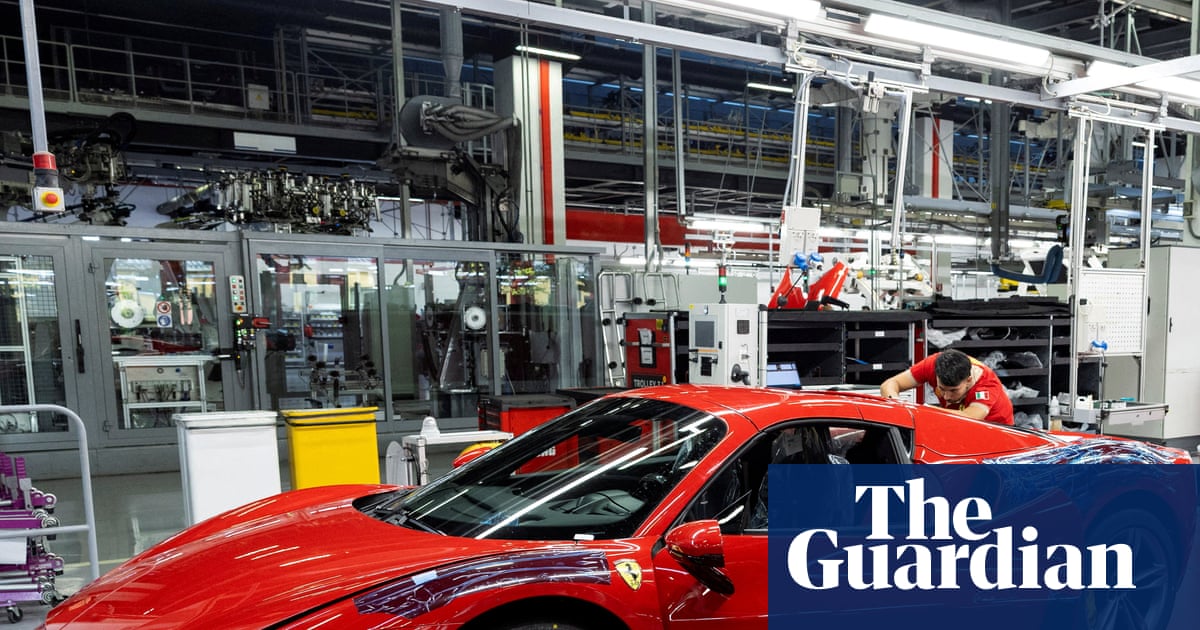
Ferrari has cut the number of cars it sells in the UK as wealthy individuals relocate overseas after tax changes and the abolition of non-dom status.
The Italian luxury carmaker reportedly began limiting the number of vehicles it exported to the UK about six months ago, in an attempt to stop a decline in their residual value.
Benedetto Vigna, the chief executive of the carmaker, said that Ferrari had seen a “stabilisation” in sales after the decision to reduce the number of vehicles it allocated to the UK.
“Some people are getting out of that country for tax reasons,” he told the Financial Times, adding that taxes were not the only reason for the fall in residual values. “There are many different factors. Maybe when you sell to the UK, that car cannot be sold somewhere else [because of its right-hand wheel]”.
In April the government abolished favourable tax treatment for non-domiciled residents – UK residents who declared that their long-term home was overseas to avoid paying UK taxes on global income and assets – and raised other duties on the wealthy.
The chancellor, Rachel Reeves, told the Guardian earlier this week that talk of an exodus of wealthy residents was just “scaremongering”.
“This is a brilliant country and people want to live here,” she said. “And I think, when people scaremonger again this year, we should take some of that with a pinch of salt.”
Reeves, who has said that the wealthy will be one of the targets for higher taxes in next month’s budget, has previously ruled out imposing a “wealth tax” but campaigners for changes to the system have highlighted other options.
These include raising the rate of capital gains tax, levying national insurance on rental income and on partners in law firms and consultancies, and creating higher council tax bands.
The non-dom tax changes sparked fears that Ferrari would lose its wealthy client base, leading to volatility in its residual prices, or the expected secondhand value of a vehicle when a leasing deal comes to an end.
Most new cars in developed markets are bought on deals that provide financing based on the amount of value a vehicle loses – its “depreciation” – rather than the overall sticker price.
skip past newsletter promotion
after newsletter promotion
If cars have weaker secondhand prices, the financing needed increases and the car becomes more expensive to lease.
The residual value for Ferrari’s Purosangue model fell 12.2% between January and October, while the SF90 Stradale fell 6.6%, according to AutoTrader.
However, prices have started to stabilise in recent months. The Ferrari 296 GTB, a supercar launched in 2022, had a recommended retail price from £256,275 if bought new. However, a used version was available from £189,490 on AutoTrader.