Category: 3. Business

  • Netherland’s renewables drive putting pressure on its power grid

    Netherland’s renewables drive putting pressure on its power grid

    John LaurensonBusiness reporter, Rotterdam

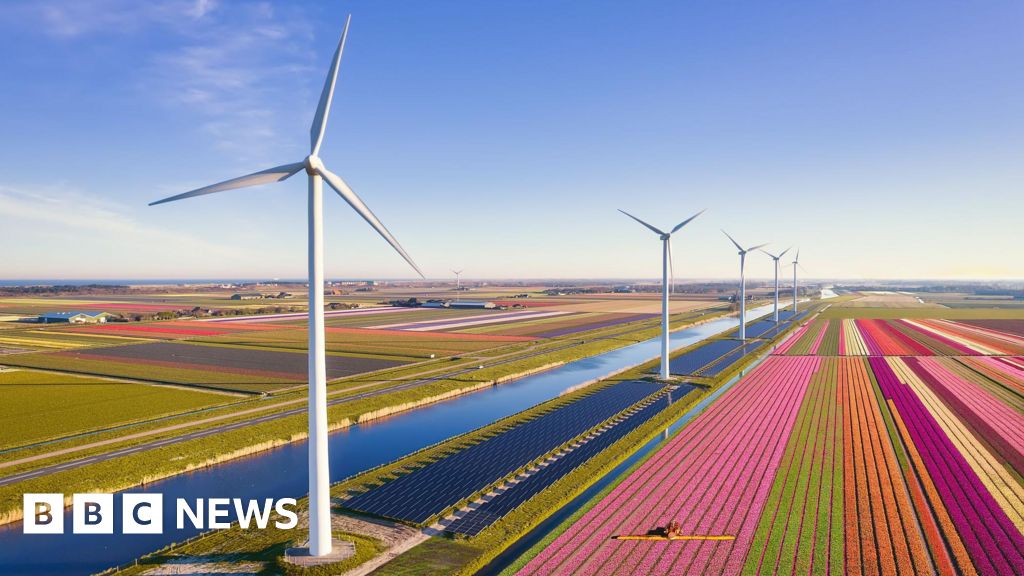
    AFP via Getty Images Solar panels and wind turbines beside fields of tulips in the NetherlandsAFP via Getty Images

    The Netherlands has raced to switch to wind and solar power

    In a Dutch government TV campaign called “Flip the Switch” an actress warns viewers about their electricity usage.

    “When we all use electricity at the same time, our power grid gets overloaded,” she says. “This can cause malfunctions. So, use as little electricity as possible between four and nine.”

    It is the sign that, in one of the most-advanced economies in the world, something has gone wrong with the country’s power supply.

    The Netherlands has been an enthusiastic adopter of electric cars. It has the highest number of charging points per capita in Europe.

    As for electricity production, the Netherlands has replaced gas from its large North Sea reserves with wind and solar.

    So much so that it leads the way in Europe for the number of solar panels per person. In fact, more than one third of Dutch homes have solar panels fitted.

    The country is also aiming for offshore wind farms to be its biggest source of energy by 2030.

    This is all good in environmental terms, but it’s putting the Dutch national electricity grid under enormous stress, and in recent years there have been a number of power cuts.

    The problem is “grid congestion”, says Kees-Jan Rameau, chief executive of Dutch energy producer and supplier Eneco, 70% of whose electricity generation is now solar and wind.

    “Grid congestion is like a traffic jam on the power grid. It’s caused by either too much power demand in a certain area, or too much power supply put onto the grid, more than the grid can handle.”

    He explains that the problem is that the grid “was designed in the days when we had just a few very large, mainly gas-fired power plants”.

    “So we built a grid with very big power lines close to those power plants, and increasingly smaller power lines as you got more towards the households.

    “Nowadays we’re switching to renewables, and that means there’s a lot of power being injected into the grid in the outskirts of the network where there are only relatively small power lines.”

    And these small power lines are struggling to cope with all the electricity coming in from wind turbines and solar panels scattered around the country.

    AFP via Getty Images Dutch homes covered in solar panelsAFP via Getty Images

    More than one in three Dutch homes has solar panels

    Damien Ernst, professor of electrical engineering at Belgium’s Liege University, is one of Europe’s leading experts on electricity grids. He says it is an expensive problem for the Netherlands to solve.

    “They have a grid crisis because they haven’t invested enough in their distribution networks, in their transmission networks, so they are facing bottlenecks everywhere, and it will take years and billions of dollars to solve this.”

    Prof Ernst adds that it is a Europe-wide issue. “We have an enormous amount of solar panels being installed, and they are installed at a rate that is much, much too high for the grid to be able to accommodate.”

    At Eneco’s headquarters in Rotterdam, Mr Kees-Jan Rameau highlights a large control panel that the company calls its “virtual power plant” and “the brain of our operations”. It is used to help balance the grid, avoiding blackouts.

    When electricity generation is too high across the Netherlands, it enables Eneco to turn wind turbines out of the wind and turn off solar panels.

    As for when demand for electricity is too high, it lowers the power to customers who have accepted to allow Eneco to stop or reduce their electricity supply when the network is under strain in exchange for lower prices.

    But for homes and companies who want to scale-up their use of electricity with a new or larger grid connection, that, increasingly, is just not possible.

    “Often consumers want to install a heat pump, or charge their electric vehicle at home, but that requires a much bigger power connection, and increasingly they just cannot get it,” says Mr Kees-Jan Rameau.

    He adds that it is worse for businesses. “Often they want to expand their operations, and they just cannot get extra capacity from the grid operators.

    And it has got to the point where even new housing construction in the Netherlands is becoming increasingly difficult, because there’s just no capacity to connect those new neighbourhoods to the grid.”

    Those people, and companies, end up on waiting lists for a number of years. At the same time there are also waiting lists for those who want to supply the grid with power, such as a new home fitted with solar panels on its roof.

    Staff at energy firm Eneco monitor screens

    Energy firm Eneco can remotely reduce the amount of electricity generated by its wind farms

    Tennet, the government-owned agency that runs the Netherlands’ national grid, says that 8,000 companies are currently waiting to be able to feed in electricity, while 12,000 others are waiting for permission to use more power.

    Some sectors of the Dutch economy are warning that it is hampering their growth. “Grid congestion is putting the future of the Dutch chemical industry at risk… while in other countries it will be easier to invest,” says the President of the Dutch Chemical Association Nienke Homan.

    So, was all this avoidable? “In hindsight I think almost every problem is avoidable,” says Mr Kees-Jan Rameau.

    He adds that following the 2015 Paris Agreement on trying to tackle climate change, “we were very much focussing on increasing the renewable power generation side. But we kind of underestimated the impact it would have on the power grid.”

    Tennet is now planning to spend €200bn ($235bn; £174bn) on reinforcing the grid, including laying some 100,000km (62,000 miles) of new cables between now and 2050.

    That’s a huge amount of money, but there is also a big cost to not spending it. Grid congestion is costing the Dutch economy up to €35bn a year, according to a 2024 report from management consultancy group Boston Consulting Group.

    Eugene Beijings, who is in charge of grid congestion with Tennet, says that patience is sadly required. “To strengthen and reinforce the grid, we need to double, triple, sometimes increase tenfold the capacity of the existing grid.

    “And it’s taking on average about 10 years to do a project like that before it goes live, of which the first eight are legislation and getting the rights to put cables in the ground with all property owners. And only the last two years are the construction period.

    “And meanwhile the energy transition is going that fast that we cannot cope with it, with the existing grid. So every additional request [to connect] is adding to the waiting list.”

    Zet ook de knop om A man with an electric-charging cable stands in front of an electric car with a young womanZet ook de knop om

    The Dutch government has paid for adverts encouraging people not to charge their cars during peak hours

    At the Dutch energy ministry, which is actually called the Ministry for Climate Policy and Green Growth, the Minister Sophie Hermans wasn’t available for an interview. But her office gave a statement:

    “In hindsight, the speed at which our electricity consumption has grown might have been collectively underestimated in the past by all parties involved. It is also hard to predict where the growth will occur first, as this results from individual companies/sectors and households.”

    As for solutions, the ministry says it has a “National Grid Congestion Action Plan” focussed on adjusting legislation so grid expansion permits can be granted more quickly.

    It is encouraging people to make better use of the existing grid with, for example, its Flip the Switch campaign.

    And the financial incentive for people who feed their surplus solar electricity into the grid is being reduced to almost nothing. In some cases, people will even have to pay to feed solar power into the grid.


    Read more global business stories

    Continue Reading

  • Supporting health on and off the court: Australian Open partners with Bupa

    Supporting health on and off the court: Australian Open partners with Bupa

    Bupa is also proud to be the Presenting Partner of the inaugural All Abilities Week, taking place from 20 to 26 October 2025. The week celebrates inclusive tennis for people with disability and highlights the coaches, clubs and communities championing accessible and inclusive tennis across Australia.

    “All Abilities week is a powerful way to kick off our partnership with Bupa. This great initiative will help to boost participation, raise awareness and reinforce our shared commitment to health and inclusion, both on and off the court,” Cornelis said.

    Research shows tennis can deliver a boost to physical, mental and social wellbeing in one hit. Regular play may also support weight management and help reduce high blood pressure, stroke, diabetes and some cancers.

    One study found people who played tennis lived longer than those who jogged, cycled or did calisthenics while another showed playing just three hours a week could halve the risk of heart disease.

    All Abilities Day on Tuesday 27 January will showcase many of tennis’ disability pathways across the precinct including wheelchair tennis, blind and low vision tennis, parastanding tennis, intellectual disabilities and autism tennis, and deaf and hard of hearing tennis.

    Mr Stone said Bupa’s partnership with the Australian Open built on Bupa’s ongoing support of inclusive sport, complementing existing partnerships with Paralympics Australia and Disability Sports Australia.

    “The Australian Open is already one of the world’s most accessible events and we’re thrilled to be playing our part in helping ensure all Australians have the opportunity to experience and enjoy tennis,” he said.

    During the Australian Open, Bupa customers will have access to two-for-one Ground Passes Monday to Friday during Opening Week and week two of the tournament, which includes All Abilities Day on Tuesday 27 January 2026. 
     

    Continue Reading

  • Samsung Electronics Ranks 5th in Global Brands for the Sixth Consecutive Year – Samsung Newsroom Australia

    Samsung Electronics Ranks 5th in Global Brands for the Sixth Consecutive Year – Samsung Newsroom Australia

    Samsung recognised for AI leadership and accelerating adoption


    Samsung Electronics today announced it has been recognised by Interbrand, a global brand consultancy, as the 5th-ranked global brand for the sixth year in a row. Interbrand releases its list of “Best Global Brands” each year. For this year’s list, Samsung recorded a brand value of $90.5 billion, upholding its position as the only Asian company to remain in the global top five since 2020.


    According to Interbrand, Samsung Electronics’ evaluation was positively influenced by:

    • Strengthened AI competitiveness across the company’s business divisions
    • Enhanced customer experiences through unified integration across products
    • Focused investment in AI-related semiconductors
    • Execution of a customer-centric brand strategy


    “Through AI innovation and open collaboration, Samsung has worked to ensure that more customers can experience AI in their daily lives,” said Won-Jin Lee, President and Head of Global Marketing Office at Samsung Electronics. “Moving forward, we will continue to focus on benefits for customers including in health and safety so that Samsung can grow into an even more beloved brand.”


    Under the vision of “Innovation for All,” Samsung consistently strives to make AI accessible to more customers worldwide.


    This year, Samsung reinforced its leadership in mobile AI with the continued advancement of Galaxy AI, aiming to make it available on 400 million devices within the year driving the democratisation of AI. In Consumer Electronics (CE), Samsung has expanded AI competitiveness by introducing AI technologies tailored to each product category, such as Vision AI and Bespoke AI.


    Through open collaboration with diverse partners, Samsung has enhanced personalized AI experiences for customers, while also providing industry-leading security with Samsung Knox.


    Beyond AI, Samsung continues to enhance the accessibility of its products and services and drive sustainable innovation across all business divisions. This includes energy savings through energy-efficient appliances connected via SmartThings.


    Samsung’s Recognised Efforts in Each Business Division


    Mobile

    • Leading the mobile AI era and driving the popularisation of AI with Galaxy AI
    • Strengthening foldable category leadership with the launch of Galaxy Z Fold7 and Z Flip7
    • Enhancing customer trust through strengthened privacy and security technologies
    • Expanding health services through advanced wearables, Samsung Health enhancements, and open collaboration


    Networks

    • Reinforcing leadership in AI-powered virtualized Radio Access Networks (vRAN) and Open RAN
    • Consistently innovating technologies to support various 5G use cases, including high quality streaming and gaming
    • Leading the technical standardisation of 6G
    • Enhancing partnerships with customer companies and communicating the sustainability aspects of Samsung’s network technology


    Visual Display

    • Solidifying global leadership in TVs, soundbars, and gaming monitors
    • Innovating viewing with rich AI features based on Vision AI
    • Enhancing The Frame and Art Store services to deliver personalised art TV experiences
    • Expanding content offerings through partnerships in TV Plus, entertainment, gaming, and music


    Digital Appliances

    • Maintaining global leadership in categories such as refrigerators and washing machines through consistent product innovation and advanced AI capabilities
    • Providing differentiated convenience and advanced AI experiences through SmartThings integration
    • Expanding Bespoke AI appliance leadership across energy efficiency, usability, performance, and design


    Semiconductor

    • Operating a diverse portfolio across cloud, on-device, and physical AI applications
    • Maintaining leadership in mobile and automotive semiconductors, including DDR, SSD, LPDDR, UFS, and Auto SSD
    • Continuing development and investment in innovative solutions like CMM-D and HBM
    • Sharing vision and industry leadership through influential tech events


    Interbrand’s Best Global Brands are ranked based on brand value evaluation, which involves a comprehensive analysis of the company’s financial performance and outlook, the influence of the brand on customer purchases, and brand competitiveness (including strategy, empathy, differentiation, customer engagement, consistency, trust, and more). The ranking is one of the world’s longest-standing brand value evaluations, widely recognised for its credibility.

    Continue Reading

  • Gilead presents new HIV research data at EACS 2025 – driving scientific innovation in treatment and prevention

    Gilead presents new HIV research data at EACS 2025 – driving scientific innovation in treatment and prevention

    – New data showcase safety profile of twice-yearly lenacapavir for PrEP with other medications and recruitment strategies for PURPOSE 5 –

    – Five-year BICSTaR results offer insights into long-term treatment with Biktarvy®, helping inform the future of coordinated, person-centered HIV care –

    – Latest results on novel long-acting combination regimens, including once-weekly and twice-yearly treatment options –

    Read the full company press release here.


    Source : Gilead Sciences, Inc.

    Continue Reading

  • Kirkland Represents AI Infrastructure Partnership (AIP), MGX, and BlackRock’s Global Infrastructure Partners (GIP) in Acquisition of 100% of the Equity in Aligned Data Centers | News

    Kirkland & Ellis is advising a consortium including Artificial Intelligence Infrastructure Partnership (AIP), MGX, and BlackRock’s Global Infrastructure Partners (GIP), which today announced they will acquire 100% of the equity in Aligned Data Centers from private infrastructure funds managed by Macquarie Asset Management and its co-invest partners. The transaction will fuel the expansion of next-generation cloud and AI infrastructure and implies an Aligned enterprise value of approximately $40 billion.

    AIP was founded by BlackRock, GIP, a part of BlackRock, MGX, Microsoft, and NVIDIA to expand capacity of AI infrastructure and help shape the future of AI-driven economic growth. Its financial anchor investors include the Kuwait Investment Authority and Temasek. In less than a decade, Aligned has evolved into one of the largest and fastest growing data center companies globally.

    The transaction, which is expected to close in the first half of 2026, subject to regulatory approvals and customary closing conditions, is AIP’s first investment and an important step towards its initial target of mobilizing and deploying $30 billion of equity capital, with the potential of reaching $100 billion including debt.


    Read more in the consortium’s press release

    Continue Reading

  • Bitcoin miner Bitfarms files for $300 million convertible note offering – theblock.co

    1. Bitcoin miner Bitfarms files for $300 million convertible note offering  theblock.co
    2. BITF’s HPC & AI Pivot: Can Success Be Fetched Beyond Bitcoin?  TradingView
    3. BITF: Company Plans to Utilize Offering Proceeds for General Pur  GuruFocus
    4. Day 9 of Gains Streak for Bitfarms Stock with 110% Return (vs. 295% YTD) [10/14/2025]  Trefis
    5. Bitfarms (NASDAQ:BITF) Gains Momentum Amid Crypto Mining Surge  Kalkine Media

    Continue Reading

  • ViiV Healthcare’s CLARITY study shows long-acting cabotegravir more acceptable than lenacapavir injections after a single dose

    ViiV Healthcare’s CLARITY study shows long-acting cabotegravir more acceptable than lenacapavir injections after a single dose

    ViiV Healthcare announced data from the phase I CLARITY open-label, crossover study, showing clinically relevant differences in injection site reaction (ISR) acceptability and tolerability, with 69% of HIV-negative adults finding cabotegravir long-acting (CAB LA) injections to be “totally or very acceptable” vs 48% for lenacapavir (LEN) injections. Data presented at EACS 2025 also showed 90% of HIV-negative adults and 86% of healthcare providers preferred CAB LA injections over LEN injections after a single dose, and ISR events were more frequent and visible with LEN than with CAB LA.

    Read the full company press release here.


    Continue Reading

  • Plug-in hybrids pollute almost as much as petrol cars – EU data

    Plug-in hybrids pollute almost as much as petrol cars – EU data

    The EU car industry wants plug-in hybrid vehicles to be considered carbon neutral, but data from thousands of vehicles shows that PHEVs emit just 19% less CO2 per km, on average, than petrol and diesel cars. Carmakers are pressuring EU lawmakers to treat hybrids as clean vehicles under a ‘technology neutral’ approach to decarbonising cars. But T&E analysis of emissions data from 127,000 PHEVs finds they emit far more than claimed and the extra fuel consumed costs the average driver €500 a year.

    PHEVs are supposed to save on emissions and fuel by switching between a battery, which is recharged by being plugged in, and a petrol or diesel engine. But in the real world, CO2 emissions from plug-in hybrids are almost five times what official tests suggest. The real-world data differs hugely from the official ‘WLTP’ tests where vehicles are driven in a way that regulators consider to be normal.

    In the real world, plug-in hybrids emit 135g of CO2 per km on average, according to T&E analysis of data gathered by the European Environment Agency (EEA) from fuel monitors on 127,000 vehicles registered in 2023. Petrol and diesel cars emit 166g of CO2/km on average.

    Engines still running in electric mode

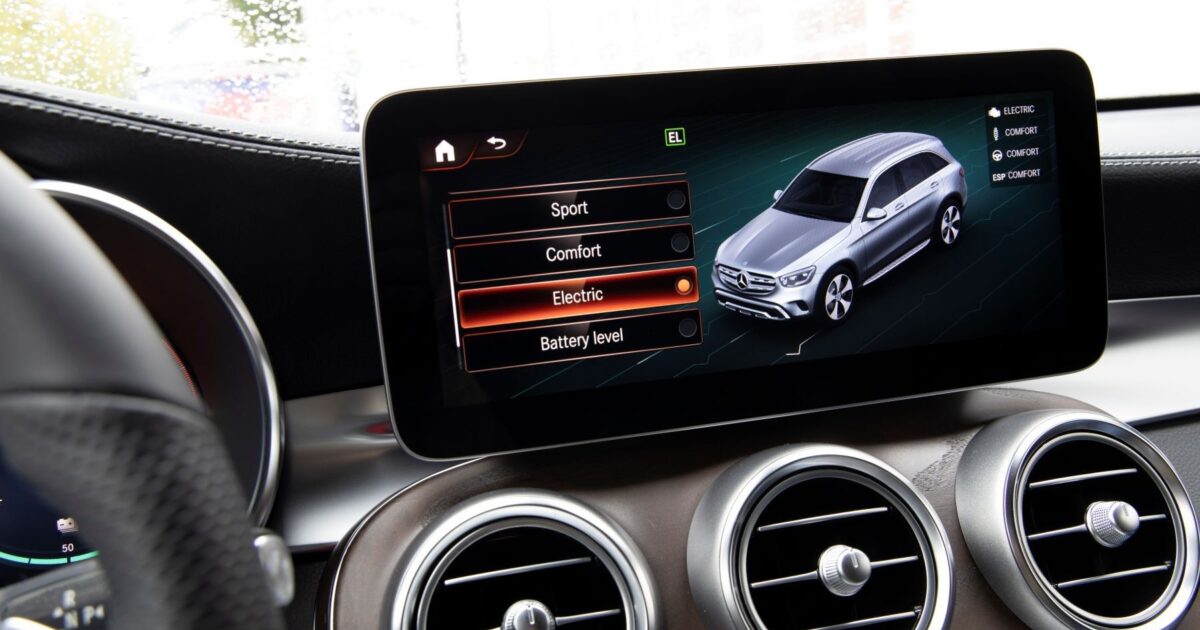
    Even when driven in electric mode, PHEV engines consume 3 litres of petrol per 100km, on average, the EEA data shows. As a result, they emit 68g of CO2/km in electric mode – 8.5 times as much as official tests claim. This is because the electric motors in PHEVs generally have insufficient power for higher speeds or steep inclines and the engine needs to kick in. On average, the engine supplies power during almost one-third of the distance driven in electric mode, according to the data.

    €500 extra a year

    PHEVs cost drivers €500 more a year than claimed to fuel and charge because of the hidden fuel consumption in both electric and engine modes, the report also finds. Not only are plug-in hybrids expensive to drive, they are also more expensive to buy than clean alternatives. The average selling price of PHEVs in Germany, France and the UK in 2025 is €55,700, according to Bloomberg Intelligence. This is €15,200 higher than the average price of a battery electric car.

    Lucien Mathieu, cars director at T&E, said: “Plug-in hybrids are one of the biggest cons in automotive history. They emit almost as much as petrol cars. Even in electric mode they pollute eight times as much as official tests claim. Technology neutrality cannot mean ignoring the reality that, even after a decade, PHEVs have never delivered.”

    Long range PHEVs = more emissions

    PHEV emissions are also increasing because of the trend towards longer electric ranges as bigger batteries make the vehicles heavier and, therefore, burn more fuel in engine mode. These heavier vehicles also consume more energy than smaller cars when driven on the battery. Plug-in hybrids with an electric range above 75 km actually emit more CO2 on average than those with a range between 45 and 75 km, the data shows.

    Mercedes-Benz has the biggest gap between its official and real-world PHEV emissions, according to the 2023 data, emitting 494% more, on average. Its GLE-Class has the highest real-world emissions gap of cars sold that year, exceeding its official value by 611%. The other major European carmakers emitted around 300% more than their official CO2 ratings.

    The European car industry wants to be allowed to sell PHEVs after the EU’s 2035 deadline for zero-emission cars. Carmakers are also demanding that the EU cancel the ‘utility factors’ it has set to correct the CO2 rating of plug-in hybrids. The utility factors set for 2025 and 2027 gradually correct the gap between official and real-world emissions, meaning carmakers’ EU CO2 targets get stricter, pushing manufacturers to sell more battery electric cars.

    Lucien Mathieu said: “Weakening the rules for plug-in hybrids is like drilling a hole in the hull of Europe’s car CO₂ law. Instead of steering the market toward affordable zero-emission cars, carmakers will flood it with expensive, polluting PHEVs. That risks sinking the EV investment certainty the market desperately needs.”

    Continue Reading

  • Smoke screen: the growing PHEV emissions scandal

    Smoke screen: the growing PHEV emissions scandal

    While EREVs can go further than PHEVs, they can’t go as far as BEVs with current technology

    As discussed in previous sections, the average electric range of Chinese EREVs is above 180 km, surpassing the 80 km range of PHEVs but falling short of the average 500 km range of BEVs in Europe. However, the best-in-class Volkswagen ID.ERA concept car is expected to reach 300 km, and future EREV models fitted with new battery technology could extend this further. CATL announced its new Freevoy battery could unlock electric range over 400 km. For example, the Stellar drive from IM Motor is expected to use a 66 kWh Freevoy battery to achieve an electric range of 450 km. These future long-range models with an electric range of over 300 km have the potential to offer a range comparable with that of today’s entry-level BEVs.

    While EREVs can be cleaner than PHEVs, today’s model falls short of the high environmental standards required in Europe

    EREVs benefit from powerful electric motors and a series configuration that enables emissions to be minimised in electric mode. This is an advantage over PHEVs, which have less powerful electric motors and therefore drive in combined electric-combustion mode for a significant proportion of their use.

    EREVs could reduce NOx emissions compared to PHEVs. If engineered well, the EREV combustion engine would operate almost like a stationary generator with a steady load, reducing NOx emission spikes that occur during dynamic engine operation.

    Due to their long ICE range capability, the average utility factor of EREVs could be between 15% and 70%. They may therefore exhibit similar charging behaviour to PHEVs, which travel more than half of their distance in Europe in depleted battery mode. Nevertheless, well-designed, long-range (300+ km) EREVs with a limited fuel tank size (e.g. 15 L) could be driven predominantly in electric mode, achieving a utility factor close to 70%.

    Taking the whole lifecycle of the vehicles into account, including the production phase, BCG calculated that EREVs with a 15% utility factor emit, on average, 127% more CO₂ than similar BEVs. Even with a utility factor of 65%, EREVs would emit 48% more CO₂ than BEVs over their lifetime, making them suboptimal in terms of environmental performance.

    EREVs benefit from fast-charging capability, yet they rely on fossil fuel infrastructure

    With the ability to use DC fast charging at a rate above 50 kW, all EREV models have a significant advantage over PHEVs. Moreover, the ability of these vehicles to drive in combustion mode can be useful for a certain category of users during the transition, particularly those living in areas with limited charging access. However, as the transition progresses towards the end of the 2020s, European regulations such as the Alternative Fuel Infrastructure Regulation (AFIR) and the Energy Performance of Buildings Directive (EPBD) are expected to provide most drivers with sufficient access to public and private charging. While an ICE range is beneficial in the short term, it will not be a significant advantage for EREVs in the 2030s as fuel stations become scarcer. Furthermore, the implementation of carbon taxes as part of the Emissions Trading System for road transport (ETS2) is expected to increase fuel prices and therefore driver costs. Reliance on fossil fuel infrastructure could also become a disadvantage as Europe increasingly prioritises energy sovereignty.

    The future price of the EREV powertrain is uncertain but operating costs will be a burden

    Compared to PHEVs, these models have larger batteries and could initially be sold at a higher price. However, as battery prices are expected to decrease, accounting for a smaller proportion of the total car price, other factors could influence vehicle pricing. For example, well-designed EREVs with small combustion engines for emergency backup could be built on the same platform as BEVs with a lower complexity than PHEVs, benefiting from the economies of scale of the BEV platforms. In the European market, PHEVs will face an increasing cost burden as the production volume on ICE platforms decreases. Therefore, EREV could become cheaper than PHEVs in the medium term.

    Despite smaller batteries than BEVs, EREVs would be more complex and costly due to the additional ICE components that would likely not benefit from significant economies of scale. Therefore, EREV prices in Europe are unlikely to fall below BEV prices. BloombergNEF long-term modelling confirms this for the Chinese market as they show that, in the absence of subsidy, EREVs would never reach price parity with battery electric vehicles, but they could displace PHEV sales due to their lower price.

    Overall, a well-designed EREV with a small combustion engine could be cheaper than a PHEV, but it is unlikely to be as affordable as a mass-market BEV. However, EREVs could provide cheaper options than BEVs in premium SUV segments where extra-large BEV batteries may be common.

    In terms of total cost of ownership (TCO), reports from BCG highlight that EREVs incur higher costs than BEVs. BCG calculated that a D-segment EREV would cost €1,000–€1,200 more per year than a similar BEV over a five-year ownership period.

    Based on sales price and TCO, EREVs appear to be better suited to premium segments, where users are less sensitive to operating costs and long electric ranges could limit the price benefits of BEVs.

    EREVs are not suited to mass-market segments, but they could serve as a transition technology for certain users before 2035 when replacing combustion vehicles

    Firstly, they can serve users driving long distances and living in remote areas, where charging infrastructure is expected to remain limited during the transition, and who lack access to private charging at home or at work. While this use case is quite common in China, explaining the popularity of EREV in the country, these conditions are far less common in Europe and should disappear by 2035 thanks to charging infrastructure coverage. In this use case, well-designed EREVs can provide an emergency backup drive in combustion mode. However, the fuel tank should not be oversized to prevent the vehicle from being used primarily in combustion mode.

    Secondly, EREVs would be designed to target premium drivers seeking large vehicles with long-range capabilities and intermediate features between PHEVs and BEVs. A survey conducted by McKinsey has confirmed that the interest in EREVs was higher among owners of premium-brand vehicles. However, these use cases are expected to be relatively limited, given the increasing competition from long-range PHEV models (e.g. Lynk & Co has introduced a model with an electric range of 200 km) and new battery technology that enables ultra-long-range BEVs (e.g. Mercedes-Benz is testing a BEV prototype with a range of 1,000 km using a solid-state battery).

    Chinese carmakers are leading the way with EREV technology, whereas European carmakers have limited plans in Europe

    EREV technology does not appear to be a strategic priority for European carmakers. Many carmakers are already benefiting from, or planning to further develop, their PHEV technology, which benefits from the legacy ICE supply chain in Europe. In this context, carmakers have not focused extensively on EREV, a technology that is dominated by Chinese companies and would not significantly benefit the ICE supply chain in Europe.

    This technology is being developed for the premium segment, with BMW considering selling an EREV version of the iX5 in Europe and luxury carmakers such as Lotus developing high-end EREV models. However, carmakers must prioritise investment in BEVs to develop the best BEV platforms for the market, and avoid making competing investments in PHEV or EREV technologies. For example, the CEO of Volkswagen declared that it makes no sense to have both range extenders and plug-in hybrids in smaller European cars, whereas this technology is relevant for large vehicles sold in the US.

    Finally, in the undesirable case where the EU allows for an exemption for the sale of vehicles running on carbon-neutral e-fuels under specific conditions after 2035, EREVs may be the preferred e-fuel compatible vehicle given that the high prices of e-fuels would limit such fuels to niche applications.

    Continue Reading

  • This AI stock has soared 1,600% in three years – and Deutsche Bank predicts more gains

    This AI stock has soared 1,600% in three years – and Deutsche Bank predicts more gains

    By Emily Bary

    A Deutsche Bank analyst is upbeat about Vertiv’s stock and says the rush of new data-center deals suggests ‘the bull case may not even be bullish enough’

    Vertiv makes cooling technologies that are vital to AI data centers.

    Data-center technology provider Vertiv Holdings Co. has been a big winner as artificial intelligence has proliferated. But Deutsche Bank says investors who missed out on the stock’s 1,600%-plus rally over the past three years can still get in on future gains – though not quite at the same magnitude.

    Admittedly, Vertiv’s stock (VRT) is expensive relative to recent historical levels, at least when you look simply at how it trades relative to forward earnings. Deutsche Bank’s Nicole DeBlase noted it trades at a ratio of 39x, versus its 32x one-year median.

    But she thinks it’s better to look at the stock’s ratio of price to earnings to growth, where it screens in the bottom quartile among peer stocks in the multi-industry and electrical-equipment sector, meaning it’s relatively cheap from that perspective.

    Read: AI has already disrupted hiring for these jobs, as adoption nears a tipping point

    She pointed to “a clear bifurcation in medium-term earnings growth algorithms between the secular growth ‘haves’ and ‘have nots’” and predicts that this split will “persist for the foreseeable future.” Therefore, she thinks it makes sense to look at Vertiv’s profile relative to peers, some of which are exposed to a more challenged macroeconomy.

    Vertiv supplies electrical and mechanical equipment that goes into data centers, and DeBlase said it stands to benefit from perhaps $7 trillion in overall data-center infrastructure investments that could be made from 2025 to 2030, a number that comes from McKinsey estimates.

    The company provides direct-to-chip liquid-cooling technologies, and that market could grow even more quickly that that for general electric equipment since the revenue base is negligible now. Previously, “traditional data centers did not broadly require liquid-cooling infrastructure,” DeBlase said. But AI is very power intensive and requires cooling systems to maximize efficiency.

    DeBlase lifted her price target on the stock to $216 from $168, with the new target implying 20% upside. By applying more bullish assumptions, however, she could see the stock hitting $230, or 27% above current levels.

    Don’t miss: AMD’s stock just keeps climbing – and it all comes down to this factor

    But the growing hubbub around data-center investments now has DeBlase wondering: “Is the bull case bullish enough?” She noted big recent arrangements such as one between OpenAI and Broadcom Inc. (AVGO) and another between OpenAI and Advanced Micro Devices Inc. (AMD), and those are just a few of the newly announced deals.

    “While it is impossible to know to what extent projects of this magnitude were already embedded in third-party data-center capacity forecasts, it does seem fair to say that if sizable project announcements continue, the bull case becomes increasingly likely – and the bull case may not even be bullish enough.”

    More from MarketWatch: Why Broadcom’s OpenAI deal may not be all it’s cracked up to be

    -Emily Bary

    This content was created by MarketWatch, which is operated by Dow Jones & Co. MarketWatch is published independently from Dow Jones Newswires and The Wall Street Journal.

    (END) Dow Jones Newswires

    10-15-25 1752ET

    Copyright (c) 2025 Dow Jones & Company, Inc.

    Continue Reading