Category: 3. Business

  • IATA Launches Global Campaign to Help Travelers Fly Safely with Lithium Batteries

    IATA Launches Global Campaign to Help Travelers Fly Safely with Lithium Batteries

    Translation: L’IATA lance une campagne pour aider les voyageurs à voler en toute sécurité avec des batteries au lithium (pdf)

    Xiamen – The International Air Transport Association (IATA) has launched ‘Travel Smart with Lithium Batteries’, a global safety campaign that gives travelers seven simple rules for carrying mobile phones, laptops, power banks, and other lithium-powered devices safely when they fly. The campaign will run on IATA’s website and social channels and is available as white-label assets for airlines, airports, and other partners across the travel ecosystem.

    “Lithium-powered devices are safe when handled properly, but they can pose a risk if damaged or packed incorrectly. As more travelers fly with these devices, our Travel Smart with Lithium Batteries campaign will help airlines educate their passengers on the simple rules they must keep in mind when traveling with the electronic devices that have become an essential part of their daily lives,” said Nick Careen, IATA’s Senior Vice President, Operations, Safety and Security.


    Travelers Are Carrying More Devices but with Incomplete Knowledge

    A recent IATA passenger survey found that most travelers fly with lithium-powered devices:

    • 83% of travelers carry a phone
    • 60% carry a laptop
    • 44% carry a power bank

    While 93% of travelers consider themselves knowledgeable on the rules for carrying lithium-powered devices (including 57% rating themselves as very familiar with the rules), critical misconceptions persist:

    • 50% incorrectly believe it’s OK to pack small lithium-powered devices in checked luggage
    • 45% incorrectly believe it’s OK to pack power banks in checked luggage
    • 33% incorrectly believe that there are no power limits on power banks or spare batteries

    Seven Simple Safety Rules


    The campaign assets highlight seven simple rules every traveler should follow:

    1. Pack light: Only bring the devices and batteries you really need.
    2. Stay alert: If a device is hot, smoking, or damaged, tell the crew (or airport staff) immediately.
    3. Keep devices with you: Always carry phones, laptops, cameras, vapes (if allowed) and other battery-powered items in your hand baggage, not in checked baggage.
    4. Protect loose batteries: Keep spare batteries and power banks in their original packaging, or cover the terminals with tape to prevent short-circuits.
    5. Gate check reminder: If your hand baggage is taken at the gate to go in the aircraft baggage hold, remove all lithium batteries and devices first.
    6. Check battery size: For larger batteries (over 100 watt-hours, such as those used in larger cameras, drones, or power tools), check with your airline as approval may be required.
    7. Check airline rules: Always confirm your airline’s policies, as requirements may differ in compliance with local regulations.

    Industry-Wide Rollout


    The multilingual campaign will be rolled out through digital assets that airlines and other partners can adapt and share with passengers, ensuring consistent safety messaging across the industry. A short, animated video, designed to make the rules simple, engaging, and easy to remember, can be used by airlines and airports on their digital and social channels.

    Campaign assets will also be available to media and other entities in the aviation value chain to help educate travelers on flying safely with their lithium-powered devices.

    > Learn more and download the assets


    For more information, please contact:

    Corporate Communications

    Tel: +41 22 770 2967

    Email: corpcomms@iata.org

    Notes for Editors:

    • IATA (International Air Transport Association) represents some 350 airlines comprising over 80% of global air traffic.
    • You can follow us on X for announcements, policy positions, and other useful industry information.
    • Fly Net Zero
    • Common devices that use lithium batteries
      Many travelers don’t realize just how many everyday devices contain lithium batteries. Beyond mobile phones and laptops, lithium batteries power a wide range of personal and travel items including tablets, e-readers, wireless headphones, smartwatches, fitness trackers, cameras, portable speakers, power banks, handheld gaming consoles, and electronic styluses. They are also found in everyday personal-care items like electric toothbrushes, shavers, and hair-straighteners, as well as in e-cigarettes, handheld fans, torches, medical devices such as hearing aids and glucose monitors, and compact tools or gadgets like screwdrivers and laser pointers.  

    Continue Reading

  • Mitazalimab plus mFOLFIRINOX in Metastatic Pancreatic Cancer: Insights from the OPTIMIZE-1 Study

    Mitazalimab plus mFOLFIRINOX in Metastatic Pancreatic Cancer: Insights from the OPTIMIZE-1 Study

    Pancreatic cancer remains one of the deadliest cancers, with limited effective treatment options and a generally poor prognosis. According to the American Cancer Society, pancreatic cancer accounts for about 3% of all cancers in the United States, yet it is responsible for approximately 8% of all cancer deaths. In 2025, an estimated 67,440 Americans (34,950 men and 32,490 women) will be diagnosed with pancreatic cancer, and about 51,980 deaths (27,050 men and 24,930 women) are expected. The average lifetime risk of developing pancreatic cancer is about 1 in 56 for men and 1 in 60 for women.

    In this challenging landscape, novel immunotherapies are being explored to improve patient outcomes. One such investigational agent is mitazalimab, a monoclonal antibody targeting CD40, a key immune co-stimulatory receptor. Developed by Alligator Bioscience, mitazalimab is currently being studied in combination with chemotherapy in metastatic pancreatic cancer, showing promising early-phase results.

    What Are Monoclonal Antibodies?

    Monoclonal antibodies (mAbs) are laboratory-engineered proteins that mimic the immune system’s ability to recognize and bind to specific targets, such as proteins on the surface of cancer cells. By doing so, they can block signals that tumors use to grow, mark cancer cells for destruction by the immune system, or deliver toxic agents directly to the tumor.

    What Is CD40 and Why Does It Matter in Cancer?

    CD40 is a receptor found on antigen-presenting cells (APCs), including dendritic cells, B cells, and macrophages. It plays a central role in regulating immune responses by promoting the activation of T cells. In cancer immunotherapy, stimulating CD40 can turn these APCs into potent activators of the immune system, helping to mount a strong antitumor response.

    What Is Mitazalimab?

    Mitazalimab is a next-generation monoclonal antibody developed by Alligator Bioscience. It belongs to a class of drugs designed to stimulate the immune system against cancer. Specifically, it targets CD40, a receptor expressed on antigen-presenting cells such as dendritic cells, B cells, and macrophages. By activating CD40, mitazalimab enhances the body’s ability to recognize and destroy cancer cells.

    This drug is being investigated primarily in metastatic pancreatic cancer, a disease with historically poor outcomes and limited treatment options. Mitazalimab represents one of the most advanced CD40 agonists currently in clinical development.

    How Does Mitazalimab Work?

    CD40 plays a key role in immune system activation. When CD40 is stimulated, it helps dendritic cells “teach” T cells to recognize and attack tumors. Mitazalimab binds to CD40 and mimics the natural signals that activate this immune pathway, leading to:

    • Enhanced antigen presentation
    • Activation of tumor-specific T cells
    • Immune system priming against cancer

    In preclinical studies, it has shown potential to improve immune response not only alone but also when used in combination with chemotherapy, checkpoint inhibitors, or cancer vaccines. It may also help generate durable antitumor immunity that persists after treatment ends.

    mitazalimab-mechanism of action Oncodaily

    Photo from Alligator Bioscience Official Website.

    Early Clinical Experience and Biomarker Evidence

    Mitazalimab was initially evaluated in two Phase 1 trials. One, led by Alligator Bioscience, assessed intratumoral administration, while the other, conducted by Janssen Biotech, studied systemic administration in patients with advanced solid tumors. These trials confirmed mitazalimab’s favorable safety profile and demonstrated early signals of antitumor activity. One patient with renal cell carcinoma achieved a partial response, and ten patients experienced stable disease for six months or longer.

    Mitazalimab’s mechanism of action was further supported by biomarker analyses. The drug activated key immune cells—including dendritic cells, macrophages, and T cells—enhancing both innate and adaptive immune responses. Transcriptomic profiling in patient-derived immune cells showed strong immune activation consistent with its CD40 agonist activity.

    REACTIVE-2: Investigator-Initiated Study in Pancreatic Cancer

    The REACTIVE-2 trial was a Phase 1, investigator-sponsored study evaluating mitazalimab in combination with the cancer vaccine MesoPher in patients with previously treated metastatic pancreatic cancer. The final patient was dosed in 2023. This study added further translational support to the immune-stimulatory potential of mitazalimab in this hard-to-treat malignancy.

    OPTIMIZE-1: Phase 2 Trial in First-Line Metastatic Pancreatic Cancer

    The OPTIMIZE-1 study marked a major advancement in mitazalimab’s development. This open-label, multicenter Phase 2 trial evaluated mitazalimab in combination with mFOLFIRINOX in patients with previously untreated metastatic pancreatic ductal adenocarcinoma (PDAC).

    At the 24-month cutoff:

    • Overall survival rate was 29.4%, nearly triple the historical 8% seen with chemotherapy alone.
    • Median overall survival (mOS) reached 14.9 months, surpassing the 11.1 months typically seen with FOLFIRINOX and the 9.2–11.1 months reported in studies like NALIRIFOX.
    • Objective response rate (ORR) was 42.1% confirmed and 54.4% unconfirmed among 57 evaluable patients.
    • Median duration of response (DoR) was 12.6 months, significantly longer than with standard chemotherapy.

    At the data cutoff, 28% of patients remained alive, and 9% were still on active treatment. These results highlight mitazalimab’s potential to enhance the depth and durability of responses when combined with chemotherapy.

    Previously published in The Lancet Oncology 2024, the OPTIMIZE-1 trial showed that among 57 evaluable patients with metastatic pancreatic ductal adenocarcinoma treated with mitazalimab plus modified FOLFIRINOX, the confirmed objective response rate was 40%, exceeding the primary endpoint. Median progression-free survival was 7.7 months, and median overall survival reached 14.3 months, with 59% of patients alive at 12 months. At data cutoff, 51% remained on study and 32% on treatment.

    The median duration of response was 12.5 months. Treatment was generally manageable; the most common grade 3 or higher adverse events included neutropenia (26%), hypokalemia (16%), anemia, and thrombocytopenia (both 11%). Serious adverse events occurred in 41% of patients but none were attributed to mitazalimab. No treatment-related deaths were reported. These encouraging results support further phase 3 evaluation of this combination.


    Mitazalimab plus mFOLFIRINOX in Metastatic Pancreatic Cancer: Insights from the OPTIMIZE-1 Study

    An updated analysis published in Cell Reports Medicine 2025 provided extended follow-up and biomarker insights. At a median follow-up of 18.2 months, the confirmed ORR was 42.1 % (one complete and 24 partial responses), with an unconfirmed ORR of 54.4 % and a disease-control rate of 78.9 %. The median duration of response was 12.6 months, PFS 7.7 months, and OS 14.9 months, with 12- and 18-month OS rates of 57.8 % and 36.2 %, respectively.

    Exploratory biomarker analyses identified a fibrosis-related gene signature enriched for extracellular-matrix-remodeling genes (MMP2, MMP14) associated with improved survival, and mitazalimab-induced activation of T, B, NK, and myeloid cells correlated with longer PFS and OS. Circulating-tumor-DNA analyses showed ctKRAS clearance in 72 % of patients, predicting longer survival; molecular responses preceded radiologic responses by ≈47 days, while molecular progression appeared ≈39 days earlier than imaging.

    Dose Optimization and Regulatory Feedback

    Based on FDA guidance, an expansion cohort of OPTIMIZE-1 tested a lower 450 µg/kg dose. Topline results showed an ORR of 22.7% at this dose—less effective than the 54.4% seen at 900 µg/kg—confirming the need to advance the higher dose into Phase 3.

    Alligator Bioscience has completed CMC requirements, including GMP manufacturing readiness. Both the U.S. FDA and Germany’s Paul Ehrlich Institute confirmed that OPTIMIZE-1 qualifies as a Phase 3-enabling trial.

    Phase 3 Planning and Commercial Strategy

    A final Phase 3 protocol was submitted at the FDA’s End-of-Phase-2 meeting in January 2025. Regulatory agencies have agreed that the proposed design is suitable to support a future Biologics License Application (BLA) and Marketing Authorization Application (MAA).

    Alligator Bioscience is planning to launch a global Phase 3 trial in the second half of 2025, potentially positioning mitazalimab for accelerated approval in first-line metastatic pancreatic cancer.

    Continue Reading

  • Samsung Partners with Eco-Bos to power the first Carbon Positive community at the UK Garden Village – Samsung Newsroom U.K.

    Samsung Partners with Eco-Bos to power the first Carbon Positive community at the UK Garden Village – Samsung Newsroom U.K.

    Collaboration sets new benchmark for energy efficient community developments in the UK


    Samsung Electronics (UK) Limited has announced it is partnering with Eco-Bos, to deliver pioneering smart home technology that drives down carbon emissions and increases energy efficiencies for the West Carclaze Garden Village in Cornwall. Residents in West Carclaze can enjoy lower energy bills and effortless control of their living environment, thanks to the Samsung SmartThings platform that lets them choose how to manage heating, lighting, security, and appliances all from a single app.


    One of the UK’s first Garden Villages the 1,500 homes set within 500 acres, 350 which are a Country Park, in West Carclaze, places wellbeing and innovation at its core, providing homes that are highly energy efficient and designed to take full advantage of new technologies and innovative materials. The development also includes a 7.5 MW onsite solar farm to support renewable energy supply. Critically, West Carclaze homes are rated EPC A, a rating achieved by only 0.3% of homes in the UK in an area noted as one of the least energy efficient counties in the UK*.


    West Carclaze residents will benefit from this pioneering development, with each household saving both time and money through the improvements. Community residents can expect to generate a profit of up to £1,779, based on SAP (Standard Assessment Procedure) calculations as outlined in the Predictive Energy Assessment from the Elmhurst Energy Report. Comparatively, a typical UK family household’s electricity and gas bill is approximately £1,719.45 per year, highlighting the potential for significant financial savings of up to £3,498 per year.[1]


    As part of the collaboration, Samsung will provide its smart devices and appliances to each of the remaining 1,500 homes. Every property will come equipped as standard with a Samsung Heat Pump, Climate Hub, Solar PV as well as smart devices to handle everyday tasks across cooking, laundry, and dishwashing. All connected and managed in one simple interface via Samsung’s SmartThings[2] app, available on Android or iOS. The open ecosystem gives residents the ability to connect more than 350 partner brands within their home, including Amazon Alexa, Philips Hue and many other devices which be tailored based on each residents’ evolving needs.


    Thanks to Samsung’s SmartThings platform and app, residents can seamlessly manage everyday tasks and benefit from SmartThings’ AI Energy Mode. This automatically switches appliances such as washing machines, fridge freezers and ovens to save energy through intelligent automation and learning capabilities within the appliances. For example a Samsung washing machine could reduce energy use by up to 20%[3] by simply switching on AI Energy Mode. By empowering residents to optimise their energy use and automate everyday routines, the tech at the heart of West Carclaze Garden Village will help create a more efficient community where residents can enjoy lower running costs of their home through reduced energy usage.


    Mark Seaman, Head of Samsung B2B Integrated Offering Team, commented: “We know that people want homes that are more affordable to run and easier to live in. By partnering with Eco-Bos, we’re making it possible for residents to enjoy real savings on their energy bills, and giving them the opportunity to gain time back for themselves through the convenience and benefits of connected living.


    “For developers, this collaboration shows that building tech-enabled communities is achievable today, meeting both new regulations and the needs of modern homeowners. We’re excited to help set a new standard for what home life can be, and we hope West Carclaze will inspire others to follow.”


    Dorian Beresford, Chief Development Officer at Eco-Bos added: “Our collaboration with Samsung shows what’s possible when innovation and technology combine to serve people, not just performance. The future of housing must be cleaner, smarter, and more adaptable to people’s lives — with homes that work for people, not the other way around.

    “This project brings that vision to life. Every home is designed to give back more than it takes — in energy, comfort, and quality of life. It’s proof that carbon-positive living isn’t a dream for tomorrow; it’s happening today.”

    To learn more about Samsung’s work with homebuilders and developers, as well as its commitment to supporting the technological development of Tomorrow’s Homes Today please click here.


    [*]*England’s Best and Worst Areas for Energy Efficient Homes – According to EPC data analysed by Eurocell


    [1]British Gas, ‘What is the average energy bill in Great Britain?’, 2025.

    [2]To use Samsung’s SmartThings service, you must have a Samsung Account, the SmartThings app installed on your smartphone or tablet, an active internet connection, and at least one compatible SmartThings-enabled device. The Samsung account is essential for storing your data and accessing your smart home setup across multiple devices, while the internet connection allows your devices to connect to the SmartThings network.

    [3]Based on internal testing on the WW11BB944AGB model on a Cotton 40 degrees wash with the AI Energy Mode turned on (reducing the temperature) compared to not using AI Energy Mode. AI Energy Mode can only be operated at 40 degrees or lower.

    Continue Reading

  • Driverless taxis from Waymo will be on London’s roads next year, US firm announces | Waymo

    Driverless taxis from Waymo will be on London’s roads next year, US firm announces | Waymo

    Driverless taxis from Waymo will be available for hire on London’s roads next year, the US company has announced.

    The UK capital will become the first European city to have an autonomous taxi service of the kind now familiar in San Francisco and four other US cities using Waymo’s technology.

    Waymo said its cars were now on their way to London and would start driving on the capital’s streets in the coming weeks with “trained human specialists”, or safety drivers, behind the wheel.

    The company – originally formed as a spin-off from Google’s self-driving car programme and part of the same parent group, Alphabet – said it would scale up operations and work closely with the Department for Transport and Transport for London to obtain the necessary permissions to offer fully autonomous rides in 2026.

    Uber and the UK tech company Wayve have also announced their own plans to trial their driverless taxis in the capital next year, after the British government said it would accelerate rules allowing public trials to take place before legislation enabling self-driving vehicles passes in full.

    The transport secretary, Heidi Alexander, said: “I’m delighted that Waymo intends to bring their services to London next year, under our proposed piloting scheme.

    “Boosting the AV sector will increase accessible transport options alongside bringing jobs, investment and opportunities to the UK. Cutting-edge investment like this will help us deliver our mission to be world leaders in new technology and spearhead national renewal.”

    A fuller rollout of self-driving taxis is expected in the UK after the Automated Vehicles Act fully takes effect in late 2027.

    Waymo already has ties to Britain after opening its first European engineering hub in Oxford in 2019. It is also launching services in Tokyo using Jaguar Land Rover electric vehicles, its only other current venture outside the US.

    skip past newsletter promotion

    The US company’s co-chief executive Tekedra Mawakana said the technology was “making roads safer and transportation more accessible”, adding: “We’ve demonstrated how to responsibly scale fully autonomous ride-hailing, and we can’t wait to expand the benefits of our technology to the United Kingdom.”

    Waymo launched its autonomous taxis in 2020 and now says it has taken more than 10 million passengers in the US.

    Despite some alarming incidents, Waymo said the data showed that cars driven by humans were involved in incidents that injured pedestrians 12 times more often than its autonomous vehicles.

    Continue Reading

  • Allen & Gledhill continues to be recognised as a leading law firm in World Tax 2026: Allen & Gledhill

    Allen & Gledhill continues to be recognised as a leading law firm in World Tax 2026: Allen & Gledhill


    15 October 2025

    Allen & Gledhill’s Tax Practice continues to be recognised as a leading law firm in the 2026 edition of World Tax, with a Tier 1 ranking in the Tax category and a Tier 2 ranking in the Tax controversy category.

    Our Partners, Sunit Chhabra and Lim Pek Bur, have also maintained their individual ratings. Sunit Chhabra is rated as ‘Highly Regarded’ in the General Corporate Tax and Tax Controversy categories, while Lim Pek Bur is rated as ‘Highly Regarded’ in the Indirect Tax and Women in Tax categories.

    Our Consultant, Stephen Phua BBM, PBM, and Counsel Han Junwei, have also been rated as “Promoted” in the General Corporate Tax categories.

    World Tax is produced in association with International Tax Review, providing rankings and profiles of the most effective tax practitioners in more than 100 jurisdictions globally.  

    Continue Reading

  • China Mobile Guangdong and Huawei Unveil China’s First All-Scenario AN Showroom, Advancing Digital and Intelligent Network Evolution

    China Mobile Guangdong and Huawei Unveil China’s First All-Scenario AN Showroom, Advancing Digital and Intelligent Network Evolution

    [Guangzhou, China, October 15, 2025] At the China Mobile Global Partner Conference, China Mobile Guangdong and Huawei unveiled their all-scenario autonomous network (AN) showroom. This showroom establishes a prime example for innovation and practices in high-value scenarios and the evolution of advanced ANs. It also highlights China Mobile Guangdong’s dedication to advancing the national strategy of self-reliance and self-improvement in science and technology and progressing the seamless integration of the innovation and industry chains.

    Within the digital transformation framework, China Mobile Guangdong follows five guiding principles for AN construction. This approach has significantly enhanced its digital and intelligent capabilities, strengthened data and process governance, and advanced L4 technology R&D in high-value scenarios. It also drives network capabilities toward productization and servitization, establishing a solid foundation for nationwide AN deployment.

    China Mobile Guangdong’s AN Showroom

    After four years of exploration and practice, China Mobile Guangdong has achieved remarkable results in advancing L4 ANs. Leveraging Huawei’s telecom foundation model, China Mobile Guangdong has enhanced high-value scenarios such as SPN troubleshooting, stable and efficient core network O&M, home broadband experience assurance, and wireless network optimization through role-specific copilots and scenario-based closed-loop agents. This makes network operations more precise and efficient. Commercial benefits have become evident in three key areas. Quality has enhanced, with broadband service experience remarkably improved and average user downtime slashed to mere seconds. Efficiency has improved, with 5G private network provisioning time shortened to just hours. Expenditure has lowered, with over 200,000 person-days of labor cut and more than 400 million kWh of electricity conserved for wireless networks.

    Li Huidi, Deputy General Manager of China Mobile, highly praised the showroom during the October 10 inspection and expressed his expectations for China Mobile Guangdong to spearhead innovative AN practices. China Mobile Guangdong will collaborate with Huawei to further elevate the AN showroom to the peak of innovation, a benchmark for creating business value, and a platform for realizing talent potential.

    China Mobile Guangdong will deepen its strategic partnership with Huawei in AN to expedite large-scale application and ongoing innovation in high-value scenarios. Together, they aim to steadily achieve AN L4 objectives, fueling robust growth in the digital economy.

    Continue Reading

  • Escalating US-China rare earth tensions signal determination to decouple

    Escalating US-China rare earth tensions signal determination to decouple


    An intensification of United States-China trade frictions, marked by a 9 October expansion of Chinese export controls on rare earth elements (REEs), and President Donald Trump’s subsequent threat of an additional 100% tariff on US imports from China, underscores the deepening mistrust between the world’s two largest economies. Markets have reacted sharply, erasing over $1.5 trillion in value in only two days. The dispute even threatens a planned 31 October Asia-Pacific Economic Cooperation (APEC) summit meeting between Trump and Chinese premier Xi Jinping.

    China controls 85% to 90% of global REE processing capacity, crucial for supply chains including batteries, semiconductors and precision-guided munitions. It has massively upgraded controls announced in April, which covered raw exports of seven rare earths. Five more (holmium, erbium, thulium, europium and ytterbium) have now been added, while restrictions have also been extended to refining technologies, equipment and products containing as little as 0.1% Chinese-processed REEs. Furthermore, planned foreign military or dual-use applications of REEs will now be blocked automatically.

    The controls also incorporate elements such as a ‘Chinese persons’ rule that prohibits Chinese nationals from engaging in overseas REE activities without approval, similar to US restrictions on sensitive technologies. Given the difficulties in operationalising such a rule, China might introduce an ‘entity list’ to monitor end-users of REEs globally, again mimicking the US. This would further amplify the global impact of China’s export controls.

    The sectors and activities potentially most affected by the Chinese measures include US defence programmes, including up to 30% of Pentagon initiatives, such as F-35 avionics, which face potential delays from REE shortages. Boeing could encounter assembly issues because of constraints on components. In semiconductors, Nvidia, Intel and Apple will certainly see costs rising and, potentially, delays. Producers of electric vehicles in the US (including Tesla) risk production cuts.

    In Europe, companies including Airbus, Volkswagen and electric vehicle producers will be hit hard. Finally, Taiwan’s chipmaker, TSMC, could be significantly affected because it needs rare earths for the production of AI semiconductors.

    The provocative timing of the Chinese move, just before the APEC summit, appears tied to recent US actions and, potentially, Taiwan-related developments. On 29 September, the US Commerce Department implemented the ‘affiliates rule’, extending entity-list restrictions to companies 50% or more owned by listed parties, limiting Chinese evasion tactics. On the same day, the US Senate voted to prohibit US biotech from sourcing from designated Chinese firms, and, via the provocatively named FIGHT China Act, to block outbound investments in the Chinese semiconductor, AI and quantum sectors. These steps reflect a bipartisan push for economic security.

    In relation to Taiwan, US Commerce Secretary Howard Lutnick proposed on 30 September a 50-50 split in production of chips destined for the US, to enhance US domestic output and Taiwan’s security. Taiwan’s president rejected this on 1 October, citing risks to its ‘silicon shield’ – the belief that Taiwan’s predominance in semiconductors protects it from Chinese interference – and noting TSMC’s plans to locate only 20% of its advanced production in Arizona by 2030.

    Nevertheless, China likely worries that Taiwan might transfer its technology and advanced chip capabilities to the US. Furthermore, the extraterritorial aspects of China’s new export controls could potentially hit TSMC’s chip sales to US firms by requiring Beijing’s approval for essential materials. The potential inclusion of TSMC on a Chinese entity list would further complicate the US AI supply chain.

    Calls from Trump and in the Chinese media for renewed negotiations to defuse tensions, have not stopped continued escalation from both sides. China announced on 10 October an antitrust probe into Qualcomm over AI chip practices, following an investigation into NVIDIA in September and inspections of both companies’ operations in China. China also ratcheted up fees on US-linked vessels. Meanwhile, US Treasury Secretary Bessent has threatened countermeasures on Chinese students in the US.

    Even if a truce is reached, saving the Trump-Xi in-person meeting at the APEC summit, the increasing mistrust and the potentially major consequences of China’s announced export controls, coupled with the additional 100% tariffs on the US side, will lead to an even faster decoupling of supply chains. As the US suffers from REE shortages – or the threat thereof – the US will invest more in sourcing/refining REEs elsewhere. China will continue to reduce its dependence on US technology and the US market, accelerating self-reliance. Global companies, especially in semiconductors, electric vehicles and defence, will face higher costs as they adjust to parallel systems.

    Continue Reading

  • Two years after launch, Indonesia’s carbon market struggles to find momentum

    Two years after launch, Indonesia’s carbon market struggles to find momentum

    September 2025 marked two years since the launch of Indonesia’s carbon exchange, IDX Carbon. After a strong start, the market has slowed, with trading activity now lagging far behind comparable schemes internationally.

    IDX Carbon was envisioned as a cornerstone of Indonesia’s climate strategy. Its launch on 26 September 2023 signaled the country’s commitment to join the global shift toward market-based mechanisms for reducing carbon dioxide (CO2) emissions and attracting investment.

    Globally, carbon markets are booming. According to the World Bank, carbon transactions – including taxes and emission trading systems (ETSs) – generated over USD100 billion in revenue in 2024. In contrast, Indonesia’s contribution remains modest, with total transactions of only IDR78 billion (USD4.9 million) since IDX Carbon became operational. To date, just eight projects have been listed, and only 132 participants are registered to trade.

    The performance of IDX Carbon has not met expectations, particularly given its promising start in 2023. In the final three months of that year alone, the market recorded transaction values of IDR31 billion (USD2 million) and a trading volume of 494,254 tonnes of carbon dioxide equivalent (tCO2e). Following that early momentum, however, the market has shown a steady downward trend.

    The average carbon price dropped from IDR62,533 (USD4.1) per tonne in 2023 to IDR55,985 (USD3.9) per tonne in December 2024, with no transactions recorded in February 2024. The trade value fell to just IDR20 billion, with a reduced trade volume of 413,764 tCO2e and only three projects listed. A brief surge occurred in October 2024, coinciding with the inauguration of President Prabowo Subianto’s administration and following the government’s plan to establish a Climate Change Management and Carbon Trading Agency (BP3I-TNK), when trade reached a peak of IDR13 billion (USD0.9 million). However, this proved short-lived, as activity declined again in the final months of the year. In other words, while new markets initially tend to grow after establishment, the Indonesian carbon market has shrunk.

    At the 29th Conference of the Parties (COP29) climate summit in Baku, Indonesia played a prominent role in advancing discussions on carbon trading, aiming to generate additional revenue and attract foreign investment through the sale of carbon credits. Before the summit, Indonesia and Norway had also made significant progress in strengthening international climate cooperation under Article 6 of the Paris Agreement. A notable development at COP29 was the signing of a Mutual Recognition Arrangement (MRA) by Indonesia and Japan for bilateral carbon credit trading — the first of its kind under Article 6.2 of the Paris Agreement.

    Following COP29, Indonesia opened IDX Carbon to international buyers in January 2025, signaling a strategic shift toward global integration. The move sparked renewed market activity, reflecting heightened investor interest. However, despite initial increases corresponding to the announcement, overall activity has been minimal and covers only a small portion of Indonesia’s emissions. From March to September 2025, the total transaction value fell to just IDR1 billion (USD72,621), with a modest trade volume of 27,613 tCO2e. As of September, the average carbon price was IDR67,047 per tonne (approximately USD4), with eight projects listed and 132 registered participants. The cumulative volume of the retired carbons reached 600,768 tCO2e.

    By comparison, Japan’s GX-ETS started in 2024 as a voluntary scheme and already has over 700 participants, covering nearly 50% of national emissions. Participation is likely to increase as it becomes mandatory in 2026. The European Union’s Emissions Trading System (EU ETS) is the world’s most robust carbon market, with over 11,000 participants and an average carbon price of USD70. It covers more than 40% of the EU’s total emissions.

    Why is Indonesia’s carbon market stagnant?

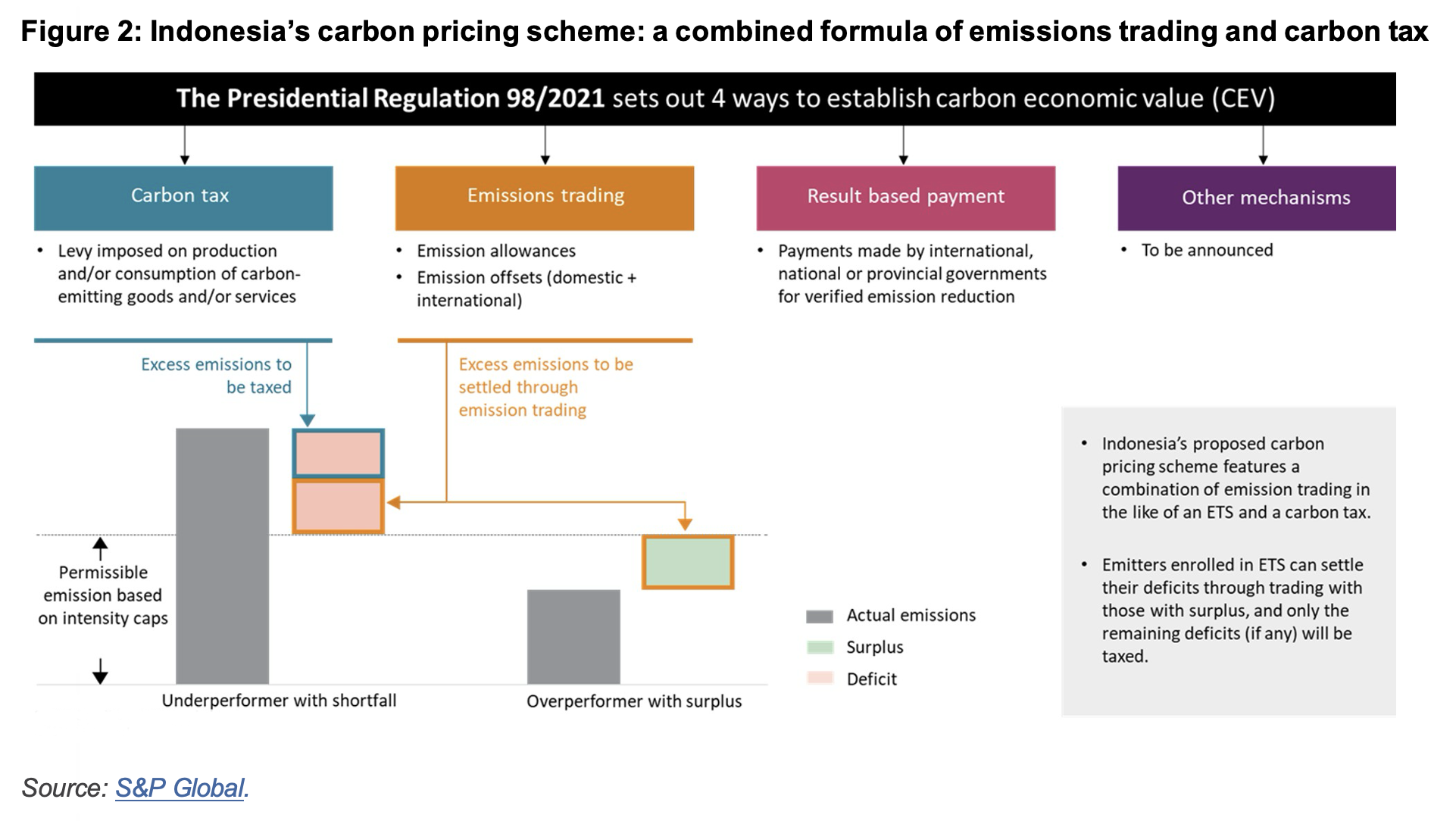
    The stagnation in Indonesia’s carbon market can be traced to several underlying factors. Fundamentally, the system is a hybrid carbon pricing strategy that blends a cap-and-trade mechanism with a fallback carbon tax. Under the cap-and-trade mechanism, emitters are assigned sectoral caps (PTBAE-PU). Those operating below their cap earn emissions reduction certificates (SPE-GRK), while those exceeding it must either purchase these credits or pay a carbon tax if credits are unavailable.

    In theory, this structure offers both flexibility and fiscal discipline. However, in practice, it has been constrained by design flaws and political caution.

    Currently, the carbon market is limited to coal-fired power plants (CFPPs), with 245 registered participants and a combined installed capacity of 54 gigawatts. The sectoral caps are defined in Ministerial Decree No. 14.K/TL.04/MEM.L/2023, which establishes differentiated emission thresholds based on plant type and capacity. For CFPPs with capacities between 25 and 100 megawatts (MW), the cap is 1.297 tCO2e per megawatt-hour (MWh). Mine-mouth CFPPs of 100MW or above face a lower cap of 1.089 tCO2e/MWh. Non-mine-mouth CFPPs between 100MW and 400MW must comply with a cap of 1.011 tCO2e/MWh, while the most stringent cap, 0.911 tCO2e/MWh, applies to non-mine-mouth CFPPs above 400MW.

    Despite this structure, the emission thresholds are set so high that only a small fraction of facilities exceed them, resulting in minimal demand for credits or tax payments. This weakens incentives for emission reduction and trade participation.

    Exacerbating the issue, the carbon tax (outlined in the 2021 Tax Harmonization Law and Presidential Regulation 98/2021 [PR 98/2021]) remains undefined and unenforced. Although an initial rate of IDR30,000/tCO2e (approximately USD2/tCO2e) has been proposed, implementation has been delayed due to challenges in measurement, reporting, and verification (MRV), as well as political resistance and industry pushback. 

    Beyond technical design, the development of Indonesia’s carbon market is also restricted by unclear trading and certification procedures. While PR 98/2021 provides the legal basis for carbon pricing, implementation is hindered by overlapping mandates across ministries and a lack of efficient licensing and certification processes.

    To address these challenges, the government issued Presidential Regulation No. 110/2025 (PR 110/2025), which aims to introduce a transparent governance framework and foster cross-ministerial collaboration. PR 110/2025 builds upon PR 98/2021 and outlines a more comprehensive structure for Indonesia’s carbon governance, aligned with international climate commitments and domestic green economy goals.

    There are several key additions in PR 110/2025:

    • Introduction of carbon allocations
      These carbon allocations serve as a strategic planning tool aligned with national low-carbon development and green economy goals. The allocation process involves coordination across multiple ministries, including forestry, environment, energy, industry, agriculture, finance, and national planning, and forms the basis for preparing and determining Indonesia’s Nationally Determined Contributions (NDCs).
    • Introduction of ministerial authorization and corresponding adjustment
      Entities will be allowed to use carbon units to fulfill other countries’ NDCs, meet international mitigation obligations, or serve other global interests. PR 110/2025 incorporates the concept of corresponding adjustment, in line with the United Nations Framework Convention on Climate Change (UNFCCC) guidelines, to ensure transparency and avoid miscounting.
    • Refined carbon trading framework
      The updated carbon trading framework distinguishes between domestic and international trading. International transactions are categorized based on whether they require authorization and corresponding adjustment, particularly those linked to NDCs and Paris Agreement compliance, or are voluntary and not tied to international obligations.
    • Strengthened transparency mechanisms 
      The updated framework expands on the previous one and clearly outlines steps for obtaining SPE-GRK certification, which can serve as a basis for accessing green and sustainable financing instruments.
    • Formation of a cross-ministerial dedicated committee
      Notably, the new regulation proposes a dedicated committee, led by the Coordinating Minister for Food Affairs, with representatives from relevant ministries. This shift aims to foster a more integrated and strategic approach to developing the carbon market.

    Overall, PR 110/2025 provides a more integrated, accountable, and internationally aligned framework. However, its effectiveness will depend on timely implementation, continuous monitoring, and rigorous evaluation to ensure it delivers the necessary support and institutional clarity for a robust carbon market. Simultaneously, strategic reforms will also be essential.

    Strategic reforms to unlock Indonesia’s carbon market potential

    Carbon pricing offers a powerful tool that helps countries reduce emissions, while mobilizing revenue, boosting innovation, and attracting global investment. For Indonesia, the opportunity is especially significant. The country holds substantial potential to lead global climate action through nature-based solutions and renewable energy.

    Home to the world’s third-largest tropical rainforests (125.9 million hectares), Indonesia can theoretically absorb up to 25.18 billion tonnes of CO2. Its mangrove forests, spanning 3.31 million hectares, store around 33 billion tonnes of carbon, while its 7.5 million hectares of peatlands hold an estimated 55 billion tonnes. Collectively, Indonesia’s ecosystems have the capacity to absorb over 113 billion tonnes of CO2, positioning the country as a key player in the global carbon market.

    Beyond nature-based assets, Indonesia’s renewable energy advantages are equally noteworthy, potentially translating to an annual emission reduction of up to 27.5 billion tonnes of CO2e. However, carbon prices currently remain below USD20 per tCO2e, far short of the USD50–USD100/tCO2e needed by 2030 to meet climate goals. A carbon market established to monetize assets rather than reduce emissions could undermine the rationale for carbon prices.

    Several strategic reforms are needed to enable Indonesia to actively benefit from the carbon market: 

    • Robust caps and tax rates
      Effective carbon caps with clearly defined downward limits should be implemented and supported by more robust taxes. The current caps on carbon emissions need to be lowered and gradually tightened over time to reflect the urgency of climate goals, as can be seen in the EU ETS’s Fit for 55 climate package. One key change needed is a faster reduction in the emissions cap, which limits the total amount of carbon allowances available to industries. To reinforce these limits, carbon taxes on emissions that exceed the caps must be substantial enough to influence industry behavior.
    • Transparent regulations
      Indonesia should establish comprehensive regulations and standards to ensure transparency and accountability. Although IDX Carbon is open to international buyers and offers a relatively low price, the projects available still lack international certification, making them less attractive to global investors. The recent announcement that Indonesia has signed an MRA with Verra, one of the world’s leading standard setters for climate action and sustainable development, marks a pivotal step forward. However, building trust among buyers and investors in Indonesia’s carbon credits, particularly regarding transparency, remains a persistent challenge.
    • Market reforms
      Any carbon tax should be implemented in combination with market reforms. The impact of a carbon tax would be most significant for the energy and industrial sectors, which remain heavily reliant on CFPPs. Given the potential impact on energy prices and industrial competitiveness, the government must engage stakeholders across sectors to design a socially and economically viable approach.
    • Low-carbon transition pathway
      Along with caps and taxes, there needs to be a viable path to access decarbonized energy and incentives to invest in lower-carbon industrial processes. The insignificant supply of renewable energy certificates available illustrates the challenges facing a zero-carbon transition. Currently, access to clean energy is under the control of the national electric utility, PT Perusahaan Listrik Negara (PLN). If PLN is unable to invest in clean energy supplies quickly and cost-effectively, the government should create pathways for the private sector to develop renewable energy. Introducing regulations to enable open access to the transmission grid, as previously highlighted by the Institute for Energy Economics and Financial Analysis (IEEFA), would significantly advance this objective.
    • Certification and monitoring
      Robust certification guidelines and monitoring systems are essential. The government’s plan to establish a dedicated agency for carbon market governance is an opportune innovation and should be fast-tracked. A centralized body could streamline the MRV process (especially certification procedures), improve enforcement, and enhance investor confidence. However, success will depend on strong inter-ministerial coordination, particularly among the Ministries of Forestry, Environment, Energy and Mineral Resources, and Finance. 

      Measurement standards should be established to facilitate robust and credible data collection. For the power and industrial sectors, consideration might be given to requiring automated emissions monitoring, supported by auditable reporting.

    • Institutional strengthening
      Reinforcing the institutional capacity of IDX Carbon is essential. Carbon markets are inherently vulnerable to fraud due to the intangible nature of the assets traded. Weak oversight, poor credit integrity, and a lack of transparency have led to controversy in other countries. The government should strengthen IDX Carbon by enforcing rigorous standards for credit issuance, verification, and trading.

    Towards a net-zero future 

    With President Prabowo emphasizing a clear vision for net-zero emissions by 2060 or earlier, the urgency to build a credible and functional carbon market has never been greater. A gradually declining emissions cap, aligned with climate goals, would send strong price signals, incentivize low-carbon investments, and accelerate sectoral transformation.

    By balancing domestic priorities with phased international integration, Indonesia can unlock climate finance, enhance energy security, and position itself as a regional leader in carbon governance. If implemented effectively, the country’s hybrid model could serve as a blueprint for emerging economies seeking to reconcile development goals with climate ambitions.

    Read the summary in Bahasa here: Dua Tahun Berjalan, Pasar Karbon Indonesia Stagnan dan Sepi Peminat


    Continue Reading

  • Central banks should consider climate risks, former Fed official says

    Central banks should consider climate risks, former Fed official says

    Central banks are within their mandate to consider physical and transition risks from climate change and the impact on bank losses, Kevin Stiroh, former chair of the US Federal Reserve’s supervision climate committee, told Green Central Banking.

    If climate change has a material impact on banks, “then that’s a risk that banks should be expected to manage”, he said.

    “If the discussion is about the impact of climate change on the real economy or on the financial sector, that seems relevant for all central banks, for all supervisory authorities … a shock is a shock. Anything that can impact the real economy should be understood and should be part of the risk monitoring and assessment process.”

    Stiroh, who recently joined economic thinktank Resources for the Future as a senior fellow, has co-authored a report with several Fed economists which sets out a framework to help central banks better understand if adjustments are needed to regulatory frameworks to better account for climate change risks.

    Central banks regulate how much capital banks need to hold in case of losses, and this amount varies based on several factors. The Basel Committee sets international standards for large, systemically important banks but central banks can vary the rules.

    US banks have long pushed for lower capital requirements which were raised in the aftermath of the 2008 financial crisis. Those requirements are expected to fall under President Donald Trump who has taken a deregulatory approach and moved away from the green policies of the previous administration.

    While climate risk mitigation and the transition to a green economy is seen as falling under the mandate of some central banks like the European Central Bank and Bank of England, it is not a clear mandate for others. And central banks need to act within their mandates, said Stiroh.

    But understanding potential risks does fall under the supervision of central banks, he said.

    Stiroh and his co-authors – Michael Holscher and David Ignell from the Federal Reserve of New York and Federal Reserve Board manager Morgan Lewis – contend that climate change could impact the reserve capital needs of financial institutions.

    “While climate change could potentially impact the regulatory capital regime in several ways, an internally coherent approach requires a strong link between specific assumptions about how financial risks may manifest as bank losses and what objectives regulators are pursuing,” the paper states.

    The paper presents a framework to help supervisors understand how to think about climate change and its potential effects on the real economy, and how they might respond through regulatory capital requirements.

    Bank capital is used to absorb both expected and unexpected losses. While banks usually expect a certain degree of losses, the inherent uncertainty of climate change makes those losses not only unexpected but harder to predict.

    “A fundamental challenge is that the impact of climate change on the economy and financial sector is subject to enormous uncertainty and policymakers will not know with certainty how or if the loss-generating process is evolving,” the paper states. “This creates challenges for prudential policymakers interested in expected and unexpected losses.”

    This page was last updated October 15, 2025

    Continue Reading

  • Simplify EU Tech Rules To Unlock Innovation, New Campaign Urges Commission

    Simplify EU Tech Rules To Unlock Innovation, New Campaign Urges Commission

    Brussels, BELGIUM – Today, the Computer & Communications Industry Association (CCIA Europe) launched a novel campaign calling on the European Commission to raise both the ambition level and scope of its upcoming Digital Omnibus Simplification Package. 

    Europe has always been a continent of trailblazers: from Gutenberg’s printing press to Lovelace’s pioneering algorithms. Yet today’s digital innovators face something far less inspiring: a maze of complex and overlapping EU tech rules that slow progress. 

    The new ‘Simplify EU Tech Rules. Unlock Innovation.’ campaign urges the Commission to adopt bolder, more impactful measures in its soon-to-be-published package. Early reports suggest the current plans may not go far enough to remove unnecessary regulatory hurdles. 

    The timing is critical. The European Commission’s public consultation on these simplification plans closed yesterday, and officials will now review stakeholder input before agreeing the precise scope and ambition level of the final digital package, expected next month. 

    CCIA Europe calls on the Commission to simplify the path for Europe’s next generation of digital pioneers. Explore www.unlock-innovation.eu to learn more about how Europe’s historic innovators might fare under today’s EU digital rules. 

    The campaign’s messages, featuring these historic innovators, are also being showcased on digital billboards at key locations in Brussels’ European quarter, including metro stations. 

    The following can be attributed to CCIA Europe’s Senior Vice President & Head of Office, Daniel Friedlaender: 

    “Europe does not need more rules, it just needs better ones. Rules that are clear, consistent, and innovation-friendly. Slowly the EU’s simplification efforts are moving in the right direction, but things are not going fast enough. Now is the time for real ambition and decisive action.” 

    “CCIA Europe urges the European Commission to be bolder in its simplification agenda. This means making hard but necessary choices for a stronger and smarter digital future. We need ambitious positive reform to honour the legacy of Europe’s great inventors.”

    About CCIA Europe

    CCIA is an international, not-for-profit trade association representing a broad cross section of communications and technology firms. As an advocate for a thriving European digital economy, CCIA Europe has been actively contributing to EU policy making since 2009. CCIA’s Brussels-based team seeks to improve understanding of the industry and share the tech sector’s collective expertise, with a view to fostering balanced and well-informed policy making in Europe. For more information, visit: ccianet.eu, x.com/CCIAeurope, or linkedin.com/showcase/cciaeurope to learn more.

    Continue Reading